User Guides
Delete Resume
Learn how to permanently delete a resume in Rezi. Follow simple steps to remove old resumes, organize your dashboard, and avoid deleting the wrong file.
Published on
July 24, 2026
Updated on
August 19, 2026
Old, tailored resumes have a habit of piling up. Maybe you’re done with a role that didn’t work out, you’re heading in a new career direction, or you’ve landed your dream job and no longer need dozens of resume versions. Whatever the reason, giving your Rezi dashboard a quick clean-up can make it much easier to stay organized.
In this guide, I’ll cover how to permanently delete your resumes in a few simple clicks.
If you want to start fresh, check out our free AI Resume Builder. Use our advanced tools to build an ATS-friendly resume with personalised feedback in minutes.
And take a look at more of our AI tools and features:
You can also learn more with these handy resume guides:
Deleting Your Resume
As you apply for more roles, it’s easy to build up multiple resume versions, especially if you’ve tailored them for specific positions. Every now and then, it’s worth clearing out the resumes you no longer need so your dashboard stays tidy, and it's easier to find your documents.
Deleting your resume in Rezi is simple, but it’s also permanent. So, whatever your reason for getting rid of it, make sure you’ve saved or copied any information you might want to reuse. Once you’re confident you no longer need your resume, you can delete it from your dashboard.
{{cta-upload}}
How to Delete Your Resume
Here’s a quick breakdown of how to delete your resume:
- Log in to your Rezi account to access your dashboard and view your saved resumes.
- Open your dashboard to find the resume you want to delete, double-check you’ve selected the correct file, and save any information you’d like to reuse before removing it.
- Delete your chosen resume by opening its settings, selecting ‘Delete’, and confirming the action in the pop-up, keeping in mind that the deletion is permanent.
Let’s get into the details.
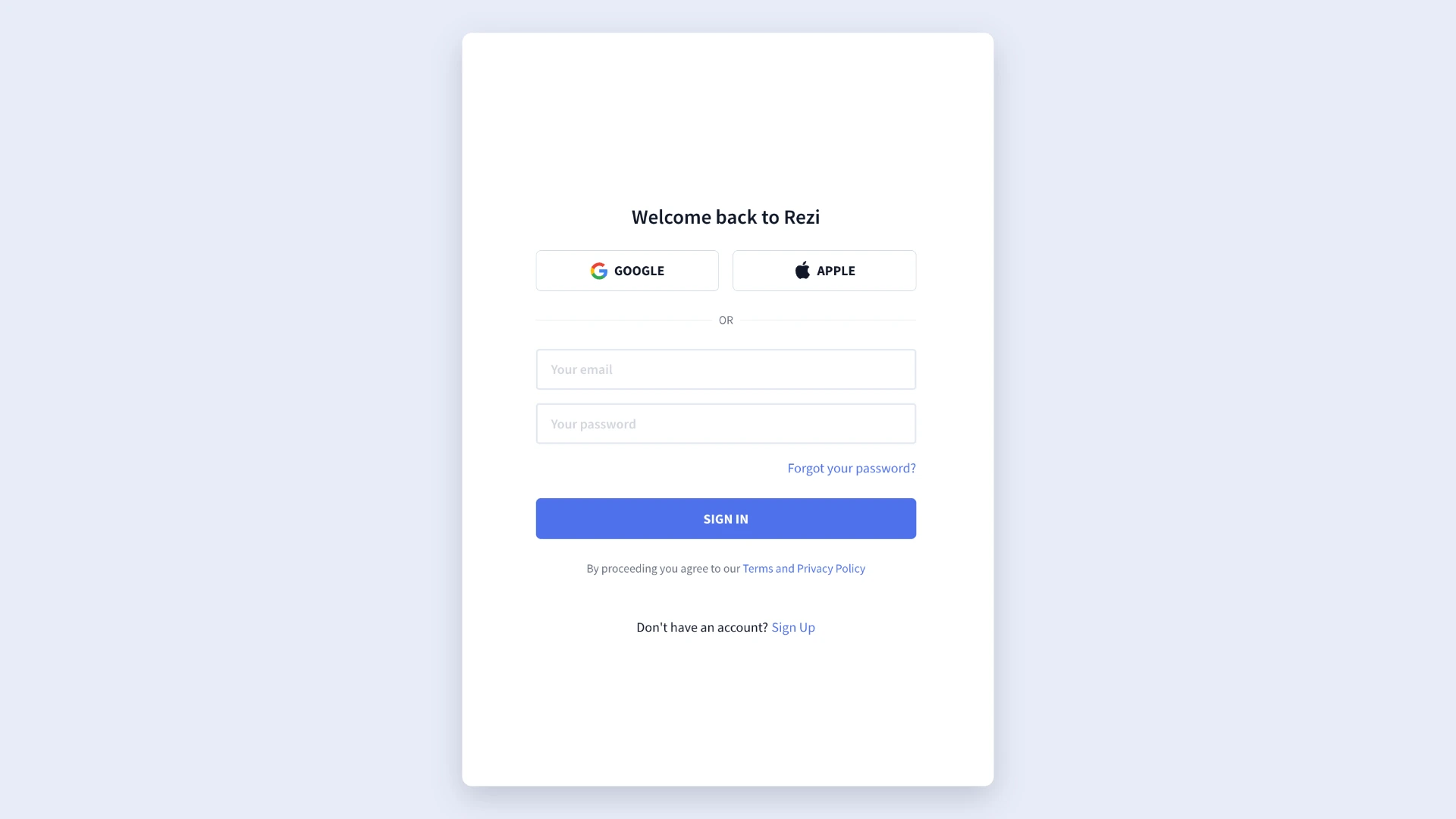
1. Log in to your Rezi account
Start by signing in to your Rezi account.
Just visit the Rezi website, click Login in the top-right corner, and sign in with your email address or your Google or Apple account. After you log in, Rezi will take you directly to your dashboard, where you can see all your saved resumes.
2. Open your dashboard
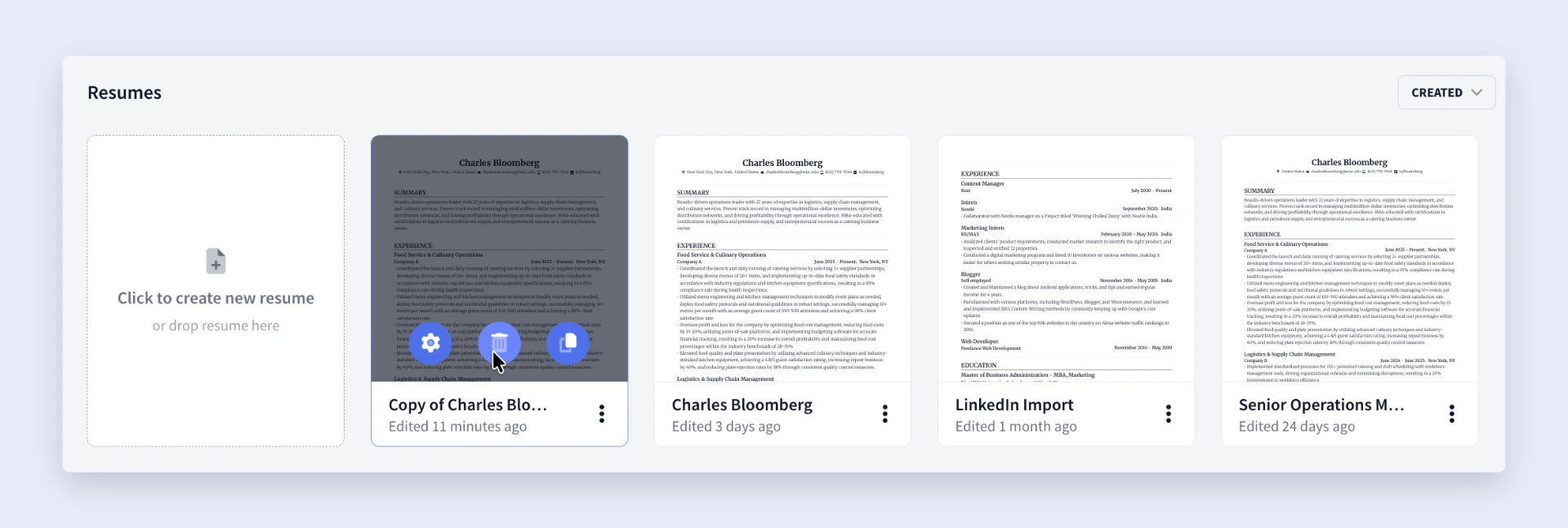
Your dashboard shows every resume you’ve created. All you need to do is find the resume you want to remove, then open it to double-check its contents.
Yes, it’s one extra step, but it’s better to be safe than sorry. Checking it will save you from accidentally deleting the wrong file and let you copy any resume bullet points, skills, or accomplishments into another resume before you remove it (big time-saver).
Once you’re sure you’ve selected the correct resume, you’re ready for the final step.
3. Delete your chosen resume
Once you’ve found the resume you want to delete from your dashboard, hover over it, then click the trash icon or select the three-dot menu. This opens the drop-down resume settings, where you’ll find the Delete option.

When you select Delete, Rezi will show a confirmation pop-up to remind you that the action is permanent. If you’ve changed your mind, click Cancel. If you’re sure you want to remove the resume, click Delete to permanently erase it from your account.
Summary
Here’s an overview of everything you need to know about deleting your resume with Rezi:
- Sign in to your Rezi account and open your dashboard to view all of your saved resumes.
- Hover over the resume, click the gear icon, or edit from the three-dot menu to open the resume settings.
- Select ‘Delete’ at the bottom of the settings menu, then confirm the action in the pop-up window.
- Deleting a resume in Rezi is permanent and can’t be undone, so make sure you no longer need it before confirming the deletion.
- Before deleting a resume, review its contents and copy any skills, achievements, or bullet points you might want to reuse in future applications.
- Deleting old or unused resumes helps keep your dashboard organized and makes it easier to manage active job applications.
- Consider deleting resumes that are no longer relevant, such as those for rejected applications, outdated roles, or a previous career path.
{{cta}}
FAQ
Can you recover a deleted resume in Rezi?
No. Once you delete a resume in Rezi and confirm the action, it’s permanently removed from your account. That’s why it’s worth taking a minute to double-check you’ve selected the right resume before clicking Delete.
Should you download your resume before deleting it?
Yes, if you think you might need it in the future. Downloading your resume gives you a backup that you can refer to later, even after the resume has been deleted from your Rezi account. It’s especially useful if the resume has tailored content you’d like to reuse for future applications.
Will deleting your resume remove your personal information from Rezi?
Deleting a resume removes that specific resume from your account, but it doesn’t delete your Rezi account or all of the personal information associated with it. If your goal is to stop using Rezi entirely or remove your account data, you’ll need to delete your account separately rather than just deleting your resumes.
Can you undo deleting your resume if you clicked Delete by mistake?
No. After you confirm the deletion, the resume can’t be restored. Rezi includes a confirmation pop-up before permanently deleting a resume to help prevent accidental clicks, so take a moment to make sure you’ve selected the correct file before confirming.
Should you delete old tailored resumes after applying for a job?
It depends. If you’re confident that you won’t need the resume again, deleting it can help keep your dashboard organized and make it easier to find your active resumes. That said, if the resume includes strong tailored content that you could adapt for similar roles in the future, it’s often worth keeping it or downloading a copy before deleting it.

Upload or drop your resume to get started
Upload your resume to get started
Score my resume

Lauren Bedford is a seasoned writer with a track record of helping thousands of readers find practical solutions over the past five years. She's tackled a range of topics, always striving to simplify complex jargon. At Rezi, Lauren crafts genuine and actionable content that guides readers in creating standout resumes to land their dream jobs.