User Guides
Duplicate Resume
Learn how to duplicate your resume in Rezi, rename your copy, and customize it for different applications while keeping the original resume unchanged.

Published on
July 24, 2026
Updated on
August 13, 2026
Writing one resume is enough work. With Rezi’s duplicate feature, you can make a copy of an existing resume and tailor it for a specific opportunity in just a few minutes, rather than starting from scratch.
Get started with our free AI Resume Builder. You can create an ATS-friendly, professional application in minutes with personalized suggestions and feedback.
And check out these AI tools to improve your resume:
You can also learn more about tailoring your application with these handy guides:
- How to Find Keywords Missing on a Resume
- How to Tailor Your Resume to a Job Description
- How to Tailor Your Resume to a Job Description With AI
Duplicating Your Resume
Duplicating your resume is a smart hack for building your applications from a master resume. Think of it as your complete career record, where you include all your work experience, skills, accomplishments, resume certifications, and projects without worrying about length.
Whenever you find a job you want to apply for, simply duplicate your master resume and edit the copy by removing, rewriting, or reordering bullet points to match the job description. That way, you can create a targeted resume while keeping your original master version untouched.
The entire process only takes a few clicks from your dashboard. It’s one of the simplest (and low-effort) ways to stay organized and customize your resume without rebuilding it every time.
How to Duplicate Your Resume
Here’s the quick version of how to duplicate your resume:
- Sign in to your Rezi account to access your dashboard, where you’ll find all of your saved resumes in one place.
- In your dashboard, locate the resume you want to duplicate and review its content before creating a copy for a new job application.
- Duplicate your resume by clicking the Duplicate icon or selecting Duplicate from the three-dot menu, then rename and edit the copied version.
1. Sign in to your Rezi account
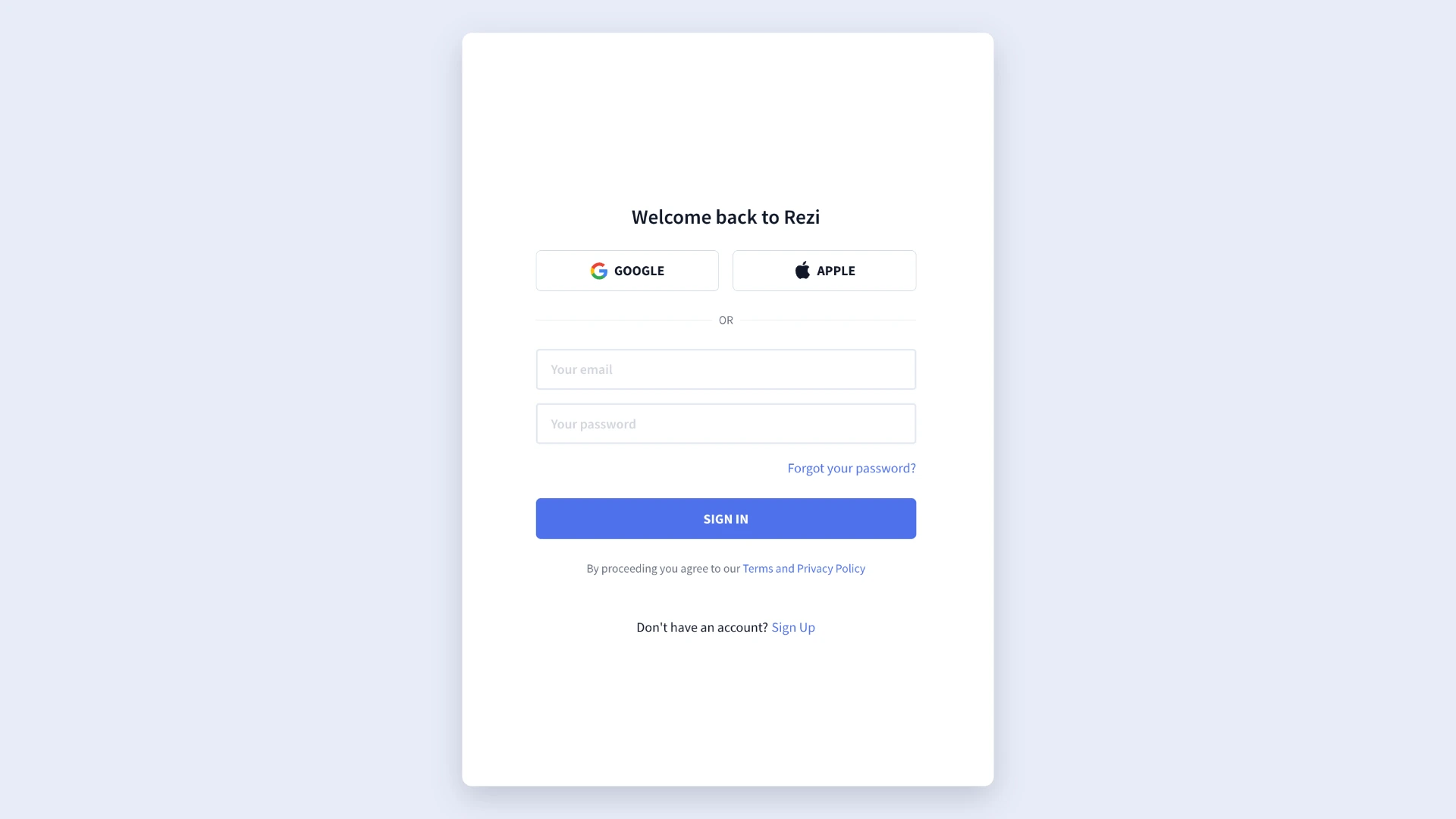
Start by signing in to your Rezi account. Go to the Rezi website, click Login in the top-right corner, and sign in with your email address or Google or Apple account. After you log in, Rezi will take you to your dashboard, where you’ll find all of your saved resumes.
2. Head to your dashboard
Your dashboard shows every resume you’ve ever created. All you need to do is find the resume you want to duplicate and open it to make sure it contains the information you want to reuse.

If you’re creating another resume with similar qualifications, just take a moment to review your work experience section, bullet points, skills, and accomplishments. Starting with the right version will save you time when you tailor your resume for a new job.
3. Duplicate your resume
Once you’ve found the resume you want to duplicate, hover over it and click the Duplicate icon. You can also open the three-dot menu to access the resume settings, then select Duplicate.

Rezi will immediately create a copy of your resume and place it at the top of your dashboard. The new file will use the default name “copy of (resume name).” From there, you can rename the file and edit it for your next job application while keeping your original resume unchanged.
Summary
Here’s an overview of how to duplicate your resume with Rezi:
- Sign in to your Rezi account and open your dashboard to view all your saved resumes.
- Find the resume you want to duplicate. If you’re using a master resume, make sure it includes the experience, skills, and accomplishments you want to reuse.
- Hover over the resume and click the Duplicate icon, or open the three-dot menu to access the resume settings.
- Select Duplicate to create an exact copy of the resume. Your original resume will stay unchanged.
- The duplicated resume will appear at the top of your dashboard with the default file name “copy of (resume name).”
- Rename the copied resume so you can easily identify it, such as by the company name or job title you’re applying for.
- Edit the duplicate to match the job description by adding, removing, or rewriting bullet points, skills, and other relevant details.
FAQ
How do you rename your duplicated resume?
After you duplicate your resume, it will appear at the top of your dashboard with the default name “copy of (resume name).” To rename your resume, hover over it, click the Gear icon, or open the three-dot menu and select Edit. Enter your new resume name, then click Save to apply the changes. Using a descriptive name, such as the company or job title, makes it much easier to keep track of multiple resume versions.
Can you edit your duplicated resume without affecting the original?
Yes, a duplicated resume is a completely separate copy, so any changes you make only apply to the duplicated version. You can update your work experience section, rewrite resume bullet points, add new skills, or remove information to match a specific job description without changing your original resume.
Why is duplicating your resume helpful when tailoring your application?
Duplicating your resume saves you from starting over every time you apply for a new role. Instead, you can use an existing resume or a master resume as your starting point and customize the copy for each application. This approach helps you create targeted resumes faster while keeping your original version intact for future opportunities.
Can you duplicate a resume more than once?
Yes, you can duplicate the same resume as many times as you need. I suggest doing this if you’re applying for several similar roles, since you can create a separate version for each application and tailor the content to match each employer’s requirements.
Can you delete a duplicated resume if you no longer need it?
Yes, if you no longer need a duplicated resume, you can delete it from your dashboard without affecting the original version. This makes it easy for you to keep your dashboard organized by removing outdated or unused resume copies while preserving the resumes you still want to use.

Upload or drop your resume to get started
Upload your resume to get started
Score my resume

Lauren Bedford is a seasoned writer with a track record of helping thousands of readers find practical solutions over the past five years. She's tackled a range of topics, always striving to simplify complex jargon. At Rezi, Lauren crafts genuine and actionable content that guides readers in creating standout resumes to land their dream jobs.