
Operations Resumes
9+ Distribution Center Manager Resume Examples & Tips for 2026
Customize any of these resumes in minutes using our free AI-powered resume builder.
“Rezi is super upfront and continues to improve over time. I've recommended Rezi to several of my friends and colleagues. I just love this product so much.”

Ricky M.
Software Engineer

“Rezi is super upfront and continues to improve over time. I've recommended Rezi to several of my friends and colleagues. I just love this product so much.”
Ricky M.
Software Engineer
Helping users land jobs at 1,000+ companies such as














Here's the thing most distribution center manager resumes get wrong: they read like a warehouse associate's job description with a fancier title. Lots of "oversaw daily operations" and "managed inventory" — but nothing that actually communicates the strategic, high-stakes nature of running a distribution center.
A strong distribution center manager resume needs to tell the story of how you keep millions of dollars in product moving efficiently — how you optimize throughput, reduce costs, lead large teams across multiple shifts, and hit service-level targets that directly impact customer satisfaction and revenue.
And this is exactly what you'll learn from this article. Inside, you'll find:
- Examples of 9+ distribution center manager resumes, covering different specializations and seniority levels.
- Insider tips about what really matters to recruiters hiring for DC management roles.
- A step-by-step guide for building a distribution center manager resume that actually lands interviews.
Sample Distribution Center Manager Resumes
Take a look at some top-notch sample resumes for distribution center managers across different specializations and career stages. Find one that matches your profile and use it as a starting point — just make sure to adjust the details to reflect your own career journey.
Note: these examples are organized by role type and specialization. Let's dive in.
Junior Distribution Center Manager Resume
A Junior Distribution Center Manager resume should emphasize your foundational warehouse and logistics experience, any supervisory roles you've held, and your eagerness to take on greater operational responsibility. Highlight metrics from team lead or assistant manager positions — things like shift productivity improvements, error rate reductions, or safety milestones. Include any relevant certifications and proficiency with WMS platforms to show you're ready to step up.
Mid-Level Distribution Center Manager Resume
For a Mid-Level Distribution Center Manager, your resume should showcase a solid track record of managing full DC operations including staffing, throughput, and budget oversight. Emphasize quantifiable achievements such as cost savings, order accuracy improvements, and on-time shipping rates. Highlight your experience managing teams across multiple shifts, implementing process improvements, and working with WMS and TMS platforms. Show that you can own P&L responsibility and drive continuous improvement.
Senior Distribution Center Manager Resume
A Senior Distribution Center Manager resume should demonstrate executive-level leadership across large-scale, high-volume distribution operations. Emphasize strategic initiatives you've led — automation projects, network optimization, multi-site oversight, and significant cost reductions. Showcase your ability to manage large budgets, develop leadership pipelines, and partner with senior executives on supply chain strategy. Include advanced certifications and highlight career progression from earlier operational roles to senior leadership.
Warehouse Distribution Manager Resume
A Warehouse Distribution Manager resume should highlight your expertise in managing both warehousing and outbound distribution functions. Focus on your ability to optimize storage layouts, coordinate receiving and shipping workflows, and manage inventory accuracy. Quantify achievements like reductions in cycle time, improvements in pick rates, or space utilization gains. Demonstrate proficiency with warehouse management systems and your experience maintaining compliance with safety and regulatory standards.
Fulfillment Center Manager Resume
For a Fulfillment Center Manager, your resume should emphasize high-volume, fast-paced order processing and your ability to meet demanding SLAs. Highlight experience with pick-pack-ship operations, returns processing, and peak season surge management. Showcase metrics like units per hour, order accuracy percentages, and same-day or next-day fulfillment rates. Experience with automation technologies, conveyor systems, and robotics integration will make your resume stand out in this competitive space.
Logistics Center Manager Resume
A Logistics Center Manager resume should showcase your ability to coordinate inbound and outbound logistics, carrier management, and cross-dock operations. Emphasize your experience optimizing transportation costs, managing freight relationships, and ensuring on-time delivery performance. Highlight your analytical skills and familiarity with TMS platforms, route optimization tools, and supply chain analytics. Quantify results like freight cost reductions, improved delivery windows, and carrier performance improvements.
Distribution Operations Manager Resume
For a Distribution Operations Manager, your resume should focus on your process improvement expertise and operational efficiency gains. Highlight experience with Lean, Six Sigma, or Kaizen initiatives within distribution environments. Showcase your ability to standardize processes, reduce waste, and improve labor productivity across shifts. Include metrics like cost-per-unit shipped reductions, throughput increases, and quality improvements. Demonstrate your cross-functional collaboration with procurement, transportation, and customer service teams.
Regional Distribution Manager Resume
A Regional Distribution Manager resume should demonstrate multi-site leadership and your ability to drive consistency, performance, and strategic alignment across several distribution centers. Emphasize your experience with network planning, capital expenditure decisions, and standardizing best practices across locations. Highlight your ability to develop site-level managers, manage regional budgets, and deliver results at scale. Include metrics that span your entire region — aggregate throughput, combined cost savings, and regional KPI improvements.
E-Commerce Distribution Manager Resume
For an E-Commerce Distribution Manager, your resume should highlight experience managing direct-to-consumer fulfillment operations with high SKU counts and rapid order turnaround. Emphasize your ability to handle demand variability, integrate with e-commerce platforms, and manage returns logistics. Showcase experience with automation, real-time inventory visibility, and omnichannel fulfillment strategies. Metrics like same-day ship rates, cost per order, and peak season scalability results will be especially compelling to hiring managers.
How to Write a Distribution Center Manager Resume
Short answer:
Focus on your operational leadership, throughput and efficiency metrics, and the specific systems and methodologies you used to drive results. Create a professional header with your name and contact details. Right below, write a 2–3 sentence resume summary outlining your most significant accomplishments. Describe your work history in reverse-chronological order, emphasizing measurable results in areas like cost reduction, productivity, safety, and service levels. Then, cover your education including professional certifications, list key skills, and add extra sections such as professional associations, awards, or continuous improvement projects.
Include all the necessary sections in the correct order
Here's the correct order of sections for most distribution center manager resumes:
- Header with contact information
- Resume summary or objective
- Work experience
- Education
- Skills
- Certifications
Depending on your current career situation, you can also throw in some additional sections. For instance:
- Continuous improvement projects (Lean, Six Sigma, Kaizen events you've led)
- Volunteer experience
- Safety awards and recognitions
- Professional associations
- Conference participation or speaking engagements
Include everything that shows you're capable of doing what the job requires. Make every section count. If it doesn't clearly highlight your skills, it doesn't belong on your resume.
If you have less than five years of relevant experience, keep your resume 1-page long. For more senior distribution center managers, a two-page resume is fine.
More details here: What Sections to Include on Your Resume?
Now, I'll give you a high-level overview of how to write each section, going from top to bottom. Well… almost. The only exception is the resume summary section. While it comes right after your contact info, it's actually easier to write it last. More on that in a sec.
Create a professional resume header
- Start with your name and contact information. Include the basics: your full name, phone number, professional email address, location, and LinkedIn profile. If you have a portfolio or professional website showcasing operational improvement projects, include that too.
- Right below your name, clearly state your professional title (e.g., Distribution Center Manager or Senior Distribution Operations Manager). This sets expectations and immediately positions you in the field.
For more information, see: How to Create a Resume Header
Describe your work history
- Use reverse-chronological order. List your positions starting with the current or the most recent one.
- In each entry, include your job title, company name, location, and dates of employment.
- Below each position, write 3–7 bullet points — the more recent the position, the more bullet points you should include. Describe your responsibilities and, more importantly, your accomplishments.
- Use action verbs and quantify your achievements (e.g., "Managed a 250,000 sq. ft. distribution center with 150+ associates, achieving 99.7% order accuracy and reducing cost per unit shipped by 12%").
- If specific methodologies or systems were pivotal in your roles (e.g., Lean, Six Sigma, WMS implementations), weave these details into your descriptions. This will also help you pass ATS scans.
Learn more about the best practices of this section with our detailed guide on how to describe your work experience on a resume.
List your degrees and detail professional learning
- In the education section, list your highest degree first, including the degree type, major, and institution. Degrees in supply chain management, logistics, business administration, or industrial engineering are especially relevant.
- If you have relevant work experience, include only the name of your school and the degree you got. If you're an entry-level candidate, you can add more detail — list relevant coursework, extracurricular activities, and academic achievements.
- If you have distribution or logistics certifications (e.g., CSCP, CLTD, Six Sigma Green/Black Belt), either include them in an "Education and Certifications" section, or create a separate "Certifications" section and place it right below.
For an in-depth guide on how to describe your education on a resume, see: How to List Education on a Resume
List your most relevant skills in the skills section
- Include a mix of technical skills (e.g., WMS platforms, labor management systems) and operational methodologies (e.g., Lean, Six Sigma) that you are proficient in.
- Add in some soft skills such as leadership, team development, and cross-functional communication. These demonstrate your capacity to lead large, diverse teams successfully.
- You can use two separate subsections, one for hard skills, one for soft skills, or just list all the skills under one heading.
- Match your skills to the description of the job you're applying for. I'm not saying you should just dump all the skills the position requires (especially if you don't really have them), but highlight those areas of expertise where your knowledge overlaps with the job ad.
Need some inspiration to get started? Here are some good skills to feature on your distribution center manager resume.
Software & technology skills for distribution center manager resumes:
- Warehouse Management Systems (WMS) — Manhattan, Blue Yonder, SAP EWM
- Transportation Management Systems (TMS)
- Labor Management Systems (LMS)
- SAP / Oracle ERP
- Microsoft Excel (advanced — pivot tables, VLOOKUP, data analysis)
- Power BI / Tableau (reporting and analytics)
- RF/Barcode scanning systems
- Automated material handling systems (conveyors, sortation, AS/RS)
- Workforce scheduling software (Kronos, UKG)
- Inventory management and demand planning tools
Operational methodologies:
- Lean warehousing
- Six Sigma (DMAIC)
- Kaizen / continuous improvement
- 5S workplace organization
- Total Quality Management (TQM)
- Standard operating procedure (SOP) development
- Slotting optimization
- Root cause analysis
- Key performance indicator (KPI) management
- OSHA compliance and safety program management
Key soft skills for distribution center managers:
- Leadership and team development
- Communication (cross-functional and cross-shift)
- Problem-solving and decision-making
- Conflict resolution
- Time management and prioritization
- Change management
- Workforce planning
- Accountability and ownership
- Adaptability under pressure
- Vendor and carrier relationship management
For a full-blown guide on listing skills on a resume, visit: How to Put Skills on a Resume
Use additional sections as further proof of your fit
Additional sections add depth to your resume and back up your claimed expertise. Good examples of extra sections to add to a distribution center manager resume are:
- Professional associations. Membership in organizations like CSCMP or WERC shows your commitment to the supply chain and distribution profession.
- Continuous improvement projects. A resume section dedicated to significant projects you've led — such as WMS implementations, automation rollouts, or facility redesigns — can provide concrete examples of your expertise in action.
- Safety awards and recognitions. In distribution, safety is paramount. If you've achieved zero-incident milestones or received safety awards, highlight them prominently.
- Conference attendance or speaking. If you've presented at MODEX, ProMat, or CSCMP events, definitely list them. Even if you just attended, it shows you're engaged with the industry.
Highlight the most relevant information in a resume summary
Once you're done writing your distribution center manager resume, give it a full read. Pick the most relevant information and compile it into a summary paragraph. Place it right under the resume header.
- Be brief and to-the-point. In 3–4 sentences, sum up your career highlights, core competencies, and what you bring to the table. Consider this your chance to answer, "Why should you hire me?" Tailor this section to match the employer's needs outlined in the job description.
- Use value-oriented language. Focus on how you can add value to the potential employer, mentioning specific outcomes like throughput improvements, cost savings, or safety record achievements from your past roles.
Once you've completed the core sections of your resume, you can use Rezi AI Resume Summary Generator to automatically create a powerful summary, tailored to the job you're applying for. All you need to do is add the position and skills you want to highlight. The AI writer will do the rest.
More information here: How to Write a Job-Winning Resume Summary (with Examples)
For finishing touches, make sure your resume looks professional
- Use a clean and tidy resume format. Ensure your DC manager resume is easily readable, with a professional font, consistent formatting, and clear section headings. Avoid overloading it with dense text or fancy design elements that could distract from the content and confuse resume screening software.
- Aim for a balance between detail and conciseness. If you're a junior candidate, keep your resume to a single page. Experienced distribution center managers can extend their resumes to two pages, but still need to make sure every word conveys value.
Learn more about proper resume formatting here: How to Format a Resume & What Standard Resume Format to Use
What Makes Distribution Center Manager Resumes Different
In short: the emphasis on operational scale, measurable outcomes, and your ability to manage complexity across people, processes, and systems simultaneously.
This is also what many distribution center managers get wrong on their resumes. Hiring decision-makers won't be impressed with vague descriptions of "managing warehouse operations." They need to see the scale of your responsibility and how your leadership directly impacted the business — because that's how they'll judge whether you can deliver results in their facility.
Focus on scale and operational metrics
Distribution center management is a numbers-driven profession. Recruiters want to see the scope of what you've managed and the results you've delivered — not just what you were responsible for.
What it means for you:
- Quantify everything possible: facility square footage, number of SKUs managed, daily order volume, team size, annual budget, and shift coverage. These numbers immediately communicate the complexity of your role.
- Pair those scope numbers with outcome metrics: on-time shipping rates, order accuracy percentages, cost-per-unit reductions, and inventory shrinkage improvements. This combination of scale + results is what separates a great DC manager resume from a mediocre one.
Focus on people leadership
Distribution centers are labor-intensive environments, and managing a workforce of 50, 150, or 500+ associates — often across multiple shifts — is a core part of the job. Your resume needs to reflect this.
What it means for you:
- Specify the size and composition of teams you've managed. Include direct reports, indirect reports, and any temporary or seasonal workforce you've scaled during peak periods.
- Highlight achievements in retention, employee engagement, training program development, and safety culture. If you reduced turnover by 20% or achieved a record-low OSHA recordable rate, those are resume gold.
Focus on process improvement and systems
In distribution, standing still means falling behind. Employers want to see that you don't just maintain operations — you improve them.
What this means for you:
- Describe specific continuous improvement initiatives you've led — Lean projects, Kaizen events, slotting optimizations, layout redesigns, or automation implementations. Include the before-and-after impact.
- Detail your experience with WMS platforms, automation technologies, and any system migrations or implementations you've managed. Being able to drive technology adoption is increasingly critical in modern distribution.
Focus on safety and compliance
Safety isn't just a line item in distribution — it's a non-negotiable priority. Hiring managers will look for evidence that you take it seriously.
What this means for you:
- Include specific safety metrics: OSHA recordable rates, days since last incident, workers' compensation cost reductions, or audit scores. These numbers carry significant weight.
- Mention safety programs you've built or improved, OSHA training certifications you hold, and any culture-building initiatives around workplace safety. This is especially important for senior-level roles where you set the tone for the entire facility.
Focus on peak season and surge management
Few other management roles require the seasonal scaling and intensity that DC management demands. This is a differentiator worth showcasing.
What this means for you:
- Describe how you've managed peak season ramp-ups — temporary workforce scaling, extended shift scheduling, and volume spikes of 2x–3x normal capacity.
- Highlight your ability to maintain quality and service levels under surge conditions. Hiring managers know that managing steady-state operations is one thing — performing under peak pressure is another entirely.
Bonus Resources for Distribution Center Managers
This isn't going to be a game-changer for you if you need a resume now. But —
I want you to treat your career holistically. These resources will help you sharpen your distribution management expertise, add meaningful credentials to your future resumes, and keep you current with industry trends and best practices.
Professional associations and networks
Council of Supply Chain Management Professionals (CSCMP)
The premier global association for supply chain professionals. CSCMP offers conferences, research, networking opportunities, and professional development resources that are directly relevant to distribution center managers looking to advance.
Warehousing Education and Research Council (WERC)
WERC is specifically focused on warehousing and distribution. Their annual benchmarking survey, conferences, and peer-to-peer networking opportunities are invaluable for DC managers who want to measure their performance against industry standards.
MHI
The nation's largest material handling, logistics, and supply chain association. MHI produces ProMat and MODEX — the industry's largest trade shows — and offers extensive resources on automation, technology trends, and best practices in distribution.
Certifications and online learning
APICS Certified Supply Chain Professional (CSCP)
One of the most recognized supply chain certifications globally. The CSCP covers end-to-end supply chain management and is highly valued by employers hiring for distribution leadership roles.
APICS Certified in Logistics, Transportation and Distribution (CLTD)
Specifically designed for professionals in logistics and distribution. The CLTD certification demonstrates specialized expertise in warehouse management, transportation, and logistics strategy.
LinkedIn Learning
Offers a wide range of courses on supply chain management, warehouse operations, Lean methodology, Six Sigma, and leadership — all directly applicable to distribution center managers looking to build new skills or fill knowledge gaps.
Publications and industry resources
DC Velocity
The go-to publication for distribution center and supply chain professionals. DC Velocity covers technology trends, operational strategies, labor issues, and case studies from real distribution operations.
SupplyChainBrain
A comprehensive resource covering all aspects of global supply chain management, including warehousing, transportation, and distribution. Their articles, webinars, and podcasts are valuable for staying current with industry developments.
Logistics Management
Covers warehousing, transportation, and distribution with in-depth articles, annual surveys, and industry analysis. A solid resource for DC managers who want to benchmark their operations and stay informed about emerging trends.
Tools and software reviews
Capterra & G2
Both websites provide extensive reviews and comparisons of warehouse management systems, inventory management tools, and labor management software — helping you evaluate and recommend the right platforms for your operation.
Supply Chain Dive
Offers concise, timely news and analysis on supply chain technology, automation, and operational trends. A great daily read for staying on top of what's changing in the distribution space.
Summary
Here's what you need to know about writing a distribution center manager resume:
- Structure your resume with essential sections in this order: Header, Resume Summary or Objective, Work Experience, Education, Skills, and Certifications. If relevant, add extra sections like Continuous Improvement Projects, Safety Awards, or Professional Associations.
- Include a professional header with your name, contact information, and professional title (e.g., Distribution Center Manager).
- Describe your work history in reverse-chronological order, emphasizing accomplishments with quantifiable outcomes — throughput improvements, cost savings, order accuracy rates, and safety metrics.
- In the education section, list your highest degree at the top. List distribution and supply chain certifications (CSCP, CLTD, Six Sigma) either in the education section or under a separate heading.
- Highlight a mix of technical skills (WMS, LMS, automation), operational methodologies (Lean, Six Sigma), and soft skills (leadership, communication), tailoring them to the job description.
- Use additional sections to further showcase your expertise — especially continuous improvement projects, safety achievements, and industry involvement.
- Once done writing the resume, compile the key information into a brief, value-oriented resume summary at the top.
- Communicate the scale of your operations — facility size, team headcount, daily volume, and budget — to give hiring managers an immediate sense of your scope.
- Make your resume professional in appearance. Aim for conciseness without sacrificing the specific details that set you apart.
- Showcase peak season management, safety leadership, and process improvement capabilities — these are the differentiators that DC hiring managers care about most.
Thanks for reading! Got any questions? Feel free to reach out to me on LinkedIn. (Or check out the FAQs first, maybe your question is answered there.)
FAQ
What keywords should I use on my distribution center manager resume?
Use terminology specific to distribution and logistics: warehouse management system (WMS), inventory accuracy, order fulfillment, throughput optimization, cost per unit shipped, Lean warehousing, Six Sigma, OSHA compliance, labor management, and pick-pack-ship. Include the names of specific systems you've used (Manhattan, Blue Yonder, SAP EWM) and certifications like CSCP, CLTD, or Six Sigma Green/Black Belt.
How do I show career growth if I've been at the same company for a long time?
This is actually common in distribution — many managers grow within the same organization. List each role separately under the company name, showing your progression from, say, Shift Supervisor to Operations Manager to Distribution Center Manager. For each role, highlight increasing scope: larger teams, bigger budgets, more complex operations, and greater strategic responsibilities. This tells a clear growth story even within one employer.
What's the most common mistake on distribution center manager resumes?
Listing duties without outcomes. "Managed receiving and shipping operations" tells a recruiter nothing about how good you were at it. Instead, write: "Managed receiving and shipping operations for a 300,000 sq. ft. facility, processing 15,000+ orders daily with 99.8% accuracy and a 98.5% on-time ship rate." Numbers are everything in this field — use them.
Should I include safety metrics on my resume?
Absolutely. Safety is one of the top priorities for any distribution center, and it's often one of the first things hiring managers evaluate. Include your OSHA recordable incident rate, days without a lost-time accident, workers' compensation cost trends, and any safety awards or recognitions. If you've built or overhauled a safety program, describe the initiative and its results.
How should I handle seasonal or temporary workforce management on my resume?
Peak season scaling is a valuable skill in distribution — don't undersell it. Mention the magnitude of your ramp-ups (e.g., "Scaled workforce from 120 to 350 associates during Q4 peak season"), how you managed onboarding and training at speed, and — most importantly — that you maintained quality and safety standards during those high-volume periods. This demonstrates operational resilience.
I'm transitioning from a different operations field. How should I approach my DC manager resume?
Focus on transferable skills: team leadership, process improvement, budget management, KPI tracking, safety oversight, and vendor management. If you've managed production lines, retail stores, or logistics operations, many of those competencies translate directly. Highlight any exposure to distribution or warehousing, even if it wasn't your primary responsibility. Earning a certification like CLTD or CSCP can also bridge the gap and show hiring managers you're serious about the transition.
Which resume format is the best for distribution center manager resumes?
The reverse-chronological format is the clear winner for DC manager resumes. It highlights your career progression and makes it easy for recruiters to see the increasing scale and complexity of operations you've managed over time. This format also works best with ATS systems, which most large distribution employers use.
Contents

Resume Formats & Examples
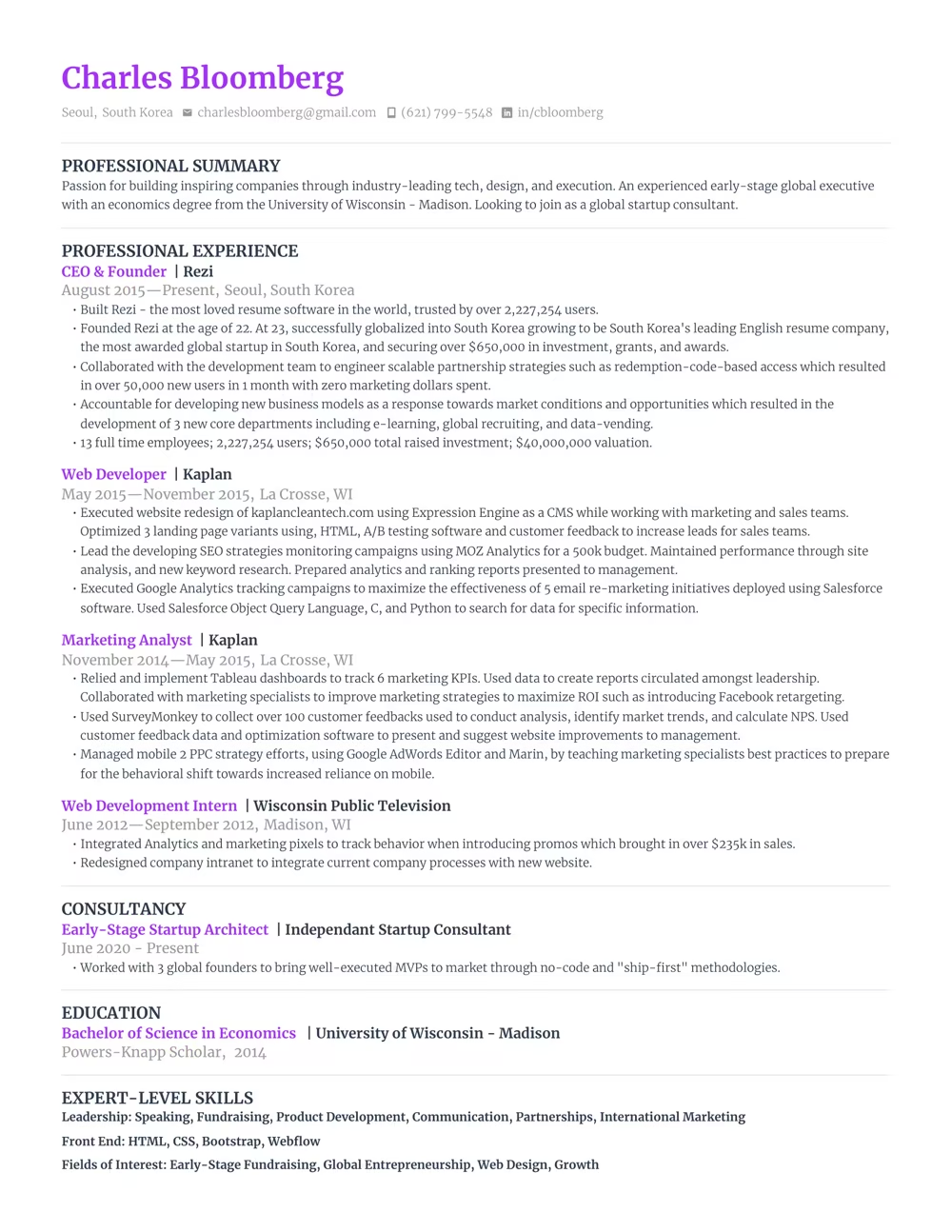
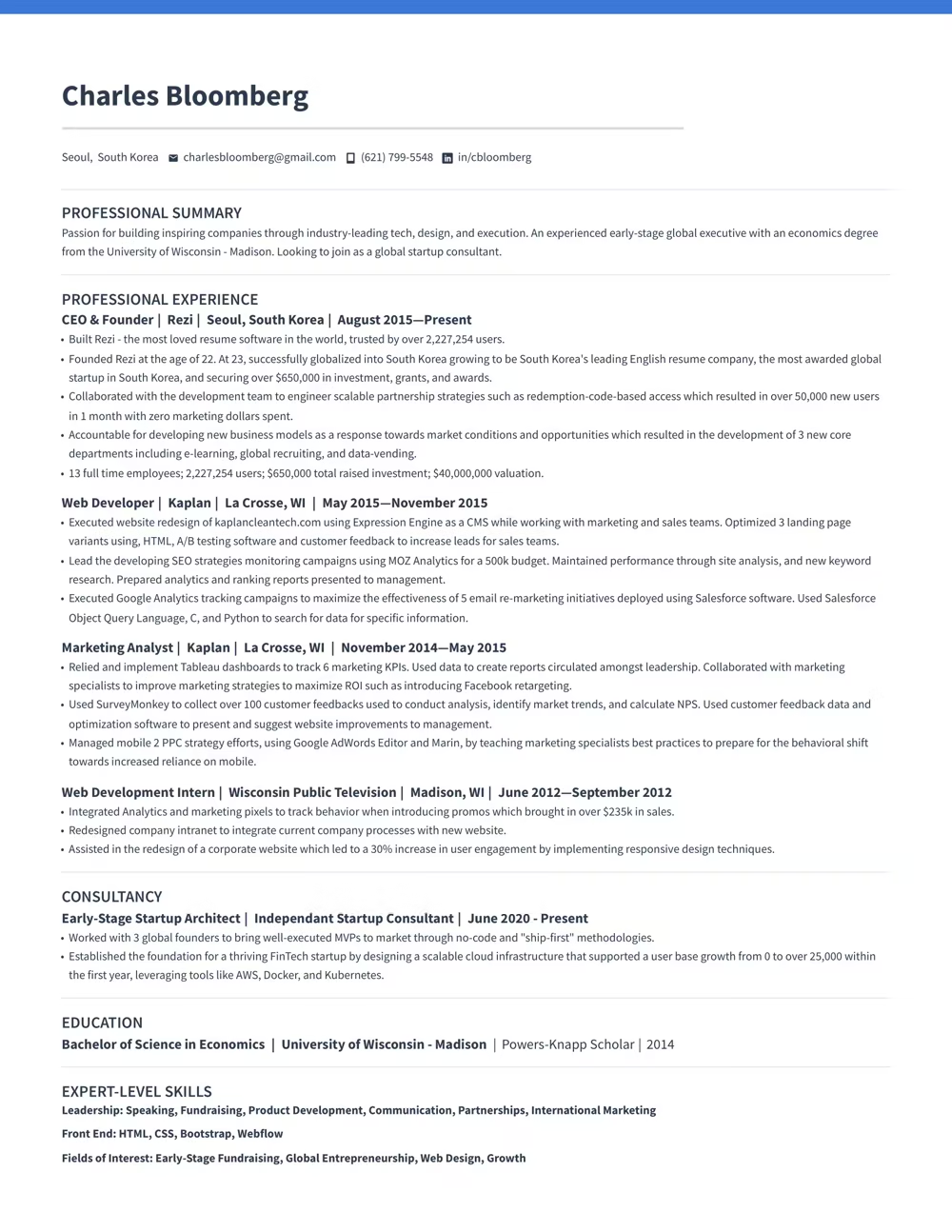
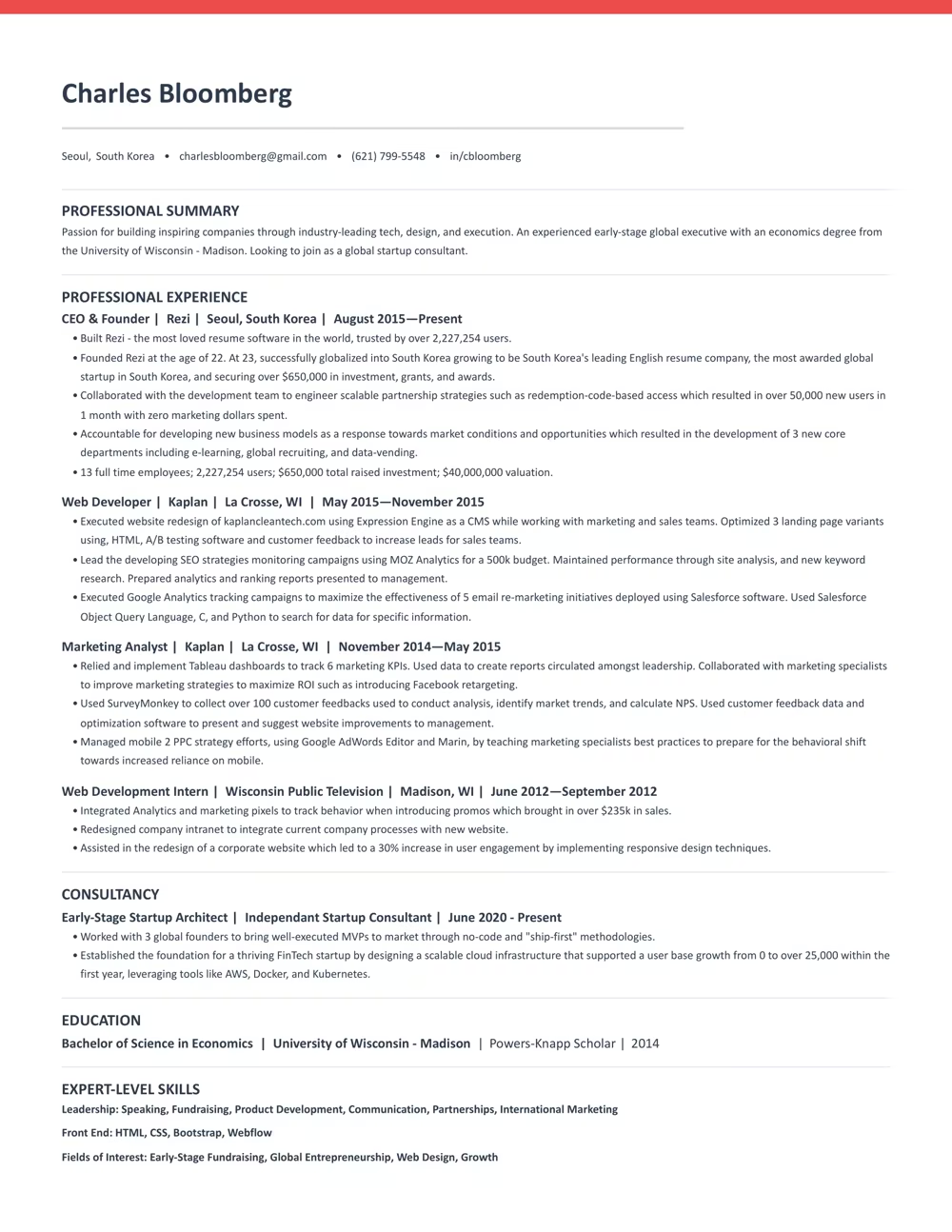
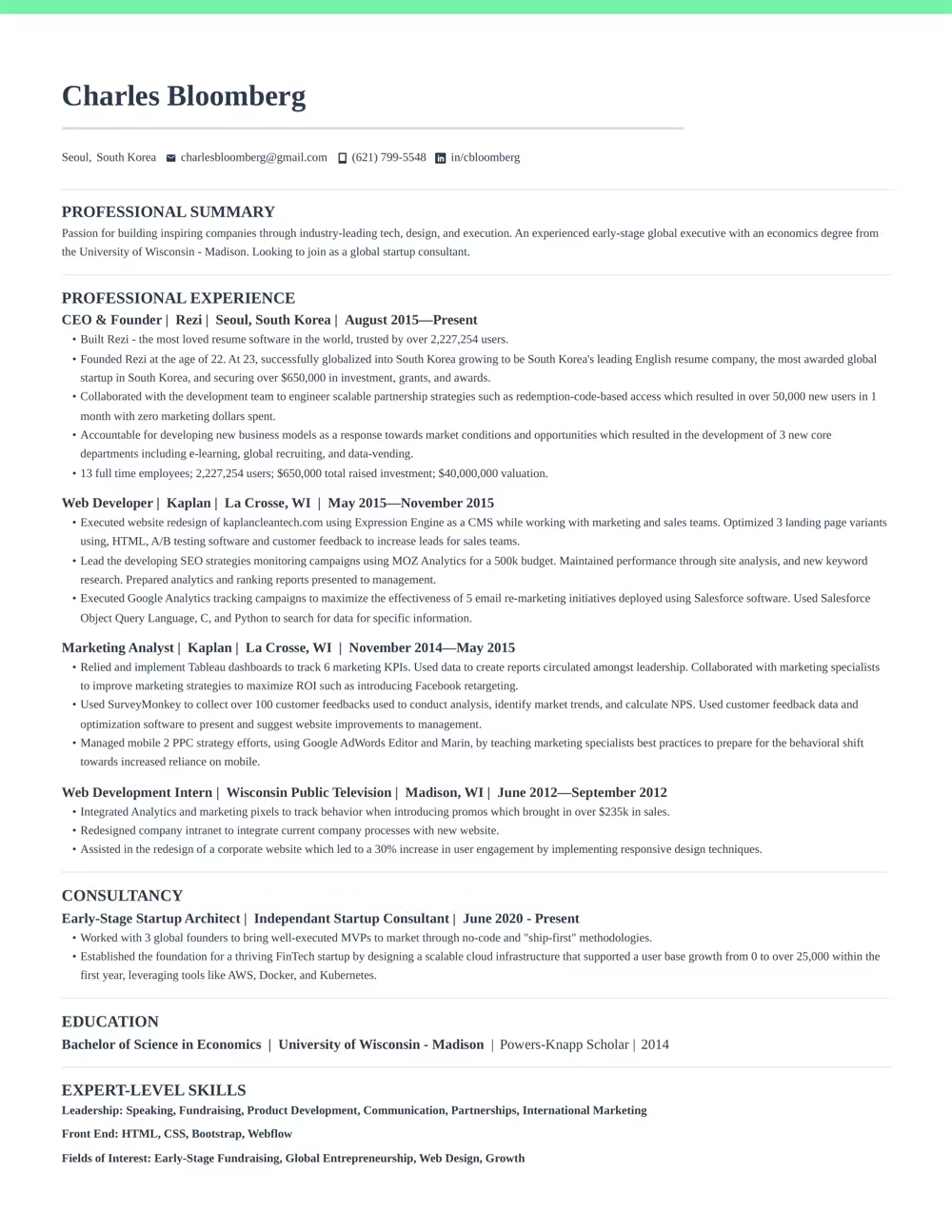
ATS-Friendly resume formats that land jobs
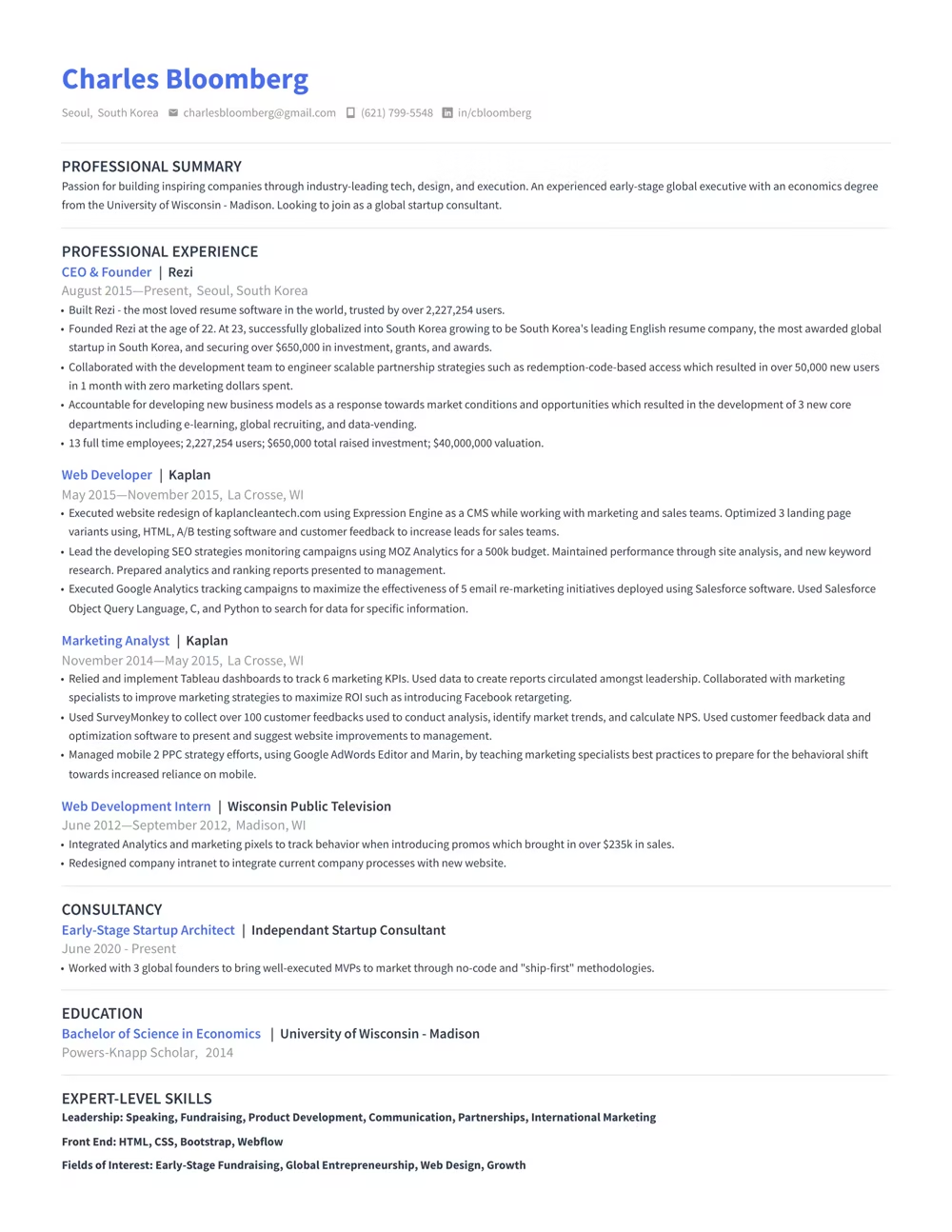
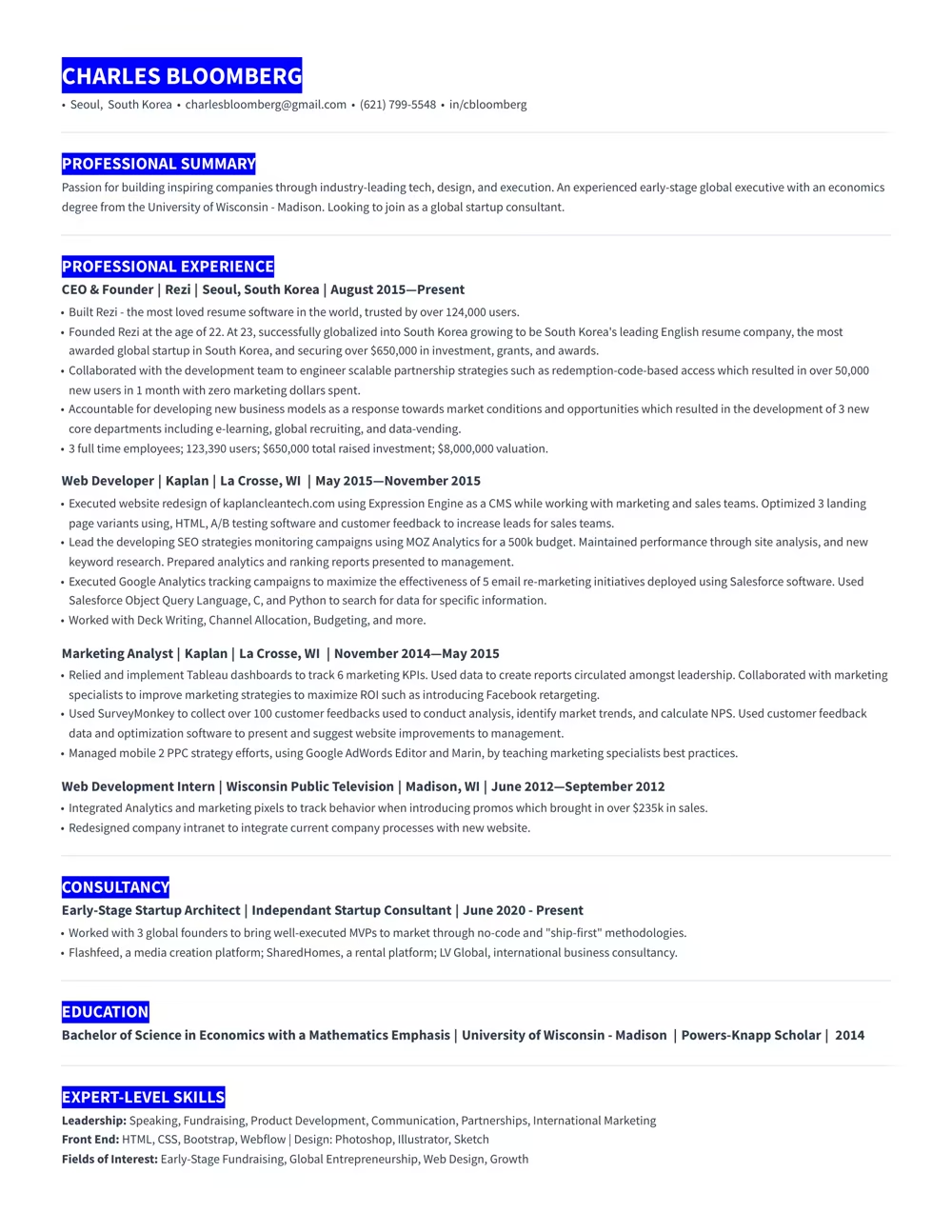
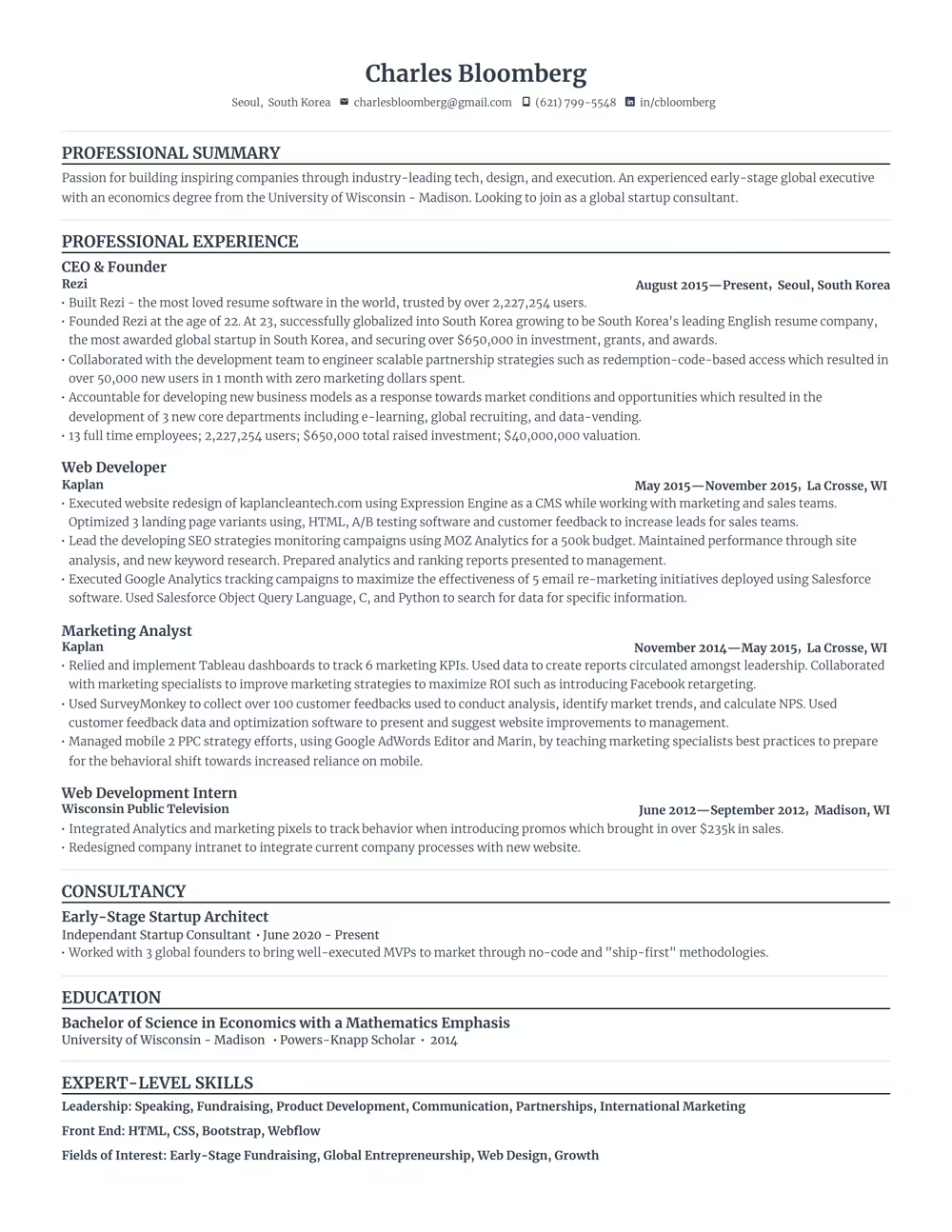
Use a template that guides you. Our ATS-compliant designs are trusted by over 4 million job seekers.




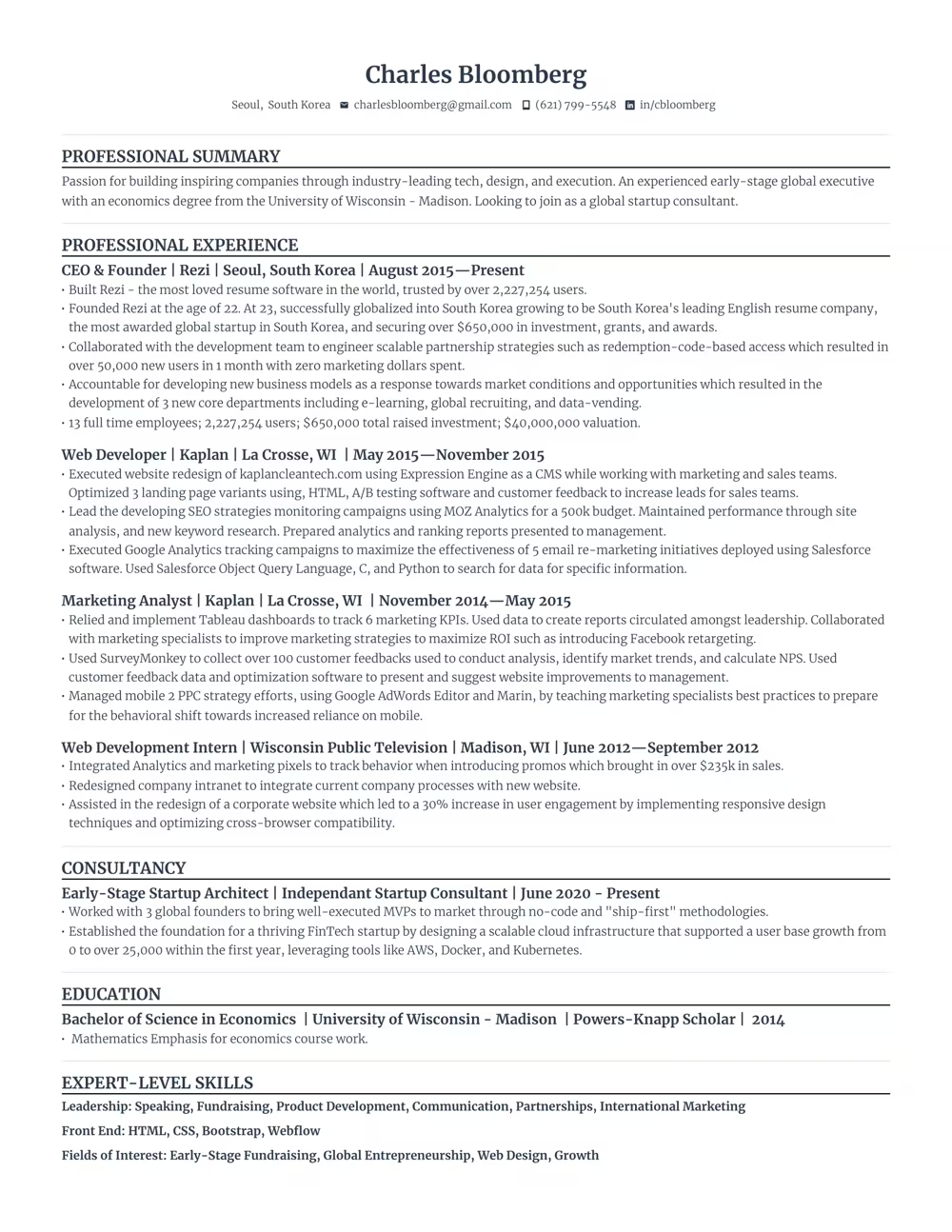
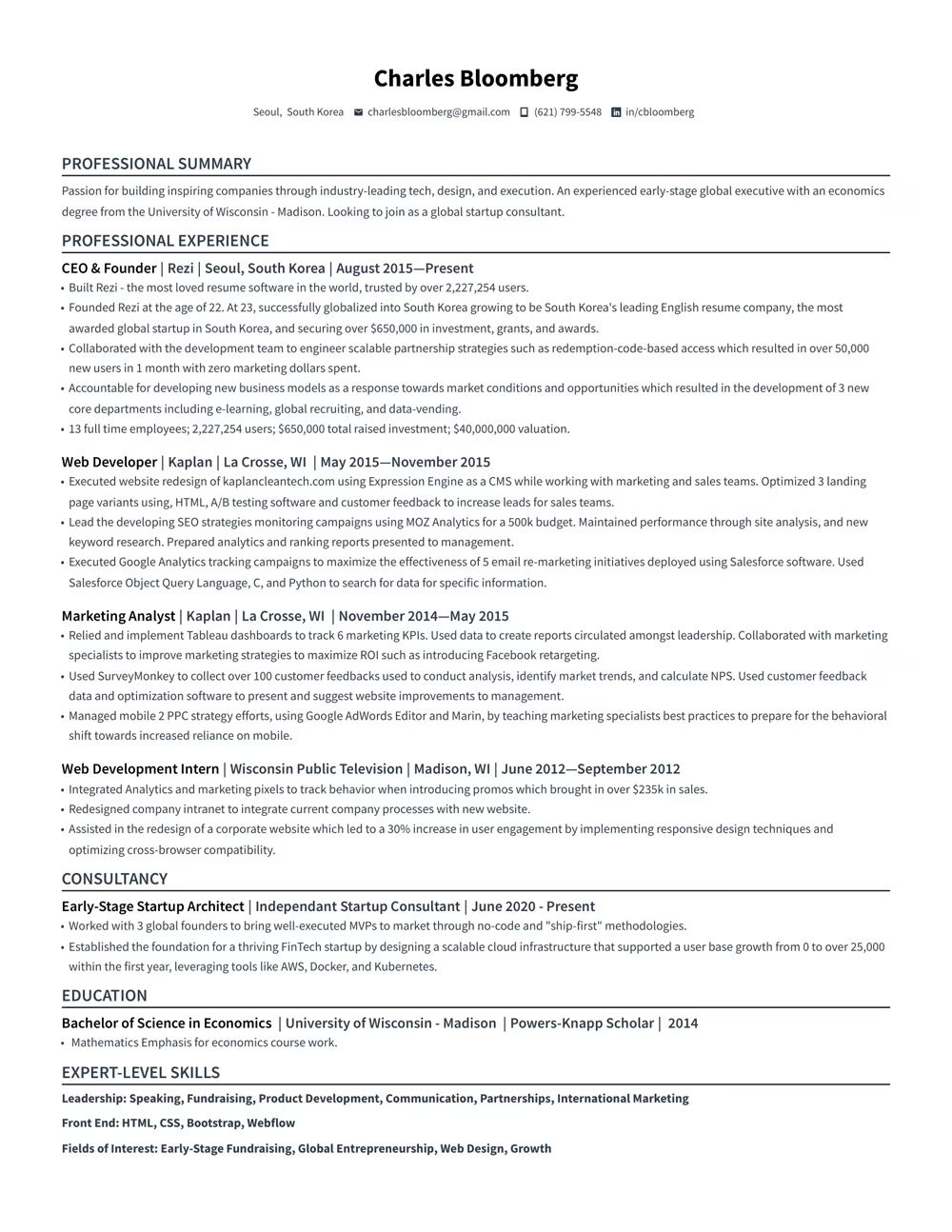
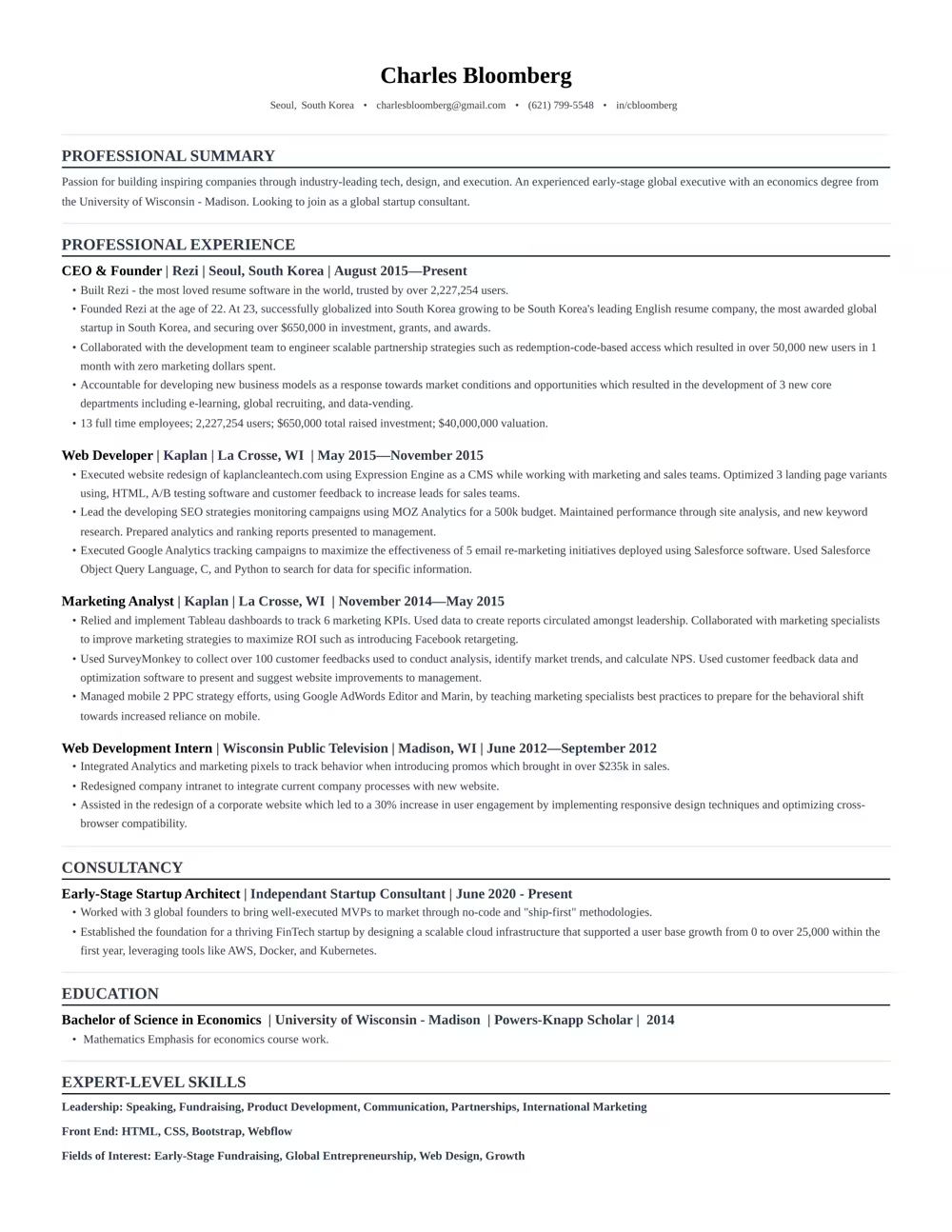
“Rezi is an awesome AI-based resume builder that includes templates to help you design a resume that is sure to check the boxes when it comes to applicant tracking systems. This is a great jumping off point to kickstart a new resume.”

Ashley Stahl
Career Contributor
62.18%
Interview Rate
4,510,834
Total Users
8.23 / 10
Avg. User Review
Wall of Love
Over 4 million users trust Rezi

“Resume Building felt like pulling teeth – until I found Rezi.”
Davis Allen
Software Developer

“I was blown away by Rezi. It streamlined everything...”
Celine Watko

“I needed a resume tool as smart as my work.”
Yosra Naceur
Data Scientist
“A great tool that is very helpful. I found the Rezi system easy to use and very helpful as I was working on getting my resume in shape for job applications.”

Dakota Rubin
United States
Written via

“This is actually one of the first reviews I’ve ever written for a business, and that alone says a lot. I highly recommend Rezi to anyone who’s job searching, it makes the entire process so much easier.”

Yazan Alkhatib
United States
Written via
“Reduced my time per application from 1-2 hours down to 15 minutes.”
Kixxx
Experience with Rezi
“I love how simple and convenient it is to use and been coming back to update it every time I need a fresh resume.”

Zara Wazir
U.A.E.
Written via
Frequently Asked Questions
Your questions, answered.
An AI resume maker helps you build a resume perfectly fit for the job you want. Top-notch AI resume builders are designed to speak the language hiring managers are looking for, increasing your chances of standing out in the crowd. It aligns your skills and experience with the job description effectively.
Rezi templates are ATS-safe. Hiring software can parse your resume with accuracy and you won't have to enter the entire resume all over again after uploading it. Our best resume template is always free. More templates and personalisation is available on Pro subscription. Regardless of what resume template you can customise sections to suit your needs. When in doubt, a clean single-column template works for every industry and every applicant tracking system.
To get the most out of an AI resume builder, either start from scratch or upload your current resume. Fill in as much detail as possible about your career and skills, and upload the job description you’re targeting. This personalization allows the AI to build a unique and tailored resume that’s bound to catch potential employers' attention.
Yes. Rezi stores your content separately from the design, so you can switch templates at any time without retyping anything. Your Rezi Score and keyword targeting stay intact across every template. Some advanced resume template formats require a Pro subscription, but our best template is always free.
AI-generated resumes can seem similar if you're not giving personalized inputs or if you're using basic prompts. Provide specific details about your work experience and target the job you’re eyeing. Use specialized AI tools instead of general chatbots to avoid robotic-sounding resumes and to ensure individual creativity.
A Word or Google Docs template is a static file: one wrong edit breaks the formatting, and nothing checks the result. Rezi keeps the layout locked and parser-safe while its AI writes your content, then scores the finished resume against the job you want.
Employers might think you used AI, but that’s rarely an issue. What they really care about is getting a well-written resume that showcases your skills and experiences accurately. A top-notch resume tailored to their needs will speak volumes more than worrying about AI involvement.
No. Recruiters expect a standard structure, and applicant tracking systems parse it more reliably than a hand-built layout. What hurts is generic content. Rezi's AI tailors your bullet points and keywords to each job description, so your resume never reads like a template.
Yes, using AI to optimize your current resume is highly effective. You just need to upload your resume, share details about your career goals and the job you want, and let the AI refine everything to elevate your resume's impact and ATS compatibility.
Rezi uses a tool called the AI Keyword Targeting. This feature scans the job description to identify crucial keywords and naturally incorporates them into your resume, giving it the right focus without keyword stuffing.
The Free plan is $0/month and allows you to create one resume, use limited AI tools (such as Keyword Targeting and Analysis), and download up to three PDFs. You can also create unlimited cover and resignation letters. No card is required to begin.
The Pro plan is $29/month and provides unlimited access to all features, including unlimited resumes, full AI capabilities, unlimited downloads, and one free monthly expert resume review (resumes are reviewed by a person).
The Lifetime plan is a $149 one-time payment. It grants permanent access to all the features of the Pro plan (unlimited resumes, full AI tools, and unlimited downloads), but it does not include the free monthly expert review (which can be purchased for an extra fee).
Yes. The standard template free and available for all users. With the free plan, you can completely create 1 resume, use AI writer, and download your resume 3 times in PDF format. No credit card is required to join the free plan. Rezi Pro at $29 per month removes the limits and unlocks all our Pro templates including Compact, Modern and Smart templates.
Rezi offers a 100% money-back guarantee on all paid plans (Pro and Lifetime). If you are unsatisfied, you can request a full refund within 30 days of your purchase.
The free template that comes with the free plan is rated as one of our best resume templates. Pro subscription offers more personalisation and more templates while keeping ATS-safe designs; Pro removes limits on resumes, downloads, and AI tools. Our best template is never paywalled and is always free for everyone.
Yes, you can easily upgrade or downgrade your plan at any time through your Rezi Account Billing dashboard. Prorated credits will apply when switching.
An AI resume maker helps you build a resume perfectly fit for the job you want. Top-notch AI resume builders are designed to speak the language hiring managers are looking for, increasing your chances of standing out in the crowd. It aligns your skills and experience with the job description effectively.
They are risky. Many parsers read multi-column layouts out of order or skip a column entirely, so skills and dates end up scrambled. You can easily check this in popular ATS like Workday and Lever. Rezi templates will seamlessly populate the fields in these ATS where two-column templates struggle. The same applies for graphical resumes. Rezi uses single-column layouts because they parse correctly in every major applicant tracking system.
Use a text-based PDF unless the job posting asks for Word. PDFs have been around for years and modern applicant tracking systems read PDFs reliably. PDF locks your layout so it looks the same everywhere. Rezi exports machine-readable PDFs that parse cleanly in every major ATS and ensure compatibility.
Yes. The same ATS rules apply to CVs: single column, standard headings, machine-readable text. CVs usually tend to be longer than resumes. You can check their differences here. Rezi templates can handle both if you require a longer CV format, you can easily add sections like publications, certifications, and research without breaking the layout. It is recommended to use a shorter resume format than CVs when applying for jobs, unless mentioned otherwise.
Yes, Rezi Enterprise.