Here's the thing that trips up most Senior UX Manager candidates: their resumes read like a list of design tools they've used and projects they've touched. They look like senior designer resumes with a "Manager" title slapped on top. What's missing? The management part — the team building, the design strategy, the cross-functional influence, and the measurable business impact that separates a UX practitioner from a UX leader.
To create a compelling Senior UX Manager resume, you need to tell a story about how you've scaled design teams, championed user-centered thinking at an organizational level, shaped product strategy through research and design, and delivered outcomes that moved real business metrics — not just shipped pretty interfaces.
And this is exactly what you'll learn from this article. Inside, you'll find:
- Examples of 8 Senior UX Manager resumes, covering different specializations and leadership scopes.
- Insider tips about what hiring managers and VPs of Design actually look for in UX leadership candidates.
- A step-by-step guide for building a Senior UX Manager resume that lands interviews at the companies you actually want to work for.
Sample Senior UX Manager Resumes
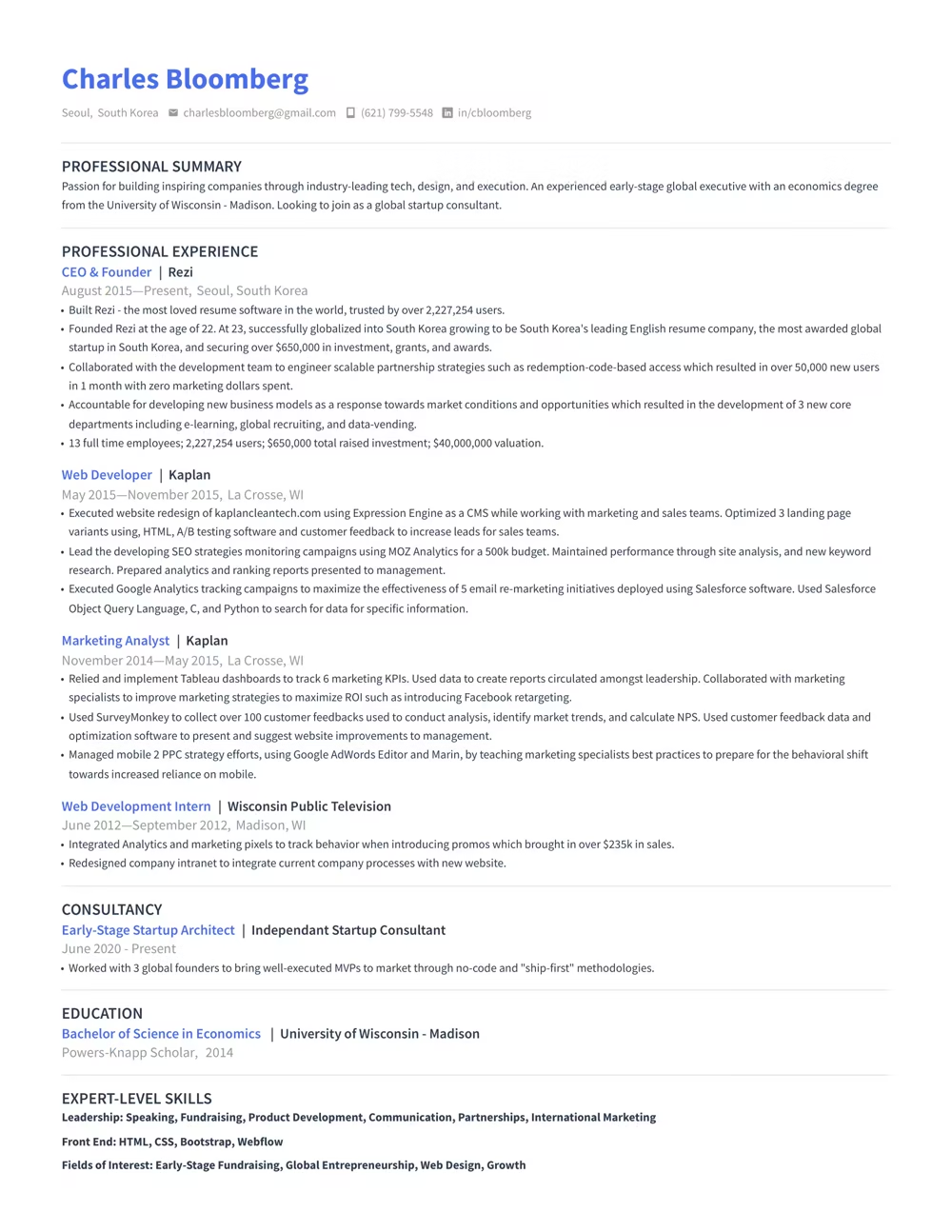
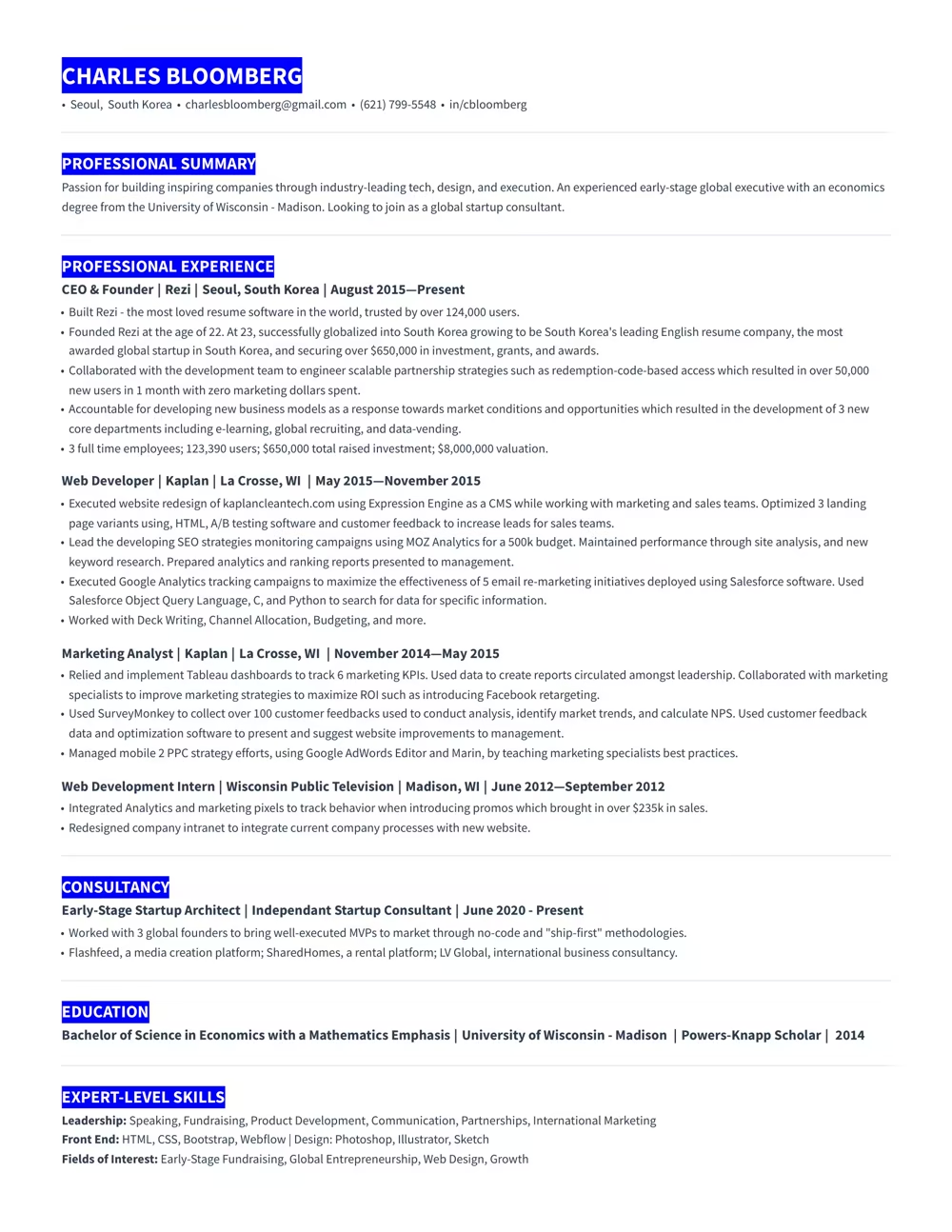
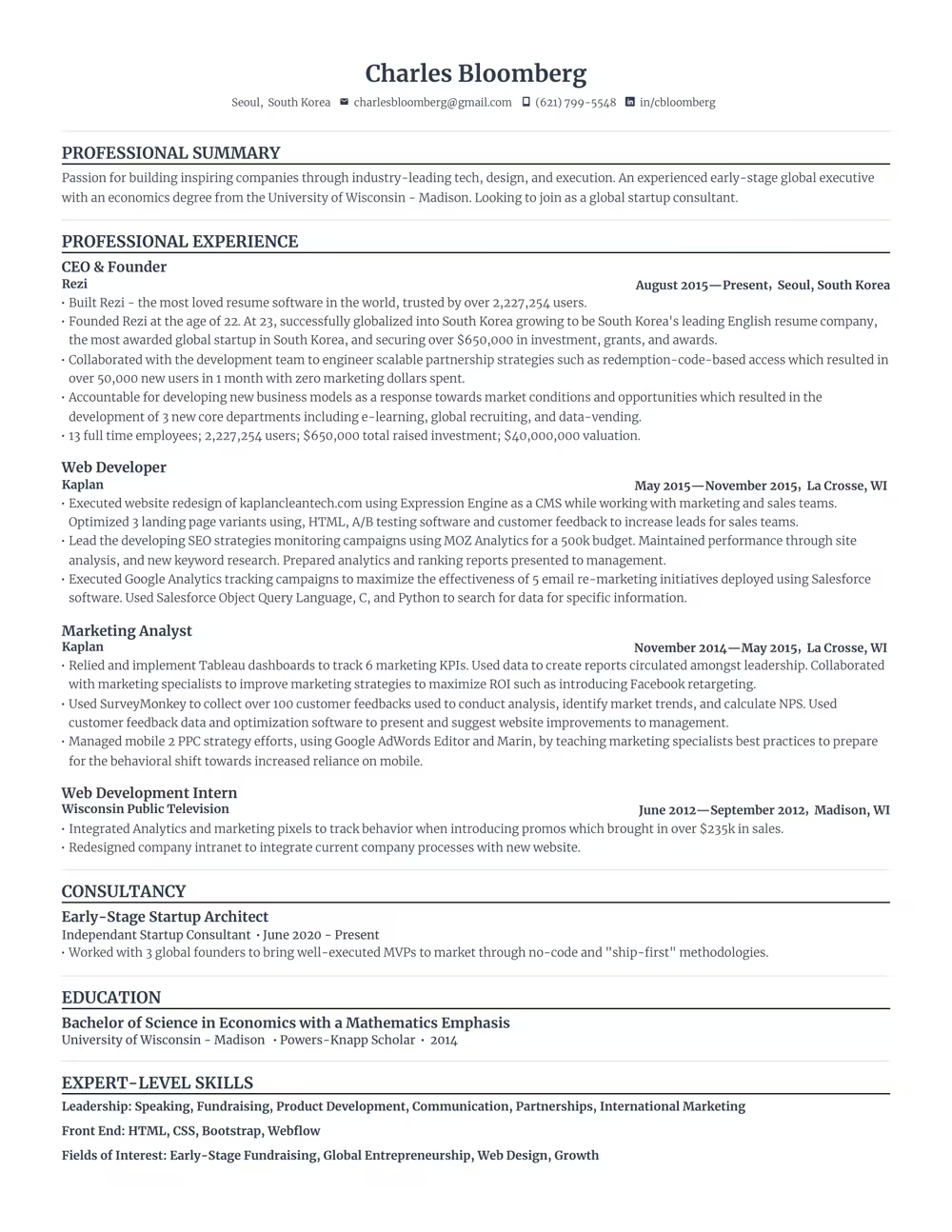
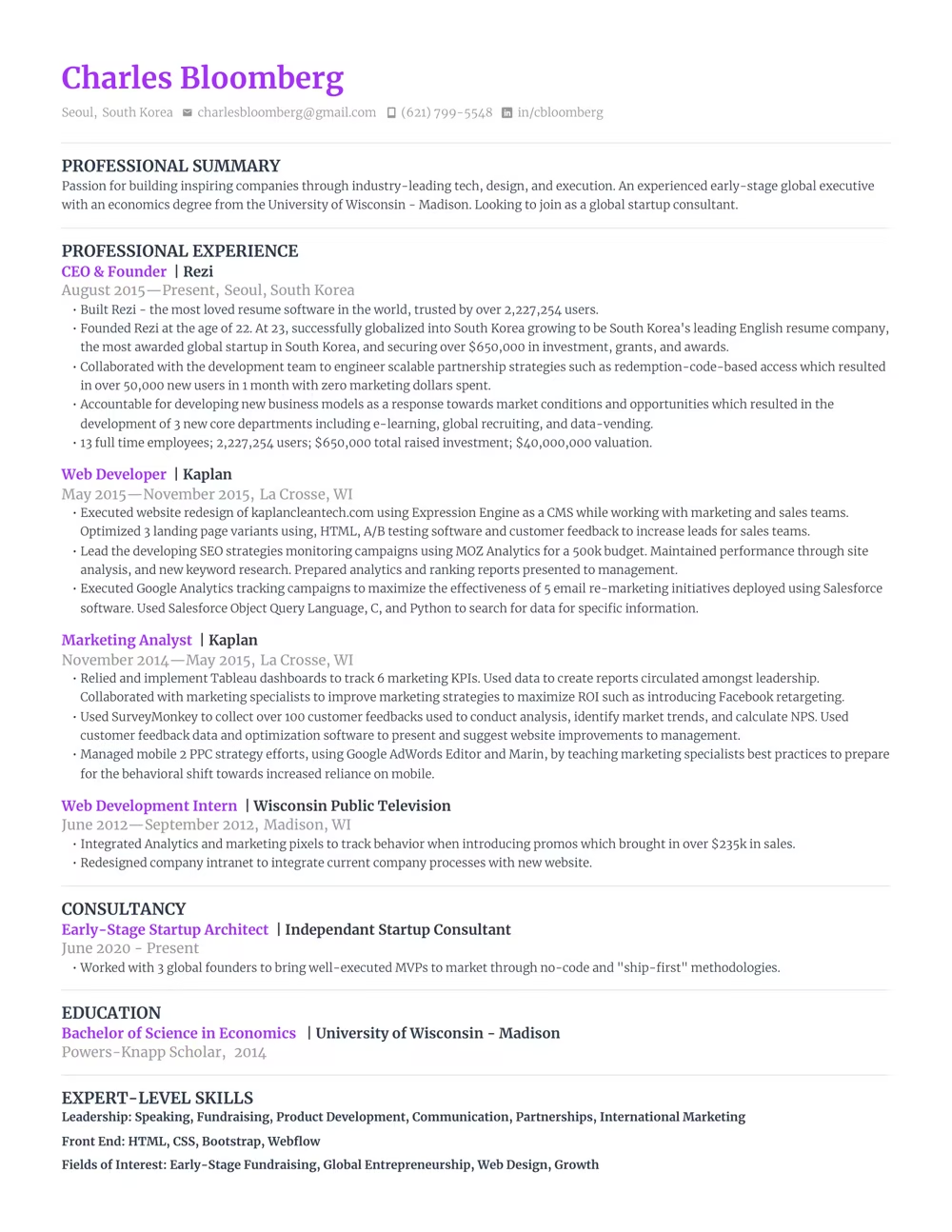
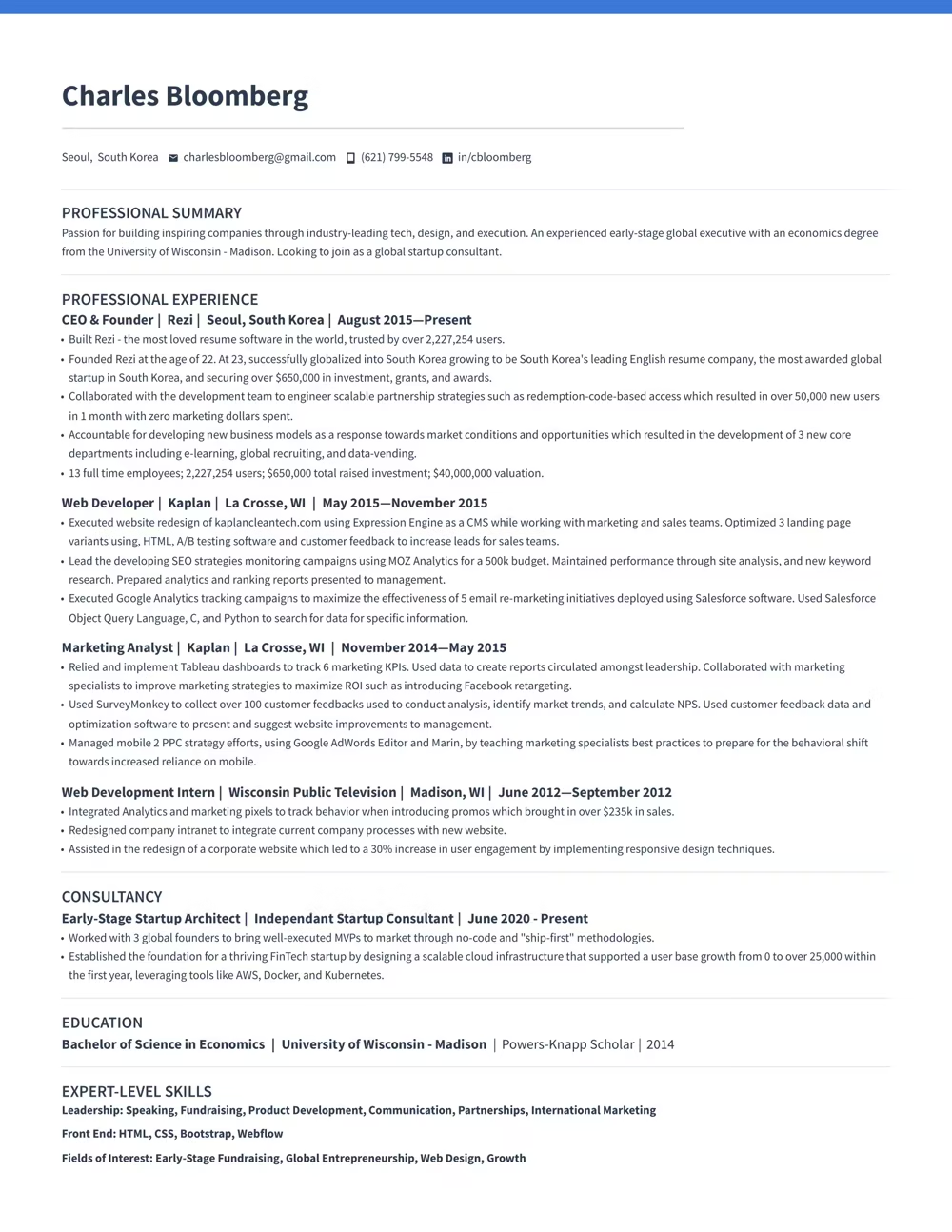
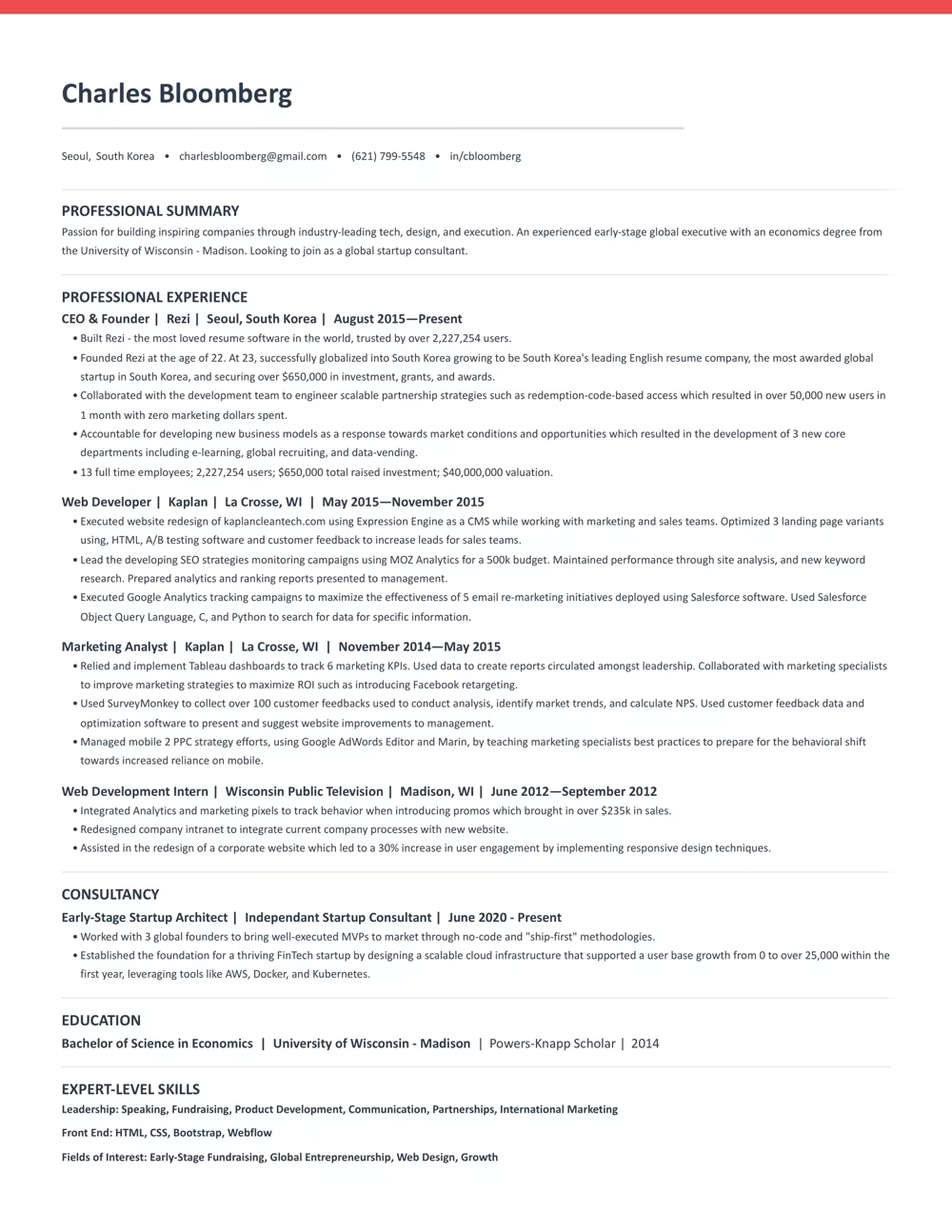
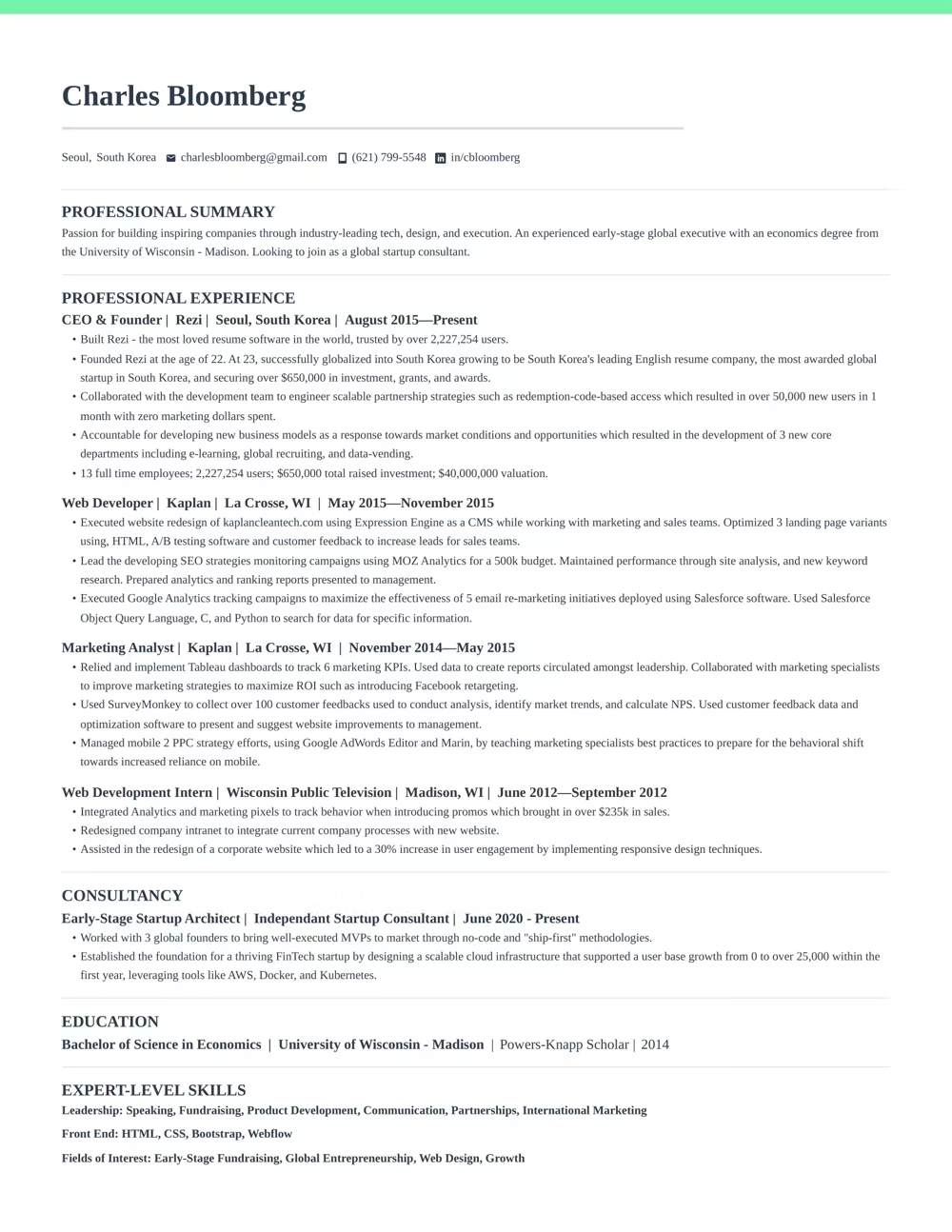
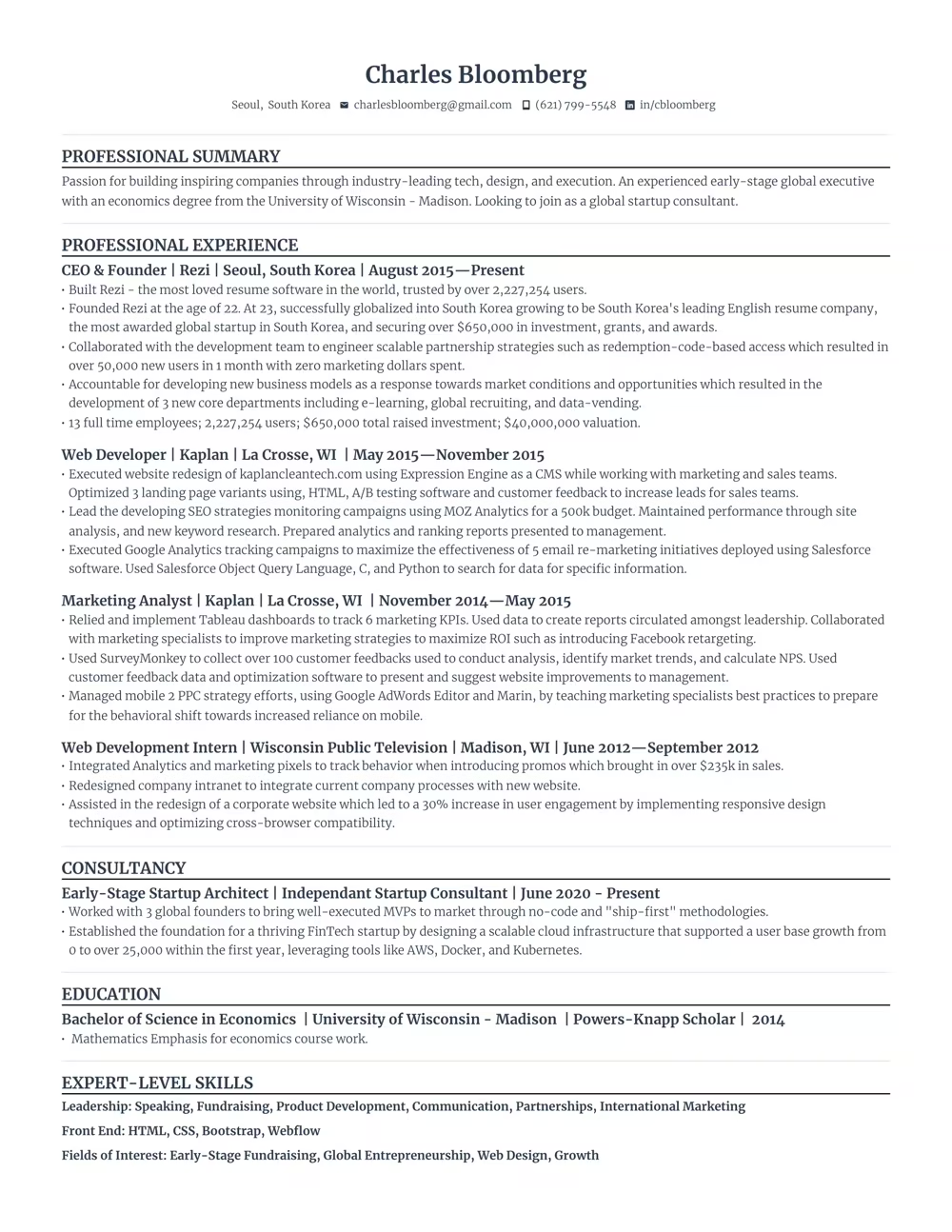
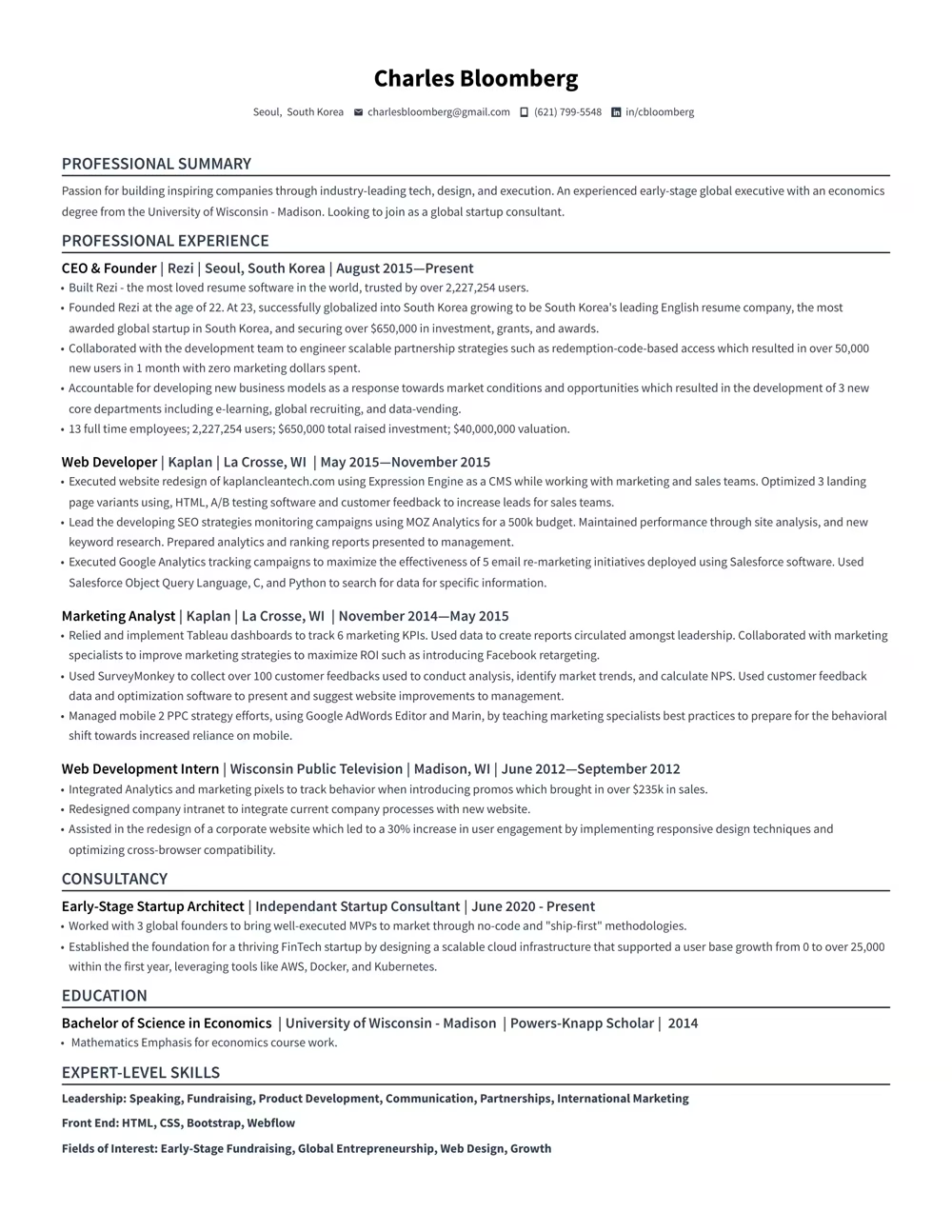
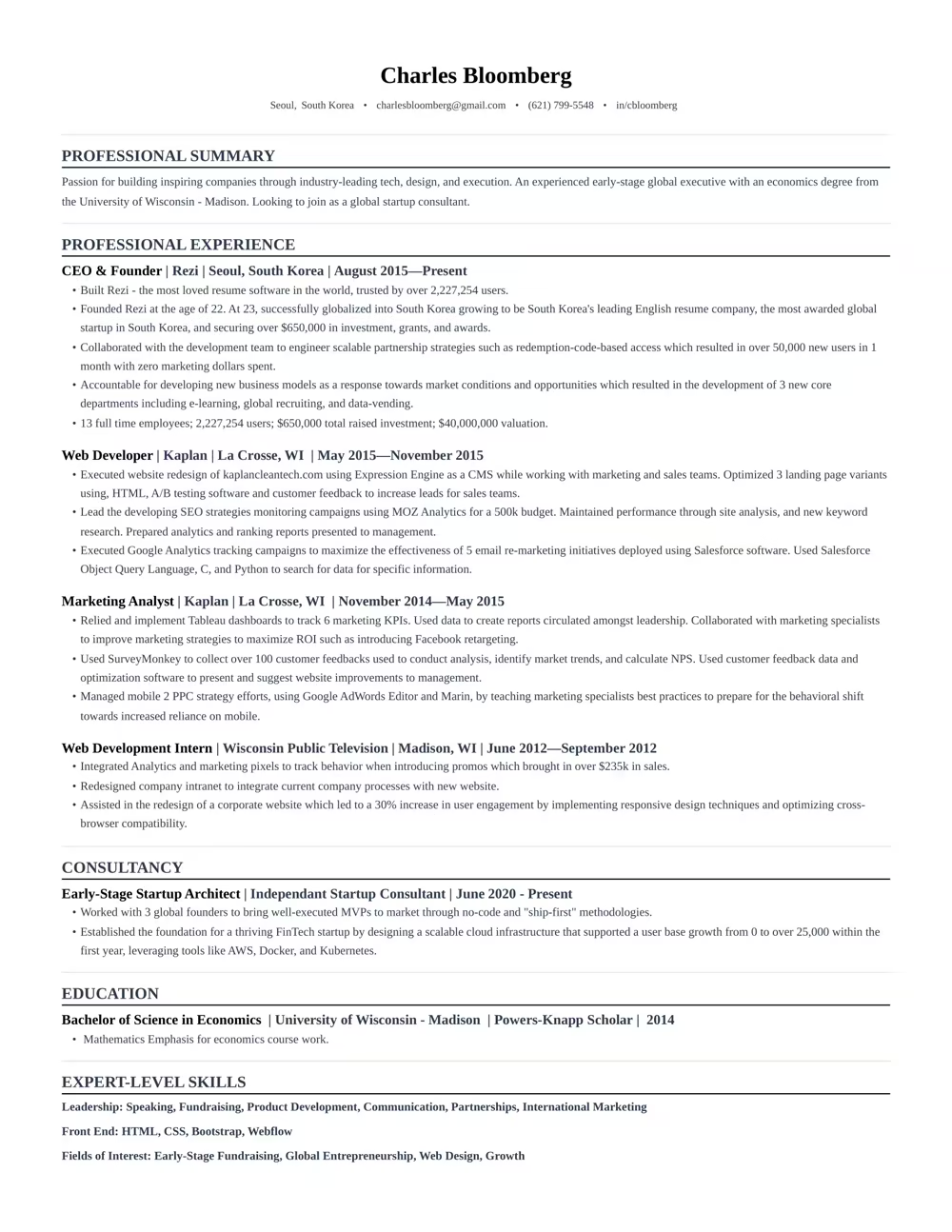
Take a look at some top-notch sample resumes for Senior UX Managers across different specializations and leadership angles. Find one that matches your profile and use it as a reference point (or feel free to steal it — just make sure to adjust the wording to reflect your own career journey).
Senior User Experience Manager
A Senior User Experience Manager resume should showcase your ability to lead end-to-end UX across multiple product areas. Emphasize team leadership, design systems oversight, and your track record of improving key user experience metrics. Highlight how you've collaborated with product and engineering leadership to align design outcomes with business goals. Include examples of mentoring designers and scaling UX processes across an organization.
Senior UX Design Manager
For a Senior UX Design Manager, your resume should center on hands-on design leadership — how you've guided visual and interaction design teams through complex product challenges. Showcase your ability to set and maintain design quality standards, lead design critiques, and drive consistency through design systems. Emphasize collaboration with product managers and engineers, and highlight shipped products where your team's design work delivered measurable improvements.
Senior Product Design Manager
A Senior Product Design Manager resume should bridge product thinking and design execution. Highlight your experience embedding designers within product teams and driving outcome-oriented design. Showcase how you've influenced product roadmaps, facilitated discovery processes, and balanced user needs with business constraints. Demonstrate your ability to manage multiple squads simultaneously while maintaining design cohesion and advocating for user-centered decision-making at the leadership level.
Senior UX Research Manager
Your Senior UX Research Manager resume should emphasize your leadership of research programs that inform product strategy. Highlight your experience building and managing research teams, establishing research operations, and democratizing insights across organizations. Showcase a range of methodologies — from generative to evaluative — and demonstrate how your team's findings drove measurable product and business decisions. Include examples of presenting research to executive stakeholders effectively.
Director of UX
A Director of UX resume should demonstrate strategic leadership at scale. Emphasize your experience managing multiple UX teams, setting design vision, and influencing C-suite stakeholders. Highlight organizational design decisions — how you structured teams, defined career ladders, and built design culture. Showcase cross-functional partnership with VP-level product and engineering peers. Include metrics that reflect your impact: NPS improvements, conversion lifts, efficiency gains, or successful platform redesigns.
Head of User Experience
As a Head of User Experience, your resume should convey executive-level ownership of the entire UX function. Highlight your experience defining UX strategy, managing department budgets, and reporting to C-level leadership. Showcase how you've built UX organizations from the ground up or transformed existing ones. Include evidence of your impact on company-wide product quality, customer satisfaction scores, and your ability to champion design thinking across non-design functions.
Senior Digital Experience Manager
A Senior Digital Experience Manager resume should emphasize your expertise in managing user experiences across digital channels — web, mobile, apps, and emerging platforms. Highlight your understanding of omnichannel journeys, personalization strategies, and content experience. Showcase collaboration with marketing, product, and technology teams. Include metrics around engagement, conversion, and digital adoption. Demonstrate your ability to translate customer insights into cohesive digital experiences that serve both users and business objectives.
Senior UX Strategy Manager
For a Senior UX Strategy Manager, focus your resume on the intersection of business strategy and user experience. Highlight your experience conducting competitive analysis, defining experience visions, and aligning UX roadmaps with business objectives. Showcase frameworks you've developed to prioritize design investments. Demonstrate your ability to communicate strategic recommendations to executive audiences and translate complex research into actionable design direction that drives long-term product success.
How to Write a Senior UX Manager Resume
Short answer:
Focus on your leadership capabilities, design team outcomes, and the strategic impact you've had on products and organizations. Create a professional header with your name and contact details. Right below, write a 2–3 sentence resume summary outlining your most significant leadership accomplishments. Describe your work history in reverse-chronological order, focusing on team building, design strategy, and measurable user and business outcomes. Then, cover your education, including relevant certifications, list key skills, and add extra sections such as a portfolio link, speaking engagements, or publications.
Include all the necessary sections in the correct order
Here's the correct order of sections for most Senior UX Manager resumes:
- Header with contact information
- Resume summary or objective
- Work experience
- Education
- Skills
- Certifications
Depending on your current career situation, you can also throw in some additional sections. For instance:
- Portfolio link (this is practically expected for UX leadership roles)
- Speaking engagements and conference talks
- Publications or blog posts on UX topics
- Professional associations
- Volunteer or mentorship experience
Include everything that shows you're capable of doing what the job requires. Make every section count. If it doesn't clearly highlight your leadership skills or UX expertise, it doesn't belong on your resume.
At the Senior UX Manager level, a two-page resume is perfectly fine — and often expected. You have substantial experience to communicate. Just make sure every word earns its place.
More details here: What Sections to Include on Your Resume?
Now, I'll give you a high-level overview of how to write each section, going from top to bottom. Well… almost. The only exception is the resume summary section. While it comes right after your contact info, it's actually easier to write it last. More on that in a sec.
Create a professional resume header
- Start with your name and contact information. Include the basics: your full name, phone number, professional email address, location, and LinkedIn profile. For UX leadership roles, a link to your portfolio is practically mandatory — include it prominently.
- Right below your name, clearly state your professional title (e.g., Senior UX Manager or Senior User Experience Manager). This sets expectations and immediately positions you at the right level.
For more information, see: How to Create a Resume Header
Describe your work history
- Use reverse-chronological order. List your positions starting with the current or the most recent one.
- In each entry, include your job title, company name, location, and dates of employment.
- Below each position, write 3–7 bullet points — the more recent the position, the more bullet points you should include. Describe your responsibilities and, more importantly, your accomplishments.
- Use action verbs and quantify your achievements (e.g., "Built and led a team of 12 UX designers and researchers, increasing design output by 40% while improving product NPS from 32 to 51").
- Mention specific UX methodologies, design processes, and frameworks you implemented (e.g., design sprints, Jobs-to-be-Done, design systems). This demonstrates strategic thinking and helps you pass ATS scans.
- Highlight cross-functional collaboration — how you worked with product, engineering, data science, and executive leadership to drive user-centered outcomes.
Learn more about the best practices of this section with our detailed guide on how to describe your work experience on a resume.
List your degrees and detail professional learning
- In the education section, list your highest degree first, including the degree type, major, and institution. Common backgrounds for UX managers include HCI, cognitive psychology, design, information science, or computer science — but plenty of successful UX leaders come from non-traditional backgrounds.
- If you have substantial work experience, keep the education section brief — just the school and degree. If you're transitioning into UX management, add relevant coursework or bootcamp programs.
- If you have UX or design certifications (e.g., Nielsen Norman Group UX Management, Google UX Design Certificate, UXQB), either include them in an "Education and Certifications" section, or create a separate "Certifications" section and place it right below.
For an in-depth guide on how to describe your education on a resume, see: How to List Education on a Resume
List your most relevant skills in the skills section
- Include a mix of design and research tools, UX methodologies, and management skills that you are proficient in.
- Add soft skills such as leadership, stakeholder management, and mentoring. At the senior manager level, these aren't "nice-to-haves" — they're the core of the job.
- You can use two separate subsections — one for hard skills, one for soft skills — or organize them by category (tools, methodologies, leadership skills).
- Match your skills to the description of the job you're applying for. Don't just dump every UX buzzword you know. Highlight the areas of expertise where your experience genuinely overlaps with what the role requires.
Need some inspiration to get started? Here are some good skills to feature on your Senior UX Manager resume.
Design and research tools:
- Figma
- Sketch
- Adobe Creative Suite
- Miro / FigJam
- UserTesting
- Maze
- Dovetail
- Optimal Workshop
- Lookback
- FullStory / Hotjar
- Jira / Confluence
- Notion
UX methodologies and frameworks:
- Design Thinking
- Design Sprints
- Jobs-to-be-Done (JTBD)
- User Journey Mapping
- Service Design
- Lean UX
- Agile / Scrum (in design context)
- Usability Testing
- Information Architecture
- Design Systems
- Accessibility / WCAG Standards
- A/B Testing and Experimentation
Key soft skills for Senior UX Managers:
- Team Leadership and Mentoring
- Stakeholder Management
- Strategic Thinking
- Cross-Functional Collaboration
- Communication and Storytelling
- Hiring and Team Building
- Conflict Resolution
- Influence Without Authority
- Prioritization and Decision-Making
- Empathy
For a full-blown guide on listing skills on a resume, visit: How to Put Skills on a Resume
Use additional sections as further proof of your fit
Additional sections add depth to your resume and back up your claimed expertise. Good examples of extra sections to add to a Senior UX Manager resume are:
- Portfolio link. This is non-negotiable for most UX leadership roles. Include a clearly visible link to your online portfolio that showcases not just final designs, but your process, strategic thinking, and team leadership.
- Speaking engagements. If you've spoken at UX conferences, design meetups, or internal company events, list them. This signals thought leadership and your ability to represent design externally.
- Publications. If you've written for UX blogs, contributed to design publications, or authored case studies, include them in a dedicated section.
- Professional associations. Membership in organizations like UXPA, IxDA, or the Design Management Institute can showcase your commitment to the UX profession.
- Mentorship and teaching. If you've mentored junior designers through programs like ADPList, or taught UX courses, this reinforces your leadership credentials.
Highlight the most relevant information in a resume summary
Once you're done writing your Senior UX Manager resume, give it a full read. Pick the most relevant information and compile it into a summary paragraph. Place it right under the resume header.
- Be brief and to-the-point. In 3–4 sentences, sum up your career highlights, core competencies, and what you bring to the table. Consider this your chance to answer, "Why should you hire me to lead your UX team?" Tailor this section to match the employer's needs outlined in the job description.
- Use value-oriented language. Focus on how you can add value to the potential employer — mention team sizes you've managed, products you've shaped, and business outcomes you've driven through design.
Once you've completed the core sections of your resume, you can use Rezi AI Resume Summary Generator to automatically create a powerful summary, tailored to the job you're applying for. All you need to do is add the position and skills you want to highlight. The AI writer will do the rest.
More information here: How to Write a Job-Winning Resume Summary (with Examples)
For finishing touches, make sure your resume looks professional
- Use a clean and well-structured resume format. Yes, you're a design leader — but your resume isn't your portfolio. Prioritize readability, clear hierarchy, consistent formatting, and professional typography. Avoid overloading it with visual flair that could confuse ATS systems or distract from the content.
- At the Senior UX Manager level, a two-page resume is perfectly acceptable. But make sure every word conveys value. If something doesn't serve the story of your leadership and impact, cut it.
Learn more about proper resume formatting here: How to Format a Resume & What Standard Resume Format to Use
What Makes Senior UX Manager Resumes Different
In short: the emphasis on leadership, strategic influence, and design outcomes — not design execution.
This is where many UX professionals stumble when stepping into management-level job searches. If your resume reads like a senior IC designer's resume with "managed a team" sprinkled in, you're selling yourself short. Hiring decision-makers need to see that you think and operate like a leader — someone who builds teams, shapes strategy, and drives business impact through design.
Focus on people leadership, not just design skills
As a Senior UX Manager, you're expected to build, grow, and retain high-performing design teams. Your resume needs to reflect this clearly — it's the single biggest differentiator from an individual contributor resume.
What it means for you:
- Mention team sizes you've managed and how you structured your teams. Did you hire from scratch? Reorganize an existing team? Introduce new roles like content designers or UX researchers? Spell it out.
- Highlight mentoring and career development. Describe how you've grown junior designers into senior ones, or how you built career ladders and performance review frameworks. This signals you're a true people leader.
Focus on design outcomes, not deliverables
Nobody hiring a Senior UX Manager cares how many wireframes your team produced. They care about what those wireframes led to. Quantifying impact is critical at this level.
What it means for you:
- Detail the success of design initiatives through tangible metrics — conversion rate improvements, task completion rate increases, NPS lifts, customer support ticket reductions, or revenue impact tied to UX improvements.
- Describe the scope and complexity of the products and platforms you've led design for. Enterprise SaaS? Consumer mobile? B2B2C marketplace? This context helps hiring managers assess your fit quickly.
Focus on strategic influence
What separates a Senior UX Manager from a team lead is the ability to influence product and business strategy through design. Hiring managers want to see evidence that you operate at the strategy table, not just the pixel level.
What this means for you:
- Describe situations where your UX insights changed the direction of a product, shifted a roadmap priority, or uncovered a new market opportunity. Show that you use design and research as strategic tools.
- Highlight how you've partnered with VP-level product and engineering peers to align on vision and priorities. Cross-functional influence is a defining skill at this level.
Focus on process and operations
Senior UX Managers don't just lead people — they build the systems and processes that allow design organizations to scale. This operational layer is often overlooked on resumes, but it's highly valued by hiring teams.
What this means for you:
- Describe design operations you've introduced — design systems, critique frameworks, research repositories, design-dev handoff processes, or DesignOps roles you created.
- Mention how you've embedded design into the product development lifecycle. Did you introduce design sprints? Establish UX review gates? Create a research-driven prioritization process? These details set you apart.
Focus on career progression
Your Senior UX Manager resume should tell a clear story of growth — from hands-on design work to leading designers to shaping design strategy at an organizational level.
What this means for you:
- Highlight your transition from IC roles to management, and how your earlier hands-on experience informs your leadership style today.
- Show how the scope and complexity of your responsibilities expanded over time — from managing a single product team to overseeing multiple squads, or from leading a small UX function to building a design department.
Bonus Resources for Senior UX Managers
This isn't going to be a game-changer if you need a resume today. But —
I want you to treat your career holistically. These resources will help you up your UX leadership game, add some juice to your future resumes and, generally, keep you sharp in a field that evolves fast.
Professional associations and networks
User Experience Professionals Association (UXPA)
UXPA is one of the most established professional organizations for UX practitioners. It offers conferences, publications, local chapters, and networking opportunities specifically tailored to user experience professionals at all levels.
Interaction Design Association (IxDA)
IxDA brings together interaction designers and UX professionals worldwide through its annual Interaction conference, local meetups, and online community. It's a great network for staying connected to design leadership conversations.
Design Management Institute (DMI)
DMI focuses specifically on design leadership and management, making it uniquely relevant for Senior UX Managers. Their research, events, and publications are geared toward professionals who lead design at an organizational level.
Online learning platforms
Nielsen Norman Group
NNGroup offers world-class UX training, including courses specifically on UX management, design leadership, and research operations. Their UX certification programs are widely respected in the industry and can meaningfully strengthen your resume.
Interaction Design Foundation (IxDF)
IxDF provides affordable, comprehensive UX courses taught by industry leaders. Their curriculum covers everything from foundational UX methods to advanced design leadership topics, with certificates recognized across the industry.
LinkedIn Learning
With a focus on professional development, LinkedIn Learning provides numerous courses on UX management, design leadership, team building, and strategic thinking — all directly applicable to Senior UX Manager roles.
Publications and blogs
Nielsen Norman Group Articles
NNGroup's research-based articles are the gold standard for evidence-backed UX insights. Their content on UX management, team structure, and design maturity is especially valuable for UX leaders.
Google Design Blog
Google's design blog shares insights from one of the world's largest design organizations, covering design leadership, inclusive design, material design evolution, and case studies from Google's product teams.
Smashing Magazine
A long-running publication that covers UX, design systems, accessibility, and emerging design trends. Their articles are practical and often written by working practitioners and design leaders.
Books for UX leaders
Org Design for Design Orgs by Peter Merholz & Kristin Skinner
This book is essentially the playbook for building and scaling design teams. It covers hiring, team structure, career ladders, and embedding design within organizations — essential reading for any Senior UX Manager.
Articulating Design Decisions by Tom Greever
A practical guide on communicating design rationale to stakeholders — a critical skill for UX managers who need to influence product direction and secure buy-in from non-design executives.
Summary
Here's what you need to know about writing a Senior UX Manager resume:
- Structure your resume with essential sections in this order: Header, Resume Summary, Work Experience, Education, Skills, and Certifications. Add extra sections like Portfolio, Speaking Engagements, or Publications when relevant.
- Include a professional header with your name, contact information, professional title, and a portfolio link.
- Describe your work history in reverse-chronological order, emphasizing team leadership, strategic contributions, and achievements with quantifiable business and user outcomes.
- In the education section, list your highest degree at the top. Include UX certifications either alongside your education or under a separate heading.
- Highlight a mix of design tools, UX methodologies, and leadership skills, tailoring them to the specific job description.
- Use additional sections — portfolio, speaking engagements, publications, professional associations — to further demonstrate your expertise and thought leadership.
- Once done writing the resume, compile the key information into a brief, value-oriented resume summary at the top.
- Keep the format clean and professional — let your portfolio handle the visual showcase. Your resume should prioritize readability and ATS compatibility.
- Above all, make it clear that you're a leader who drives design strategy and business impact, not just a senior designer who happens to manage people.
Thanks for reading! Got any questions? Feel free to reach out to me on LinkedIn. (Or check out the FAQs first — maybe your question is answered there.)
FAQ
Should I include a link to my portfolio on my Senior UX Manager resume?
Absolutely — and it should be prominently placed in your header. But here's the thing: your portfolio at this level should focus on leadership and process, not just polished UI. Include case studies that show how you led teams, made strategic decisions, and drove outcomes. A portfolio that only showcases your individual design work won't match the seniority of the role you're targeting.
What keywords should I use on my Senior UX Manager resume?
Use terms like design leadership, UX strategy, design systems, user research, cross-functional collaboration, design operations, usability testing, stakeholder management, and team mentoring. Include specific tools like Figma, Dovetail, or UserTesting. Mention certifications like NNGroup UX Management or Google UX Design Certificate if you have them. Mirror the language used in the job description.
How do I show leadership if my title was "Senior UX Designer" but I managed people?
This is more common than you'd think. In your bullet points, explicitly describe the management work you did — hiring, mentoring, running design critiques, managing workload across a team, or leading cross-functional initiatives. You can also add a brief clarifying note like "Senior UX Designer (Team Lead)" to make the management scope clear without misrepresenting your title.
What's the most common mistake on Senior UX Manager resumes?
Writing a resume that reads like an individual contributor's. If your bullet points focus on "designed wireframes" and "created prototypes" without mentioning team leadership, strategic impact, or business outcomes, you're underselling yourself. At this level, hiring managers want to see how you led people and influenced product direction — not just what you personally designed.
Should I list every design tool I've ever used?
No. List the tools that are relevant to the role you're targeting and that you're genuinely proficient in. At the Senior UX Manager level, interviewers care far more about your leadership philosophy, strategic thinking, and ability to drive outcomes than whether you know InVision vs. Figma. Include key tools, but don't let the tools section overshadow your leadership credentials.
I'm transitioning from a UX IC role into UX management. How should I approach my resume?
Focus on any informal leadership you've already demonstrated: mentoring junior designers, leading design sprints, running critiques, managing projects, or collaborating with product leadership on strategy. Highlight outcomes where your influence extended beyond your own work. Include any management training, leadership courses, or UX management certifications you've completed. Frame your career trajectory as a natural evolution from practitioner to leader.
How important are certifications for Senior UX Manager roles?
They're not typically required, but they can strengthen your resume — especially if you're transitioning into management or if the hiring company values formal credentials. Nielsen Norman Group's UX Management certification carries significant weight. Google's UX Design Certificate is better suited for earlier-career professionals but can still signal commitment to the field. Don't rely on certifications alone — experience and demonstrated impact matter most.