Michael Tomaszewski

About this author

Michael Tomaszewski, CPRW, is a resume and career advice expert with 7+ years of experience in the hiring industry.

As a writer and editor, he’s helped millions of readers and dozens of one-on-one clients create resumes and cover letters that *finally* do their talents and accomplishments justice. Michael’s insights have been featured in CIO, Best Life Online, Rewire, GOBankingRates, and Lattice, among others.

At Rezi, Michael’s mission is to help you take the awkwardness and guesswork out of the job hunt. He explains how to find jobs worth your while, how to reach out to the right people, craft a stellar application, and land that gig. Effortlessly.
Key achievements
  • PARWCC Certified Professional Résumé Writer (2019)
  • >3M readers follow his career advice every month
  • Cited by 20+ academic publications
Skills & Interests
Personal branding
Storytelling with data
Literary criticism

Recent blog posts

Resume

Why Is It So Hard to Write a Good Resume?

There’s science behind the horrible writer’s block you experience any time you start putting together a resume. And the cool thing is, this article is here to help you overcome that writer’s block.
Resume

How Many Pages Does a Good Resume Have?

A good resume is typically one page long for most professionals, especially if you have under 10 years of experience. However, if you’re a senior professional, executive, or academic with extensive experience, a two-page resume is perfectly acceptable — and sometimes even necessary.
Resume

Should Resume Bullet Points Have Periods?

In most cases, resume bullet points should not have periods, unless each bullet point is a complete sentence. The key is consistency: if you end one bullet point with a period, make sure all bullet points in that section (or ideally, your entire resume) follow the same rule.
Resume

How to Fit a Resume on One Page? [Quick Answer]

To fit your resume on one page, focus on relevance and formatting. Remove older or less relevant experiences, keep bullet points concise, use a clean layout with optimized spacing, and adjust margins and font size (within reason). Prioritize what best matches the job you’re applying for — quality over quantity always wins.
Resume

Where Should Education Go on a Resume?

Your education section should usually go near the bottom of your resume and below your work experience, unless you’re a recent graduate or your education is your strongest qualification. In that case, place it near the top, right after your summary or skills section.
Resume

How Long Should a Resume Objective Be?

Your resume objective should be no longer than 2–3 sentences, ideally around 30–50 words. Keep it concise, specific to your target role, and focused on what you bring to the employer rather than what you hope to gain.
Resume

Should a Resume Summary Be Written in the First Person? [Quick Answer]

No, your resume summary should not be written in the first person, even though it refers to you. It’s standard practice to omit personal pronouns like “I” or “my” while still keeping the tone personal and direct. For example, instead of writing “I managed a team of five,” you’d write “Managed a team of five.”
Resume

What's the Best Resume Format for AI Resume Screening?

The most AI-screening-friendly resume format is a clean, single-column reverse-chronological (or hybrid) layout that uses standard section headings, minimal visual styling, saved as a .doc, .docx, or a PDF file. Avoid exotic fonts, columns, graphics, and hidden headers or footers.
Resume

How to Use AI to Tailor a Resume to the Job Description?

To use AI to tailor your resume to a job description, paste both your resume and the job posting into an AI tool, and prompt it to match your skills, keywords, and experience to the employer’s requirements. The AI will rewrite or refine your content to better align with the role while maintaining accuracy. Always review the output for truthfulness and natural tone before submitting.
Resume

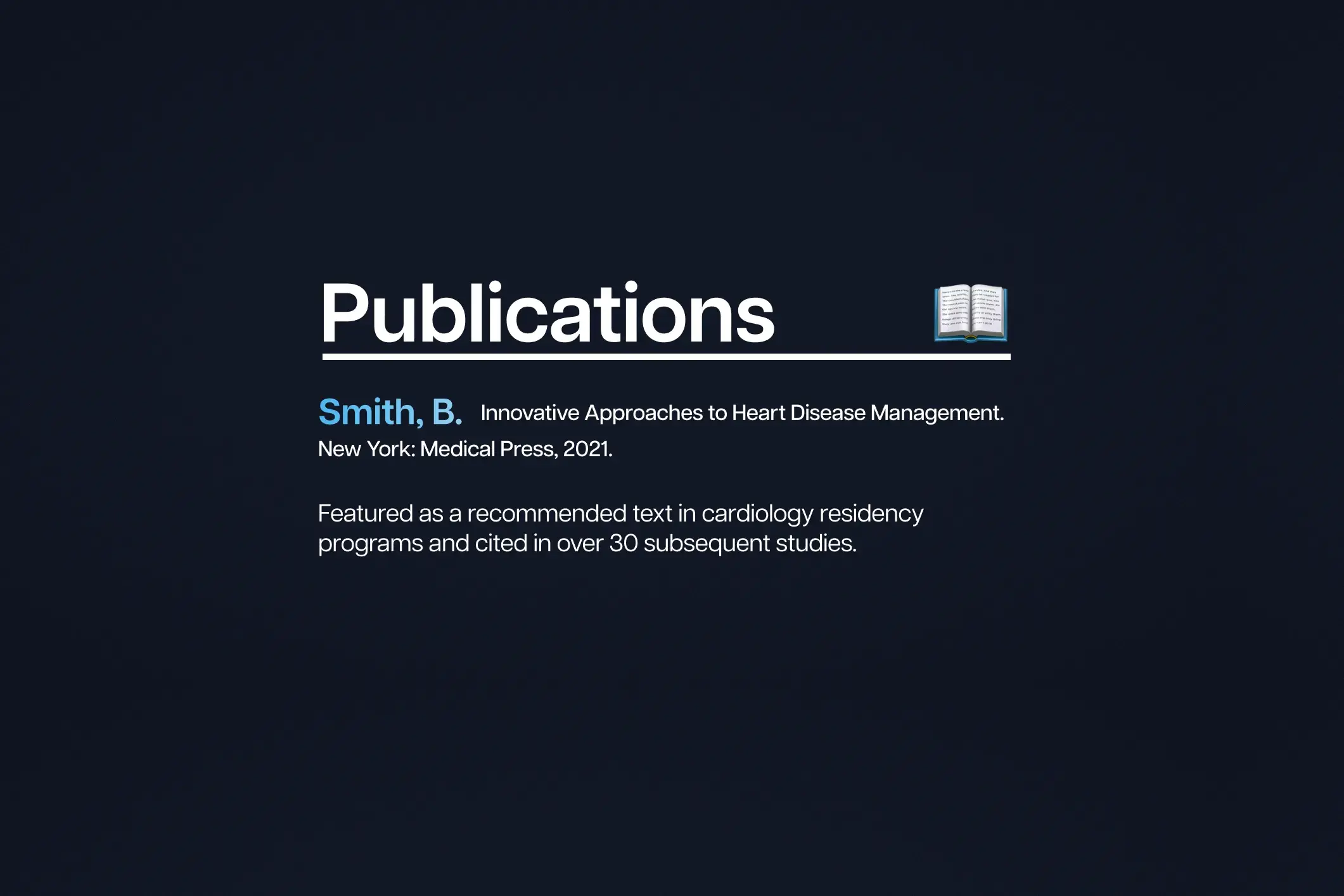
How to List Publications on a Resume (Examples)

Learn how to list publications on your resume with confidence. This guide covers what to include, how to format it, and tips to showcase your expertise effectively.
Company News

Improved Rezi Dashboard Organization: List View, Resume Sorting, Sections

Our latest update will make resume building easier, quicker, and more organized. Here’s what’s new.
Resume

The Best Resume Format: 20+ Examples + How-to Tips

How to format a resume the right way and how to choose the best of the three standard resume formats, depending on your current career circumstances. Plus, examples of well-formatted resumes you can steal.
Resume

100+ Resume Summary Examples for All Jobs + Easy How-to

Learn how to write a resume summary that immediately positions you as a top candidate for this job. Plus, over a hundred of sample resume summaries for different jobs and industries to give you some inspiration.
Resume

The Best Skills to Put on a Resume: Examples for All Jobs

This is how you put skills on a resume for the greatest impact. Hint: it goes beyond just dumping skills in the skills section. In this guide, you’ll also get a comprehensive “master” list of the most in-demand skills in different industries.
Resume

Best Resume Objective Examples for 100+ Jobs (+How-to Guide)

Tips for writing a resume objective that turns heads. Plus, examples of 100+ pitch-perfect resume objectives for the most popular jobs.
Cover Letter

How to Write a Cover Letter for a Job in 2024 (+Examples)

This is how you write cover letters that actually convey your unique selling points and build a connection with the hiring managers—before you even get your foot in the door.
Comparisons

CV (Curriculum Vitae) vs. Resume: The Difference Explained

The difference between a CV and a resume explained (including a US perspective and an international perspective). Now you’ll always know which one to use to apply.

Recent user guides

No User Guides Found