
Barista Resume Examples for Every Level (2026)
Barista resume examples plus skills, summaries, and bullet points that win interviews — including how to describe a barista with no experience.

Published on
September 5, 2026
Updated on
September 5, 2026
You have pulled a thousand shots and steamed milk through a Monday rush, but turning that into a page a hiring manager scans in six seconds is a different skill entirely. A strong barista resume fits one page, uses standard section headings and keywords lifted straight from the job posting to stay ATS-friendly, and quantifies your work rather than listing vague duties. Below are barista resume examples and samples for entry-level, specialty-cafe, and shift-lead roles, plus the common mistakes—generic objectives, missing metrics, cluttered formatting—that get otherwise strong applications rejected before a human ever reads them.
A strong barista resume fits on one page and opens with a two- or three-line summary that names your experience level and your best coffee skill. Below that sits a skills section split into two groups: the technical side (espresso extraction, milk steaming, latte art, POS systems, food safety) and the people side (customer service, working under pressure, teamwork). Your work experience follows in reverse-chronological order, and every job is described in bullet points that lead with an action verb and, wherever possible, a number: cups per hour, average ticket size, upsell rate, customer satisfaction score. The whole thing is laid out in a clean, single-column format with standard headings so an applicant tracking system can read it, and it is tailored to the specific cafe you are applying to, because a high-volume chain and a slow-bar specialty roaster want to hear very different things.
If you have never worked behind a bar, you can still write a compelling barista resume by leaning on transferable skills from retail, hospitality, volunteering, or school, and by adding any coffee training or certifications you have earned. Experience is helpful, not mandatory; reliability, speed, and a genuine warmth with strangers are what coffee shops hire for, and those you can prove other ways.
Everything below shows you exactly how to do each of these, with full resume examples you can model, summary lines you can adapt, and bullet points that turn ordinary shifts into evidence.
A Barista Resume Example You Can Model
Before we break down each section, it helps to see a complete one-page barista resume so the advice has something to attach to. Here is a realistic example for a mid-level barista with a couple of years of experience at a specialty coffee shop.
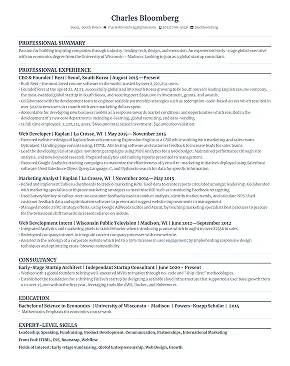
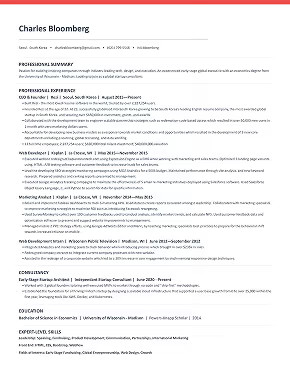
A mid-level barista resume: notice how the summary, skills, and quantified bullets work together on a single page.
A complete mid-level barista resume you can model.
Read it top to bottom the way a hiring manager does. The eye lands on the summary first, confirms the skills match in a glance, then drops into the experience for proof. Nothing is wasted, there is no photo, and the headings are plain words a machine can parse. That is the shape you are aiming for regardless of your experience level. If you want to build one from a blank page, our guide on how to build a resume from scratch walks through the same structure step by step.
How to Format a Barista Resume
Formatting is the first thing a hiring manager judges and the first thing software reads, so it is worth getting right before you write a single bullet. For nearly every barista, the best resume format is reverse-chronological: your most recent job at the top, working backward. It is what recruiters expect, and it makes your progression obvious at a glance.
Keep the layout to a single column. Two-column templates and heavy graphics look elegant to you and often turn to scrambled text inside an applicant tracking system. Use one standard font, clear section headings, and consistent spacing. A barista resume should include these sections, in roughly this order:
- Contact information — your name, phone number, professional email, and city. Skip your full street address; city and state (or town, for a UK CV) is plenty, and never use a joke email handle.
- Resume summary or objective — two or three lines directly under your name.
- Skills — a scannable block of hard and soft skills.
- Work experience — your jobs, each with quantified bullet points.
- Education — high school, college, or any coffee-specific training.
- Certifications (optional) — food handler card, barista courses, first aid.
Save and send the finished file as a PDF unless the job posting specifically asks for Word, since a PDF holds its formatting on any device. One page is the target; a barista resume that spills onto a second page almost always contains padding a manager would rather see cut. If yours is running long, the fix is usually tighter bullets, not a smaller font.
How to Write a Barista Resume Summary or Objective
The summary sits at the top and does one job: it tells the hiring manager who you are and why you fit before they read anything else. Use a summary if you have any relevant experience, and an objective if you are brand new and want to signal enthusiasm and direction instead. Either way, keep it to two or three lines and lead with something concrete.
Here are summary and objective examples for different experience levels that you can adapt to your own numbers and shop:
Experienced barista: Friendly, detail-oriented barista with 3+ years in high-volume specialty coffee shops, serving 200+ customers per shift with consistent speed and quality. Skilled in espresso extraction, milk steaming, and free-pour latte art, with a record of upselling seasonal drinks to lift average ticket size by 12%.
Entry-level / career changer: Reliable and energetic hospitality worker moving into coffee, with two years of fast-paced retail customer service and a completed home-barista course. Quick learner comfortable under pressure, eager to master espresso and latte art in a busy cafe.
No experience (objective): Enthusiastic and dependable high school graduate seeking a first barista role. Strong communication skills from volunteer and school work, a food handler certificate, and a genuine passion for coffee, ready to learn every drink on the menu and give every customer a warm start to their day.
Senior barista / shift lead: Senior barista and shift lead with 5+ years across independent and chain cafes, trained in specialty coffee brewing and staff onboarding. Trained 15+ new baristas, managed opening and closing procedures, and maintained a 4.8-star customer satisfaction rating across a 6-person team.
Notice what each one does: it names an experience level, states a headline skill, and where possible attaches a number. Vague openers like "hardworking team player looking for a challenging role" say nothing a hundred other applicants haven't said. Specifics are what make a summary worth the space it takes.
How Do You Write a Barista Resume Step by Step?
When you're staring at a blank page before applying to a cafe, it helps to build the resume in a fixed order rather than all at once. Start with your header (name, phone, email, city), then a 2-3 sentence summary, a skills list, your work experience in reverse-chronological order, and finally education and certifications. Draft the experience bullets first and write the summary last, so it reflects your strongest points. Here's the sequence with a filled-in template you can copy.
Skills to Put on a Barista Resume
Baristas are hired on a mix of coffee craft and people skills, and your skills section should show both clearly. The cleanest way to present them is to organize them into categories, which also helps when a job description groups its requirements the same way. Split your list into hard skills (the technical, teachable ones) and soft skills (how you work and treat people).
Hard skills
- Espresso extraction and grinder calibration
- Milk steaming and free-pour latte art
- Manual brewing methods (pour-over, French press, AeroPress)
- POS systems and cash handling
- Food safety and food handler certification
- Inventory, restocking, and equipment cleaning
- Drink recipe accuracy and menu knowledge
Soft skills
- Customer service and rapport-building
- Working under pressure during rush periods
- Teamwork and clear communication
- Attention to detail and consistency
- Reliability and punctuality
- Adaptability across shifts and stations
Two rules make this section pull its weight. First, mirror the language of the job posting: if it asks for "specialty coffee" experience or "cash handling," use those exact phrases when they are true of you, because that is what both the hiring manager and the applicant tracking system are looking for. Second, do not just list soft skills, prove them in your work experience. Anyone can type "customer service skills"; a bullet showing you handled 200 orders a shift with a 4.8-star rating is the proof that makes the claim believable.
How to Write the Work Experience Section
Your work experience is where the resume is won or lost, because it is the only section that offers evidence rather than assertion. For each job, list your title, the cafe or employer, the location, and your dates, then write three to five bullet points underneath. The trick is to write accomplishments, not duties: instead of describing what the job involved, describe what you did well and what happened as a result.
Every strong bullet starts with an action verb and, where you can, ends with a number. Numbers give a hiring manager something to picture. Here are barista bullet point examples you can adapt:
- Prepared 150–200 espresso-based and specialty drinks per shift with a 98% order-accuracy rate during peak hours.
- Upsold seasonal beverages and pastries, increasing average ticket size by 12% over six months.
- Trained 8 new baristas on espresso calibration, milk steaming, and POS procedures, cutting ramp-up time by roughly a week.
- Maintained a 4.8/5 customer satisfaction score across 400+ reviews by remembering regulars' orders and resolving complaints on the spot.
- Managed opening and closing duties, including cash reconciliation and daily equipment cleaning, with zero till discrepancies over 12 months.
- Kept the bar and seating area compliant with food safety standards during health inspections, passing all checks.
If you do not have exact figures, estimate honestly. You know roughly how many customers you served on a busy morning and roughly how big your team was; a reasonable, defensible number is far stronger than no number. This is also the natural place to answer what a barista actually does: the five core responsibilities most managers care about are preparing coffee and espresso drinks to recipe, delivering fast and friendly customer service, handling payments and the POS accurately, keeping equipment and the workspace clean and food-safe, and restocking and managing inventory. Show those five things happening in your bullets and you have described the role better than any job-title line could.
Writing a Barista Resume With No Experience
The most common worry from first-time applicants is that an empty work-experience section sinks them before they start. It does not. Coffee shops hire plenty of people with no barista history, because what they truly need — reliability, speed, and warmth with customers — shows up in all kinds of other work. Your job is to make those transferable skills visible.
Start with an objective rather than a summary, then build the resume around what you do have: retail or restaurant jobs, volunteering, school activities, sports teams, anything that involved serving people, handling money, or working as part of a team under time pressure. A cashier who kept a queue moving is demonstrating exactly the composure a rush demands. Add any coffee-specific credentials, even self-taught ones: a home-barista course, a latte art workshop, or a food handler card all signal genuine interest and a head start. Here is what an entry-level barista resume with no direct experience can look like.
An entry-level barista resume built on transferable skills, school activities, and a food handler certificate rather than prior coffee jobs.
Frame every non-coffee bullet in language a cafe manager relates to. "Served 50+ customers per shift at the concession stand while handling cash and card payments" shows barista skills described in barista terms, even though it happened at a ballpark. That translation is the whole game when you are starting out.
Tailoring Your Resume to the Cafe and Job Description
A resume that reads identically for every application is a resume that fits none of them perfectly. Different coffee shops reward different things, and a five-minute tailor to each posting noticeably improves your odds. Read the job description and the shop before you send anything, then adjust your summary, skills, and top bullets to match.
| Cafe type | What to emphasize |
|---|---|
| High-volume chain (e.g. a Starbucks barista role) | Speed, consistency, order accuracy under pressure, POS fluency, handling long queues, teamwork across a big crew. |
| Independent specialty / slow bar | Coffee knowledge, manual brewing, latte art, origin and roast awareness, building relationships with regulars. |
| Cafe with heavy food service | Food safety, food handler certification, cross-training on kitchen or counter, upselling pastries and lunch items. |
| Shift lead or senior barista | Training new staff, opening and closing, inventory and ordering, scheduling support, resolving customer issues. |
Tailoring is not rewriting from scratch. It is reordering the bullets in your work history so the most relevant ones sit first, swapping a few skill keywords to match the posting's wording, and tweaking your summary's headline skill. If a listing mentions "specialty coffee" three times, that phrase belongs in your resume, provided it is true.
Making Your Barista Resume ATS-Friendly
Many cafes, especially chains and anything owned by a larger hospitality group, collect applications through software that scans your resume before a person sees it. If the software cannot read your file cleanly, a great resume can still be passed over, so a few plain-formatting habits matter. The reason is simple and checkable: these systems pull text out of your document to match it against the job, and anything that isn't plain text can get lost.
- Use a single-column layout with standard section headings ("Work Experience," "Skills," "Education"), not clever renamed ones.
- Avoid text inside images, text boxes, tables, headers, and footers, which parsers often skip.
- Stick to one common font and use real bullet points, not symbols or emoji.
- Include the exact keywords from the job description where they honestly apply — job titles, skills, tools.
- Save as a text-based PDF (or Word if requested), never a scanned image or a design-export flattened to a picture.
If you want to know how your draft scores before you send it, Rezi's Rezi Score checks your resume against ATS and recruiter best practices and tells you exactly what to fix, from missing keywords to weak bullet phrasing. It is a faster way to catch the small formatting issues that quietly cost interviews. For a broader look at what breaks a resume, our roundup of bad resume examples shows the mistakes worth avoiding.
A Senior Barista Resume Example
Once you have a couple of years behind the bar and have started training others or running shifts, your resume should shift its weight toward leadership, consistency, and operational detail. A senior barista or shift lead resume still fits on one page, but the summary and top bullets now foreground people and process management alongside coffee craft.
A senior barista resume emphasizing staff training, shift leadership, and inventory management on top of core coffee skills.
Compare this with the mid-level example earlier and you can see the progression a hiring manager wants to read: from making excellent drinks, to making them fast under pressure, to helping a whole team do the same. If your career has moved that way, let the resume tell that story rather than repeating the same barista-and-cashier bullets you used three years ago.
Add a Short Barista Cover Letter
A cover letter is not always required for barista work, but for independent shops, specialty roasters, and manager-track roles it can tip a close decision your way, because those employers hire on personality and fit as much as on skills. Keep it to three short paragraphs: why this specific cafe, what you bring, and a warm close. Here is a sample you can adapt.
A short, specific barista cover letter that names the shop and leads with genuine enthusiasm rather than a generic template.
The one thing that separates a cover letter that works from one that gets skimmed is specificity: mention the actual cafe, why its coffee or atmosphere appeals to you, and one concrete thing you would bring to the bar. Rezi can generate a tailored cover letter and even help you practice the interview that follows, so the momentum from a strong application carries all the way through.
Final Tips Before You Send
A few habits separate the resumes that get callbacks from the ones that get filed. Proofread twice, then read it aloud once, because a typo on a resume that claims "attention to detail" undercuts your strongest selling point. Match the resume to each posting rather than blasting one version everywhere. Lead with numbers wherever you honestly can. And keep it to one clean page that a manager can absorb between customers.
Whether you are writing your first entry-level barista resume or leveling up to a senior role, the formula is the same: a sharp summary, skills that mirror the job, and work experience proven with numbers. Start from one of the examples above, swap in your own shops and figures, run it through a quick score, and you will have a resume that reads like someone who already knows their way around the bar.
Frequently asked questions
How long should a barista resume be?
One page. Baristas rarely need more, and hiring managers who fill shift-based roles skim fast, so a single focused page beats two padded ones.
Should I put a photo on my barista resume?
No. In the US and UK, employers usually ask you to leave it off, and a photo takes up space a manager would rather see filled with your experience and skills.
Do I need a cover letter to apply for a barista job?
It is not always required, but a short cover letter helps for busy specialty cafes and manager-track roles where personality and reliability matter. A three-paragraph note explaining why you want that specific shop is enough.
What file format should I send my barista resume in?
Send a PDF unless the posting asks for a Word document. A PDF keeps your formatting intact across devices, and modern applicant tracking systems read text-based PDFs without trouble.
How far back should my work experience go on a barista resume?
Roughly the last 10 years, or your three to four most recent relevant jobs. For entry-level applicants, include part-time, volunteer, or school roles that show customer service and reliability.

Upload or drop your resume to get started
Upload your resume to get started
Score my resume