
Human Resources Resumes
Chief Human Resources Officer Resume Examples & Tips for 2026
Customize any of these resumes in minutes using our free AI-powered resume builder.
“Rezi is super upfront and continues to improve over time. I've recommended Rezi to several of my friends and colleagues. I just love this product so much.”

Ricky M.
Software Engineer

“Rezi is super upfront and continues to improve over time. I've recommended Rezi to several of my friends and colleagues. I just love this product so much.”
Ricky M.
Software Engineer
Helping users land jobs at 1,000+ companies such as














Here's the thing most CHRO resumes get wrong: they read like a laundry list of HR functions. Benefits administration, payroll oversight, compliance management — sure, those matter. But they make you sound like a senior HR generalist, not a C-suite executive who shapes business strategy through people.
A compelling CHRO resume needs to tell a different story. It should demonstrate how you've used workforce strategy, organizational transformation, and talent architecture to drive measurable business outcomes. You're not just managing HR — you're sitting at the executive table influencing company direction.
And this is exactly what you'll learn from this article. Inside, you'll find:
- Examples of 8 CHRO and senior HR executive resumes, covering different title variations and specializations.
- Insider tips about what boards, CEOs, and executive recruiters actually look for in CHRO candidates.
- A step-by-step guide for building a Chief Human Resources Officer resume that positions you as a strategic business leader.
Sample Chief Human Resources Officer Resumes
Take a look at some top-notch sample resumes for CHRO and senior HR executive roles across different title variations. Find one that matches your profile and use it as a reference point (or feel free to steal it, just make sure to adjust the wording to reflect your own career journey).
Chief People Officer
A Chief People Officer resume should emphasize your role in shaping company culture, employee experience, and people-first strategy. Highlight how you've built inclusive workplaces, driven engagement scores, and aligned people operations with business growth. Showcase experience with organizational design, employer branding, and executive coaching. Demonstrate your ability to partner directly with the CEO and board on workforce vision and cultural transformation initiatives.
VP of People Operations
For a VP of People Operations resume, focus on your expertise in scaling HR infrastructure and optimizing people processes. Highlight your track record of building HR tech stacks, streamlining onboarding and performance management systems, and using data analytics to drive workforce decisions. Demonstrate how you've operationalized HR strategy across multiple locations or business units while maintaining efficiency and employee satisfaction.
Head of Human Resources
A Head of Human Resources resume should showcase your ability to oversee the full spectrum of HR functions while acting as a strategic partner to senior leadership. Emphasize experience in talent acquisition, employee relations, compensation design, and compliance. Highlight your success in managing HR teams, implementing policy changes, and driving organizational effectiveness. Include metrics around retention improvements, cost savings, and workforce planning outcomes.
Chief Talent Officer
Your Chief Talent Officer resume should center on talent strategy — how you attract, develop, and retain top performers at scale. Highlight experience building leadership pipelines, designing succession planning frameworks, and creating learning and development programs. Showcase your ability to use talent analytics to inform workforce planning. Emphasize partnerships with business leaders to ensure talent strategies directly support revenue growth and competitive positioning.
Senior Vice President of HR
An SVP of HR resume should demonstrate enterprise-level leadership across all HR disciplines. Emphasize your experience managing large, geographically dispersed HR teams and driving company-wide initiatives such as M&A integration, total rewards redesign, or digital HR transformation. Quantify your impact with metrics like headcount managed, budget oversight, and improvements in engagement or turnover. Show clear executive presence and board-level communication skills.
Executive Vice President of Human Resources
For an EVP of Human Resources resume, lead with your strategic influence at the highest levels of the organization. Highlight your role in shaping corporate strategy through people initiatives, including workforce restructuring, culture transformation during M&A, and executive compensation design. Demonstrate your experience presenting to boards of directors and partnering with C-suite peers. Include large-scale impact metrics and multi-year transformation outcomes.
Global Head of HR
A Global Head of HR resume should spotlight your experience managing human resources across multiple countries, cultures, and regulatory environments. Emphasize your expertise in global mobility, international labor law, and cross-cultural leadership development. Highlight how you've standardized HR practices across regions while respecting local nuances. Include metrics around global workforce size, international expansion support, and harmonization of benefits and compensation structures.
Chief HR Officer
A Chief HR Officer resume should balance strategic vision with operational excellence. Showcase your ability to lead enterprise-wide HR strategy, including talent management, organizational development, DEI, and total rewards. Emphasize your track record of partnering with the CEO and board to align people strategy with business objectives. Quantify achievements in areas like employee engagement, leadership development ROI, and cost-per-hire reduction.
How to Write a Chief Human Resources Officer Resume
Short answer:
Focus on your strategic impact, leadership of organizational transformation, and the business outcomes your people strategies have delivered. Create a professional header with your name and contact details. Right below, write a 2–3 sentence resume summary outlining your most significant accomplishments as an HR executive. Describe your work history in reverse-chronological order, focusing on enterprise-level initiatives and measurable business impact. Then, cover your education, including professional certifications, list key skills, and add extra sections such as board memberships, publications, or speaking engagements.
Include all the necessary sections in the correct order
Here's the correct order of sections for most CHRO resumes:
- Header with contact information
- Resume summary or executive profile
- Work experience
- Education
- Skills
- Certifications
Depending on your current career situation, you can also throw in some additional sections. For instance:
- Board memberships and advisory roles
- Speaking engagements and conference keynotes
- Publications and thought leadership
- Professional associations
- Awards and recognitions
Include everything that demonstrates you're a strategic business leader, not just an HR administrator. Make every section count. If it doesn't clearly highlight your executive capabilities, it doesn't belong on your resume.
For CHRO-level roles, a two-page resume is standard and expected. You need the space to properly convey the scope and impact of your executive career. That said, don't pad it — every line should convey value.
More details here: What Sections to Include on Your Resume?
Now, I'll give you a high-level overview of how to write each section, going from top to bottom. Well… almost. The only exception is the resume summary section. While it comes right after your contact info, it's actually easier to write it last. More on that in a sec.
Create a professional resume header
- Start with your name and contact information. Include the basics: your full name, phone number, professional email address, location, and LinkedIn profile. At the CHRO level, a polished LinkedIn presence is non-negotiable — executive recruiters will check it.
- Right below your name, clearly state your professional title (e.g., Chief Human Resources Officer or Chief People Officer). This immediately signals your executive positioning and sets the tone for the rest of your resume.
For more information, see: How to Create a Resume Header
Describe your work history
- Use reverse-chronological order. List your positions starting with the current or the most recent one.
- In each entry, include your job title, company name, location, and dates of employment. For CHRO roles, also note the company size (revenue, headcount) to provide context.
- Below each position, write 4–7 bullet points — the more recent the position, the more bullet points you should include. Describe your strategic responsibilities and, more importantly, the business outcomes you drove.
- Use action verbs and quantify your achievements (e.g., "Redesigned total rewards strategy across 12,000-employee organization, reducing voluntary turnover by 22% and saving $4.8M annually").
- If specific HR frameworks, methodologies, or technology platforms were pivotal in your roles (e.g., Workday implementation, organizational design frameworks), weave these details into your descriptions. This will also help you pass ATS scans.
Learn more about the best practices of this section with our detailed guide on how to describe your work experience on a resume.
List your degrees and detail professional learning
- In the education section, list your highest degree first, including the degree type, major, and institution. Many CHROs hold MBAs or advanced degrees in HR, organizational psychology, or business — if you have one, lead with it.
- At the CHRO level, you don't need to include coursework or GPA. Keep it clean: school name, degree, and graduation year.
- If you have HR certifications (e.g., SHRM-SCP, SPHR, GPHR), either include them in an "Education and Certifications" section, or create a separate "Certifications" section and place it right below.
For an in-depth guide on how to describe your education on a resume, see: How to List Education on a Resume
List your most relevant skills in the skills section
- Include a mix of strategic HR competencies (e.g., organizational design, workforce planning) and technical proficiencies (e.g., HRIS platforms, people analytics tools) that you are proficient in.
- Add in executive-level soft skills such as executive coaching, board communication, and change leadership. At the C-suite level, these aren't nice-to-haves — they're requirements.
- You can use two separate subsections, one for hard skills, one for soft skills, or just list all the skills under one heading.
- Match your skills to the description of the job you're applying for. At the CHRO level, job descriptions often emphasize specific strategic priorities (e.g., M&A integration, DEI transformation) — make sure your skills section reflects what the organization needs most.
Need some inspiration to get started? Here are some good skills to feature on your CHRO resume.
HR technology and tools:
- Workday
- SAP SuccessFactors
- Oracle HCM Cloud
- ADP Workforce Now
- Greenhouse / Lever (ATS)
- Visier (People Analytics)
- Cornerstone OnDemand
- BambooHR
- Tableau / Power BI (HR Dashboards)
- ServiceNow HR
Strategic HR competencies:
- Organizational Design
- Workforce Planning
- Total Rewards Strategy
- Talent Acquisition Strategy
- Succession Planning
- Mergers & Acquisitions (People Integration)
- Diversity, Equity & Inclusion (DEI)
- Labor Relations & Employment Law
- Change Management
- Executive Compensation Design
Key soft skills for CHROs:
- Executive Leadership
- Strategic Thinking
- Board-Level Communication
- Stakeholder Influence
- Executive Coaching
- Emotional Intelligence
- Crisis Management
- Cross-Cultural Competence
- Negotiation
- Visionary Thinking
For a full-blown guide on listing skills on a resume, visit: How to Put Skills on a Resume
Use additional sections as further proof of your fit
Additional sections add depth to your resume and back up your claimed expertise. Good examples of extra sections to add to a CHRO resume are:
- Board memberships and advisory roles. If you've served on corporate boards, nonprofit boards, or advisory committees, this demonstrates your strategic influence extends beyond your own organization.
- Speaking engagements. Keynotes, panel appearances, and conference presentations at events like SHRM Annual, HR Tech, or Unleash signal thought leadership and industry visibility.
- Publications and thought leadership. Articles in Harvard Business Review, Forbes, or HR industry publications show you're shaping the conversation, not just following it.
- Professional associations. Membership in organizations like SHRM, HRCI, or executive peer groups like the CHRO Board demonstrates ongoing commitment to the profession.
Highlight the most relevant information in a resume summary
Once you're done writing your CHRO resume, give it a full read. Pick the most relevant information and compile it into a summary paragraph. Place it right under the resume header.
- Be brief and to-the-point. In 3–4 sentences, sum up your executive career highlights, core competencies, and the value you bring to the organization. Consider this your chance to answer, "Why should the board hire me?" Tailor this section to match the employer's strategic priorities outlined in the job description.
- Use value-oriented language. Focus on how you've driven business results through people strategy, mentioning specific outcomes like revenue growth enabled, cultural transformations led, or organizational efficiencies achieved.
Once you've completed the core sections of your resume, you can use Rezi AI Resume Summary Generator to automatically create a powerful summary, tailored to the job you're applying for. All you need to do is add the position and skills you want to highlight. The AI writer will do the rest.
More information here: How to Write a Job-Winning Resume Summary (with Examples)
For finishing touches, make sure your resume looks professional
- Use a clean and executive-appropriate resume format. At the C-suite level, your resume should convey polish and gravitas. Use a professional font, consistent formatting, and clear section headings. Avoid flashy design elements — they signal inexperience at this level and can confuse resume screening software.
- A two-page resume is the standard for CHRO candidates. You need enough space to demonstrate the breadth and depth of your executive career. That said, every word should convey strategic value — no filler.
Learn more about proper resume formatting here: How to Format a Resume & What Standard Resume Format to Use
What Makes CHRO Resumes Different
In short: the emphasis on business strategy and organizational impact, not HR operations.
This is also what many senior HR leaders get wrong when writing their CHRO resumes. Hiring decision-makers — typically CEOs, board members, and executive search firms — don't need to see that you know how to run payroll or manage benefits enrollment. They need to see how you've used people strategy to transform businesses. That's the difference between an HR director resume and a CHRO resume.
Lead with business impact, not HR functions
At the CHRO level, you're not managing an HR department — you're shaping enterprise strategy. Your resume needs to reflect that you understand the business, not just the people side of it.
What it means for you:
- Frame your achievements in business terms. Instead of "Implemented new performance management system," write "Redesigned performance management framework that contributed to 18% improvement in revenue-per-employee across 3,500-person organization."
- Show that you understand P&L, revenue drivers, and competitive positioning. CHROs who can speak the language of business are the ones who get hired.
Demonstrate executive-level influence
CHROs don't just execute — they influence. Your resume needs to show that you've had a seat at the table and used it effectively.
What it means for you:
- Highlight your experience advising CEOs, presenting to boards of directors, and partnering with C-suite peers on enterprise-wide decisions.
- Mention specific strategic initiatives you championed — M&A integrations, IPO readiness, organizational restructuring, culture transformation — and the business outcomes they produced.
Showcase transformation, not maintenance
Organizations hire CHROs to change things, not keep them running. Your resume should tell a story of transformation.
What this means for you:
- Highlight before-and-after scenarios. What did the organization look like when you arrived, and what did it look like when you were done? Quantify the change wherever possible.
- Emphasize your experience leading through complexity — rapid growth, downsizing, digital transformation, cultural overhauls, or global expansion. These are the situations that define a CHRO's value.
Show the scope and scale of your leadership
At this level, context is everything. The same job title at a 200-person startup and a 50,000-person multinational tells very different stories.
What this means for you:
- Include company size (revenue and headcount), number of countries or regions you oversaw, HR team size you managed, and total HR budget you controlled.
- Show progression in scope over your career. If you went from leading HR for a single business unit to overseeing people strategy for an entire global enterprise, make that trajectory unmistakable.
Highlight your role as a culture architect
More than any other C-suite role, the CHRO is accountable for organizational culture. This is increasingly a board-level concern, and your resume should reflect your expertise here.
What this means for you:
- Describe specific culture initiatives you've led and their measurable impact — employee engagement scores, Glassdoor ratings, Great Place to Work certifications, or retention improvements.
- Show how you've embedded DEI, employee well-being, and values-driven leadership into the organizational DNA, not just launched programs.
Bonus Resources for Chief Human Resources Officers
This isn't going to be a game-changer for you if you need a resume now. But —
I want you to treat your career holistically. These resources will help you sharpen your strategic HR leadership, add credibility to your future resumes and, generally, keep you at the forefront of the rapidly evolving CHRO landscape.
Professional associations and networks
Society for Human Resource Management (SHRM)
The largest HR professional organization globally, SHRM offers certifications (SHRM-SCP), executive education, research, and advocacy. Their executive network provides valuable peer connections for senior HR leaders.
HR Certification Institute (HRCI)
HRCI offers globally recognized certifications including SPHR and GPHR. These credentials are especially valued in enterprise environments and signal deep expertise in strategic HR management.
The CHRO Board
An exclusive peer network for Chief Human Resources Officers at leading companies. It provides confidential forums, research, and benchmarking data specifically designed for top HR executives navigating complex strategic challenges.
The Conference Board
Offers research, peer communities, and executive convenings for CHROs focused on human capital, workforce trends, and corporate governance — excellent for staying ahead of macro workforce shifts.
Online learning platforms
Coursera & edX
Both platforms offer executive-level courses in organizational leadership, people analytics, and strategic HR management from top universities like Wharton, Michigan, and MIT. Great for deepening expertise in emerging areas like AI in HR.
LinkedIn Learning
With a focus on professional development, LinkedIn Learning provides courses on executive leadership, HR strategy, diversity and inclusion, and emerging HR technologies relevant to senior HR leaders.
Cornell HR Review
Published by Cornell University's ILR School, this online journal features student and practitioner perspectives on cutting-edge HR issues — useful for staying current with academic thinking on workforce strategy.
Publications
Harvard Business Review
HBR regularly publishes research and thought leadership on talent management, organizational culture, leadership development, and the evolving role of the CHRO. Essential reading for any HR executive who wants to speak the language of business.
People Matters
A global media platform focused on HR and work, offering insights on talent strategy, HR technology, leadership, and the future of work — particularly strong on global and Asia-Pacific perspectives.
Human Resources Online
A digital publication covering HR strategies, industry trends, and best practices across global markets, with a strong focus on practical, actionable insights for senior HR leaders.
Tools and software reviews
Capterra & G2
Both websites provide extensive reviews and comparisons of HRIS, ATS, performance management, and people analytics platforms — helping you evaluate the tools that will power your HR tech stack.
Josh Bersin
One of the most respected analysts in HR technology and talent strategy. His research, podcasts, and frameworks on HR tech, organizational design, and the future of work are invaluable for CHROs evaluating strategic investments.
Summary
Here's what you need to know about writing a Chief Human Resources Officer resume:
- Structure your CHRO resume with essential sections in this order: Header, Executive Summary, Work Experience, Education, Skills, and Certifications. If relevant, add extra sections like Board Memberships, Speaking Engagements, or Publications.
- Include a professional header with your name, contact information, and executive title (e.g., Chief Human Resources Officer).
- Describe your work history in reverse-chronological order, emphasizing strategic initiatives and business outcomes with quantifiable metrics — not just HR functions.
- Provide context for each role: company size, revenue, headcount, number of regions, and HR budget to communicate the scale of your leadership.
- In the education section, lead with your highest degree. List HR certifications (SHRM-SCP, SPHR, GPHR) either alongside education or in a dedicated section.
- Highlight a mix of strategic HR competencies, technology proficiencies, and executive soft skills, tailoring them to the job description.
- Use additional sections to demonstrate thought leadership, industry influence, and commitment to the profession.
- Once done writing the resume, compile the key information into a brief, value-oriented executive summary at the top.
- Lead with business impact and transformation — not HR administration. Show boards and CEOs that you're a strategic business leader who happens to lead through people.
- Keep the design clean and executive-appropriate. Two pages is standard at this level, but every line must earn its place.
Thanks for reading! Got any questions? Feel free to reach out to me on LinkedIn. (Or check out the FAQs first, maybe your question is answered there.)
FAQ
Should I use an executive resume writer or write my CHRO resume myself?
Either can work, but at the CHRO level, the stakes are high enough that working with someone who understands executive positioning can be valuable. If you write it yourself, the key is to think like a CEO reading your resume — they want to see strategic impact and business outcomes, not a comprehensive list of HR programs you've managed. Use the frameworks in this guide and you'll be well positioned.
How do I handle confidential information on my resume?
CHROs often deal with sensitive data — executive compensation, M&A details, restructuring plans. You can still quantify your impact without disclosing confidential specifics. Use percentages instead of exact figures ("reduced turnover by 25%" rather than revealing headcount), and describe strategic outcomes without naming specific individuals or proprietary processes.
I've been a CHRO at a small company. How do I compete for roles at larger organizations?
Focus on the complexity and breadth of your work, not just company size. Small-company CHROs often handle more diverse responsibilities than their counterparts at large enterprises. Emphasize your versatility, hands-on strategic involvement, and the outsized impact you've had relative to resources. Highlight any experience with scaling, rapid growth, or building HR functions from scratch — larger organizations value that entrepreneurial mindset.
Should I include my early-career non-HR roles on my resume?
If they're relevant to your CHRO candidacy, yes — but briefly. Many exceptional CHROs came from operations, finance, consulting, or business unit leadership before transitioning into HR. A one- or two-line mention of early roles that show business acumen can actually strengthen your positioning. Just don't let them take up prime real estate on your resume.
How important are certifications like SHRM-SCP or SPHR at the CHRO level?
They're helpful but rarely make-or-break at this level. Boards and CEOs care more about your track record of business impact than certification acronyms. That said, certifications demonstrate commitment to the profession and can help with ATS screening. If you have them, include them. If you don't, focus your energy on articulating your strategic impact instead.
How should I address gaps or short tenures on my CHRO resume?
At the executive level, short tenures raise more eyebrows than at other career stages. If you left a role after a brief period due to a merger, leadership change, or strategic disagreement, be prepared to address it — but your resume itself should focus on what you accomplished, not why you left. For gaps, briefly note any advisory work, board service, or consulting you did during that period. Executive recruiters understand that transitions at this level take time.
Should my CHRO resume include a cover letter?
At the C-suite level, many roles are filled through executive search firms, and the process often bypasses traditional cover letters. However, if you're applying directly or a cover letter is requested, use it strategically. Don't repeat your resume — instead, articulate your leadership philosophy, why you're drawn to the specific organization, and the one or two transformational outcomes you'd prioritize in the first year.

Upload or drop your resume to get started
Upload your resume to get started
Score my resume
Contents

Resume Formats & Examples
ATS-Friendly resume formats that land jobs
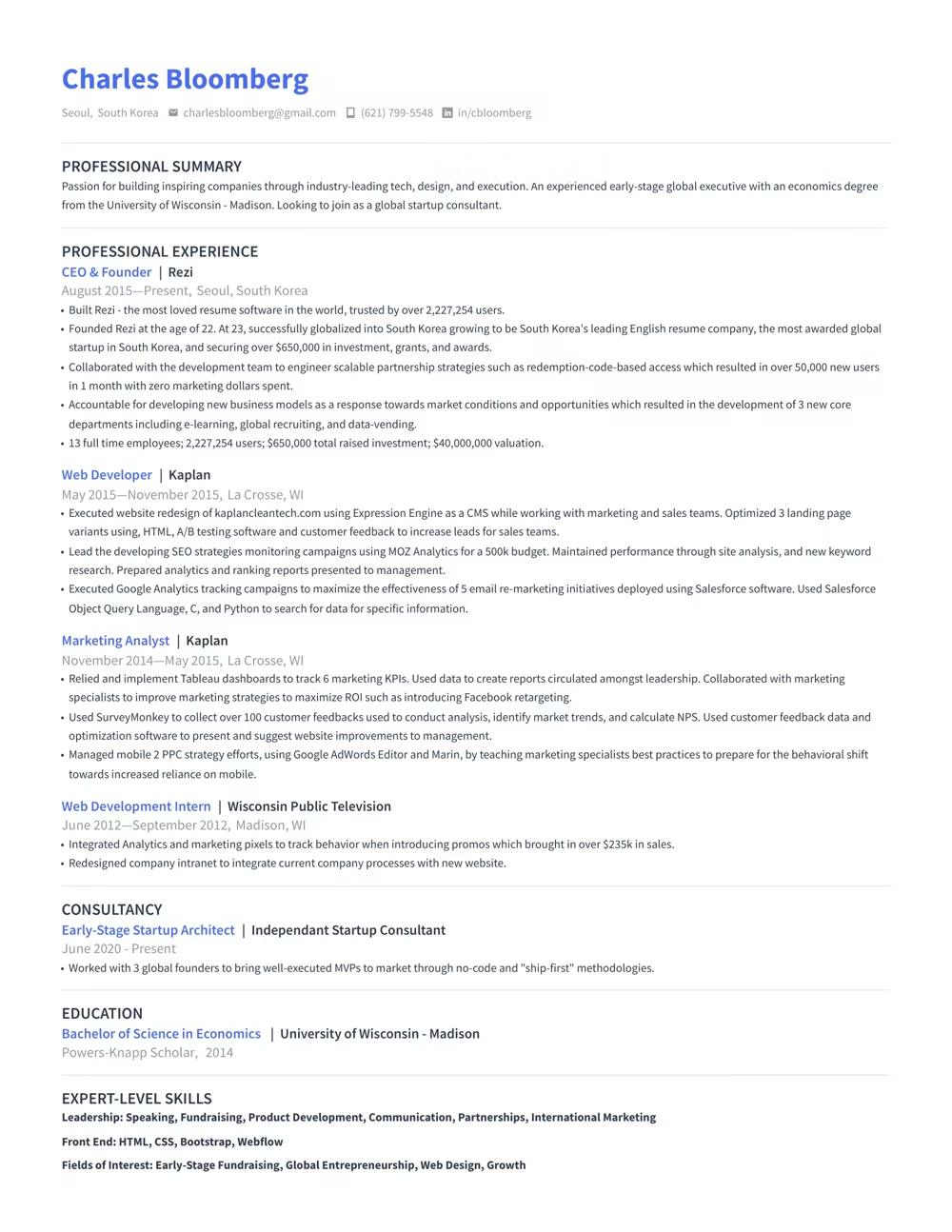
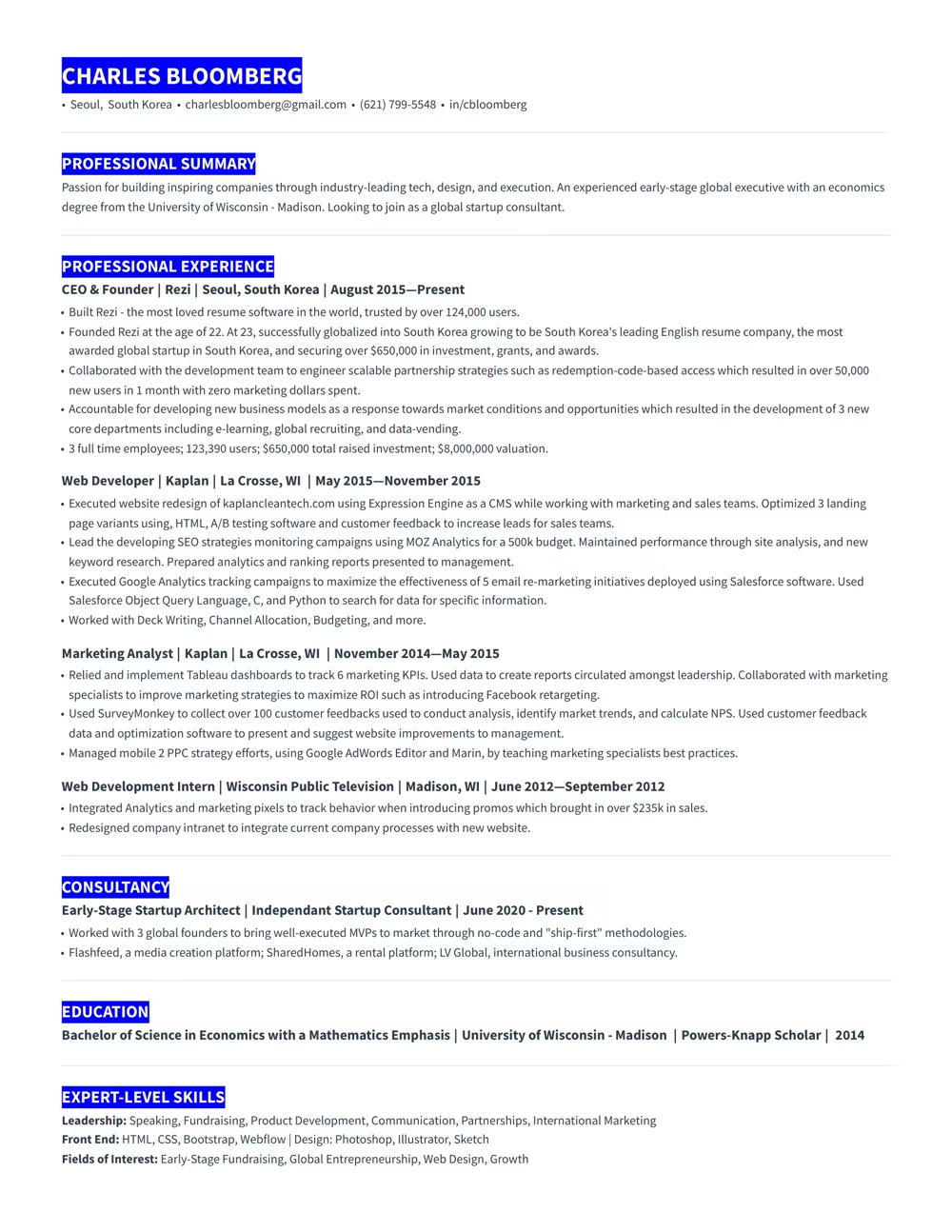
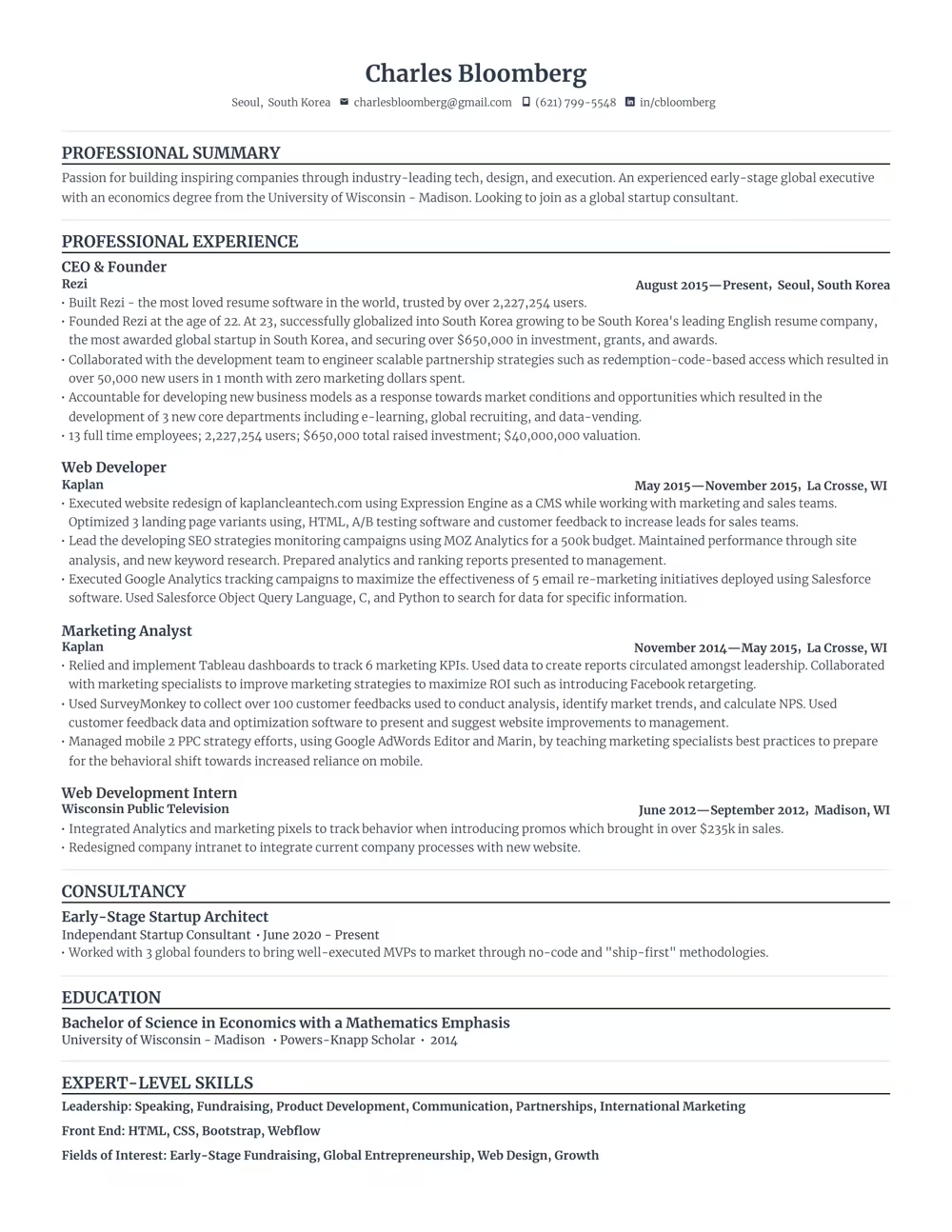
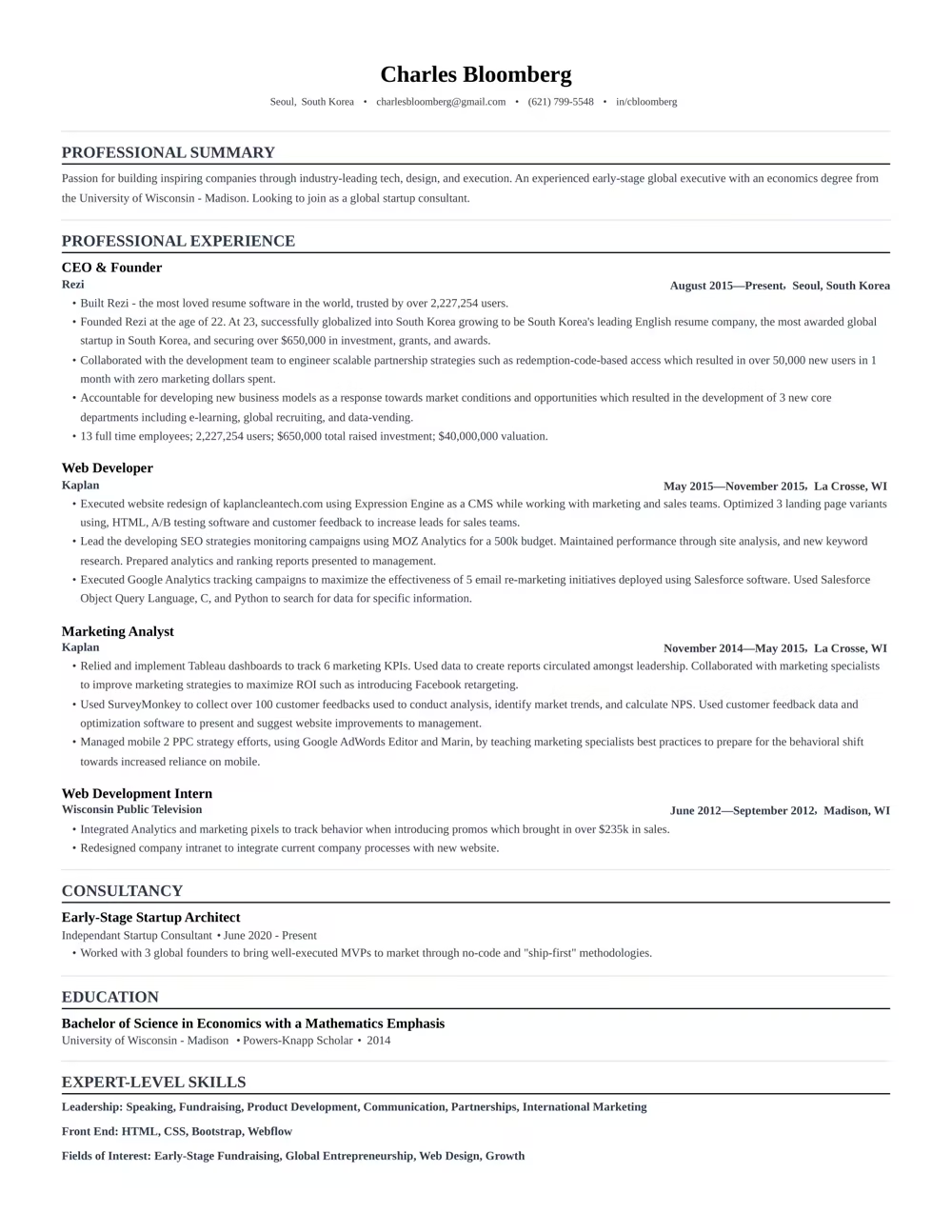
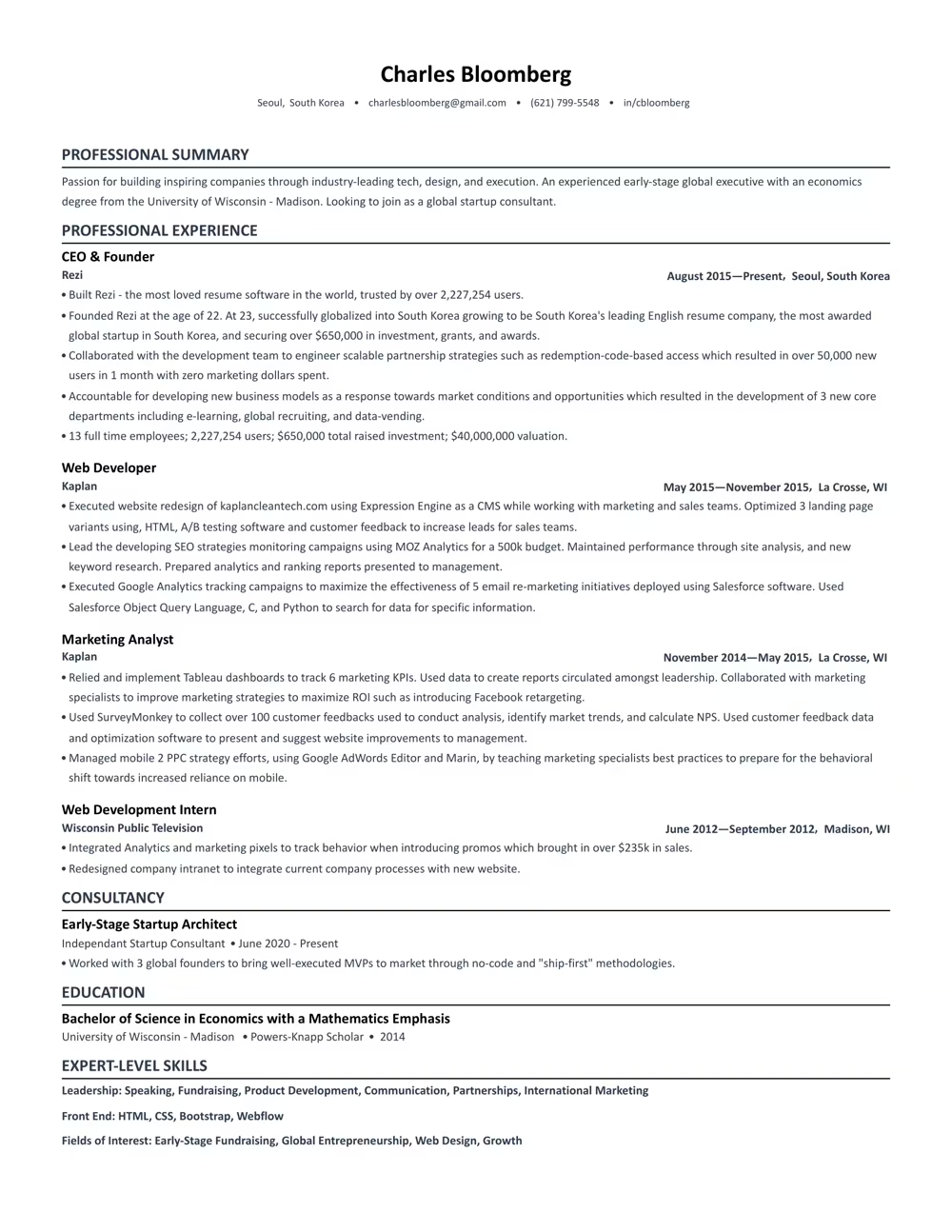
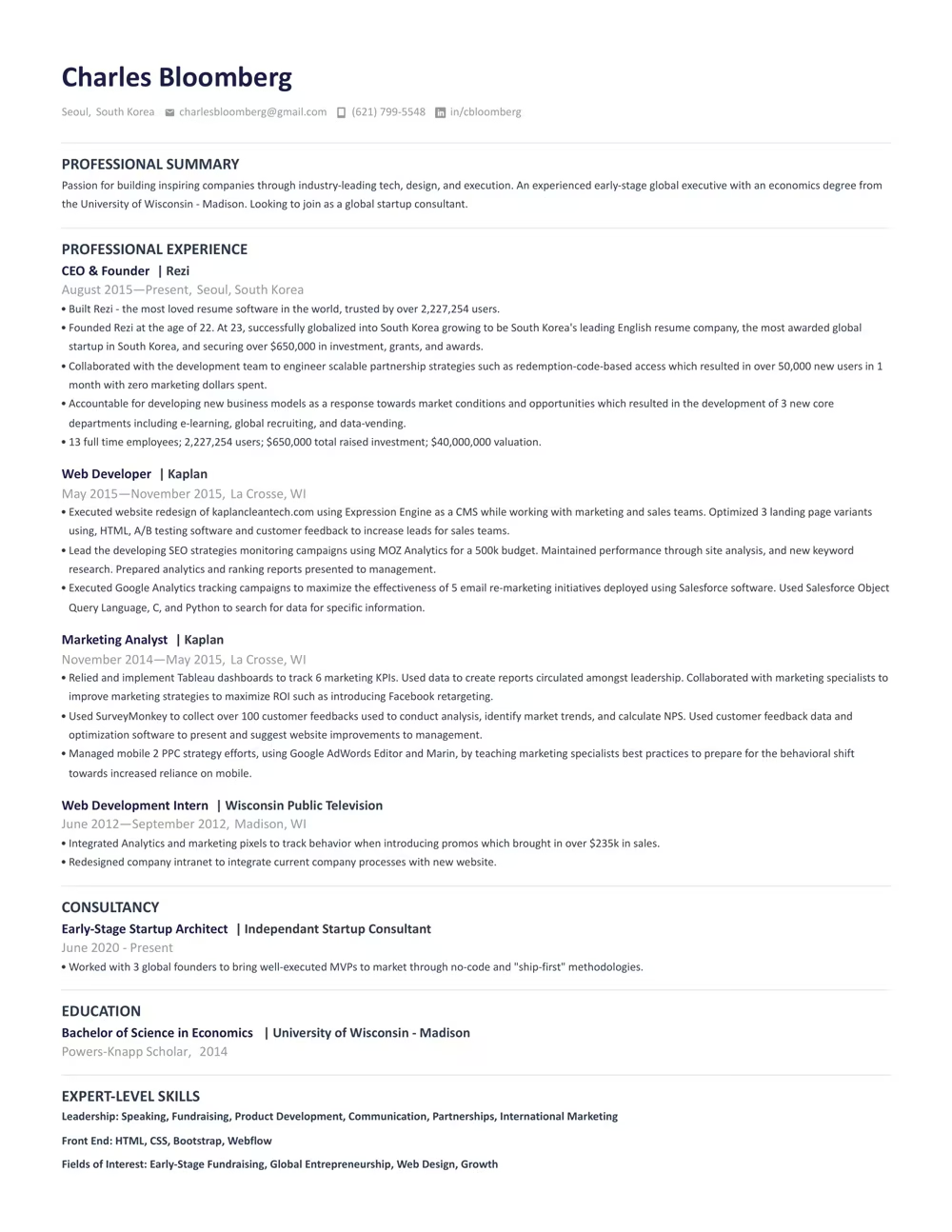
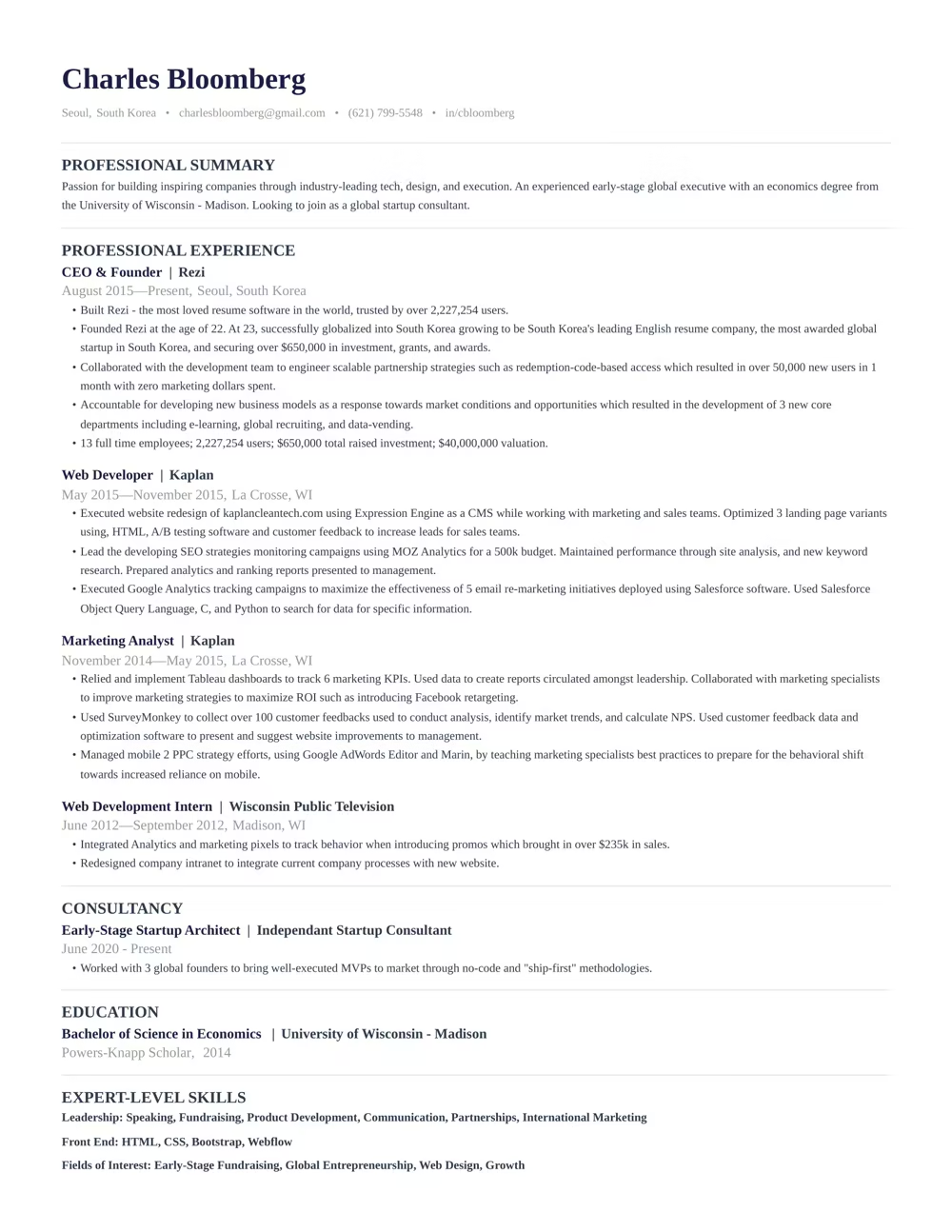
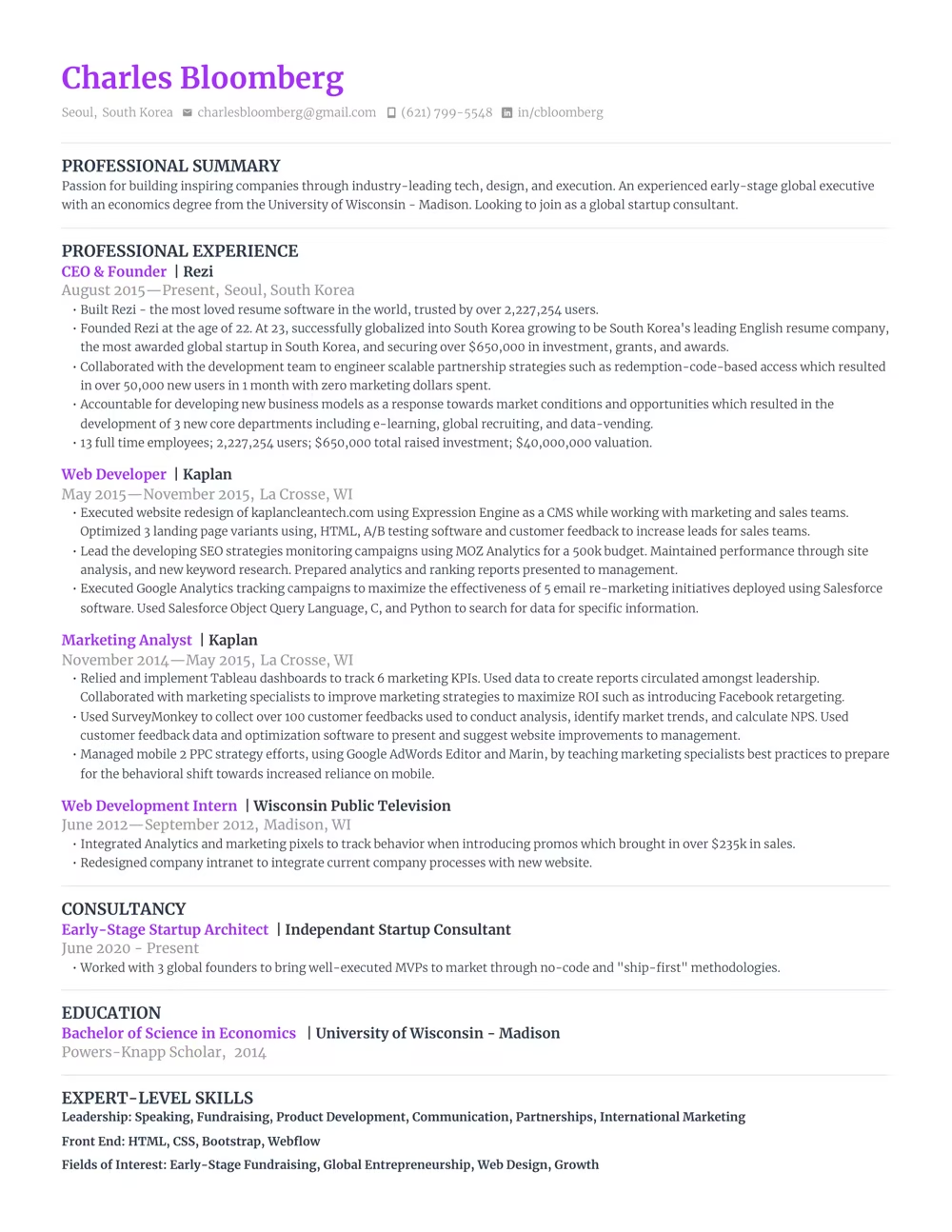
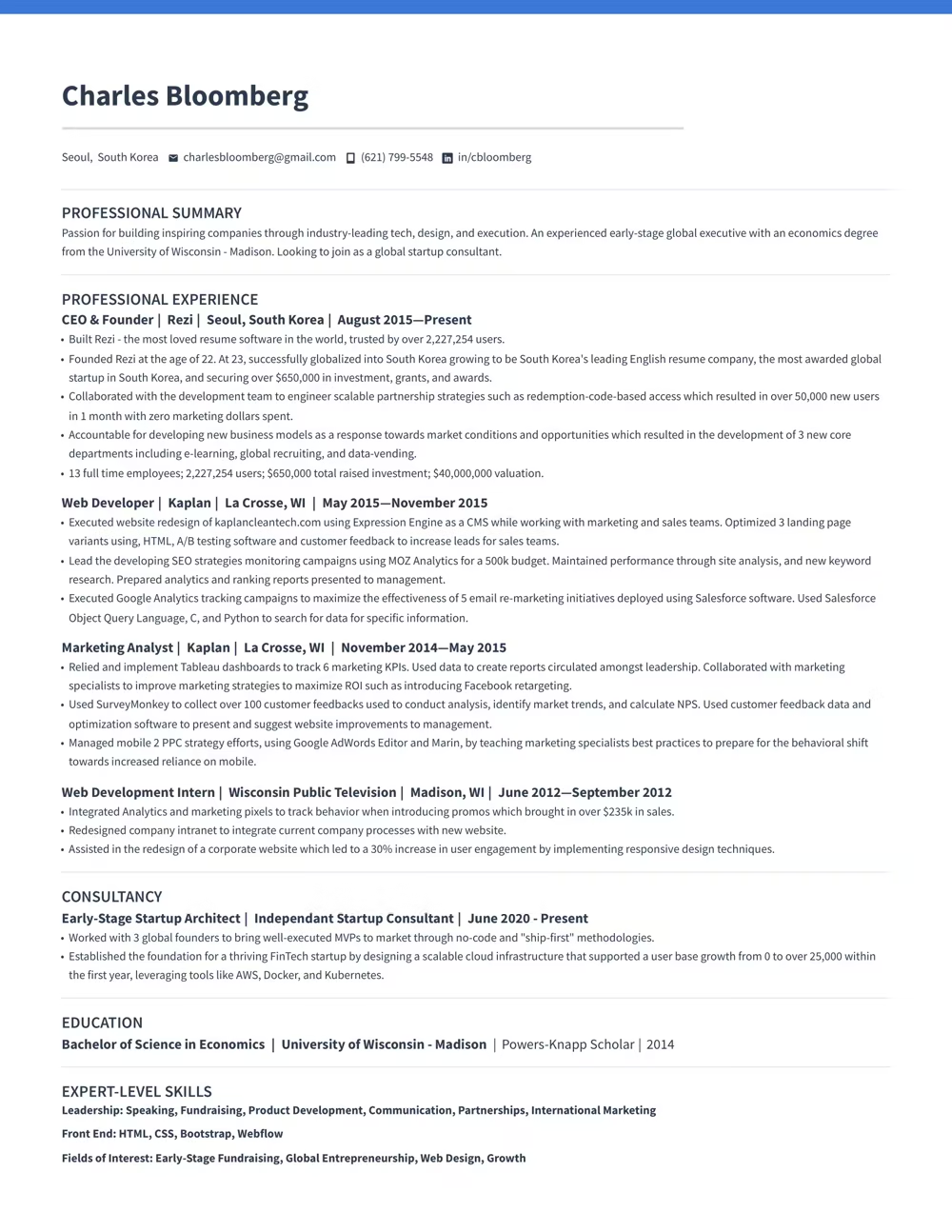
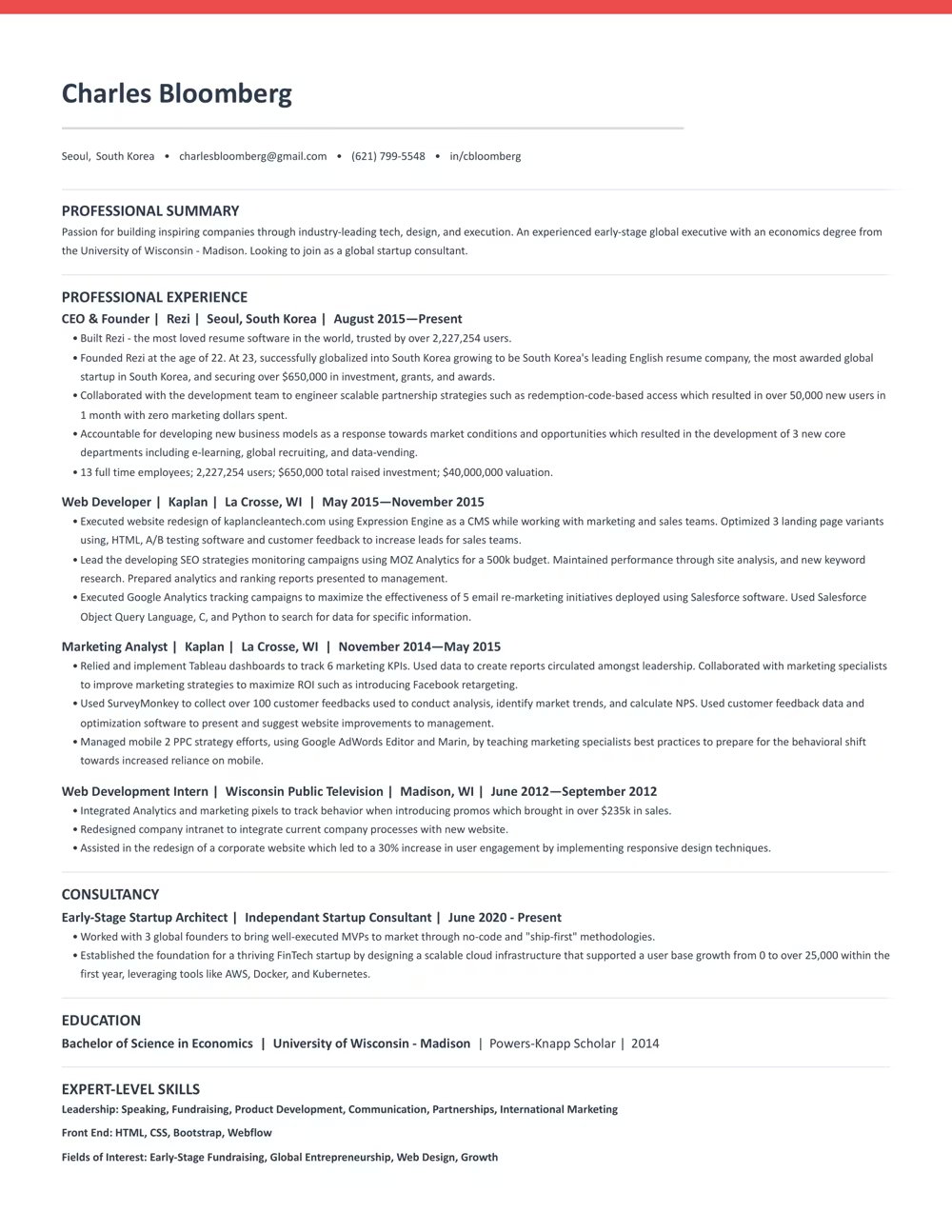
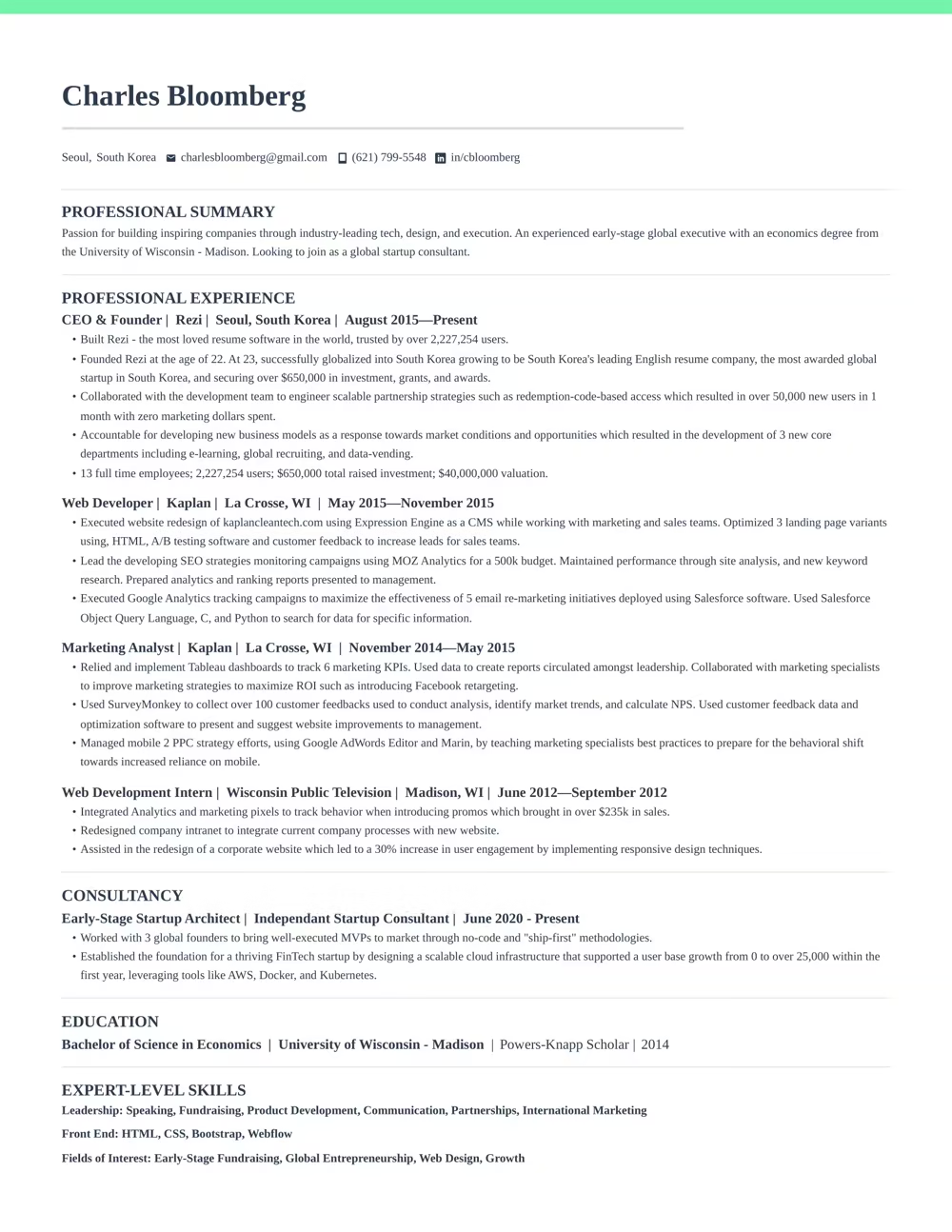
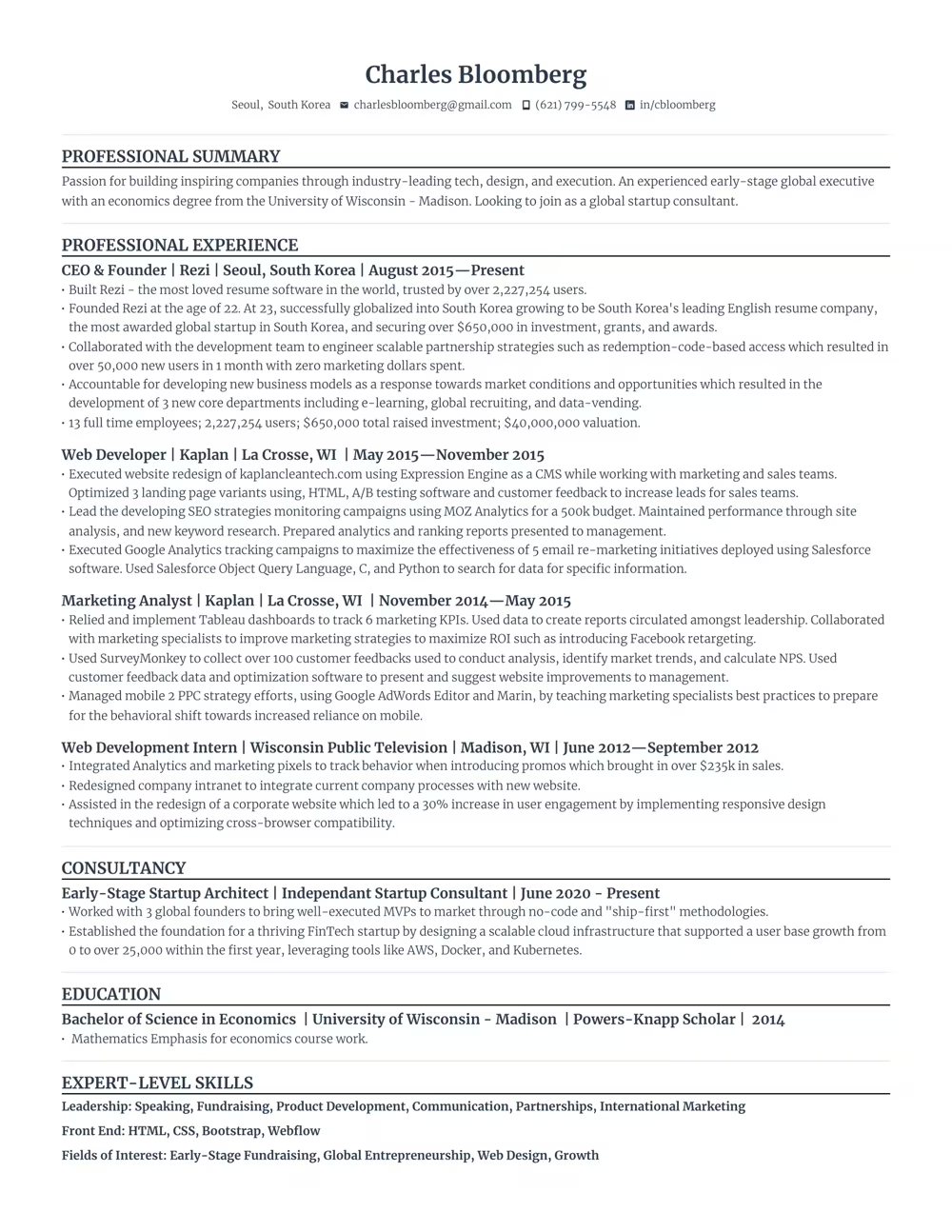
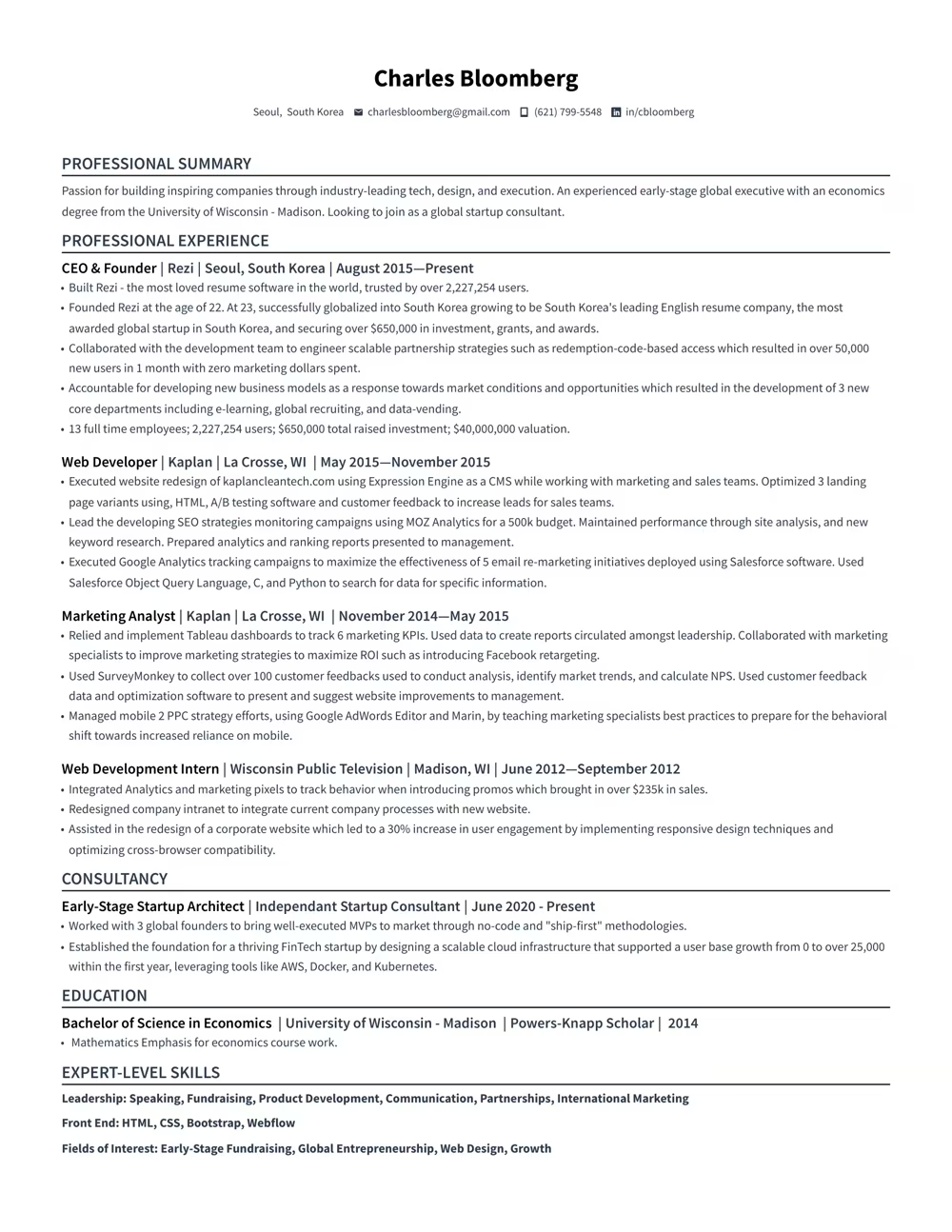
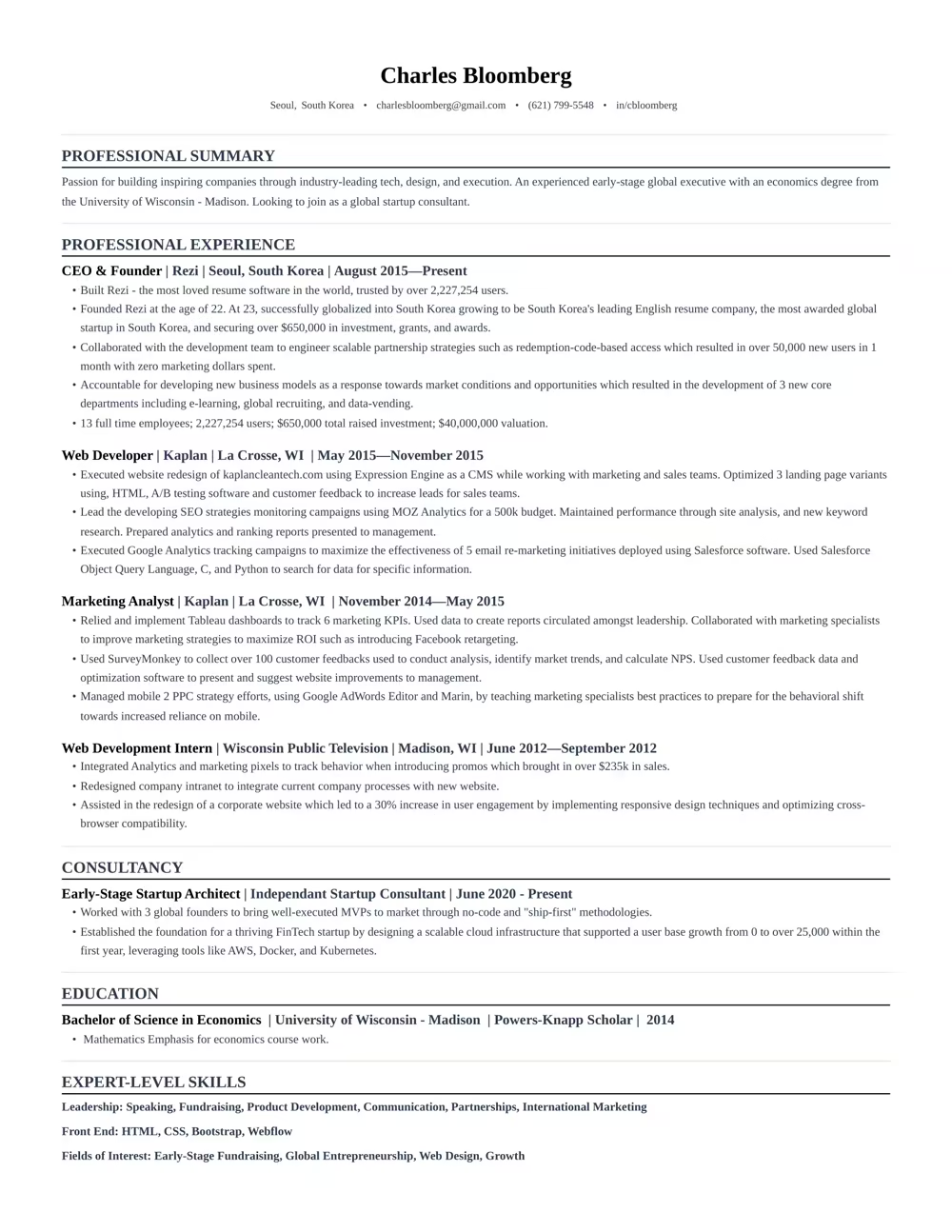
Use a template that guides you. Our ATS-compliant designs are trusted by over 4 million job seekers.




“Rezi is an awesome AI-based resume builder that includes templates to help you design a resume that is sure to check the boxes when it comes to applicant tracking systems. This is a great jumping off point to kickstart a new resume.”

Ashley Stahl
Career Contributor
62.18%
Interview Rate
4,773,704
Total Users
8.23 / 10
Avg. User Review
Wall of Love
Over 4 million users trust Rezi

Resume Building felt like pulling teeth – until I found Rezi.
Davis Allen
Software Developer

I was blown away by Rezi. It streamlined everything...
Celine Watko

I needed a resume tool as smart as my work.
Yosra Naceur
Data Scientist
“A great tool that is very helpful. I found the Rezi system easy to use and very helpful as I was working on getting my resume in shape for job applications.”

Dakota Rubin
United States
Written via

“This is actually one of the first reviews I’ve ever written for a business, and that alone says a lot. I highly recommend Rezi to anyone who’s job searching, it makes the entire process so much easier.”

Yazan Alkhatib
United States
Written via
“Reduced my time per application from 1-2 hours down to 15 minutes.”
Kixxx
Experience with Rezi
“I love how simple and convenient it is to use and been coming back to update it every time I need a fresh resume.”

Zara Wazir
U.A.E.
Written via
Frequently Asked Questions
Your questions, answered.
An AI resume maker helps you build a resume perfectly fit for the job you want. Top-notch AI resume builders are designed to speak the language hiring managers are looking for, increasing your chances of standing out in the crowd. It aligns your skills and experience with the job description effectively.
To get the most out of an AI resume builder, either start from scratch or upload your current resume. Fill in as much detail as possible about your career and skills, and upload the job description you’re targeting. This personalization allows the AI to build a unique and tailored resume that’s bound to catch potential employers' attention.
AI-generated resumes can seem similar if you're not giving personalized inputs or if you're using basic prompts. Provide specific details about your work experience and target the job you’re eyeing. Use specialized AI tools instead of general chatbots to avoid robotic-sounding resumes and to ensure individual creativity.
Employers might think you used AI, but that’s rarely an issue. What they really care about is getting a well-written resume that showcases your skills and experiences accurately. A top-notch resume tailored to their needs will speak volumes more than worrying about AI involvement.
Yes, using AI to optimize your current resume is highly effective. You just need to upload your resume, share details about your career goals and the job you want, and let the AI refine everything to elevate your resume's impact and ATS compatibility.
Rezi uses a tool called the AI Keyword Targeting. This feature scans the job description to identify crucial keywords and naturally incorporates them into your resume, giving it the right focus without keyword stuffing.
The Free plan is $0/month and allows you to create one resume, use limited AI tools (such as Keyword Targeting and Analysis), and download up to three PDFs. You can also create unlimited cover and resignation letters. No card is required to begin.
The Pro plan is $29/month and provides unlimited access to all features, including unlimited resumes, full AI capabilities, unlimited downloads, and one free monthly expert resume review (resumes are reviewed by a person).
The Lifetime plan is a $149 one-time payment. It grants permanent access to all the features of the Pro plan (unlimited resumes, full AI tools, and unlimited downloads), but it does not include the free monthly expert review (which can be purchased for an extra fee).
Rezi offers a 100% money-back guarantee on all paid plans (Pro and Lifetime). If you are unsatisfied, you can request a full refund within 30 days of your purchase.
Yes, you can easily upgrade or downgrade your plan at any time through your Rezi Account Billing dashboard. Prorated credits will apply when switching.
An AI resume maker helps you build a resume perfectly fit for the job you want. Top-notch AI resume builders are designed to speak the language hiring managers are looking for, increasing your chances of standing out in the crowd. It aligns your skills and experience with the job description effectively.
Yes, Rezi Enterprise.