
Administrative Resumes
Information Clerk Resume Examples & Tips for 2026
Customize any of these resumes in minutes using our free AI-powered resume builder.
“Rezi is super upfront and continues to improve over time. I've recommended Rezi to several of my friends and colleagues. I just love this product so much.”

Ricky M.
Software Engineer

“Rezi is super upfront and continues to improve over time. I've recommended Rezi to several of my friends and colleagues. I just love this product so much.”
Ricky M.
Software Engineer
Helping users land jobs at 1,000+ companies such as














Here's the thing most information clerk resumes get wrong: they read like a list of basic tasks anyone sitting behind a desk could do. "Answered phones. Greeted visitors. Filed paperwork." That tells a hiring manager nothing about how well you actually handled information, people, and processes.
A strong information clerk resume needs to show that you're the person who keeps things running smoothly — the one who finds answers fast, keeps records accurate, and makes every visitor or caller feel like they're in good hands. It's about demonstrating that you're organized, resourceful, and genuinely good with people.
And this is exactly what you'll learn from this article. Inside, you'll find:
- Examples of 9 information clerk resumes, covering different specializations and experience levels.
- Insider tips about what really matters to recruiters hiring for information clerk roles.
- A step-by-step guide for putting together an information clerk resume that actually lands interviews.
Sample Information Clerk Resumes
Take a look at some top-notch sample resumes for information clerks across different specializations and career stages. Find the one that matches your profile and use it as a reference point (or feel free to steal it — just make sure to adjust the wording to reflect your own experience).
Note: these examples are organized by role type and specialization. Let's dive in.
Junior Information Clerk Resume
A Junior Information Clerk resume should emphasize your eagerness to learn, any customer-facing experience, and foundational organizational skills. Highlight relevant coursework, internships, or volunteer roles where you handled inquiries or maintained records. Show your comfort with office software and your ability to communicate clearly. Even part-time retail or hospitality work counts if you helped people find what they needed.
Mid-Level Information Clerk Resume
A Mid-Level Information Clerk resume should demonstrate a solid track record of handling high volumes of inquiries accurately and efficiently. Emphasize your growing expertise in records management, database systems, and multi-channel communication. Show how you've improved processes — maybe you reduced average response times or reorganized a filing system. Quantify your daily interaction volumes and highlight your reliability and independence in the role.
Senior Information Clerk Resume
A Senior Information Clerk resume should showcase years of experience managing complex information systems, training junior staff, and serving as a go-to resource. Highlight your leadership in streamlining workflows, implementing new database tools, and handling escalated inquiries. Demonstrate your deep knowledge of organizational policies, your ability to mentor colleagues, and measurable contributions like improved accuracy rates or reduced wait times.
Information Desk Clerk Resume
For an Information Desk Clerk, your resume should spotlight your face-to-face communication skills and your ability to assist a high volume of visitors in fast-paced environments. Emphasize experience in locations like hospitals, airports, government buildings, or shopping centers. Show your knowledge of wayfinding, facility layouts, and local resources. Mention your ability to stay calm, friendly, and helpful even during peak hours or stressful situations.
Public Information Clerk Resume
A Public Information Clerk resume should highlight your experience working in government agencies or public-facing organizations. Emphasize your knowledge of public records, Freedom of Information procedures, and citizen inquiry handling. Show your ability to communicate policies and regulations clearly to diverse audiences. Include experience with public databases, community outreach, and any training in compliance or confidentiality protocols that demonstrate your trustworthiness.
Records Information Clerk Resume
For a Records Information Clerk, focus on your expertise in records management, data entry accuracy, and document organization. Your resume should detail experience with filing systems — both physical and digital — as well as records retention schedules and compliance requirements. Highlight proficiency in database software, attention to detail, and any experience with records audits. Metrics like error rates or volumes of records processed daily add strong credibility.
Information Services Clerk Resume
An Information Services Clerk resume should emphasize your ability to support information delivery across multiple channels — phone, email, chat, and in person. Highlight your experience in library systems, corporate help desks, or institutional settings where you connected people with the right resources. Show your research skills, familiarity with knowledge management tools, and your talent for synthesizing complex information into clear, accessible answers.
Front Desk Information Clerk Resume
A Front Desk Information Clerk resume should showcase your role as the first point of contact for visitors and callers. Emphasize your professionalism, multitasking abilities, and skill in managing reception areas. Highlight experience with visitor registration systems, phone switchboards, and appointment scheduling. Show that you can juggle administrative tasks while maintaining a welcoming, organized front desk environment that leaves a positive first impression.
Customer Information Clerk Resume
For a Customer Information Clerk, your resume should highlight your customer service expertise and your ability to resolve inquiries quickly and accurately. Emphasize experience in call centers, retail environments, or service desks where you handled billing questions, account lookups, or product information requests. Show your proficiency with CRM software, your patience with frustrated callers, and any metrics like customer satisfaction scores or first-call resolution rates.
How to Write an Information Clerk Resume
Short answer:
Focus on your communication skills, organizational abilities, and the specific tools and systems you've used to manage information and assist people. Create a professional header with your name and contact details. Right below, write a 2–3 sentence resume summary outlining your most relevant accomplishments. Describe your work history in reverse-chronological order, focusing on how you handled inquiries, maintained records, and supported operations. Then, cover your education, list key skills, and add extra sections such as certifications, language skills, or volunteer experience.
Include all the necessary sections in the correct order
Here's the correct order of sections for most information clerk resumes:
- Header with contact information
- Resume summary or objective
- Work experience
- Education
- Skills
- Certifications (if applicable)
Depending on your current career situation, you can also throw in some additional sections. For instance:
- Language skills (a major asset for information clerks serving diverse populations)
- Volunteer experience
- Professional development or training courses
- Awards or recognition
- Professional associations
Include everything that shows you're capable of doing what the job requires. Make every section count. If it doesn't clearly highlight your skills, it doesn't belong on your resume.
If you have less than five years of relevant experience, keep your resume 1-page long. For more experienced information clerks, a two-page resume is acceptable — but only if the content warrants it.
More details here: What Sections to Include on Your Resume?
Now, I'll give you a high-level overview of how to write each section, going from top to bottom. Well… almost. The only exception is the resume summary section. While it comes right after your contact info, it's actually easier to write it last. More on that in a sec.
Create a professional resume header
- Start with your name and contact information. Include the basics: your full name, phone number, professional email address, location, and LinkedIn profile. If you have a professional portfolio or relevant online presence, include that link as well.
- Right below your name, clearly state your professional title (e.g., Information Clerk or Senior Records Information Clerk). This sets expectations immediately and tells the reader exactly what you do.
For more information, see: How to Create a Resume Header
Describe your work history
- Use reverse-chronological order. List your positions starting with the current or the most recent one.
- In each entry, include your job title, company name, location, and dates of employment.
- Below each position, write 3–7 bullet points — the more recent the position, the more bullet points you should include. Describe your responsibilities and, more importantly, your accomplishments.
- Use action verbs and quantify your achievements (e.g., "Assisted an average of 150+ visitors daily at a high-traffic municipal information desk, maintaining a 97% satisfaction rating").
- If specific tools, databases, or communication channels were central to your work, weave these into your descriptions. This will also help you pass ATS scans.
Learn more about the best practices of this section with our detailed guide on how to describe your work experience on a resume.
List your degrees and detail professional learning
- In the education section, list your highest degree first, including the degree type, major, and institution.
- If you have some relevant work experience, include only the name of your school and the degree you got. If you're an entry-level candidate, you can add more detail — list relevant coursework (e.g., office administration, communications), extracurricular activities, and academic achievements.
- If you have relevant certifications (e.g., Certified Administrative Professional, records management credentials), either include them in an "Education and Certifications" section or create a separate "Certifications" section and place it right below.
For an in-depth guide on how to describe your education on a resume, see: How to List Education on a Resume
List your most relevant skills in the skills section
- Include a mix of technical skills (e.g., database management, office software) and job-specific competencies (e.g., records management, multi-line phone systems) that you're proficient in.
- Add in soft skills such as communication, patience, and attention to detail. These are the backbone of information clerk work and demonstrate your capacity to serve people well.
- You can use two separate subsections — one for hard skills, one for soft skills — or just list all skills under one heading.
- Match your skills to the description of the job you're applying for. Don't just dump every skill the posting mentions (especially if you don't really have them), but highlight the areas where your expertise overlaps with the job ad.
Need some inspiration to get started? Here are some good skills to feature on your information clerk resume.
Software & technical skills for information clerk resumes:
- Microsoft Office Suite (Word, Excel, Outlook)
- Database management systems (e.g., Access, FileMaker)
- Customer Relationship Management (CRM) software
- Multi-line phone systems
- Document management systems
- Records management software
- Google Workspace
- Data entry and keyboarding (typing speed)
- Visitor management systems
- Point-of-sale (POS) systems
Information management skills:
- Records filing and retrieval
- Data entry accuracy
- Information research and lookup
- Document classification and indexing
- Confidentiality and data privacy compliance
- Mail sorting and distribution
- Report preparation
- Scheduling and appointment coordination
- Inventory tracking
- Public records management
Key soft skills for information clerks:
- Verbal and written communication
- Active listening
- Customer service orientation
- Attention to detail
- Patience
- Multitasking
- Problem-solving
- Organization
- Adaptability
- Professionalism
For a full-blown guide on listing skills on a resume, visit: How to Put Skills on a Resume
Use additional sections as further proof of your fit
Additional sections add depth to your resume and back up your claimed expertise. Good examples of extra sections to add to an information clerk resume are:
- Language skills. If you're bilingual or multilingual, this is a huge asset in information clerk roles that serve diverse communities. List your languages and proficiency levels.
- Volunteer experience. Volunteer work at libraries, community centers, hospitals, or events where you assisted the public can demonstrate relevant skills even if your paid experience is limited.
- Professional development. Courses in customer service, records management, office administration, or communication skills show you're committed to growing in your role.
- Awards and recognition. Employee-of-the-month awards, customer service commendations, or other recognition can set you apart from other candidates.
Highlight the most relevant information in a resume summary
Once you're done writing your information clerk resume, give it a full read. Pick the most relevant information and compile it into a summary paragraph. Place it right under the resume header.
- Be brief and to-the-point. In 3–4 sentences, sum up your career highlights, core competencies, and what you bring to the table. Consider this your chance to answer, "Why should you hire me?" Tailor this section to match the employer's needs outlined in the job description.
- Use value-oriented language. Focus on how you can add value to the potential employer, mentioning specific outcomes like volumes of inquiries handled, satisfaction ratings, or process improvements you've driven.
Once you've completed the core sections of your resume, you can use Rezi AI Resume Summary Generator to automatically create a powerful summary, tailored to the job you're applying for. All you need to do is add the position and skills you want to highlight. The AI writer will do the rest.
More information here: How to Write a Job-Winning Resume Summary (with Examples)
For finishing touches, make sure your resume looks professional
- Use a clean and tidy resume format. Ensure your information clerk resume is easily readable, with a professional font, consistent formatting, and clear section headings. Avoid overloading it with dense text or fancy design elements that could distract from the content and confuse resume screening software.
- Aim for a balance between detail and conciseness. If you're a junior or entry-level candidate, keep your resume to a single page. More experienced information clerks can extend to two pages, but make sure every word conveys value.
Learn more about proper resume formatting here: How to Format a Resume & What Standard Resume Format to Use
What Makes Information Clerk Resumes Different
In short: the emphasis on people skills, accuracy, and information handling — not just administrative tasks.
This is also where many information clerks go wrong on their resumes. Hiring managers don't want to see a generic list of clerical duties. They need to see that you're someone who handles information reliably, communicates clearly with all kinds of people, and keeps operations running without a hitch.
Focus on communication and interpersonal skills
Information clerks are often the first point of contact for visitors, callers, or members of the public. You're expected to be approachable, clear, and helpful — sometimes under pressure.
What it means for you:
- Showcase specific situations where you resolved inquiries, calmed frustrated visitors, or communicated complex information in simple terms. Don't just say "good communication skills" — show it through examples.
- If you've handled high volumes of daily interactions, mention the numbers. "Assisted 200+ walk-in visitors daily" paints a much clearer picture than "helped visitors."
Focus on accuracy and reliability
When your job revolves around information, mistakes have real consequences. Misfiled records, wrong directions, or incorrect data can cause serious problems.
What it means for you:
- Quantify your accuracy wherever possible. Mention data entry accuracy rates, error-free record maintenance, or audit results that demonstrate your attention to detail.
- Highlight any responsibilities you had around confidential information, compliance, or quality control. This shows hiring managers they can trust you with sensitive data.
Focus on tools and systems proficiency
Information clerks work with specific software, databases, and communication systems that vary by industry and employer. Showing you can hit the ground running with these tools is a real advantage.
What this means for you:
- Name the specific systems you've used — don't just say "computer skills." Mention the CRM platform, the records management software, the phone system, or the visitor management tool by name.
- If you learned a new system quickly or helped train others on it, mention that too. It demonstrates adaptability and initiative.
Focus on service volume and efficiency
Unlike many administrative roles, information clerks are often measured by how many people they help and how quickly they do it. Efficiency is a core part of the job.
What this means for you:
- Include metrics wherever you can: number of daily inquiries handled, average call response times, or wait time reductions you contributed to.
- If you improved a process — say, reorganized a filing system that cut retrieval time in half — that's exactly the kind of achievement that belongs on your resume. Show that you don't just do the job; you make it better.
Bonus Resources for Information Clerks
This isn't going to be a game-changer for you if you need a resume today. But —
I want you to treat your career holistically. These resources will help you sharpen your skills, add credibility to future resumes, and keep you current with developments in administrative and information management fields.
Professional associations and networks
International Association of Administrative Professionals (IAAP)
IAAP offers certifications, professional development resources, and networking opportunities for administrative and information professionals. Their Certified Administrative Professional (CAP) credential is widely recognized and can strengthen your resume significantly.
ARMA International
If your work involves records and information management, ARMA is the go-to professional association. They offer certifications, webinars, publications, and a strong community for information governance professionals.
National Association of Legal Assistants (NALA)
For information clerks working in legal settings, NALA provides relevant certifications and professional development that can help you specialize and advance.
Online learning platforms
Coursera & edX
Both platforms offer courses in office administration, customer service, data management, and communication skills. Many are developed by universities and industry leaders, offering certificates you can add to your resume.
LinkedIn Learning
With a focus on professional development, LinkedIn Learning provides numerous courses on office software, customer service excellence, records management, and organizational skills — all directly relevant to information clerk roles.
Alison
Alison offers free courses in office administration, customer service, and IT skills. It's a great option for building your skill set when you're on a budget, and completed courses come with certificates you can reference.
Publications and blogs
The Balance
Offers practical career advice, job search tips, and guides on administrative and clerical careers, including salary data and skill-building suggestions.
Indeed Career Guide
Indeed's career advice section includes articles specifically about information clerk roles, administrative skills, and career advancement in clerical fields.
Office Dynamics Blog
A blog focused on administrative professionals, offering tips on productivity, communication, professional development, and career growth strategies relevant to information clerks.
Tools and software to learn
Capterra & G2
Both websites provide extensive reviews and comparisons of office software, CRM systems, records management tools, and visitor management platforms. Browsing these can help you identify which tools are most in-demand for information clerk roles.
Microsoft Office Training Center
Free training for Word, Excel, Outlook, and other Microsoft tools. Since these are staples of virtually every information clerk role, brushing up here is always a smart move.
Summary
Here's what you need to know about writing an information clerk resume:
- Structure your information clerk resume with essential sections in this order: Header, Resume Summary or Objective, Work Experience, Education, Skills, and Certifications. If relevant, add extra sections like Language Skills, Volunteer Experience, or Professional Development.
- Include a professional header with your name, contact information, and professional title.
- Describe your work history in reverse-chronological order, emphasizing responsibilities and achievements with quantifiable outcomes — especially inquiry volumes, accuracy rates, and efficiency improvements.
- In the education section, list your highest degree at the top. Include relevant certifications either in the education section or under a separate heading.
- Highlight a mix of technical skills, information management competencies, and soft skills, tailoring them to the job description.
- Use additional sections like language skills or volunteer experience to further showcase your fit for the role.
- Once done writing the resume, compile the key information into a brief, value-oriented resume summary at the top.
- Make your resume professional in appearance — aim for conciseness without sacrificing meaningful detail.
- Showcase your communication skills, accuracy, and ability to serve high volumes of people effectively.
- Name specific tools, databases, and systems you've used rather than relying on vague phrases like "computer skills."
Thanks for reading! Got any questions? Feel free to reach out to me on LinkedIn. (Or check out the FAQs first — maybe your question is answered there.)
FAQ
What keywords should I use on my information clerk resume?
Use specific terms related to information handling and customer service: data entry, records management, multi-line phone system, visitor assistance, scheduling, filing, CRM software, and the names of specific tools you've used. If the job posting mentions particular software or systems, mirror that language in your resume. Include certifications like Certified Administrative Professional (CAP) if you have them.
I don't have formal information clerk experience. How do I write a competitive resume?
Focus on transferable skills from any role where you interacted with people, organized information, or handled administrative tasks. Retail, hospitality, volunteering at a library or community center, or even managing records for a student organization all count. Frame these experiences in terms relevant to information clerk work — answering questions, maintaining organized systems, and using office technology.
How do I handle gaps in employment on my information clerk resume?
Be honest but strategic. If you did anything productive during the gap — freelance work, volunteering, taking courses, or caring for family — mention it briefly. You can also use a functional or combination resume format to draw attention to your skills rather than a strict chronological timeline. Most hiring managers understand gaps; what matters is how you present your readiness to return.
Should I include typing speed on my resume?
Yes, if it's strong. Many information clerk roles involve significant data entry, and a high typing speed (generally 50+ WPM) is a tangible, measurable skill that hiring managers appreciate. Include it in your skills section. If you've taken a recent typing test, you can note your exact WPM and accuracy rate.
Which resume format is best for information clerk resumes?
The reverse-chronological format works best for most information clerk candidates. It clearly shows your work history and progression. If you're changing careers or have limited directly relevant experience, a combination format — which leads with a skills section followed by work history — can be a smart alternative.
How important are language skills for information clerk roles?
Very, depending on the setting. Information clerks in hospitals, government offices, airports, and community organizations frequently interact with non-English speakers. If you're bilingual or multilingual, prominently feature your language skills — it can be the deciding factor between you and another candidate with a similar background.
Should I list every clerical job I've ever had?
No. Focus on the most relevant positions — typically the last 10–15 years of experience. If an older role is highly relevant (say, you worked at an information desk for five years early in your career), include it but keep the description brief. The goal is a focused resume, not an exhaustive employment history. Every entry should earn its spot by demonstrating relevant skills or achievements.
Contents

Resume Formats & Examples
ATS-Friendly resume formats that land jobs
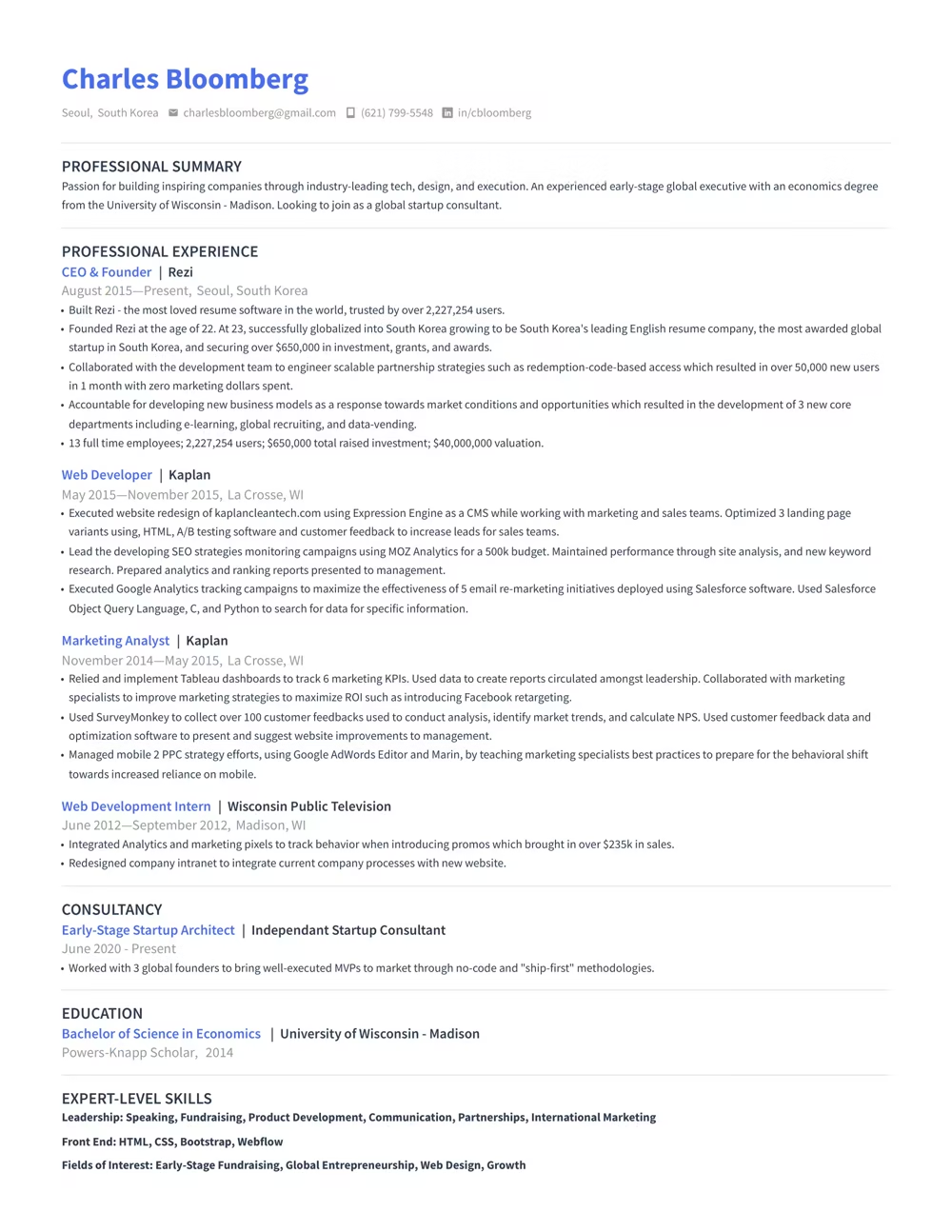
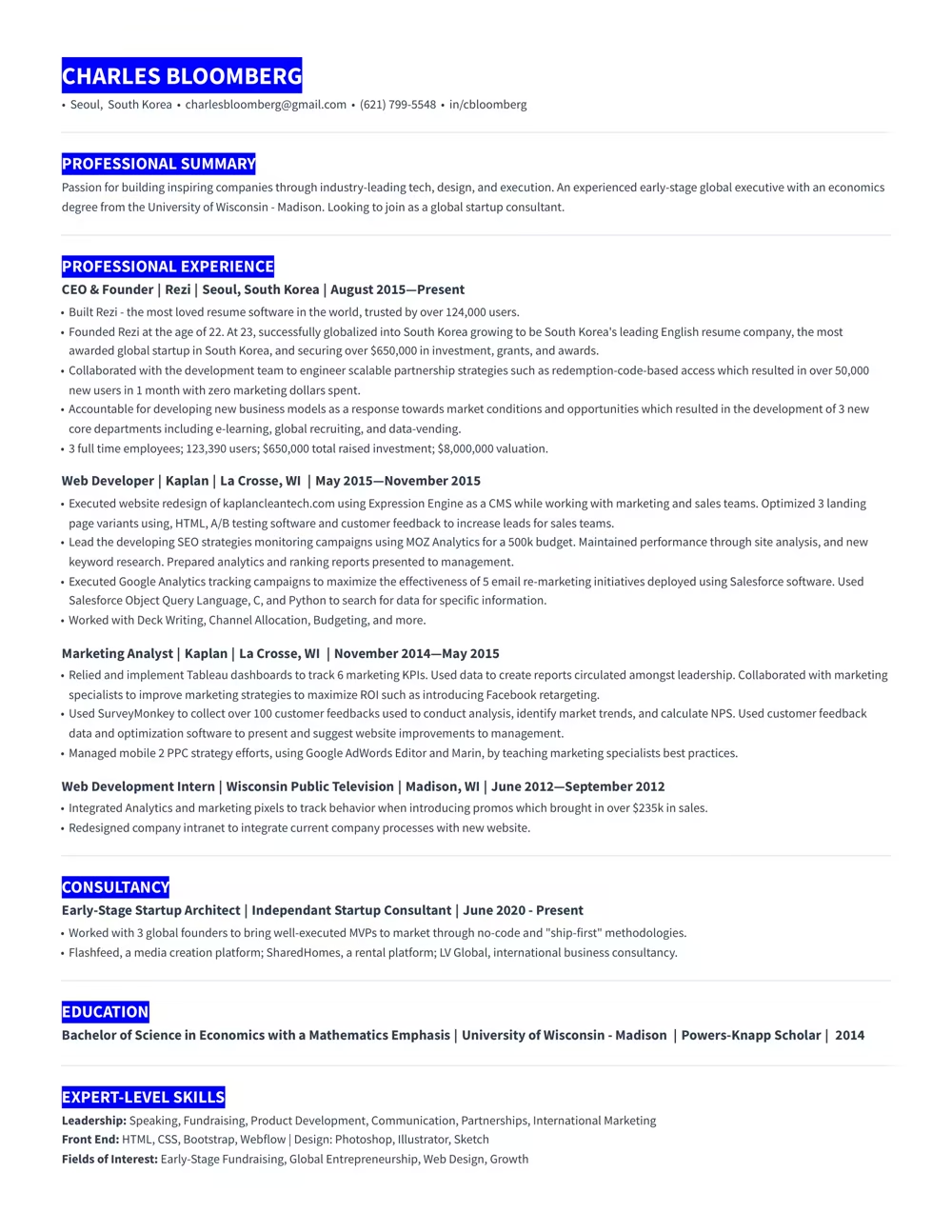
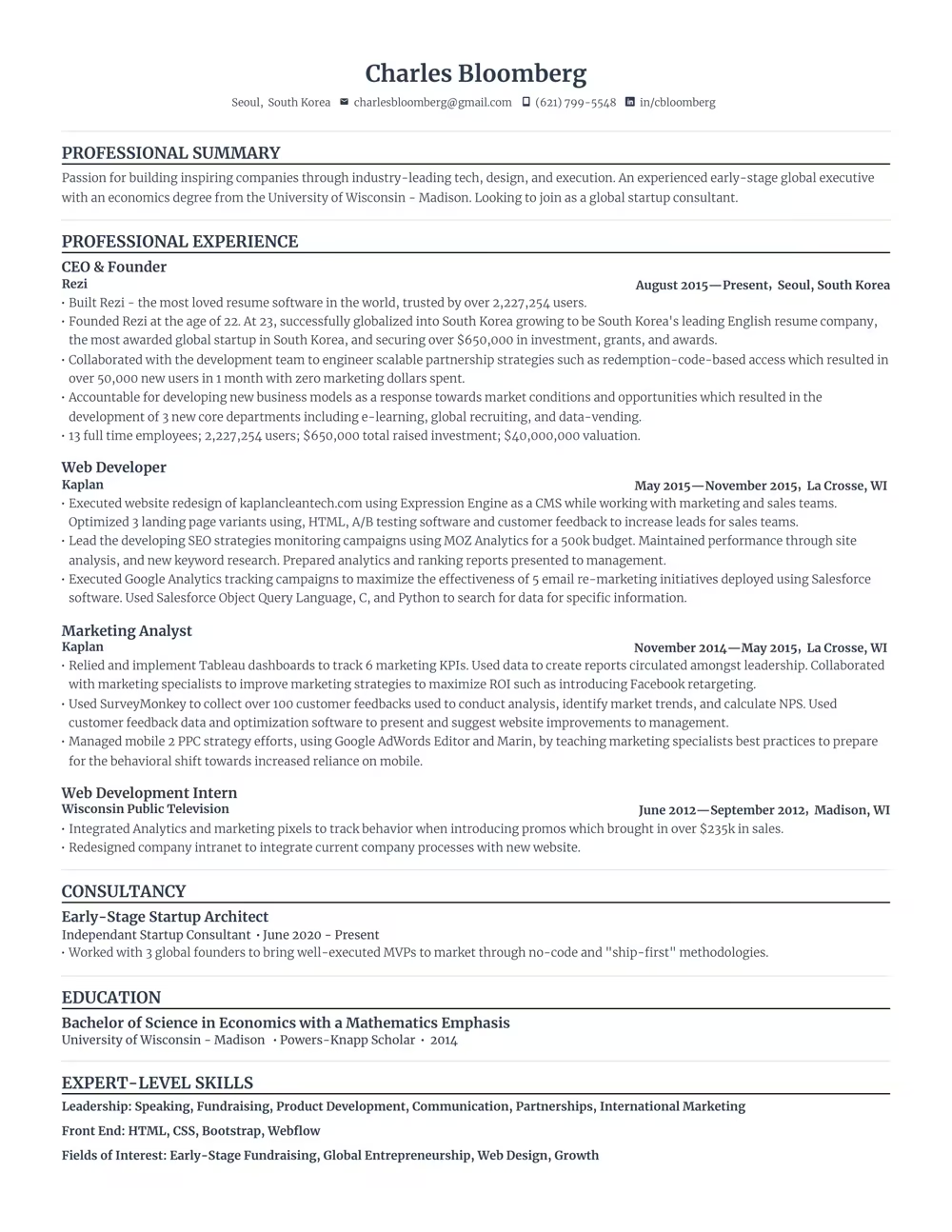
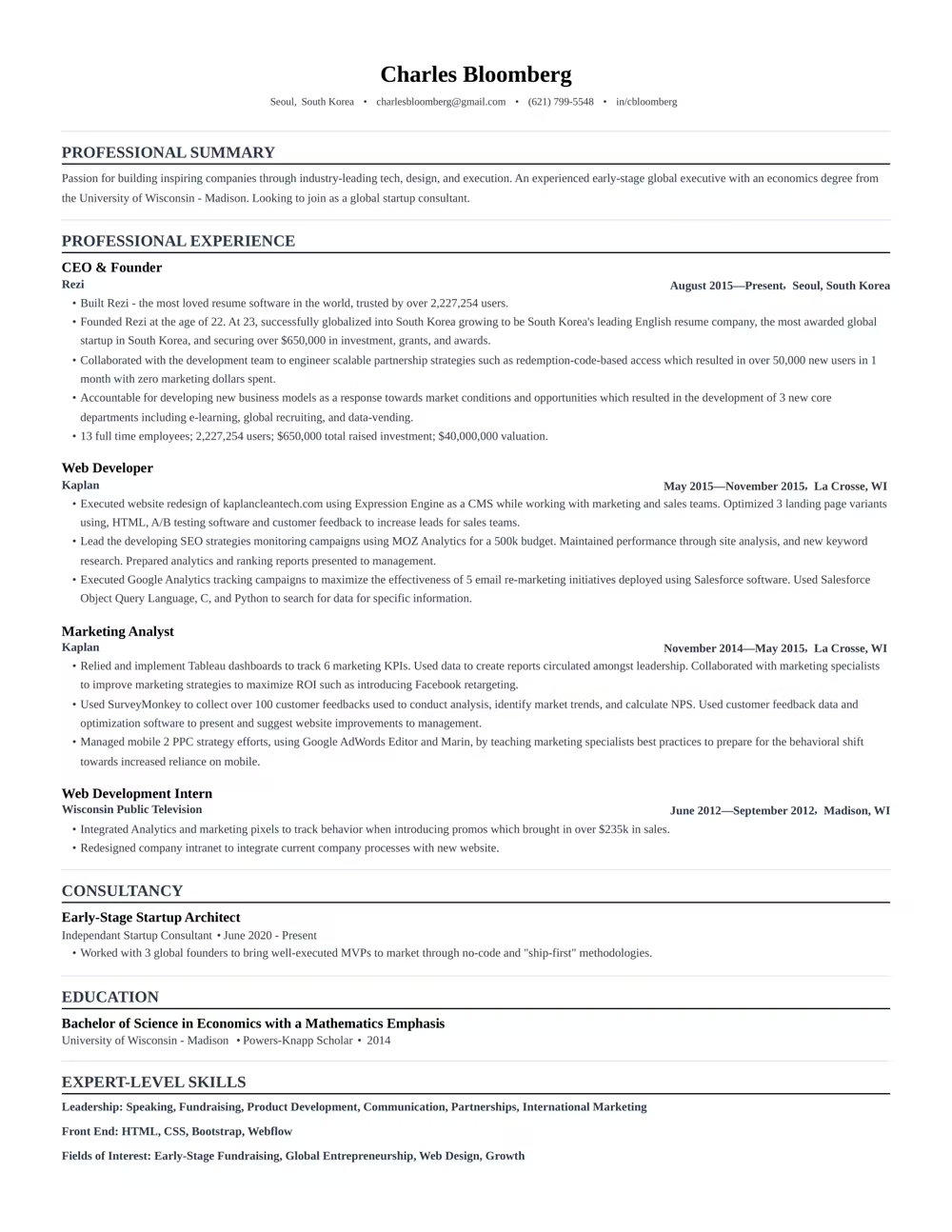
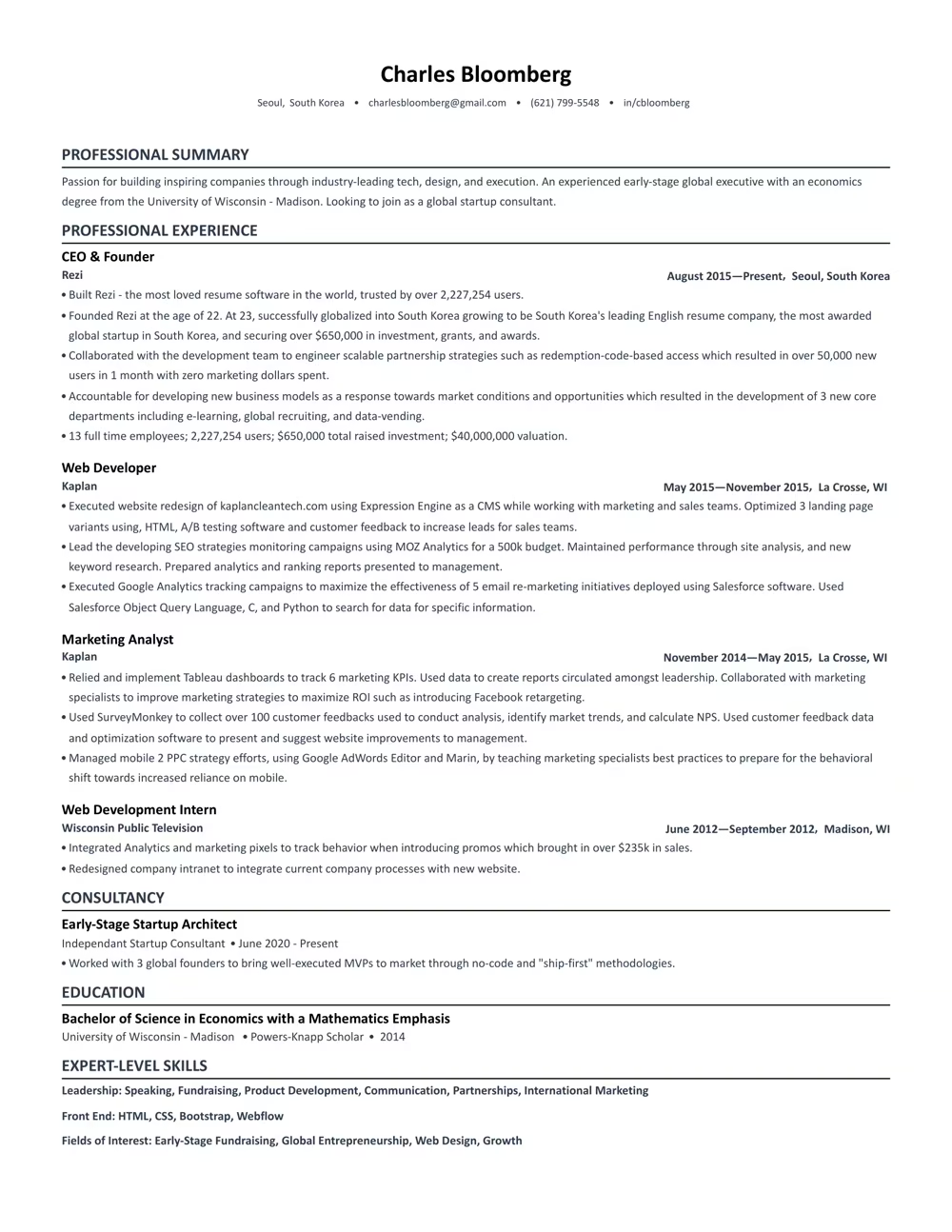
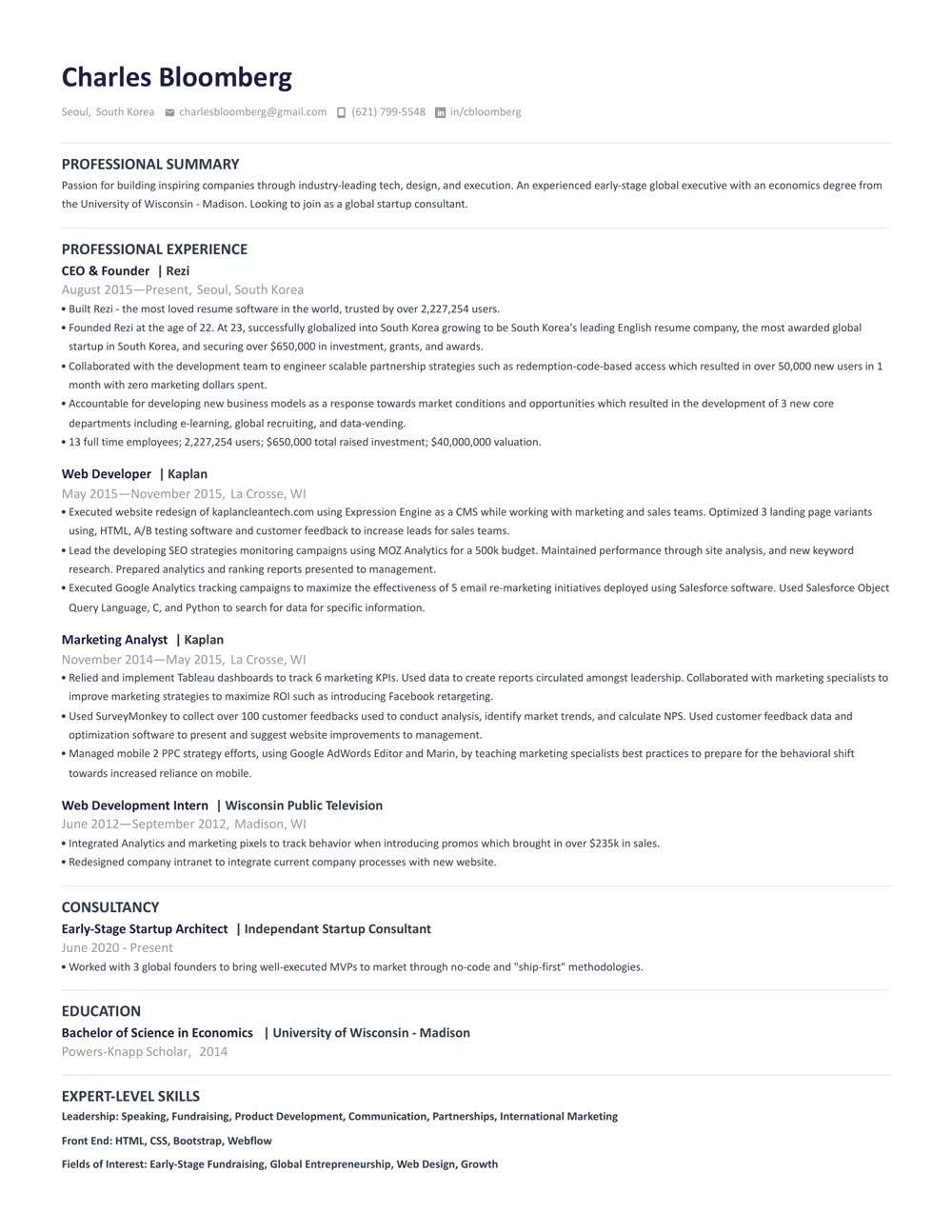
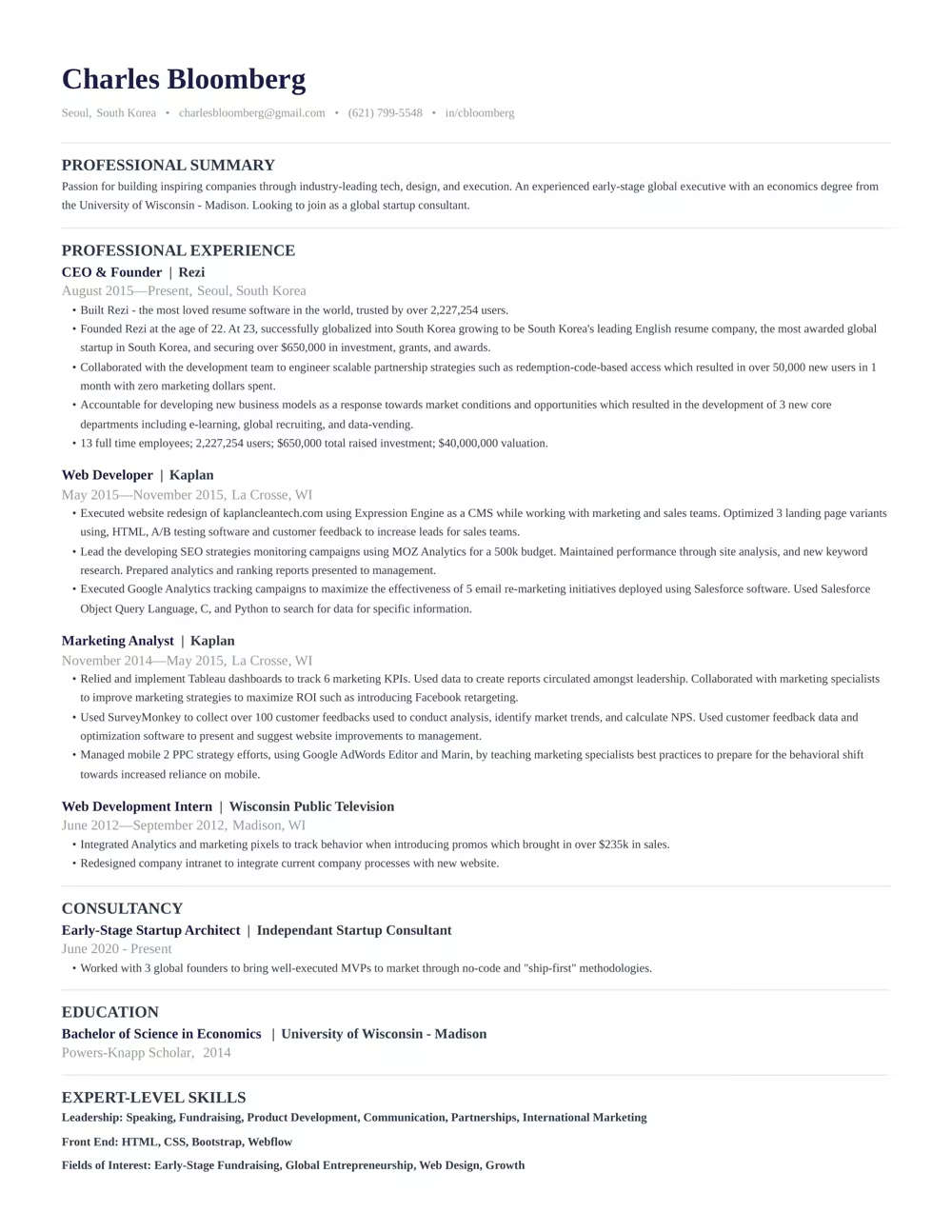
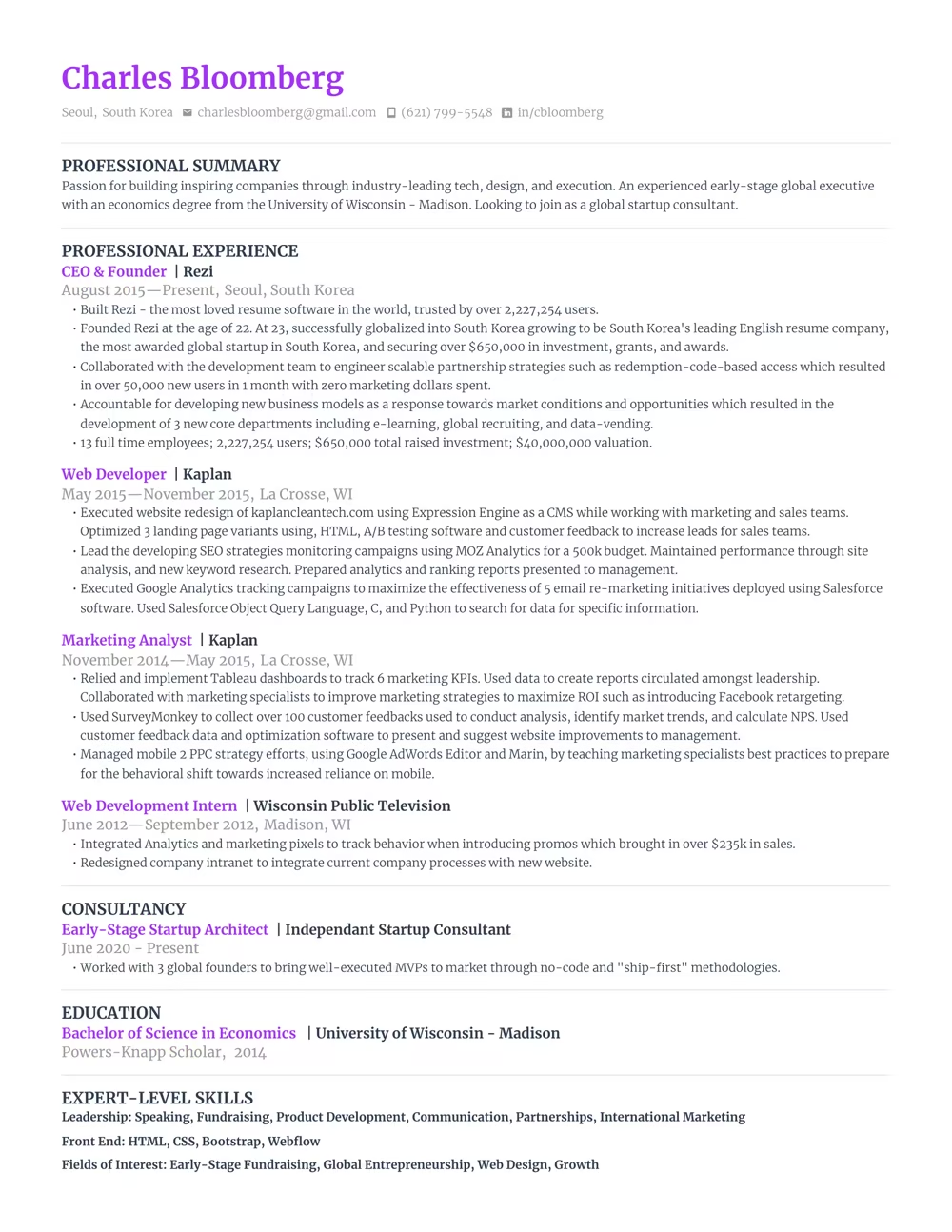
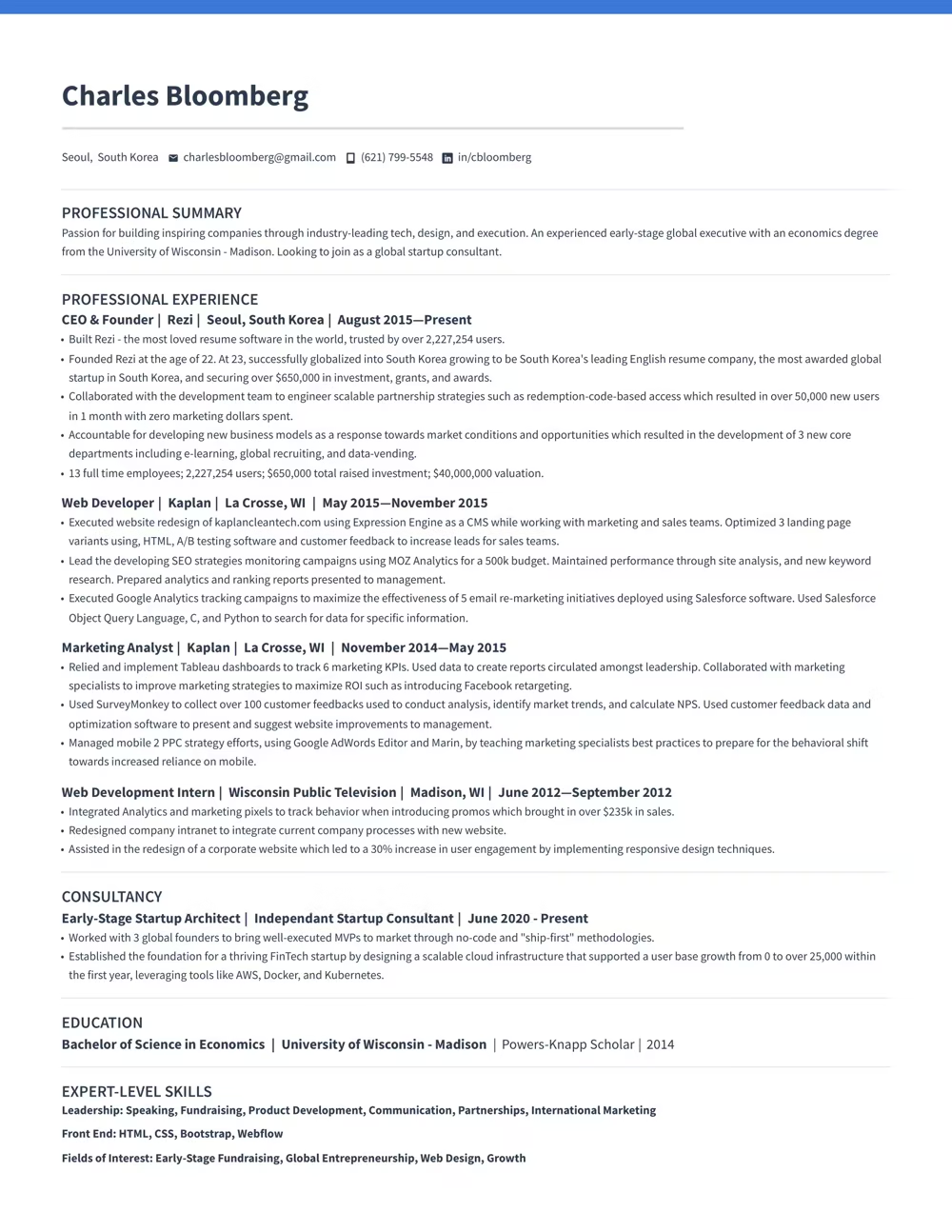
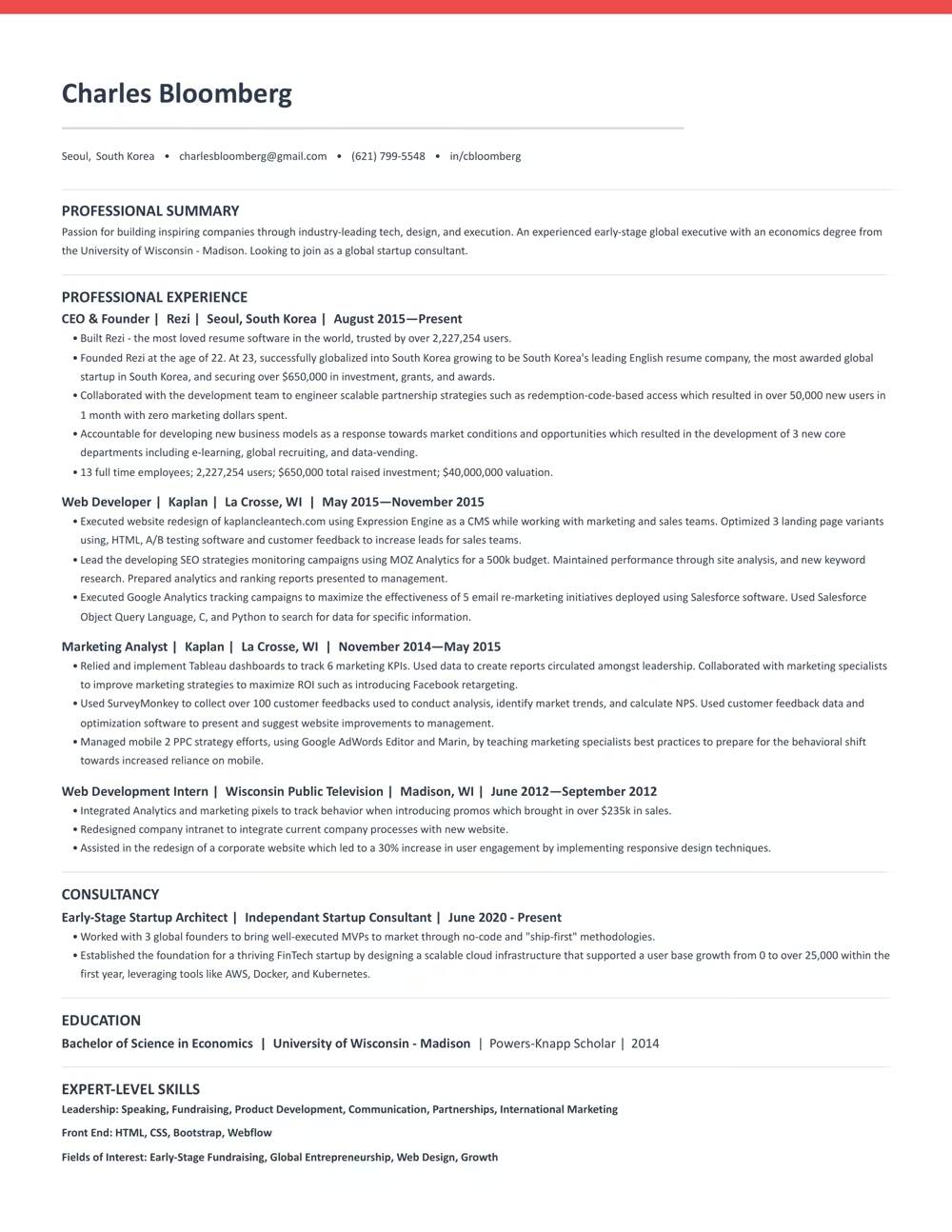
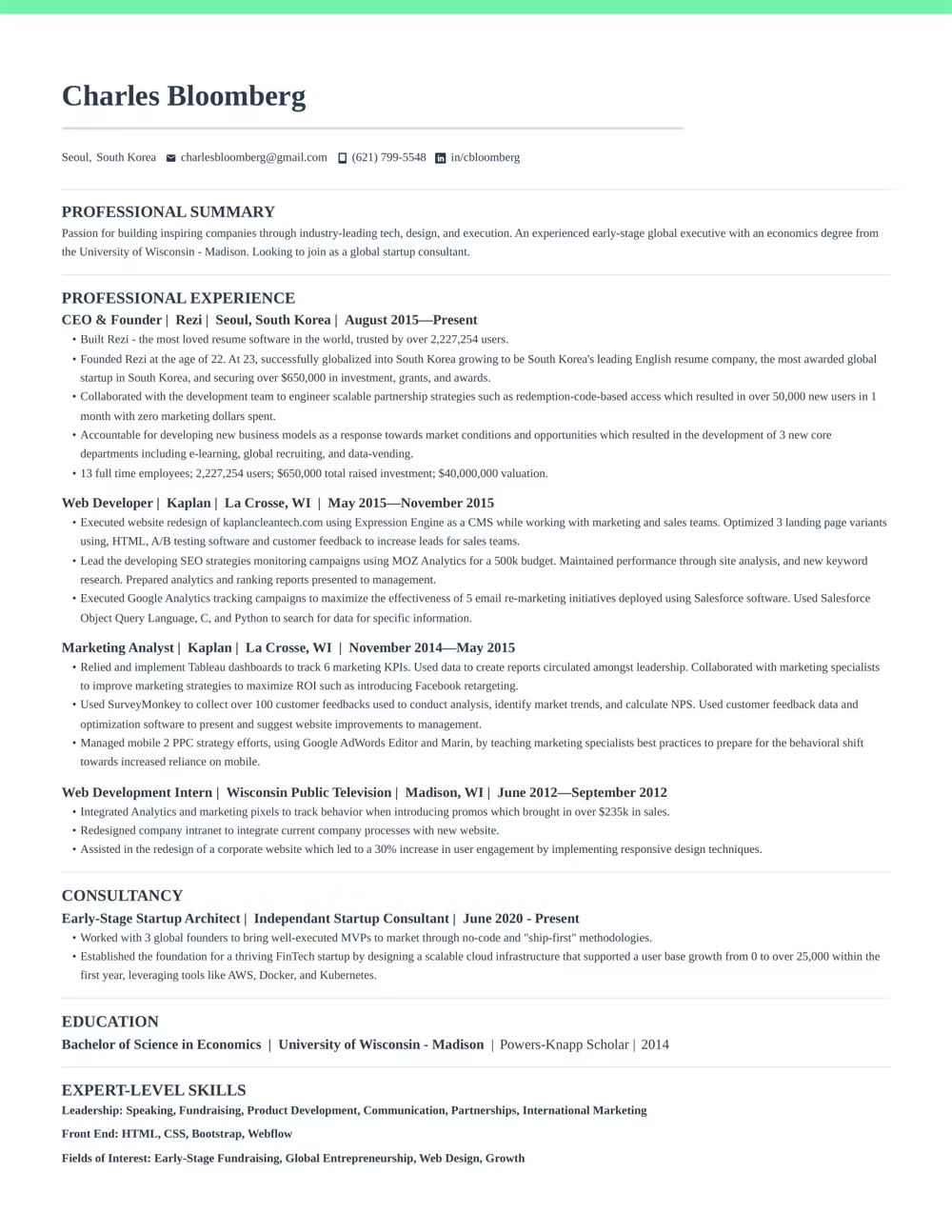
Use a template that guides you. Our ATS-compliant designs are trusted by over 4 million job seekers.




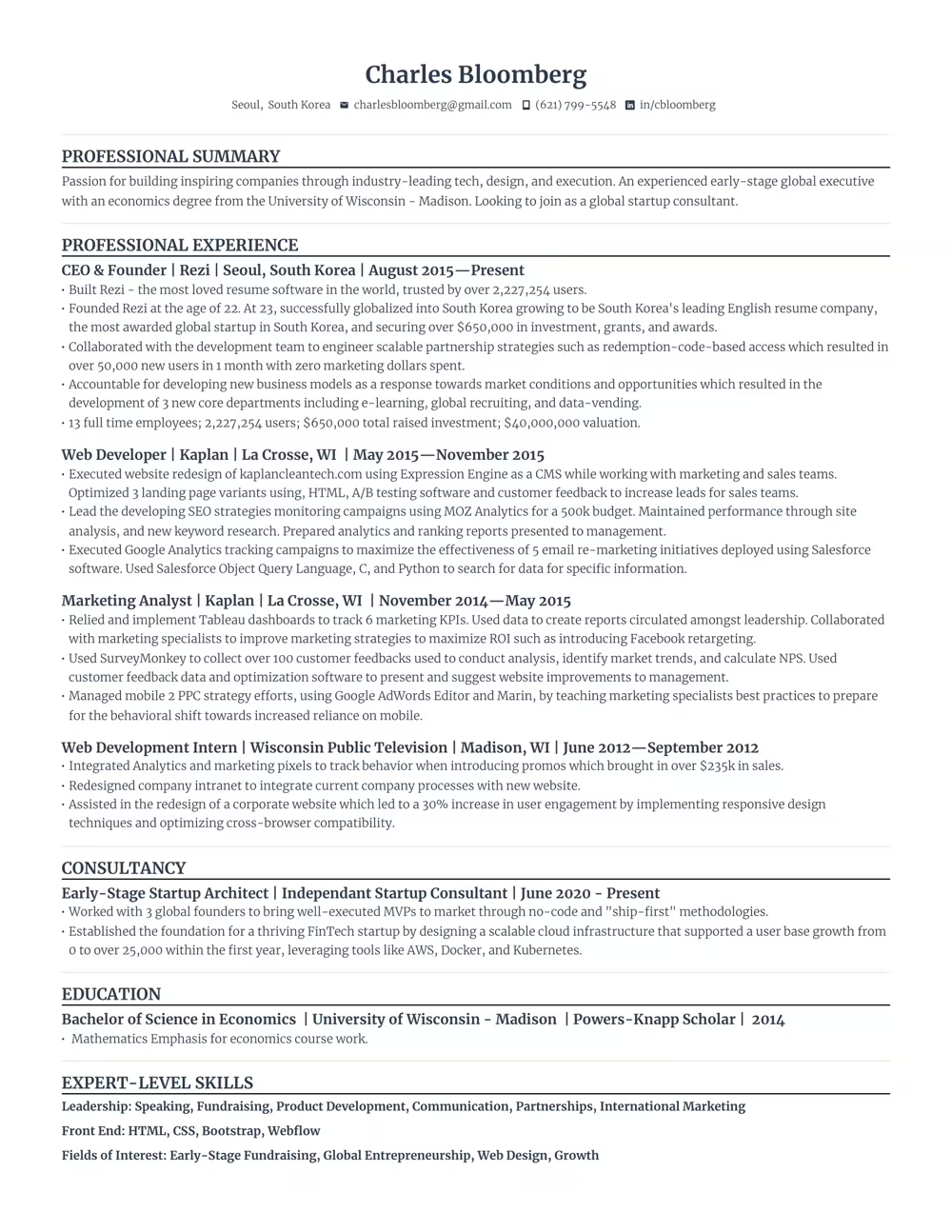
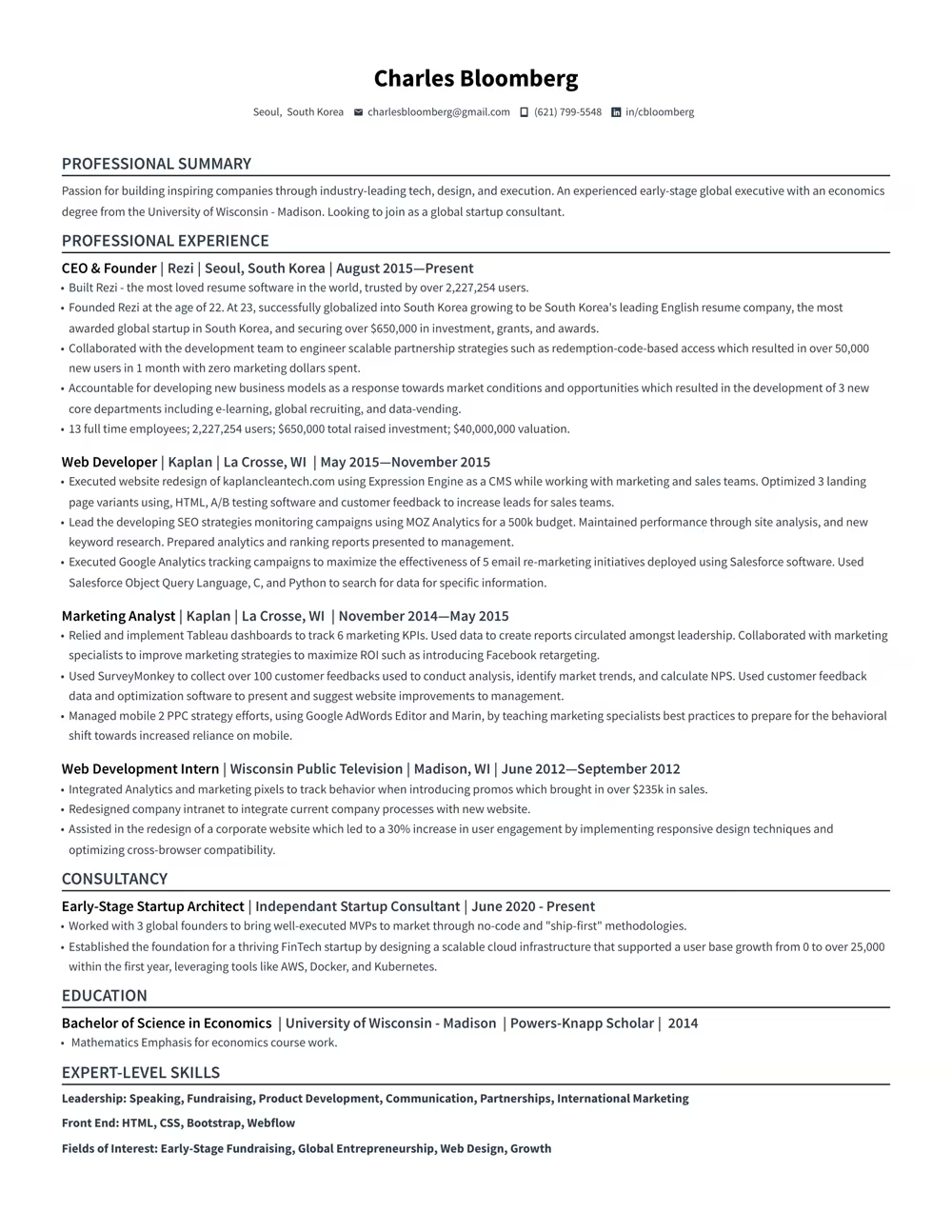
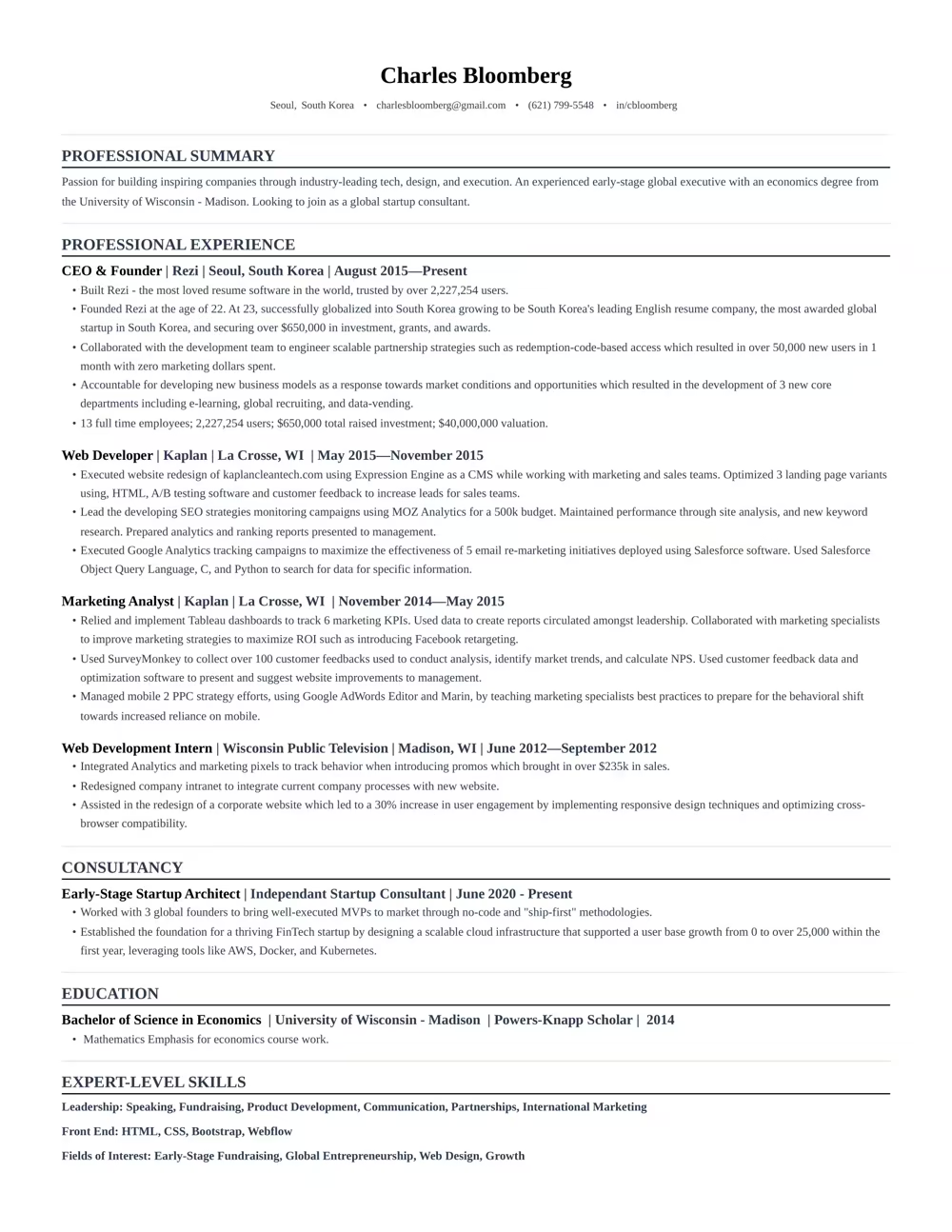
“Rezi is an awesome AI-based resume builder that includes templates to help you design a resume that is sure to check the boxes when it comes to applicant tracking systems. This is a great jumping off point to kickstart a new resume.”

Ashley Stahl
Career Contributor
62.18%
Interview Rate
4,510,834
Total Users
8.23 / 10
Avg. User Review
Wall of Love
Over 4 million users trust Rezi

“Resume Building felt like pulling teeth – until I found Rezi.”
Davis Allen
Software Developer

“I was blown away by Rezi. It streamlined everything...”
Celine Watko

“I needed a resume tool as smart as my work.”
Yosra Naceur
Data Scientist
“A great tool that is very helpful. I found the Rezi system easy to use and very helpful as I was working on getting my resume in shape for job applications.”

Dakota Rubin
United States
Written via

“This is actually one of the first reviews I’ve ever written for a business, and that alone says a lot. I highly recommend Rezi to anyone who’s job searching, it makes the entire process so much easier.”

Yazan Alkhatib
United States
Written via
“Reduced my time per application from 1-2 hours down to 15 minutes.”
Kixxx
Experience with Rezi
“I love how simple and convenient it is to use and been coming back to update it every time I need a fresh resume.”

Zara Wazir
U.A.E.
Written via
Frequently Asked Questions
Your questions, answered.
An AI resume maker helps you build a resume perfectly fit for the job you want. Top-notch AI resume builders are designed to speak the language hiring managers are looking for, increasing your chances of standing out in the crowd. It aligns your skills and experience with the job description effectively.
Rezi templates are ATS-safe. Hiring software can parse your resume with accuracy and you won't have to enter the entire resume all over again after uploading it. Our best resume template is always free. More templates and personalisation is available on Pro subscription. Regardless of what resume template you can customise sections to suit your needs. When in doubt, a clean single-column template works for every industry and every applicant tracking system.
To get the most out of an AI resume builder, either start from scratch or upload your current resume. Fill in as much detail as possible about your career and skills, and upload the job description you’re targeting. This personalization allows the AI to build a unique and tailored resume that’s bound to catch potential employers' attention.
Yes. Rezi stores your content separately from the design, so you can switch templates at any time without retyping anything. Your Rezi Score and keyword targeting stay intact across every template. Some advanced resume template formats require a Pro subscription, but our best template is always free.
AI-generated resumes can seem similar if you're not giving personalized inputs or if you're using basic prompts. Provide specific details about your work experience and target the job you’re eyeing. Use specialized AI tools instead of general chatbots to avoid robotic-sounding resumes and to ensure individual creativity.
A Word or Google Docs template is a static file: one wrong edit breaks the formatting, and nothing checks the result. Rezi keeps the layout locked and parser-safe while its AI writes your content, then scores the finished resume against the job you want.
Employers might think you used AI, but that’s rarely an issue. What they really care about is getting a well-written resume that showcases your skills and experiences accurately. A top-notch resume tailored to their needs will speak volumes more than worrying about AI involvement.
No. Recruiters expect a standard structure, and applicant tracking systems parse it more reliably than a hand-built layout. What hurts is generic content. Rezi's AI tailors your bullet points and keywords to each job description, so your resume never reads like a template.
Yes, using AI to optimize your current resume is highly effective. You just need to upload your resume, share details about your career goals and the job you want, and let the AI refine everything to elevate your resume's impact and ATS compatibility.
Rezi uses a tool called the AI Keyword Targeting. This feature scans the job description to identify crucial keywords and naturally incorporates them into your resume, giving it the right focus without keyword stuffing.
The Free plan is $0/month and allows you to create one resume, use limited AI tools (such as Keyword Targeting and Analysis), and download up to three PDFs. You can also create unlimited cover and resignation letters. No card is required to begin.
The Pro plan is $29/month and provides unlimited access to all features, including unlimited resumes, full AI capabilities, unlimited downloads, and one free monthly expert resume review (resumes are reviewed by a person).
The Lifetime plan is a $149 one-time payment. It grants permanent access to all the features of the Pro plan (unlimited resumes, full AI tools, and unlimited downloads), but it does not include the free monthly expert review (which can be purchased for an extra fee).
Yes. The standard template free and available for all users. With the free plan, you can completely create 1 resume, use AI writer, and download your resume 3 times in PDF format. No credit card is required to join the free plan. Rezi Pro at $29 per month removes the limits and unlocks all our Pro templates including Compact, Modern and Smart templates.
Rezi offers a 100% money-back guarantee on all paid plans (Pro and Lifetime). If you are unsatisfied, you can request a full refund within 30 days of your purchase.
The free template that comes with the free plan is rated as one of our best resume templates. Pro subscription offers more personalisation and more templates while keeping ATS-safe designs; Pro removes limits on resumes, downloads, and AI tools. Our best template is never paywalled and is always free for everyone.
Yes, you can easily upgrade or downgrade your plan at any time through your Rezi Account Billing dashboard. Prorated credits will apply when switching.
An AI resume maker helps you build a resume perfectly fit for the job you want. Top-notch AI resume builders are designed to speak the language hiring managers are looking for, increasing your chances of standing out in the crowd. It aligns your skills and experience with the job description effectively.
They are risky. Many parsers read multi-column layouts out of order or skip a column entirely, so skills and dates end up scrambled. You can easily check this in popular ATS like Workday and Lever. Rezi templates will seamlessly populate the fields in these ATS where two-column templates struggle. The same applies for graphical resumes. Rezi uses single-column layouts because they parse correctly in every major applicant tracking system.
Use a text-based PDF unless the job posting asks for Word. PDFs have been around for years and modern applicant tracking systems read PDFs reliably. PDF locks your layout so it looks the same everywhere. Rezi exports machine-readable PDFs that parse cleanly in every major ATS and ensure compatibility.
Yes. The same ATS rules apply to CVs: single column, standard headings, machine-readable text. CVs usually tend to be longer than resumes. You can check their differences here. Rezi templates can handle both if you require a longer CV format, you can easily add sections like publications, certifications, and research without breaking the layout. It is recommended to use a shorter resume format than CVs when applying for jobs, unless mentioned otherwise.
Yes, Rezi Enterprise.