
Administrative Resumes
Program Administrator Resume Examples & Tips for 2026
Customize any of these resumes in minutes using our free AI-powered resume builder.
“Rezi is super upfront and continues to improve over time. I've recommended Rezi to several of my friends and colleagues. I just love this product so much.”

Ricky M.
Software Engineer
“Rezi is super upfront and continues to improve over time. I've recommended Rezi to several of my friends and colleagues. I just love this product so much.”
Ricky M.
Software Engineer
Helping users land jobs at 1,000+ companies such as














Here's the thing most program administrator resumes get wrong: they read like a list of administrative tasks. Filing reports, scheduling meetings, maintaining records — sure, those are part of the job. But they don't tell hiring managers what you actually administered. The best program administrator resumes show how you coordinated complex programs, managed budgets, tracked outcomes, ensured compliance, and kept multiple stakeholders aligned toward shared goals.
To write a resume that actually gets callbacks, you need to demonstrate that you're the person who keeps programs running smoothly — and makes them better. That means showing the scope of programs you've managed, the populations you've served, and the measurable results you've driven.
Here's what you'll find inside this guide:
- 9 program administrator resume examples across different industries and specializations.
- Insider tips on what hiring managers look for when filling program administration roles.
- A step-by-step walkthrough for building a program administrator resume that lands interviews.
Sample Program Administrator Resumes
Browse these sample resumes for program administrators across different industries and career stages. Find the one that best matches your background and use it as a starting point — just make sure to customize the details to reflect your own experience and achievements.
Junior Program Administrator Resume
A Junior Program Administrator resume should emphasize relevant education, internships, and any experience coordinating events, tracking data, or supporting program operations. Highlight organizational skills, attention to detail, and familiarity with database or reporting tools. Even volunteer work counts if it involved scheduling, logistics, or stakeholder communication. Show your eagerness to learn and your ability to keep multiple tasks on track simultaneously.
Mid-Level Program Administrator Resume
At the mid-level, your resume should demonstrate growing responsibility in program coordination, budget monitoring, and compliance tracking. Highlight programs you've helped scale, process improvements you've implemented, and your ability to manage relationships with funders, partners, or regulatory bodies. Quantify your impact — number of participants served, grant dollars managed, or reporting deadlines consistently met. Show you're ready for more complex program oversight.
Senior Program Administrator Resume
A Senior Program Administrator resume should showcase a proven track record of overseeing large-scale or multi-site programs. Emphasize strategic planning, staff supervision, policy development, and stakeholder management at a high level. Detail budget sizes you've managed, outcomes you've improved, and any organizational changes you've led. Include advanced certifications and highlight your ability to align program operations with broader organizational goals.
Nonprofit Program Administrator Resume
For a Nonprofit Program Administrator, your resume should highlight experience managing mission-driven programs, grant compliance, and community engagement. Show your ability to do more with limited resources — stretching budgets, coordinating volunteers, and reporting outcomes to funders. Familiarity with donor management systems and grant reporting requirements is essential. Emphasize your passion for the mission alongside your administrative competence and results.
Healthcare Program Administrator Resume
A Healthcare Program Administrator resume should demonstrate knowledge of healthcare regulations, patient privacy laws like HIPAA, and clinical program coordination. Highlight experience managing health-related programs such as wellness initiatives, patient outreach, or quality improvement projects. Show your ability to work with clinical staff, track health outcomes, and ensure regulatory compliance. Certifications in healthcare administration or public health strengthen your candidacy significantly.
Education Program Administrator Resume
For an Education Program Administrator, focus on your experience managing academic programs, student services, or curriculum initiatives. Highlight skills in enrollment management, accreditation compliance, student outcome tracking, and faculty coordination. Show your ability to navigate educational policies and improve program quality. Experience with learning management systems and student information databases will set your resume apart from general administrative candidates.
Government Program Administrator Resume
A Government Program Administrator resume should emphasize experience with public-sector programs, regulatory compliance, and policy implementation. Highlight your knowledge of government procurement processes, interagency coordination, and public accountability standards. Detail programs you've administered including scope, funding sources, and measurable outcomes delivered to constituents. Familiarity with federal or state reporting requirements and civil service processes is essential to include.
Grant Program Administrator Resume
For a Grant Program Administrator, your resume should spotlight experience managing the full grant lifecycle — from application and award through monitoring, compliance, and closeout. Highlight your proficiency with federal grant systems like Grants.gov or SAM.gov, along with budget tracking and financial reporting skills. Show your ability to ensure grantees meet deliverables and deadlines. Detail the dollar amounts and number of grants you've administered.
Social Services Program Administrator Resume
A Social Services Program Administrator resume should highlight experience managing programs that serve vulnerable populations — such as housing assistance, family services, or workforce development. Emphasize case management oversight, community partnerships, and outcome tracking. Show your ability to coordinate with government agencies, maintain compliance with social service regulations, and advocate for program participants. Quantify the populations served and program outcomes achieved.
How to Write a Program Administrator Resume
Short answer:
Focus on the programs you've managed, the outcomes you've delivered, and the organizational skills that kept everything on track. Create a professional header with your name and contact details. Right below, write a 2–3 sentence resume summary highlighting your most significant accomplishments. Describe your work history in reverse-chronological order, emphasizing program oversight, compliance, and measurable results. Then, cover your education and certifications, list key skills, and add extra sections such as professional affiliations, volunteer work, or conference participation.
Include all the necessary sections in the correct order
Here's the correct order of sections for most program administrator resumes:
- Header with contact information
- Resume summary or objective
- Work experience
- Education
- Skills
- Certifications
Depending on your situation, you can also include additional sections like:
- Professional affiliations (especially relevant in nonprofit, government, or healthcare)
- Volunteer experience
- Conference participation or presentations
- Publications or reports authored
- Languages spoken
Include everything that demonstrates you can administer programs effectively. Make every section count. If it doesn't clearly support your candidacy, leave it off.
If you have less than five years of relevant experience, keep your resume to one page. More experienced program administrators can extend to two pages — but make sure every line earns its place.
More details here: What Sections to Include on Your Resume?
Now, I'll walk you through how to write each section from top to bottom. The one exception? The resume summary. While it sits right under your header, it's actually easier to write it last. More on that below.
Create a professional resume header
- Start with your name and contact information. Include your full name, phone number, professional email address, location, and LinkedIn profile. If you have a professional portfolio or personal website, add that too.
- Right below your name, clearly state your professional title (e.g., Senior Program Administrator or Grant Program Administrator). This immediately sets expectations and positions you for the role.
For more information, see: How to Create a Resume Header
Describe your work history
- Use reverse-chronological order. List your positions starting with the current or most recent one.
- In each entry, include your job title, organization name, location, and dates of employment.
- Below each position, write 3–7 bullet points — the more recent the role, the more detail you should include. Describe your responsibilities and, more importantly, your accomplishments.
- Use action verbs and quantify your achievements (e.g., "Administered a $1.5M youth development program serving 500+ participants across 12 sites, achieving a 95% compliance rate on all funder reports").
- If specific frameworks or systems were central to your work (e.g., logic models, federal reporting systems, CRM platforms), weave these into your descriptions. This also helps you pass ATS scans.
Learn more with our detailed guide on how to describe your work experience on a resume.
List your degrees and detail professional learning
- In the education section, list your highest degree first, including the degree type, major, and institution.
- If you have relevant work experience, keep the education section concise — school name and degree are sufficient. Entry-level candidates can add relevant coursework, academic honors, or extracurricular activities.
- If you hold relevant certifications (e.g., Certified Program Planner, Certified Nonprofit Professional), either include them in an "Education and Certifications" section or create a separate "Certifications" section right below.
For an in-depth guide, see: How to List Education on a Resume
List your most relevant skills in the skills section
- Include a mix of technical skills (e.g., database management, grant reporting tools) and domain knowledge (e.g., regulatory compliance, program evaluation) relevant to program administration.
- Add soft skills like communication, organization, and stakeholder management. These demonstrate your capacity to keep programs running and people aligned.
- You can use two subsections — one for hard skills and one for soft skills — or list everything under one heading.
- Match your skills to the job description you're targeting. Don't just dump every keyword from the posting, but highlight areas where your actual expertise overlaps with what the employer needs.
Need some inspiration? Here are strong skills to feature on a program administrator resume.
Software & tools for program administrator resumes:
- Microsoft Excel (advanced)
- Salesforce / CRM platforms
- Grants.gov / SAM.gov
- Microsoft Office Suite
- Smartsheet
- Monday.com
- Blackbaud / Raiser's Edge
- QuickBooks
- Google Workspace
- Tableau / Power BI
Program management & domain skills:
- Program planning and evaluation
- Budget development and monitoring
- Grant management and compliance
- Regulatory and policy compliance
- Data collection and reporting
- Logic model development
- Contract administration
- Performance measurement
- Process improvement
- Risk management
Key soft skills for program administrators:
- Organization
- Communication (written and verbal)
- Stakeholder management
- Attention to detail
- Problem-solving
- Multitasking
- Collaboration
- Adaptability
- Time management
- Cultural competency
For a complete guide on listing skills, visit: How to Put Skills on a Resume
Use additional sections as further proof of your fit
Additional sections add depth to your resume and reinforce your expertise. Good examples for program administrators include:
- Professional affiliations. Membership in organizations like ASPA, NAPA, or sector-specific associations shows your commitment to the field and professional development.
- Volunteer experience. Especially valuable in nonprofit and social services, volunteer roles that involved program coordination or community engagement can strengthen your candidacy.
- Publications or reports. If you've authored program evaluations, annual reports, white papers, or contributed to industry publications, list them in a dedicated section.
- Conference participation. Presenting at or attending relevant conferences signals that you stay current in your field. This is especially helpful early in your career.
Highlight the most relevant information in a resume summary
Once you've finished writing the rest of your program administrator resume, read it through. Pick out the most compelling information and distill it into a summary paragraph placed right under your header.
- Be brief and to-the-point. In 3–4 sentences, sum up your career highlights, core competencies, and the value you bring. Think of it as your answer to "Why should we hire you?" Tailor it to the specific employer's needs.
- Use value-oriented language. Focus on how you've driven program outcomes — mentioning specific results, program sizes, or populations served will make your summary immediately credible.
You can also use Rezi AI Resume Summary Generator to automatically create a tailored summary. Just input your target position and key skills, and the AI writer handles the rest.
More information here: How to Write a Job-Winning Resume Summary (with Examples)
For finishing touches, make sure your resume looks professional
- Use a clean, well-organized resume format. Ensure your resume is easily readable with a professional font, consistent formatting, and clear section headings. Avoid cluttered layouts or excessive design elements that can confuse ATS software.
- Aim for a balance between detail and conciseness. Junior candidates should keep it to one page. Experienced program administrators can go to two pages, but every line should demonstrate value.
Learn more about proper formatting here: How to Format a Resume & What Standard Resume Format to Use
What Makes Program Administrator Resumes Different
In short: the emphasis on program oversight, compliance, and measurable outcomes — not just administrative tasks.
This is where many program administrators stumble. Hiring managers aren't looking for someone who can file paperwork and update spreadsheets. They need to see that you can keep complex programs on track, satisfy funders and regulators, and deliver real results for the people those programs serve.
Focus on program scope and impact
Program administrators are expected to manage entire program lifecycles — from planning and implementation to monitoring and evaluation. Unlike general administrative roles, your resume needs to show the breadth and depth of programs you've overseen.
What it means for you:
- Quantify the scope of programs you've administered: budget sizes, number of participants or beneficiaries, geographic reach, and staffing levels. Numbers give hiring managers an immediate sense of your capacity.
- Highlight specific program outcomes — improved completion rates, increased enrollment, successful audits, or expanded services. These are the proof points that set your resume apart from generic administrative resumes.
Focus on compliance and reporting
Program administration often involves navigating complex regulatory environments, funder requirements, and organizational policies. This is a distinguishing feature of the role that many candidates underplay.
What it means for you:
- Detail your experience with compliance monitoring, audit preparation, and regulatory reporting. Mention specific frameworks or requirements you've worked with (e.g., OMB Uniform Guidance, state licensing standards, HIPAA).
- Describe how you ensured programs met funder deliverables and deadlines. If you maintained a strong compliance record or resolved compliance issues, call that out explicitly.
Focus on coordination across stakeholders
Program administrators sit at the intersection of leadership, staff, external partners, funders, and the communities they serve. Your resume needs to reflect this cross-functional coordination.
What it means for you:
- Describe the range of stakeholders you've worked with — government agencies, community partners, board members, program staff, participants. Show that you can manage relationships at every level.
- Highlight specific instances where your coordination skills led to better outcomes, smoother operations, or stronger partnerships.
Focus on systems and process improvement
Good program administrators don't just maintain the status quo. They find ways to make programs more efficient, more effective, and more sustainable. Hiring managers want to see this on your resume.
What it means for you:
- Describe process improvements you've implemented — new tracking systems, streamlined intake procedures, improved reporting workflows. Quantify the results wherever possible.
- Mention specific tools and systems you've introduced or optimized. This shows you're not just keeping programs running — you're making them better.
Focus on career progression
If you have several years of experience, your resume should tell a growth story. Program administration is a field where increasing responsibility is a strong signal of competence.
What it means for you:
- Highlight transitions from coordinator or assistant roles into full program administration. Show how the complexity, budget, and scope of programs you managed expanded over time.
- If you've taken on supervisory responsibilities, managed multiple programs simultaneously, or been promoted within an organization, make that progression unmistakable.
Bonus Resources for Program Administrators
This won't transform your resume overnight. But I want you to think about your career as a long game. These resources will help you deepen your expertise, build your network, and give you stronger material for future resumes.
Professional associations and networks
American Society for Public Administration (ASPA)
ASPA is a leading organization for professionals in public administration and public affairs. It offers conferences, publications, and networking opportunities that are especially valuable for government and nonprofit program administrators.
National Council of Nonprofits
For those working in the nonprofit sector, this is a comprehensive resource for best practices in program management, compliance, and organizational development. Their state-level networks can also connect you with local opportunities.
National Grants Management Association (NGMA)
NGMA focuses specifically on grants management professionals, offering the Certified Grants Management Specialist (CGMS) credential, training events, and a strong professional community for those who administer grant-funded programs.
Online learning platforms
Coursera & edX
Both platforms offer courses in program management, nonprofit leadership, public administration, and data analysis. Many are developed by top universities and can help you build credentials and fill skill gaps.
LinkedIn Learning
With courses covering program management, budgeting, compliance, and leadership, LinkedIn Learning is a convenient way to build skills that translate directly to stronger resumes and better job performance.
NonprofitReady
A free online learning platform specifically for nonprofit professionals. It includes courses on program design, grant management, financial oversight, and leadership — all directly relevant to program administration roles.
Publications and thought leadership
Stanford Social Innovation Review (SSIR)
SSIR publishes research, case studies, and opinion pieces on program design, evaluation, and social impact. It's an excellent resource for staying current on best practices in program administration across sectors.
Public Administration Review
A peer-reviewed journal covering research and practice in public administration. Particularly useful for government program administrators looking to deepen their understanding of policy implementation and organizational management.
Blue Avocado
A practical online magazine for nonprofit professionals that covers governance, management, and program operations with accessible, actionable advice.
Tools and software reviews
Capterra & G2
Both sites provide extensive reviews and comparisons of program management, CRM, and grant management software — helping you choose the right tools and stay current on what organizations are using.
Idealware
Idealware provides unbiased technology reviews and guides specifically for nonprofits, covering everything from case management systems to donor databases to program evaluation tools.
Summary
Here's what you need to know about writing a program administrator resume:
- Structure your resume with essential sections in this order: Header, Resume Summary or Objective, Work Experience, Education, Skills, and Certifications. Add extra sections like Professional Affiliations or Volunteer Experience when relevant.
- Include a professional header with your name, contact information, and professional title.
- Describe your work history in reverse-chronological order, emphasizing program oversight, compliance, and measurable outcomes — not just administrative tasks.
- In the education section, list your highest degree first. Include relevant certifications either alongside your education or in a separate section.
- Highlight a mix of technical skills (software, reporting tools), domain knowledge (compliance, program evaluation), and soft skills (communication, organization), tailored to the job description.
- Use additional sections to showcase professional affiliations, volunteer experience, publications, or conference participation.
- Write the resume summary last — compile the most compelling information from your completed resume into a brief, value-focused paragraph at the top.
- Keep the design clean and professional. One page for junior candidates, two pages maximum for experienced program administrators.
- Emphasize program scope, stakeholder coordination, compliance expertise, and your track record of delivering measurable results.
Thanks for reading! Have questions? Feel free to reach out on LinkedIn. (Or check the FAQs below first — your question might already be answered.)
FAQ
What keywords should I use on my program administrator resume?
Use terminology specific to program administration: program coordination, compliance monitoring, grant management, stakeholder engagement, budget oversight, performance metrics, and program evaluation. Include the names of relevant tools like Salesforce, Grants.gov, Smartsheet, or sector-specific databases. If you hold certifications like CGMS or CNP, make sure those appear prominently.
How do I tailor my program administrator resume to a specific job posting?
Read the job description carefully and identify the key responsibilities, required skills, and preferred qualifications. Then mirror that language in your resume — align your bullet points, skills list, and summary to reflect what the employer is asking for. Don't fabricate experience, but reframe your existing accomplishments using the employer's terminology.
What's the most common mistake on program administrator resumes?
Listing administrative tasks without showing impact. "Managed program files" tells a hiring manager nothing. "Administered a $750K workforce development program serving 300 participants, achieving a 92% program completion rate" tells them everything. Always connect your responsibilities to outcomes.
I'm transitioning from a different administrative role into program administration. How should I approach my resume?
Focus on transferable skills — budget management, reporting, stakeholder communication, compliance, and coordination. Look for examples in your past work where you effectively managed processes, tracked deliverables, or supported program-like functions, even if they weren't formally called "programs." Any relevant coursework, certifications, or volunteer experience in program management should be highlighted prominently.
Should I include program-specific metrics even if the programs were small?
Absolutely. Small programs still have budgets, participants, timelines, and outcomes. Quantifying your work — even at a modest scale — demonstrates analytical thinking and results orientation. "Coordinated a $50K after-school program for 40 students, improving attendance rates by 25%" is far more compelling than "Helped run an after-school program."
Which resume format works best for program administrators?
The reverse-chronological format is the strongest choice. It clearly shows your career progression and growing program responsibility, which is exactly what hiring managers want to see. It's also the most ATS-friendly format, which matters since many program administrator roles — especially in government and large nonprofits — use applicant tracking systems.
How important are certifications for a program administrator resume?
It depends on your sector. In government and grant-funded environments, certifications like the Certified Grants Management Specialist (CGMS) or Certified Nonprofit Professional (CNP) can give you a meaningful edge. In healthcare, a certification in healthcare administration adds credibility. Even if a certification isn't required, it signals professional commitment and can help you stand out in a competitive applicant pool.
Contents
Resume Formats & Examples
ATS-Friendly resume formats that land jobs
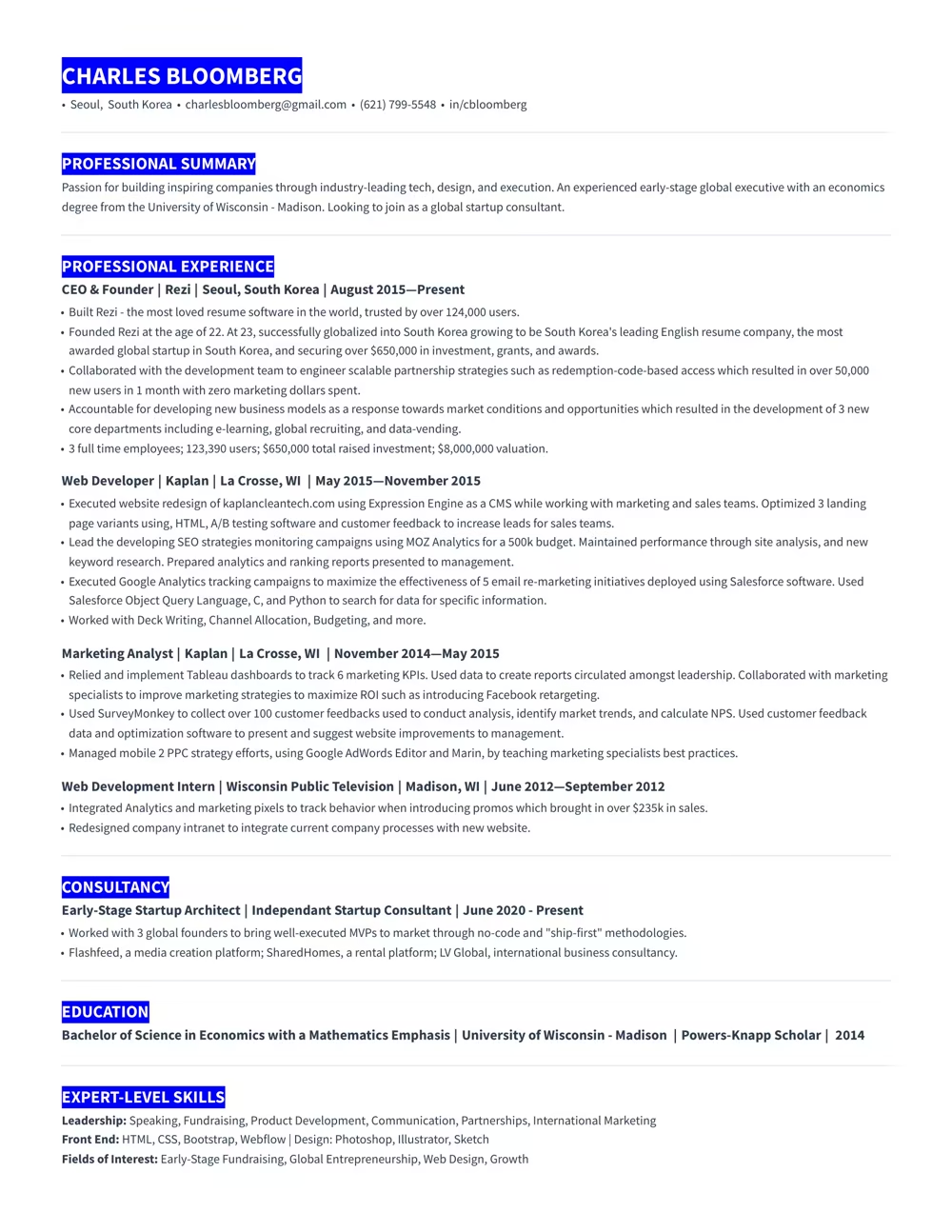
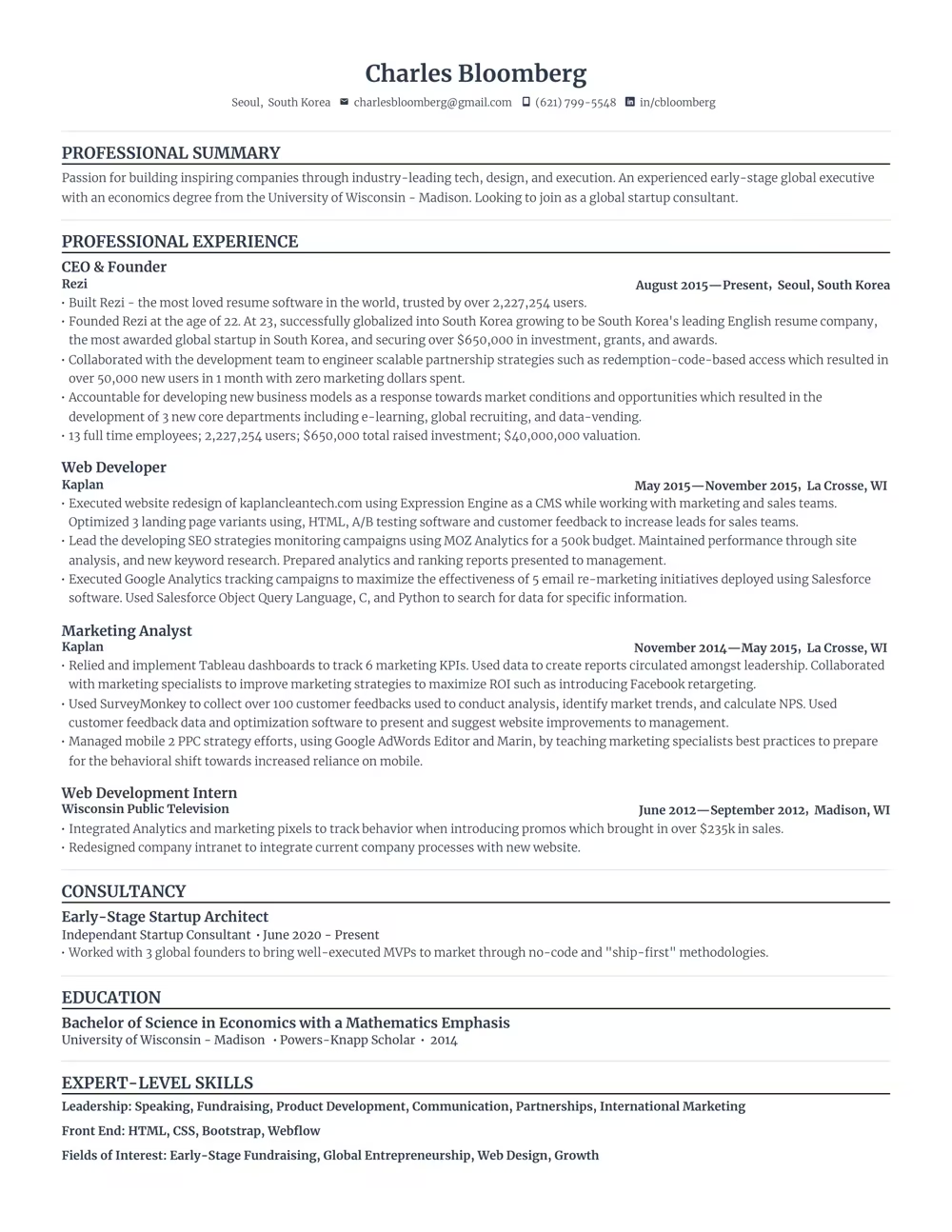
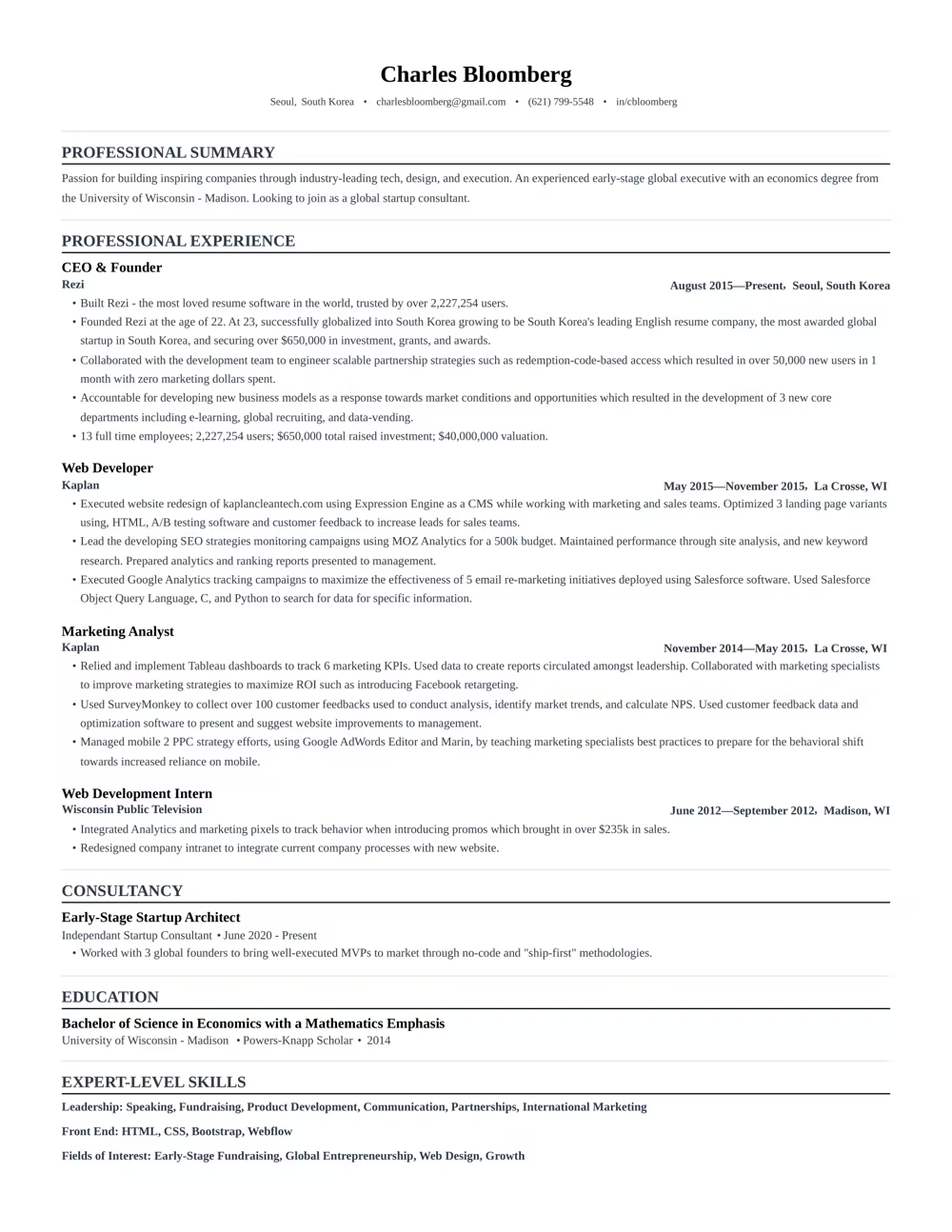
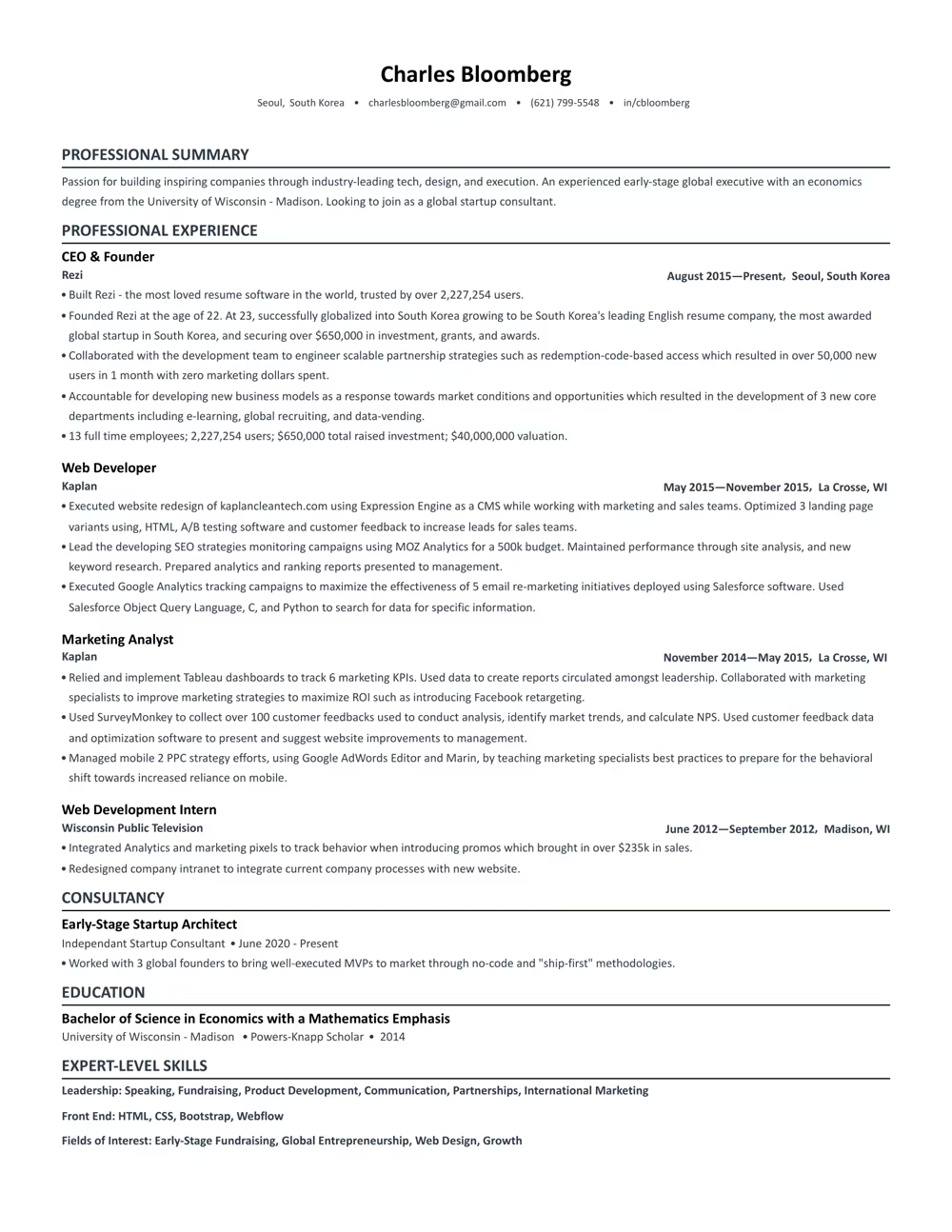
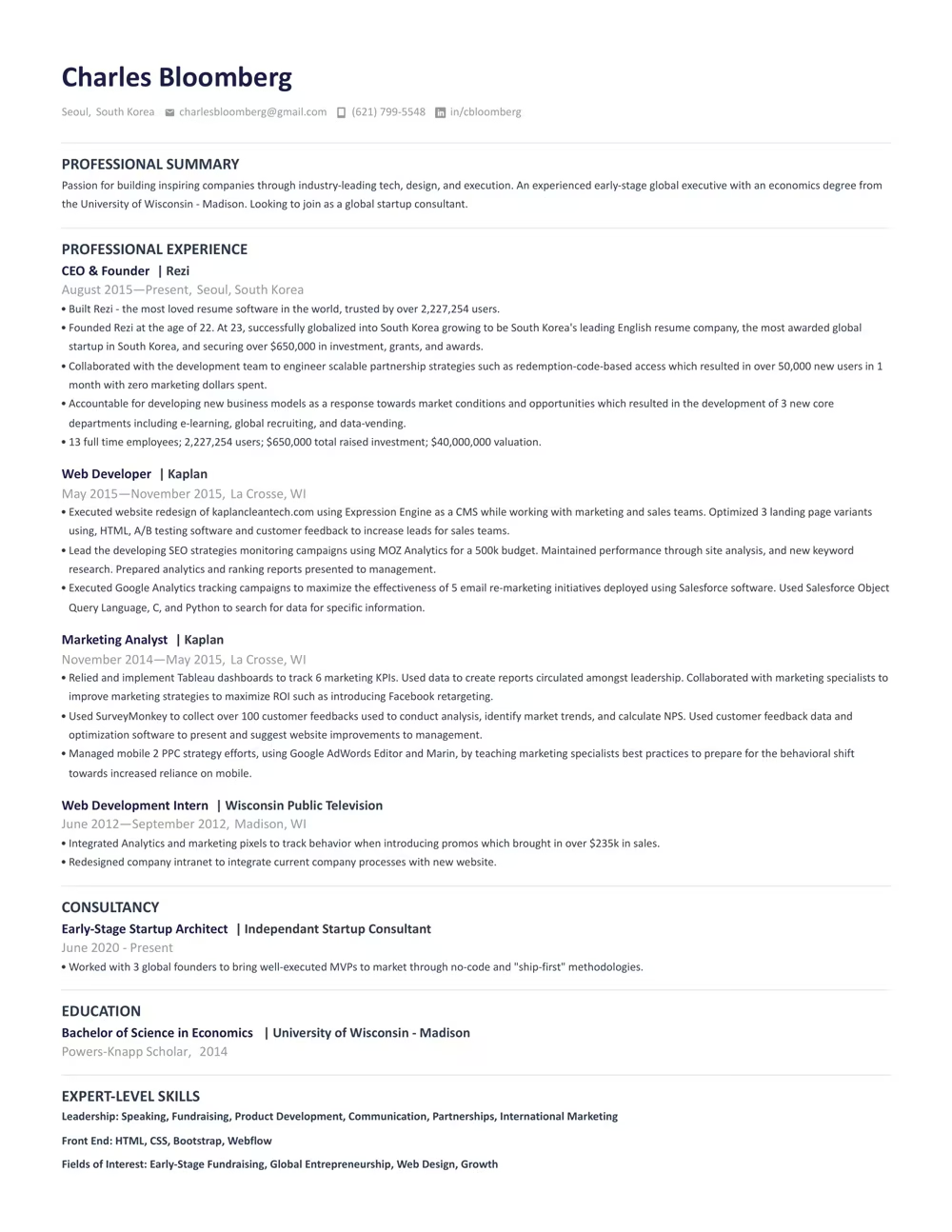
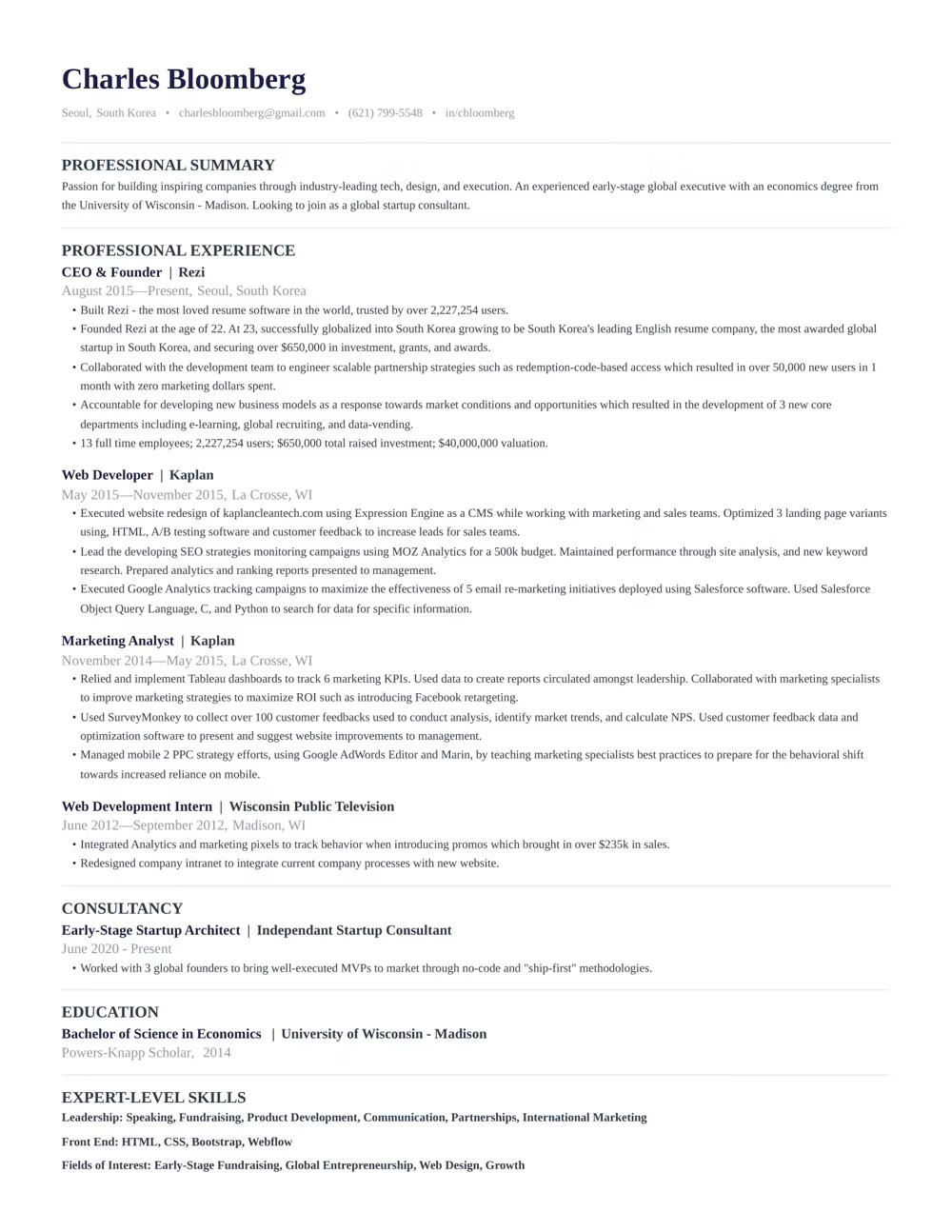
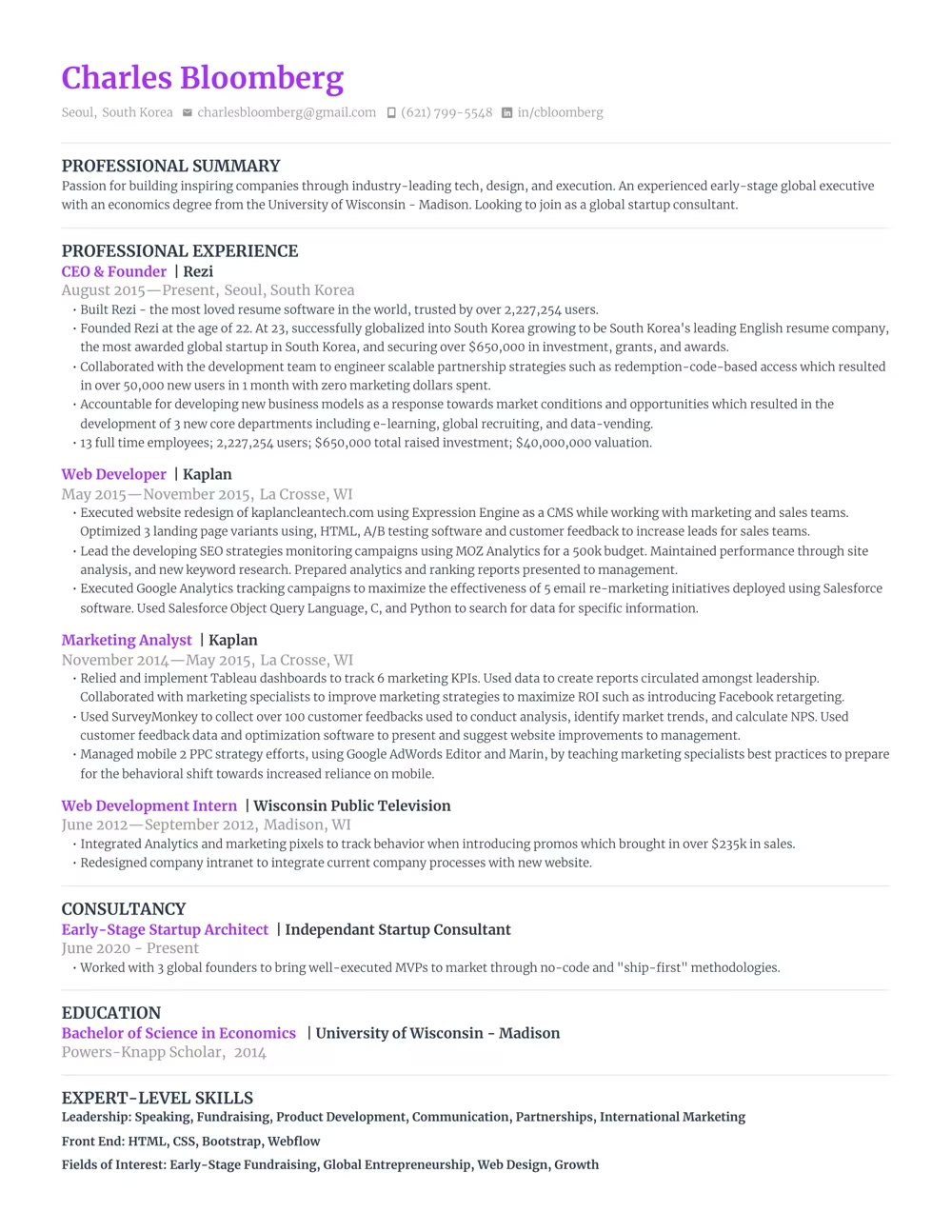
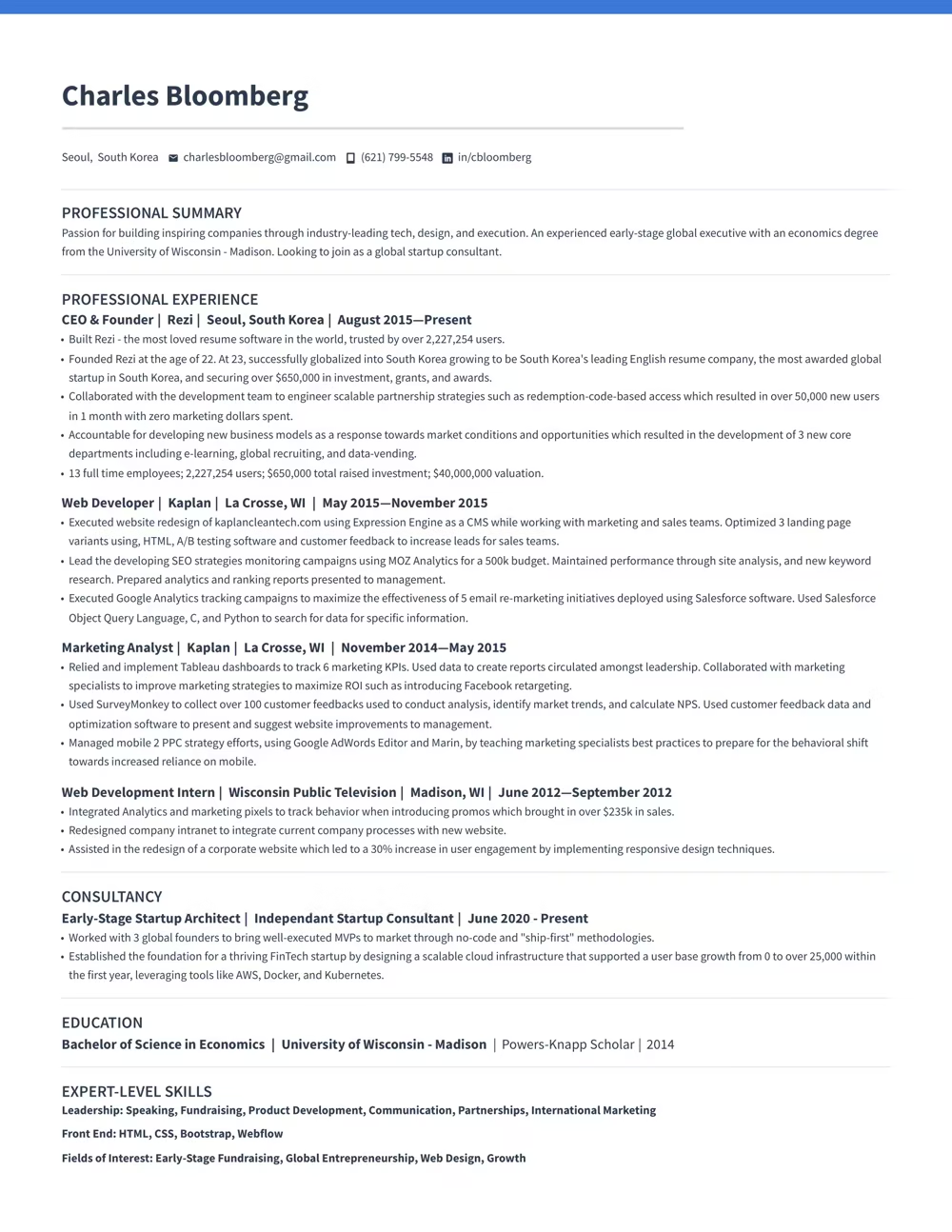
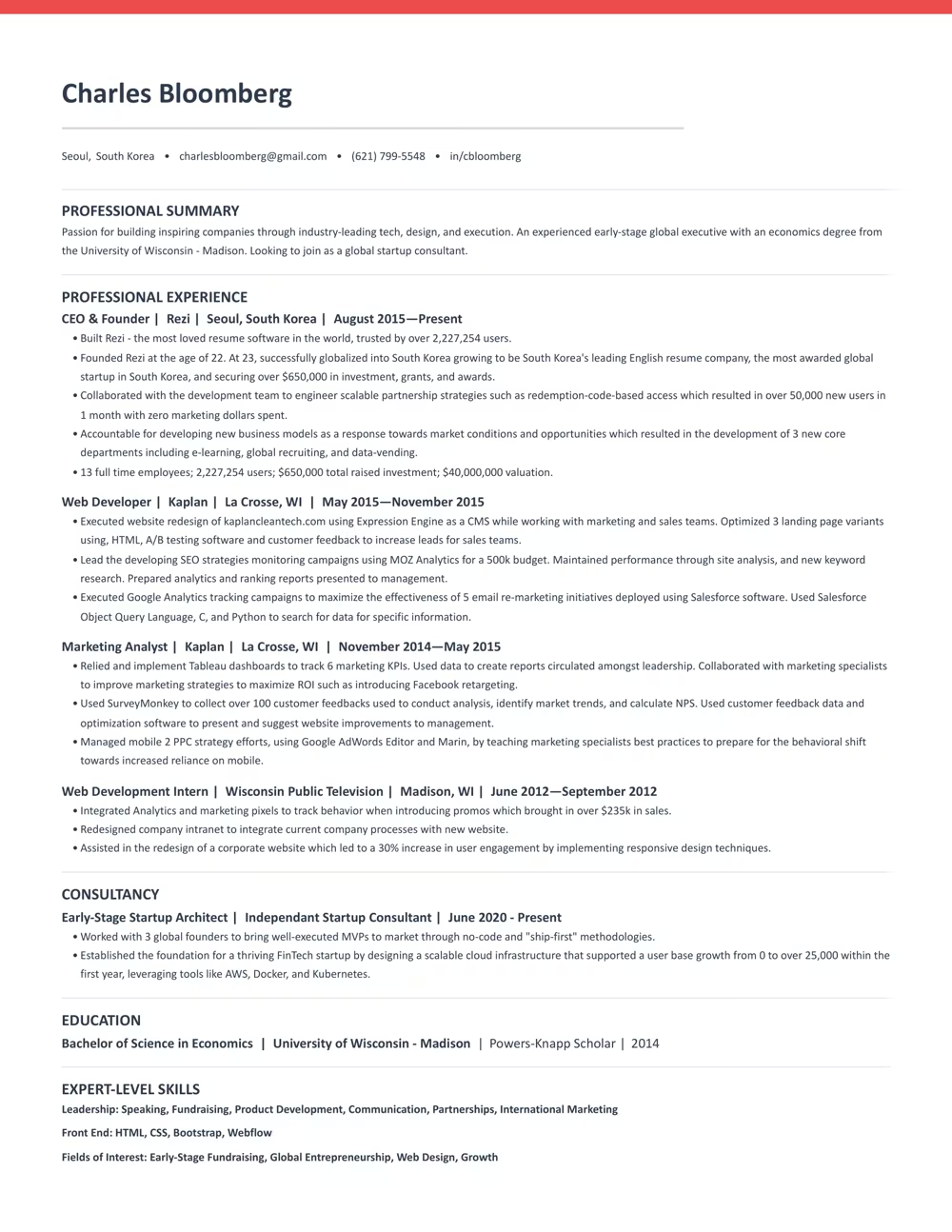
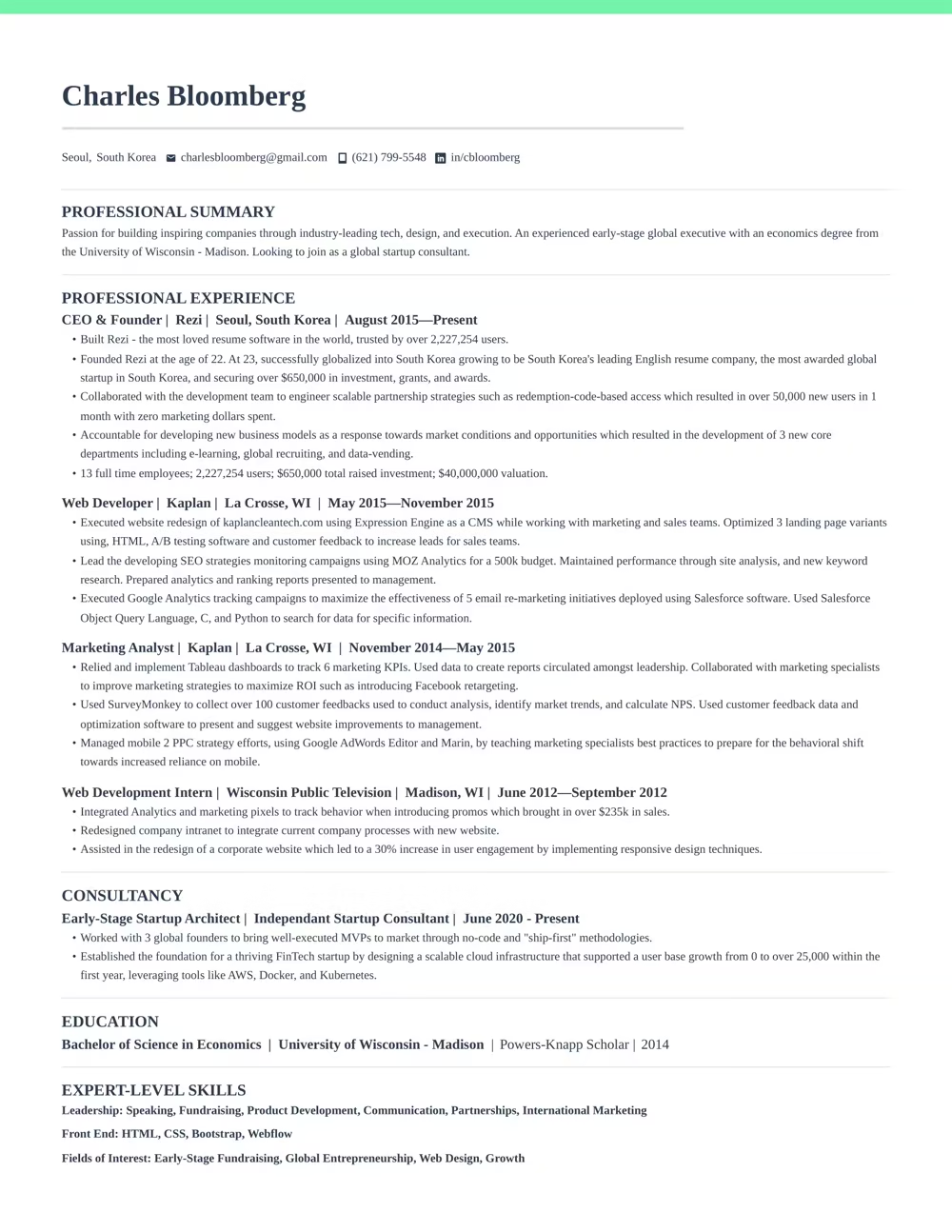
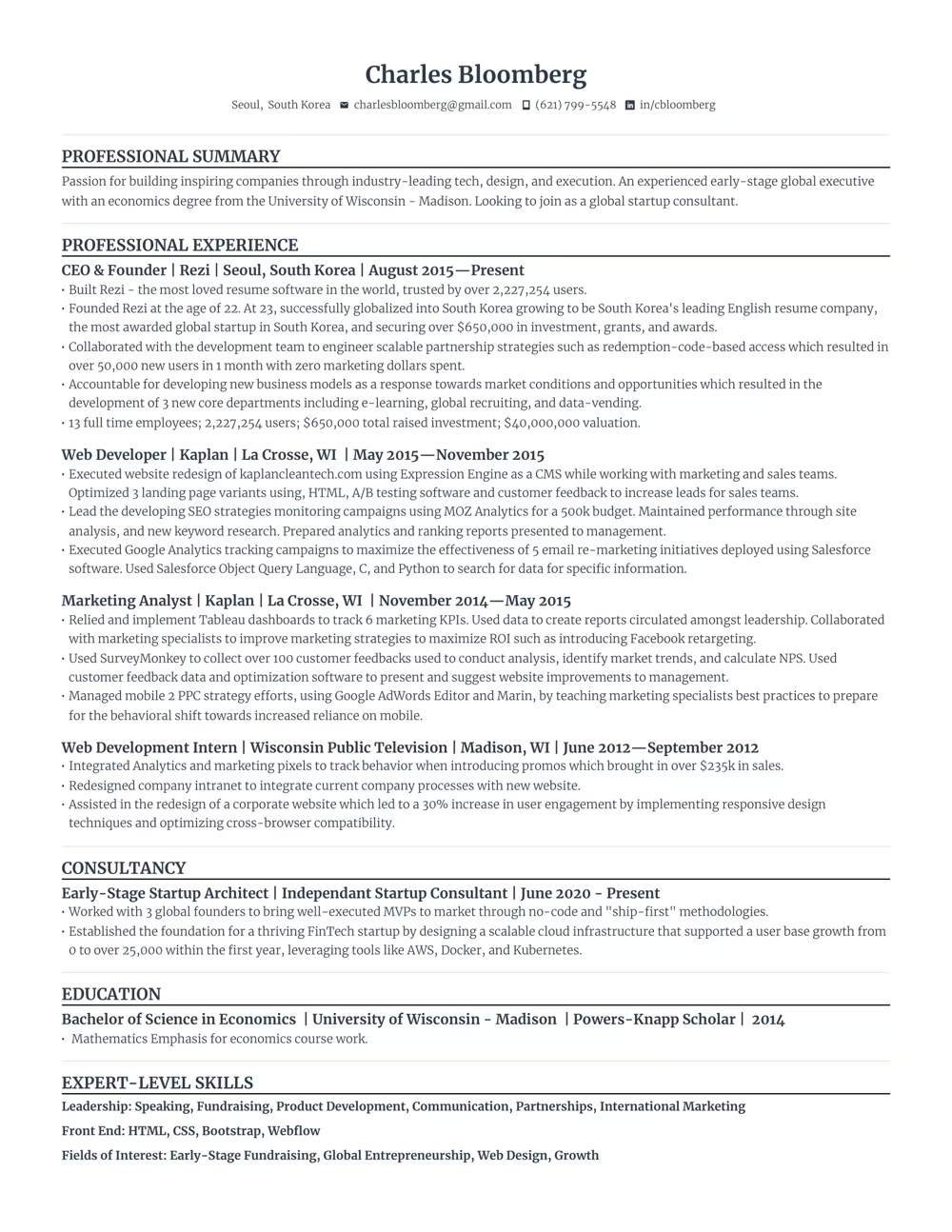
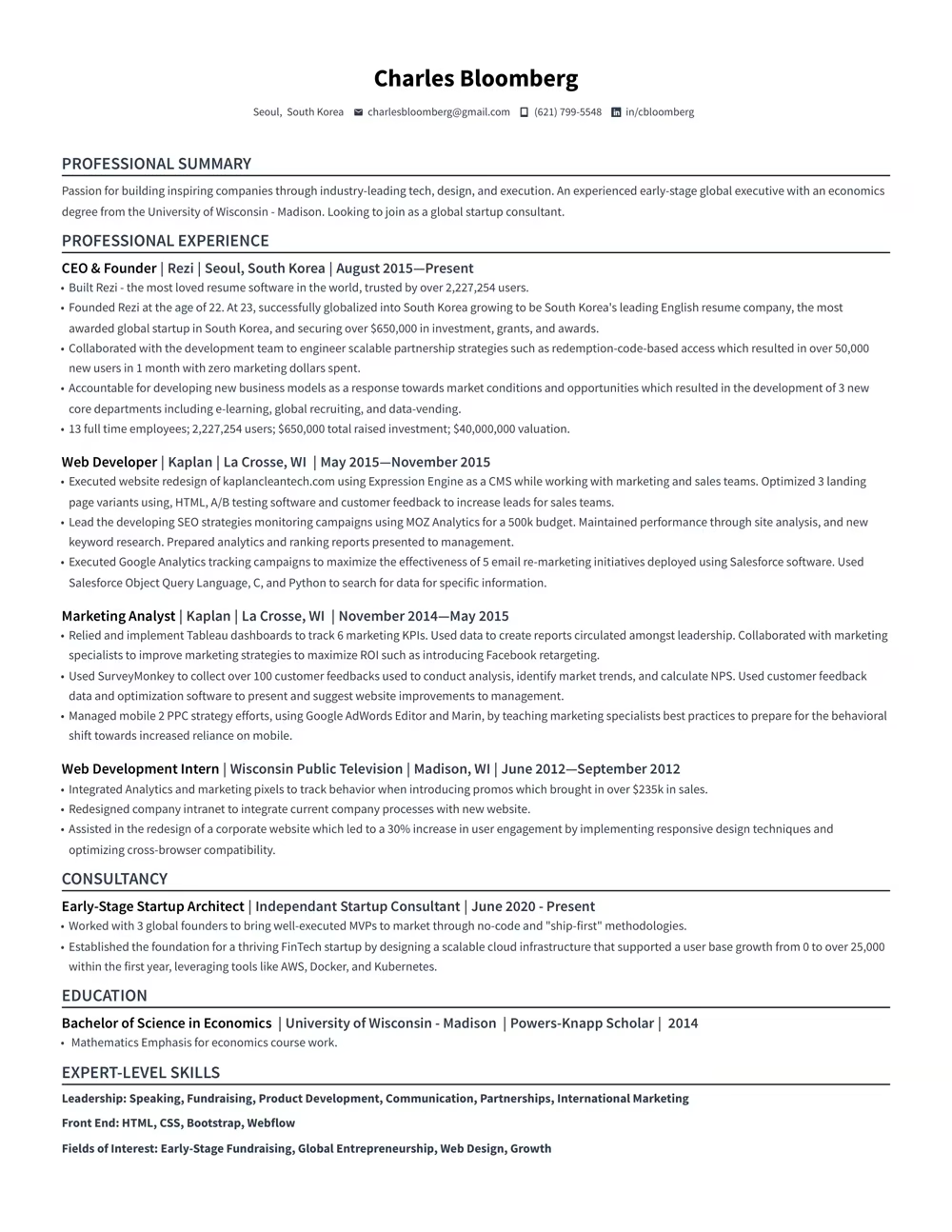
Use a template that guides you. Our ATS-compliant designs are trusted by over 4 million job seekers.




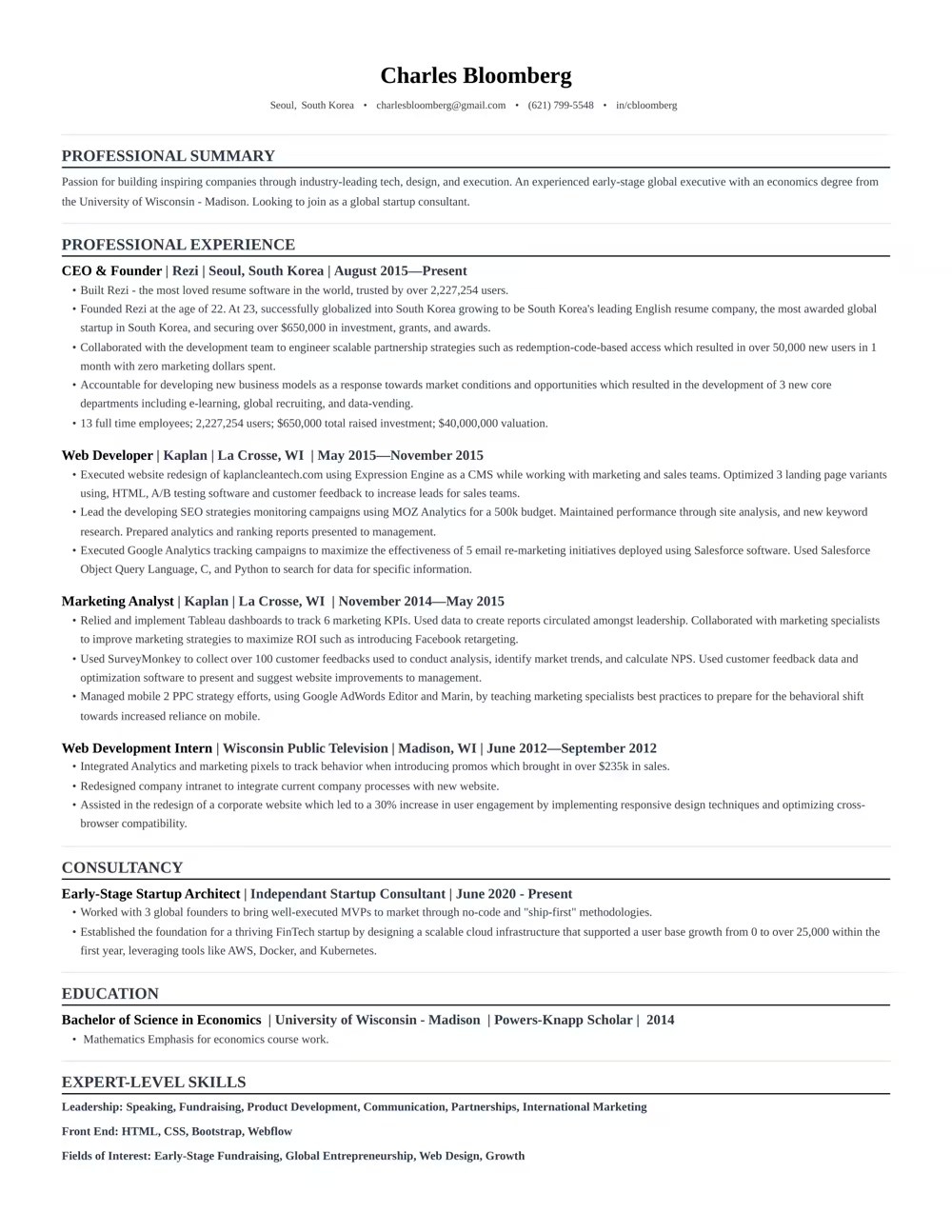
“Rezi is an awesome AI-based resume builder that includes templates to help you design a resume that is sure to check the boxes when it comes to applicant tracking systems. This is a great jumping off point to kickstart a new resume.”

Ashley Stahl
Career Contributor
62.18%
Interview Rate
4,510,834
Total Users
8.23 / 10
Avg. User Review
Wall of Love
Over 4 million users trust Rezi

“Resume Building felt like pulling teeth – until I found Rezi.”
Davis Allen
Software Developer

“I was blown away by Rezi. It streamlined everything...”
Celine Watko

“I needed a resume tool as smart as my work.”
Yosra Naceur
Data Scientist
“A great tool that is very helpful. I found the Rezi system easy to use and very helpful as I was working on getting my resume in shape for job applications.”

Dakota Rubin
United States
Written via

“This is actually one of the first reviews I’ve ever written for a business, and that alone says a lot. I highly recommend Rezi to anyone who’s job searching, it makes the entire process so much easier.”

Yazan Alkhatib
United States
Written via
“Reduced my time per application from 1-2 hours down to 15 minutes.”
Kixxx
Experience with Rezi
“I love how simple and convenient it is to use and been coming back to update it every time I need a fresh resume.”

Zara Wazir
U.A.E.
Written via
Frequently Asked Questions
Your questions, answered.
An AI resume maker helps you build a resume perfectly fit for the job you want. Top-notch AI resume builders are designed to speak the language hiring managers are looking for, increasing your chances of standing out in the crowd. It aligns your skills and experience with the job description effectively.
Rezi templates are ATS-safe. Hiring software can parse your resume with accuracy and you won't have to enter the entire resume all over again after uploading it. Our best resume template is always free. More templates and personalisation is available on Pro subscription. Regardless of what resume template you can customise sections to suit your needs. When in doubt, a clean single-column template works for every industry and every applicant tracking system.
To get the most out of an AI resume builder, either start from scratch or upload your current resume. Fill in as much detail as possible about your career and skills, and upload the job description you’re targeting. This personalization allows the AI to build a unique and tailored resume that’s bound to catch potential employers' attention.
Yes. Rezi stores your content separately from the design, so you can switch templates at any time without retyping anything. Your Rezi Score and keyword targeting stay intact across every template. Some advanced resume template formats require a Pro subscription, but our best template is always free.
AI-generated resumes can seem similar if you're not giving personalized inputs or if you're using basic prompts. Provide specific details about your work experience and target the job you’re eyeing. Use specialized AI tools instead of general chatbots to avoid robotic-sounding resumes and to ensure individual creativity.
A Word or Google Docs template is a static file: one wrong edit breaks the formatting, and nothing checks the result. Rezi keeps the layout locked and parser-safe while its AI writes your content, then scores the finished resume against the job you want.
Employers might think you used AI, but that’s rarely an issue. What they really care about is getting a well-written resume that showcases your skills and experiences accurately. A top-notch resume tailored to their needs will speak volumes more than worrying about AI involvement.
No. Recruiters expect a standard structure, and applicant tracking systems parse it more reliably than a hand-built layout. What hurts is generic content. Rezi's AI tailors your bullet points and keywords to each job description, so your resume never reads like a template.
Yes, using AI to optimize your current resume is highly effective. You just need to upload your resume, share details about your career goals and the job you want, and let the AI refine everything to elevate your resume's impact and ATS compatibility.
Rezi uses a tool called the AI Keyword Targeting. This feature scans the job description to identify crucial keywords and naturally incorporates them into your resume, giving it the right focus without keyword stuffing.
The Free plan is $0/month and allows you to create one resume, use limited AI tools (such as Keyword Targeting and Analysis), and download up to three PDFs. You can also create unlimited cover and resignation letters. No card is required to begin.
The Pro plan is $29/month and provides unlimited access to all features, including unlimited resumes, full AI capabilities, unlimited downloads, and one free monthly expert resume review (resumes are reviewed by a person).
The Lifetime plan is a $149 one-time payment. It grants permanent access to all the features of the Pro plan (unlimited resumes, full AI tools, and unlimited downloads), but it does not include the free monthly expert review (which can be purchased for an extra fee).
Yes. The standard template free and available for all users. With the free plan, you can completely create 1 resume, use AI writer, and download your resume 3 times in PDF format. No credit card is required to join the free plan. Rezi Pro at $29 per month removes the limits and unlocks all our Pro templates including Compact, Modern and Smart templates.
Rezi offers a 100% money-back guarantee on all paid plans (Pro and Lifetime). If you are unsatisfied, you can request a full refund within 30 days of your purchase.
The free template that comes with the free plan is rated as one of our best resume templates. Pro subscription offers more personalisation and more templates while keeping ATS-safe designs; Pro removes limits on resumes, downloads, and AI tools. Our best template is never paywalled and is always free for everyone.
Yes, you can easily upgrade or downgrade your plan at any time through your Rezi Account Billing dashboard. Prorated credits will apply when switching.
An AI resume maker helps you build a resume perfectly fit for the job you want. Top-notch AI resume builders are designed to speak the language hiring managers are looking for, increasing your chances of standing out in the crowd. It aligns your skills and experience with the job description effectively.
They are risky. Many parsers read multi-column layouts out of order or skip a column entirely, so skills and dates end up scrambled. You can easily check this in popular ATS like Workday and Lever. Rezi templates will seamlessly populate the fields in these ATS where two-column templates struggle. The same applies for graphical resumes. Rezi uses single-column layouts because they parse correctly in every major applicant tracking system.
Use a text-based PDF unless the job posting asks for Word. PDFs have been around for years and modern applicant tracking systems read PDFs reliably. PDF locks your layout so it looks the same everywhere. Rezi exports machine-readable PDFs that parse cleanly in every major ATS and ensure compatibility.
Yes. The same ATS rules apply to CVs: single column, standard headings, machine-readable text. CVs usually tend to be longer than resumes. You can check their differences here. Rezi templates can handle both if you require a longer CV format, you can easily add sections like publications, certifications, and research without breaking the layout. It is recommended to use a shorter resume format than CVs when applying for jobs, unless mentioned otherwise.
Yes, Rezi Enterprise.