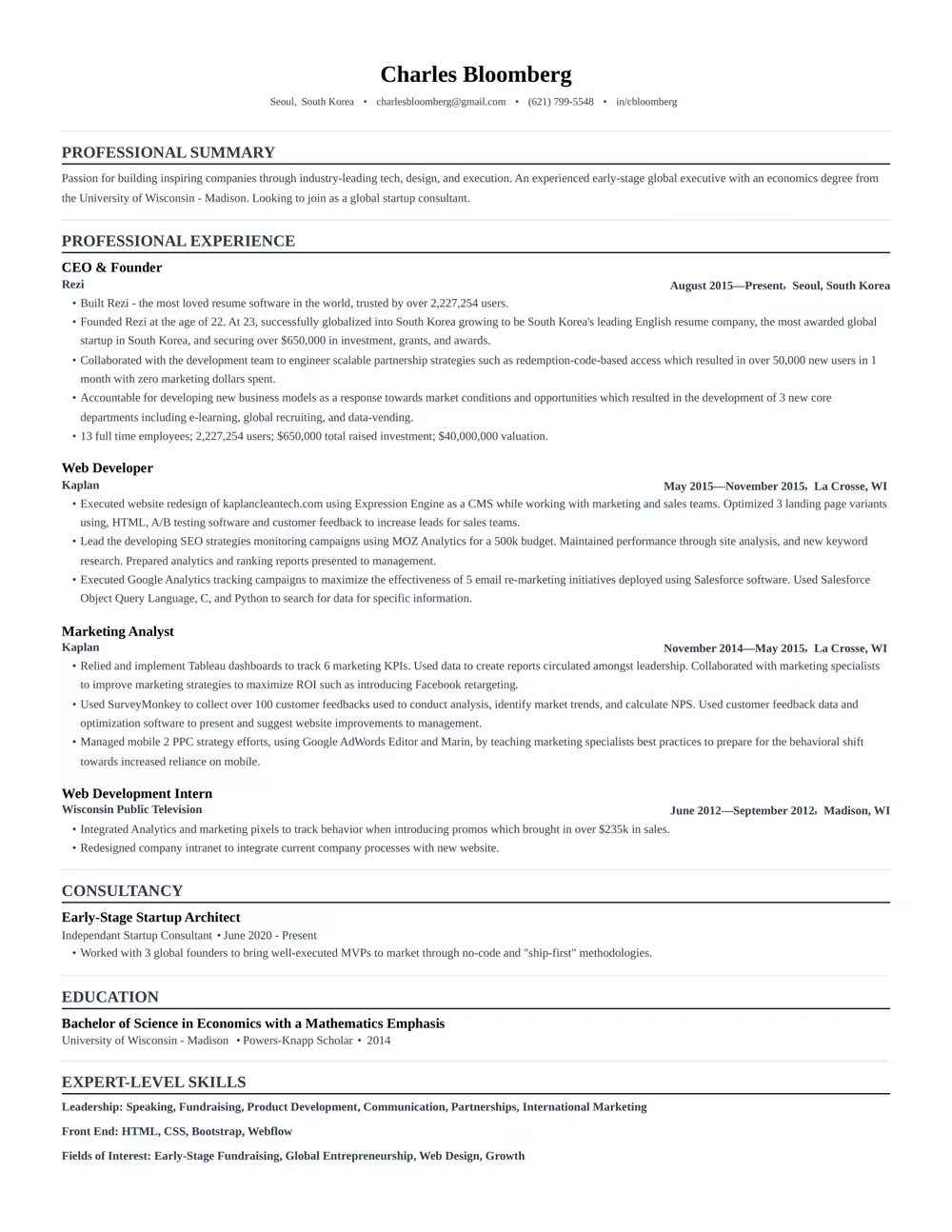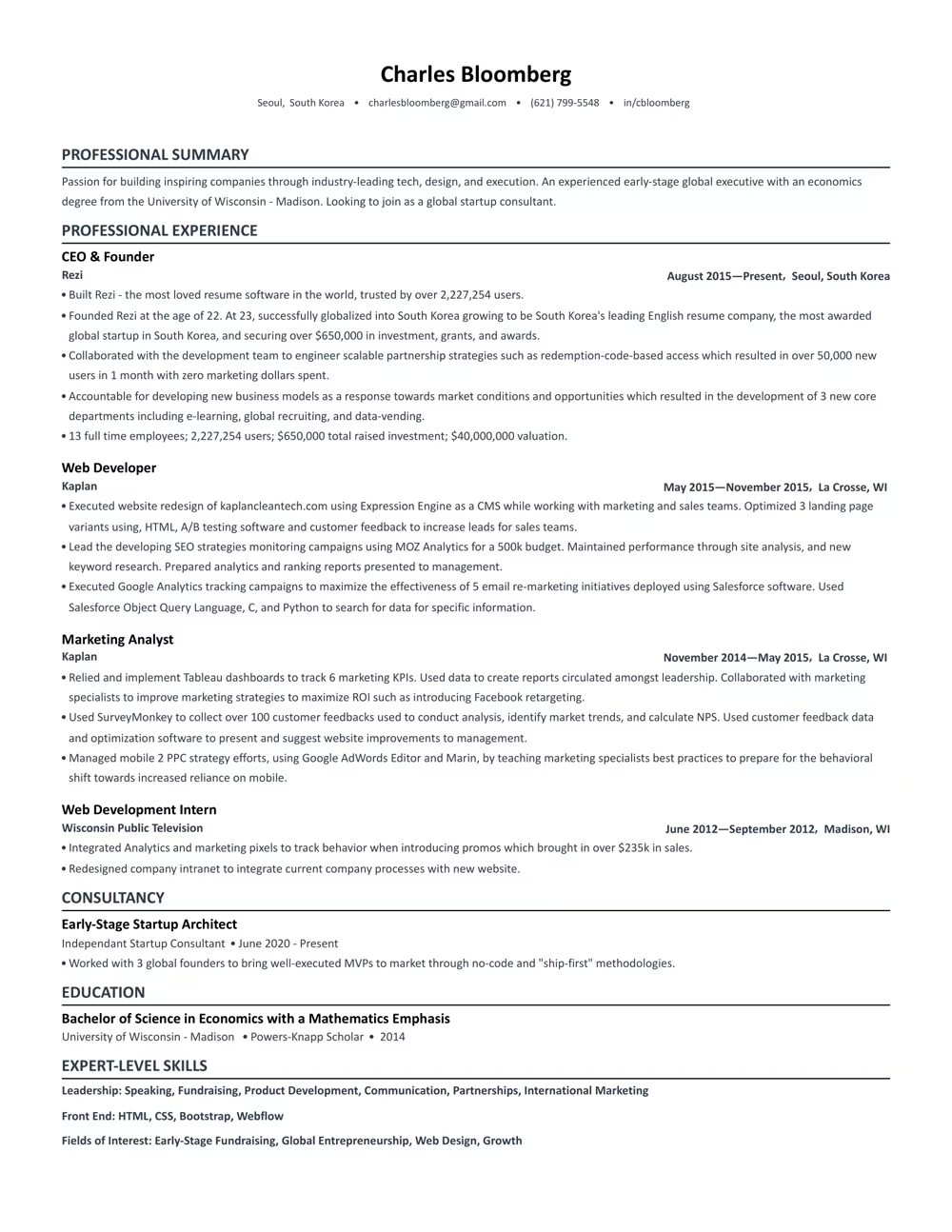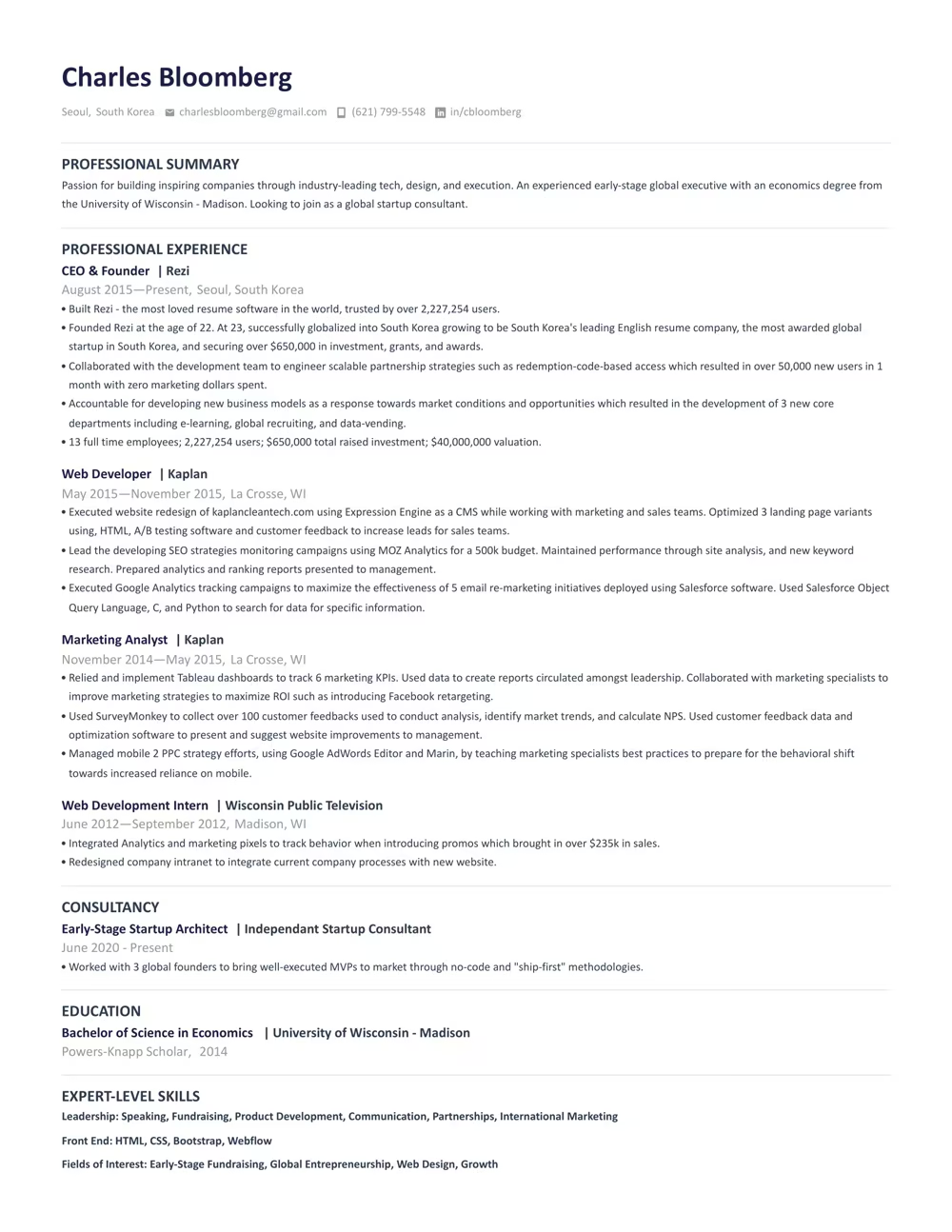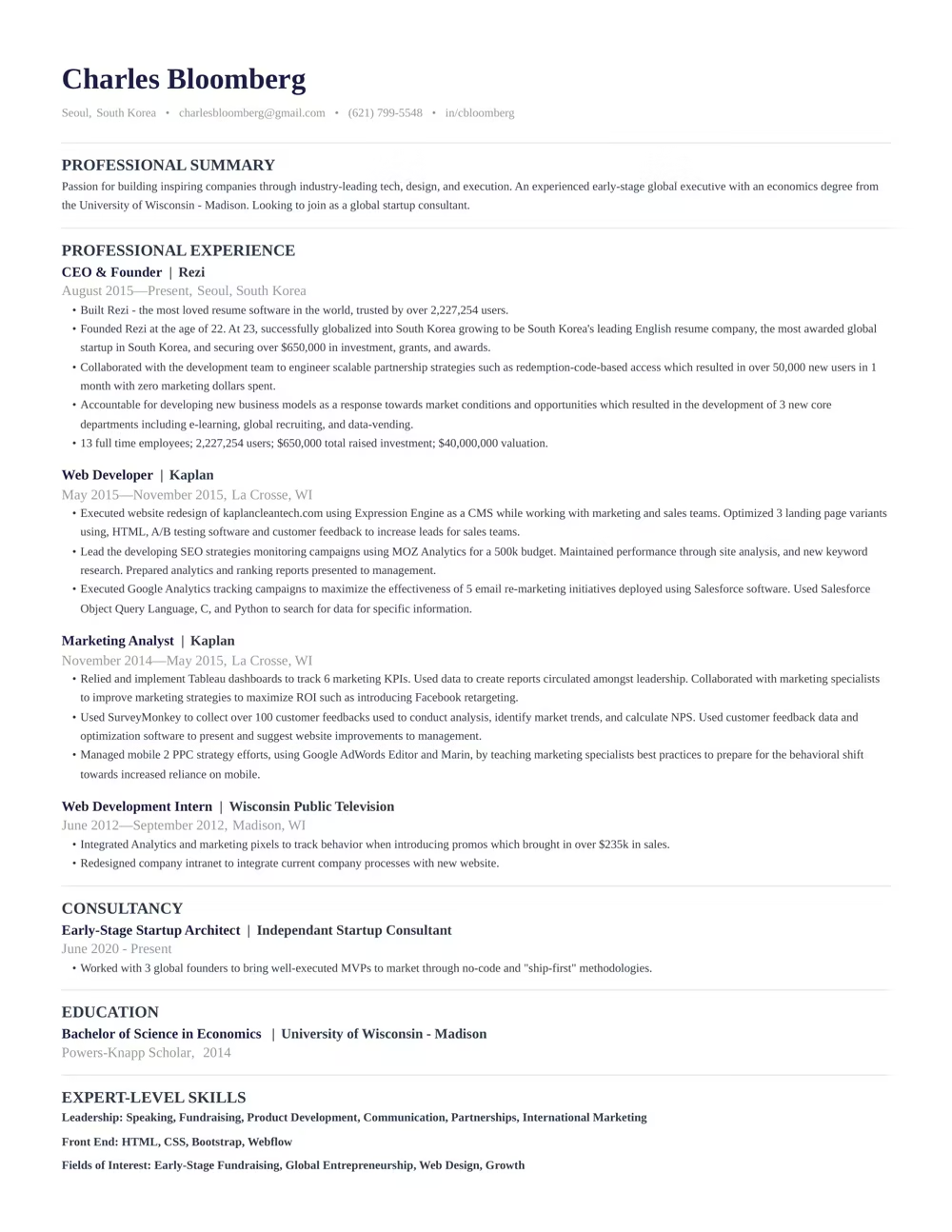

Here's a problem I keep running into when reviewing property management accountant resumes: they read like generic accounting resumes with the word "property" sprinkled in. There's no mention of lease structures, CAM reconciliations, tenant ledgers, or the specific financial rhythms of managing a real estate portfolio. It's all debits, credits, and month-end closes — stuff that could belong to any industry accountant.
To create a compelling property management accountant resume, you need to show that you understand the unique financial ecosystem of real estate. That means demonstrating your expertise in property-level reporting, rent roll management, owner distributions, and the accounting nuances that come with managing multiple properties, tenants, and stakeholders simultaneously.
And this is exactly what you'll learn from this article. Inside, you'll find:
- Examples of 9 property management accountant resumes, covering different specializations and seniority levels.
- Insider tips about what really matters to recruiters hiring for property accounting roles.
- A step-by-step guide for putting together a property management accounting resume that actually lands interviews.
Sample Property Management Accountant Resumes
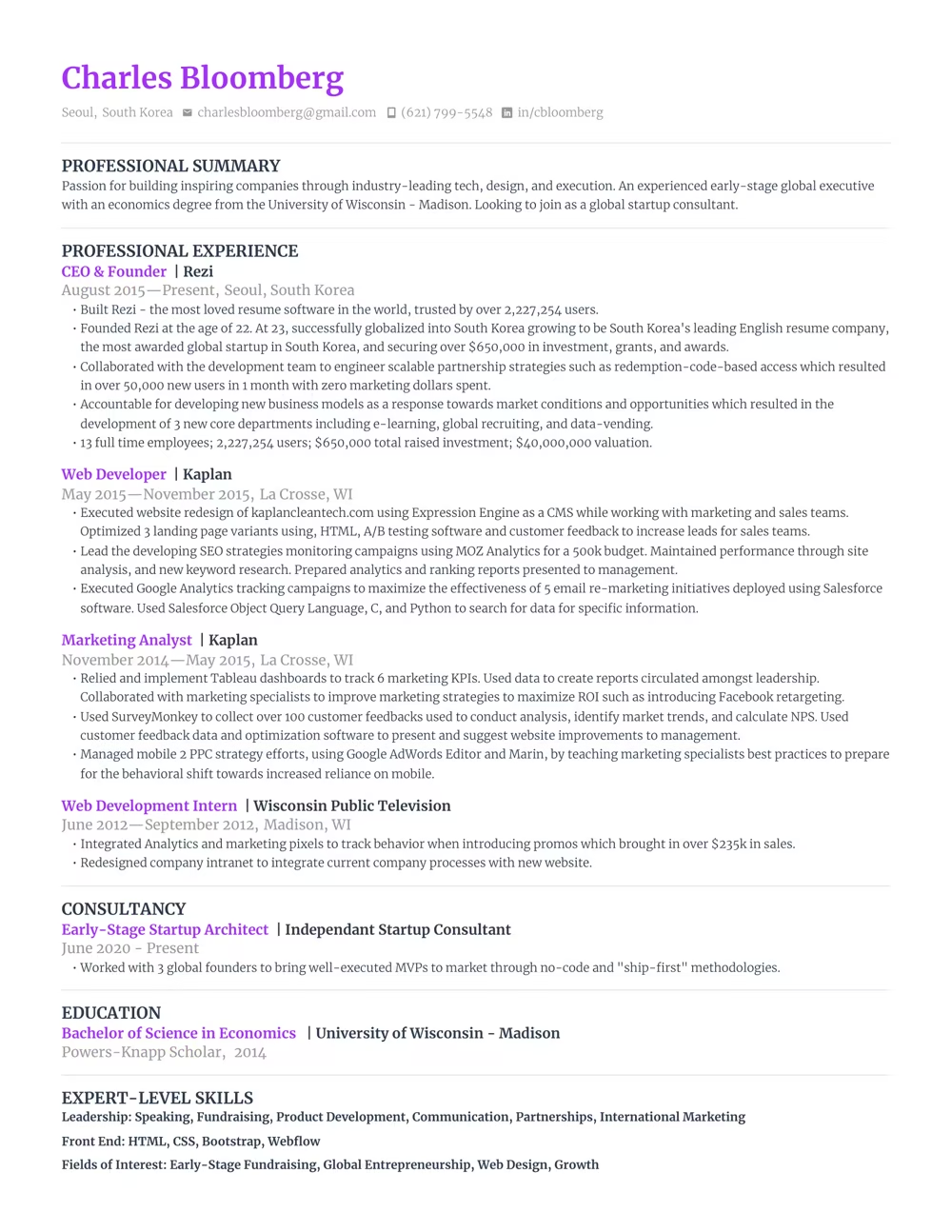
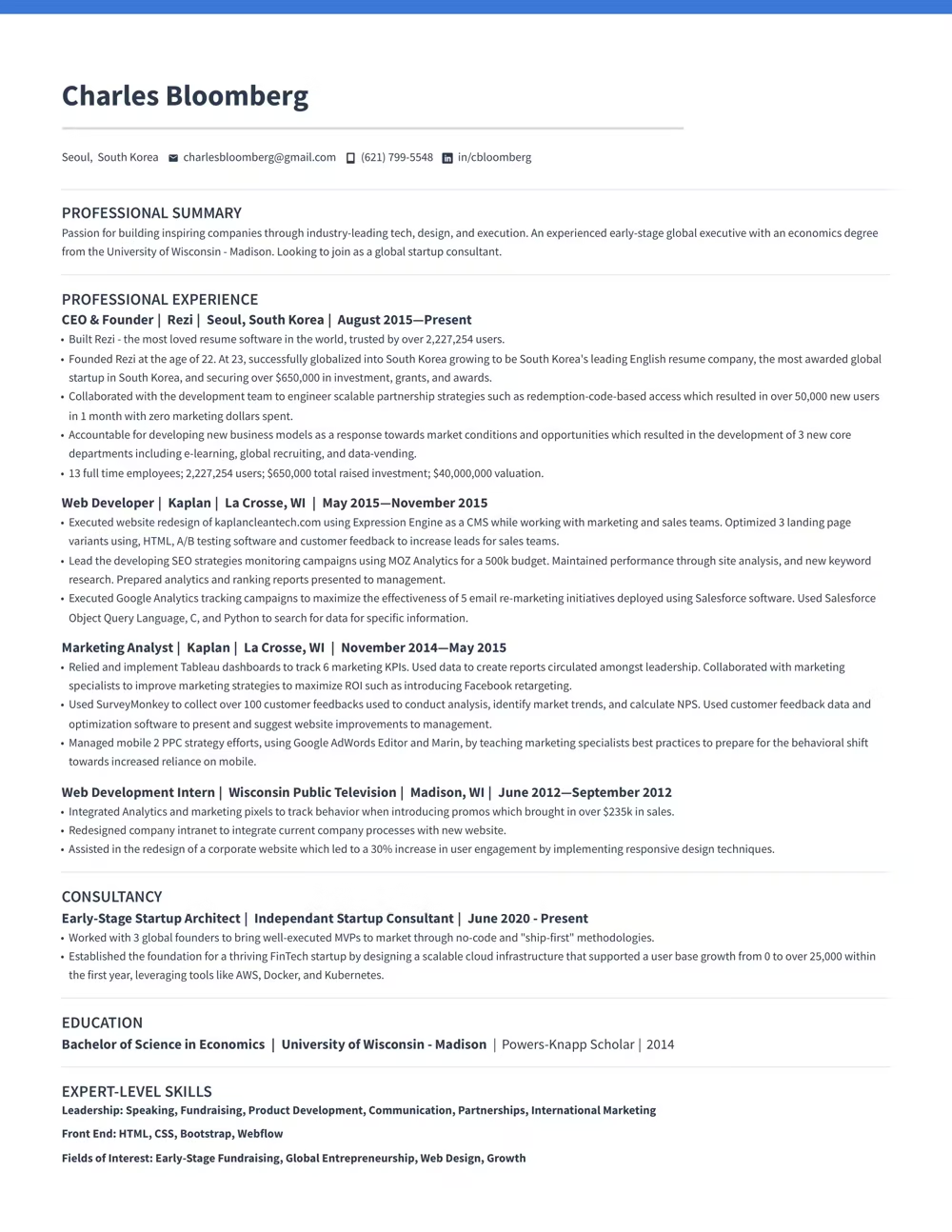
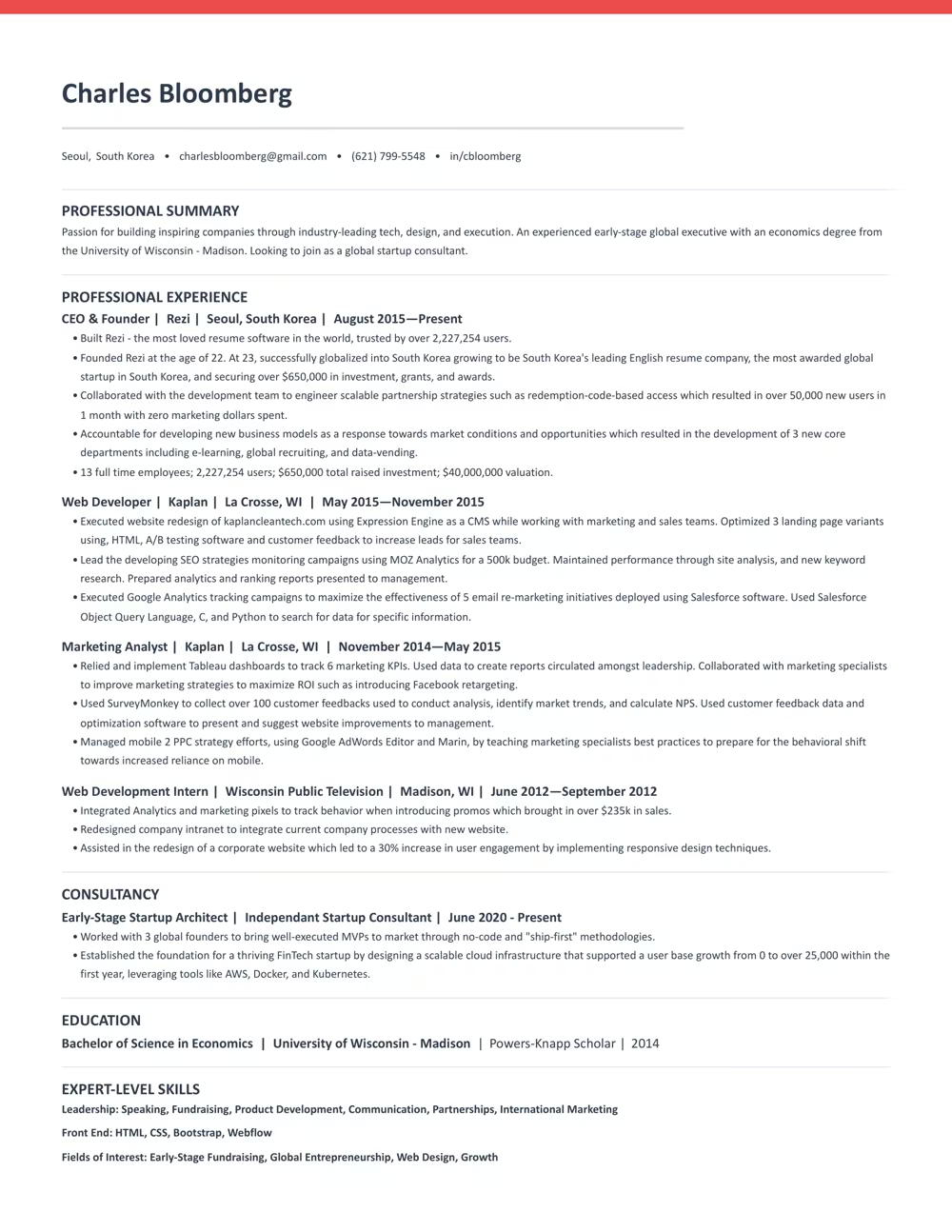
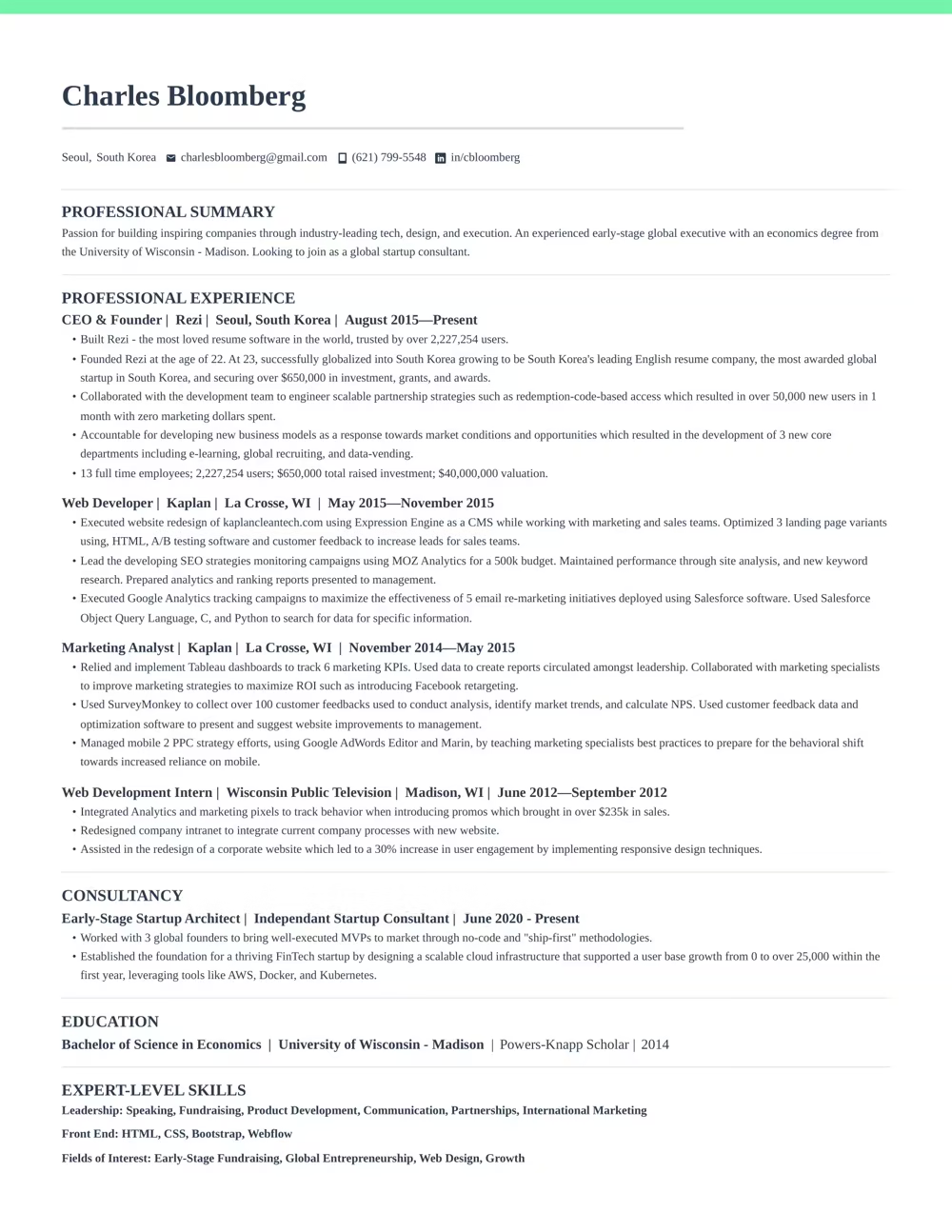
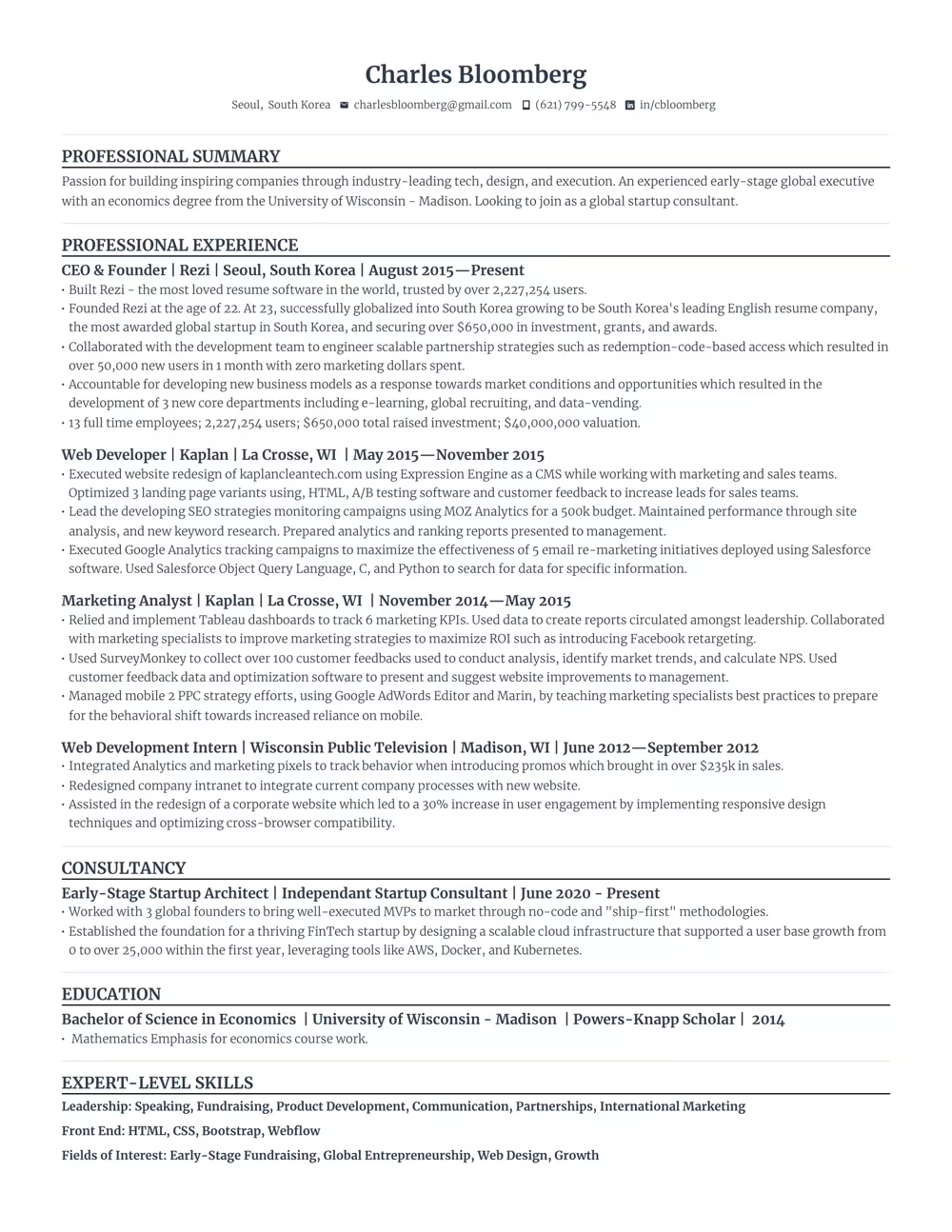
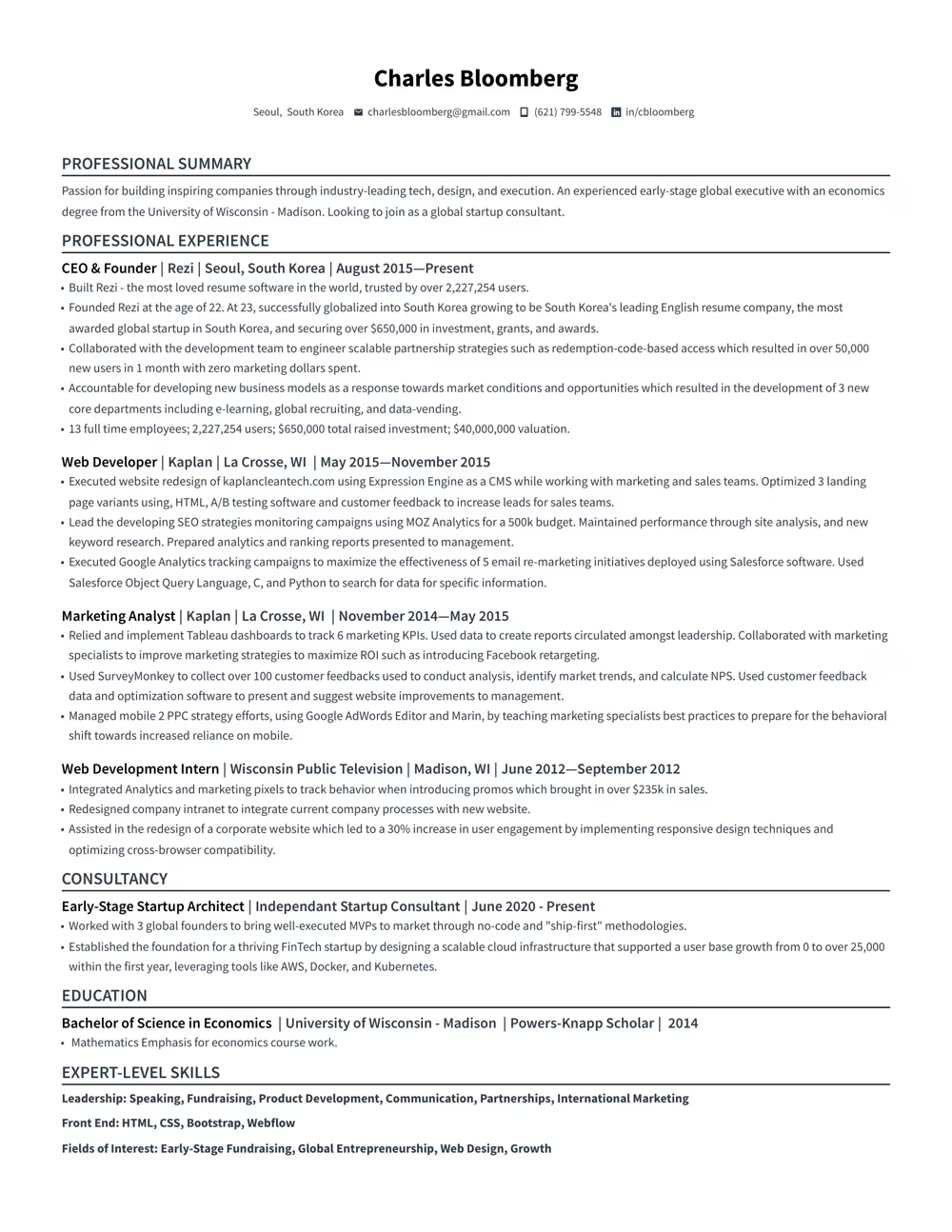
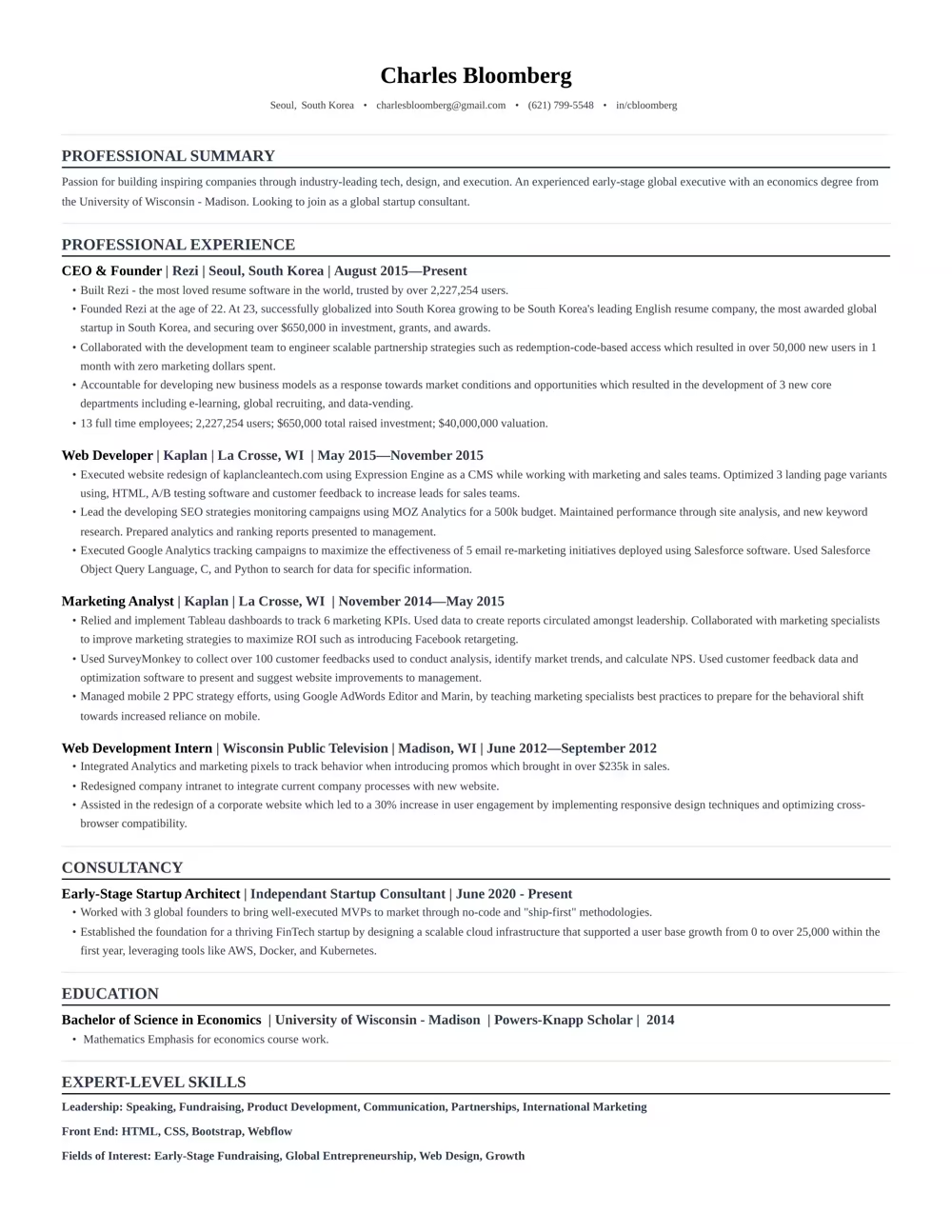
Take a look at some top-notch sample resumes for property management accountants across different specializations and experience levels. Find one that matches your profile and use it as a reference point (or feel free to steal it — just make sure to adjust the wording to reflect your own career journey).
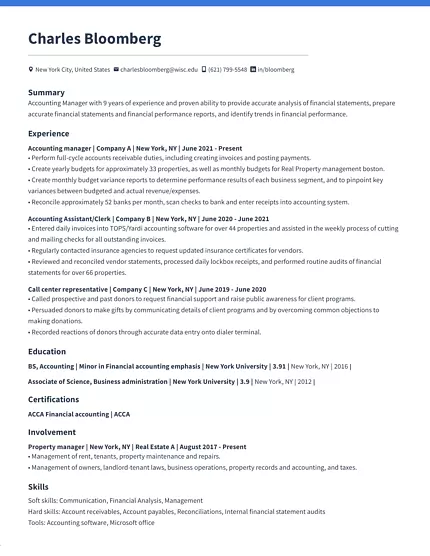
Junior Property Management Accountant
A Junior Property Management Accountant resume should emphasize your educational background, relevant coursework in real estate or accounting, and any internship experience with property management firms. Highlight your familiarity with property accounting software, your understanding of basic lease accounting, and your ability to handle tenant billing and rent collections. Even entry-level exposure to CAM reconciliations or month-end property reporting is worth mentioning.
Mid-Level Property Management Accountant
A Mid-Level Property Management Accountant resume should showcase a solid track record of managing property-level financials independently. Emphasize your experience with monthly financial reporting, bank reconciliations, CAM estimates and reconciliations, and owner distributions. Detail the number and types of properties in your portfolio, your proficiency with property management software like Yardi or MRI, and any process improvements you've driven.
Senior Property Management Accountant
A Senior Property Management Accountant resume should demonstrate leadership in overseeing complex, multi-property portfolios and mentoring junior staff. Highlight your expertise in budget preparation, year-end audits, lease abstraction oversight, and financial statement analysis. Showcase your ability to manage relationships with property managers, owners, and auditors, and quantify your impact through metrics like portfolio size, accuracy improvements, or time saved through process optimization.
Real Estate Accountant
A Real Estate Accountant resume should focus on broad real estate financial expertise, including property acquisitions, dispositions, and investment-level accounting. Highlight your experience with partnership accounting, capital calls, investor reporting, and tax-related items like depreciation schedules and 1031 exchanges. Demonstrate your understanding of GAAP as applied to real estate entities. Proficiency in tools like Yardi, MRI, or RealPage, plus advanced Excel skills, will strengthen your resume.
Property Accounting Manager
A Property Accounting Manager resume should emphasize team leadership, process oversight, and strategic financial management. Detail the size of the team you manage, the number of properties and total asset value under your purview, and your role in implementing accounting policies and procedures. Showcase your experience coordinating audits, managing budgets, and reporting to senior executives or ownership groups. Highlight any system implementations or migrations you've led.
Commercial Property Accountant
For a Commercial Property Accountant, your resume should underscore expertise in commercial lease structures, including triple-net, gross, and modified gross leases. Highlight your experience with CAM, insurance, and tax reconciliations, percentage rent calculations, and tenant improvement allowance tracking. Demonstrate familiarity with ASC 842 lease accounting standards and your ability to manage the financial complexities of office, retail, or industrial portfolios.
Residential Property Accountant
A Residential Property Accountant resume should highlight your experience managing financials for multifamily communities, HOAs, or single-family rental portfolios. Emphasize your expertise in rent roll management, security deposit tracking, move-in/move-out accounting, and compliance with local housing regulations. Detail your experience with high-volume tenant transactions, utility billing, and affordable housing programs like LIHTC if applicable. Proficiency in residential-focused property management platforms is a plus.
Real Estate Portfolio Accountant
A Real Estate Portfolio Accountant resume should focus on your ability to manage accounting across a diverse portfolio of properties or funds. Highlight your experience with consolidated financial reporting, intercompany transactions, and investor-level distributions. Showcase your skill in tracking performance across multiple asset classes and your proficiency with portfolio-level analytics. Detail your experience working with asset managers, fund administrators, and external auditors on large-scale reporting.
Property Financial Analyst
A Property Financial Analyst resume should emphasize your analytical capabilities within a real estate context. Highlight your experience building property-level financial models, conducting variance analysis, preparing operating budgets, and forecasting NOI. Showcase proficiency in Excel modeling, business intelligence tools, and property management software. Detail your role in supporting acquisition underwriting, disposition analysis, or capital expenditure planning, and quantify the financial impact of your recommendations.
How to Write a Property Management Accountant Resume
Short answer:
Focus on your property-level accounting expertise, financial reporting accuracy, and knowledge of real estate accounting standards. Create a professional header with your name and contact details. Right below, write a 2–3 sentence resume summary outlining your most significant accomplishments. Describe your work history in reverse-chronological order, emphasizing property portfolio management, reconciliations, and reporting outcomes. Then, cover your education, including professional certifications, list key skills, and add extra sections such as software proficiencies, professional memberships, or volunteer work.
Include all the necessary sections in the correct order
Here's the correct order of sections for most property management accountant resumes:
- Header with contact information
- Resume summary or objective
- Work experience
- Education
- Skills
- Certifications
Depending on your current career situation, you can also throw in some additional sections. For instance:
- Software proficiencies (especially if you've worked across multiple property management platforms)
- Volunteer experience
- Professional memberships
- Continuing education or professional development
- Publications or industry contributions
Include everything that shows you're capable of doing what the job requires. Make every section count. If it doesn't clearly highlight your property accounting skills, it doesn't belong on your resume.
If you have less than five years of relevant experience, keep your resume 1-page long. For more senior property accountants, a two-page resume is fine.
More details here: What Sections to Include on Your Resume?
Now, I'll give you a high-level overview of how to write each section, going from top to bottom. Well… almost. The only exception is the resume summary section. While it comes right after your contact info, it's actually easier to write it last. More on that in a sec.
Create a professional resume header
- Start with your name and contact information. Include the basics: your full name, phone number, professional email address, location, and LinkedIn profile. If you have a CPA designation or other notable credential, you can include it after your name (e.g., "Jane Smith, CPA").
- Right below your name, clearly state your professional title (e.g., Property Management Accountant or Senior Real Estate Accountant). This sets expectations and immediately signals your specialization.
For more information, see: How to Create a Resume Header
Describe your work history
- Use reverse-chronological order. List your positions starting with the current or the most recent one.
- In each entry, include your job title, company name, location, and dates of employment.
- Below each position, write 3–7 bullet points — the more recent the position, the more bullet points you should include. Describe your responsibilities and, more importantly, your accomplishments.
- Use action verbs and quantify your achievements (e.g., "Managed full-cycle accounting for a 45-property commercial portfolio valued at $380M, delivering monthly financial packages within 10 business days of close").
- If specific accounting standards, software platforms, or property types were central to your roles (e.g., ASC 842, Yardi Voyager, LIHTC), weave these details into your descriptions. This will also help you pass ATS scans.
Learn more about the best practices of this section with our detailed guide on how to describe your work experience on a resume.
List your degrees and detail professional learning
- In the education section, list your highest degree first, including the degree type, major, and institution. Accounting, finance, or real estate-focused degrees are most relevant.
- If you have some relevant work experience, include only the name of your school and the degree you got. If you're an entry-level candidate, you can add more detail — list relevant coursework in real estate finance, property law, or advanced accounting, as well as academic achievements.
- If you have professional certifications (e.g., CPA, CPM, or RPA), either include them in an "Education and Certifications" section, or create a separate "Certifications" section and place it right below.
For an in-depth guide on how to describe your education on a resume, see: How to List Education on a Resume
List your most relevant skills in the skills section
- Include a mix of technical skills (e.g., property management software, financial reporting tools) and accounting knowledge areas (e.g., GAAP, lease accounting standards) that you are proficient in.
- Add in some soft skills such as attention to detail, communication, and organization. These demonstrate your capacity to manage complex workloads and collaborate with property managers and ownership groups.
- You can use two separate subsections, one for hard skills, one for soft skills, or just list all the skills under one heading.
- Match your skills to the description of the job you're applying for. I'm not saying you should just dump all the skills the position requires (especially if you don't really have them), but highlight those areas of expertise where your knowledge overlaps with the job ad.
Need some inspiration to get started? Here are some good skills to feature on your property management accountant resume.
Software skills for property management accountant resumes:
- Yardi Voyager
- MRI Software
- RealPage
- AppFolio
- Buildium
- Microsoft Excel (advanced: VLOOKUP, pivot tables, macros)
- QuickBooks
- Sage Intacct
- NetSuite
- Microsoft Dynamics
Technical accounting skills:
- GAAP compliance
- ASC 842 lease accounting
- CAM reconciliations
- Bank reconciliations
- Financial statement preparation
- Budgeting and forecasting
- Accounts payable and receivable
- General ledger management
- Owner and investor reporting
- Year-end audit preparation
Key soft skills for property management accountants:
- Attention to detail
- Communication
- Time management
- Organization
- Problem-solving
- Analytical thinking
- Collaboration
- Adaptability
- Multitasking
- Stakeholder management
For a full-blown guide on listing skills on a resume, visit: How to Put Skills on a Resume
Use additional sections as further proof of your fit
Additional sections add depth to your resume and back up your claimed expertise. Good examples of extra sections to add to a property management accountant resume are:
- Professional memberships. Membership in organizations like IREM, BOMA, or your state's CPA society shows your commitment to both real estate and accounting professions.
- Software certifications. Certifications in platforms like Yardi or MRI can set you apart, especially when employers are migrating to or already using those systems.
- Continuing education. Relevant CPE credits, real estate finance courses, or lease accounting training demonstrate that you stay current with industry changes.
- Volunteer experience. If you've served as a treasurer for a nonprofit or HOA, this directly reinforces your property accounting credentials.
Highlight the most relevant information in a resume summary
Once you're done writing your property management accountant resume, give it a full read. Pick the most relevant information and compile it into a summary paragraph. Place it right under the resume header.
- Be brief and to-the-point. In 3–4 sentences, sum up your career highlights, core competencies, and what you bring to the table. Consider this your chance to answer, "Why should you hire me?" Tailor this section to match the employer's needs outlined in the job description.
- Use value-oriented language. Focus on how you can add value to the potential employer, mentioning specific outcomes like portfolio sizes managed, reporting turnaround times, or audit results you've achieved.
Once you've completed the core sections of your resume, you can use Rezi AI Resume Summary Generator to automatically create a powerful summary, tailored to the job you're applying for. All you need to do is add the position and skills you want to highlight. The AI writer will do the rest.
More information here: How to Write a Job-Winning Resume Summary (with Examples)
For finishing touches, make sure your resume looks professional
- Use a clean and tidy resume format. Ensure your resume is easily readable, with a professional font, consistent formatting, and clear section headings. Avoid overloading it with dense text or fancy design elements that could distract from the content and confuse resume screening software.
- Aim for a balance between detail and conciseness. If you're a junior or entry-level candidate, keep your resume to a single page. Experienced property management accountants can extend their resumes to two pages, but still need to make sure every word conveys value.
Learn more about proper resume formatting here: How to Format a Resume & What Standard Resume Format to Use
What Makes Property Management Accountant Resumes Different
In short: the intersection of accounting fundamentals and real estate operations knowledge.
This is also what many property management accountants get wrong on their resumes. Hiring managers at property management firms and REITs aren't just looking for someone who can close the books. They need someone who understands the why behind the numbers — someone who speaks the language of leases, property operations, and owner expectations.
Focus on property-specific accounting knowledge
Property management accounting isn't just general accounting applied to buildings. It involves tenant ledgers, rent rolls, CAM reconciliations, operating expense escalations, and owner distributions — all of which follow their own logic and timelines.
What it means for you:
- Don't just say you "prepared financial statements." Specify that you prepared property-level financial packages, including income statements, balance sheets, rent rolls, and variance analyses for a defined portfolio.
- Mention the specific property types you've worked with (commercial, residential, industrial, mixed-use) and the accounting nuances of each. A hiring manager at a commercial REIT wants to see CAM reconciliation experience, not just "general ledger maintenance."
Focus on portfolio scope and volume
In property management accounting, the size and complexity of your portfolio says a lot about your capabilities. Hiring managers want to quickly gauge whether you've handled workloads comparable to what they need.
What it means for you:
- Quantify your portfolio: number of properties, total units or square footage, total asset value, or number of entities. For example, "Managed full-cycle accounting for a 32-property, 4,200-unit residential portfolio" tells a much stronger story than "Responsible for property accounting."
- Mention deadlines and turnaround times. Property accounting operates on tight monthly cycles, and demonstrating you consistently met close deadlines shows reliability under pressure.
Focus on software proficiency
Property management accounting relies heavily on industry-specific software. Unlike general accounting roles where QuickBooks or Excel might suffice, property accounting positions almost always require expertise in platforms like Yardi, MRI, or RealPage.
What this means for you:
- Name the exact platforms and modules you've used. "Yardi Voyager" is more credible than just "Yardi." If you've used specific modules like Yardi PAYscan, MRI Commercial Management, or RealPage Accounting, call them out.
- If you've been involved in a software migration or implementation, highlight it prominently. These are high-value experiences that signal both technical aptitude and adaptability.
Focus on stakeholder communication
Property management accountants don't work in isolation. You're reporting to property managers, asset managers, owners, investors, and auditors — often simultaneously and with competing priorities.
What this means for you:
- Highlight your experience preparing and presenting financial reports to non-accounting stakeholders like property managers or ownership groups. The ability to translate financial data into operational insights is a differentiator.
- Mention your role in audit coordination, lender reporting, or investor communications. These interactions demonstrate a level of professionalism and accountability that goes beyond number-crunching.
Focus on compliance and regulatory awareness
Property management accounting often intersects with specialized regulatory requirements — from LIHTC compliance to ASC 842 lease accounting standards to state-specific rent regulations.
What this means for you:
- If you've worked with affordable housing programs, tax credit properties, or specific regulatory frameworks, make it prominent on your resume. This specialized knowledge is hard to find and highly valued.
- Mention your experience with new accounting standards adoption (like ASC 842) or your role in ensuring compliance during audits. It shows you're not just maintaining the status quo — you're keeping the organization ahead of regulatory changes.
Bonus Resources for Property Management Accountants
This isn't going to be a game-changer for you if you need a resume now. But —
I want you to treat your career holistically. These resources will help you sharpen your property accounting expertise, add real substance to your future resumes, and keep you current with changes in real estate accounting.
Professional associations and networks
Institute of Real Estate Management (IREM)
IREM offers the CPM (Certified Property Manager) and ARM (Accredited Residential Manager) designations, along with courses, networking events, and resources tailored to property management professionals. Their education programs often include property-level financial management topics.
Building Owners and Managers Association (BOMA)
BOMA is a leading organization for commercial real estate professionals, offering the RPA (Real Property Administrator) designation, industry benchmarking data, and resources on operating expense standards that directly impact property accounting work.
National Association of Real Estate Investment Managers (NAREIM)
NAREIM caters to institutional real estate investment managers and offers peer networking, best practices sharing, and research that can deepen your understanding of portfolio-level real estate finance.
Online learning platforms
Coursera & edX
Both platforms offer courses in real estate finance, financial accounting, and data analysis. Look for programs from universities like MIT, Columbia, or the University of Michigan that cover real estate investment and financial modeling.
LinkedIn Learning
With courses on advanced Excel, financial reporting, and real estate fundamentals, LinkedIn Learning provides targeted skill-building opportunities that translate directly to property accounting roles.
Udemy
Udemy features affordable courses on Yardi Voyager, real estate financial modeling, and lease accounting (ASC 842) — practical skills that are immediately applicable to your day-to-day work and valuable on your resume.
Publications and industry resources
CPA Practice Advisor
This publication covers accounting technology, best practices, and regulatory updates relevant to accountants across industries, including real estate. It's a good way to stay informed about tools and compliance changes.
National Real Estate Investor
NREI covers commercial real estate trends, market data, and investment analysis. Understanding the broader market context makes you a more strategic accountant and a stronger candidate.
Financial Accounting Standards Board (FASB)
Staying current with FASB updates — particularly around lease accounting (ASC 842) and revenue recognition — is essential for property management accountants who want to stay ahead of compliance requirements.
Tools and software reviews
Capterra & G2
Both websites provide extensive reviews and comparisons of property management and accounting software, helping you evaluate platforms like Yardi, MRI, AppFolio, and Buildium based on features, pricing, and user feedback.
Yardi Blog
Yardi's blog covers product updates, industry trends, and best practices for property management accounting. If you work with Yardi products (or want to), it's a useful resource to bookmark.
Summary
Here's what you need to know about writing a property management accountant resume:
- Structure your resume with essential sections in this order: Header, Resume Summary or Objective, Work Experience, Education, Skills, and Certifications. If relevant, add extra sections like Professional Memberships or Software Certifications.
- Include a professional header with your name, contact information, professional title, and any key designations (e.g., CPA).
- Describe your work history in reverse-chronological order, emphasizing property-level accounting responsibilities and quantifiable achievements like portfolio size, close timelines, and audit outcomes.
- In the education section, list your highest degree at the top. You can list certifications like CPA, CPM, or RPA either in the education section or under a separate heading.
- Highlight a mix of software proficiencies, technical accounting skills, and soft skills, tailoring them to the specific job description.
- Call out the specific property types (commercial, residential, industrial) and accounting software platforms you've worked with — this specificity is what separates strong property accounting resumes from generic ones.
- Use additional sections to showcase professional memberships, continuing education, and specialized training.
- Once done writing the resume, compile the key information into a brief, value-oriented resume summary at the top.
- Make your resume professional in appearance, aim for conciseness without sacrificing the property-specific detail that hiring managers need to see.
Thanks for reading! Got any questions? Feel free to reach out to me on LinkedIn. (Or check out the FAQs first — maybe your question is answered there.)
FAQ
What keywords should I use on my property management accountant resume?
Use property accounting-specific terminology like CAM reconciliations, rent roll, tenant ledger, owner distributions, operating expense recovery, bank reconciliations, and month-end close. Include software names like Yardi Voyager, MRI Software, or RealPage. Mention accounting standards like GAAP and ASC 842, and certifications like CPA, CPM, or RPA if you hold them.
I have general accounting experience but no property management background. How should I position my resume?
Focus on transferable skills like financial reporting, reconciliations, accounts payable/receivable, and general ledger management. Highlight any experience with multi-entity accounting, as property management accounting frequently involves managing books for multiple properties or legal entities. If you've taken any real estate finance courses or earned relevant certifications, feature them prominently. Show eagerness to learn industry-specific platforms and processes.
What's the most common mistake on property management accountant resumes?
Being too vague about portfolio scope. Saying "managed property accounting" tells a hiring manager almost nothing. Instead, specify the number of properties, units or square footage, total asset value, and property types you managed. "Performed full-cycle accounting for a 28-property, $220M commercial portfolio" is infinitely more compelling than a generic description.
Should I list every property management software I've ever used?
List the platforms you're genuinely proficient in — not ones you've only seen in a demo. Property management firms often invest heavily in one ecosystem (Yardi, MRI, or RealPage), and they want someone who can hit the ground running. If you have deep expertise in one platform and basic familiarity with another, it's fine to note both, but be honest about your proficiency level. Getting caught overstating software skills in an interview is a quick way to lose the offer.
Which resume format is the best for property management accountant resumes?
The reverse-chronological format works best. It highlights your career progression, the growing complexity of portfolios you've managed, and your most recent (and relevant) experience at the top. Functional or hybrid formats can obscure your career trajectory, which is something hiring managers in property accounting pay close attention to.
How important are certifications for a property management accountant resume?
Very important — but it depends on which ones. A CPA is the gold standard and opens doors to senior roles. Industry-specific designations like CPM (Certified Property Manager) from IREM or RPA (Real Property Administrator) from BOMA signal deep real estate commitment. Even if you're working toward a certification and haven't completed it yet, listing it as "in progress" shows initiative and can give you an edge over candidates who don't mention it at all.
I manage accounting for only a few properties. Is that worth highlighting?
Absolutely — as long as you provide context. A small portfolio doesn't automatically mean simple work. If you're handling complex lease structures, multiple ownership entities, or properties with significant capital improvement programs, that complexity matters more than sheer property count. Focus on the depth and variety of your responsibilities rather than just volume, and quantify whatever you can (budget sizes, transaction volumes, reporting deadlines met).