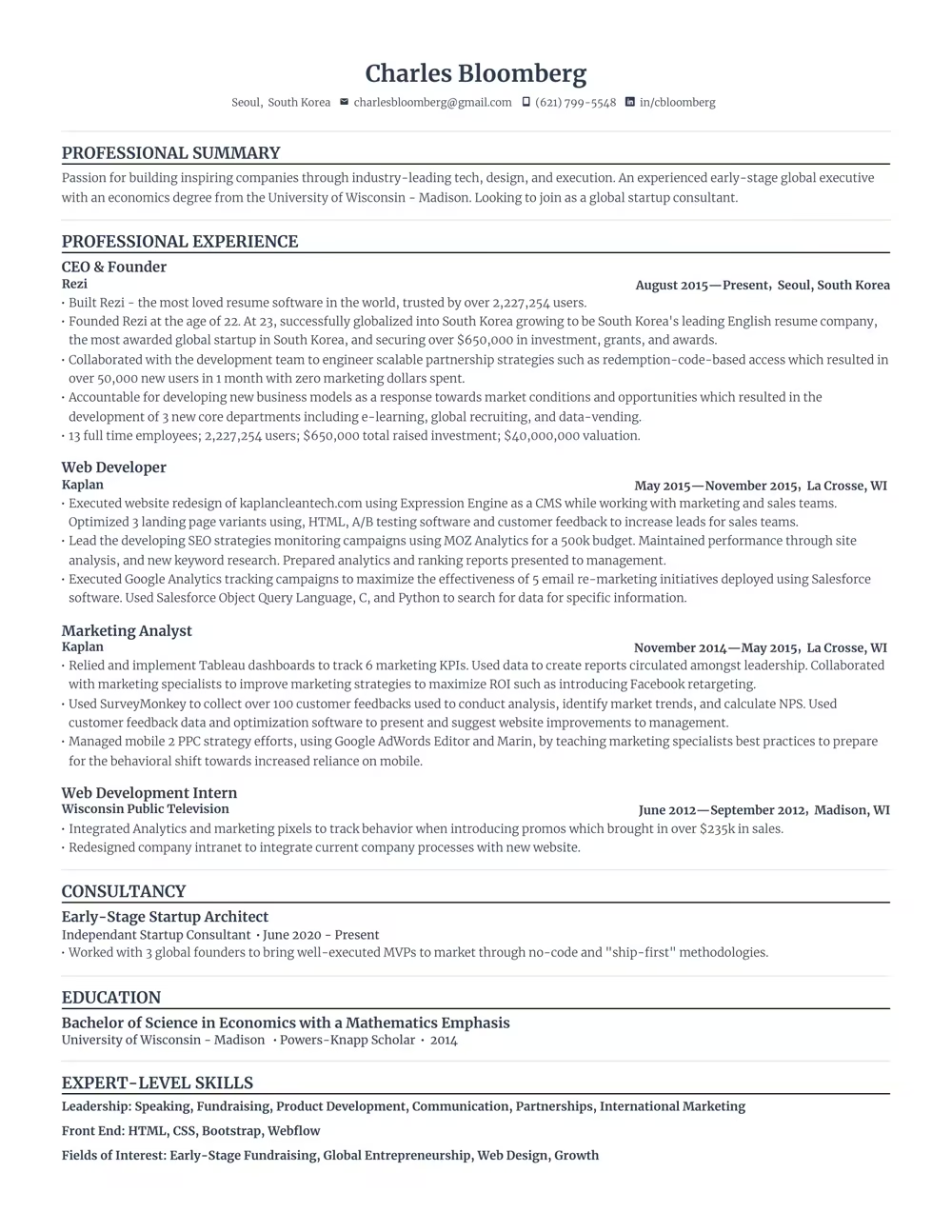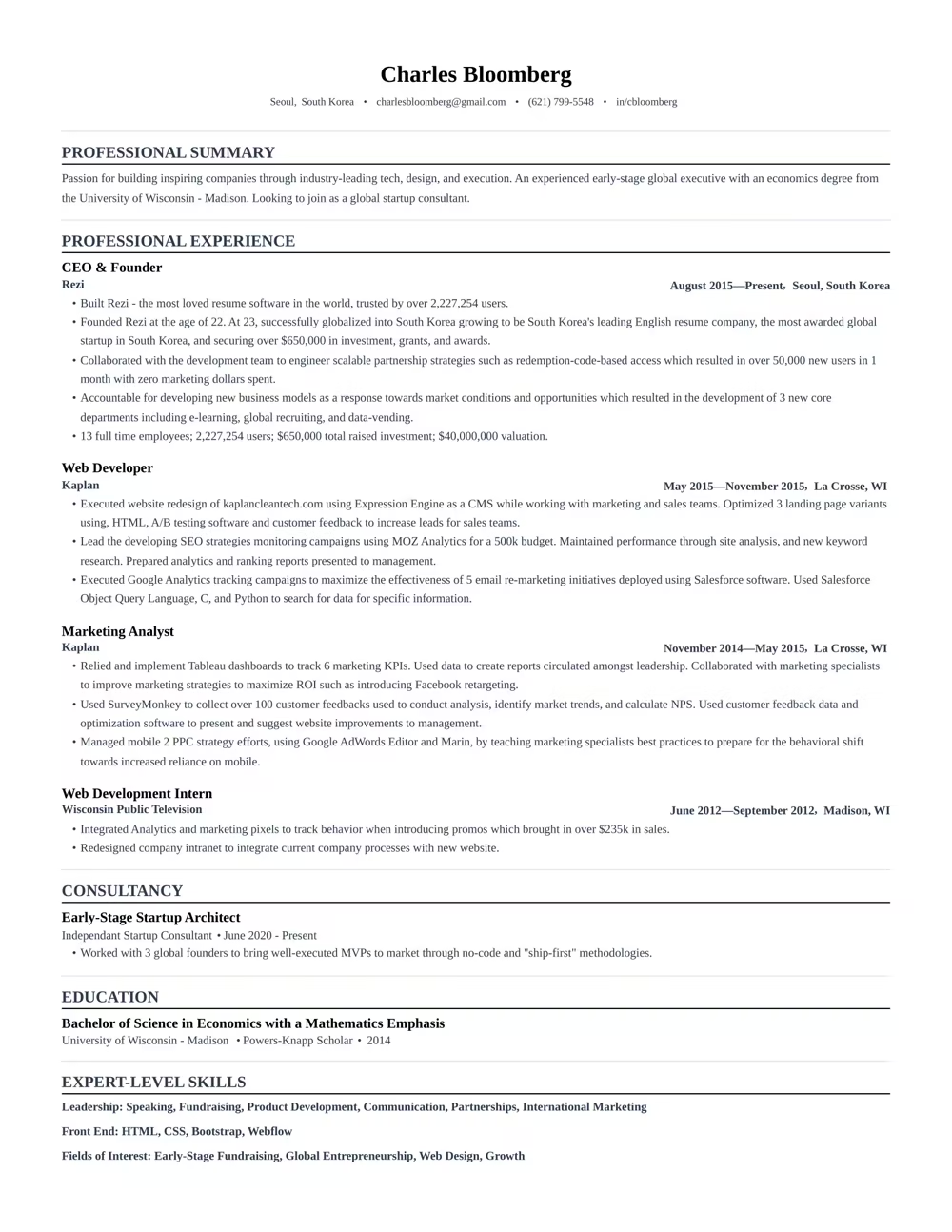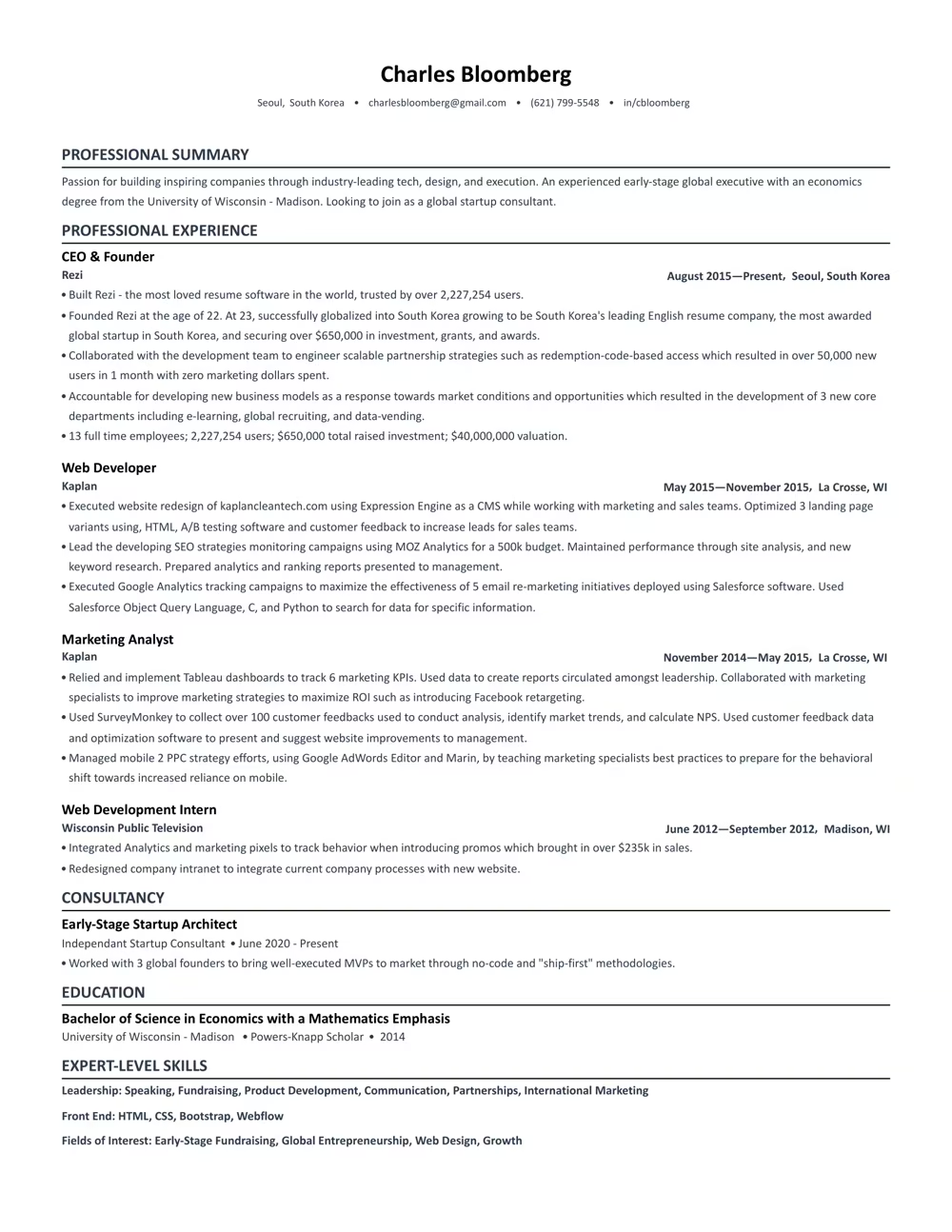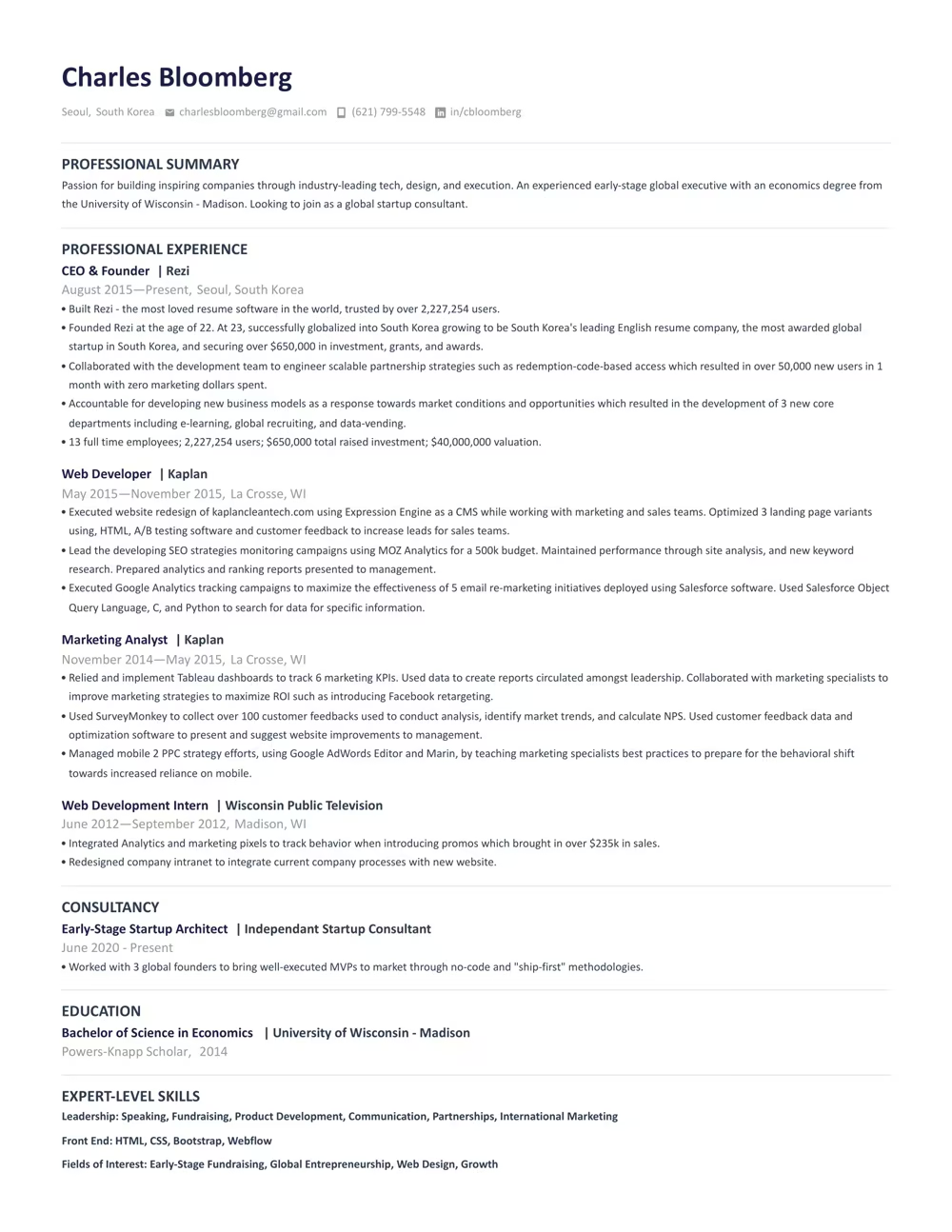
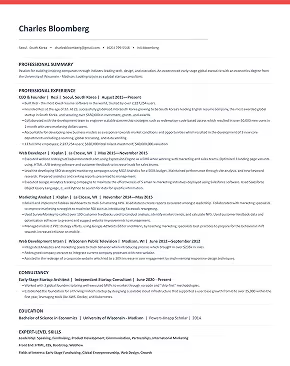

Here's a pattern I keep seeing in QA tester resumes: they read like a list of apps the person clicked around in. "Tested software. Reported bugs. Attended meetings." That's not a QA resume — that's a vague summary of what every tester does on a Monday morning.
A strong QA tester resume needs to show you actually improved software quality. It should tell the story of how you caught the bugs that mattered, how you designed test strategies that prevented regressions, and how your work directly contributed to shipping stable, reliable products.
And this is exactly what you'll learn from this article. Inside, you'll find:
- Examples of 9+ QA tester resumes, covering different specializations and experience levels.
- Insider tips about what really matters to hiring managers looking for QA talent.
- A step-by-step guide for building a QA tester resume that actually gets you interviews.
Sample QA Tester Resumes
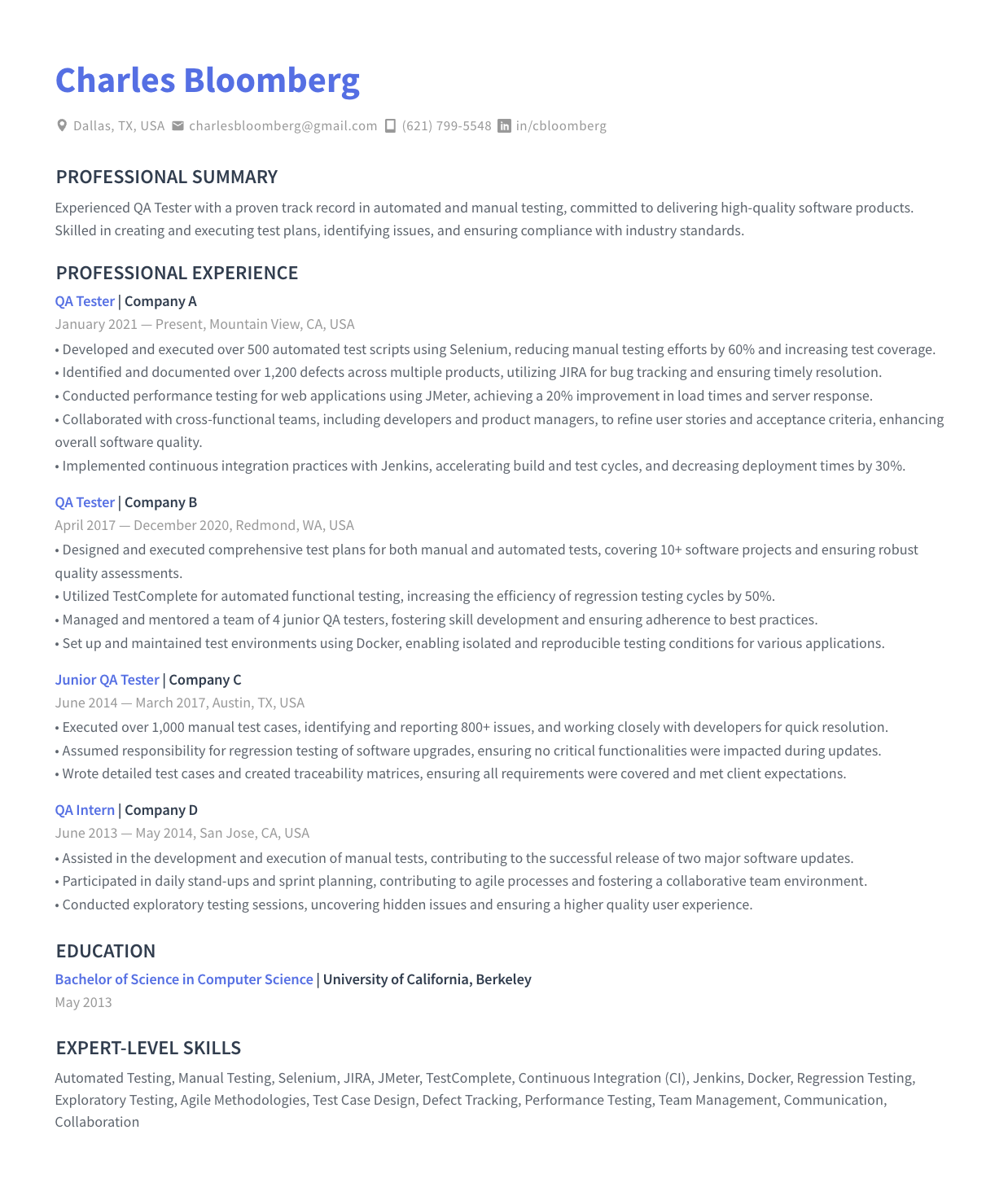
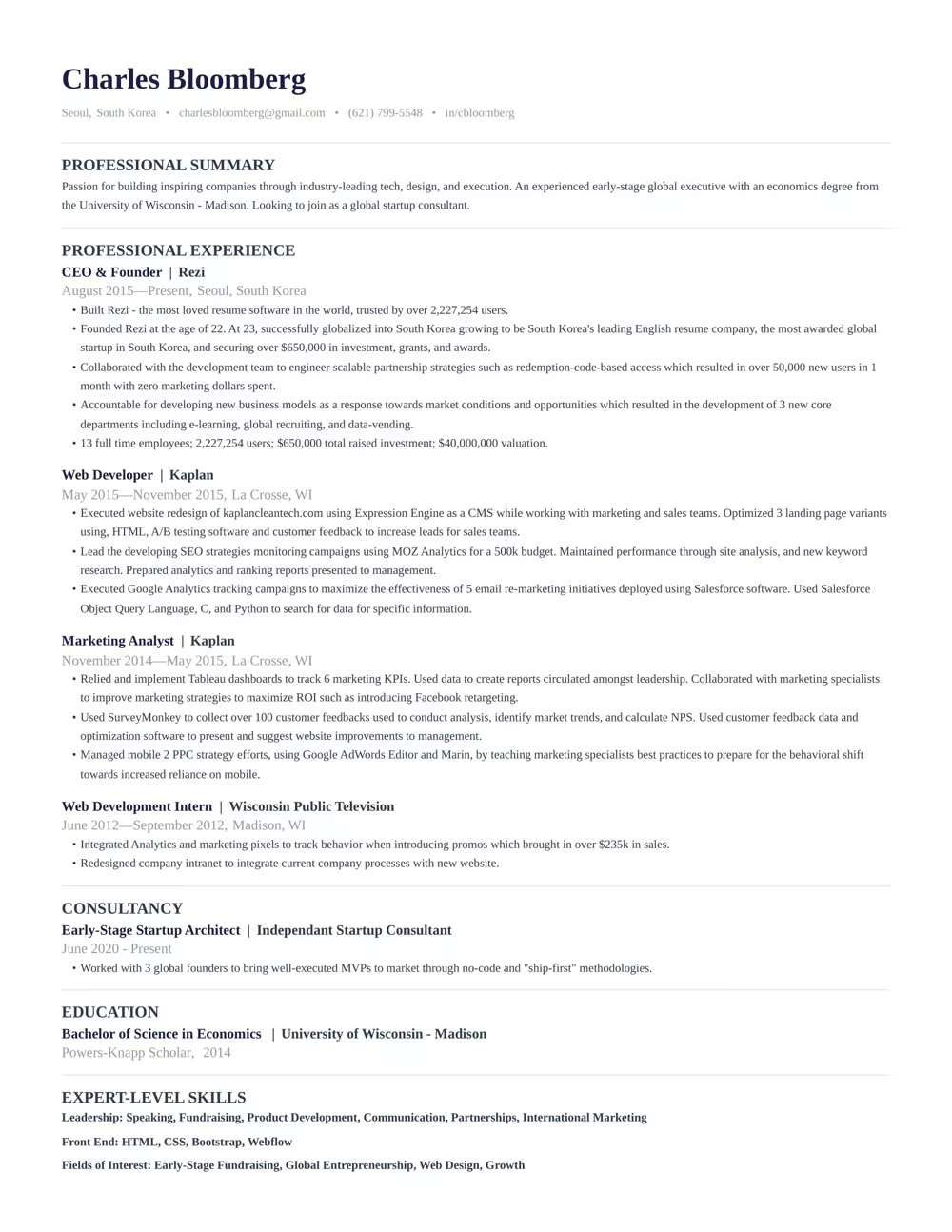
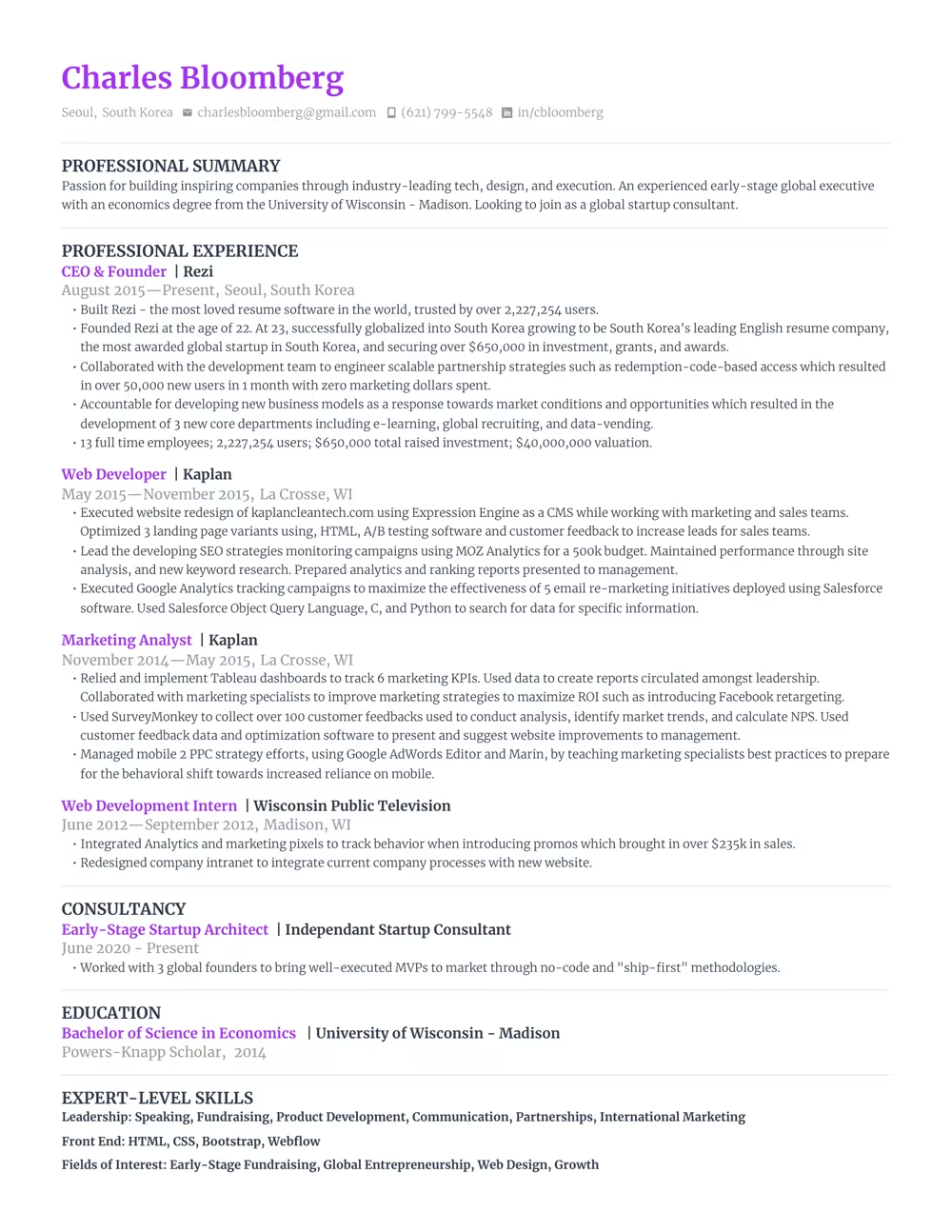
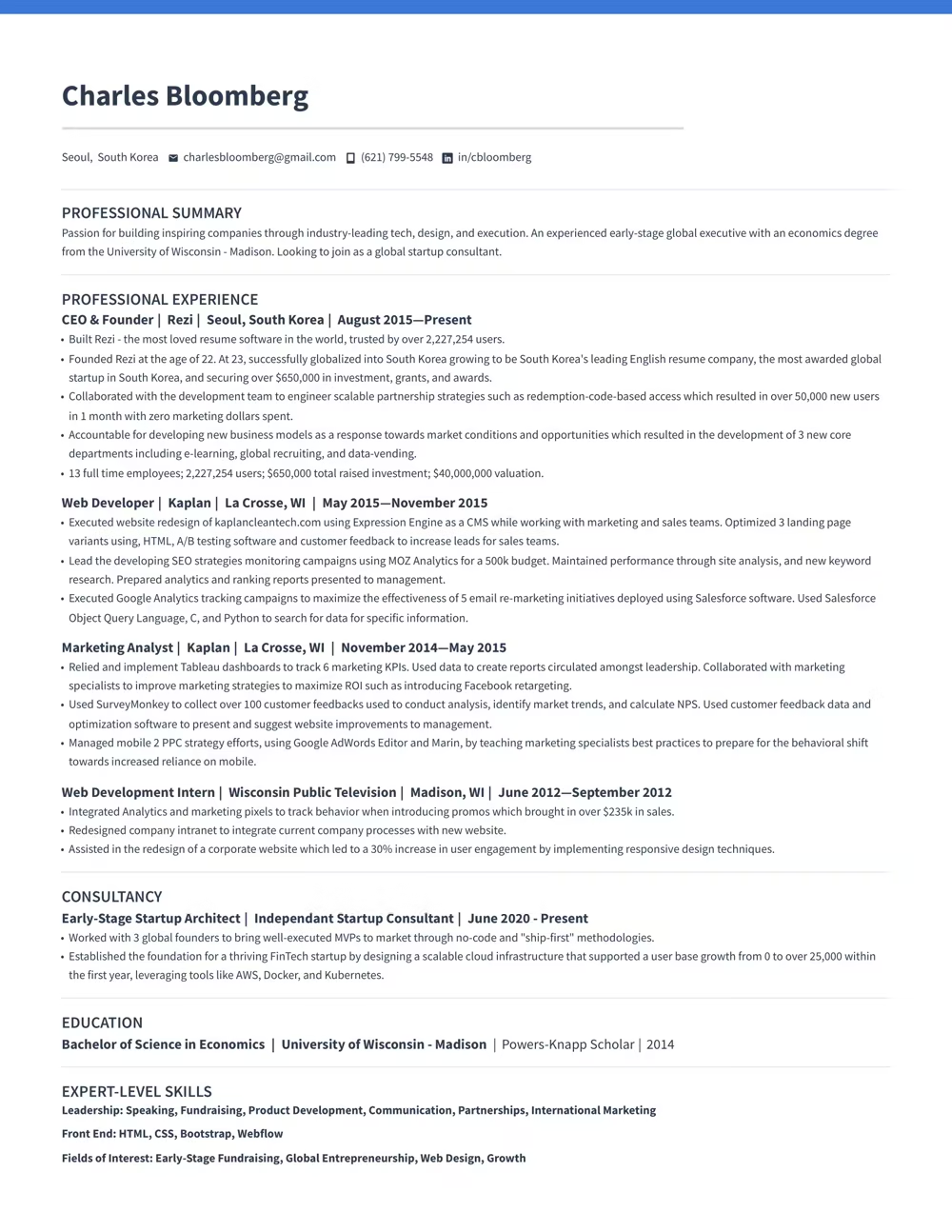
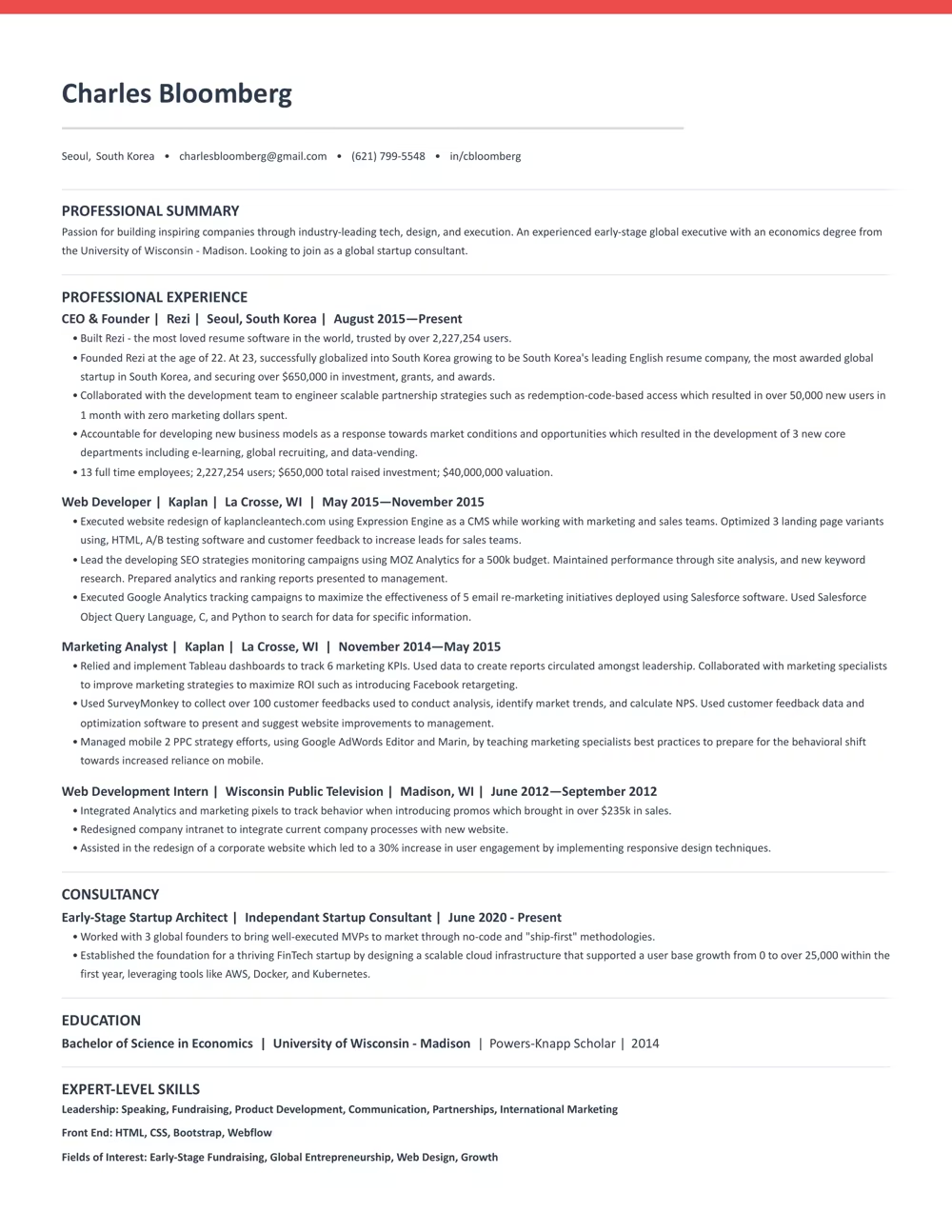
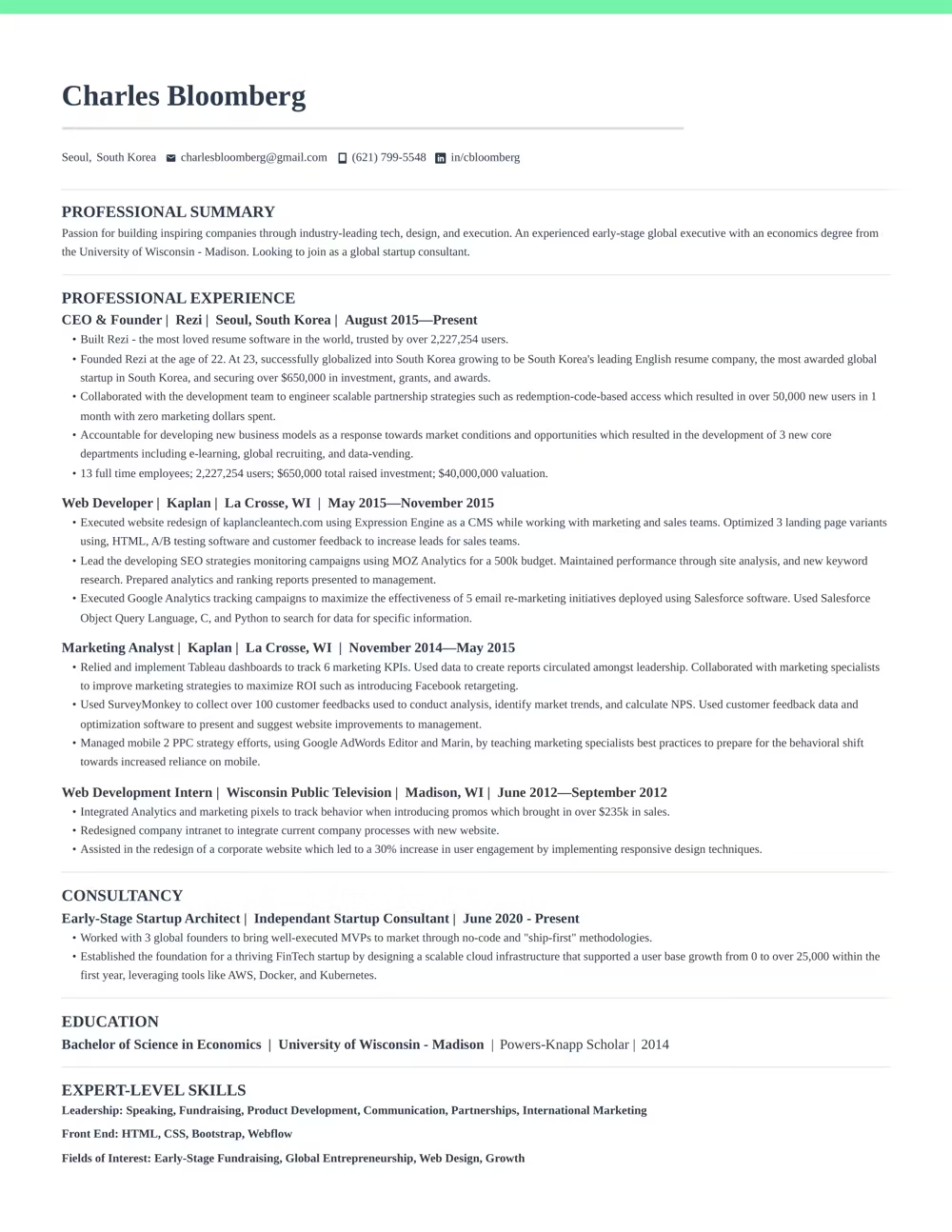
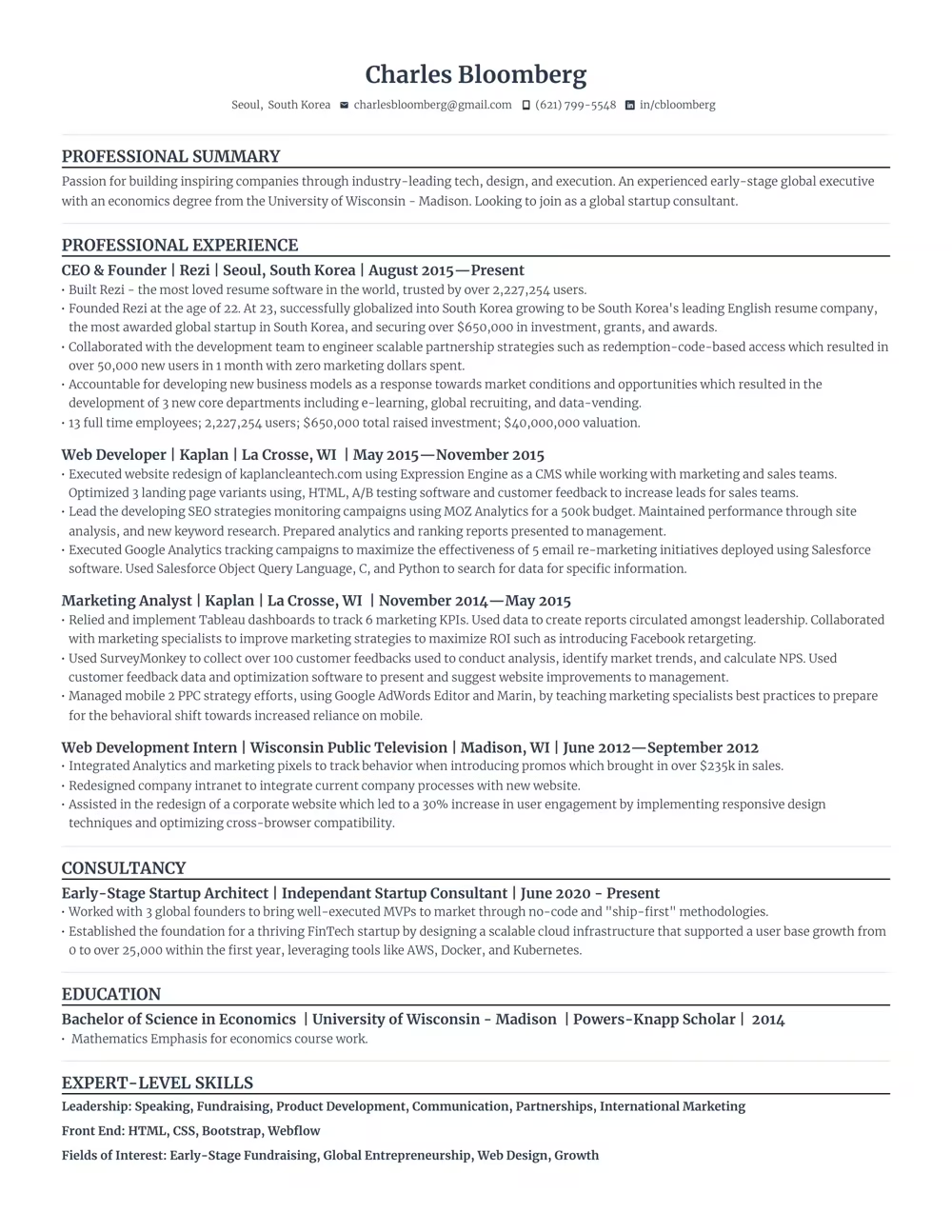
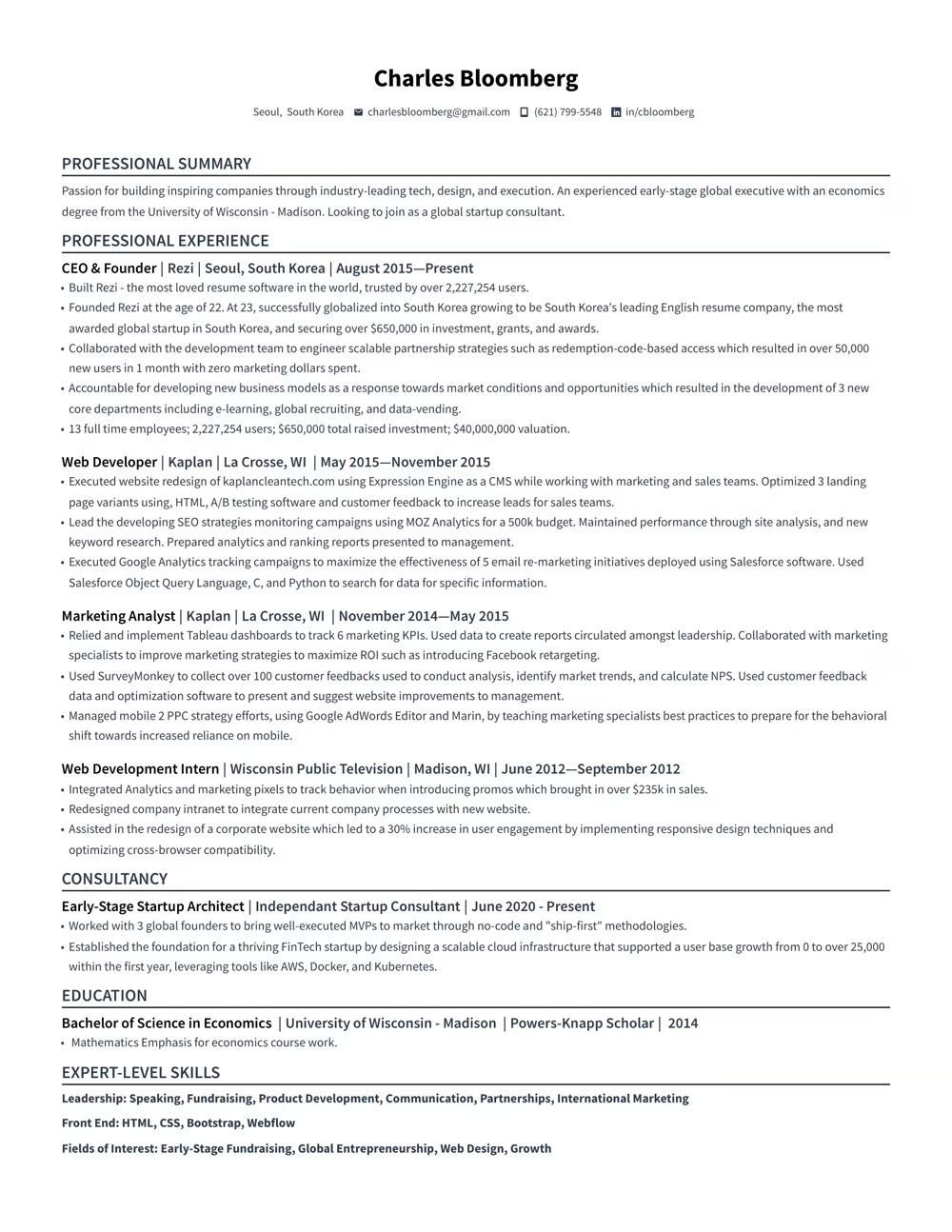
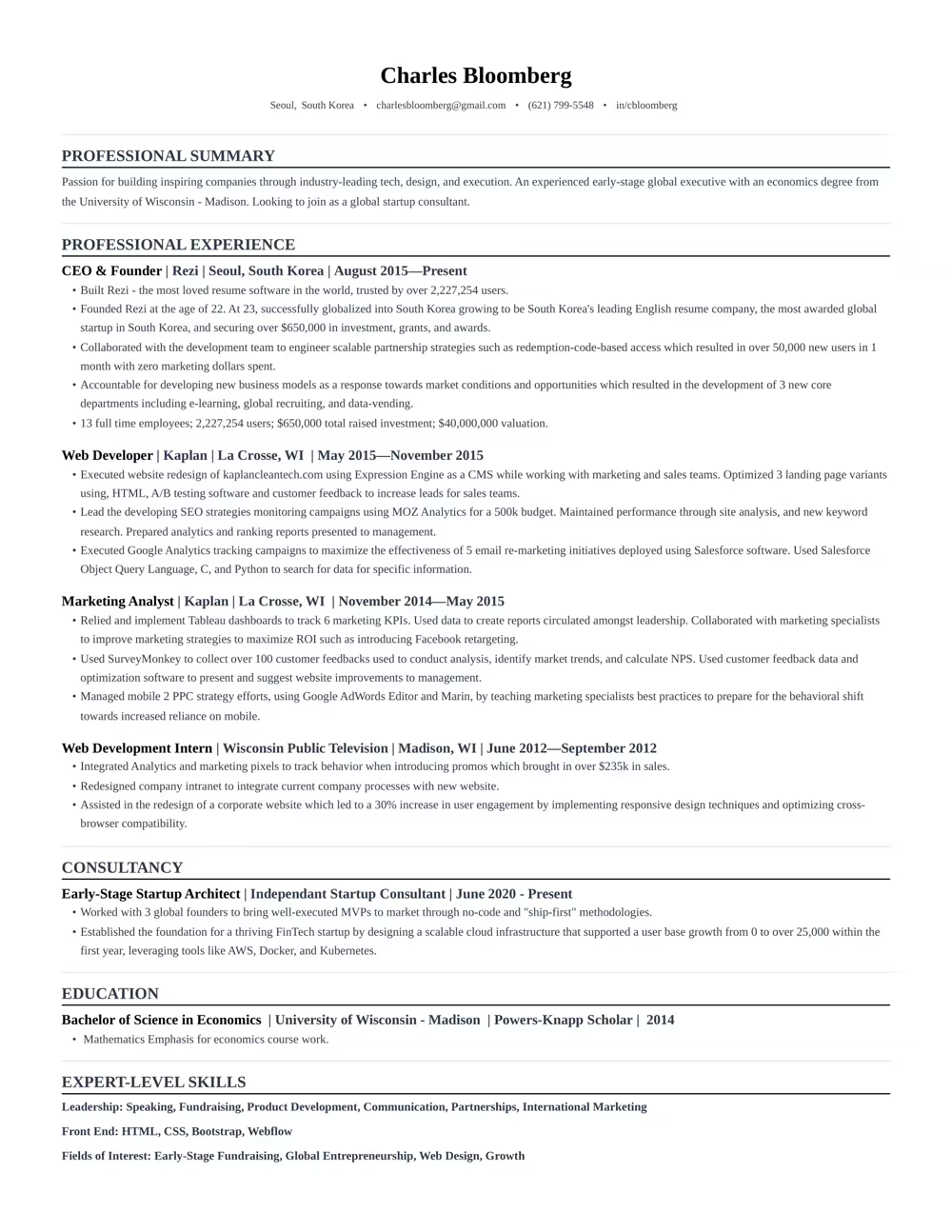
Take a look at some top-notch sample resumes for QA testers across different specializations and experience levels. Find one that matches your profile and use it as a reference point (or feel free to steal it — just make sure to adjust the wording to reflect your own career journey).
Junior QA Tester Resume
A Junior QA Tester resume should emphasize your foundational knowledge of testing principles, any relevant coursework or bootcamp training, and hands-on experience — even from personal projects or internships. Highlight your familiarity with bug tracking tools, your understanding of the software development life cycle, and your eagerness to learn. Soft skills like attention to detail and clear written communication are especially important at this stage.
Mid-Level QA Tester Resume
A Mid-Level QA Tester resume should demonstrate a solid track record of identifying critical defects and contributing to test planning across multiple release cycles. Showcase your experience writing detailed test cases, performing regression testing, and collaborating with developers to resolve issues efficiently. Mention specific tools and methodologies you've used, and quantify your impact — for example, the number of test cases executed or defect detection rates you achieved.
Senior QA Tester Resume
A Senior QA Tester resume needs to prove you can own the entire quality strategy. Highlight your experience mentoring junior testers, defining QA processes, and driving quality improvements at the organizational level. Emphasize leadership in test planning, your ability to evaluate risk, and your track record of reducing production defects. Include metrics that show the business impact of your work, such as reduced post-release bugs or improved release cycle times.
Quality Assurance Tester Resume
A Quality Assurance Tester resume should showcase your end-to-end involvement in the QA lifecycle — from requirements analysis and test planning through execution and sign-off. Emphasize your ability to work within established QA frameworks, your experience with both functional and non-functional testing, and your proficiency with documentation. Highlight any process improvements you've introduced that enhanced overall product quality or team efficiency.
Software QA Tester Resume
For a Software QA Tester, your resume should focus on your experience testing web and desktop applications across different environments. Detail your knowledge of software development methodologies like Agile and Waterfall, and your hands-on work with tools such as JIRA, Selenium, or TestRail. Show how you collaborated with development teams to ensure software met functional requirements and quality standards before release.
Manual QA Tester Resume
A Manual QA Tester resume should highlight your expertise in exploratory testing, test case design, and hands-on execution without relying on automation scripts. Emphasize your sharp eye for edge cases, your systematic approach to reproducing and documenting bugs, and your ability to test complex user workflows. Showcase your understanding of usability and user experience, as manual testers often catch issues that automated scripts miss entirely.
Automation QA Tester Resume
An Automation QA Tester resume should lead with your technical proficiency in scripting languages and automation frameworks such as Selenium, Cypress, Appium, or Playwright. Detail the test automation suites you've built or maintained, and quantify results — like percentage of regression tests automated or reduction in manual testing hours. Show you understand when to automate and when not to, and highlight your CI/CD integration experience.
Game QA Tester Resume
For a Game QA Tester, your resume should emphasize experience testing gameplay mechanics, performance, and compatibility across platforms and devices. Highlight your ability to identify visual glitches, physics bugs, and balancing issues that affect player experience. Mention any experience with game engines like Unity or Unreal, familiarity with console certification requirements, and your understanding of the unique demands of game development cycles including crunch periods.
Mobile QA Tester Resume
A Mobile QA Tester resume should focus on your experience testing iOS and Android applications across a wide range of devices, screen sizes, and OS versions. Highlight your expertise in testing for mobile-specific issues like battery consumption, network connectivity, push notifications, and touch gestures. Mention tools like Appium, Charles Proxy, or Firebase Test Lab, and demonstrate your understanding of app store submission requirements and mobile UX best practices.
How to Write a QA Tester Resume
Short answer:
Focus on your testing expertise, defect detection results, and the specific tools and methodologies you used to ensure software quality. Create a professional header with your name and contact details. Right below, write a 2–3 sentence resume summary outlining your most significant accomplishments. Describe your work history in reverse-chronological order, focusing on testing outcomes and the processes you followed. Then, cover your education, including relevant certifications, list key skills, and add extra sections such as a testing portfolio, open-source contributions, or volunteer work.
Include all the necessary sections in the correct order
Here's the correct order of sections for most QA tester resumes:
- Header with contact information
- Resume summary or objective
- Work experience
- Education
- Skills
- Certifications
Depending on your current career situation, you can also throw in some additional sections. For instance:
- Testing portfolio (especially useful if you've done freelance or contract QA work)
- Open-source contributions or personal projects
- Volunteer experience
- Conference participation
- Professional associations
Include everything that shows you're capable of doing what the job requires. Make every section count. If it doesn't clearly highlight your testing skills or quality mindset, it doesn't belong on your resume.
If you have less than five years of relevant experience, keep your resume 1-page long. For more senior QA testers, a two-page resume is fine.
More details here: What Sections to Include on Your Resume?
Now, I'll give you a high-level overview of how to write each section, going from top to bottom. Well… almost. The only exception is the resume summary section. While it comes right after your contact info, it's actually easier to write it last. More on that in a sec.
Create a professional resume header
- Start with your name and contact information. Include the basics: your full name, phone number, professional email address, location, and LinkedIn profile. A link to your GitHub profile, testing portfolio, or personal website can also add credibility and help you make a more professional first impression.
- Right below your name, clearly state your professional title (e.g., Senior QA Tester or Automation QA Engineer). This sets expectations and positions you in the field immediately.
For more information, see: How to Create a Resume Header
Describe your work history
- Use reverse-chronological order. List your positions starting with the current or most recent one.
- In each entry, include your job title, company name, location, and dates of employment.
- Below each position, write 3–7 bullet points — the more recent the position, the more bullet points you should include. Describe your responsibilities and, more importantly, your accomplishments.
- Use action verbs and quantify your achievements (e.g., "Designed and executed 500+ test cases across 3 product releases, reducing post-launch defects by 40%").
- If specific testing methodologies, frameworks, or tools were pivotal in your roles (e.g., Selenium, Agile, BDD), weave these details into your descriptions. This will also help you pass ATS scans.
Learn more about the best practices of this section with our detailed guide on how to describe your work experience on a resume.
List your degrees and detail professional learning
- In the education section, list your highest degree first, including the degree type, major, and institution.
- If you have some relevant work experience, include only the name of your school and the degree you got. If you're an entry-level candidate, you can add more detail to your education section — list relevant coursework (e.g., software engineering, computer science), extracurricular activities, and academic achievements.
- If you have QA or testing certifications (e.g., ISTQB, CSTE, ASTQB), either include them in an "Education and Certifications" section, or create a separate "Certifications" section and place it right below.
For an in-depth guide on how to describe your education on a resume, see: How to List Education on a Resume
List your most relevant skills in the skills section
- Include a mix of technical skills (e.g., test automation tools, programming languages, bug tracking software) and testing methodologies that you are proficient in.
- Add in some soft skills such as attention to detail, analytical thinking, and communication. Perhaps harder to quantify, but these demonstrate your capacity to catch what others miss and collaborate effectively with developers.
- You can use two separate subsections, one for hard skills, one for soft skills, or just list all the skills under one heading.
- Match your skills to the description of the job you're applying for. I'm not saying you should just dump all the skills the QA position requires (especially if you don't really have them), but highlight those areas of expertise where your knowledge overlaps with the job ad.
Need some inspiration to get started? Here are some good skills to feature on your QA tester resume.
Testing tools and software skills:
- Selenium
- Cypress
- Appium
- JIRA
- TestRail
- Postman
- Jenkins
- Git/GitHub
- Bugzilla
- Charles Proxy
- Playwright
- SQL
Testing methodologies and types:
- Manual Testing
- Test Automation
- Regression Testing
- Smoke Testing
- Integration Testing
- User Acceptance Testing (UAT)
- Performance Testing
- API Testing
- Behavior-Driven Development (BDD)
- Test-Driven Development (TDD)
- Agile/Scrum Testing
Key soft skills for QA testers:
- Attention to Detail
- Analytical Thinking
- Communication
- Problem-Solving
- Critical Thinking
- Collaboration
- Curiosity
- Time Management
- Adaptability
- Documentation Skills
For a full-blown guide on listing skills on a resume, visit: How to Put Skills on a Resume
Use additional sections as further proof of your fit
Additional sections add depth to your resume and back up your claimed expertise. Good examples of extra sections to add to a QA tester resume are:
- Professional associations. Membership in organizations like the American Software Testing Qualifications Board (ASTQB) or the International Software Testing Qualifications Board (ISTQB) community can showcase your commitment to the profession.
- Testing portfolio or projects. A resume section dedicated to significant testing projects — specifying the product, your role, the types of testing performed, and the outcomes — provides concrete examples of your expertise in action.
- Open-source contributions. If you've contributed to open-source projects by writing tests, reporting bugs, or improving test frameworks, definitely list these. They demonstrate initiative and real-world skills.
- Conference attendance. This is ideal to include when you've given talks at testing conferences like STAREAST or SeleniumConf. If you're early in your career, listing conferences you attended shows you're invested in professional growth.
Highlight the most relevant information in a resume summary
Once you're done writing your QA tester resume, give it a full read. Pick the most relevant information and compile it into a summary paragraph. Place it right under the resume header.
- Be brief and to-the-point. In 3–4 sentences, sum up your career highlights, core competencies, and what you bring to the table. Consider this your chance to answer, "Why should you hire me?" Tailor this section to match the employer's needs outlined in the job description.
- Use value-oriented language. Focus on how you can add value to the potential employer, mentioning specific outcomes like defect reduction rates, test coverage improvements, or successful product launches you contributed to.
Once you've completed the core sections of your resume, you can use Rezi AI Resume Summary Generator to automatically create a powerful summary, tailored to the job you're applying for. All you need to do is add the position and skills you want to highlight. The AI writer will do the rest.
More information here: How to Write a Job-Winning Resume Summary (with Examples)
For finishing touches, make sure your resume looks professional
- Use a clean and tidy resume format. Ensure your QA tester resume is easily readable, with a professional font, consistent formatting, and clear section headings. Avoid overloading it with dense text or fancy design elements that could distract from the content and confuse resume screening software.
- Aim for a balance between detail and conciseness. If you're a junior or entry-level candidate, keep your resume to a single page. Experienced QA testers can extend their resumes to two pages, but still need to make sure every word conveys value.
Learn more about proper resume formatting here: How to Format a Resume & What Standard Resume Format to Use
What Makes QA Tester Resumes Different
In short: the emphasis on defect detection, testing rigor, and the ability to think like a user while communicating like an engineer.
This is also where many QA testers stumble on their resumes. Hiring managers aren't looking for someone who "tested software and reported bugs." They want to see the depth of your testing, the impact of the bugs you found, and how your work made the final product better. Here's what that means in practice.
Focus on testing outcomes, not just testing activities
Anyone can say they ran test cases. What sets a strong QA resume apart is showing what happened as a result. Did your testing catch a critical issue before launch? Did your regression suite save the team from a production outage?
What it means for you:
- Quantify your impact wherever possible. Mention the number of defects caught, the percentage reduction in production bugs, test coverage percentages, or time saved through your testing efforts.
- Describe the scope of your testing — how many modules, features, or releases you covered, and the complexity of the systems involved.
Show your technical depth without losing readability
QA testing sits at the intersection of technical and non-technical work. Your resume needs to demonstrate technical credibility — tools, frameworks, scripting languages — while still being clear to recruiters and hiring managers who may not be deeply technical themselves.
What it means for you:
- Name the specific tools and frameworks you've used (e.g., Selenium WebDriver, Cypress, Appium, Postman) and describe how you applied them in real scenarios.
- If you write automation scripts, mention the languages (Python, Java, JavaScript) and give context for the test suites you built — what they covered, how many tests, and what value they added.
Demonstrate your process, not just your results
Hiring managers want to know how you approach testing. Do you understand risk-based testing? Can you design test plans from requirements? Do you know when manual testing is the right call versus automation?
What this means for you:
- Describe your involvement in the full QA lifecycle — from reviewing requirements and creating test plans, to executing tests and verifying fixes.
- Mention specific approaches like exploratory testing, boundary value analysis, or equivalence partitioning when they're relevant to the roles you've held.
Highlight collaboration and communication
QA testers don't work in a vacuum. You're constantly communicating with developers, product managers, and sometimes clients. Your resume should reflect that you're not just a bug-finder — you're a quality advocate who can articulate issues clearly and work with teams to resolve them.
What this means for you:
- Mention cross-functional collaboration — working within Agile/Scrum teams, participating in sprint planning and retrospectives, and contributing to release readiness decisions.
- Highlight your bug reporting quality. If you're known for writing clear, reproducible defect reports that developers actually appreciate, that's worth calling out.
Show your growth trajectory
If you've been in QA for a while, your resume should tell a story of increasing responsibility — from executing test cases to designing test strategies, mentoring teammates, or introducing automation to a previously manual process.
What this means for you:
- Highlight transitions from manual to automation testing, or from individual contributor roles to leading QA efforts for a team or product.
- Show how the complexity and scope of the products you tested expanded over time — from testing a single feature to owning quality across an entire platform.
Bonus Resources for QA Testers
This isn't going to be a game-changer if you need a resume right now. But —
I want you to treat your career holistically. These resources will help you sharpen your testing skills, add some substance to your future resumes and, generally, keep you up to date with new developments in the QA field.
Professional associations and networks
International Software Testing Qualifications Board (ISTQB)
ISTQB is the global leader in software testing certification. Their Foundation Level, Advanced Level, and Expert Level certifications are recognized worldwide and can significantly strengthen both your skill set and your resume.
Association for Software Testing (AST)
AST is a nonprofit professional association focused on advancing the understanding and practice of software testing. They offer workshops, conferences, and community resources for testers at all levels.
Ministry of Testing
One of the largest and most active testing communities in the world. Ministry of Testing offers online courses, meetups, forums, and their flagship TestBash conferences — excellent for networking and professional growth.
Online learning platforms
Udemy & Coursera
Both platforms offer a wide range of QA and software testing courses, from beginner-friendly introductions to manual testing through advanced automation frameworks like Selenium, Cypress, and Appium. Many courses are taught by industry practitioners.
Test Automation University
A free learning platform by Applitools dedicated entirely to test automation. Courses cover Selenium, Cypress, API testing, visual testing, and more — all taught by leading experts in the automation testing space.
LinkedIn Learning
With a focus on professional development, LinkedIn Learning provides numerous courses on software testing, automation tools, and QA career skills, tailored to help you advance in the quality assurance field.
Publications and blogs
Satisfice Blog by James Bach
James Bach is one of the most influential voices in software testing. His blog covers exploratory testing, context-driven testing, and the philosophy behind effective QA — essential reading for any serious tester.
DevelopSense Blog by Michael Bolton
Another thought leader in the testing community, Michael Bolton writes deeply about testing craft, critical thinking, and the distinction between testing and checking. Great for expanding how you think about quality.
The Testing Planet
Published by Ministry of Testing, The Testing Planet offers articles, interviews, and insights from the global testing community. It covers trends, tools, and practical testing advice.
Tools and software reviews
G2 & Capterra
Both websites provide extensive reviews and comparisons of QA and testing tools, helping you choose the right solutions based on features, pricing, and user feedback — whether you're looking for test management, automation, or performance testing software.
Atlassian Blog
Since many QA testers work with JIRA daily, the Atlassian blog offers valuable insights into workflow optimization, Agile practices, and team collaboration — all directly applicable to your QA workflow.
Summary
Here's what you need to know about writing a QA tester resume:
- Structure your QA tester resume with essential sections in this order: Header, Resume Summary or Objective, Work Experience, Education, Skills, and Certifications. If relevant, add extra sections like a Testing Portfolio or Open-Source Contributions.
- Include a professional header with your name, contact information, and professional title.
- Describe your work history in reverse-chronological order, emphasizing testing responsibilities and achievements with quantifiable outcomes — like defect detection rates, test coverage, or bugs caught before production.
- In the education section, list your highest degree at the top. You can list QA certifications (like ISTQB or CSTE) either in the education section or under a separate heading.
- Highlight a mix of testing tools, methodologies, and soft skills, tailoring them to the job description.
- Use additional sections to further showcase your expertise and commitment to the QA profession.
- Once done writing the resume, compile the key information into a brief, value-oriented resume summary at the top.
- Make your resume professional in appearance, aim for conciseness without sacrificing detail.
- Showcase your testing depth, collaboration skills, and the measurable impact of your QA work.
- Demonstrate both your technical abilities and your understanding of when to apply different testing approaches.
Thanks for reading! Got any questions? Feel free to reach out to me on LinkedIn. (Or check out the FAQs first, maybe your question is answered there.)
FAQ
What keywords should I use on my QA tester resume?
Use specific testing terminologies and tool names relevant to your experience, such as Selenium, JIRA, regression testing, API testing, test automation, Agile/Scrum, and defect lifecycle. Include certifications like ISTQB Foundation Level, CSTE, or ASTQB if you hold them. Mirror the language used in the job posting — if they say "quality assurance engineer" instead of "QA tester," adjust your resume title accordingly.
How do I tailor my QA tester resume to the job description?
Identify key skills, tools, and responsibilities in the job description and reflect these in your resume by aligning your accomplishments and experiences with them. If the role emphasizes automation, lead with your automation experience. If it's manual testing, highlight your test case design and exploratory testing skills. Use similar language and phrases to match the employer's expectations.
What's the most common mistake on QA tester resumes?
Being too vague. Saying you "tested applications and filed bugs" tells a hiring manager nothing about your impact. Instead, give specifics: "Executed 300+ test cases per sprint, identified 45 critical defects in a payment processing module, reducing post-release bugs by 35%." Numbers and context make all the difference.
I'm a manual tester. Should I learn automation before updating my resume?
It depends on the roles you're targeting. Many positions still require strong manual testing skills, and there's enormous value in being a great manual tester. However, if job listings you're interested in mention automation tools, even basic familiarity with Selenium or Postman can strengthen your resume. You don't need to be an automation expert — showing willingness to learn and some foundational knowledge goes a long way.
Which resume format is the best for QA tester resumes?
The reverse-chronological format is recommended for QA tester resumes. It highlights your career progression and growing testing responsibilities, making it easy for employers to see your development from executing test cases to owning quality for entire products or teams.
I'm transitioning into QA from another field. How should I approach my resume?
Focus on transferable skills like attention to detail, analytical thinking, documentation, and process improvement. If you've ever been the person who finds errors in data, catches inconsistencies in reports, or organizes complex workflows — those all map to QA skills. Supplement your experience with an ISTQB certification or a testing bootcamp to demonstrate commitment. Mention any personal testing projects, even if informal, to show hands-on initiative.
Should I include my GitHub or portfolio on my QA tester resume?
Absolutely — especially if you have automation scripts, test frameworks, or contributions to open-source projects on your GitHub. For manual testers, a portfolio showing sample test plans, test cases, or bug reports can be equally impressive. These tangible artifacts give hiring managers something concrete to evaluate beyond what your resume describes.
How do I describe QA work when my team didn't use formal processes?
Don't worry if your previous workplace didn't have formal QA procedures. Focus on what you actually did: how you identified issues, what steps you took to verify software quality, and how you communicated findings to the team. Frame your experience using industry-standard terminology where applicable. If you introduced any structure or consistency to the testing process — even informally — that's a strong accomplishment worth highlighting.