
Quantitative Researcher Resume Examples & Tips for 2026

Customize any of these resumes in minutes using our free AI-powered resume builder.
Use this sample—It's free
349 reviews (4.8 out of. 5)
Featured in:
In this article

Here's the problem I keep seeing with quantitative researcher resumes: they read like a laundry list of programming languages and math courses. Yes, hiring managers want to see your technical chops — but a wall of tools and techniques without context tells them almost nothing about what you can actually do.

A strong quant researcher resume needs to tell a different story. It should demonstrate how you identified a research question, designed a methodology, built and validated models, and — critically — how your work translated into measurable outcomes: alpha generation, risk reduction, better predictions, or actionable insights that moved the needle.

And this is exactly what you'll learn from this article. Inside, you'll find:

  • Examples of 9 quantitative researcher resumes, covering different specializations and seniority levels.
  • Insider tips about what really matters to recruiters and hiring managers at funds, banks, and tech firms hiring quant researchers.
  • A step-by-step guide for building a quantitative research resume that gets you past the screening round and into interviews.

Sample Quantitative Researcher Resumes

Take a look at some top-notch sample resumes for quantitative researchers across different specializations and experience levels. Find one that matches your profile and use it as a reference point (or feel free to steal it — just make sure to adjust the wording to reflect your own research background and career trajectory).

Junior Quantitative Researcher

A Junior Quantitative Researcher resume should emphasize your academic foundation — advanced degrees, relevant coursework in statistics, stochastic calculus, or machine learning, and any thesis or research projects. Highlight internships, Kaggle competitions, or academic publications. Showcase programming proficiency in Python, R, or C++, and any exposure to financial datasets. Demonstrating intellectual curiosity and a strong mathematical foundation matters more than years of experience at this stage.

Create Free Resume
Your resume is only 30 seconds away from being done.
Charles Bloomberg
Columbus, USA
charlesbloomberg@gmail.com
(621) 799-5548
in/cbloomberg
PROFESSIONAL SUMMARY
Dedicated Junior Quantitative Researcher with comprehensive experience in data analysis, statistical modeling, and algorithm development to drive strategic insights. Proficient in Python and advanced data manipulation techniques to optimize trading strategies for financial institutions.
PROFESSIONAL Experience
Junior Quantitative Researcher | Company A
January 2023 — Present, New York City, USA
• Developed and optimized over 30 statistical models using Python, NumPy, and SciPy to predict market trends, resulting in a 15% increase in profitability.
• Conducted data analyses employing R and Pandas, processing over 1TB of financial data monthly, achieving a 20% increase in data retrieval efficiency.
• Collaborated with senior researchers on algorithmic strategy improvements, resulting in a 12% reduction in execution time using C++.
• Led a project team of five to identify and address anomalies in trading algorithms, which reduced error rates by 25% through rigorous backtesting scenarios.
• Assisted in the creation of visual analytics dashboards with Tableau, facilitating enhanced interpretation of complex financial data for stakeholders.
Data Analyst Intern | Company B
June 2022 — December 2022, Chicago, USA
• Analyzed daily trading volumes and trends using SQL and Excel, providing insights resulting in a 10% correction of inaccurately priced assets.
• Designed and implemented a data cleaning script with Python, automating the processing of 10 million records and reducing manual effort by 30%.
• Spearheaded the quarterly reporting process improvements, improving report accuracy by 20% and reducing turnaround time by 40% through automation.
• Collaborated with IT teams to migrate legacy data systems to cloud solutions, enhancing data accessibility and security.
Research Assistant | Company C
July 2020 — May 2022, Boston, USA
• Engineered machine learning models to classify and predict financial market events with 85% accuracy.
• Developed real-time data processing pipelines using Apache Kafka, improving data flow efficiency by 35%.
• Coordinated with cross-functional teams to deploy analytical tools, which increased client engagement by 18%.
Quantitative Intern | Company D
May 2019 — August 2019, Austin, USA
• Formulated regression models for equity pricing predictions, achieving a forecast accuracy increase of 10%.
• Conducted research on hedge fund strategies, providing analytical reports that influenced investment decisions worth $50 million.
• Assisted in coding trade simulation tools, which improved overall system testing efficiency by 25%.
Education
Bachelor of Science in Applied Mathematics | Harvard University
May 2020
Expert-Level Skills
Data Analysis, Statistical Modeling, Algorithm Development, Python, R, SQL, C++, Machine Learning, Pandas, NumPy, Apache Kafka, Tableau, Problem Solving, Team Collaboration

Mid-Level Quantitative Researcher

A Mid-Level Quantitative Researcher resume should balance technical depth with demonstrated impact. Highlight models you've built that reached production, strategies you've researched that generated measurable returns, or risk frameworks you improved. Show progression from executing assigned research tasks to independently identifying and pursuing research directions. Include specific metrics — Sharpe ratios improved, prediction accuracy gains, or portfolio performance attribution — to prove your work delivers real results.

Create Free Resume
Your resume is only 30 seconds away from being done.
Charles Bloomberg
Chicago, USA
charlesbloomberg@gmail.com
(621) 799-5548
in/cbloomberg
PROFESSIONAL SUMMARY
Accomplished Quantitative Researcher with over 5 years of experience in developing robust statistical models and conducting in-depth quantitative analysis to drive decision-making. Proven track record in leveraging advanced data analytics to enhance business performance and strategic initiatives.
PROFESSIONAL Experience
Mid-Level Quantitative Researcher | Company A
January 2021 — Present, New York, USA
• Developed and improved 15+ statistical models using R and Python to predict market trends, enhancing investment strategy executions by 25%.
• Conducted detailed quantitative analyses on data sets exceeding 500GB monthly using SQL, leading to an annual revenue increase of 10%.
• Spearheaded a cross-functional team of 8 in the execution of a new trading algorithm project, reducing trade execution latency by 15% over six months.
• Collaborated with portfolio managers to create a risk assessment model that reduced portfolio volatility by 12% over a year.
• Optimized data processing workflows, decreasing processing times by 40% through the integration of cloud computing resources.
Quantitative Analyst | Company B
August 2018 — December 2020, Boston, USA
• Engineered advanced statistical tools and software solutions to enhance analysis accuracy, resulting in a 15% reduction in error rates in model predictions.
• Analyzed large-scale financial datasets exceeding billions of records, providing actionable insights that guided strategic decision-making processes.
• Led the implementation of a machine learning initiative that increased prediction accuracy by 22% in 11 months.
• Produced comprehensive reports and visualizations using Tableau, enhancing stakeholder communication and understanding of data trends.
Data Analyst | Company C
June 2016 — July 2018, Austin, USA
• Conducted statistical analyses using SPSS and R on datasets of up to 100GB, driving data-driven decisions that boosted efficiency by 15%.
• Assisted in the formulation and testing of predictive models that improved forecast accuracy by 30%.
• Collaborated with a team of 5 analysts to deliver actionable insights into market behavior, improving client investment strategies significantly.
Research Assistant | Company D
June 2015 — May 2016, San Francisco, USA
• Provided support in the collection and analysis of quantitative data sets, ensuring data integrity and accuracy across 3 major projects.
• Researched and presented findings on key market trends, contributing to the development of 5 strategic business proposals.
• Maintained and updated database systems, enhancing data retrieval speed by 25% through streamlining processes.
Education
Master of Science in Quantitative Finance | University of Chicago
May 2015
Expert-Level Skills
Statistical Modeling, Data Analysis, Python, R, SQL, Machine Learning, Risk Assessment, Data Visualization (Tableau), SPSS, Critical Thinking, Team Leadership

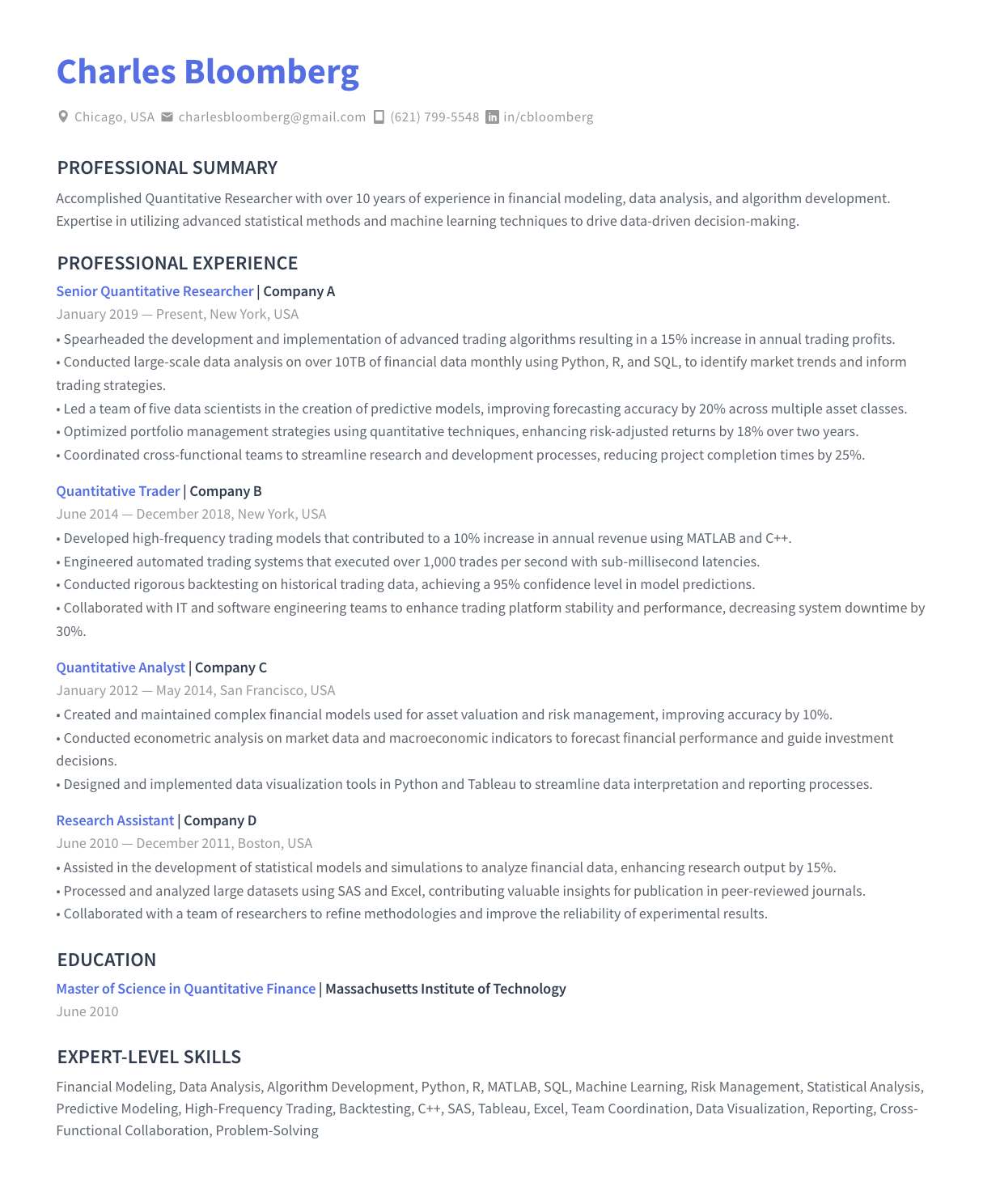
Senior Quantitative Researcher

A Senior Quantitative Researcher resume should demonstrate thought leadership, mentorship, and a track record of high-impact research. Emphasize your role in shaping research agendas, leading teams of junior quants, and collaborating with portfolio managers or senior stakeholders. Showcase your most significant contributions — novel modeling approaches, published papers, patents, or strategies managing substantial capital. Highlight your ability to bridge deep technical work with business-level decision-making.

Create Free Resume
Your resume is only 30 seconds away from being done.
Charles Bloomberg
New York, USA
charlesbloomberg@gmail.com
(621) 799-5548
in/cbloomberg
PROFESSIONAL SUMMARY
Highly analytical Senior Quantitative Researcher with over 10 years of experience in financial markets and quantitative analysis. Expertise in developing mathematical models and leveraging big data for strategic decision-making.
PROFESSIONAL Experience
Senior Quantitative Researcher | Company A
January 2020 — Present, New York, USA
• Spearheaded the development of advanced algorithmic trading strategies, resulting in a 15% increase in trading profitability over a 1-year period using Python and R.
• Conducted extensive quantitative analysis on market trends, resulting in 20% improved forecasting accuracy by leveraging machine learning techniques.
• Led a team of 5 junior analysts in developing risk management models, reducing portfolio risk exposure by 10% through innovative hedging techniques.
• Optimized data processing pipeline, reducing data latency by 30% using Apache Spark and enhancing the decision-making process for trading operations.
• Collaborated with cross-functional teams to integrate quantitative research findings into investment strategies, contributing to a 25% increase in annual returns.
Quantitative Analyst | Company B
June 2015 — December 2019, New York, USA
• Developed and calibrated complex mathematical models for derivatives pricing, improving pricing accuracy by 12% using MATLAB and C++.
• Engineered predictive models for asset management that increased client investment returns by 18% through comprehensive data analysis and forecasting.
• Researched and implemented new statistical methods, enhancing the risk modeling framework and reducing financial risk by 11%.
• Automated data collection and analysis processes, decreasing time spent on manual data handling by 40% using VBA scripts and SQL databases.
Quantitative Research Assistant | Company C
August 2013 — May 2015, Chicago, USA
• Assisted in the development of quantitative trading models, improving model efficiency by 20% through optimized algorithm design.
• Conducted statistical analysis on financial data, enhancing the understanding of market behaviors and patterns using SAS.
• Collaborated with senior researchers to publish findings in industry journals, contributing to the firm's reputation as a leader in quantitative analysis.
Junior Quantitative Analyst | Company D
January 2011 — July 2013, Seattle, USA
• Developed and validated regression models, improving model reliability by 15% through thorough backtesting and data validation.
• Processed large datasets to extract actionable insights, streamlining the data analysis workflow by 30% using R and Python.
• Provided technical support in the implementation of quantitative models, ensuring seamless integration with existing financial systems.
Education
Master of Financial Engineering | Columbia University
2009
Expert-Level Skills
Quantitative Analysis, Algorithm Development, Financial Modeling, Machine Learning, Data Science, Risk Management, Python, R, MATLAB, C++, SQL, Apache Spark, SAS, Leadership, Cross-functional Collaboration, Communication

Quantitative Research Analyst

A Quantitative Research Analyst resume should focus on your data analysis capabilities, statistical modeling skills, and ability to translate raw data into actionable research insights. Highlight experience with large datasets, data cleaning and feature engineering, and your proficiency in SQL, Python, or R. Emphasize collaborative work with senior researchers or portfolio managers, and detail specific analyses that informed investment decisions or improved operational processes.

Create Free Resume
Your resume is only 30 seconds away from being done.
Charles Bloomberg
Chicago, USA
charlesbloomberg@gmail.com
(621) 799-5548
in/cbloomberg
PROFESSIONAL SUMMARY
Detail-oriented Quantitative Research Analyst with 7+ years of experience leveraging statistical models and tools to drive data-led decision-making and predictive analytics. Proven track record in interpreting complex data sets, developing trading strategies, and delivering actionable insights to stakeholders.
PROFESSIONAL Experience
Quantitative Research Analyst | Company A
January 2020 — Present, New York, USA
• Developed and optimized over 50 predictive models using R and Python to enhance trading strategies, contributing to a 15% increase in annual returns.
• Spearheaded the integration of AI algorithms within research processes, reducing data analysis time by 30% and improving result accuracy by 20%.
• Collaborated with cross-functional teams to provide quantitative insights, supporting a $250M division in investment decision-making.
• Conducted extensive market research and risk analysis on equities, fixed income, and derivatives, generating 200+ analytical reports annually for stakeholders.
• Implemented a new data visualization system with Tableau, enhancing data comprehension and communication efficacy by 40%.
Quantitative Analyst | Company B
July 2016 — December 2019, San Francisco, USA
• Engineered and maintained quantitative frameworks using SQL and VBA, resulting in a 25% increase in computational efficiency.
• Designed strategic financial models to forecast market trends and economic indicators, impacting investment portfolios worth over $500M.
• Led a team of 5 analysts in conducting macroeconomic data analysis, producing actionable insights deployed in wealth management strategies.
• Managed real-time data feeds and ensured high data integrity, achieving a 99.9% accuracy rate in published trading signals.
Research Data Analyst | Company C
March 2014 — June 2016, Austin, USA
• Provided quantitative analysis to support fixed income research, enhancing portfolio risks assessments across 5 product lines.
• Processed and interpreted complex data sets using MATLAB, contributing to a 12% improvement in investment strategy development.
• Assisted in the refinement of proprietary algorithms which increased trading execution speeds by 18%.
Junior Quantitative Analyst | Company D
June 2012 — February 2014, Phoenix, USA
• Conducted statistical analysis on market data using SPSS, leading to the generation of 15 detailed analytical reports per month.
• Supported senior analysts in developing quantitative financial models, enhancing strategy optimization processes across multiple sectors.
• Collected and curated data from multiple sources, streamlining information flow and improving overall analysis efficiency by 10%.
Education
Bachelor of Science in Quantitative Finance | University of Chicago
June 2012
Expert-Level Skills
Predictive Modeling, Statistical Data Analysis, Python, R, SQL, MATLAB, VBA, AI Algorithms, Data Visualization, Tableau, Financial Modeling, Macroeconomic Analysis, Risk Assessment, Cross-Functional Collaboration, Detail-Oriented, Analytical Thinking

Quantitative Finance Researcher

For a Quantitative Finance Researcher, your resume should underscore deep knowledge of financial theory — derivatives pricing, portfolio optimization, asset allocation models, or market microstructure. Highlight experience applying stochastic processes, Monte Carlo simulations, or econometric methods to real financial problems. Mention familiarity with Bloomberg, Reuters, or proprietary trading platforms. Show how your research directly informed trading strategies, hedging decisions, or product development within a financial institution.

Create Free Resume
Your resume is only 30 seconds away from being done.
Charles Bloomberg
Boston, USA
charlesbloomberg@gmail.com
(621) 799-5548
in/cbloomberg
PROFESSIONAL SUMMARY
Experienced Quantitative Finance Researcher with a strong background in statistical modeling and advanced data analytics to drive investment strategies. Adept at leveraging cutting-edge technology to improve decision-making processes and increase profitability.
PROFESSIONAL Experience
Senior Quantitative Finance Researcher | Company A
March 2020 — Present, New York, USA
• Spearheaded the development of predictive models using Python and R, increasing forecast accuracy by 15% over two years.
• Collaborated on a cross-functional team to design risk assessment tools, reducing exposure to market volatility by 20% through efficient hedging.
• Implemented data analysis techniques on large datasets, improving processing times by 30% using Hadoop and Spark.
• Optimized trading algorithms in MATLAB, leading to 12% higher returns on investment portfolios over the last fiscal year.
• Directed research projects focusing on machine learning applications in financial markets, contributing to a 10% boost in algorithmic strategy profitability.
Quantitative Analyst | Company B
June 2018 — February 2020, Chicago, USA
• Engineered multivariate financial models, aiding in the assessment of stock performance and increasing predictive power by 18%.
• Developed and maintained a database of financial metrics using SQL, enhancing data retrieval efficiency by 25%.
• Researched derivative pricing and implemented new models that improved pricing accuracy by 10%.
• Provided detailed quantitative analysis that informed decision-making, contributing to a portfolio growth of $5 million over a year.
Finance Research Associate | Company C
April 2016 — May 2018, Austin, USA
• Designed econometric models for financial forecasting, increasing model reliability by 22% through advanced regression techniques.
• Assisted in portfolio optimization processes, achieving a risk-adjusted return increase of 15% across various funds.
• Conducted extensive backtesting using historical market data, resulting in the elimination of underperforming strategies.
Junior Quantitative Analyst | Company D
January 2014 — March 2016, Miami, USA
• Developed quantitative trading strategies utilizing machine learning, resulting in a 5% decrease in transaction costs.
• Maintained a comprehensive database of economic indicators, improving research turnaround time by 20%.
• Collaborated with portfolio managers to streamline data analysis processes, enhancing analytical output efficiency by 25%.
Education
Master of Science in Financial Engineering | Columbia University
Graduated May 2013
Expert-Level Skills
Quantitative Analysis, Python, R, MATLAB, SQL, Financial Modeling, Risk Management, Algorithmic Trading, Machine Learning, Data Analytics, Econometrics, Portfolio Optimization, Problem Solving, Analytical Thinking, Team Collaboration

Quantitative Trading Researcher

A Quantitative Trading Researcher resume should center on signal research, alpha generation, and strategy development. Detail the types of strategies you've researched — statistical arbitrage, momentum, mean reversion, or market-making. Include metrics like Sharpe ratio, maximum drawdown, or PnL attribution. Highlight your experience with backtesting frameworks, execution cost modeling, and live strategy monitoring. Proficiency in low-latency programming languages like C++ or Java is a strong differentiator.

Create Free Resume
Your resume is only 30 seconds away from being done.
Charles Bloomberg
Chicago, USA
charlesbloomberg@gmail.com
(621) 799-5548
in/cbloomberg
PROFESSIONAL SUMMARY
Experienced Quantitative Trading Researcher with over 8 years in quantitative analysis, algorithmic trading models development, and financial markets prediction. Proven track record of maximizing trading strategies through innovative quantitative research and analysis.
PROFESSIONAL Experience
Quantitative Trading Researcher | Company A
April 2022 — Present, Chicago, USA
• Spearheaded the development of high-frequency trading algorithms, enhancing trading performance by 15% within six months through robust backtesting and continuous optimization.
• Managed a data pipeline processing over 2 TB of financial data monthly using Python and SQL, ensuring efficient and accurate data availability for real-time trading strategies.
• Collaborated with trading and risk management teams to deploy over 20 innovative investment strategies, significantly reducing risk exposure while maintaining a 10% ROI.
• Optimized execution algorithms with machine learning techniques, reducing slippage by 8% on various trading platforms.
• Conducted in-depth statistical analysis on market trends, yielding insights that contributed to an increase in annual profits by $2 million.
Quantitative Analyst | Company B
January 2018 — March 2022, Chicago, USA
• Engineered complex quantitative models leveraging R and Python to enhance trading strategies, achieving a 20% improvement in profit margins.
• Developed proprietary algorithms to automate market-making processes, improving trade execution speed by 30%.
• Directed a team of 5 data scientists in big data analysis projects, increasing insight generation efficiency by 25%.
• Formulated predictive analytics tools that provided a competitive edge leading to a 12% increase in trading volumes.
Data Scientist | Company C
August 2014 — December 2017, New York, USA
• Designed and implemented quantitative analysis frameworks for trading derivatives, enhancing portfolio diversification by 18%.
• Improved data processing workflows, successfully reducing latency in financial data feed by 40% using Apache Kafka.
• Researched and integrated deep learning models increasing model predictability for trading signals by 22%.
Junior Data Analyst | Company D
June 2012 — July 2014, San Francisco, USA
• Assisted in the development of statistical models for equity trading, contributing to a 14% increase in trade efficiency.
• Provided key quantitative insights and reported on market data trends, supporting senior analysts in strategic decision-making processes.
• Successfully processed and analyzed over 500 datasets per month, ensuring data integrity and reliability for trading purposes.
Education
Master of Science in Financial Engineering | Columbia University
May 2012
Expert-Level Skills
Algorithmic Trading, Quantitative Analysis, Machine Learning, Python, R, SQL, Statistical Modeling, Backtesting, Predictive Analytics, High-Frequency Trading, Risk Management, Data Pipeline Management, Team Leadership

Quantitative Risk Researcher

For a Quantitative Risk Researcher, emphasize your expertise in risk modeling — VaR, CVaR, stress testing, credit risk, or counterparty risk frameworks. Highlight regulatory knowledge such as Basel III/IV, FRTB, or Dodd-Frank requirements. Detail models you've developed or validated, and how your work improved risk detection or reduced capital requirements. Show proficiency in scenario analysis, copula models, and extreme value theory alongside strong programming skills.

Create Free Resume
Your resume is only 30 seconds away from being done.
Charles Bloomberg
Chicago, IL, USA
charlesbloomberg@gmail.com
(621) 799-5548
in/cbloomberg
PROFESSIONAL SUMMARY
Highly skilled Quantitative Risk Researcher with over 8 years of experience in financial risk modeling and quantitative analysis. Expert in developing algorithms to evaluate complex risk dynamics and implementing risk mitigation strategies.
PROFESSIONAL Experience
Senior Quantitative Risk Researcher | Company A
January 2021 — Present, New York, NY, USA
• Led a team of 5 researchers to develop advanced risk models, achieving a 30% reduction in forecasting errors using Python and R programming.
• Enhanced credit risk evaluation metrics by 25% through the design and implementation of machine learning algorithms, improving portfolio management strategies.
• Streamlined data processing workflows by 40% by integrating SQL databases, resulting in a significant increase in data analysis efficiency.
• Presented monthly risk assessment reports to senior management, delivering key insights on market trends and potential risk exposure.
• Implemented a Monte Carlo simulation framework that increased scenario analysis capabilities by 50%, utilizing MATLAB for computation.
Quantitative Analyst | Company B
May 2018 — December 2020, San Francisco, CA, USA
• Developed risk assessment tools that decreased the company's risk capital requirement by 15% over one year, using statistical analysis methods.
• Collaborated with cross-functional teams to implement systematic risk diversification strategies, leading to a 20% increase in investment returns.
• Engineered stress-testing scenarios to evaluate the potential impact of economic downturns, improving risk sensitivity analysis accuracy by 18%.
• Researched and incorporated international financial regulations into risk management models, ensuring compliance and reducing regulatory fines by 10%.
Risk Management Associate | Company C
September 2015 — April 2018, Seattle, WA, USA
• Formulated predictive analytics models that improved loss forecasting by 22%, leveraging SAS and Python.
• Assisted in the development of real-time data analytics tools, improving risk identification speed by 35%.
• Provided risk analysis reports for 15+ client portfolios quarterly, ensuring decisions were based on comprehensive risk data.
Junior Risk Analyst | Company D
June 2013 — August 2015, Boston, MA, USA
• Conducted detailed risk assessments on financial products, reducing potential risk exposure by 17%.
• Processed and analyzed datasets of up to 2 million data points monthly, using VBA and Excel for advanced data manipulation.
• Tracked financial market trends to provide data-driven recommendations, increasing informed decision-making by 20%.
Education
Master of Science in Financial Engineering | Columbia University
May 2013
Expert-Level Skills
Risk Modeling, Quantitative Analysis, Financial Statistics, Python, R, SQL, MATLAB, Machine Learning, Data Analysis, Financial Regulations Compliance, Stress Testing, Strategic Thinking, Communication

Algorithmic Quantitative Researcher

An Algorithmic Quantitative Researcher resume should spotlight your work at the intersection of research and systematic implementation. Highlight experience designing algorithms for automated trading, portfolio rebalancing, or signal processing. Showcase your software engineering skills alongside your quantitative abilities — clean code, version control, and production-grade model deployment matter here. Detail end-to-end projects from hypothesis generation through backtesting to live algorithmic execution.

Create Free Resume
Your resume is only 30 seconds away from being done.
Charles Bloomberg
Chicago, USA
charlesbloomberg@gmail.com
(621) 799-5548
in/cbloomberg
PROFESSIONAL SUMMARY
Experienced Algorithmic Quantitative Researcher with over 8 years of expertise in developing and implementing advanced trading algorithms. Proven track record of enhancing predictive models using statistical analysis and machine learning.
PROFESSIONAL Experience
Algorithmic Quantitative Researcher | Company A
January 2018 — Present, Chicago, USA
• Developed over 20 high-frequency trading algorithms that increased profitability by 15% over 6 months using Python and C++.
• Spearheaded the integration of machine learning techniques to enhance predictive models, improving accuracy by 30% over 2 years.
• Collaborated with cross-functional teams to ensure seamless algorithm deployment across various trading platforms, resulting in a 25% reduction in trade execution time.
• Implemented risk management strategies and monitored algorithmic trading activity, reducing risk exposure by 12% over a 5-month period.
• Researched and analyzed large datasets (5TB+) to extract actionable insights and inform algorithm development using advanced statistical tools such as R and MATLAB.
Quantitative Analyst | Company B
March 2014 — December 2017, New York, USA
• Engineered statistical models to forecast market trends, leading to a 10% increase in annual return on investment.
• Led a team of 4 analysts to optimize trading strategies, resulting in a 20% reduction in transaction costs over one year.
• Designed and tested complex simulations to evaluate the performance of algorithms, enhancing prediction accuracy by 18%.
• Provided in-depth quantitative analysis on derivative products, contributing to strategic investment decisions.
Research Analyst | Company C
May 2011 — February 2014, Austin, USA
• Assisted in the development of algorithmic trading systems that improved execution efficiency by 25% over a 12-month period.
• Conducted comprehensive analysis of financial markets to inform model development, supporting the creation of 15+ proprietary algorithms.
• Processed and analyzed vast datasets using SQL and Excel, facilitating the discovery of key patterns and trends.
Data Analyst | Company D
July 2009 — April 2011, San Francisco, USA
• Supported the research team by developing data visualization tools with Tableau, enhancing data interpretation by 40%.
• Collaborated with software developers to integrate data analysis solutions into client platforms, improving client satisfaction scores by 15%.
• Conducted detailed statistical analyses to identify opportunities for optimizing future trading strategies.
Education
Master of Science in Quantitative Finance | New York University
May 2009
Expert-Level Skills
Python, C++, R, MATLAB, SQL, Machine Learning, Statistical Modeling, Data Analysis, Risk Management, High-Frequency Trading, Team Leadership, Communication

Equity Quantitative Researcher

An Equity Quantitative Researcher resume should highlight domain expertise in equity markets — factor modeling, fundamental and alternative data analysis, cross-sectional and time-series equity signals, and sector-specific research. Detail your experience with equity risk models like Barra or Axioma, and your ability to work with large equity universes. Show how your research contributed to stock selection, portfolio construction, or factor-based strategy development with measurable performance outcomes.

Create Free Resume
Your resume is only 30 seconds away from being done.
Charles Bloomberg
Boston, USA
charlesbloomberg@gmail.com
(621) 799-5548
in/cbloomberg
PROFESSIONAL SUMMARY
Highly analytical Equity Quantitative Researcher with a proven track record of leveraging quantitative models and big data analytics to drive investment strategies and enhance portfolio performance.
PROFESSIONAL Experience
Equity Quantitative Researcher | Company A
January 2021 — Present, New York, USA
• Engineered robust quantitative trading models that achieved a 15% annualized return over three years by analyzing market inefficiencies and exploiting arbitrage opportunities using Python and R.
• Developed and maintained a backtesting system to evaluate trading strategies across 10+ equity markets, resulting in improved alpha generation by 20%.
• Collaborated with a multi-disciplinary team to integrate machine learning algorithms into existing models, enhancing predictive accuracy by 25%.
• Authored over 50 comprehensive research reports detailing quantitative analysis and recommended investment strategies, directly influencing $500M in asset allocation.
• Optimized data processing pipelines to decrease latency by 30% and increase data accuracy, using SQL and AWS cloud services.
Equity Quantitative Analyst | Company B
June 2018 — December 2020, Chicago, USA
• Designed and implemented multi-factor equity risk models, leading to a 10% reduction in portfolio risk through enhanced diversification.
• Spearheaded a project to automate data cleaning processes using pandas and numpy, improving efficiency and reducing errors by 40%.
• Conducted statistical analysis on large datasets using R, contributing to a 15% improvement in the accuracy of equity forecasts.
• Led training sessions for cross-functional teams on quantitative methods, enhancing analytical capabilities of 30+ professionals.
Junior Quantitative Researcher | Company C
September 2015 — May 2018, Palo Alto, USA
• Assisted in the development of quantitative models that identified investment opportunities, increasing portfolio returns by 8% annually.
• Conducted in-depth analysis of financial data and market trends, providing actionable insights to senior analysts and portfolio managers.
• Implemented data visualization tools using Tableau, improving data interpretation speed and decision-making efficiency by 25%.
Quantitative Research Intern | Company D
June 2014 — August 2015, Denver, USA
• Supported research team in developing predictive models for equity market trends, contributing to a 5% increase in prediction accuracy.
• Processed and analyzed large sets of financial data using Excel and MATLAB, accelerating analysis turnaround time by 20%.
• Participated in the preparation of weekly reports and presentations, enhancing communication of quantitative findings to stakeholders.
Education
Master of Science in Financial Engineering | Massachusetts Institute of Technology
May 2014
Expert-Level Skills
Quantitative Analysis, Financial Modeling, Python, R, MATLAB, SQL, Machine Learning, Risk Management, Data Visualization, Portfolio Management, Communication, Team Collaboration

How to Write a Quantitative Researcher Resume

Short answer:

Focus on your research methodology, technical skills, and the measurable impact of your work. Create a professional header with your name and contact details. Right below, write a 2–3 sentence resume summary outlining your most significant research contributions. Describe your work history in reverse-chronological order, emphasizing models built, strategies developed, and quantifiable outcomes. Then cover your education (degrees and relevant coursework), list key technical and soft skills, and add extra sections such as publications, conference presentations, or open-source contributions.

Include all the necessary sections in the correct order

Here's the correct order of sections for most quantitative researcher resumes:

  • Header with contact information
  • Resume summary or objective
  • Work experience
  • Education
  • Skills
  • Certifications (if applicable)

Depending on your current career situation, you can also throw in some additional sections. For instance:

  • Publications (peer-reviewed papers, working papers, preprints)
  • Conference presentations and talks
  • Open-source projects or GitHub portfolio
  • Awards and competitions (e.g., Kaggle, Putnam, math olympiads)
  • Professional associations

Include everything that shows you're capable of doing what the job requires. Make every section count. If it doesn't clearly highlight your quantitative skills or research impact, it doesn't belong on your resume.

If you have less than five years of relevant experience, keep your resume 1-page long. For more senior quantitative researchers, a two-page resume is fine.

More details here: What Sections to Include on Your Resume?

Now, I'll give you a high-level overview of how to write each section, going from top to bottom. Well… almost. The only exception is the resume summary section. While it comes right after your contact info, it's actually easier to write it last. More on that in a sec.

Create a professional resume header

  • Start with your name and contact information. Include the basics: your full name, phone number, professional email address, location, and LinkedIn profile. Links to your Google Scholar page, GitHub profile, or personal research website can add significant credibility in quantitative research.
  • Right below your name, clearly state your professional title (e.g., Senior Quantitative Researcher). This sets expectations and immediately signals your specialization.

For more information, see: How to Create a Resume Header

Describe your work history

  • Use reverse-chronological order. List your positions starting with the current or the most recent one.
  • In each entry, include your job title, company name, location, and dates of employment.
  • Below each position, write 3–7 bullet points — the more recent the position, the more bullet points you should include. Describe your research focus and, more importantly, the outcomes of your work.
  • Use action verbs and quantify your achievements (e.g., "Developed a multi-factor equity model that improved portfolio Sharpe ratio by 0.3 and was deployed across $500M in AUM").
  • If specific methodologies, models, or tools were pivotal in your roles (e.g., Bayesian inference, deep learning, Monte Carlo simulation), weave these details into your descriptions. This will also help you pass ATS scans.

Learn more about the best practices of this section with our detailed guide on how to describe your work experience on a resume.

List your degrees and detail professional learning

  • In the education section, list your highest degree first, including the degree type, major, and institution. For quant roles, a PhD or Master's in a quantitative field (mathematics, statistics, physics, computer science, financial engineering) is often expected — make it prominent.
  • If you have relevant work experience, include only the name of your school, the degree, and your field of study. If you're an entry-level candidate, add more detail — thesis title, relevant coursework (e.g., stochastic calculus, machine learning, time series analysis), GPA if strong, and academic honors.
  • If you have relevant certifications (e.g., CFA, FRM, CQF), either include them in an "Education and Certifications" section, or create a separate "Certifications" section and place it right below.

For an in-depth guide on how to describe your education on a resume, see: How to List Education on a Resume

List your most relevant skills in the skills section

  • Include a mix of programming languages, statistical and mathematical techniques, and domain-specific tools that you are proficient in.
  • Add in some soft skills such as research communication, collaboration, and intellectual curiosity. These demonstrate your capacity to work effectively on research teams and present findings to non-technical stakeholders.
  • You can use separate subsections — one for programming, one for quantitative methods, one for soft skills — or list all skills under one heading.
  • Match your skills to the description of the job you're applying for. Don't just dump every technique you've ever heard of, but highlight those areas where your expertise genuinely overlaps with the job requirements.

Need some inspiration to get started? Here are some good skills to feature on your quantitative researcher resume.

Programming languages and tools:

  • Python (NumPy, Pandas, SciPy, scikit-learn)
  • R
  • C++
  • MATLAB
  • SQL
  • Julia
  • TensorFlow / PyTorch
  • Bloomberg Terminal
  • Jupyter Notebooks
  • Git / Version Control

Quantitative methods and techniques:

  • Statistical Modeling
  • Machine Learning / Deep Learning
  • Time Series Analysis
  • Stochastic Calculus
  • Monte Carlo Simulation
  • Bayesian Inference
  • Optimization (Convex, Linear, Integer)
  • Factor Modeling
  • Econometrics
  • Natural Language Processing (NLP)

Key soft skills for quantitative researchers:

  • Analytical Thinking
  • Research Communication
  • Intellectual Curiosity
  • Problem-Solving
  • Collaboration
  • Attention to Detail
  • Written Communication
  • Adaptability
  • Critical Thinking
  • Time Management

For a full-blown guide on listing skills on a resume, visit: How to Put Skills on a Resume

Use additional sections as further proof of your fit

Additional sections add depth to your resume and back up your claimed expertise. Good examples of extra sections to add to a quantitative researcher resume are:

  • Publications. Peer-reviewed journal articles, working papers, or preprints on arXiv are some of the strongest signals of research credibility. List them with full citations.
  • Conference presentations. Talks or posters at conferences like QuantMinds, SIAM, or NeurIPS demonstrate that your research is recognized by your peers.
  • Open-source projects. A resume section dedicated to significant projects — GitHub repositories, open-source libraries, or Kaggle competition results — can provide concrete examples of your skills in action.
  • Awards and competitions. Math olympiad medals, Kaggle rankings, Putnam scores, or fellowships show quantitative excellence that goes beyond standard credentials.
  • Professional associations. Membership in organizations like IAQF, SIAM, or CFA Institute can showcase your commitment to the field.

Highlight the most relevant information in a resume summary

Once you're done writing your quantitative researcher resume, give it a full read. Pick the most relevant information and compile it into a summary paragraph. Place it right under the resume header.

  • Be brief and to-the-point. In 3–4 sentences, sum up your research focus, core technical competencies, and what you bring to the table. Consider this your chance to answer, "Why should you hire me?" Tailor this section to match the employer's needs outlined in the job description.
  • Use value-oriented language. Focus on how you can add value to the potential employer, mentioning specific research outcomes you've delivered or strategies you've developed that generated measurable results.

Once you've completed the core sections of your resume, you can use Rezi AI Resume Summary Generator to automatically create a powerful summary, tailored to the job you're applying for. All you need to do is add the position and skills you want to highlight. The AI writer will do the rest.

More information here: How to Write a Job-Winning Resume Summary (with Examples)

For finishing touches, make sure your resume looks professional

  • Use a clean and tidy resume format. Ensure your quant researcher resume is easily readable, with a professional font, consistent formatting, and clear section headings. Avoid overloading it with dense text or fancy design elements that could distract from the content and confuse resume screening software.
  • Aim for a balance between detail and conciseness. If you're a junior candidate, keep your resume to a single page. Experienced quantitative researchers can extend their resumes to two pages, but still need to make sure every word conveys value.

Learn more about proper resume formatting here: How to Format a Resume & What Standard Resume Format to Use

What Makes Quantitative Researcher Resumes Different

In short: the emphasis on rigorous methodology, technical depth, and research-to-impact translation.

This is also where many quant researchers stumble. Hiring managers at hedge funds, banks, and tech firms aren't just looking for someone who knows Python and linear algebra. They want to see how you think, how you approach problems, and whether your research actually delivered results worth talking about.

Focus on research methodology and rigor

Quantitative researcher roles demand demonstrable intellectual rigor. You're expected to formulate hypotheses, design experiments, validate models, and draw sound conclusions from noisy data — and your resume needs to reflect that.

What it means for you:

  • Don't just list models you've used. Describe the research process: the problem you identified, the approach you chose (and why), the data you worked with, and how you validated your results. This gives hiring managers confidence in your scientific thinking.
  • Mention specific statistical tests, cross-validation techniques, or out-of-sample testing procedures you employed. Quant hiring managers care deeply about whether your results are robust or just overfit noise.

Focus on measurable impact

Quantifying achievements isn't optional in quantitative research — it's the entire point. Your work exists to generate measurable improvements, and your resume should prove it.

What it means for you:

  • Detail the success of your research through tangible metrics. For example, Sharpe ratio improvements, alpha generated, prediction accuracy gains, risk reduction percentages, or cost savings from improved models.
  • Mention the scale and scope of your work — the size of datasets analyzed, the AUM your models supported, or the number of strategies deployed to production. Context makes your numbers meaningful.

Focus on the intersection of theory and implementation

Unlike purely academic roles, quant researcher positions in industry demand that you can take a model from whiteboard to production. Hiring managers want to see that you're not just a theoretician — you can write clean code and build systems that work.

What this means for you:

  • Highlight your programming skills alongside your mathematical expertise. Mentioning that you "built and deployed a real-time factor model in Python processing 10M+ records daily" is far more compelling than "proficient in Python."
  • Describe your experience with the full research pipeline: data acquisition, cleaning, feature engineering, model development, backtesting, and production deployment. Firms want researchers who can own the entire process.

Focus on academic and intellectual credentials

Quantitative research is one of the few fields where your academic pedigree genuinely matters throughout your career — especially publications, advanced degrees, and competitive achievements.

What this means for you:

  • Give your education section more weight than you might for other roles. Include your thesis topic, notable coursework, and academic advisors if they're well-known in the field. A PhD from a strong program in math, physics, or CS is a signal that carries real weight.
  • Publications, competition results, and fellowships should be prominently featured — not buried at the bottom. In quant research, a published paper in a respected journal or a top Kaggle finish can be worth more than an extra year of work experience.

Focus on domain specificity

Quantitative research spans very different domains — trading, risk, insurance, tech — and each has its own vocabulary, tools, and expectations. A generic "quant" resume won't land you interviews.

What this means for you:

  • Tailor your resume to the specific domain you're targeting. If you're applying to a systematic trading firm, emphasize signal research and backtesting. If it's a risk role at a bank, highlight VaR models and regulatory frameworks. The more precisely you match the domain, the stronger your candidacy.
  • Use the language of your target domain. Terms like "alpha decay," "execution slippage," or "FRTB compliance" immediately signal to reviewers that you understand their world — not just the math behind it.

Bonus Resources for Quantitative Researchers

This isn't going to be a game-changer for you if you need a resume now. But —

I want you to treat your career holistically. These resources will help you sharpen your quantitative research skills, add substance to your future resumes, and keep you current with new developments in the field.

Professional associations and networks

International Association for Quantitative Finance (IAQF)

Formerly the IAFE, IAQF brings together practitioners and academics in quantitative finance. They host events, publish research, and offer networking opportunities specifically for quants working in finance.

Society for Industrial and Applied Mathematics (SIAM)

SIAM serves the applied mathematics and computational science community with conferences, journals, and professional development resources. Their Financial Mathematics and Engineering activity group is particularly relevant for quant researchers.

CFA Institute

While primarily known for the CFA charter, CFA Institute also provides extensive research publications, continuing education, and a global network of investment professionals — useful for quant researchers working in asset management and finance.

Online learning platforms

Coursera & edX

Both platforms offer courses in machine learning, financial engineering, statistics, and quantitative methods from top universities like MIT, Stanford, and Columbia. Ideal for filling knowledge gaps or exploring new techniques.

QuantConnect

An open-source algorithmic trading platform that provides free access to financial data, backtesting engines, and a community of quant researchers. Great for building portfolio projects and sharpening your strategy development skills.

Kaggle

Beyond competitions, Kaggle offers datasets, notebooks, and community discussions that can help you practice machine learning and data science skills with real-world data — including financial datasets that are directly relevant to quant research.

Publications and blogs

The Journal of Portfolio Management

A leading academic and practitioner journal covering quantitative approaches to portfolio construction, risk management, and asset allocation. Essential reading for finance-focused quant researchers.

arXiv Quantitative Finance

The go-to preprint server for the latest working papers in quantitative finance, covering everything from statistical finance and computational methods to trading and market microstructure.

AQR Research & Insights

AQR Capital Management publishes thoughtful, accessible research on factor investing, portfolio construction, and quantitative methods. A valuable resource for staying current with how leading quant firms think about markets.

Tools and software reviews

Capterra & G2

Both websites provide extensive reviews and comparisons of data science, analytics, and quantitative research tools — helpful for evaluating platforms and staying informed about industry-standard software.

GitHub

Beyond version control, GitHub is where the quant research community shares open-source libraries for backtesting, risk analysis, and machine learning. Contributing to or starring popular quant repos keeps you connected to the latest tools and frameworks.

Summary

Here's what you need to know about writing a quantitative researcher resume:

  • Structure your resume with essential sections in this order: Header, Resume Summary or Objective, Work Experience, Education, Skills, and Certifications. If relevant, add extra sections like Publications, Conference Presentations, or Open-Source Projects.
  • Include a professional header with your name, contact information, professional title, and links to your Google Scholar, GitHub, or personal research website.
  • Describe your work history in reverse-chronological order, emphasizing research methodology, models built, and outcomes with quantifiable metrics (Sharpe ratios, alpha generated, accuracy improvements).
  • In the education section, list your highest degree at the top and give it appropriate weight — include thesis topics, relevant coursework, and academic honors, especially for advanced degrees in quantitative fields.
  • Highlight a mix of programming skills, quantitative methods, and soft skills, tailoring them to the specific job description.
  • Feature publications, competition results, and open-source contributions prominently — these carry exceptional weight in quant research hiring.
  • Once done writing the resume, compile the key information into a brief, value-oriented resume summary at the top.
  • Make your resume professional in appearance. Aim for conciseness without sacrificing the technical detail that quant hiring managers expect.
  • Tailor your resume to the specific quant domain you're targeting — trading, risk, asset management — using the vocabulary and metrics that domain values most.

Thanks for reading! Got any questions? Feel free to reach out to me on LinkedIn. (Or check out the FAQs first, maybe your question is answered there.)

FAQ

How important is a PhD for a quantitative researcher resume?

A PhD is strongly preferred at most top-tier hedge funds and research-heavy roles, but it's not always mandatory. Some firms will consider candidates with a Master's degree if they have strong programming skills, relevant publications, or impressive competition results. If you don't have a PhD, compensate by emphasizing hands-on research experience, technical projects, and measurable outcomes from your work.

Should I include my GitHub profile on my quant researcher resume?

Absolutely — if it showcases relevant, well-written code. A GitHub profile with clean backtesting frameworks, model implementations, or data analysis projects serves as a live portfolio that complements your resume. Just make sure your repositories are tidy, documented, and actually demonstrate quantitative skills. An empty or messy GitHub can hurt more than help.

How technical should my resume bullet points be?

More technical than most other professions, but still readable. Your resume will likely be reviewed by both technical team leads and HR recruiters. Lead with the business impact ("Improved portfolio risk-adjusted returns by 15%"), then add the technical detail ("using a Bayesian hierarchical model with MCMC sampling"). This way, everyone who reads your resume finds something compelling.

What's the most common mistake on quantitative researcher resumes?

Listing tools and techniques without showing outcomes. Saying "Proficient in Python, R, and machine learning" tells hiring managers nothing about your research ability. Instead, describe what you built, why you built it, and what happened as a result. "Developed an NLP-based sentiment model in Python that improved earnings surprise prediction accuracy by 12%" is infinitely more powerful.

Should I list Kaggle competitions or math olympiad results?

Yes — especially if you're early in your career. Top Kaggle finishes and olympiad medals are widely recognized signals of quantitative talent in the quant finance world. Even for experienced researchers, a strong competition track record demonstrates problem-solving ability and intellectual horsepower that hiring managers value. Include your ranking or percentile for context.

I'm transitioning from academia (physics, math, engineering) into quantitative research. How should I approach my resume?

Focus on transferable skills: mathematical modeling, statistical analysis, programming, and the ability to tackle complex, ambiguous problems. Reframe your academic work in terms that resonate with industry — instead of "solved partial differential equations," try "developed numerical simulation models for complex dynamical systems." Highlight any exposure to financial data, and include relevant self-study, online courses, or personal projects in quantitative finance to show your commitment to the transition.

How do I handle proprietary or confidential research on my resume?

This is common in quant finance, and hiring managers understand it. Describe your work in general terms — mention the type of model, the asset class, and the nature of the improvement — without revealing proprietary details. For example, "Developed systematic equity strategies using alternative data signals" is informative without being disclosive. Focus on the methodology and the magnitude of impact rather than the specifics of the strategy.

Content-focused formatting

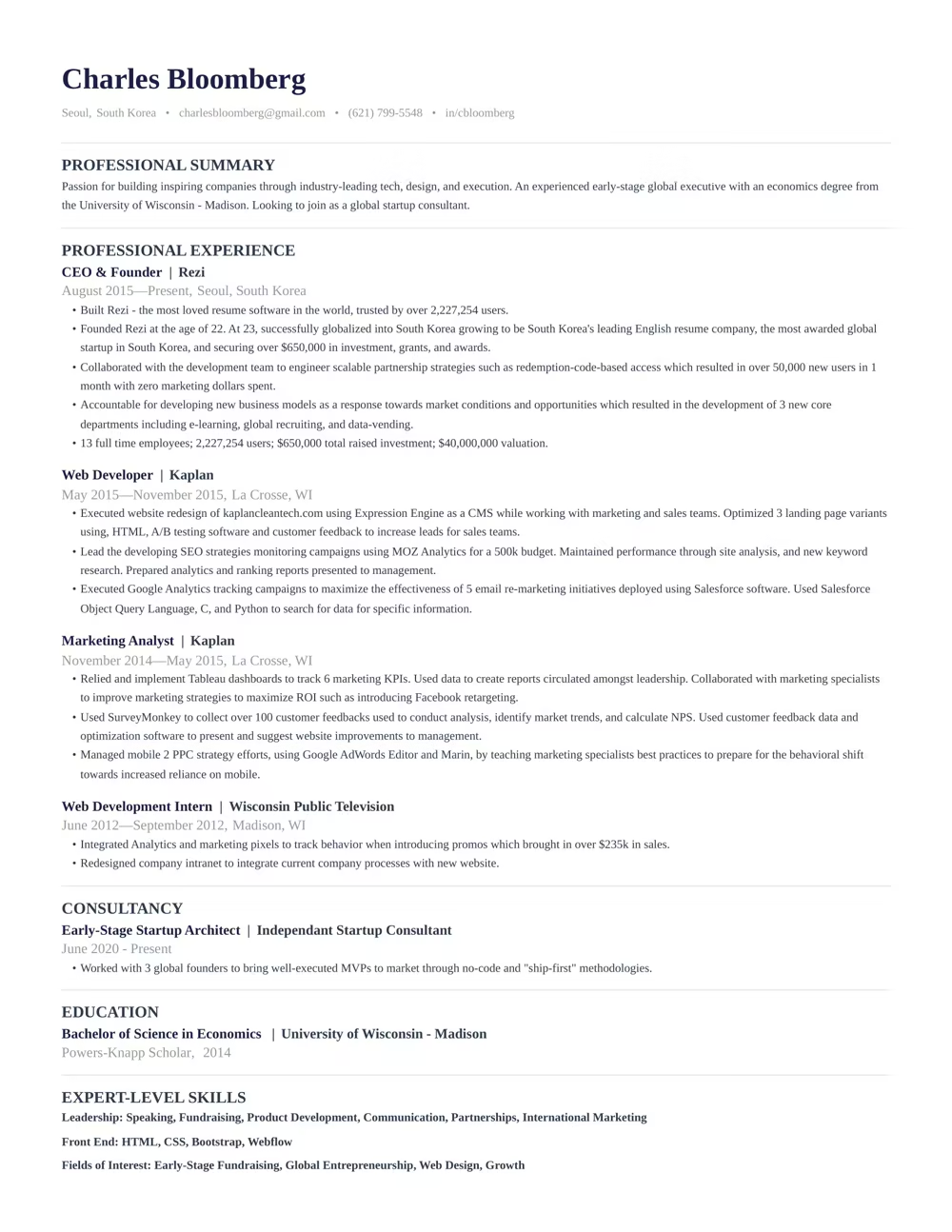
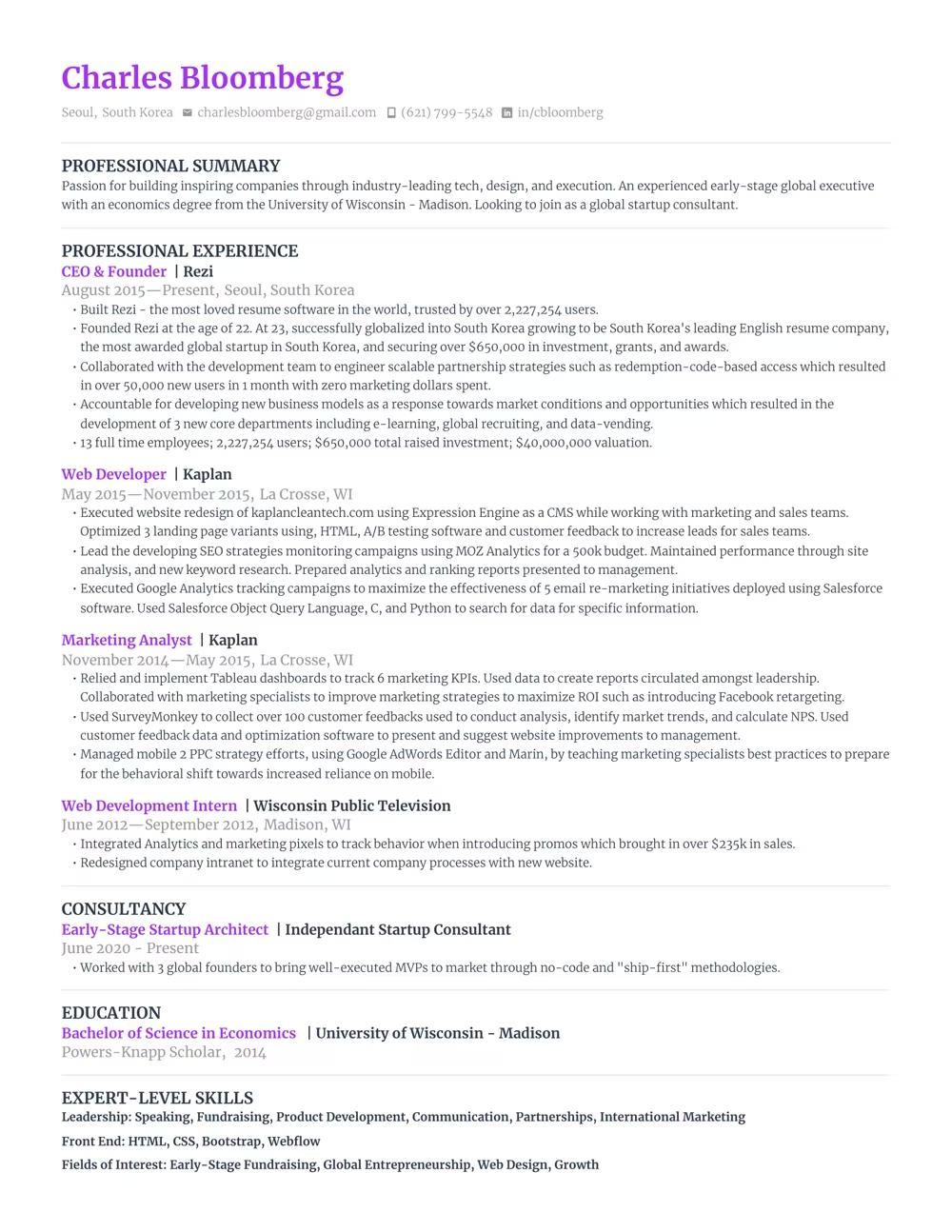
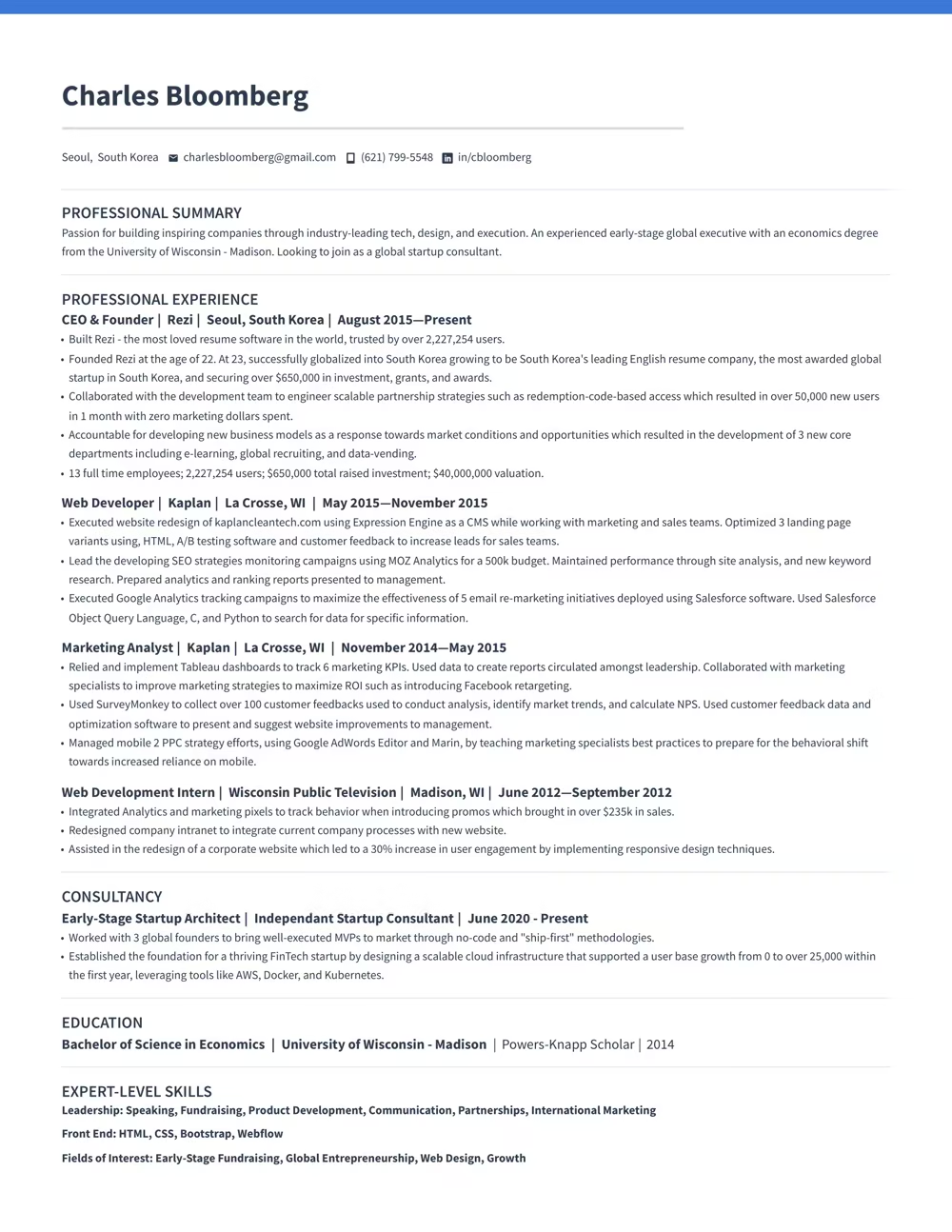
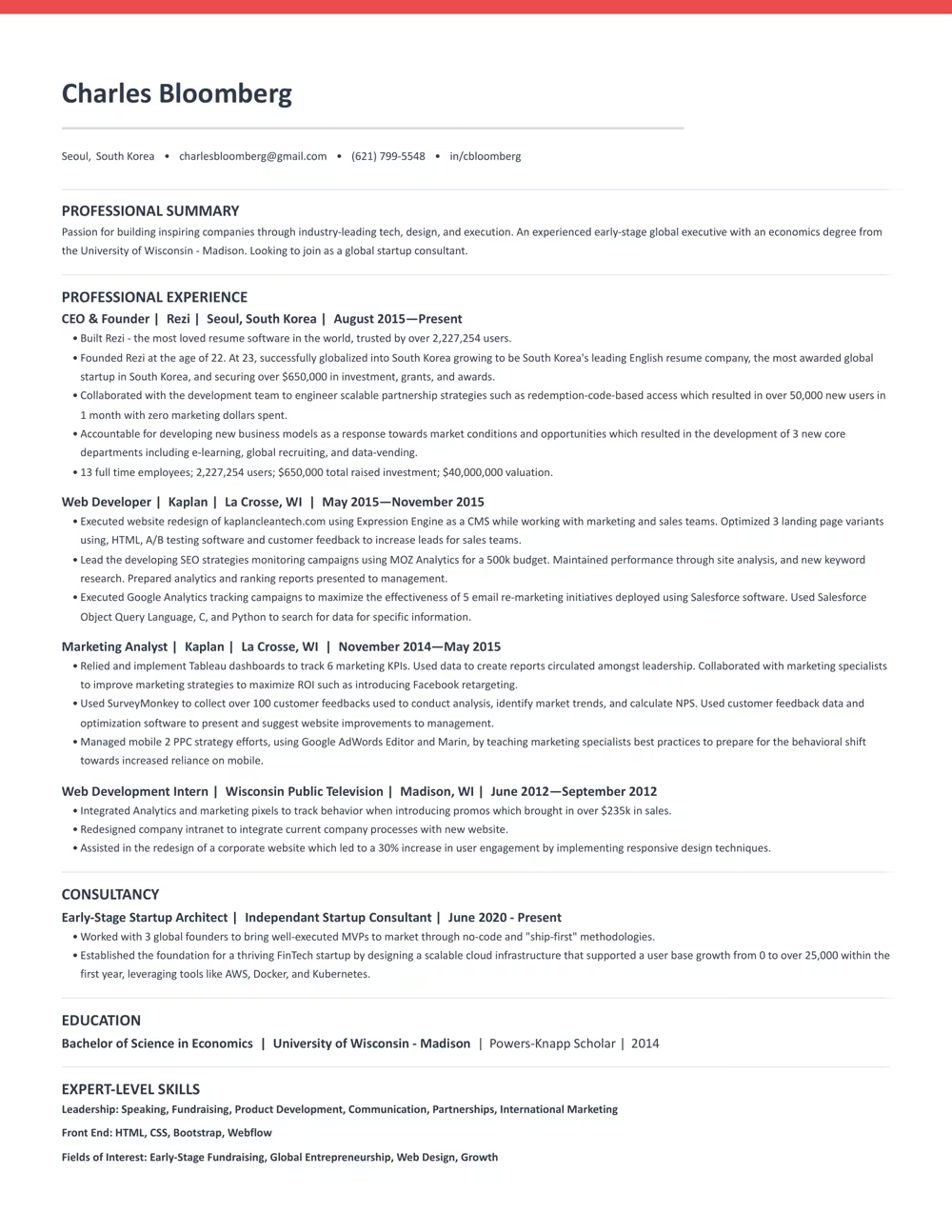
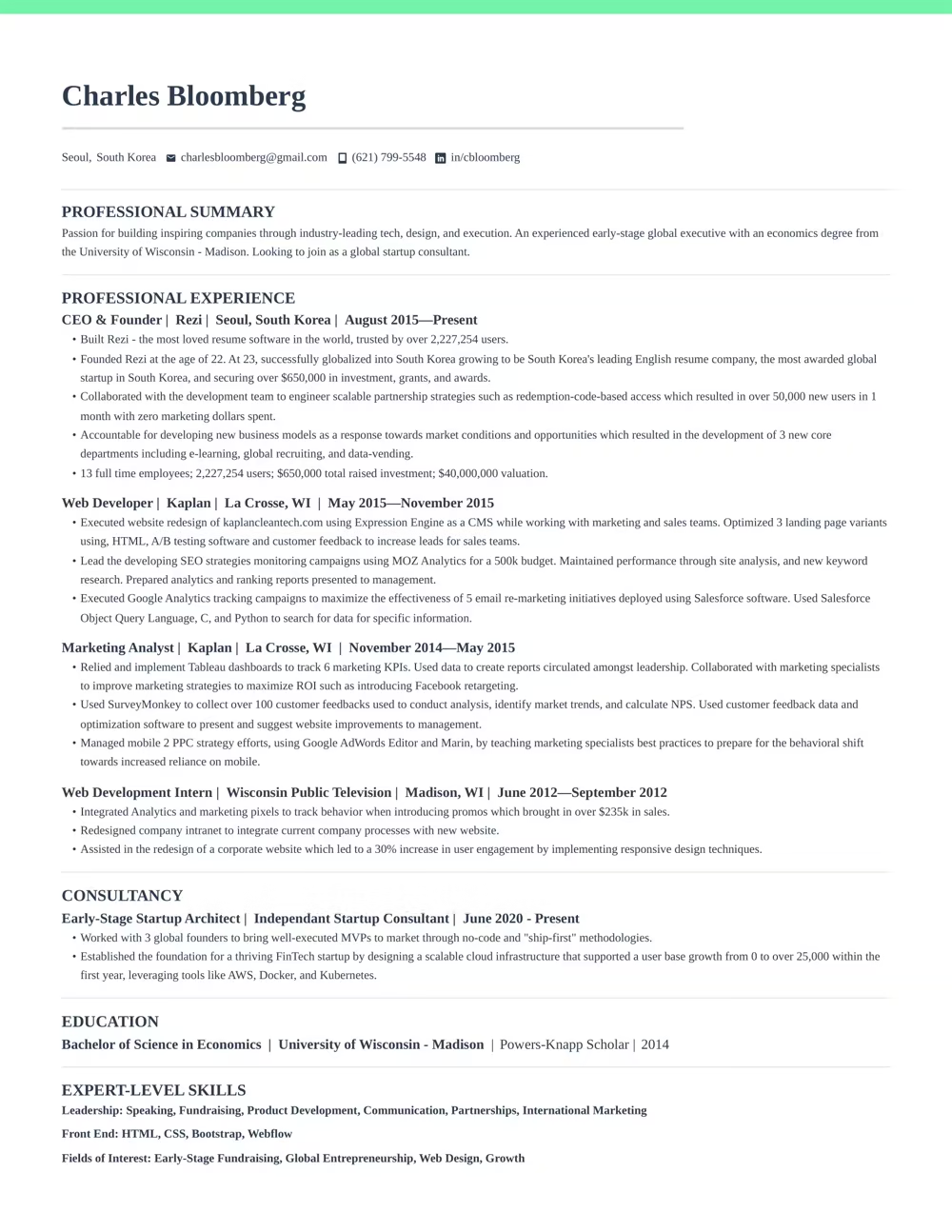
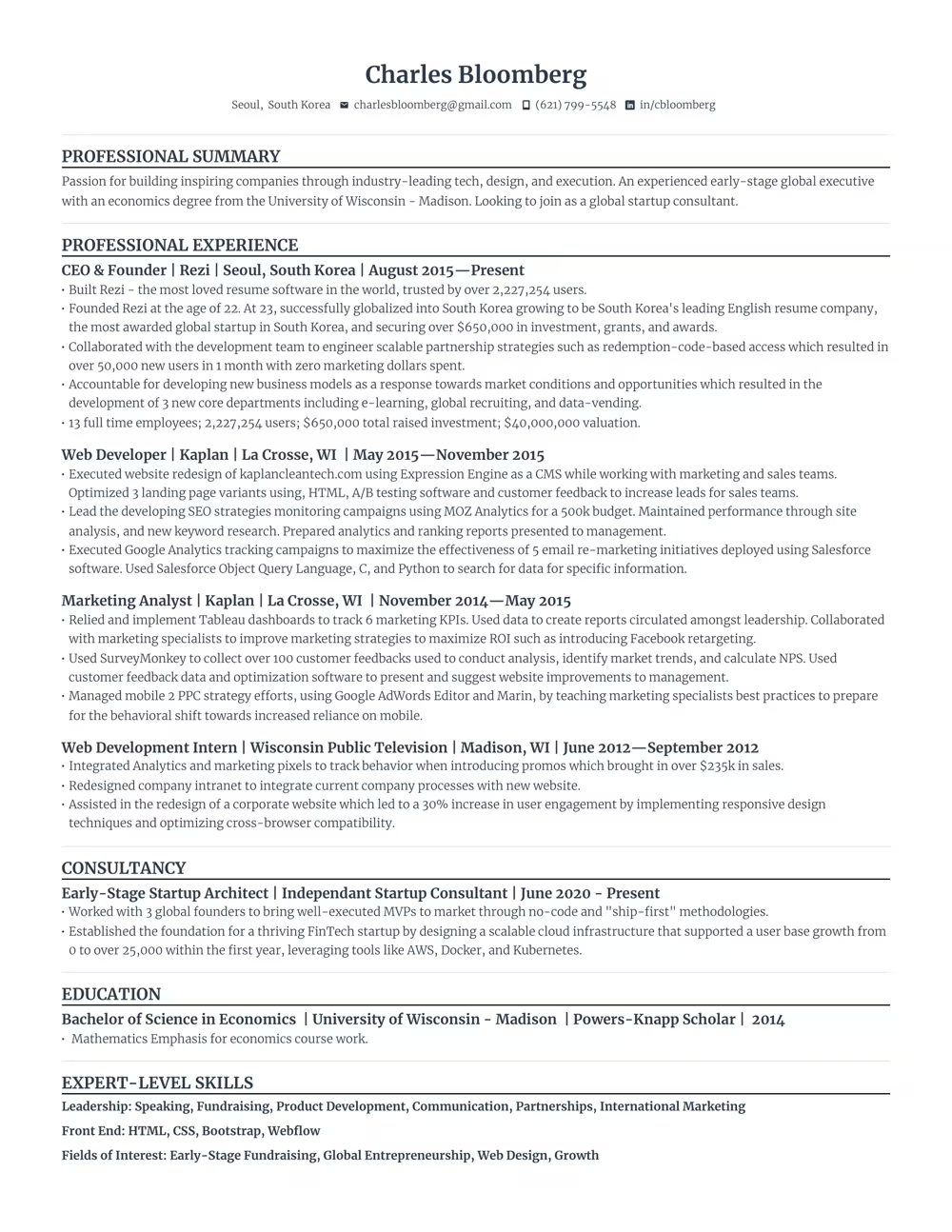
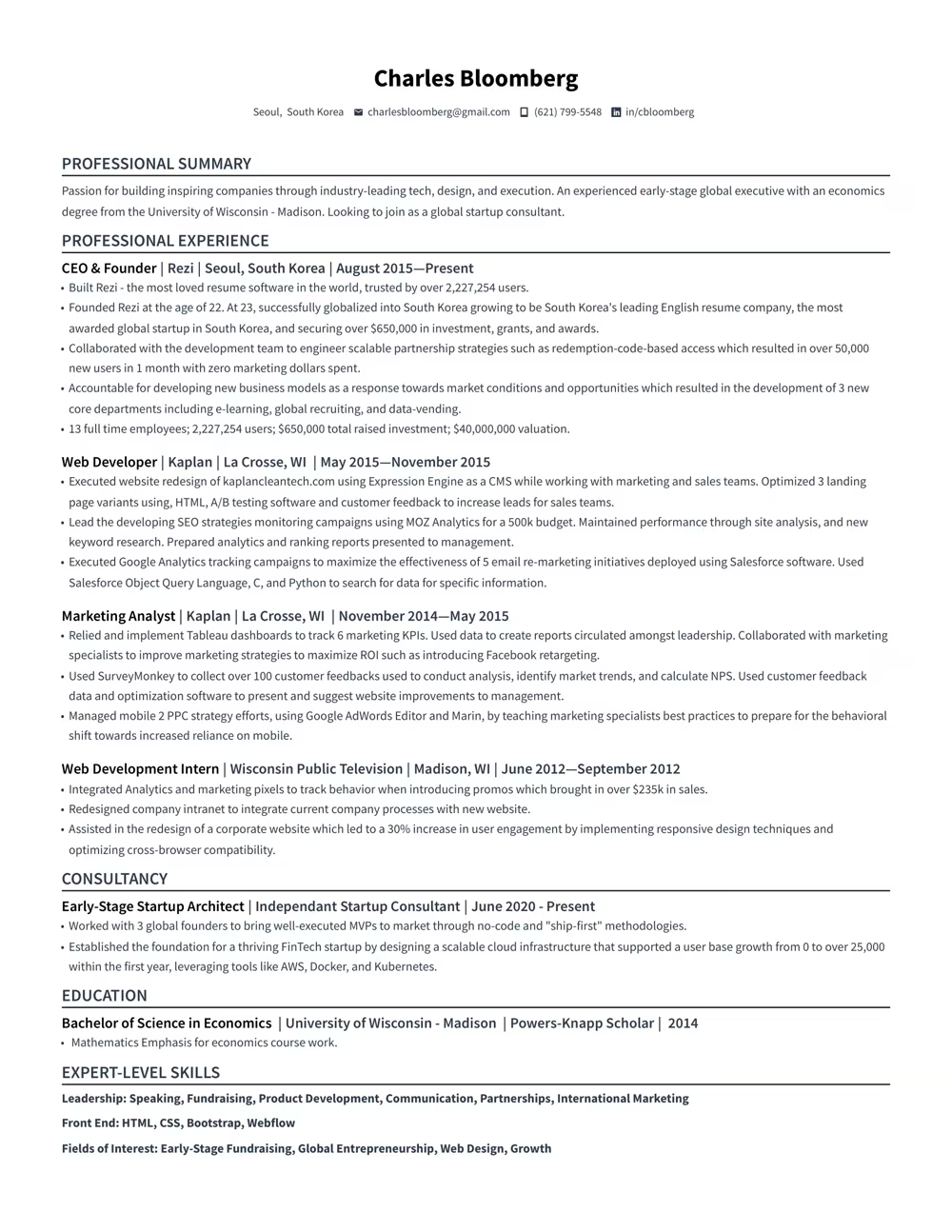
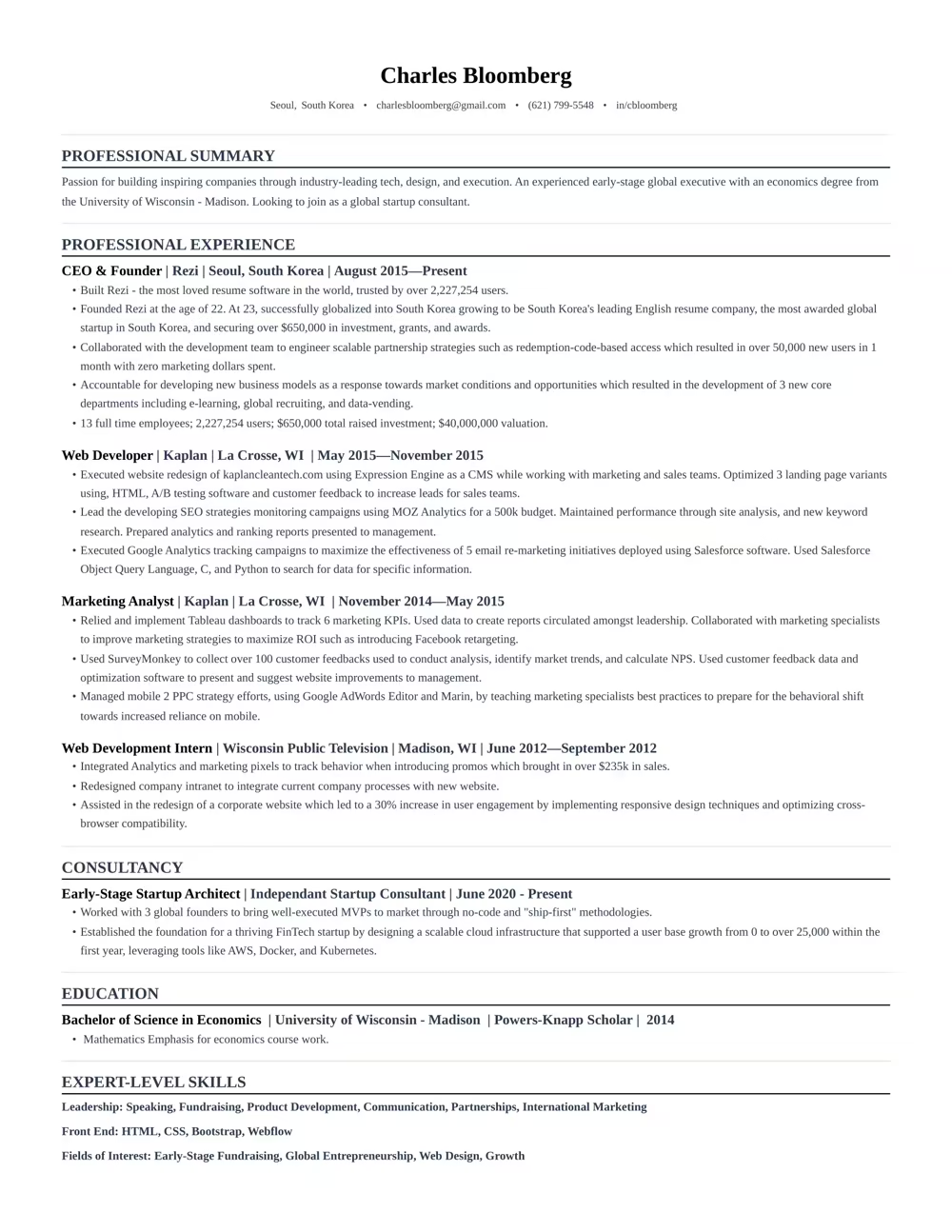
ATS resume templates for a modern resume

Professional, clean, effective. These templates get your message across, no matter your industry or experience level.

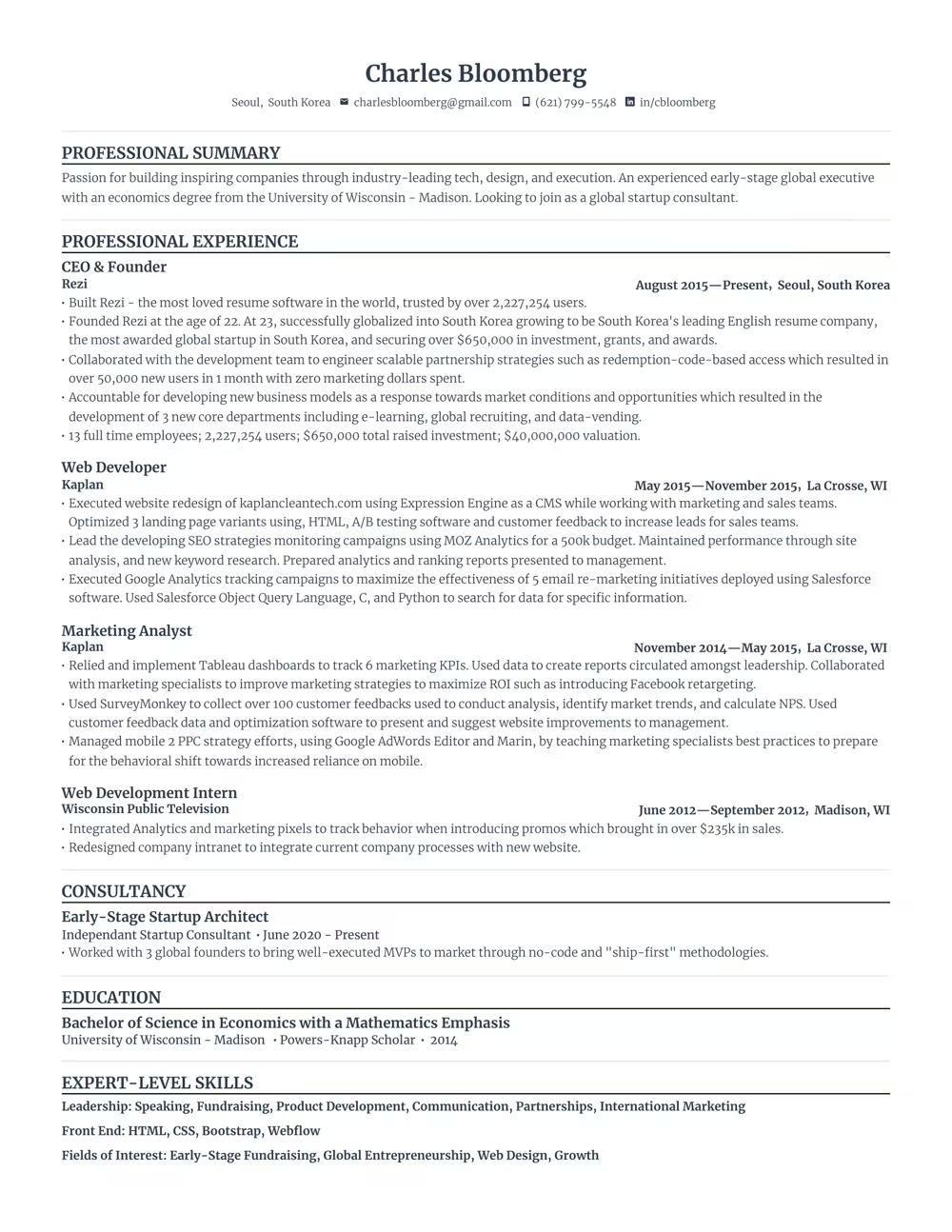
Ultimate readability and well-organized layout. Highlights what matters the most. A safe pick for all jobs across all industries.

Recommended:

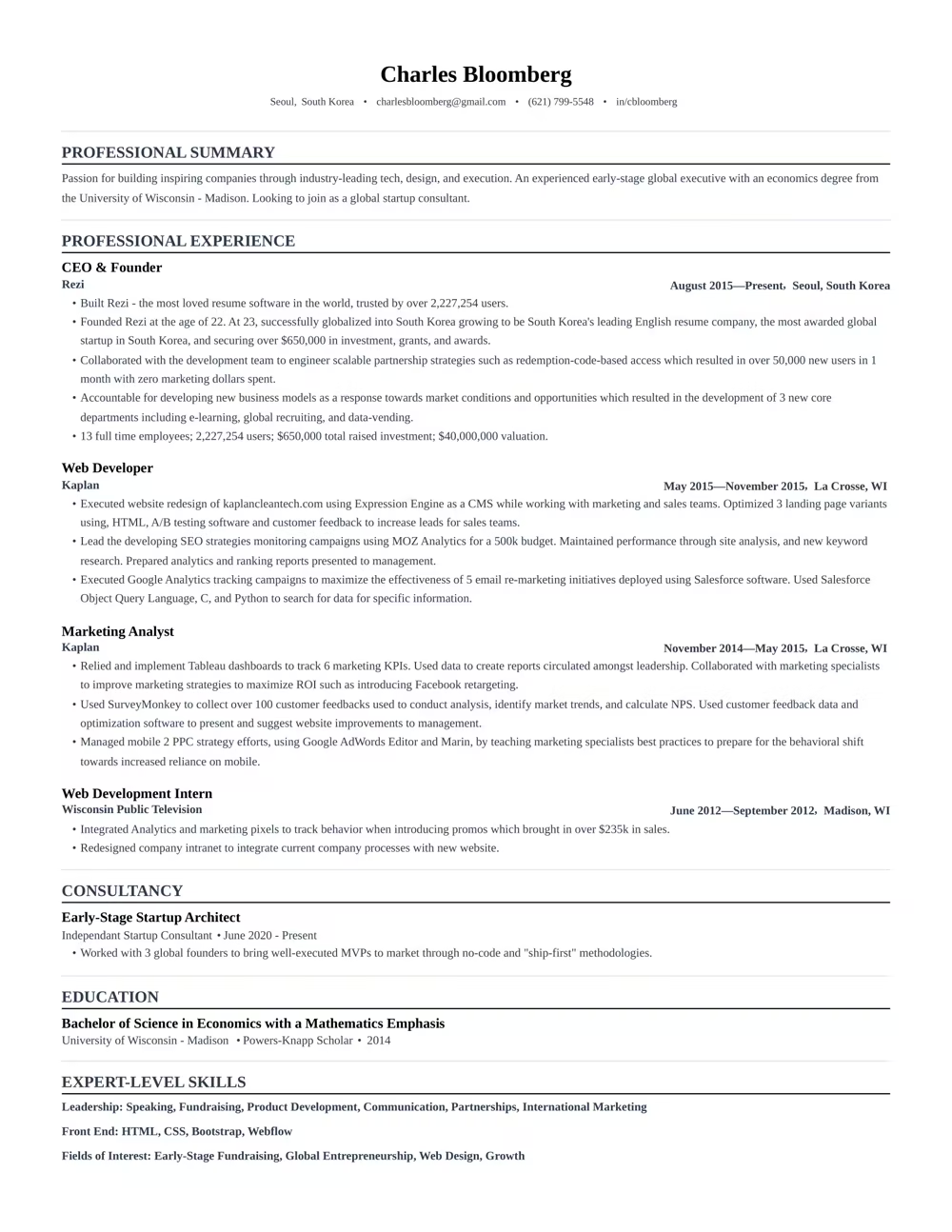
Negative space gives readers breathing room and guides their eyes to where you want them to go. Simplicity = sophistication.

Recommended:

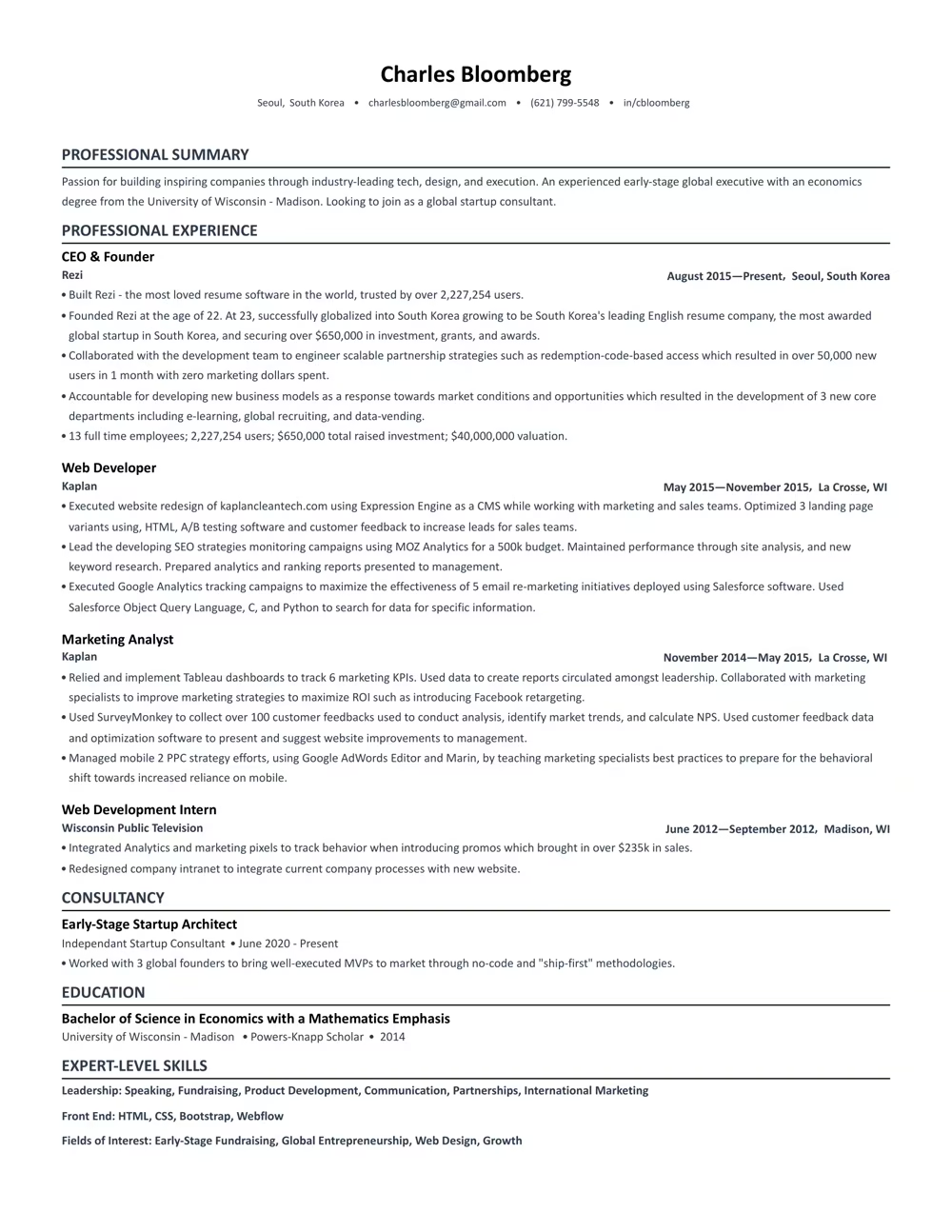
A design familiar for recruiters and hiring managers. Good for corporate positions where you’ll need to paint within the lines.

Recommended:

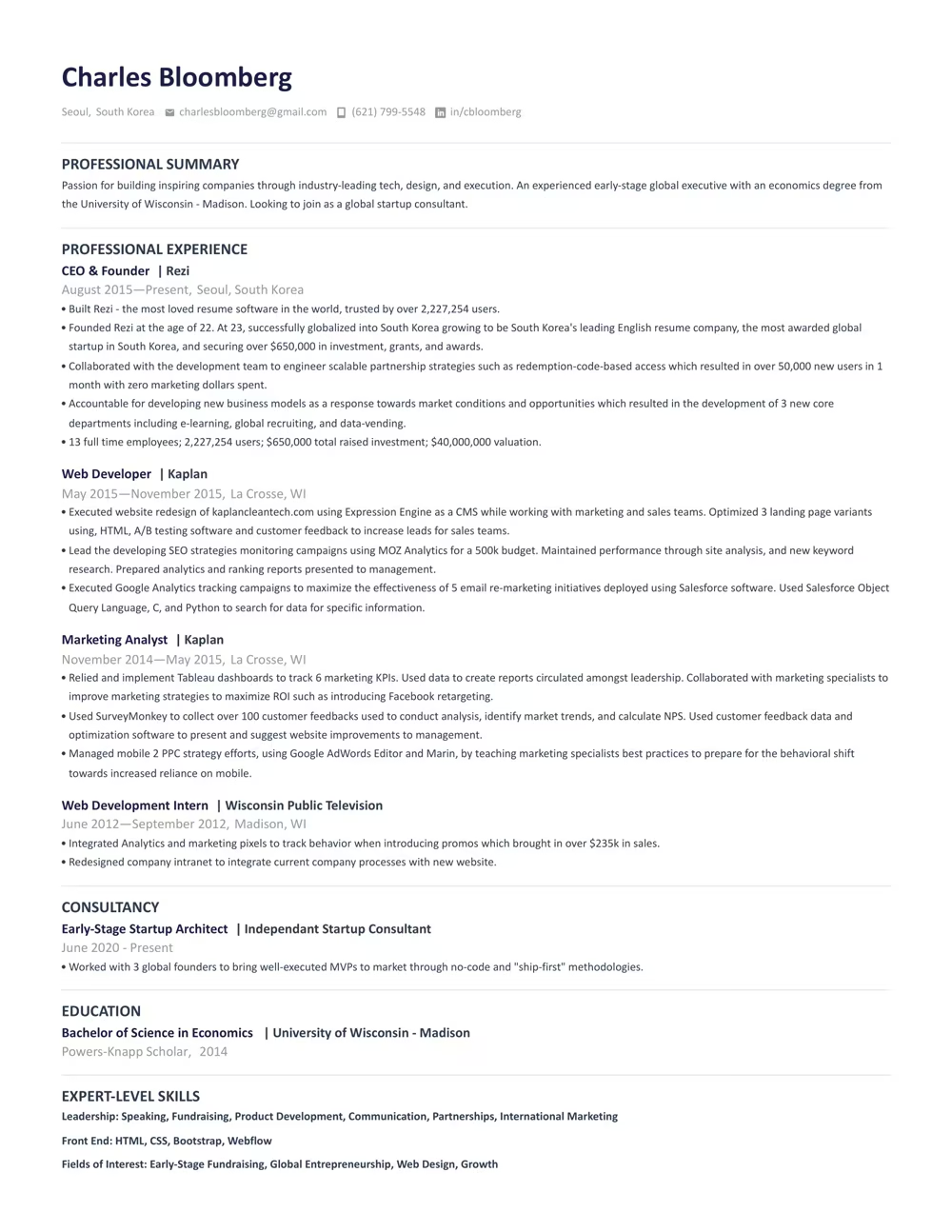
Maximizes page space for dense information. Ideal for seasoned professionals with a lot to say in a limited area.

Recommended:
Tagline

Lorem ipsum dolor sit amet, consectetur adipiscing elit. Suspendisse varius enim in eros elementum tristique. Duis cursus, mi quis viverra ornare, eros dolor interdum nulla, ut commodo diam libero vitae erat.

Rezi is an awesome AI-based resume builder that includes templates to help you design a resume that is sure to check the boxes when it comes to applicant tracking systems. This is a great jumping off point to kickstart a new resume.
Ashley Stahl from forbes image
Ashley Stahl
Career Contributor
Total Users
4,005,400
Interview Rate
62.18%
Avg. User Review
8.23/10
I uploaded my application to various websites like Indeed, LinkedIn, places like that, and I was not getting anything that was in the field that I wanted to be in. I put my information in rezi, and I was able to reorganize my experiences and come up with better bullet points for some of my volunteer experiences that were in that field. And now in the past week I've had like five interviews, and I was able to secure a part time job doing something in that field.
For some reason, I struggled a lot with choosing a format for my resume, and then managing that format when I wanted to make updates. With Rezi, I was able to simply input data, check out the preview, and know that it will be formatted correctly when I export the resume to Word. Rezi made it super easy to refine and iterate on my resume. There are alot of options for resume writing, and if you are reading this on the fence about whether to try Rezi, just do it. A simple, fast, well-designed resume tool.
Rezi is now the only place I edit my resume (I've ditched the Word doc I used to use), and I honestly believe that using Rezi has allowed me to create a much better resume than I would have on my own. I intend to keep using it and experimenting more with the AI generation for customizing the resume to different jobs.
Some difficulties that I faced when creating a resume, initially was formatting. Another feature that I've actually found myself using more often than I expected was the professional resume reviews. Other options that I tried in the past, some like, free alternatives. Some of them wouldn't let you say your resume or came with some unexpected strings, but Rezi is super upfront and continues to improve over time. I've recommended Rezi to several of my friends and colleagues who will continue to do so. I just love this product so much.
Not a paid promo. I've been looking for a change of jobs for almost a year. Got a few calls, but nothing what I wanted. Updated my CV through Rezi, the second call I got was from an MNC and something I was looking forward to. And here I am, completing my second month at the new place. I checked with my HR how she found me - it was through the Rezi cv (I had to check because I used to apply with my old CVs as well)Thank you, Rezi. Thank you, Jacob! Yes the UI, formatting, keyword suggestions etc are all great but the best of all - dedicated customer service.
... I created a few primary versions of my resume and then would copy them and use Rezi to suggest content for each job description. Rezi was helpful by comparing my resume to the job description and making suggestions for extra keywords. Using Rezi for this instead of doing it myself reduced my time per application from 1-2 hours down to 15 minutes. The response I got from applications with targeted resumes and cover letters using Rezi was high.
Rezi has been instrumental in a job search I've participated in in two specific instances. Number one, as my own personal resume customization tool. Searching through thousands of different job descriptions as an MBA student, Rezi really helped me reinforce my resume or customize my resume for the job descriptions I thought were most important. And was a great support tool on top of what I already received as a part of a full time MBA program.
UI: Firstly, the UI is a breeze. It's real fun to use, and what I like most is the fact that the application divides your resume into different sections, and you get to work on each section at a time. Psychologically, this helps you alleviate anxiety and just work on one thing at a time.
Formatting: Trying to format your resume on Google Docs or MS Word or even Latex can be a hassle more often than not. REZI.AI does your formatting like a charm. There's a handful of nifty features like the auto-tune (which automatically adjusts stuff), borders, accent colors and others.
ATS Scoring: This is perhaps the USP of REZI. You can target a resume for a job description and view the score corresponding to that particular application.
I've used many different resume building webistes, all of them ended up wanting more and more money. Rezi on the otherhand has the lifetime option which allows a good taste of what it could do. But overall it is nice and clear what I am supposed to do and love the PDF download option. Not many templates but they are all simple and to the point. Thank you for creating and offering this as a service!
Support

Frequently Asked Questions (FAQs)

What is the best AI resume builder?

Rezi, of course.

What are the main differences between Rezi's Free, Pro, and Lifetime plans?

The Free plan is $0/month and allows you to create one resume, use limited AI tools (such as Keyword Targeting and Analysis), and download up to three PDFs. You can also create unlimited cover and resignation letters. No card is required to begin.

The Pro plan is $29/month and provides unlimited access to all features, including unlimited resumes, full AI capabilities, unlimited downloads, and one free monthly expert resume review (resumes are reviewed by a person).

The Lifetime plan is a $149 one-time payment. It grants permanent access to all the features of the Pro plan (unlimited resumes, full AI tools, and unlimited downloads), but it does not include the free monthly expert review (which can be purchased for an extra fee).

What is your refund policy?

Rezi offers a 100% money-back guarantee on all paid plans (Pro and Lifetime). If you are unsatisfied, you can request a full refund within 30 days of your purchase.

Can I switch or upgrade plans later?

Yes, you can easily upgrade or downgrade your plan at any time through your Rezi Account Billing dashboard. Prorated credits will apply when switching.

Can Rezi assist my organization with creating resumes?

Yes. Rezi Enterprise

Ready to build
your resume?

Join over 4 million people who use Rezi to take control of their job search.