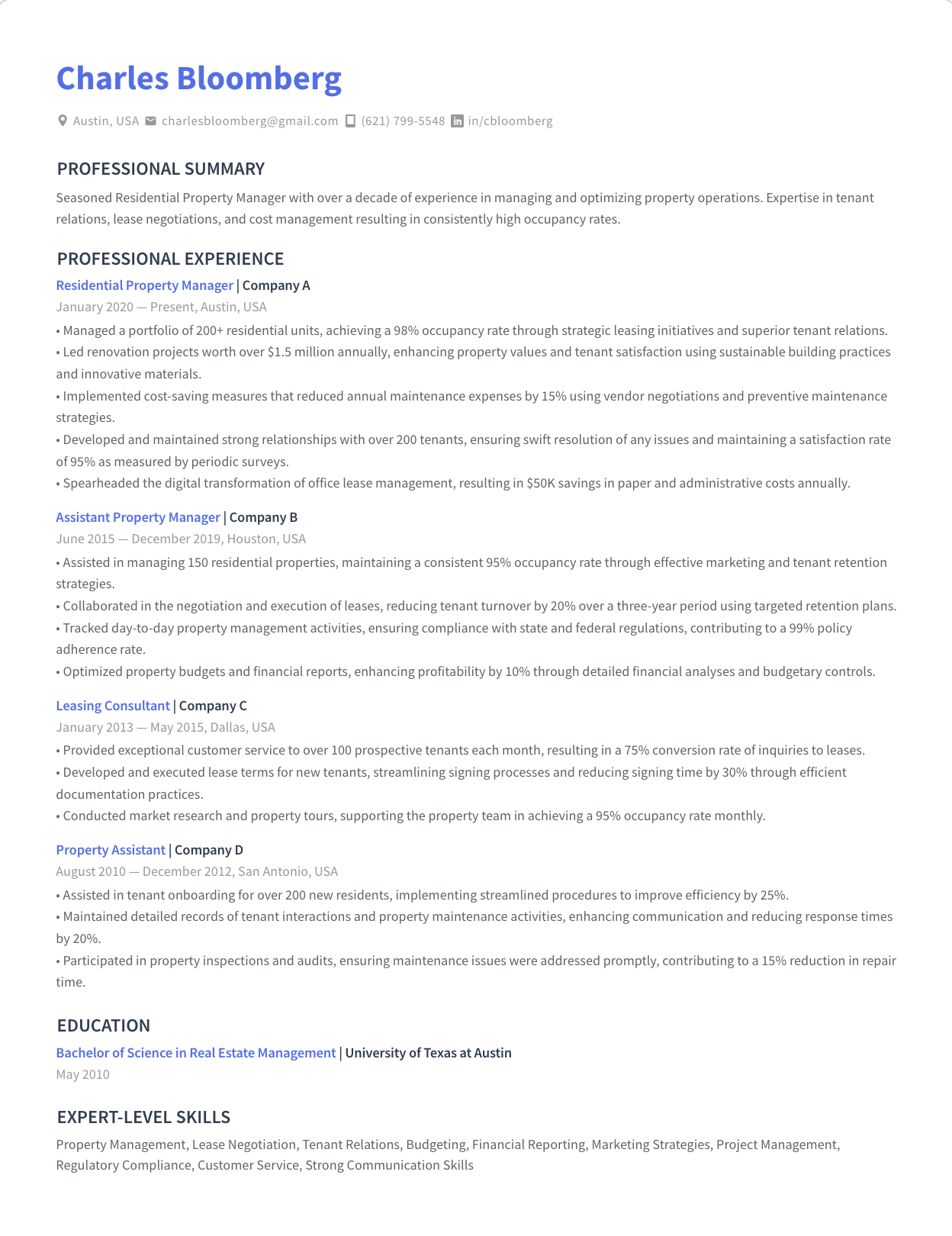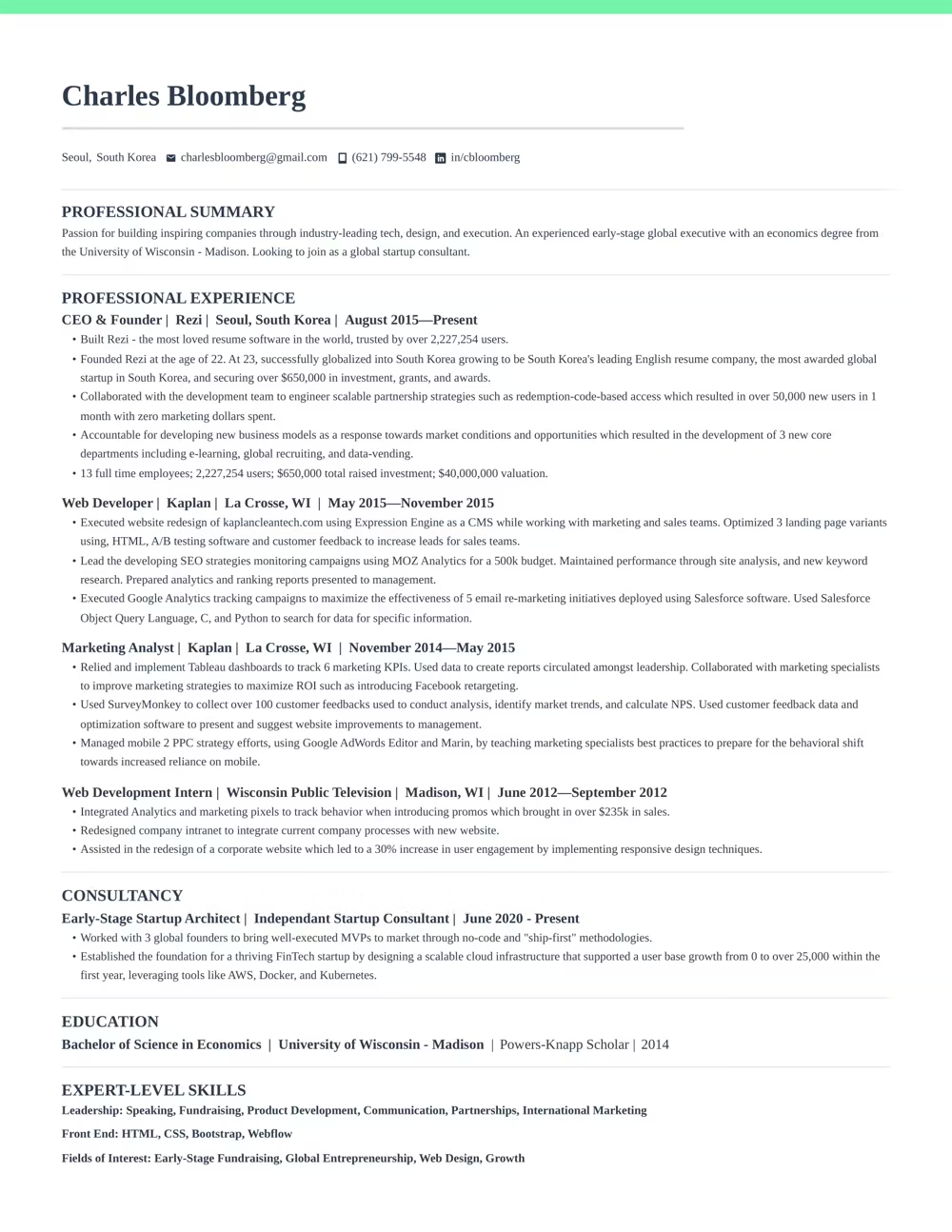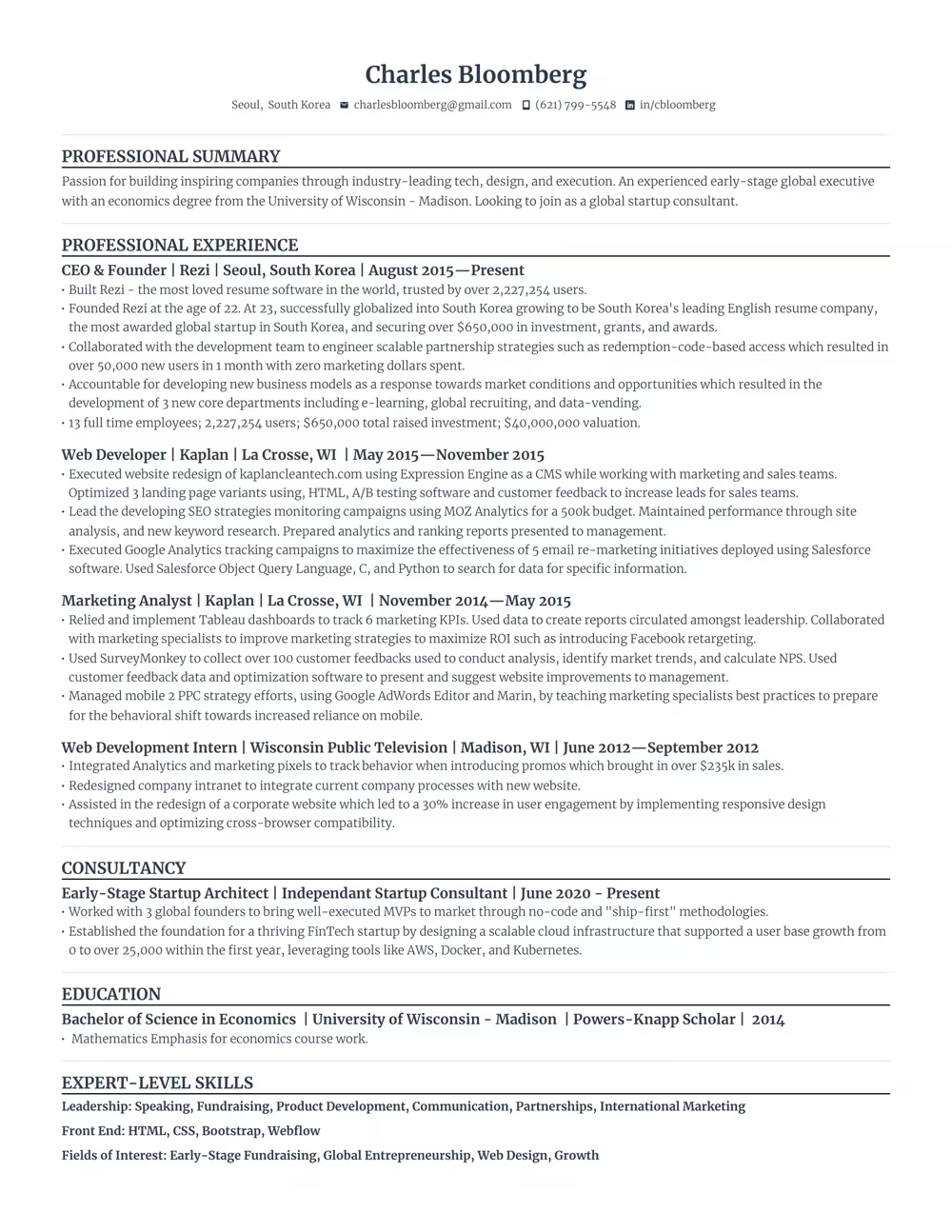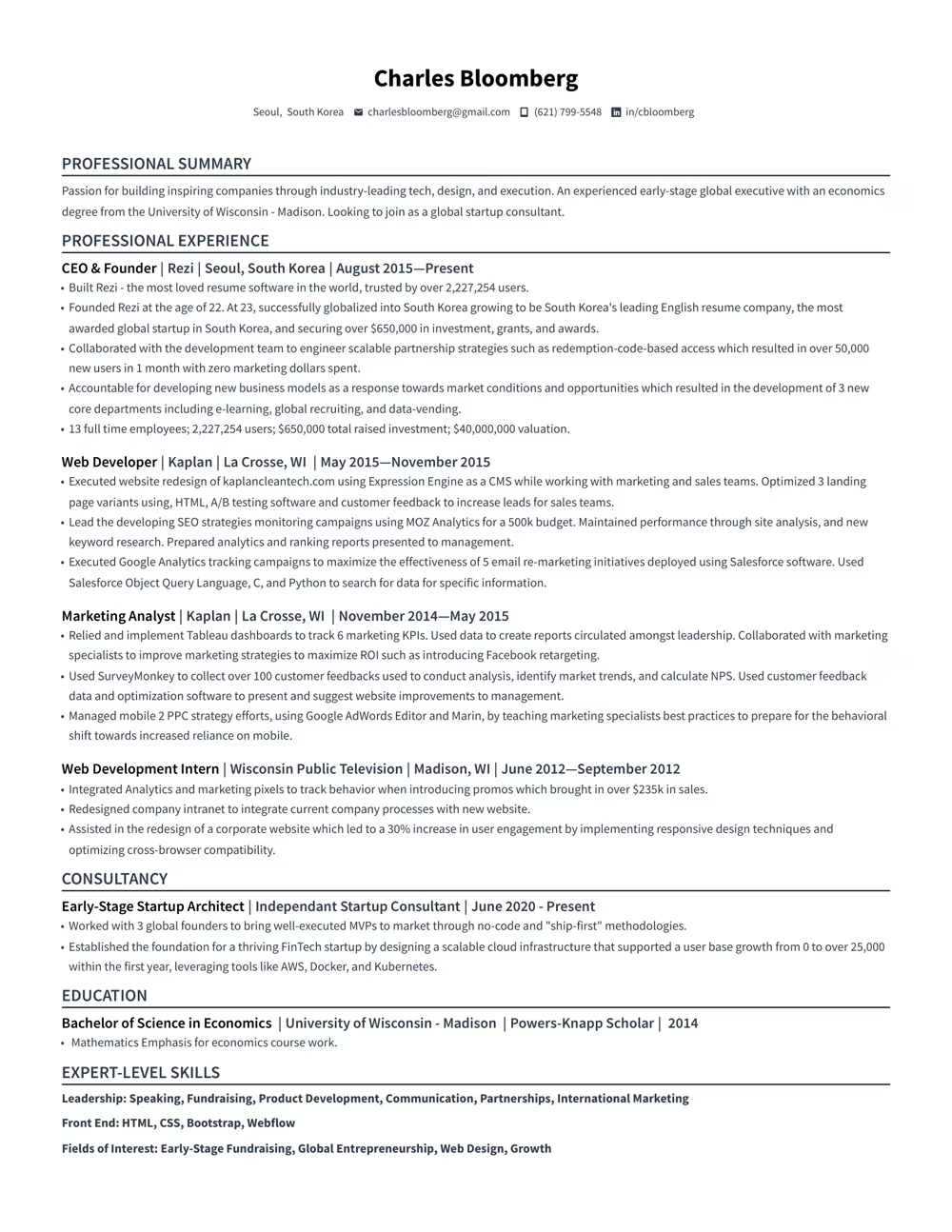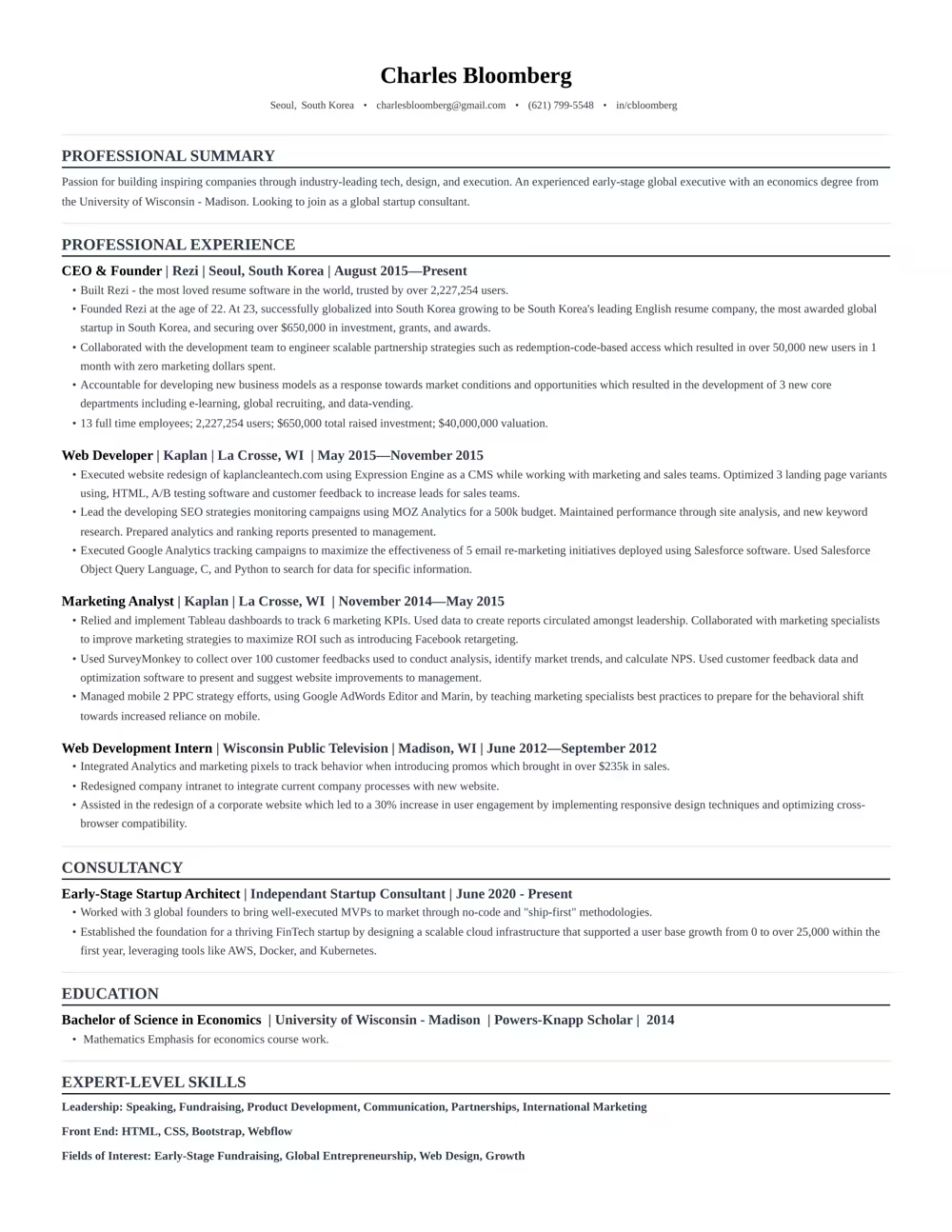

Here's the thing most residential property manager resumes get wrong: they read like a list of maintenance tasks and rent collection duties. Leaky faucet fixed. Lease renewed. Vacancy filled. That's not a resume — that's a to-do list.
A strong residential property manager resume tells the story of how you kept properties profitable, tenants happy, and owners confident in your ability to protect their investment. It covers everything from occupancy rates and budget management to tenant relations, vendor negotiations, and regulatory compliance — with real numbers to back it all up.
And this is exactly what you'll learn from this article. Inside, you'll find:
- Examples of 9 residential property manager resumes, covering different property types and seniority levels.
- Insider tips about what really matters to hiring managers and property owners looking for their next PM.
- A step-by-step guide for building a residential property management resume that actually gets callbacks.
Sample Residential Property Manager Resumes
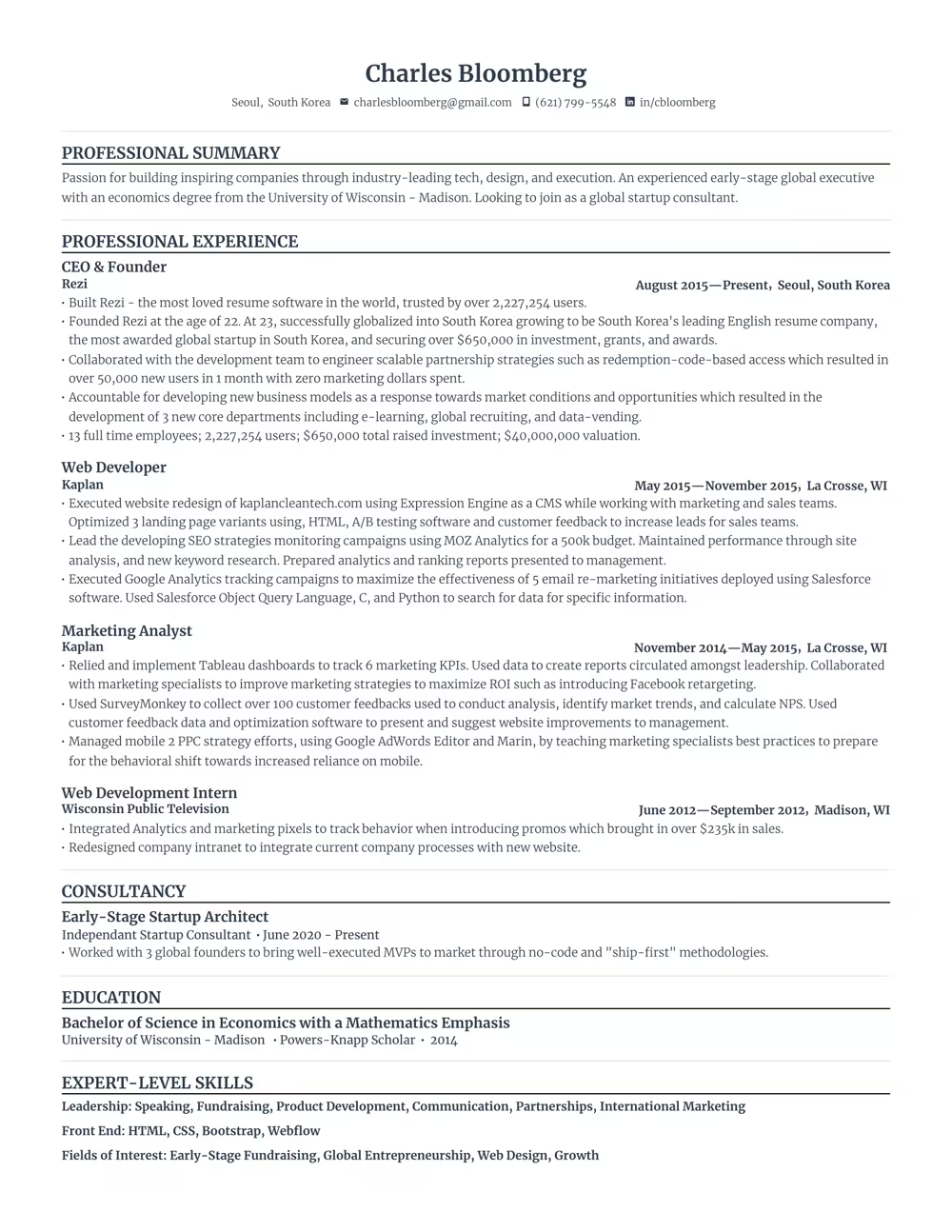
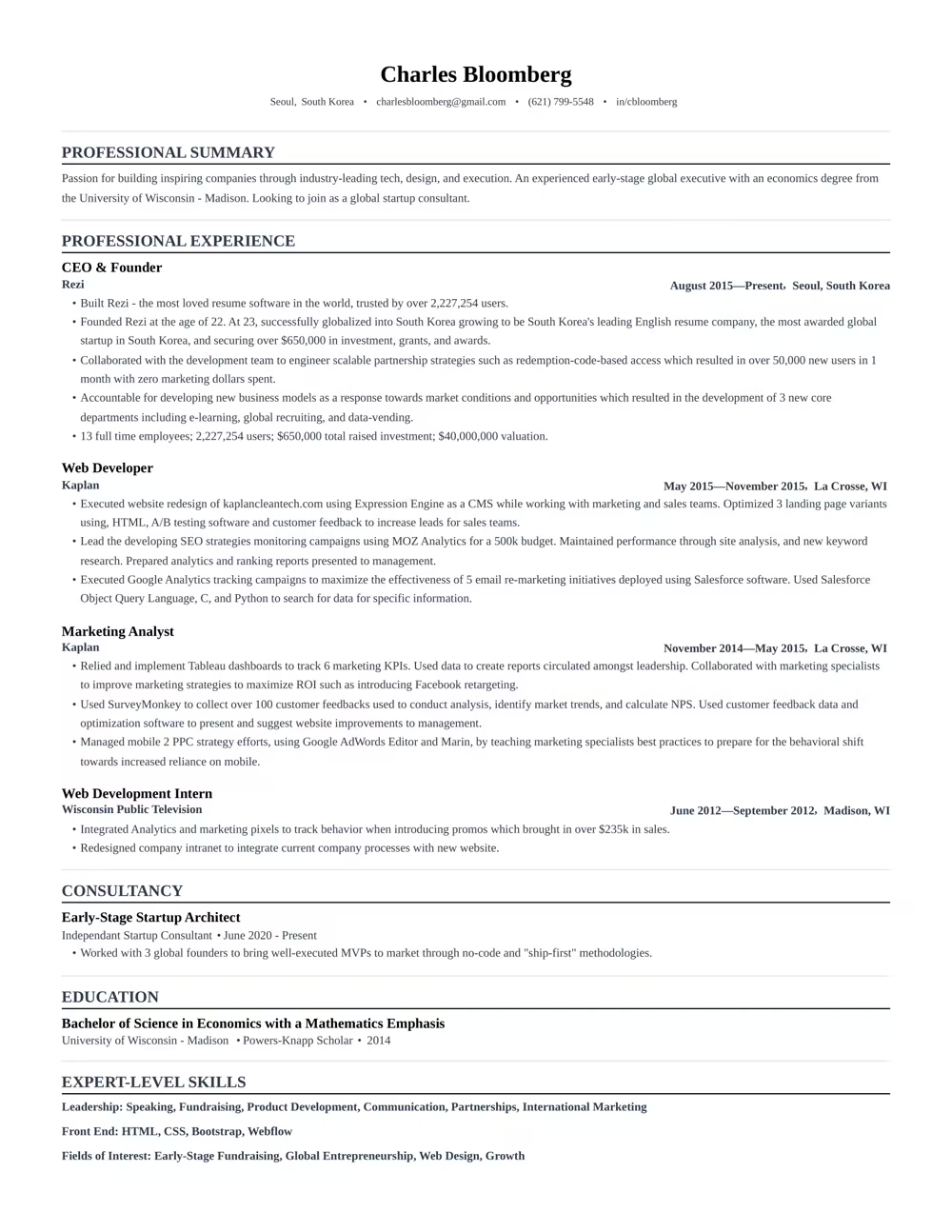
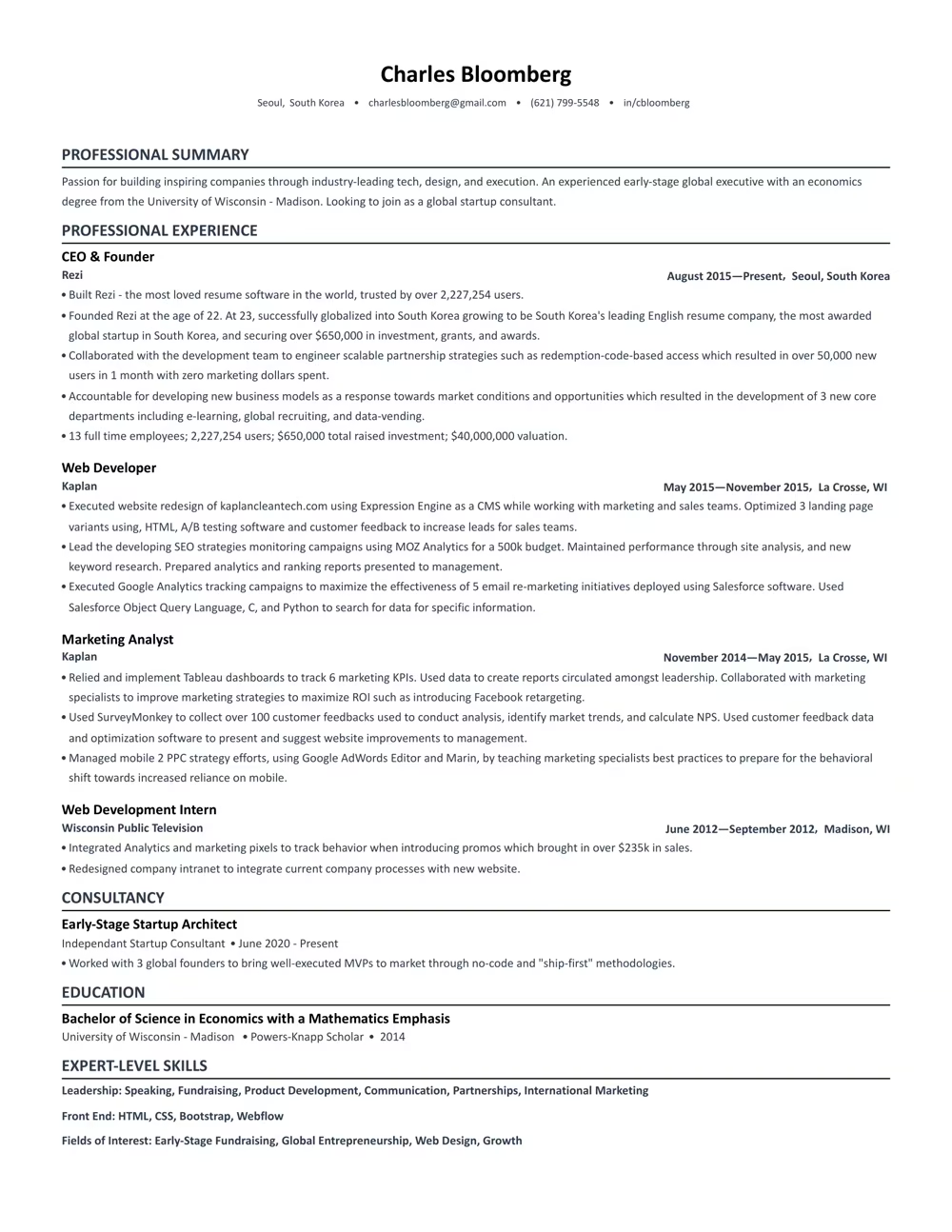
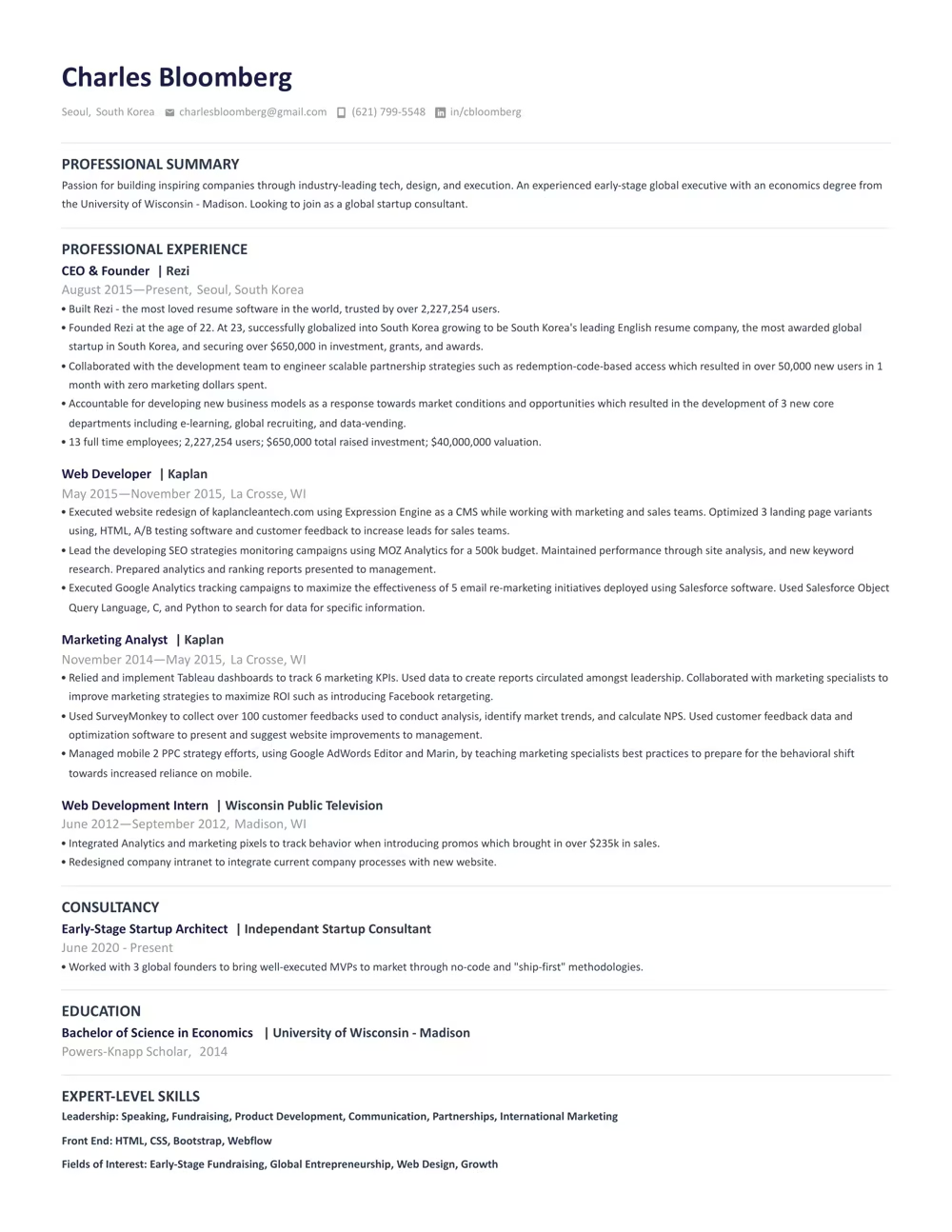
Take a look at some top-notch sample resumes for residential property managers across different property types and specializations. Find one that matches your profile and use it as a starting point — just make sure to adjust the details to reflect your own career experience.
Note: these examples are organized by role type and specialization. Let's start with experience-level variations, then move into property-type specializations.
Junior Residential Property Manager Resume
A Junior Residential Property Manager resume should emphasize your foundational knowledge of lease administration, tenant communication, and property maintenance coordination. Highlight any assistant or leasing agent experience, relevant coursework, and familiarity with property management software. Showcase eagerness to learn, strong organizational skills, and any early wins like improving tenant satisfaction scores or reducing vacancy turnaround times at properties you helped manage.
Mid-Level Residential Property Manager Resume
Your mid-level resume should demonstrate a solid track record of independently managing residential properties. Highlight occupancy rates you've maintained, operating budgets you've controlled, and tenant retention strategies you've implemented. Show your ability to handle vendor relationships, lease enforcement, and compliance with fair housing laws. Include specific metrics like the number of units managed and any cost savings achieved through preventive maintenance programs or renegotiated service contracts.
Senior Residential Property Manager Resume
A Senior Residential Property Manager resume should showcase extensive portfolio oversight, strategic leadership, and measurable financial impact. Emphasize experience managing large or multi-site portfolios, mentoring junior staff, and driving capital improvement projects. Highlight your ability to develop and execute property business plans, negotiate major vendor contracts, and deliver consistent NOI growth. Include advanced certifications like CPM or ARM and demonstrate your role in shaping organizational property management standards.
Apartment Property Manager Resume
For an Apartment Property Manager resume, focus on your expertise in managing large-unit apartment communities. Highlight your experience with high-volume leasing, tenant screening, rent collection, and turnover management. Showcase skills in marketing vacant units, managing on-site maintenance teams, and maintaining high occupancy rates. Metrics like average occupancy percentage, lease renewal rates, and reduction in delinquency rates will make your resume stand out to hiring managers.
Multi-Family Property Manager Resume
A Multi-Family Property Manager resume should emphasize your ability to oversee multiple residential buildings or complexes simultaneously. Highlight experience with portfolio-level budgeting, capital expenditure planning, and coordinating across multiple on-site teams. Showcase your understanding of multi-family financing, market-rate adjustments, and tenant retention strategies across diverse communities. Mention any experience with affordable housing programs or mixed-income properties if applicable.
HOA Property Manager Resume
Your HOA Property Manager resume should emphasize your experience working with homeowner association boards, enforcing CC&Rs, and managing community budgets. Highlight skills in conducting board meetings, coordinating community elections, managing reserve funds, and handling architectural review processes. Show your knowledge of state-specific HOA regulations and your ability to mediate homeowner disputes diplomatically. Strong written communication and financial reporting skills are essential to feature prominently.
Condominium Property Manager Resume
A Condominium Property Manager resume should focus on your expertise in managing shared ownership communities. Highlight experience with common area maintenance, association fee management, and capital reserve planning. Showcase your ability to work with condo boards, manage vendor contracts for building systems like elevators and HVAC, and ensure compliance with condominium association bylaws. Include any experience navigating special assessments or major building renovation projects.
Luxury Residential Property Manager Resume
For a Luxury Residential Property Manager resume, emphasize your experience delivering white-glove service to high-net-worth residents and property owners. Highlight expertise in managing premium amenities, coordinating concierge-level services, and maintaining impeccable property standards. Showcase your discretion, attention to detail, and ability to manage high-value assets. Mention experience with luxury-specific vendors, high-end renovations, and maintaining properties that command premium rental rates in competitive markets.
Community Property Manager Resume
A Community Property Manager resume should highlight your experience managing planned communities, townhome developments, or master-planned neighborhoods. Emphasize skills in maintaining common areas, managing community amenities like pools and clubhouses, and enforcing community guidelines. Showcase your ability to coordinate with landscaping and maintenance vendors, manage community events, and maintain strong relationships with residents while keeping the community within budget.
How to Write a Residential Property Manager Resume
Short answer:
Focus on your property management results — occupancy rates, tenant satisfaction, budget performance, and portfolio size. Create a professional header with your name and contact details. Right below, write a 2–3 sentence resume summary outlining your most significant accomplishments. Describe your work history in reverse-chronological order, focusing on measurable outcomes and the properties you've managed. Then, cover your education, including professional certifications, list key skills, and add extra sections such as professional associations, volunteer work, or property portfolio details.
Include all the necessary sections in the correct order
Here's the correct order of sections for most residential property manager resumes:
- Header with contact information
- Resume summary or objective
- Work experience
- Education
- Skills
- Certifications
Depending on your current career situation, you can also throw in some additional sections. For instance:
- Property portfolio (types of properties, unit counts, portfolio value)
- Volunteer experience
- Professional associations (NARPM, IREM, CAI)
- Awards and recognitions
- Languages spoken (valuable in diverse communities)
Include everything that shows you're capable of doing what the job requires. Make every section count. If it doesn't clearly highlight your property management skills, it doesn't belong on your resume.
If you have less than five years of relevant experience, keep your resume 1-page long. For more senior property managers overseeing large portfolios, a two-page resume is fine.
More details here: What Sections to Include on Your Resume?
Now, I'll give you a high-level overview of how to write each section, going from top to bottom. Well… almost. The only exception is the resume summary section. While it comes right after your contact info, it's actually easier to write it last. More on that in a sec.
Create a professional resume header
- Start with your name and contact information. Include the basics: your full name, phone number, professional email address, location, and LinkedIn profile. If you have a professional website or online portfolio showcasing properties you've managed, include that link too.
- Right below your name, clearly state your professional title (e.g., Residential Property Manager or Senior Multi-Family Property Manager). This sets expectations and immediately tells the reader what you do.
For more information, see: How to Create a Resume Header
Describe your work history
- Use reverse-chronological order. List your positions starting with the current or the most recent one.
- In each entry, include your job title, company name, location, and dates of employment.
- Below each position, write 3–7 bullet points — the more recent the position, the more bullet points you should include. Describe your responsibilities and, more importantly, your accomplishments.
- Use action verbs and quantify your achievements (e.g., "Managed a 250-unit apartment community with 97% occupancy rate, reducing annual turnover by 18% through proactive tenant retention strategies").
- If specific property types, management approaches, or compliance frameworks were pivotal in your roles (e.g., fair housing compliance, Section 8 administration, capital improvement planning), weave these details into your descriptions. This will also help you pass ATS scans.
Learn more about the best practices of this section with our detailed guide on how to describe your work experience on a resume.
List your degrees and detail professional learning
- In the education section, list your highest degree first, including the degree type, major, and institution.
- If you have some relevant work experience, include only the name of your school and the degree you got. If you're an entry-level candidate, you can add more detail to your education section — list relevant coursework in real estate, business management, or finance, along with extracurricular activities and academic achievements.
- If you have property management certifications (e.g., CPM, ARM, CAM, NALP), either include them in an "Education and Certifications" section, or create a separate "Certifications" section and place it right below.
For an in-depth guide on how to describe your education on a resume, see: How to List Education on a Resume
List your most relevant skills in the skills section
- Include a mix of technical skills (e.g., property management software, financial reporting tools) and industry knowledge (e.g., fair housing law, lease administration) that you are proficient in.
- Add in some soft skills such as tenant relations, conflict resolution, and communication. Perhaps harder to quantify, but these demonstrate your capacity to manage properties and people successfully.
- You can use two separate subsections, one for hard skills, one for soft skills, or just list all the skills under one heading.
- Match your skills to the description of the job you're applying for. I'm not saying you should just dump every property management skill you can think of (especially if you don't really have them), but highlight those areas of expertise where your knowledge overlaps with the job ad.
Need some inspiration to get started? Here are some good skills to feature on your residential property management resume.
Property management software skills:
- Yardi Voyager
- AppFolio
- RealPage
- Buildium
- Rent Manager
- MRI Software
- Entrata
- Microsoft Excel
- QuickBooks
- ResMan
Industry knowledge and hard skills:
- Lease administration
- Fair housing law compliance
- Tenant screening and selection
- Budget preparation and management
- Capital improvement planning
- Vendor contract negotiation
- Rent collection and delinquency management
- Property inspections and maintenance oversight
- Market analysis and rent pricing
- Eviction procedures and legal compliance
Key soft skills for residential property managers:
- Tenant relations
- Communication
- Conflict resolution
- Problem-solving
- Organization and time management
- Negotiation
- Attention to detail
- Leadership
- Adaptability
- Customer service orientation
For a full-blown guide on listing skills on a resume, visit: How to Put Skills on a Resume
Use additional sections as further proof of your fit
Additional sections add depth to your resume and back up your claimed expertise. Good examples of extra sections to add to a residential property manager resume are:
- Professional associations. Membership in organizations like NARPM, IREM, or CAI signals your commitment to the profession and ongoing development.
- Property portfolio. A resume section dedicated to notable properties you've managed, specifying unit counts, property types, and occupancy or financial outcomes, can provide concrete examples of your expertise in action.
- Awards and recognitions. If you've been recognized by an employer, management company, or industry body for outstanding performance, include it.
- Languages. In diverse residential communities, bilingual or multilingual abilities are a genuine asset. List them if you have them.
Highlight the most relevant information in a resume summary
Once you're done writing your residential property management resume, give it a full read. Pick the most relevant information and compile it into a summary paragraph. Place it right under the resume header.
- Be brief and to-the-point. In 3–4 sentences, sum up your career highlights, core competencies, and what you bring to the table. Consider this your chance to answer, "Why should you hire me?" Tailor this section to match the employer's needs outlined in the job description.
- Use value-oriented language. Focus on how you can add value to the potential employer, mentioning specific outcomes like occupancy rates maintained, portfolio sizes managed, or cost reductions you've achieved.
Once you've completed the core sections of your resume, you can use Rezi AI Resume Summary Generator to automatically create a powerful summary, tailored to the job you're applying for. All you need to do is add the position and skills you want to highlight. The AI writer will do the rest.
More information here: How to Write a Job-Winning Resume Summary (with Examples)
For finishing touches, make sure your resume looks professional
- Use a clean and tidy resume format. Ensure your resume is easily readable, with a professional font, consistent formatting, and clear section headings. Avoid overloading it with dense text or fancy design elements that could distract from the content and confuse resume screening software.
- Aim for a balance between detail and conciseness. If you're a junior or entry-level candidate, keep your resume to a single page. Experienced property managers overseeing large portfolios can extend their resumes to two pages, but still need to make sure every word conveys value.
Learn more about proper resume formatting here: How to Format a Resume & What Standard Resume Format to Use
What Makes Residential Property Manager Resumes Different
In short: the emphasis on financial stewardship, tenant outcomes, and regulatory compliance — all at once.
This is also where many property managers stumble. Hiring managers and property owners don't want to see a laundry list of daily tasks. They need to see how you protected and grew the value of someone else's investment while keeping residents satisfied and the property legally compliant.
Focus on financial performance
Property management is ultimately an investment management role. Owners and management companies care about the bottom line — net operating income, expense control, rent growth, and vacancy loss.
What it means for you:
- Include concrete financial metrics: portfolio value, operating budgets managed, percentage reduction in expenses, rent collection rates, and revenue growth under your management.
- Showcase your ability to prepare and manage budgets, negotiate vendor contracts, and identify cost-saving opportunities without sacrificing property quality.
Focus on occupancy and tenant retention
Vacancy is the single biggest expense for any residential property. Your resume needs to prove you keep units filled and residents happy enough to renew.
What it means for you:
- Quantify occupancy rates you've maintained and lease renewal percentages you've achieved. A statement like "Maintained 96% average occupancy across a 400-unit portfolio over 3 years" immediately communicates competence.
- Describe the specific tenant retention strategies you've implemented — loyalty programs, timely maintenance response, community events — and the results they produced.
Focus on compliance and risk management
Residential property managers operate within a complex web of regulations — fair housing laws, local landlord-tenant codes, building safety standards, and sometimes affordable housing program rules. Getting this wrong can mean lawsuits and fines.
What this means for you:
- Highlight your knowledge of federal, state, and local housing regulations. Mention specific compliance frameworks you've worked within, such as Section 8, LIHTC, or ADA requirements.
- If you've successfully navigated audits, resolved compliance issues, or implemented new procedures to reduce legal risk, describe these experiences with specific outcomes.
Focus on the breadth of your operational skills
Unlike many roles that are either financial or people-facing, property management demands both — plus vendor management, maintenance oversight, marketing, and crisis response. Your resume needs to reflect this range.
What this means for you:
- Don't pigeonhole yourself into one aspect of the job. Show that you can handle leasing, maintenance coordination, financial reporting, and resident relations — sometimes all in the same day.
- Mention the size and type of properties you've managed (unit count, property class, number of sites) so employers can quickly assess whether your experience matches their needs.
Focus on career progression
No worries if you're just starting out in the field, but if you have significant experience under your belt, your resume should showcase your growth and development.
What this means for you:
- Highlight transitions from leasing consultant or assistant manager roles to full property manager positions, and then to regional or portfolio-level oversight. Show that your responsibilities and portfolio size grew over time.
- The easiest way to get that message across is showing how the complexity of properties you managed expanded — from a single 50-unit building to multiple communities totaling hundreds or thousands of units.
Bonus Resources for Residential Property Managers
This isn't going to be a game-changer for you if you need a resume now. But —
I want you to treat your career holistically. These resources will help you up your property management game, add some juice to your future resumes and, generally, keep you up to date with new developments in the residential property management field.
Professional associations and networks
National Association of Residential Property Managers (NARPM)
NARPM is the go-to professional organization for residential property managers, offering designations like RMP and MPM, networking opportunities, educational resources, and an annual conference focused specifically on residential management.
Institute of Real Estate Management (IREM)
IREM offers the highly respected CPM (Certified Property Manager) and ARM (Accredited Residential Manager) designations, along with courses, publications, and a global network of property management professionals.
Community Associations Institute (CAI)
For property managers working with HOAs, condominiums, and planned communities, CAI provides education, certifications (like CMCA and AMS), advocacy resources, and networking opportunities specific to community association management.
National Apartment Association (NAA)
NAA serves the apartment housing industry with education programs, the NALP and CAM certifications, legislative advocacy, and a wealth of industry research and data useful for apartment and multi-family property managers.
Online learning platforms
Coursera & edX
Both platforms offer courses in real estate management, finance, and business administration from top universities. Great for building foundational knowledge or adding credentials to your resume.
LinkedIn Learning
With a focus on professional development, LinkedIn Learning provides courses on property management fundamentals, tenant relations, real estate finance, and soft skills like negotiation and leadership.
Udemy
Udemy offers affordable, self-paced courses on property management software (Yardi, AppFolio), landlord-tenant law, and practical property management skills — useful for both new and experienced managers looking to fill specific skill gaps.
Publications and industry resources
UNITS Magazine (NAA)
Published by the National Apartment Association, UNITS covers apartment industry trends, management best practices, technology, and legislative developments relevant to multi-family property managers.
Journal of Property Management (IREM)
IREM's flagship publication offers in-depth articles on real estate management trends, sustainability, technology, and professional development for property managers across all sectors.
BiggerPockets
While primarily an investing community, BiggerPockets offers a treasure trove of property management articles, podcasts, and forums covering practical management topics from tenant screening to maintenance planning.
Tools and software reviews
Capterra & G2
Both websites provide extensive reviews and comparisons of property management software, helping you choose the right tools based on features, pricing, portfolio size, and user feedback.
AppFolio Blog
Their blog offers practical insights into residential property management operations, technology adoption, leasing strategies, and maintenance management — relevant whether or not you use their software.
Summary
Here's what you need to know about writing a residential property manager resume:
- Structure your resume with essential sections in this order: Header, Resume Summary or Objective, Work Experience, Education, Skills, and Certifications. If relevant, add extra sections like Property Portfolio, Professional Associations, or Languages.
- Include a professional header with your name, contact information, and professional title (e.g., Residential Property Manager).
- Describe your work history in reverse-chronological order, emphasizing accomplishments with quantifiable outcomes — occupancy rates, budget figures, unit counts, and tenant retention metrics.
- In the education section, list your highest degree at the top. You can list property management certifications (CPM, ARM, CAM, NALP) either in the education section or under a separate heading.
- Highlight a mix of software skills, industry knowledge, and soft skills, tailoring them to the specific job description.
- Emphasize financial performance, occupancy management, and regulatory compliance — these are the three pillars hiring managers evaluate most heavily.
- Use additional sections to further showcase your expertise and commitment to the field.
- Once done writing the resume, compile the key information into a brief, value-oriented resume summary at the top.
- Make your resume professional in appearance, aim for conciseness without sacrificing detail.
- Showcase the breadth of your operational skills — property managers wear many hats, and your resume should reflect that range.
Thanks for reading! Got any questions? Feel free to reach out to me on LinkedIn. (Or check out the FAQs first, maybe your question is answered there.)
FAQ
What keywords should I use on my residential property manager resume?
Use specific property management terminologies and software names relevant to your experience, such as tenant screening, lease administration, rent collection, Yardi, AppFolio, fair housing compliance, occupancy optimization, and capital expenditure planning. Include certifications like CPM, ARM, CAM, or RMP if you possess them. Mirror the language used in the job posting whenever possible.
How do I show property management experience if I've only been a leasing consultant?
Focus on transferable responsibilities: tenant relations, lease execution, property showings, rent processing, and occupancy goals. Highlight any instances where you took on management-level tasks, such as coordinating maintenance requests, handling tenant complaints, or assisting with budget tracking. Include any property management coursework or certifications to show you're actively building toward the role.
Should I include every property I've managed on my resume?
Not necessarily. If you've managed dozens of properties, focus on the most impressive or relevant ones. You can create a "Portfolio Highlights" section listing key properties with details like unit count, property type, and notable achievements. For your work experience bullets, select examples that best demonstrate your range and impact rather than listing every property.
What's the most common mistake on residential property manager resumes?
Listing daily tasks without outcomes. Saying you "collected rent and coordinated maintenance" tells employers nothing about how well you did it. Instead, quantify your impact: "Maintained 98% rent collection rate across 320 units" or "Reduced maintenance response time from 48 hours to 12 hours." Numbers are what separate a compelling resume from a forgettable one.
I manage properties for a small landlord. How do I make that look professional on a resume?
Focus on the scope and results rather than the employer's size. Mention the number of units, property types, and total portfolio value. Highlight that you wore multiple hats — handling everything from marketing and leasing to financial reporting and vendor management. Small-portfolio experience often means you've developed a broader skill set than someone managing one aspect of a large operation.
Which resume format is best for residential property manager resumes?
The reverse-chronological format is recommended for residential property manager resumes. It highlights your career progression and growing portfolio responsibilities, making it easy for employers to see how your experience and property management scope expanded over time.
Should I include my real estate license on my resume?
Absolutely — if the state you're working in requires or values it. Many residential property management positions require or prefer a real estate license. List it in your certifications section along with the state of licensure and expiration date. Even in states where it's not required, having one demonstrates additional credibility and legal knowledge that can set you apart.
I'm transitioning from commercial property management to residential. How should I approach my resume?
Many skills transfer directly: budget management, vendor negotiation, lease administration, and compliance. Emphasize these transferable competencies while acknowledging the residential context. Highlight any experience with tenant-facing interactions, customer service, and community building. If you've managed any mixed-use properties with residential components, lead with those examples. Consider pursuing a residential-specific certification like ARM or RMP to signal your commitment to the transition.