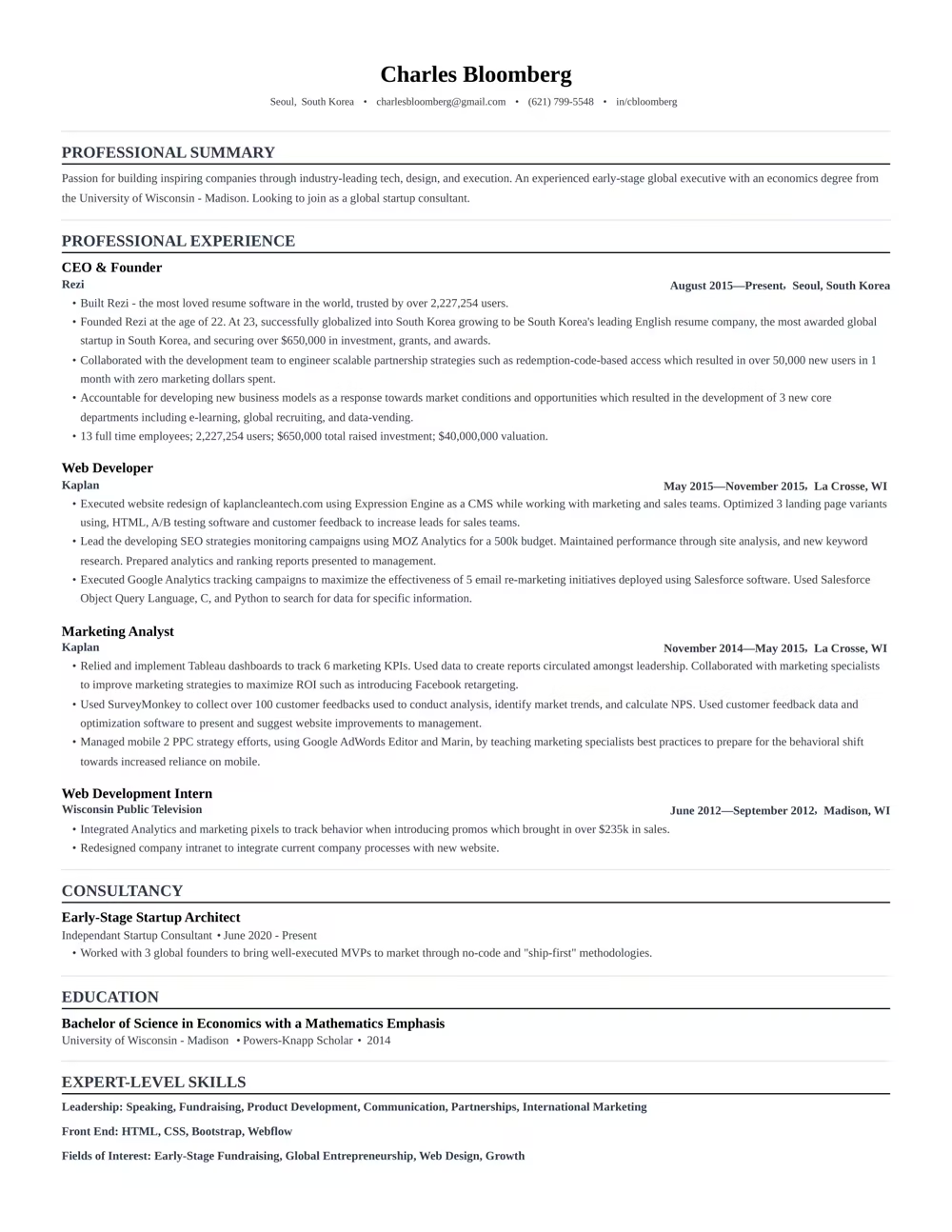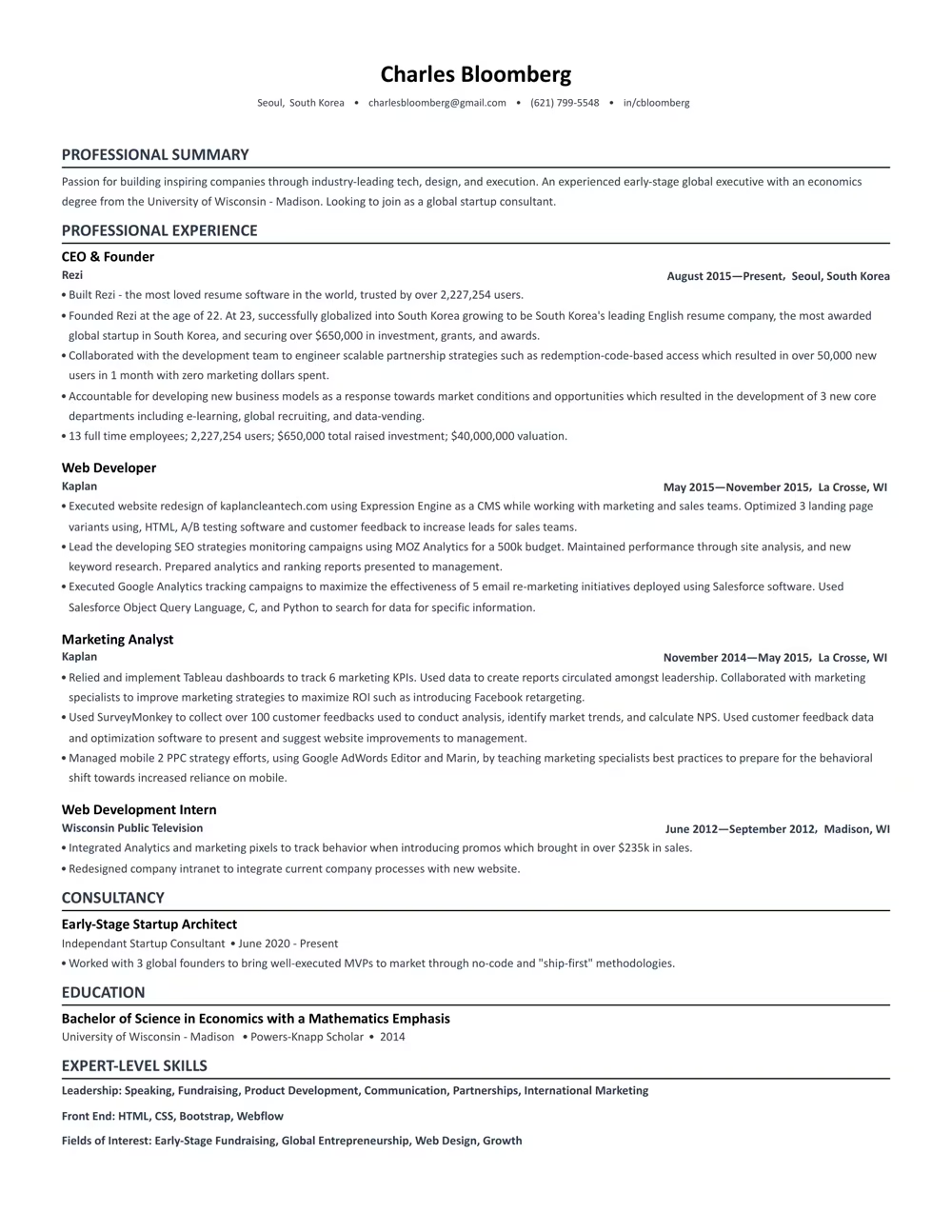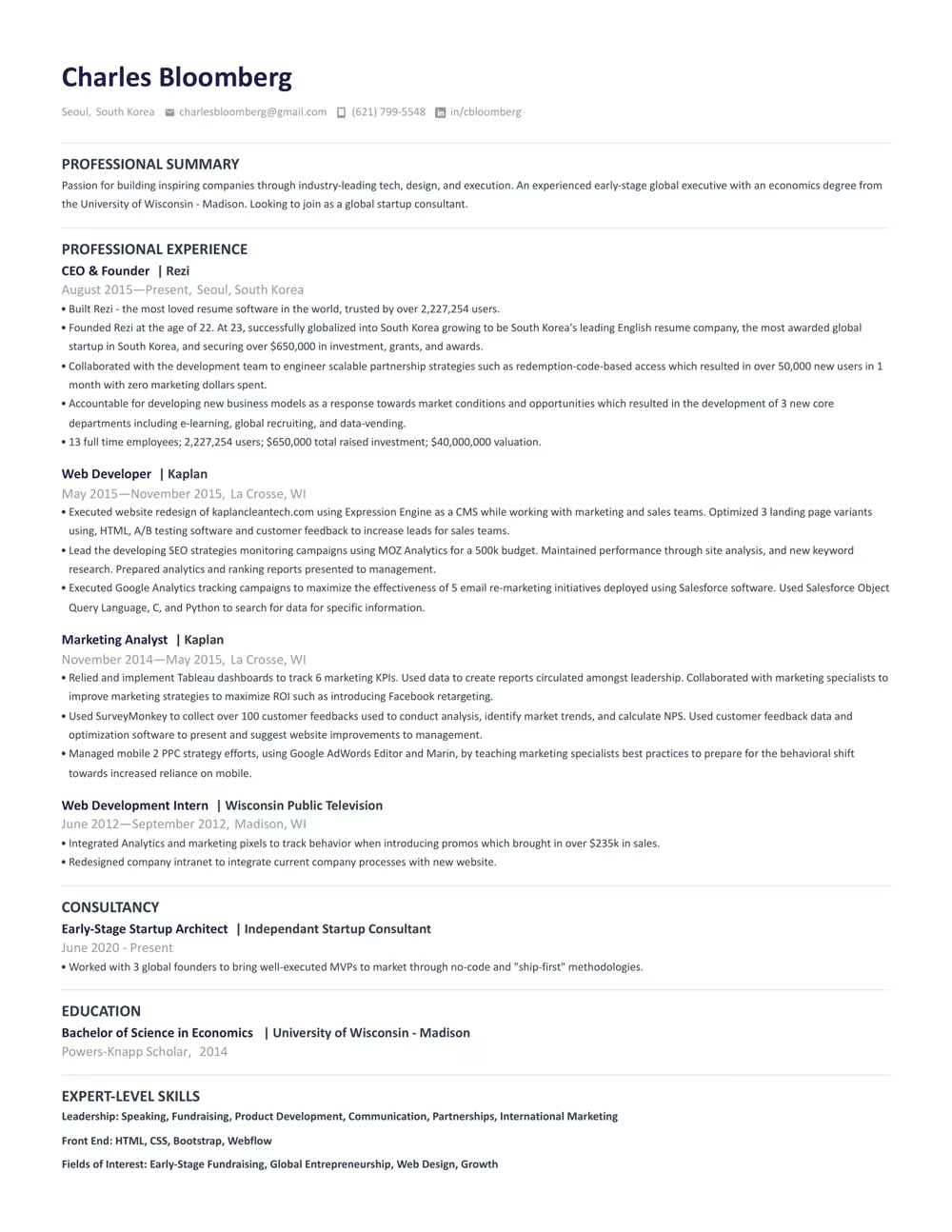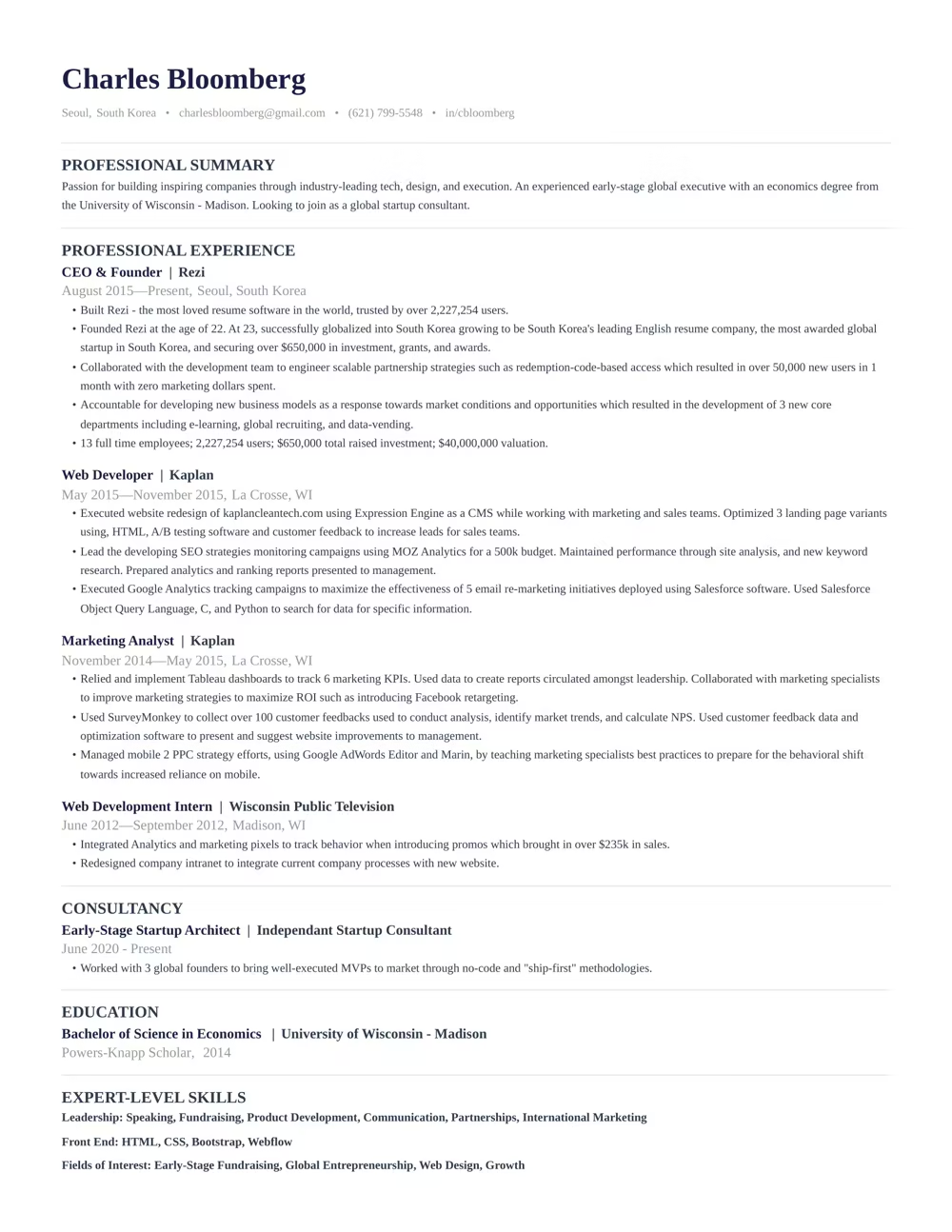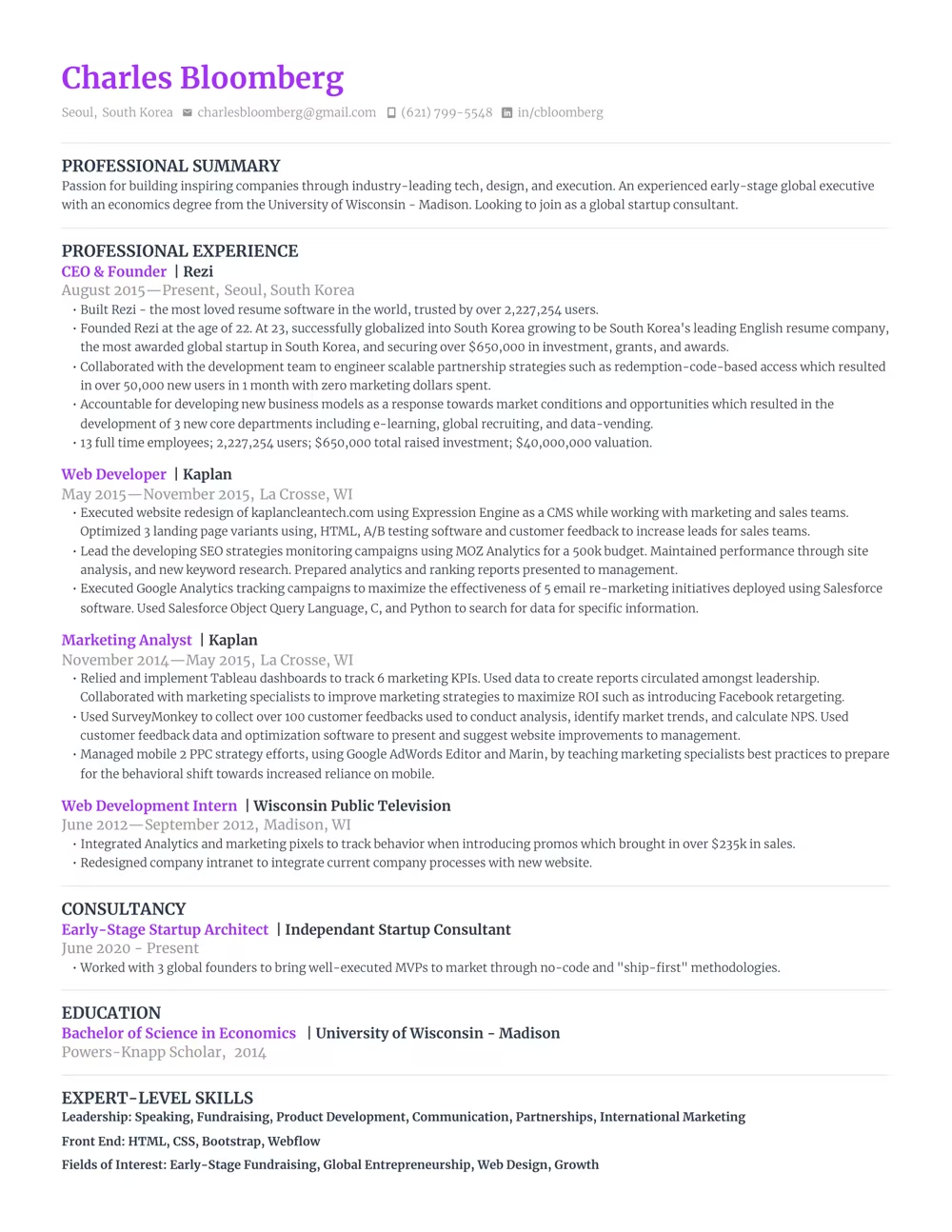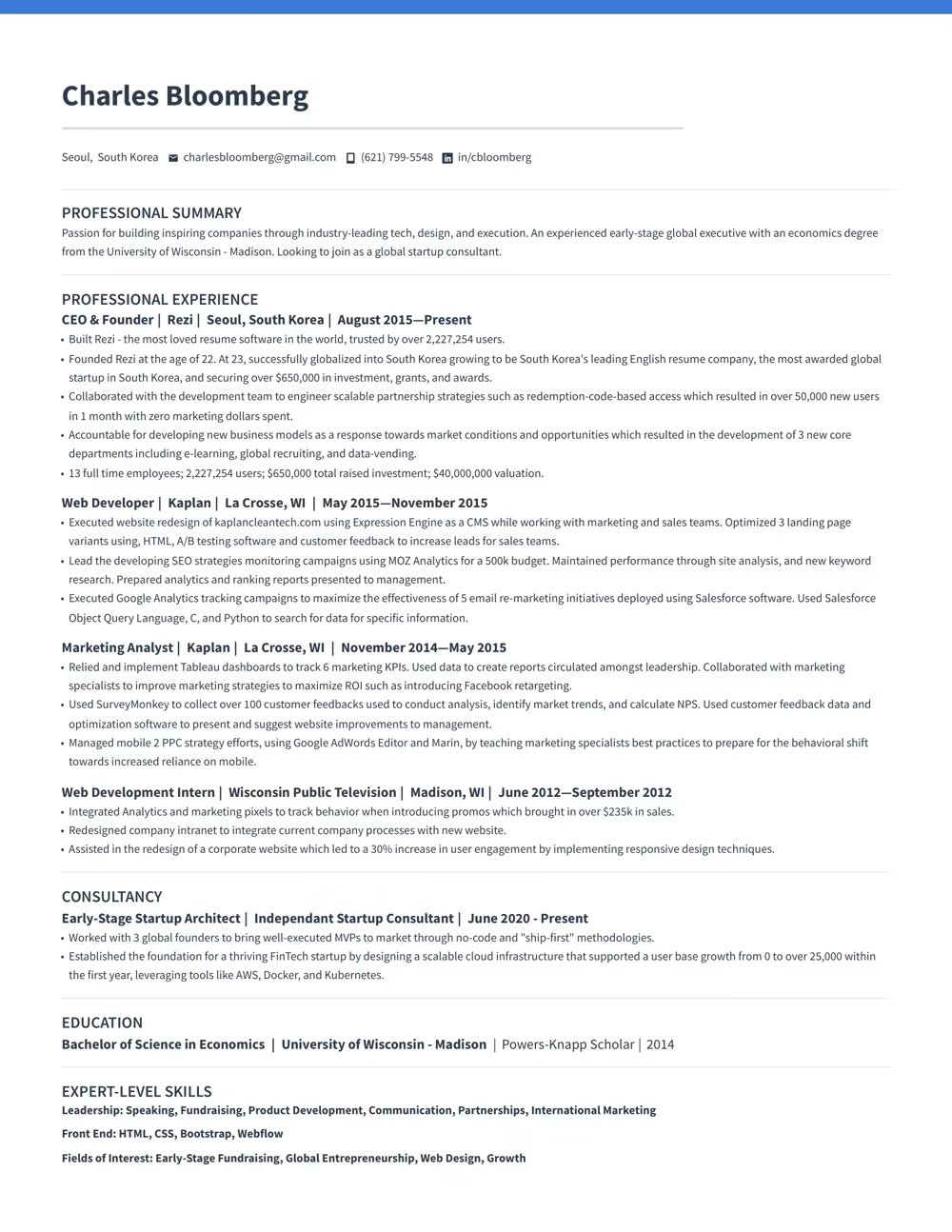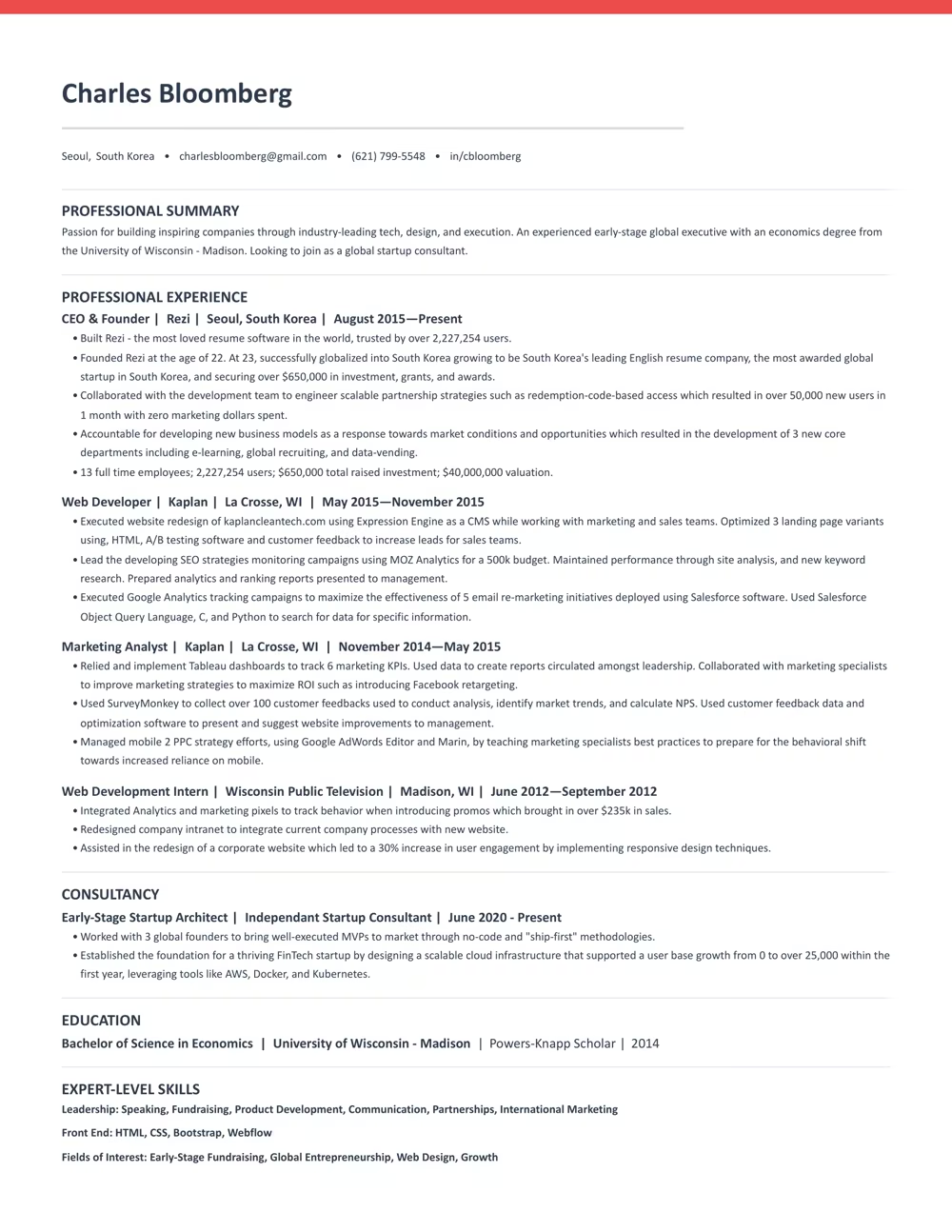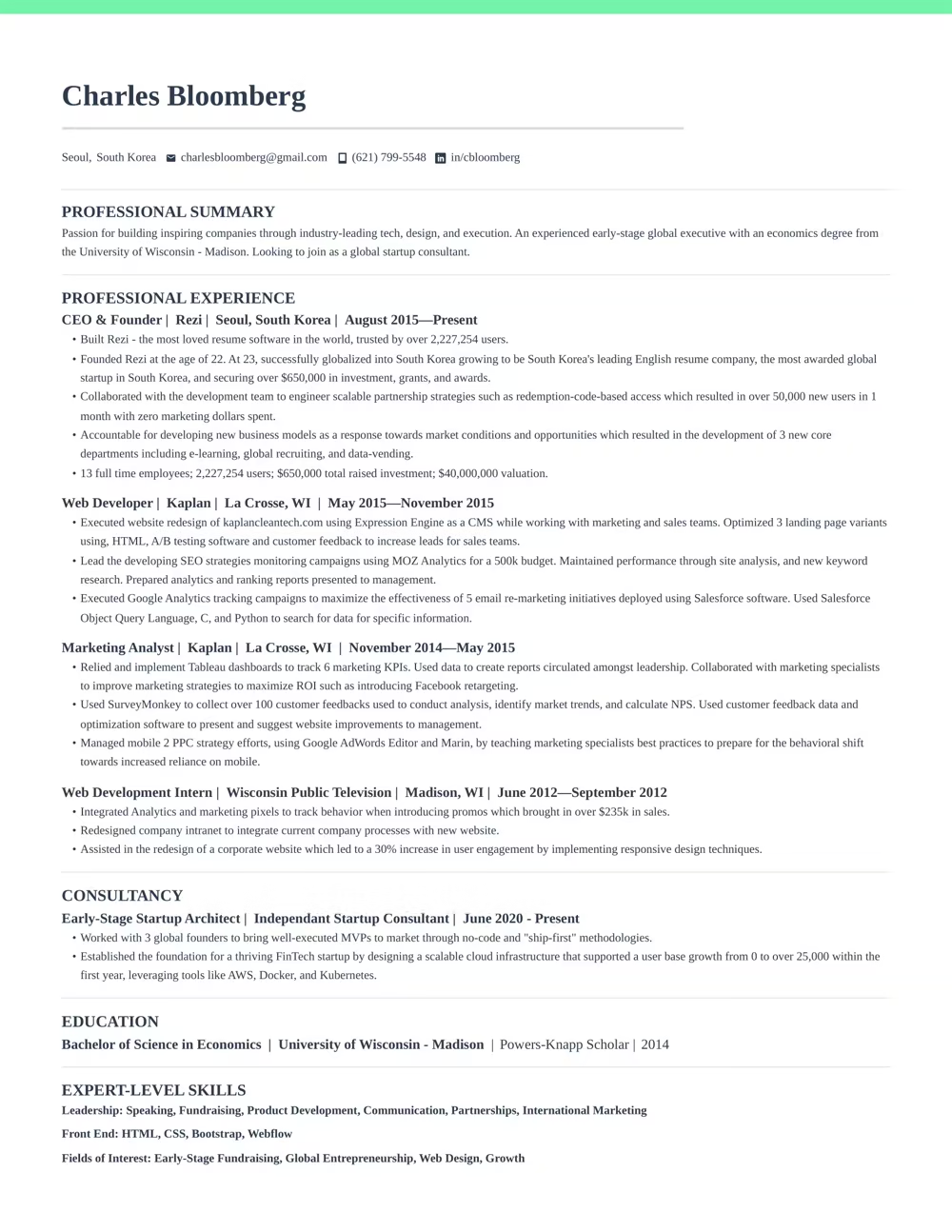

Here's the problem I keep running into when reviewing Senior HR Executive resumes: they read like a laundry list of HR admin tasks. Onboarding, payroll oversight, policy updates — sure, those are part of the job. But they don't tell the story of someone who shapes workforce strategy, drives organizational transformation, and sits at the leadership table influencing business outcomes.
To create a compelling Senior HR Executive resume, you need to demonstrate that you don't just manage HR — you lead it. That means showcasing how you've built talent pipelines, transformed company culture, navigated complex employee relations issues, and aligned people strategy with business goals in ways that produced measurable results.
And this is exactly what you'll learn from this article. Inside, you'll find:
- Examples of 8 Senior HR Executive resumes covering different specializations and title variations.
- Insider tips about what really matters to boards, CEOs, and recruiters hiring for senior HR roles.
- A step-by-step guide for putting together a Senior HR Executive resume that commands attention and lands interviews.
Sample Senior HR Executive Resumes
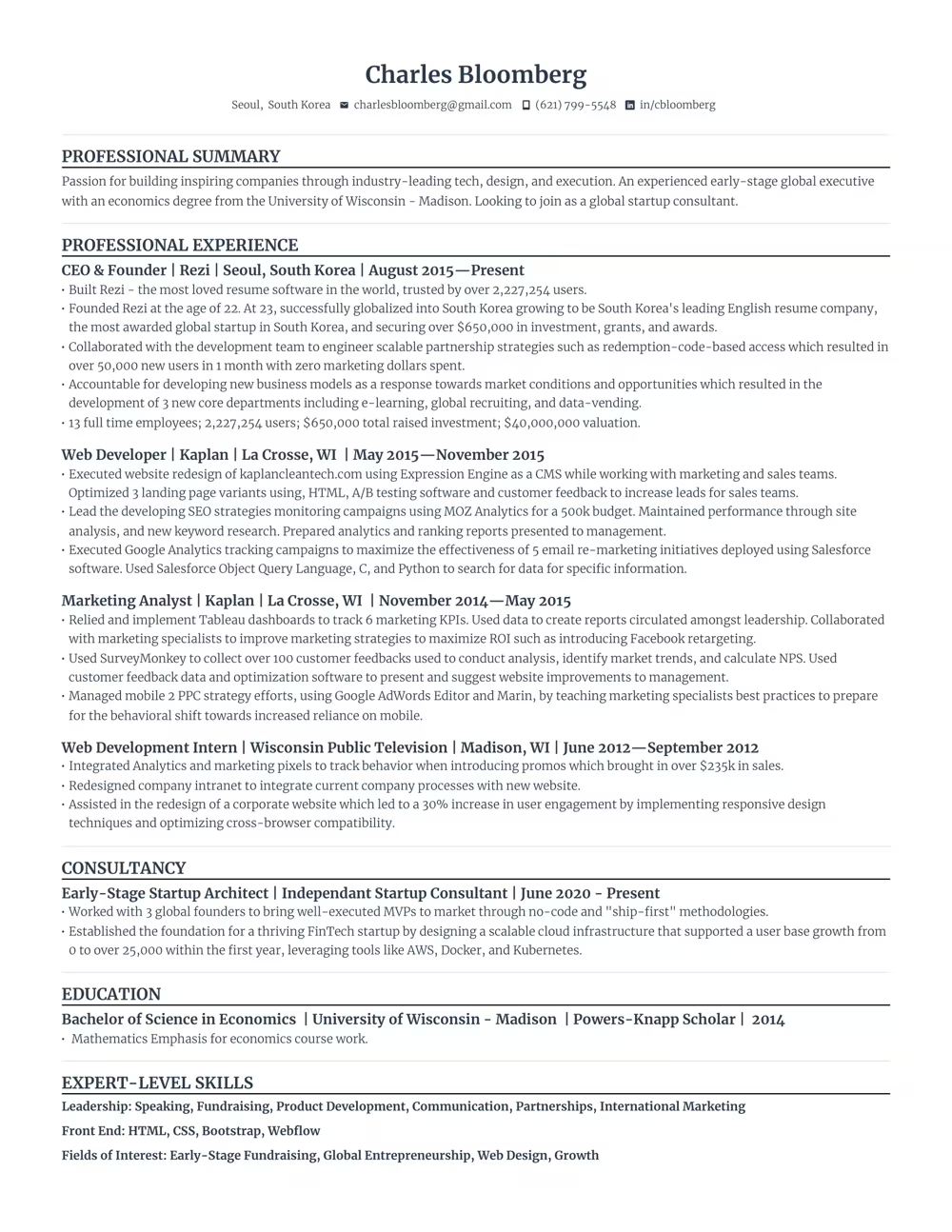
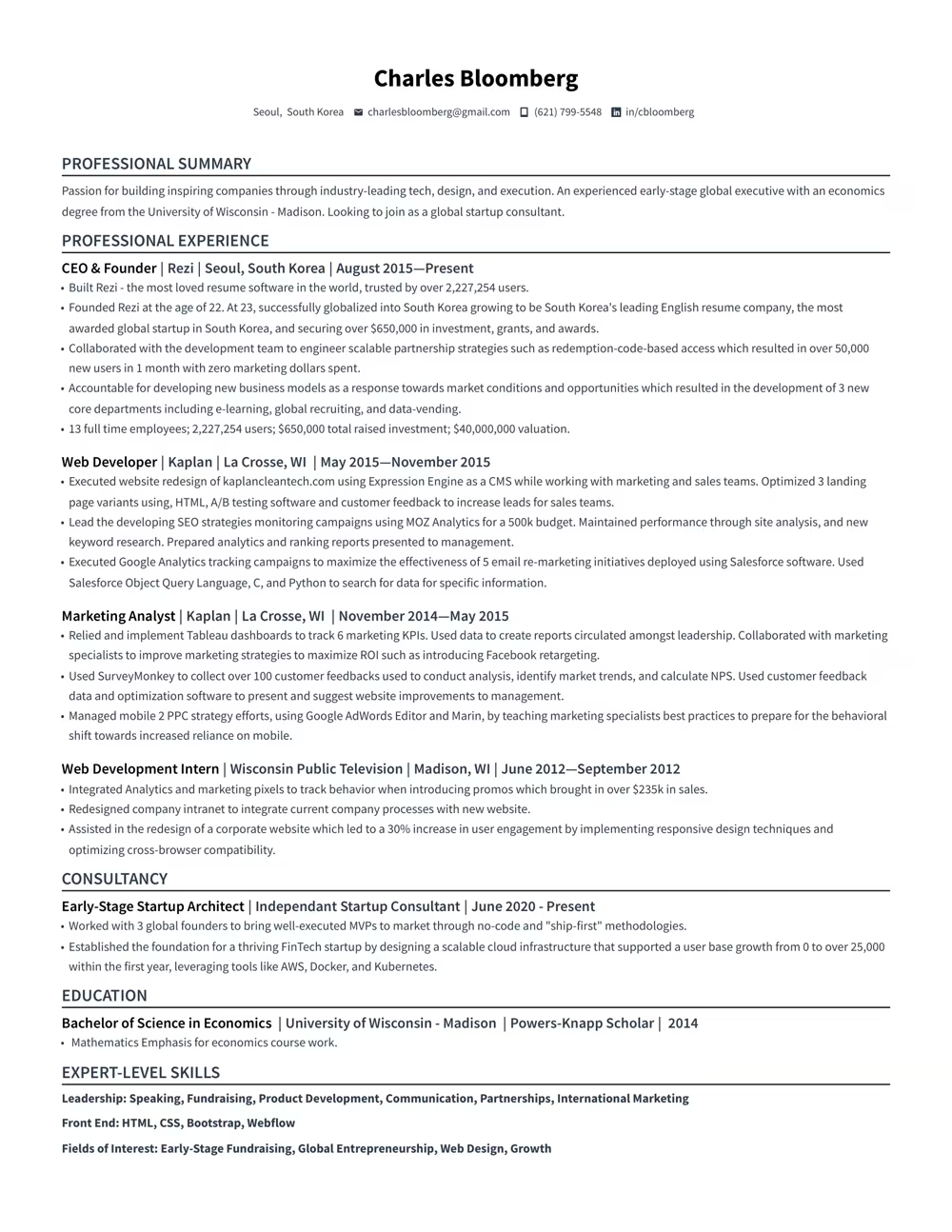
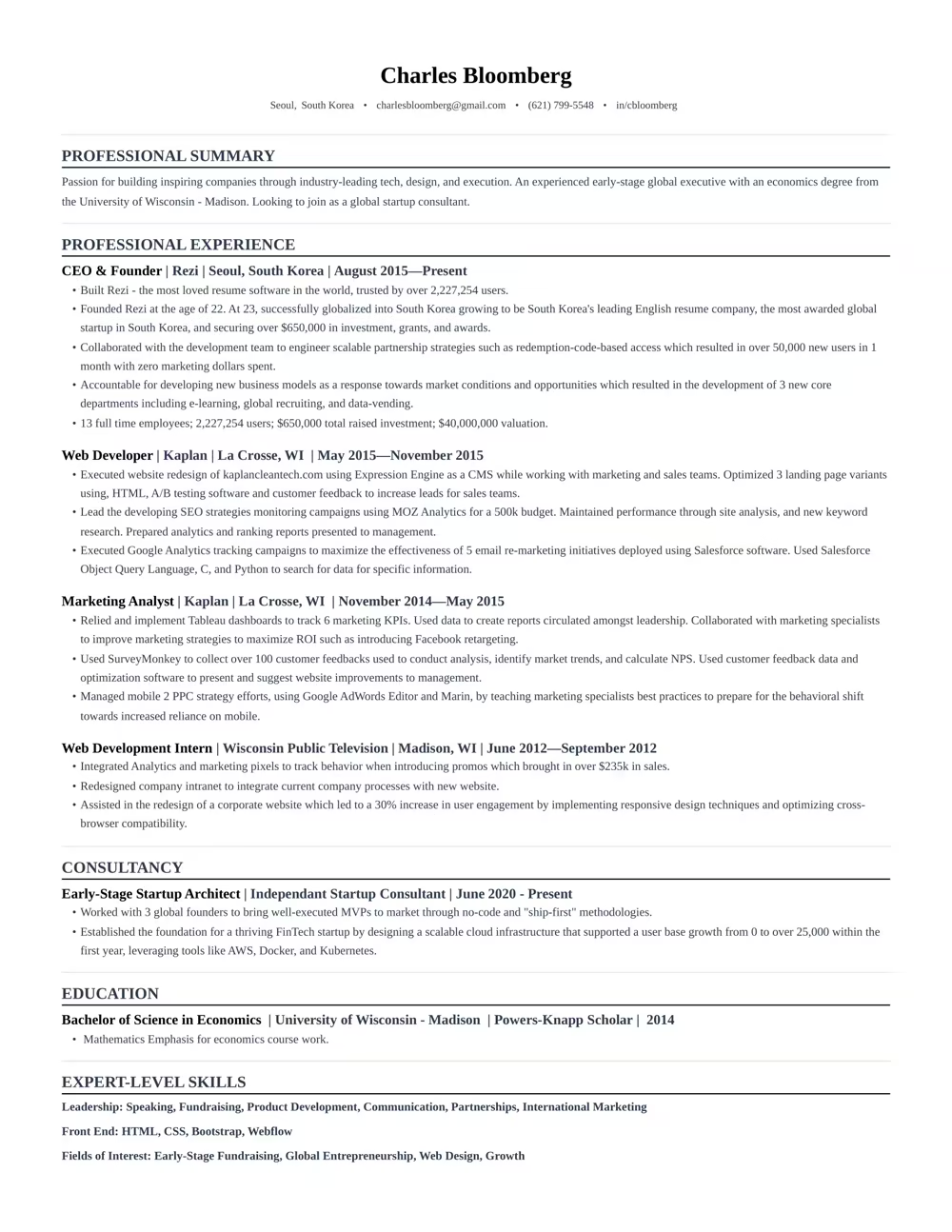
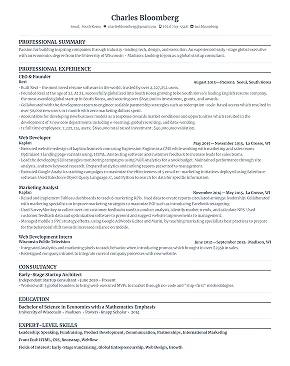
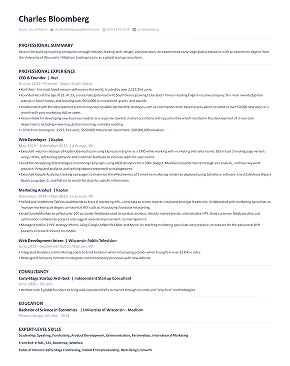
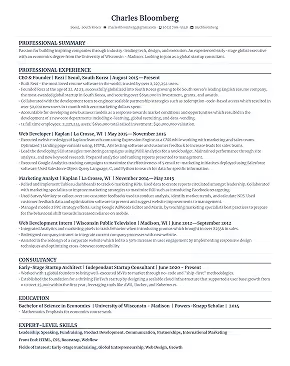
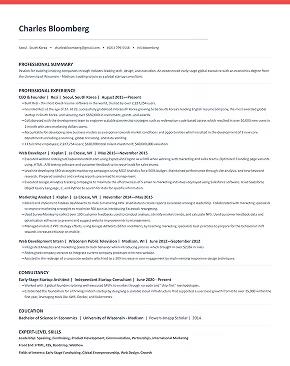
Take a look at some top-notch sample resumes for senior HR executives across different specializations and title variations. Find one that matches your profile and use it as a reference point (or feel free to steal it, just make sure to adjust the wording to reflect your career journey).
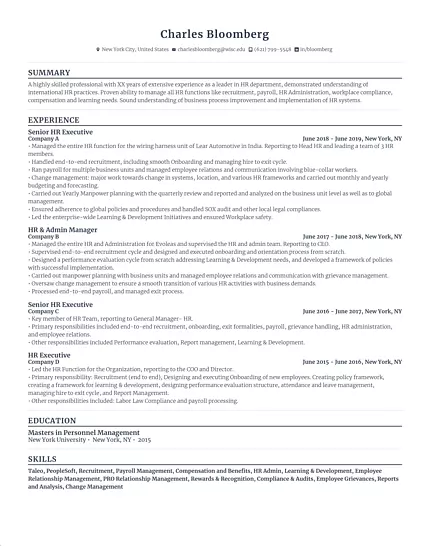
Senior Human Resources Executive
A Senior Human Resources Executive resume should demonstrate broad HR leadership across multiple functions — talent acquisition, compensation, employee relations, and compliance. Emphasize your ability to design and execute HR strategies that align with business objectives. Highlight the scale of organizations you've supported, measurable improvements in retention or engagement, and your experience advising C-suite leadership on workforce planning and organizational design.
HR Director
For an HR Director resume, focus on your track record of building and leading HR departments. Showcase your experience managing HR teams, developing policies, and driving initiatives like DEI programs or employer branding. Quantify results — such as reductions in turnover, improvements in time-to-hire, or cost savings from benefits restructuring. Highlight cross-functional collaboration and your ability to partner with department heads on workforce challenges.
VP of Human Resources
A VP of Human Resources resume should emphasize strategic leadership and enterprise-level impact. Highlight experience overseeing multi-site or global HR operations, M&A integration, executive compensation design, and succession planning. Showcase your role in shaping company culture and your direct partnership with the CEO and board. Include metrics around organizational growth, leadership development programs, and large-scale transformation initiatives you championed.
Senior People Operations Executive
Your Senior People Operations Executive resume should spotlight a data-driven, systems-oriented approach to HR. Emphasize experience with HRIS implementations, people analytics, process automation, and scalable people programs. Highlight how you've used technology and data to improve the employee lifecycle — from onboarding to performance management. Show your ability to build operational infrastructure that supports rapid growth, particularly in tech or startup environments.
Head of HR
A Head of HR resume should showcase end-to-end ownership of the human resources function. Highlight your experience as the most senior HR leader in an organization, managing everything from compliance and labor relations to talent strategy and culture initiatives. Demonstrate your ability to build HR teams from the ground up, implement scalable frameworks, and serve as a trusted advisor to founders or executive leadership on all people matters.
Senior Talent Management Executive
For a Senior Talent Management Executive resume, zero in on talent acquisition strategy, leadership development, performance management, and succession planning. Showcase programs you designed that improved internal mobility, reduced regrettable attrition, or strengthened the leadership bench. Highlight your ability to use workforce analytics to forecast talent needs and your experience managing employer brand and candidate experience at scale.
Senior HR Business Partner
A Senior HR Business Partner resume should demonstrate your ability to serve as a strategic consultant to business units. Emphasize how you've translated business objectives into people strategies — workforce planning, org restructuring, change management, and performance coaching. Highlight specific business outcomes your HR partnership enabled, such as revenue growth supported by talent strategy or productivity gains from restructured teams.
Chief People Officer
A Chief People Officer resume must convey executive-level vision and board-ready leadership. Highlight your experience setting enterprise-wide people strategy, shaping culture during periods of transformation, and driving initiatives around DEI, total rewards, and employee experience. Showcase your influence on business outcomes — IPO readiness, hypergrowth scaling, or post-merger cultural integration. Include board presentations, investor relations involvement, and executive team collaboration.
How to Write a Senior HR Executive Resume
Short answer:
Focus on strategic HR leadership, measurable people outcomes, and your ability to align HR with business goals. Create a professional header with your name and contact details. Right below, write a 2–3 sentence resume summary outlining your most significant accomplishments. Describe your work history in reverse-chronological order, focusing on workforce transformation, talent strategy, and organizational impact. Then, cover your education, including professional certifications, list key skills, and add extra sections such as speaking engagements, publications, or board memberships.
Include all the necessary sections in the correct order
Here's the correct order of sections for most Senior HR Executive resumes:
- Header with contact information
- Resume summary or objective
- Work experience
- Education
- Skills
- Certifications
Depending on your current career situation, you can also throw in some additional sections. For instance:
- Speaking engagements and conference presentations
- Board memberships or advisory roles
- Publications or thought leadership articles
- Professional associations
- Volunteer experience
Include everything that shows you're capable of doing what the job requires. Make every section count. If it doesn't clearly highlight your skills, it doesn't belong on your resume.
At this level, a two-page resume is perfectly acceptable — and often expected. You have the experience to fill two pages with substance. Just make sure every line earns its place.
More details here: What Sections to Include on Your Resume?
Now, I'll give you a high-level overview of how to write each section, going from top to bottom. Well… almost. The only exception is the resume summary section. While it comes right after your contact info, it's actually easier to write it last. More on that in a sec.
Create a professional resume header
- Start with your name and contact information. Include the basics: your full name, phone number, professional email address, location, and LinkedIn profile. At this seniority level, a polished LinkedIn presence is non-negotiable — make sure the link is there and the profile is current.
- Right below your name, clearly state your professional title (e.g., Senior HR Executive or VP of Human Resources). This immediately signals your seniority and focus area.
For more information, see: How to Create a Resume Header
Describe your work history
- Use reverse-chronological order. List your positions starting with the current or the most recent one.
- In each entry, include your job title, company name, location, and dates of employment.
- Below each position, write 3–7 bullet points — the more recent the position, the more bullet points you should include. Describe your responsibilities and, more importantly, your accomplishments.
- Use action verbs and quantify your achievements (e.g., "Redesigned the talent acquisition strategy, reducing time-to-hire by 35% and saving $1.2M annually in recruiting costs across 4 business units").
- If specific HR frameworks or methodologies were central to your roles (e.g., competency-based talent management, Ulrich model, or organizational development approaches), weave these details into your descriptions. This will also help you pass ATS scans.
Learn more about the best practices of this section with our detailed guide on how to describe your work experience on a resume.
List your degrees and detail professional learning
- In the education section, list your highest degree first, including the degree type, major, and institution. MBA or master's degrees in HR, organizational psychology, or business are common at this level and should be prominently featured.
- If you have significant work experience, keep the education section concise — school name, degree, and year. No need for coursework details at this stage of your career.
- If you have HR certifications (e.g., SHRM-SCP, SPHR, GPHR), either include them in an "Education and Certifications" section, or create a separate "Certifications" section and place it right below.
For an in-depth guide on how to describe your education on a resume, see: How to List Education on a Resume
List your most relevant skills in the skills section
- Include a mix of technical HR skills (e.g., HRIS platforms, compensation modeling, people analytics) and strategic competencies (e.g., organizational design, change management) that you are proficient in.
- Add in key soft skills such as executive presence, stakeholder influence, and coaching. These demonstrate your capacity to lead at the highest level and navigate complex organizational dynamics.
- You can use two separate subsections — one for hard skills, one for soft skills — or just list all the skills under one heading.
- Match your skills to the description of the job you're applying for. I'm not saying you should just dump all the skills the role requires (especially if you don't really have them), but highlight those areas of expertise where your knowledge overlaps with the job ad.
Need some inspiration to get started? Here are some good skills to feature on your Senior HR Executive resume.
HR technology and tools:
- Workday
- SAP SuccessFactors
- Oracle HCM Cloud
- ADP Workforce Now
- BambooHR
- Greenhouse / Lever (ATS)
- Tableau / Power BI (people analytics)
- Microsoft Excel (advanced)
- Cornerstone OnDemand
- ServiceNow HR
HR domains and frameworks:
- Organizational Design & Development
- Total Rewards & Compensation Strategy
- Talent Acquisition Strategy
- Succession Planning
- Change Management
- Labor & Employment Law Compliance
- Diversity, Equity & Inclusion (DEI)
- Workforce Planning & Analytics
- Performance Management Systems
- Employee Relations & Investigations
Key soft skills for Senior HR Executives:
- Executive Presence
- Strategic Thinking
- Stakeholder Influence
- Coaching & Mentoring
- Cross-Functional Collaboration
- Conflict Resolution
- Negotiation
- Communication
- Emotional Intelligence
- Decision-Making Under Ambiguity
For a full-blown guide on listing skills on a resume, visit: How to Put Skills on a Resume
Use additional sections as further proof of your fit
Additional sections add depth to your resume and back up your claimed expertise. Good examples of extra sections to add to a Senior HR Executive resume are:
- Professional associations. Membership in organizations like SHRM or the HR People + Strategy executive network signals credibility and commitment to the profession.
- Speaking engagements. If you've presented at HR conferences, industry panels, or webinars, list them. It positions you as a thought leader — and that matters at this level.
- Publications. If you've authored articles on HR strategy, organizational culture, or talent management, a dedicated section can significantly strengthen your profile.
- Board or advisory roles. Serving on nonprofit boards, HR advisory councils, or industry committees demonstrates leadership beyond your day job and broadens your strategic credibility.
Highlight the most relevant information in a resume summary
Once you're done writing your Senior HR Executive resume, give it a full read. Pick the most relevant information and compile it into a summary paragraph. Place it right under the resume header.
- Be brief and to-the-point. In 3–4 sentences, sum up your career highlights, core competencies, and what you bring to the table. Consider this your chance to answer, "Why should you hire me?" Tailor this section to match the employer's needs outlined in the job description.
- Use value-oriented language. Focus on how you can add value to the potential employer, mentioning specific outcomes you hope to deliver or achievements you've driven in the past — such as building HR functions from scratch, leading culture transformation, or supporting hypergrowth.
Once you've completed the core sections of your resume, you can use Rezi AI Resume Summary Generator to automatically create a powerful summary, tailored to the job you're applying for. All you need to do is add the position and skills you want to highlight. The AI writer will do the rest.
More information here: How to Write a Job-Winning Resume Summary (with Examples)
For finishing touches, make sure your resume looks professional
- Use a clean and tidy resume format. Ensure your Senior HR Executive resume is easily readable, with a professional font, consistent formatting, and clear section headings. Avoid overloading it with dense text or fancy design elements that could distract from the content and confuse resume screening software.
- Aim for a balance between detail and conciseness. At the senior executive level, two pages is standard and expected. But make sure every word conveys value — no filler, no fluff.
Learn more about proper resume formatting here: How to Format a Resume & What Standard Resume Format to Use
What Makes Senior HR Executive Resumes Different
In short: the emphasis on strategic business partnership and organizational impact — not just HR administration.
This is also what many senior HR professionals get wrong on their resumes. Hiring decision-makers — often CEOs, board members, or search firms — won't be impressed with lists of policies you wrote or systems you maintained. They need to see how you shaped the workforce strategy and directly influenced business outcomes. That's how they'll determine whether you can do the same for them.
Focus on strategic business impact, not HR operations
At the senior level, you're expected to be a business leader who happens to specialize in people — not an HR administrator with a bigger title. Your resume needs to reflect that distinction clearly.
What it means for you:
- Frame your accomplishments in terms of business outcomes. Instead of "Managed the performance review process," write "Redesigned the performance management framework, contributing to a 22% improvement in high-performer retention and enabling the company to hit $50M revenue targets." Always connect HR work to business results.
- Demonstrate that you understand the business side — mention revenue, growth stages, M&A activity, market challenges, or competitive dynamics. The more your resume reads like a business leader's, the more credible you'll be for executive HR roles.
Focus on culture and transformation leadership
Senior HR executives are often hired specifically to drive change — whether that's a culture overhaul, a post-merger integration, a shift to remote work, or a DEI transformation. This is a differentiator that rarely applies to other roles.
What it means for you:
- Highlight specific transformation initiatives you led. Describe the "before" state, what you did, and the measurable "after." For example: "Led cultural integration following the acquisition of a 500-person company, achieving 92% employee retention through the first year post-merger."
- If you've improved engagement scores, reshaped employer brand, or rebuilt trust during a crisis — these stories belong front and center on your resume.
Focus on the scale and complexity of your HR leadership
Hiring decision-makers want to know if you've operated at a comparable scale to their organization. This context is critical and unique to leadership resumes.
What this means for you:
- Quantify the scope of your responsibilities: number of employees supported, number of countries or locations, size of HR teams managed, and total HR budget overseen.
- Highlight the complexity of your environments — multi-state compliance, unionized workforces, global mobility, matrixed organizations — so decision-makers can quickly assess your fit for their specific challenges.
Focus on executive relationships and board-level presence
Unlike mid-level HR roles, senior HR executives are expected to influence at the top. Your resume should make this obvious.
What this means for you:
- Mention your experience presenting to boards, advising CEOs, or partnering with C-suite leaders on workforce strategy. This signals that you operate at the executive level, not just within the HR department.
- If you've been involved in executive compensation design, leadership succession planning, or organizational restructuring at the enterprise level, these are powerful proof points of your seniority and influence.
Focus on career progression and expanding scope
Your career trajectory itself is a selling point at this level. Decision-makers want to see a clear upward arc that reflects increasing trust and responsibility.
What this means for you:
- Show how you progressed from HR generalist or manager roles into strategic leadership — and how each step prepared you for greater impact.
- The easiest way to communicate this is by demonstrating how the scale, complexity, and strategic nature of your work expanded over time. Promotions within the same company are particularly compelling.
Bonus Resources for Senior HR Executives
This isn't going to be a game-changer if you need a resume now. But —
I want you to treat your career holistically. These resources will help you sharpen your HR leadership skills, add substance to your future resumes, and keep you current with the rapidly evolving people and workplace landscape.
Professional associations and networks
Society for Human Resource Management (SHRM)
The largest HR professional organization in the world. SHRM offers certifications (SHRM-CP, SHRM-SCP), research, advocacy, and a massive network of HR professionals. Essential for staying current on compliance, trends, and best practices.
HR People + Strategy (SHRM Executive Network)
A SHRM affiliate focused specifically on senior HR executives and CHROs. Provides executive-level research, events, and peer networking that's relevant to strategic people leadership — not just day-to-day HR management.
HR Certification Institute (HRCI)
Offers globally recognized certifications including PHR, SPHR, and GPHR. Maintaining these credentials demonstrates ongoing commitment to professional development and can be a differentiator on your resume.
Online learning platforms
Coursera & edX
Both platforms offer courses on HR strategy, organizational behavior, people analytics, and leadership from top universities like Michigan, Wharton, and MIT. Great for adding structured learning to your development plan.
LinkedIn Learning
With a focus on professional development, LinkedIn Learning provides courses on HR technology, DEI strategy, executive coaching, and change management — all relevant to senior HR professionals looking to sharpen specific competencies.
Academy to Innovate HR (AIHR)
A specialized platform focused entirely on HR upskilling. AIHR offers programs in people analytics, HR business partnering, organizational development, and digital HR — ideal for executives who want to stay ahead of the curve on data-driven people strategy.
Publications
Harvard Business Review (HBR)
HBR regularly publishes research and thought leadership on talent management, organizational culture, leadership, and the future of work. Essential reading for any HR executive who wants to think — and speak — like a business leader.
Personnel Today
A leading HR publication covering employment law, talent management, employee engagement, and workplace trends. Particularly useful for those operating in the UK and European markets.
TLNT
A blog and resource hub focused on talent management and HR leadership. Offers practical insights, opinion pieces, and case studies from senior HR practitioners and thought leaders.
Tools and software reviews
Capterra & G2
Both websites provide extensive reviews and comparisons of HR software — from HRIS and ATS platforms to performance management and engagement tools. Helpful for evaluating technology you may mention on your resume or implement in your next role.
Josh Bersin
Josh Bersin is one of the most influential analysts in HR technology and talent strategy. His research, podcasts, and articles provide deep insights into the tools, trends, and frameworks shaping the future of HR at the enterprise level.
Summary
Here's what you need to know about writing a Senior HR Executive resume:
- Structure your resume with essential sections in this order: Header, Resume Summary or Objective, Work Experience, Education, Skills, and Certifications. If relevant, add extra sections like Speaking Engagements, Publications, or Board Memberships.
- Include a professional header with your name, contact information, and professional title (e.g., Senior HR Executive, VP of Human Resources).
- Describe your work history in reverse-chronological order, emphasizing strategic initiatives and achievements with quantifiable business outcomes.
- In the education section, list your highest degree at the top. Feature HR certifications like SHRM-SCP or SPHR either in the education section or under a separate heading.
- Highlight a mix of HR technology skills, strategic HR domains, and executive-level soft skills, tailoring them to the job description.
- Use additional sections to further showcase your thought leadership, professional engagement, and commitment to the field.
- Once done writing the resume, compile the key information into a brief, value-oriented resume summary at the top.
- Keep the resume professional in appearance — two pages is standard at this level, but make sure every line delivers value.
- Frame everything around strategic business impact, not just HR administration. You're a business leader who specializes in people — let your resume reflect that.
Thanks for reading! Got any questions? Feel free to reach out to me on LinkedIn. (Or check out the FAQs first, maybe your question is answered there.)
FAQ
What keywords should I use on my Senior HR Executive resume?
Use specific HR terminologies and platform names relevant to your experience, such as organizational development, workforce planning, total rewards, talent acquisition strategy, Workday, SuccessFactors, and people analytics. Highlight certifications like SHRM-SCP, SPHR, or GPHR if you hold them. Also include strategic terms like change management, M&A integration, DEI strategy, and executive coaching — these signal seniority and pass ATS filters effectively.
How should I tailor my Senior HR Executive resume to each job description?
Identify the key priorities in the job description — whether it's scaling a workforce, driving culture change, or building HR infrastructure — and lead with your most relevant accomplishments in those areas. Mirror the language used in the posting when describing your skills and achievements, but always back claims with specific metrics and examples from your career.
What's the most common mistake on Senior HR Executive resumes?
Writing it like a mid-level HR manager's resume. At this level, listing tasks like "oversaw benefits administration" or "conducted employee investigations" without strategic context sells you short. Every bullet point should connect to a business outcome — revenue, growth, retention, cost savings, or organizational transformation. If a bullet doesn't demonstrate leadership and impact, rewrite it or remove it.
Should I include HR metrics and data on my resume?
Absolutely — this is one of the most powerful things you can do. Include metrics like employee engagement score improvements, turnover reduction percentages, time-to-fill reductions, cost-per-hire figures, headcount growth managed, and retention rates. Data tells the story of your impact far more convincingly than adjectives like "results-oriented" ever could.
How should I handle a resume if I've spent most of my career at one company?
This is more common than you'd think for senior HR professionals, and it's not a liability. Break your tenure into separate entries for each role you held, showing clear progression. Emphasize how the scope and strategic nature of your work expanded over time. Highlight different business contexts within the same company — new markets entered, acquisitions, restructurings — to demonstrate breadth of experience.
I'm transitioning from a CHRO role at a small company to a VP of HR role at a large enterprise. How do I position myself?
Focus on transferable leadership competencies and the complexity of challenges you've handled, rather than company size alone. Emphasize building HR functions from scratch, strategic planning, executive advising, and cross-functional leadership. Highlight any experience with rapid growth, multi-location operations, or complex compliance environments. Acknowledge the scale difference implicitly by quantifying everything — headcount, budget, geographic scope — so the reader can judge your fit on substance.
Should I list every HR certification I've earned?
List the certifications that are most recognized and relevant to your target role. SHRM-SCP, SPHR, and GPHR carry the most weight for senior positions. If you have additional certifications in niche areas like executive coaching (ICF), organizational development, or HR analytics, include them if they align with the role. Skip outdated or entry-level certifications that might dilute your senior positioning.
Is it worth including volunteer or nonprofit HR work on a Senior HR Executive resume?
Yes, especially if it demonstrates leadership beyond your corporate role. Serving as an HR advisor to a nonprofit board, mentoring emerging HR leaders, or leading pro-bono DEI initiatives shows breadth of commitment and community impact. At the senior level, these experiences can differentiate you from other candidates and signal the kind of values-driven leadership that many organizations actively seek.