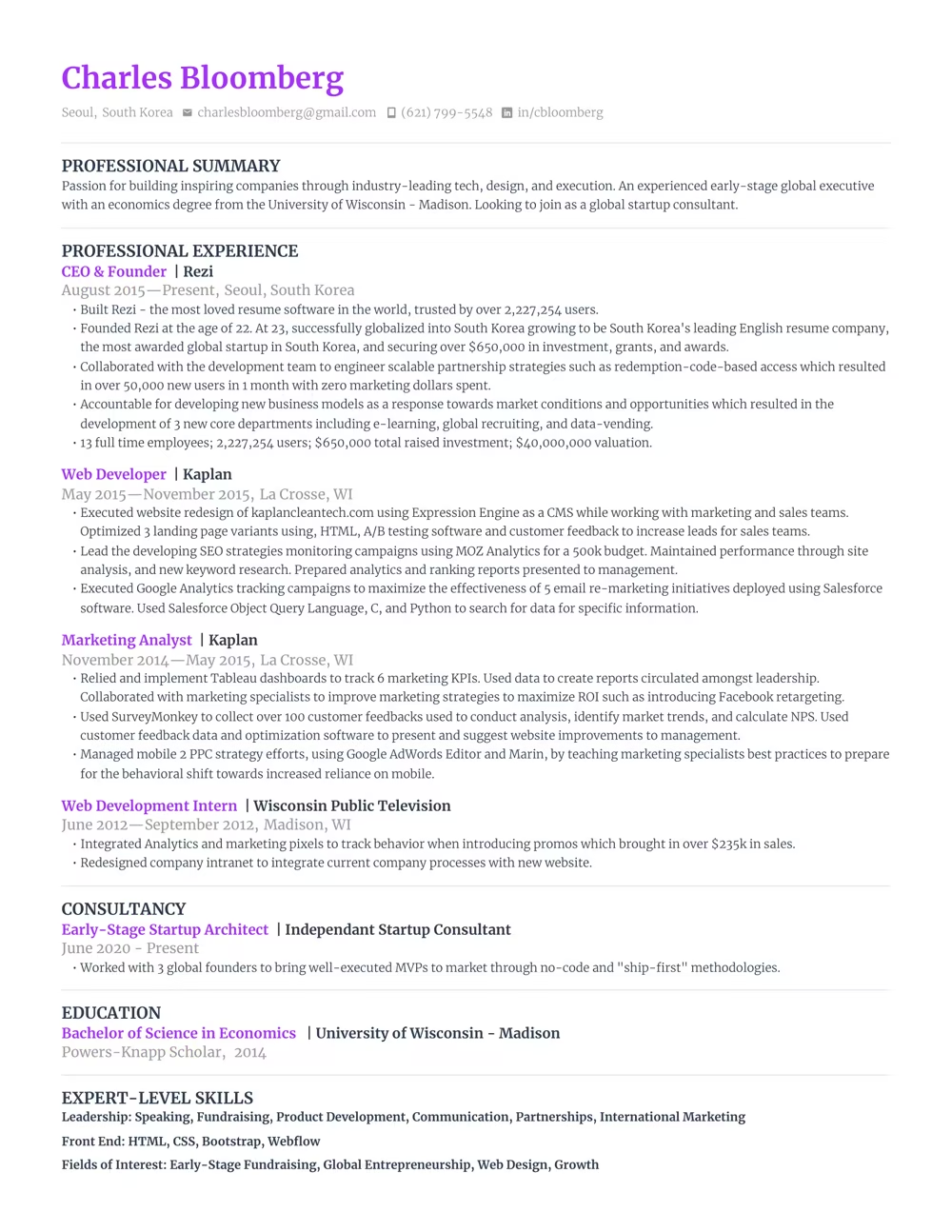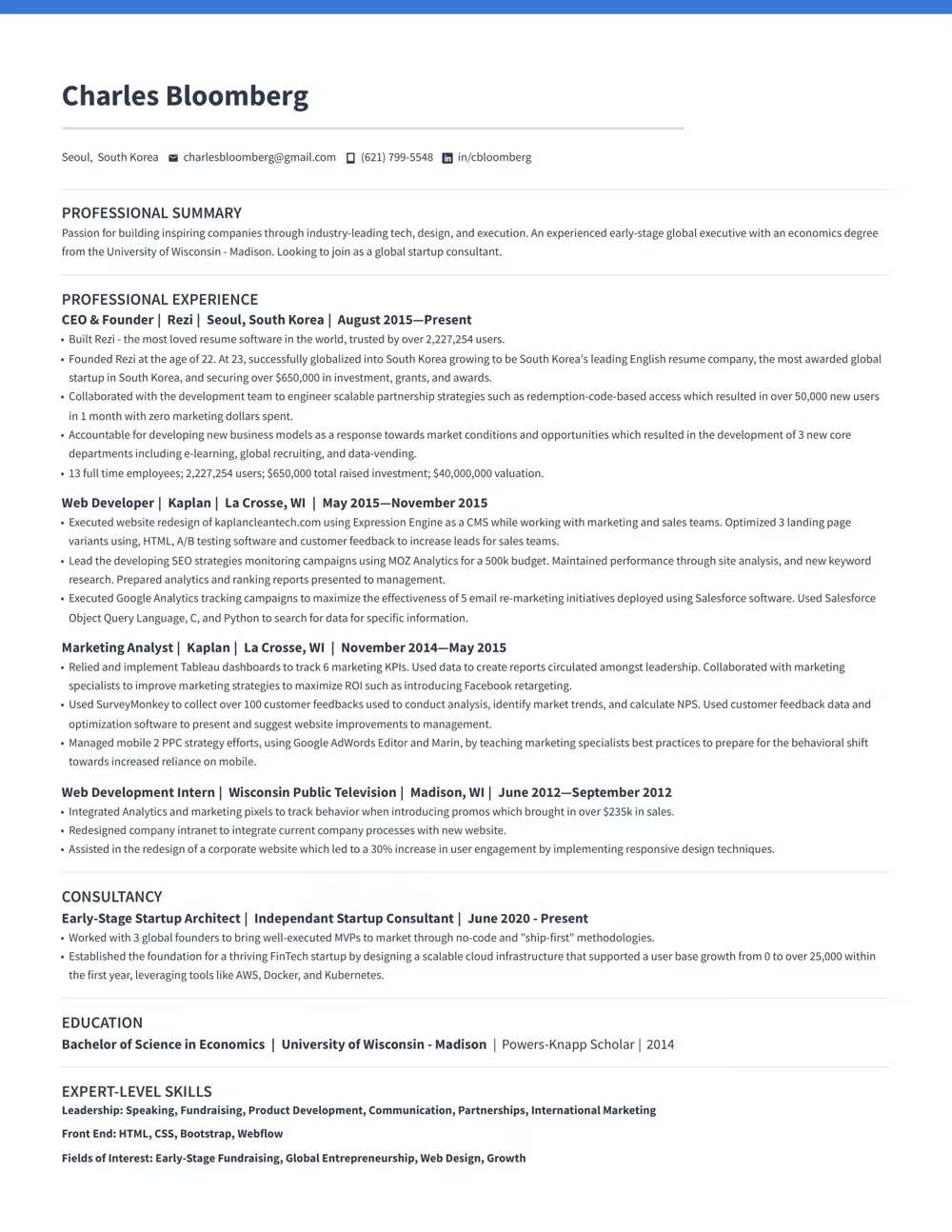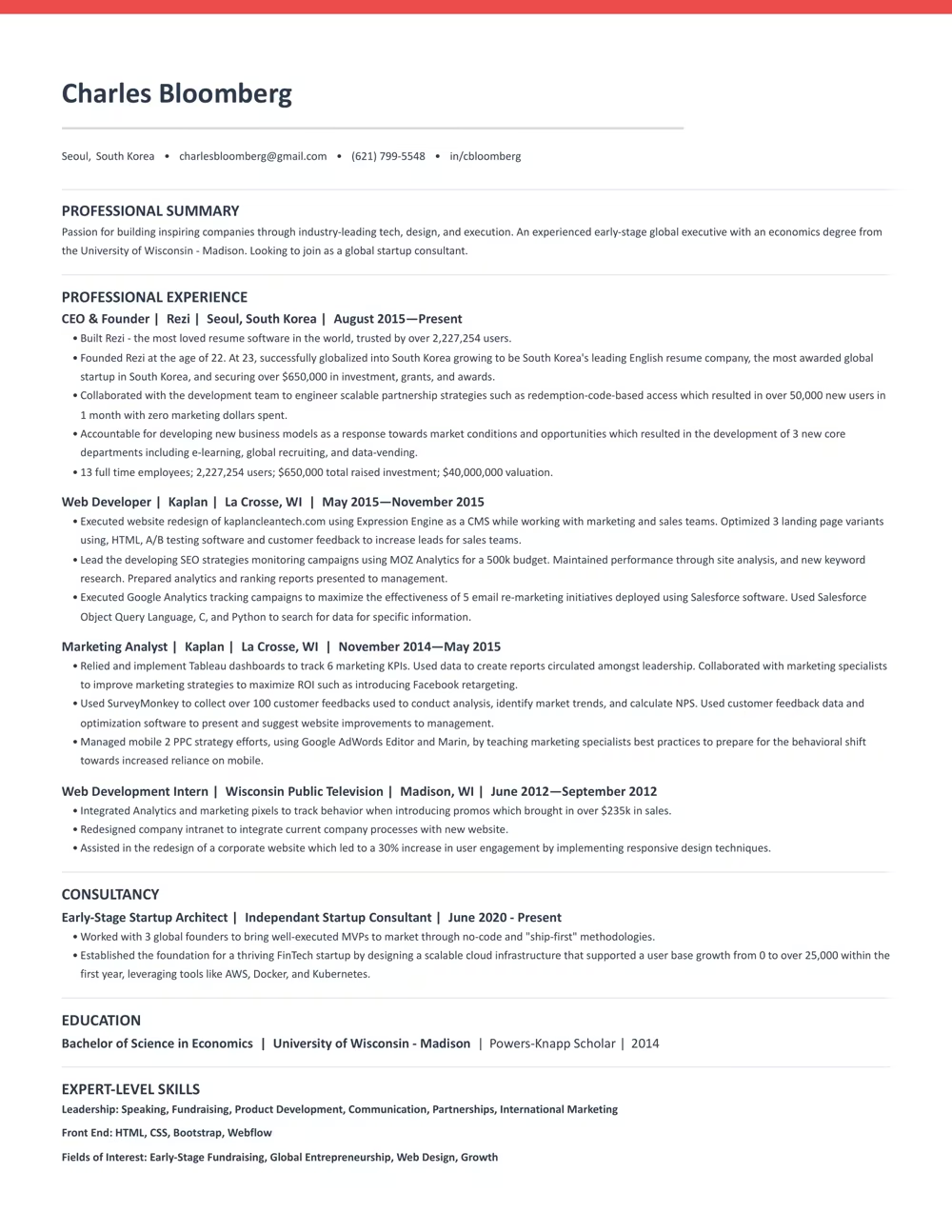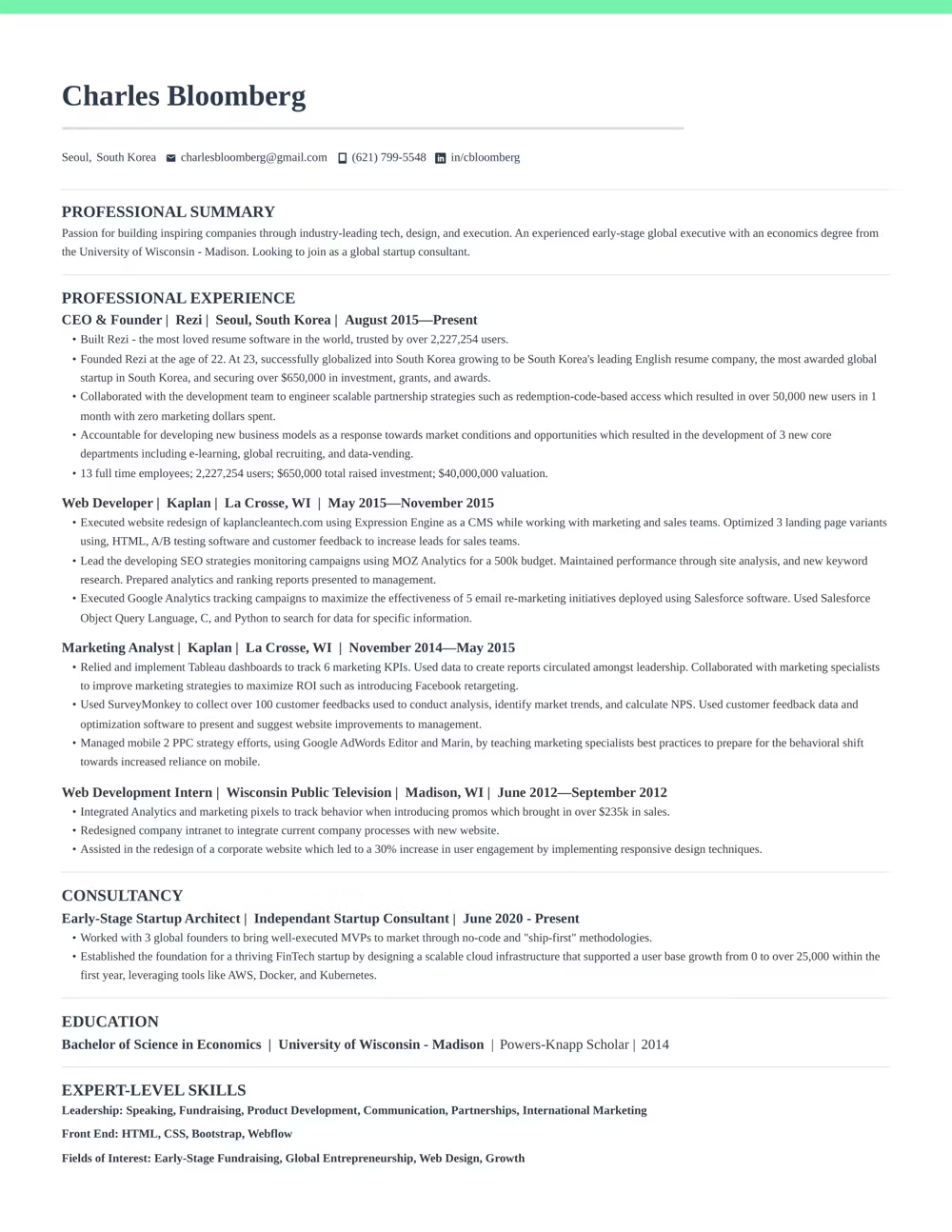

Here's the thing that keeps coming up when I review infrastructure engineer resumes: they read like a laundry list of technologies. A wall of acronyms — AWS, GCP, Kubernetes, Terraform, Ansible — with zero context about what you actually built, why it mattered, or how it performed under pressure.
A strong Senior Infrastructure Engineer resume doesn't just prove you know the tools. It tells the story of the systems you designed, the reliability improvements you drove, the outages you prevented, and the scale you enabled. Hiring managers want to see that you can own complex infrastructure end to end — not just configure it.
And this is exactly what you'll learn from this article. Inside, you'll find:
- Examples of 8 Senior Infrastructure Engineer resumes, covering different specializations and focus areas.
- Insider tips on what hiring managers and engineering leads actually look for in infrastructure resumes.
- A step-by-step guide for building an infrastructure engineering resume that gets you past the screening and into technical interviews.
Sample Senior Infrastructure Engineer Resumes
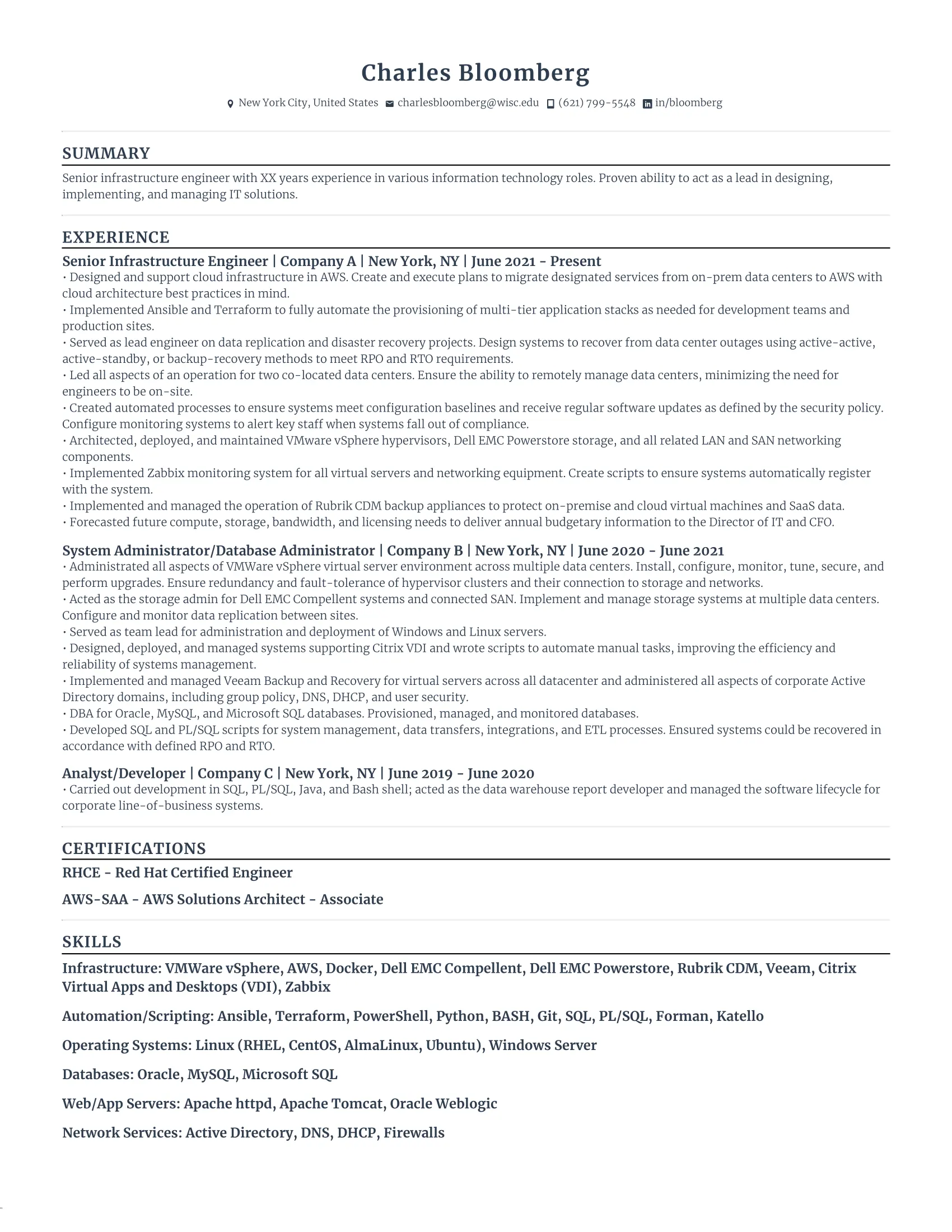
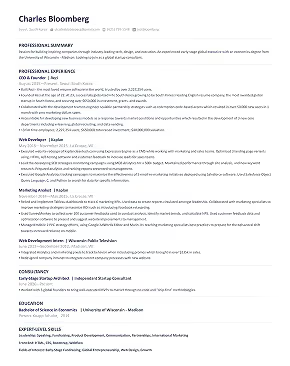
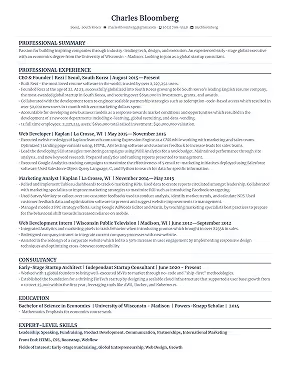
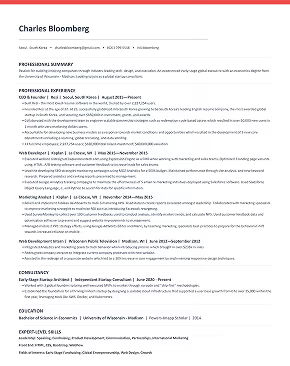
Take a look at some strong sample resumes for senior infrastructure engineers across different specializations. Find the one closest to your profile and use it as a starting point — just make sure to adjust the details to reflect your own experience and accomplishments.
Senior Cloud Infrastructure Engineer
Your resume should lead with deep expertise in cloud platforms like AWS, Azure, or GCP. Highlight cloud architecture decisions you've made, migrations you've led, and cost optimizations you've delivered. Show that you understand multi-region deployments, cloud networking, and identity management. Quantify your impact — reduced cloud spend by X%, improved deployment frequency, or achieved specific uptime SLAs. Include IaC tools like Terraform or CloudFormation prominently.
Senior IT Infrastructure Engineer
Focus on your breadth across traditional and modern IT environments — data centers, enterprise networking, virtualization, storage, and hybrid cloud. Emphasize your role in maintaining business-critical systems and driving infrastructure modernization initiatives. Highlight vendor management, capacity planning, and disaster recovery experience. Show that you bridge legacy systems and modern tooling effectively, and quantify uptime, incident reduction, or cost savings you've achieved.
Senior Network Infrastructure Engineer
Your resume should showcase expertise in designing, implementing, and troubleshooting complex network architectures. Highlight experience with routing protocols (BGP, OSPF), firewalls, load balancers, VPNs, and SD-WAN. Demonstrate your ability to plan and execute network migrations or expansions without downtime. Include metrics like latency reductions, throughput improvements, or network availability percentages. Certifications like CCNP or CCIE carry significant weight here.
Senior Systems Infrastructure Engineer
Emphasize your mastery of operating systems (Linux, Windows Server), virtualization platforms, and configuration management. Highlight large-scale server fleet management, automation of provisioning and patching workflows, and performance tuning. Show how you've improved system reliability and reduced manual toil. Include experience with monitoring and observability tools. Quantify the number of systems managed, incident response improvements, or deployment automation coverage you delivered.
Senior DevOps Infrastructure Engineer
Lead with your CI/CD pipeline expertise, infrastructure-as-code proficiency, and container orchestration experience. Your resume should blur the line between development and operations, showing you can build, ship, and run reliable systems. Highlight deployment frequency improvements, mean-time-to-recovery reductions, and automation initiatives. Include tools like Jenkins, GitLab CI, Docker, Kubernetes, and Terraform. Show that you champion engineering culture, not just tooling.
Principal Infrastructure Engineer
At this level, your resume must demonstrate strategic technical leadership. Highlight how you've set architectural direction, mentored teams, and driven org-wide infrastructure standards. Show involvement in technology roadmaps, build-vs-buy decisions, and cross-team collaboration. Emphasize systems you've designed that scaled with the business. Include your role in incident management, post-mortems, and reliability culture. Metrics should reflect business-level impact — revenue enablement, platform scalability, and engineering velocity.
Staff Infrastructure Engineer
Your resume should reflect deep technical expertise paired with cross-team influence. Highlight complex system designs, technical decision-making, and your role in solving the hardest infrastructure problems. Show that you operate beyond your immediate team — driving standards, reviewing architectures, and unblocking other engineers. Include experience with large-scale distributed systems, performance engineering, and production reliability. Quantify impact at the organizational level, not just the project level.
Lead Infrastructure Engineer
Emphasize your dual role as a hands-on engineer and team leader. Your resume should show you manage technical direction while also mentoring engineers, running sprint planning, and coordinating cross-functional projects. Highlight infrastructure projects you've led from design through delivery. Include team size, project scope, and measurable outcomes like improved deployment pipelines, reduced incidents, or successful platform migrations. Balance leadership accomplishments with technical depth.
How to Write a Senior Infrastructure Engineer Resume
Short answer:
Lead with your technical depth, system design experience, and measurable infrastructure outcomes. Create a clean header with your name and contact details. Write a 2–3 sentence resume summary highlighting your most impactful accomplishments. Describe your work history in reverse-chronological order, focusing on systems you built, scaled, and maintained — and the results you delivered. Cover your education and certifications, list your core technical and soft skills, and add extra sections like open-source contributions, technical blog posts, or conference talks.
Include all the necessary sections in the correct order
Here's the correct order of sections for most Senior Infrastructure Engineer resumes:
- Header with contact information
- Resume summary or objective
- Work experience
- Education
- Skills
- Certifications
Depending on your situation, you can also include additional sections. For instance:
- Open-source contributions or personal projects
- Technical blog posts or publications
- Conference talks or presentations
- Professional associations
- Patents
Include everything that demonstrates you can own and improve production infrastructure. If a section doesn't clearly support that narrative, leave it off your resume.
If you have less than seven years of relevant experience, keep your resume to one page. For more senior engineers, two pages are perfectly fine — but make every line count.
More details here: What Sections to Include on Your Resume?
Now, I'll walk you through how to write each section from top to bottom. The one exception is the resume summary — while it sits right below your header, it's much easier to write it last. More on that shortly.
Create a professional resume header
- Start with your name and contact information. Include your full name, phone number, professional email address, location (city and state is fine), LinkedIn profile, and a link to your GitHub profile or personal website if you have one. For infrastructure engineers, a GitHub or portfolio link adds real credibility.
- Right below your name, state your professional title clearly (e.g., Senior Infrastructure Engineer or Senior Cloud Infrastructure Engineer). This immediately sets expectations and frames the rest of your resume.
For more information, see: How to Create a Resume Header
Describe your work history
- Use reverse-chronological order. List your positions starting with your current or most recent role.
- In each entry, include your job title, company name, location, and dates of employment.
- Below each position, write 3–7 bullet points — more for recent roles, fewer for older ones. Describe what you built, operated, and improved — not just what you were "responsible for."
- Use action verbs and quantify your achievements (e.g., "Designed and deployed a multi-region Kubernetes platform serving 50M daily requests with 99.99% uptime" or "Reduced cloud infrastructure costs by 35% through right-sizing and reserved instance strategy").
- Name the specific tools, platforms, and methodologies you used. Terraform, Ansible, Docker, Kubernetes, AWS, Linux — these aren't just keywords, they're the vocabulary hiring managers are scanning for.
Learn more about best practices with our detailed guide on how to describe your work experience on a resume.
List your degrees and detail professional learning
- In the education section, list your highest degree first, including the degree type, major, and institution.
- If you have solid work experience, keep this section brief — school name and degree are enough. If you're earlier in your career, add relevant coursework in distributed systems, networking, or computer science fundamentals.
- If you hold infrastructure certifications (e.g., AWS Solutions Architect, CKA, RHCE), either include them in an "Education and Certifications" section or create a dedicated "Certifications" section right below.
For an in-depth guide, see: How to List Education on a Resume
List your most relevant skills in the skills section
- Include a strong mix of infrastructure tools, platforms, and programming/scripting languages you're proficient in.
- Add methodologies and practices relevant to your work — like Infrastructure as Code, SRE principles, or GitOps.
- Include soft skills like cross-team collaboration, mentorship, and incident leadership. These matter more at senior levels than many candidates realize.
- Tailor your skills to match the job description. Don't dump every technology you've ever touched — highlight the overlap between your expertise and what the role demands.
Need some inspiration? Here are skills worth featuring on your infrastructure engineering resume.
Infrastructure tools and platforms:
- AWS (EC2, S3, VPC, IAM, Lambda, RDS, EKS)
- Google Cloud Platform (GKE, Compute Engine, Cloud Run)
- Microsoft Azure (AKS, Virtual Networks, Azure DevOps)
- Terraform
- Ansible
- Docker
- Kubernetes
- Jenkins / GitLab CI / GitHub Actions
- Prometheus / Grafana / Datadog
- HashiCorp Vault
- Nginx / HAProxy
- VMware vSphere
Methodologies and practices:
- Infrastructure as Code (IaC)
- Site Reliability Engineering (SRE)
- GitOps
- CI/CD pipeline design
- Disaster recovery and business continuity
- Capacity planning
- Incident management and post-mortems
- Zero-trust security architecture
- Configuration management
- Observability and monitoring strategy
Key soft skills for infrastructure engineers:
- Cross-functional collaboration
- Technical mentorship
- Problem-solving under pressure
- Written and verbal communication
- Prioritization and time management
- Stakeholder management
- Ownership and accountability
- Systems thinking
- Decision-making with incomplete information
- Adaptability
For a full guide on listing skills, visit: How to Put Skills on a Resume
Use additional sections as further proof of your fit
Additional sections add depth to your resume and back up your claimed expertise. Good examples for a Senior Infrastructure Engineer resume:
- Open-source contributions. If you've contributed to open-source projects — especially infrastructure tooling — list them. Include links to repos and describe your contributions briefly.
- Technical blog posts or publications. Writing about infrastructure topics shows you can communicate complex ideas clearly. Link to posts on platforms like Medium, Dev.to, or your own blog.
- Conference talks and presentations. Talks at events like KubeCon, re:Invent, or SREcon demonstrate thought leadership and deep domain expertise.
- Professional associations. Memberships in groups like the CNCF, USENIX, or LOPSA show you stay connected to the infrastructure community.
Highlight the most relevant information in a resume summary
Once you've finished writing your infrastructure engineering resume, read through it from top to bottom. Pull out the most impressive highlights and compile them into a summary paragraph. Place it right under your header.
- Keep it to 3–4 sentences. Sum up your years of experience, core specialization (cloud, networking, systems, DevOps), and the most impactful results you've delivered. This is your chance to answer, "Why should we bring this person in for a technical screen?"
- Use specific, value-oriented language. Instead of "experienced infrastructure engineer," try something like "Senior Infrastructure Engineer with 8+ years designing highly available cloud platforms on AWS, reducing infrastructure costs by 40% while improving deployment frequency 5x."
You can use the Rezi AI Resume Summary Generator to automatically create a tailored summary. Just add your target position and the skills you want to emphasize, and the AI writer handles the rest.
More information here: How to Write a Job-Winning Resume Summary (with Examples)
For finishing touches, make sure your resume looks professional
- Use a clean, structured resume format. Ensure your resume is easily scannable — professional font, consistent formatting, clear section headings, and enough white space. Avoid overly designed templates that look great on Dribbble but confuse ATS parsers.
- Aim for a balance between depth and brevity. Senior engineers with 7+ years can comfortably use two pages — but every line should prove something. Cut anything that doesn't add signal.
Learn more about proper formatting here: How to Format a Resume & What Standard Resume Format to Use
What Makes Senior Infrastructure Engineer Resumes Different
In short: the emphasis on systems scale, reliability outcomes, and technical decision-making.
This is also where most infrastructure engineer resumes fall short. Listing every tool you've used doesn't tell a hiring manager whether you can actually design resilient systems, troubleshoot complex outages, or make the right architectural calls. They need to see evidence of your engineering judgment — not just your familiarity with a technology stack.
Focus on systems you've built and operated
Infrastructure engineering is fundamentally about building and maintaining the platforms that other teams depend on. Your resume needs to show you're not just a user of tools — you're someone who designs and owns critical systems.
What it means for you:
- Describe the architecture of systems you've designed or significantly improved. Include details like scale (requests per second, number of nodes, data volume), availability targets, and how your design decisions addressed specific business requirements.
- Highlight your operational experience — incident response, on-call rotations, capacity planning, and post-mortem leadership. These demonstrate you understand the full lifecycle of infrastructure, not just the build phase.
Focus on measurable reliability and performance outcomes
In infrastructure, your value is measured in uptime, latency, cost efficiency, and engineering velocity. Vague claims about "improving infrastructure" won't cut it.
What it means for you:
- Quantify everything you can. Uptime percentages (99.95% → 99.99%), incident reduction rates, mean-time-to-recovery improvements, deployment frequency changes, cloud cost savings — these are the numbers that make hiring managers lean in.
- Include the scale and scope of what you managed: number of servers, containers, services, cloud accounts, or environments. Context matters enormously in infrastructure roles.
Focus on automation and engineering practices
Senior infrastructure engineers are expected to eliminate toil and build self-healing, automated systems. Hiring managers want to know how you approach problems, not just that you solved them.
What this means for you:
- Detail specific automation initiatives — infrastructure provisioning, CI/CD pipelines, configuration management, monitoring and alerting. Explain what you automated, what tools you used, and the impact it had (e.g., "Reduced server provisioning time from 2 days to 15 minutes using Terraform and Ansible").
- Call out your approach to Infrastructure as Code, GitOps workflows, or SRE practices. This shows you think about infrastructure as a disciplined engineering practice, not ad-hoc operations work.
Focus on technical breadth and depth
At the senior level, companies expect you to navigate ambiguity and make sound technical decisions across a broad surface area — networking, compute, storage, security, and observability.
What this means for you:
- Show progression from narrower technical roles to broader system ownership. Demonstrate that you've evolved from managing individual servers to designing platform-level architectures.
- Highlight cross-functional collaboration — working with security teams on zero-trust implementation, partnering with developers on platform abstractions, or advising leadership on technology strategy. This signals you operate at a senior level, not just a technical one.
Focus on leadership without a management title
Senior infrastructure engineers are often leaders without direct reports. Your resume should reflect that kind of influence.
What this means for you:
- Mention mentorship, code reviews, architecture reviews, and technical standards you've established. Show that your impact extends beyond your own tickets.
- Describe situations where you drove alignment across teams, led incident response, or championed a significant technical initiative. This demonstrates leadership through influence — exactly what companies look for at this level.
Bonus Resources for Infrastructure Engineers
This won't transform your resume overnight. But these resources will sharpen your skills, keep you current with infrastructure trends, and ultimately give you stronger material for future resumes and interviews.
Professional associations and communities
USENIX
The go-to professional association for system administrators and infrastructure engineers. USENIX hosts SREcon and LISA conferences, publishes research, and offers a community deeply rooted in systems engineering and reliability.
Cloud Native Computing Foundation (CNCF)
Home to Kubernetes, Prometheus, and dozens of other critical infrastructure projects. CNCF offers certifications (CKA, CKAD, CKS), hosts KubeCon, and maintains an ecosystem that most modern infrastructure engineers interact with daily.
League of Professional System Administrators (LOPSA)
A community focused on advancing the practice of system administration and infrastructure engineering. LOPSA offers mentorship programs, local meetups, and educational resources for infrastructure professionals at all levels.
Online learning platforms
A Cloud Guru & Adrian Cantrill's Courses
Two of the best resources for cloud infrastructure learning. A Cloud Guru covers AWS, Azure, and GCP certifications, while Adrian Cantrill's courses are known for their exceptional depth on AWS architecture and networking.
LinkedIn Learning
Offers a wide range of courses on infrastructure topics — from Linux administration to Kubernetes to Terraform. Useful for filling specific skill gaps or preparing for certifications.
Coursera & edX
Both platforms offer university-level courses in distributed systems, networking, cloud computing, and cybersecurity — great for building deeper theoretical foundations alongside hands-on skills.
Publications and blogs
Google's SRE Books
The Site Reliability Engineering and The Site Reliability Workbook are essential reading for anyone in infrastructure. They cover everything from monitoring philosophy to incident management to organizational design for reliability teams.
Architecture Notes
A blog that breaks down real-world system design topics in a clear, visual way — perfect for understanding the architectural decisions behind large-scale infrastructure.
The Pragmatic Engineer
Gergely Orosz's newsletter covers engineering culture, infrastructure, and career development at top tech companies. A great resource for understanding what senior and staff-level expectations look like across the industry.
Tools and community resources
CNCF Landscape
An interactive map of the entire cloud-native ecosystem. Useful for understanding where specific tools fit in the broader infrastructure stack and for discovering new technologies worth learning.
GitHub
Beyond hosting your own projects, GitHub is where you'll find the source code and documentation for nearly every major infrastructure tool. Contributing to open-source infrastructure projects is one of the best ways to build credibility and learn from top engineers.
Summary
Here's what you need to know about writing a Senior Infrastructure Engineer resume:
- Structure your resume with these sections in order: Header, Resume Summary, Work Experience, Education, Skills, and Certifications. Add extra sections like open-source contributions, blog posts, or conference talks where relevant.
- Include a professional header with your name, contact details, professional title, and links to your LinkedIn and GitHub profiles.
- Describe your work history in reverse-chronological order, focusing on systems you designed, built, and operated — with quantified outcomes like uptime, cost savings, and scale.
- In the education section, list your highest degree first. Create a separate section for certifications like AWS Solutions Architect, CKA, or RHCE.
- Highlight a strong mix of infrastructure tools, platforms, methodologies (IaC, SRE, GitOps), and soft skills — tailored to the specific job description.
- Use additional sections to showcase open-source contributions, technical writing, or conference presentations.
- Write your resume summary last — pull out the most impressive highlights and compile them into 3–4 sentences at the top.
- Keep the formatting clean and ATS-friendly. Avoid flashy designs that might look good but get parsed incorrectly.
- Demonstrate engineering judgment, automation mindset, and leadership through influence — not just a list of technologies.
- Show career progression from narrower technical roles to broader system ownership and cross-team impact.
Thanks for reading! Got questions? Feel free to reach out on LinkedIn. (Or check the FAQs below — your question might already be answered.)
FAQ
Should I list every technology I've ever used on my resume?
No — and this is one of the most common mistakes on infrastructure resumes. A massive wall of acronyms with no context tells the hiring manager nothing about your actual proficiency. List the tools and platforms you've used meaningfully and recently. If you touched a technology once in a lab three years ago, leave it off. Focus on what you can confidently discuss in a technical interview.
How do I show impact when my work is about "keeping things running"?
Infrastructure work that prevents problems is absolutely impactful — you just need to frame it correctly. Track metrics like uptime improvements, incident reduction rates, MTTR decreases, or automation coverage gains. "Maintained 99.99% availability for a payment processing platform handling $2M in daily transactions" is far more compelling than "Managed production servers."
I don't have a computer science degree. Does that hurt me?
Less than you'd think, especially at the senior level. Most hiring managers care far more about what you've built and operated than where you went to school. If you have strong certifications (AWS, CKA, RHCE), years of hands-on experience, and quantifiable accomplishments, those will carry more weight than a degree. Just make sure your skills section and work experience are rock solid.
Should I include my home lab or personal infrastructure projects?
If they demonstrate relevant skills and you can talk about them intelligently, absolutely. A well-documented home lab running Kubernetes, a self-hosted monitoring stack, or contributions to open-source infrastructure tools all show initiative and genuine passion. Just keep the descriptions brief and professional — treat them the same way you'd describe a work project.
How should I handle a career transition from systems administration to infrastructure engineering?
Focus on the overlap. Systems administration and infrastructure engineering share a huge common foundation — Linux, networking, automation, monitoring, and troubleshooting. Emphasize projects where you automated manual processes, implemented IaC, built CI/CD pipelines, or migrated workloads to the cloud. Highlight relevant certifications and any self-directed learning in cloud platforms, containers, or SRE practices. Frame your experience as an evolution, not a pivot.
What certifications matter most for Senior Infrastructure Engineers?
The most valued certifications depend on your specialization, but some consistently carry weight: AWS Solutions Architect (Professional), Certified Kubernetes Administrator (CKA), HashiCorp Certified Terraform Associate, Red Hat Certified Engineer (RHCE), and Google Cloud Professional Cloud Architect. At the senior level, certifications supplement your experience — they don't replace it. One or two relevant certs combined with strong hands-on accomplishments is the sweet spot.
Is a two-page resume really acceptable for senior engineers?
Yes — if every line earns its place. Senior infrastructure engineers often have complex projects, multiple environments, and significant technical accomplishments that genuinely require two pages to describe properly. The key is density of signal. If your second page is padding (outdated roles, irrelevant skills, generic descriptions), cut it. If it's full of meaningful, quantified accomplishments, keep it.