
Here's the thing most transportation coordinator resumes get wrong: they read like a list of shipping tasks. "Scheduled pickups. Tracked deliveries. Processed paperwork." That's not a resume — that's a dispatcher's daily log. And it won't get you hired.
A transportation coordinator's resume needs to tell a story about how you kept goods moving efficiently, solved routing problems on the fly, managed carrier relationships, and saved your company real money on freight and logistics. You're the person who keeps the supply chain from falling apart — your resume should reflect that.
And this is exactly what you'll learn from this article. Inside, you'll find:
- Examples of 9+ transportation coordinator resumes, covering different specializations and experience levels.
- Insider tips about what really matters to recruiters hiring for transportation coordination roles.
- A step-by-step guide for putting together a transportation coordinator resume that actually lands interviews.
Sample Transportation Coordinator Resumes
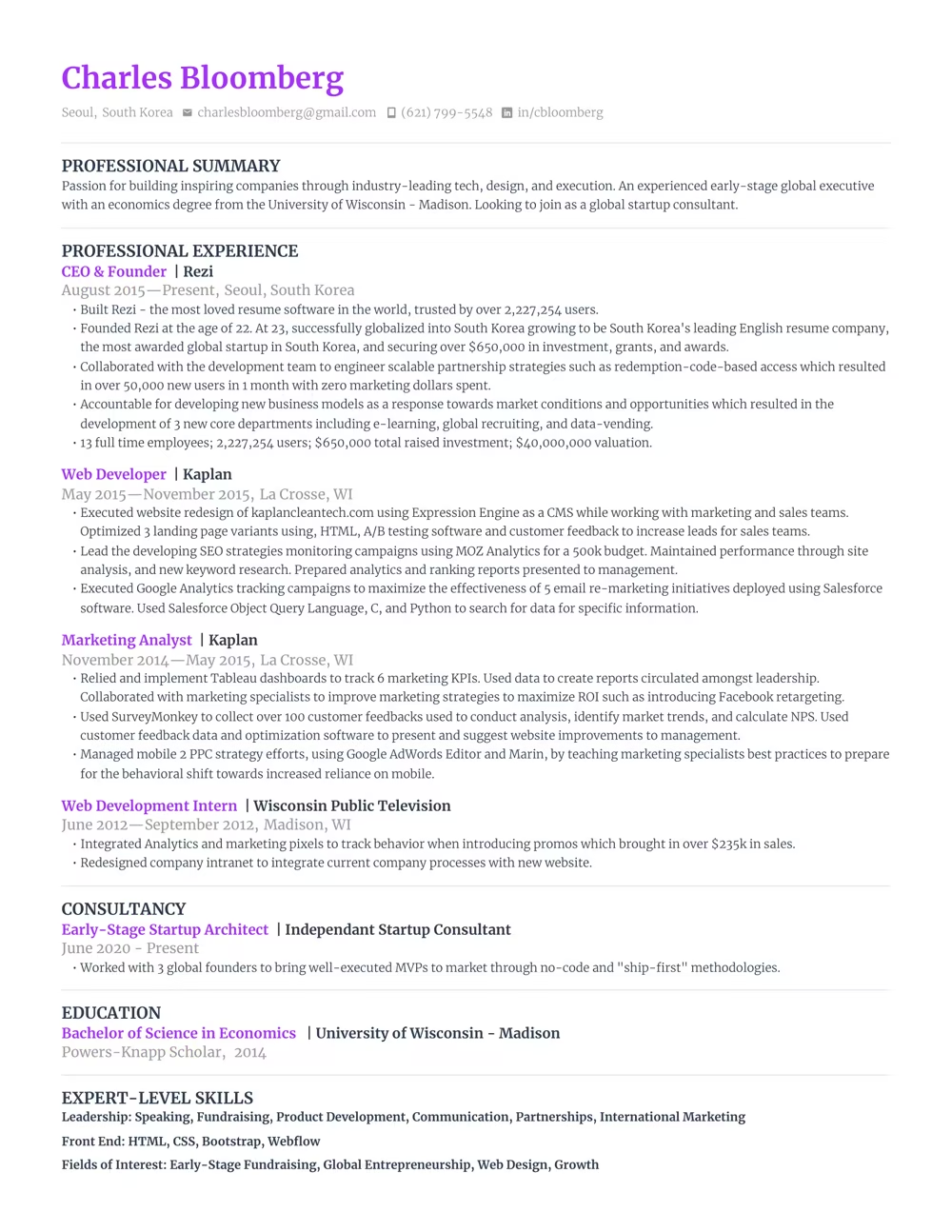
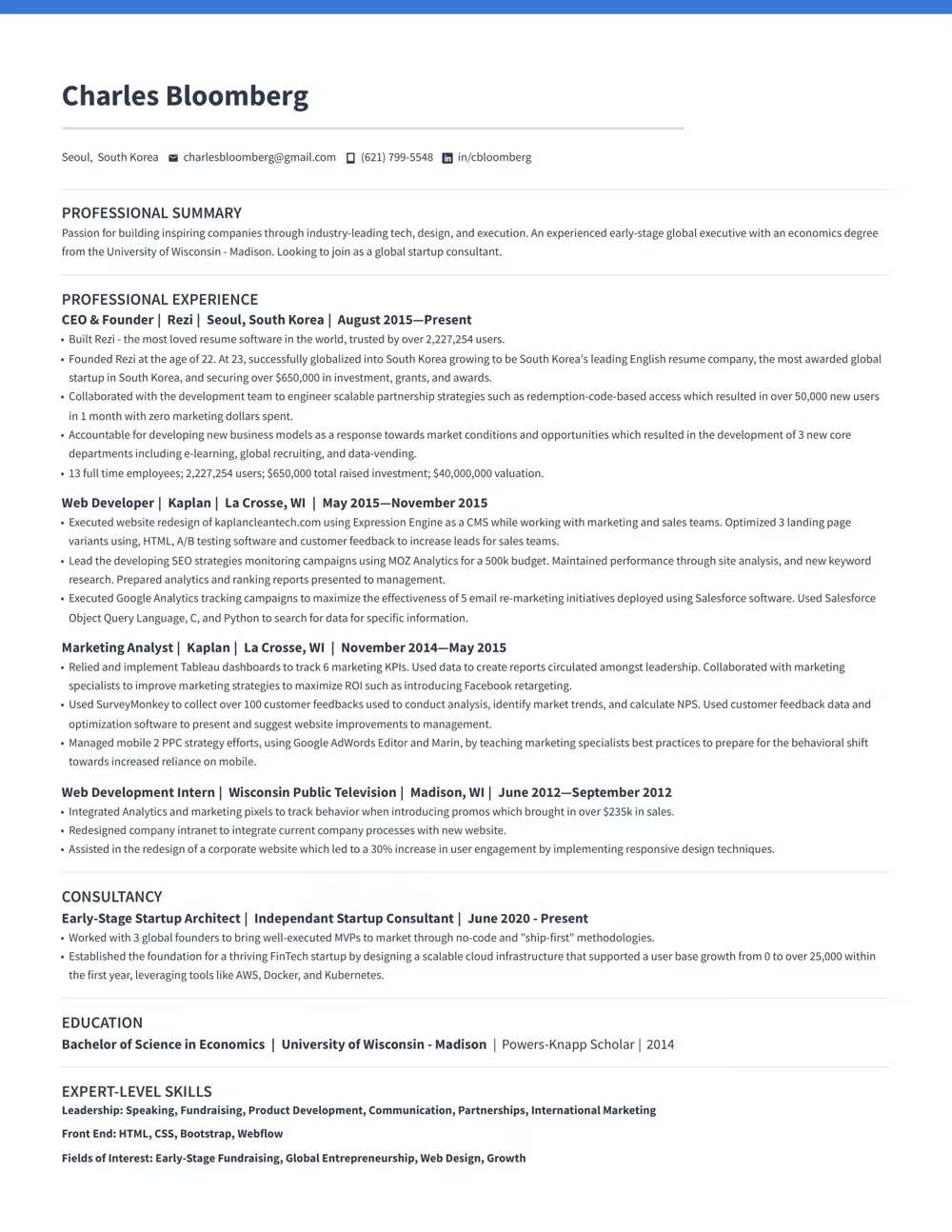
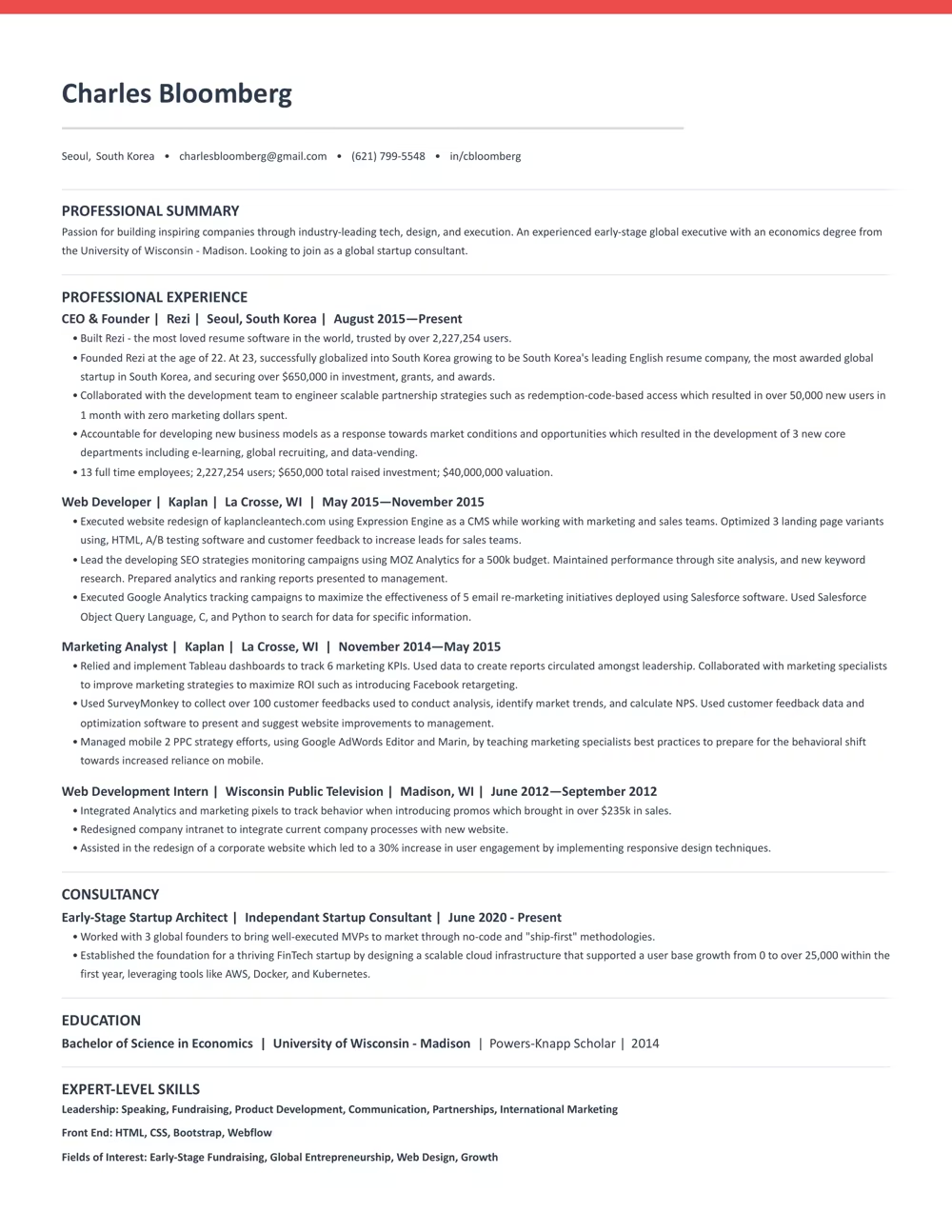
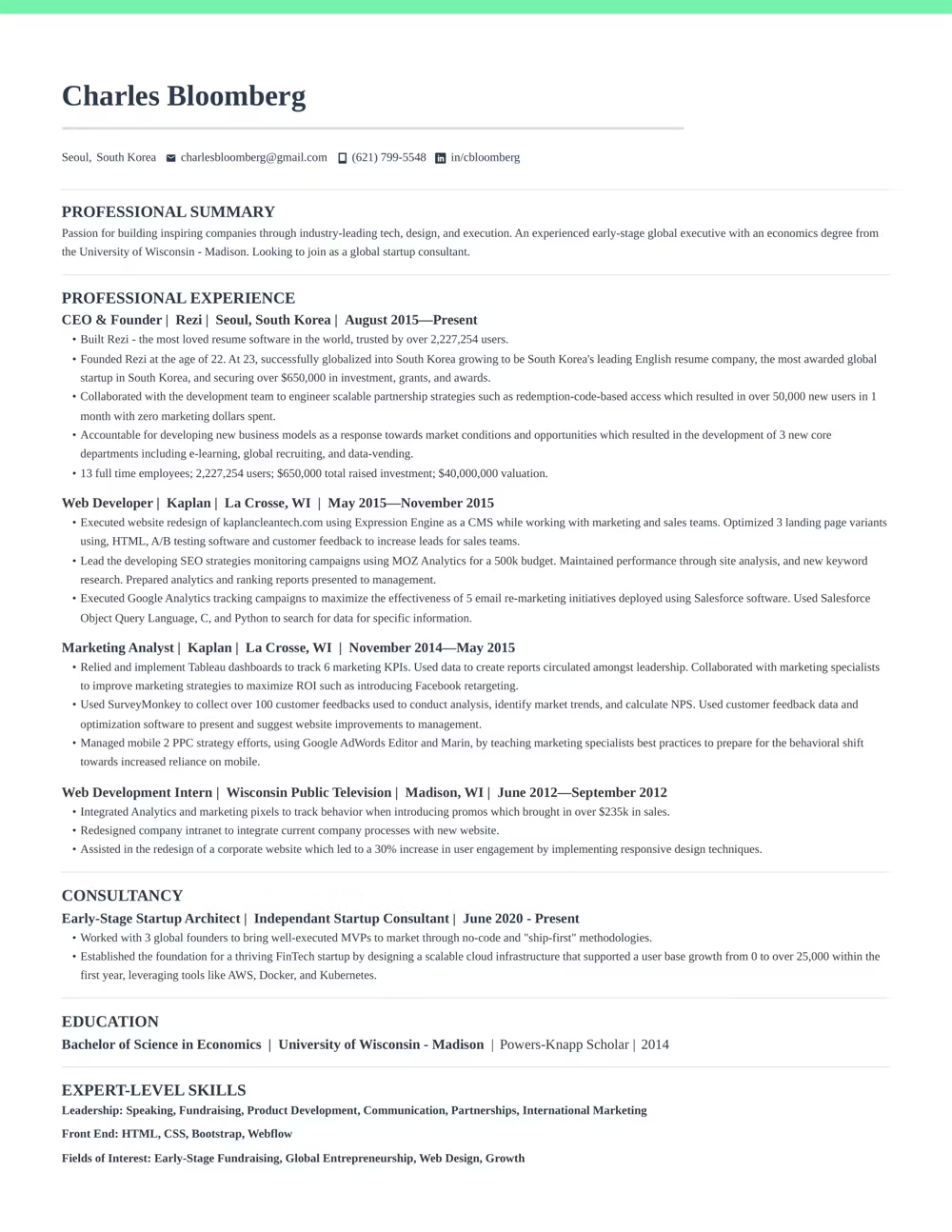
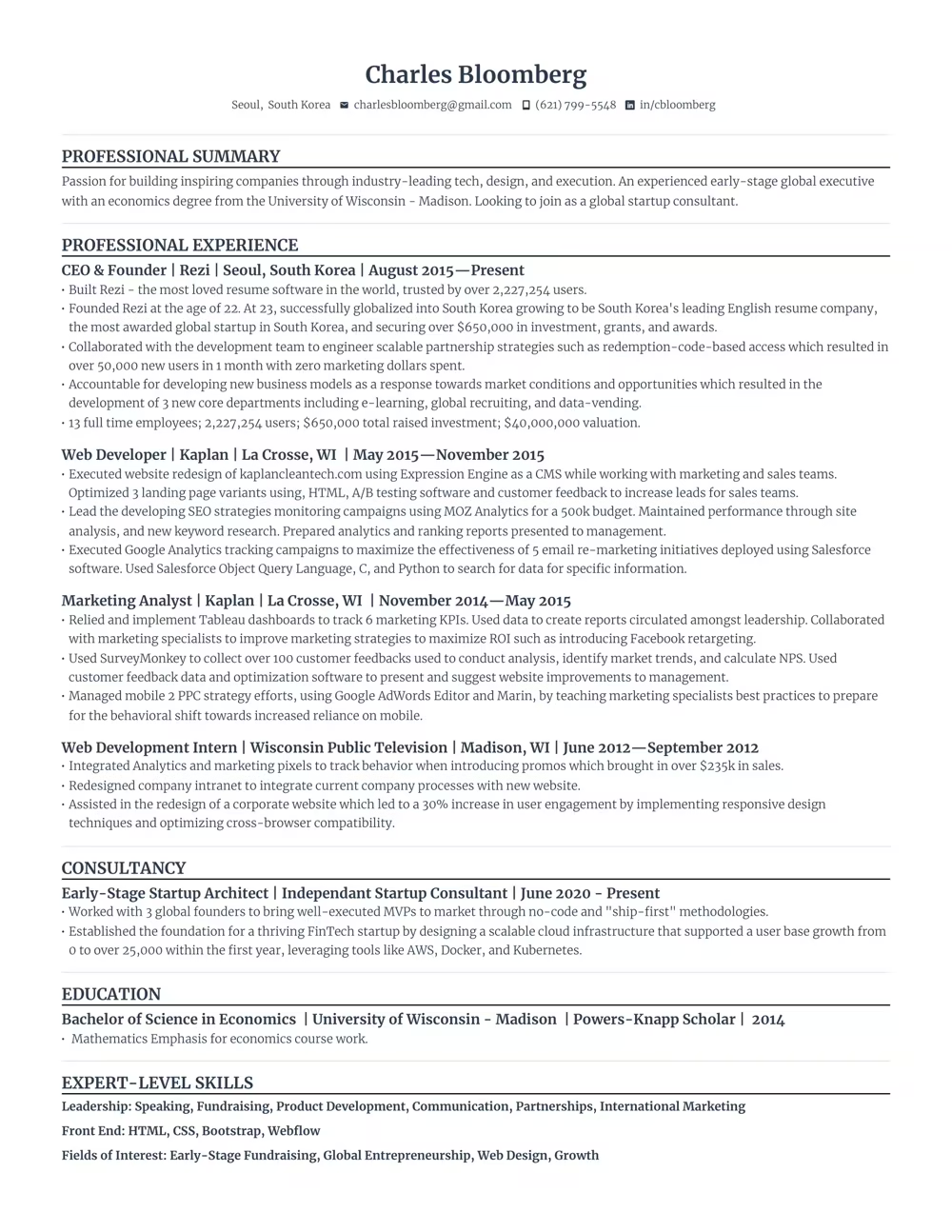
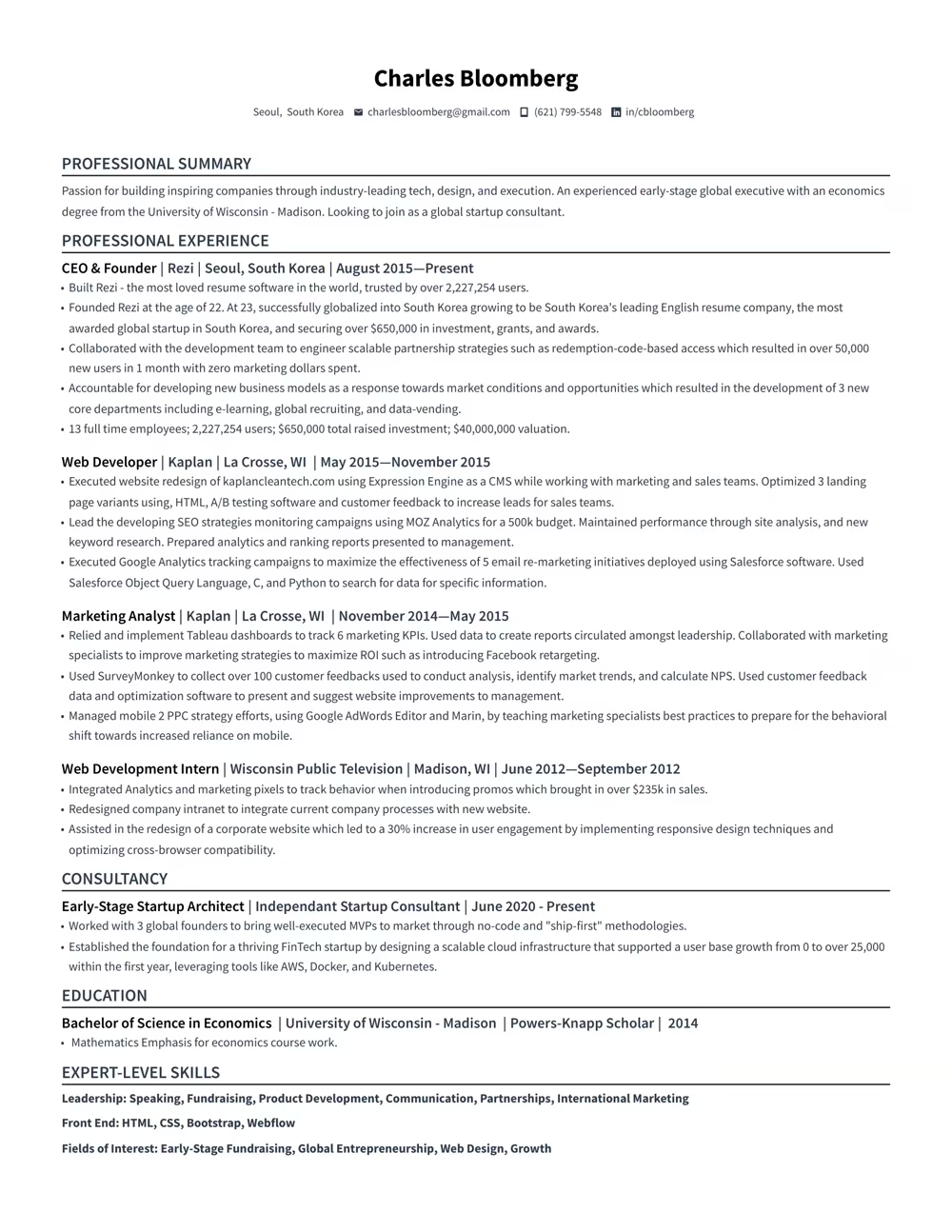
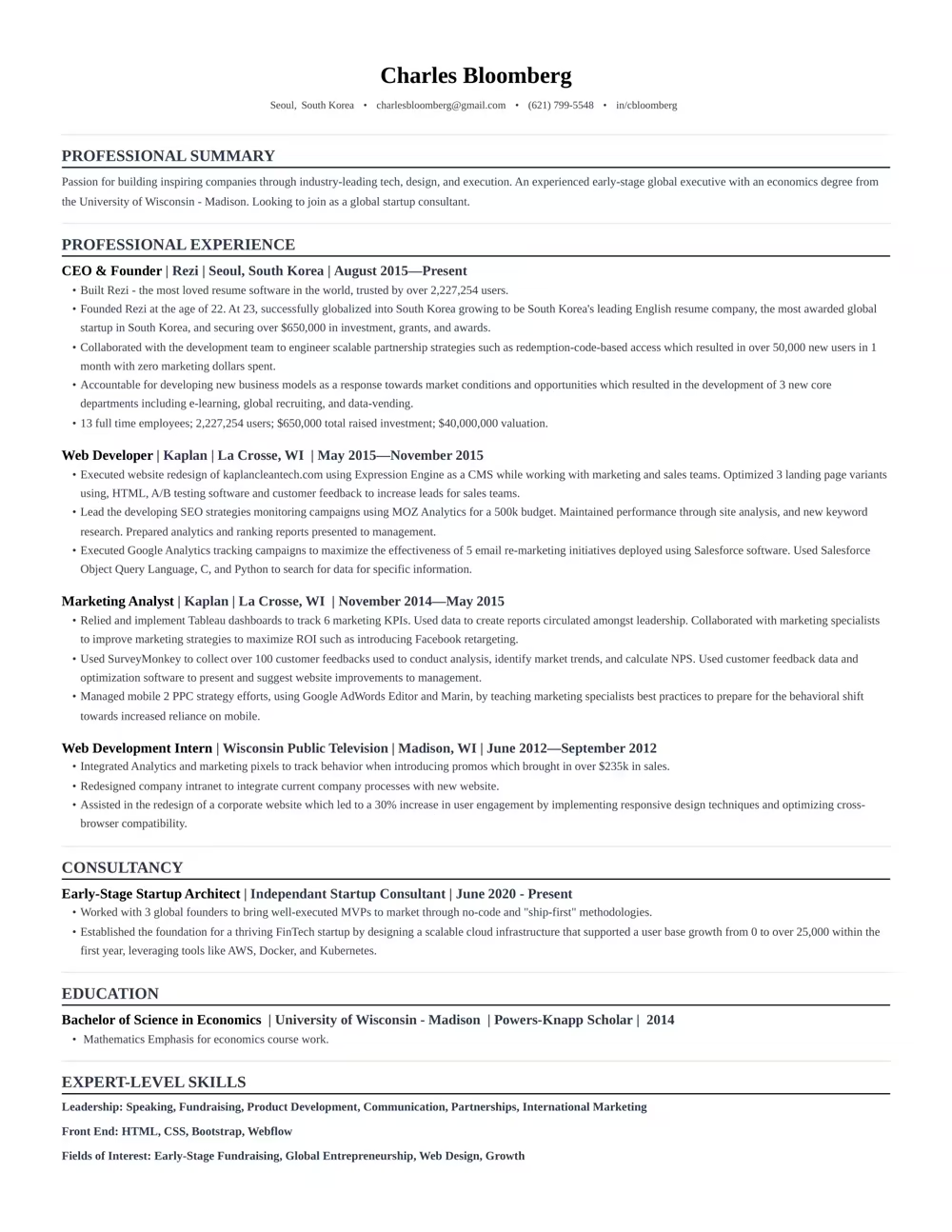
Take a look at some top-notch sample resumes for transportation coordinators across different specializations and career stages. Find one that matches your profile and use it as a starting point — just make sure to adjust the details to reflect your own experience and accomplishments.
Note: these examples are organized by specialization and experience level. Let's start with different types of transportation coordination roles.
Junior Transportation Coordinator Resume
A Junior Transportation Coordinator resume should emphasize your foundational knowledge of logistics operations, any relevant internships or entry-level experience, and your eagerness to learn. Highlight familiarity with transportation management systems, data entry accuracy, and your ability to handle scheduling tasks. Soft skills like communication, attention to detail, and the ability to work under pressure will set you apart from other early-career candidates.
Mid-Level Transportation Coordinator Resume
A Mid-Level Transportation Coordinator resume should demonstrate a proven track record of managing daily transportation operations independently. Emphasize your experience coordinating shipments, negotiating carrier rates, and resolving transit issues. Show measurable achievements like cost reductions, on-time delivery improvements, or efficiency gains. Highlight your proficiency with TMS software and your ability to manage relationships with multiple carriers and vendors simultaneously.
Senior Transportation Coordinator Resume
A Senior Transportation Coordinator resume should showcase extensive experience overseeing complex transportation networks and mentoring junior staff. Highlight strategic contributions such as optimizing freight spend, implementing new logistics processes, and managing high-volume operations. Demonstrate your ability to analyze transportation data for continuous improvement, lead cross-functional initiatives, and maintain compliance with DOT and FMCSA regulations across multiple regions or facilities.
Logistics Transportation Coordinator Resume
For a Logistics Transportation Coordinator, your resume should highlight your expertise in end-to-end logistics coordination — from warehouse operations to last-mile delivery. Emphasize experience with inventory management, order fulfillment, and distribution planning. Show how you've collaborated with warehouse teams, procurement, and customer service to streamline logistics workflows. Proficiency in ERP systems and logistics platforms will strengthen your candidacy significantly.
Freight Transportation Coordinator Resume
A Freight Transportation Coordinator resume should focus on your experience managing freight shipments across LTL, FTL, and intermodal channels. Highlight your skills in freight rate negotiation, load optimization, and carrier performance tracking. Detail how you've reduced freight costs or improved transit times through strategic carrier selection and routing. Familiarity with freight audit processes, bill of lading management, and hazmat shipping regulations adds strong value.
Fleet Transportation Coordinator Resume
For a Fleet Transportation Coordinator, emphasize your experience managing company-owned vehicle fleets, including scheduling maintenance, tracking vehicle utilization, and ensuring driver compliance with safety regulations. Highlight your ability to optimize fleet routes, reduce fuel costs, and manage GPS tracking systems. Experience with fleet management software, DOT compliance documentation, and driver scheduling will make your resume stand out to hiring managers.
Shipping and Transportation Coordinator Resume
A Shipping and Transportation Coordinator resume should showcase your dual expertise in warehouse shipping operations and outbound transportation management. Highlight experience coordinating pick-and-pack operations alongside carrier scheduling, managing shipping documentation, and ensuring accurate delivery timelines. Demonstrate your ability to troubleshoot shipping discrepancies, manage customs paperwork for international shipments, and maintain strong relationships with both warehouse teams and external carriers.
Supply Chain Transportation Coordinator Resume
For a Supply Chain Transportation Coordinator, your resume should demonstrate how transportation fits within the broader supply chain. Highlight experience collaborating with procurement, production planning, and distribution teams to ensure seamless material flow. Show your understanding of demand forecasting, inventory positioning, and transportation cost modeling. Experience using supply chain management platforms like SAP or Oracle, along with strong analytical skills, will strengthen your profile.
Regional Transportation Coordinator Resume
A Regional Transportation Coordinator resume should emphasize your experience managing transportation operations across a defined geographic territory. Highlight your ability to coordinate multi-site logistics, manage regional carrier networks, and ensure consistent service levels across locations. Detail experience with regional compliance requirements, route optimization across multiple distribution points, and your ability to balance cost efficiency with delivery speed across your territory.
How to Write a Transportation Coordinator Resume
Short answer:
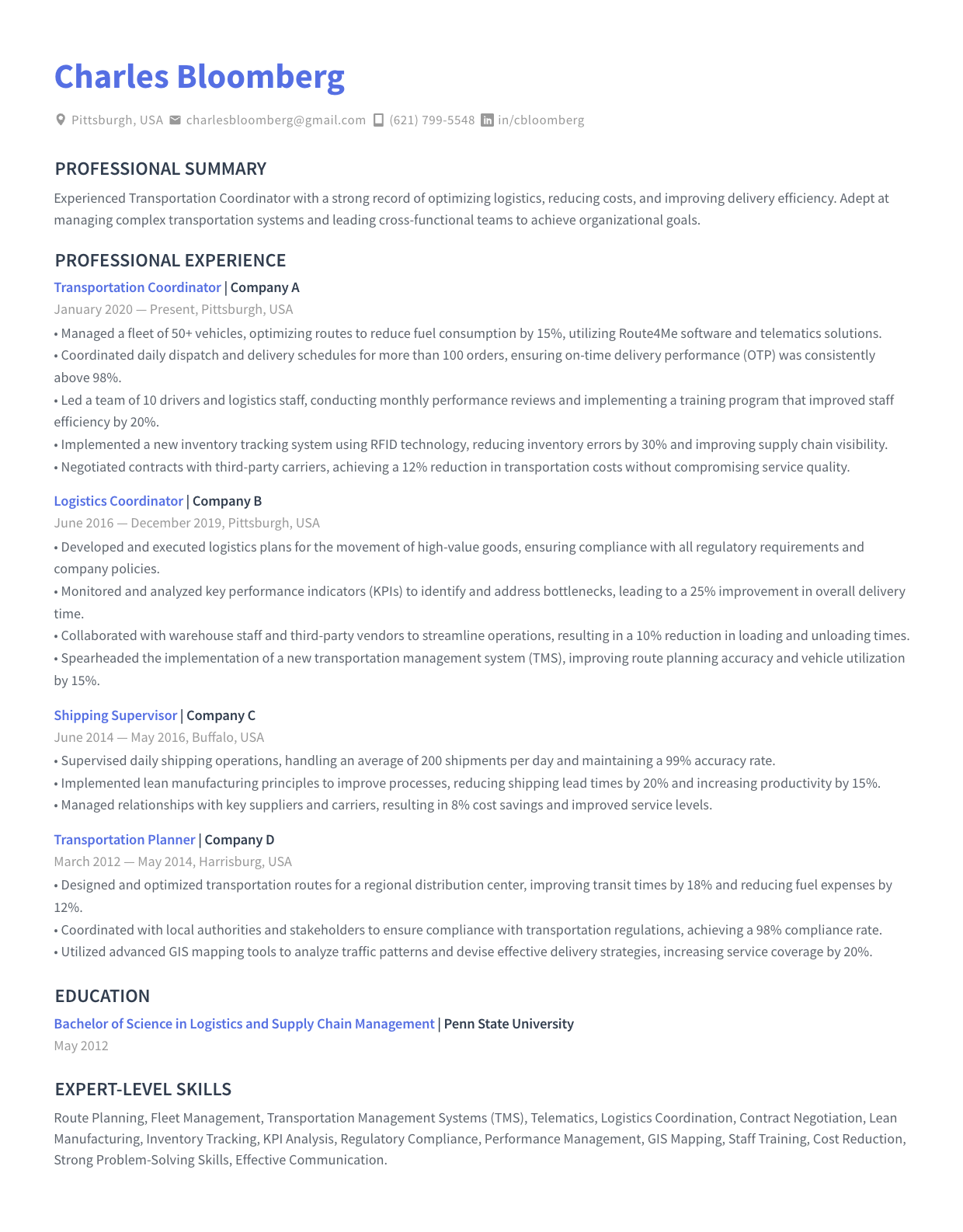
Focus on your coordination skills, logistics outcomes, and the specific tools and processes you used to keep shipments moving efficiently. Create a professional header with your name and contact details. Right below, write a 2–3 sentence resume summary outlining your most significant accomplishments. Describe your work history in reverse-chronological order, focusing on transportation operations, cost savings, and on-time delivery metrics. Then, cover your education, including relevant certifications, list key skills, and add extra sections such as software proficiencies, professional associations, or volunteer work.
Include all the necessary sections in the correct order
Here's the correct order of sections for most transportation coordinator resumes:
- Header with contact information
- Resume summary or objective
- Work experience
- Education
- Skills
- Certifications
Depending on your current career situation, you can also throw in some additional sections. For instance:
- Professional associations (e.g., CSCMP, TIA membership)
- Volunteer experience
- Language proficiencies (especially valuable for international logistics)
- Software proficiencies
- Training and professional development
Include everything that shows you're capable of doing what the job requires. Make every section count. If it doesn't clearly highlight your skills, it doesn't belong on your resume.
If you have less than five years of relevant experience, keep your resume 1-page long. For more senior transportation coordinators, a two-page resume is fine.
More details here: What Sections to Include on Your Resume?
Now, I'll give you a high-level overview of how to write each section, going from top to bottom. Well… almost. The only exception is the resume summary section. While it comes right after your contact info, it's actually easier to write it last. More on that in a sec.
Create a professional resume header
- Start with your name and contact information. Include the basics: your full name, phone number, professional email address, location, and LinkedIn profile. If you have a portfolio or professional website showcasing logistics projects, include that link as well.
- Right below your name, clearly state your professional title (e.g., Transportation Coordinator or Senior Transportation Coordinator). This sets expectations and immediately tells the recruiter what you do.
For more information, see: How to Create a Resume Header
Describe your work history
- Use reverse-chronological order. List your positions starting with the current or the most recent one.
- In each entry, include your job title, company name, location, and dates of employment.
- Below each position, write 3–7 bullet points — the more recent the position, the more bullet points you should include. Describe your responsibilities and, more importantly, your accomplishments.
- Use action verbs and quantify your achievements (e.g., "Coordinated 150+ weekly shipments across 12 carriers, reducing freight costs by 18% through rate renegotiation and load consolidation").
- If specific tools, systems, or regulatory frameworks were pivotal in your roles (e.g., TMS platforms, DOT compliance, FMCSA regulations), weave these details into your descriptions. This will also help you pass ATS scans.
Learn more about the best practices of this section with our detailed guide on how to describe your work experience on a resume.
List your degrees and detail professional learning
- In the education section, list your highest degree first, including the degree type, major, and institution. Degrees in supply chain management, logistics, business administration, or transportation are particularly relevant.
- If you have some relevant work experience, include only the name of your school and the degree you got. If you're an entry-level candidate, you can add more detail to your education section — list relevant coursework, extracurricular activities, and academic achievements.
- If you have transportation or logistics certifications (e.g., CTB, CLTD, or a CDL), either include them in an "Education and Certifications" section, or create a separate "Certifications" section and place it right below.
For an in-depth guide on how to describe your education on a resume, see: How to List Education on a Resume
List your most relevant skills in the skills section
- Include a mix of technical skills (e.g., TMS platforms, route optimization software) and industry knowledge (e.g., DOT regulations, freight classification) that you are proficient in.
- Add in some soft skills such as communication, problem-solving, and multitasking. These demonstrate your capacity to handle the fast-paced, high-pressure nature of transportation coordination.
- You can use two separate subsections, one for hard skills, one for soft skills, or just list all the skills under one heading.
- Match your skills to the description of the job you're applying for. Don't just dump every logistics buzzword onto your resume — highlight those areas where your knowledge genuinely overlaps with the job ad.
Need some inspiration to get started? Here are some good skills to feature on your transportation coordinator resume.
Software and tools for transportation coordinator resumes:
- SAP Transportation Management
- Oracle Transportation Management (OTM)
- McLeod LoadMaster
- MercuryGate TMS
- Microsoft Excel (advanced)
- GPS and fleet tracking systems (Samsara, Geotab)
- Electronic Data Interchange (EDI)
- FreightPOP
- Kuebix TMS
- Microsoft Dynamics 365
Industry knowledge and hard skills:
- Route planning and optimization
- Freight rate negotiation
- DOT and FMCSA compliance
- Carrier management and procurement
- Bill of lading and shipping documentation
- Load planning and consolidation
- Customs and import/export procedures
- Hazmat shipping regulations
- KPI tracking and reporting
- Fleet maintenance scheduling
Key soft skills for transportation coordinators:
- Communication
- Problem-solving
- Multitasking
- Attention to detail
- Time management
- Negotiation
- Adaptability
- Teamwork
- Decision-making under pressure
- Customer service orientation
For a full-blown guide on listing skills on a resume, visit: How to Put Skills on a Resume
Use additional sections as further proof of your fit
Additional sections add depth to your resume and back up your claimed expertise. Good examples of extra sections to add to a transportation coordinator resume are:
- Professional associations. Membership in organizations like CSCMP, TIA, or APICS can showcase your commitment to the logistics and transportation field.
- Language proficiencies. If you work in international logistics or in regions with diverse populations, fluency in multiple languages is a real asset worth highlighting.
- Training and professional development. Courses in hazmat handling, DOT compliance, or advanced Excel skills show you're continuously improving your capabilities.
- Volunteer experience. Logistics-related volunteer work — like coordinating disaster relief shipments or managing event transportation — can demonstrate your skills in a compelling, real-world context.
Highlight the most relevant information in a resume summary
Once you're done writing your transportation coordinator resume, give it a full read. Pick the most relevant information and compile it into a summary paragraph. Place it right under the resume header.
- Be brief and to-the-point. In 3–4 sentences, sum up your career highlights, core competencies, and what you bring to the table. Consider this your chance to answer, "Why should you hire me?" Tailor this section to match the employer's needs outlined in the job description.
- Use value-oriented language. Focus on how you can add value to the potential employer, mentioning specific outcomes you hope to deliver or achievements you've delivered in the past — like cost savings, on-time delivery rates, or shipment volumes managed.
Once you've completed the core sections of your resume, you can use Rezi AI Resume Summary Generator to automatically create a powerful summary, tailored to the job you're applying for. All you need to do is add the position and skills you want to highlight. The AI writer will do the rest.
More information here: How to Write a Job-Winning Resume Summary (with Examples)
For finishing touches, make sure your resume looks professional
- Use a clean and tidy resume format. Ensure your transportation coordinator resume is easily readable, with a professional font, consistent formatting, and clear section headings. Avoid overloading it with dense text or fancy design elements that could distract from the content and confuse resume screening software.
- Aim for a balance between detail and conciseness. If you're a junior or early-career candidate, keep your resume to a single page. Experienced transportation coordinators can extend their resumes to two pages, but still need to make sure every word conveys value.
Learn more about proper resume formatting here: How to Format a Resume & What Standard Resume Format to Use
What Makes Transportation Coordinator Resumes Different
In short: the emphasis on operational efficiency, problem-solving under pressure, and carrier relationship management.
This is also what many transportation coordinators get wrong on their resumes. Hiring managers won't be impressed with a list of routine tasks like "scheduled pickups" and "tracked shipments." They need to see how your coordination directly impacted costs, delivery performance, and operational smoothness — this way, they'll believe you can replicate that success at their company.
Focus on operational metrics and cost impact
Transportation coordination is a numbers-driven role. Every shipment has a cost, a timeline, and a performance benchmark attached to it. Unlike many other roles where quantifying impact is optional, for transportation coordinators it's essential.
What it means for you:
- Detail your impact through tangible metrics. For example, percentage reduction in freight spend, on-time delivery rate improvements, number of shipments coordinated per week, or carrier cost savings achieved through negotiations.
- Mention the volume and scope of operations you managed — number of carriers, shipment volume, geographic coverage, and budget size. This gives recruiters a clear picture of your capacity.
Focus on problem-solving and adaptability
Transportation doesn't go according to plan — ever. Delays, missed pickups, damaged freight, weather disruptions. Your resume needs to show that you thrive in chaos, not just survive it.
What it means for you:
- Describe specific situations where you resolved transit issues, rerouted shipments to avoid delays, or found backup carriers on short notice. These stories are gold for hiring managers.
- Highlight your ability to make quick decisions and communicate effectively during disruptions — with carriers, drivers, warehouse teams, and customers simultaneously.
Focus on carrier and vendor relationship management
Transportation coordinators are the bridge between their company and external carriers. How well you manage those relationships directly affects service quality and costs.
What this means for you:
- Showcase your experience negotiating rates, evaluating carrier performance, and managing service level agreements. Mention the number of carrier relationships you've managed and any vendor scorecards or review processes you've implemented.
- If you've onboarded new carriers or terminated underperforming ones based on data-driven decisions, highlight that — it shows strategic thinking beyond day-to-day coordination.
Focus on compliance and regulatory knowledge
Transportation is one of the most heavily regulated areas of business. Your familiarity with DOT, FMCSA, OSHA, hazmat, and customs regulations is a differentiator that many candidates underplay on their resumes.
What this means for you:
- Mention specific regulatory frameworks you've worked within — especially if you've ensured compliance during audits, managed driver qualification files, or handled hazmat documentation.
- If you've implemented compliance training programs or updated procedures to meet new regulations, these are excellent resume bullet points that demonstrate leadership and initiative.
Bonus Resources for Transportation Coordinators
This isn't going to be a game-changer if you need a resume right now. But —
I want you to treat your career holistically. These resources will help you sharpen your transportation and logistics expertise, add credentials to your future resumes, and keep you current with industry developments.
Professional associations and networks
Council of Supply Chain Management Professionals (CSCMP)
CSCMP is one of the premier organizations for supply chain and transportation professionals, offering networking events, conferences, certifications, and research resources to help you advance your career.
Transportation Intermediaries Association (TIA)
TIA focuses on third-party logistics and transportation brokerage professionals. Membership provides access to education programs, industry events, and a strong professional network in the freight and logistics space.
American Society of Transportation and Logistics (AST&L)
AST&L offers the Certified in Transportation and Logistics (CTL) designation and provides educational resources for professionals looking to advance in the transportation field.
Online learning platforms
Coursera & edX
Both platforms offer logistics, supply chain, and transportation management courses from top universities. Look for programs from Rutgers, MIT, and Georgia Tech that cover transportation planning, freight management, and supply chain analytics.
LinkedIn Learning
LinkedIn Learning provides numerous courses on logistics operations, supply chain fundamentals, Excel for logistics professionals, and transportation management systems — all directly applicable to your role.
APICS (now part of ASCM)
The Association for Supply Chain Management offers certifications like CLTD (Certified in Logistics, Transportation and Distribution) that are widely recognized in the industry and can significantly boost your resume.
Publications and industry resources
Supply Chain Brain
A leading publication covering supply chain and logistics news, trends, and best practices — essential reading for transportation professionals who want to stay informed about industry shifts.
FreightWaves
FreightWaves provides real-time freight market data, analysis, and news. Following their content will keep you sharp on market trends, rate fluctuations, and emerging technologies in transportation.
Logistics Management
This publication offers in-depth articles on transportation management, warehousing, distribution, and supply chain technology — with practical insights you can apply directly to your work.
Tools and software reviews
Capterra & G2
Both websites provide extensive reviews and comparisons of transportation management systems, fleet management software, and logistics platforms — helping you choose the right tools and stay current with the software landscape.
DAT Freight & Analytics
DAT is one of the largest freight marketplaces and provides load boards, rate data, and market analytics. Familiarity with DAT is a plus for any transportation coordinator's resume and an essential tool to understand.
Summary
Here's what you need to know about writing a transportation coordinator resume:
- Structure your transportation coordinator resume with essential sections in this order: Header, Resume Summary or Objective, Work Experience, Education, Skills, and Certifications. If relevant, add extra sections like Professional Associations or Language Proficiencies.
- Include a professional header with your name, contact information, and professional title.
- Describe your work history in reverse-chronological order, emphasizing coordination accomplishments with quantifiable outcomes like cost savings, on-time delivery rates, and shipment volumes.
- In the education section, list your highest degree at the top. You can list transportation and logistics certifications either in the education section or under a separate heading.
- Highlight a mix of technical skills (TMS platforms, routing software), industry knowledge (DOT compliance, freight classification), and soft skills (communication, problem-solving), tailoring them to the job description.
- Use additional sections to further showcase your expertise and commitment to the transportation and logistics field.
- Once done writing the resume, compile the key information into a brief, value-oriented resume summary at the top.
- Make your resume professional in appearance — aim for conciseness without sacrificing detail.
- Showcase your problem-solving ability, carrier management skills, and operational impact effectively.
- Don't just list tasks — prove that your coordination made a measurable difference to the businesses you've worked for.
Thanks for reading! Got any questions? Feel free to reach out to me on LinkedIn. (Or check out the FAQs first, maybe your question is answered there.)
FAQ
What keywords should I use on my transportation coordinator resume?
Use specific transportation and logistics terminology relevant to your experience, such as route optimization, freight management, carrier negotiation, DOT compliance, load planning, TMS, EDI, and on-time delivery. Include the names of software platforms you've used (e.g., SAP TM, MercuryGate, McLeod). If you hold certifications like CTL, CLTD, or a CDL, make sure those appear prominently as well.
How do I tailor my transportation coordinator resume to a specific job description?
Read the job posting carefully and identify the key responsibilities and required skills. Then, mirror that language in your resume by aligning your accomplishments and experiences with their priorities. If the posting emphasizes cost reduction, lead with your freight savings metrics. If it focuses on compliance, highlight your regulatory experience. Use similar phrases — it helps with both ATS scans and human readers.
What's the most common mistake on transportation coordinator resumes?
Listing daily tasks without any context or results. Saying "coordinated shipments" tells a recruiter nothing about your impact. Instead, quantify your work: "Coordinated 200+ weekly LTL and FTL shipments across 15 carriers, maintaining a 97.5% on-time delivery rate." Numbers transform a forgettable bullet point into a compelling one.
I don't have a logistics degree. Does that hurt my resume?
Not necessarily. Many successful transportation coordinators come from non-logistics backgrounds. Focus on relevant experience, transferable skills, and any industry certifications you've earned. A CLTD, CTL, or even completion of relevant Coursera or APICS courses can compensate for a non-traditional educational background. What matters most is demonstrating that you can do the job effectively.
Which resume format works best for transportation coordinator resumes?
The reverse-chronological format is your best bet. It highlights your career progression and makes it easy for employers to see your growing responsibilities and accomplishments in transportation coordination. Functional or hybrid formats can work if you're transitioning from another field, but most hiring managers in logistics prefer the straightforward chronological approach.
Should I include my CDL or other driver-related credentials on my resume?
Absolutely — if you have a CDL or other driving credentials, include them. Even if the role doesn't require driving, a CDL shows you understand the operational side of transportation from the driver's perspective. This kind of firsthand knowledge is valued by employers and demonstrates a well-rounded understanding of the industry.
I'm transitioning from a warehouse or customer service role into transportation coordination. How should I approach my resume?
Focus on transferable skills like scheduling, vendor communication, problem-solving, and working with shipping documentation. Highlight any experience you have with logistics software, carrier interactions, or shipment tracking — even if it was a small part of your previous role. Add any relevant certifications or courses you've completed, and frame your experience around coordination, organization, and keeping operations running smoothly.