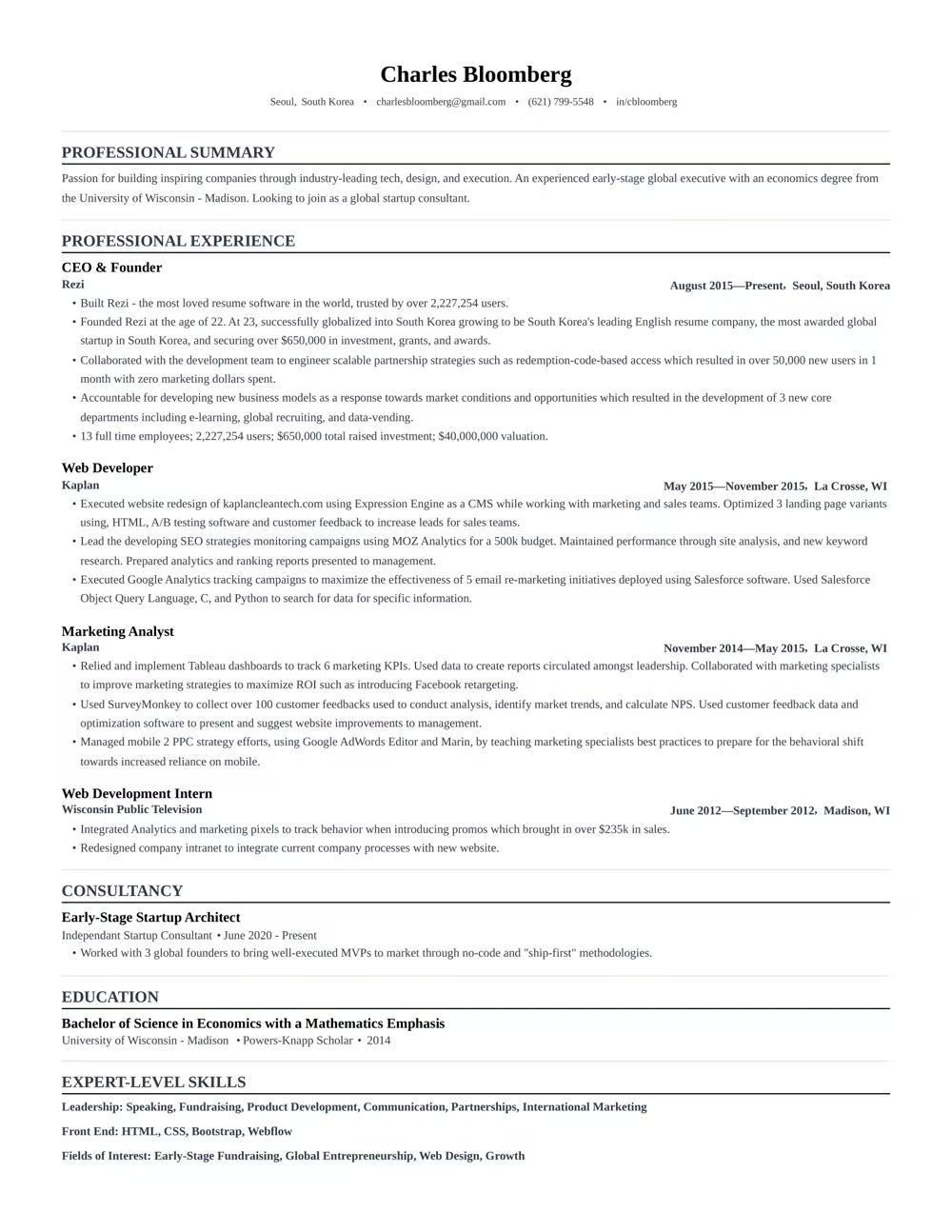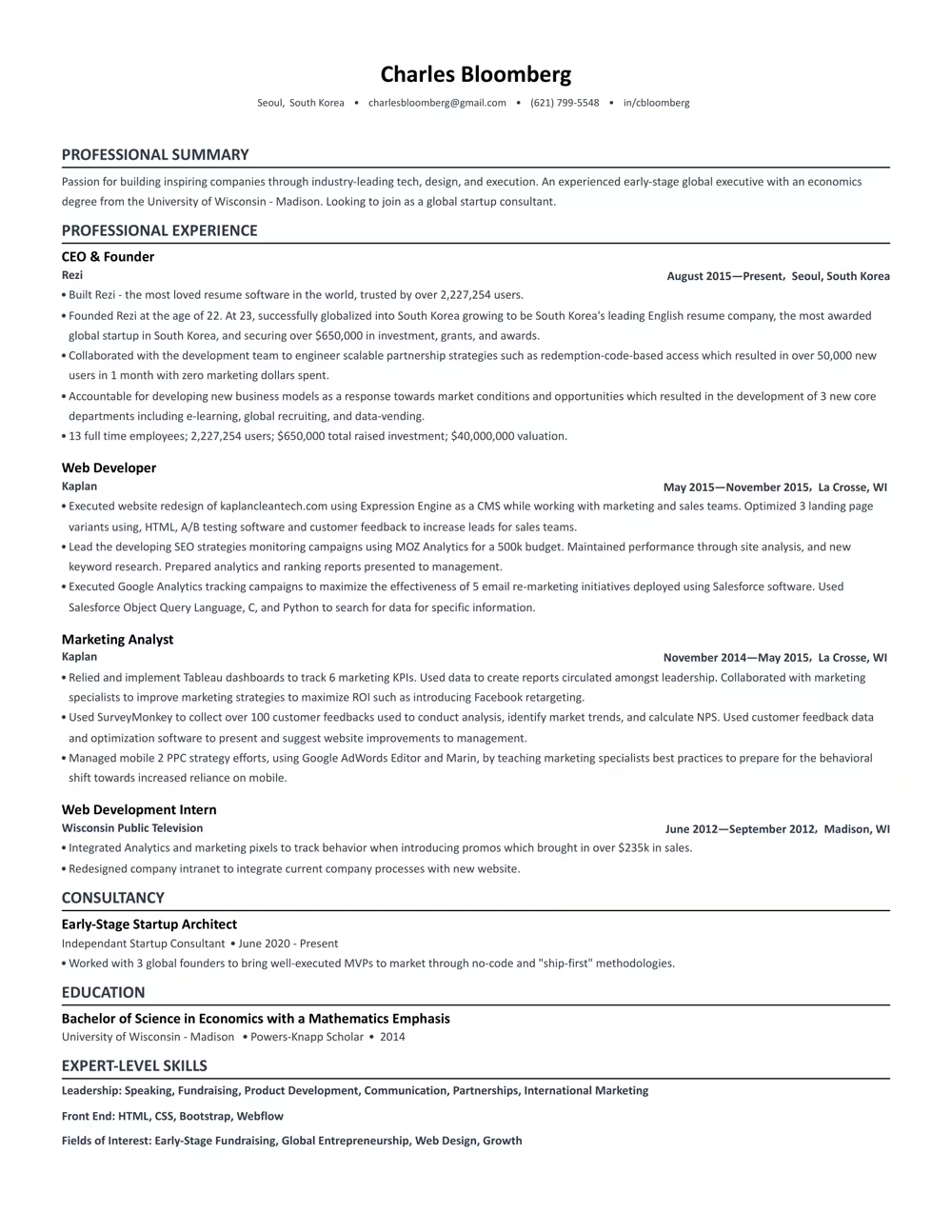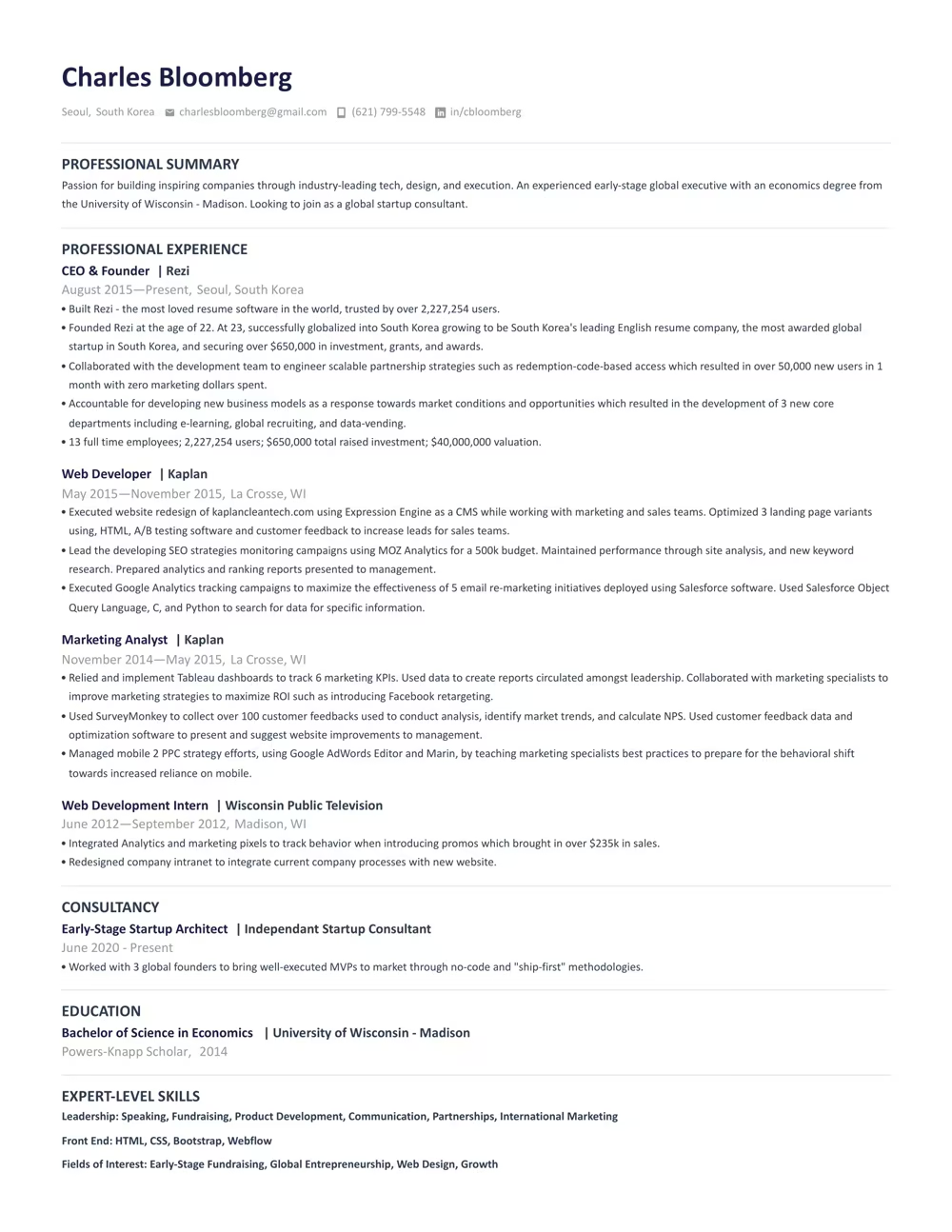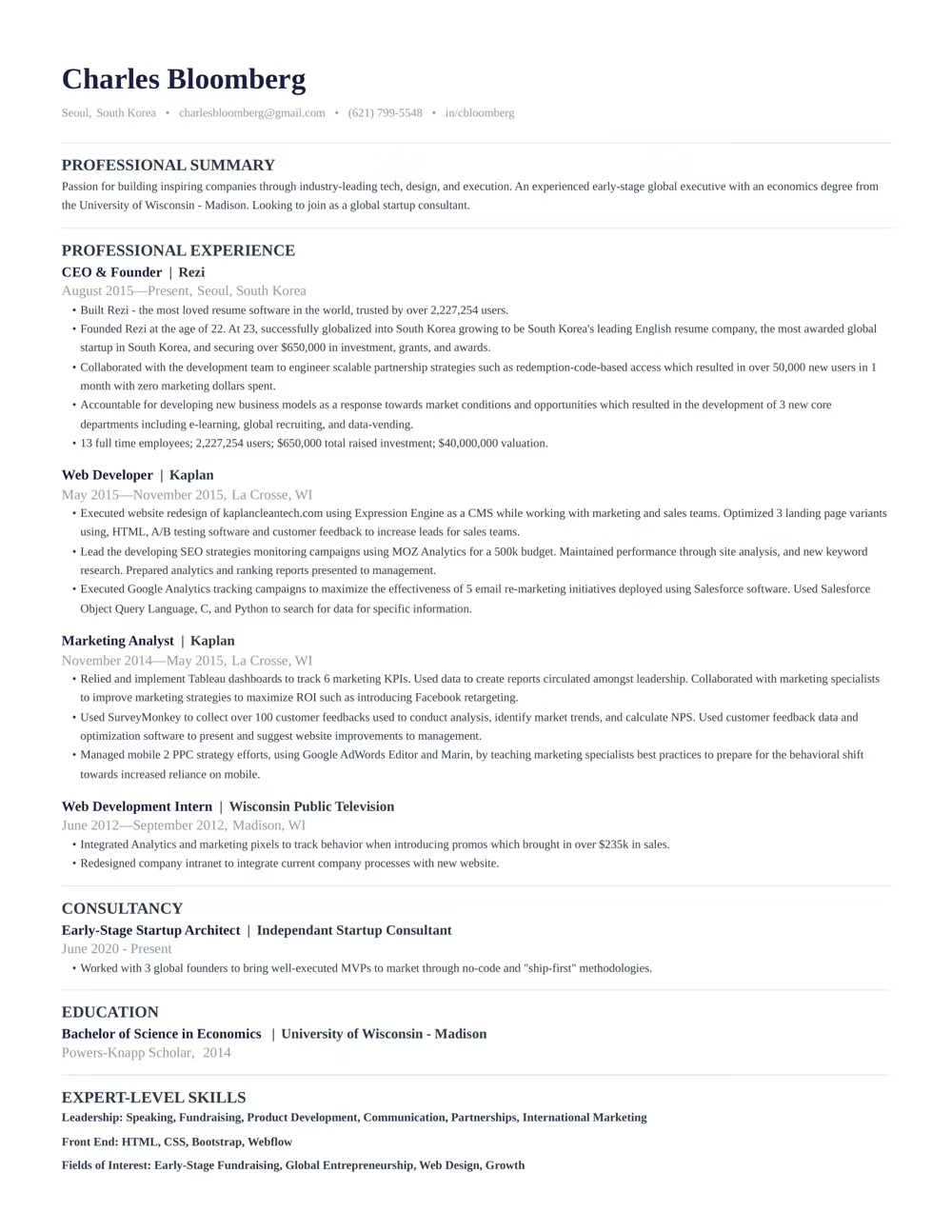

Here's the thing most VP of Human Resources resumes get wrong: they read like a laundry list of HR functions. Benefits administration, compliance, recruiting — yes, those matter. But a VP-level resume that just catalogs HR activities looks no different from a senior HR generalist's resume with a fancier title slapped on top.
To create a compelling VP of Human Resources resume, you need to tell the story of a strategic leader who shaped workforce strategy, influenced the C-suite, drove organizational transformation, and delivered measurable business outcomes through people initiatives.
You're not just running HR — you're steering the company's most valuable asset.
And this is exactly what you'll learn from this article. Inside, you'll find:
- Examples of 8 VP of Human Resources resumes, covering different specializations and focus areas.
- Insider tips about what really matters to boards, CEOs, and executive recruiters hiring for senior HR leadership roles.
- A step-by-step guide for putting together a VP of Human Resources resume that positions you as a strategic business partner, not just a functional leader.
Sample VP of Human Resources Resumes
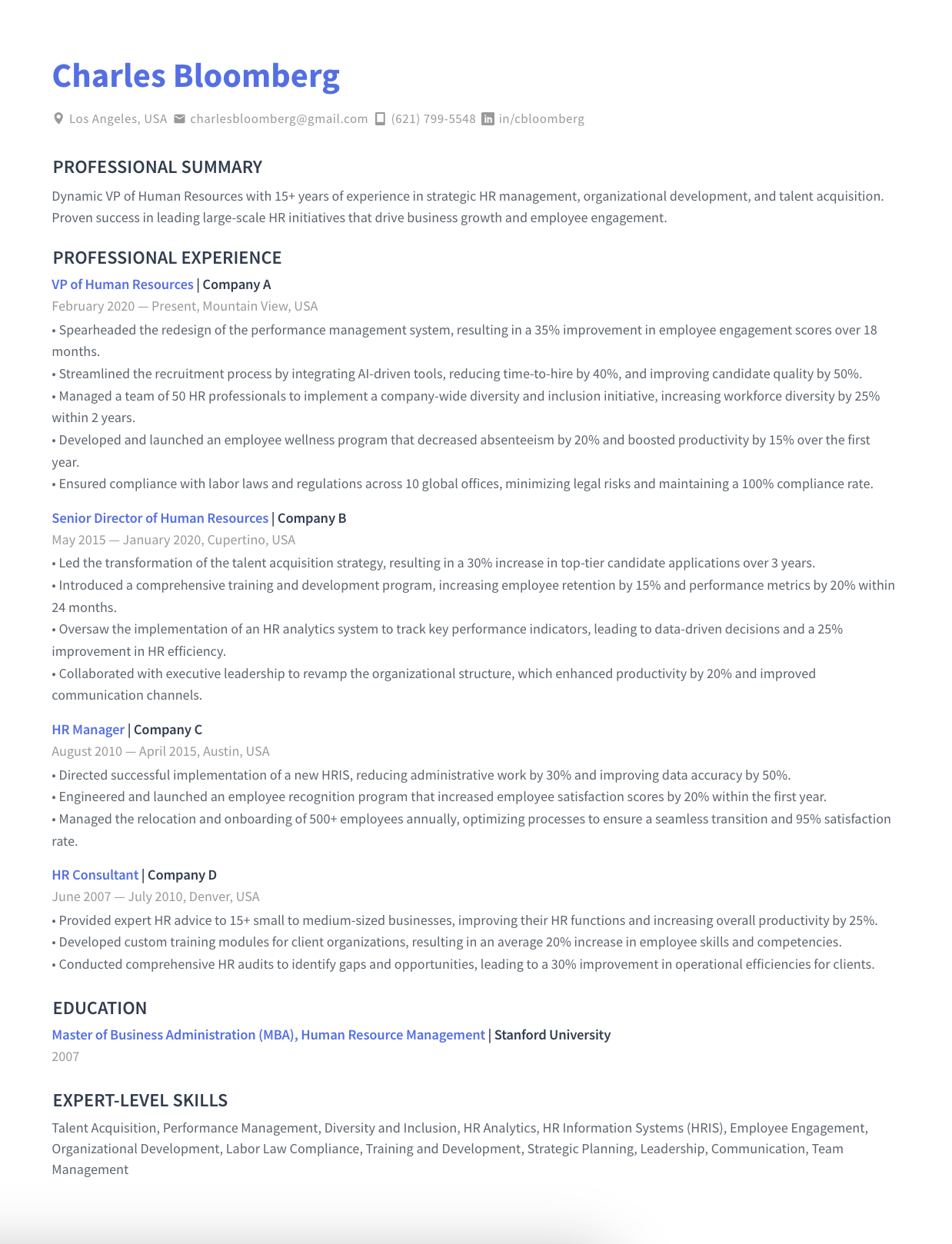
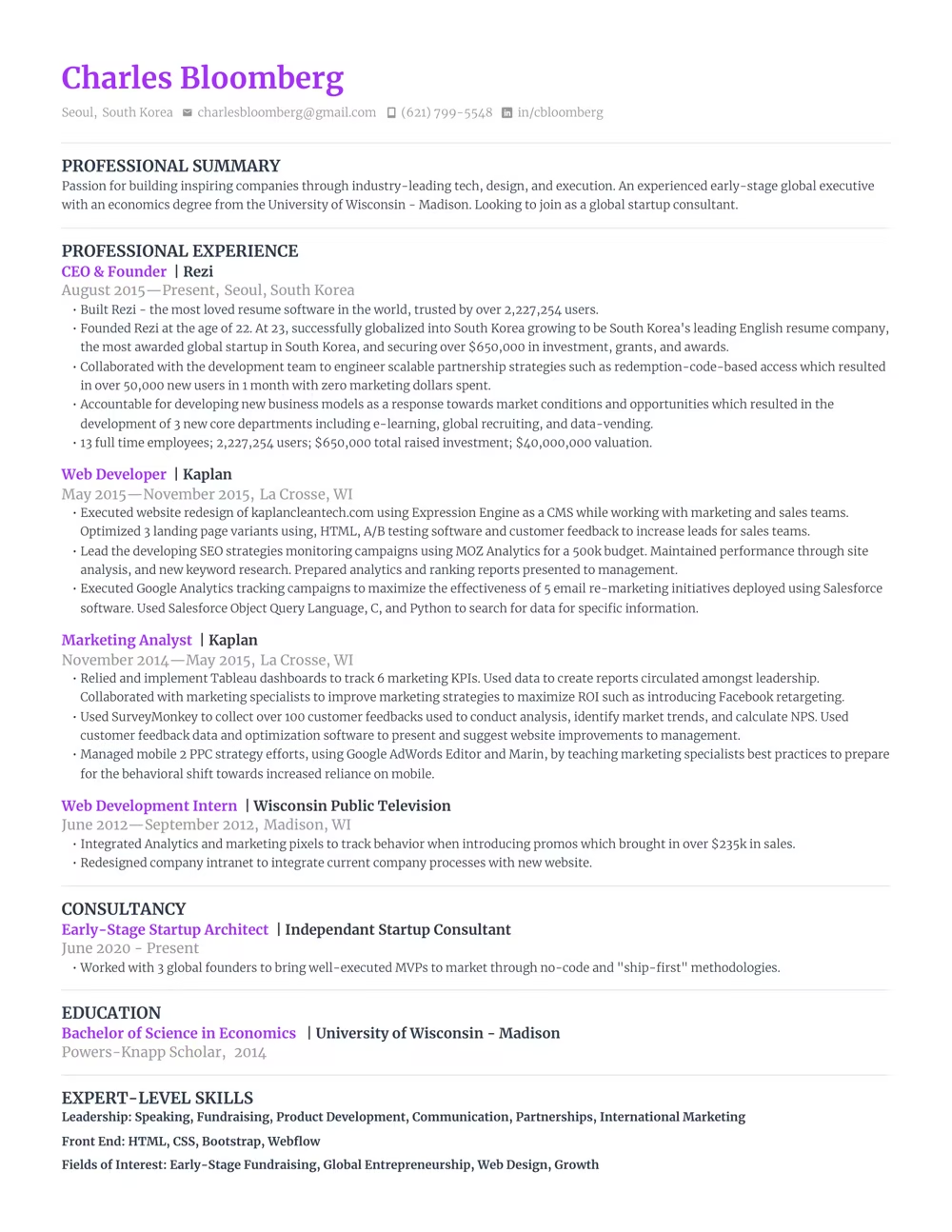
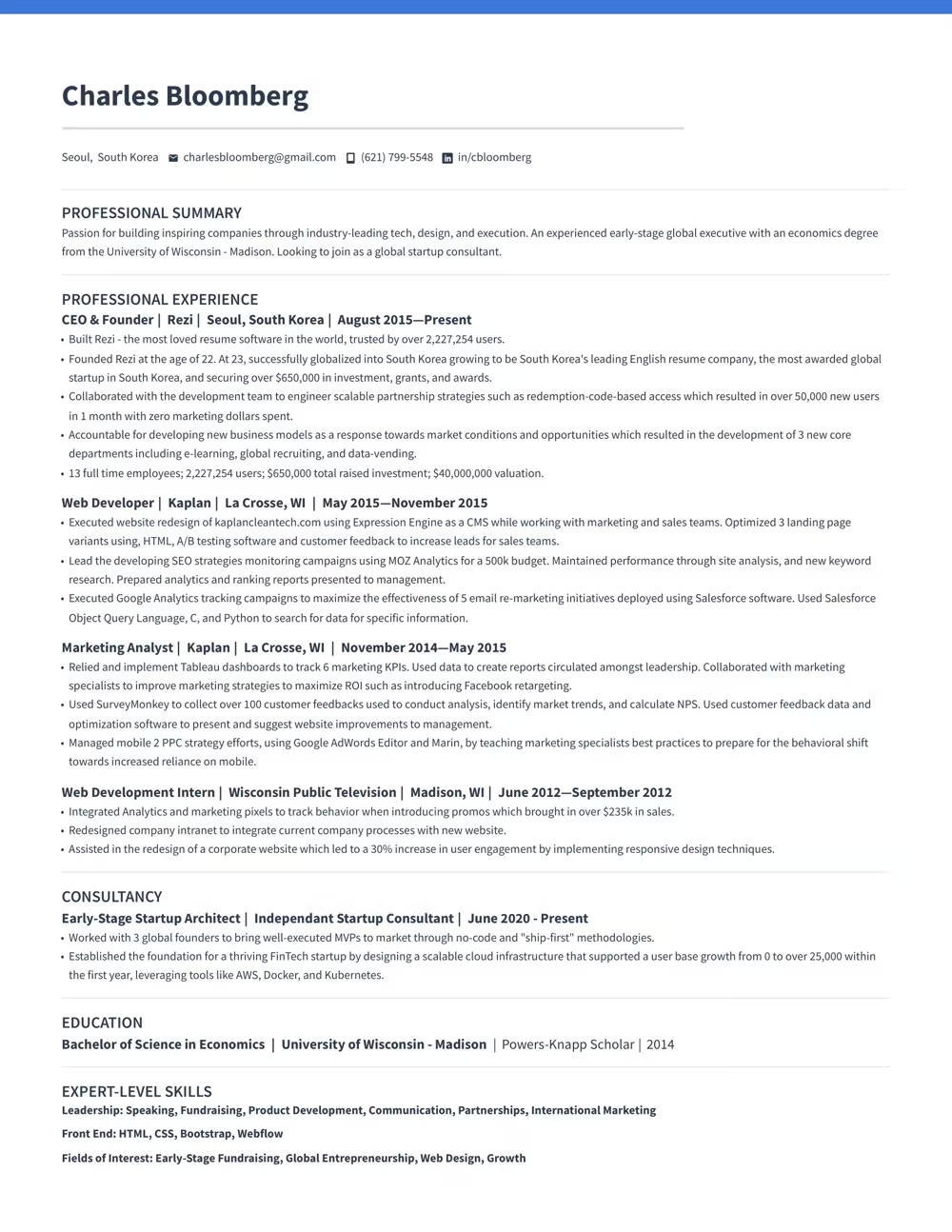
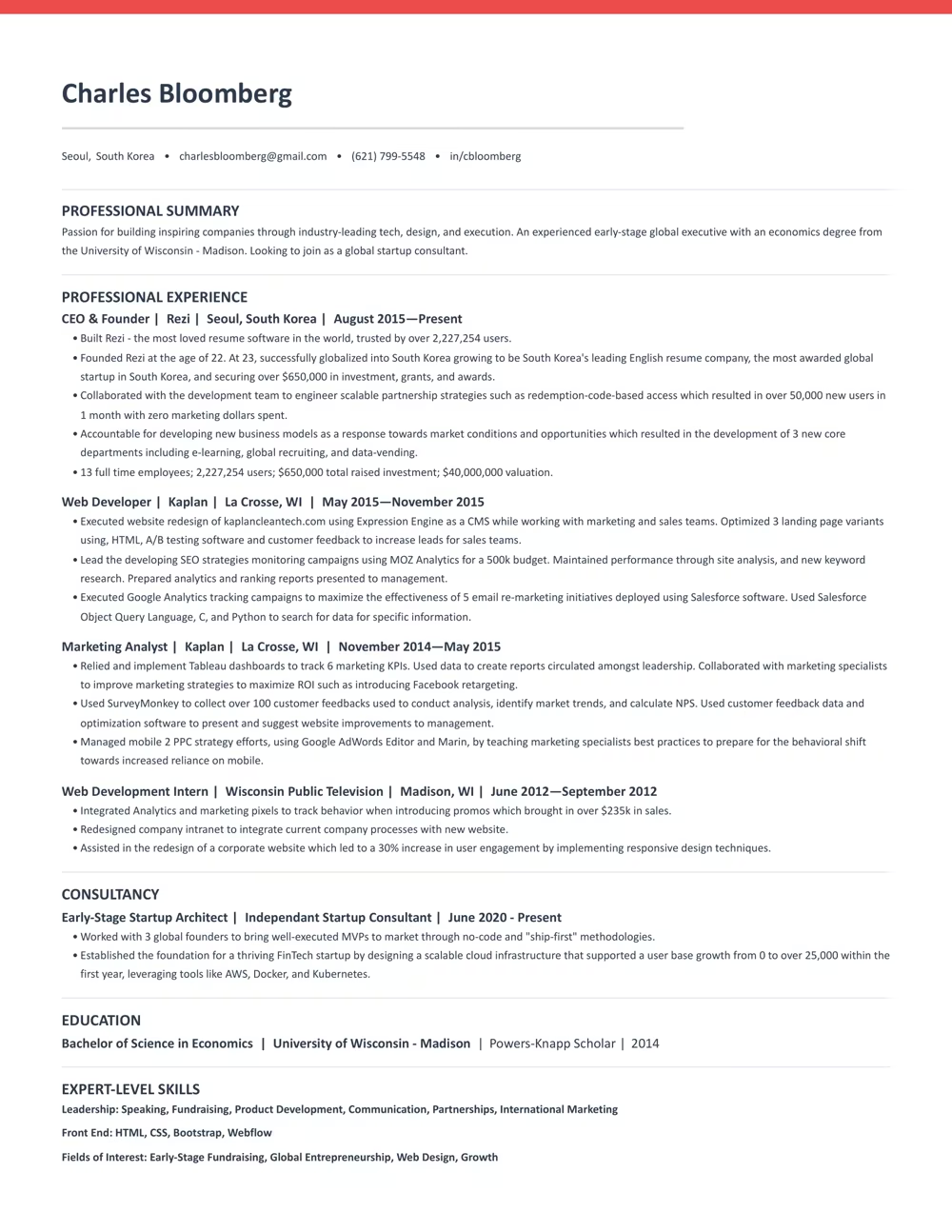
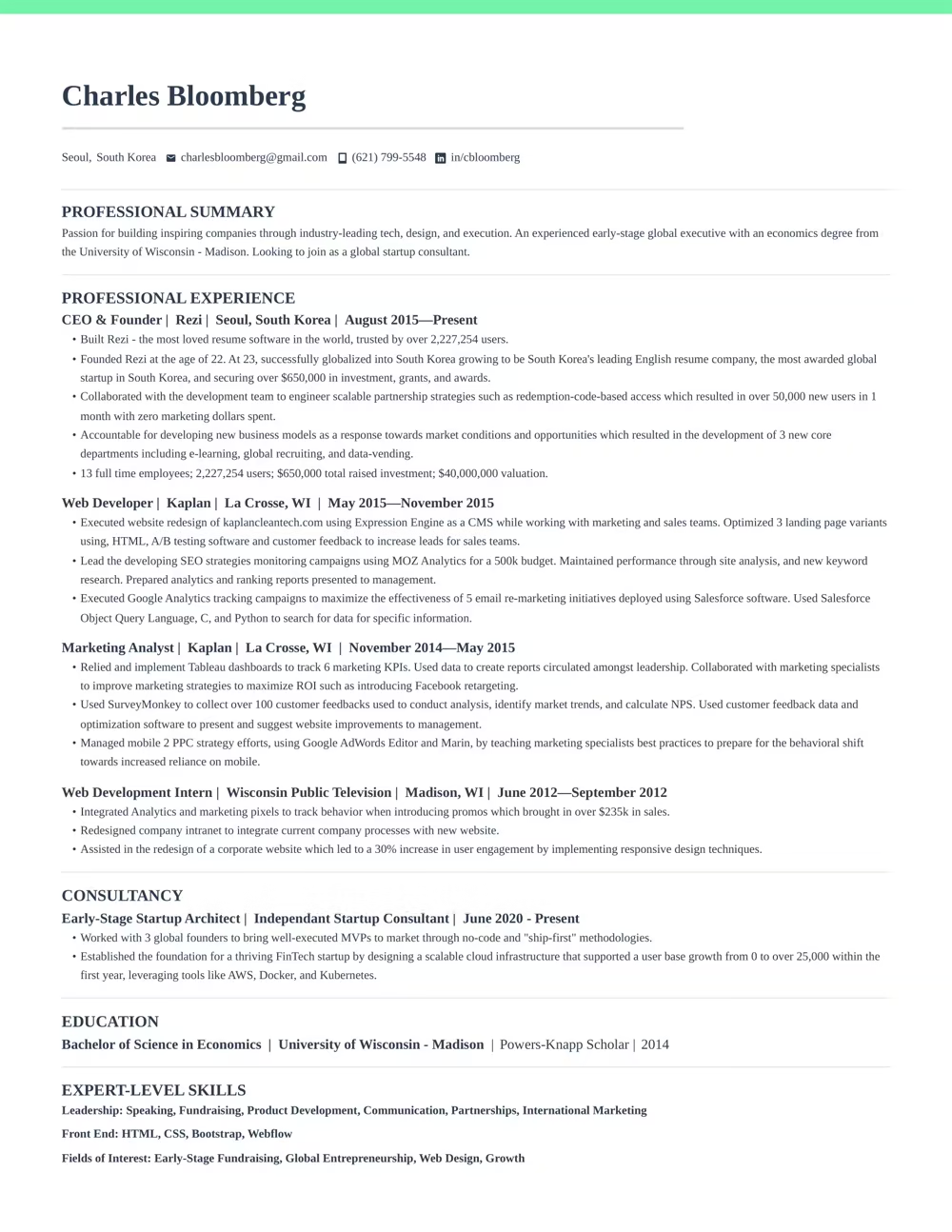
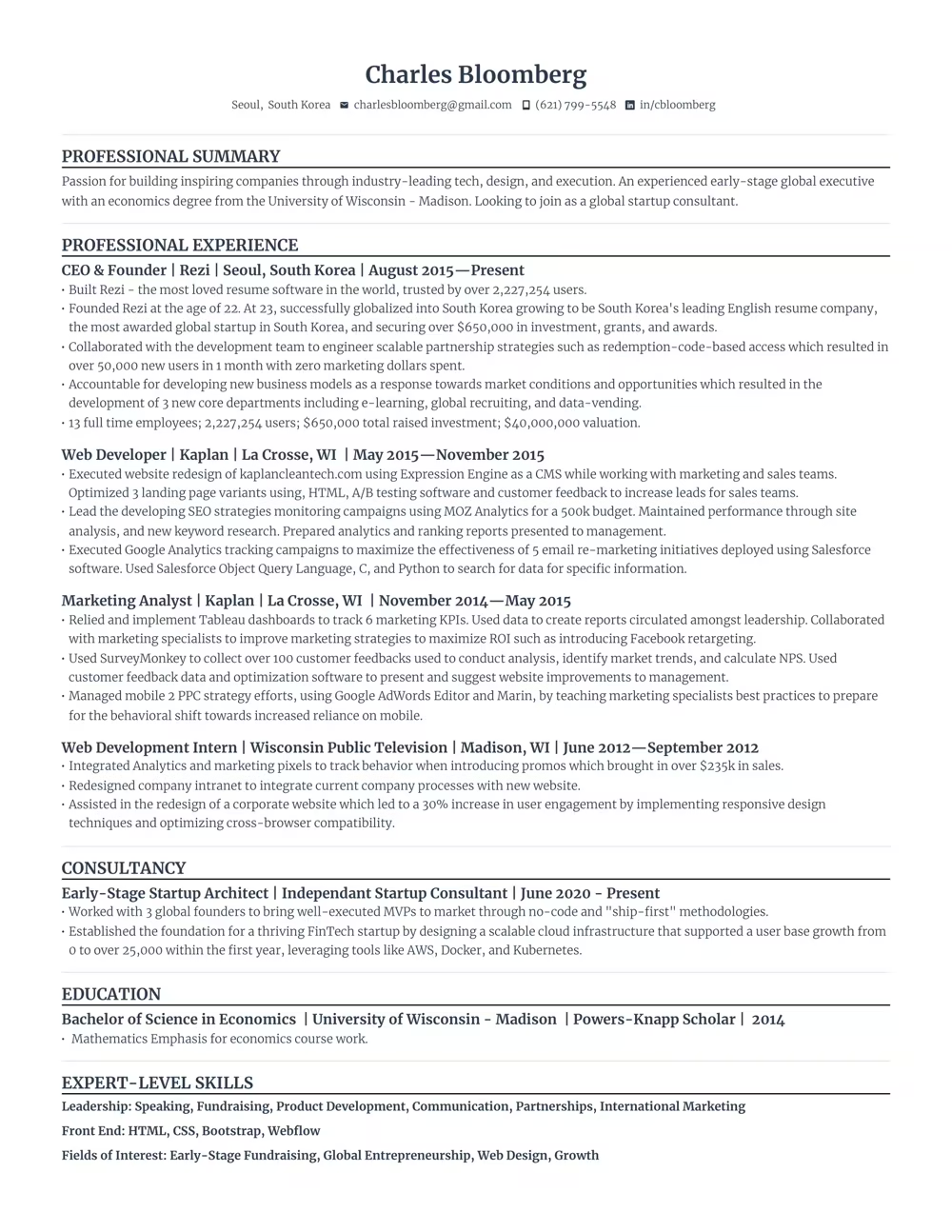
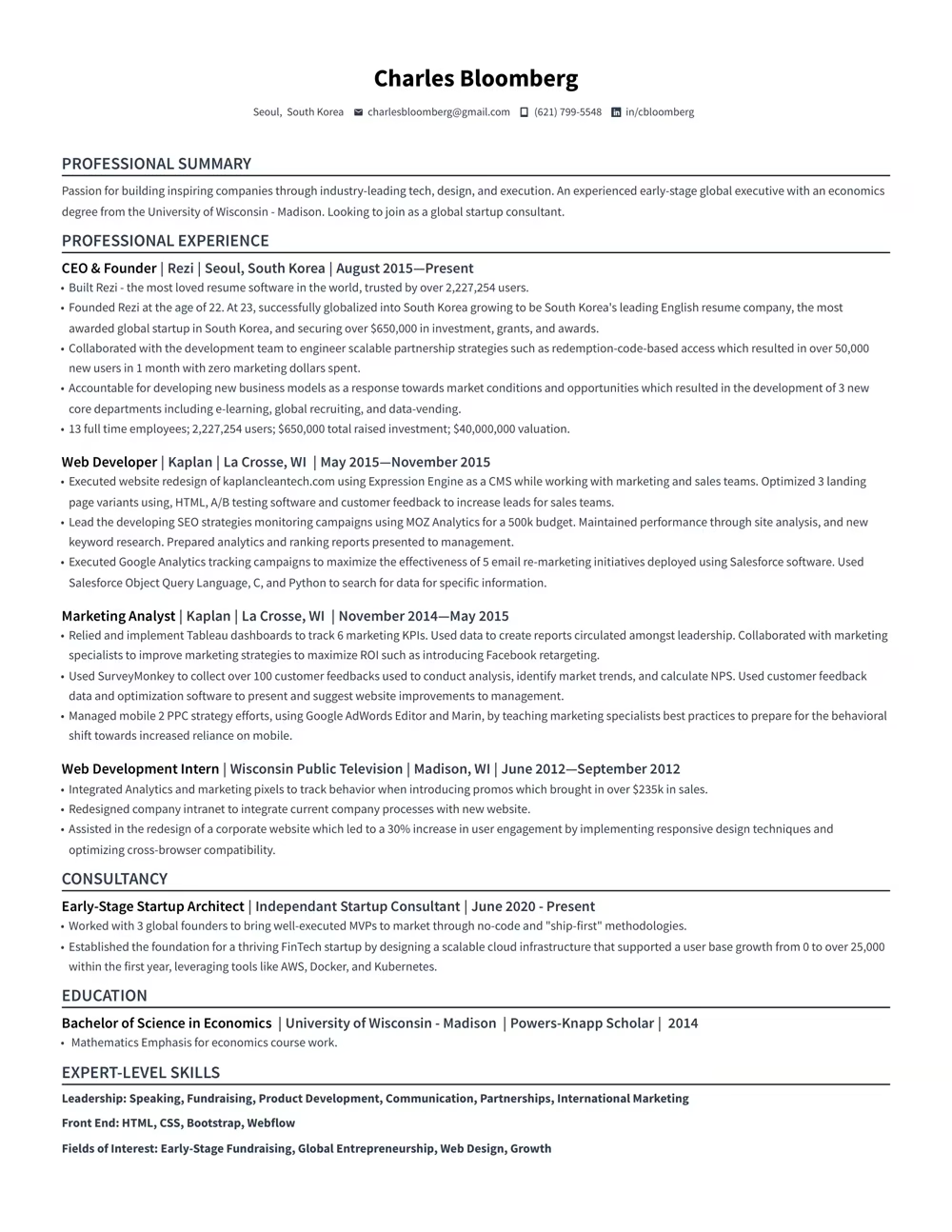
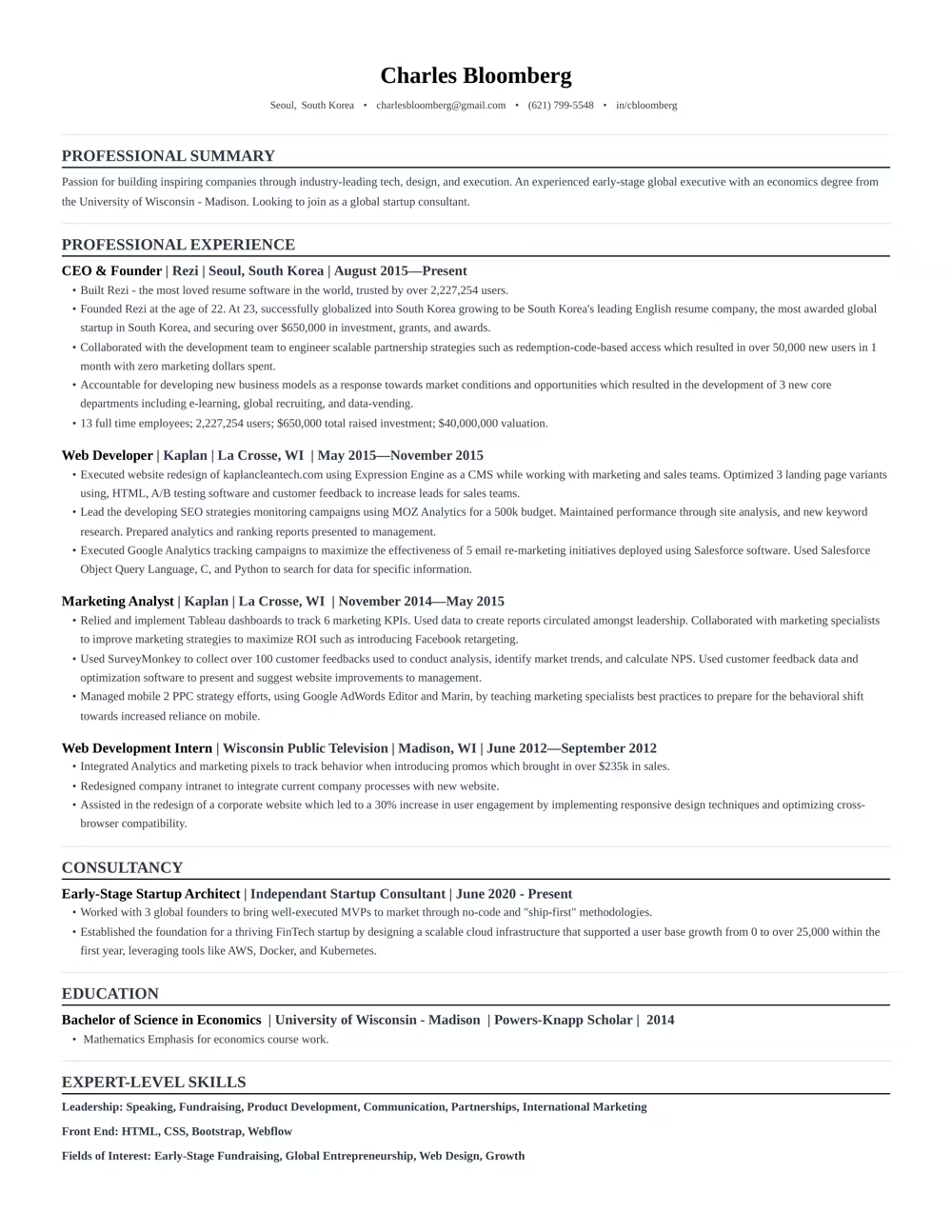
Take a look at some top-notch sample resumes for VP of Human Resources roles across different specializations. Find one that matches your profile and use it as a reference point (or feel free to steal it, just make sure to adjust the wording to reflect your career journey).
Vice President of People Operations
A Vice President of People Operations resume should emphasize your ability to build scalable HR infrastructure, optimize people processes, and leverage data-driven decision-making. Highlight experience designing and implementing HRIS systems, streamlining onboarding workflows, and creating operational efficiencies across the employee lifecycle. Showcase metrics like reduced time-to-hire, improved retention rates, and cost savings from process automation.
Senior Director of Human Resources
For a Senior Director of Human Resources resume, focus on your track record of leading HR teams and partnering with business unit leaders to execute people strategies. Emphasize cross-functional collaboration, talent development programs you've built, and your experience managing complex employee relations issues. Highlight your progression toward VP-level responsibilities and any measurable impact on engagement scores, turnover reduction, or workforce planning outcomes.
VP of People and Culture
A VP of People and Culture resume should spotlight your expertise in shaping organizational culture, driving DEI initiatives, and building employer brand strategies. Highlight experience leading culture transformation during periods of growth, M&A integration, or remote work transitions. Showcase measurable improvements in employee engagement scores, Glassdoor ratings, or inclusion metrics, and demonstrate how cultural initiatives directly supported business performance.
VP of Talent Management
Your VP of Talent Management resume should focus on strategic talent acquisition, succession planning, and leadership development programs. Emphasize your ability to build talent pipelines, reduce time-to-fill for critical roles, and design performance management frameworks that drive business results. Include metrics around internal promotion rates, leadership bench strength, and the ROI of learning and development investments you've championed.
Head of Human Resources
A Head of Human Resources resume should demonstrate end-to-end HR leadership, from strategy development to execution. Highlight your experience as the most senior HR leader in an organization, reporting directly to the CEO or board. Showcase your ability to build HR functions from the ground up, manage total rewards programs, navigate complex regulatory environments, and serve as a trusted advisor to executive leadership on all people matters.
VP of HR Operations
For a VP of HR Operations resume, emphasize your expertise in HR systems, compliance, payroll, benefits administration, and process optimization at scale. Highlight your ability to manage multi-site or global HR operations, lead HRIS implementations, and ensure regulatory compliance across jurisdictions. Include metrics around operational cost reductions, process cycle time improvements, and successful audit outcomes that demonstrate operational excellence.
Director of Human Resources
A Director of Human Resources resume should showcase your experience managing a full-spectrum HR function while demonstrating readiness for VP-level leadership. Highlight your ability to develop and execute HR strategies, manage HR teams, and partner with senior leaders on workforce planning. Emphasize accomplishments in areas like policy development, employee engagement, labor relations, and compliance, with clear quantifiable outcomes tied to business goals.
VP of Employee Relations
Your VP of Employee Relations resume should focus on your expertise in labor relations, conflict resolution, workplace investigations, and employment law compliance. Highlight experience managing union negotiations, reducing litigation exposure, and building positive workplace environments. Showcase metrics like decreased grievance rates, successful mediation outcomes, and improvements in employee satisfaction scores directly tied to your employee relations strategies.
How to Write a VP of Human Resources Resume
Short answer:
Focus on your strategic impact, leadership of organizational transformation, and measurable business outcomes driven through people strategy. Create a professional header with your name and contact details. Right below, write a 2–3 sentence executive summary outlining your most significant accomplishments. Describe your work history in reverse-chronological order, emphasizing strategic initiatives, business partnerships, and outcomes. Then, cover your education, including professional certifications, list key skills, and add extra sections such as board memberships, speaking engagements, or publications.
Include all the necessary sections in the correct order
Here's the correct order of sections for most VP of Human Resources resumes:
- Header with contact information
- Executive summary
- Work experience
- Education
- Skills
- Certifications
Depending on your current career situation, you can also throw in some additional sections. For instance:
- Board memberships or advisory roles
- Speaking engagements and conference presentations
- Publications and thought leadership
- Professional associations
- Volunteer experience
Include everything that shows you're capable of doing what the job requires. Make every section count. If it doesn't clearly highlight your strategic leadership or people expertise, it doesn't belong on your resume.
At the VP level, a two-page resume is standard and expected. You have the career depth to justify it — just make sure every word conveys value.
More details here: What Sections to Include on Your Resume?
Now, I'll give you a high-level overview of how to write each section, going from top to bottom. Well… almost. The only exception is the executive summary section. While it comes right after your contact info, it's actually easier to write it last. More on that in a sec.
Create a professional resume header
- Start with your name and contact information. Include the basics: your full name, phone number, professional email address, location, and LinkedIn profile. At the VP level, LinkedIn is non-negotiable — executive recruiters will look you up.
- Right below your name, clearly state your professional title (e.g., Vice President of Human Resources). This sets expectations and asserts your position in the field.
For more information, see: How to Create a Resume Header
Describe your work history
- Use reverse-chronological order. List your positions starting with the current or the most recent one.
- In each entry, include your job title, company name, location, and dates of employment. At the VP level, also consider noting the company size, industry, and revenue — this gives recruiters instant context about the scale of your leadership.
- Below each position, write 4–7 bullet points — the more recent the position, the more bullet points you should include. Describe your strategic responsibilities and, more importantly, your accomplishments.
- Use action verbs and quantify your achievements (e.g., "Redesigned the total rewards strategy for 3,500 employees, reducing voluntary turnover by 22% and saving $1.8M annually in replacement costs").
- Highlight your role as a business partner. Show how your HR strategy directly supported revenue growth, cost reduction, M&A integration, or organizational transformation.
Learn more about the best practices of this section with our detailed guide on how to describe your work experience on a resume.
List your degrees and detail professional learning
- In the education section, list your highest degree first, including the degree type, major, and institution. Many VP of HR candidates hold MBAs or master's degrees in HR, organizational psychology, or related fields — highlight these prominently.
- If you have extensive experience, keep the education section lean — school name and degree are sufficient. Save the space for what matters most: your track record.
- If you have HR certifications (e.g., SHRM-SCP, SPHR, GPHR), either include them in an "Education and Certifications" section, or create a separate "Certifications" section and place it right below.
For an in-depth guide on how to describe your education on a resume, see: How to List Education on a Resume
List your most relevant skills in the skills section
- Include a mix of technical HR competencies (e.g., HRIS platforms, compensation analytics) and strategic capabilities (e.g., organizational design, change management) that you are proficient in.
- Add in leadership and interpersonal skills such as executive coaching, stakeholder influence, and cross-functional partnership. At the VP level, these aren't optional — they're essential.
- You can use two separate subsections, one for hard skills, one for soft skills, or just list all the skills under one heading.
- Match your skills to the description of the job you're applying for. Don't just dump every HR buzzword — highlight those areas of expertise where your knowledge overlaps with the job ad.
Need some inspiration to get started? Here are some good skills to feature on your VP of Human Resources resume.
HR technology and tools:
- Workday
- SAP SuccessFactors
- ADP Workforce Now
- BambooHR
- Oracle HCM Cloud
- Greenhouse / Lever (ATS)
- Tableau / Power BI (People Analytics)
- UKG (Ultimate Kronos Group)
- Cornerstone OnDemand
- Lattice / Culture Amp
Strategic HR competencies:
- Organizational Design
- Workforce Planning
- Change Management
- Total Rewards Strategy
- Succession Planning
- Mergers & Acquisitions (HR Integration)
- Labor Relations & Collective Bargaining
- DEI Strategy & Implementation
- Employment Law & Compliance
- People Analytics & HR Metrics
Key soft skills for VP of HR:
- Executive Leadership
- Strategic Thinking
- Stakeholder Influence
- Executive Coaching
- Cross-Functional Collaboration
- Conflict Resolution
- Emotional Intelligence
- Negotiation
- Communication & Presentation
- Decision-Making Under Ambiguity
For a full-blown guide on listing skills on a resume, visit: How to Put Skills on a Resume
Use additional sections as further proof of your fit
Additional sections add depth to your resume and back up your claimed expertise. Good examples of extra sections to add to a VP of Human Resources resume are:
- Professional associations. Membership in organizations like SHRM or your local HR leadership council signals your commitment to the profession and ongoing development.
- Board memberships or advisory roles. If you've served on boards — corporate, nonprofit, or advisory — include them. They demonstrate executive-level trust and strategic influence beyond your day job.
- Speaking engagements. Presenting at HR conferences like SHRM Annual, HR Tech, or Workhuman positions you as a thought leader. List the event, topic, and date.
- Publications. If you've contributed to HR publications, industry blogs, or authored whitepapers on workforce strategy, list them in a separate section.
Highlight the most relevant information in an executive summary
Once you're done writing your VP of Human Resources resume, give it a full read. Pick the most relevant information and compile it into a summary paragraph. Place it right under the resume header.
- Be brief and to-the-point. In 3–4 sentences, sum up your career highlights, core competencies, and what you bring to the table. At the VP level, this should read like an executive pitch — not a generic objective statement. Tailor this section to match the employer's needs outlined in the job description.
- Use value-oriented language. Focus on how you can add value to the potential employer, mentioning specific outcomes like organizational transformations you've led, retention improvements you've achieved, or culture initiatives you've driven.
Once you've completed the core sections of your resume, you can use Rezi AI Resume Summary Generator to automatically create a powerful summary, tailored to the job you're applying for. All you need to do is add the position and skills you want to highlight. The AI writer will do the rest.
More information here: How to Write a Job-Winning Resume Summary (with Examples)
For finishing touches, make sure your resume looks professional
- Use a clean and polished resume format. Ensure your VP of HR resume is easily readable, with a professional font, consistent formatting, and clear section headings. At the executive level, your resume's visual presentation reflects your personal brand — don't let sloppy formatting undermine strong content.
- Two pages is the sweet spot for VP-level resumes. You have the experience to justify the length, but make sure every word conveys value. Cut anything older than 15 years unless it's exceptional.
Learn more about proper resume formatting here: How to Format a Resume & What Standard Resume Format to Use
What Makes VP of Human Resources Resumes Different
In short: the emphasis on strategic business impact, not HR administration.
This is also what many HR leaders get wrong on their resumes. You see, hiring decision-makers — CEOs, boards, executive search firms — won't be impressed with a list of HR functions you've overseen. They need to see how your people strategy moved the business forward. That's the difference between a director-level resume and a VP-level one.
You're selling strategy, not execution
At the VP level, your resume needs to demonstrate that you operate at the intersection of business strategy and people leadership. You're not the person processing payroll — you're the person who redesigned the compensation philosophy to retain top performers during a talent war.
What it means for you:
- Frame every accomplishment in business terms. Instead of "Managed benefits program," write "Redesigned benefits strategy across 12 locations, improving employee satisfaction scores by 18% while reducing per-employee costs by 11%."
- Show your seat at the leadership table. Mention your reporting relationship (e.g., reporting to the CEO), your role in executive leadership teams, and how you influenced company-wide decisions.
Organizational transformation is your differentiator
Companies hire VP-level HR leaders to drive change — not to maintain the status quo. Whether it's a merger integration, a culture overhaul, rapid scaling, or a restructuring, your resume needs to show you've navigated organizational complexity.
What it means for you:
- Highlight transformation initiatives prominently. Describe the organizational challenge, the strategy you developed, and the measurable outcome. For example: "Led HR integration following $400M acquisition, harmonizing policies for 2,000+ employees across 8 countries within 6 months."
- Show your ability to lead through ambiguity and change. This is what separates VP candidates from directors in the eyes of executive recruiters.
Metrics carry more weight than anywhere else
Quantifying achievements is a nice-to-have in many resumes, but at the VP level it's absolutely critical. Vague claims about "improving culture" or "enhancing talent strategy" don't cut it.
What it means for you:
- Include hard numbers wherever possible: turnover percentages, engagement scores, cost savings, headcount managed, time-to-fill reductions, revenue-per-employee improvements, or litigation cost avoidance.
- Contextualize the scale. Always mention the size of the organization, the number of employees impacted, the budget you managed, or the geographic scope of your initiatives.
Cross-functional influence matters as much as HR expertise
A VP of HR doesn't just lead the HR team — they partner with finance, operations, legal, and the C-suite to drive enterprise-wide outcomes. Your resume needs to reflect this breadth.
What this means for you:
- Describe partnerships with other business functions. For example, collaborating with Finance on workforce cost modeling, or working with Legal to navigate a complex labor relations situation.
- Demonstrate your ability to influence without direct authority. Board presentations, executive alignment, and cross-functional initiative leadership all belong on your resume.
Career progression tells a powerful story
Executive recruiters and hiring CEOs want to see a clear trajectory from HR practitioner to strategic leader. Your resume should make this arc unmistakable.
What this means for you:
- Highlight transitions from individual contributor or manager roles to director and VP positions. Show how the scope and complexity of your responsibilities expanded over time.
- If you've been promoted within the same organization, call it out explicitly. Internal promotions signal that leadership trusted you with increasing responsibility — that's a strong endorsement.
Bonus Resources for VP of Human Resources
This isn't going to be a game-changer if you need a resume now. But —
I want you to treat your career holistically. These resources will help you sharpen your HR leadership skills, add substance to your future resumes and, generally, keep you at the forefront of the people strategy field.
Professional associations and networks
Society for Human Resource Management (SHRM)
The largest HR professional organization in the world, SHRM offers executive-level certifications (SHRM-SCP), research, legislative advocacy, and an extensive network of HR professionals across all industries and levels.
HR Certification Institute (HRCI)
HRCI provides globally recognized HR certifications including SPHR and GPHR, along with professional development resources designed for senior HR leaders seeking to validate and advance their strategic expertise.
Chief HR Officer Association
A peer network specifically designed for senior HR executives, providing opportunities for strategic dialogue, benchmarking, and executive-level networking with other CHROs and VPs of HR.
Online learning platforms
Coursera & edX
Both platforms offer courses in people analytics, organizational behavior, strategic HR management, and leadership development — many from top universities like Wharton, Michigan, and MIT. Great for deepening your strategic toolkit.
LinkedIn Learning
With courses on executive leadership, change management, DEI strategy, and HR technology, LinkedIn Learning provides accessible professional development for senior HR leaders looking to stay current.
Cornell University's ILR School (eCornell)
eCornell offers specialized certificate programs in HR analytics, diversity and inclusion, strategic human resources, and employment law — all designed by faculty from one of the world's leading labor relations schools.
Publications
Harvard Business Review
HBR regularly publishes research and thought leadership on talent management, organizational design, leadership development, and the future of work — essential reading for any senior HR leader who wants to speak the language of the C-suite.
SHRM HR Magazine & HR Today
SHRM's publications offer practical insights on policy changes, compliance updates, and emerging HR trends, keeping senior leaders informed about the rapidly evolving regulatory and strategic landscape.
People Matters
A global HR media platform covering workforce strategy, HR technology, and leadership — offering articles, interviews, and case studies relevant to VP-level HR professionals navigating complex people challenges.
Tools and software reviews
Capterra & G2
Both websites provide extensive reviews and comparisons of HRIS, ATS, performance management, and people analytics platforms, helping you evaluate the right technology stack for your organization.
Josh Bersin
Josh Bersin's research and advisory content covers HR technology trends, talent strategy, and organizational design — making it an invaluable resource for VP of HR leaders evaluating tools and building modern people functions.
Summary
Here's what you need to know about writing a VP of Human Resources resume:
- Structure your resume with essential sections in this order: Header, Executive Summary, Work Experience, Education, Skills, and Certifications. Add extra sections like Board Memberships, Speaking Engagements, or Publications when relevant.
- Include a professional header with your name, contact information, and professional title such as "Vice President of Human Resources."
- Describe your work history in reverse-chronological order, emphasizing strategic initiatives and quantifiable business outcomes — not just HR functions.
- In the education section, list your highest degree at the top. List HR certifications like SHRM-SCP or SPHR either in the education section or under a separate heading.
- Highlight a mix of HR technology skills, strategic competencies, and executive leadership capabilities, tailoring them to the job description.
- Frame every accomplishment in business terms — turnover reduction, cost savings, engagement improvements, and organizational transformation outcomes.
- Show your seat at the leadership table by mentioning your reporting relationships, executive team participation, and cross-functional partnerships.
- Once done writing the resume, compile the key information into a brief, value-oriented executive summary at the top.
- A two-page resume is standard and expected at the VP level — just make sure every word earns its place.
- Demonstrate career progression clearly, showing a trajectory from HR practitioner to strategic leader.
Thanks for reading! Got any questions? Feel free to reach out to me on LinkedIn. (Or check out the FAQs first, maybe your question is answered there.)
FAQ
What keywords should I use on my VP of Human Resources resume?
Use strategic HR terminologies and platform names relevant to your experience, such as organizational design, workforce planning, total rewards, people analytics, change management, Workday, SuccessFactors, and M&A integration. Highlight certifications like SHRM-SCP, SPHR, or GPHR if you possess them. These keywords will help you pass ATS scans and signal executive-level expertise to recruiters.
Should I include every HR function I've managed on my resume?
No. At the VP level, a comprehensive list of every HR sub-function you've touched comes across as tactical, not strategic. Instead, focus on the initiatives where you had the greatest impact. Mention specific functions only when they're tied to measurable outcomes or when the job description specifically calls for that expertise.
How do I position an internal promotion on my resume?
List the company once with your total tenure, then break out each role underneath with its own title, date range, and bullet points. Internal promotions are a strong signal of trust and performance — make sure the progression is immediately visible. Each role should show increasing scope and strategic responsibility.
I've worked at one company for a long time. Will that hurt me?
Not at all, as long as you show growth. Break out different roles or major phases of your tenure, highlighting how your scope expanded over time. Emphasize diverse challenges you tackled — restructurings, rapid growth phases, system implementations, or cultural shifts — to demonstrate breadth of experience within that single organization.
How should I handle M&A experience on my resume?
M&A experience is gold for VP of HR candidates. Describe your role in due diligence, cultural assessment, policy harmonization, benefits integration, and workforce planning. Include specifics: deal size, number of employees integrated, timeline, and geographic scope. This type of experience signals that you can handle high-stakes organizational complexity.
Should I include DEI initiatives on my resume?
Absolutely — but go beyond vague statements like "championed diversity." Quantify your impact: representation metrics improvements, pay equity audit results, ERG participation rates, or inclusion survey score changes. Companies want to see that you've moved the needle, not just launched programs. Tie your DEI work to business outcomes whenever possible.
Which resume format is best for VP of Human Resources resumes?
The reverse-chronological format is the standard for VP-level HR resumes. It highlights your career progression and the increasing scope of your leadership, making it easy for executive recruiters and CEOs to see your trajectory. Avoid functional or hybrid formats — they can raise red flags at the senior level by appearing to obscure gaps or lack of progression.
I'm transitioning from another executive function (e.g., COO, VP of Operations) into a VP of HR role. How should I approach my resume?
Lean into transferable leadership competencies: organizational design, change management, workforce planning, and team development. Highlight any direct HR-adjacent experience, such as managing employee engagement, leading restructurings, or overseeing training programs. Include any HR certifications or executive education you've pursued to demonstrate commitment. Frame your operational expertise as a competitive advantage — companies increasingly value HR leaders who deeply understand the business.