User Guides
Experience Level
Learn what Rezi’s experience levels mean, how to choose the right one, and how to add or update it while creating or editing your resume.
.webp)
Published on
July 23, 2026
Updated on
July 23, 2026
Your experience level isn’t something you choose once and never think about again. As your career evolves, so should your experience level. With Rezi, you can add or update your level to get personalized suggestions, feedback, and recommendations while you build your resume.
In this guide, I’ll cover how to choose the experience level that best matches your background, add it to your resume, and update it whenever you need.
Get started with our free AI Resume Builder. We guide you through creating an ATS-friendly application in minutes for any industry with the help of our advanced tools.
You can also try these AI features out for yourself:
And learn more about writing resumes for different experience levels:
- How to Write an Entry-Level Resume
- Best Internship Resume Examples and Templates
- How to Use Rezi for Senior Professional Job Applications
Adding Your Experience Level
Your experience level doesn’t just categorize where you are in your career. It helps Rezi tailor the platform to you, which can influence the AI suggestions, personalized feedback, and even your Rezi Score.
But don’t worry too much about getting it exactly right. These experience levels are only rough guidelines, not set in stone. Just choose the one that best reflects your experience and the types of roles you’re ready for. And if things change later? Just update your experience level.
Here’s a quick overview of each level:
- Internship: Best for students and recent graduates completing short-term work experience to build practical skills and gain exposure to their chosen industry.
- Entry-Level: Go for this option if you’re just starting your career or have little professional experience in your field. These roles are for candidates entering the workforce or changing careers.
- Associate: Typically suited to professionals with around two to three years of relevant experience who can work more independently and take on specialized responsibilities.
- Junior Level: A good fit if you’ve already gained some practical experience through internships, projects, or previous roles and are ready for more responsibility while continuing to develop your skills.
- Mid-Senior Level: Best for professionals with several years of experience who can manage projects independently, solve complex problems, and may mentor or supervise more junior team members.
- Director: Ideal for experienced leaders responsible for setting strategy, overseeing teams or departments, and driving business goals and long-term growth.
- Executive: Designed for senior leaders who make high-level business decisions, guide the company's overall direction, and oversee organizational performance and success.
How to Add Your Experience Level
Here’s an overview of the two methods to fill out your experience level with Rezi:
- Method 1: Add your experience level before creating a resume by selecting the level that matches your current career stage.
- Method 2: Change your experience level after creating a resume by editing an existing resume in your dashboard.
Let’s explore each method in more detail.
Method 1: Add your experience level before creating a resume
When you create a new resume, Rezi walks you through a short setup process that includes your experience level. Here’s what you need to do:
- Log in to your Rezi account.
- From your dashboard, click Create a resume.
- Choose how you’d like to create your resume, whether that’s from scratch, by uploading an existing resume, importing your LinkedIn profile with the Rezi Chrome Extension, or using the AI Resume Agent.
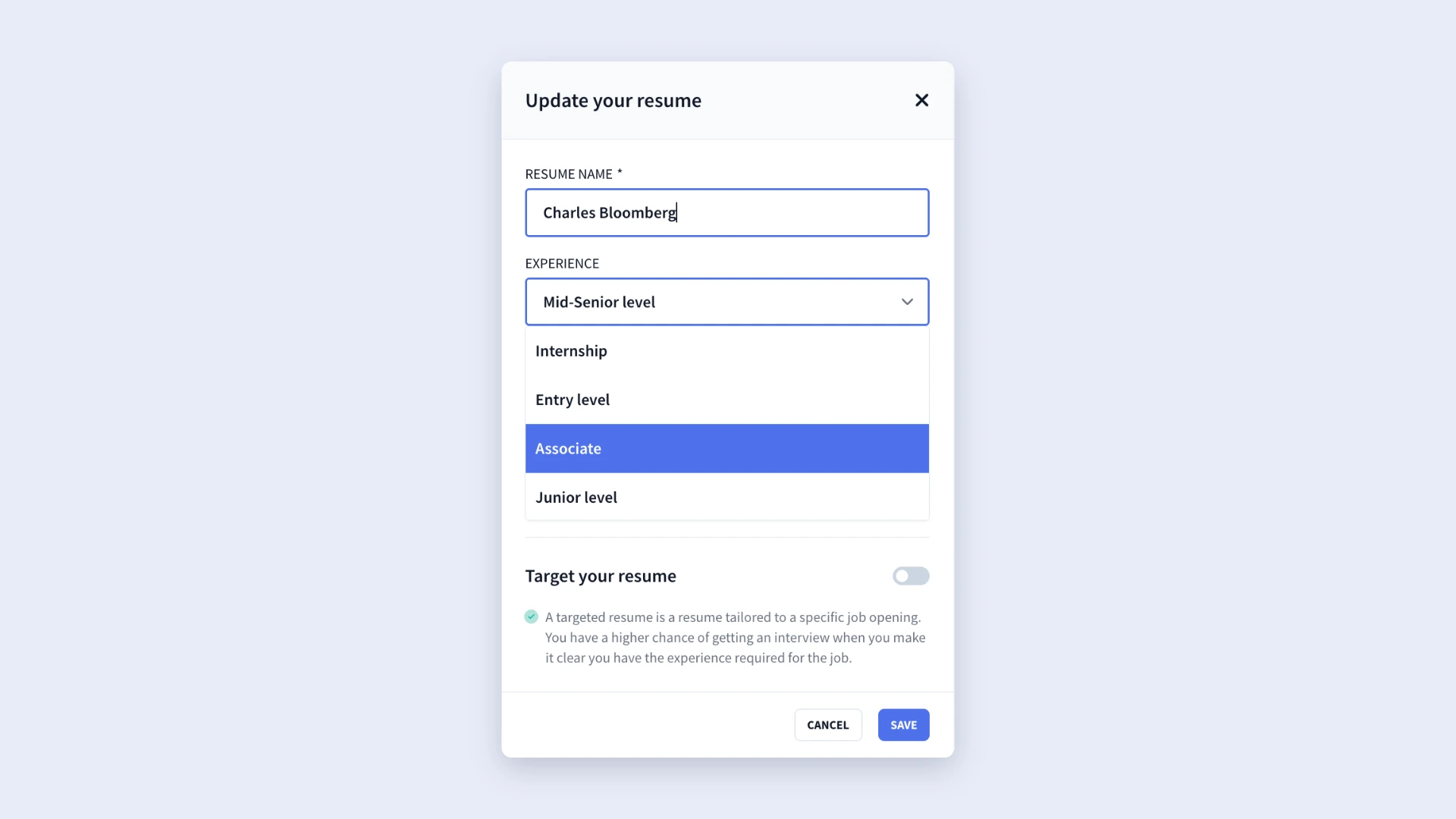
- Complete the setup form and select the experience level that matches your background. You can choose from Internship, Entry-Level, Associate, Junior Level, Mid-Senior Level, Director, Executive. .
- Click Save and continue to start building your resume.

Method 2: Change your experience level after creating a resume
If your experience level changes, you can update it in less than a minute.
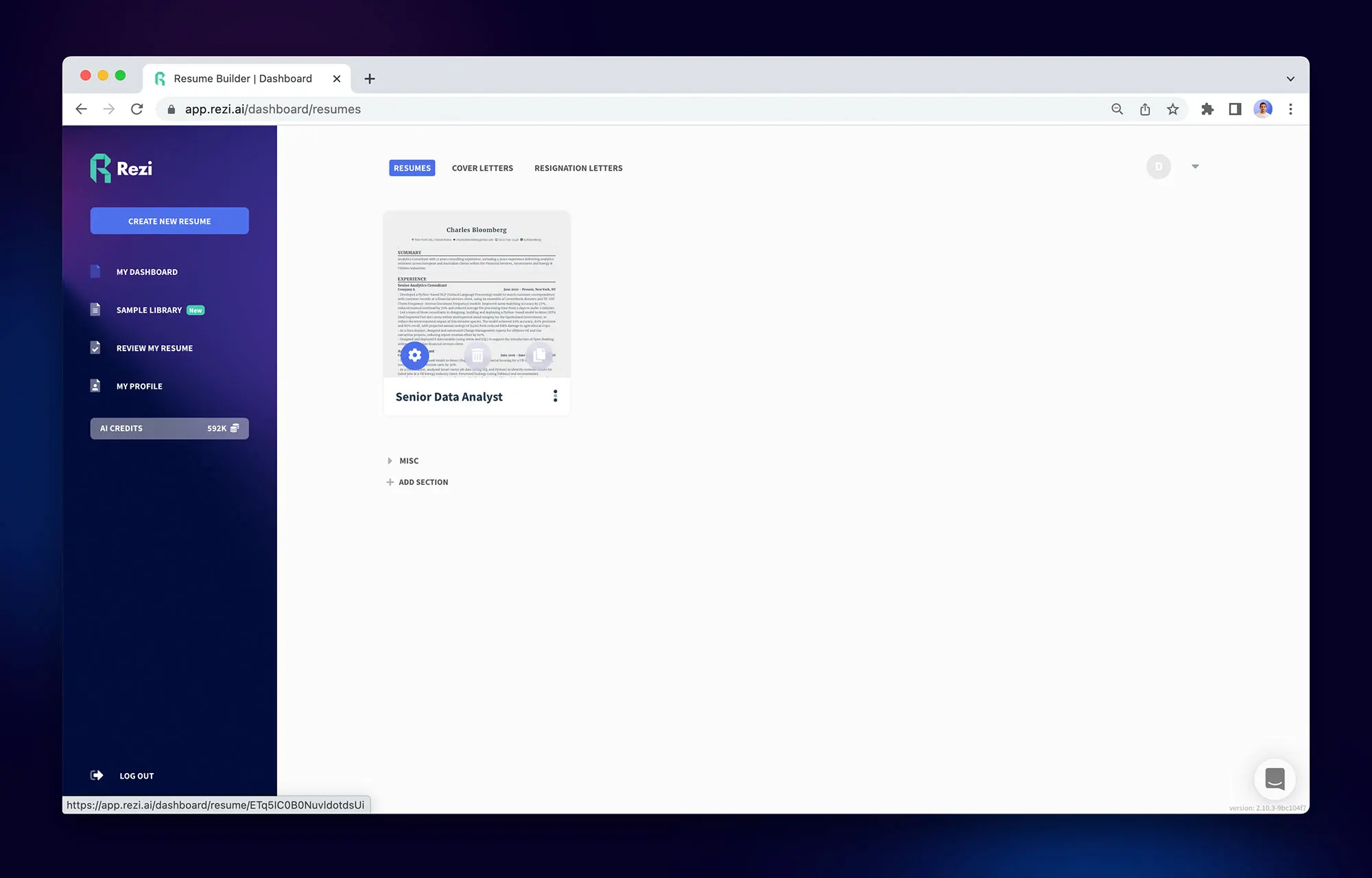
- Go to your dashboard and find the resume you want to edit.
- Hover over the resume and click the gear icon, or open the three-dot menu and select Edit.
- Select your new experience level.
- Click Save to apply the change.
Summary
Here’s an overview of how to add your experience level with Rezi:
- Your experience level helps Rezi personalize your resume-building experience, including AI suggestions, feedback, and your Rezi Score.
- You choose your experience level during the setup process when creating a new resume. You can select from seven options: Internship, Entry-Level, Associate, Junior Level, Mid-Senior Level, Director, Executive.
- These levels are meant to be general guidelines, so you don’t need to match every characteristic of a specific level.
- Choose the option that best reflects your current experience and the types of roles you’re applying for.
- If your career progresses or you realize a different level is a better fit, you can update your experience level at any time from your resume settings.
- Changing your experience level won’t affect the content of your resume directly, but it can change how Rezi tailors its recommendations and feedback.
- If you’re unsure which level to pick, don’t overthink it; you can always adjust it later as your experience grows.
FAQ
What does your experience level do in Rezi?
Your experience level helps Rezi personalize your resume-building experience. The level you choose can influence the AI suggestions, resume feedback, and your Rezi Score, making the recommendations more relevant to your current career stage.
Which experience level should you choose?
Choose the experience level that best reflects your current career stage and the types of roles you’re qualified to apply for. Don’t worry about fitting every characteristic of a specific level; these categories are only meant as general guidelines. If you’re between two levels, pick the one that most closely matches your overall responsibilities and leadership roles.
Should you choose your experience level based on years of experience?
Not necessarily. While years of experience can be a helpful guideline, they aren’t the only factor to consider. Think about the responsibilities you’ve had, the skills you’ve developed, and the level of roles you’re targeting. For example, someone with two years of internships and no degree may choose a different experience level than someone with advanced education.
Can you have different experience levels for different resumes?
Yes, if you’re creating resumes for different career paths or you’re at various stages in different industries, it can make sense to use different experience levels. Choosing the level that best matches each resume lets Rezi provide AI suggestions and feedback that are more relevant to the specific role you’re applying for.
Will changing your experience level change your resume content?
No, changing your experience level won’t automatically edit or remove anything on your resume. Instead, it updates how Rezi tailors its AI suggestions, feedback, and scoring. If you’ve gained more experience or changed career paths, updating your experience level can help ensure the recommendations you receive are more relevant to your current situation.

Upload or drop your resume to get started
Upload your resume to get started
Score my resume

Lauren Bedford is a seasoned writer with a track record of helping thousands of readers find practical solutions over the past five years. She's tackled a range of topics, always striving to simplify complex jargon. At Rezi, Lauren crafts genuine and actionable content that guides readers in creating standout resumes to land their dream jobs.