
Career Advice
What to Do When You’re Overqualified for the Job
Learn what overqualified really means and how to turn it to your advantage. Get practical tips to tailor your resume, impress in interviews, and actually land the job.


Published on
December 19, 2025
Updated on
January 6, 2026
If you’re told you’re “overqualified,” show why your experience is an advantage, not a drawback. Focus your resume on relevant skills and make it clear why this role aligns with what you want to do next. Be open about looking for long-term stability and your enthusiasm for the company’s mission or culture. During interviews, be confident and emphasize your commitment, adaptability, and desire to make an impact.
When I was an English teacher, I used to tell my friends how much I genuinely enjoyed interviews. I had plenty of experience, knew I could handle any question they threw at me, and wasn’t too worried about getting the job. So annoying, I know.
If you’ve ever felt that way — more skills and qualifications than the role calls for, a job description that seems almost too simple, and a salary you’re used to being higher — but still have your reasons for wanting the job anyway, you might be overqualified.
It’s wild that being too qualified could ever be a problem. You’d think employers would love someone dependable, experienced, and likely to exceed expectations (especially when they expect entry-level candidates to have two years of experience). Make it make sense.
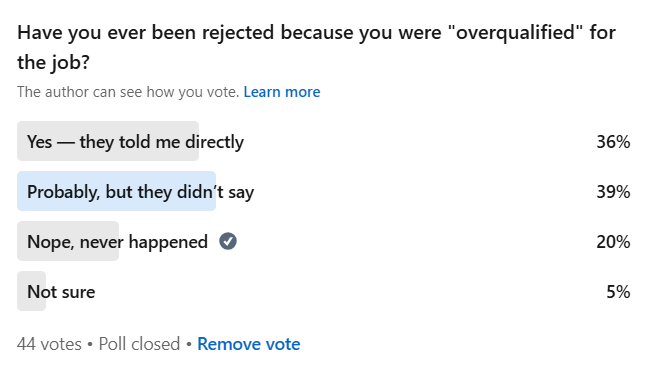
But alas, that’s not always how it plays out. And it’s more common than you’d think. We ran a poll on LinkedIn, and here’s what we found:
In this guide, I’ll break down:
- What employers really mean when they say you’re overqualified.
- How to land the job anyway.
- Sample responses for when the topic comes up.
If you want help showing off just how qualified you are, check out our AI Resume Builder or these guides:
- How to Write a Survival Job Resume
- Career Change at 40
- Tips for Writing a Resume Guaranteed to Win an Interview
- STAR Method Interview Guide
What Does “Overqualified for a Job” Mean?
In short: being “overqualified” usually means an employer thinks your skills or experience exceed what the role requires, and that can make them nervous. They worry you’ll get bored, outgrow the job quickly, expect higher pay, or struggle to take direction. Sometimes, it’s also about ego or bias; a less experienced manager might feel uneasy hiring someone with more expertise or assume you won’t stay long-term.
If you’ve ever googled “overqualified for a job,” you’ve probably come across that viral video of a woman dressed as Nyango Star absolutely killing it on the drums:
Being overqualified can feel a bit like that; you’re great at what you do, maybe too great, and sometimes that ends up working against you.
Employers often use “overqualified” as a polite way to explain why you’re not getting the job. This Reddit user summed it up perfectly:
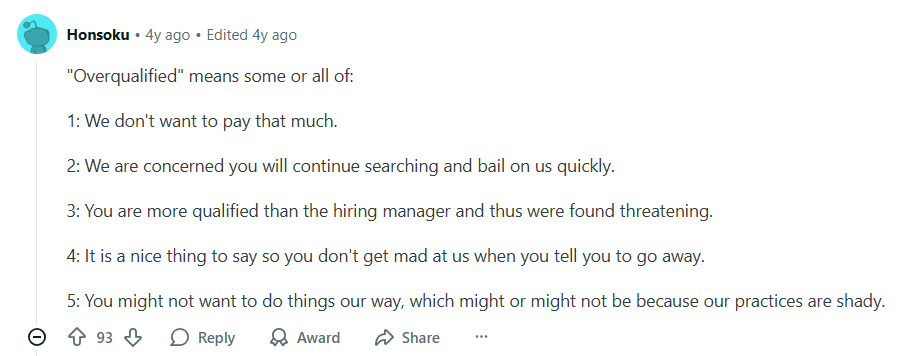
Employers are often suspicious, wondering why someone with your skills and experience would apply for a role that seems below your level. Here are some of their main concerns:
They’re worried about job stability
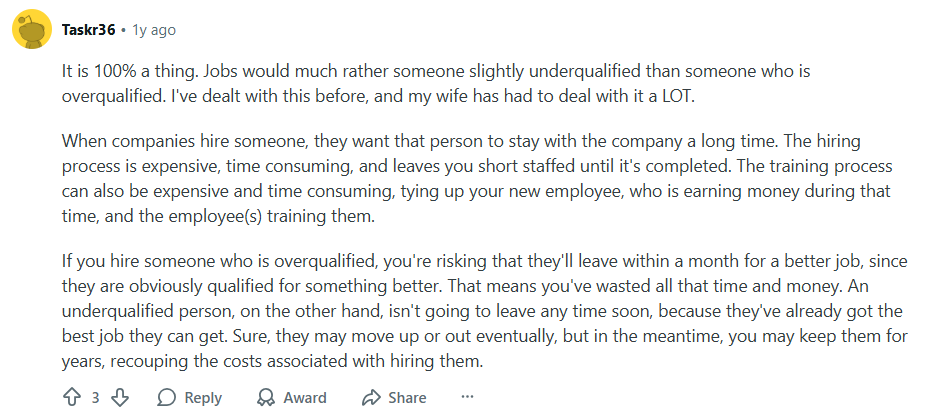
When hiring managers see an impressive resume, they might assume this job is just a temporary stop while you wait for a better opportunity. From their perspective, that could mean rehiring, retraining, and restarting the whole process all over again.
This is from a hiring manager’s perspective:
They think fewer challenges will bore you
Being great at something might sound ideal, but when a job stops being challenging, it can quickly lose its spark. Many people need a challenge to stay motivated and make work feel rewarding. If the role is below your skill level, daily tasks may feel repetitive or unfulfilling.
Employers assume you might get restless and start job hunting again before long.
Lorenza, a client success manager who applied for a business development role, shared her experience of being told she was overqualified:
“I normally manage medium to large accounts, so this job would’ve been repetitive. I wouldn’t be managing clients or helping them grow; just handling incoming requests and passing them to another team member. They told me it came down to me and one other candidate, but they chose the other person because they didn’t want someone to get bored, feel demotivated, and leave after the first six months.”
They fear a power imbalance and that you’ll overstep
Some hiring managers get uneasy when someone with more experience applies for a smaller role, especially if the manager is younger or less experienced. That can make the dynamic feel a little awkward.
Here’s what’s often going through their heads:
- You might see the job as beneath you. They worry you’ll struggle to take direction or lose motivation because the work feels too basic.
- You could unintentionally overstep. Offering “help” or doing things your usual way might come off as stepping on toes.
- You might challenge authority. Employers fear a highly experienced candidate could question established processes or unintentionally undermine decisions.
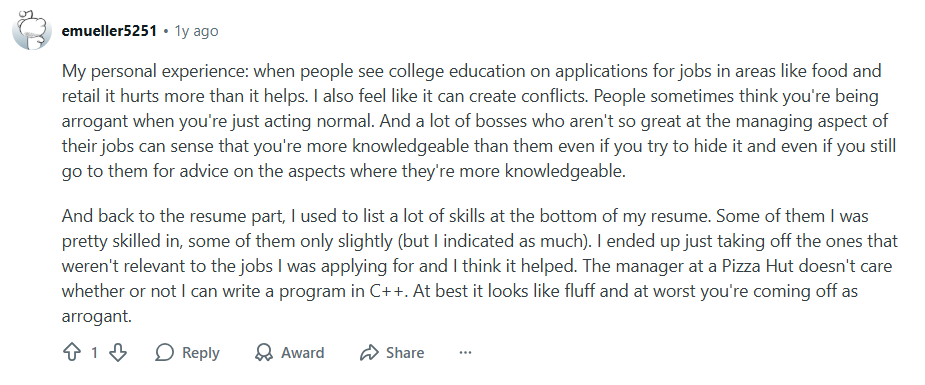
- They feel insecure or overshadowed. Sometimes it’s less about you and more about them — they might worry you’ll outshine them.
Take it from this Reddit user’s experience:
They assume you’ll want to move up quickly
Hiring managers might worry you’ll want to advance beyond the role (or even beyond them), especially if there aren’t many growth opportunities. Without room to improve, they assume you’ll get bored and start looking elsewhere.
They’re influenced by age bias
Ageism is still alive and well, folks, and “overqualified” can sometimes be a way to sidestep it.
Employers might see younger candidates as easier to mold, while assuming older workers resist change or struggle with tech. In reality, experienced professionals often know what works, and their confidence can be mistaken for defiance.
In the interview, Chad clarified why the role aligned with his goals and why he was genuinely interested:
“I made it clear that while I’ve done the senior management thing and can do it, it’s not what’s most engaging for me anymore. I genuinely prefer being an individual contributor — that’s where I do my best work. So from my perspective, it was actually a good fit for what I was looking for in terms of role and day-to-day work.
I could sense their concern about me being bored or using the role as a stepping stone, but I thought I answered those objections pretty directly. That’s why I think “overqualified” was really code for something else. When you’ve clearly explained why the role aligns with what you want and they’re still hesitant, it starts to feel like a more convenient explanation than the real issue.
So yes, I think in my experience for this job, it was more about age bias than being genuinely overqualified.”
They presume you’ll expect a higher wage
If your previous salary was higher, employers might assume you’ll expect the same pay or quickly feel undervalued. Even if you say you’re open to a pay cut, they may worry you’ll change your mind, ask for a raise once you’ve proven your value, or leave for a better offer.
They might also question why you’d accept a lower wage in the first place:
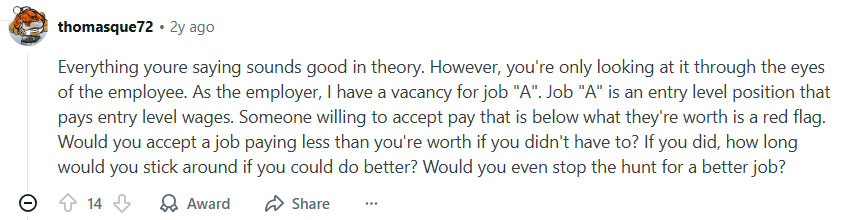
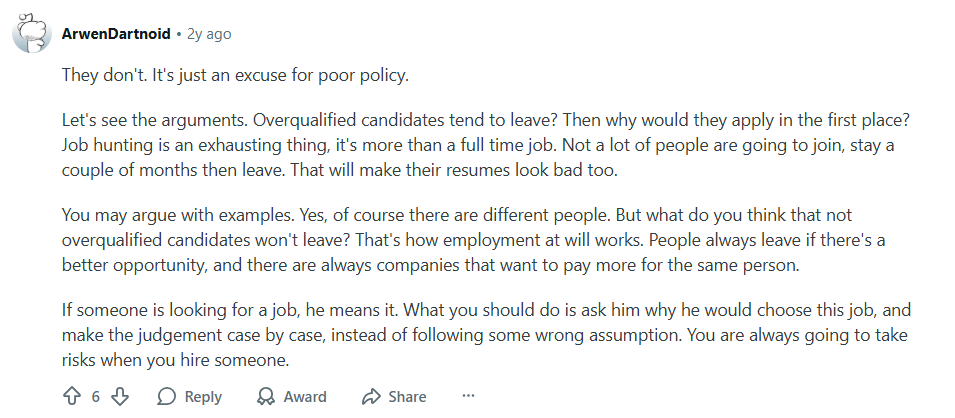
The job market is a mess these days, and most candidates will likely stick it out for a while, even if the pay isn’t perfect.
As one Reddit user pointed out:
How to Get a Job You’re Overqualified For
Here’s how to get a job you’re overqualified for:
- Tailor your resume and cover letter so they highlight what’s most relevant to the job. Focus on achievements and use your summary to explain why you want this role.
- Emphasize how your experience helps you adapt to new environments and contribute right away, and that you’re eager to learn and collaborate.
- Share what draws you to this opportunity, whether you’re changing industries, craving more hands-on work, or looking for better balance.
- Express genuine interest in the company and what excites you about their mission, culture, or products, and why you’d be proud to be part of it.
- Ease their concerns by explaining you’re looking for a long-term fit, hoping to grow with the team, and interested in contributing to lasting projects.
- Stay open-minded about pay or the scope of responsibility. It shows you care more about fit and impact than titles or salary alone.
- When being overqualified comes up, explain that your experience means less training, faster results, and genuine enthusiasm for the work.
If an interviewer hints that you’re overqualified — or questions why you’re applying — it’s your cue to reassure them. Acknowledge their concern, be upfront about your experience, and steer the conversation toward why this role and company interest you.
The same idea applies to your cover letter and resume summary: anticipate their hesitation and show that this job aligns with where you are now.
1. Tailor your resume and application
You don’t need to downplay your experience, just make it relevant. Focus on the skills and results that prove you can do this job.
- Highlight your impact. Put examples of achievements on your resume that show what you can bring to the team.
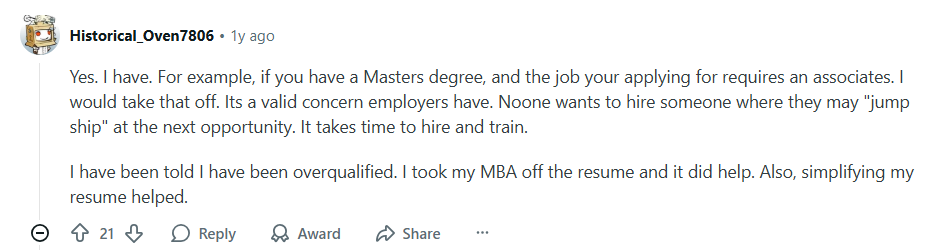
- Be selective. Impressive credentials (like a PhD or senior management title) can sometimes intimidate employers. One Reddit user even removed their MBA from their resume and saw better results:
- Customize your cover letter. Use it to connect your background to the company’s goals and show you’ve done your research. (Check out How to Write a Cover Letter for a Career Change.)
- Add context in your resume summary. Briefly explain what you’re looking for next and how it fits the company’s goals. Here’s an example:
“Experienced project manager eager to return to hands-on work, contributing to a growing team where efficiency, collaboration, and meaningful results are the focus.”
Write your summary with our AI Resume Summary Generator.
2. Emphasize your value, not your title
Reframe your experience as an advantage, and focus less on your actual titles.
- Show that you take direction well, collaborate easily, and fit into different team dynamics. (Check out How to Write Teamwork Skills on a Resume.)
- Mention that you enjoy mentoring, but only when it’s wanted. Avoid hinting that the team needs your guidance.
- Share examples of learning new tools, systems, or skills despite years of experience.
- Ask thoughtful questions about the company’s challenges to show genuine interest and initiative.
3. Explain your motivation early
If you’re aiming for a role that seems below your level, be upfront about why.
- Clarify your goals. Maybe you’re changing industries, looking for a more hands-on role, or prioritizing work-life balance.
- Frame it positively. Emphasize what attracts you to this opportunity rather than what you’re moving away from.
- Use your cover letter wisely. Explain why this specific role excites you and how it aligns with your current career goals.
- Stay authentic. Express interest in the company’s mission or culture, but keep it grounded and believable.
4. Show enthusiasm for the company
Talk about what genuinely excites you about the company; your enthusiasm can help ease doubts that you’re overqualified or might not stick around long-term.
- The mission. Maybe their goals align with yours, and you’re looking for a way to give back or do more meaningful work.
- The culture. You admire how they treat employees or encourage collaboration, and you’d love to be part of that.
- The products or services. You’re genuinely interested in what they create or how they serve their customers, and you want to contribute to that success.
- The reputation. The company has earned respect in its field, and you’re excited to learn from their team.
- The work-life balance. You’ve handled high-pressure roles before, and now you’re seeking a position that challenges you while allowing more room for life outside work (without sounding like you’re planning to do the bare minimum).
5. Emphasize your commitment
When employers think you’re too experienced, what they’re really wondering is: “How do I know you won’t jump ship once something better comes along?” Ease that concern by:
- Explaining that you’re looking for stability and a long-term fit, you plan to stay in the role for a significant amount of time and grow within the company.
- Sharing that you’re applying for roles at this level because you’re making a career shift and want to build new expertise.
- Highlighting your interest in contributing to long-term projects and becoming part of the company’s success.
6. Be flexible with expectations
A lower title means a lower salary, and that’s okay if the role genuinely fits what you’re looking for. Be upfront about your range and what you’re comfortable accepting, but don’t undersell yourself either.
Also, be open to having fewer responsibilities than you’re used to, as that might be the case with a different position.
7. Respond confidently when it comes up in the interview
If the topic of being overqualified comes up, don’t get defensive; stay calm and positive. Explain that your experience will help you learn the role faster, need less training, and bring real value from day one. Emphasize that you’re excited about the work and committed to contributing to the team’s success.
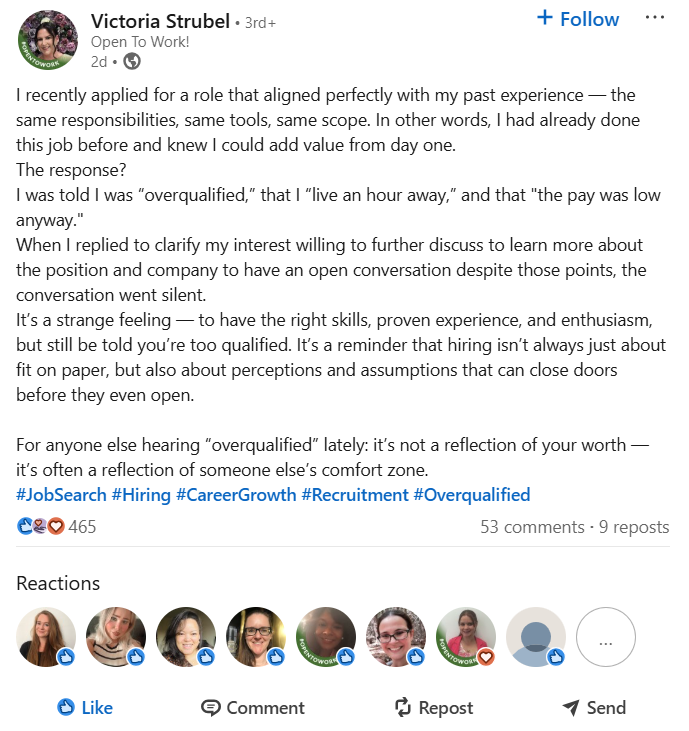
And if they still decide not to move forward, don’t take it personally; it happens more often than it should:
Sample Responses When You’re Called Overqualified
So you’re told you’re overqualified, whether it’s during the interview or in a follow-up email. Sometimes it’s just a polite cover for another reason, and sometimes they genuinely mean it. Either way, here’s how you can respond:
In an interview:
- “I understand why you might feel that way. I’m actually looking for a role where I can be more hands-on and focus on meaningful work; this position really fits that.”
- “That’s fair! I’ve had some great experiences, but what matters most to me now is contributing to a team and doing work I enjoy, not just chasing titles.”
- “I completely get the concern. I’m not looking for a stopgap; I’m looking for a long-term fit where I can make an impact and keep learning.”
Prepare for your interview with our AI Interview Practice.
In a recruiter message:
- “Thanks for being upfront! I’m aware my background’s strong, but I’m intentionally applying for roles at this level; it’s where I can do my best work right now.”
- “I appreciate you mentioning that. I’m focused on finding the right environment and team, more than a specific title or level.”
After a rejection email:
- “Thanks for letting me know. I understand if my experience seemed like too much for the role, but please keep me in mind for future openings — I’m genuinely interested in your company.”
- “I appreciate the update. I really admire what your team is doing, so I’d love to stay in touch in case something else opens up that’s a good match.”
- “Thank you for the feedback. I completely understand your hesitation, but I remain very interested in contributing to your mission in any capacity.”
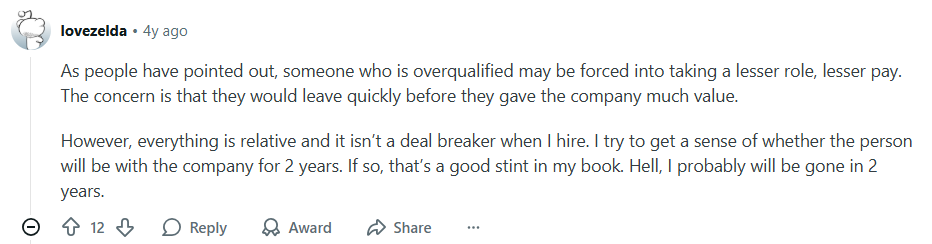
And who knows, you might just get lucky and run into a hiring manager like this:
Summary
Here’s a recap on being overqualified for the job:
- Being called “overqualified” often means employers worry you’ll leave soon, get bored, or outshine your manager.
- Employers may also assume you’ll expect a higher salary, want quick promotions, or struggle to take direction.
- Sometimes, “overqualified” masks age bias; employers may prefer younger, more moldable candidates.
- Tailor your resume to highlight relevant skills and results instead of every achievement.
- Use your cover letter and summary to explain why this specific role fits your goals right now.
- Focus on your value, not your title; emphasize curiosity, adaptability, and teamwork.
- Show genuine enthusiasm for the company’s mission, culture, or products.
- Reassure them of your commitment by discussing long-term goals and your interest in stability.
- Stay flexible about salary and responsibilities if the job aligns with your priorities.
- Address concerns confidently in interviews, framing your experience as an advantage.
FAQ
Is being overqualified for a job good?
Being overqualified isn’t necessarily bad; it shows you’re capable, adaptable, and resilient. If you want a change of pace, a better work-life balance, or need to enter a new industry, your advanced experience could help you thrive. However, employers may hesitate to hire someone overqualified, fearing higher turnover, salary expectations, or lack of job satisfaction.
How to avoid being overqualified for a job?
Tailor your resume to highlight only the experience and skills relevant to the job. Focus on what excites you about the role and address any concerns directly in your application or interview. Make it clear you’re genuinely interested and assure employers of your intention to stay long-term. It’s also helpful to explain why you’re seeking this type of role, whether it’s for balance or professional fulfillment.
Can you get rejected for being overqualified?
Absolutely, and it happens a lot. Employers worry you’ll get bored, ask for higher pay, or leave as soon as a better offer comes along. That’s why it’s important to reassure them early that you’re genuinely interested in the role and plan to stick around.
What is the biggest red flag to hear when being interviewed?
A big red flag is unclear communication, for instance, if the interviewer can’t clearly explain the role or gives mixed messages about what you’d actually be doing. You should also pay attention to their tone and behavior. If they speak negatively about past employees, seem dismissive when you ask questions, or use overly aggressive or “gotcha” interview tactics, it could signal a toxic work culture.
Why am I getting rejected for every job I apply for?
It could be that your resume isn’t tailored to each role, you’re applying for positions that don’t match your experience level, or your resume isn’t optimized for ATS. Take another look at your resume and cover letter, review a few strong examples, and run your resume through our resume checker for feedback.

Upload or drop your resume to get started
Upload your resume to get started
Score my resume

Sarah Coghlan is a writer and editor passionate about making resume and career advice clear and accessible to all. Based in Barcelona, her goal is to help job seekers create standout resumes and navigate the job search process with confidence and ease.