
Other
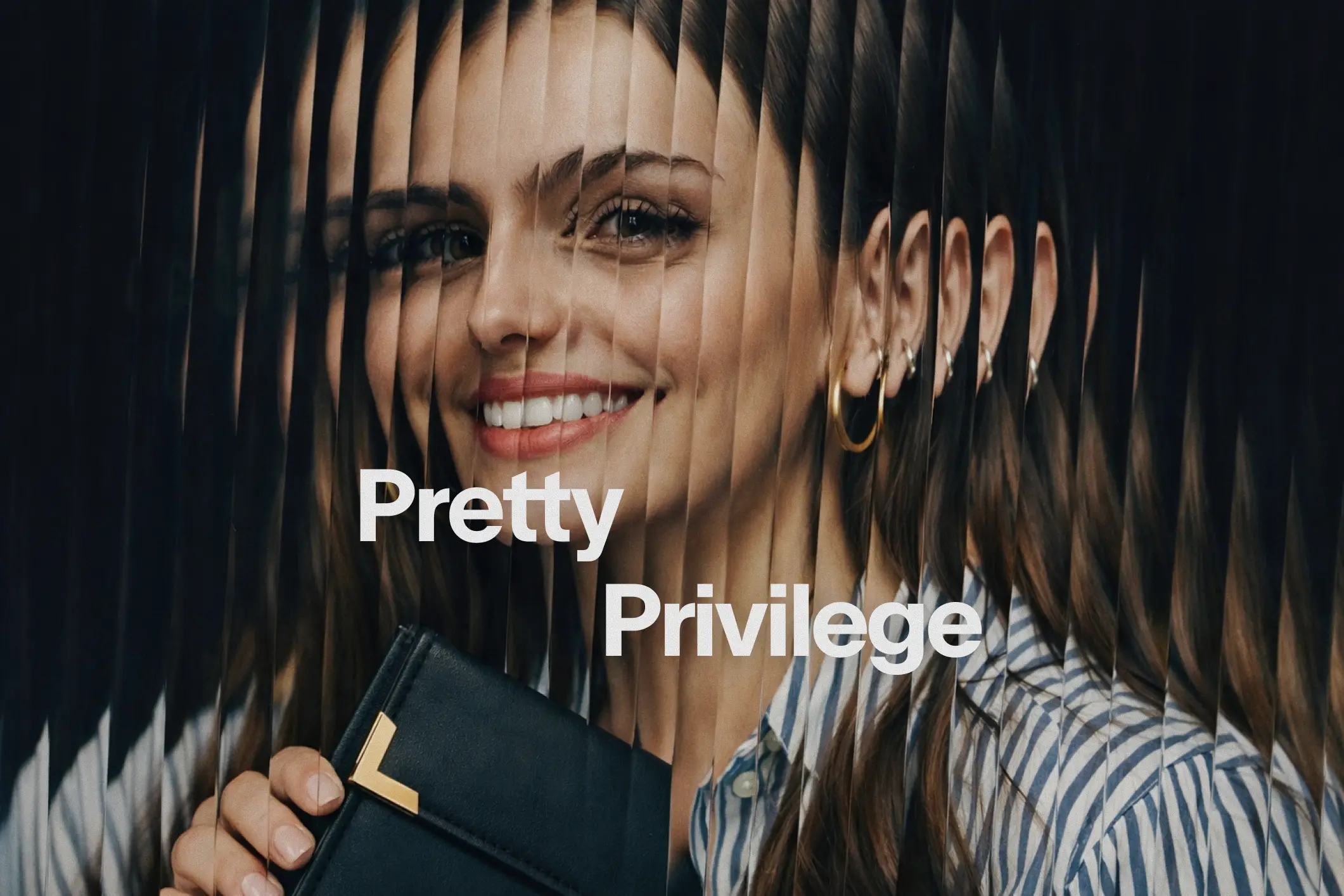
Pretty Privilege: Attractive, But at What Cost?
Ever wondered if being attractive actually helps at work? This deep dive into pretty privilege shows how looks affect hiring, pay, and first impressions.
Published on
February 10, 2026
Updated on
February 10, 2026
Pretty privilege influences how people are treated at work, from hiring and promotions to pay. Attractive people are often assumed to be more competent and likable before they’ve proven anything. But the effect isn’t equal: men tend to enjoy the benefits with fewer consequences, while women face stricter scrutiny and penalties for being too attractive or not attractive enough. Appearance can open doors, but it also brings bias and unfair expectations. And if you don’t fit conventional beauty standards, you’re not at a complete disadvantage; personality, skills, and confidence often matter more in the long run.
We’ve been fed pretty privilege since childhood: The Ugly Duckling, Cinderella, The Princess Diaries. Glow up, lose the glasses, get the makeover, and suddenly everyone’s nicer to you. Heroes were thin, dainty, and beautiful; villains were ugly and doomed to lose — reinforcing the idea that beauty equals goodness. With the exception of Scar from The Lion King, of course.
You’d think we’d outgrown that logic by adulthood. This is work. Looks don’t matter here; experience, effort, and intelligence do. We don’t even put photos on our resumes anymore (progress!). So, pretty privilege isn’t really a thing at work… right?
Well… not quite. Here’s what we need to unpack:
- What pretty privilege really means.
- How it shows up in the workplace.
- Who actually benefits from it (if anyone).
What is Pretty Privilege?
Pretty privilege is the unspoken advantage people gain from being attractive. It’s the idea that life is easier when you’re good-looking; not because you’re smarter or kinder, but because people assume you are. You might also hear it called the beauty bias or beauty premium.
But what actually counts as “pretty”?
In theory, beauty is subjective. In reality, it’s not. The dominant standard has historically favored “a white Anglo-Saxon association of tall, blond-haired, blue-eyed individuals who meet conventional beauty standards and are able-bodied” (Welcome to the Jungle).
This is why pretty privilege can’t be separated from other forms of discrimination. Beauty standards blend “racism and colorism, sexism, fatphobia, ableism, ageism, and other appearance-based discriminations” into one supposedly neutral idea of attractiveness (Time).
Then there’s the obsession with natural beauty.
People seen as naturally attractive are often viewed as more authentic, or even morally better. But “natural” is a myth. Men love a low-maintenance woman with a “natural look,” without realizing how much effort it takes to achieve that. Cosmetic procedures help, but go too far, and the privilege disappears.
Psychology explains why: the halo effect makes us assume that attractive people are smarter, kinder, funnier, and more capable. Neuroimaging even shows our brains link beauty and morality in the same areas (Scientific Reports).
In other words, humans are magpies. We’re drawn to the shiny thing, and once something looks beautiful, we’re far more likely to see it in a generous, glowing light.
The Gendered Double Standard
Pretty privilege doesn’t work the same for everyone, and it definitely doesn’t work the same for men and women. Even the word “pretty” skews feminine. While 90% of people agree that men benefit from attractiveness too (Luvly), women pay a much higher price for it.
Hiring data from a Resume Templates survey backs this up. Managers judge women more harshly on their appearance — attractiveness, weight, and age — than men, and it’s men who are more likely to let looks influence their hiring decisions. Younger managers, notably, care about appearance even more.
Women are rewarded for being attractive, right up until they’re punished for it.
How pretty privilege affects women
Attractiveness helps women get hired and promoted; 72% of people agree on that (Newsweek). But for women, beauty isn’t just an advantage; it’s an expectation. Their appearance is constantly evaluated, monitored, and commented on.
That’s where the trap kicks in:
- Too attractive? You’re objectified or labeled a distraction. Over half of women say they’ve downplayed their appearance to be taken seriously at work (StandOut CV).
- Not attractive enough? You’re unprofessional or not making an effort.
- Put effort in? You’re vain.
It’s the Barbie monologue, but make it corporate.
Ask how to dress in a male-dominated workplace and you’ll hear: look good, but not too good. Polished, but not obvious. This Reddit reply sums it up nicely:
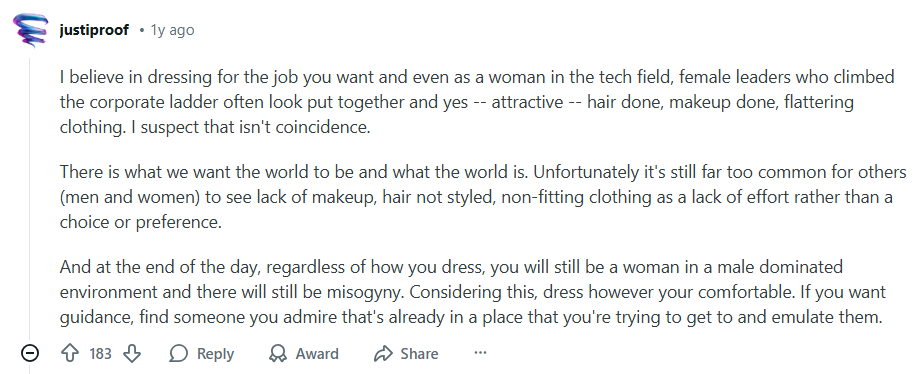
You’d like to believe your experience speaks for you. But your appearance still enters the room before you do:
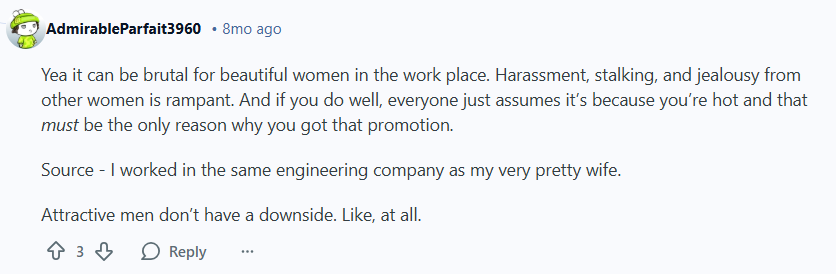
How it works for men
Attractiveness helps men too. Most people agree that good-looking men are more likely to get hired and promoted (Newsweek). But the difference is that men get the upside without the backlash.
Studies show attractive teens are more likely to become more educated, land better jobs, and earn more as adults, even when controlling for IQ, background, and health. That effect is stronger for men than women (Social Science Quarterly).
Their looks are treated as a bonus, not a liability. Attractive men are seen as charismatic, confident, and leadership-ready, not questioned or sexualized.
Take Ted Bundy. He was handsome and charming, and people defended him while he was on trial for murder. His looks bought him doubt, sympathy, and fascination.
So when good-looking men accused of serious crimes inspire fan clubs and think pieces, it’s fair to ask: would we care as much if they weren’t attractive? Exhibit B: Luigi Mangione.

Pretty privilege exists for everyone — but for women, it comes with conditions. For men, it mostly just comes with perks.
The Cost of Being Pretty
Pretty privilege isn’t all free drinks and doors held open. The “beauty penalty” often comes with discrimination, harassment, and extra scrutiny.
In the Luvly survey, 80% of attractive respondents said they’d faced downsides: being objectified, feeling pressure to always look good, or being underestimated intellectually.
At first, it can sound like a humblebrag, “Oh no, I’m too hot.” But take Debrahlee Lorenzana, fired for being “distracting” while dressed professionally, even in a turtleneck.
Sometimes the call is coming from inside the house. Internalized misogyny shows up as side-eyes, resentment, and assumptions that attractive women haven’t earned their success:

You’re judged no matter what, so you might as well lean into it. Over half of people admit to using their appearance to their advantage (Luvly). As Reneé Rapp puts it: “It’s not my fault you’ve gotta pay for what I get for free.”
Do You Actually Want to Be Pretty?
If we’re being honest, probably yes. It’s like being born rich — you’d rather have the cushion if things go wrong. The same logic applies to good looks.
But lacking pretty privilege isn’t a life sentence. As Sable Yong explains, “People are dynamic, attraction is fickle, and charm, intelligence, and wit will get you a lot further than looks can” (Time).
Pete Davidson’s dating history is a reminder of that. In fact, being very attractive can sometimes backfire and create the impression that you never had to develop much else, especially a sense of humor. One man interviewed by Vice said dealing with acne into adulthood forced him to build a personality first, and he’s grateful for it.
And if you’re not conventionally attractive and you refuse to develop a personality, I truly don’t know what to tell you.
Does Being Pretty Actually Get You Hired?
Attractive people get hired more often, and most people know it. Over 80% believe they also earn promotions and raises faster (StandOut CV).
And from the horse’s mouth: 40% of hiring managers admitted to choosing a more attractive candidate with an okay resume over a more qualified one who wasn’t as good-looking (Resume Templates).
Even freelancers with “professional-looking” photos are favored, even though there was no link to actual job performance (Harvard Business Review). Over half of employers check candidates online before interviews, so your LinkedIn photo is doing more work than you think (Resume Templates).
But you’d be surprised how many can’t even present themselves with basic hygiene intact:

Even in virtual interviews. Like this guy, really?

But here’s the catch. Nearly 67% of workers have witnessed unfair treatment based on looks, and over 64% feel pressure to alter their appearance, whether that’s wearing makeup or straightening their hair (StandOut CV).
And one in five report both positive and negative impacts: rewarded for being attractive, then punished for rejecting advances.
This kind of bias isn’t unique to beauty. Research on race shows similar patterns, with candidates who have white-sounding names receiving more callbacks than those with Black-sounding names (University of Chicago).
Legally, discrimination is prohibited under Title VII of the Civil Rights Act. In practice, it’s often reframed as a “restructuring,” a vague rejection, or the classic “not a culture fit.”
The Pretty Privilege Effect on Salary
Believe it or not, being attractive can sometimes fatten your paycheck. Attractive men tend to start out with higher salaries, while attractive women often catch up later in their careers, earning 10–15% more overall than their less-attractive counterparts (IZA).
Those who rated themselves “extremely attractive” (okay, brag) earned nearly $20,000 more than those who didn’t. Not surprisingly, 71% of CEOs rate themselves as extremely attractive, while entry-level workers do not (StandOut CV). Confidence clearly scales with power.
Even in hospitality, looks pay: attractive servers earn about $1,261 more per year (Journal of Economic Psychology). Speaking as a former server, it makes sense — attractiveness boosts confidence, and confidence plus friendliness builds rapport and bigger tips.
It’s not a magic shortcut, but across industries, beauty often translates into higher pay and better opportunities.
Final Thoughts
Pretty privilege shapes first impressions and influences hiring, pay, and how seriously people are taken. Pretending it’s not real doesn’t make things fair; it just makes the bias easier to overlook.
But it’s not a golden ticket. For women especially, beauty comes with conditions: be attractive, but not too attractive; confident, but not intimidating. Cross the invisible line and the privilege flips into punishment.
And if you don’t fit conventional beauty standards? It’s not the end of the world. Intelligence, humor, and kindness still move people; maybe not instantly, but often more reliably than a symmetrical face ever could.
If you have it, enjoy it. If you don’t, work on what you can control: personality, charm, and skill. The world rewards more than just a good face (but a good face certainly helps).
FAQ
Do I have pretty privilege?
You probably do if people are nicer to you before they know anything about you. If strangers smile more, you get more help without asking, small mistakes are forgiven, or you’re given the benefit of the doubt at work, while others aren’t.
How to spot appearance-based bias in the job hunt?
It usually shows up in vague feedback. If you’re qualified but keep hearing “not a culture fit,” “not the right image,” or “we went another direction” without clear skill-related reasons, that’s a red flag. Comments about your appearance — positive or negative — can be another. If something feels off, check Glassdoor, talk to current or former employees, and notice whether feedback changes after video interviews or LinkedIn views.
What increases your chances of getting hired?
A tailored resume and cover letter that clearly match the role, a professional LinkedIn, and solid research on the company and role all help. Hiring managers respond well to candidates who understand the job, can explain their impact, and confidently show how they’ll solve real problems.
How to avoid beauty bias when hiring?
Remove photos and names from resumes, standardize how candidates are evaluated, and decide what skills actually matter before interviews start. Structured interviews help too: same questions, same scoring, same criteria for everyone. Ignore “gut feelings” and use diverse hiring panels to balance perspectives.
What are good signs you will get the job?
It’s a good sign if the interviewer starts talking in specifics, like next steps, timelines, start dates, onboarding, or how you’d fit into the team. Being introduced to coworkers, asked for references, or discussing salary are all strong signals. But nothing’s guaranteed — budgets change, internal candidates appear — so stay optimistic, but keep applying.

Upload or drop your resume to get started
Upload your resume to get started
Score my resume

Sarah Coghlan is a writer and editor passionate about making resume and career advice clear and accessible to all. Based in Barcelona, her goal is to help job seekers create standout resumes and navigate the job search process with confidence and ease.