
Medical Resumes
Clinical Laboratory Scientist Resume Examples & Tips for 2026
Customize any of these resumes in minutes using our free AI-powered resume builder.
“Rezi is super upfront and continues to improve over time. I've recommended Rezi to several of my friends and colleagues. I just love this product so much.”

Ricky M.
Software Engineer

“Rezi is super upfront and continues to improve over time. I've recommended Rezi to several of my friends and colleagues. I just love this product so much.”
Ricky M.
Software Engineer
Helping users land jobs at 1,000+ companies such as














Here's a pattern I keep seeing in clinical laboratory scientist resumes: they read like a list of instruments you've touched. "Operated Sysmex XN-Series." "Performed chemistry panels." "Ran urinalysis." That's not a resume — that's an equipment log.
The problem? Hiring managers already know what a CLS does day to day. What they need to see is how you ensured accuracy, solved problems, maintained compliance, and contributed to patient outcomes. Your resume needs to tell the story of a scientist who doesn't just run tests but delivers reliable, timely results that directly impact clinical decisions.
And this is exactly what you'll learn from this article. Inside, you'll find:
- Examples of 9 clinical laboratory scientist resumes, covering different specializations and seniority levels.
- Insider tips about what really matters to lab directors and hiring managers reviewing CLS applications.
- A step-by-step guide for building a clinical laboratory scientist resume that actually gets you interviews.
Sample Clinical Laboratory Scientist Resumes
Take a look at some top-notch sample resumes for clinical laboratory scientists across different specializations and career stages. Find one that matches your profile and use it as a reference point (or feel free to steal it, just make sure to adjust the wording to reflect your own experience and credentials).
Junior Clinical Laboratory Scientist
A Junior Clinical Laboratory Scientist resume should emphasize your educational background, clinical rotations, and any relevant internship experience. Highlight your proficiency in core laboratory disciplines — hematology, chemistry, microbiology, and blood bank. Include your certification status (or anticipated certification date) and demonstrate your commitment to quality control and standard operating procedures. Mention specific instruments you trained on during clinicals.
Mid-Level Clinical Laboratory Scientist
For a Mid-Level Clinical Laboratory Scientist, your resume should showcase 3–7 years of hands-on bench experience across multiple departments. Emphasize your ability to troubleshoot instrument malfunctions, validate new methodologies, and train junior staff. Highlight quality improvement initiatives you've contributed to and any specialized competencies you've developed. Include metrics like turnaround time improvements or proficiency testing scores.
Senior Clinical Laboratory Scientist
A Senior Clinical Laboratory Scientist resume should demonstrate deep expertise and leadership within the laboratory. Highlight your role in method validation, quality assurance programs, and regulatory compliance (CAP, CLIA, state inspections). Showcase mentorship of junior scientists, cross-departmental collaboration, and any involvement in research or test development. Include advanced certifications and evidence of your impact on laboratory efficiency and patient care outcomes.
Medical Laboratory Scientist
A Medical Laboratory Scientist resume should highlight your ASCP certification and generalist competency across all major laboratory disciplines. Emphasize your ability to perform high-complexity testing, correlate results with clinical conditions, and communicate critical values effectively. Showcase experience with LIS systems, quality control programs, and your understanding of pre-analytical, analytical, and post-analytical variables that affect test accuracy.
Clinical Lab Technologist
For a Clinical Lab Technologist, your resume should focus on your technical proficiency with automated and manual testing procedures. Highlight experience operating high-throughput analyzers, performing calibrations, and maintaining equipment. Demonstrate your knowledge of regulatory standards and your role in ensuring accurate, timely results. Mention any specialization in areas like molecular diagnostics, flow cytometry, or immunology that sets you apart from generalist candidates.
Medical Technologist
A Medical Technologist resume should emphasize your broad-based laboratory experience and MT(ASCP) certification. Highlight your ability to work independently across chemistry, hematology, microbiology, and immunohematology. Showcase your experience handling emergency and STAT testing, correlating abnormal results, and participating in proficiency testing programs. Include any experience with laboratory accreditation processes or implementation of new testing platforms.
Clinical Laboratory Technician
A Clinical Laboratory Technician resume should highlight your competency in performing routine and moderate-complexity testing under supervision. Emphasize your specimen processing skills, familiarity with standard laboratory equipment, and adherence to safety protocols. Showcase your reliability in high-volume settings and your understanding of quality control procedures. Include your CLT(ASCP) or MLT certification and any specialized training in phlebotomy or point-of-care testing.
Biomedical Laboratory Scientist
For a Biomedical Laboratory Scientist, emphasize your expertise at the intersection of laboratory diagnostics and biomedical research. Highlight experience with advanced techniques like PCR, ELISA, mass spectrometry, or next-generation sequencing. Showcase your ability to develop and validate assays, analyze complex datasets, and contribute to research publications. Include your understanding of GLP practices and any experience in clinical trials or translational research environments.
Hospital Laboratory Scientist
A Hospital Laboratory Scientist resume should focus on your ability to thrive in a fast-paced, 24/7 clinical environment. Highlight experience handling STAT orders, critical value reporting, and cross-trained competency across multiple departments. Showcase your collaboration with physicians and nursing staff, your role in transfusion services, and your ability to manage high-pressure situations during trauma or code activations. Mention shift flexibility and reliability.
How to Write a Clinical Laboratory Scientist Resume
Short answer:
Focus on your technical expertise, certifications, and the quality outcomes your work has produced. Create a professional header with your name and contact details. Right below, write a 2–3 sentence resume summary outlining your most significant credentials and accomplishments. Describe your work history in reverse-chronological order, focusing on testing competencies, quality metrics, and regulatory compliance. Then, cover your education and certifications, list key skills, and add extra sections such as publications, professional memberships, or continuing education.
Include all the necessary sections in the correct order
Here's the correct order of sections for most clinical laboratory scientist resumes:
- Header with contact information
- Resume summary or objective
- Work experience
- Education
- Certifications and licenses
- Skills
Depending on your current career situation, you can also throw in some additional sections. For instance:
- Publications or research experience
- Professional memberships (e.g., ASCLS, ASCP)
- Continuing education and specialized training
- Volunteer experience
- Conference presentations or posters
Include everything that shows you're capable of doing what the job requires. Make every section count. If it doesn't clearly highlight your qualifications, it doesn't belong on your resume.
If you have less than five years of relevant experience, keep your resume 1-page long. For senior laboratory scientists with extensive experience, a two-page resume is fine.
More details here: What Sections to Include on Your Resume?
Now, I'll give you a high-level overview of how to write each section, going from top to bottom. Well… almost. The only exception is the resume summary section. While it comes right after your contact info, it's actually easier to write it last. More on that in a sec.
Create a professional resume header
- Start with your name and contact information. Include the basics: your full name, phone number, professional email address, location, and LinkedIn profile. If you have a professional portfolio or personal website showcasing research or publications, include that link as well.
- Right below your name, clearly state your professional title and credential (e.g., Clinical Laboratory Scientist, MLS(ASCP)CM). This immediately signals your qualifications and certification status to hiring managers.
For more information, see: How to Create a Resume Header
Describe your work history
- Use reverse-chronological order. List your positions starting with the current or the most recent one.
- In each entry, include your job title, facility name, location, and dates of employment.
- Below each position, write 3–7 bullet points — the more recent the position, the more bullet points you should include. Describe your responsibilities and, more importantly, your accomplishments.
- Use action verbs and quantify your achievements (e.g., "Performed high-complexity testing across chemistry and hematology departments, processing 200+ specimens per shift with a 99.7% accuracy rate").
- If specific methodologies, instruments, or quality initiatives were central to your role, weave these details into your descriptions. This will also help you pass ATS scans.
Learn more about the best practices of this section with our detailed guide on how to describe your work experience on a resume.
List your degrees and detail professional learning
- In the education section, list your highest degree first, including the degree type, major, and institution. A bachelor's degree in clinical laboratory science, medical technology, or a related biological science is standard.
- If you have relevant work experience, include only the name of your school and the degree you got. If you're an entry-level candidate, you can add more detail — list relevant coursework (e.g., clinical microbiology, immunohematology), clinical rotation sites, and academic achievements.
- If you have professional certifications (e.g., MLS(ASCP), MT(AMT), specialist certifications), either include them in an "Education and Certifications" section, or create a separate "Certifications & Licenses" section and place it right below.
For an in-depth guide on how to describe your education on a resume, see: How to List Education on a Resume
List your most relevant skills in the skills section
- Include a mix of technical skills (e.g., specific analyzers, testing methodologies) and laboratory competencies (e.g., quality control, specimen processing) that you are proficient in.
- Add in some soft skills such as attention to detail, critical thinking, and communication. These demonstrate your capacity to work accurately under pressure and collaborate with clinical teams.
- You can use two separate subsections, one for technical skills, one for soft skills, or just list all the skills under one heading.
- Match your skills to the description of the job you're applying for. Don't just dump every instrument you've ever seen — highlight the areas where your expertise overlaps with the job posting.
Need some inspiration to get started? Here are some good skills to feature on your clinical laboratory scientist resume.
Laboratory instruments and technology:
- Beckman Coulter AU Series (Chemistry)
- Sysmex XN-Series (Hematology)
- Siemens ADVIA / Atellica
- bioMérieux VITEK / BacT/ALERT (Microbiology)
- Ortho Vision / Immucor NEO (Blood Bank)
- Roche cobas Systems
- Abbott ARCHITECT / Alinity
- BD BACTEC
- Cepheid GeneXpert (Molecular)
- Laboratory Information Systems (Cerner, Epic Beaker, Sunquest)
Technical and analytical skills:
- High-complexity testing
- Quality control and quality assurance
- Method validation and verification
- Proficiency testing
- Specimen processing and handling
- Regulatory compliance (CLIA, CAP, Joint Commission)
- Blood bank antibody identification
- Gram staining and culture identification
- PCR and molecular diagnostics
- Result correlation and critical value reporting
Key soft skills for clinical laboratory scientists:
- Attention to detail
- Critical thinking
- Time management
- Communication
- Problem-solving
- Teamwork
- Adaptability
- Stress management
- Organization
- Commitment to patient safety
For a full-blown guide on listing skills on a resume, visit: How to Put Skills on a Resume
Use additional sections as further proof of your fit
Additional sections add depth to your resume and back up your claimed expertise. Good examples of extra sections to add to a clinical laboratory scientist resume are:
- Professional memberships. Membership in organizations like ASCLS or ASCP demonstrates your engagement with the profession and commitment to staying current.
- Publications and research. If you've contributed to peer-reviewed journals, poster presentations, or clinical studies, list them in a dedicated section. Even co-authorships count.
- Continuing education. Listing CE credits, specialized workshops, or advanced training (e.g., molecular diagnostics, flow cytometry) shows ongoing professional development.
- Conference presentations. If you've presented at events like the ASCLS Annual Meeting or AACC conference, include these. If you're early in your career, listing conferences you attended still shows initiative.
Highlight the most relevant information in a resume summary
Once you're done writing your clinical laboratory scientist resume, give it a full read. Pick the most relevant information and compile it into a summary paragraph. Place it right under the resume header.
- Be brief and to-the-point. In 3–4 sentences, sum up your credentials, certification, years of experience, and what you bring to the table. Consider this your chance to answer, "Why should you hire me?" Tailor this section to match the employer's needs outlined in the job description.
- Use value-oriented language. Focus on how you can add value to the laboratory, mentioning specific outcomes like quality metrics, turnaround improvements, or compliance achievements from past roles.
Once you've completed the core sections of your resume, you can use Rezi AI Resume Summary Generator to automatically create a powerful summary, tailored to the job you're applying for. All you need to do is add the position and skills you want to highlight. The AI writer will do the rest.
More information here: How to Write a Job-Winning Resume Summary (with Examples)
For finishing touches, make sure your resume looks professional
- Use a clean and tidy resume format. Ensure your CLS resume is easily readable, with a professional font, consistent formatting, and clear section headings. Avoid overloading it with dense text or fancy design elements that could distract from the content and confuse resume screening software.
- Aim for a balance between detail and conciseness. If you're a junior or entry-level candidate, keep your resume to a single page. Experienced laboratory scientists can extend their resumes to two pages, but still need to make sure every word conveys value.
Learn more about proper resume formatting here: How to Format a Resume & What Standard Resume Format to Use
What Makes Clinical Laboratory Scientist Resumes Different
In short: the emphasis on credentials, technical precision, and regulatory compliance.
This is also what many clinical laboratory scientists get wrong on their resumes. Hiring managers and lab directors aren't just looking for someone who can operate an analyzer — they need proof that you can produce reliable results, maintain compliance, and function autonomously in a high-stakes clinical environment.
Certifications aren't optional — they're central
In most healthcare settings, your professional certification is literally a requirement to be considered. Unlike many other professions where certifications are a "nice-to-have," in clinical laboratory science, they're often non-negotiable.
What it means for you:
- Feature your certification prominently — right after your name in the header (e.g., "Jane Doe, MLS(ASCP)CM") and in a dedicated certifications section. Don't bury it.
- Include your certification number if requested, the certifying body, and the date obtained. If you hold specialist certifications (e.g., SBB, SM, SC), make sure those are prominently displayed as well.
Accuracy and quality matter more than speed
While turnaround time is important, clinical laboratory work is fundamentally about producing accurate results that affect patient diagnoses and treatment. Your resume needs to reflect this mindset.
What it means for you:
- Quantify your quality metrics. Mention proficiency testing scores, QC compliance rates, error reduction percentages, or instances where you caught pre-analytical errors that could have affected patient results.
- Describe your role in quality assurance programs, CAP inspection preparation, and corrective action implementation. These details show you understand the regulatory environment, not just the bench work.
Demonstrate breadth and depth of technical competency
Clinical laboratory science spans multiple disciplines — chemistry, hematology, microbiology, immunohematology, urinalysis, coagulation, and molecular diagnostics. Hiring managers want to know exactly where your competencies lie.
What this means for you:
- Be specific about which departments you've worked in and for how long. "Generalist experience" is a common phrase on CLS resumes, but it's much more powerful to say "Cross-trained across chemistry, hematology, blood bank, and microbiology with independent competency in all four departments."
- Name the specific instruments and platforms you've used. A lab director scanning your resume wants to see whether you've worked on the same analyzers they have in their facility.
Regulatory knowledge sets you apart
The clinical laboratory is one of the most heavily regulated environments in healthcare. Demonstrating that you understand CLIA, CAP, and state regulatory requirements makes you a much stronger candidate.
What this means for you:
- Mention your experience with accreditation inspections, audit preparation, SOP development, and competency assessments. These aren't glamorous, but they're exactly what lab managers worry about.
- If you've ever led or significantly contributed to a successful inspection or resolved a cited deficiency, that's a high-impact bullet point. Use it.
Patient impact is your ultimate differentiator
It's easy to forget, buried in a windowless lab, but every result you report directly impacts a patient's care. The best CLS resumes connect the technical work to clinical outcomes.
What this means for you:
- Frame accomplishments in terms of patient care when possible. Instead of "Performed blood bank testing," try "Provided emergency crossmatch services for trauma patients, ensuring compatible blood products were available within 15 minutes of request."
- Mention collaboration with pathologists, physicians, and nursing staff. It shows you understand where your work fits in the bigger picture of patient care.
Bonus Resources for Clinical Laboratory Scientists
This isn't going to be a game-changer for you if you need a resume now. But —
I want you to treat your career holistically. These resources will help you advance your laboratory science expertise, add credentials to your future resumes, and keep you connected with developments in the field.
Professional associations and networks
American Society for Clinical Laboratory Science (ASCLS)
ASCLS is the leading professional organization for clinical laboratory professionals in the United States. They offer continuing education, advocacy for the profession, networking opportunities, and an annual meeting that's worth attending for career development and staying current.
American Society for Clinical Pathology (ASCP)
ASCP is the certifying body most CLS professionals know well, but they also offer extensive continuing education, career resources, job boards, and advocacy initiatives. Their membership provides access to the American Journal of Clinical Pathology and educational webinars.
American Association for Clinical Chemistry (AACC)
Now known as the Association for Diagnostics & Laboratory Medicine, AACC focuses on clinical chemistry and laboratory medicine. Their annual meeting and journal, Clinical Chemistry, are valuable resources for scientists looking to deepen expertise in diagnostics.
Online learning platforms
Coursera & edX
Both platforms offer courses in molecular biology, genomics, laboratory management, and biostatistics that can complement your CLS education. Certificates from these platforms can demonstrate specialized knowledge on your resume.
LinkedIn Learning
While not lab-specific, LinkedIn Learning offers courses in laboratory management, data analysis, leadership, and communication skills that are highly relevant for CLS professionals looking to move into supervisory or management roles.
ASCP Learning
ASCP's own online learning portal provides P.A.C.E.-approved continuing education courses across all laboratory disciplines. It's a straightforward way to earn CE credits while deepening your expertise in specific testing areas.
Publications
American Journal of Clinical Pathology
This peer-reviewed journal covers the latest research, case studies, and developments in clinical pathology and laboratory medicine. Reading it regularly keeps you informed about emerging diagnostics and best practices.
Medical Laboratory Observer (MLO)
MLO is a practical publication for laboratory professionals, offering articles on new technology, management strategies, regulatory updates, and career development — all written specifically for the clinical lab audience.
Clinical Laboratory Products
This publication focuses on new products, technologies, and trends in the clinical laboratory. It's a good resource for staying current on instrument innovations and industry developments that could strengthen your technical knowledge.
Tools and certification resources
ASCP Board of Certification (BOC)
The ASCP BOC is the gold standard for laboratory professional certification. Their website provides exam preparation resources, credential maintenance information, and details on specialist certifications that can help you advance your career.
College of American Pathologists (CAP)
CAP is the leading accrediting organization for clinical laboratories. Familiarizing yourself with their checklists and accreditation standards isn't just good for inspections — it's good for understanding how quality is measured in the lab.
Summary
Here's what you need to know about writing a clinical laboratory scientist resume:
- Structure your CLS resume with essential sections in this order: Header, Resume Summary or Objective, Work Experience, Education, Certifications & Licenses, and Skills. If relevant, add extra sections like Publications, Professional Memberships, or Continuing Education.
- Include a professional header with your name, credentials (e.g., MLS(ASCP)), contact information, and professional title.
- Describe your work history in reverse-chronological order, emphasizing technical competencies, quality metrics, and accomplishments with quantifiable outcomes.
- In the education section, list your highest degree at the top. List professional certifications either in the education section or under a dedicated "Certifications & Licenses" heading — and make them prominent.
- Highlight a mix of technical skills (instruments, testing methodologies), regulatory knowledge, and soft skills, tailoring them to the job description.
- Use additional sections to further showcase your expertise, research contributions, and commitment to the profession.
- Once done writing the resume, compile the key information into a brief, value-oriented resume summary at the top.
- Make your resume professional in appearance, aim for conciseness without sacrificing detail.
- Connect your bench work to patient outcomes and quality metrics — that's what sets a great CLS resume apart from a generic one.
Thanks for reading! Got any questions? Feel free to reach out to me on LinkedIn. (Or check out the FAQs first, maybe your question is answered there.)
FAQ
Should I include my certification number on my resume?
Generally, you don't need to include your actual certification number on your resume — listing the credential, certifying body, and date obtained is sufficient. However, some employers or state regulations may require it in the application. Save the number for the application form unless the job posting specifically asks for it on the resume.
How do I handle having experience on instruments the new employer doesn't use?
Still list them. Instrument experience demonstrates your technical aptitude and ability to learn platforms quickly. However, if the job posting mentions specific analyzers, make sure to highlight any overlapping experience prominently. You can also note your ability to cross-train by mentioning how quickly you achieved competency on new systems in previous roles.
I'm transitioning from a clinical laboratory technician (CLT/MLT) role to a clinical laboratory scientist position. How should I approach this?
Emphasize the testing you've performed that overlaps with CLS-level responsibilities, especially any high-complexity testing or troubleshooting you've been involved in. Highlight your upgraded education (bachelor's degree completion) and certification. Frame your MLT experience as a strong foundation — lab directors value scientists who've already proven themselves on the bench.
Should I list every department I've worked in, or just the most relevant one?
List all departments where you hold competency, especially if the job requires generalist experience. Many hospitals need scientists who can rotate through chemistry, hematology, blood bank, and microbiology. Being cross-trained is a major selling point. Just be honest about your level of competency in each area.
How important is it to mention quality control and regulatory experience?
Very important. Lab directors and supervisors are responsible for maintaining accreditation, and they want team members who understand compliance. Mentioning your role in QC review, proficiency testing, SOP adherence, and CAP/CLIA inspection preparation can significantly strengthen your resume — even if it wasn't your primary responsibility.
I have research experience but have mostly worked in a clinical lab. Should I include it?
Absolutely. Research experience shows analytical thinking, method development skills, and scientific rigor. If you've published, presented at conferences, or contributed to validation studies, include it. It's especially valuable if you're applying to academic medical centers or reference laboratories where research is part of the culture.
Is a one-page resume really enough for a clinical laboratory scientist?
If you have fewer than five years of experience, yes — one page is ideal. For scientists with extensive experience, multiple specializations, or significant contributions to research and quality programs, a two-page resume is perfectly acceptable. The key is making sure everything on the page earns its spot. Don't pad with irrelevant details just to fill space.

Upload or drop your resume to get started
Upload your resume to get started
Score my resume
Contents

Resume Formats & Examples
ATS-Friendly resume formats that land jobs
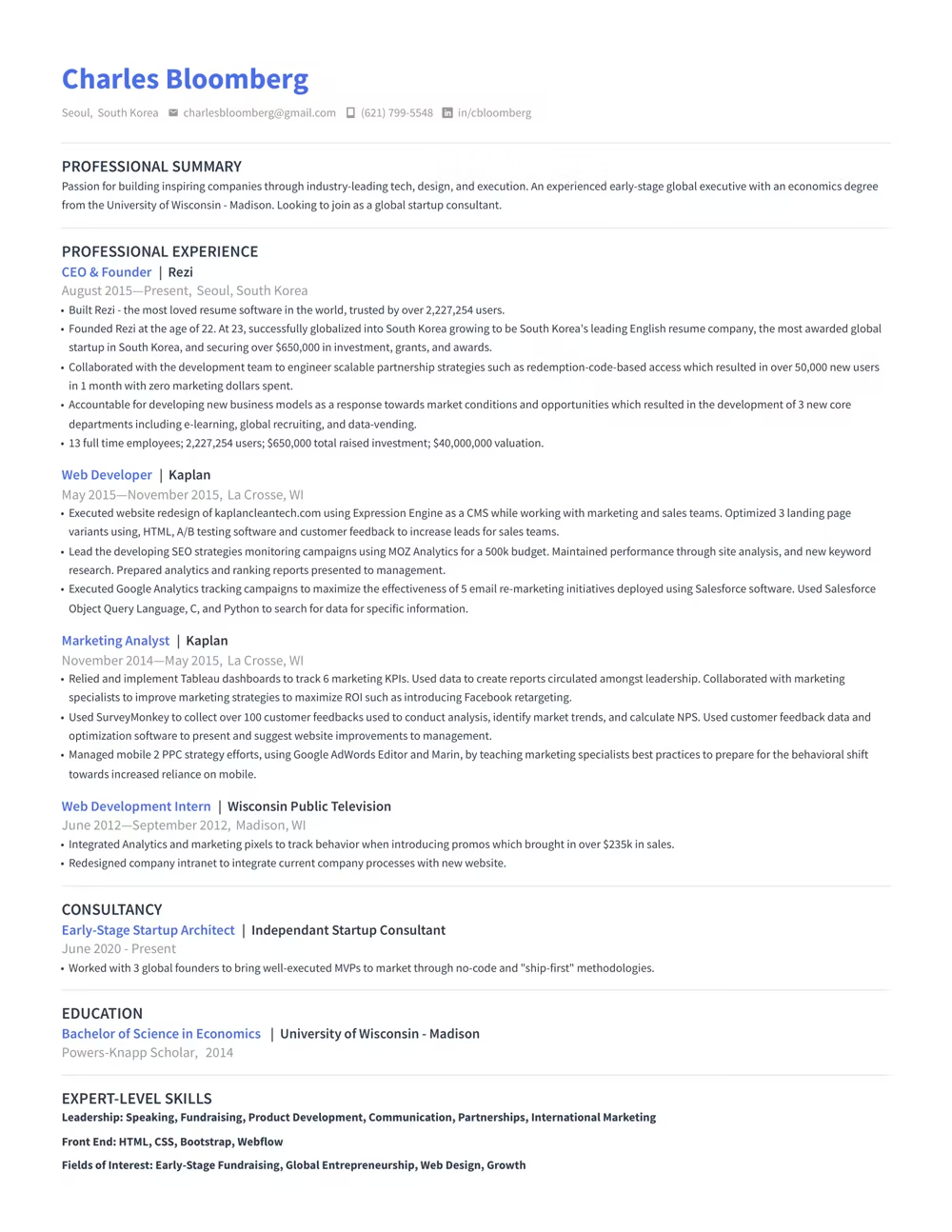
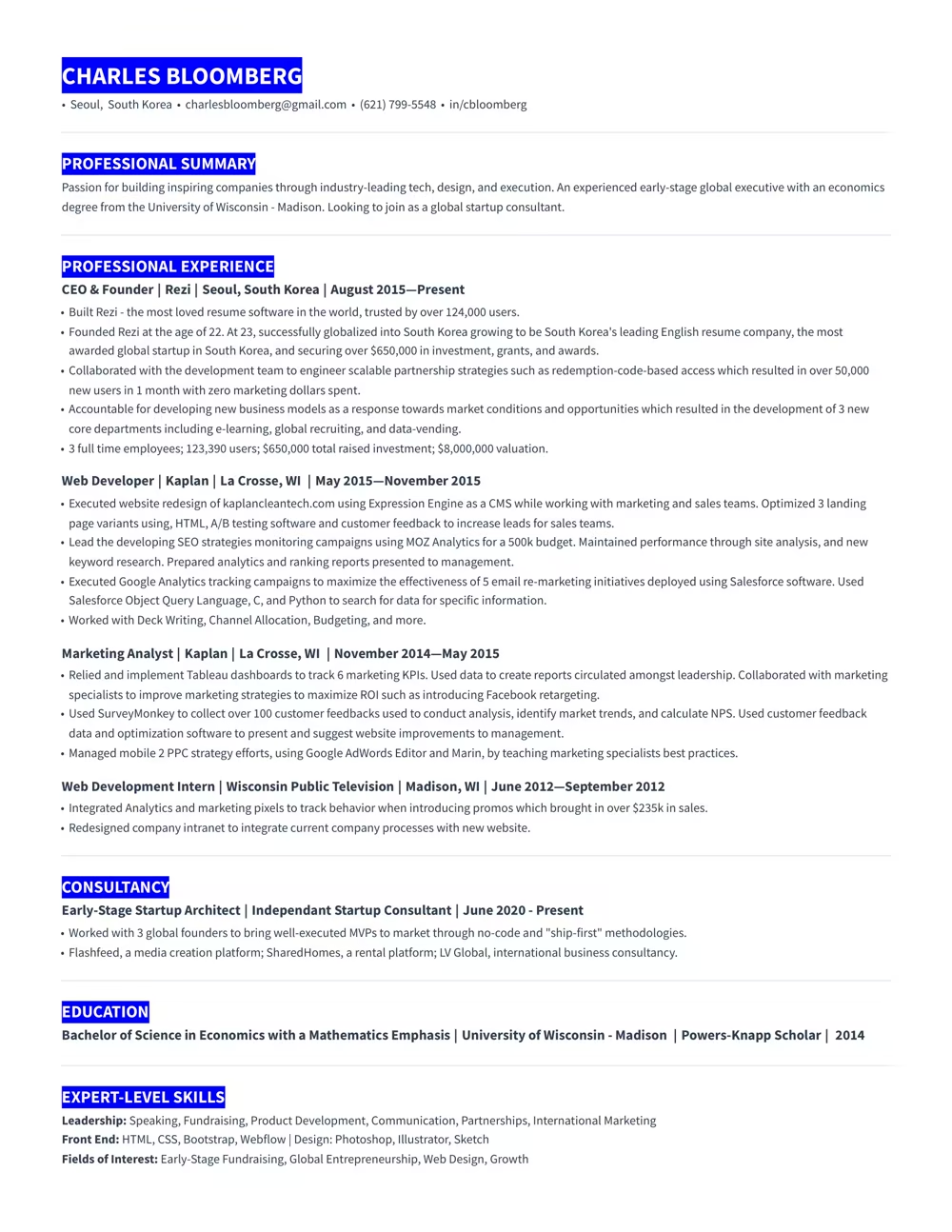
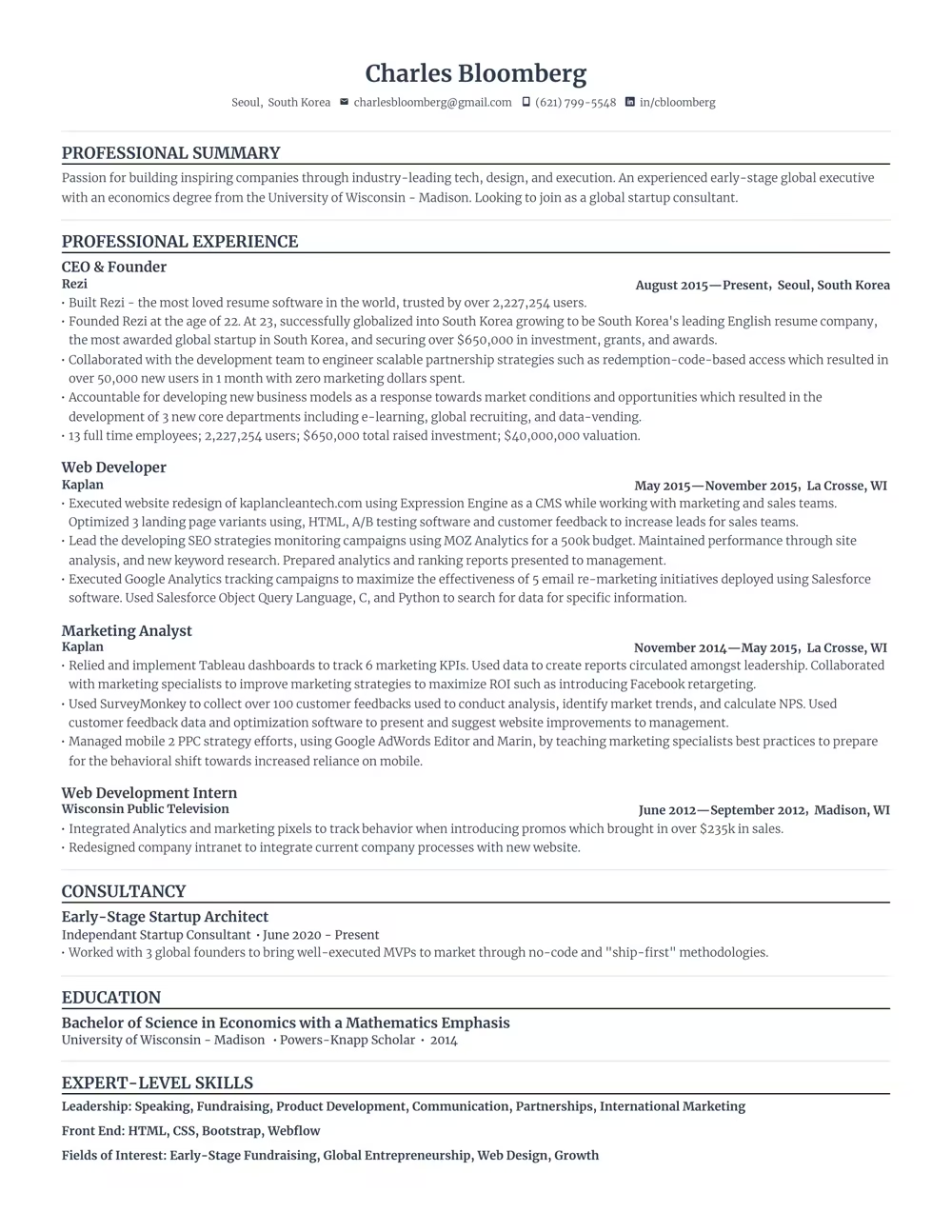
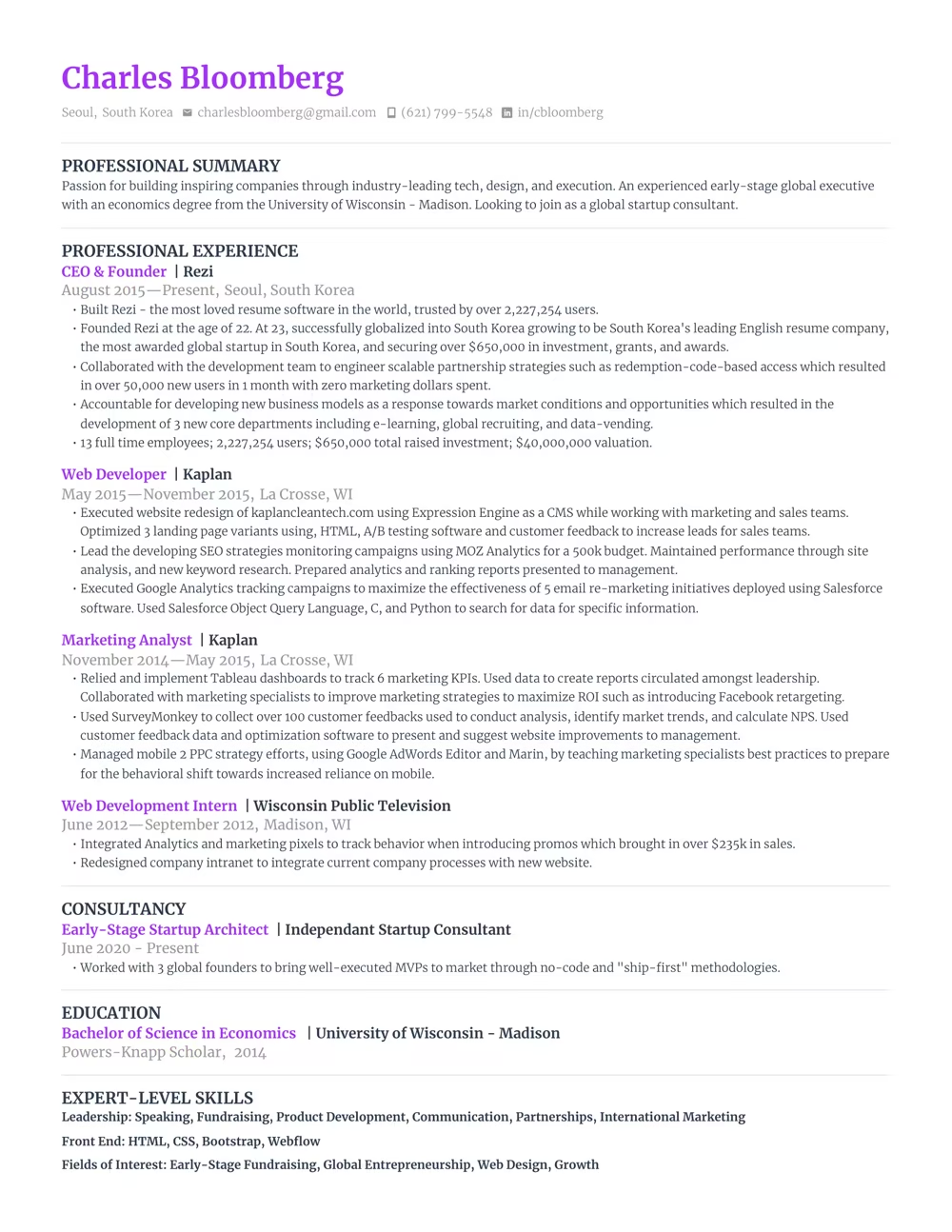
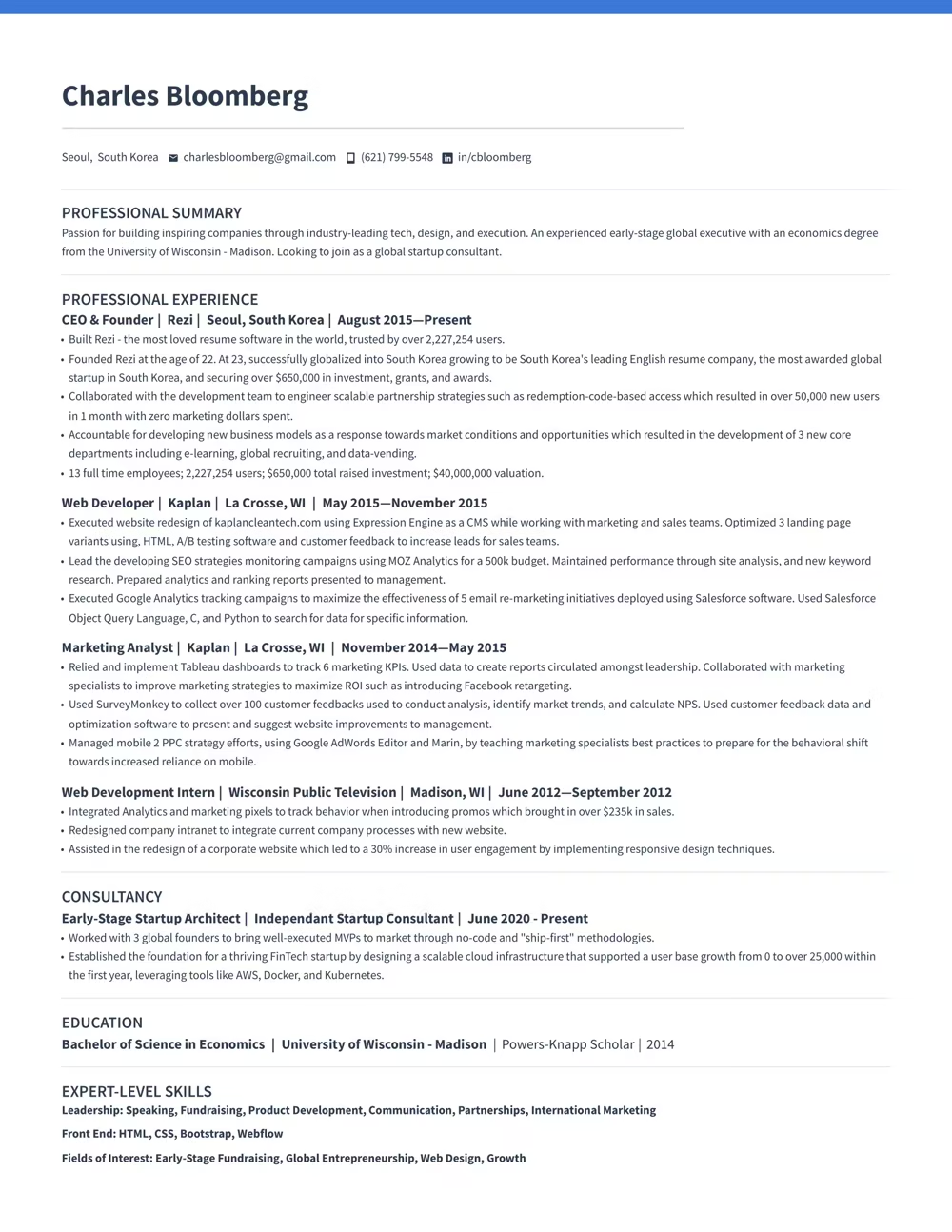
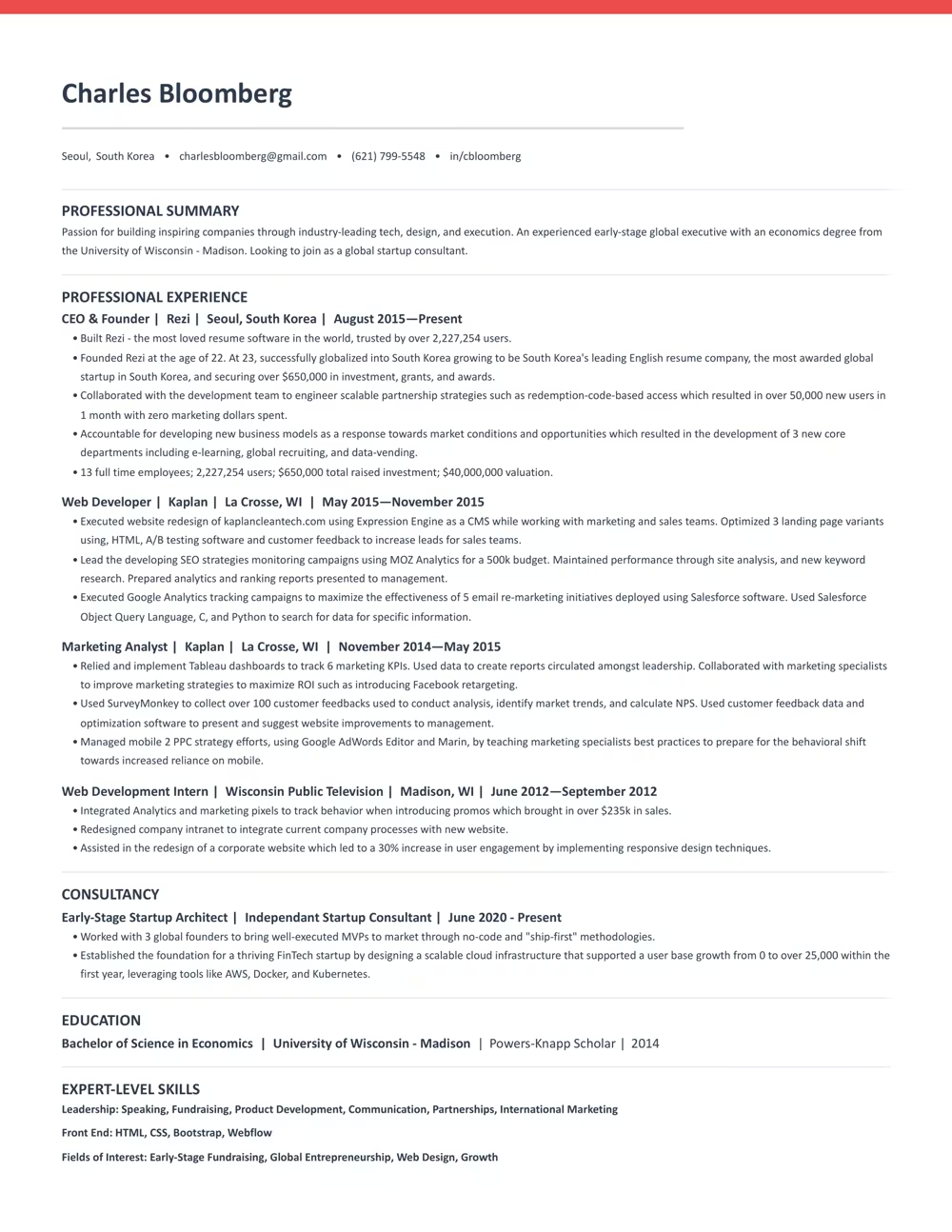
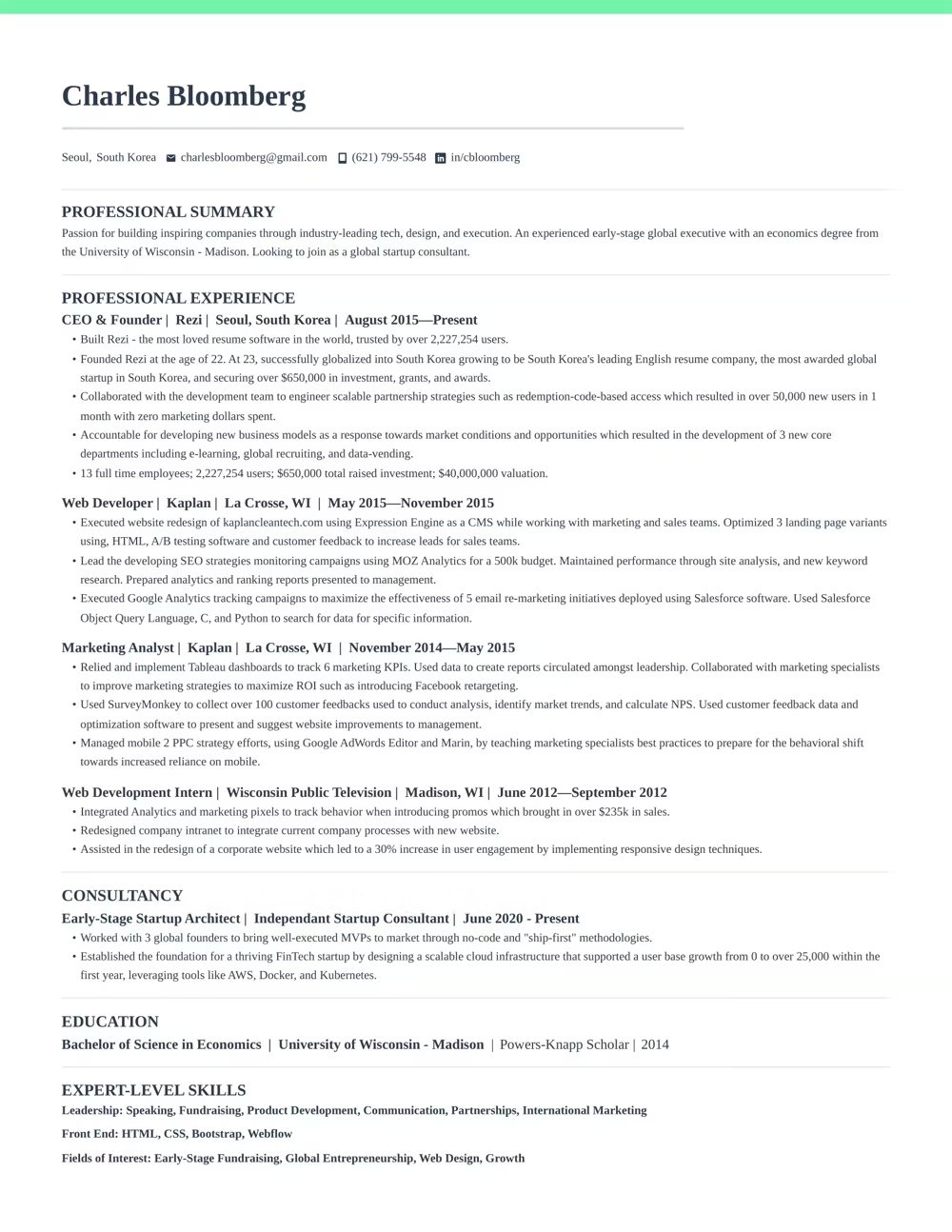
Use a template that guides you. Our ATS-compliant designs are trusted by over 4 million job seekers.



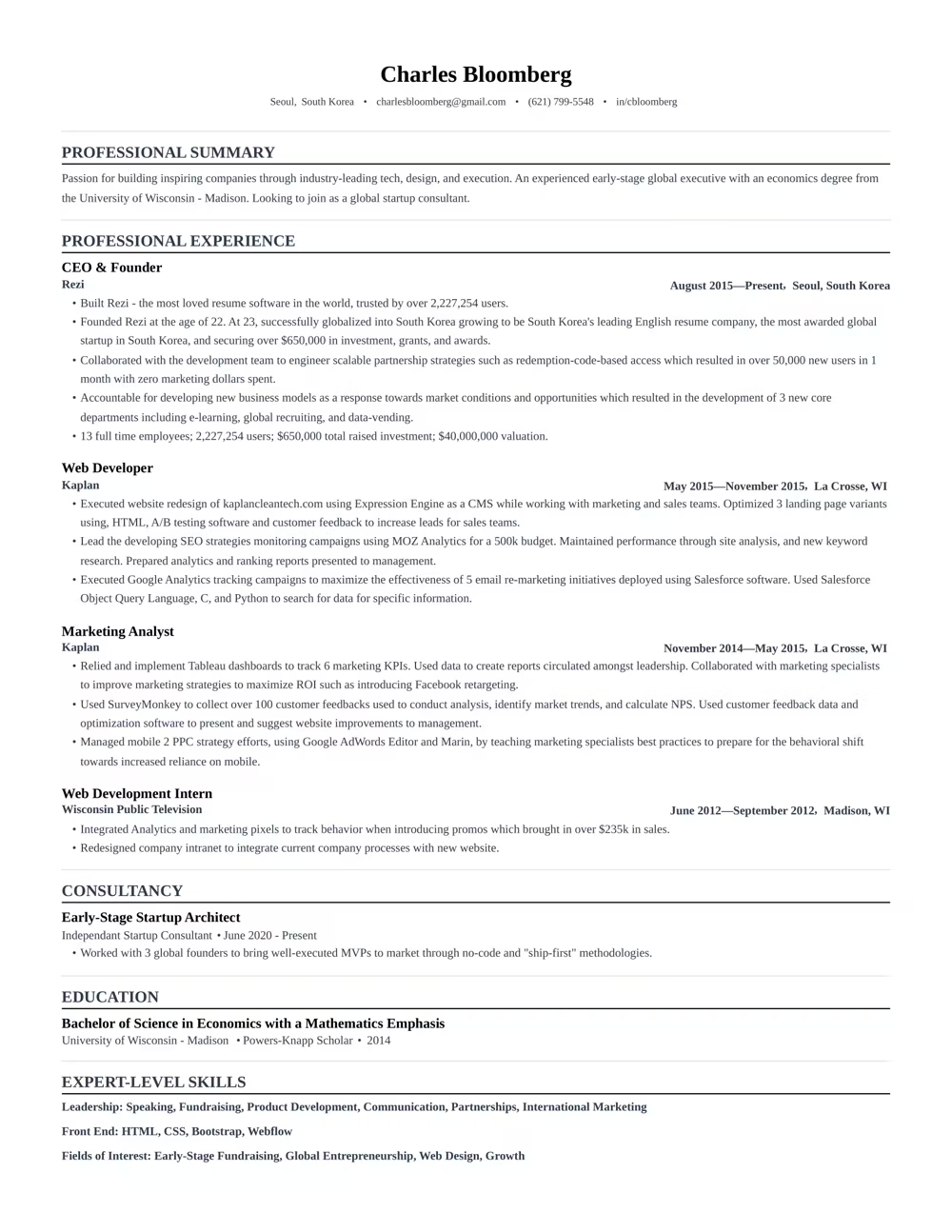
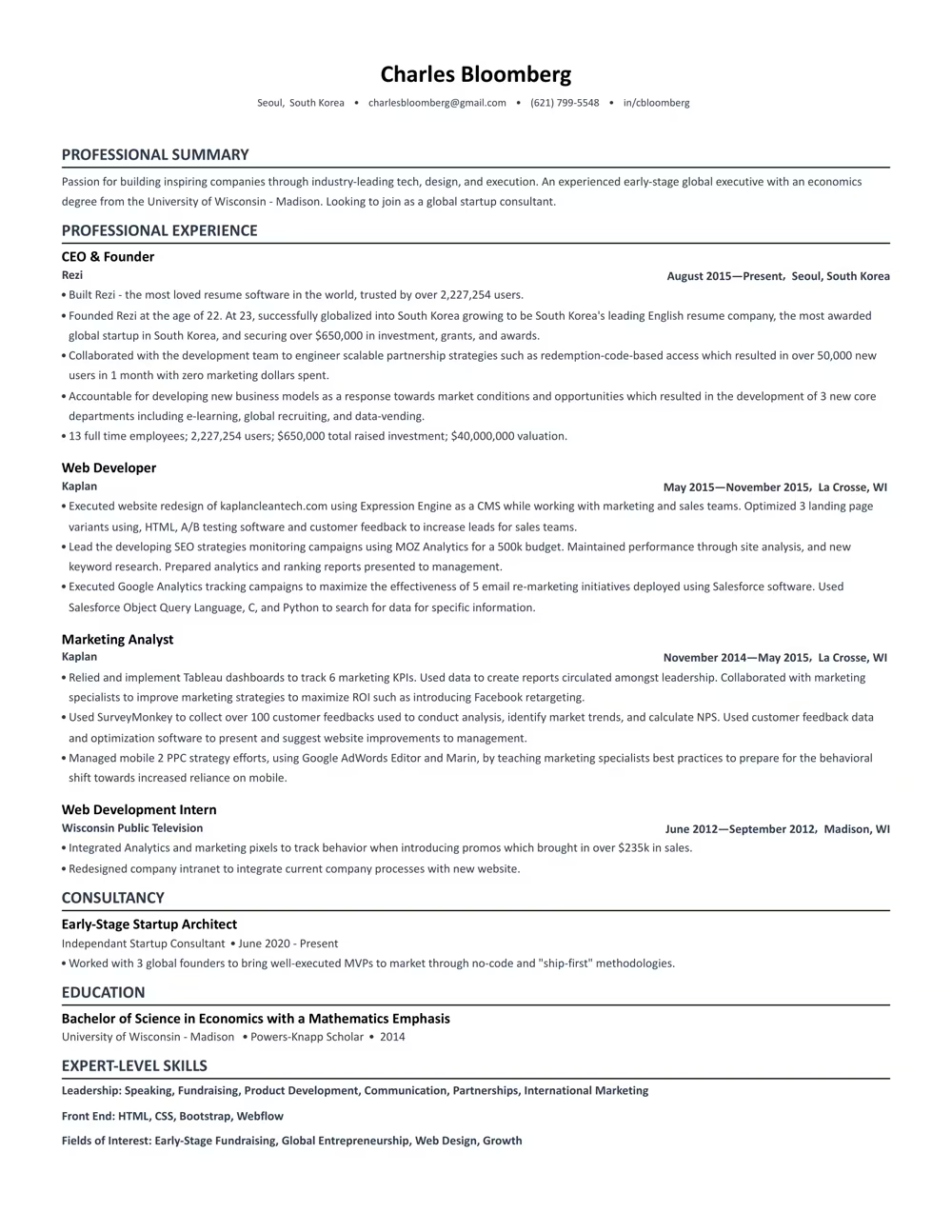
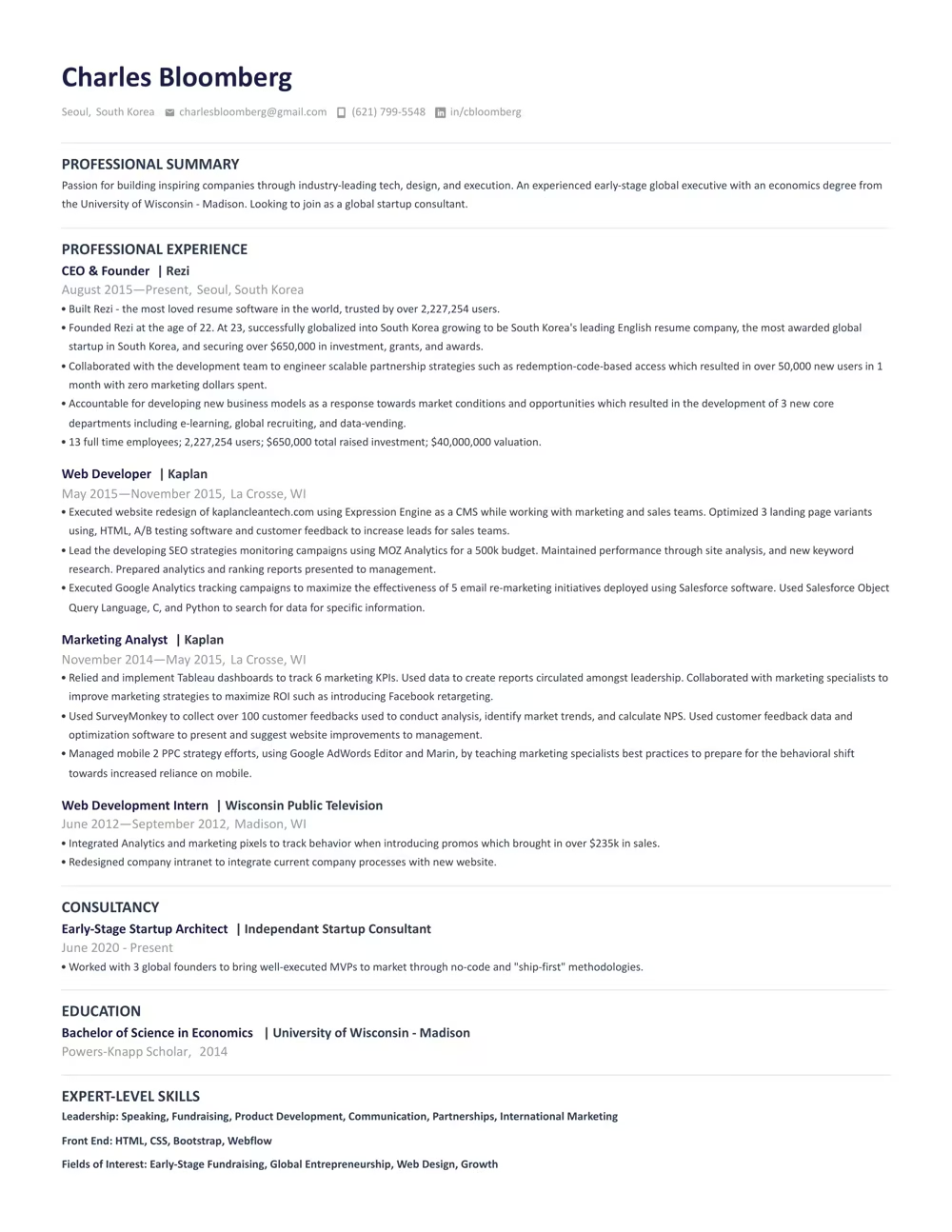
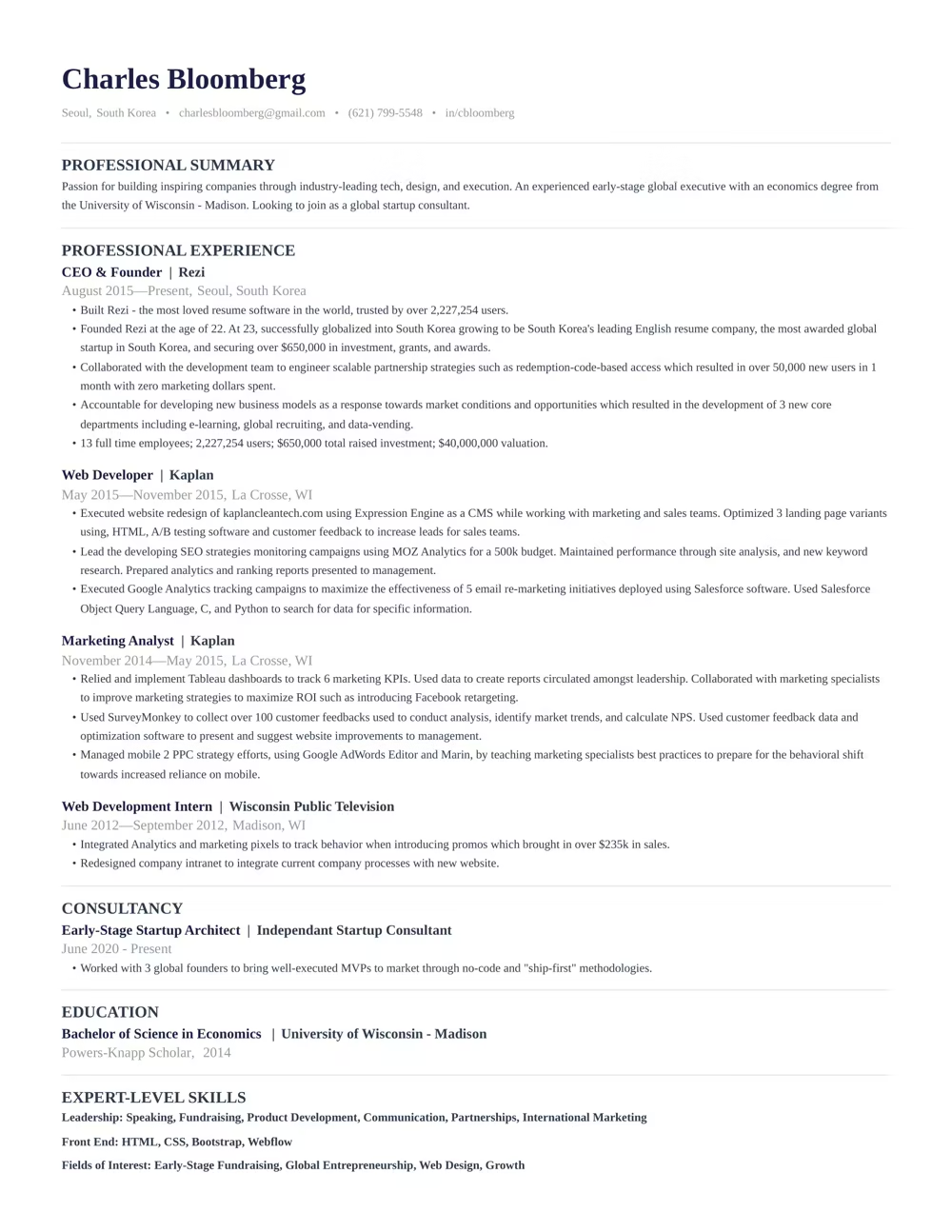

“Rezi is an awesome AI-based resume builder that includes templates to help you design a resume that is sure to check the boxes when it comes to applicant tracking systems. This is a great jumping off point to kickstart a new resume.”

Ashley Stahl
Career Contributor
62.18%
Interview Rate
4,773,704
Total Users
8.23 / 10
Avg. User Review
Wall of Love
Over 4 million users trust Rezi

Resume Building felt like pulling teeth – until I found Rezi.
Davis Allen
Software Developer

I was blown away by Rezi. It streamlined everything...
Celine Watko

I needed a resume tool as smart as my work.
Yosra Naceur
Data Scientist
“A great tool that is very helpful. I found the Rezi system easy to use and very helpful as I was working on getting my resume in shape for job applications.”

Dakota Rubin
United States
Written via

“This is actually one of the first reviews I’ve ever written for a business, and that alone says a lot. I highly recommend Rezi to anyone who’s job searching, it makes the entire process so much easier.”

Yazan Alkhatib
United States
Written via
“Reduced my time per application from 1-2 hours down to 15 minutes.”
Kixxx
Experience with Rezi
“I love how simple and convenient it is to use and been coming back to update it every time I need a fresh resume.”

Zara Wazir
U.A.E.
Written via
Frequently Asked Questions
Your questions, answered.
An AI resume maker helps you build a resume perfectly fit for the job you want. Top-notch AI resume builders are designed to speak the language hiring managers are looking for, increasing your chances of standing out in the crowd. It aligns your skills and experience with the job description effectively.
To get the most out of an AI resume builder, either start from scratch or upload your current resume. Fill in as much detail as possible about your career and skills, and upload the job description you’re targeting. This personalization allows the AI to build a unique and tailored resume that’s bound to catch potential employers' attention.
AI-generated resumes can seem similar if you're not giving personalized inputs or if you're using basic prompts. Provide specific details about your work experience and target the job you’re eyeing. Use specialized AI tools instead of general chatbots to avoid robotic-sounding resumes and to ensure individual creativity.
Employers might think you used AI, but that’s rarely an issue. What they really care about is getting a well-written resume that showcases your skills and experiences accurately. A top-notch resume tailored to their needs will speak volumes more than worrying about AI involvement.
Yes, using AI to optimize your current resume is highly effective. You just need to upload your resume, share details about your career goals and the job you want, and let the AI refine everything to elevate your resume's impact and ATS compatibility.
Rezi uses a tool called the AI Keyword Targeting. This feature scans the job description to identify crucial keywords and naturally incorporates them into your resume, giving it the right focus without keyword stuffing.
The Free plan is $0/month and allows you to create one resume, use limited AI tools (such as Keyword Targeting and Analysis), and download up to three PDFs. You can also create unlimited cover and resignation letters. No card is required to begin.
The Pro plan is $29/month and provides unlimited access to all features, including unlimited resumes, full AI capabilities, unlimited downloads, and one free monthly expert resume review (resumes are reviewed by a person).
The Lifetime plan is a $149 one-time payment. It grants permanent access to all the features of the Pro plan (unlimited resumes, full AI tools, and unlimited downloads), but it does not include the free monthly expert review (which can be purchased for an extra fee).
Rezi offers a 100% money-back guarantee on all paid plans (Pro and Lifetime). If you are unsatisfied, you can request a full refund within 30 days of your purchase.
Yes, you can easily upgrade or downgrade your plan at any time through your Rezi Account Billing dashboard. Prorated credits will apply when switching.
An AI resume maker helps you build a resume perfectly fit for the job you want. Top-notch AI resume builders are designed to speak the language hiring managers are looking for, increasing your chances of standing out in the crowd. It aligns your skills and experience with the job description effectively.
Yes, Rezi Enterprise.