Education Resumes
Lecturer Resume Examples & Tips for 2026
Customize any of these resumes in minutes using our free AI-powered resume builder.
“Rezi is super upfront and continues to improve over time. I've recommended Rezi to several of my friends and colleagues. I just love this product so much.”

Ricky M.
Software Engineer
“Rezi is super upfront and continues to improve over time. I've recommended Rezi to several of my friends and colleagues. I just love this product so much.”
Ricky M.
Software Engineer
Helping users land jobs at 1,000+ companies such as














Here's the thing most lecturer resumes get wrong: they read like a list of courses taught. That's it. A syllabus summary dressed up as a career document. But hiring committees aren't just looking for someone who can stand in front of a classroom — they want evidence of teaching effectiveness, scholarly engagement, curriculum development, and meaningful contributions to an academic community.
A compelling lecturer resume needs to tell a richer story. It should demonstrate how you design learning experiences, how students respond to your teaching, how you contribute to your department and discipline, and what makes your approach to education distinctive and impactful.
And this is exactly what you'll learn from this article. Inside, you'll find:
- Examples of 9 lecturer resumes, covering different institution types and appointment levels.
- Insider tips about what hiring committees and academic recruiters actually look for in lecturer candidates.
- A step-by-step guide for putting together a lecturer resume that gets you shortlisted for interviews.
Sample Lecturer Resumes
Take a look at some top-notch sample resumes for lecturers across different institution types and appointment levels. Find one that matches your profile and use it as a reference point (or feel free to adapt it — just make sure to adjust the wording to reflect your own academic journey).
Junior Lecturer
A Junior Lecturer's resume should emphasize your educational background, teaching assistantship experience, and any courses you've independently taught. Highlight your teaching philosophy, student evaluation scores, and familiarity with learning management systems. Include relevant research or thesis work that demonstrates subject expertise. Any guest lectures, tutoring roles, or curriculum development contributions — even small ones — will strengthen your profile at this stage.
Mid-Level Lecturer
For a Mid-Level Lecturer, your resume should showcase a solid teaching record across multiple courses and semesters. Emphasize course development initiatives, improved student outcomes, and any mentoring responsibilities. Highlight committee work, departmental contributions, and professional development activities. Demonstrate how your teaching methods have evolved and include evidence of pedagogical innovation, such as integrating technology or developing new assessment strategies.
Senior Lecturer
A Senior Lecturer resume should demonstrate extensive teaching experience, leadership within your department, and a sustained record of teaching excellence. Highlight curriculum redesign efforts, program coordination roles, and mentoring of junior faculty. Include awards, recognition for teaching, and evidence of institutional impact. Showcase your contributions to academic governance, accreditation processes, and any published pedagogical research or conference presentations.
University Lecturer
A University Lecturer's resume should reflect both teaching depth and scholarly engagement appropriate for a university setting. Emphasize your experience teaching undergraduate and graduate courses, supervising student research, and contributing to departmental programs. Highlight publications, conference presentations, and grant activity. Demonstrate your ability to balance teaching excellence with research contributions, and include evidence of service to the university community.
College Lecturer
For a College Lecturer resume, prioritize your teaching effectiveness and student-centered approach. Community colleges and teaching-focused institutions value evidence of engaging diverse learners, strong student evaluations, and innovative pedagogy. Highlight experience with active learning strategies, developmental education, or interdisciplinary courses. Include community engagement, advising experience, and your ability to teach across multiple course levels within your discipline.
Adjunct Lecturer
An Adjunct Lecturer's resume should highlight your flexibility, breadth of teaching experience, and ability to deliver quality instruction across multiple institutions or departments. Emphasize courses taught, student feedback, and your ability to hit the ground running with minimal onboarding. Include any industry experience that enriches your teaching, professional credentials relevant to your field, and your familiarity with various learning management systems and online teaching platforms.
Assistant Lecturer
For an Assistant Lecturer, your resume should focus on your emerging teaching portfolio and academic preparation. Highlight teaching assistantship duties, guest lectures, and any independently taught courses or lab sections. Emphasize your educational qualifications, research interests that inform your teaching, and any pedagogical training or certifications. Include evidence of student mentoring, grading responsibilities, and contributions to course material development within your department.
Visiting Lecturer
A Visiting Lecturer's resume should emphasize your adaptability, specialized expertise, and the unique perspective you bring to a host institution. Highlight the specific courses or programs you were invited to teach and any cross-institutional collaborations. Showcase your research or professional experience that prompted the visiting appointment. Include evidence of successful integration into new academic environments and positive teaching evaluations from visiting positions.
Part-Time Lecturer
A Part-Time Lecturer resume should demonstrate your ability to deliver high-quality instruction within a limited appointment. Highlight your teaching effectiveness, course-specific expertise, and reliability. If you hold a concurrent professional role, emphasize how real-world experience enriches your classroom teaching. Include student evaluation highlights, any course materials you developed, and your proficiency with online or hybrid teaching formats that many part-time positions now require.
How to Write a Lecturer Resume
Short answer:
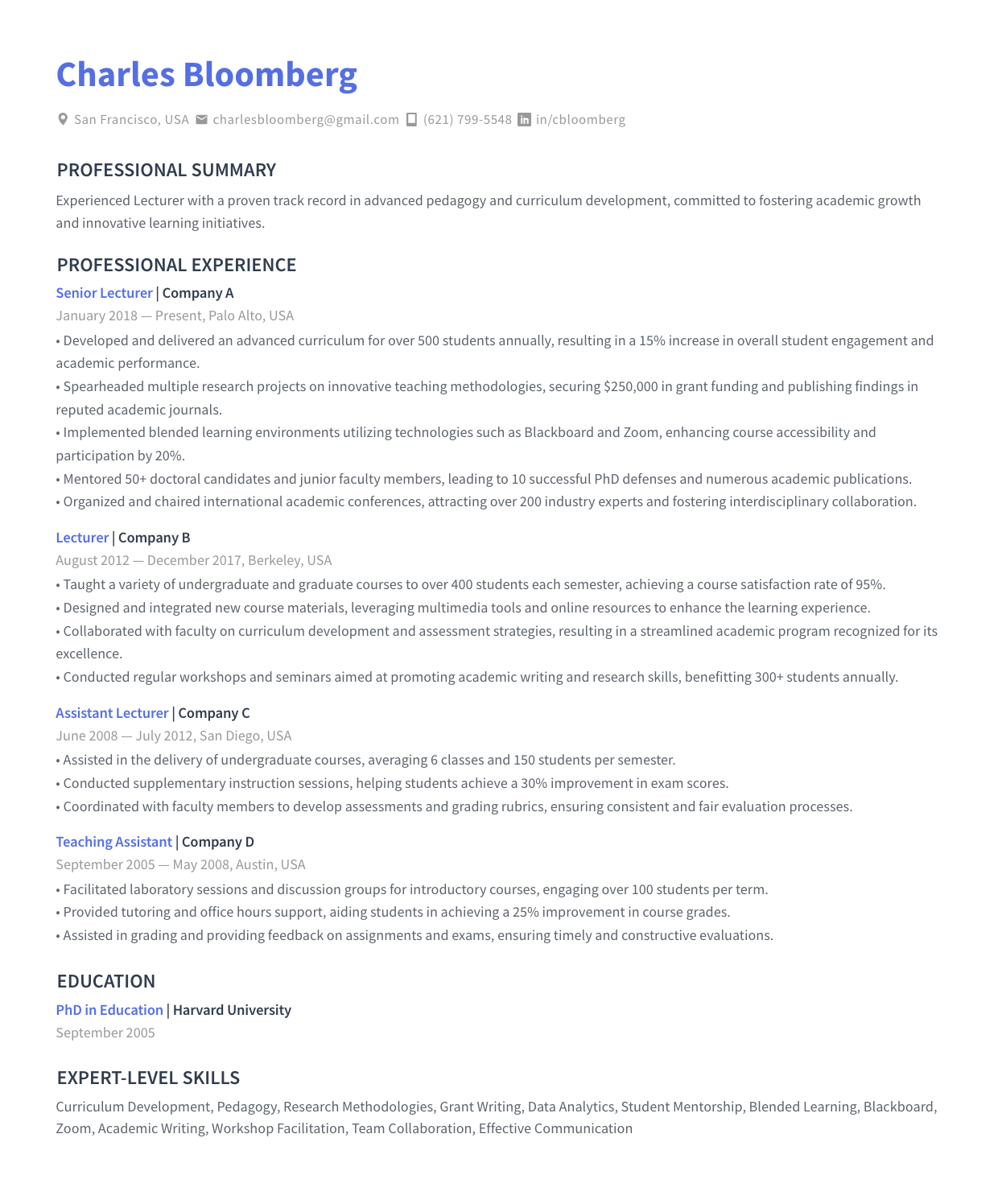
Focus on your teaching effectiveness, subject expertise, and contributions to your academic community. Create a professional header with your name and contact details. Right below, write a 2–3 sentence resume summary outlining your most significant teaching accomplishments and scholarly strengths. Describe your work history in reverse-chronological order, focusing on courses taught, pedagogical innovations, and student outcomes. Then, cover your education — including degrees and certifications — list key skills, and add extra sections such as publications, conference presentations, or professional memberships.
Include all the necessary sections in the correct order
Here's the correct order of sections for most lecturer resumes:
- Header with contact information
- Resume summary or objective
- Teaching experience (work experience)
- Education
- Skills
- Certifications
Depending on your current career situation, you can also throw in some additional sections. For instance:
- Publications and research
- Conference presentations
- Professional memberships and associations
- Awards and honors
- Service and committee work
- Courses developed or designed
Include everything that shows you're capable of doing what the job requires. Make every section count. If it doesn't clearly highlight your teaching skills or academic contributions, it doesn't belong on your resume.
If you have less than five years of teaching experience, keep your resume 1–2 pages long. For senior lecturers with extensive records, a two- to three-page resume is appropriate — especially if you have significant publications or presentations to list.
More details here: What Sections to Include on Your Resume?
Now, I'll give you a high-level overview of how to write each section, going from top to bottom. Well… almost. The only exception is the resume summary section. While it comes right after your contact info, it's actually easier to write it last. More on that in a sec.
Create a professional resume header
- Start with your name and contact information. Include the basics: your full name, phone number, professional email address, location, and LinkedIn profile. A link to your academic portfolio, personal website, or institutional faculty page can also add credibility.
- Right below your name, clearly state your professional title (e.g., Senior Lecturer in Economics or Lecturer in Computer Science). This sets expectations and positions you within your discipline immediately.
For more information, see: How to Create a Resume Header
Describe your teaching and work history
- Use reverse-chronological order. List your positions starting with the current or most recent one.
- In each entry, include your job title, institution name, location, and dates of employment.
- Below each position, write 3–7 bullet points — the more recent the position, the more bullet points you should include. Describe your teaching responsibilities and, more importantly, your accomplishments and impact.
- Use action verbs and quantify your achievements (e.g., "Designed and delivered a new upper-division course in data analytics, achieving a 4.7/5.0 student satisfaction rating across 3 semesters with 120+ students").
- If specific teaching approaches or methodologies were pivotal in your roles (e.g., flipped classroom, problem-based learning, hybrid instruction), weave these details into your descriptions. This also helps with ATS scans.
Learn more about the best practices of this section with our detailed guide on how to describe your work experience on a resume.
List your degrees and detail professional learning
- In the education section, list your highest degree first, including the degree type, field of study, and institution. For lecturers, your academic credentials are particularly important — they're often the first thing a hiring committee checks.
- If you have teaching experience, include only the name of your school, degree, and field. If you're an early-career candidate, you can add more detail — list relevant coursework, dissertation or thesis title, teaching fellowships, and academic honors.
- If you have teaching certifications or pedagogical training (e.g., Graduate Certificate in College Teaching, HEA Fellowship), either include them in an "Education and Certifications" section, or create a separate "Certifications" section and place it right below.
For an in-depth guide on how to describe your education on a resume, see: How to List Education on a Resume
List your most relevant skills in the skills section
- Include a mix of technical skills (e.g., learning management systems, educational technology tools) and teaching methodologies (e.g., active learning, case-based instruction) that you are proficient in.
- Add in some soft skills such as communication, mentoring, and adaptability. These demonstrate your capacity to connect with students and colleagues effectively.
- You can use two separate subsections — one for hard skills, one for soft skills — or just list all the skills under one heading.
- Match your skills to the description of the job you're applying for. I'm not saying you should just dump every skill the posting mentions (especially if you don't really have them), but highlight those areas of expertise where your knowledge overlaps with the job ad.
Need some inspiration to get started? Here are some good skills to feature on your lecturer resume.
Teaching and educational technology skills:
- Blackboard / Canvas / Moodle
- Zoom / Microsoft Teams (virtual instruction)
- Turnitin
- Google Workspace for Education
- SPSS / R / MATLAB (discipline-specific)
- PowerPoint / Prezi / Keynote
- Video lecture production (Camtasia, OBS Studio)
- Gradebook and student information systems
- Polling and audience response tools (Mentimeter, Kahoot)
- LaTeX (for STEM fields)
Teaching methodologies and approaches:
- Active learning
- Flipped classroom
- Problem-based learning (PBL)
- Case-based instruction
- Inquiry-based learning
- Experiential learning
- Differentiated instruction
- Bloom's Taxonomy-aligned assessment design
- Universal Design for Learning (UDL)
- Hybrid and online pedagogy
Key soft skills for lecturers:
- Communication
- Public speaking
- Mentoring and advising
- Adaptability
- Critical thinking
- Time management
- Collaboration
- Cultural sensitivity
- Patience
- Creativity
For a full-blown guide on listing skills on a resume, visit: How to Put Skills on a Resume
Use additional sections as further proof of your fit
Additional sections add depth to your resume and back up your claimed expertise. Good examples of extra sections to add to a lecturer resume are:
- Publications and research. List peer-reviewed articles, book chapters, or other scholarly work. Even pedagogical research counts — it shows you take teaching seriously as an intellectual endeavor.
- Conference presentations. Include talks, poster sessions, and panel discussions at academic or professional conferences. This signals active engagement with your discipline.
- Awards and honors. Teaching awards, research fellowships, or departmental recognition provide powerful third-party validation of your abilities.
- Service and committee work. Mention departmental, institutional, or disciplinary service roles. Hiring committees at academic institutions value colleagues who contribute beyond the classroom.
- Professional associations. Membership in organizations relevant to your field or to higher education teaching demonstrates commitment to professional development.
Highlight the most relevant information in a resume summary
Once you're done writing your lecturer resume, give it a full read. Pick the most relevant information and compile it into a summary paragraph. Place it right under the resume header.
- Be brief and to-the-point. In 3–4 sentences, sum up your teaching experience, subject expertise, and what you bring to the department. Consider this your chance to answer, "Why should we hire you?" Tailor this section to match the institution's needs outlined in the job posting.
- Use value-oriented language. Focus on how you can contribute to the department and its students, mentioning specific outcomes you've driven or teaching innovations you've introduced.
Once you've completed the core sections of your resume, you can use Rezi AI Resume Summary Generator to automatically create a powerful summary, tailored to the job you're applying for. All you need to do is add the position and skills you want to highlight. The AI writer will do the rest.
More information here: How to Write a Job-Winning Resume Summary (with Examples)
For finishing touches, make sure your resume looks professional
- Use a clean and tidy resume format. Ensure your lecturer resume is easily readable, with a professional font, consistent formatting, and clear section headings. Avoid overloading it with dense text or fancy design elements that could distract from the content — academics tend to prefer substance over style.
- Aim for a balance between detail and conciseness. If you're an early-career candidate, keep your resume to one or two pages. Experienced lecturers with substantial publication records and teaching histories can extend to two or three pages, but still need to make sure every line conveys value.
Learn more about proper resume formatting here: How to Format a Resume & What Standard Resume Format to Use
What Makes Lecturer Resumes Different
In short: the emphasis on teaching effectiveness, scholarly engagement, and academic community contributions.
This is also where many lecturers stumble. Hiring committees won't be impressed with a bare list of course titles and credit hours. They need to see evidence of how you teach, how well your students learn, and how you contribute to academic life beyond the lecture hall.
Focus on teaching impact, not just teaching history
Anyone can list courses they've taught. What sets a strong lecturer resume apart is evidence of teaching effectiveness — student outcomes, evaluation scores, retention improvements, and innovative approaches that made a measurable difference.
What it means for you:
- Include quantifiable teaching metrics wherever possible. Student evaluation scores, pass rates, enrollment growth in courses you teach, or improvements in student performance all tell a powerful story.
- Describe specific pedagogical innovations you've introduced and their outcomes. Did you redesign a course that had low engagement? Develop a new lab curriculum? Implement a flipped classroom model that improved exam scores? These details matter enormously.
Focus on curriculum development and course design
Lecturers are often expected to do more than deliver existing content. Hiring committees want to see that you can design, update, and improve courses and programs.
What it means for you:
- Highlight any new courses you developed from scratch, including the rationale and outcomes. Mention curriculum redesign efforts, new assessment strategies you introduced, or alignment of courses with program learning outcomes or accreditation standards.
- If you've contributed to program-level curriculum development — such as redesigning a degree pathway or contributing to departmental reviews — make sure to include that as well.
Focus on scholarly and professional engagement
Even in teaching-focused roles, institutions value lecturers who stay current in their field and contribute to the broader academic conversation. This distinguishes you from someone who simply teaches the same material year after year.
What this means for you:
- Include publications, conference presentations, and any ongoing research — even if it's pedagogical research about teaching in your discipline. Scholarship of Teaching and Learning (SoTL) work is increasingly valued.
- Mention professional development activities: workshops attended, new teaching certifications earned, or discipline-specific training that keeps your knowledge current.
Focus on institutional service and collegiality
Academic institutions are communities, and hiring committees look for colleagues — not just instructors. Your resume should show you'll contribute to the life of the department and institution.
What this means for you:
- Highlight committee work, advising roles, accreditation involvement, and any mentoring of students or junior colleagues. These signal that you understand academic culture and are willing to do the work that keeps departments running.
- If you've organized events, led student clubs, or participated in outreach activities, include those as well. They show you're invested in the institution's mission beyond your teaching schedule.
Focus on the right credentials
Unlike many corporate roles, lecturer positions have specific credential requirements that vary by institution type and discipline. Getting this wrong can mean an automatic rejection.
What this means for you:
- Make your highest relevant degree prominent and easy to find. For most lecturer roles, a master's degree is the minimum; many university positions require a PhD or terminal degree in the field. If you're ABD (All But Dissertation), state that clearly.
- If the position is in a professional field (e.g., nursing, accounting, engineering), highlight relevant professional licenses and industry experience alongside your academic credentials. Some institutions prioritize practitioner expertise over traditional academic pedigree.
Bonus Resources for Lecturers
This isn't going to be a game-changer if you need a resume today. But —
I want you to treat your academic career holistically. These resources will help you grow as an educator, strengthen your future applications, and keep you connected to developments in higher education.
Professional associations and networks
American Association of University Professors (AAUP)
AAUP advocates for academic freedom, shared governance, and professional standards in higher education. Membership provides access to policy resources, professional development, and a community of faculty across disciplines.
Advance HE
Based in the UK, Advance HE supports excellence in higher education teaching through its Fellowship scheme (HEA Fellowship), professional development programs, and research into teaching and learning — all highly regarded on academic resumes internationally.
POD Network (Professional and Organizational Development Network in Higher Education)
POD Network is a community of faculty developers and educators committed to improving teaching and learning in higher education. Their conferences and resources are excellent for lecturers looking to enhance their pedagogical practice.
Online learning platforms
Coursera & edX
Both platforms offer courses on pedagogy, instructional design, and discipline-specific content. Completing courses from institutions like the University of Michigan or MIT can supplement your teaching credentials and demonstrate commitment to continuous learning.
LinkedIn Learning
Offers numerous courses on teaching skills, educational technology, presentation techniques, and academic career development — all useful for lecturers looking to expand their toolkit.
Association of College and University Educators (ACUE)
ACUE offers evidence-based teaching credential programs endorsed by the American Council on Education. Earning an ACUE credential is an increasingly recognized way to demonstrate teaching excellence on your resume.
Publications
Studies in Higher Education
A leading peer-reviewed journal covering research on higher education teaching, policy, and practice — essential reading for lecturers who want to stay current with pedagogical research.
The Chronicle of Higher Education
The go-to news source for academic careers, institutional trends, and higher education policy. Its career advice columns are particularly useful for faculty at all stages.
Inside Higher Ed
Offers daily news, opinion pieces, and career advice relevant to academics and higher education professionals. Their job board is also one of the largest for academic positions.
Teaching and technology tools
Capterra & G2
Both websites provide extensive reviews and comparisons of learning management systems and educational technology tools, helping you choose the right platforms for your teaching needs.
Canvas Community Blog
Offers tips, best practices, and creative ideas for using the Canvas LMS — one of the most widely adopted platforms in higher education — to enhance your teaching.
Summary
Here's what you need to know about writing a lecturer resume:
- Structure your lecturer resume with essential sections in this order: Header, Resume Summary or Objective, Teaching/Work Experience, Education, Skills, and Certifications. If relevant, add extra sections like Publications, Conference Presentations, or Service and Committee Work.
- Include a professional header with your name, contact information, and professional title that identifies your discipline.
- Describe your teaching history in reverse-chronological order, emphasizing courses taught, pedagogical innovations, and student outcomes with quantifiable metrics wherever possible.
- In the education section, list your highest degree at the top. Teaching certifications and pedagogical credentials can be listed in the education section or under a separate heading.
- Highlight a mix of teaching methodologies, educational technology skills, and soft skills, tailoring them to the job posting.
- Use additional sections to showcase publications, conference presentations, awards, and service contributions that demonstrate your full engagement with academic life.
- Once done writing the resume, compile the key information into a brief, value-oriented resume summary at the top.
- Make your resume clean and professional in appearance. Early-career lecturers should aim for one to two pages; experienced lecturers with substantial records can extend to two or three pages.
- Showcase teaching effectiveness, curriculum development skills, and contributions to your academic community — these are what set lecturer resumes apart from all others.
Thanks for reading! Got any questions? Feel free to reach out to me on LinkedIn. (Or check out the FAQs first — maybe your question is answered there.)
FAQ
Should I include a teaching philosophy statement on my lecturer resume?
Not on the resume itself — it would take up too much space. However, many academic job applications request a separate teaching philosophy statement as part of the application package. On your resume, you can briefly reference your teaching approach in the summary section. If you have a teaching portfolio website, link to it in your header so the committee can explore your philosophy in more depth.
How do I handle gaps in my teaching record?
Academic careers often have natural gaps — between graduate school and a first appointment, during postdoctoral research, or between contract positions. If you were doing anything academically productive during those periods (research, writing, professional development, industry work), list it. Hiring committees understand the realities of academic hiring timelines, so brief gaps without explanation are rarely dealbreakers.
What if I've taught at multiple institutions simultaneously?
This is extremely common for adjunct and part-time lecturers. List each institution as a separate entry in your work experience section. If the roles were concurrent, use overlapping date ranges — hiring committees expect this. You can also consolidate by listing institutions under a grouped heading like "Adjunct Teaching Experience" if it helps with readability.
Should I include student evaluation scores on my resume?
Yes, if they're strong. Quantified teaching effectiveness is one of the most persuasive elements you can include. Use specific numbers (e.g., "4.6/5.0 average across 12 courses") rather than vague claims. If your scores are average or below, focus on other evidence of teaching quality instead — course redesign outcomes, student retention data, or teaching awards.
I'm transitioning from industry to a lecturer role. How should I approach my resume?
Your industry experience is actually an asset — many departments actively seek lecturers with professional backgrounds. Frame your industry work in terms of what you can bring to the classroom: real-world case studies, professional networks for student placement, and current knowledge of industry practices. Highlight any training, mentoring, or presentation experience from your professional career. If you've completed any teaching certifications or given guest lectures, make those prominent.
Is a CV or a resume more appropriate for lecturer positions?
This depends on the institution and country. In the US, universities often expect a full academic CV (which can be multiple pages and includes complete publication and presentation lists), while community colleges and some teaching-focused institutions may prefer a concise resume. In the UK and many other countries, "CV" is the standard term regardless. Read the job posting carefully — it will usually specify what format they want. When in doubt, err on the side of a slightly more detailed document for academic roles.
How important are keywords for getting past applicant tracking systems?
More important than you might think, especially at larger institutions that use ATS software. Mirror the language from the job posting in your resume — if they say "student-centered instruction," use that phrase, not a synonym. Include specific course titles, teaching methodologies, software platforms, and credential names exactly as they appear in the posting. That said, never sacrifice readability for keyword stuffing. A human will read your resume if it passes the ATS, and awkward phrasing will work against you.

Upload or drop your resume to get started
Upload your resume to get started
Score my resume
Contents

Resume Formats & Examples
ATS-Friendly resume formats that land jobs
Use a template that guides you. Our ATS-compliant designs are trusted by over 4 million job seekers.
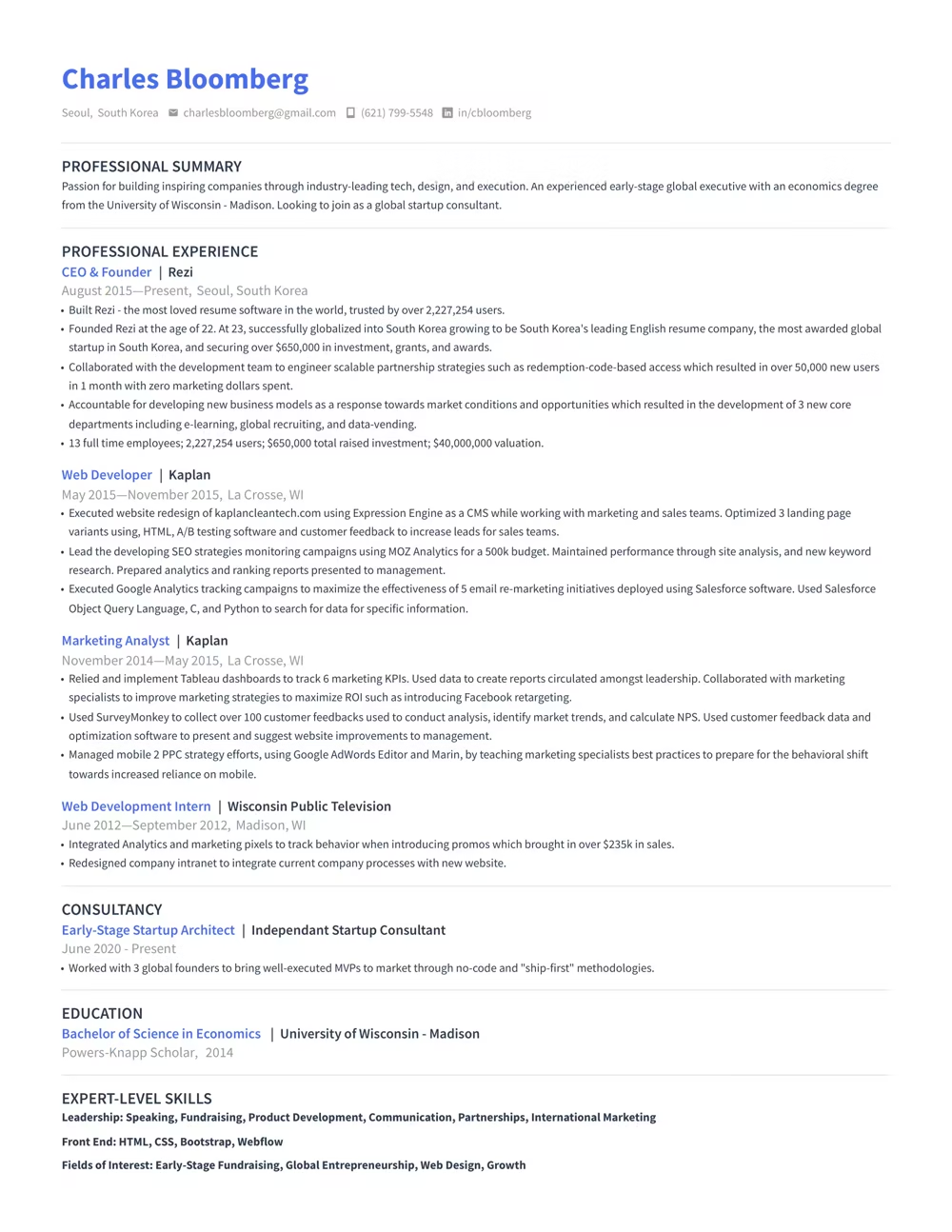


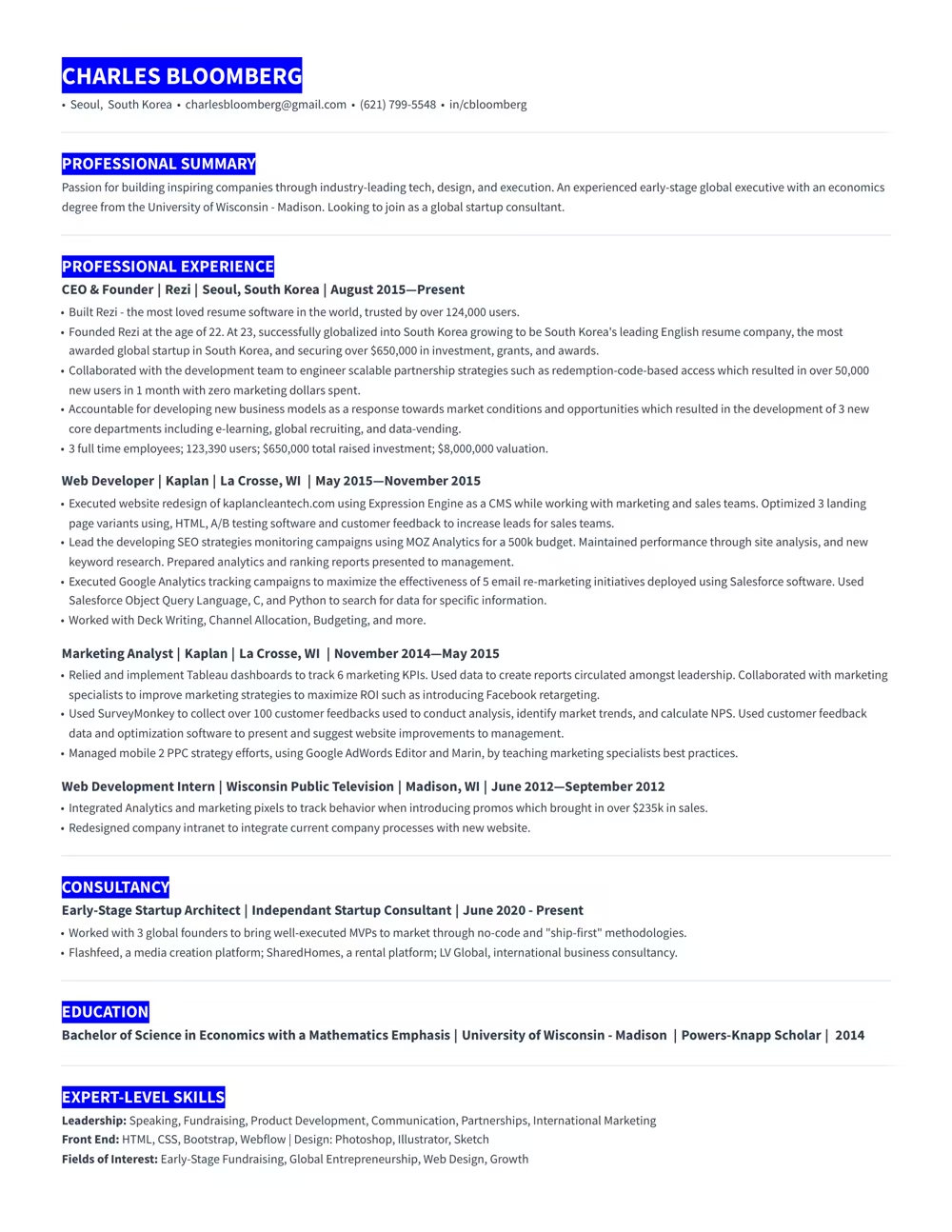
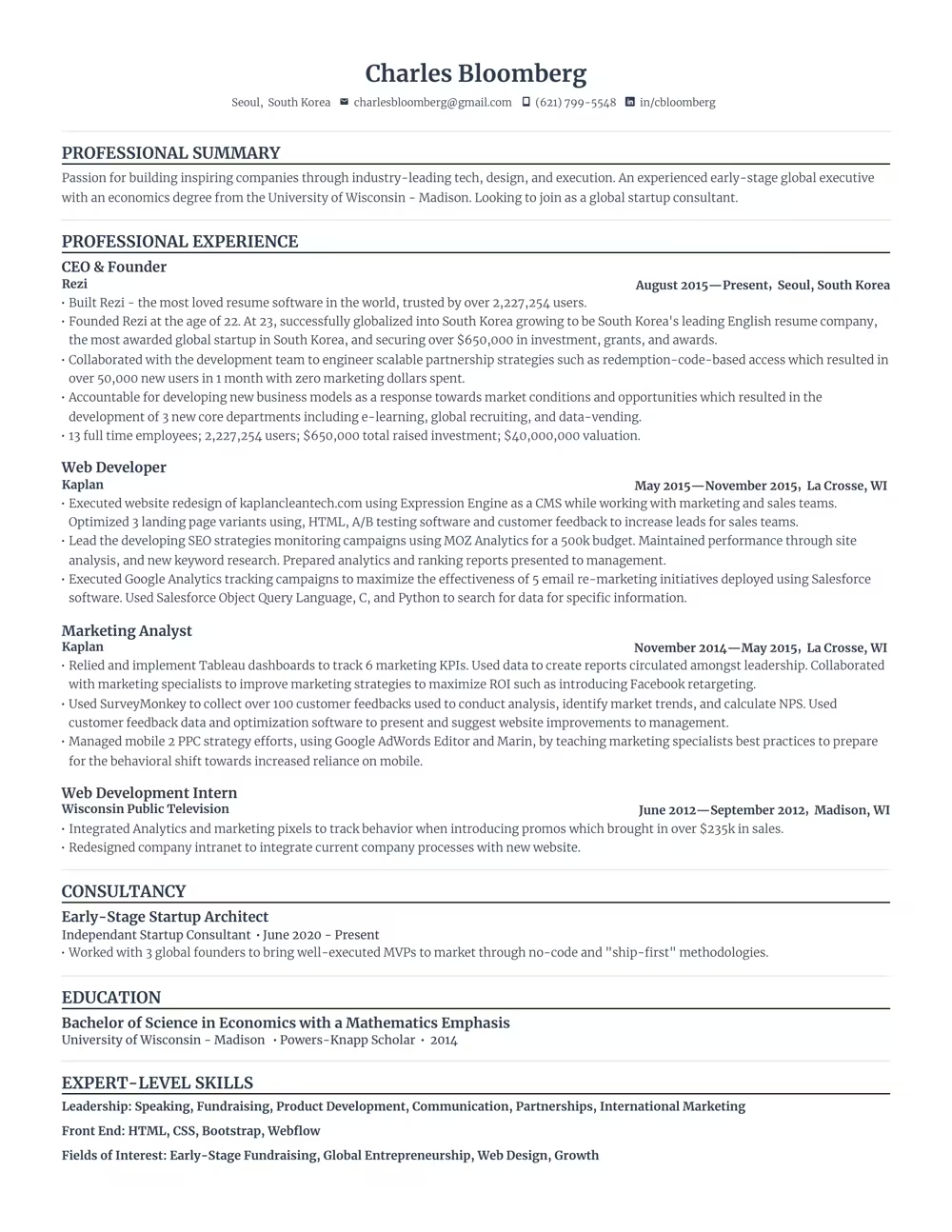

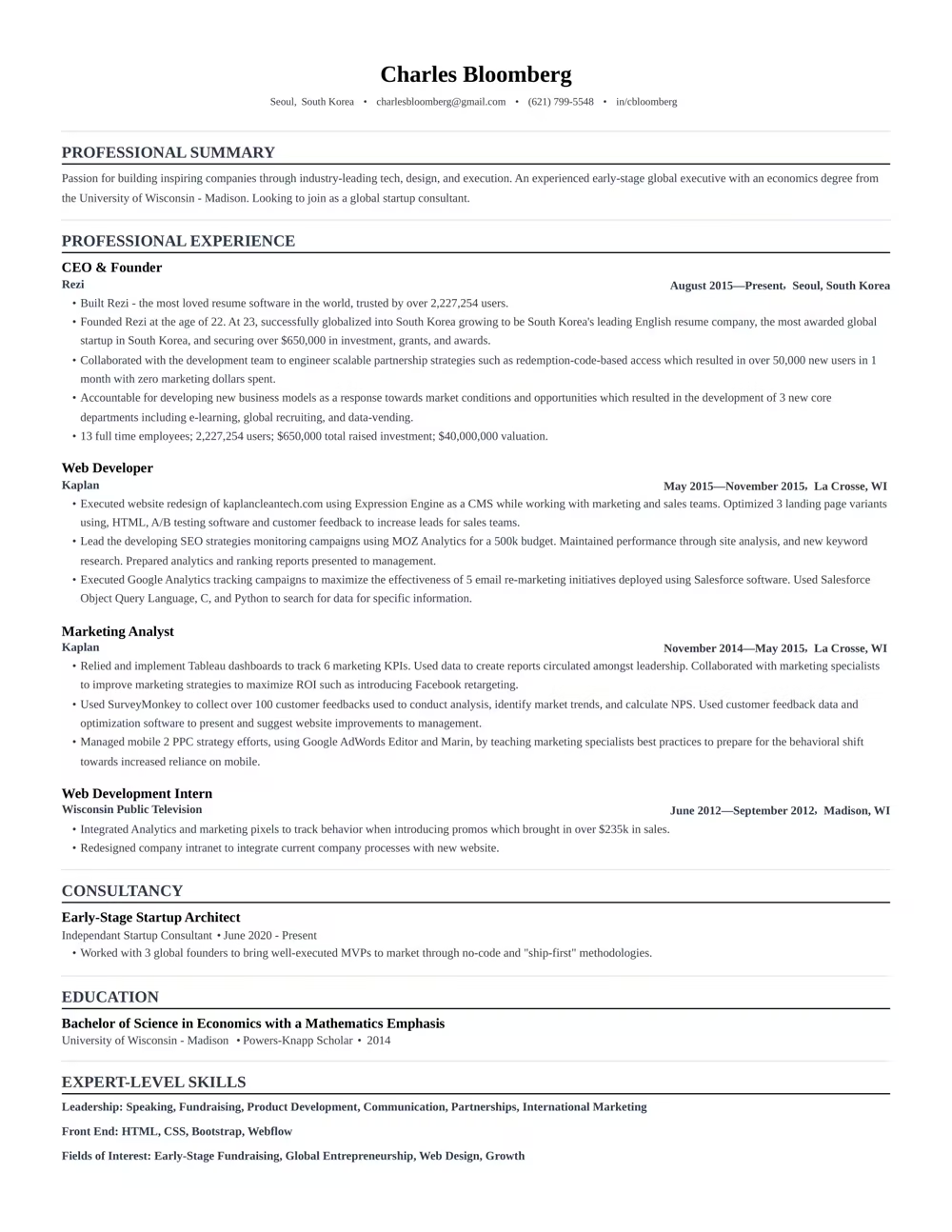
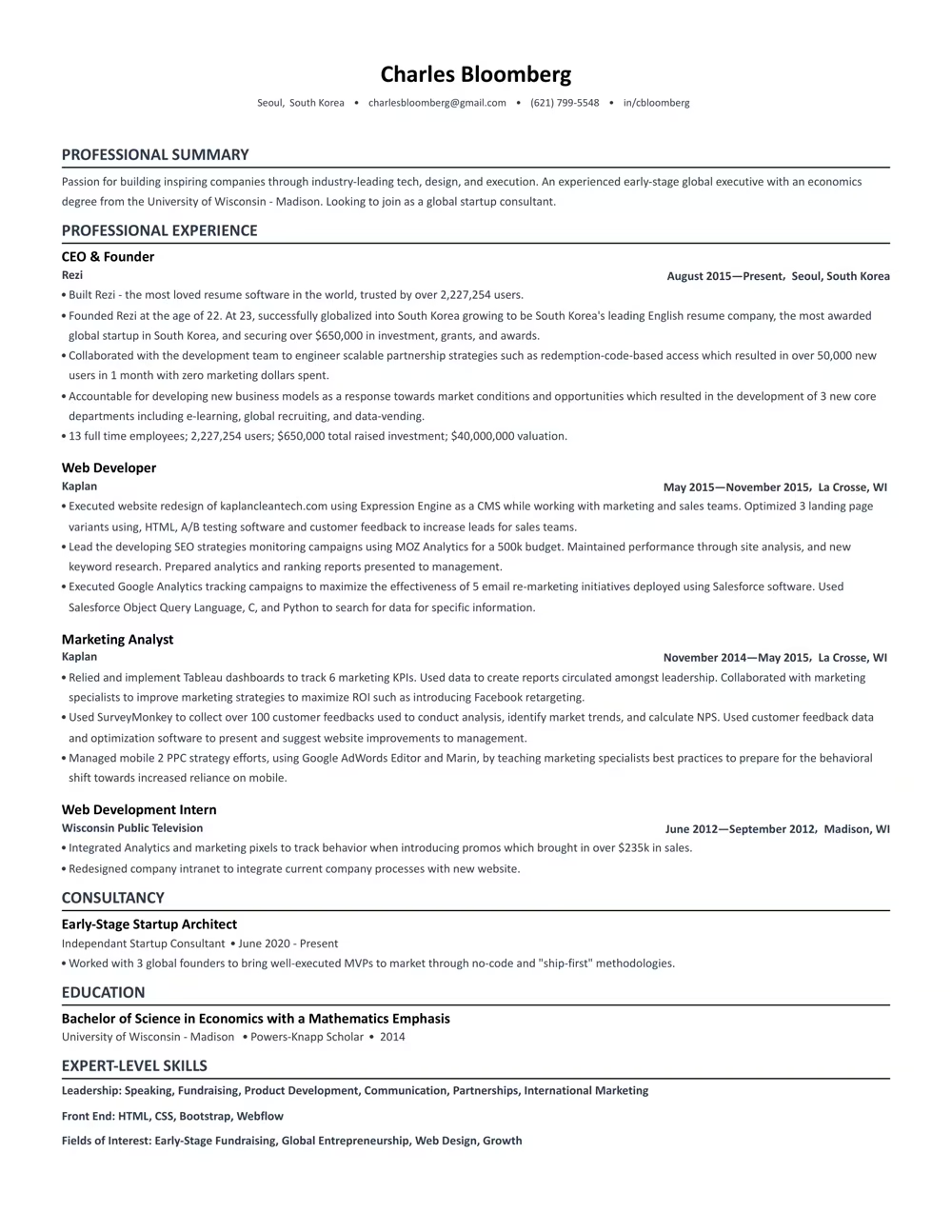
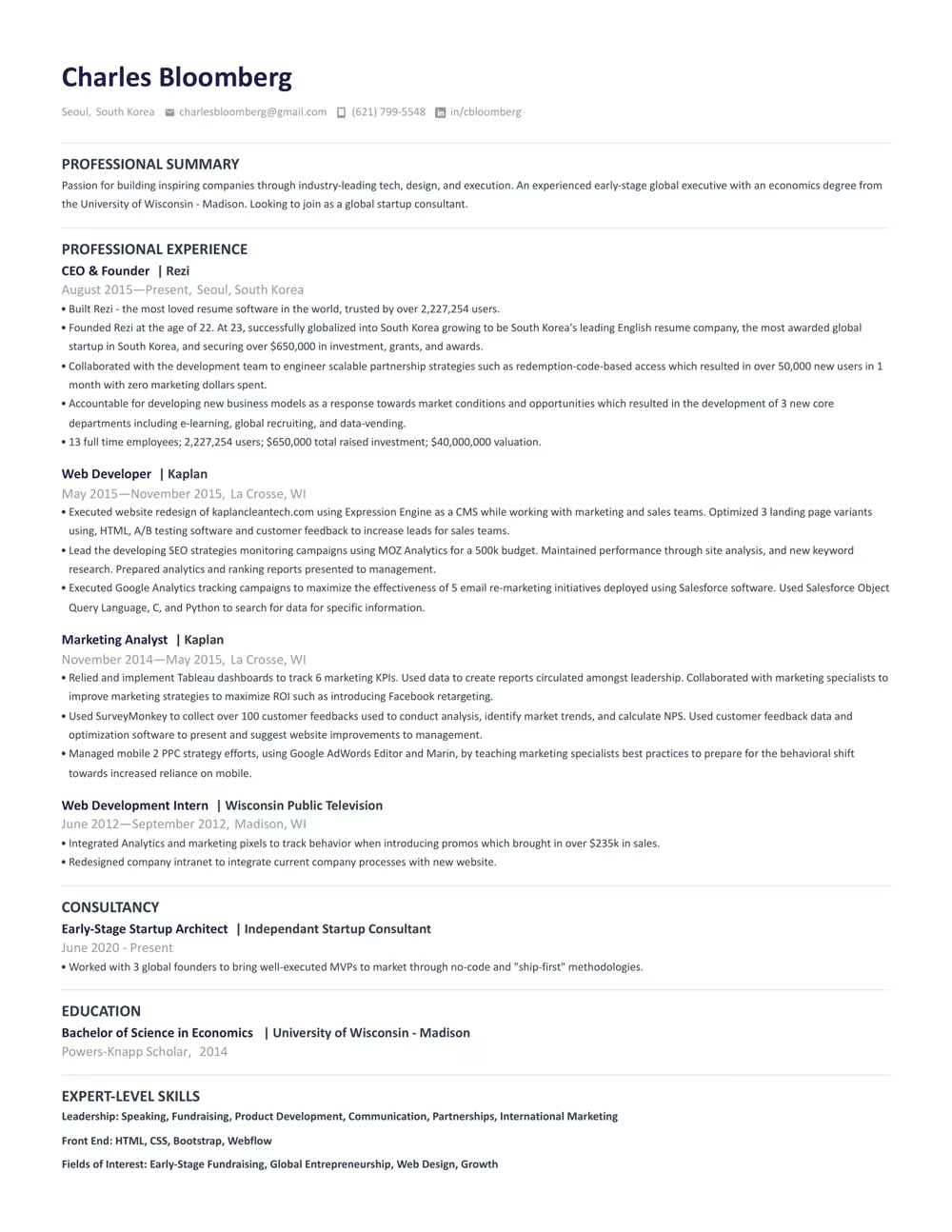
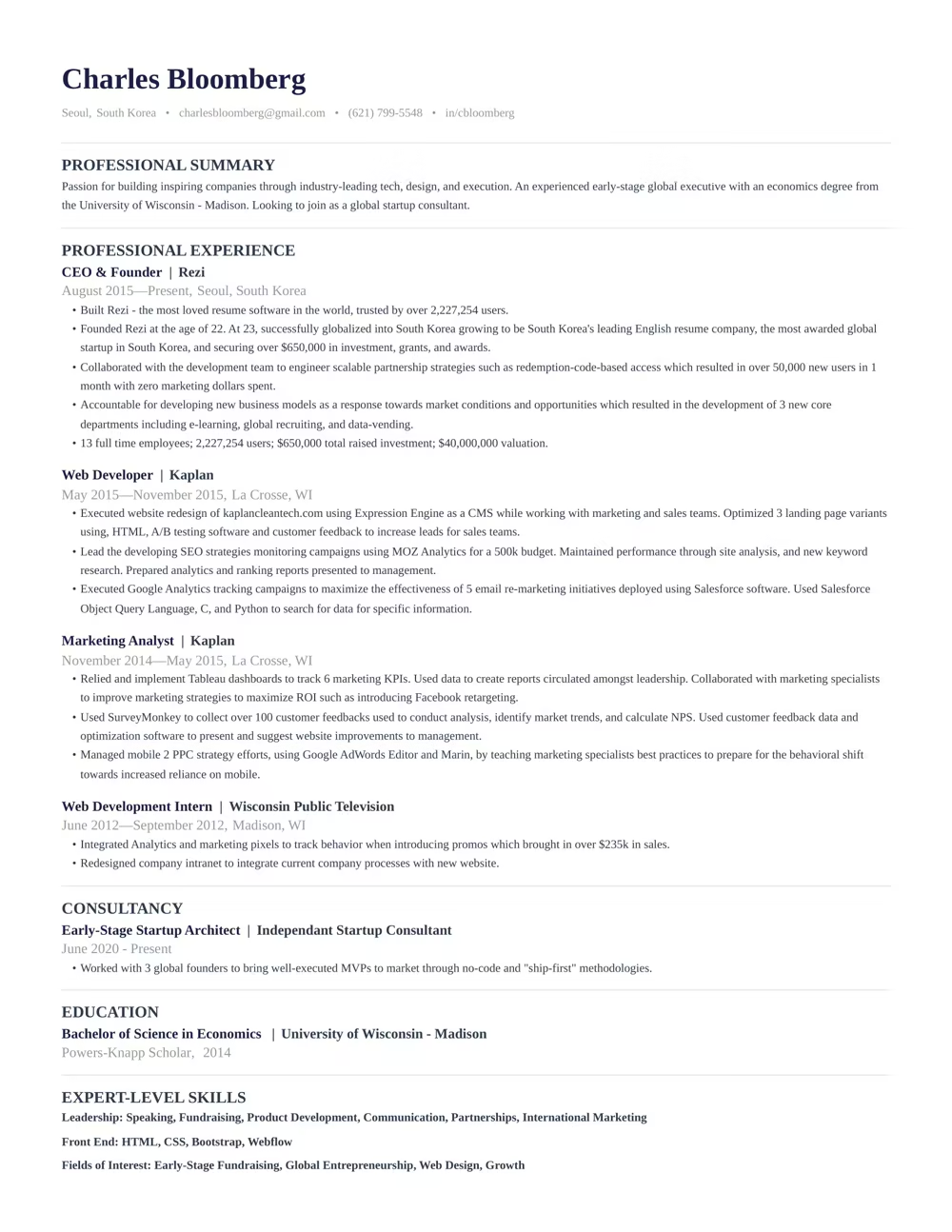
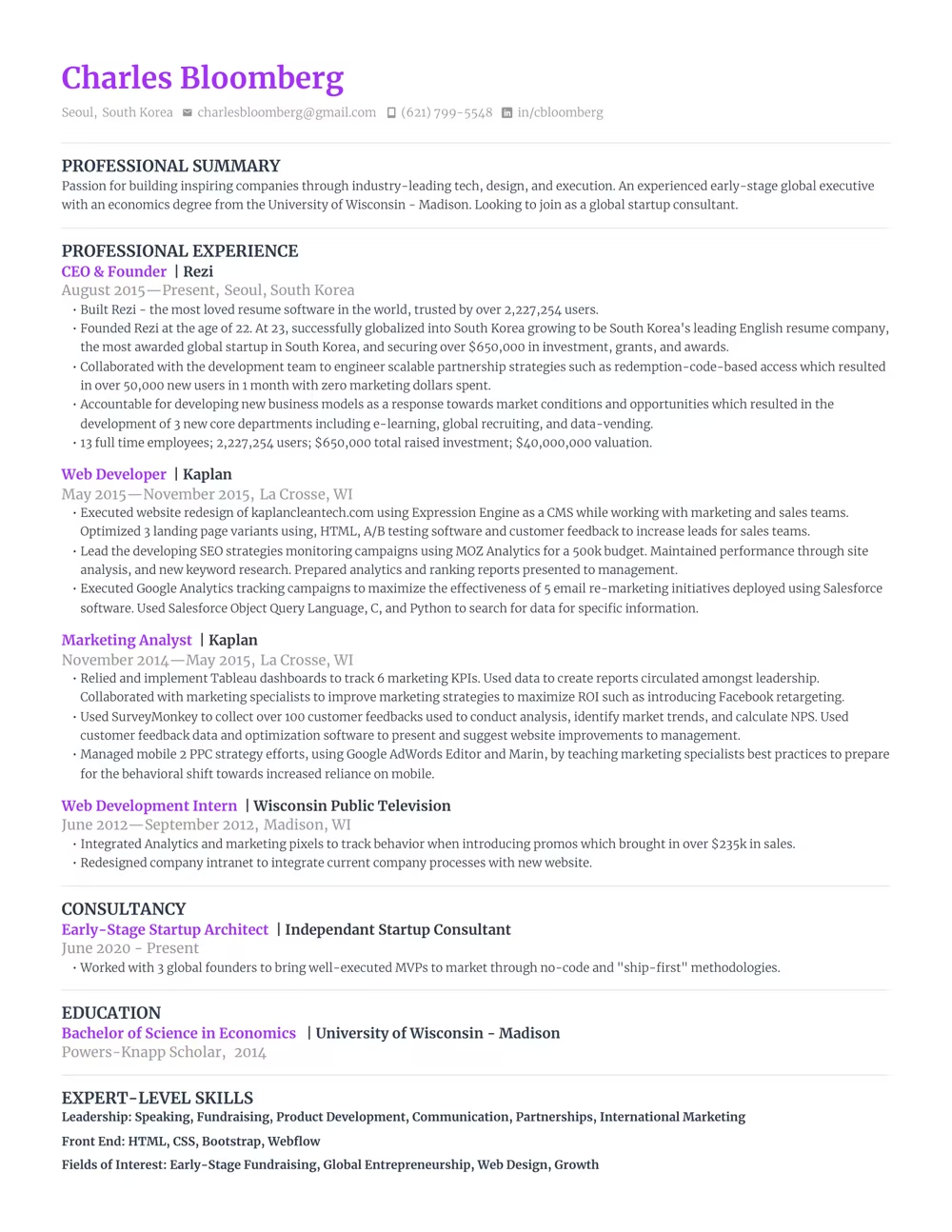
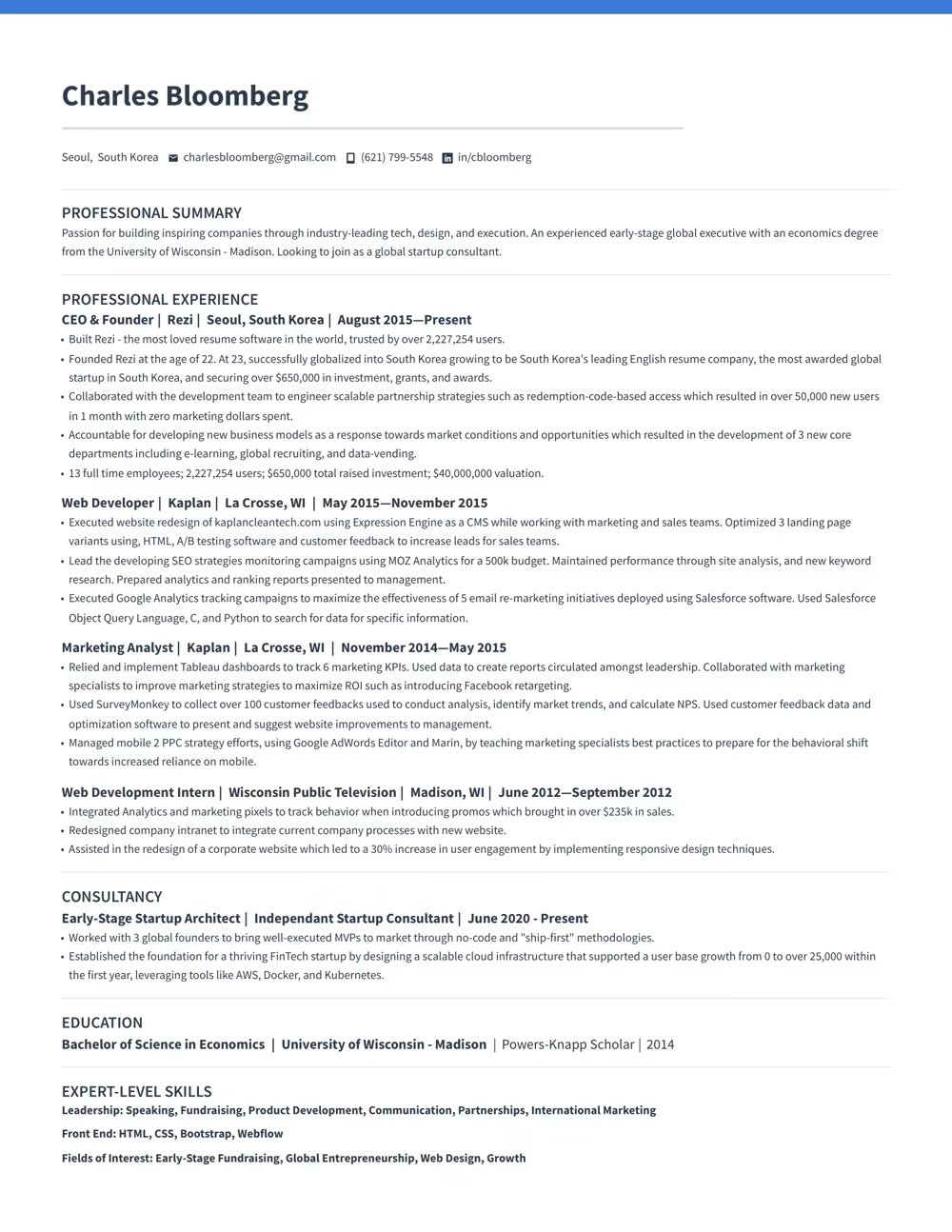
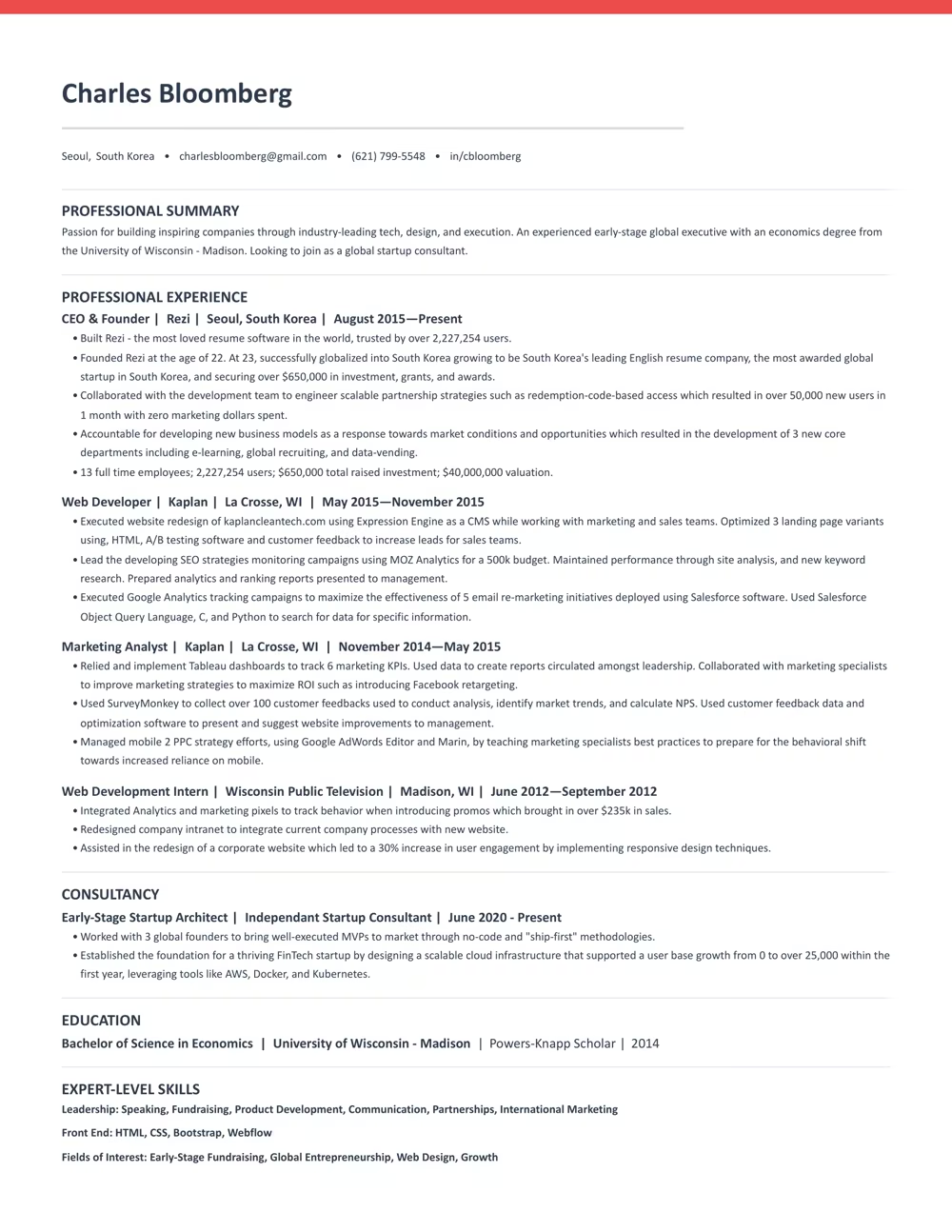

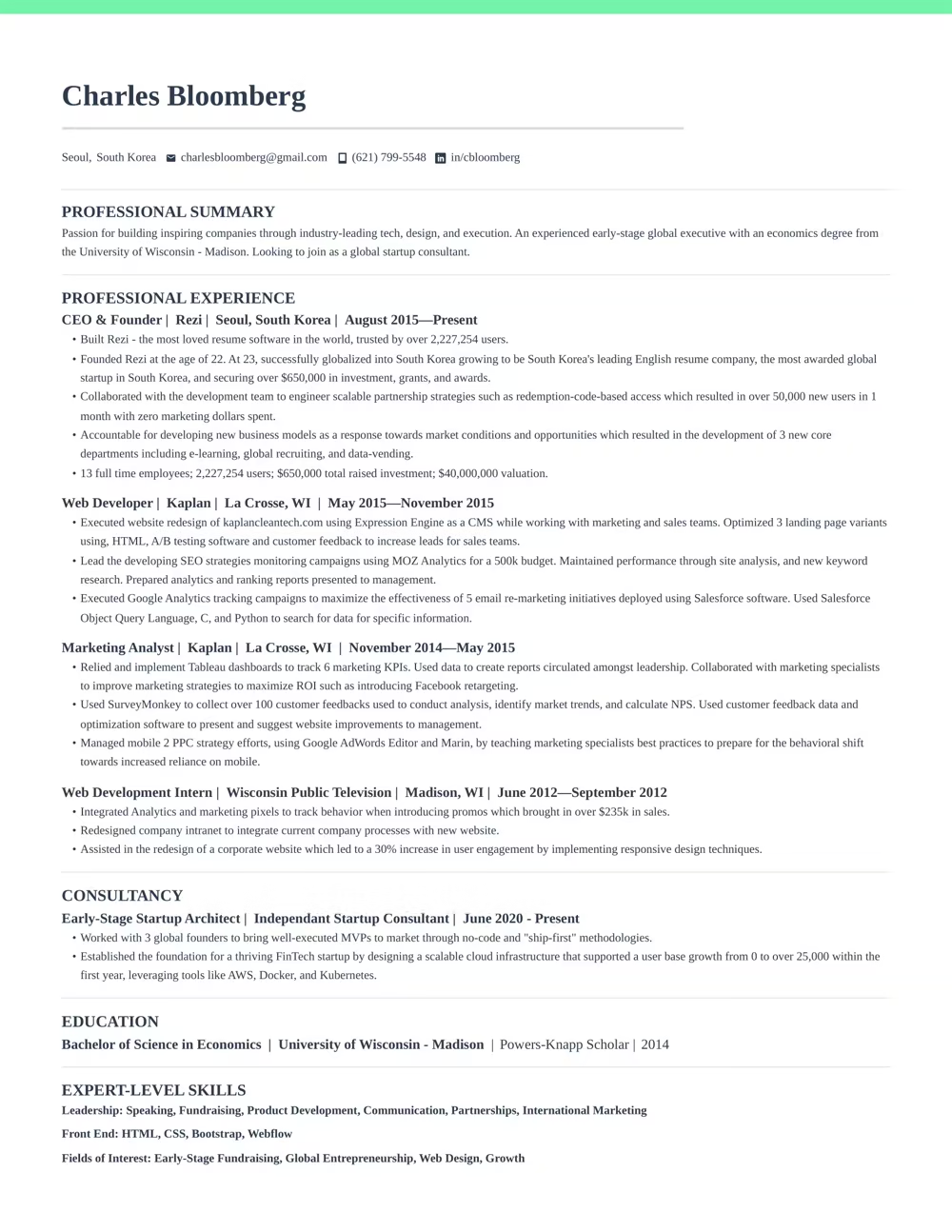
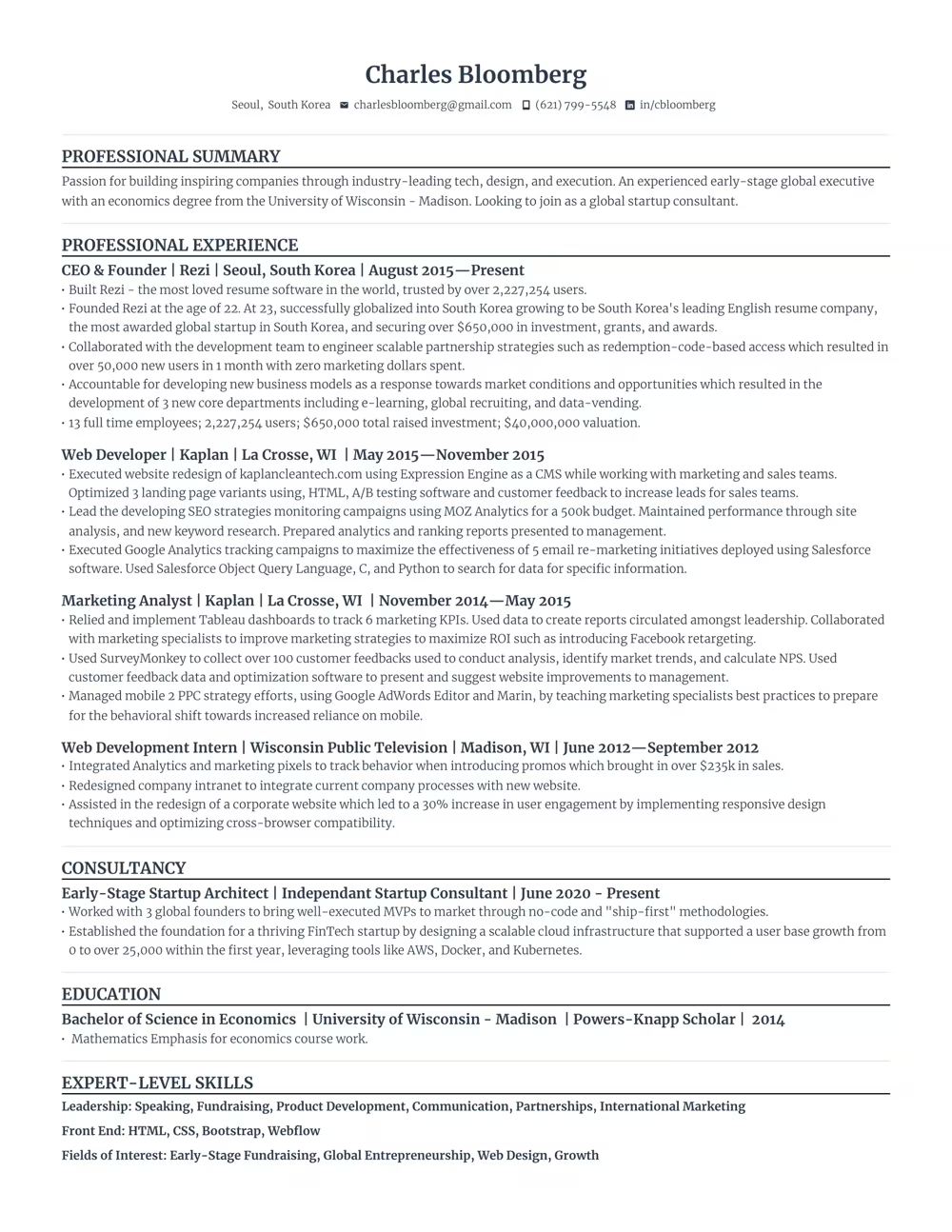
“Rezi is an awesome AI-based resume builder that includes templates to help you design a resume that is sure to check the boxes when it comes to applicant tracking systems. This is a great jumping off point to kickstart a new resume.”

Ashley Stahl
Career Contributor
62.18%
Interview Rate
4,773,704
Total Users
8.23 / 10
Avg. User Review
Wall of Love
Over 4 million users trust Rezi

Resume Building felt like pulling teeth – until I found Rezi.
Davis Allen
Software Developer

I was blown away by Rezi. It streamlined everything...
Celine Watko

I needed a resume tool as smart as my work.
Yosra Naceur
Data Scientist
“A great tool that is very helpful. I found the Rezi system easy to use and very helpful as I was working on getting my resume in shape for job applications.”

Dakota Rubin
United States
Written via

“This is actually one of the first reviews I’ve ever written for a business, and that alone says a lot. I highly recommend Rezi to anyone who’s job searching, it makes the entire process so much easier.”

Yazan Alkhatib
United States
Written via
“Reduced my time per application from 1-2 hours down to 15 minutes.”
Kixxx
Experience with Rezi
“I love how simple and convenient it is to use and been coming back to update it every time I need a fresh resume.”

Zara Wazir
U.A.E.
Written via
Frequently Asked Questions
Your questions, answered.
An AI resume maker helps you build a resume perfectly fit for the job you want. Top-notch AI resume builders are designed to speak the language hiring managers are looking for, increasing your chances of standing out in the crowd. It aligns your skills and experience with the job description effectively.
To get the most out of an AI resume builder, either start from scratch or upload your current resume. Fill in as much detail as possible about your career and skills, and upload the job description you’re targeting. This personalization allows the AI to build a unique and tailored resume that’s bound to catch potential employers' attention.
AI-generated resumes can seem similar if you're not giving personalized inputs or if you're using basic prompts. Provide specific details about your work experience and target the job you’re eyeing. Use specialized AI tools instead of general chatbots to avoid robotic-sounding resumes and to ensure individual creativity.
Employers might think you used AI, but that’s rarely an issue. What they really care about is getting a well-written resume that showcases your skills and experiences accurately. A top-notch resume tailored to their needs will speak volumes more than worrying about AI involvement.
Yes, using AI to optimize your current resume is highly effective. You just need to upload your resume, share details about your career goals and the job you want, and let the AI refine everything to elevate your resume's impact and ATS compatibility.
Rezi uses a tool called the AI Keyword Targeting. This feature scans the job description to identify crucial keywords and naturally incorporates them into your resume, giving it the right focus without keyword stuffing.
The Free plan is $0/month and allows you to create one resume, use limited AI tools (such as Keyword Targeting and Analysis), and download up to three PDFs. You can also create unlimited cover and resignation letters. No card is required to begin.
The Pro plan is $29/month and provides unlimited access to all features, including unlimited resumes, full AI capabilities, unlimited downloads, and one free monthly expert resume review (resumes are reviewed by a person).
The Lifetime plan is a $149 one-time payment. It grants permanent access to all the features of the Pro plan (unlimited resumes, full AI tools, and unlimited downloads), but it does not include the free monthly expert review (which can be purchased for an extra fee).
Rezi offers a 100% money-back guarantee on all paid plans (Pro and Lifetime). If you are unsatisfied, you can request a full refund within 30 days of your purchase.
Yes, you can easily upgrade or downgrade your plan at any time through your Rezi Account Billing dashboard. Prorated credits will apply when switching.
An AI resume maker helps you build a resume perfectly fit for the job you want. Top-notch AI resume builders are designed to speak the language hiring managers are looking for, increasing your chances of standing out in the crowd. It aligns your skills and experience with the job description effectively.
Yes, Rezi Enterprise.