
Operations Resumes
9+ Project Scheduler Resume Examples & Tips for 2026
Customize any of these resumes in minutes using our free AI-powered resume builder.
“Rezi is super upfront and continues to improve over time. I've recommended Rezi to several of my friends and colleagues. I just love this product so much.”

Ricky M.
Software Engineer
“Rezi is super upfront and continues to improve over time. I've recommended Rezi to several of my friends and colleagues. I just love this product so much.”
Ricky M.
Software Engineer
Helping users land jobs at 1,000+ companies such as














Here's a pattern I keep seeing in project scheduler resumes: they read like a list of software tools someone has used, and that's about it. "Proficient in Primavera P6. Experienced with Microsoft Project." Great — but so is everyone else applying for the same role.
The real problem? Most project scheduler resumes fail to communicate what actually matters: your ability to build, maintain, and analyze complex schedules that keep multimillion-dollar projects on track. Schedulers who land interviews are the ones whose resumes tell a story about logic, precision, and the downstream impact of their scheduling work — how their critical path analysis prevented delays, how their resource-loaded schedules saved money, how their baseline management kept stakeholders aligned.
And this is exactly what you'll learn from this article. Inside, you'll find:
- Examples of 9 project scheduler resumes across different industries and experience levels.
- Insider tips on what hiring managers actually look for in scheduling professionals.
- A step-by-step guide for building a project scheduler resume that gets you past ATS filters and into interviews.
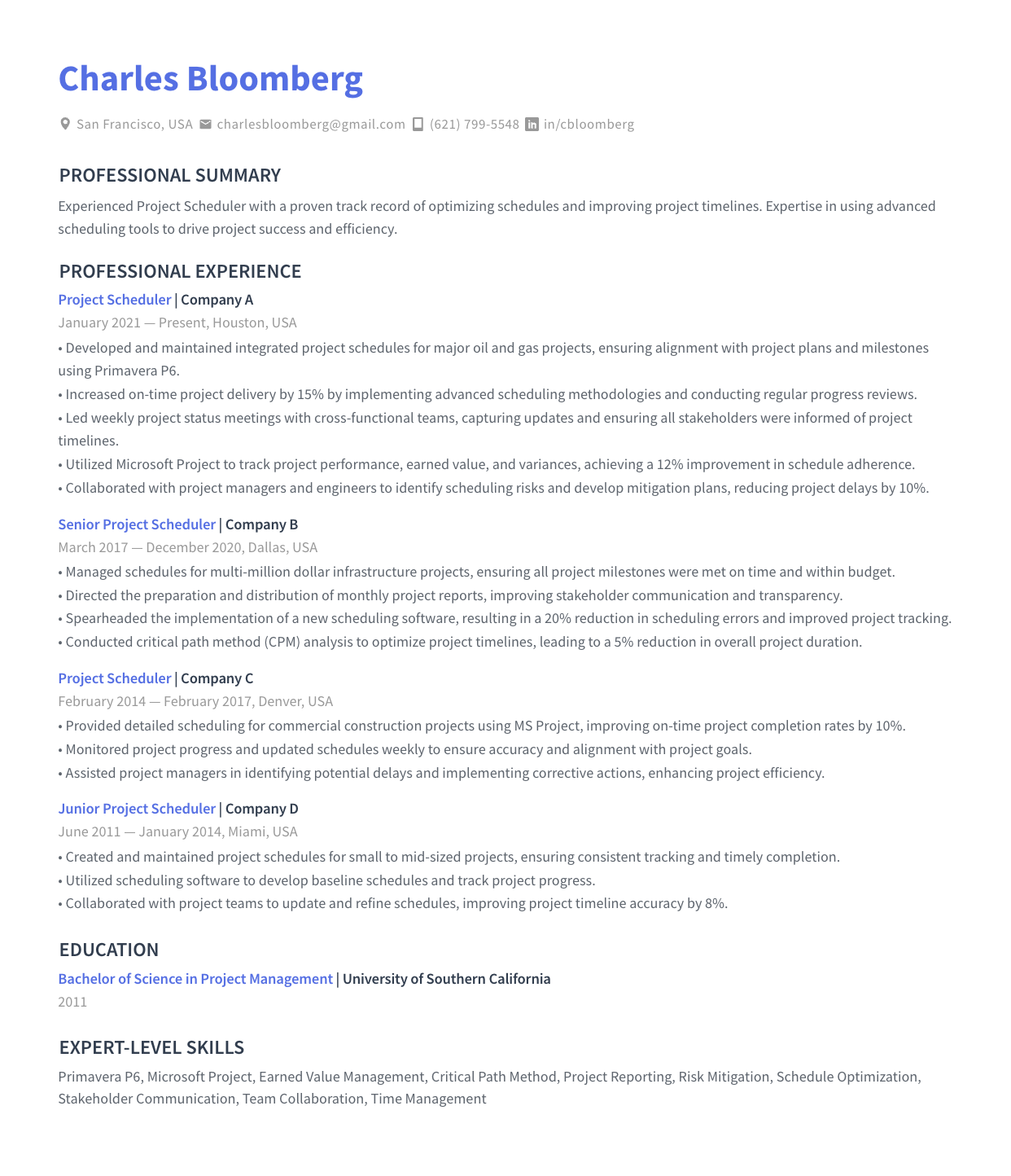
Sample Project Scheduler Resumes
Browse these sample resumes for project schedulers across different specializations and career stages. Find the one that best matches your profile and use it as a starting point — just make sure to customize the details to reflect your own experience and accomplishments.
Junior Project Scheduler Resume
A Junior Project Scheduler resume should emphasize your foundational knowledge of scheduling principles, relevant coursework, and any internship or entry-level experience with scheduling tools. Highlight your understanding of CPM, Gantt charts, and WBS development. Showcase proficiency in Primavera P6 or Microsoft Project, even from academic settings. Include any exposure to schedule updates, progress tracking, or data entry supporting senior schedulers on active projects.
Mid-Level Project Scheduler Resume
A Mid-Level Project Scheduler should highlight growing independence in developing and maintaining project schedules. Emphasize your experience with baseline management, schedule variance analysis, and resource loading. Show how you've supported multiple concurrent projects and collaborated with project managers and engineers to integrate scope changes. Quantify your impact — mention the number of activities managed, project values, or schedule compression achievements that demonstrate your expanding capabilities.
Senior Project Scheduler Resume
A Senior Project Scheduler resume should demonstrate a proven track record of managing complex, large-scale schedules from initiation through closeout. Emphasize your expertise in critical path analysis, earned value management, and schedule risk assessment. Highlight mentoring of junior schedulers, development of scheduling standards and procedures, and experience presenting schedule narratives to executive stakeholders. Include metrics like portfolio value overseen, schedule accuracy rates, and delay mitigation results.
Construction Project Scheduler Resume
For a Construction Project Scheduler, your resume should underscore deep knowledge of construction sequencing, phasing, and field coordination. Highlight experience with Primavera P6 and construction-specific scheduling challenges like weather delays, permitting timelines, and subcontractor coordination. Show your ability to produce look-ahead schedules, time impact analyses, and delay claims support. Mention familiarity with contract specifications for scheduling deliverables and any experience on USACE, DOT, or similar government projects.
Engineering Project Scheduler Resume
An Engineering Project Scheduler resume should showcase your ability to schedule complex engineering workflows — from conceptual design through detailed engineering and procurement. Emphasize experience integrating engineering deliverables with construction and commissioning milestones. Highlight your understanding of interdisciplinary dependencies, design review cycles, and engineering hours tracking. Proficiency in Primavera P6 or similar tools, combined with knowledge of EPC project lifecycles, will make your resume stand out to hiring managers.
IT Project Scheduler Resume
An IT Project Scheduler resume should focus on your experience scheduling technology implementations, software development projects, and system migrations. Highlight familiarity with Agile and Waterfall scheduling approaches, sprint planning integration, and release management timelines. Show your ability to coordinate across development, QA, infrastructure, and business teams. Proficiency in Microsoft Project, Smartsheet, or JIRA for schedule tracking, along with experience managing iterative delivery timelines, will strengthen your resume significantly.
Master Project Scheduler Resume
A Master Project Scheduler resume should demonstrate expertise in developing and maintaining integrated master schedules (IMS) across large programs or portfolios. Emphasize your ability to roll up multiple project schedules into a cohesive program-level view, manage cross-project dependencies, and conduct schedule health assessments. Highlight experience with DCMA 14-point schedule assessments, schedule risk analysis (SRA), and earned value integration. Showcase your role in establishing enterprise scheduling standards and governance frameworks.
Primavera Project Scheduler Resume
A Primavera Project Scheduler resume should highlight advanced proficiency in Oracle Primavera P6, including activity coding, resource and cost loading, baseline comparisons, and custom reporting. Emphasize experience building schedules with thousands of activities, performing forensic schedule analysis, and producing time impact analyses. Mention any Primavera-specific training or Oracle certifications. Show how you've leveraged P6's capabilities to improve schedule accuracy, streamline reporting, and support claims or dispute resolution on complex projects.
Capital Projects Scheduler Resume
For a Capital Projects Scheduler, your resume should highlight experience managing schedules for large capital expenditure programs — think plant expansions, infrastructure builds, or facility upgrades. Emphasize your understanding of front-end planning (FEL/gate processes), EPC coordination, and long-lead procurement tracking. Show your ability to develop Level 1 through Level 4 schedules and integrate them with cost and earned value systems. Mention total project values and your role in maintaining schedule integrity through execution.
How to Write a Project Scheduler Resume
Short answer:
Focus on your scheduling expertise, the tools and methodologies you use, and the measurable impact your schedules have had on project outcomes. Create a professional header with your name and contact details. Right below, write a 2–3 sentence resume summary highlighting your most impressive scheduling accomplishments. Describe your work history in reverse-chronological order, emphasizing schedule development, analysis, and the results your work produced. Then, cover your education and certifications, list key skills, and add extra sections like notable projects or professional memberships.
Include all the necessary sections in the correct order
Here's the correct order of sections for most project scheduler resumes:
- Header with contact information
- Resume summary or objective
- Work experience
- Education
- Skills
- Certifications
Depending on your situation, you can also add some additional sections. For instance:
- Notable projects (especially useful if you've worked on high-profile or complex programs)
- Volunteer experience
- Conference participation or presentations
- Publications
- Professional associations
Include everything that demonstrates your scheduling capabilities. Make every section count. If it doesn't clearly highlight your skills or experience, it doesn't belong on your resume.
If you have less than five years of relevant experience, keep your resume to 1 page. For more experienced schedulers, a two-page resume is perfectly fine.
More details here: What Sections to Include on Your Resume?
Now, I'll give you a high-level overview of how to write each section, going from top to bottom. Well… almost. The only exception is the resume summary section. While it comes right after your contact info, it's actually easier to write it last. More on that in a sec.
Create a professional resume header
- Start with your name and contact information. Include the basics: your full name, phone number, professional email address, location, and LinkedIn profile. A link to a portfolio or personal website showcasing project examples can also add credibility.
- Right below your name, clearly state your professional title (e.g., Senior Project Scheduler or Primavera P6 Scheduler). This immediately signals your specialization and sets the right expectations.
For more information, see: How to Create a Resume Header
Describe your work history
- Use reverse-chronological order. List your positions starting with the current or most recent one.
- In each entry, include your job title, company name, location, and dates of employment.
- Below each position, write 3–7 bullet points — the more recent the position, the more bullet points you should include. Describe your responsibilities and, more importantly, your accomplishments.
- Use action verbs and quantify your achievements (e.g., "Developed and maintained a 5,000+ activity CPM schedule for a $350M industrial construction project, achieving 97% on-time milestone delivery").
- If specific scheduling methodologies or techniques were central to your role (e.g., Critical Path Method, Earned Value Management, schedule risk analysis), weave these details into your descriptions. This also helps you pass ATS scans.
Learn more about the best practices of this section with our detailed guide on how to describe your work experience on a resume.
List your degrees and detail professional learning
- In the education section, list your highest degree first, including the degree type, major, and institution.
- If you have relevant work experience, include only the name of your school and the degree you earned. If you're an entry-level candidate, you can add more detail — list relevant coursework in project controls, construction management, or engineering, as well as academic achievements.
- If you have scheduling or project management certifications (e.g., PSP, PMI-SP, PMP), either include them in an "Education and Certifications" section, or create a separate "Certifications" section placed right below.
For an in-depth guide on how to describe your education on a resume, see: How to List Education on a Resume
List your most relevant skills in the skills section
- Include a mix of scheduling software proficiency, technical scheduling skills, and relevant methodologies.
- Add in some soft skills such as communication, attention to detail, and analytical thinking. These demonstrate your capacity to work with diverse teams and translate complex schedule data into actionable insights.
- You can use two separate subsections — one for hard skills, one for soft skills — or just list all skills under one heading.
- Match your skills to the description of the job you're applying for. Don't just dump every scheduling term you know, but highlight those areas of expertise where your knowledge overlaps with the job ad.
Need some inspiration to get started? Here are some good skills to feature on your project scheduler resume.
Scheduling software skills:
- Oracle Primavera P6
- Microsoft Project
- Deltek Acumen Fuse
- Deltek Open Plan
- Asta Powerproject
- Smartsheet
- Microsoft Excel (advanced)
- Power BI (schedule dashboards)
- Tilos (linear scheduling)
- JIRA (IT/Agile scheduling)
Scheduling methodologies and techniques:
- Critical Path Method (CPM)
- Earned Value Management (EVM)
- Schedule Risk Analysis (SRA / Monte Carlo)
- Resource Loading and Leveling
- Baseline Management
- Work Breakdown Structure (WBS) Development
- Time Impact Analysis (TIA)
- Forensic Schedule Analysis
- DCMA 14-Point Assessment
- Look-Ahead Schedule Development
Key soft skills for project schedulers:
- Analytical Thinking
- Attention to Detail
- Communication
- Problem-Solving
- Collaboration
- Time Management
- Adaptability
- Stakeholder Reporting
- Critical Thinking
- Organization
For a full-blown guide on listing skills on a resume, visit: How to Put Skills on a Resume
Use additional sections as further proof of your fit
Additional sections add depth to your resume and back up your claimed expertise. Good examples of extra sections to add to a project scheduler resume are:
- Professional associations. Membership in organizations like AACE International or PMI shows your commitment to the scheduling and project controls profession.
- Notable projects. A resume section dedicated to significant projects you've scheduled — specifying the project value, number of activities, industry, and your specific role — can provide concrete proof of your expertise.
- Publications or presentations. If you've written articles on scheduling best practices or presented at industry conferences like AACE's annual meeting, list them in a separate section.
- Training and workshops. Completed Primavera P6 training courses, EVM workshops, or schedule risk analysis certifications show continuous professional development.
Highlight the most relevant information in a resume summary
Once you're done writing your project scheduler resume, give it a full read. Pick the most relevant information and compile it into a summary paragraph. Place it right under the resume header.
- Be brief and to-the-point. In 3–4 sentences, sum up your scheduling experience, core competencies, and what you bring to the table. Consider this your chance to answer, "Why should you hire me?" Tailor this section to match the employer's needs outlined in the job description.
- Use value-oriented language. Focus on how you can add value to the potential employer — mention specific outcomes like schedule accuracy rates, project values managed, or delay reduction achievements.
Once you've completed the core sections of your resume, you can use Rezi AI Resume Summary Generator to automatically create a powerful summary, tailored to the job you're applying for. All you need to do is add the position and skills you want to highlight. The AI writer will do the rest.
More information here: How to Write a Job-Winning Resume Summary (with Examples)
For finishing touches, make sure your resume looks professional
- Use a clean and tidy resume format. Ensure your scheduler resume is easily readable, with a professional font, consistent formatting, and clear section headings. Avoid overloading it with dense text or fancy design elements that could distract from the content and confuse resume screening software.
- Aim for a balance between detail and conciseness. If you're a junior candidate, keep your resume to a single page. Experienced project schedulers can extend their resumes to two pages, but still need to make sure every word conveys value.
Learn more about proper resume formatting here: How to Format a Resume & What Standard Resume Format to Use
What Makes Project Scheduler Resumes Different
In short: the emphasis on technical precision and the ability to demonstrate how your scheduling work directly impacted project success.
This is where many project schedulers stumble. Listing "maintained project schedules" tells a hiring manager almost nothing. They need to see how your schedule analysis prevented a costly delay, how your resource loading optimization saved labor costs, or how your forensic analysis supported a successful delay claim. That's what separates a strong scheduler resume from a forgettable one.
Focus on scheduling-specific technical depth
Project schedulers are specialists. Unlike project managers who oversee everything broadly, you're expected to bring deep expertise in schedule development, analysis, and optimization. Your resume needs to reflect that depth.
What it means for you:
- Specify the complexity of schedules you've built and managed — mention the number of activities, the scheduling software used, and whether schedules were resource-loaded or cost-loaded.
- Highlight specific scheduling techniques you've applied, such as CPM analysis, Monte Carlo simulations, time impact analyses, or DCMA 14-point assessments. Generic statements like "created schedules" won't cut it.
Focus on measurable impact
Quantifying achievements is important in all resumes, but for schedulers, the numbers tell the most important story. Your schedules don't exist in a vacuum — they drive decisions worth millions of dollars.
What it means for you:
- Detail the outcomes of your scheduling work through tangible metrics. For example, percentage improvement in on-time milestone delivery, number of delay days mitigated through proactive schedule analysis, or total project value of schedules managed.
- Mention the scale and scope of projects: budget size, duration, number of concurrent schedules maintained, and the industries involved.
Focus on tools and methodology mastery
Hiring managers for scheduler roles are very specific about the tools they need. A construction scheduler who doesn't know Primavera P6 or an IT scheduler unfamiliar with JIRA will be immediately screened out.
What this means for you:
- Don't just list software names — describe how you used them. Instead of "Primavera P6," say "Developed and maintained resource-loaded CPM schedules in Primavera P6 with 3,000+ activities."
- Specify your level of expertise. There's a big difference between entering progress updates in P6 and building a fully coded, resource-loaded master schedule from scratch. Make your level of proficiency crystal clear.
Focus on cross-functional collaboration
Schedulers don't work in isolation. Your schedule is only as good as the input you gather and the buy-in you achieve from engineers, project managers, contractors, and stakeholders.
What this means for you:
- Highlight your experience facilitating schedule review sessions, gathering activity durations from discipline leads, and presenting schedule narratives to leadership.
- Show your ability to translate complex scheduling data into clear, actionable information for non-scheduling audiences. This skill is often what differentiates a good scheduler from a great one.
Focus on career progression within project controls
If you've grown from a junior scheduler to a lead or master scheduler role, your resume should tell that story clearly.
What this means for you:
- Highlight transitions from support roles (schedule updating, data entry) to ownership roles (schedule development, critical path management, risk analysis).
- Show how the complexity, value, and scale of projects you've scheduled expanded over time. A scheduler who went from a $10M renovation to a $500M capital program has a compelling growth story to tell.
Bonus Resources for Project Schedulers
This isn't going to be a game-changer if you need a resume right now. But —
I want you to treat your career holistically. These resources will help you sharpen your scheduling skills, earn credentials that add weight to future resumes, and keep you current with developments in the project controls field.
Professional associations and networks
AACE International
The leading professional association for cost engineers, project controllers, and planning/scheduling professionals. AACE offers the Planning and Scheduling Professional (PSP) certification, technical papers, and annual conferences that are gold for schedulers looking to advance.
Project Management Institute (PMI)
PMI offers the PMI Scheduling Professional (PMI-SP) certification specifically for scheduling practitioners. They also provide extensive resources, networking opportunities, and local chapter events relevant to project controls professionals.
Planning Planet
An online community and knowledge hub specifically for planning and scheduling professionals. It features forums, a Guild of Project Controls compendium, and resources covering everything from scheduling fundamentals to advanced forensic delay analysis.
Online learning platforms
Coursera & edX
Both platforms offer courses in project planning, scheduling, and project controls. Many are developed by university professors or industry practitioners, covering topics from CPM fundamentals to earned value management and risk analysis.
LinkedIn Learning
Offers numerous courses on Primavera P6, Microsoft Project, scheduling fundamentals, and project controls topics. These are practical, tool-focused courses that can quickly expand your technical capabilities.
Project Controls Academy
A specialized training provider focused exclusively on project controls topics including scheduling, cost engineering, and earned value management. Their courses are designed for practitioners who want deep, industry-relevant knowledge.
Publications
AACE International's Cost Engineering Journal
A peer-reviewed journal covering cost engineering, project controls, and planning/scheduling topics. An excellent resource for staying current with best practices and emerging methodologies in the scheduling field.
PMI's Project Management Journal
Offers research articles on scheduling, earned value, and project controls topics alongside broader project management content. Useful for schedulers who want to understand how their work fits into the larger project management ecosystem.
Project Controls Expo & Resources
An annual event and online resource hub dedicated to project controls professionals, featuring presentations, case studies, and networking opportunities specifically relevant to schedulers and planners.
Tools and software resources
Capterra & G2
Both websites provide extensive reviews and comparisons of scheduling and project management software, helping you evaluate tools based on features, pricing, and user feedback from other scheduling professionals.
Oracle Primavera P6 Documentation
Oracle's official documentation and learning resources for Primavera P6 are invaluable for schedulers who want to deepen their command of the industry's most widely-used scheduling platform.
Summary
Here's what you need to know about writing a project scheduler resume:
- Structure your project scheduler resume with essential sections in this order: Header, Resume Summary or Objective, Work Experience, Education, Skills, and Certifications. If relevant, add extra sections like Notable Projects or Professional Associations.
- Include a professional header with your name, contact information, and professional title (e.g., Senior Project Scheduler, Primavera P6 Scheduler).
- Describe your work history in reverse-chronological order, emphasizing schedule development, analysis, and achievements with quantifiable outcomes.
- In the education section, list your highest degree at the top. List scheduling certifications (PSP, PMI-SP) either in the education section or under a separate heading.
- Highlight a mix of scheduling software skills, technical methodologies, and soft skills — tailoring them to the job description.
- Specify the complexity of schedules you've managed: number of activities, project values, software used, and techniques applied.
- Use additional sections to further showcase your expertise and commitment to the project controls field.
- Once done writing the resume, compile the key information into a brief, value-oriented resume summary at the top.
- Make your resume professional in appearance — aim for conciseness without sacrificing the technical detail that scheduling roles demand.
- Showcase your ability to translate scheduling data into actionable insights that drive project success.
Thanks for reading! Got any questions? Feel free to reach out to me on LinkedIn. (Or check out the FAQs first — maybe your question is answered there.)
FAQ
What keywords should I use on my project scheduler resume?
Use scheduling-specific terminology relevant to your experience: Critical Path Method (CPM), Primavera P6, resource loading, baseline management, earned value management, schedule risk analysis, time impact analysis, WBS, and look-ahead schedules. Include certifications like PSP, PMI-SP, or PMP if you hold them. These are the terms ATS systems and hiring managers scan for first.
Should I include project values and activity counts on my resume?
Absolutely. Numbers like "$400M EPC project" or "4,500-activity CPM schedule" immediately communicate the scale of your experience. Hiring managers use these figures to gauge whether you can handle the complexity of their projects. Always include project values, activity counts, and team sizes when possible.
What's the most common mistake on project scheduler resumes?
Listing software names without context. Saying "Primavera P6" doesn't tell anyone whether you entered progress updates or built a fully resource-loaded master schedule from scratch. Always describe how you used the tool and what outcomes your work produced. "Developed and maintained a resource-loaded CPM schedule in Primavera P6 for a $200M infrastructure project" is infinitely more compelling.
I'm transitioning from project management into a dedicated scheduling role. How should I approach my resume?
Emphasize every instance where you developed, managed, or analyzed schedules in your PM roles. Highlight your experience with scheduling software, critical path analysis, and progress tracking. If you've used Primavera P6 or Microsoft Project in any capacity, call it out prominently. Consider earning the PSP or PMI-SP certification to signal your commitment to the scheduling discipline specifically.
Which resume format is best for project scheduler resumes?
The reverse-chronological format works best. It shows your career progression and makes it easy for employers to see how your scheduling responsibilities and project complexity have grown over time. Functional or combination formats can obscure this growth and raise red flags with hiring managers.
How do I handle it if my job title was "Planner/Scheduler" or something non-standard?
Use the title that most accurately reflects what you actually did, as long as it's not misleading. If your official title was "Project Controls Analyst" but 90% of your work was scheduling, you can note "Project Controls Analyst (Scheduling Focus)" or clarify in your bullet points. The key is making it immediately obvious to a hiring manager that you're a scheduling professional.
Should I include a PSP or PMI-SP certification if I'm still working toward it?
Yes — you can list it as "PSP (In Progress)" or "PMI-SP Candidate, Expected [Month Year]." This shows initiative and commitment to the profession. Just don't claim a certification you haven't yet earned. Hiring managers appreciate honesty and the signal that you're actively investing in your scheduling career.

Upload or drop your resume to get started
Upload your resume to get started
Score my resume
Contents

Resume Formats & Examples
ATS-Friendly resume formats that land jobs
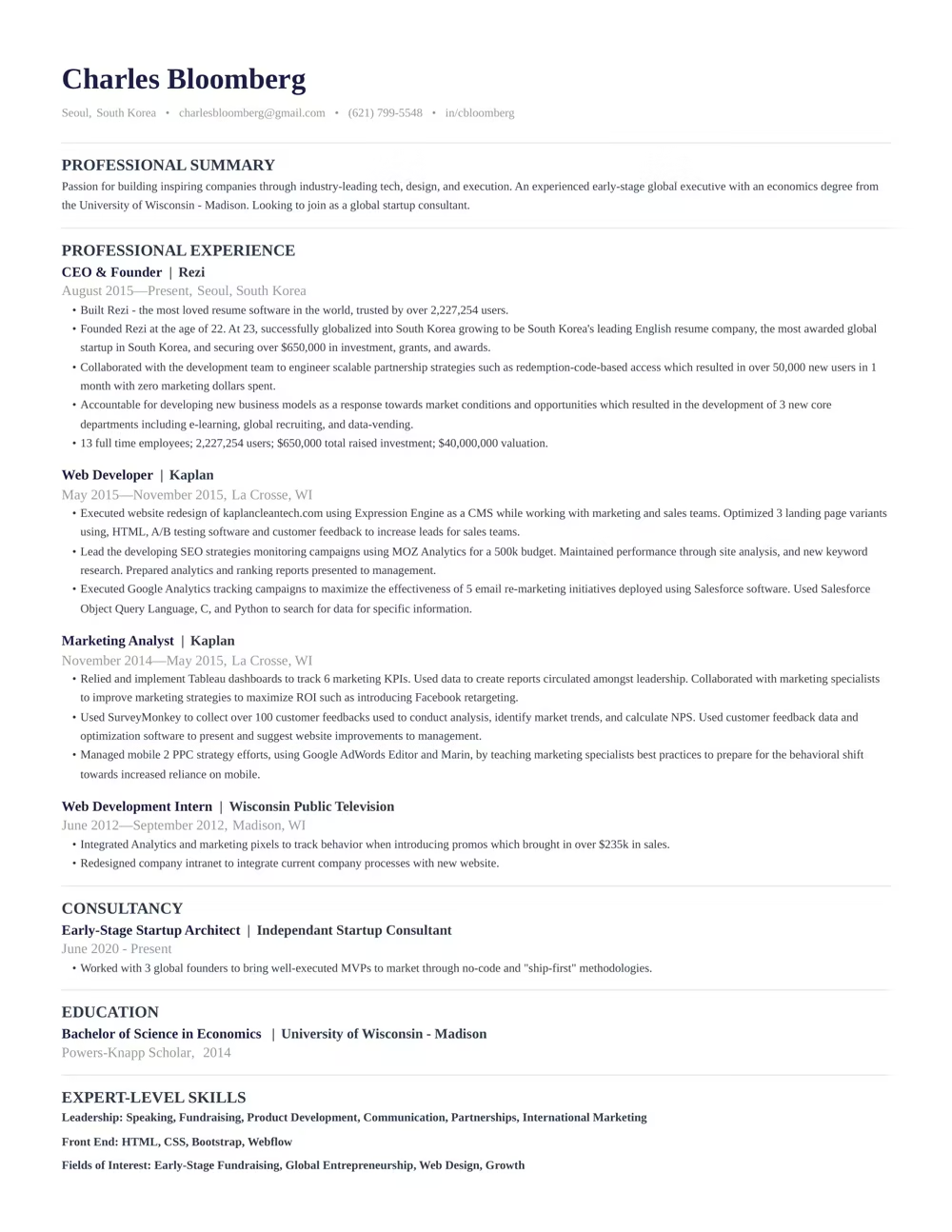
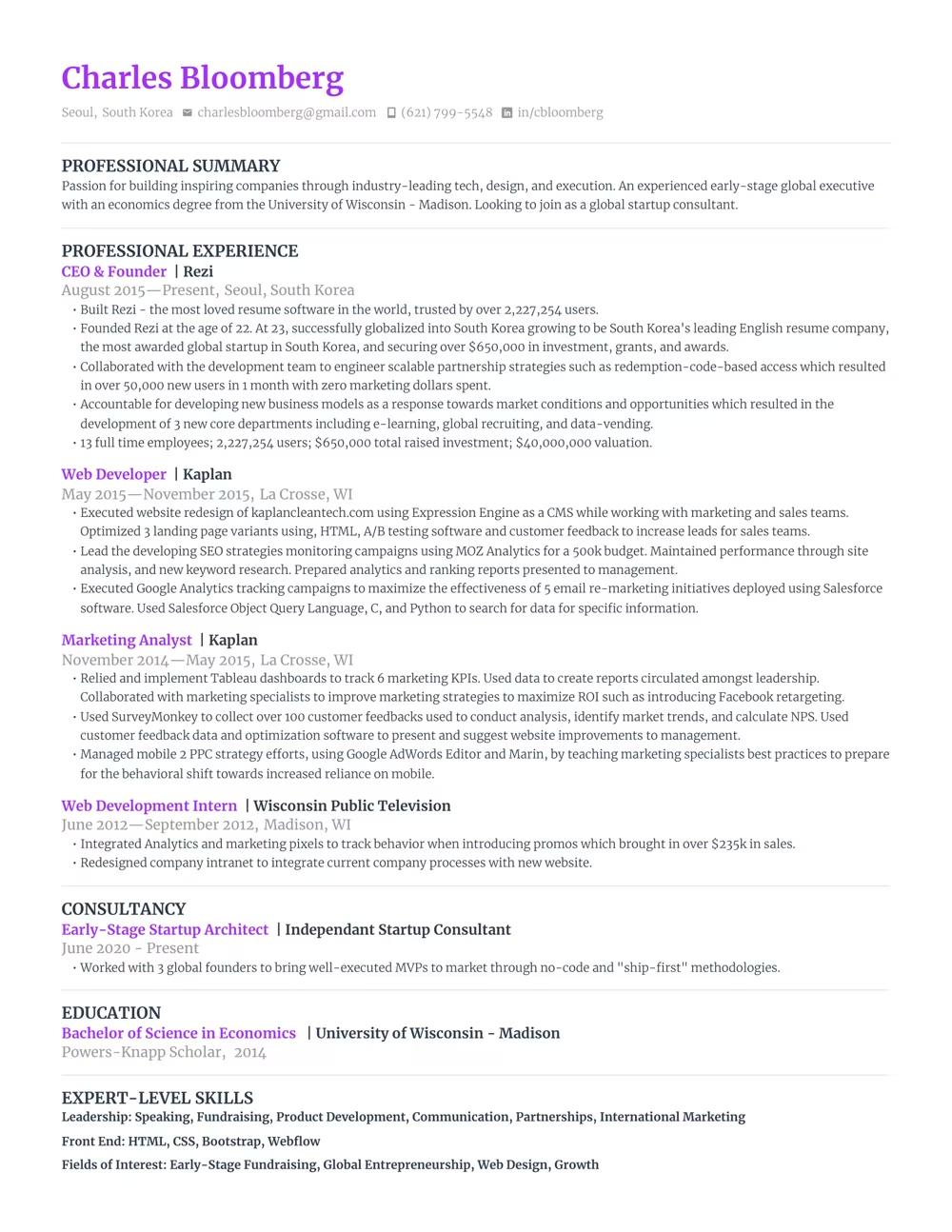
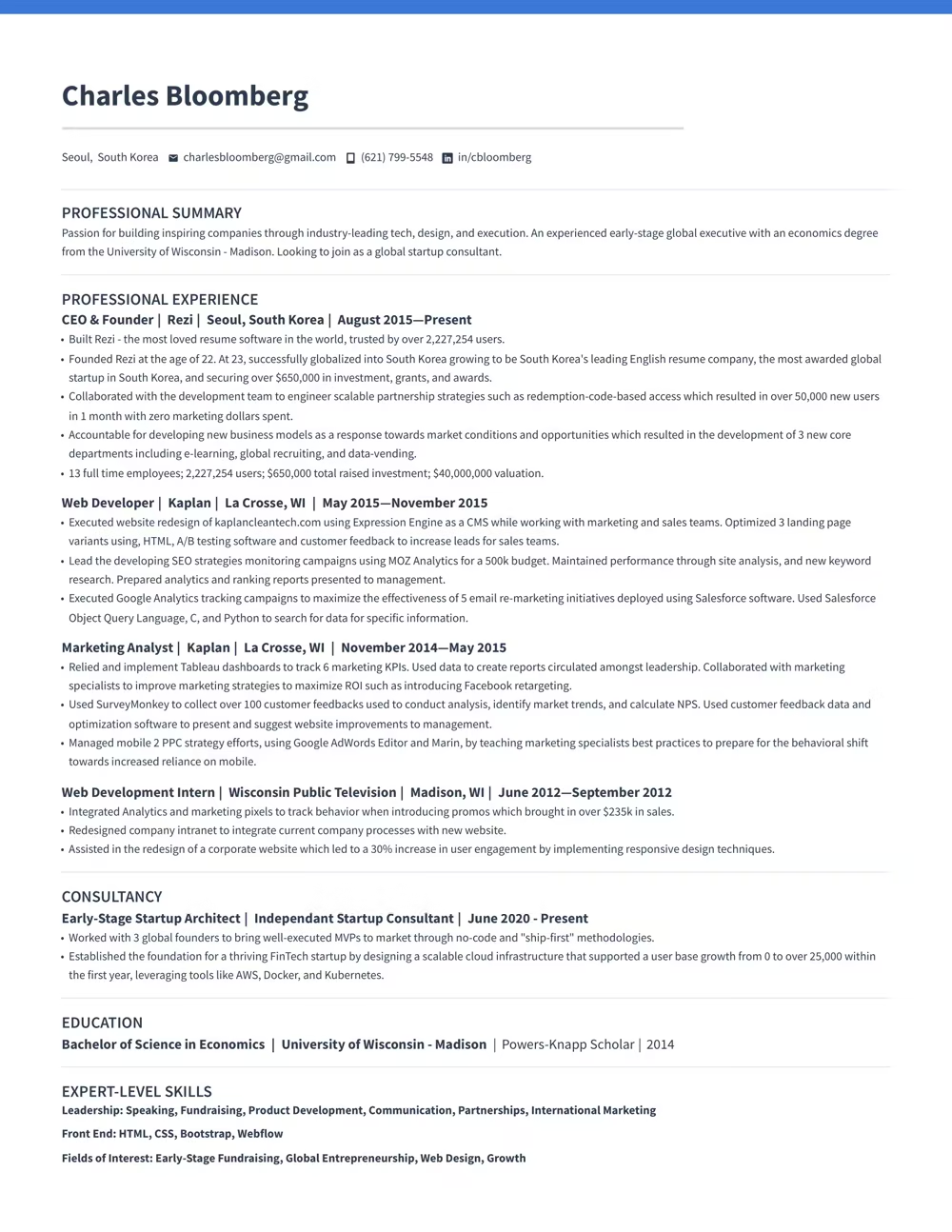
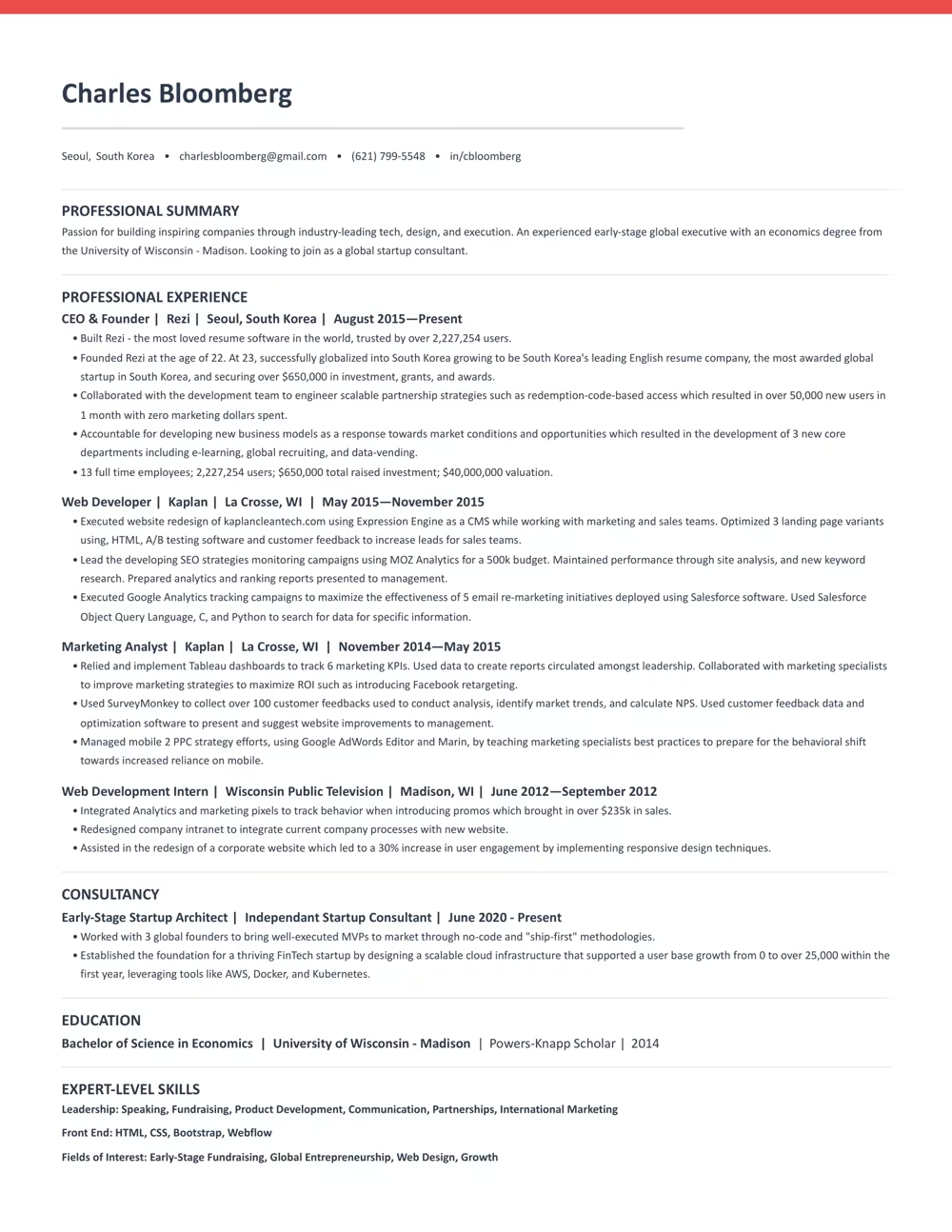
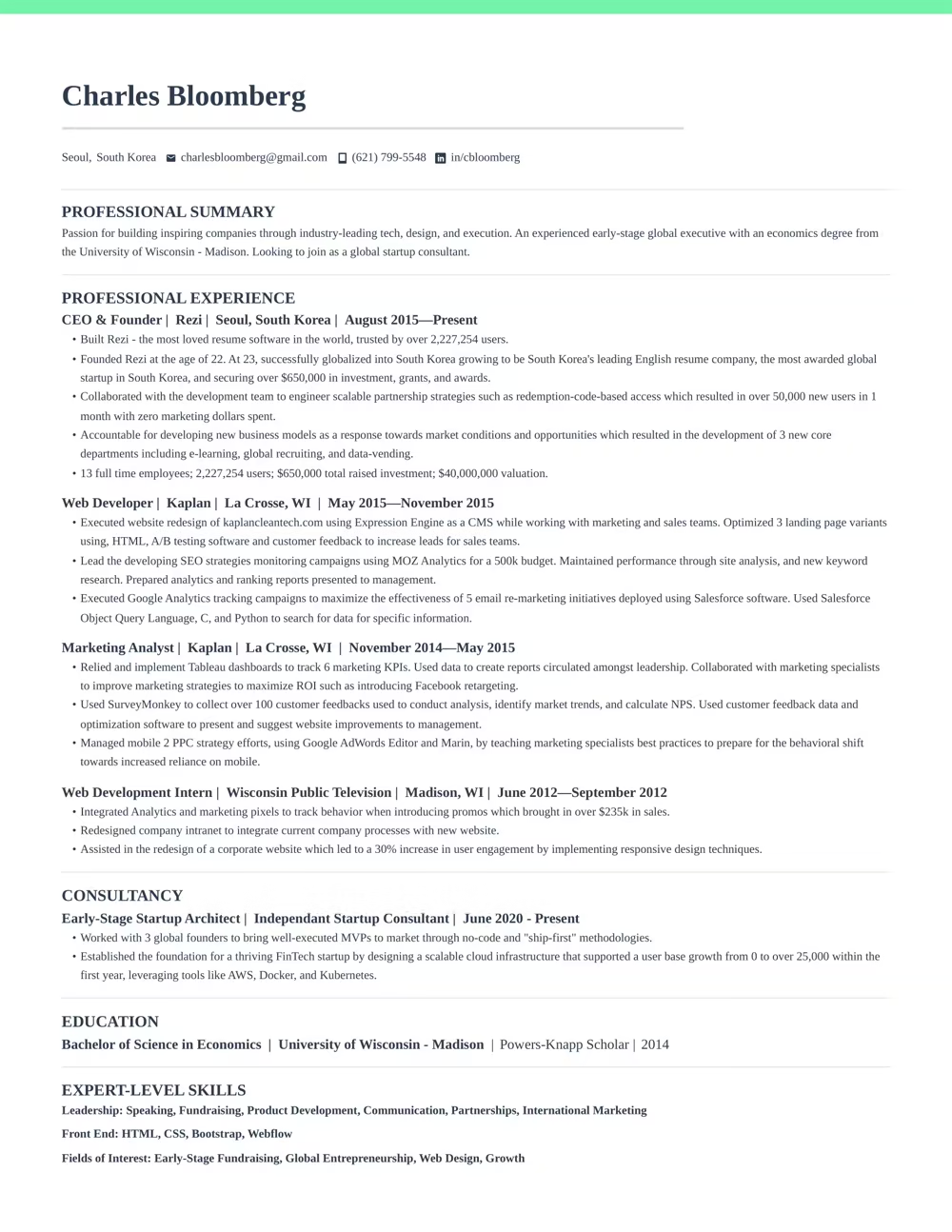
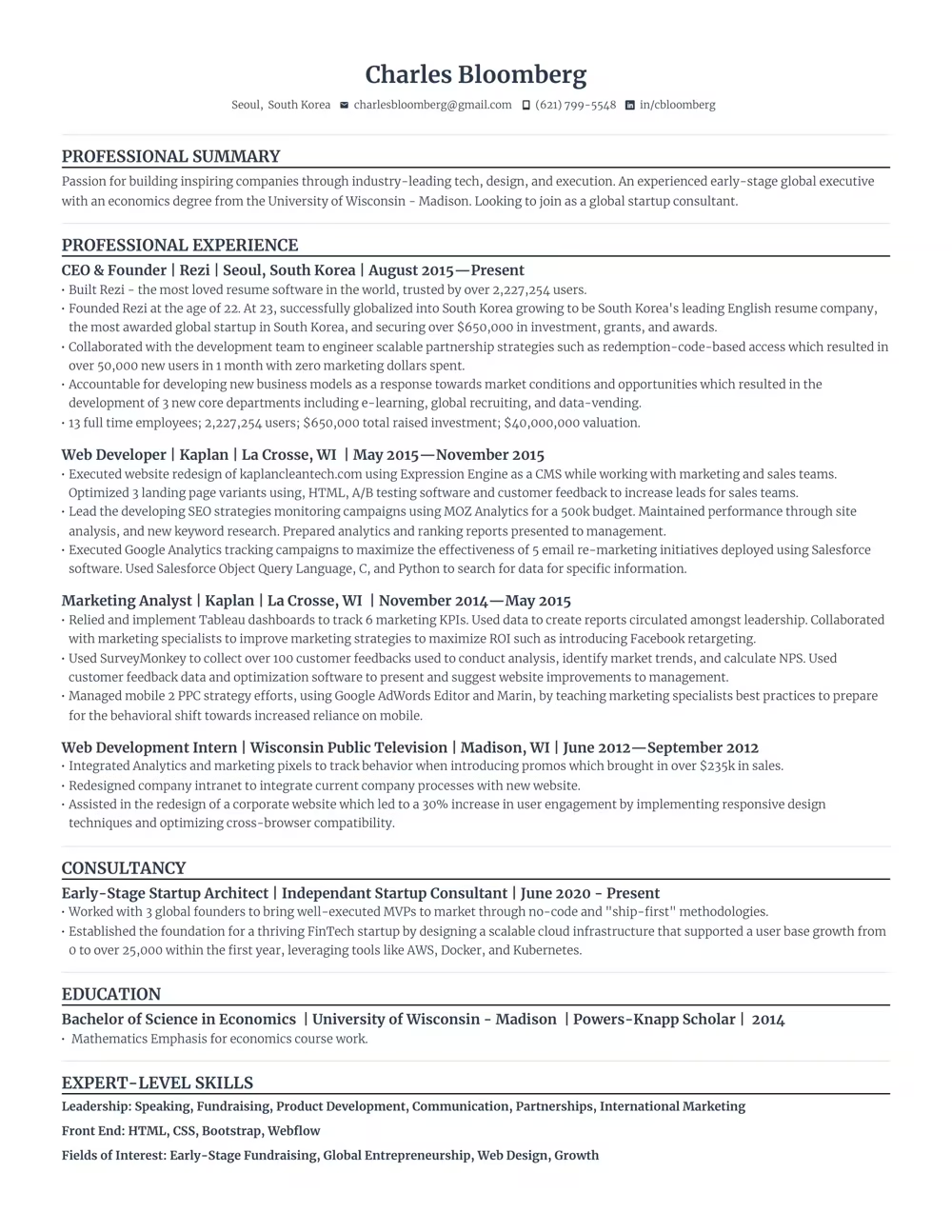
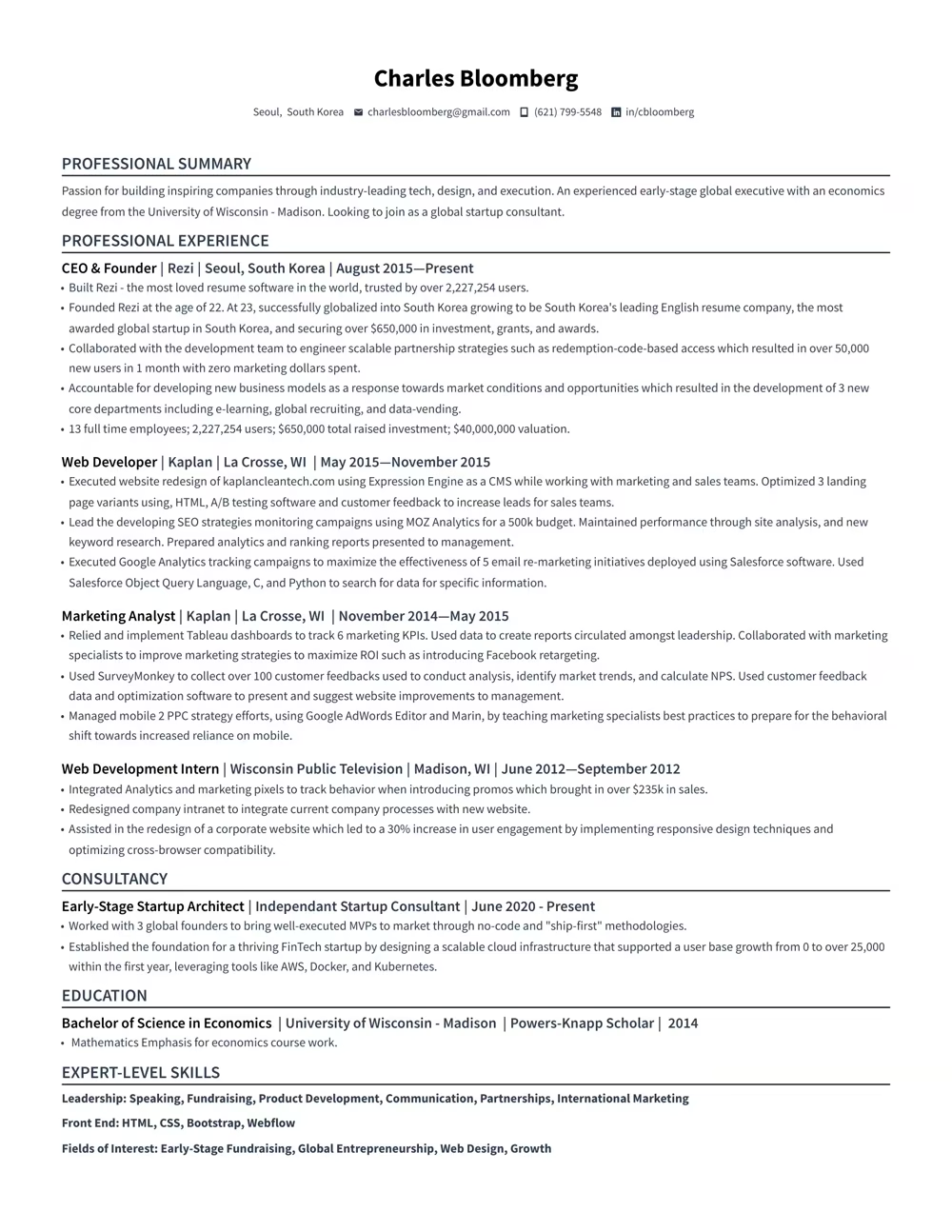
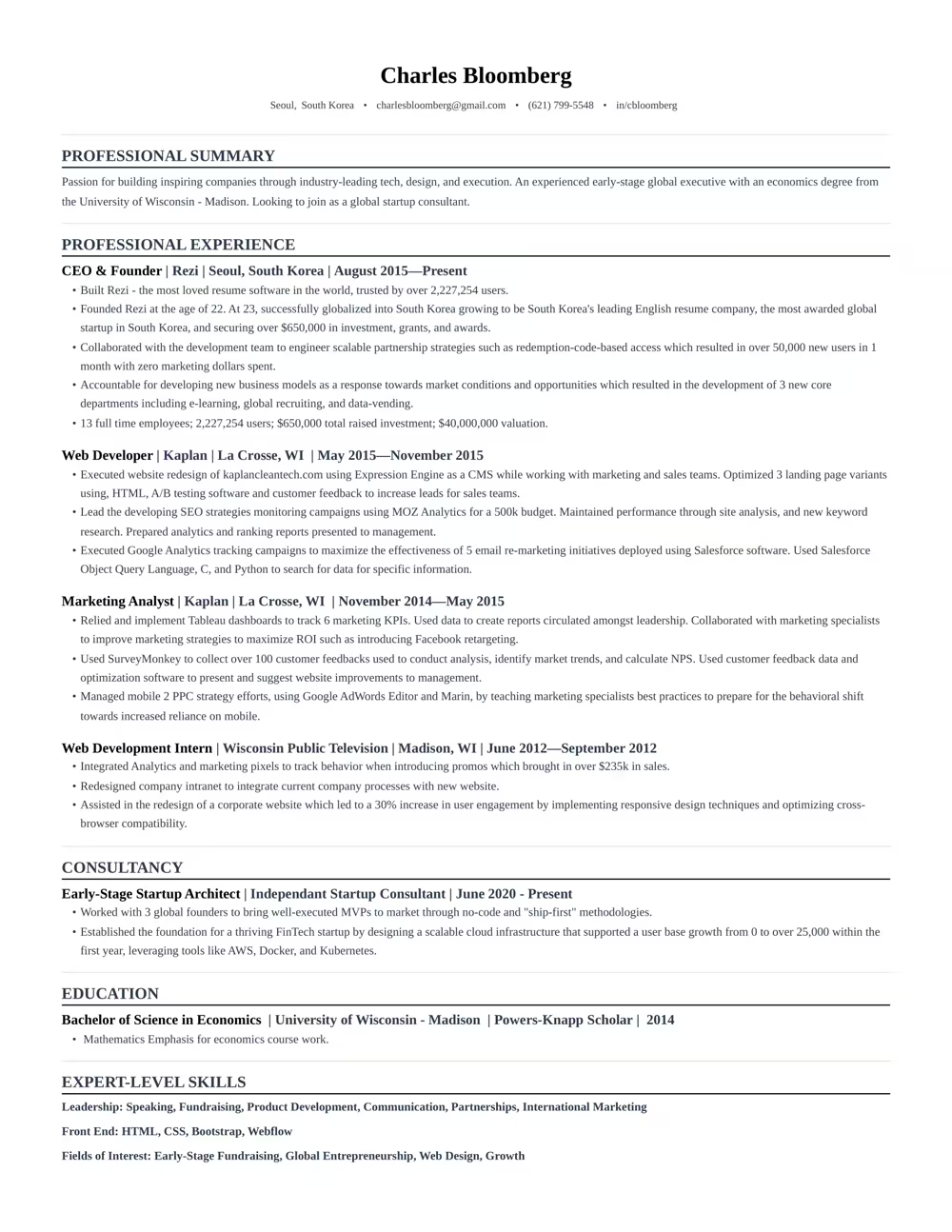
Use a template that guides you. Our ATS-compliant designs are trusted by over 4 million job seekers.


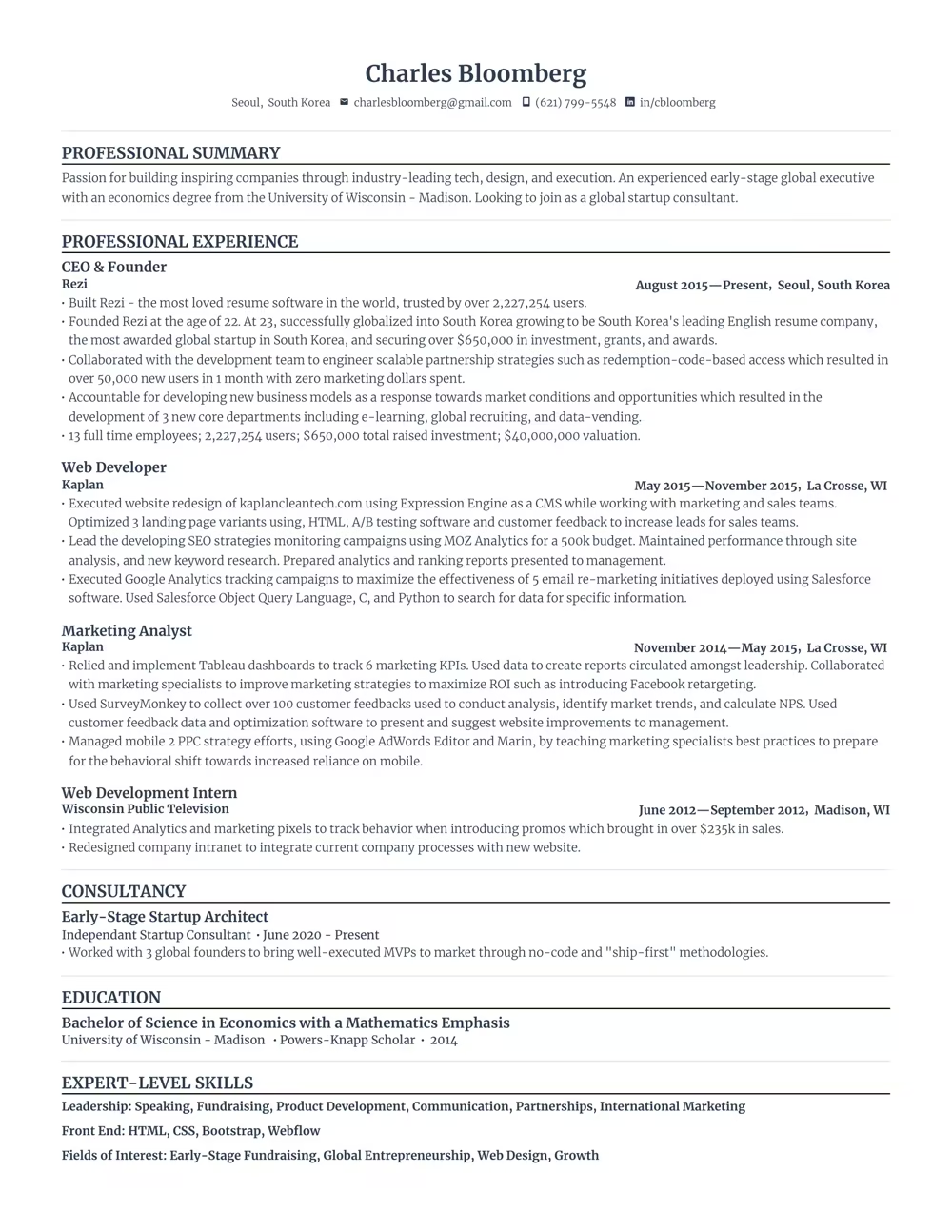

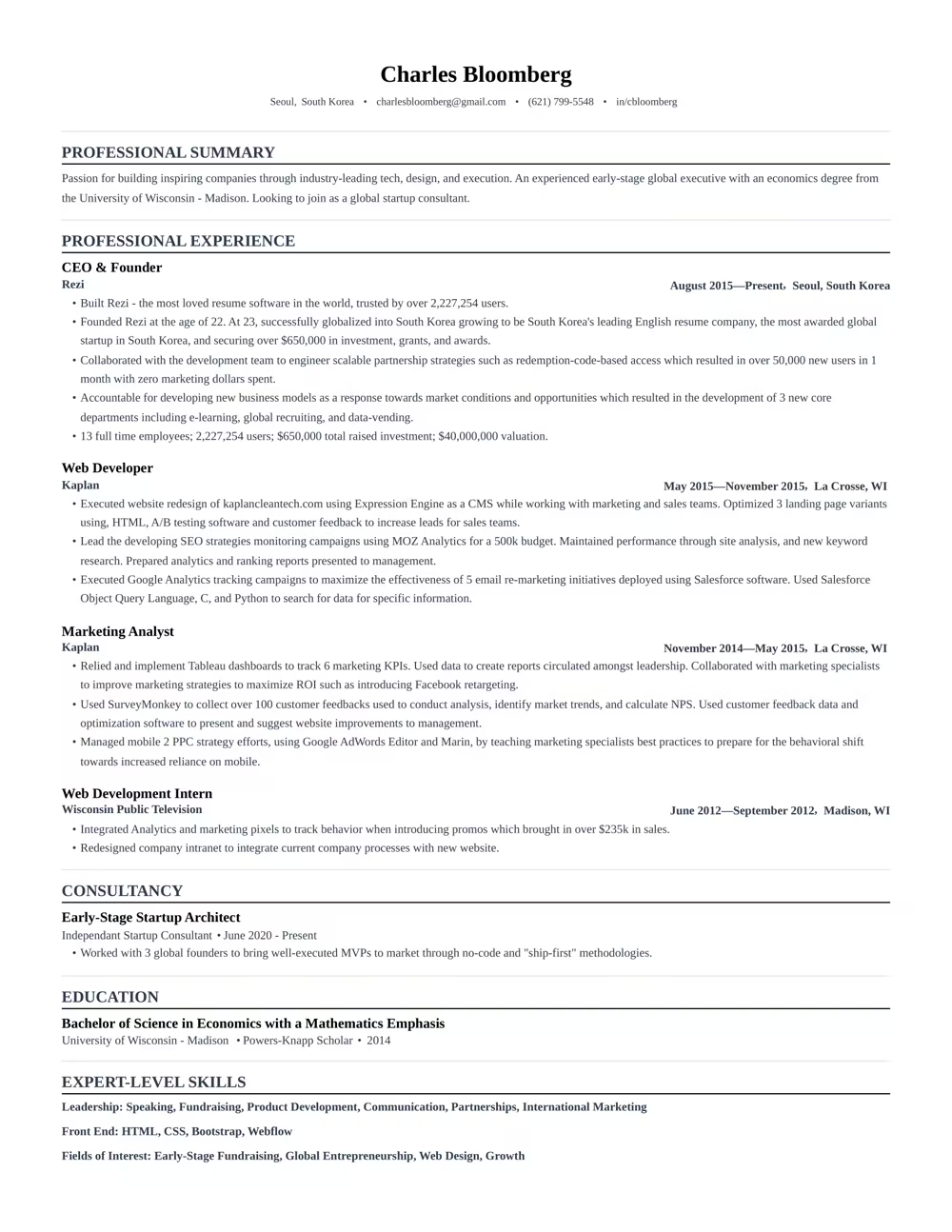
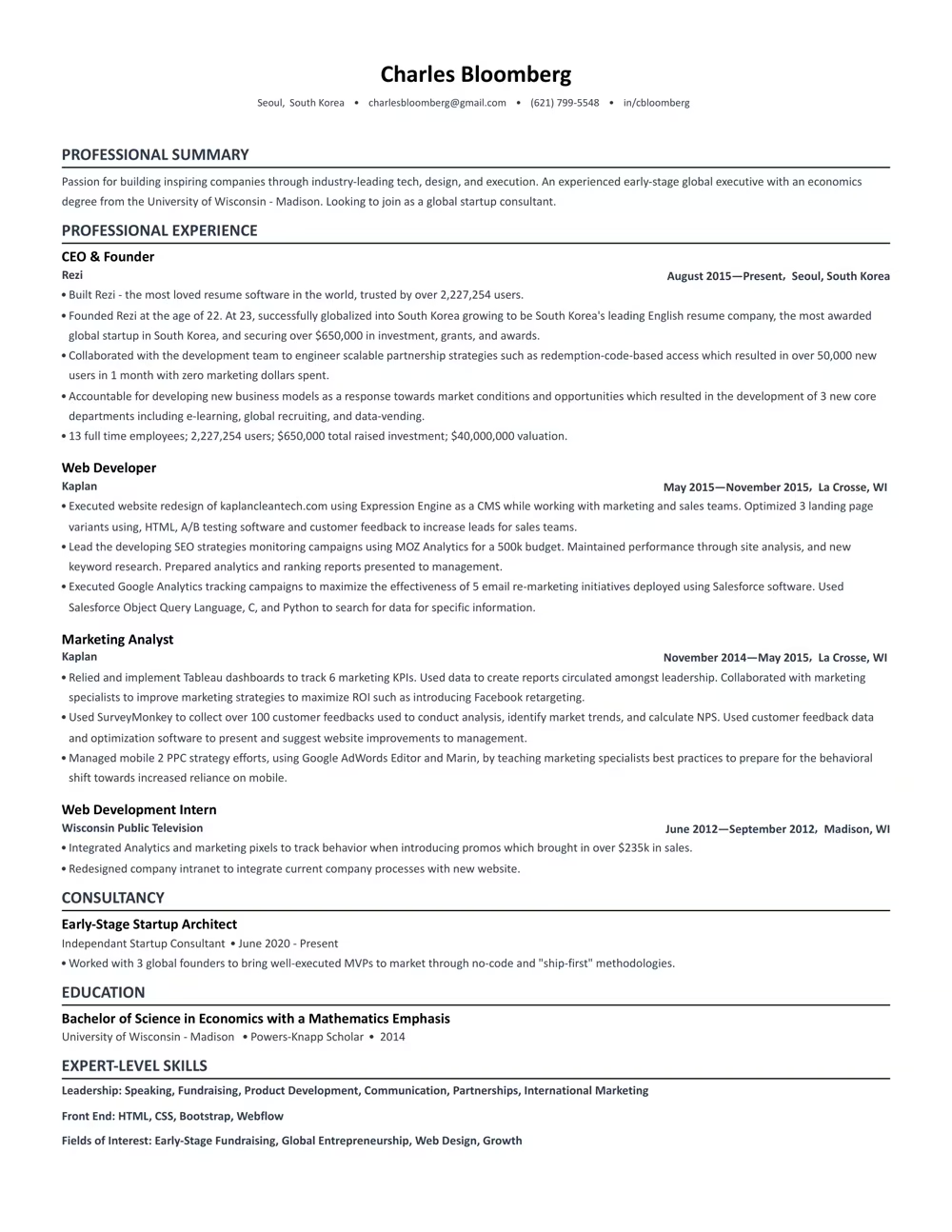
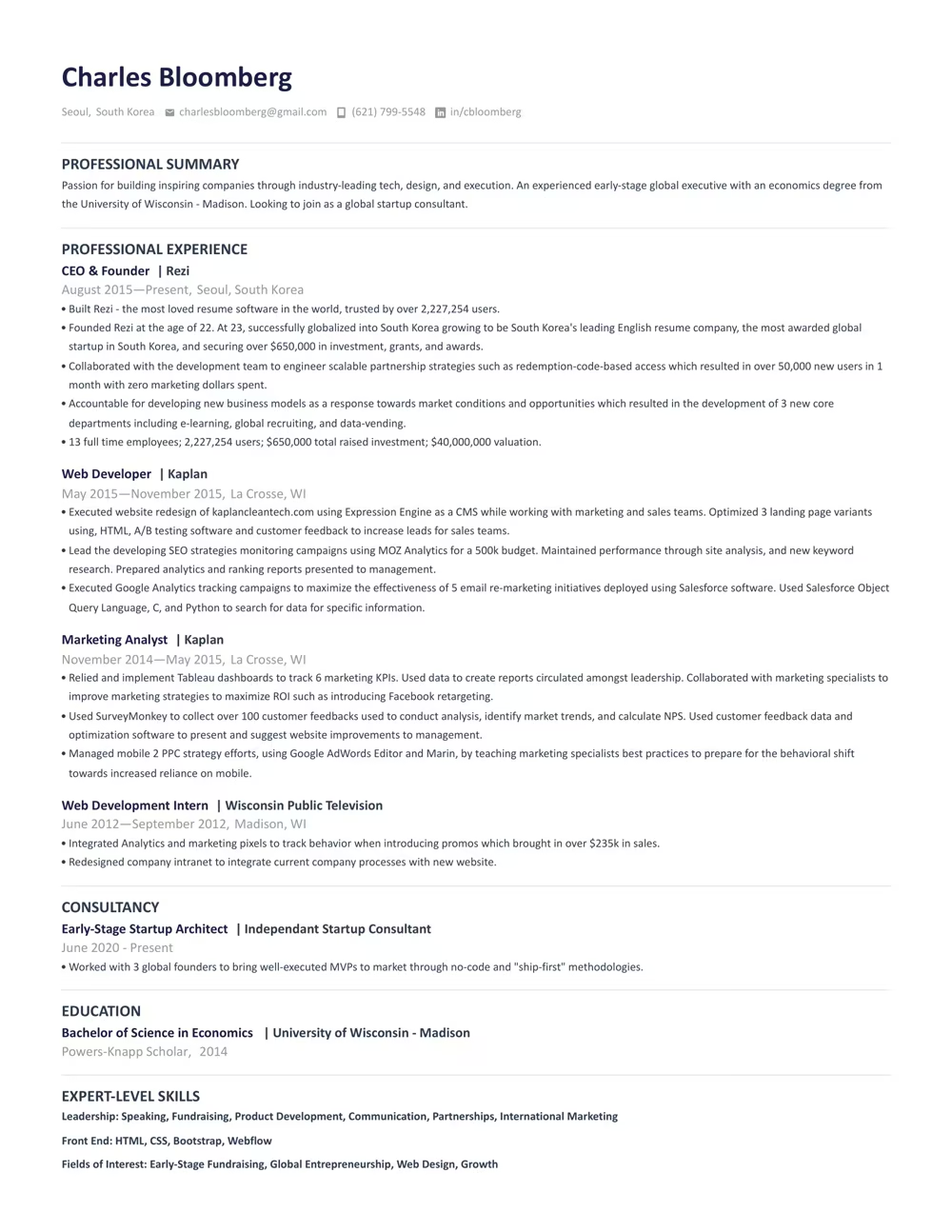

“Rezi is an awesome AI-based resume builder that includes templates to help you design a resume that is sure to check the boxes when it comes to applicant tracking systems. This is a great jumping off point to kickstart a new resume.”

Ashley Stahl
Career Contributor
62.18%
Interview Rate
4,773,704
Total Users
8.23 / 10
Avg. User Review
Wall of Love
Over 4 million users trust Rezi

Resume Building felt like pulling teeth – until I found Rezi.
Davis Allen
Software Developer

I was blown away by Rezi. It streamlined everything...
Celine Watko

I needed a resume tool as smart as my work.
Yosra Naceur
Data Scientist
“A great tool that is very helpful. I found the Rezi system easy to use and very helpful as I was working on getting my resume in shape for job applications.”

Dakota Rubin
United States
Written via

“This is actually one of the first reviews I’ve ever written for a business, and that alone says a lot. I highly recommend Rezi to anyone who’s job searching, it makes the entire process so much easier.”

Yazan Alkhatib
United States
Written via
“Reduced my time per application from 1-2 hours down to 15 minutes.”
Kixxx
Experience with Rezi
“I love how simple and convenient it is to use and been coming back to update it every time I need a fresh resume.”

Zara Wazir
U.A.E.
Written via
Frequently Asked Questions
Your questions, answered.
An AI resume maker helps you build a resume perfectly fit for the job you want. Top-notch AI resume builders are designed to speak the language hiring managers are looking for, increasing your chances of standing out in the crowd. It aligns your skills and experience with the job description effectively.
To get the most out of an AI resume builder, either start from scratch or upload your current resume. Fill in as much detail as possible about your career and skills, and upload the job description you’re targeting. This personalization allows the AI to build a unique and tailored resume that’s bound to catch potential employers' attention.
AI-generated resumes can seem similar if you're not giving personalized inputs or if you're using basic prompts. Provide specific details about your work experience and target the job you’re eyeing. Use specialized AI tools instead of general chatbots to avoid robotic-sounding resumes and to ensure individual creativity.
Employers might think you used AI, but that’s rarely an issue. What they really care about is getting a well-written resume that showcases your skills and experiences accurately. A top-notch resume tailored to their needs will speak volumes more than worrying about AI involvement.
Yes, using AI to optimize your current resume is highly effective. You just need to upload your resume, share details about your career goals and the job you want, and let the AI refine everything to elevate your resume's impact and ATS compatibility.
Rezi uses a tool called the AI Keyword Targeting. This feature scans the job description to identify crucial keywords and naturally incorporates them into your resume, giving it the right focus without keyword stuffing.
The Free plan is $0/month and allows you to create one resume, use limited AI tools (such as Keyword Targeting and Analysis), and download up to three PDFs. You can also create unlimited cover and resignation letters. No card is required to begin.
The Pro plan is $29/month and provides unlimited access to all features, including unlimited resumes, full AI capabilities, unlimited downloads, and one free monthly expert resume review (resumes are reviewed by a person).
The Lifetime plan is a $149 one-time payment. It grants permanent access to all the features of the Pro plan (unlimited resumes, full AI tools, and unlimited downloads), but it does not include the free monthly expert review (which can be purchased for an extra fee).
Rezi offers a 100% money-back guarantee on all paid plans (Pro and Lifetime). If you are unsatisfied, you can request a full refund within 30 days of your purchase.
Yes, you can easily upgrade or downgrade your plan at any time through your Rezi Account Billing dashboard. Prorated credits will apply when switching.
An AI resume maker helps you build a resume perfectly fit for the job you want. Top-notch AI resume builders are designed to speak the language hiring managers are looking for, increasing your chances of standing out in the crowd. It aligns your skills and experience with the job description effectively.
Yes, Rezi Enterprise.