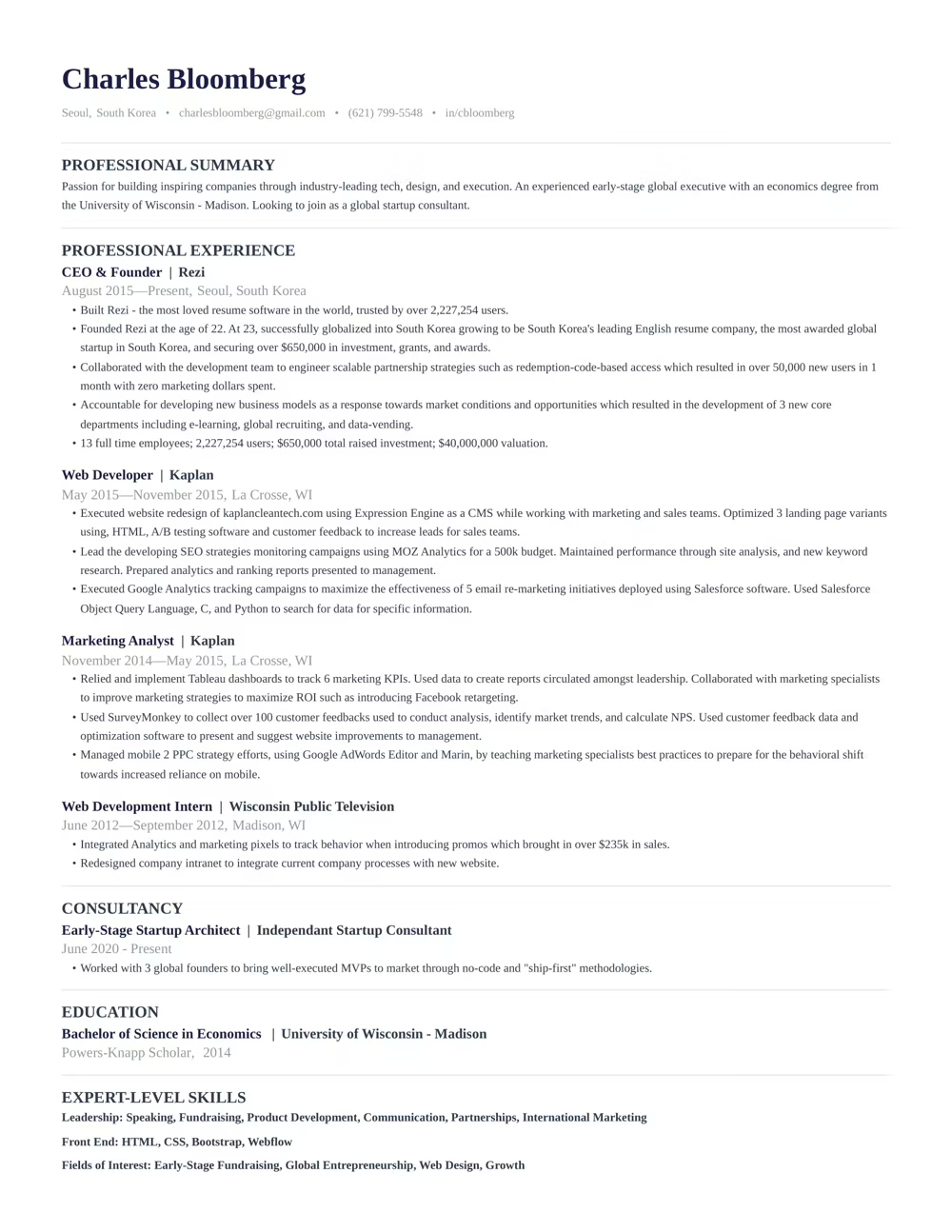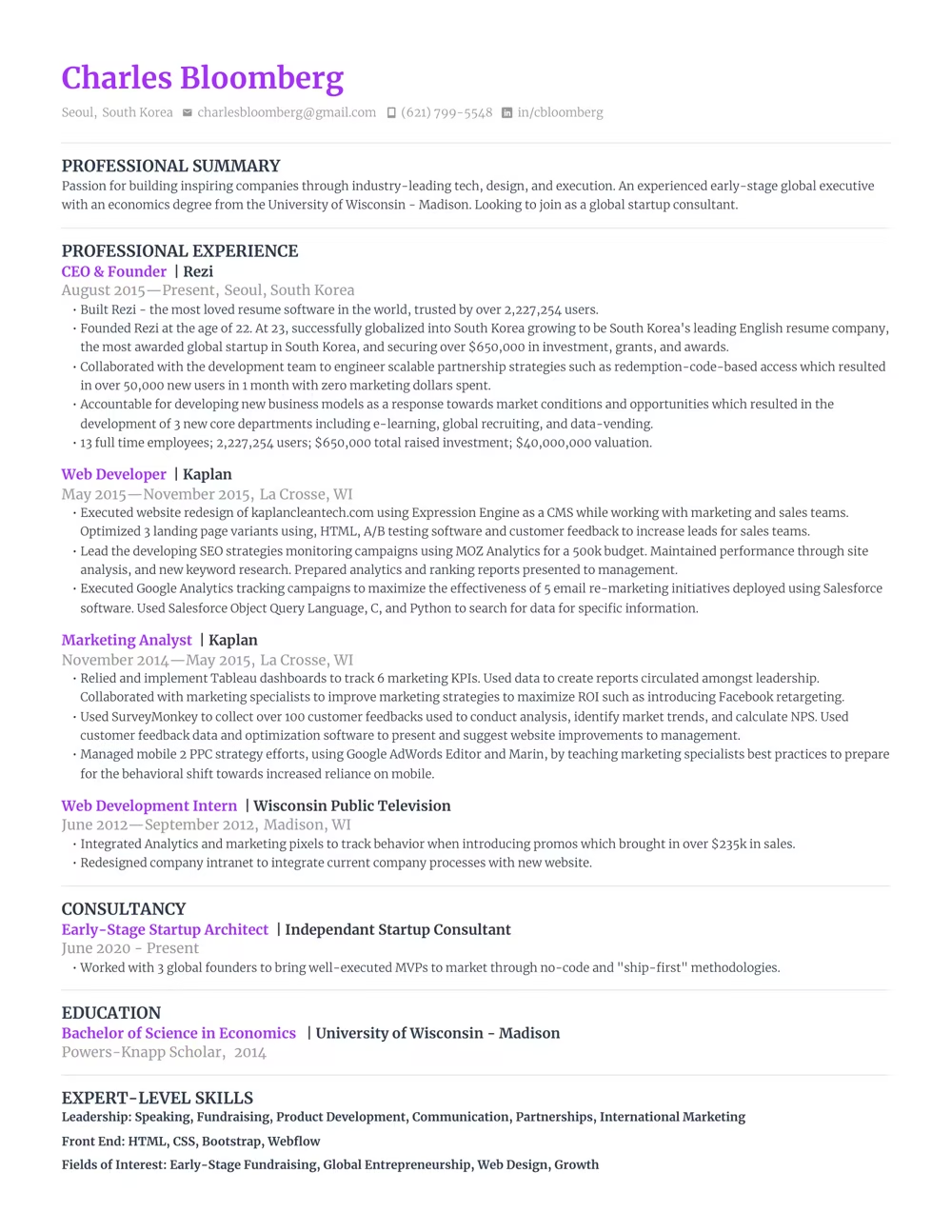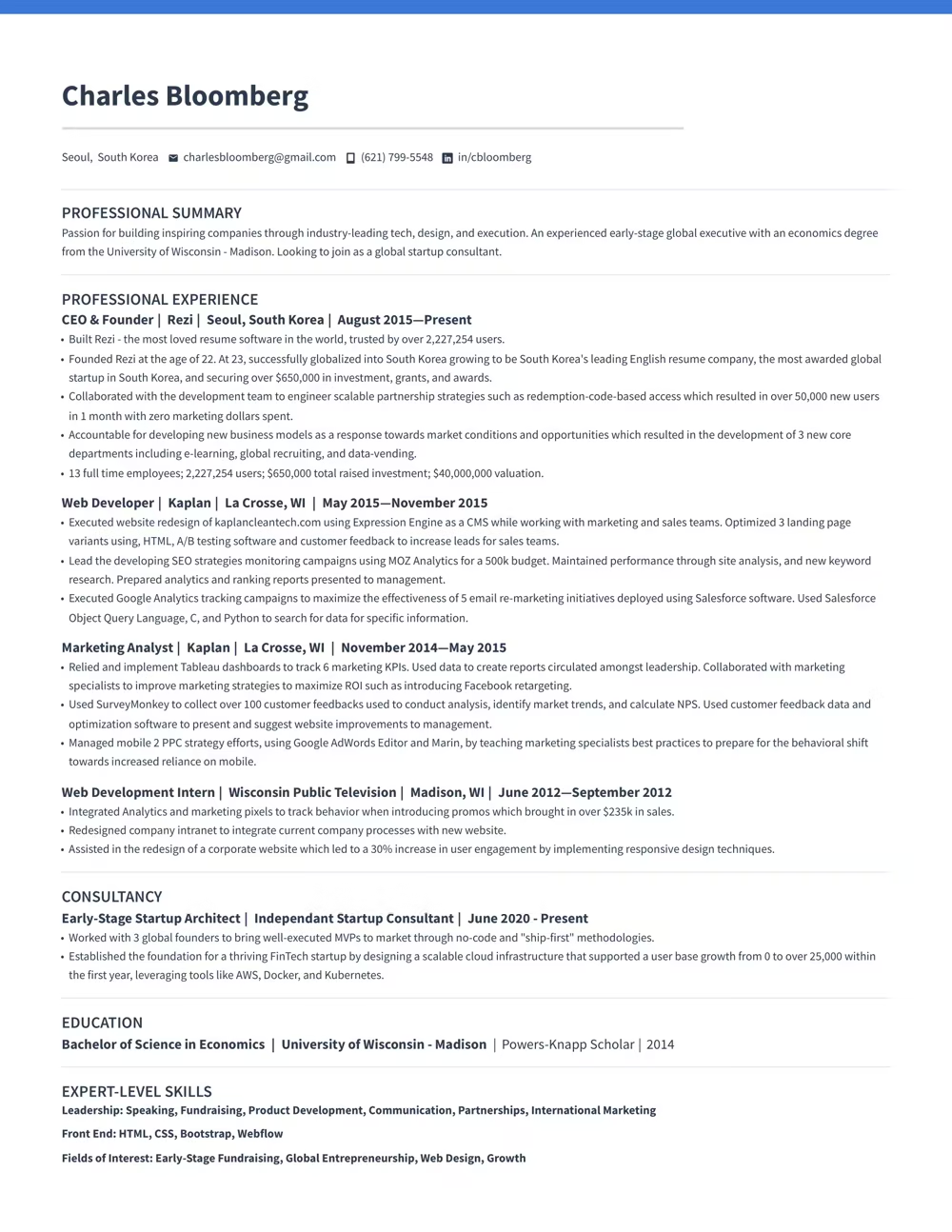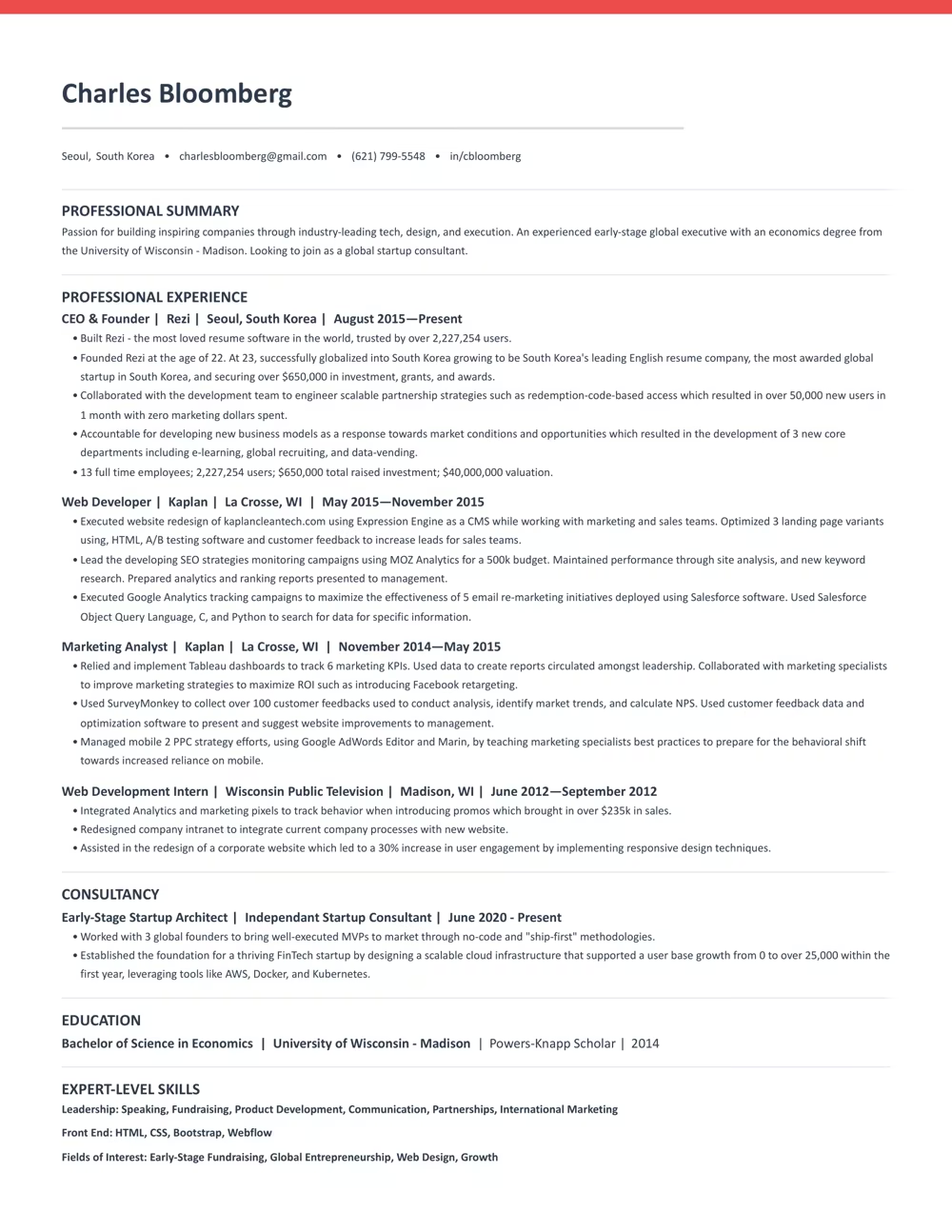
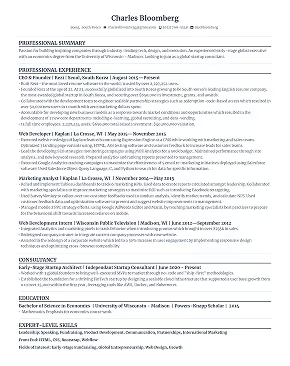
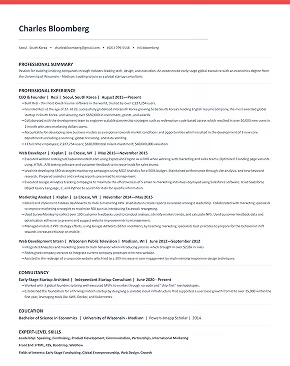
Here's the thing most third year students get wrong on their resumes: they list courses and a GPA, and that's about it. The resume reads like a transcript, not a document that proves you can actually do something valuable for an employer.
By your junior year, you've accumulated internships, projects, leadership roles, part-time jobs, and real skills that employers care about. The challenge is pulling all of that together into a resume that tells a coherent story — one that bridges your academic experience with the professional world you're about to enter.
And this is exactly what you'll learn from this article. Inside, you'll find:
- Examples of 8+ third year student resumes, covering different majors and academic focuses.
- Practical tips about what recruiters and hiring managers actually look for in student resumes.
- A step-by-step guide for building a junior year resume that lands internships, co-ops, and entry-level jobs.
Sample Third Year Student Resumes
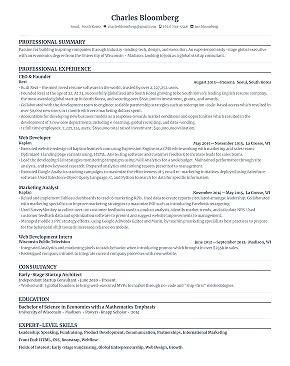
Take a look at some strong sample resumes for third year students across different academic backgrounds and focuses. Find one that matches your profile and use it as a starting point — just make sure to customize it to reflect your own experience and goals.
Note: these examples are organized by academic focus and variation. Pick the one closest to your situation.
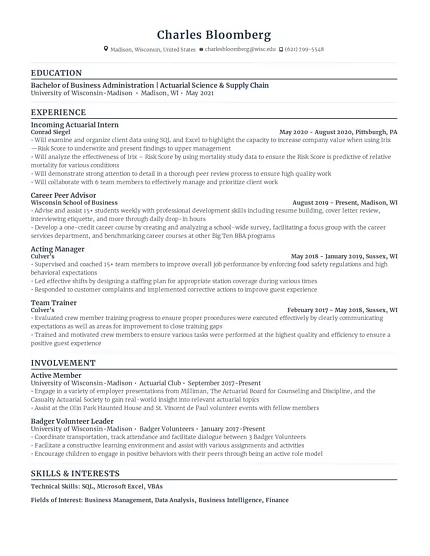
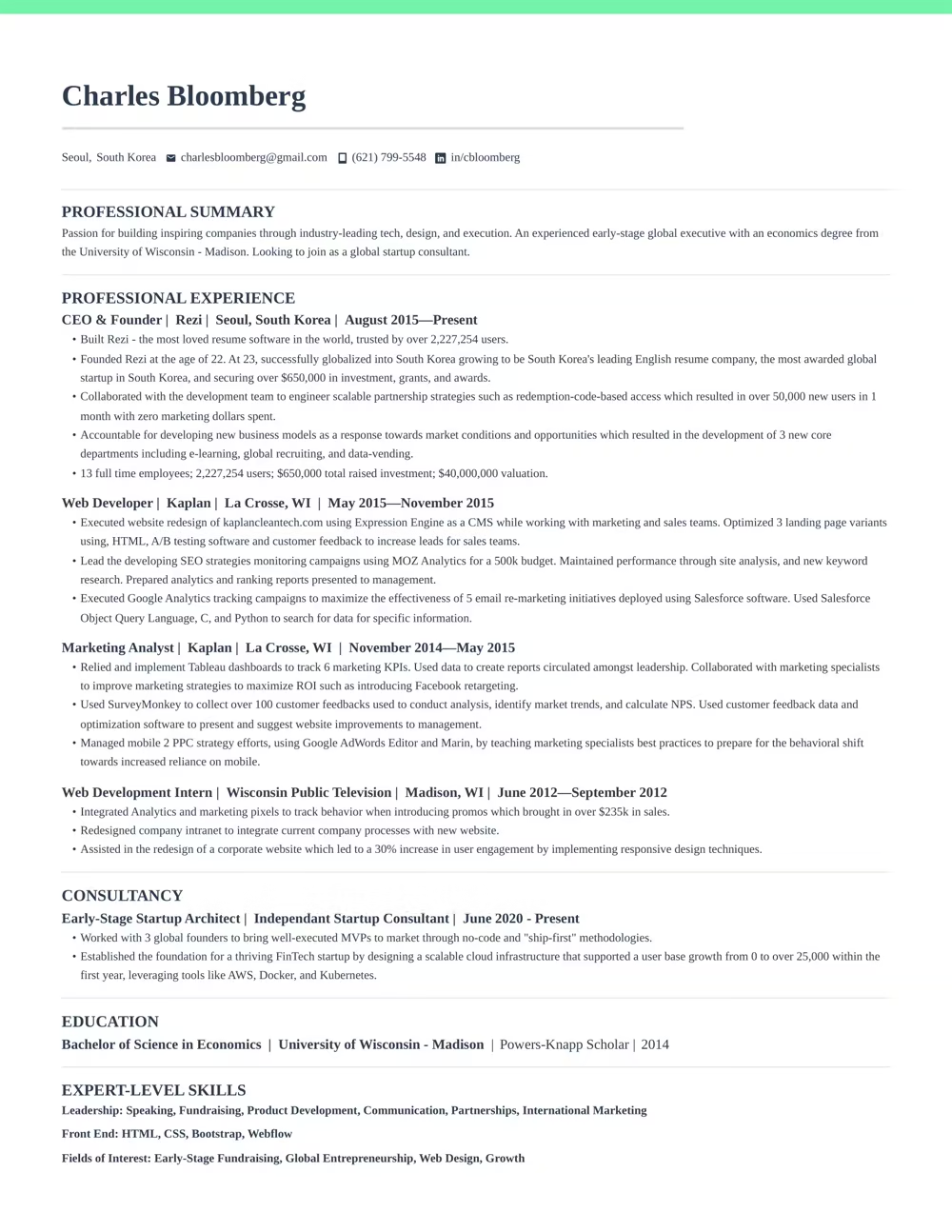
Junior Year Student Resume
A general junior year student resume should lead with your most impressive experiences — internships, research, or significant campus roles. Don't bury your accomplishments under a wall of coursework. Highlight transferable skills like teamwork, problem-solving, and communication. If you've held any leadership positions in student organizations, feature them prominently alongside measurable results.
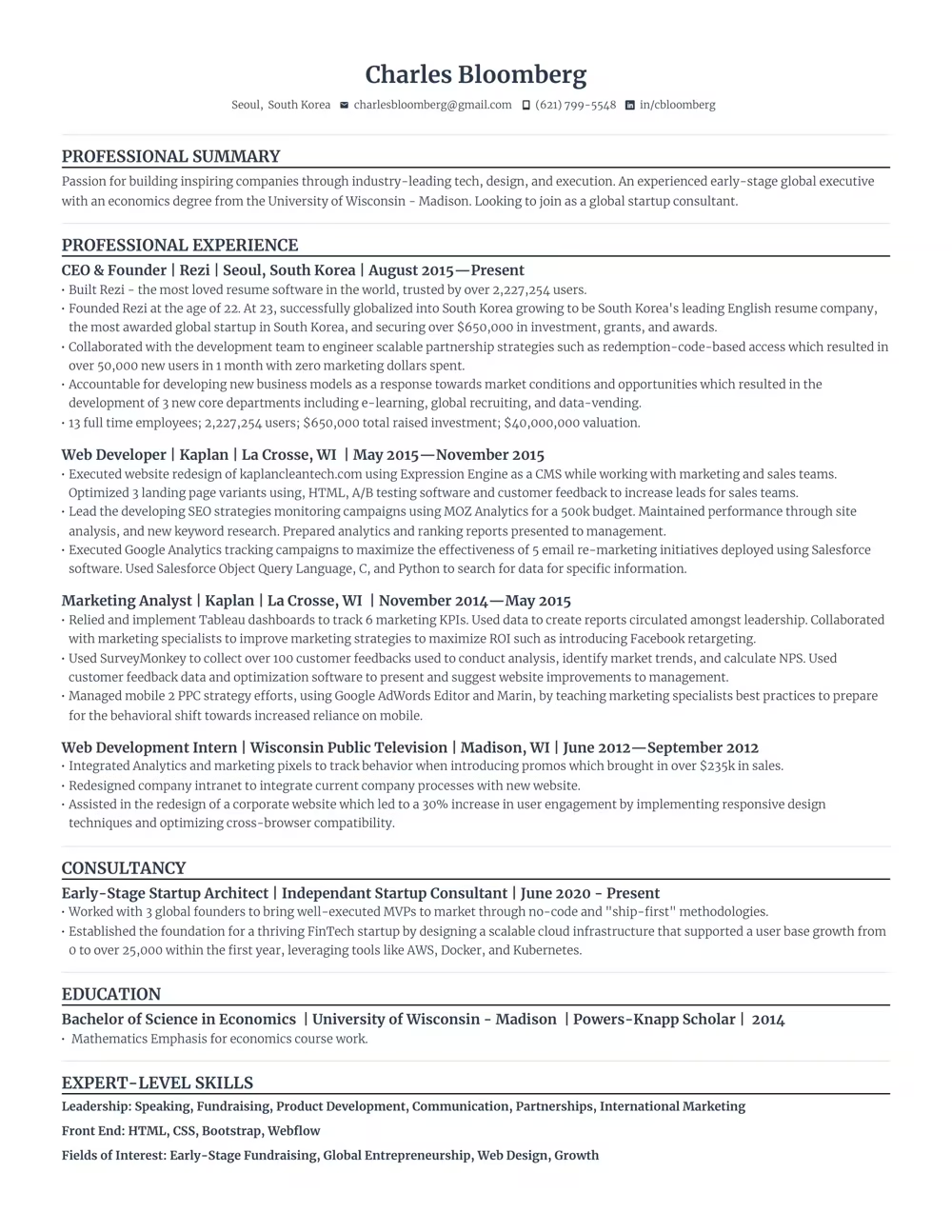
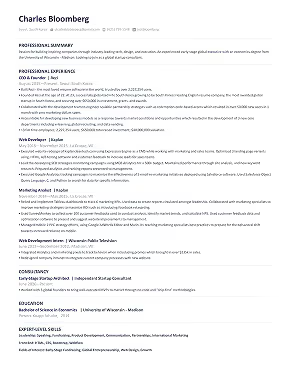
Third Year College Student Resume
As a third year college student, your resume should demonstrate growth from your first two years. Show how you've built on early experiences with increasingly responsible roles. Emphasize internships, relevant part-time work, and academic projects that connect to your career goals. Include technical skills and software proficiencies you've developed through coursework and hands-on projects.
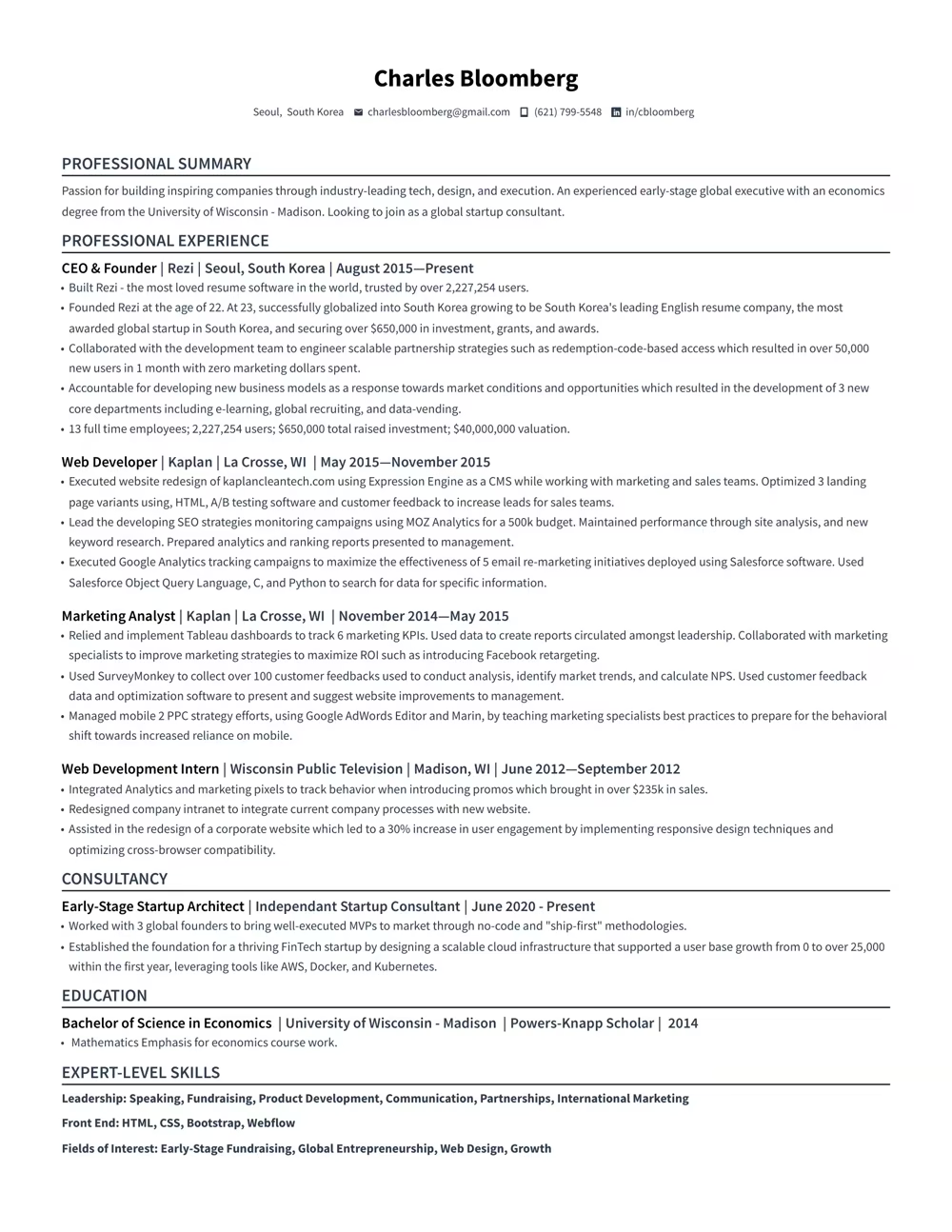
Third Year University Student Resume
A third year university student resume should reflect the depth of a university education — research involvement, departmental honors, and faculty collaborations. Highlight thesis work or independent studies if applicable. University students often have access to larger-scale projects and research opportunities, so feature these prominently. Show how your academic rigor translates to professional readiness.
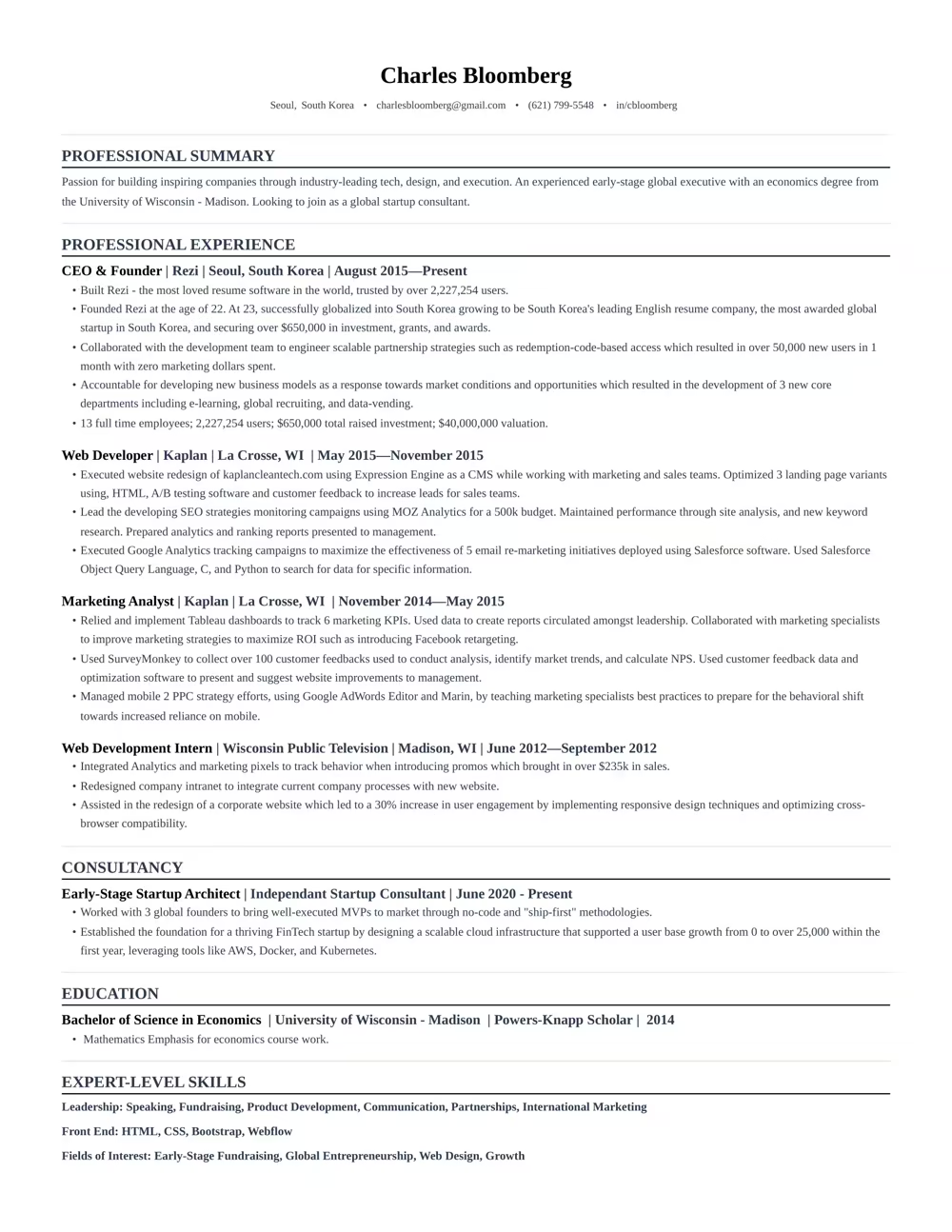
Undergraduate Junior Resume
Your undergraduate junior resume should balance academic credentials with practical experience. Focus on internships and co-ops completed during summers or academic terms. Highlight specific contributions you made — not just that you "assisted" but what you actually delivered. Include relevant coursework only when it directly supports the position you're targeting, and list tools or methodologies you've used.
Third Year Engineering Student Resume
For engineering students, your resume needs to showcase technical depth. Feature lab projects, design competitions, and engineering software proficiencies like MATLAB, AutoCAD, SolidWorks, or Python. Highlight team-based capstone or design projects, specifying your role and the technical outcomes. Include any engineering-specific internships and emphasize quantifiable results — prototypes built, efficiency improvements, or problems solved.
Third Year Business Student Resume
A third year business student resume should emphasize analytical and leadership skills. Highlight case competition results, business plan projects, and internships in finance, marketing, consulting, or operations. Feature proficiency in tools like Excel, Tableau, or SQL. Show your understanding of business fundamentals through real examples — a marketing campaign you helped run, a financial model you built, or a strategy presentation you delivered.
Third Year Science Student Resume
Science students should lead with research experience — lab work, publications, poster presentations, and conference participation. Detail specific methodologies, instruments, and software you've used. Highlight your role in research teams and any findings or contributions. Include relevant coursework in your specialization and any teaching assistant or tutoring roles that demonstrate deep subject-matter knowledge and communication skills.
College Junior Resume
A college junior resume should tell a story of momentum. By your third year, employers expect to see more than entry-level experiences. Feature your strongest internship or work experience first, followed by campus leadership and relevant projects. Tailor every bullet point to the role you're applying for. Show that you're not just checking boxes but building toward a specific career path with intention.
How to Write a Third Year Student Resume
Short answer:
Focus on connecting your academic work, internships, and extracurricular involvement into a narrative that proves you're ready for professional opportunities. Create a clean header with your name and contact details. Write a 2–3 sentence resume objective or summary highlighting your major, key skills, and career goals. List your education first (since it's your strongest asset right now), followed by relevant experience in reverse-chronological order. Then cover skills, projects, and additional sections like volunteer work or certifications.
Include all the necessary sections in the correct order
Here's the correct order of sections for most third year student resumes:
- Header with contact information
- Resume objective or summary
- Education
- Relevant experience (internships, part-time jobs, co-ops)
- Skills
- Projects
Depending on your situation, you can also add some additional sections. For instance:
- Campus leadership and extracurricular activities
- Volunteer experience
- Certifications and online courses
- Research experience and publications
- Awards and honors
Include everything that demonstrates you're capable of doing what the role requires. Make every section count. If it doesn't clearly highlight your skills or potential, it doesn't belong on your resume.
As a third year student, keep your resume to 1 page. No exceptions. You don't have enough experience yet to justify a second page, and recruiters reviewing student resumes expect conciseness.
More details here: What Sections to Include on Your Resume?
Now, I'll give you a high-level overview of how to write each section, going from top to bottom. Well… almost. The only exception is the resume objective section. While it comes right after your contact info, it's actually easier to write it last. More on that in a sec.
Create a professional resume header
- Start with your name and contact information. Include the basics: your full name, phone number, professional email address (ditch the high school handle), location (city and state), and LinkedIn profile. If you have a portfolio website or GitHub profile relevant to your field, include that too.
- Right below your name, clearly state your status and focus (e.g., Junior | Computer Science Major | University of Michigan). This immediately tells the reader who you are and what you're studying.
For more information, see: How to Create a Resume Header
Lead with your education
- As a third year student, your education section should come before your work experience. List your university, degree, major (and minor if relevant), and expected graduation date.
- Include your GPA if it's 3.0 or above. If your major GPA is significantly higher than your cumulative GPA, you can list that instead — just label it clearly.
- Add relevant coursework, academic honors (Dean's List, scholarships), and study abroad experiences. Be selective — only include coursework that's directly relevant to the role you're targeting.
For an in-depth guide on how to describe your education on a resume, see: How to List Education on a Resume
Describe your relevant experience
- Use reverse-chronological order. List internships, co-ops, part-time jobs, and relevant campus positions starting with the most recent.
- In each entry, include your title, organization name, location, and dates.
- Below each position, write 3–5 bullet points. Describe your responsibilities and, more importantly, what you accomplished.
- Use action verbs and quantify whenever possible (e.g., "Analyzed sales data for 500+ accounts, identifying trends that informed a 15% shift in Q3 marketing spend").
- Don't have a formal internship? That's okay. Research assistant roles, significant class projects, freelance work, and campus jobs all count — as long as you describe them in terms of skills and results.
Learn more about the best practices of this section with our detailed guide on how to describe your work experience on a resume.
List your most relevant skills in the skills section
- Include a mix of technical skills (e.g., programming languages, lab techniques, design software) and tools (e.g., Excel, Google Analytics, SPSS) relevant to your field.
- Add soft skills such as teamwork, communication, and time management — but don't just list them. These should also be demonstrated in your experience bullet points.
- You can use two separate subsections — one for hard skills, one for soft skills — or list everything under one heading.
- Match your skills to the job or internship description you're applying for. Pull keywords directly from the posting and, if you genuinely have those skills, include them on your resume.
Need some inspiration to get started? Here are some good skills to feature on your third year student resume.
Software and technical skills for student resumes:
- Microsoft Office Suite (Word, Excel, PowerPoint)
- Google Workspace
- Python, Java, or R (depending on major)
- MATLAB or SPSS
- Adobe Creative Suite
- Tableau or Power BI
- SQL
- GitHub / Version Control
- Canva
- Google Analytics
Academic and research skills:
- Academic research and literature review
- Data analysis and interpretation
- Technical writing and reporting
- Laboratory techniques and protocols
- Statistical analysis
- Presentation and public speaking
- Project planning and execution
- Citation management (Zotero, Mendeley)
- Survey design (Qualtrics, SurveyMonkey)
- Foreign language proficiency
Key soft skills for third year students:
- Communication
- Teamwork and collaboration
- Time management
- Problem-solving
- Leadership
- Adaptability
- Critical thinking
- Attention to detail
- Self-motivation
- Organization
For a full-blown guide on listing skills on a resume, visit: How to Put Skills on a Resume
Use additional sections as further proof of your fit
Additional sections add depth to your resume and set you apart from other students with similar GPAs and majors. Good examples of extra sections to add to a third year student resume are:
- Campus leadership and activities. Roles in student government, clubs, Greek life, or student media demonstrate initiative and soft skills that employers value.
- Projects. A resume section dedicated to significant projects — capstone work, class projects with real clients, hackathons, or independent work — can provide concrete examples of your skills in action.
- Volunteer experience. Especially relevant if it relates to your field or demonstrates leadership. Organizing a fundraiser or mentoring younger students shows responsibility.
- Certifications and courses. Online certifications from platforms like Coursera, Google, or HubSpot show initiative and can fill skill gaps your coursework doesn't cover.
Highlight the most relevant information in a resume objective
Once you're done writing the rest of your resume, give it a full read. Pick the most compelling details and compile them into a brief objective or summary paragraph. Place it right under the resume header.
- Be brief and specific. In 2–3 sentences, state your major, year, key skills, and what kind of opportunity you're seeking. Consider this your chance to answer, "Why should you consider me?" Tailor this section to match the specific role or company you're targeting.
- Use forward-looking language. Focus on the value you can bring — mention relevant skills, experiences, and what you're excited to contribute. Avoid generic phrases like "hardworking student seeking an opportunity to learn."
Once you've completed the core sections of your resume, you can use Rezi AI Resume Summary Generator to automatically create a powerful summary, tailored to the role you're applying for. All you need to do is add the position and skills you want to highlight. The AI writer will do the rest.
More information here: How to Write a Job-Winning Resume Summary (with Examples)
For finishing touches, make sure your resume looks professional
- Use a clean and tidy resume format. Ensure your resume is easily readable, with a professional font, consistent formatting, and clear section headings. Avoid overloading it with dense text, colors, or graphics that could distract from the content and confuse applicant tracking systems.
- Stick to one page. As a third year student, there's no reason to go beyond a single page. Make every line count. If something doesn't directly support the role you're applying for, cut it.
Learn more about proper resume formatting here: How to Format a Resume & What Standard Resume Format to Use
What Makes Third Year Student Resumes Different
In short: you're in an awkward middle ground. You're not a blank-slate freshman, but you're not a seasoned professional either. The challenge is showing enough substance to be taken seriously — while being honest about where you are in your career.
This is also where a lot of juniors stumble. They either undersell themselves (treating the resume like a course list) or oversell (inflating minor experiences into something they're not). Here's how to get it right.
Your education is your headline, not your whole story
Unlike experienced professionals who lead with work history, your education section comes first. But that doesn't mean it should dominate the page. By junior year, you should have enough real experience to fill the majority of your resume.
What it means for you:
- Keep the education section concise — school, degree, expected graduation, GPA (if strong), and a few lines of relevant coursework or honors. Save the real estate for experiences that show what you can do.
- If your coursework involved hands-on projects with real deliverables (client projects, research with published results), consider listing those under a separate "Projects" section where you can give them more detail.
Translate campus experience into professional language
Employers reviewing student resumes know you've been in school. What they're looking for is evidence that you can function in a professional environment. This means framing your experiences — even campus ones — in terms of impact and results.
What it means for you:
- Instead of "Member of Marketing Club," write "Led a team of 5 to plan and execute a campus-wide event that attracted 200+ attendees and generated $1,500 in sponsorship revenue."
- Use professional action verbs — managed, developed, coordinated, analyzed, designed — not passive descriptions. Treat every experience like a job, because to an employer reviewing your resume, it is one.
Show trajectory and intentionality
By your third year, employers expect to see some sense of direction. Random, disconnected experiences won't impress the way a clear progression will — even if that progression is just a freshman volunteer role leading to a sophomore research position leading to a junior-year internship.
What it means for you:
- Arrange your experiences to tell a story of growth. Show how each role built on the previous one and brought you closer to your career goals.
- If your experiences don't follow a neat progression (most students' don't), focus on the transferable skills that connect them. Threading a common narrative — like leadership, analytical thinking, or client communication — across different roles makes your resume feel cohesive.
Tailor relentlessly
Generic student resumes get generic results. Because your experience is limited compared to working professionals, every single bullet point needs to pull its weight — and the best way to ensure that is to customize your resume for each application.
What it means for you:
- Read the job or internship description carefully. Identify the top 3–5 skills or qualifications they're looking for, and make sure your resume directly addresses each one.
- Swap out less relevant experiences or bullet points in favor of ones that match. You might have three versions of your resume — one for marketing roles, one for analytics roles, one for general business — and that's completely normal.
Bonus Resources for Third Year Students
This won't help you finish your resume tonight. But these resources will help you build skills, expand your network, and set yourself up so that your next resume is even stronger.
Career development platforms
Handshake
The go-to job and internship platform for college students. Most universities partner with Handshake, giving you access to employers specifically looking to hire students and recent grads. Set up a complete profile — many recruiters search for candidates directly on the platform.
If you don't have a polished LinkedIn profile by your junior year, make it a priority. Connect with alumni, follow companies you're interested in, and engage with content in your field. Many internships and entry-level roles are posted here before they appear anywhere else.
WayUp
A platform specifically designed for students and recent graduates, featuring internships and entry-level jobs across industries. It also offers career advice and resume tips tailored to early-career candidates.
Online learning and certifications
Coursera & edX
Both platforms offer courses from top universities and companies. Completing a relevant certification — like Google's Data Analytics Certificate, IBM's Data Science Professional Certificate, or a project management fundamentals course — adds credibility to your resume and fills skill gaps.
LinkedIn Learning
Many universities provide free access to LinkedIn Learning. Take advantage of courses in Excel, public speaking, Python, or whatever's relevant to your target field. Completed courses appear on your LinkedIn profile automatically.
HubSpot Academy
Free certifications in inbound marketing, content marketing, social media, email marketing, and sales. These are widely recognized by employers and can be completed in a few hours. Especially valuable for students interested in marketing, communications, or business development.
Skill-building and competition platforms
Kaggle
For students interested in data science, analytics, or machine learning. Kaggle offers datasets, competitions, and community notebooks that let you practice real skills and build a portfolio of projects you can feature on your resume.
Devpost
The central hub for hackathons and tech competitions. Participating in (and especially winning) hackathons is one of the best ways for students to demonstrate practical skills, creativity, and the ability to work under pressure.
GitHub
If you're in any technical or STEM field, maintaining an active GitHub profile with class projects, personal projects, or open-source contributions serves as a living portfolio that complements your resume.
Summary
Here's what you need to know about writing a third year student resume:
- Structure your resume with essential sections in this order: Header, Resume Objective or Summary, Education, Relevant Experience, Skills, and Projects. Add extra sections like Campus Leadership, Volunteer Experience, or Certifications when they strengthen your candidacy.
- Include a professional header with your name, contact information, and a clear identifier (major, year, university).
- Lead with your education section, including your degree, expected graduation date, GPA (if 3.0+), and relevant coursework or honors.
- Describe internships, part-time jobs, and campus roles in reverse-chronological order, using action verbs and quantifying accomplishments whenever possible.
- Highlight a mix of technical, academic, and soft skills, tailoring them to the specific job or internship description.
- Use additional sections — projects, campus leadership, certifications — to set yourself apart from other students with similar profiles.
- Once the resume is complete, write a concise, targeted objective or summary and place it right under your header.
- Keep your resume to one page with clean formatting, a professional font, and clear section headings.
- Translate campus and academic experiences into professional language that demonstrates impact and results.
- Tailor your resume for each application — a generic student resume won't compete with one that's customized to the role.
Thanks for reading! Got any questions? Feel free to reach out to me on LinkedIn. (Or check out the FAQs first, maybe your question is answered there.)
FAQ
I don't have any internship experience yet. What do I put on my resume?
You have more than you think. Research assistant roles, significant class projects (especially those with real-world clients or data), campus organization leadership, part-time jobs, volunteer work, and freelance gigs all count. Focus on the skills you used and the results you achieved, not the title of the role. A student who organized a 300-person campus event has real project management experience — frame it that way.
Should I include my GPA on my resume?
If it's 3.0 or above, yes. If your cumulative GPA is below 3.0 but your major GPA is higher, list your major GPA instead and label it clearly. If both are below 3.0, leave GPA off entirely and let the rest of your resume do the talking. No employer is going to reject you solely for omitting a GPA — but a low one can raise questions you don't want to answer.
How far back should I go with experiences on my resume?
As a third year student, generally stick to experiences from college. High school achievements can be included only if they're truly exceptional (e.g., national-level awards or a business you started). That summer job from before college? Only include it if you have space to fill and can frame it in terms of relevant, transferable skills.
Should I use a resume objective or a resume summary?
For most third year students, an objective works better than a summary. A summary highlights past accomplishments — and while you have some, a working professional will always have more. An objective lets you state your focus and what you're looking for, while briefly mentioning your key qualifications. That said, if you've had strong internship experiences with measurable outcomes, a brief summary can work well too.
I'm applying to roles in different industries. Should I have multiple resumes?
Absolutely. A one-size-fits-all resume rarely works well for anyone, and it's especially ineffective for students whose experience can be interpreted multiple ways. Create a base resume, then build tailored versions for each type of role. The differences might be subtle — reordering bullet points, swapping out a project, adjusting your skills list — but they make a real difference in how relevant your resume feels to each employer.
Do extracurricular activities really matter to employers?
Yes, especially when you don't have extensive professional experience. But not all extracurriculars carry equal weight. Leadership roles, significant time commitments, and activities related to your field matter most. Being president of a club that organized events, managed a budget, and led a team? That's gold. Being a general member of twelve organizations? That's filler. Quality over quantity, always.
Should I include online course certifications on my resume?
Include them if they're relevant to the role and come from credible platforms (Coursera, Google, HubSpot, IBM, etc.). A Google Data Analytics Certificate or a HubSpot Inbound Marketing Certification carries real weight with employers. But don't pad your resume with every free course you've ever completed. Pick the 2–3 most relevant and impactful ones.
What if my part-time job isn't related to my career goals at all?
Include it if you need to fill space, but reframe it around transferable skills. A server at a restaurant demonstrates customer service, multitasking, and performing under pressure. A retail associate shows communication, sales skills, and reliability. The key is in how you write the bullet points. Focus on skills the employer cares about, not the job duties themselves.