Career Advice
8 Best Job Boards for Students in 2026
Tired of applying to dozens of "entry-level" jobs only to hear nothing back? We ranked the best job boards for students and recent graduates in 2026, highlighting the platforms that actually cater to early-career talent and help your applications reach real recruiters.
Published on
June 9, 2026
Updated on
June 9, 2026
You've updated your LinkedIn headline, sat through a career fair (or three), and fired off applications to what feels like every entry-level role on the internet. And the response? Mostly silence.
If that sounds familiar, you're not doing it wrong, you're just fishing in the wrong ponds. The hard part of an early-career job search usually isn't finding openings. It's finding the openings that were actually written for someone with your experience level, and then making sure a real human ever sees your application. Generic job boards bury you under "entry-level" listings that quietly demand three years of experience, and your resume often disappears into an applicant tracking system before anyone reads it.
So we did the sorting for you. Below are the job boards genuinely worth a student's or recent grad's time in 2026, ranked by how well they serve people at the start of their careers, plus the one tool that makes sure the applications you send actually land.
TL;DR: The Quick List
The short version: Start with a board built specifically for early-career talent, layer in one or two others that match your goals, and pair all of it with a resume tool that gets you past the filters. More on that last part at the end.
What Actually Makes a Job Board Worth Your Time
Not every platform deserves a tab in your browser. Before we get to the list, here are the green flags to look for when you're deciding where to spend your search energy:
- It's built for your experience level. The best boards filter out senior roles entirely, so you're not competing with people who have a decade on you, or wasting clicks on "junior" jobs that aren't junior at all.
- Listings are vetted, not just scraped. Volume is easy. Quality is the thing that saves you from ghost jobs and dead-end postings.
- It does some of the work for you. Matching, alerts, and recommendations that learn what you actually want beat endless manual scrolling.
- It's free for job seekers. You should never pay to apply for entry-level work. Full stop.
- There's support around the search. Career advice, recruiter events, and resume help turn a board into an actual launchpad.
Keep those in mind, and the rankings below pretty much explain themselves.
The 8 Best Job Boards for Students in 2026
1. WayUp — Best Overall for Early-Career Talent
WayUp flips the traditional search on its head. Instead of scrolling through listings that were never written with you in mind, you build a profile and let employers come to you. The matching goes deeper than keyword search, factoring in your interests, your experience level, and where you're actually trying to take your career. Every single listing is an internship or entry-level role, and they're vetted, so you'll never click into an "entry-level" job that secretly wants three years of niche software experience.
With a candidate community of over six million students and recent grads, WayUp is also one of the most diverse early-career platforms out there, with a strong majority of users from underrepresented backgrounds. That matters, because the employers on WayUp are specifically here to develop new talent, not just fill a seat.
Best for: Students who want quality over quantity and would rather be discovered than constantly apply.
Watch-out: Because everything is early-career and vetted, the volume is more curated than a giant general board. That's the point, but if you want to also cast a wider net, pair WayUp with one of the platforms below.
2. Handshake — Best for School-Connected Roles
Handshake plugs directly into your university's career services, surfacing opportunities posted specifically for students at your school. Most college career centers have made it their primary platform, which means some employers post there and nowhere else. If your campus uses it, it's an easy win to check regularly.
Best for: Roles tied to your institution, on-campus recruiting, and employer relationships your school already has.
3. College Recruiter — Best for Volume in the 0–5 Range
College Recruiter hosts millions of postings at any given moment and is built entirely around the "0 to 5 years of experience" demographic. You'll find internships, part-time and seasonal work, apprenticeships, and entry-level full-time roles, all without sifting through senior listings. Think of it as the wide-net complement to a curated board like WayUp.
Best for: Casting a broad net while still staying in early-career territory.
4. LinkedIn — Best for Networking and Visibility
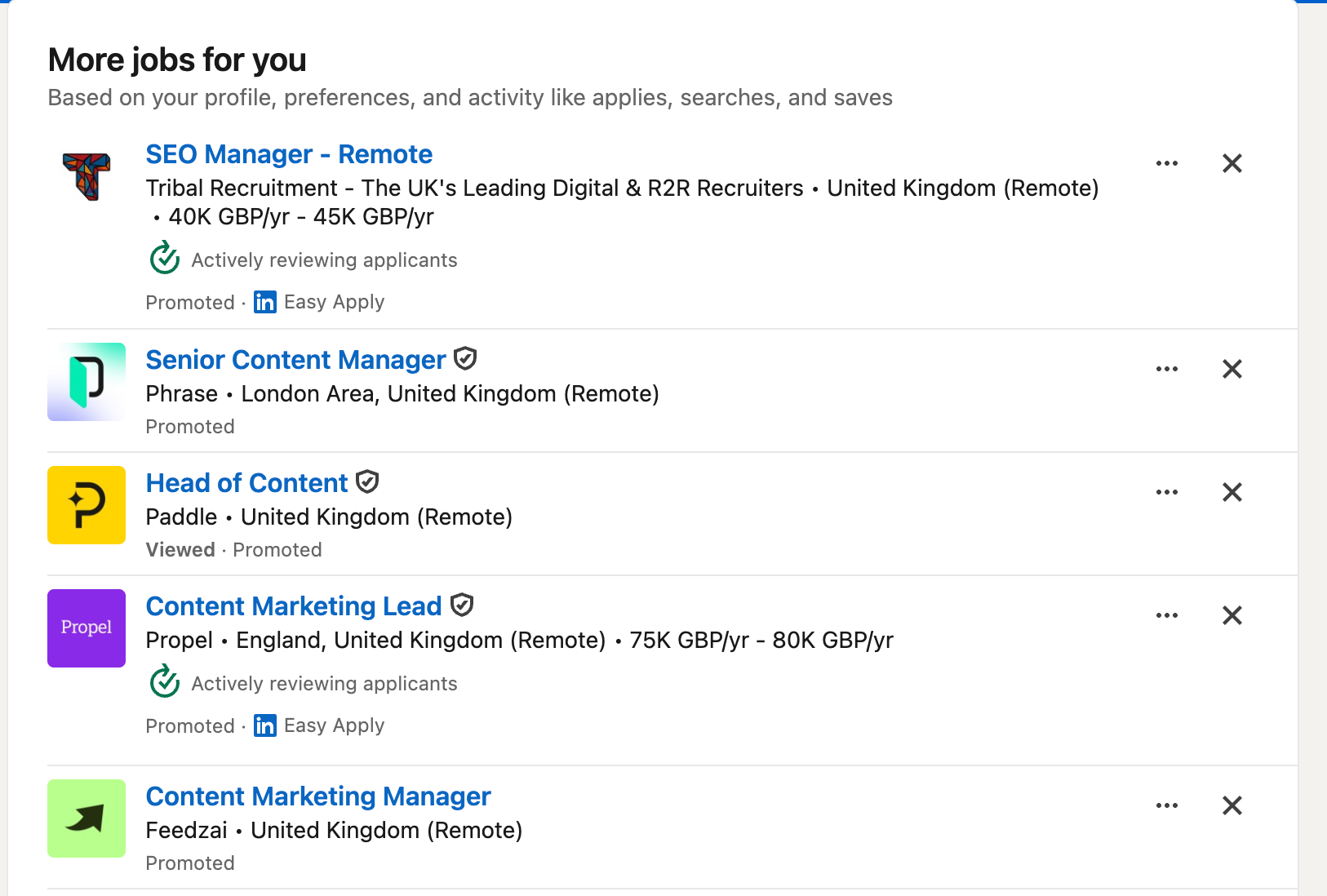
LinkedIn isn't going anywhere, and for good reason: it's where recruiters look you up, where alumni connections live, and where a strong profile can get you found before you even apply. The job listings themselves can be noisy and competitive, but as a networking and discovery tool, it's hard to beat. Optimize your headline and skills, and treat it as much as a profile to maintain as a board to search.
Best for: Building connections, getting found, and researching companies and people.
5. Indeed — Best for Breadth and Local Work
Indeed aggregates a staggering number of listings, which is both its strength and its weakness. You'll wade through a lot to find the gems, but if you need a part-time job, something local, or just want to see what's out there, the scale is unmatched. Lean on the filters hard to cut through the noise.
Best for: Local roles, part-time and seasonal work, and maximum reach.
6. Wellfound — Best for Startups
If you're drawn to startups and tech, Wellfound (formerly AngelList Talent) is where early-stage and high-growth companies post. Roles tend to come with more transparency around equity and team size, and startups are often more willing to bet on potential over a long resume.
Best for: Students eyeing startups, tech, and high-growth companies.
7. Idealist — Best for Mission-Driven Work
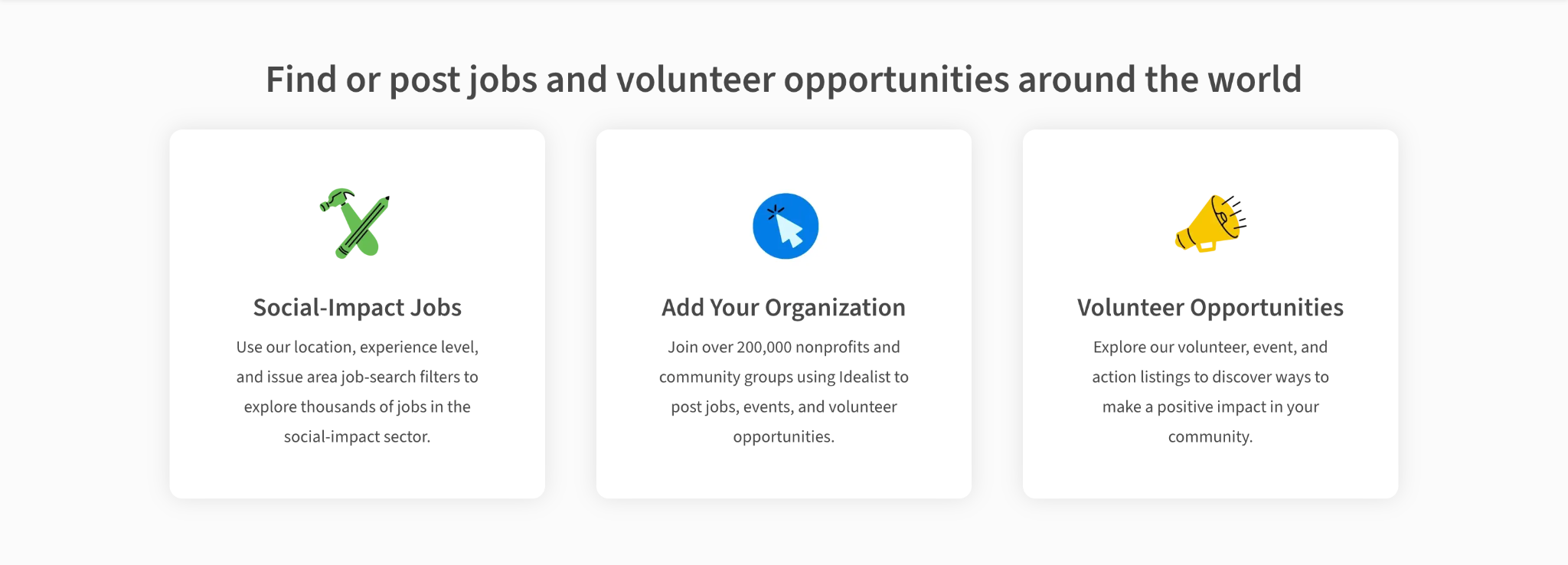
Want your first job to mean something beyond a paycheck? Idealist specializes in nonprofit, social-impact, and mission-driven roles, including internships and volunteer opportunities that build real experience. It's a smaller, focused board, which is exactly why it works.
Best for: Nonprofit, public-interest, and purpose-first career paths.
8. Forage — Best for Building Experience First
Forage isn't a job board in the traditional sense, and that's why it's worth knowing. It offers free virtual job simulations from real companies, so you can build genuine, resume-worthy experience before you apply anywhere. For students with thin work history, it's one of the smartest ways to turn "no experience" into "here's what I've actually done."
Best for: Closing the experience gap and giving your resume something concrete to point to.
The Catch No One Talks About: Getting Past the Filter
Here's the uncomfortable truth that ties all of this together. You can find the perfect listing on the perfect board, and still get nowhere, because the majority of resumes are filtered out by an applicant tracking system before a human ever reads them. The right job board gets you to the door. It doesn't open it.
What Rezi Brings to Your Search
- AI Keyword Targeting — Paste any job description and Rezi instantly flags the specific skills and keywords you need to include. No more guessing what ATS systems and hiring managers are actually searching for.
- Smart Bullet Point Writer — Turn "answered customer emails" into a quantified achievement statement that sounds like a professional wrote it. Genuinely useful when your experience feels thin.
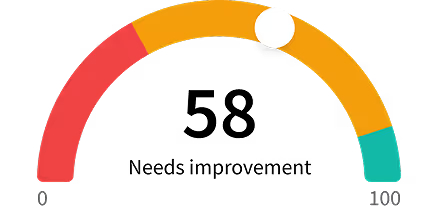
- Real-Time Resume Scoring — Instant feedback on ATS compatibility, content, and formatting, so you fix problems before you hit submit.
- AI Cover Letter Generator — Feed it a job description and your resume and get a tailored cover letter in seconds. No more blank-page paralysis.
Rezi also runs a job search tool, with over 1.3 million openings pulled directly from company websites rather than the usual resume black holes. Find the role, let Rezi tailor your resume to it automatically, and track the whole application from saved to interview in one place. Combined with a board like one of those listed above, it's about as close to an unfair advantage as an early-career job seeker can get.
FAQ
Are job boards for students actually free?
The ones on this list are free for job seekers. You should never pay to apply for entry-level work. (Some platforms offer paid upgrades for extra features, but the core search is free.)
Should I use more than one job board?
Yes. A good strategy is one early-career-focused board like WayUp, one broader board for reach, and one niche board that matches your specific goal, plus a strong, ATS-ready resume across all of them.
Why does my resume keep getting ignored?
Often it's not your experience, it's formatting. Most resumes get filtered by applicant tracking software before a person reads them. Running yours through a tool like Rezi to check keywords and ATS compatibility is one of the highest-impact things you can do.
How many jobs should I apply to per week?
Quality beats quantity, especially early-career. Ten genuinely tailored applications will almost always outperform fifty copy-paste ones. Pick a number you can sustain while still customizing each resume to the role, and lean on a tool to do the tailoring fast so volume doesn't cost you quality.
Do I need a different resume for every application?
You don't need to start from scratch each time, but you should adjust the keywords and a few bullet points to match each job description. That small tweak is what gets you past the ATS and signals to recruiters that you actually read the posting. Rezi's keyword targeting makes this a couple-of-clicks job rather than a half-hour one.
What if I have basically no experience yet?
That's more common than you think, and it's fixable. Class projects, part-time jobs, volunteering, clubs, and virtual job simulations (like the ones on Forage) all count. The trick is framing them as achievements rather than chores, which is exactly what an AI bullet point writer helps with. Internships are also the fastest way to turn "no experience" into "relevant experience," and boards like WayUp are built specifically to surface them.
Is it worth paying for premium features on these platforms?
For most students, no, the free tiers are plenty. The exception is anything that directly affects whether your application gets seen, like resume optimization.
How long should an early-career job search take?
There's no universal answer, but in a competitive market it's normal for it to take longer than you'd like, so don't read silence as a verdict on you. Apply consistently, use more than one board, follow up after applying, and keep your resume sharp. The candidates who land roles usually aren't the ones with the most impressive backgrounds, they're the ones who stayed organized and kept going.

Upload or drop your resume to get started
Upload your resume to get started
Score my resume

Jacob is the founder and CEO of Rezi. He has been sharing his unique insights on solving the resume since 2015, helping millions around the world land their dream jobs. Lately, Jacob finds himself giving a ton of speeches on topics related to global employment and building startups.