Resume
Bad Resume Examples: What Makes a Terrible Resume?
Learn what bad resume examples look like and how to avoid common mistakes that can hurt your chances of getting an interview.
Published on
May 13, 2026
Updated on
May 13, 2026
Bad resume examples usually fail because they exaggerate or hide a candidate’s real value. They copy job listings instead of showing genuine experience, rely on vague duties instead of measurable results, and include buzzwords without proof. Others either overcrowd the page with irrelevant details or leave it too empty to judge. Poor design choices, like graphics or complex layouts, can confuse both recruiters and ATS systems. Typos, inconsistent formatting, and robotic language also weaken credibility. On top of that, adding unnecessary personal details or overstating skills creates trust issues.
I’ve seen my fair share of bad resume examples and templates (looking at you, Reddit). Everything from design-heavy formatting, overuse of buzzwords, questionable skills, and ChatGPT-sounding bullet points.
I’m not here to name and shame. But knowing what not to do can be more effective than following a list of resume rules. So, I’ve compiled a selection of some of the worst and most common resume fails to show you how to avoid ending up on a list like this.
Here’s what I’ll cover in this guide:
- An overview of what makes a terrible resume.
- Examples of bad resumes and what to do about them.
- The best strategies to make your application great.
Make sure your resume doesn’t fall into the “bad” category with our free AI Resume Builder. Our tools can help you create personalized, tailored content for every industry.
And check out more resume red flags:
- Common Resume Mistakes
- ATS Myths: What People Get Wrong
- Why Is It So Hard to Write a Good Resume
- Common Resume Mistakes Among Students
What Makes a Bad Resume?
A bad resume doesn’t mean you don’t have the right skills or experiences. It fails because it masks talent or misrepresents it.
One common issue is over-tailoring job descriptions. People copy phrases, cram in keywords, or claim skills that don’t actually show up in their experience. It might slip past hiring software, but it won’t survive a real conversation with a recruiter.
Then there’s the classic “task list resume”. Bullet points that describe responsibilities but never show outcomes. If every line sounds like “managed tasks” or “assisted with projects,” you’re basically writing a job description about yourself, not proving your impact.
You also see robotic, buzzword-heavy writing that anyone could write. A strong resume tells a unique story with evidence. A bad one either blends into every other application, overwhelms the reader, or tries too hard to sound impressive without backing it up.
And it’s not just about content. Some resumes are way too overly styled, with charts, colors, or layouts that confuse Applicant Tracking Systems (ATS) and distract human readers. While others go too minimal, leaving out transferable experiences and creating a load of white space.
Now, let’s explore some of the worst resume culprits and see why they wouldn’t even make it to the interview stage.
10 Bad Resume Examples to Avoid
Not everyone is a job application expert, but the chaos, clutter, and pure confusion on some of these resumes still surprises me. Others look perfectly fine… until you read a little closer and realize they’re saying absolutely nothing.
I’m going to show a few real resume examples floating around publicly online. Not to shame anyone (job searching is hard enough), but to give you an honest look at what doesn’t work and why. And if you see your resume featured on this list, consider it free constructive feedback.
The ‘I Did Stuff’ Specialist
This is one of the most common resume sins. Listing duties without context turns your experience into a glorified job description. It tells recruiters what the role was, not what you actually did with it.
It’s easy to say you “helped customers”. But that could mean anything from pointing someone to aisle three to diffusing a full-blown complaint. If you don’t elaborate, recruiters will never know the extent of your contributions.
What’s missing is context: what problem existed, what you did about it, and what changed because of your actions. Without that, your resume feels vague and empty, even if your experience is solid.
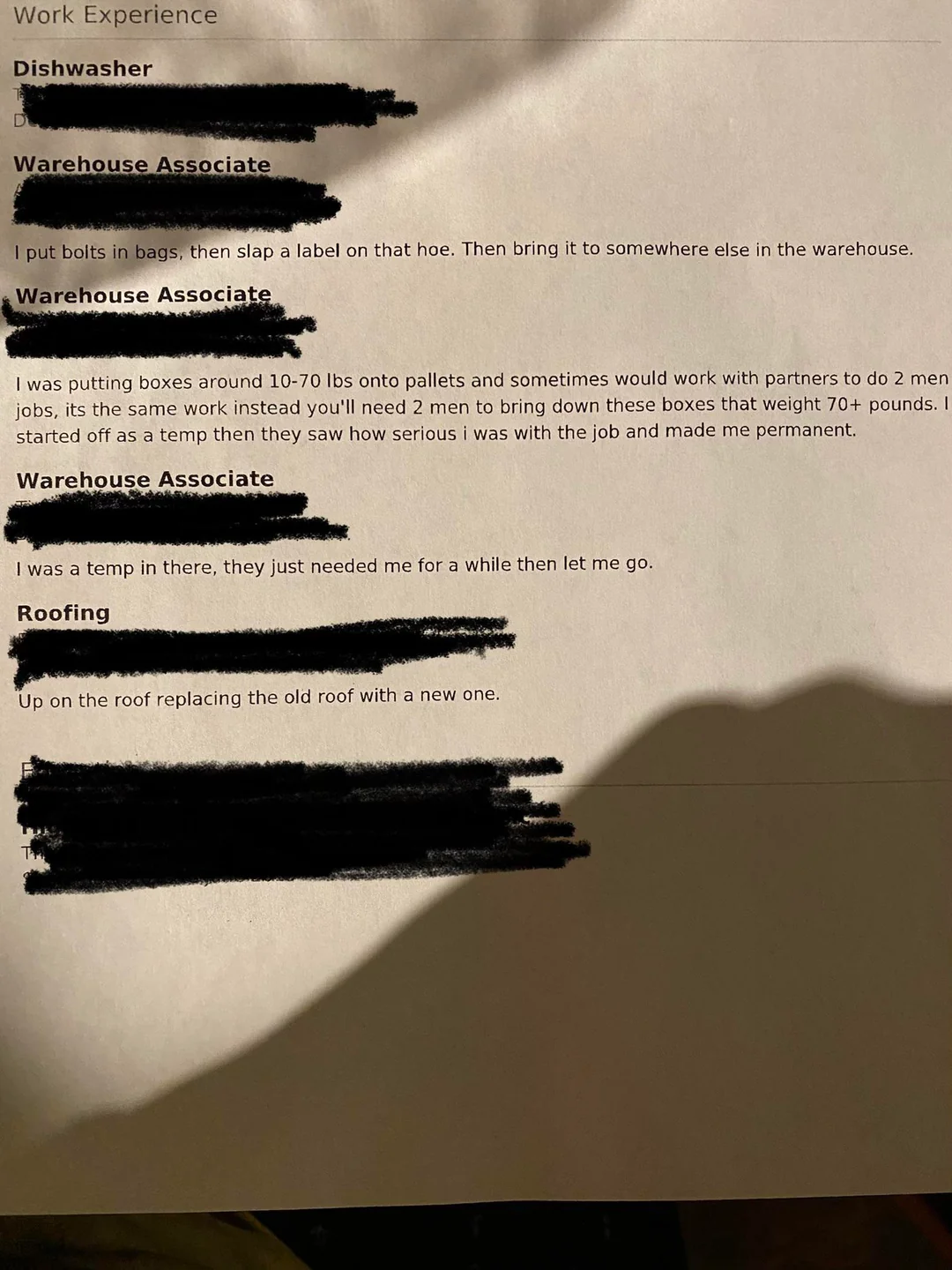
This resume is the very definition of “I did the job and nothing more” (he surprisingly got an interview, but I personally wouldn’t risk it):
What you can do:
- Write bullet points that show ownership and impact, not just participation.
- Aim to include:
- The goal, challenge, or context
- The specific actions you took
- The result or success story of those actions
- Start bullets with strong action verbs to make your role clear and add more depth.
- Add metrics and positive outcomes wherever possible for more credibility (revenue, time saved, growth, efficiency, etc.).
- Cut any bullet that doesn’t show value, results, or influence (it’s just taking up space).
Need help making a statement? Check out our free AI Resume Bullet Point Generator. Simply enter a few role details and get a list of tailored bullet suggestions.
The ‘Trust Me, I’m a 4,’ Candidate
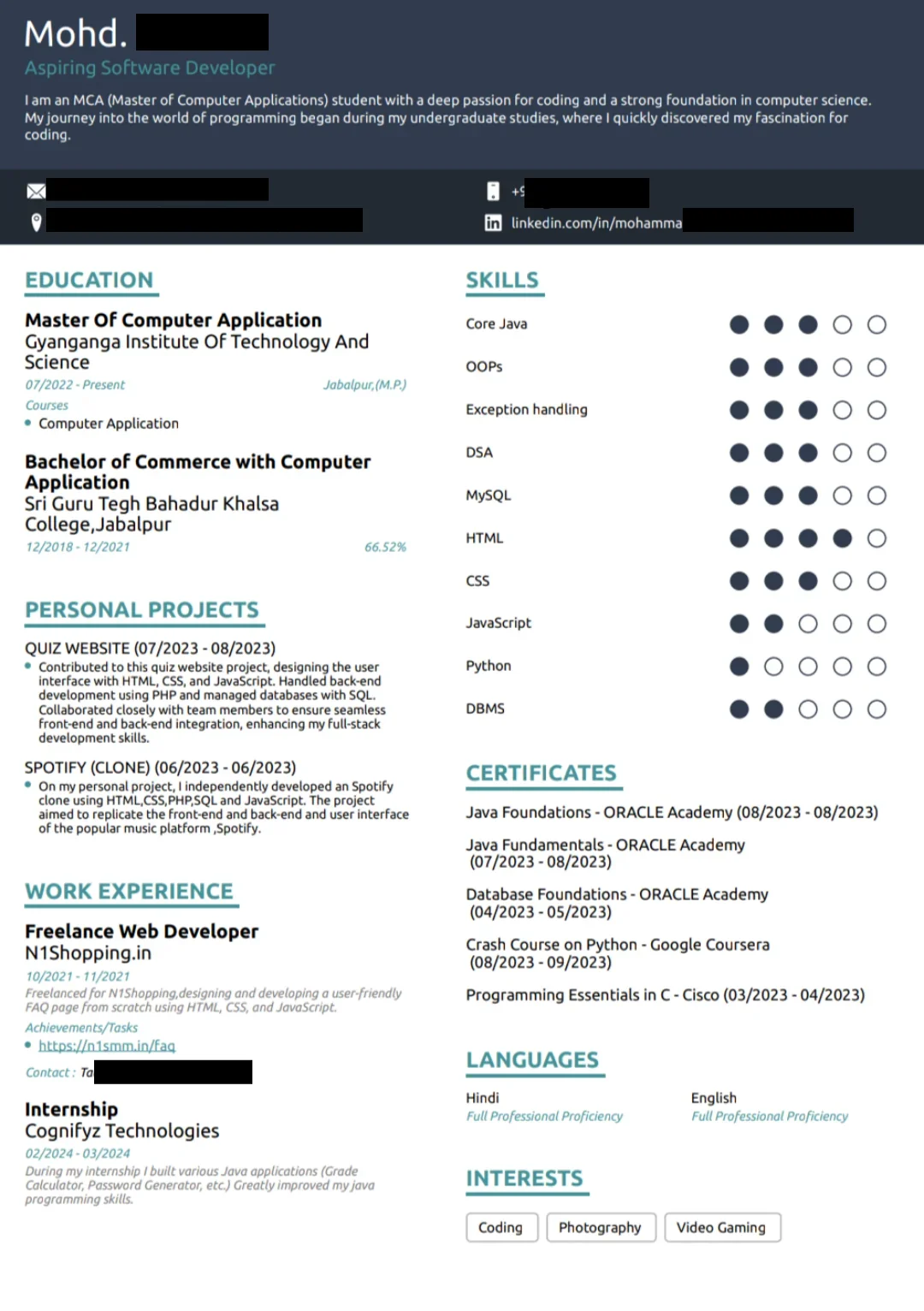
Skills charts are one of my biggest resume pet peeves — because what do you mean you only rate yourself 1/5 for Python? Why not 5? Plus, one person’s 5 might be another person’s 3, and hiring managers aren’t interested in decoding your personal scoring system.
Instead of highlighting strengths, you’re unintentionally emphasizing what you don’t fully know. And from a technical standpoint, charts, graphs, and visual elements often don’t survive ATS scans, meaning your skills won’t make it through keyword searches and filters.
Here’s a resume example of what not to do with your skills section:
Even worse, if you fill your skill charts with generic resume soft skills like “Communication,” “Teamwork,” and “Problem-solving.” These aren’t wrong; just painfully overused to the point of being meaningless without proof.
What you can do:
- Replace charts with a simple, scannable bullet list of around 8 to 15 relevant skills.
- Use the job description to identify and prioritize the most relevant skills for that role.
- Focus primarily on hard skills that can help you stand out amongst other candidates (software, tools, platforms, certifications, languages).
- Organize skills into clear categories if you have a longer list (e.g., Technical Skills, Tools, Languages)
- Reinforce your abilities in your experience section and let soft skills appear through results and examples, not as standalone buzzwords.
Try our AI Skills Explorer to find the most in-demand skills for your industry.
The Ctrl+C, Ctrl+P Resume
Copying chunks of the job description into your resume might seem like “tailoring,” but to a recruiter, it just looks lazy (and a little suspicious). They’ve already read the posting; they want to see proof that you’ve actually done those things.
The bigger issue is credibility. When your resume mirrors the posting too closely, it feels performative. Keyword stuffing, recycled phrasing, and skills that don’t show up anywhere else in your experience all chip away at your credibility.
Yes, tailoring is important, but when it turns into straight-up imitation, you lose the one thing that really matters: your unique experience.
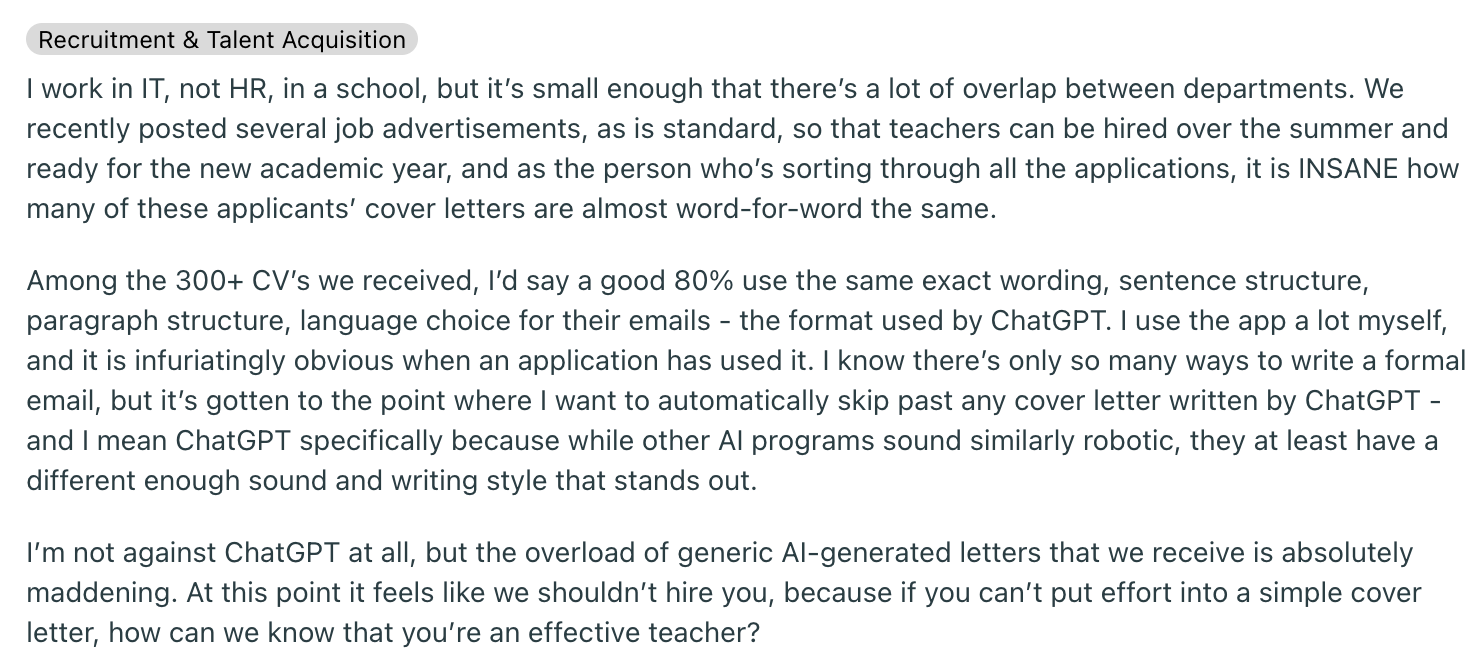
And this problem also exists in cover letters. Check out this Reddit rant:
What you can do:
- Treat the job posting as a reference point, not a script to copy word-for-word.
- Identify the key skills or requirements in the job description and see how those connect to your own experience.
- Spend up to 15 minutes making intentional edits to your base resume instead of rewriting everything from scratch.
- Use similar language, but make sure it’s grounded in your actual work and results with specific examples.
- Only include skills and tools you’ve used in a real-world context that you can explain comfortably in an interview.
Find out more: How to Tailor Your Resume to a Job Description
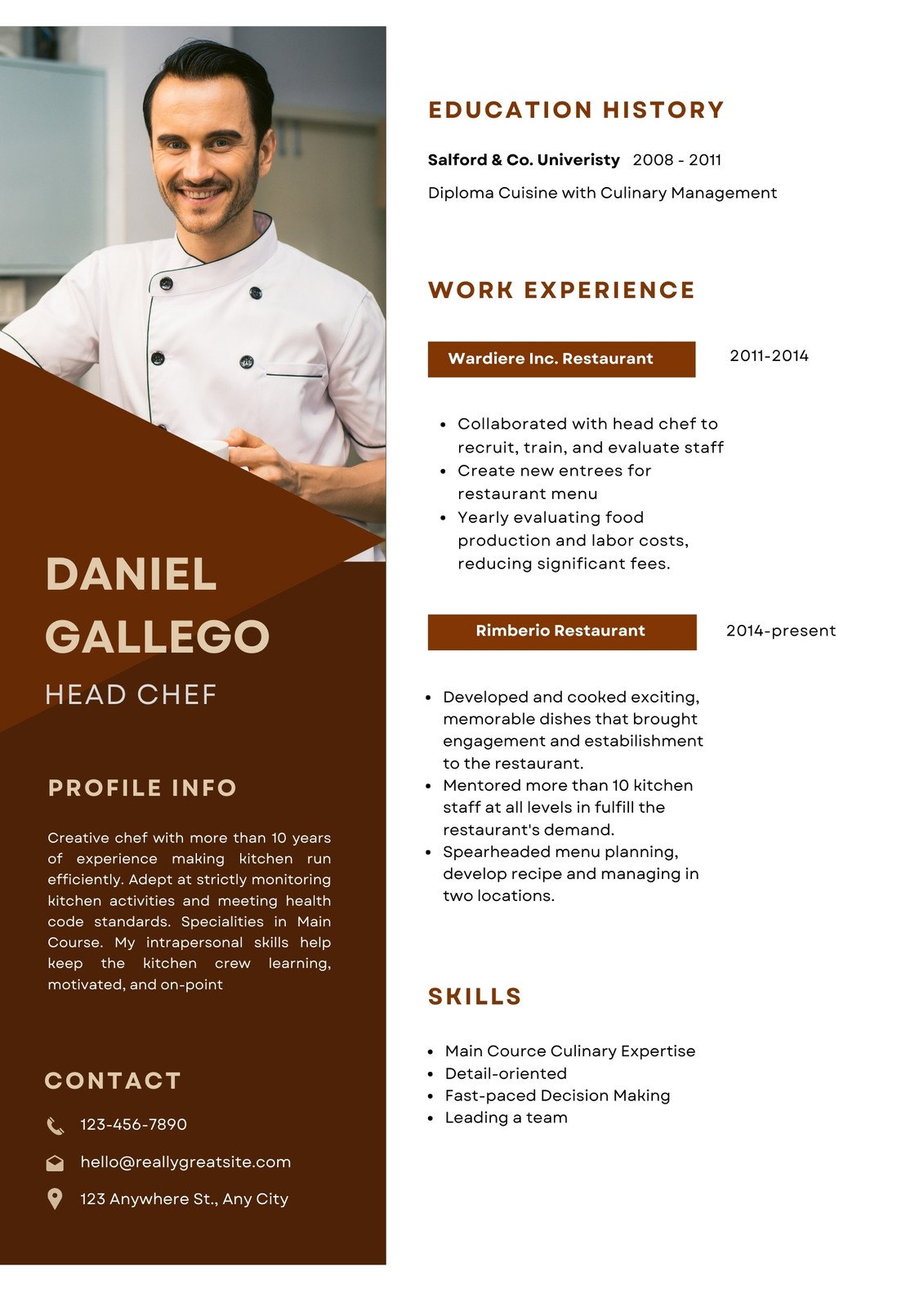
The ‘Hire My Face’ Strategy
Unless you’re auditioning for a role, your face isn’t part of the job requirements. Including a headshot (especially in the U.S.) doesn’t add value; it just introduces bias and distraction.
It can also feel out of place in more traditional or corporate industries, where resumes are supposed to be straightforward and text-focused. On top of that, images can interfere with ATS parsing or get ignored entirely, leaving a pretty pointless headshot.
For obvious reasons, I can’t show you a real headshot. But here’s a stock image of a man who thinks wearing a fancy chef outfit is going to influence hiring decisions:
What you can do:
- Leave the photo off unless you’re in a field where it’s explicitly expected (e.g., acting, modeling).
- Keep your resume focused on skills, experience, and achievements.
- Ensure your document is ATS-friendly by sticking to text-based formatting and avoiding images or graphics.
- If applying internationally, research local expectations before including a photo.
The ‘Look at This, Not My Experience’ Layout
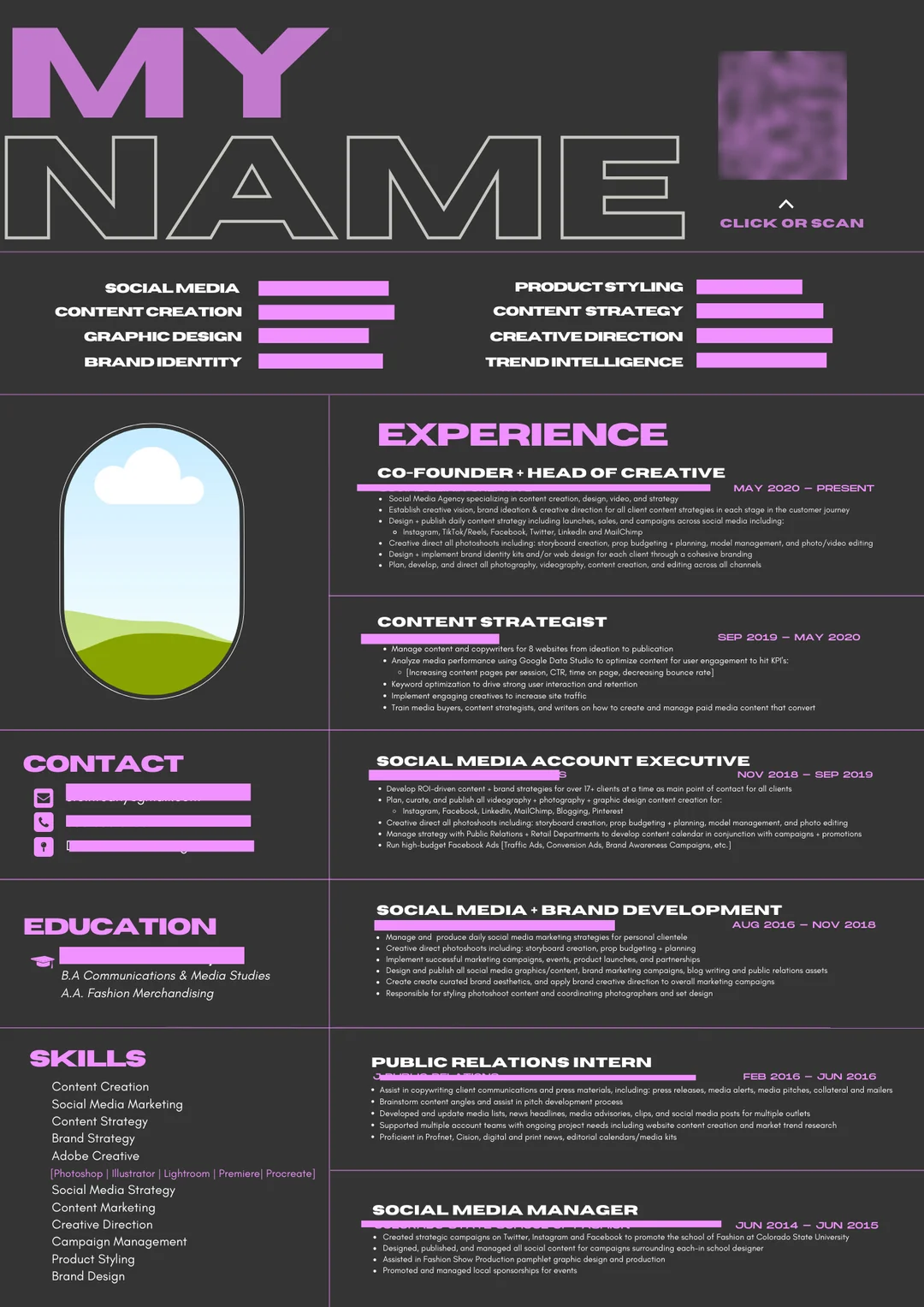
There’s a not-so fine line between “cool design” and “hard to read”. Adding colors, icons, columns, and graphics can quickly turn your resume into something that looks impressive (at least according to Canva standards), but functions poorly.
Recruiters don’t read resumes like a magazine. They quickly scan your resume to see if you match the requirements and have relevant skills. Don’t make their job harder by filling it with design distractions.
And just as importantly, complex layouts can confuse ATS systems, causing important information to get lost when recruiters filter for keywords.
Check out this eyesore posted on Reddit (as the comments kindly point out, less is more):
What you can do:
- Stick to a simple, organized, and professional layout with minimal design elements to prioritize content and readability.
- Avoid:
- Multi-column layouts
- Text boxes, charts, and tables
- Graphics, icons, and images
- Background colours and thick borders
- Choose a modern, easy-to-read resume font and consistent formatting.
- Use white space and bullet points to make your resume easy to skim in seconds.
Learn more about resume formatting:
The Oversharer
It’s tempting to include extra personal details to “humanize” your resume, but don’t go overboard. Things like age, marital status, religion, or political views shouldn’t be relevant to how well you do the job and can introduce bias.
Even that old Hotmail email address that reveals your love for anime can come across as unprofessional. Your resume should make it easy for employers to focus on your qualifications, not get distracted or swayed by unrelated details.
What you can do:
- Include only essential contact information:
- Name, phone number, professional email
- City/location
- LinkedIn or portfolio (if relevant)
- Use a professional email format (usually your first and last name).
- Exclude any personal details that could introduce bias or discrimination.
- Only add hobbies and interests if they demonstrate useful or relevant skills (nothing political or controversial).
The Blank Canvas Job Seeker
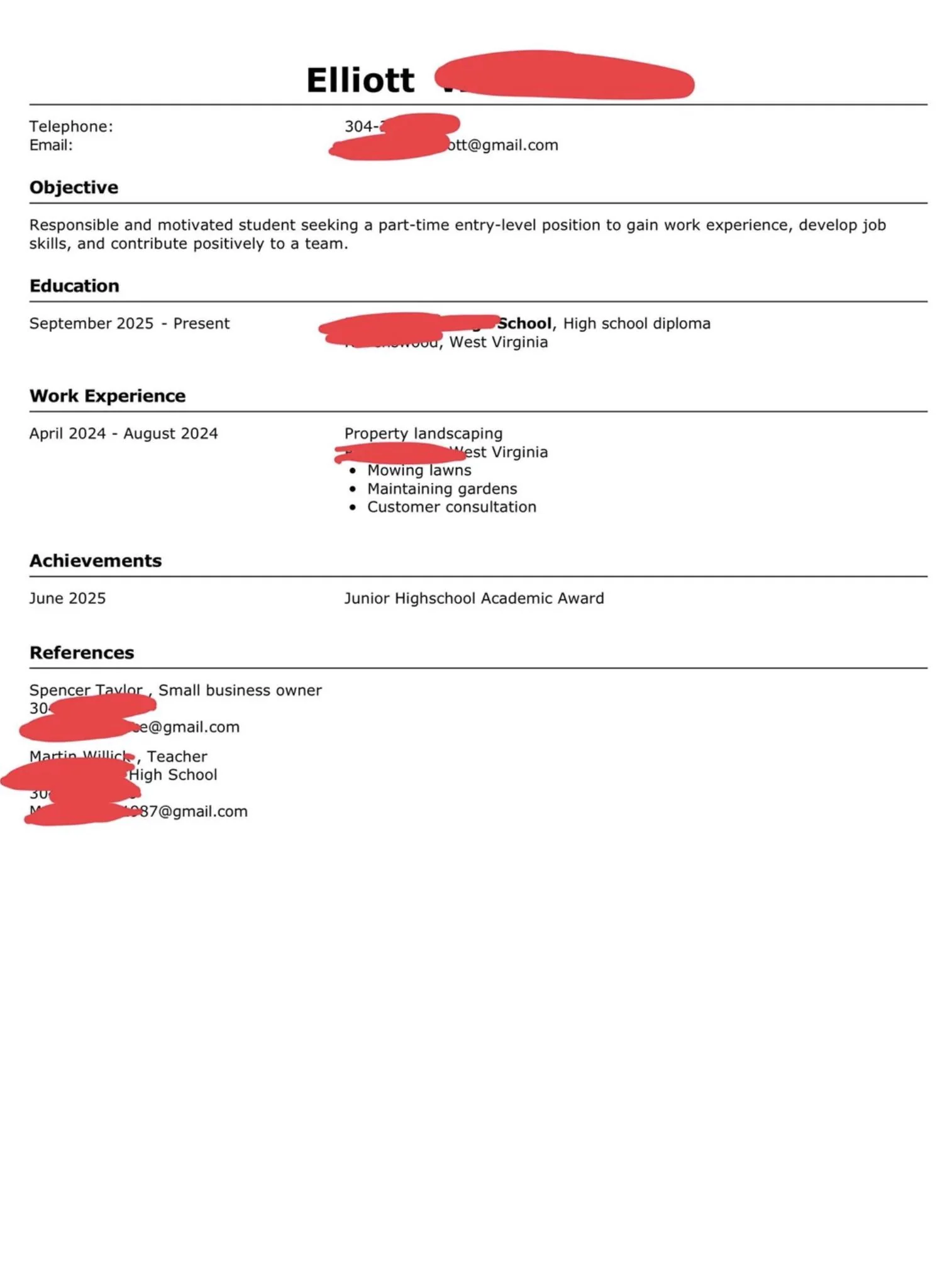
I get it; you don’t have much experience, and you’re stumped trying to fill up all that white space. But an empty resume creates an awkward first impression. It can look like you’re not qualified or that you simply didn’t put in the effort to present what you have.
But trust me, you probably have more to add than you think.
Students, career changers, or anyone early in their career often assume their experience “doesn’t count.” So they leave out valuable things like volunteering, projects, or informal work, even though those experiences still show responsibility, initiative, and transferable skills.
The result is a resume that undersells you. Exhibit A:
What you can do:
- Include all relevant experience, even if it wasn’t a formal job, for example:
- Volunteering, internships, side projects
- Freelancing or gig work
- Tutoring, babysitting, or helping with a family business
- Highlight transferable skills like communication, organization, or problem-solving with concrete examples and success stories.
- If you’re a student or recent graduate, add relevant projects, coursework, leadership activities, or extracurriculars to show initiative and applied skills.
- Avoid over-designing your resume to compensate for a lack of experience; strong content beats flashy visuals every time.
- Remember: employers hiring entry-level candidates are looking for potential and a strong work ethic, not perfection.
No experience? No problem: How to Write a Resume With No Experience
The Autobiography No One Asked For
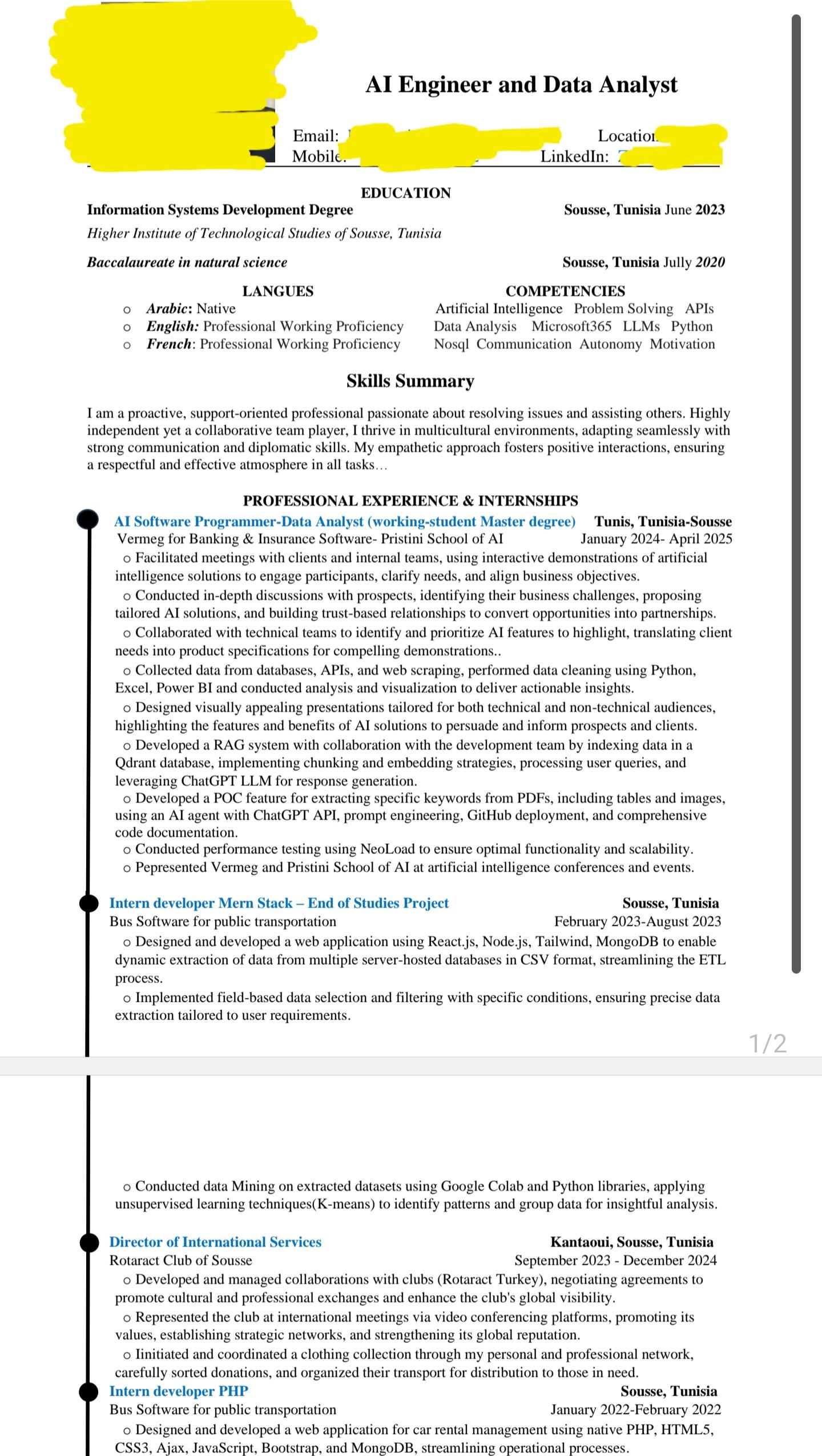
More isn’t better; it’s just more. A crowded resume overwhelms the reader and hides your strongest points under unnecessary detail and filler. And if it looks like a dense wall of text? You’re just asking for a recruiter to gloss right over it.
This tends to happen as people gain experience and keep adding roles, responsibilities, and accomplishments without removing anything. Over time, the resume becomes unfocused, making it hard for recruiters to see how your strengths relate directly to the role.
Not convinced? Tell me how eager you’d be to wade through this lengthy resume posted on Reddit (and no, this isn’t even all of it):
What you can do:
- Prioritize relevance over completeness — not everything needs to stay if it doesn’t align with your future career goals.
- Keep recent and relevant experience more detailed and impact-focused, and cut down or remove anything that doesn’t add obvious value.
- Break up dense text in your work experience section with clear spacing, formatting, and bullet points.
- Aim for one page, or two only if you have substantial, relevant experience.
- Regularly revisit your resume and remove outdated or redundant content.
The Casual Proofreader
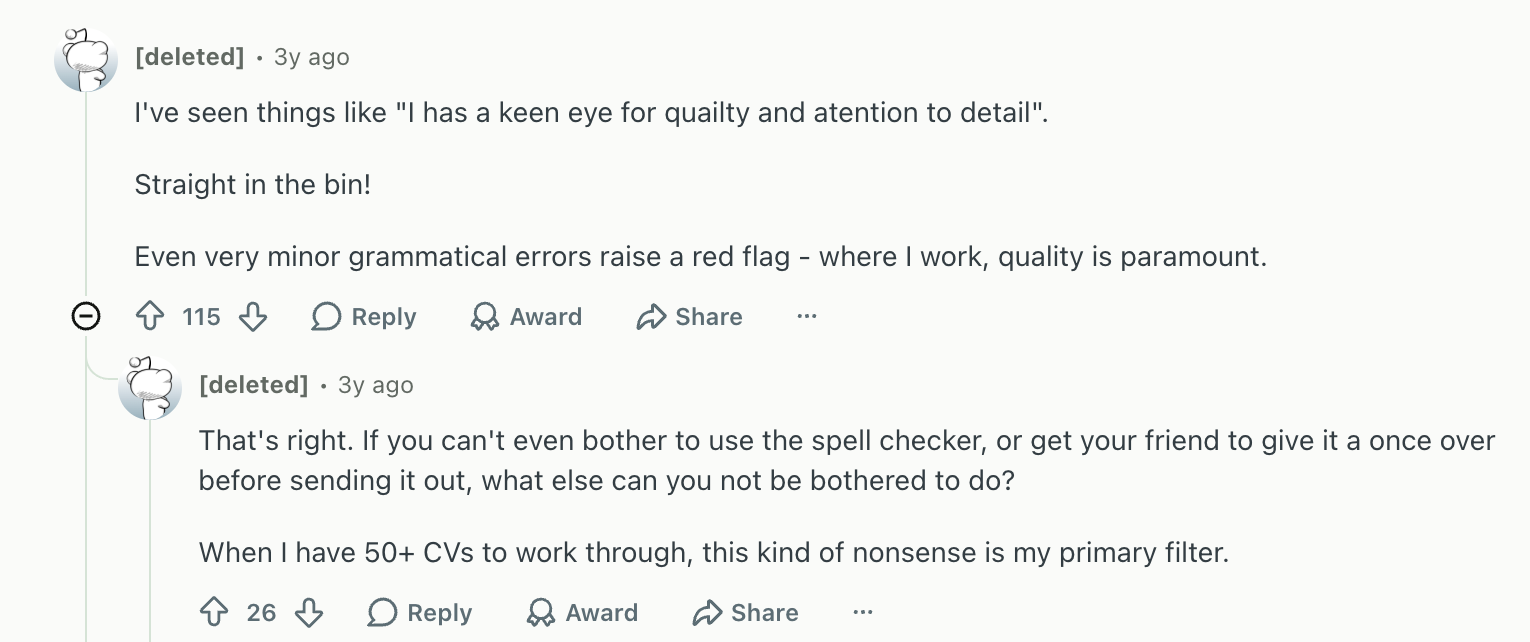
As a writer, I understand that after spending way too much time analysing the same lines, proofreading can get a little blurry. But even a single typo can undermine a strong resume. It shows a lack of attention to detail that could be the deciding factor between you and another grammatically correct candidate.
If all your points have started to merge, take a step back, make a cup of tea, and go back with fresh eyes. It’s rarely about the mistake itself, but what it suggests: carelessness, rushed work, or a lack of professionalism.
Here’s a prime example of not double-checking before sending:
What you can do:
- Step away from your resume, then come back to read it out loud to catch awkward phrasing or missing words.
- Use tools like Grammarly as a first pass (my personal go-to), but use your own judgment as the final authority.
- Ask someone else to proofread it for a second perspective (just don’t waste too much time waiting to hear back from them).
- Double-check formatting, spacing, and consistency across sections, and pay extra attention to names, dates, and headings.
You can be extra-safe by using the ATS Resume Checker. Get expert feedback, scoring, and suggestions to give your resume the best chance of making it to the next stage.
The Resume That Sounds Like Everyone Else
This is the “sounds good, says nothing” problem. When every line is filled with phrases like “results-driven,” “detail-oriented,” or “proven ability,” your resume just comes across as generic and impersonal.
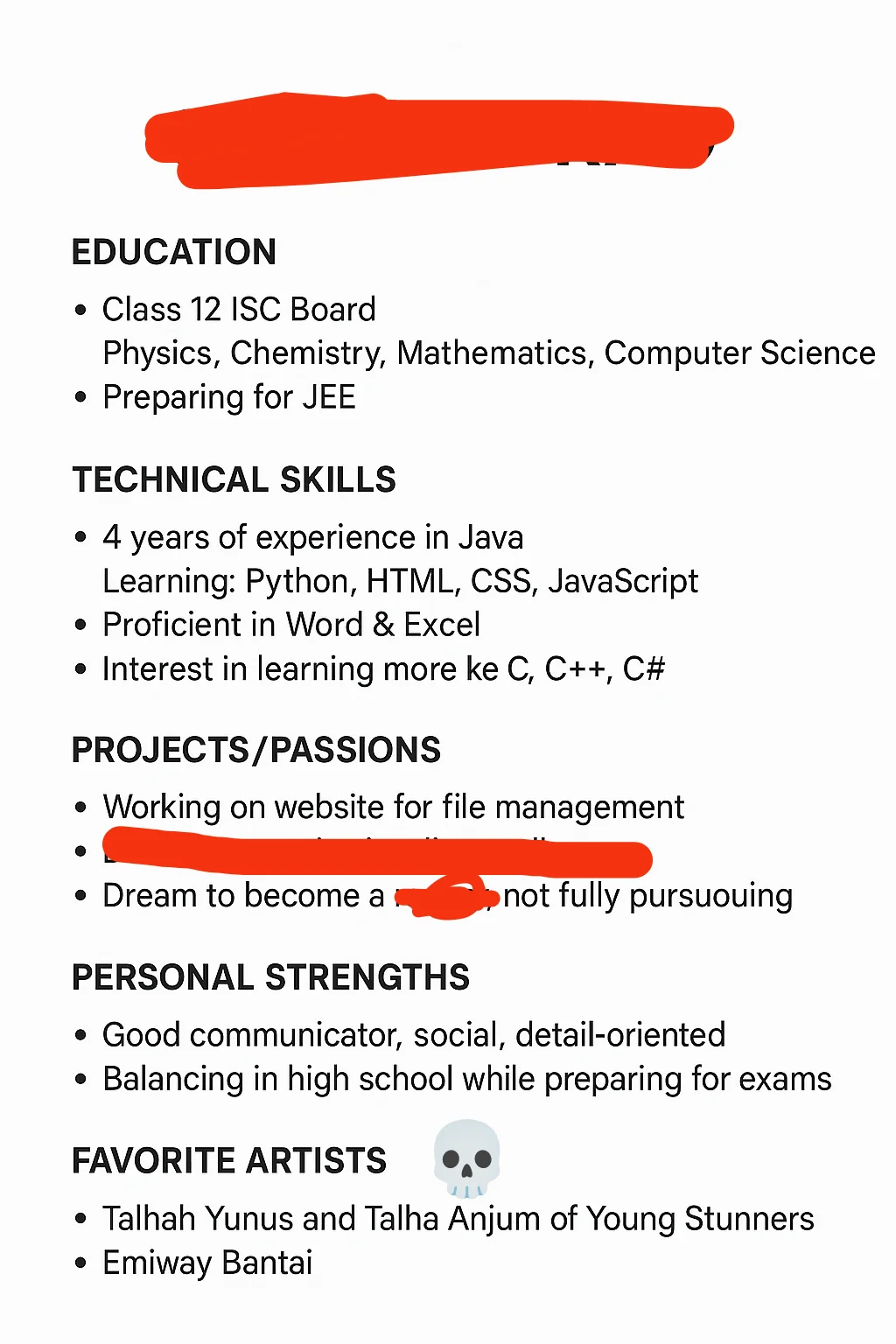
With AI tools becoming more common, this issue is everywhere. Don’t get me wrong, using AI can really help to speed up the resume-building and job search process. But over-relying on it can make your points sound bland and robotic.
Use AI as a base, but make sure you add specificity, personality, and any real insight into what makes you different. Recruiters read hundreds of resumes. If yours sounds like all the others, you’ll just disappear into the rest of the pile.
And just to reiterate that you can’t totally rely on AI, here’s what ChatGPT came up with when a Redditor asked it to create a resume:
What you can do:
- Use AI to generate ideas or structure, but always tweak with examples to make your points your own.
- Replace empty phrases and buzzwords with specific actions and outcomes.
- Add numbers, examples, and concrete details for more credibility.
- Vary and edit your wording to avoid repetition and classic ChatGPT phrases.
- Read your resume out loud or get a second pair of eyes — if it sounds too stiff or unnatural, revise it.
The Resume Catfish
Many of us have experienced that sinking feeling after meeting someone for the first time and realising they absolutely oversold themselves (sigh). It doesn’t serve anyone, and you’ll more than likely get caught out, eventually.
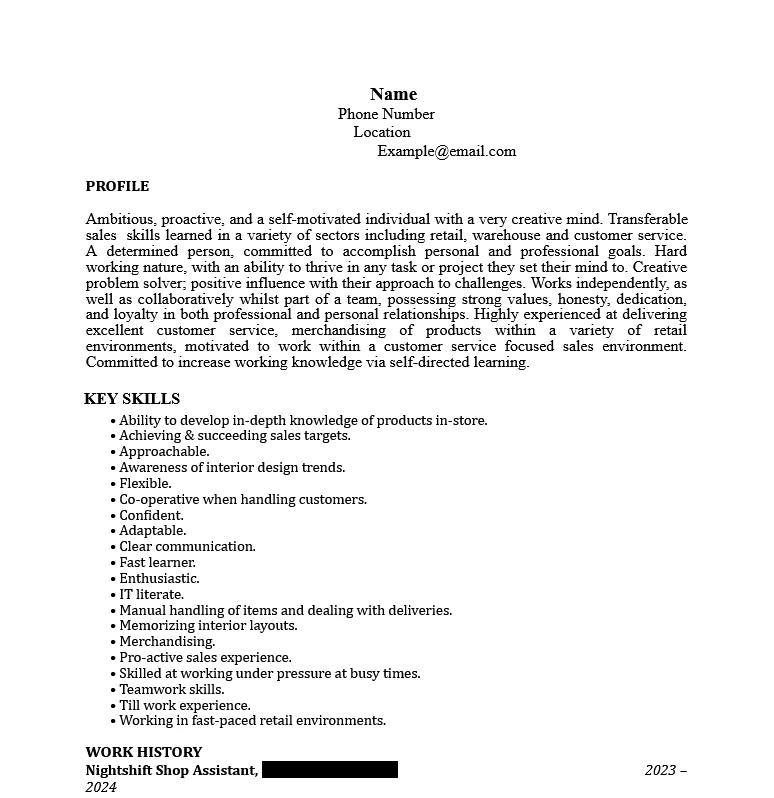
Don’t get me wrong, there’s nothing wrong with presenting yourself confidently, but exaggerating your abilities or outright lying is a risky move. Recruiters and hiring managers are trained to spot inconsistencies, and they’ll ask questions that test your claims.
Check out this job seeker who seems set on selling themselves by cramming in all the adjectives and skills before even reaching the work experience:
What you can do:
- Be honest about your skill level and back up your claims with real contributions and successful outcomes.
- If you include a skill, be prepared to demonstrate it or discuss it in the interview stages.
- Use real metrics to show impact instead of inflating your role.
- Be confident in your proven abilities whilst also being open to learning and growing.
Good vs. Bad Resume: A Quick Comparison
You’ve seen what not to do and how to fix it. But if you need a quick refresher, here’s a side-by-side comparison of a good resume vs. a bad resume.
How to Fix Your Bad Resume
Before we get into the details, here’s an overview of how to improve your resume:
- Explore your skills and experiences by building a complete master resume that captures everything you’ve done across jobs, education, volunteering, and achievements.
- Use the job description as a guideline rather than a script, treating it as a resume checklist of what the employer cares about.
- Make your bullet points unique to you by shifting the focus from tasks to real outcomes that show impact.
- Cut irrelevant details and filler that don’t directly support the role you’re applying for, even if they feel impressive or familiar.
- Simplify your design and layout so your experience, not your formatting, becomes the first thing a recruiter notices.
Let’s go through it step-by-step.
1. Explore your skills and experiences
Don’t just Google a list of customer service skills, copy and paste, then call it a day. Before you even start looking for jobs, you need to explore exactly what you bring to the table.
Start with a big brain dump. Don’t worry about wording or formatting yet; just get all your skills and experiences onto a single document, or a “master resume”, so you have everything in one place (your future self will thank you).
Start wide, then refine:
- Paid roles and professional achievements (top priority)
- Internships or temporary work
- Volunteering or community involvement
- School projects, coursework, or certifications
- Personal projects, freelancing, or side hustles
You can also group your skills. For example:
- Hard skills (teachable abilities)
- Technical skills (software, tools, platforms)
- Soft and interpersonal skills (e.g., communication and teamwork)
- Language skills (include your proficiency level)
Once you have everything in your master resume, you can refer back and copy parts when creating tailored resumes. And if you regularly update it, you won’t forget anything when applying under time pressure.
Yes, it’s a lot to start, but it makes things easier in the long run. Just remember, you’re not trying to inflate your experience by jamming everything in; you just want to see the full picture before you trim it down.
2. Use the job description as a guideline
Think of the job posting as a recruiter’s resume checklist. Your job is to make their scanning process stupidly easy. But don’t just rewrite the job ad word-for-word. It’s more about naturally weaving in keywords, skills, and expertise in the context of your own experience.
Here’s what to watch out for when looking at the job ad:
- Must-have skills (tools, technical ability, certifications)
- Responsibilities (what they expect you to do daily)
- Experience level (years, industries, complexity)
- Education or qualifications
Also, pay attention to the language. If they say “conflict resolution,” don’t rewrite it as “dealing with customers.” Match terminology where it makes sense to help both ATS systems and human readers. Just make sure to add unique context and examples to back up your claims.
All this said, don’t waste time tailoring every detail in your resume (job applications pile up fast).
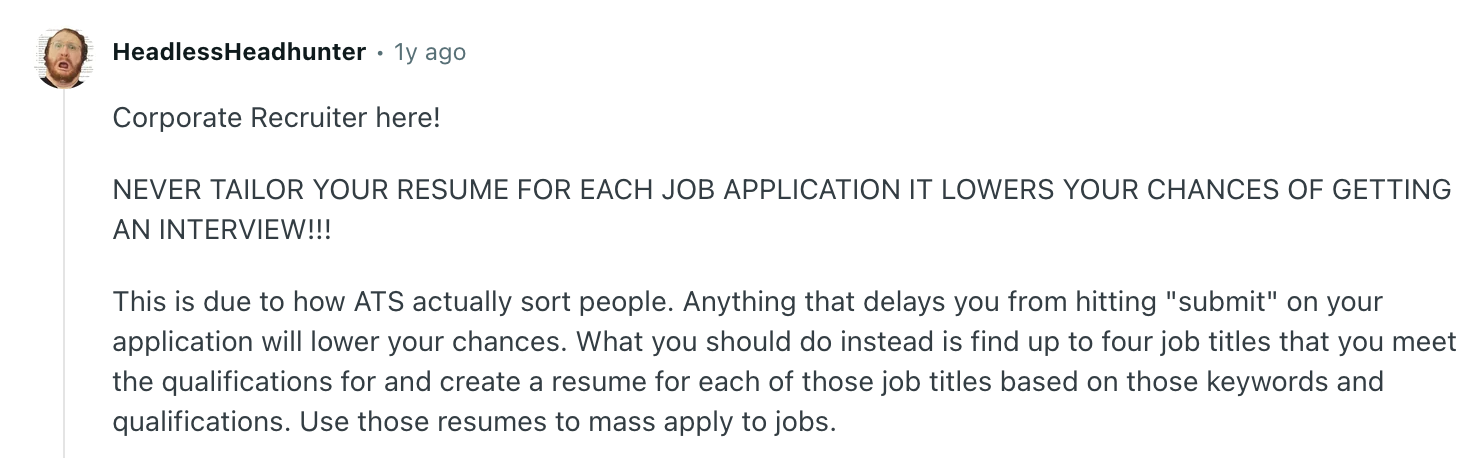
Instead of rewriting your resume for every job, build a few strong versions based on different job titles (e.g., one for marketing, one for content). Then make targeted edits per application so you stay efficient without sounding generic.
This corporate recruiter explains exactly why this is important:
3. Make your bullet points unique to you
Your work experience section can fall into two categories: either “I had a job,” or “I was good at my job.” The first one simply lists duties (aka, a job description), while the latter focuses on outcomes.
A good bullet point answers three things:
- What was the situation or goal?
- What did you specifically do?
- What changed because of it?
So instead of saying:
“Responsible for managing social media accounts.”
You want:
“Grew Instagram engagement by 40% by introducing a weekly content calendar and optimizing posting times based on analytics.”
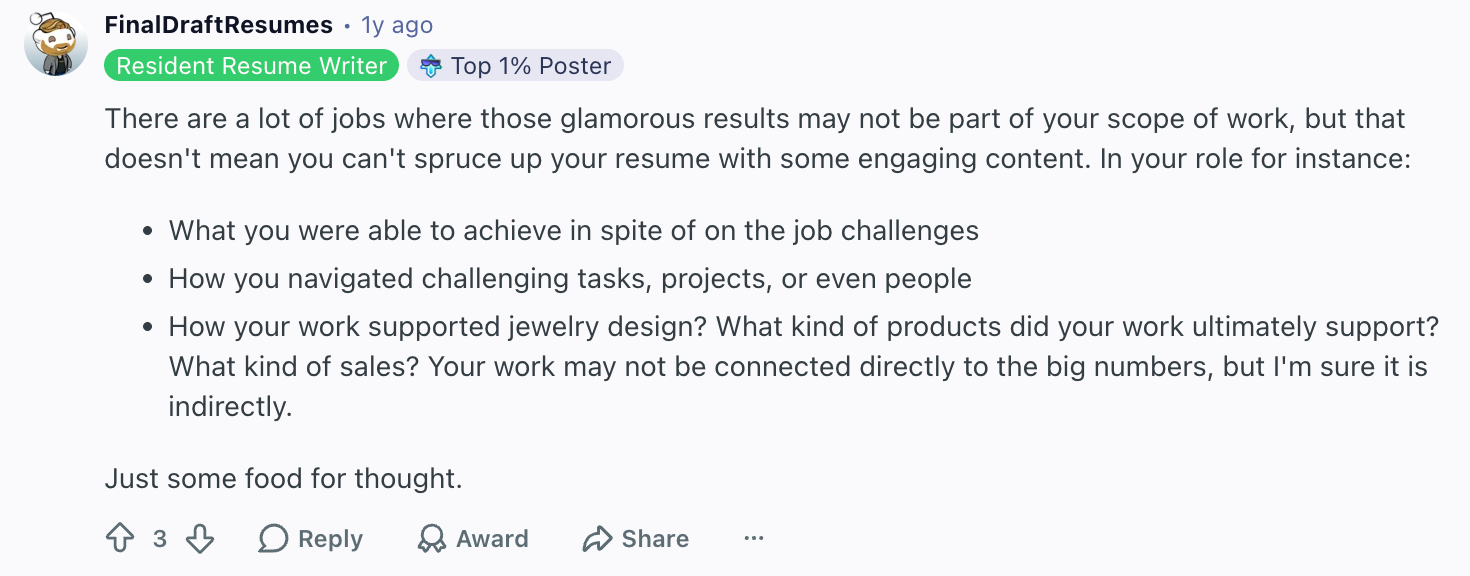
See the difference? Even if your results aren’t huge, they still build a clearer picture of what you can contribute. Improvements, consistency, efficiency, positive feedback, and small wins all count, as long as you connect action to outcome.
Bonus points if you can add numbers or metrics. And if you can’t, describe your impact in other words. Recruiters want proof you actually improved something, not just maintained it.
Here’s some advice from a professional resume writer about how to show your value without metrics:
Get specific feedback, detailed rewrites, or tailored bullet points with our AI Resume Agent. It’s your own personal chatbot designed to save time, tweak, and improve your resume.
4. Cut irrelevant details and filler
Don’t fall into the trap of including everything they’ve ever done. Doing that will only dilute the impact of the important stuff. If something doesn’t support the job you want, it doesn’t deserve that all-important space on your resume (especially if you’re going onto your second page).
Watch out for:
- Obvious statements (“attended meetings,” “used email,” “worked in a team”)
- Repeated ideas phrased slightly differently
- Old experience that no longer connects to your career direction
- Long explanations that don’t add new meaning
If a resume bullet point doesn’t add new insight, prove your value, or show relevant skills, it becomes filler — even if it sounds professional.
And yes, a one-page resume is often your best bet. It’s not a strict rule, but it’s usually all it takes to get your point across. A recruiter should understand your value quickly, not scroll through your entire life story.
5. Simplify your design and layout
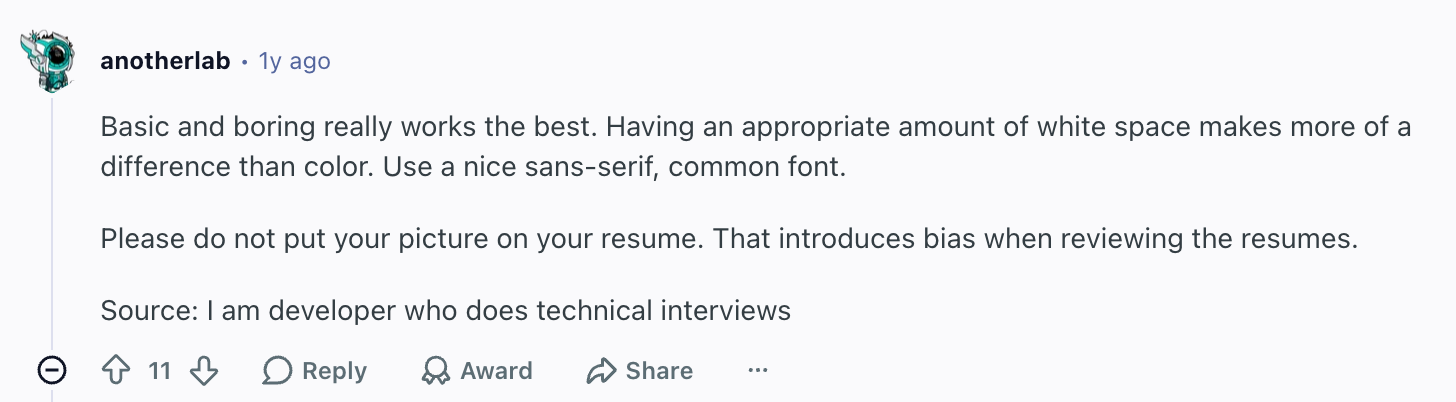
Let me put this in simple terms: if someone notices your formatting before your experience, the design is doing too much.
While some platforms sell the idea that adding colors will make you stand out over well-written content, it actually distracts from it. Plus, heavy design features can cause text to get lost or jumbled by ATS when recruiters are searching for keywords to find your resume.
Here’s some straightforward advice from someone involved in the hiring process:
Stick to a structure that machines and humans both understand:
- One vertical flow (no columns, no split sections)
- Standard headings like Work Experience, Education, Skills, Certifications
- Professional fonts like Arial, Calibri, Helvetica, or Merriweather
- Simple bullet points; nothing decorative or stylized
Keep everything in the main body, and avoid putting key information in headers, footers, tables, or text boxes.
Before sending, do a quick stress test: paste your resume into a plain text editor like Notebook. If it all copies over correctly, you should be good. If things jump around or disappear, recruiters may not see your content the way you intended.
Want to play it safe? Check out these ATS-friendly templates:
- Free & Basic Resume Templates
- Best Free Resume Templates & Tips
- Free Google Docs Resume Template
- Best Resume Templates and Examples
Summary
Here’s a summary of everything you need to know about what makes a poor resume:
- Bad resumes copy the job posting instead of proving real experience, which feels inauthentic and makes recruiters question whether you’ve actually done the work.
- They rely on generic duties instead of showing results, so your experience reads like a job description, not a track record of impact.
- They lack measurable outcomes (no numbers, context, or proof), making it hard for employers to understand how well you performed.
- The worst resumes include irrelevant, outdated, or excessive information, which buries your strongest qualifications and wastes valuable space.
- They’re either too empty (missing key experiences like projects or volunteering) or too crowded (crammed with everything you’ve ever done).
- They use over-designed layouts (charts, columns, graphics) that look impressive but confuse ATS systems and slow down human readers.
- Bad resume examples rely on buzzwords and robotic language, making the resume sound generic and interchangeable with every other candidate.
- They include unnecessary personal details (photos, age, marital status, random hobbies) that don’t support your ability to do the job.
- They contain typos, grammar issues, or inconsistent formatting, which quietly signal a lack of care and attention to detail.
- They exaggerate or stretch the truth about skills, creating a gap between what’s written and what can actually be proven in an interview.
FAQ
What should not be on a resume?
A resume should focus on your ability to do the job, so anything that doesn’t support that goal doesn’t belong. That usually means cutting out irrelevant experience, overly general statements, and filler content that doesn’t add real insight.
Employers don’t need to see every task you’ve ever done, just your strongest and most relevant contributions. Even things like generic soft skills (“team player,” “hard worker”) without context tend to dilute your impact rather than strengthen it. The rule of thumb is simple: if it doesn’t help a recruiter understand your value, it’s just taking up space.
What is the worst resume mistake?
The worst resume mistake is trying to sound impressive without actually proving anything. This usually happens when people lean too heavily on buzzwords, copy the job description, or list responsibilities without showing outcomes. On the surface, it looks professional, but it falls apart quickly because there’s no substance behind it.
A recruiter wants to see what you’ve achieved. Simply saying you “managed projects” is forgettable, but saying you “led five projects and improved results by 20%” gives more depth to your experience. If your resume doesn’t clearly show impact, it becomes difficult for employers to trust or remember it.
Can employers tell if your resume was written by AI?
Recruiters can often suspect AI content, even if they’re not actively trying to detect it. AI-generated resumes can sound overly generic, with repetitive phrases like “results-driven” or “proven ability to succeed,” without personal context, specific achievements, or unique phrasing.
That said, using AI isn’t the problem; it’s relying on it without adding your own input. Once you rewrite it in your own voice, include real numbers, and ground it in your actual experience, it becomes much harder to tell the difference.
Find out more:
What are red flags on a CV?
One of the biggest issues on a CV is a mismatch between claimed skills and actual experience. For example, listing advanced technical skills without any supporting roles or projects. Another common red flag is vague language that avoids specifics, leaving recruiters guessing what you actually did.
On a more practical level, typos, inconsistent formatting, or messy structure suggest a lack of attention to detail, which matters in almost every role. Even design choices can become a red flag if they make the document hard to read or confuse Applicant Tracking Systems. Ultimately, anything that makes your experience harder to understand or less believable will stand out in the wrong way.
What should never go on a resume?
A resume should never include anything that can’t be justified, verified, or directly tied to your ability to perform the job. That includes false or exaggerated claims about skills or experience, which often fall apart in interviews or assessments.
It also includes personal details that aren’t relevant to hiring decisions, such as age, marital status, religion, or political views, as they can introduce bias. In most cases, photos and full home addresses should also be avoided unless specifically required by the industry or country. Even things like unprofessional email addresses or irrelevant salary expectations can weaken your application.

Upload or drop your resume to get started
Upload your resume to get started
Score my resume

Lauren Bedford is a seasoned writer with a track record of helping thousands of readers find practical solutions over the past five years. She's tackled a range of topics, always striving to simplify complex jargon. At Rezi, Lauren crafts genuine and actionable content that guides readers in creating standout resumes to land their dream jobs.