
Resume
30 Transferable Skills Examples for Resumes
Learn what transferable skills are, see examples across industries, and discover how to show them off in your resume, cover letter, and interviews.

Published on
December 18, 2025
Updated on
December 18, 2025
Transferable skills are the abilities you can take from one job or experience and apply anywhere, like communication, teamwork, adaptability, or problem-solving. They show employers you can adjust, learn fast, and add value even without direct experience. To use them effectively, identify the skills most relevant to the job and highlight them across your resume summary, work experience, education, skills section, cover letter, and interview answers. Think about where you’ve used these strengths, in work, school, or daily life, and how they helped you get results. Whether you’re changing industries or just starting out, showcasing your transferable skills helps connect your past experiences to your next opportunity.
Maybe one of these applies to you:
A) You’re moving into a brand new career. B) You’re getting your first job. C) You want to beef up your skills section. D) You want to prove that even if you’re lacking some technical skills, you can still handle the job’s tasks (after a short period of training, of course).
Introducing… *drum roll please* your transferable skills! They’ll get you over the line.
This guide covers:
- Examples of transferable skills.
- How to showcase them in your resume, cover letter, and interview.
- How to figure out which transferable skills you already have from your industry.
Create a new resume with our AI Resume Builder or explore these skill-related guides:
- AI Skills for Your Resume 2025
- Nursing Skills for a Resume
- Best Skills for a CV in 2025
- Top Programming Skills to Put on a Resume
What Are Transferable Skills?
In short: transferable skills are strengths you develop through work, school, or everyday experiences that you can use in any role, like interpersonal, organization, and leadership skills.
Transferable skills are the abilities you pick up from work, school, volunteering, hobbies, or life in general that you can carry into any job or industry. They’re skills that work everywhere.
Some are technical, like data analysis or coding, while others are soft skills, like communication, problem-solving, and adaptability. They’re especially valuable when you’re changing careers, starting a new role, or stepping into a position without all the technical knowledge. These skills help you tackle challenges, collaborate with others, and make an impact no matter where you land.
The best part is you’re never starting from scratch. Transferable skills move with you, and being able to identify and explain them makes it easier to tell your career story and show employers the value you bring, especially in today’s fast-changing workplaces, with AI reshaping how we work.
30 Transferable Skills Examples
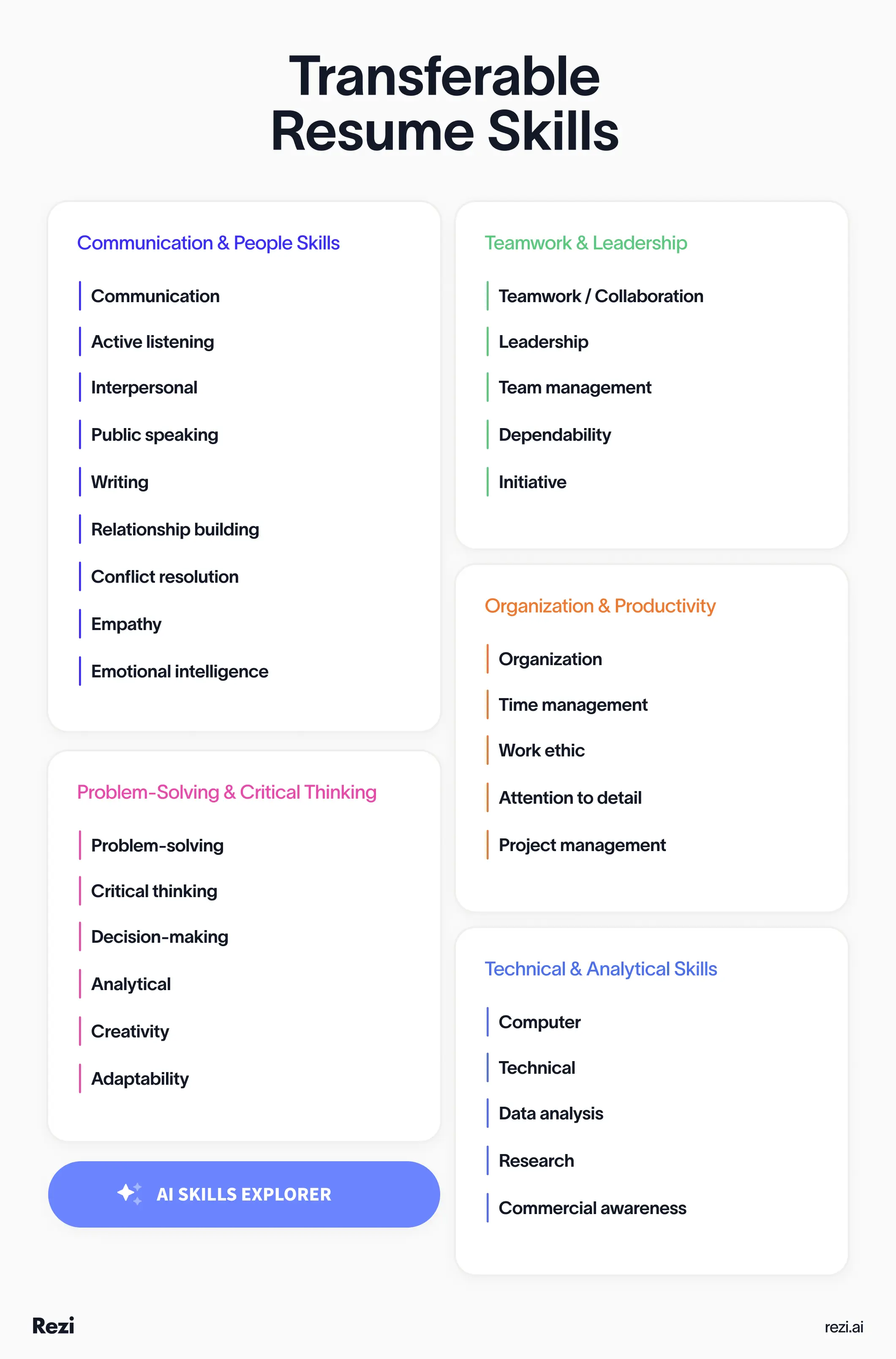
In short: common transferable skill examples include communication, adaptability, teamwork, problem-solving, organization, critical thinking, dependability, leadership, analytical, empathy, attention to detail, interpersonal, creativity, data analysis, time management, work ethic, project management, active listening, conflict resolution, public speaking, research, writing, relationship building, computer skills, emotional intelligence, initiative, team management, technical, decision-making, and commercial awareness.
Your transferable skills make you valuable in any role. They prove to employers that you’re capable, reliable, and can get up to speed quickly without much hand-holding. To find yours, look for recurring keywords in job descriptions or use our AI Skills Explorer for ideas (more on that later).
Here are some of the most common transferable skills:
1. Communication
Communication is one of the most important skills you can have, and it’s the third most listed skill on Rezi resumes. It’s how you express ideas clearly, listen actively, and connect with others. Show your communication skills on your resume by describing times you explained complex topics, presented ideas confidently, or helped teams stay informed and aligned.
Bullet point examples:
• Communicated project goals, timelines, and updates to teams and clients, ensuring alignment and smooth delivery from kickoff to completion.
• Improved client communication by introducing weekly check-ins and shared progress notes, reducing misunderstandings and keeping projects on schedule.
2. Teamwork/collaboration
Teamwork skills come into play when you work with others, share ideas, and help the group succeed together. It’s a big one, appearing on over 8,000 Rezi resumes. Highlight moments when you collaborated to solve problems, supported your team, or helped create a positive group dynamic.
Bullet point examples:
• Collaborated with designers, developers, and marketing teams to launch a new website, ensuring consistent branding and meeting all project deadlines.
• Coordinated feedback between sales and product teams to refine a new feature, which improved user satisfaction scores by 15% and reduced support tickets.
3. Adaptability
Adaptability means staying flexible and composed when things change: new deadlines, shifting goals, or unexpected challenges. Show this skill by sharing how you adjusted quickly, learned something new on the fly, or kept things moving when plans changed.
Bullet point examples:
• Adapted to new project requirements and team structures mid-semester, learning new software tools to help the group complete deliverables two days ahead of schedule.
• Stepped up during a company reorganization to take on new responsibilities and train incoming team members, keeping daily operations on track through the transition.
4. Problem-solving
Problem-solving involves figuring out what’s not working and finding a practical way to fix it. It’s one of those skills that matter everywhere, in school, internships, and full-time jobs. Point to times you identified an issue, took action, and saw a real improvement because of it.
Bullet point examples:
• Solved recurring scheduling conflicts by introducing a shared Google Calendar and weekly sync meetings, which improved team coordination and reduced missed deadlines by 25%.
• Identified delays in the customer intake process and created a digital form system to replace manual entries, cutting response times by 40% and improving overall satisfaction scores.
5. Organization
Organization helps you keep everything on track, whether that’s managing your time, projects, or priorities. It makes you efficient, focused, and calm when things get busy. Describe how you managed multiple tasks, created systems that worked, or helped your team stay on schedule.
Bullet point examples:
• Organized project tasks and deadlines using Asana, helping the team deliver all milestones on time and improving overall workflow visibility.
• Created a simple file-naming and storage system that reduced time spent searching for documents by 30% and made collaboration easier across departments.
6. Critical thinking
Critical thinking is about looking at information with a curious, questioning mindset. It means analyzing facts, weighing options, and making smart decisions instead of acting on assumptions. Share examples of when you evaluated data, improved a system, or made choices that led to better results.
Bullet point examples:
• Applied critical thinking to assess competing vendor proposals, selecting the most cost-effective option and saving the company 12% on annual procurement costs.
• Reviewed team workflows and identified redundant steps, leading to a simplified process that reduced project turnaround time by three days.
7. Dependability
Dependability means being someone people can count on; showing up, following through, and delivering quality work every time. Mention when you met commitments, took ownership of responsibilities, or built trust by being reliable and consistent.
Bullet point examples:
• Demonstrated dependability by consistently meeting project deadlines and maintaining 100% on-time task completion throughout the academic year.
• Took ownership of a delayed client report, reorganizing the workflow and coordinating with teammates to deliver the final draft ahead of schedule.
8. Leadership
Leadership skills are needed when you’re motivating others and helping a group reach its goals. Think of times you led a project, guided your team through a challenge, or stepped up to make decisions that moved things forward, whether in class, internships, or professional roles.
Bullet point examples:
• Led a team of five to plan and execute a campus event, delegating tasks, coordinating schedules, and ensuring the project was completed on time and within budget.
• Identified gaps in research and writing responsibilities for a group project and reassigned tasks based on team members’ strengths, resulting in a smoother process and a higher-quality final presentation.
Find out What’s Your Leadership Style.
9. Analytical
Analytical skills come into play when you break things down, look at the data, and figure out what makes sense. It’s about solving problems based on facts and logic. On your resume, point to times you interpreted information, spotted trends, or made thoughtful decisions that improved outcomes.
Bullet point examples:
• Applied analytical skills to review sales data and identify underperforming products, recommending a restock strategy that increased revenue by 15%.
• Examined feedback from a group project survey and adjusted team responsibilities, improving collaboration and the overall quality of the project.
10. Empathy
Empathy is about understanding where people are coming from and responding with care. Give examples of when you adapted to someone’s needs, supported a colleague, or helped solve a challenge by seeing things from another perspective.
Bullet point examples:
• Listened to patients’ concerns and adjusted care plans to address their individual needs, improving patient comfort and satisfaction.
• Observed students struggling with a lesson and adapted teaching methods to match their learning styles, boosting engagement and understanding.
11. Attention to detail
Attention to detail means noticing the small things that others might miss by double-checking your work and making sure everything is accurate and polished. Share times you caught a mistake early, improved accuracy, or made a project better through careful, consistent work.
Bullet point examples:
• Reviewed financial reports and identified inconsistencies in expense records, ensuring accurate data and preventing potential budget discrepancies.
• Proofread and formatted project documentation before submission, helping the team present error-free, professional deliverables that met all requirements.
12. Interpersonal
Interpersonal skills are all about how you connect and work with others by listening, communicating clearly, resolving conflicts, and building trust. Highlight times you supported your team, encouraged collaboration, or handled challenges with empathy and professionalism.
Bullet point examples:
• Built strong client relationships by actively listening to feedback and coordinating with internal teams to deliver tailored solutions that met expectations.
• Resolved tension between team members by encouraging open discussion and focusing on shared goals, improving collaboration and morale.
13. Creativity
Creativity is finding new angles and smarter ways to solve problems. It’s not just artistic — anyone can be creative by improving processes, coming up with fresh ideas, or dealing with challenges in unexpected ways that pay off.
Bullet point examples:
• Designed a new way to present project updates using visuals and short summaries, making information easier for managers and teammates to understand.
• Suggested small process changes after noticing repeated delays in team tasks, helping projects move faster without adding extra workload.
14. Data analysis
Data analysis is spotting patterns and using insights to make smarter decisions. You don’t have to be a data scientist; anytime you interpret results or make choices based on facts, you’re using this skill. It’s the second most listed skill on Rezi resumes this year, mentioned by nearly 14,000 people. Share times you used data to solve problems or inform decisions.
Bullet point examples:
• Analyzed customer feedback and performance metrics to identify trends, leading to a 15% increase in satisfaction scores over one semester.
• Noticed inconsistencies in reporting methods and created a simplified tracking system that improved accuracy and helped the team make faster, data-driven decisions.
15. Time management
Time management is about juggling tasks, figuring out what’s most important, and using your time wisely so you actually get things done without feeling overwhelmed. Highlight times you balanced different responsibilities, hit deadlines, or kept your work organized under pressure.
Bullet point examples:
• Juggled coursework, part-time work, and a student organization role, implementing a weekly plan that improved productivity and kept all commitments on track.
• Handled competing deadlines for three major projects, creating a detailed schedule on Asana that ensured all deliverables were submitted on time.
16. Work ethic
A strong work ethic means putting in consistent effort, taking ownership of your responsibilities, and staying committed, even when no one’s looking. Explain times you went above and beyond, followed through on tough tasks, or consistently delivered quality results.
Bullet point examples:
• Coordinated a group assignment by organizing contributions and ensuring all sections were thorough and polished, leading to top project feedback.
• Demonstrated a strong work ethic by volunteering for extra responsibilities during a busy semester, completing all tasks accurately and ahead of schedule.
Learn about How to Describe Good Work Ethic on a Resume.
17. Project management
Project management is the most popular skill on Rezi resumes. It involves planning tasks, coordinating people, and keeping everything on track so objectives are met. Share examples of when you led projects, organized resources, or adapted plans to keep work moving forward.
Bullet point examples:
• Led a cross-functional team to plan and execute a campus event, coordinating vendors, schedules, and volunteers to ensure it ran smoothly and on budget.
• Organized a student group project by assigning tasks, tracking progress, and resolving obstacles, resulting in a completed project delivered ahead of deadline.
18. Active listening
Active listening means fully focusing on what someone is saying, picking up on their cues, and responding thoughtfully. Mention times you clarified expectations, resolved issues, or strengthened relationships by really paying attention.
Bullet point examples:
• Listened carefully to patients’ concerns during appointments, asking follow-up questions and adjusting care plans, which improved patient satisfaction and adherence.
• Guided team meetings by clarifying ideas and restating key points, helping the group agree on next steps and complete the project on time.
19. Conflict resolution
Conflict resolution is handling disagreements calmly and finding solutions that work for everyone involved. Share times you helped people reach common ground, solved problems, or eased tension so projects or teams could move forward.
Bullet point examples:
• Mediated a disagreement between team members over project responsibilities, facilitating a compromise that kept the project on track and improved team collaboration.
• Addressed a misunderstanding with a client by listening to concerns and proposing a solution, which restored trust and ensured project continuity.
20. Public speaking
Public speaking is about presenting ideas clearly and keeping people engaged, whether it’s in a classroom, a meeting, or a community event. On your resume, highlight times you explained complex information, led discussions, or presented ideas confidently to a group.
Bullet point examples:
• Presented a research project on renewable energy solutions to 30 classmates, using charts and examples to explain technical concepts, earning praise for making the topic clear and engaging.
• Led a parent-teacher meeting for a third-grade class to review student progress in reading and math, answering questions and keeping the discussion focused, which strengthened communication and trust with families.
21. Research
Research involves gathering credible information, analyzing it, and then making informed decisions. You can show this skill on your resume by mentioning when you used research tools or strategies to guide a project, improve results, or solve a problem.
Bullet point examples:
• Conducted in-depth research on local market trends to support a marketing proposal, identifying three new audience segments that shaped the campaign strategy.
• Reviewed SEO analytics and competitor reports to identify underperforming pages, leading to targeted updates that improved site visibility and engagement.
22. Writing
Writing is expressing ideas clearly and thoughtfully, whether you’re drafting emails, reports, or creative content. Highlight times you wrote or edited something that made information easier to understand, inspired action, or helped achieve a specific goal.
Bullet point examples:
• Wrote and edited weekly blog posts for the campus business club, improving article engagement by 40% through clear explanations and relatable examples.
• Developed a client proposal that simplified complex data into plain language, helping the team secure project approval from senior management.
23. Relationship building
Relationship building shows you can connect with coworkers, clients, or partners to build trust and foster collaboration. Describe when you strengthened relationships, encouraged teamwork, or helped a team work together toward successful outcomes.
Bullet point examples:
• Built lasting relationships with clients through regular check-ins and personalized updates, leading to a 20% increase in repeat business.
• Collaborated with marketing and operations teams to improve communication on a shared campaign, helping the project launch a week ahead of schedule.
24. Computer skills
Computer skills on your resume prove you’re comfortable using technology to get things done, whether that’s learning new software quickly, organizing data, or troubleshooting issues. Throw in times you used digital tools to improve efficiency, accuracy, or communication.
Bullet point examples:
• Tracked project milestones in Excel and created data visualizations that improved reporting accuracy by 30%.
• Introduced Notion to organize team workflows, cutting back on missed deadlines and boosting coordination across departments.
25. Emotional intelligence
Emotional intelligence is about understanding your own emotions and recognizing how others feel, so you can communicate easily and work well with different personalities. Share examples of when you resolved conflicts, supported a teammate, or handled tough situations with empathy and professionalism.
Bullet point examples:
• Mediated a disagreement between team members, helping both sides feel heard and keeping the project on track.
• Supported a coworker during a high-pressure deadline, adjusting workloads and improving overall team morale and productivity.
26. Initiative
Initiative means taking action without being asked; noticing what needs to be done and stepping up to make it happen. Mention when you volunteered for extra responsibility, proposed improvements, or found a way to solve a problem before it got worse.
Bullet point examples:
• Observed frequent guest complaints about check-in wait times and suggested a pre-arrival online form, reducing front desk bottlenecks and improving guest satisfaction scores.
• Developed and shared a new lesson plan template that helped colleagues align curriculum goals and save time preparing weekly class materials.
27. Team management
Team management is about leading a group so things get done while helping everyone play to their strengths. Talk about when you delegated tasks, supported teammates’ development, or stepped in to solve team challenges so projects ran smoothly.
Bullet point examples:
• Led a five-person student project team, assigning roles based on strengths and providing guidance, resulting in an A-grade project submission ahead of schedule.
• Coordinated team responsibilities during a busy restaurant shift, resolving workflow issues and ensuring orders were completed accurately and on time.
28. Technical
Technical skills on your resume show you can use tools, software, or technology to get work done and make processes easier. Give examples of when you learned a new system, solved tech issues, or used software to improve efficiency.
Bullet point examples:
• Troubleshot and resolved POS software issues during peak hours, ensuring uninterrupted service and minimizing customer wait times.
• Implemented a new telehealth platform, training colleagues and troubleshooting technical issues to maintain patient appointments.
29. Decision-making
Decision-making means looking at different options, thinking through the possible outcomes, and choosing the best path. Share examples of when you tackled a difficult decision, solved a problem, or helped a project succeed by taking action.
Bullet point examples:
• Reassigned tasks among a 6-person internship team during peak project deadlines, ensuring critical deliverables were completed on time without compromising quality.
• Evaluated three different approaches for a market research project in class and chose the method that reduced data collection time by 30% while improving accuracy.
30. Commercial awareness
Commercial awareness is knowing your industry, understanding your company’s goals, and spotting opportunities to improve performance. For example, if you’re applying to Rezi, you might mention how you’ve studied competitors, analyzed trends in the AI resume builder market, and used those insights to inform past projects or strategies.
Bullet point examples:
• Researched five competitors’ social media campaigns, presenting recommendations that boosted engagement on the company’s next content rollout by 15%.
• Recommended adjustments to the launch plan for a new product after reviewing recent industry trends, ensuring the project better matched customer expectations and market demand.
How to Highlight Transferable Skills in a Job Application
Here’s how to highlight transferable skills in your job application:
- Emphasize your most relevant transferable skills and what you bring to the role in your resume summary.
- In your work experience, use the CAR method to show how you applied these skills to get results.
- Highlight transferable skills in your education section through projects, leadership roles, honors, and coursework.
- Mix transferable skills into your skills section if you’re light on technical ones, aiming for 6–10 total.
- Use other sections like certifications, volunteer work, or hobbies to show initiative, leadership, or creativity.
- In your cover letter, explain how your transferable skills helped you succeed in past experiences and how they’ll translate to this role.
- During interviews, share real examples that demonstrate how you used your skills to make an impact.
You don’t need to list every transferable skill you have. Review the job description to see which ones matter most, and focus on highlighting those, especially if you’re missing some technical requirements.
Spell it out; don’t assume the employer will make the connections for you:

Resume summary
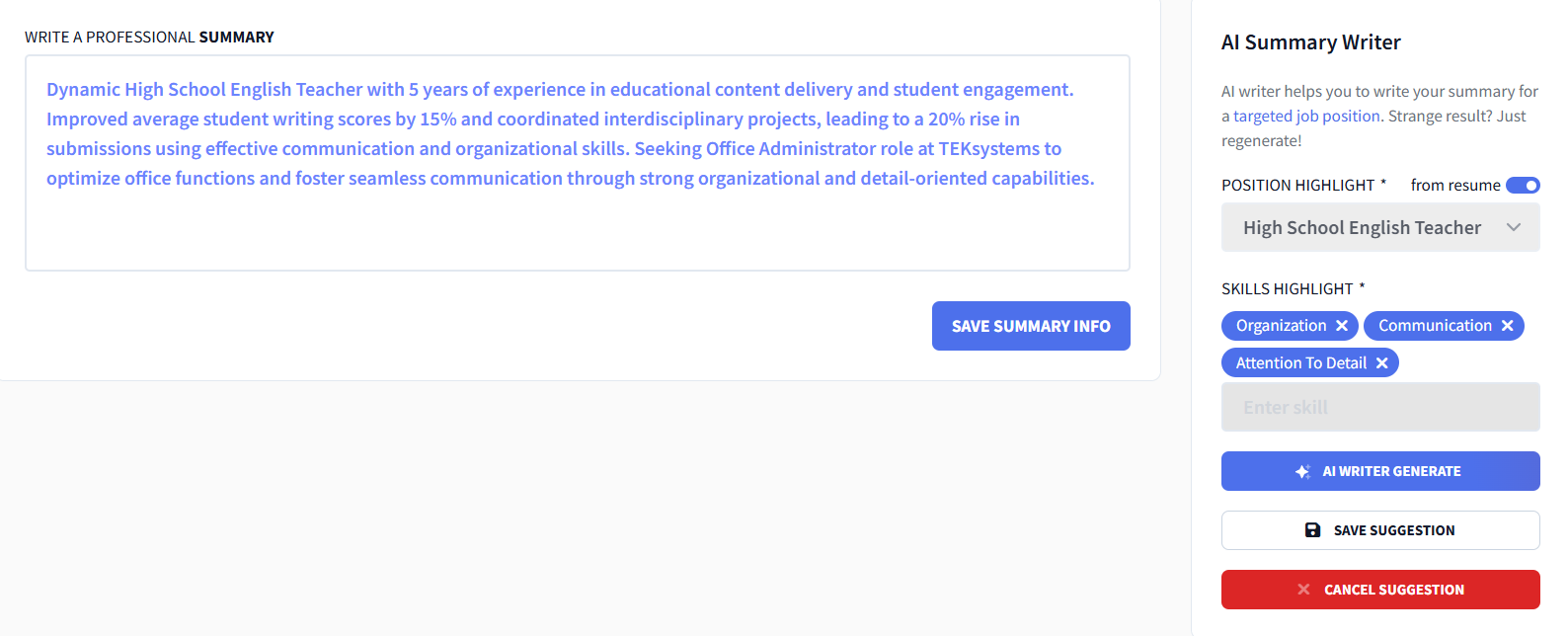
Your resume summary is the first thing hiring managers see, so spotlight your most relevant transferable skills upfront. Keep it to 2–3 sentences, covering your experience, top skills, and what you bring to the role.
Use our AI Resume Summary Generator to help. Enter a past role, degree or cert, and the transferable skills you want to show off, and it creates a summary in seconds:
Work experience
Sprinkle transferable skills throughout your work history bullet points by using the CAR method (Challenge, Action, Result) to show your impact. Call out the skill directly or demonstrate it through accomplishments, and be specific with action verbs, tools, and measurable results on your resume.
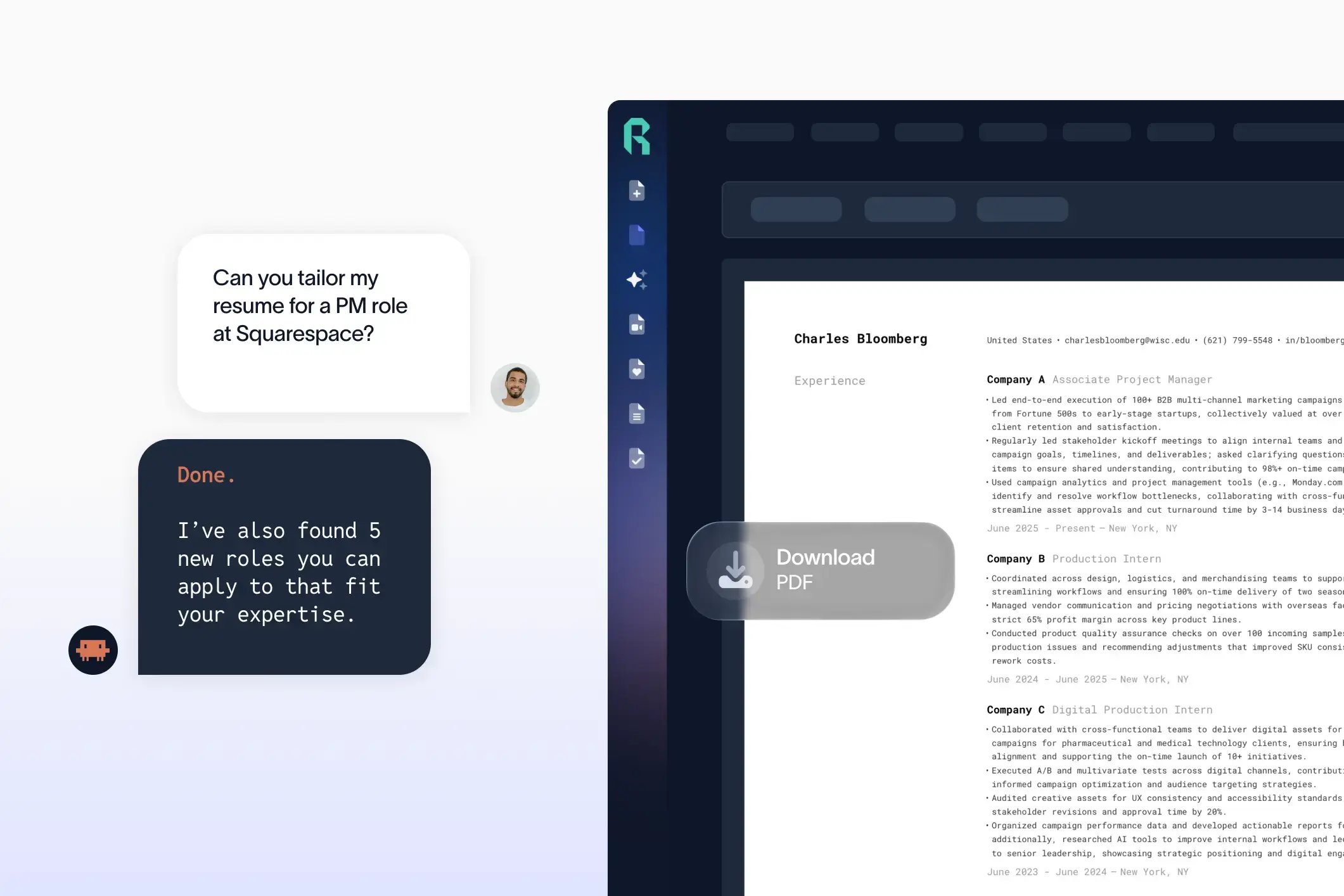
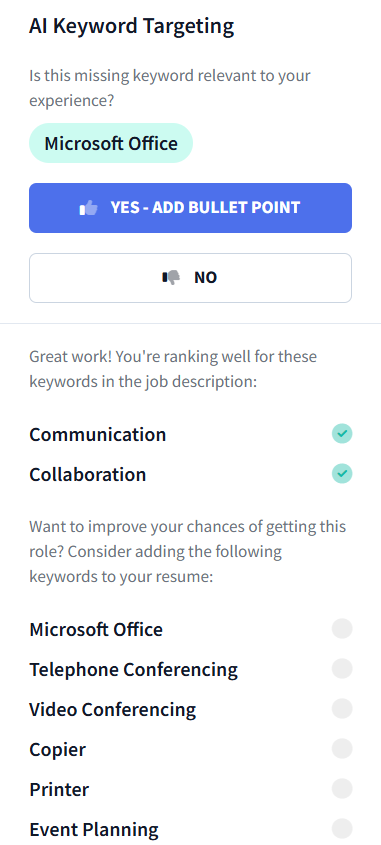
Our AI Keyword Targeting tool can help. Provide a job description, and it’ll identify which skills are already on your resume, which to add, and even insert them for you.
Here’s the AI Keyword Targeting tool in action:
Education section
If you’re a recent graduate, you can showcase transferable skills in your education section:
- Group projects show organization, teamwork, and project management.
- Being a student president demonstrates leadership, dependability, and public speaking.
- Dean’s List or Summa Cum Laude honors emphasize work ethic, attention to detail, and problem-solving.
- Coursework, research, or presentations can also show communication and analytical skills.
Here’s an example of how to include transferable skills in your education section:
B.A. in Communication | University of Washington | Graduated: 2024
• Dean’s List (2022–2024)
• Led a team of 5 in a semester-long marketing project, strengthening communication, organization, and project management skills.
• Presented findings to faculty and peers, demonstrating public speaking and collaboration.
Skills section
The skills section usually prioritizes hard or technical skills, but if you’re weak in that area, transferable skills are fine (max 10 skills).
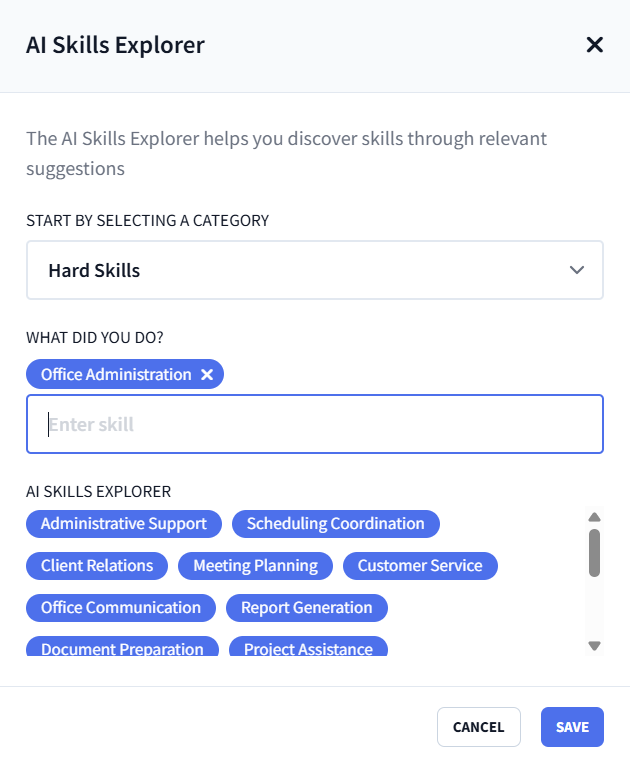
Want to add more to impress? Use the AI Skills Explorer: choose a category, provide an example, and it suggests related skills:
Other resume sections
You can also highlight transferable skills through other sections of your resume:
- Certifications. Show initiative, work ethic, and your continuous learning by earning credentials like Google Workspace, CPR, or project management certificates.
- Projects. Demonstrate problem-solving, teamwork, and organization by describing class, personal, or freelance projects where you met goals or delivered results.
- Volunteer experience. Emphasize communication, leadership, and adaptability gained from organizing events, mentoring, or community outreach.
- Hobbies. Certain hobbies can highlight creativity, discipline, or collaboration, e.g., photography (attention to detail) or team sports (teamwork).
- Languages. Show off your cultural awareness, communication, and adaptability.
- Extracurriculars. Participation in clubs or organizations can showcase leadership, teamwork, and time management.
- Relevant coursework. Point to analytical, research, or technical skills from courses like statistics, marketing, or computer science.
Cover letter
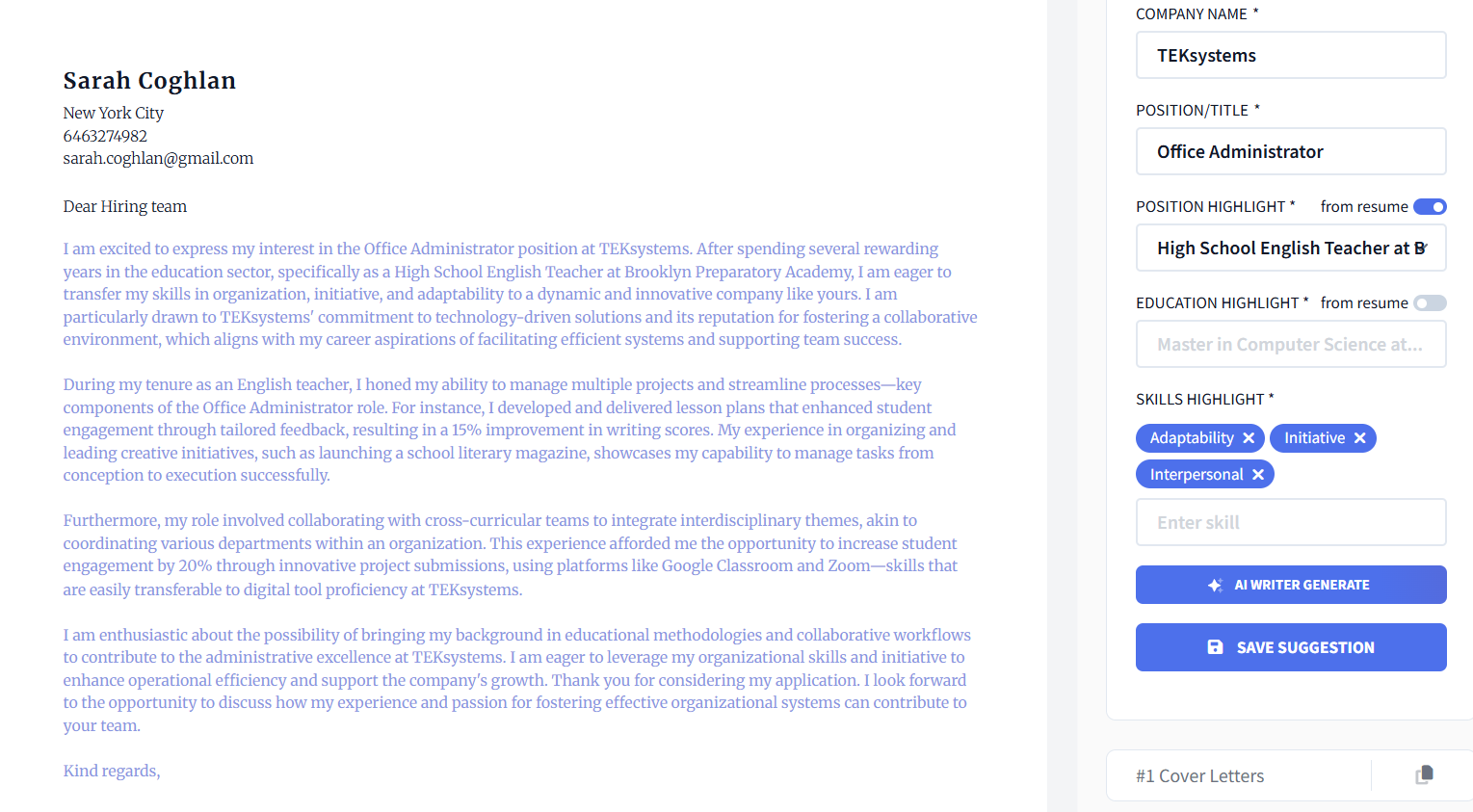
Your cover letter is your chance to explain why you’re a strong fit, especially if you’re missing the technical knowledge. Show how you’ve applied transferable skills in school, work, or volunteering, and what results came from them.
This hiring manager shared their thoughts:

Generate one with our AI Cover Letter Writer. It pulls information from your resume and job description, then creates a professional draft you can edit until it feels right:
Interview
In your interview answers, focus on real examples of how you’ve used your transferable skills. Share stories that highlight what you did, how you did it, and the difference it made.
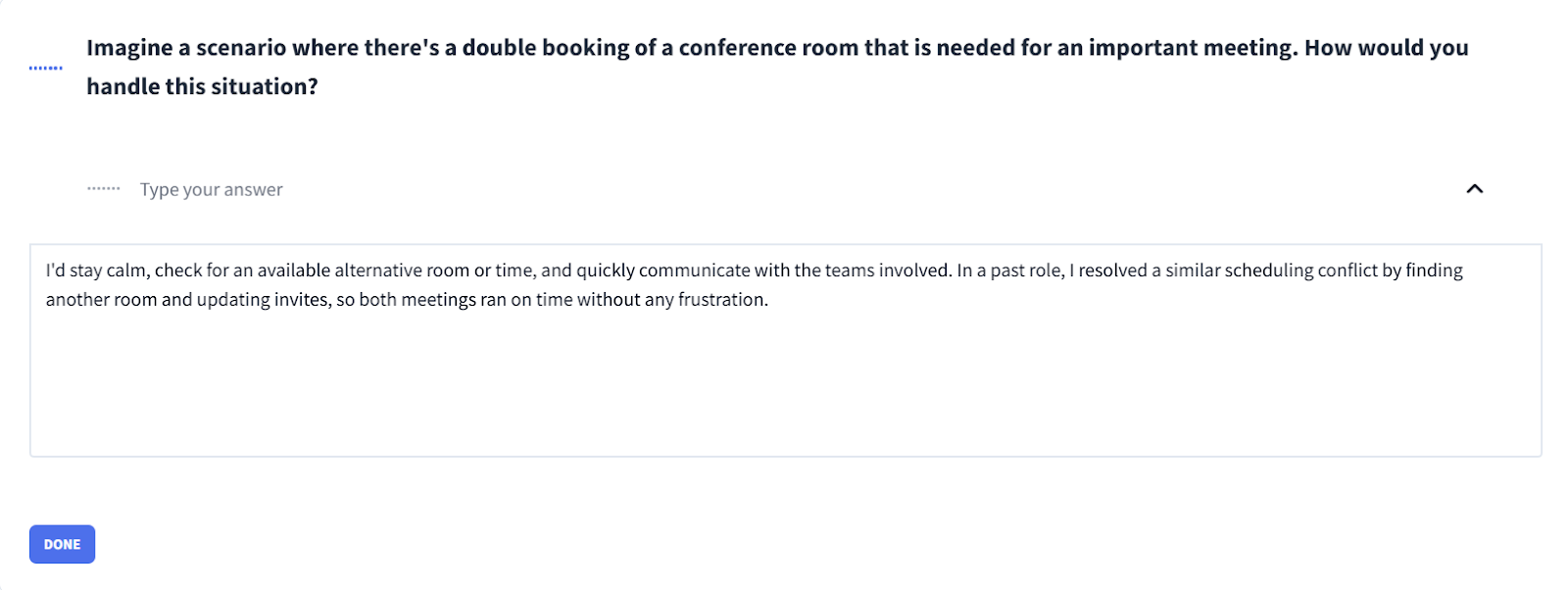
Use our AI Interview Practice to try out questions and record or type your answers; it’s a great way to feel more confident before the big day.
Here’s what the AI Interview Practice looks like:
What Transferable Skills You Might Already Have
In short: communication, problem-solving, teamwork, and adaptability are valuable in nearly every job. Administration, healthcare, and IT often call for organization, attention to detail, and technical skills, while roles in teaching, sales, and hospitality rely on empathy, multitasking, and relationship building.
Think about the strengths you’ve relied on to succeed, handle challenges, and work with others. When did you perform your best? What were you recognized for? How did you solve problems or handle stressful situations? Don’t just think official jobs; hobbies, school projects, or volunteer work also count.
Kate, who moved from teaching to admin, focused on pulling transferable skills from job postings. She was surprised by what she needed to include:
“In terms of tools, I noticed a lot of really basic ones that I would have figured would have been implied, like Microsoft Office or Google Workspace. Everyone’s used to using these tools, but a lot of places still wanted to see those really basic abilities.”
Whether you’re switching to a new industry or want a reminder of the skills you’ve gained in your current job, here are some transferable skills for each field:
- Administration: Communication, time management, organization, problem-solving, attention to detail, computer, technical, and multitasking.
- Customer service/retail: Collaboration, adaptability, creative thinking, conflict resolution, communication, empathy, problem-solving, and patience.
- Hospitality: Problem-solving, multitasking, time management, emotional intelligence, adaptability, teamwork, and customer service skills.
- Teaching: Active listening, emotional intelligence, empathy, communication, organization, leadership, problem-solving, and adaptability.
- Social media/communications: Creativity, commercial awareness, writing, communication, project management, data analysis, and adaptability.
- Sales: Negotiation, relationship building, communication, problem-solving, adaptability, and active listening.
- HR: Conflict resolution, communication, relationship building, organization, decision-making, empathy, and critical thinking.
- Project management: Leadership, organization, time management, problem-solving, communication, adaptability, and planning.
- Nursing/healthcare: Empathy, interpersonal, attention to detail, problem-solving, communication, teamwork, and adaptability.
- Research/analytics: Data analysis, critical thinking, teamwork, problem-solving, attention to detail, research, and analytical skills.
- Students/entry-level roles: Adaptability, time management, communication, problem-solving, teamwork, initiative, and interpersonal skills.
- IT/tech: Technical, computer, problem-solving, attention to detail, project management, adaptability, and communication.
- Finance/accounting: Analytical, attention to detail, problem-solving, organization, data analysis, and time management.
Summary
Here’s a recap on transferable skills:
- Transferable skills are the abilities you can apply across different roles or industries, gained from school, work, volunteering, or everyday experiences.
- Common examples include communication, teamwork, adaptability, problem-solving, organization, and leadership, though each industry values them differently.
- They’re especially useful for career changers, new grads, or anyone entering a new field without much technical experience.
- To identify your transferable skills, review job descriptions for repeated keywords or explore ideas with tools like the AI Skills Explorer.
- On your resume, highlight them in your summary and work experience using the CAR method (Challenge, Action, Result) and measurable outcomes.
- You can also include transferable skills in your education or other sections like certifications, projects, or volunteering, especially if you’re light on experience.
- List transferable skills in your skills section if you’re short on technical ones; list about 6–10 key skills.
- In your cover letter, share examples of when you used these skills to achieve results.
- In interviews, tell short, specific stories that show how you’ve applied them successfully.
FAQ
Why are transferable skills important?
Transferable skills help you adapt and succeed in different roles and industries, even if you’re making a big career change or stepping into something new. They show employers you can communicate, solve problems, and work well with others. These skills keep you relevant and valuable as workplaces continue to evolve.
How to develop transferable skills?
You can build transferable skills anywhere: at work, school, volunteering, or even in your free time. Join group activities, take on volunteer projects, pursue hobbies, or rotate tasks in your current job. Step outside your comfort zone and try new tools or projects that challenge you.
What are some good skills to have?
Skills that work across nearly every career include communication, problem-solving, adaptability, teamwork, organization, and digital literacy. Other valuable ones right now are project management, data analysis, customer service, and inventory management.
What are marketable skills?
Marketable skills are the abilities that make you stand out to employers and boost your chances in the job market. They can be technical skills, like accounting and Python, or soft skills, like leadership and communication. The more relevant your skills are to the role, the more marketable you become.
What’s a technical skill?
Technical skills are the specific abilities required to perform tasks in a particular job. Every field has its own, like frothing milk in hospitality, proofreading in publishing, using design software, or operating medical equipment. They’re learned through training or experience and are measurable and job-specific.
What’s the difference between transferable skills vs. soft skills?
Soft skills are personal qualities like empathy, problem-solving, and attention to detail. Transferable skills are broader; they include both soft skills and hard skills that can be used in multiple roles. So while all soft skills are transferable, not every transferable skill is a soft one.

Upload or drop your resume to get started
Upload your resume to get started
Score my resume

Sarah Coghlan is a writer and editor passionate about making resume and career advice clear and accessible to all. Based in Barcelona, her goal is to help job seekers create standout resumes and navigate the job search process with confidence and ease.