
Other
Corporate Catfishing: The Truth Behind Bait and Switch Hiring
Discover what corporate catfishing is, how to spot it during the hiring process, and what to do if a job that didn’t match the promises has misled you.
.webp)
Published on
July 24, 2025
Updated on
July 25, 2025
This might be the one. They say all the right things, seem to really get you, and promise a future that feels too good to be true. They talk about flexibility, growth, great communication, ticking all those boxes. You show up full of hope, only to realize — this isn’t what you signed up for.
Welcome to the world of corporate catfishing, where companies lure in candidates with shiny promises, only to pull a bait-and-switch once you’re locked in. If you’ve ever accepted a role expecting one thing and ended up with something completely different, you might have been corporate catfished.
Let’s explore what exactly that means and how to spot the red flags. This article will cover:
- The definition of corporate catfishing.
- How to spot the signs of bait-and-switch hiring.
- The best ways to avoid corporate catfishing.
What is Corporate Catfishing?
Corporate catfishing is much like the world of dating. Full of charm on paper, but completely different in person. Also known as the “bait-and-switch”, it happens when employers paint a picture-perfect version of their workplace in job listings and interviews, only for that image to fall apart once you’re on the job.
Why do companies do this? Simple: they want to hook the best candidates. They need people with specific skills and expertise to help push business goals forward. But instead of making real changes, some companies just slap a tempting filter on their job postings and hope you won’t notice the truth until it’s too late.
Here are some common examples of corporate catfishing:
- Remote vs. hybrid baiting. They say the job is fully remote in the listing, but after onboarding, you’re suddenly expected to come into the office three days a week.
- Salary mirages. The posting gives a huge salary range, and you’re led to believe you’ll fall somewhere in the middle. Then the offer comes in at the lowest possible number, with no room for negotiation.
- Culture overhype. The recruiter talks about how the company is “like a family,” “deeply values mental health,” or is “mission-driven,” when the reality is more toxic, overworked, or misaligned with those values.
- Greenwashing. A company might boast about its commitment to sustainability, only for you to find they’ve quietly pulled the plug on those efforts, and it was all for show.
- Role distortion. You’re told the job is creative and challenging, but it turns out to be mostly admin work or entirely different from what they described in the interview.
Here’s an example of a job title not matching the actual work:
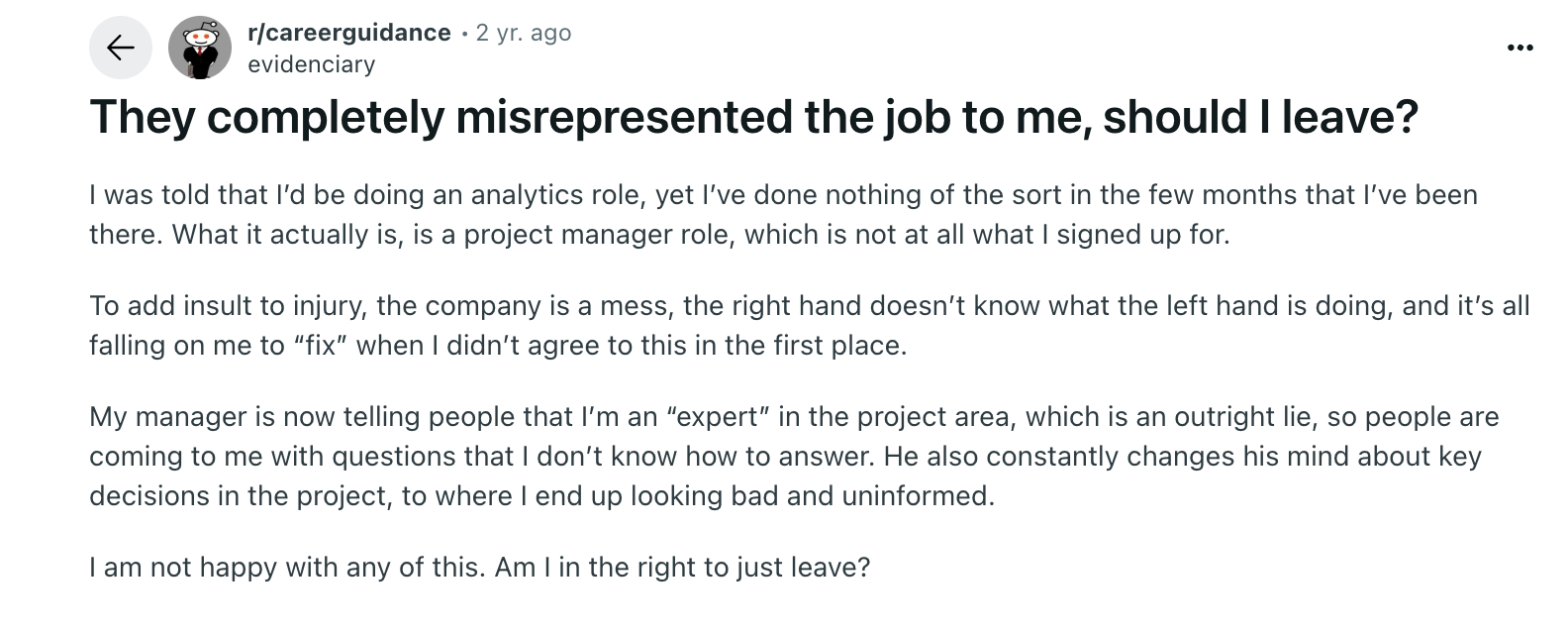
Nobody wins when job seekers fall for corporate catfishing. New hires quickly feel out of place or disillusioned, which kills morale and motivation. The company ends up having to start the entire hiring process from scratch, wasting time and money.
Signs You’ve Been Corporate Catfished
You can judge a lot by that gut feeling telling you something isn’t right or feels too good to be true. But with the current market, you should be grateful to even have a job, right? Wrong. If a company has misled you about the salary, hours, or duties, this could lead to more stress and distrust down the road.
Not sure if your situation qualifies? Here are some classic red flags to watch for:
False promises and expectations
You’ve landed a job that looks amazing on paper. The title fits, the responsibilities won’t give you impostor syndrome, and the flexibility means you can finally go on vacation. And let’s be honest, you’ll take what you can get in the current job market.
But then reality kicks in.
You’re assigned random tasks or stuck doing high-level work without the paycheck to match. Sometimes it’s a slow shift, other times it hits you before your first lunch break. A Resume Builder survey found 36% of hiring managers admit to lying during the hiring process (those are the honest ones), with 52% of this group saying they lie in the job description.
Unfortunately, job ads aren’t legally binding. They’re more like marketing brochures than contracts. Some companies even reuse old descriptions or copy-paste from other listings without tailoring them to the actual role.
What can you do?
- Ask yourself: Have your duties evolved naturally, or were they misrepresented from day one? And even if it doesn’t match your expectations, does the current work match your strengths and goals?
- Document the gaps if you feel your employer misled you. You can list what they promised versus what you’re doing. This will help guide a calm, professional conversation with your manager.
- Approach your manager for clarification on your expectations vs. the reality. This isn’t about confrontation; it’s about reaching an understanding or agreeing that the job isn’t right for you.
When “remote” means showing up in person
The pandemic forced workers into remote working — and many of us weren’t complaining. What’s not to love about ditching the never-ending commute, wearing sweats to your meetings, and being glued to your cat all day? The preference for remote jobs has shot up, with 46% of remote workers saying they’d quit if they had to return to the office.
And some employers are using this preference to their advantage.
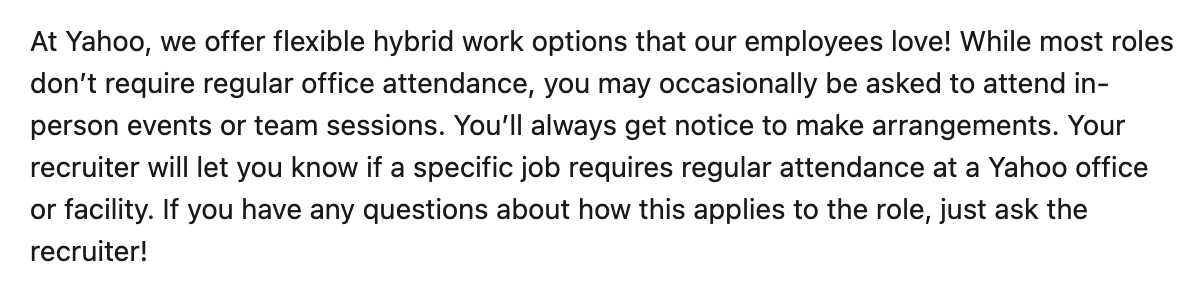
Here’s a common scenario. You’re upfront about wanting a remote job. The recruiter or job ad says it’s remote. You go through rounds of interviews, believing that’s the deal. Then out of nowhere comes a twist: “Oh, by the way, we do team days every week in the office,” or “We’re shifting to a hybrid model starting next month.”
Here’s a classic example of a “remote” job with a hybrid twist:

Or this company selling a fully remote job — but only if you’re prepared to travel:

And this isn’t always a well-intentioned miscommunication. Companies know the demand for remote roles is high, and don’t want to miss out on top-tier candidates. So they fudge the details early on and hope you’ll stick around once you’re in too deep. Sometimes they’ll even blame policy changes or onboarding requirements.
What can you do?
- Bring up the changes directly but diplomatically. Remind your employer of the terms discussed during the hiring process and offer a compromise if you’re open to occasional in-person days.
- Make your case and lead with results. Show how your work is getting done from home while focusing on impact (not preference) — it’s harder to argue against performance.
- Check your paperwork if they aren’t willing to compromise. If your contract or offer letter specifies a fully remote role, you’re within your rights to enforce that. Politely hold your ground based on what was agreed.
The rise of fake job listings
Taking corporate catfishing to a whole new level, ghost jobs will deceive you before you even get to the interview stage. Fake job ads aren’t scams in the traditional sense, as they’re often from legit companies. The catch? The role they’re advertising doesn’t actually exist.
If you think you’ve experienced this, you’re not alone. A Resume Builder survey found that 30% of companies have active fake listings. And according to a 2024 Greenhouse Report, 60% of US job seekers have suspected they’ve applied to a ghost job, with a huge 71% of Gen Z candidates claiming to have come across these deceptive listings.
So why would a company do this? Sometimes it’s about appearances. Posting a ton of jobs can make a company seem like it’s growing fast, which looks good to investors and competitors. Other times, it’s a strategic move to gather resumes, build a future hiring pipeline, or even remind current employees that they’re “easily replaceable” (gross, but true).
What can you do?
- Check the job’s timestamp and recent activity. If a listing is older than a few months with no updates, it could be stale. Most real openings don’t hang around that long.
- Cross-reference on the company site. If you can’t find the job on their official careers page, that’s a sign it might not be real.
- Reach out directly if you’re still on the fence. A quick email or call to HR can help confirm if the role is active or if you’re better off moving on — plus, you might get extra points for taking an active interest.
Is It Them or Is It You?
Time to play devil’s advocate — was the role really misrepresented, or are you just not a good fit? I’m not telling you to question your skills or expertise, but sometimes a job just isn’t a match, and that’s okay. It’s a hard truth to face, but it can help you reevaluate what you’re looking for in the future.
You may have even been unintentionally (or intentionally, no judgment) guilty of catfishing the company. Did you exaggerate key skills, fake credentials, or lean on your best friend as a “trusted” reference?
I get it, the job market is tough. But stretching the truth is often a lose-lose for everyone. The job doesn’t get done the way it should, and the employee often feels overwhelmed and out of place.
That said, don’t mix up feeling like a fraud and actually misrepresenting yourself. Impostor syndrome is incredibly common — that feeling that you don’t belong even when you’re more than qualified. That’s a mindset issue. Corporate catfishing, whether it’s from an employer or a job seeker, is active misrepresentation.
Not sure if it’s the job or you who needs to reevaluate? Ask yourself these questions:
- Have you disliked multiple jobs in a row?
- Are there any patterns in what you disliked about previous jobs?
- What would make you feel satisfied in your career?
- Does your current job fit your skills and objectives?
- Do you have a long-term goal or direction?
Once you understand where the disconnect is, you can take steps to course-correct. Maybe it means having a tough conversation with your boss. Perhaps it’s brushing up on certain skills, or maybe it’s time to shift to an entirely new industry. Whatever it is, you’re not stuck. You just need to be honest about what’s not working and why.
How to Spot and Avoid Corporate Catfishing
Don’t waste your time applying to companies that aren’t transparent or jobs that simply don’t exist. Here’s how to avoid being the latest victim of corporate catfishing:
1. Do your research
Doing your homework takes time, but so does wasting your energy on a job that won’t meet your expectations. You don’t need to go full detective mode, but you should know the basics, like what they do, their value, and how they treat people. Dig into their website and look up average pay ranges, even if it’s from another company in the same industry.
You can also put your expertise in social media stalking to good use. Head to their LinkedIn page, check how many people work there, where they’re based, and what content they post. Plus, have a quick Google search for recent press releases or controversies. These little steps reveal a lot about whether a company is legit or just really good at marketing.
2. Explore company reviews
Glassdoor, Indeed, and similar review platforms can be goldmines for spotting red flags (and getting some gossip). But they’re not perfect. While some companies stack the deck with glowing reviews, others get slammed by disgruntled ex-employees. So, look for patterns. Are there repeated complaints about leadership, burnout, or unclear expectations?
Try to find reviews posted close to the time you’re applying. A bunch of vague five-star reviews all posted in the same week? Probably not a coincidence. Reviews should help you get a sense of how the company treats its people, how transparent they are, and whether what they promise in job ads actually lines up with day-to-day reality.
3. Listen to former employees
If you want the real insider scoop, talk to the people who’ve lived it. Reddit, LinkedIn, and even X (formerly Twitter) can be revealing. Some employees share uncensored stories about toxic work cultures, broken promises, or unrealistic workloads.
Even better, find former or current employees on LinkedIn. Yes, reaching out can be daunting, but what’s the worst that could happen? Try something like: “Hello, I’m considering a role at X and would love to hear about your experience, especially around growth opportunities and company culture.” Keep it respectful, curious, and positive.
4. Pay attention in the interview rounds
Interviews aren’t just for employers to figure you out — it’s your chance to vet them. If the role they’re describing doesn’t match the listing, now’s the time to speak up. Politely say, “That’s interesting. I noticed the job ad mentioned X. Can you clarify how that fits into the role?” How they respond tells you a lot about their transparency.
Be aware of vague answers or anything that sounds too perfect. Ask about turnover, team dynamics, and how success is measured. If they dodge the question or over-promise, that’s a red flag. And watch for boundary-blurring phrases like “We’re a family” or weirdly personal questions — those can signal a culture where work-life balance is more talk than reality.
Final Thoughts
Corporate catfishing is a betrayal of trust, made worse by how hard it is to find a job right now. In a tough market, many job seekers are under immense pressure to say yes quickly, often ignoring red flags out of necessity. Companies that take advantage of this desperation by making false promises are exploiting people who are just trying to survive.
Job seekers deserve honesty, not bait-and-switch tactics. Until more companies lead with transparency, the best defense is to stay cautious, ask questions, and know your worth.
FAQ
What is the bait and switch in the hiring process?
The bait and switch in hiring happens when a company sells you a dream job during the interview, then hands you something very different once you’ve signed on. Maybe they promised remote work, but now want you in the office three days a week. Or they hyped a creative role, and you’re stuck doing mundane tasks. The worst case scenario? By the time you realize it, you’ve already quit your last job and committed to this new one.
What’s career catfishing?
Career catfishing is when job seekers accept an offer but intentionally ghost the job before day one. This trend is popular among Gen Z as a quiet protest against misleading job ads, vague responsibilities, or red flags spotted late in the hiring process. Instead of showing up to a job they already know isn’t a good fit, some candidates simply disappear.
It’s forcing employers to rethink how transparent and appealing their recruitment and culture are to a new generation of job seekers. But not everyone is happy. Our LinkedIn poll revealed that 63% found it unprofessional, while 17% say companies are also guilty of ghosting.
How can you tell someone is catfishing you?
Watch for vague answers, inconsistent job descriptions, or shifting expectations as you move through the interview process. If the role starts sounding less like the one you applied for, press for details. Also, be cautious if the recruiter is overly eager, rushes you through interviews, or avoids questions about team culture, workload, or management style. If things feel too good to be true or just off, listen to your gut.
What to do when you’ve been corporate catfished?
First, document everything by saving job descriptions, emails, and notes from interviews. Then, schedule a professional and direct conversation with your manager to clarify the disconnect and ask for alignment. If things don’t improve, or you can’t reach a compromise, you may have to consider searching for a new job. And remember, you didn’t mess up — they misled you. It’s frustrating, but this experience can sharpen your instincts for spotting better opportunities moving forward.
Is corporate catfishing legal?
In most cases, corporate catfishing is not illegal. Job descriptions aren’t legally binding, roles are ever-changing, and companies can get away with stretching the truth (as long as it’s not outright fraud or discrimination). That’s why you should ask specific questions during interviews and get important terms (like remote work, salary, or scope of duties) in writing. It may not guarantee legal protection, but it gives you something to reference if things go sideways.

Upload or drop your resume to get started
Upload your resume to get started
Score my resume

Lauren Bedford is a seasoned writer with a track record of helping thousands of readers find practical solutions over the past five years. She's tackled a range of topics, always striving to simplify complex jargon. At Rezi, Lauren crafts genuine and actionable content that guides readers in creating standout resumes to land their dream jobs.