
Other
Why Ghost Jobs Exist & How to Spot Them
Learn what ghost jobs are, why companies post them, how to spot fake listings, and what to do if you suspect a job isn’t real.

Published on
July 8, 2025
Updated on
July 8, 2025
Ghost jobs are job listings that look legit but were never meant to be filled. Companies post them because they want to build a talent pipeline, appear to be growing, or keep current employees on edge. You can detect a ghost job by looking for vague descriptions, outdated postings, or listings that don’t appear on the company’s website. Before applying, check GhostJobs.io or Reddit’s Ghost Job List to see if the company has a reputation for fake listings. If you do apply, customize your resume, follow up once, and keep your search moving.
Ever applied for a job, felt like it was the one, talked to your friends about it, and then… nothing? No call, no email, just silence. It’s like being ghosted after a great first date: they asked all the right questions, seemed interested, then disappeared. Only this time, it’s not your heart on the line — it’s your paycheck.
Chances are, you ran into a ghost job — a posting that looks real but was never actually meant to be filled. Annoying? Definitely. But avoidable? Absolutely.
This guide will walk you through:
- What ghost jobs are.
- How to spot the red flags.
- Why companies post them in the first place.
If you’re wondering whether the job was fake or your resume just got ghosted, try refreshing your application with the Free AI Resume Builder. You can also check out these helpful reads:
- What to Do When Unemployed: 20 Practical Tips
- Why Is the Job Market So Bad in the US?
- I Can’t Find a Job: What to Do When You Can’t Get Hired
- How to Get A Job Fast
What Are Ghost Jobs?
Ghost jobs are roles companies post but don’t actually plan to fill. These listings can sit online for weeks or months with no real urgency or intention to hire.
Why post them? Sometimes it’s to collect resumes, look like the company’s growing, or keep investors happy. Whatever the reason, for job seekers, they’re frustrating — and more common than you’d think.
According to hiring platform Greenhouse, as many as 22% of online job listings may be ghost jobs. Even worse, a 2024 ResumeBuilder survey found that nearly 40% of hiring managers admitted to posting fake openings, with 85% going so far as to interview candidates despite having no plans to hire.
How to Identify (And Avoid) Ghost Jobs
Here’s a summary of how to spot ghost jobs:
- Skip listings that don’t appear on the company’s official careers page.
- Avoid roles that haven’t been updated in over a month.
- Be cautious of vague or generic job descriptions.
- Prioritize recently added or refreshed postings.
- Reach out to hiring contacts to confirm the role is active.
- Tap into your network for leads on real, open positions.
Not all job listings are created equal. Ghost jobs can be sneaky, but there are a few common signs that can help you figure out what’s real and what’s just for show.
Watch out for these giveaways to steer clear of the time-wasters:
1. It’s not listed on the company’s website
If you find a job on a third-party site but can’t track it down on the company’s official careers page, that’s a red flag. Sometimes, listings stay active on job boards long after the position has been filled or canceled.
What you should do:
- Always cross-check job listings with the company’s official website.
- Check their LinkedIn or social media for recent hiring activity to confirm it’s real.
2. The job was posted a long time ago
If a job has been sitting online for more than a month, chances are it’s either been filled quietly or put on the back burner (or forgotten about). Some listings just never get taken down — especially on third-party sites — even when the company’s no longer hiring.
What you should do:
- Prioritize listings published within the last 30 days — the fresher, the better.
- Use tools like the Rezi AI Job Search, which makes it easy to see exactly when a job was posted.
3. The job description is vague or overly generic
If the job title is something broad like “Customer Service Role” and the description reads like a template, it’s suspicious. Legitimate postings usually include clear responsibilities, qualifications, and a sense of the team or department.
What you should do:
- Look for specific details: what you’ll be doing, who you’ll report to, and what qualifications are needed.
- If it’s all buzzwords and no substance, it’s probably not a real opportunity.
4. No response from a hiring contact
You apply. You follow up. You reach out to the hiring manager. And nothing. While it’s normal not to hear back from some jobs, total silence, especially after interviews, might mean the role was never actually open.
What you should do:
- Don’t be afraid to reach out to the hiring manager on LinkedIn for clarification.
- Ask thoughtful questions like, “What’s the hiring timeline?” or “Is this a new role or a backfill?”
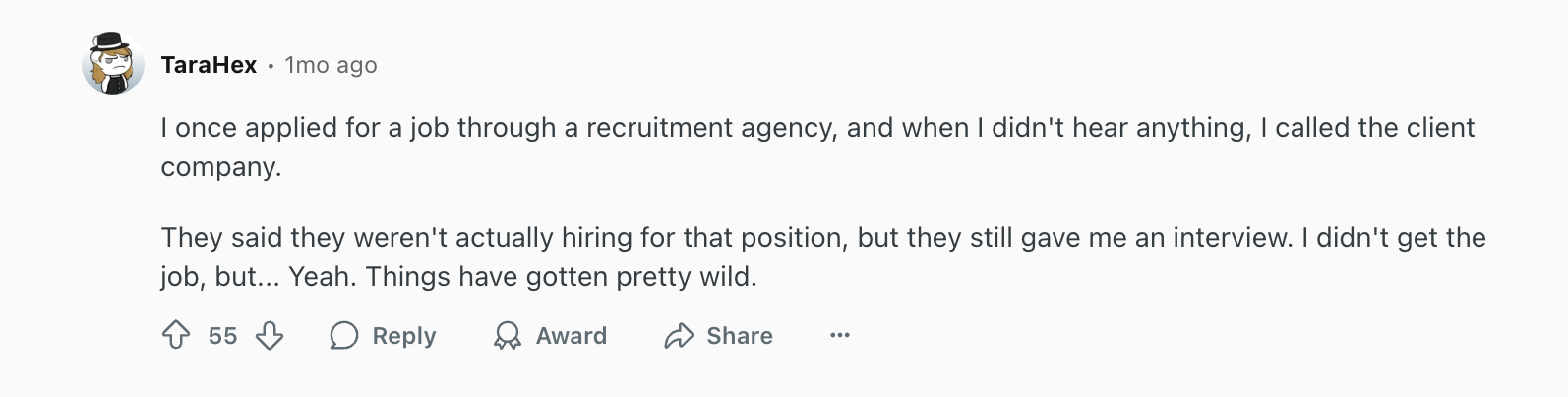
One Reddit user shared their experience with ghost jobs:
5. You’ve seen the same listing multiple times
If a job keeps popping up every few weeks like clockwork, that’s a red flag, especially for specialized or senior-level roles. It could be a ghost job, or it might be an evergreen posting — a listing that remains open because the company regularly needs to fill that type of position (like sales or customer service).
What you should do:
- Research the company and role to see if it’s typical for the industry to have a high turnover.
- If the role is niche or senior-level and keeps getting reposted, proceed with caution — it might not be a real opening.
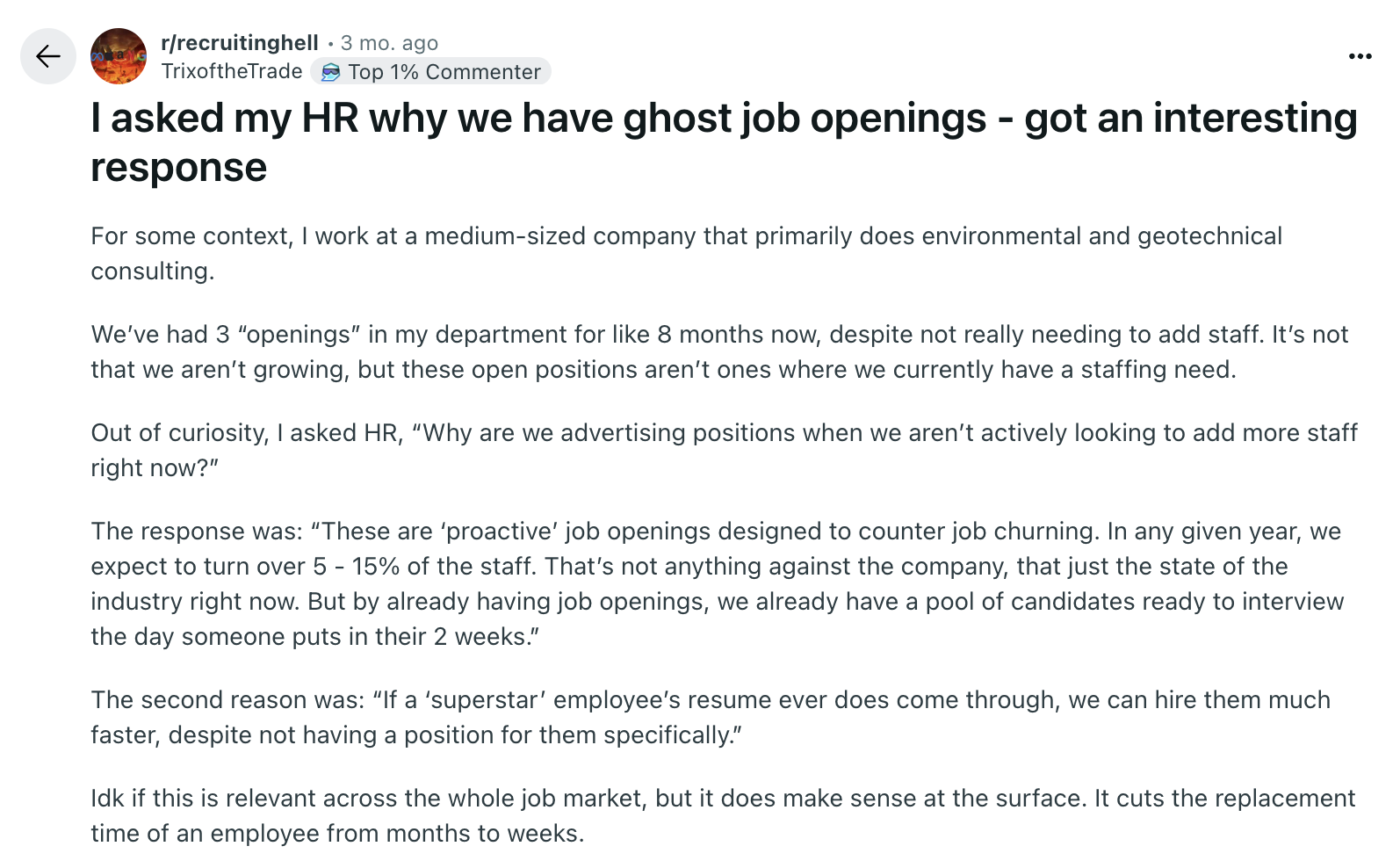
A Reddit user explained why their company posts evergreen positions:

6. Leverage your professional network
Stop relying solely on job boards. Talking to people in your industry can give you the inside scoop on which roles are real and worth your time.
What you should do:
- Reach out to friends, former coworkers, or mentors for any leads.
- Ask for referrals or informational interviews to learn about real openings (even the ones that haven’t been posted yet).
A Reddit commenter pointed out how valuable it is to talk to people you know when job hunting:

Why Do Companies Post Ghost Jobs?
Not every ghost job is posted with bad intentions — some are strategic, others accidental, and a few just plain shady.
Here’s a breakdown of the most common motivations:
- To build a talent pipeline. Some companies keep listings up to gather strong candidates for future openings, especially during slow or uncertain periods.
- To attract standout talent. If someone exceptional applies, they might make room even if they weren’t planning to hire.
- To look like they’re growing. Job listings show their growth to investors, clients, and employees.
- By accident. Sometimes the role’s already filled, but the post was never taken down or keeps circulating on third-party job boards.
- To pressure employees. In toxic cultures, fake listings are used to make staff feel replaceable, so they’d work harder or think twice before asking for a promotion. The Resume Builder 2024 survey found 62% of ghost jobs were posted for this reason.
- To justify internal hires. A job might already be promised to someone in-house, but external posts are used to meet HR policies or compare candidates.
One Reddit user asked their company why they’re posting ghost jobs:
Eric unknowingly applied for a ghost job at Gartner and only realized it during the interview:
“In the interview, they said they didn’t have any positions open at the time, but they were looking to have a chat now and see if a position becomes open in the future. It was so frustrating, because you’re cornered then — you still want to be polite because you’d like to be considered later, but you’ve wasted half an hour (and more in preparing for the interview) for a job that doesn’t exist.”
Which Companies Post Ghost Jobs?
When you’re unsure about a job listing’s legitimacy, tools are available to see if the company has a track record of posting ghost jobs. Here’s where to look:
GhostJobs.io
GhostJobs.io monitors job boards and flags listings that seem fake or inactive. It takes data from multiple sources and highlights companies with questionable posting behavior.
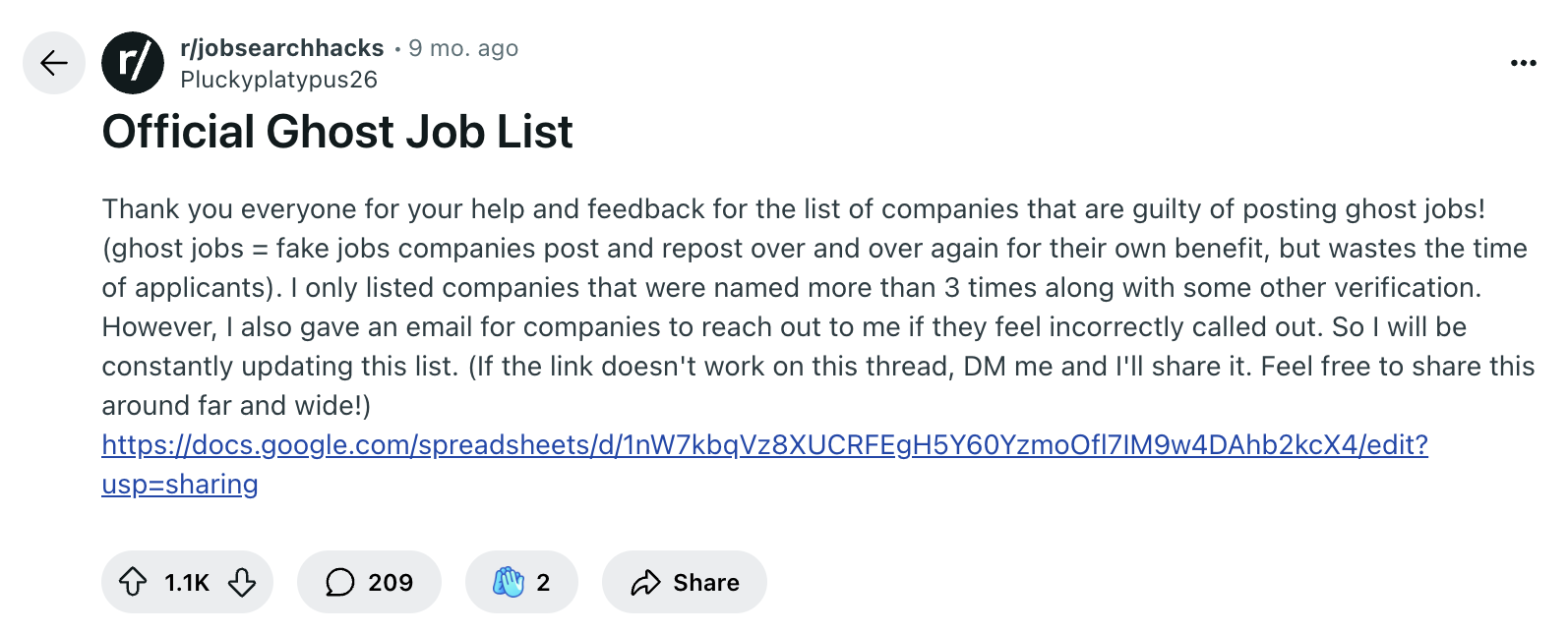
Reddit’s Ghost Job List
Created by a frustrated Reddit user and maintained by the community, the Reddit Ghost Job List spreadsheet flags companies that have been repeatedly accused of posting ghost jobs. It’s regularly updated, and if a company disputes its inclusion, the creator is open to removing it. The list includes well-known names like Accenture, CVS, and Dice.
Final Thoughts: Should You Still Apply for a Ghost Job?
You should still apply for ghost jobs, but be smart about it. If it’s a company you’re genuinely excited about or a role that feels perfect for you, it’s worth a shot. Even if the position isn’t active now, your application might end up with someone who remembers you later.
Just don’t wait around. Tailor your resume to match the role, write a thoughtful cover letter that shows your interest, and reach out to a hiring manager or a team member on LinkedIn. A simple, well-timed message can help you stand out — even if the job itself goes nowhere.
Apply, follow up once, and then keep moving forward.
FAQ
Where do most employers advertise job openings?
Most employers post jobs on sites like LinkedIn and Indeed, since they get the most traffic. But you’ll also find openings on company websites, niche job boards, social media pages, and through recruiters. If you want a quick way to browse company websites with active job listings, check out the Rezi AI Job Search — it pulls everything together in one place.
How do ghost jobs impact the overall job market?
Ghost jobs throw off the job market by making it look like there are more openings than there really are. This wastes time for job seekers, messes with hiring data, and creates frustration all around. It also leads to burnout and misleads policymakers about how strong the job market actually is.
What is job ghosting (as a candidate or employer)?
Job ghosting is when someone drops out of the hiring process without a word. Employers ghost by going silent after interviews, while candidates do it by skipping interviews or not showing up after accepting a job. It happens more than you’d think, but it’s unprofessional on both sides.
What happens if you ghost a job?
If you accept a job and don’t show up on the first day or stop communicating mid-process, it can hurt your reputation. Word gets around, especially within the same industry. It’s always better to be upfront and let the employer know if you’ve changed your mind.
What are some jobs that don’t require interviews?
Jobs without interviews are usually fast-hire or gig-based. Think food delivery (like DoorDash or Uber Eats), warehouse work, remote data entry, freelancing, or temp roles through staffing agencies. Some retail and seasonal jobs also skip interviews when they’re in a rush to staff up. You’ll likely still need to meet basic requirements, but the process is quick and low-pressure.
What is the ghost job regulation?
There’s no federal law banning ghost jobs yet, but some states are starting to take action. In January 2025, Kentucky introduced a bill to ban ghost posting and require employers to say whether a role is open now or just for future hiring. States like Colorado and California are also pushing for more transparency in job ads, which could make ghost jobs easier to spot. Job platforms are stepping in too, using tools and user reports to flag outdated or misleading listings.

Upload or drop your resume to get started
Upload your resume to get started
Score my resume

Sarah Coghlan is a writer and editor passionate about making resume and career advice clear and accessible to all. Based in Barcelona, her goal is to help job seekers create standout resumes and navigate the job search process with confidence and ease.