Resume
How Many Pages Does a Good Resume Have?
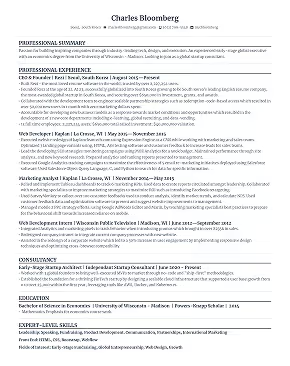
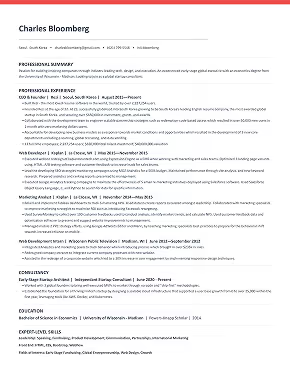
A good resume is typically one page long for most professionals, especially if you have under 10 years of experience. However, if you’re a senior professional, executive, or academic with extensive experience, a two-page resume is perfectly acceptable — and sometimes even necessary.


Published on
October 27, 2025
Updated on
October 27, 2025
The ideal resume length depends on your level of experience and the type of job you’re applying for, but in most cases, one page is best.
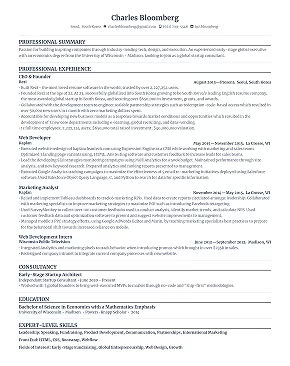
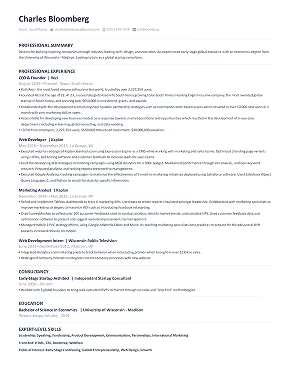
For students, recent graduates, and early-career professionals, a one-page resume is the standard. Recruiters usually spend less than 30 seconds scanning a resume, so keeping it concise helps ensure they actually read the most important information — your skills, achievements, and education.
A two-page resume is appropriate if you have 10+ years of experience, multiple positions with significant accomplishments, or if you’re applying for senior, managerial, or specialized technical roles. In such cases, trying to fit everything into one page could make your resume cramped and difficult to read.
An exception exists for academics, researchers, or scientists, who often use multi-page CVs to list publications, teaching experience, grants, and other scholarly work. However, that’s a CV, not a standard job-market resume.
Here are some quick guidelines to help you decide:
- Stick to one page if you’re early in your career or switching fields.
- Use two pages if your experience genuinely requires more space — but make sure every line adds value.
- Avoid going beyond two pages unless you’re in academia or research.
Finally, don’t pad your resume just to fill space. Focus on relevance. Employers care more about quality and clarity than quantity — a focused one-page resume usually makes a stronger impression than a two-page one filled with fluff.
At Rezi, most resumes created by our users are one page by default, since that’s what works best for the majority of job seekers. Still, our templates and AI features make it easy to expand to a second page if your career history justifies it — so your resume always fits you, not the other way around.

Michael Tomaszewski, CPRW, is a resume and career advice expert with 9+ years of experience in the hiring industry. He has helped millions of readers and dozens of one-on-one clients create resumes and cover letters that *finally* do their talents and accomplishments justice.