
Resume
Fact Checked
Should a Resume Summary Be Written in the First Person? [Quick Answer]
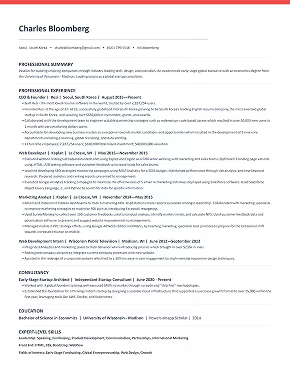
No, your resume summary should not be written in the first person, even though it refers to you. It’s standard practice to omit personal pronouns like “I” or “my” while still keeping the tone personal and direct. For example, instead of writing “I managed a team of five,” you’d write “Managed a team of five.”

Published on
October 13, 2025
Updated on
October 13, 2025
A resume summary should be written in an implied first person — that is, it should sound as if you’re describing yourself, but without actually using “I,” “me,” or “my.” This approach keeps your summary professional, concise, and aligned with standard resume conventions.
Here’s why this style works best:
- It's professional.
Resumes are formal documents, and omitting pronouns helps maintain a professional tone. Writing “I’m a marketing professional with five years of experience” sounds more like a cover letter, whereas “Marketing professional with five years of experience” immediately looks cleaner and more polished. - It's consistent with other sections.
The rest of your resume (like your experience section) also avoids personal pronouns. You wouldn’t write “I managed projects” in your bullet points — you’d simply write “Managed projects.” Keeping the same tone throughout ensures your resume feels cohesive. - It's concise and impactful.
Dropping pronouns makes sentences shorter and more action-oriented. Resume readers — especially recruiters who skim — prefer summaries that get straight to the point.
Here’s a comparison for clarity:
- First-person (less effective):
“I’m a detail-oriented financial analyst with experience in forecasting and budgeting.” - Implied first-person (recommended):
“Detail-oriented financial analyst with experience in forecasting and budgeting.”
That second version says the exact same thing but looks sharper and fits the professional format hiring managers expect.
The only exception would be if you’re writing a personal profile or bio (for example, on LinkedIn or a company website), where a true first-person tone feels more natural and conversational. For resumes, generally stick with the implied first person.
A bit of nuance:
It might not hurt to write a summary in the first person if you're applying for a more relaxed kind of job, and especially if you're also applying directly to the hiring decision-maker. In some creative fields, companies will possibly appreciate the more "personal" and less "robotic" tone of a resume summary (and the whole resume, for that matter). But it's more about it "not hurting" than actually helping you.
The implied first person is your safest bet.

Upload or drop your resume to get started
Upload your resume to get started
Score my resume

Michael Tomaszewski, CPRW, is a resume and career advice expert with 9+ years of experience in the hiring industry. He has helped millions of readers and dozens of one-on-one clients create resumes and cover letters that *finally* do their talents and accomplishments justice.

%2520(1).webp)