
Human Resources Resumes
9+ Compliance Manager Resume Examples & Tips for 2026
Customize any of these resumes in minutes using our free AI-powered resume builder.
“Rezi is super upfront and continues to improve over time. I've recommended Rezi to several of my friends and colleagues. I just love this product so much.”

Ricky M.
Software Engineer

“Rezi is super upfront and continues to improve over time. I've recommended Rezi to several of my friends and colleagues. I just love this product so much.”
Ricky M.
Software Engineer
Helping users land jobs at 1,000+ companies such as














Here's something I see constantly when reviewing compliance manager resumes: they read like a copy-paste of regulatory frameworks and legal jargon. Lots of references to SOX, HIPAA, or AML — but almost zero indication of what the person actually did with all that knowledge. The resume ends up sounding like a compliance textbook, not a compelling career narrative.
A strong compliance manager resume needs to show that you don't just understand regulations — you build programs, drive organizational change, reduce risk exposure, and navigate the messy reality of keeping a company on the right side of the law while still letting it operate effectively.
And this is exactly what you'll learn from this article. Inside, you'll find:
- Examples of 9+ compliance manager resumes, covering different industries and specializations.
- Insider tips about what really matters to recruiters hiring for compliance roles.
- A step-by-step guide for building a compliance manager resume that actually lands interviews.
Sample Compliance Manager Resumes
Take a look at some standout sample resumes for compliance managers across different specializations and career stages. Find the one that best matches your profile and use it as a starting point — just make sure to adjust everything to reflect your own experience and accomplishments.
Junior Compliance Manager
A Junior Compliance Manager resume should emphasize your foundational knowledge of regulatory frameworks, any compliance-related coursework or internships, and early career wins. Highlight your ability to conduct audits, assist with policy development, and support senior compliance staff. Certifications in progress, attention to detail, and strong research skills will help set you apart from other early-career candidates.
Mid-Level Compliance Manager
For a Mid-Level Compliance Manager, your resume should showcase a growing track record of managing compliance programs independently. Emphasize your experience conducting risk assessments, leading internal audits, developing training programs, and responding to regulatory inquiries. Demonstrate your ability to collaborate cross-functionally and show measurable improvements in compliance metrics, such as reduced findings or faster remediation timelines.
Senior Compliance Manager
A Senior Compliance Manager resume should demonstrate strategic leadership in building and overseeing enterprise-wide compliance programs. Highlight your experience managing teams, advising executive leadership, navigating complex regulatory examinations, and driving organizational culture change. Showcase specific outcomes — reduced regulatory penalties, successful audit results, or enterprise-wide policy overhauls — and include advanced certifications like CCEP or CRCM.
Regulatory Compliance Manager
A Regulatory Compliance Manager resume should focus on your deep expertise in specific regulatory frameworks — whether FDA, EPA, FCC, or others relevant to your industry. Highlight your experience interpreting new regulations, conducting gap analyses, and implementing changes to maintain compliance. Show your ability to liaise with regulatory bodies and detail instances where you successfully navigated inspections or regulatory changes without business disruption.
Corporate Compliance Manager
For a Corporate Compliance Manager, emphasize your experience developing and enforcing company-wide compliance policies, managing ethics hotlines, and overseeing investigations. Your resume should demonstrate your ability to align compliance programs with corporate governance objectives. Highlight cross-departmental collaboration, board-level reporting, and your role in fostering a culture of integrity across the organization.
Healthcare Compliance Manager
A Healthcare Compliance Manager resume should underscore your knowledge of HIPAA, Stark Law, Anti-Kickback Statute, and CMS regulations. Highlight your experience managing compliance programs within hospitals, health systems, or healthcare companies. Showcase your ability to conduct audits, manage incident reporting, develop staff training, and ensure patient privacy protections. Certifications like CHC are particularly valuable here.
Financial Compliance Manager
For a Financial Compliance Manager, your resume should spotlight your expertise in regulations like BSA/AML, SOX, Dodd-Frank, or MiFID II. Emphasize your experience with transaction monitoring, suspicious activity reporting, and regulatory examinations. Detail your track record of building compliance frameworks that satisfy regulators while enabling business growth. Certifications such as CAMS or CRCM will strengthen your candidacy significantly.
Risk and Compliance Manager
A Risk and Compliance Manager resume should highlight your dual expertise in identifying organizational risks and ensuring regulatory adherence. Showcase your experience building risk assessment frameworks, conducting enterprise risk analyses, and integrating risk management with compliance programs. Emphasize your ability to quantify risk exposure, implement mitigation strategies, and present findings to senior leadership and board committees.
Ethics and Compliance Manager
For an Ethics and Compliance Manager, emphasize your experience designing and administering ethics programs, managing whistleblower and reporting mechanisms, and conducting internal investigations. Your resume should showcase your ability to build a culture of ethical behavior through training, policy development, and leadership engagement. Highlight your communication skills and experience handling sensitive matters with discretion and thoroughness.
How to Write a Compliance Manager Resume
Short answer:
Focus on your regulatory expertise, program-building accomplishments, and the measurable impact you've had on reducing organizational risk. Create a professional header with your name and contact details. Right below, write a 2–3 sentence resume summary outlining your most significant compliance achievements. Describe your work history in reverse-chronological order, focusing on programs you built, audits you led, and regulatory outcomes. Then, cover your education, including professional certifications, list key skills, and add extra sections such as publications, professional affiliations, or speaking engagements.
Include all the necessary sections in the correct order
Here's the correct order of sections for most compliance manager resumes:
- Header with contact information
- Resume summary or objective
- Work experience
- Education
- Skills
- Certifications
Depending on your current career situation, you can also throw in some additional sections. For instance:
- Professional affiliations (e.g., SCCE, ACAMS)
- Volunteer experience
- Conference presentations or speaking engagements
- Publications or thought leadership articles
- Languages (especially relevant for global compliance roles)
Include everything that shows you're capable of doing what the job requires. Make every section count. If it doesn't clearly highlight your compliance expertise or leadership, it doesn't belong on your resume.
If you have less than five years of relevant experience, keep your resume 1-page long. For more senior compliance managers, a two-page resume is fine.
More details here: What Sections to Include on Your Resume?
Now, I'll give you a high-level overview of how to write each section, going from top to bottom. Well… almost. The only exception is the resume summary section. While it comes right after your contact info, it's actually easier to write it last. More on that in a sec.
Create a professional resume header
- Start with your name and contact information. Include the basics: your full name, phone number, professional email address, location, and LinkedIn profile. A link to a professional portfolio or a personal website featuring compliance thought leadership can also add credibility.
- Right below your name, clearly state your professional title (e.g., Senior Compliance Manager or Healthcare Compliance Manager). This sets expectations and immediately communicates your specialization.
For more information, see: How to Create a Resume Header
Describe your work history
- Use reverse-chronological order. List your positions starting with the current or the most recent one.
- In each entry, include your job title, company name, location, and dates of employment.
- Below each position, write 3–7 bullet points — the more recent the position, the more bullet points you should include. Describe your responsibilities and, more importantly, your accomplishments.
- Use action verbs and quantify your achievements (e.g., "Developed and implemented a company-wide AML compliance program that reduced suspicious activity report processing time by 35% and resulted in zero regulatory findings during the 2024 examination").
- If specific regulatory frameworks, compliance methodologies, or tools were central to your roles (e.g., SOX compliance, GRC platforms, risk-based auditing), weave these details into your descriptions. This will also help you pass ATS scans.
Learn more about the best practices of this section with our detailed guide on how to describe your work experience on a resume.
List your degrees and detail professional learning
- In the education section, list your highest degree first, including the degree type, major, and institution.
- If you have some relevant work experience, include only the name of your school and the degree you got. If you're an entry-level candidate, you can add more detail — list relevant coursework in regulatory affairs, business law, or risk management, along with extracurricular activities and academic achievements.
- If you have compliance certifications (e.g., CCEP, CHC, CAMS, CRCM), either include them in an "Education and Certifications" section, or create a separate "Certifications" section and place it right below.
For an in-depth guide on how to describe your education on a resume, see: How to List Education on a Resume
List your most relevant skills in the skills section
- Include a mix of technical skills (e.g., GRC platforms, data analytics tools) and regulatory knowledge areas (e.g., AML/BSA, HIPAA, SOX) that you are proficient in.
- Add in some soft skills such as leadership, communication, and ethical judgment. These demonstrate your capacity to manage compliance programs and influence organizational behavior.
- You can use two separate subsections, one for hard skills, one for soft skills, or just list all the skills under one heading.
- Match your skills to the description of the job you're applying for. I'm not saying you should just dump all the skills the compliance position requires (especially if you don't really have them), but highlight those areas of expertise where your knowledge overlaps with the job ad.
Need some inspiration to get started? Here are some good skills to feature on your compliance manager resume.
Software and tools for compliance manager resumes:
- SAP GRC
- MetricStream
- NAVEX Global
- RSA Archer
- LogicGate
- Thomson Reuters CLEAR
- Microsoft Excel (advanced)
- Tableau / Power BI
- LexisNexis
- ServiceNow GRC
Regulatory frameworks and compliance areas:
- Anti-Money Laundering (AML/BSA)
- Sarbanes-Oxley (SOX)
- HIPAA
- GDPR
- Dodd-Frank Act
- FCPA / UK Bribery Act
- OFAC Sanctions
- ISO 37301 (Compliance Management Systems)
- Know Your Customer (KYC)
- Enterprise Risk Management (ERM)
Key soft skills for compliance managers:
- Ethical Judgment
- Communication
- Attention to Detail
- Analytical Thinking
- Leadership
- Stakeholder Management
- Problem-Solving
- Discretion and Confidentiality
- Negotiation
- Adaptability
For a full-blown guide on listing skills on a resume, visit: How to Put Skills on a Resume
Use additional sections as further proof of your fit
Additional sections add depth to your resume and back up your claimed expertise. Good examples of extra sections to add to a compliance manager resume are:
- Professional affiliations. Membership in organizations like SCCE, ACAMS, or the Ethics & Compliance Initiative (ECI) can showcase your commitment to the profession and your ongoing development.
- Publications and thought leadership. If you've written articles on compliance topics, contributed to industry journals, or authored internal white papers on regulatory strategy, list them in a separate section.
- Speaking engagements and conferences. If you've presented at compliance summits or industry events, that's a strong signal of expertise. Even listing conferences you've attended shows you're engaged with current trends.
- Languages. For global compliance roles, fluency in multiple languages can be a significant asset — especially when dealing with international regulations or cross-border investigations.
Highlight the most relevant information in a resume summary
Once you're done writing your compliance manager resume, give it a full read. Pick the most relevant information and compile it into a summary paragraph. Place it right under the resume header.
- Be brief and to-the-point. In 3–4 sentences, sum up your career highlights, core competencies, and what you bring to the table. Consider this your chance to answer, "Why should you hire me?" Tailor this section to match the employer's needs outlined in the job description.
- Use value-oriented language. Focus on how you can add value to the potential employer, mentioning specific outcomes like reduced regulatory findings, successful program implementations, or audit results you've achieved in the past.
Once you've completed the core sections of your resume, you can use Rezi AI Resume Summary Generator to automatically create a powerful summary, tailored to the job you're applying for. All you need to do is add the position and skills you want to highlight. The AI writer will do the rest.
More information here: How to Write a Job-Winning Resume Summary (with Examples)
For finishing touches, make sure your resume looks professional
- Use a clean and tidy resume format. Ensure your compliance manager resume is easily readable, with a professional font, consistent formatting, and clear section headings. Avoid overloading it with dense text or fancy design elements that could distract from the content and confuse resume screening software.
- Aim for a balance between detail and conciseness. If you're a junior or entry-level candidate, keep your resume to a single page. Experienced compliance managers can extend their resumes to two pages, but still need to make sure every word conveys value.
Learn more about proper resume formatting here: How to Format a Resume & What Standard Resume Format to Use
What Makes Compliance Manager Resumes Different
In short: the emphasis on regulatory expertise, risk reduction, and the ability to influence organizational behavior — without being the one who actually runs the business.
This is also what many compliance managers get wrong on their resumes. Hiring decision-makers won't be impressed with a laundry list of regulations you're familiar with. They need to see how your work protected the organization, reduced exposure, and created measurable compliance outcomes — that's what convinces them you'll deliver results in their environment too.
Focus on program building, not just policy knowledge
Compliance managers are expected to do far more than understand the rules. You're expected to design, implement, and continuously improve compliance programs that actually work in practice — not just on paper.
What it means for you:
- Showcase your experience building compliance programs from the ground up or overhauling existing ones. Detail what you created — policies, training curricula, monitoring systems, reporting structures — and the outcomes those programs produced.
- Highlight your ability to translate complex regulatory requirements into practical, actionable processes that employees across the organization can follow.
Focus on regulatory outcomes and risk reduction
Quantifying achievements matters in every resume, but in compliance, it's the difference between sounding competent and sounding indispensable.
What it means for you:
- Detail the success of your compliance efforts through tangible metrics. For example, percentage reduction in audit findings, number of regulatory examinations passed without action items, dollar amounts of fines avoided, or improvements in compliance training completion rates.
- Mention the scope and scale of compliance programs you managed — including the number of employees covered, jurisdictions involved, or regulatory bodies you interfaced with.
Focus on cross-functional influence
Unlike many roles where you manage your own team and deliverables, compliance managers must influence departments they don't directly control — legal, operations, IT, HR, finance. Hiring managers want to see evidence that you can drive compliance adoption across the entire organization.
What this means for you:
- Describe how you partnered with other departments to implement compliance initiatives. Did you work with IT on data privacy controls? Collaborate with HR on code of conduct training? Coordinate with finance on SOX controls?
- Highlight your stakeholder management skills, including any experience reporting to boards, audit committees, or regulatory bodies directly.
Focus on staying current with evolving regulations
Regulations change constantly, and a compliance manager who was great five years ago but hasn't kept up is a liability. Your resume needs to show that you're on top of the regulatory landscape and proactively adapting.
What this means for you:
- Highlight recent certifications, continuing education, or professional development activities that demonstrate you're current with regulatory changes in your industry.
- Describe instances where you proactively identified upcoming regulatory changes and led the organization's preparation efforts — rather than scrambling to react after the fact.
Focus on investigation and remediation experience
Compliance isn't just about prevention — it's also about responding when things go wrong. Hiring managers highly value candidates who have handled investigations, regulatory inquiries, and remediation efforts.
What this means for you:
- Detail your experience managing internal investigations, responding to whistleblower reports, or coordinating with external counsel during regulatory inquiries.
- Describe remediation efforts you led — corrective action plans, enhanced monitoring, or process redesigns — and the outcomes they achieved.
Bonus Resources for Compliance Managers
This isn't going to be a game-changer for you if you need a resume now. But —
I want you to treat your career holistically. These resources will help you sharpen your compliance expertise, add depth to your future resumes, and keep you current with the regulatory landscape that's always shifting.
Professional associations and networks
Society of Corporate Compliance and Ethics (SCCE)
SCCE is one of the premier professional organizations for compliance and ethics professionals. It offers certifications (CCEP, CHC, CCEP-I), conferences, webinars, and an extensive library of resources to help you grow in the field.
Association of Certified Anti-Money Laundering Specialists (ACAMS)
If you work in financial compliance, ACAMS is essential. It offers the globally recognized CAMS certification, along with training, events, and a network of over 100,000 members focused on financial crime prevention.
Ethics & Compliance Initiative (ECI)
ECI is a leading research and membership organization dedicated to advancing high-quality ethics and compliance programs. Their research reports and benchmarking data are invaluable for compliance professionals.
Online learning platforms
Coursera & edX
Both platforms offer courses on regulatory compliance, risk management, data privacy, and corporate governance — often developed by top universities. These are great for deepening specialized knowledge or preparing for certifications.
LinkedIn Learning
With a focus on professional development, LinkedIn Learning provides courses on compliance management, ethics, risk assessment, and relevant software tools — all designed to enhance your career prospects.
Compliance Week
Compliance Week offers news, analysis, webinars, and events covering corporate governance, risk management, and compliance. Their content is practical and directly relevant to the challenges compliance managers face daily.
Publications
Compliance Week Magazine
A go-to publication for compliance, governance, and risk professionals. It covers regulatory developments, enforcement actions, and best practices through in-depth articles and case studies.
Compliance Today (SCCE)
Published by SCCE, this magazine offers practical guidance, expert interviews, and insights across all compliance specializations — from healthcare to financial services to general corporate compliance.
JD Supra
A platform where law firms and compliance experts publish regulatory updates, analysis, and thought leadership. It's an excellent way to stay current with enforcement trends and regulatory interpretations across industries.
Tools and software reviews
Capterra & G2
Both websites provide extensive reviews and comparisons of GRC (governance, risk, and compliance) software, helping you choose the right tools based on features, pricing, and user feedback.
Gartner
Gartner's research and Magic Quadrant reports on GRC platforms and compliance solutions are invaluable for understanding the technology landscape and making informed decisions about compliance tools.
Summary
Here's what you need to know about writing a compliance manager resume:
- Structure your compliance manager resume with essential sections in this order: Header, Resume Summary or Objective, Work Experience, Education, Skills, and Certifications. If relevant, add extra sections like Professional Affiliations, Publications, or Speaking Engagements.
- Include a professional header with your name, contact information, and professional title that reflects your compliance specialization.
- Describe your work history in reverse-chronological order, emphasizing compliance programs you built, audits you led, and regulatory outcomes you achieved — with quantifiable metrics.
- In the education section, list your highest degree at the top. List compliance certifications (CCEP, CHC, CAMS, CRCM) either in the education section or under a separate heading.
- Highlight a mix of regulatory knowledge, technical tools, and soft skills, tailoring them to the specific job description.
- Use additional sections to further showcase your expertise, industry engagement, and commitment to the compliance profession.
- Once done writing the resume, compile the key information into a brief, value-oriented resume summary at the top.
- Make your resume professional in appearance, aiming for conciseness without sacrificing detail.
- Showcase your ability to build programs, influence cross-functional teams, reduce risk, and deliver measurable compliance outcomes.
- Demonstrate that you stay current with evolving regulations — this is a field where yesterday's knowledge isn't good enough.
Thanks for reading! Got any questions? Feel free to reach out to me on LinkedIn. (Or check out the FAQs first, maybe your question is answered there.)
FAQ
What keywords should I use on my compliance manager resume?
Use specific regulatory terminologies and tool names relevant to your experience, such as AML/BSA, SOX, HIPAA, GDPR, risk assessment, internal audit, GRC platforms, and corrective action plans. Include certifications like CCEP, CHC, CAMS, or CRCM if you hold them. Mirror the language from the job posting — if they say "regulatory compliance program management," use that exact phrasing rather than a generic equivalent.
How do I tailor my compliance resume to a specific industry?
Each industry has its own regulatory landscape. If you're applying to a healthcare organization, emphasize HIPAA, Stark Law, and OIG experience. For financial services, lead with AML, BSA, SOX, and CFPB expertise. Tailor the regulatory frameworks, tools, and compliance challenges you highlight to match the industry-specific requirements in the job description.
What's the most common mistake on compliance manager resumes?
Listing regulations you're "familiar with" without showing what you actually did. Knowing HIPAA exists isn't a qualification — designing a HIPAA compliance training program that achieved 98% employee completion rates is. Always tie your regulatory knowledge to specific programs, outcomes, and measurable results.
Should I include compliance certifications I'm currently pursuing?
Absolutely. If you're studying for the CCEP, CAMS, or CHC exam, list it as "In Progress" with your expected completion date. This signals initiative and shows hiring managers you're actively investing in your professional development. Just don't list certifications you haven't actually started working toward.
Which resume format is best for compliance manager resumes?
The reverse-chronological format works best for compliance managers. It highlights your career progression — from analyst or coordinator roles into management — and makes it easy for employers to see how the scope and complexity of your compliance responsibilities have grown over time.
I'm transitioning into compliance from a legal, audit, or risk management background. How should I approach my resume?
Focus on transferable skills that directly apply to compliance: regulatory interpretation, policy development, investigation management, risk assessment, and stakeholder communication. Reframe your past experience using compliance-specific language. If you conducted internal audits, led investigations, or managed regulatory filings in your previous role, these are core compliance competencies — just position them accordingly. Any compliance certifications you've obtained or are pursuing will further validate your transition.
How do I handle gaps where I wasn't in a formal compliance role?
Compliance touches many functions. If you spent time in legal, internal audit, risk management, or operations, you likely performed compliance-adjacent work. Highlight those responsibilities explicitly. Additionally, any volunteer work with compliance-related organizations, pro bono advisory roles, or continuing education during gaps demonstrates ongoing engagement with the field.

Upload or drop your resume to get started
Upload your resume to get started
Score my resume
Contents

Resume Formats & Examples
ATS-Friendly resume formats that land jobs
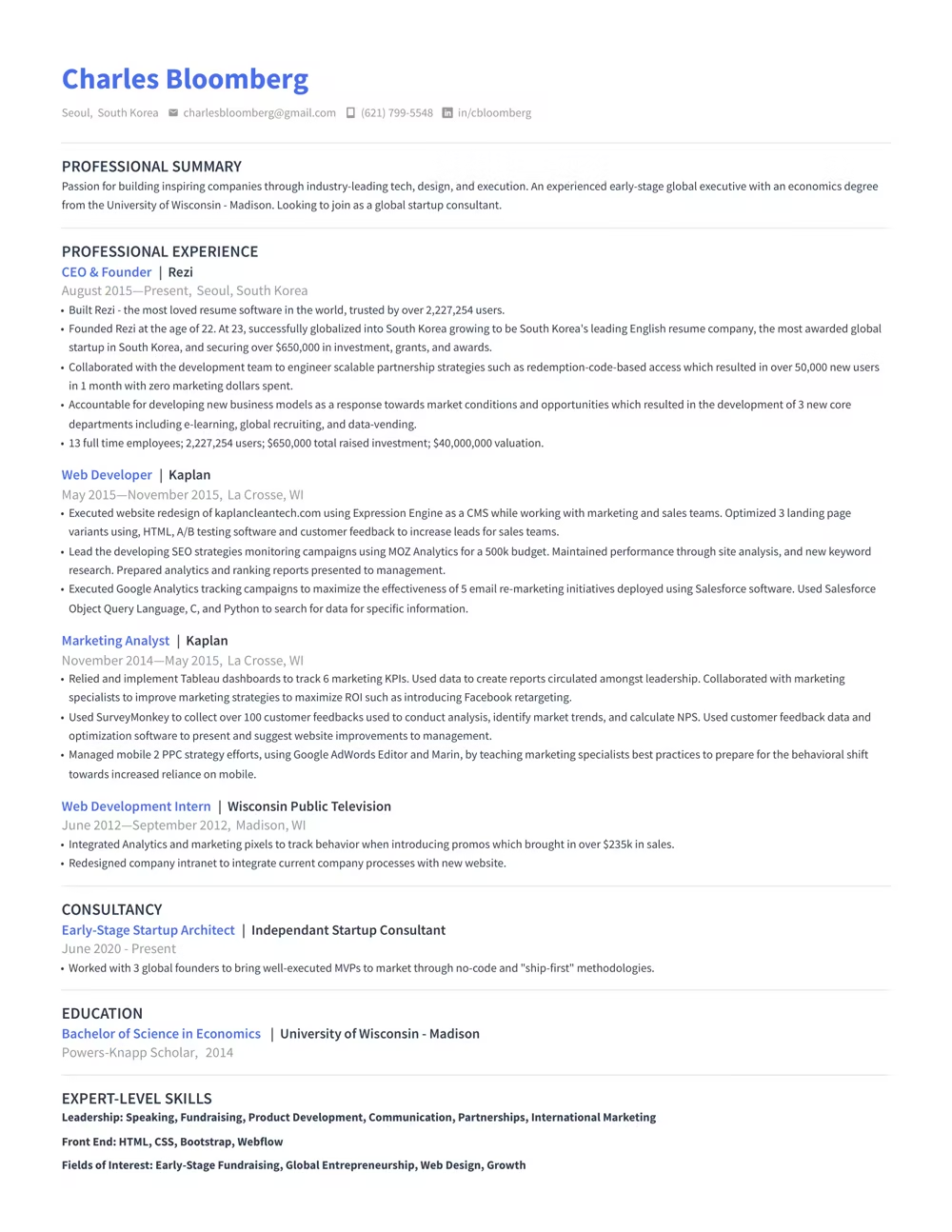
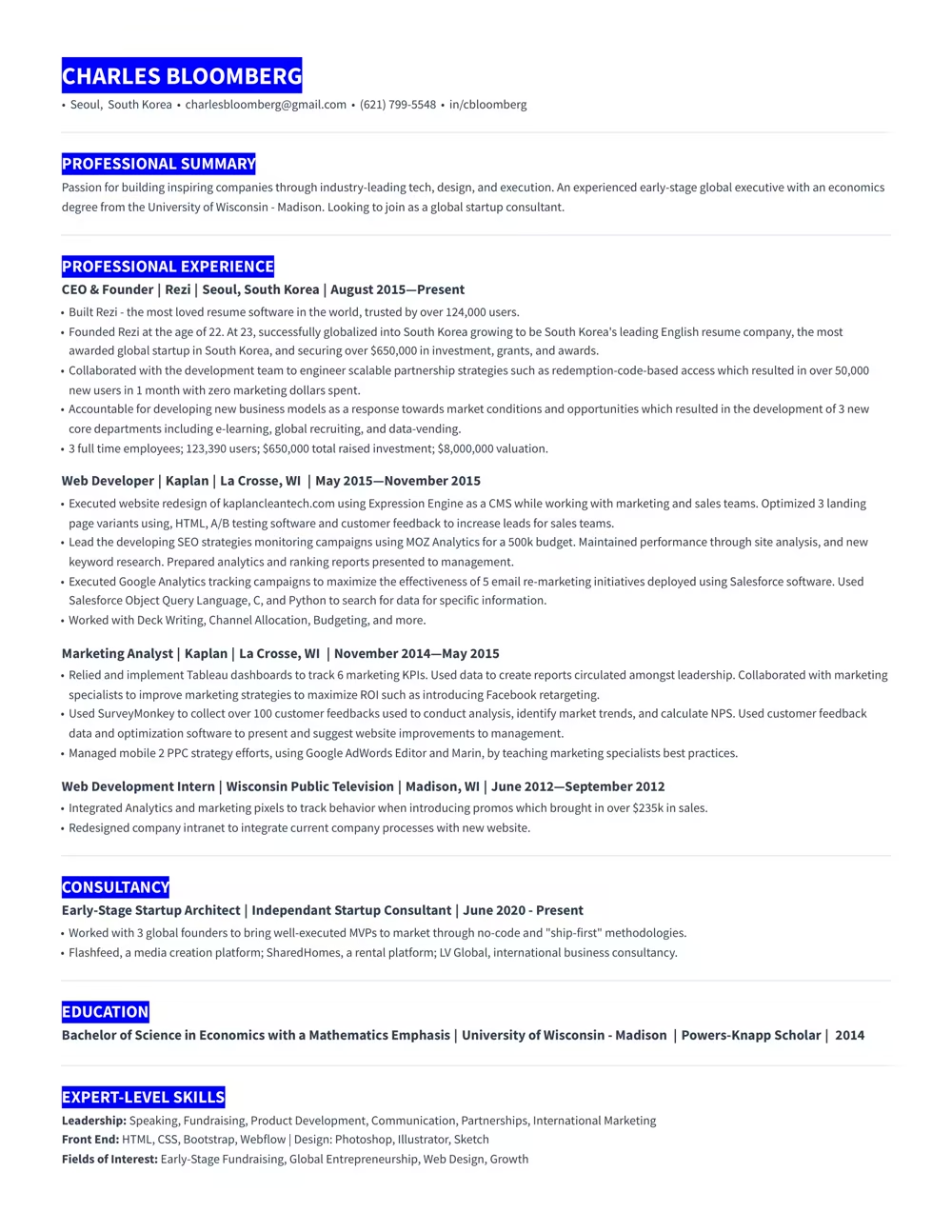
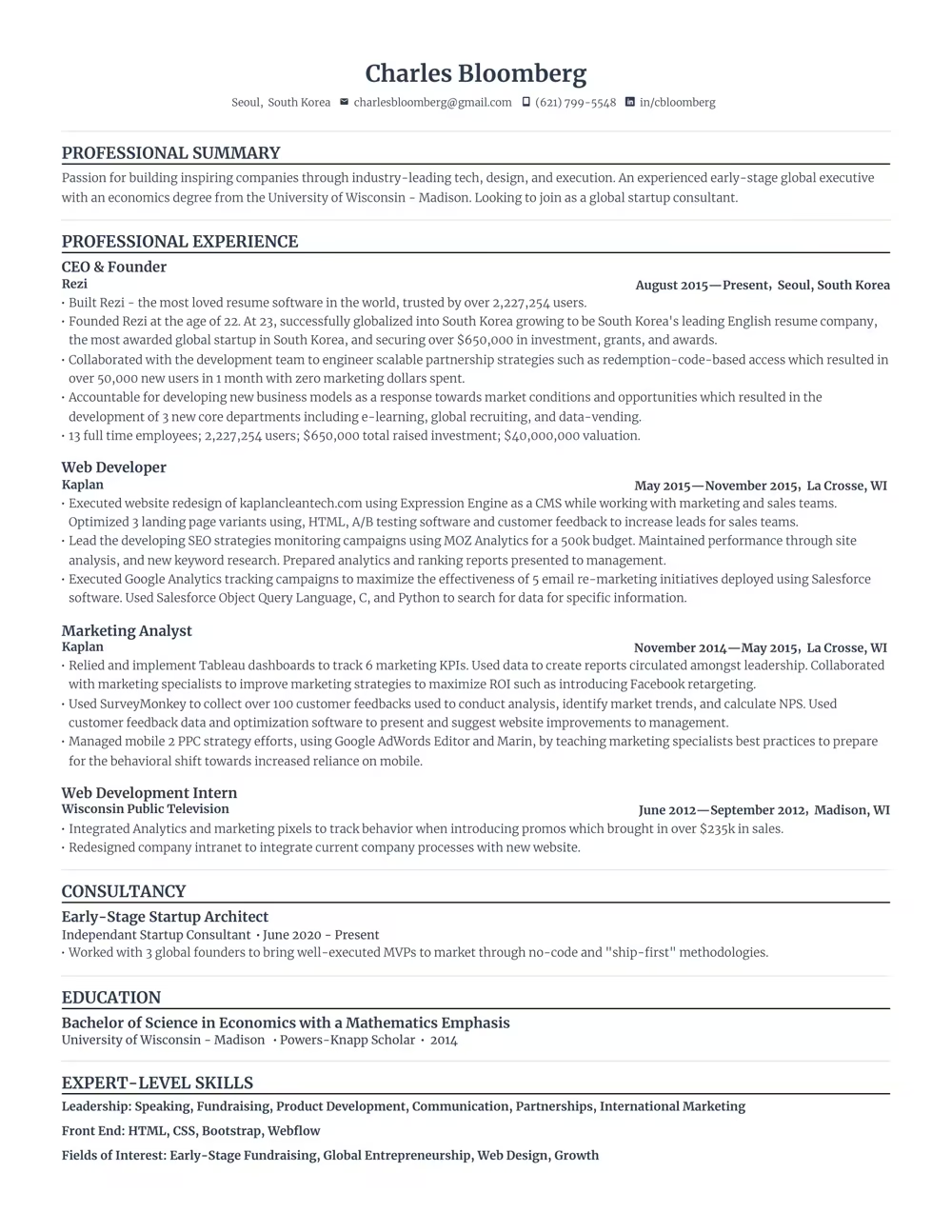
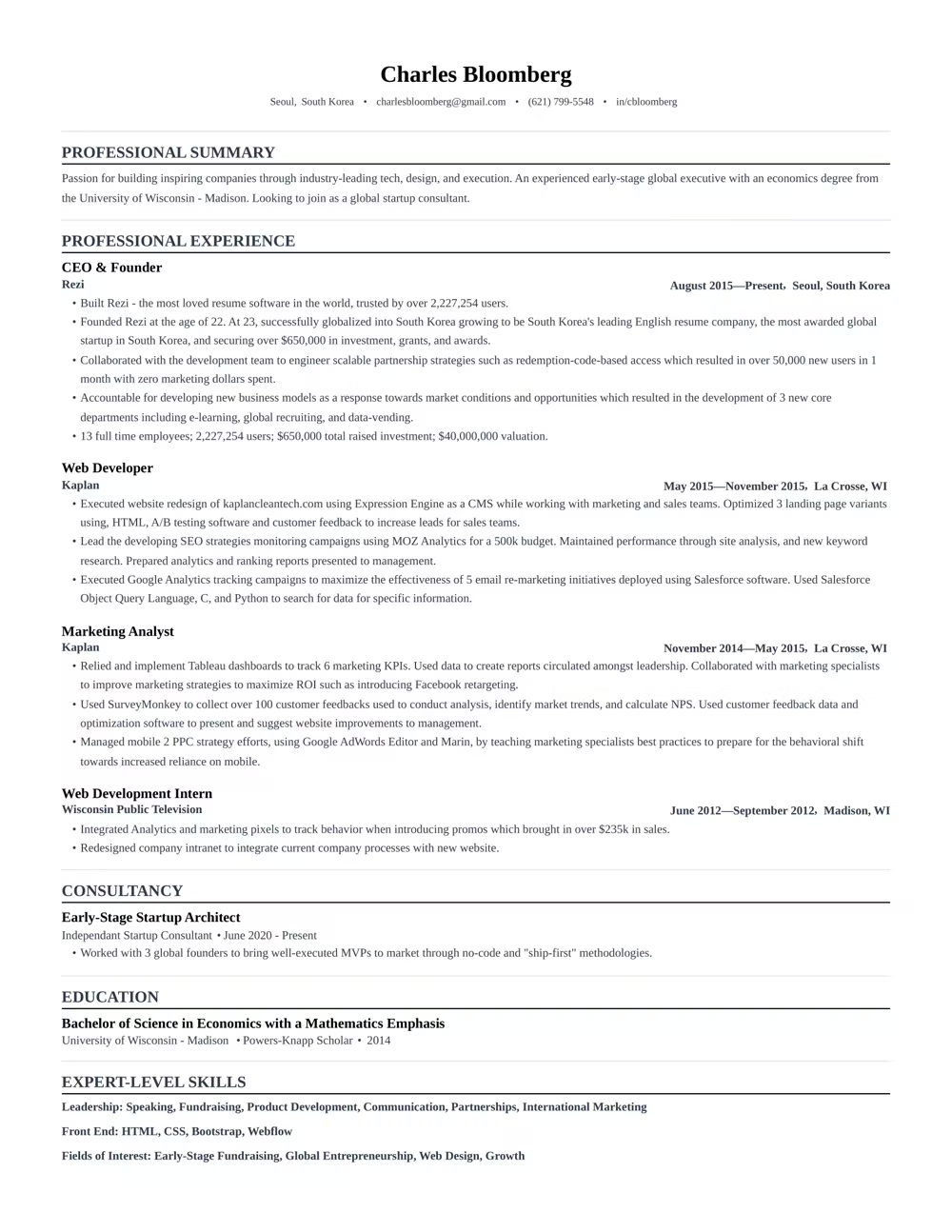
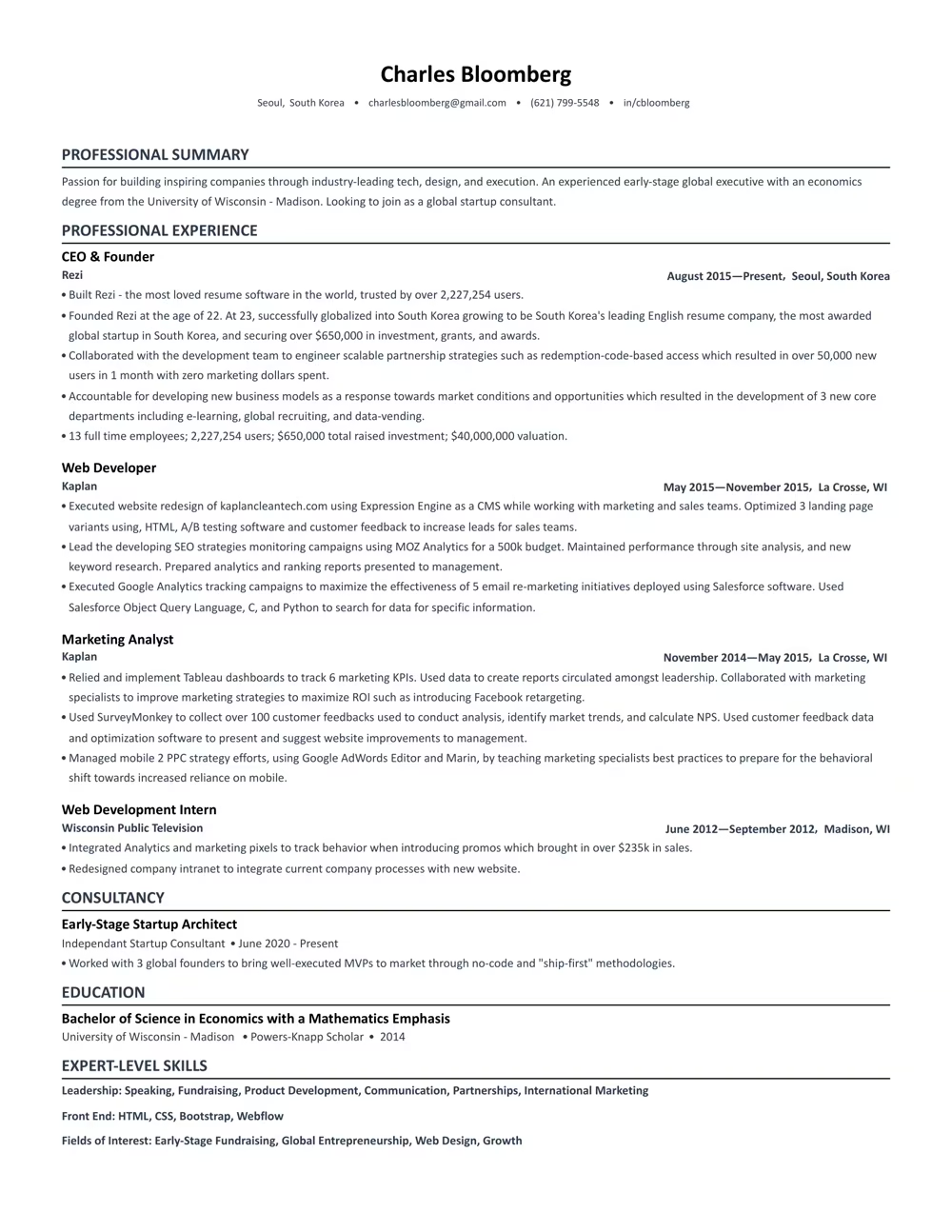
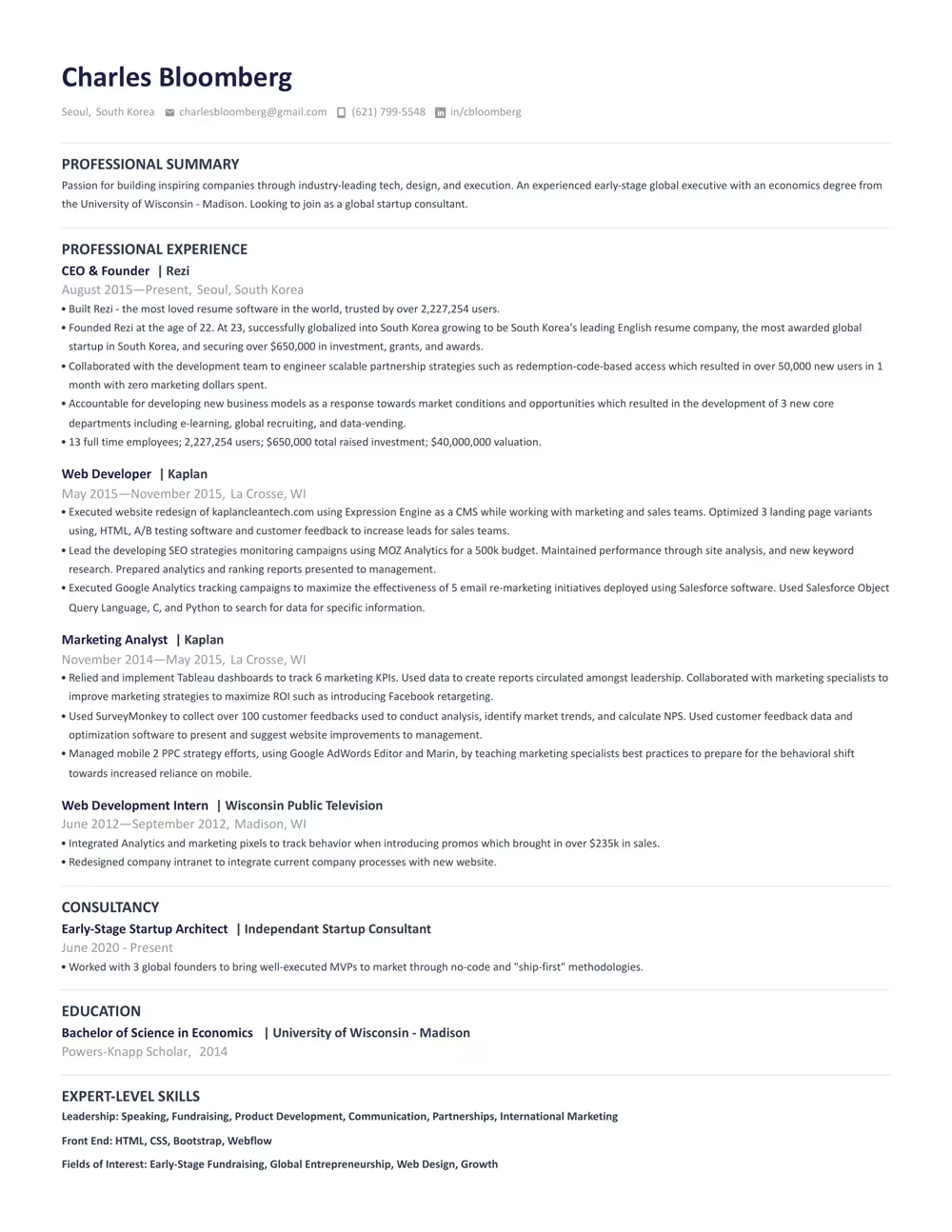
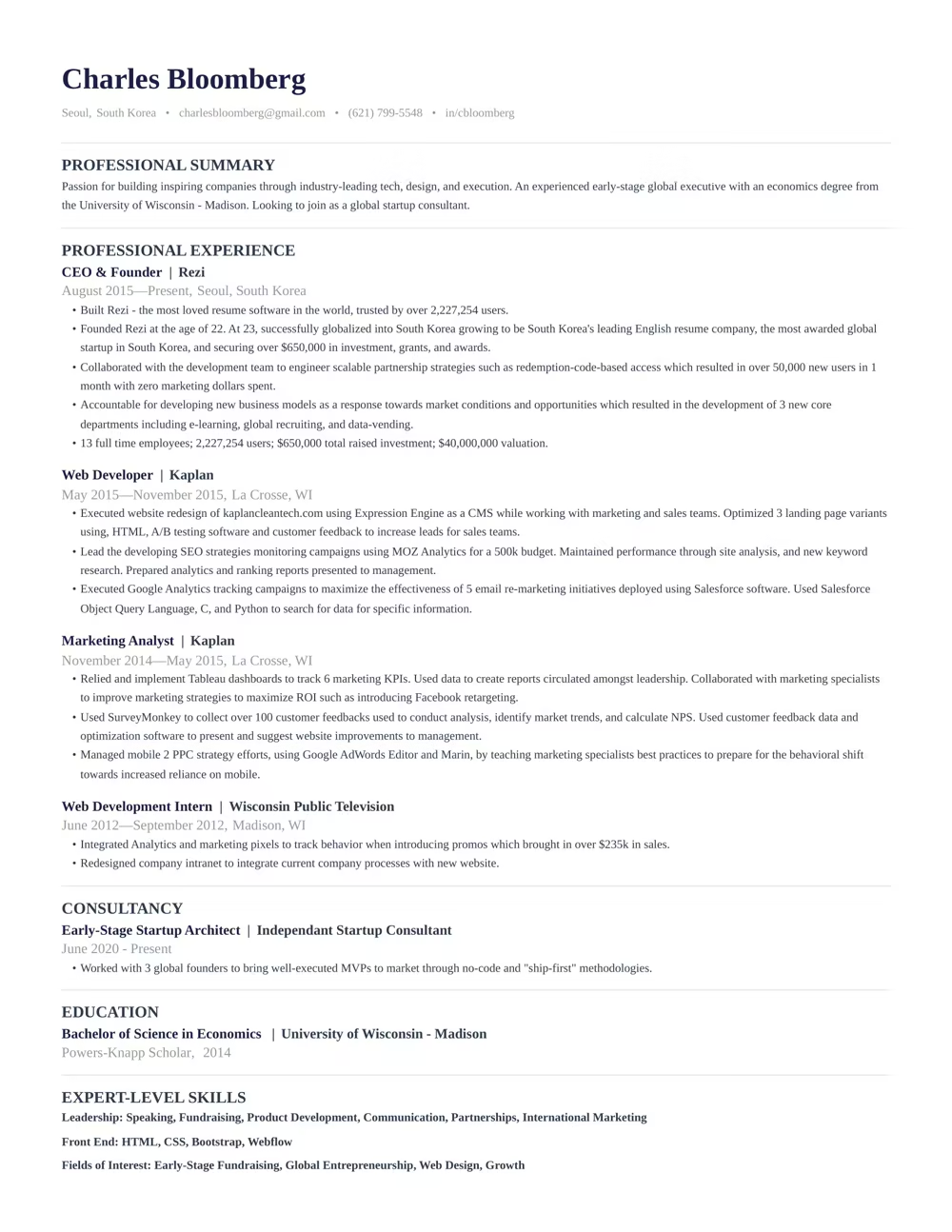
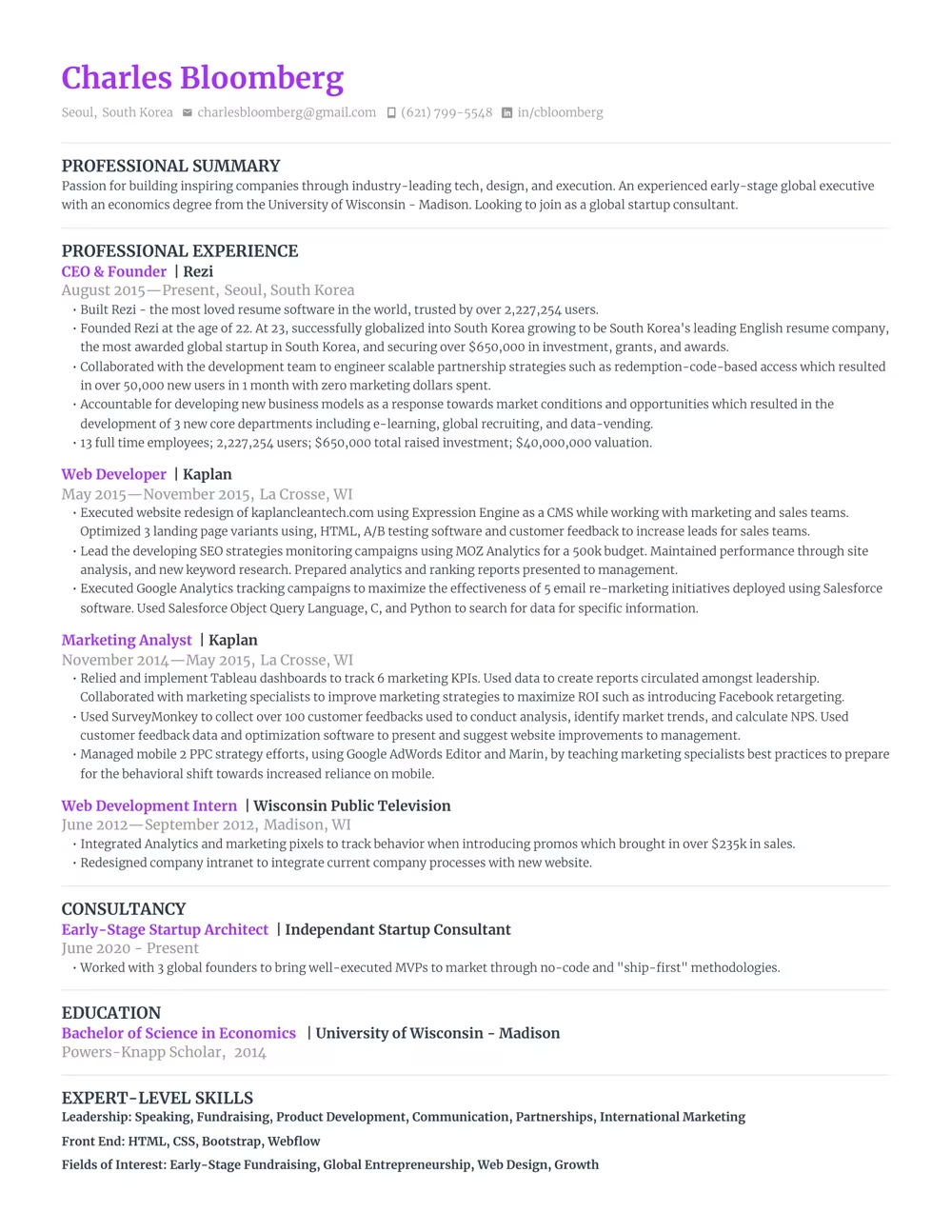
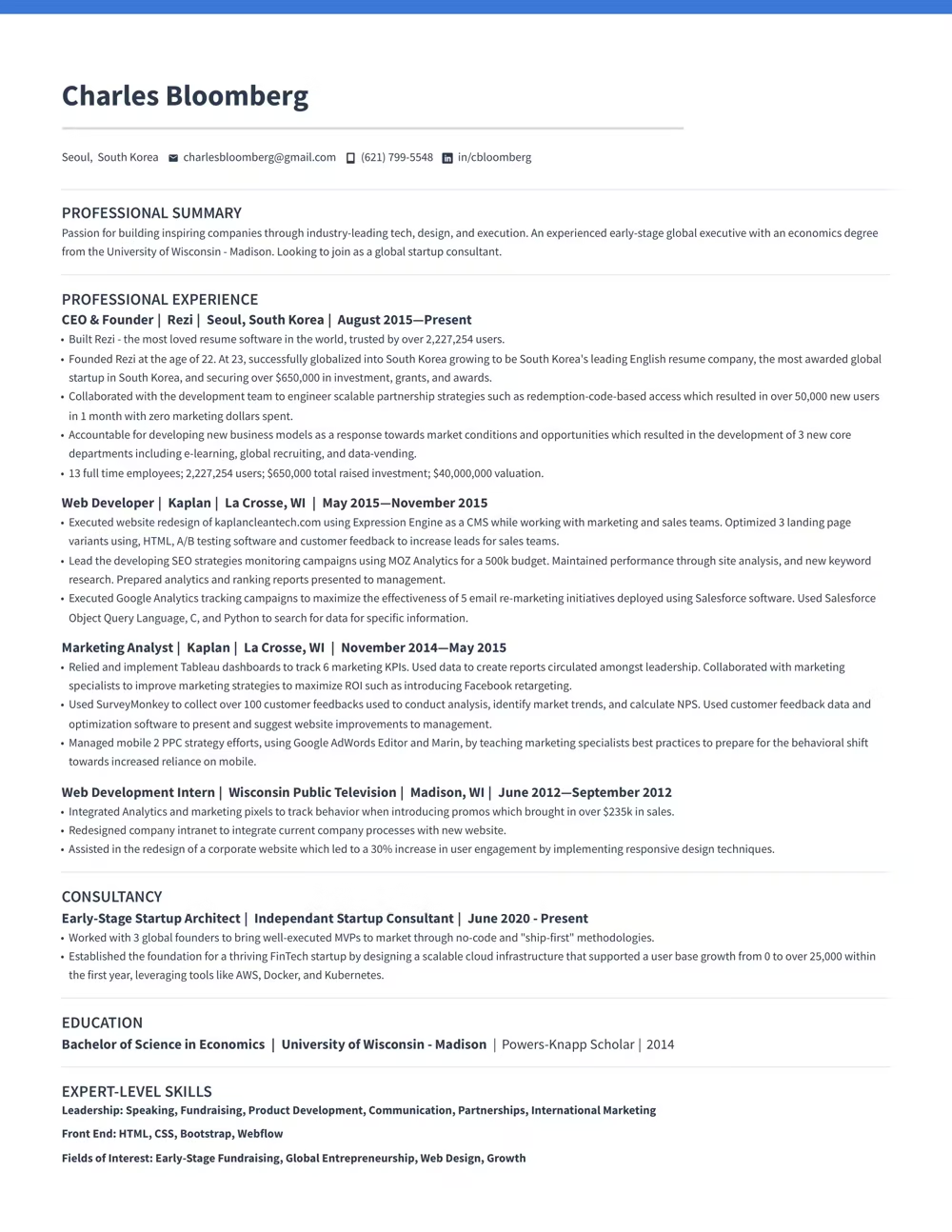
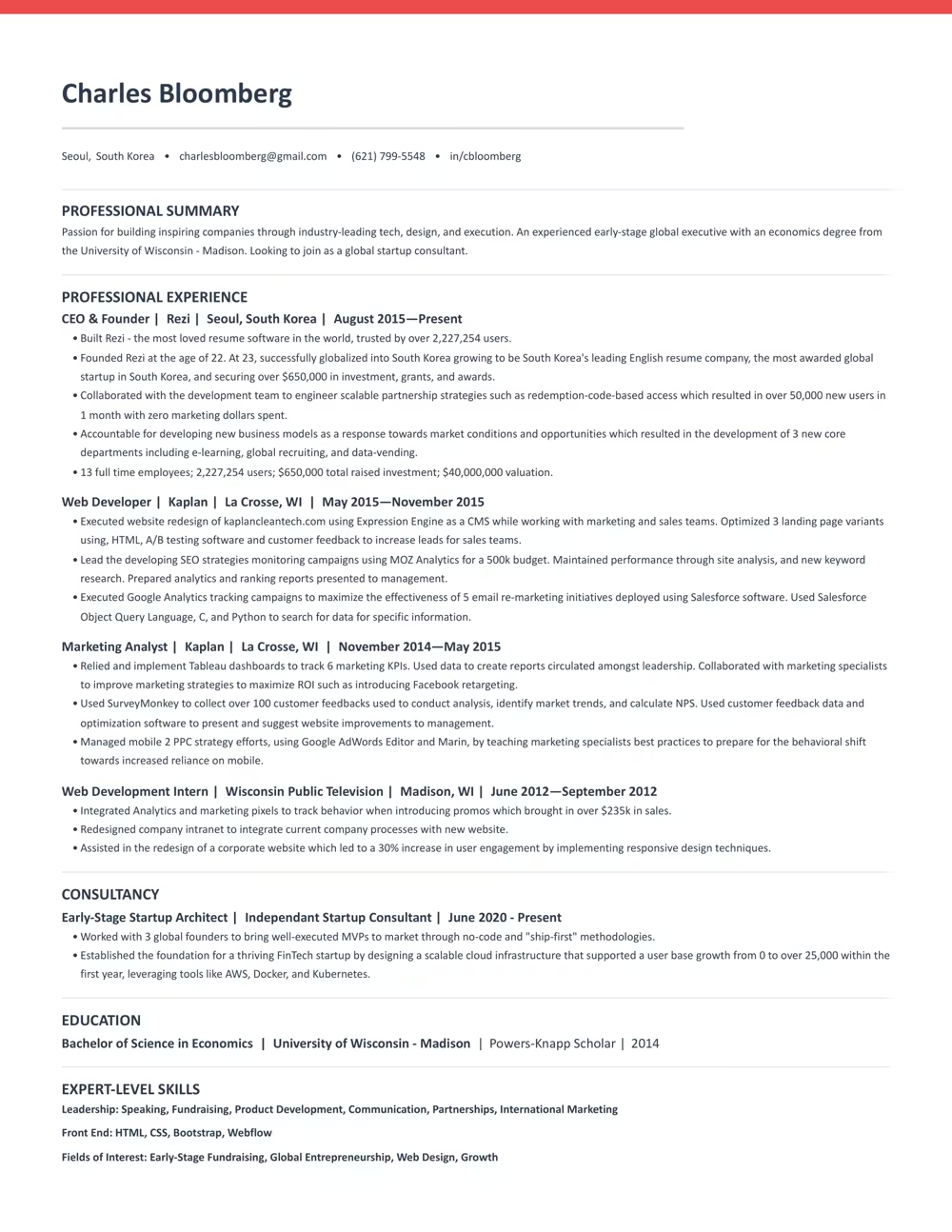
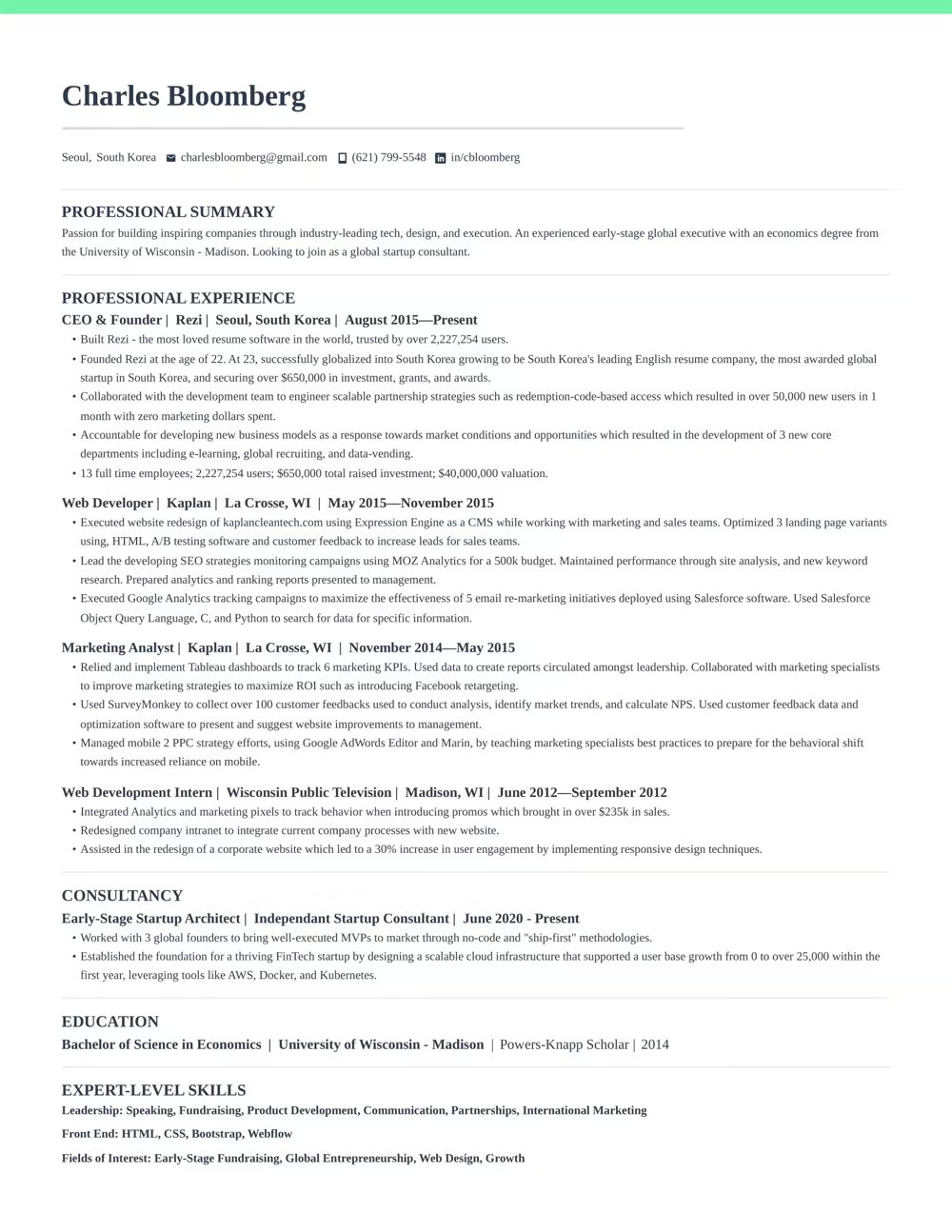
Use a template that guides you. Our ATS-compliant designs are trusted by over 4 million job seekers.




“Rezi is an awesome AI-based resume builder that includes templates to help you design a resume that is sure to check the boxes when it comes to applicant tracking systems. This is a great jumping off point to kickstart a new resume.”

Ashley Stahl
Career Contributor
62.18%
Interview Rate
4,510,834
Total Users
8.23 / 10
Avg. User Review
Wall of Love
Over 4 million users trust Rezi

Resume Building felt like pulling teeth – until I found Rezi.
Davis Allen
Software Developer

I was blown away by Rezi. It streamlined everything...
Celine Watko

I needed a resume tool as smart as my work.
Yosra Naceur
Data Scientist
“A great tool that is very helpful. I found the Rezi system easy to use and very helpful as I was working on getting my resume in shape for job applications.”

Dakota Rubin
United States
Written via

“This is actually one of the first reviews I’ve ever written for a business, and that alone says a lot. I highly recommend Rezi to anyone who’s job searching, it makes the entire process so much easier.”

Yazan Alkhatib
United States
Written via
“Reduced my time per application from 1-2 hours down to 15 minutes.”
Kixxx
Experience with Rezi
“I love how simple and convenient it is to use and been coming back to update it every time I need a fresh resume.”

Zara Wazir
U.A.E.
Written via
Frequently Asked Questions
Your questions, answered.
An AI resume maker helps you build a resume perfectly fit for the job you want. Top-notch AI resume builders are designed to speak the language hiring managers are looking for, increasing your chances of standing out in the crowd. It aligns your skills and experience with the job description effectively.
To get the most out of an AI resume builder, either start from scratch or upload your current resume. Fill in as much detail as possible about your career and skills, and upload the job description you’re targeting. This personalization allows the AI to build a unique and tailored resume that’s bound to catch potential employers' attention.
AI-generated resumes can seem similar if you're not giving personalized inputs or if you're using basic prompts. Provide specific details about your work experience and target the job you’re eyeing. Use specialized AI tools instead of general chatbots to avoid robotic-sounding resumes and to ensure individual creativity.
Employers might think you used AI, but that’s rarely an issue. What they really care about is getting a well-written resume that showcases your skills and experiences accurately. A top-notch resume tailored to their needs will speak volumes more than worrying about AI involvement.
Yes, using AI to optimize your current resume is highly effective. You just need to upload your resume, share details about your career goals and the job you want, and let the AI refine everything to elevate your resume's impact and ATS compatibility.
Rezi uses a tool called the AI Keyword Targeting. This feature scans the job description to identify crucial keywords and naturally incorporates them into your resume, giving it the right focus without keyword stuffing.
The Free plan is $0/month and allows you to create one resume, use limited AI tools (such as Keyword Targeting and Analysis), and download up to three PDFs. You can also create unlimited cover and resignation letters. No card is required to begin.
The Pro plan is $29/month and provides unlimited access to all features, including unlimited resumes, full AI capabilities, unlimited downloads, and one free monthly expert resume review (resumes are reviewed by a person).
The Lifetime plan is a $149 one-time payment. It grants permanent access to all the features of the Pro plan (unlimited resumes, full AI tools, and unlimited downloads), but it does not include the free monthly expert review (which can be purchased for an extra fee).
Rezi offers a 100% money-back guarantee on all paid plans (Pro and Lifetime). If you are unsatisfied, you can request a full refund within 30 days of your purchase.
Yes, you can easily upgrade or downgrade your plan at any time through your Rezi Account Billing dashboard. Prorated credits will apply when switching.
An AI resume maker helps you build a resume perfectly fit for the job you want. Top-notch AI resume builders are designed to speak the language hiring managers are looking for, increasing your chances of standing out in the crowd. It aligns your skills and experience with the job description effectively.
Yes, Rezi Enterprise.