
Marketing Resumes
10+ Copywriter Resume Examples & Tips for 2026
Customize any of these resumes in minutes using our free AI-powered resume builder.
“Rezi is super upfront and continues to improve over time. I've recommended Rezi to several of my friends and colleagues. I just love this product so much.”

Ricky M.
Software Engineer

“Rezi is super upfront and continues to improve over time. I've recommended Rezi to several of my friends and colleagues. I just love this product so much.”
Ricky M.
Software Engineer
Helping users land jobs at 1,000+ companies such as














Here's the thing most copywriter resumes get wrong: they read like a list of writing tasks. "Wrote blog posts." "Created email campaigns." "Drafted social media copy." That's not a copywriter resume — that's a to-do list. And it tells a hiring manager absolutely nothing about whether your words actually worked.
A compelling copywriter resume needs to show that your writing drove real results — clicks, conversions, revenue, engagement. It needs to demonstrate that you understand audiences, that you can adapt your voice across channels, and that you bring strategic thinking to every headline, tagline, and CTA you craft.
And this is exactly what you'll learn from this article. Inside, you'll find:
- Examples of 10+ copywriter resumes, covering different specializations and experience levels.
- Insider tips about what really matters to hiring managers and creative directors reviewing copywriter applications.
- A step-by-step guide for building a copywriter resume that actually lands interviews.
Sample Copywriter Resumes
Take a look at some top-notch sample resumes for copywriters across different specializations and experience levels. Find one that matches your profile and use it as a reference point (or feel free to steal it — just make sure to adjust the wording to reflect your own career journey).
Junior Copywriter Resume
A Junior Copywriter resume should emphasize your writing education, internships, and any freelance or personal projects that demonstrate your voice and versatility. Highlight your understanding of brand tone, your ability to write across formats, and any measurable results from early work — even class projects or spec campaigns. Familiarity with content management systems and basic SEO knowledge will set you apart from other entry-level candidates.
Mid-Level Copywriter Resume
A Mid-Level Copywriter resume should showcase a solid portfolio of professional work across multiple channels and industries. Emphasize campaigns you contributed to, the results they generated, and your growing ability to work independently. Highlight collaboration with designers, strategists, and account teams. Show how you've refined your process — from creative briefs to final deliverables — and mention any mentoring of junior writers or leadership on smaller projects.
Senior Copywriter Resume
A Senior Copywriter resume should demonstrate a proven track record of leading creative projects and producing high-impact copy. Highlight your ability to develop brand voice guidelines, mentor junior writers, and present creative concepts to stakeholders. Showcase award-winning campaigns, significant performance metrics, and your strategic role in shaping messaging. Include experience managing multiple projects simultaneously and collaborating at the leadership level with creative directors and marketing executives.
Advertising Copywriter Resume
For an Advertising Copywriter, your resume should spotlight campaign-driven work across print, broadcast, digital, and out-of-home media. Emphasize your ability to craft compelling headlines, taglines, and scripts that grab attention and drive action. Showcase award nominations or wins, notable clients or brands you've worked with, and your experience collaborating closely with art directors and creative teams. Quantify campaign reach, engagement, or conversion metrics wherever possible.
Digital Copywriter Resume
A Digital Copywriter resume should highlight your expertise in writing for web-based channels — websites, landing pages, email campaigns, social media, and digital ads. Show your understanding of UX writing principles, A/B testing, and how copy fits within the broader digital user experience. Mention familiarity with analytics tools and your ability to iterate based on performance data. Emphasize conversion-focused writing and your comfort working within CMS platforms and marketing automation tools.
SEO Copywriter Resume
An SEO Copywriter resume should demonstrate your ability to write content that ranks well in search engines while still engaging human readers. Highlight your proficiency with keyword research tools, on-page optimization, and content strategy. Showcase measurable results like organic traffic growth, improved search rankings, and increased click-through rates. Mention experience with tools like Ahrefs, SEMrush, or Google Search Console, and your understanding of how search algorithms influence content decisions.
Creative Copywriter Resume
A Creative Copywriter resume should showcase your conceptual thinking and ability to craft original, memorable copy that builds brands. Highlight experience developing campaign concepts from scratch, writing across diverse creative formats, and pushing creative boundaries. Include notable brands or agencies you've worked with, awards or recognition, and examples of work that went beyond the brief. Demonstrate your range — from witty social posts to emotionally resonant long-form storytelling.
Marketing Copywriter Resume
For a Marketing Copywriter, your resume should emphasize your ability to write persuasive copy that supports marketing goals across the funnel — awareness, consideration, and conversion. Highlight experience with email marketing, product launches, sales collateral, and campaign messaging. Show how your copy contributed to lead generation, customer acquisition, or revenue growth. Mention your ability to translate marketing strategy into compelling narratives and your experience working cross-functionally with marketing and product teams.
Brand Copywriter Resume
A Brand Copywriter resume should focus on your ability to develop and maintain a consistent brand voice across all touchpoints. Highlight experience creating brand guidelines, naming products or campaigns, and crafting messaging frameworks. Showcase your strategic thinking — how you translate brand positioning into words that resonate with target audiences. Mention work across brand launches, rebrands, or brand awareness campaigns, and your ability to ensure tonal consistency across large content ecosystems.
Technical Copywriter Resume
A Technical Copywriter resume should highlight your ability to translate complex, technical information into clear, compelling copy. Emphasize experience writing for industries like SaaS, fintech, healthcare, or engineering, and showcase your skill in making dense subject matter accessible and persuasive. Mention your ability to collaborate with subject matter experts, your research process, and any technical background or education. Include examples of white papers, case studies, product documentation, or technical landing pages.
How to Write a Copywriter Resume
Short answer:
Focus on the impact of your writing — conversions, engagement, revenue — not just the types of content you've produced. Create a professional header with your name, contact details, and a link to your portfolio. Write a 2–3 sentence resume summary highlighting your strongest accomplishments. Describe your work history in reverse-chronological order, emphasizing results-driven copy and the channels you've worked across. Cover your education and any relevant certifications, list key skills, and add extra sections such as a writing portfolio, awards, or published work.
Include all the necessary sections in the correct order
Here's the correct order of sections for most copywriter resumes:
- Header with contact information
- Resume summary or objective
- Work experience
- Education
- Skills
- Certifications (if applicable)
Depending on your current career situation, you can also throw in some additional sections. For instance:
- Writing portfolio (this is almost mandatory for copywriters — include a link)
- Awards and recognition
- Published work or bylines
- Freelance projects
- Volunteer experience
- Professional associations
Include everything that shows you're capable of doing what the job requires. Make every section count. If it doesn't clearly highlight your writing ability or strategic thinking, it doesn't belong on your resume.
If you have less than five years of relevant experience, keep your resume 1-page long. For more senior copywriters, a two-page resume is fine.
More details here: What Sections to Include on Your Resume?
Now, I'll give you a high-level overview of how to write each section, going from top to bottom. Well… almost. The only exception is the resume summary section. While it comes right after your contact info, it's actually easier to write it last. More on that in a sec.
Create a professional resume header
- Start with your name and contact information. Include the basics: your full name, phone number, professional email address, location, and LinkedIn profile. For copywriters, a link to your online portfolio is essential — this is what hiring managers will want to see first.
- Right below your name, clearly state your professional title (e.g., Senior Copywriter or SEO Copywriter). This immediately frames your specialization and sets expectations.
For more information, see: How to Create a Resume Header
Describe your work history
- Use reverse-chronological order. List your positions starting with the current or the most recent one.
- In each entry, include your job title, company name, location, and dates of employment.
- Below each position, write 3–7 bullet points — the more recent the position, the more bullet points you should include. Describe your responsibilities and, more importantly, your accomplishments.
- Use action verbs and quantify your achievements (e.g., "Wrote email sequences that generated $450K in revenue during a product launch" or "Increased landing page conversion rates by 35% through A/B tested copy variations").
- Mention the types of content you produced, the channels you wrote for, and the brands or industries you served. This helps hiring managers quickly assess your range and relevance.
Learn more about the best practices of this section with our detailed guide on how to describe your work experience on a resume.
List your degrees and detail professional learning
- In the education section, list your highest degree first, including the degree type, major, and institution.
- If you have relevant work experience, include only the name of your school and the degree you got. If you're an entry-level candidate, you can add more detail — list relevant coursework (e.g., creative writing, marketing, journalism), extracurricular activities, and academic achievements.
- If you have copywriting or marketing certifications (e.g., Google Ads, HubSpot Content Marketing), either include them in an "Education and Certifications" section, or create a separate "Certifications" section and place it right below.
For an in-depth guide on how to describe your education on a resume, see: How to List Education on a Resume
List your most relevant skills in the skills section
- Include a mix of writing-specific skills (e.g., headline writing, long-form content, UX copy) and tools (e.g., Google Analytics, WordPress, SEMrush) that you're proficient in.
- Add in soft skills such as creativity, adaptability, and collaboration. These show you can thrive in fast-paced creative environments and work well with cross-functional teams.
- You can use two separate subsections — one for hard skills, one for soft skills — or list all the skills under one heading.
- Match your skills to the description of the job you're applying for. Don't just dump every skill from the job ad onto your resume (especially if you don't really have them), but highlight where your expertise overlaps with what they need.
Need some inspiration to get started? Here are some good skills to feature on your copywriter resume.
Writing and content skills for copywriter resumes:
- Headline and tagline writing
- Long-form content creation
- Email copywriting
- UX writing and microcopy
- Brand voice development
- Ad copywriting (PPC, social, display)
- SEO content writing
- Storytelling and narrative development
- Editing and proofreading
- Script writing (video, radio, podcast)
Tools and platforms:
- Google Analytics
- WordPress
- SEMrush
- Ahrefs
- HubSpot
- Mailchimp
- Google Docs / Google Workspace
- Figma (for collaborative UX writing)
- Grammarly
- Jasper / ChatGPT (AI writing tools)
Key soft skills for copywriters:
- Creativity
- Attention to detail
- Adaptability
- Time management
- Collaboration
- Communication
- Research skills
- Receptiveness to feedback
- Curiosity
- Empathy
For a full-blown guide on listing skills on a resume, visit: How to Put Skills on a Resume
Use additional sections as further proof of your fit
Additional sections add depth to your resume and back up your claimed expertise. Good examples of extra sections to add to a copywriter resume are:
- Writing portfolio. This is the single most important addition for any copywriter. Include a link to your online portfolio showcasing your best work across different formats and industries.
- Awards and recognition. If you've won or been shortlisted for creative awards (Cannes Lions, Webby Awards, Addy Awards, etc.), list them in a dedicated section.
- Published work. If you've been published in notable outlets — magazines, industry blogs, or content platforms — a dedicated section listing these bylines adds significant credibility.
- Freelance clients. If you've freelanced for well-known brands or agencies, listing select clients can demonstrate your breadth of experience and the trust companies have placed in your work.
- Professional development. Relevant workshops, boot camps, or courses (e.g., a copywriting masterclass, brand strategy certification) show your commitment to continuous learning.
Highlight the most relevant information in a resume summary
Once you're done writing your copywriter resume, give it a full read. Pick the most relevant information and compile it into a summary paragraph. Place it right under the resume header.
- Be brief and to-the-point. In 3–4 sentences, sum up your career highlights, core competencies, and what you bring to the table. Consider this your chance to answer, "Why should you hire me?" Tailor this section to match the employer's needs outlined in the job description.
- Use value-oriented language. Focus on how your writing has driven measurable results, mentioning specific outcomes like increased conversions, award-winning campaigns, or brands you've helped build.
Once you've completed the core sections of your resume, you can use Rezi AI Resume Summary Generator to automatically create a powerful summary, tailored to the job you're applying for. All you need to do is add the position and skills you want to highlight. The AI writer will do the rest.
More information here: How to Write a Job-Winning Resume Summary (with Examples)
For finishing touches, make sure your resume looks professional
- Use a clean and tidy resume format. Ensure your copywriter resume is easily readable, with a professional font, consistent formatting, and clear section headings. Avoid overloading it with dense text or overly clever design elements — ironic as it sounds, your resume copy should be straightforward, not a showcase of your wittiest wordplay.
- Aim for a balance between detail and conciseness. If you're a junior or entry-level candidate, keep your resume to a single page. Experienced copywriters can extend to two pages, but make sure every word conveys value.
Learn more about proper resume formatting here: How to Format a Resume & What Standard Resume Format to Use
What Makes Copywriter Resumes Different
In short: your resume is itself a writing sample — whether you want it to be or not.
This is what many copywriters overlook. Hiring managers reviewing your resume are simultaneously evaluating your communication skills, your clarity of thought, and your ability to be concise and persuasive. Every word choice, every bullet point, every sentence structure is being judged. Your resume is your audition.
Your resume is a writing sample
Unlike most other professions, a copywriter's resume is doing double duty. It conveys your qualifications and demonstrates your primary skill — writing. A poorly written copywriter resume is an instant rejection, no matter how impressive the experience listed on it.
What it means for you:
- Every bullet point should be crisp, active, and free of jargon or fluff. Use the same precision and intentionality you'd bring to writing for a client.
- Proofread obsessively. A typo on any resume is bad. A typo on a copywriter's resume? That's a dealbreaker. Have at least two other people review it before you submit.
Results matter more than output volume
Saying you "wrote 50 blog posts per month" tells a hiring manager you can produce volume. It doesn't tell them your writing worked. Copywriting is fundamentally about persuasion and results, not word count.
What it means for you:
- Quantify the impact of your copy wherever possible. Did your email sequence boost open rates by 22%? Did your landing page copy increase conversions by 40%? Did a campaign you wrote generate $1M in revenue? Those are the numbers that matter.
- If hard metrics aren't available, describe qualitative outcomes — client retention, brand recognition improvements, or stakeholder praise that led to expanded scope of work.
Your portfolio does the heavy lifting — but your resume opens the door
Most copywriters know their portfolio is critical, and many assume it does all the selling. But hiring managers and ATS systems evaluate your resume first. If it doesn't pass muster, nobody's clicking through to your portfolio link.
What it means for you:
- Don't rely on your portfolio to compensate for a thin resume. Your resume needs to stand on its own as a compelling document that makes the reader want to see your work samples.
- Include a prominent, clickable link to your portfolio in your header. Make it easy to find and impossible to miss.
Versatility is a selling point
Copywriters are often expected to write across wildly different formats and channels — from a 280-character social post to a 3,000-word white paper. Showing you can shift gears is a significant advantage.
What this means for you:
- In your work experience section, make it clear that you've written across multiple formats: ads, emails, web pages, scripts, social content, long-form articles, product descriptions, etc.
- If you've worked across different industries or for different types of clients (B2B, B2C, DTC, agency, in-house), highlight that range. It signals adaptability and a broader understanding of audience psychology.
Brand voice fluency sets you apart
Many jobs require writing, but copywriting specifically demands the ability to adopt and maintain a brand's unique voice. This is something hiring managers look for and something most resumes fail to address.
What this means for you:
- Mention specific brands you've written for and the tonal range you've covered — from playful and irreverent to authoritative and technical.
- If you've developed brand voice guidelines or style guides, call that out explicitly. It positions you as a strategic thinker, not just a word producer.
Bonus Resources for Copywriters
This isn't going to be a game-changer if you need a resume right now. But —
I want you to treat your career holistically. These resources will help you sharpen your copywriting craft, add some juice to your future resumes, and keep you plugged into the evolving world of professional copywriting.
Professional associations and communities
American Writers & Artists Institute (AWAI)
One of the most recognized organizations for professional copywriters, AWAI offers training programs, certifications, job boards, and a large community of working writers focused on direct-response and content marketing.
The Copy Collective
A community-driven resource for copywriters at all levels, offering workshops, feedback sessions, and networking opportunities to help you grow your skills and your professional circle.
D&AD
A global creative organization that celebrates excellence in design and advertising. Membership gives you access to resources, awards programs, and a network of top creative professionals — a strong credential for advertising copywriters.
Online learning platforms
Coursera & edX
Both platforms offer courses on copywriting, content marketing, persuasive writing, and digital marketing from top universities and industry leaders. Ideal for building foundational knowledge or adding a credential to your resume.
LinkedIn Learning
With a strong library of courses on writing, SEO, brand storytelling, and marketing strategy, LinkedIn Learning is a solid option for ongoing professional development — and completed courses display on your LinkedIn profile.
Copy Hackers
Founded by Joanna Wiebe, Copy Hackers is one of the most respected copywriting education platforms. Their courses, articles, and community focus specifically on conversion copywriting — essential knowledge for any serious copywriter.
Publications and blogs
Copyblogger
A long-running authority on content marketing and copywriting, Copyblogger offers articles, guides, and resources on writing copy that converts. A must-read for copywriters at any stage of their career.
Ad Age
For advertising copywriters, Ad Age is an essential industry publication covering campaigns, agencies, creative trends, and the business of advertising. Staying current here keeps your work relevant.
Hey Whipple, Squeeze This (Blog & Book)
Luke Sullivan's classic book on advertising copywriting is considered essential reading. Following related blogs and communities around this book will keep you connected to timeless creative principles.
Tools and software reviews
Capterra & G2
Both websites provide extensive reviews and comparisons of writing tools, CMS platforms, email marketing software, and SEO tools — helping you choose the right tools for your workflow and add relevant ones to your resume.
Hemingway Editor
A free tool that helps you write bold, clear prose. It highlights complex sentences, passive voice, and readability issues — useful for polishing both your client work and your resume copy.
Summary
Here's what you need to know about writing a copywriter resume:
- Structure your copywriter resume with essential sections in this order: Header, Resume Summary or Objective, Work Experience, Education, Skills, and Certifications. If relevant, add extra sections like a Writing Portfolio, Awards, or Published Work.
- Include a professional header with your name, contact information, professional title, and a prominent link to your portfolio.
- Describe your work history in reverse-chronological order, emphasizing the results your copy achieved — conversions, revenue, engagement — not just the types of content you produced.
- In the education section, list your highest degree at the top. Include copywriting or marketing certifications either in the education section or under a separate heading.
- Highlight a mix of writing skills, tools, and soft skills, tailoring them to the specific job description.
- Remember that your resume is itself a writing sample. Make every sentence sharp, clean, and persuasive.
- Use additional sections to showcase your portfolio, awards, notable clients, and published work.
- Once done writing, compile the key information into a brief, results-oriented resume summary at the top.
- Demonstrate your versatility across formats, channels, and brand voices — this is what sets strong copywriters apart.
- Keep your resume professional in appearance. Aim for conciseness without sacrificing the detail that proves your impact.
Thanks for reading! Got any questions? Feel free to reach out to me on LinkedIn. (Or check out the FAQs first — your question might already be answered there.)
FAQ
Should I include a link to my portfolio on my copywriter resume?
Absolutely — and it's not optional. Your portfolio is the single most important piece of evidence a hiring manager will review. Include it in your resume header where it's immediately visible. Make sure the link works, loads quickly, and showcases your strongest, most relevant samples. If you don't have a dedicated portfolio site, even a well-organized Google Drive folder or a Contently profile is better than nothing.
What if I've mostly done freelance copywriting work?
Treat your freelance experience like any other job. List "Freelance Copywriter" as your title, and include notable clients, industries served, and measurable results. You can also create a separate "Selected Clients" or "Freelance Projects" section to highlight the brands you've worked with. The key is to frame freelancing as professional experience with real business outcomes, not a gap between "real" jobs.
How do I quantify results if I don't have access to performance data?
This is common, especially for agency copywriters or freelancers. If you don't have exact numbers, use approximations or qualitative outcomes. Phrases like "contributed to a campaign that exceeded client KPIs" or "wrote launch copy for a product that sold out within 48 hours" still communicate impact. You can also describe the scale of your work — audience size, email list size, or number of assets produced for a campaign.
Should I use a creative resume design to stand out?
Resist the urge. A clean, well-formatted resume with excellent writing will always outperform a flashy design. Overly creative layouts can confuse ATS software and distract from your content. Let your words do the selling — that's literally what you're being hired to do. Save the visual creativity for your portfolio presentation.
I'm transitioning into copywriting from another career. How should I approach my resume?
Focus on transferable skills: communication, persuasion, audience understanding, research, and deadline management. Highlight any writing you've done in previous roles — even if it wasn't your job title. Internal communications, client-facing emails, presentations, and training materials all count. Supplement this with copywriting courses, certifications, or spec work you've done to build your portfolio. Show that you understand the craft, not just that you can write.
How important are AI writing tools on a copywriter resume?
Increasingly important. Many employers want to know you can work with AI tools like Jasper, ChatGPT, or Copy.ai — not that you rely on them. Listing AI tools in your skills section signals that you're current with industry trends and can use these tools to enhance your workflow. But pair it with human skills like creative concepting, brand voice adaptation, and editorial judgment to show you bring what AI can't.
What keywords should I use on my copywriter resume?
Use specific terminology relevant to the role: brand voice, content strategy, conversion copywriting, A/B testing, SEO, CTR, email marketing, direct response, editorial calendar, and creative brief. Include the names of tools and platforms you use (Google Analytics, HubSpot, WordPress, SEMrush). Mirror the language in the job description — if they say "content marketing," don't just write "blogging." This helps you pass ATS filters and signals alignment with the role.

Upload or drop your resume to get started
Upload your resume to get started
Score my resume
Contents
Resume Formats & Examples
ATS-Friendly resume formats that land jobs
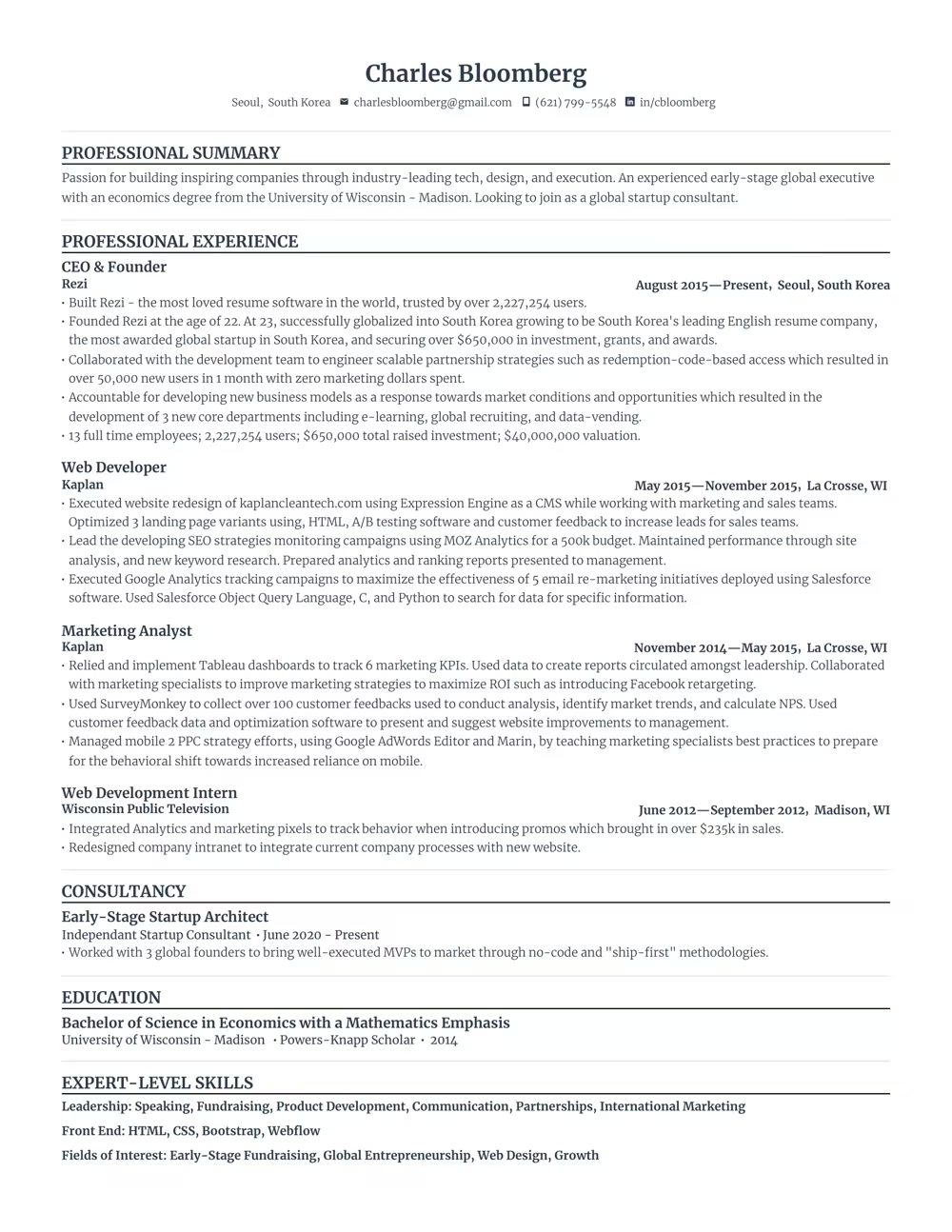
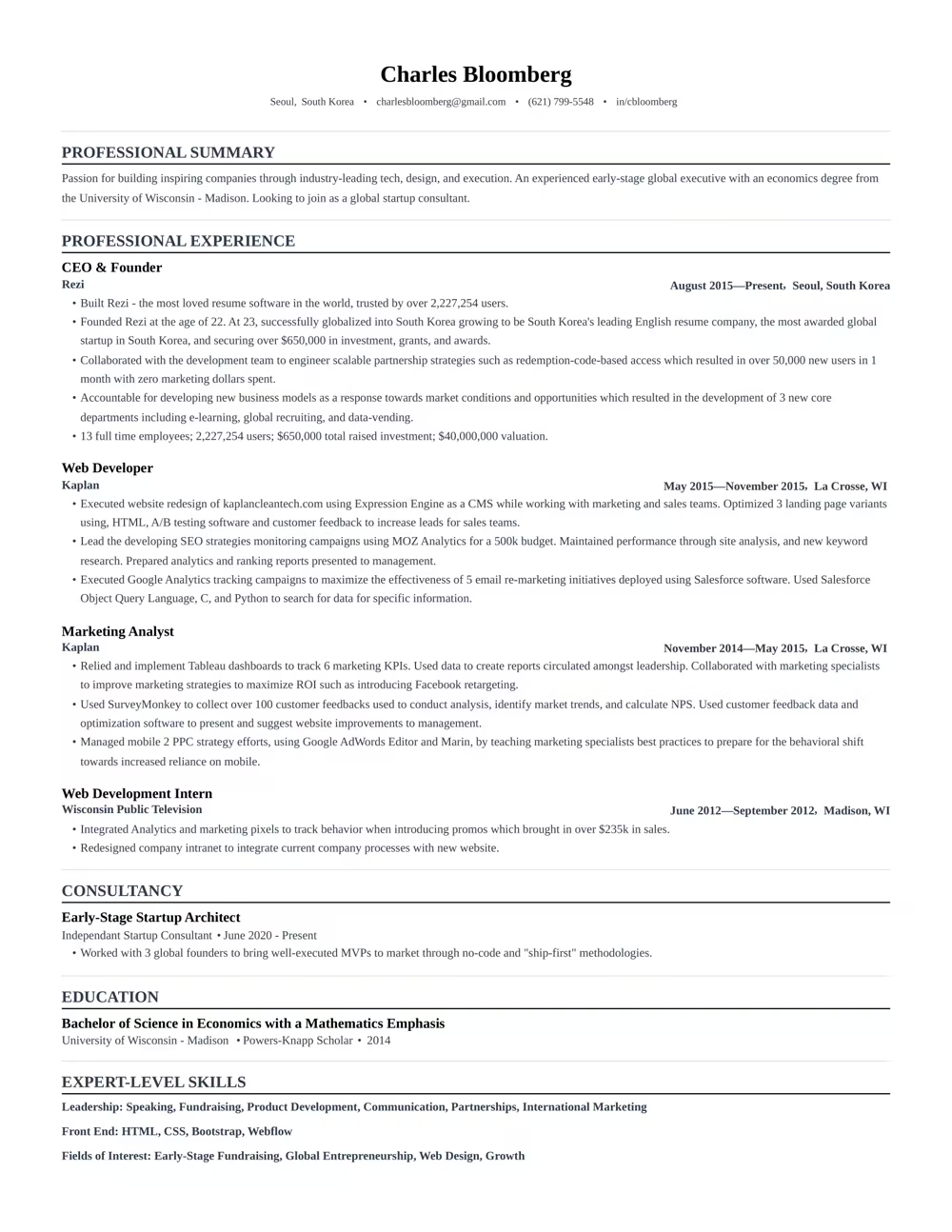
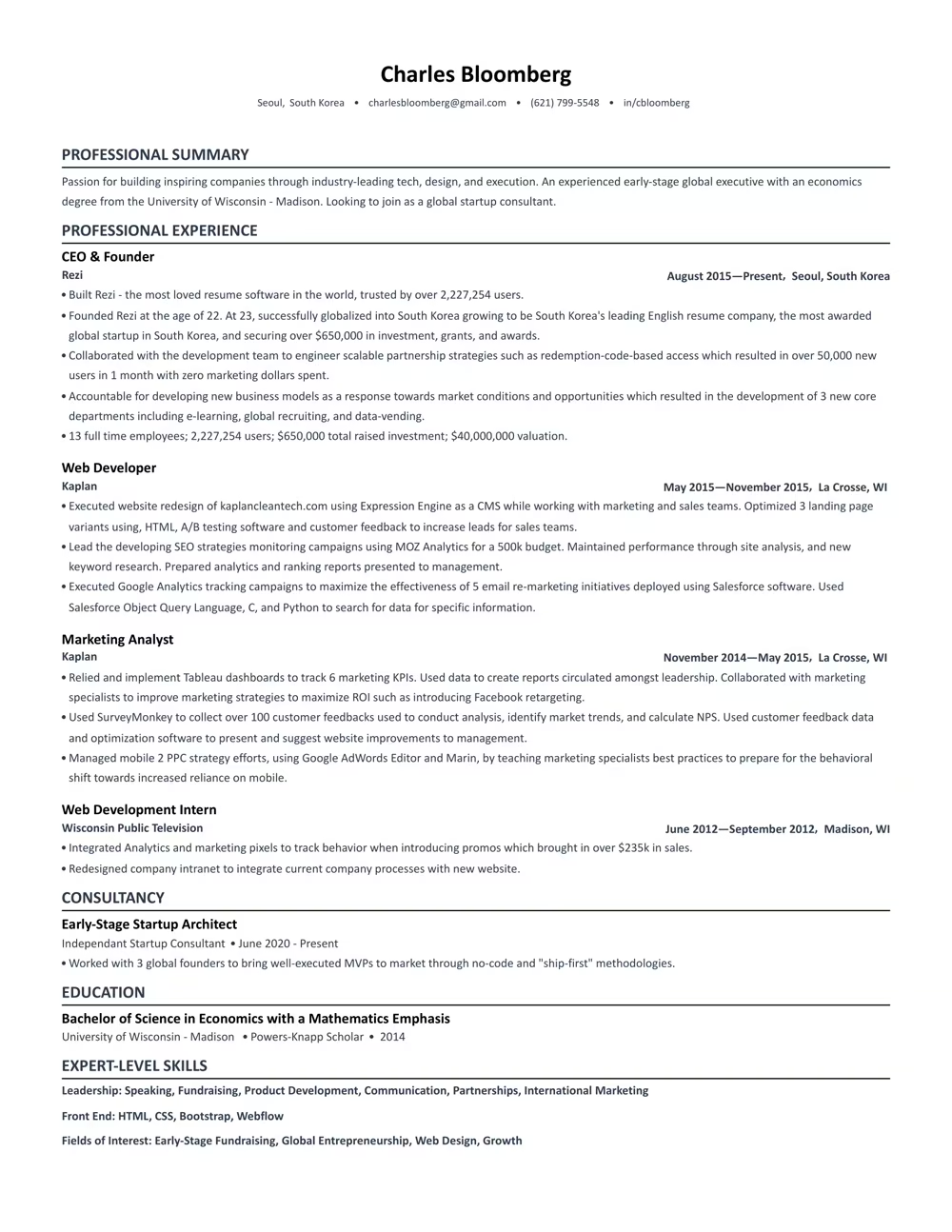
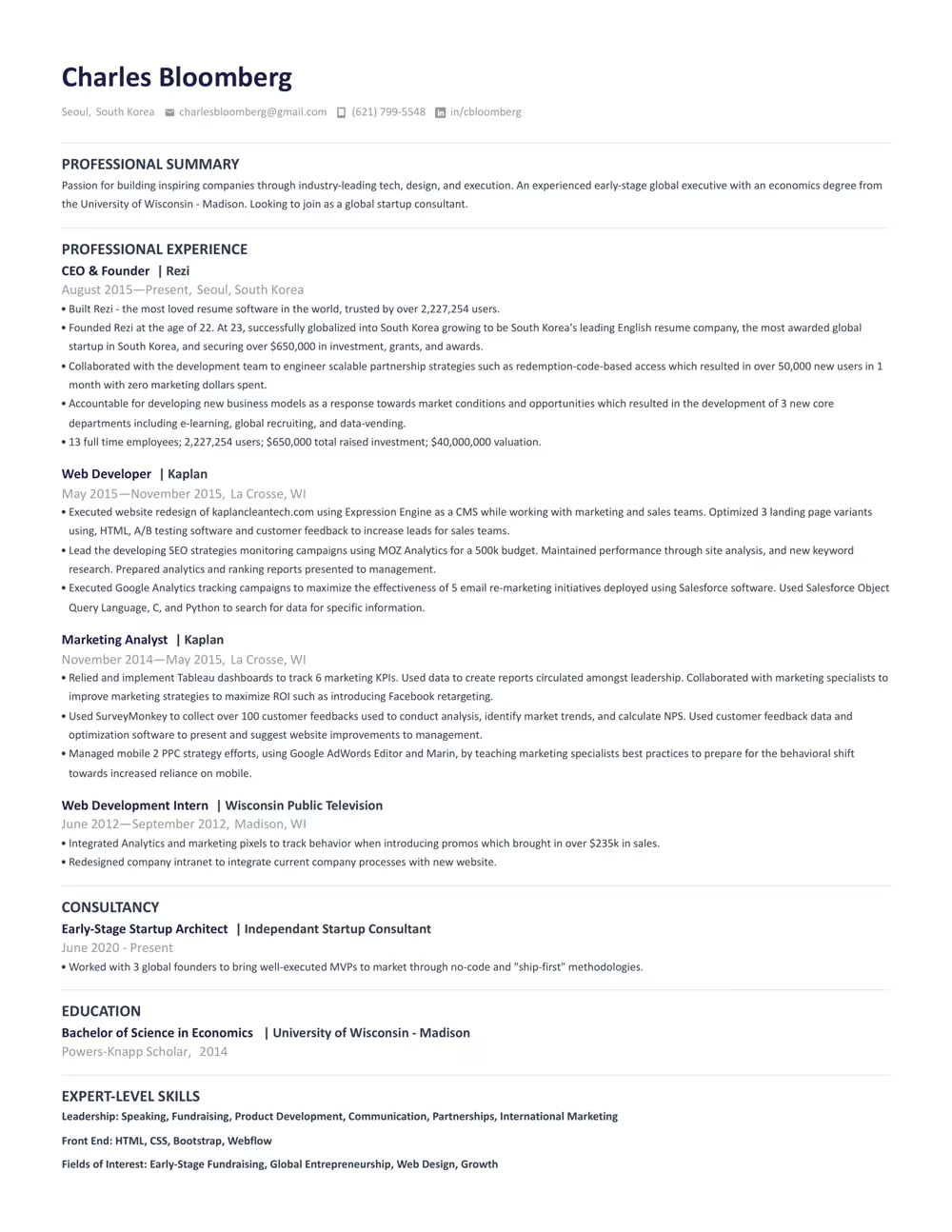
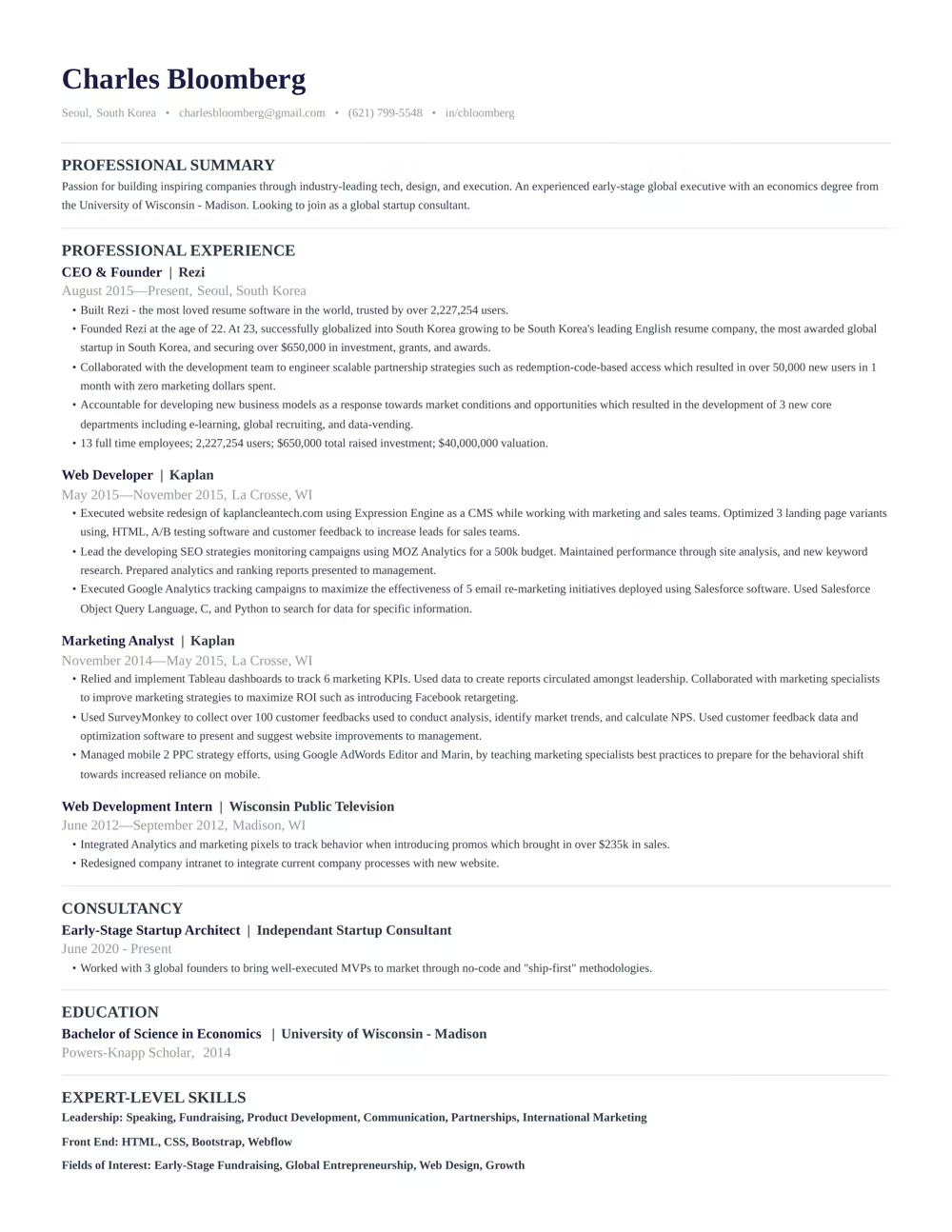
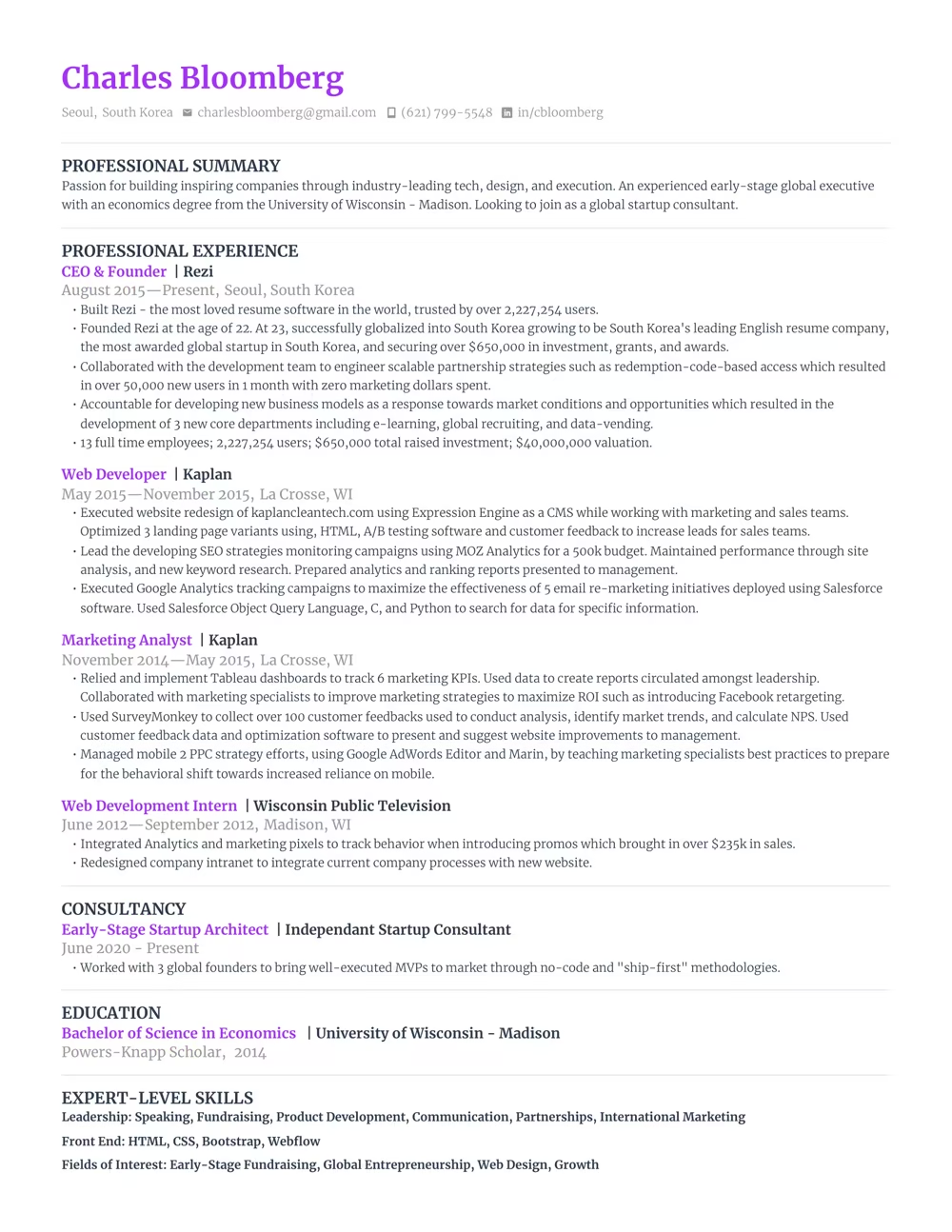
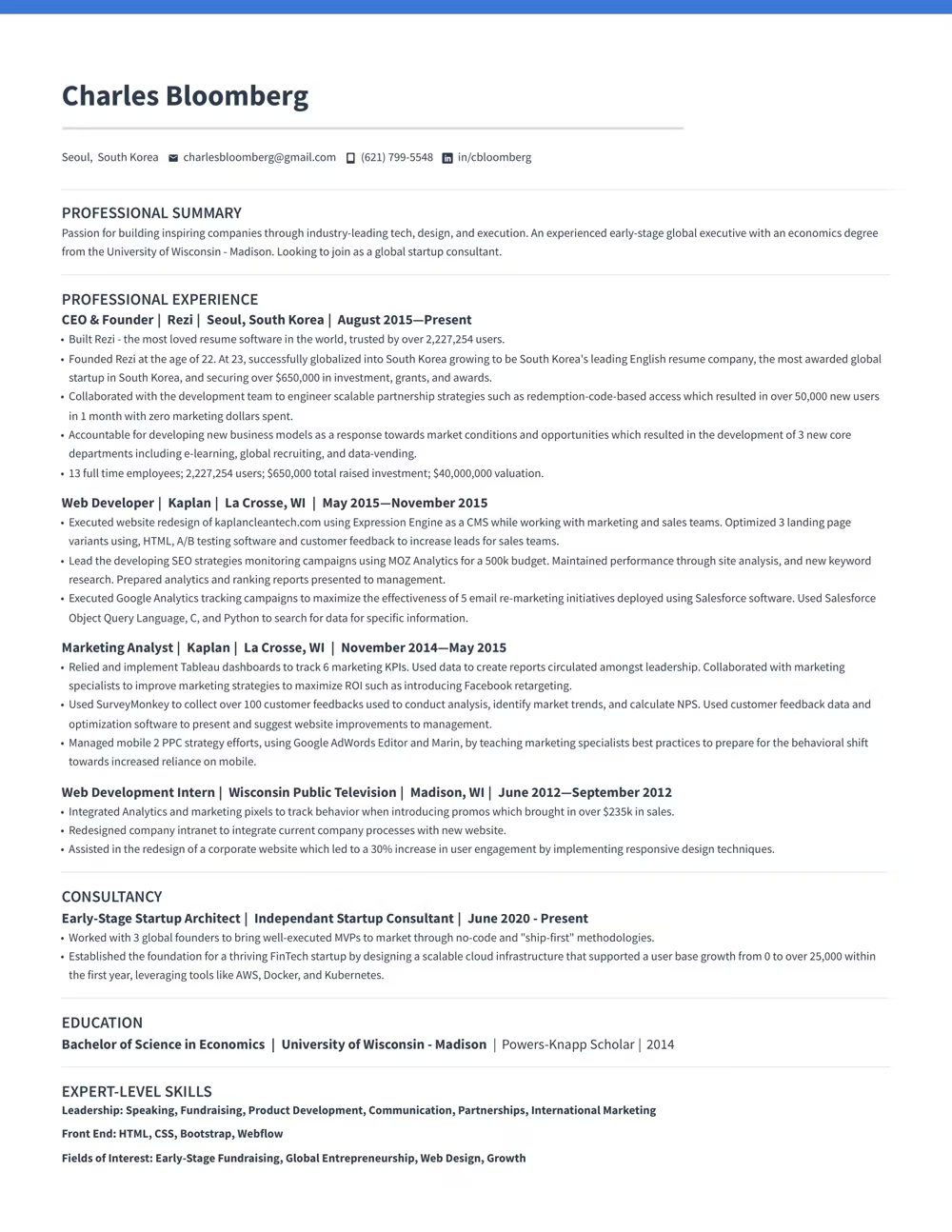
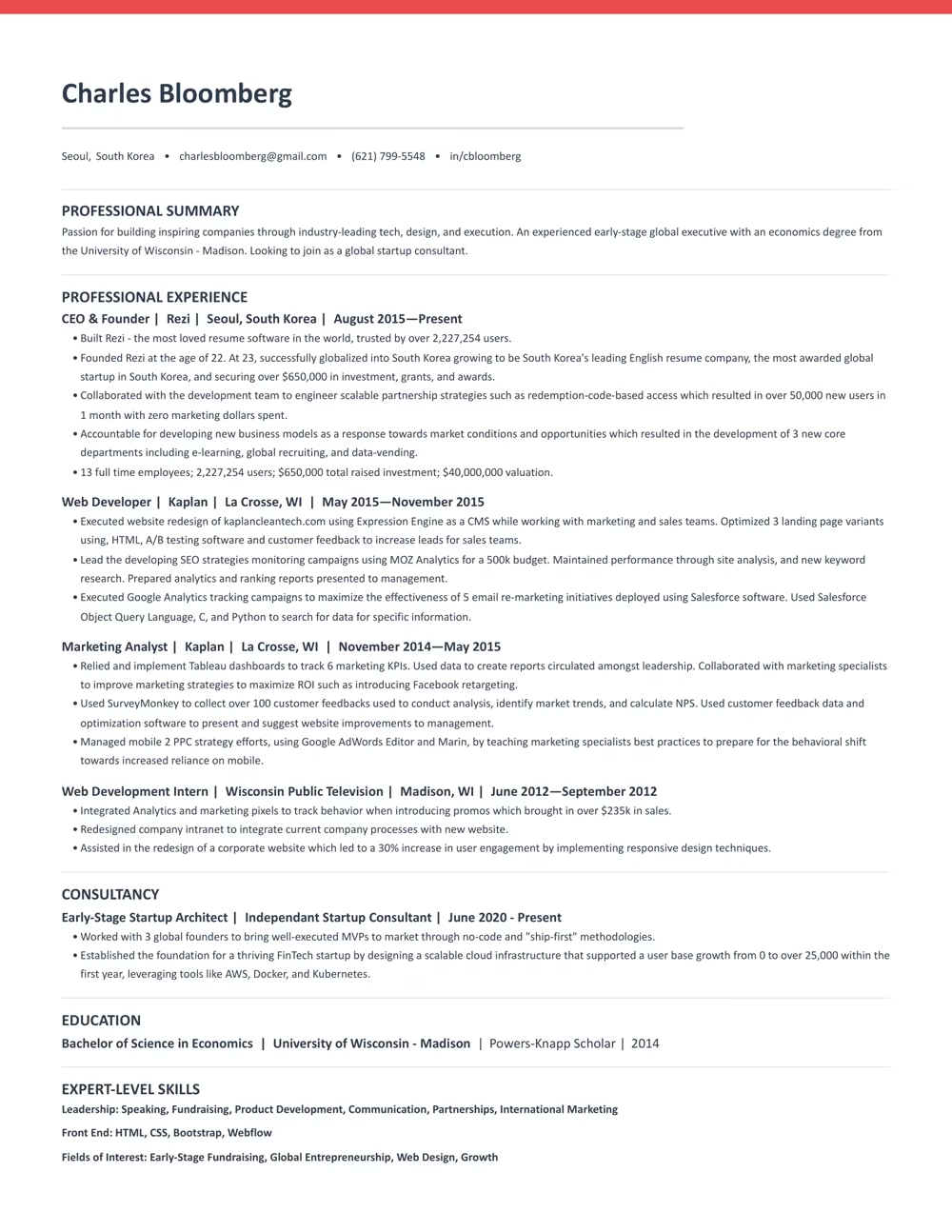
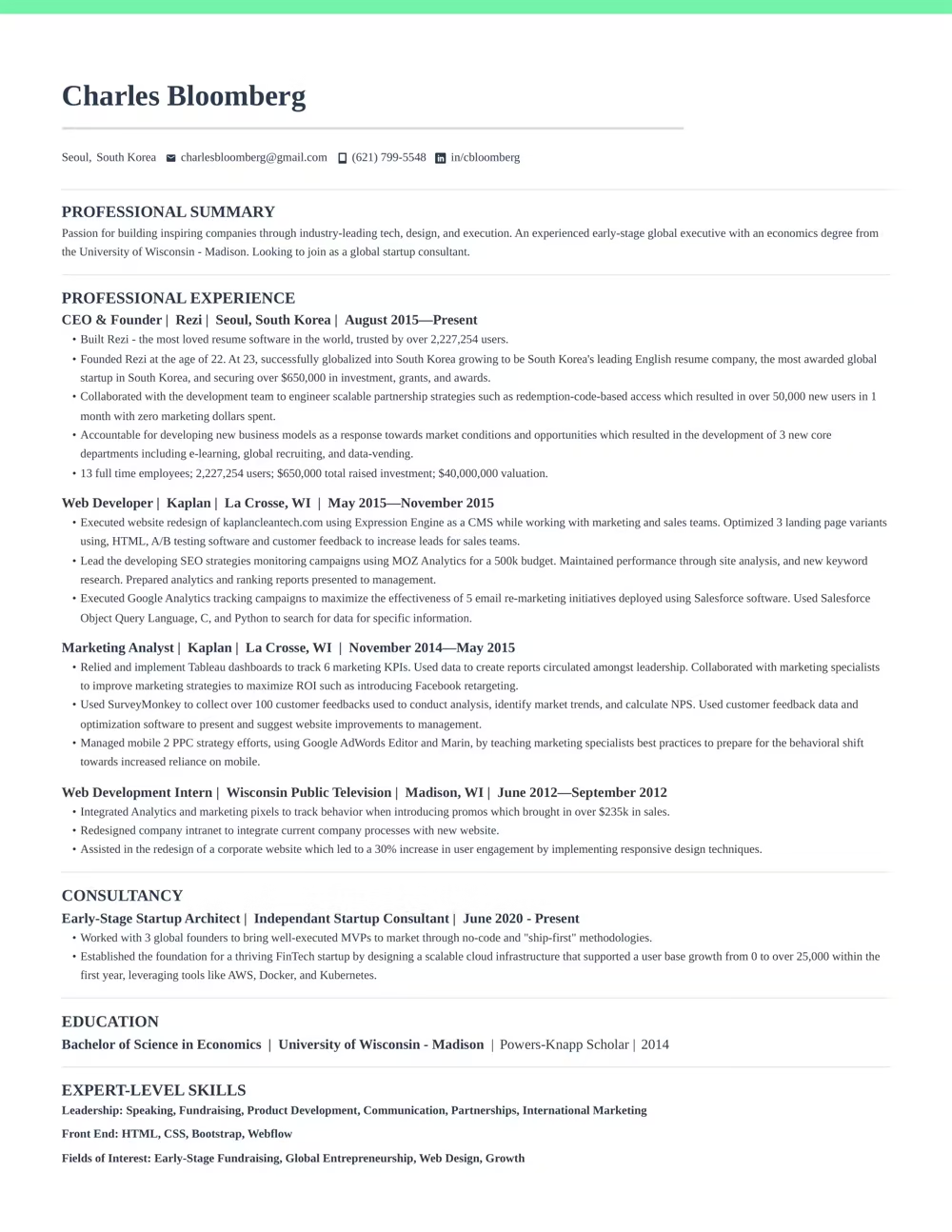
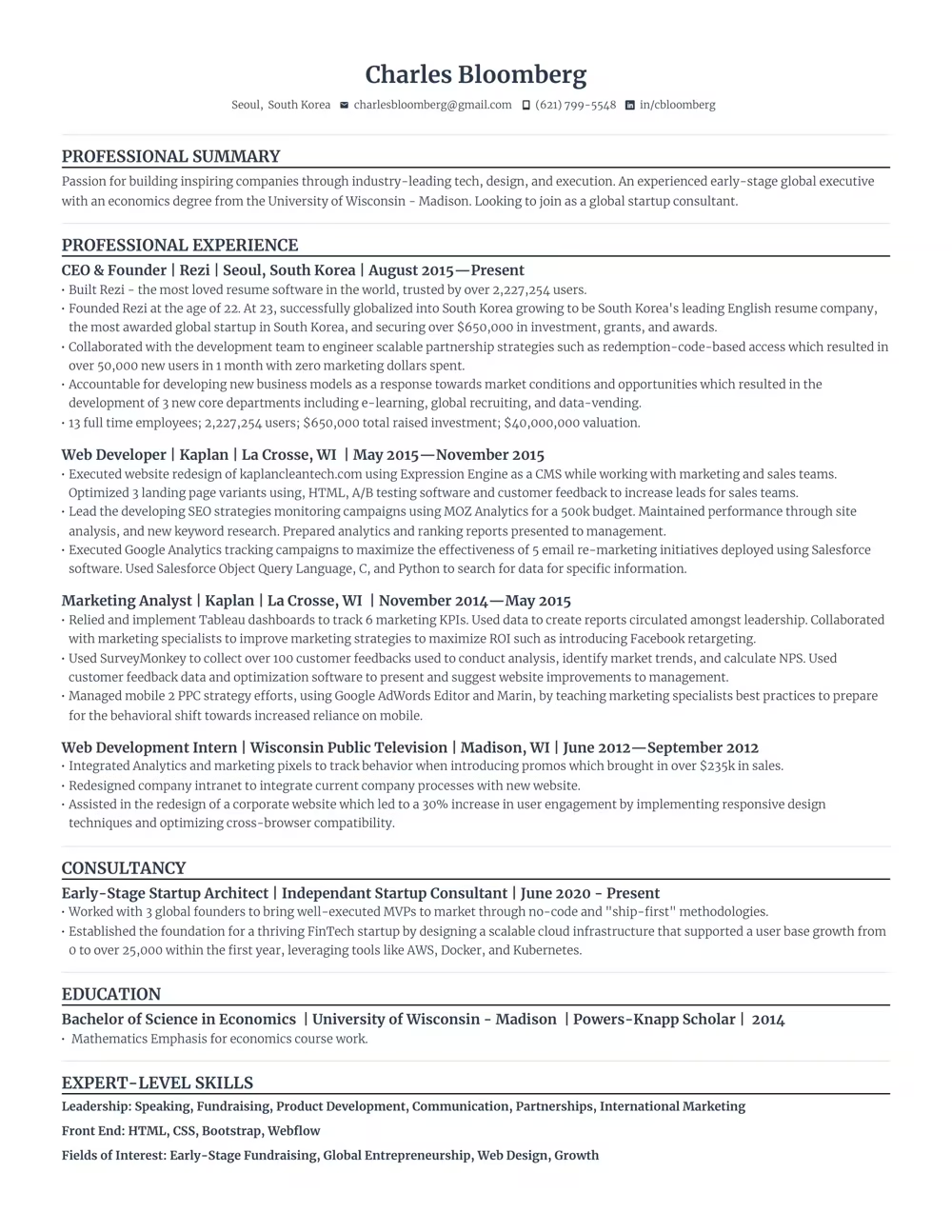
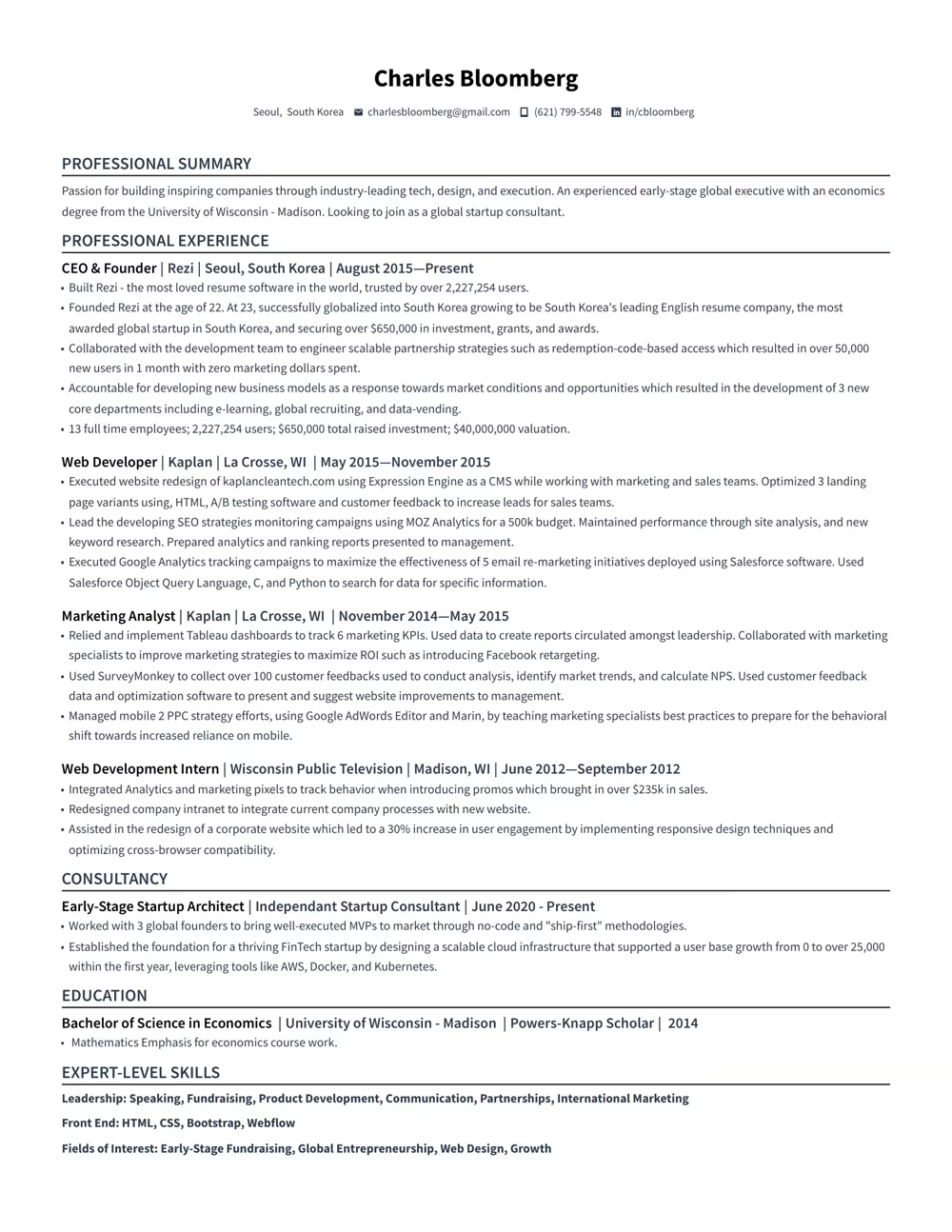
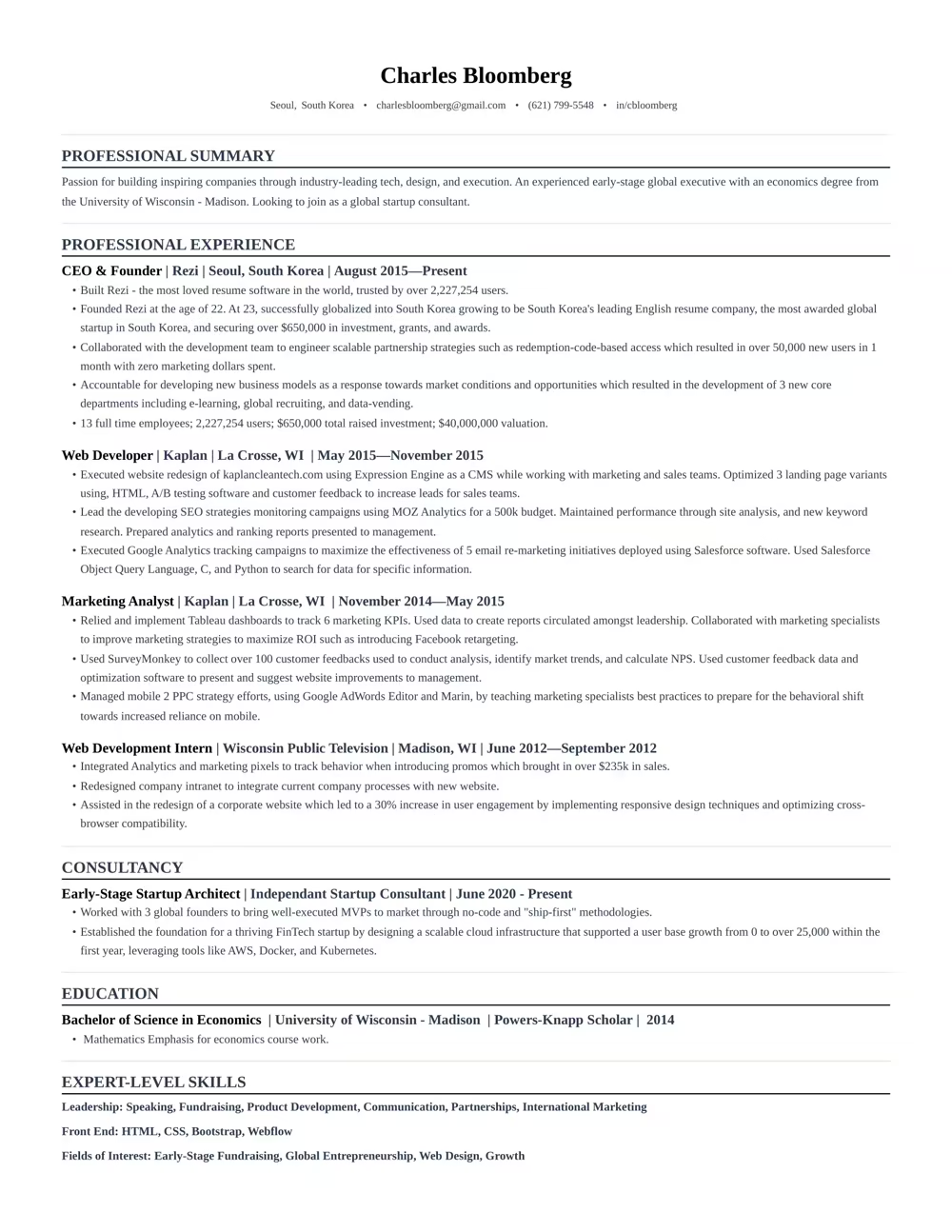
Use a template that guides you. Our ATS-compliant designs are trusted by over 4 million job seekers.




“Rezi is an awesome AI-based resume builder that includes templates to help you design a resume that is sure to check the boxes when it comes to applicant tracking systems. This is a great jumping off point to kickstart a new resume.”

Ashley Stahl
Career Contributor
62.18%
Interview Rate
4,510,834
Total Users
8.23 / 10
Avg. User Review
Wall of Love
Over 4 million users trust Rezi

Resume Building felt like pulling teeth – until I found Rezi.
Davis Allen
Software Developer

I was blown away by Rezi. It streamlined everything...
Celine Watko

I needed a resume tool as smart as my work.
Yosra Naceur
Data Scientist
“A great tool that is very helpful. I found the Rezi system easy to use and very helpful as I was working on getting my resume in shape for job applications.”

Dakota Rubin
United States
Written via

“This is actually one of the first reviews I’ve ever written for a business, and that alone says a lot. I highly recommend Rezi to anyone who’s job searching, it makes the entire process so much easier.”

Yazan Alkhatib
United States
Written via
“Reduced my time per application from 1-2 hours down to 15 minutes.”
Kixxx
Experience with Rezi
“I love how simple and convenient it is to use and been coming back to update it every time I need a fresh resume.”

Zara Wazir
U.A.E.
Written via
Frequently Asked Questions
Your questions, answered.
An AI resume maker helps you build a resume perfectly fit for the job you want. Top-notch AI resume builders are designed to speak the language hiring managers are looking for, increasing your chances of standing out in the crowd. It aligns your skills and experience with the job description effectively.
To get the most out of an AI resume builder, either start from scratch or upload your current resume. Fill in as much detail as possible about your career and skills, and upload the job description you’re targeting. This personalization allows the AI to build a unique and tailored resume that’s bound to catch potential employers' attention.
AI-generated resumes can seem similar if you're not giving personalized inputs or if you're using basic prompts. Provide specific details about your work experience and target the job you’re eyeing. Use specialized AI tools instead of general chatbots to avoid robotic-sounding resumes and to ensure individual creativity.
Employers might think you used AI, but that’s rarely an issue. What they really care about is getting a well-written resume that showcases your skills and experiences accurately. A top-notch resume tailored to their needs will speak volumes more than worrying about AI involvement.
Yes, using AI to optimize your current resume is highly effective. You just need to upload your resume, share details about your career goals and the job you want, and let the AI refine everything to elevate your resume's impact and ATS compatibility.
Rezi uses a tool called the AI Keyword Targeting. This feature scans the job description to identify crucial keywords and naturally incorporates them into your resume, giving it the right focus without keyword stuffing.
The Free plan is $0/month and allows you to create one resume, use limited AI tools (such as Keyword Targeting and Analysis), and download up to three PDFs. You can also create unlimited cover and resignation letters. No card is required to begin.
The Pro plan is $29/month and provides unlimited access to all features, including unlimited resumes, full AI capabilities, unlimited downloads, and one free monthly expert resume review (resumes are reviewed by a person).
The Lifetime plan is a $149 one-time payment. It grants permanent access to all the features of the Pro plan (unlimited resumes, full AI tools, and unlimited downloads), but it does not include the free monthly expert review (which can be purchased for an extra fee).
Rezi offers a 100% money-back guarantee on all paid plans (Pro and Lifetime). If you are unsatisfied, you can request a full refund within 30 days of your purchase.
Yes, you can easily upgrade or downgrade your plan at any time through your Rezi Account Billing dashboard. Prorated credits will apply when switching.
An AI resume maker helps you build a resume perfectly fit for the job you want. Top-notch AI resume builders are designed to speak the language hiring managers are looking for, increasing your chances of standing out in the crowd. It aligns your skills and experience with the job description effectively.
Yes, Rezi Enterprise.