Dev & Programming Resumes
8+ Full Stack Developer Intern Resume Examples & Tips for 2026
Customize any of these resumes in minutes using our free AI-powered resume builder.
“Rezi is super upfront and continues to improve over time. I've recommended Rezi to several of my friends and colleagues. I just love this product so much.”

Ricky M.
Software Engineer

“Rezi is super upfront and continues to improve over time. I've recommended Rezi to several of my friends and colleagues. I just love this product so much.”
Ricky M.
Software Engineer
Helping users land jobs at 1,000+ companies such as














Here's the thing about most full stack developer intern resumes I've reviewed: they read like a laundry list of programming languages and frameworks. "Proficient in JavaScript, Python, React, Node.js, SQL…" — and that's about it. No context, no projects, no proof that you can actually build anything.
A strong full stack developer intern resume needs to show you've done more than just learn technologies in a classroom. It needs to demonstrate that you've built real things — APIs, web apps, databases — and that you understand how the pieces fit together from frontend to backend.
And this is exactly what you'll learn from this article. Inside, you'll find:
- Examples of 8+ full stack developer intern resumes, covering different specializations and related roles.
- Insider tips about what recruiters and hiring managers actually look for when filling intern developer positions.
- A step-by-step guide for building a full stack developer intern resume that gets you callbacks.
Sample Full Stack Developer Intern Resumes
Take a look at some strong sample resumes for full stack developer interns and related roles. Find the one that best matches your profile and use it as a starting point — just make sure to customize it with your own projects, skills, and experience.
Note: these examples cover different variations of developer intern roles. Pick the one closest to the position you're targeting.
Software Developer Intern Resume
A Software Developer Intern resume should emphasize your foundational programming skills and any hands-on experience building applications. Highlight coursework in data structures, algorithms, and object-oriented programming. Showcase personal or academic projects where you wrote clean, functional code. Mention any experience with version control systems like Git, and demonstrate your ability to learn new technologies quickly and collaborate in team-based development environments.
Web Developer Intern Resume
For a Web Developer Intern resume, focus on your experience creating responsive, user-friendly websites. Highlight proficiency in HTML, CSS, and JavaScript, along with any frameworks like Bootstrap or Tailwind. Include projects where you built or redesigned websites, noting improvements in load time, accessibility, or user experience. Experience with CMS platforms, basic SEO knowledge, and an eye for design will make your resume stand out to hiring managers.
Full Stack Engineering Intern Resume
A Full Stack Engineering Intern resume should demonstrate strong technical depth across both frontend and backend systems. Highlight experience with system design, API architecture, and database management alongside frontend frameworks. Showcase projects where you handled the full development lifecycle — from planning and building to testing and deployment. Mention any exposure to cloud services like AWS or Azure, CI/CD pipelines, and your understanding of software engineering best practices.
Frontend Developer Intern Resume
Your Frontend Developer Intern resume should spotlight your ability to build intuitive, visually polished user interfaces. Emphasize proficiency in React, Vue, or Angular, along with core HTML, CSS, and JavaScript skills. Include projects where you translated design mockups into functional components, optimized rendering performance, or improved accessibility. Experience with responsive design, state management libraries, and UI testing frameworks will further strengthen your resume.
Backend Developer Intern Resume
For a Backend Developer Intern resume, focus on your experience with server-side languages, databases, and API development. Highlight proficiency in Node.js, Python, Java, or similar technologies, and showcase projects involving RESTful or GraphQL APIs, database design, and authentication systems. Mention any experience with cloud deployment, containerization tools like Docker, or working with SQL and NoSQL databases. Demonstrating strong problem-solving and debugging skills is essential.
Application Developer Intern Resume
An Application Developer Intern resume should highlight your experience building functional applications — whether web, mobile, or desktop. Showcase projects where you developed features end-to-end, worked with frameworks like React Native or Flutter, or contributed to existing codebases. Emphasize your understanding of the software development lifecycle, testing practices, and your ability to gather requirements and translate them into working software solutions.
Full Stack Web Developer Intern Resume
Your Full Stack Web Developer Intern resume should demonstrate the ability to build complete web applications from scratch. Highlight experience with frontend frameworks like React or Vue paired with backend technologies like Express or Django. Showcase projects where you handled routing, database integration, user authentication, and deployment. Include any experience with tools like Webpack, npm, or Docker, and demonstrate your understanding of how client and server communicate.
Junior Full Stack Developer Resume
A Junior Full Stack Developer resume should show you've moved beyond academic projects and gained some real-world development experience — through internships, freelance work, or significant open-source contributions. Emphasize your ability to work independently across the stack, manage code quality through reviews and testing, and collaborate with cross-functional teams. Highlight measurable outcomes like features shipped, bugs resolved, or performance improvements delivered.
How to Write a Full Stack Developer Intern Resume
Short answer:
Focus on your technical projects, the specific technologies you used, and what you actually built or contributed to. Create a clean header with your name, contact details, and a link to your GitHub or portfolio. Write a brief resume objective highlighting your strongest skills and what you're looking for. Describe your experience (including academic and personal projects) in reverse-chronological order, emphasizing technologies used and outcomes achieved. Cover your education, list technical and soft skills, and add extra sections like projects or certifications.
Include all the necessary sections in the correct order
Here's the correct order of sections for most full stack developer intern resumes:
- Header with contact information (including GitHub/portfolio link)
- Resume objective or summary
- Projects
- Work experience (if applicable)
- Education
- Skills
- Certifications (if applicable)
Depending on your situation, you can also add some additional sections. For instance:
- Open-source contributions
- Hackathon participation
- Relevant coursework
- Volunteer experience
- Technical blog or publications
Include everything that demonstrates you can code, build, and ship software. If a section doesn't clearly prove your technical ability or your readiness for a development role, leave it out.
As an intern candidate, keep your resume to 1 page. No exceptions. You don't have enough experience to justify two pages, and recruiters scanning intern applications expect a concise document.
More details here: What Sections to Include on Your Resume?
Now, I'll give you a high-level overview of how to write each section, going from top to bottom. Well… almost. The only exception is the resume objective section. While it comes right after your contact info, it's actually easier to write it last. More on that in a sec.
Create a professional resume header
- Start with your name and contact information. Include the basics: your full name, phone number, professional email address, and location. But here's what matters most for developer resumes — add your GitHub profile link and a link to your portfolio or deployed projects. These are not optional; they're expected.
- Right below your name, clearly state the role you're targeting (e.g., Full Stack Developer Intern). This immediately tells recruiters you're applying for the right position.
For more information, see: How to Create a Resume Header
Describe your work history and project experience
- Use reverse-chronological order. If you have any work experience — internships, freelance projects, part-time development work — list it starting with the most recent.
- In each entry, include your job title, company or organization name, location, and dates.
- Below each position, write 3–5 bullet points describing what you built, the technologies you used, and any measurable results.
- Use action verbs and be specific (e.g., "Developed a RESTful API using Node.js and Express that served 500+ daily active users" rather than "Worked on backend development").
- If you don't have formal work experience, lead with a dedicated Projects section. Treat personal, academic, and open-source projects like work experience — describe them with the same level of detail and professionalism.
Learn more about the best practices of this section with our detailed guide on how to describe your work experience on a resume.
List your degrees and relevant coursework
- In the education section, list your degree (or expected degree), major, institution, and expected graduation date.
- As an intern candidate, your education section can carry more weight. Include relevant coursework (e.g., Data Structures, Web Development, Database Systems, Operating Systems), your GPA if it's strong (3.5+), and any academic honors or Dean's List mentions.
- If you have relevant certifications (e.g., AWS Cloud Practitioner, Meta Front-End Developer Certificate), either include them here or create a separate "Certifications" section right below.
For an in-depth guide on how to describe your education on a resume, see: How to List Education on a Resume
List your most relevant skills in the skills section
- Include a mix of programming languages, frameworks, tools, and methodologies you're proficient in. Be honest — listing a technology you barely touched in a tutorial will backfire in a technical interview.
- Add relevant soft skills like collaboration, communication, and problem-solving. These matter, especially for intern roles where companies are evaluating your potential to work on a team.
- You can organize your skills into subcategories (e.g., "Languages," "Frameworks," "Tools") to make them easy to scan.
- Match your skills to the job description. If the posting asks for React and PostgreSQL, make sure those are prominently featured — assuming you actually know them.
Need some inspiration to get started? Here are some good skills to feature on your full stack developer intern resume.
Programming languages:
- JavaScript (ES6+)
- Python
- TypeScript
- Java
- HTML5
- CSS3
- SQL
- C/C++
- Ruby
- PHP
Frameworks, libraries & tools:
- React
- Node.js
- Express.js
- Next.js
- Django
- Vue.js
- Angular
- MongoDB
- PostgreSQL
- Git/GitHub
- Docker
- REST APIs
- GraphQL
- AWS / Firebase
- Tailwind CSS
Key soft skills for developer interns:
- Problem-Solving
- Communication
- Teamwork
- Adaptability
- Time Management
- Attention to Detail
- Willingness to Learn
- Self-Motivation
- Critical Thinking
- Collaboration
For a full-blown guide on listing skills on a resume, visit: How to Put Skills on a Resume
Use additional sections as further proof of your fit
Additional sections add depth to your resume and back up your technical claims. Good examples of extra sections to add to a full stack developer intern resume are:
- Projects. This is arguably the most important extra section for intern candidates. Dedicate a section to your best projects, describing what you built, the tech stack used, and any results or metrics. Link to live demos or GitHub repos wherever possible.
- Open-source contributions. Even small contributions to open-source projects show you can read others' code, follow contribution guidelines, and work within an existing codebase.
- Hackathons. Participation in hackathons demonstrates initiative, the ability to build under pressure, and teamwork. Mention any awards or notable projects.
- Technical blog or publications. If you've written technical articles or tutorials, include them. This shows communication skills and deeper understanding of the topics you write about.
Highlight the most relevant information in a resume objective
Once you're done writing your full stack developer intern resume, give it a full read. Pick the most relevant information and compile it into a concise objective statement. Place it right under the resume header.
- Be brief and specific. In 2–3 sentences, state what you're studying, your strongest technical skills, and what kind of role you're seeking. Consider this your chance to answer, "Why should we give this intern a shot?" Tailor this section to match the company's needs outlined in the job description.
- Use value-oriented language. Instead of "Looking for an opportunity to learn," try something like "Computer Science junior with hands-on experience building full stack web applications using React and Node.js, seeking to contribute to a product team and deliver production-quality code."
Once you've completed the core sections of your resume, you can use Rezi AI Resume Summary Generator to automatically create a powerful objective statement, tailored to the job you're applying for. All you need to do is add the position and skills you want to highlight. The AI writer will do the rest.
More information here: How to Write a Job-Winning Resume Summary (with Examples)
For finishing touches, make sure your resume looks professional
- Use a clean, minimal resume format. Ensure your resume is easily readable, with a professional font, consistent formatting, and clear section headings. Avoid flashy design elements — save the creativity for your portfolio. A cluttered layout can also confuse resume screening software (ATS).
- Stick to one page. As an intern candidate, there's no reason to go beyond a single page. Every line should earn its place. If you're struggling to fill a page, add more detail to your projects section — that's where your real value lives.
Learn more about proper resume formatting here: How to Format a Resume & What Standard Resume Format to Use
What Makes Full Stack Developer Intern Resumes Different
In short: it's all about demonstrating what you've built and proving you can work across the entire stack — even without years of professional experience.
This is where many intern candidates stumble. Listing technologies isn't enough. Recruiters need to see evidence that you've actually used those tools to create something real. Here's how full stack developer intern resumes differ from most other resumes.
Projects carry more weight than work experience
For most job seekers, the work experience section is the heart of the resume. For full stack developer interns, your projects section is often more important — especially if you haven't had a formal development role yet.
What it means for you:
- Treat your projects section like a work experience section. For each project, include the project name, a brief description, the tech stack, your specific role, and any measurable outcomes (e.g., "Built a task management app with React and Express, deployed on AWS, serving 200+ users").
- Always link to live demos, deployed applications, or GitHub repositories. Recruiters and hiring managers will click on them.
You need to show breadth across the stack
Unlike frontend-only or backend-only intern roles, a full stack position requires you to demonstrate competence in both areas — plus databases, deployment, and sometimes DevOps basics.
What it means for you:
- Make sure your resume includes at least one project that spans the full stack — frontend, backend, database, and deployment. This is the clearest proof that you understand how all the layers connect.
- In your skills section, organize technologies by category (languages, frontend frameworks, backend frameworks, databases, tools) so it's immediately clear you have range.
Your GitHub profile is part of your resume
For most professions, a resume is a standalone document. For developer interns, your GitHub (or GitLab) profile is essentially an extension of your resume. Hiring managers will look at it.
What it means for you:
- Clean up your GitHub before applying. Pin your best repositories, write clear README files, and make sure your commit history shows consistent, clean contributions.
- Remove or make private any repositories with sloppy code or incomplete projects. Quality over quantity.
Learning ability matters as much as current skills
Companies hiring interns know you won't have expert-level knowledge. What they're really evaluating is your ability to learn quickly and apply new technologies.
What it means for you:
- Highlight instances where you taught yourself a new technology and applied it in a project. For example, "Self-taught Docker and containerized a full stack application for deployment on AWS EC2."
- Mention relevant coursework, online certifications, and hackathon participation to show continuous learning and initiative beyond what's required in your curriculum.
Bonus Resources for Full Stack Developer Interns
This won't help you finish your resume tonight. But these resources will sharpen your skills, help you build more impressive projects, and make your next resume even stronger.
Learning platforms and courses
The Odin Project
A free, open-source full stack curriculum that takes you from zero to job-ready. It covers HTML, CSS, JavaScript, Node.js, React, and databases through hands-on projects — exactly the kind of work that belongs on your resume.
freeCodeCamp
One of the most comprehensive free coding platforms available. Their full stack development certifications include thousands of hours of projects covering responsive web design, APIs, microservices, and more.
Full Stack Open (University of Helsinki)
A free, university-level course covering React, Redux, Node.js, MongoDB, GraphQL, and TypeScript. Completing this course and its projects gives you legitimate full stack credentials to list on your resume.
Coursera & edX
Both platforms offer full stack development courses from top universities and companies like Meta, IBM, and Johns Hopkins. Many offer certificates you can add to your resume and LinkedIn profile.
Developer communities and networking
DEV Community
An inclusive community where developers share articles, tutorials, and career advice. Reading and contributing here keeps you current and shows engagement with the developer community.
Stack Overflow
Beyond being a Q&A site, actively contributing answers on Stack Overflow demonstrates deep technical understanding and a willingness to help others — qualities hiring managers value.
GitHub
Beyond hosting your code, GitHub is a networking platform. Contributing to open-source projects, starring repositories, and engaging with the community all build your professional presence as a developer.
Technical practice and interview prep
LeetCode & HackerRank
These platforms are essential for preparing for technical interviews that often accompany developer internship applications. Regular practice improves your problem-solving skills and algorithmic thinking.
Frontend Mentor
Provides real-world frontend challenges with professional designs. Completing these challenges gives you polished portfolio projects and practical experience translating design specs into code.
Publications and blogs
LogRocket Blog
Covers modern frontend and full stack development topics, including React, Node.js, and performance optimization. Great for staying current with industry trends and best practices.
Smashing Magazine
A long-standing publication focused on web development and design, offering in-depth articles, tutorials, and guides covering both frontend and full stack topics.
Summary
Here's what you need to know about writing a full stack developer intern resume:
- Structure your resume with these sections in order: Header (with GitHub/portfolio links), Resume Objective, Projects, Work Experience (if applicable), Education, Skills, and Certifications. Add extra sections like hackathons or open-source contributions when relevant.
- Include a professional header with your name, contact information, professional title, and links to your GitHub profile and portfolio.
- Lead with a strong projects section if you lack formal work experience. Treat each project entry like a job — describe what you built, the tech stack, and the outcomes.
- Describe any work experience in reverse-chronological order, emphasizing technologies used and measurable achievements.
- In the education section, list your degree, relevant coursework, and GPA if it's strong. Include certifications either here or in a separate section.
- Highlight a well-organized mix of programming languages, frameworks, tools, and soft skills — tailored to the specific job description.
- Make sure your GitHub profile is clean, well-documented, and consistent with what your resume claims.
- Once everything is written, compile the key information into a brief, targeted resume objective at the top.
- Keep it to one page, use a clean format, and make sure every line proves you can build software across the full stack.
Thanks for reading! Got any questions? Feel free to reach out to me on LinkedIn. (Or check out the FAQs first — your question might already be answered there.)
FAQ
I don't have any professional experience. Is my resume doomed?
Not at all — this is the reality for most intern candidates, and hiring managers expect it. The key is treating your personal and academic projects like professional experience. Describe them with specifics: what you built, which technologies you used, what problems you solved, and link to live demos or repos. A well-documented project section can be just as compelling as work experience.
How many projects should I include on my resume?
Two to four projects is the sweet spot. Choose projects that demonstrate range across the stack — ideally at least one full stack application. Quality matters far more than quantity. A single polished, deployed web app with a clean README is worth more than five half-finished tutorial follow-alongs.
Should I include every programming language I've ever touched?
No. Only list languages and technologies you'd be comfortable discussing in a technical interview. If someone asks you about a technology on your resume and you can't answer basic questions about it, that's a red flag. It's better to list fewer skills with genuine competence than to pad your resume with buzzwords.
Do I need a portfolio website as a full stack developer intern?
It's not strictly required, but it's a significant advantage — especially since building a portfolio site is itself a full stack project. A clean portfolio with deployed project demos, descriptions, and links to your code gives recruiters an easy way to evaluate your work and shows you can ship a complete product.
Should I include my GPA?
Include it if it's 3.5 or above. If it's lower, leave it off — no one will assume the worst, and your projects and skills will speak louder. If your major GPA is significantly higher than your overall GPA, you can list that instead (just label it clearly as "Major GPA").
How do I handle gaps in my technical knowledge?
Be honest about what you know and focus your resume on your strengths. If a job posting lists a technology you're unfamiliar with but you have strong fundamentals, mention your willingness and ability to learn quickly — then back it up with an example of a time you picked up a new technology on your own. Hiring managers value learning velocity in interns over checking every single box.
Is it worth tailoring my resume for each internship application?
Absolutely. At minimum, adjust your resume objective and reorder your skills to match each job description. If a company uses Python and Django, make sure those are featured prominently — don't bury them below technologies the company doesn't use. This also helps you get past ATS filters, which scan for keyword matches.
Should I include non-technical work experience like retail or food service?
If you have enough technical projects and relevant experience to fill your resume, you can leave non-technical jobs off. But if your resume is light on content, including non-technical work is absolutely fine — just focus on transferable skills like teamwork, problem-solving, time management, and customer communication. Keep these entries brief and prioritize your technical sections.

Upload or drop your resume to get started
Upload your resume to get started
Score my resume
Contents

Resume Formats & Examples
ATS-Friendly resume formats that land jobs
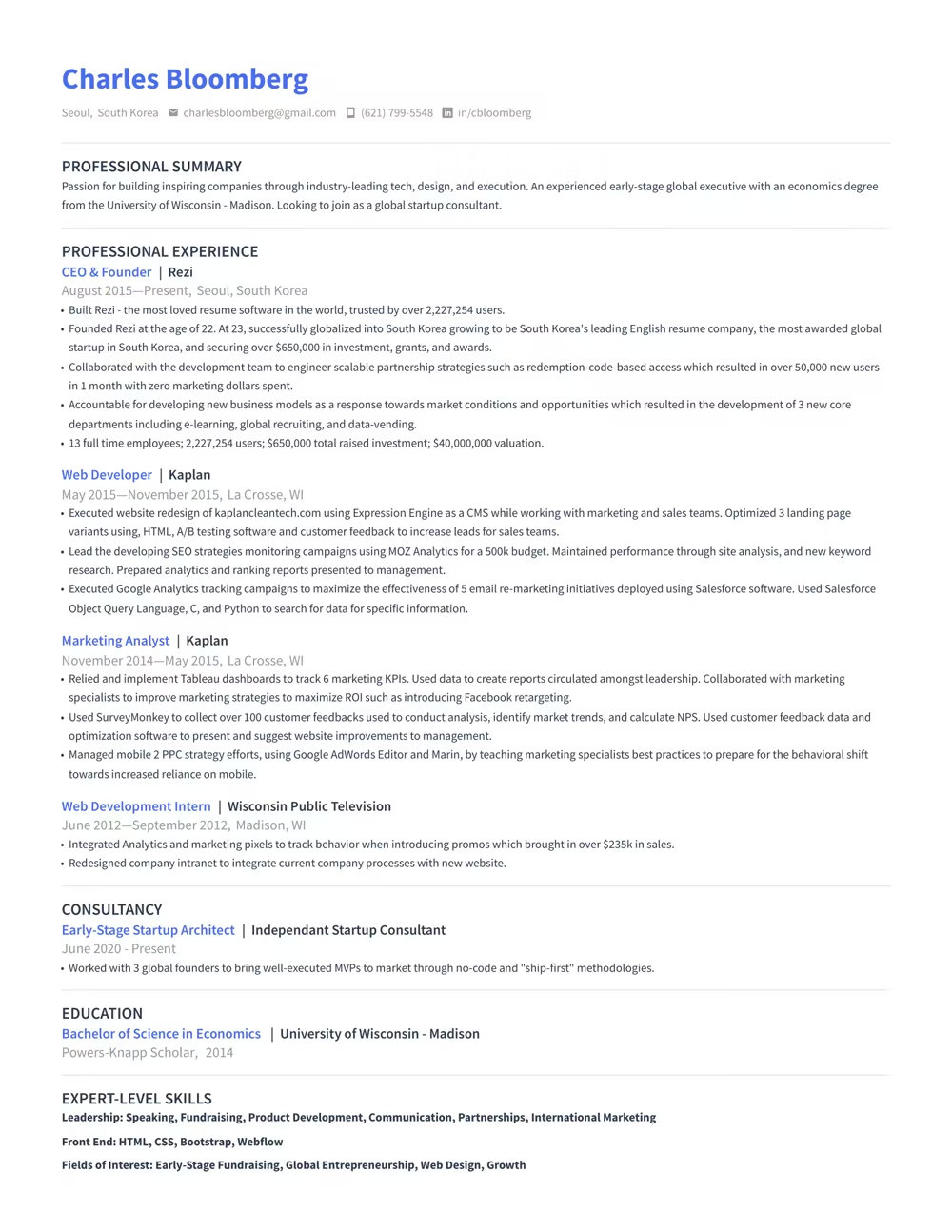
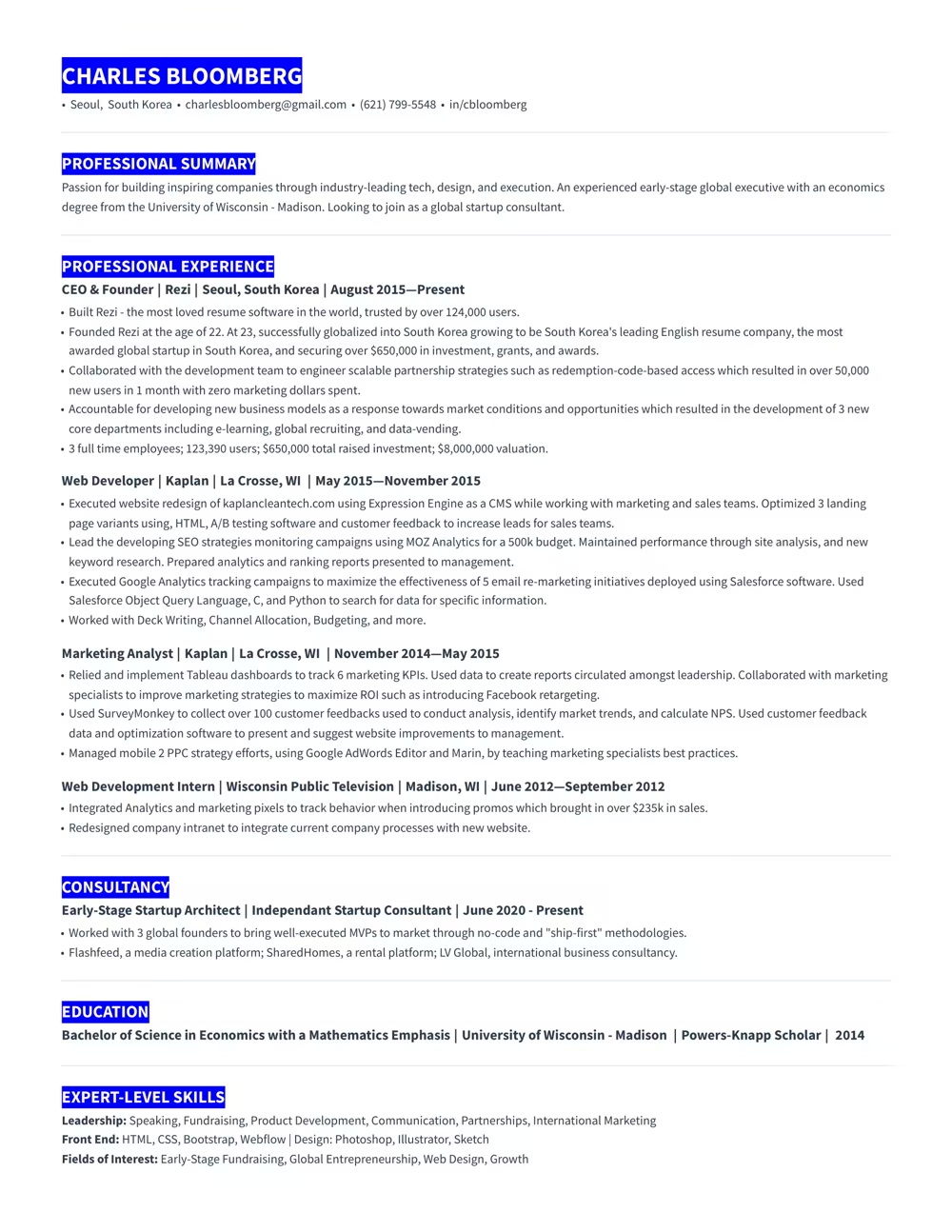
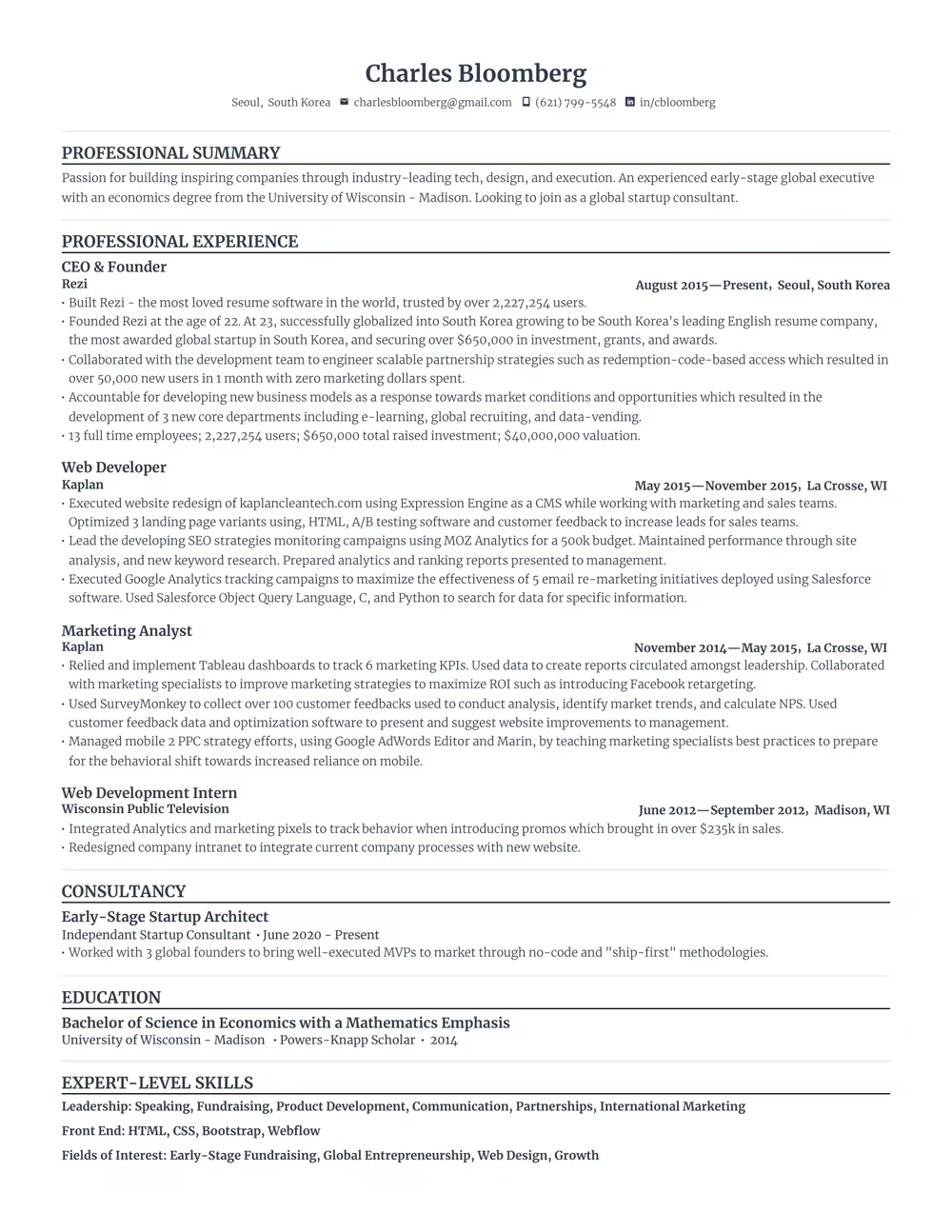
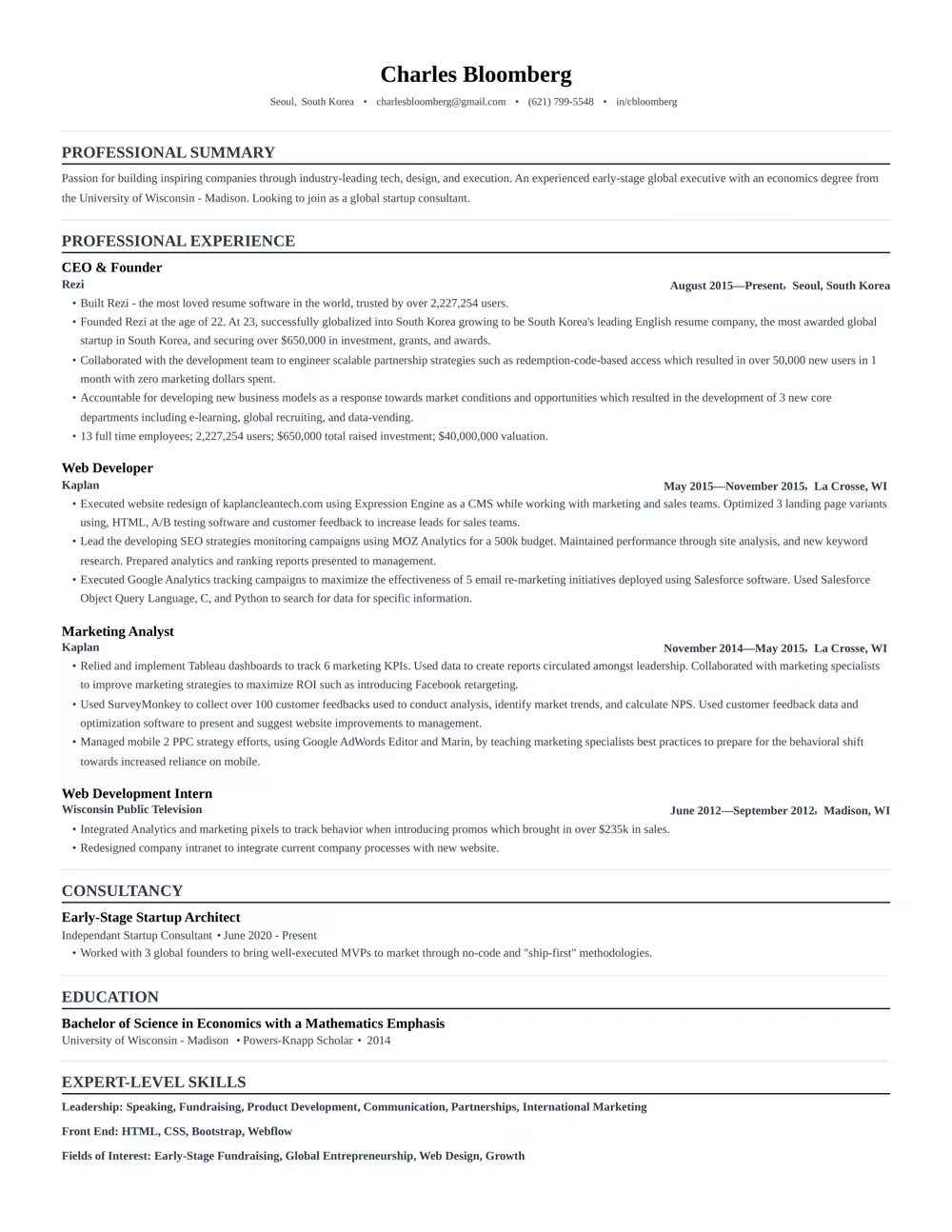
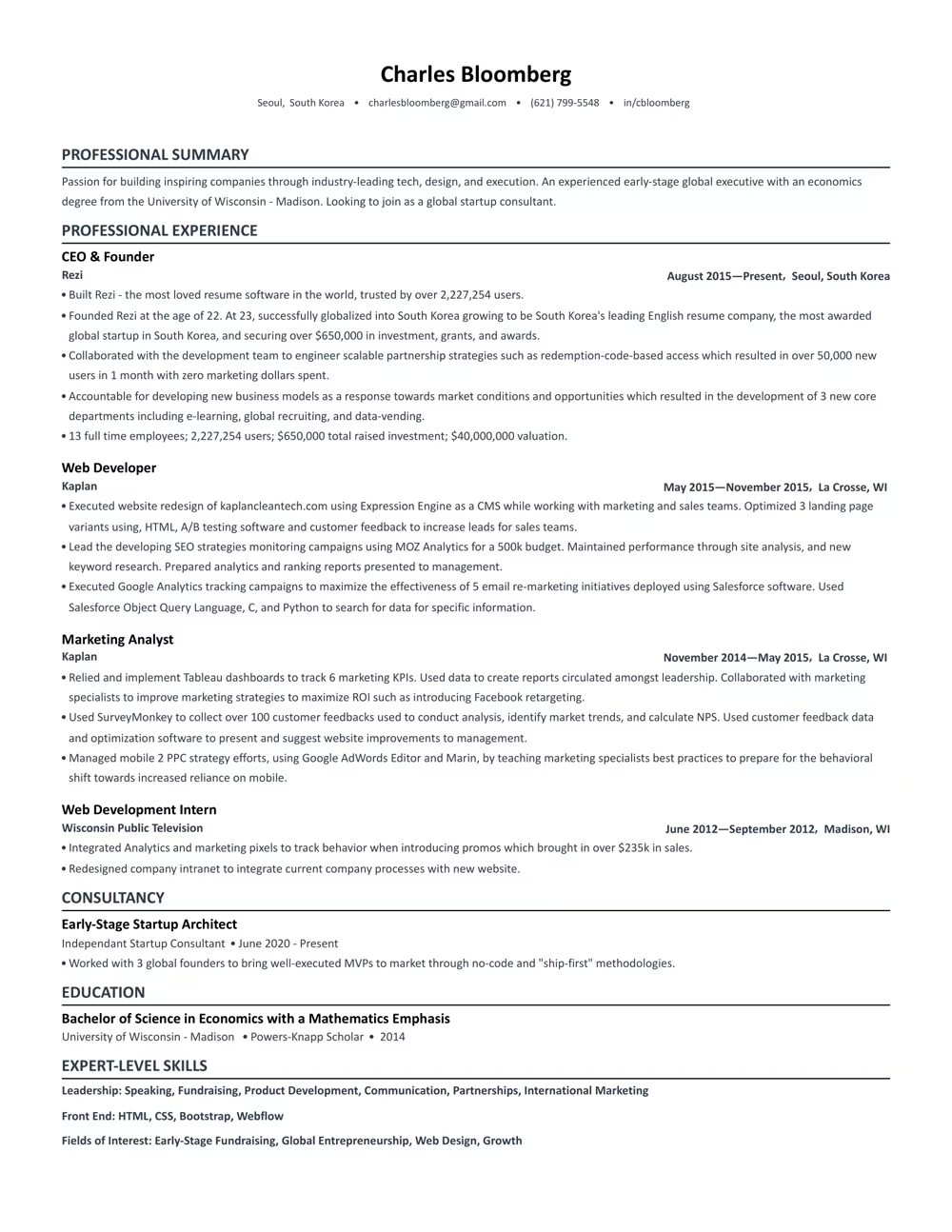
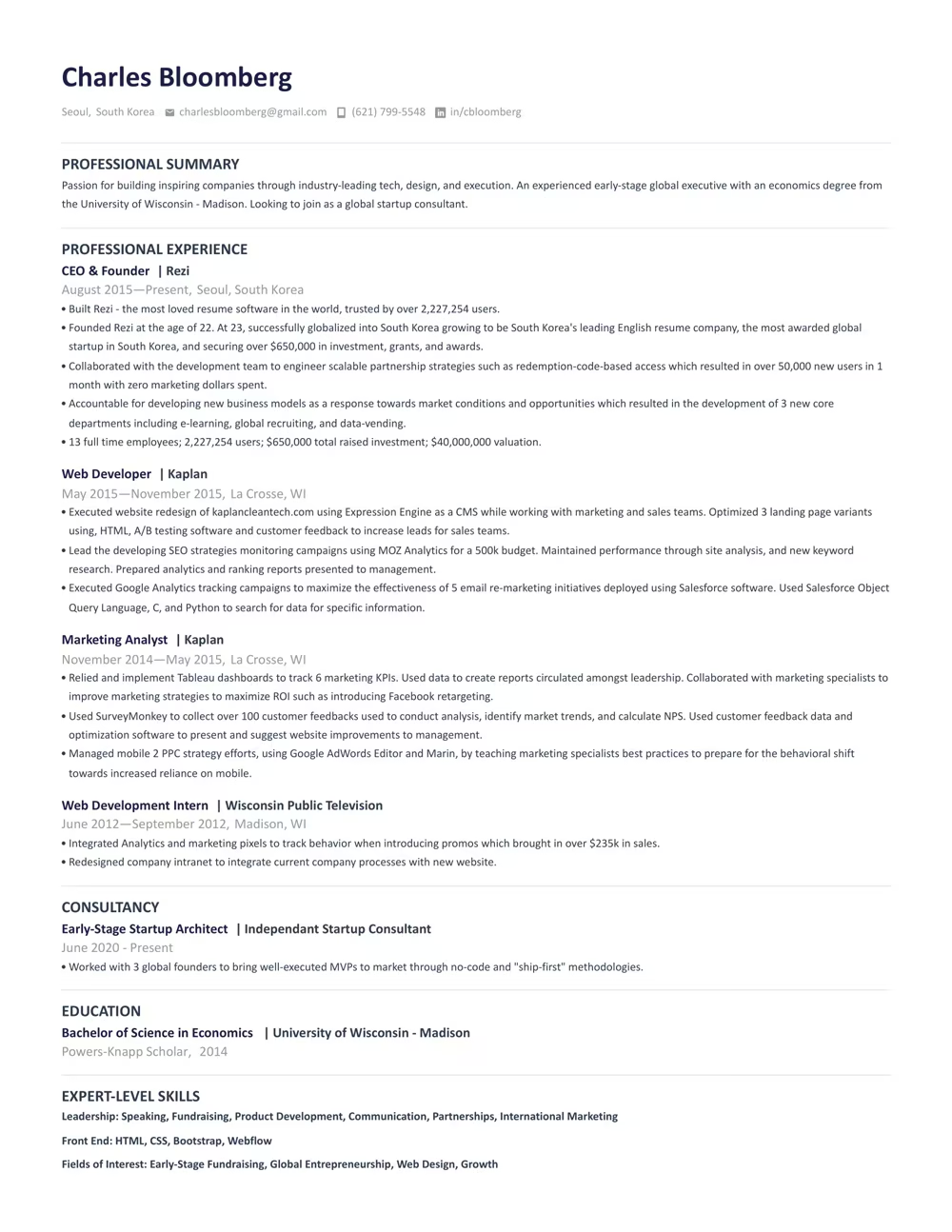
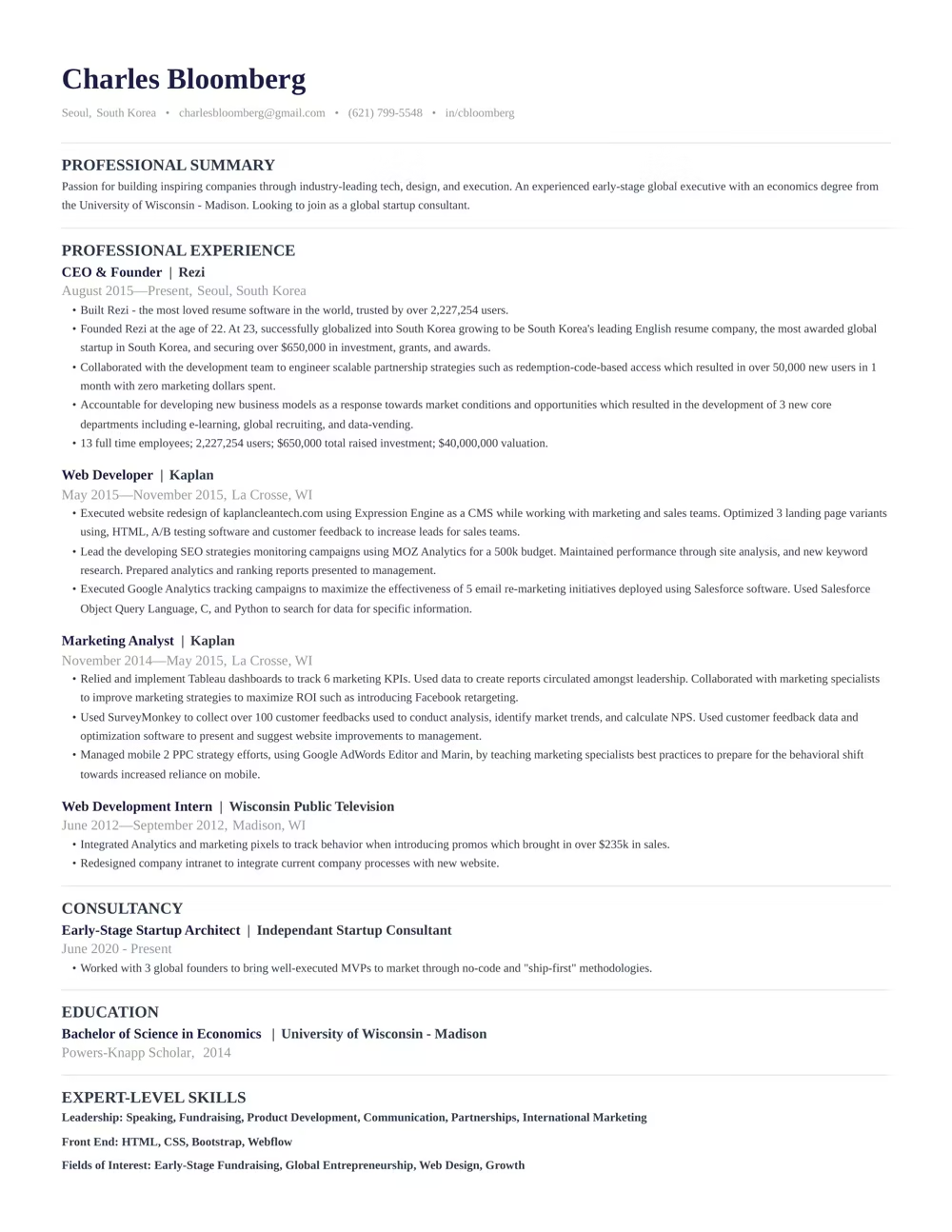
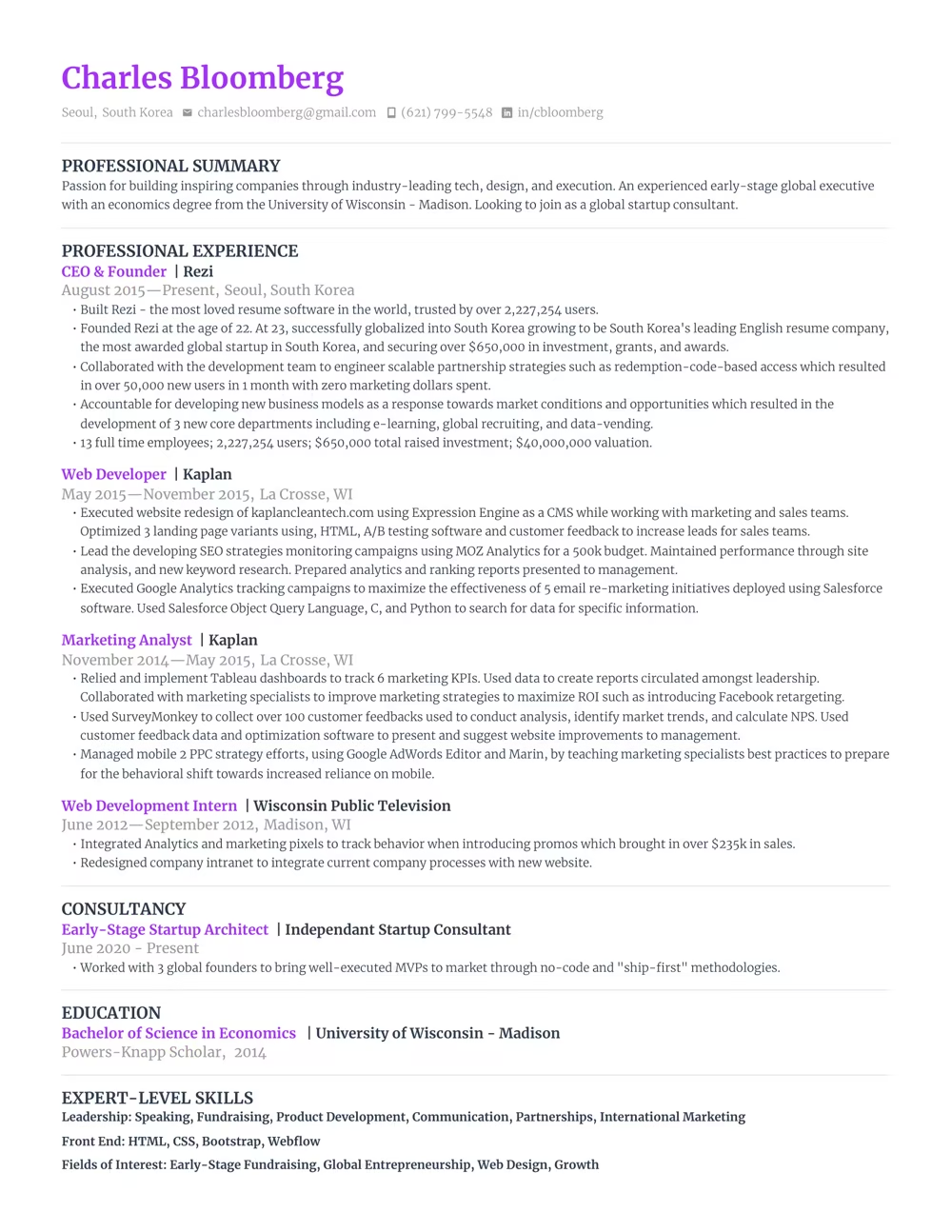
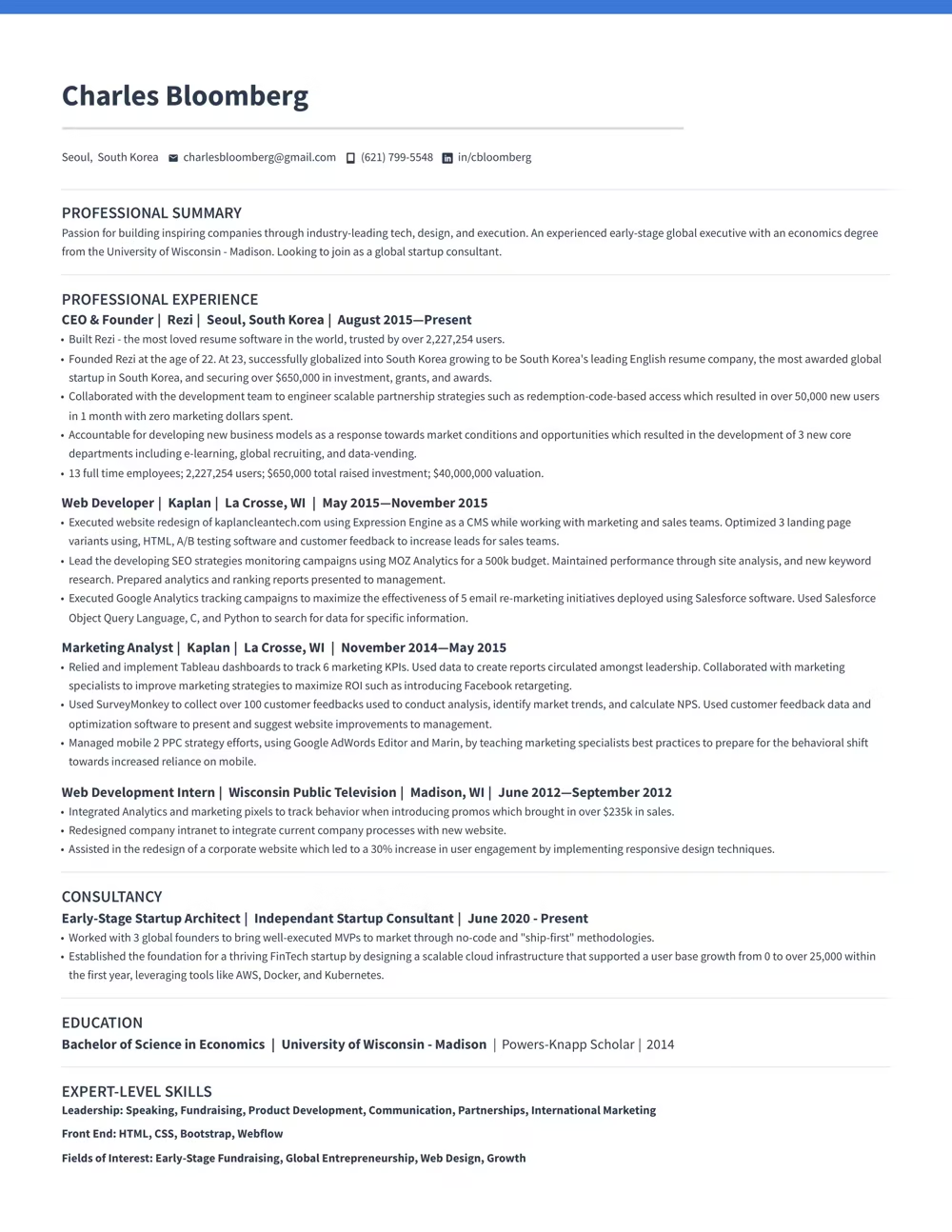
Use a template that guides you. Our ATS-compliant designs are trusted by over 4 million job seekers.



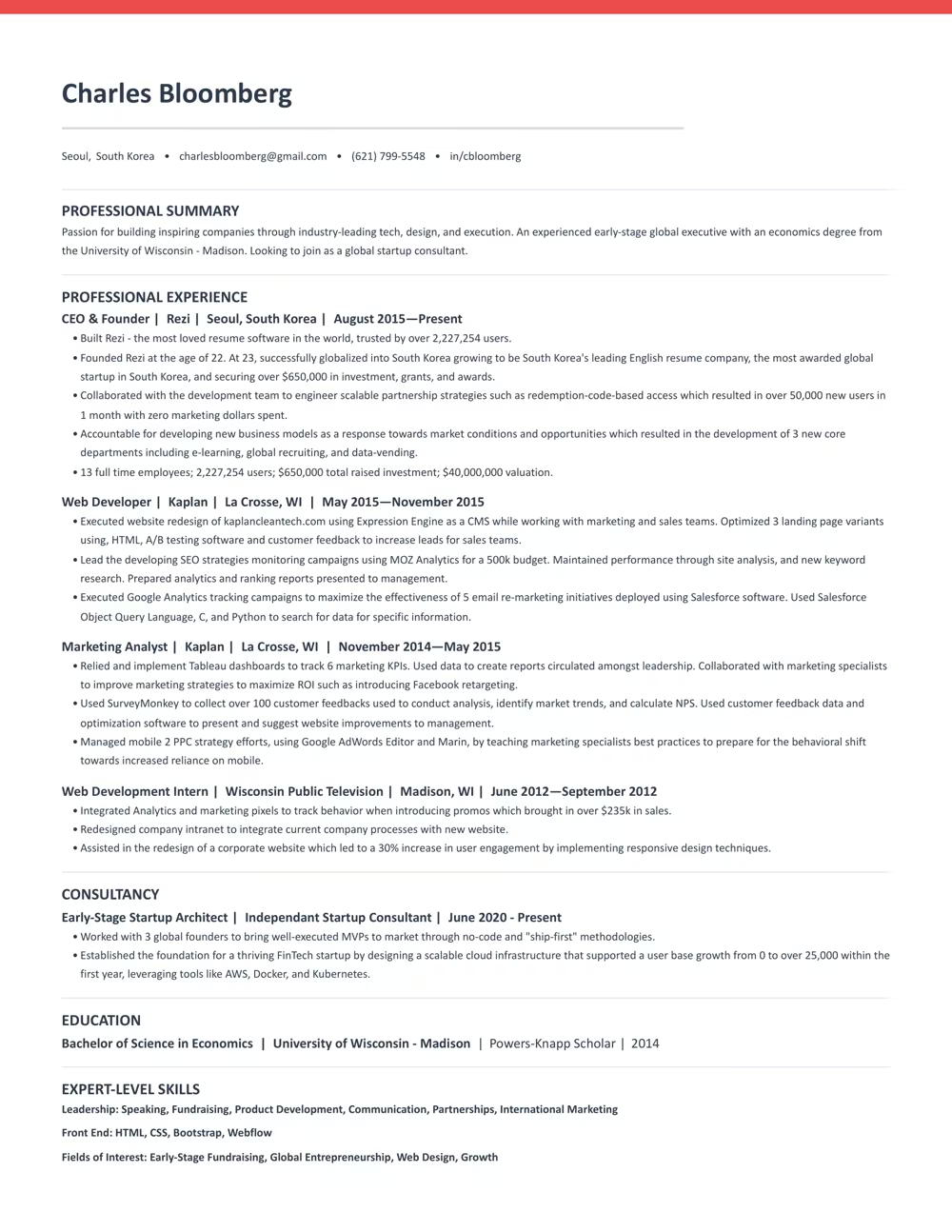

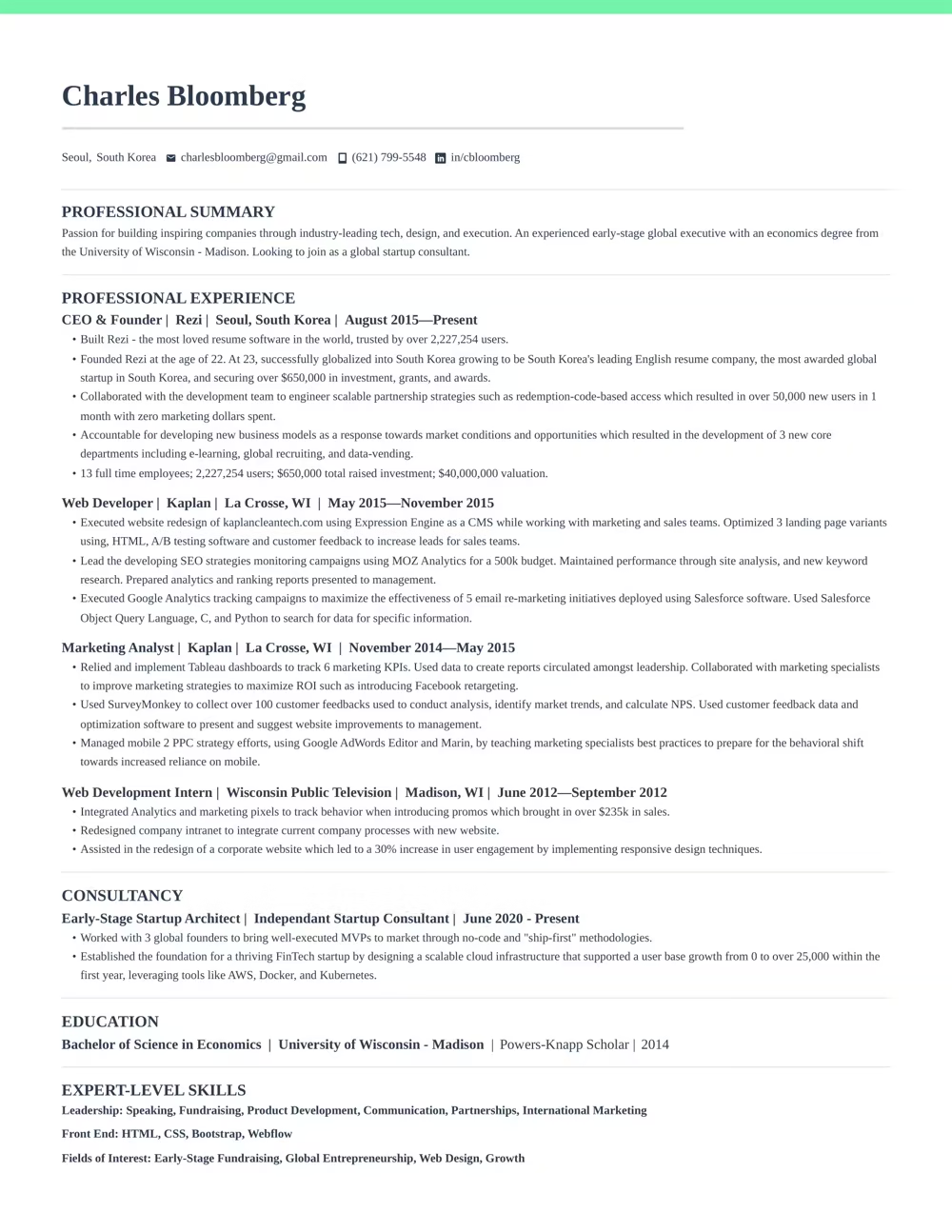
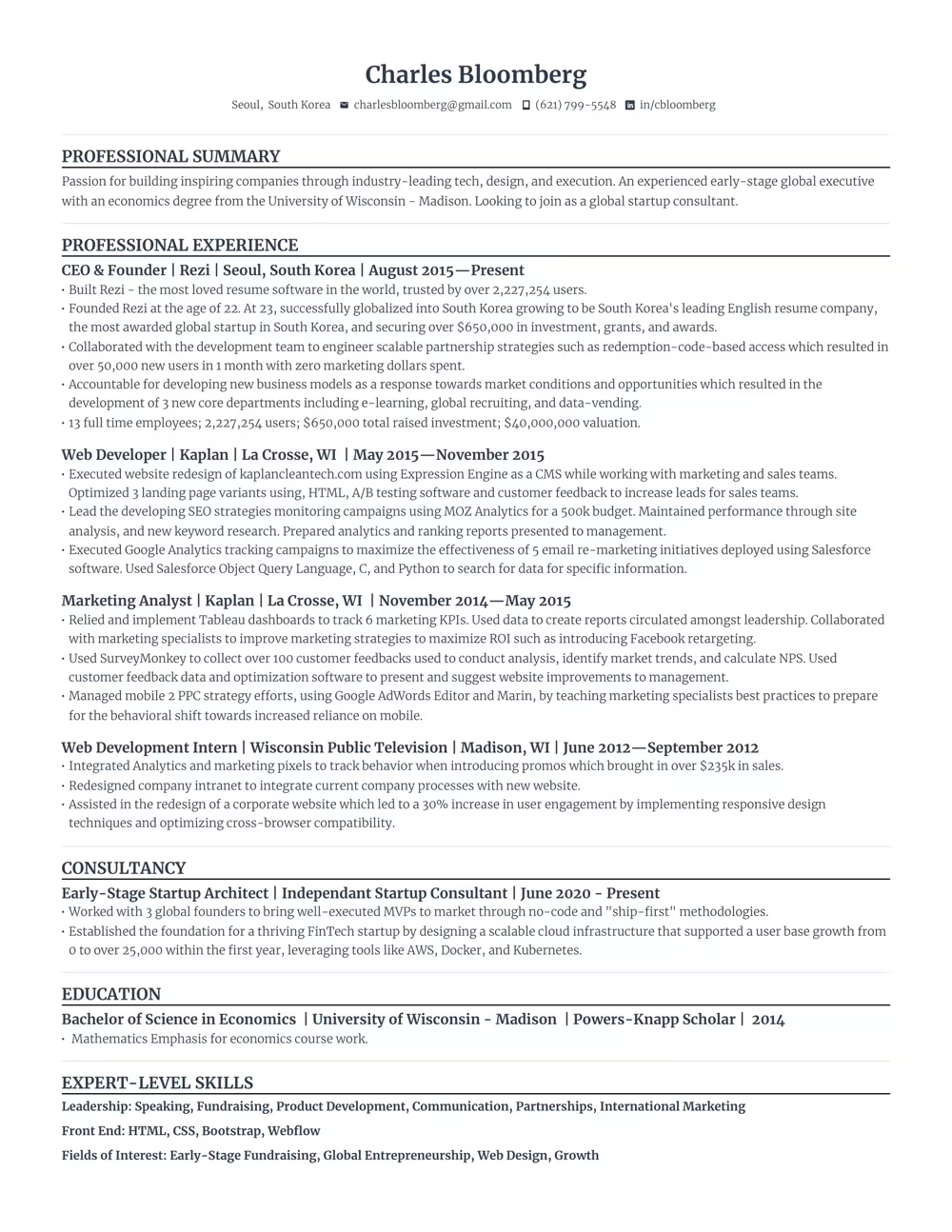
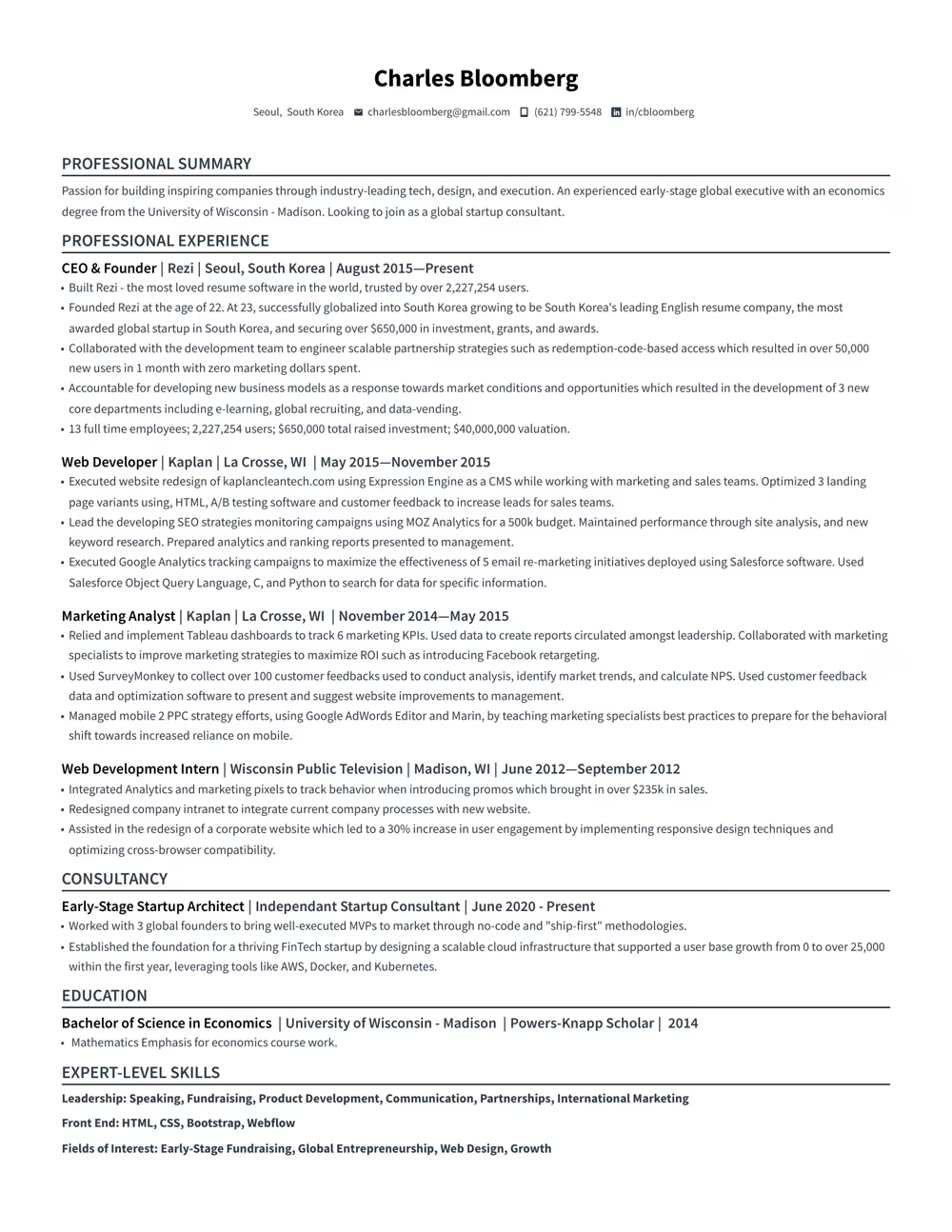
“Rezi is an awesome AI-based resume builder that includes templates to help you design a resume that is sure to check the boxes when it comes to applicant tracking systems. This is a great jumping off point to kickstart a new resume.”

Ashley Stahl
Career Contributor
62.18%
Interview Rate
4,510,834
Total Users
8.23 / 10
Avg. User Review
Wall of Love
Over 4 million users trust Rezi

“Resume Building felt like pulling teeth – until I found Rezi.”
Davis Allen
Software Developer

“I was blown away by Rezi. It streamlined everything...”
Celine Watko

“I needed a resume tool as smart as my work.”
Yosra Naceur
Data Scientist
“A great tool that is very helpful. I found the Rezi system easy to use and very helpful as I was working on getting my resume in shape for job applications.”

Dakota Rubin
United States
Written via

“This is actually one of the first reviews I’ve ever written for a business, and that alone says a lot. I highly recommend Rezi to anyone who’s job searching, it makes the entire process so much easier.”

Yazan Alkhatib
United States
Written via
“Reduced my time per application from 1-2 hours down to 15 minutes.”
Kixxx
Experience with Rezi
“I love how simple and convenient it is to use and been coming back to update it every time I need a fresh resume.”

Zara Wazir
U.A.E.
Written via
Frequently Asked Questions
Your questions, answered.
An AI resume maker helps you build a resume perfectly fit for the job you want. Top-notch AI resume builders are designed to speak the language hiring managers are looking for, increasing your chances of standing out in the crowd. It aligns your skills and experience with the job description effectively.
To get the most out of an AI resume builder, either start from scratch or upload your current resume. Fill in as much detail as possible about your career and skills, and upload the job description you’re targeting. This personalization allows the AI to build a unique and tailored resume that’s bound to catch potential employers' attention.
AI-generated resumes can seem similar if you're not giving personalized inputs or if you're using basic prompts. Provide specific details about your work experience and target the job you’re eyeing. Use specialized AI tools instead of general chatbots to avoid robotic-sounding resumes and to ensure individual creativity.
Employers might think you used AI, but that’s rarely an issue. What they really care about is getting a well-written resume that showcases your skills and experiences accurately. A top-notch resume tailored to their needs will speak volumes more than worrying about AI involvement.
Yes, using AI to optimize your current resume is highly effective. You just need to upload your resume, share details about your career goals and the job you want, and let the AI refine everything to elevate your resume's impact and ATS compatibility.
Rezi uses a tool called the AI Keyword Targeting. This feature scans the job description to identify crucial keywords and naturally incorporates them into your resume, giving it the right focus without keyword stuffing.
The Free plan is $0/month and allows you to create one resume, use limited AI tools (such as Keyword Targeting and Analysis), and download up to three PDFs. You can also create unlimited cover and resignation letters. No card is required to begin.
The Pro plan is $29/month and provides unlimited access to all features, including unlimited resumes, full AI capabilities, unlimited downloads, and one free monthly expert resume review (resumes are reviewed by a person).
The Lifetime plan is a $149 one-time payment. It grants permanent access to all the features of the Pro plan (unlimited resumes, full AI tools, and unlimited downloads), but it does not include the free monthly expert review (which can be purchased for an extra fee).
Rezi offers a 100% money-back guarantee on all paid plans (Pro and Lifetime). If you are unsatisfied, you can request a full refund within 30 days of your purchase.
Yes, you can easily upgrade or downgrade your plan at any time through your Rezi Account Billing dashboard. Prorated credits will apply when switching.
An AI resume maker helps you build a resume perfectly fit for the job you want. Top-notch AI resume builders are designed to speak the language hiring managers are looking for, increasing your chances of standing out in the crowd. It aligns your skills and experience with the job description effectively.
Yes, Rezi Enterprise.