
Legal Resumes
Immigration Officer Resume Examples & Tips for 2026
Customize any of these resumes in minutes using our free AI-powered resume builder.
“Rezi is super upfront and continues to improve over time. I've recommended Rezi to several of my friends and colleagues. I just love this product so much.”

Ricky M.
Software Engineer

“Rezi is super upfront and continues to improve over time. I've recommended Rezi to several of my friends and colleagues. I just love this product so much.”
Ricky M.
Software Engineer
Helping users land jobs at 1,000+ companies such as














Here's the thing most immigration officer resumes get wrong: they read like a copy-paste of the government job classification description. Every bullet point sounds like it was lifted straight from a position description manual — "processed applications," "reviewed documents," "conducted interviews." That's not a resume. That's a duty roster.
A strong immigration officer resume needs to go beyond listing regulatory tasks. It should demonstrate your judgment in complex cases, your ability to apply immigration law under pressure, your interviewing and investigative skills, and the real-world outcomes of your decisions — whether that's identifying fraud, facilitating lawful entry, or protecting national security.
Here's what you'll find in this guide:
- 9 immigration officer resume samples covering different specializations and experience levels.
- Insider tips on what hiring panels and HR specialists actually look for in immigration and border security roles.
- A step-by-step walkthrough for building an immigration officer resume that stands out in a competitive applicant pool.
Sample Immigration Officer Resumes
Browse these sample resumes for immigration officers across different specializations and career stages. Find the one closest to your background and use it as a starting point — just make sure to customize every detail to reflect your own experience and qualifications.
Note: these examples cover a range of immigration-related roles. Pick the one that best matches where you are or where you're headed.
Junior Immigration Officer Resume
A Junior Immigration Officer resume should emphasize relevant education, internships, and any entry-level government or law enforcement experience. Highlight your understanding of immigration law fundamentals, attention to detail, and ability to follow standard operating procedures. Mention language skills, customer service experience, and any training in document verification or interviewing. Even academic projects related to immigration policy can add value at this stage.
Mid-Level Immigration Officer Resume
A Mid-Level Immigration Officer should showcase a solid track record of case adjudications, interviews conducted, and fraud cases identified. Emphasize your growing expertise in immigration regulations, your ability to handle complex or escalated cases, and any specialized training you've completed. Quantify your caseload volume and decision accuracy rates. Highlight cross-agency collaboration and any mentoring of newer officers to demonstrate leadership potential.
Senior Immigration Officer Resume
A Senior Immigration Officer resume should demonstrate extensive experience leading teams, managing high-stakes operations, and shaping policy implementation. Highlight your track record supervising staff, handling appeals or complex adjudications, and liaising with senior government officials or international agencies. Showcase strategic contributions such as process improvements, training program development, or fraud prevention initiatives. Include advanced certifications and leadership accomplishments with measurable outcomes.
Border Control Officer Resume
For a Border Control Officer resume, emphasize your experience with port-of-entry operations, primary and secondary inspections, and traveler screening. Highlight proficiency with border security technology, document authentication, and threat assessment. Detail your ability to make rapid admissibility decisions under pressure while maintaining compliance with immigration statutes. Include any tactical training, firearms qualifications, and experience coordinating with law enforcement or intelligence agencies.
Immigration Services Officer Resume
An Immigration Services Officer resume should focus on your expertise in adjudicating benefit applications — asylum, naturalization, adjustment of status, and work permits. Highlight your interviewing skills, knowledge of immigration law and policy memoranda, and ability to make fair, well-documented decisions. Showcase your caseload management, quality assurance results, and any experience with complex or sensitive case types. Language proficiency and cultural competency are strong differentiators.
Immigration Enforcement Officer Resume
For an Immigration Enforcement Officer, your resume should highlight investigative skills, field operations experience, and knowledge of removal proceedings. Emphasize your ability to execute arrest warrants, conduct surveillance, and prepare cases for immigration court. Detail your collaboration with federal, state, and local law enforcement. Include any specialized training in fugitive operations, anti-smuggling, or worksite enforcement, along with physical fitness qualifications and firearms certifications.
Customs and Immigration Officer Resume
A Customs and Immigration Officer resume should demonstrate dual expertise in both customs regulations and immigration law. Highlight experience inspecting cargo, processing travelers, and detecting contraband alongside immigration violations. Showcase your knowledge of tariff classifications, trade compliance, and admissibility criteria. Detail any cross-training, joint operations experience, and proficiency with integrated screening systems. Bilingual abilities and experience at high-volume ports of entry add significant value.
Immigration Inspector Resume
An Immigration Inspector resume should spotlight your expertise in document examination, fraud detection, and admissibility determinations. Emphasize your experience conducting inspections at ports of entry, interviewing applicants, and identifying fraudulent documents or imposters. Highlight your knowledge of visa classifications, entry requirements, and lookout systems. Include any specialized forensic document training, intelligence database proficiency, and a track record of interceptions or referrals to secondary inspection.
Visa Processing Officer Resume
For a Visa Processing Officer, focus your resume on application review expertise, regulatory knowledge, and attention to detail. Highlight your experience processing high volumes of visa applications — tourist, work, student, or immigrant categories. Showcase your ability to verify supporting documentation, conduct background checks, and make consistent adjudication decisions. Mention proficiency with case management systems, knowledge of consular procedures, and any language skills relevant to your post.
How to Write an Immigration Officer Resume
Short answer:
Focus on your knowledge of immigration law, your decision-making under pressure, and measurable outcomes from your casework or enforcement activities. Start with a professional header including your name and contact details. Write a 2–3 sentence resume summary highlighting your most significant qualifications. Describe your work history in reverse-chronological order, emphasizing case outcomes, caseload volumes, and specific regulatory expertise. Cover your education and certifications, list key skills, and add extra sections such as language proficiencies, security clearances, or professional affiliations.
Include all the necessary sections in the correct order
Here's the correct order of sections for most immigration officer resumes:
- Header with contact information
- Resume summary or objective
- Work experience
- Education
- Skills
- Certifications
Depending on your situation, you can also add some additional sections. For instance:
- Security clearances
- Language proficiencies
- Professional affiliations
- Volunteer experience
- Awards and commendations
- Training and professional development
Include everything that demonstrates your fitness for the role. Make every section count. If it doesn't clearly support your candidacy, leave it off your resume.
If you have less than five years of relevant experience, keep your resume to one page. More experienced immigration officers can extend to two pages, but make sure every detail earns its place.
More details here: What Sections to Include on Your Resume?
Now, I'll walk you through how to write each section from top to bottom. Well… almost. The resume summary comes right after your header, but it's actually easier to write it last. More on that shortly.
Create a professional resume header
- Start with your name and contact information. Include the basics: your full name, phone number, professional email address, location, and LinkedIn profile. If you have a professional portfolio or relevant online presence, include that too.
- Right below your name, clearly state your professional title (e.g., Senior Immigration Officer or Border Control Officer). This immediately tells the hiring panel where you fit.
For more information, see: How to Create a Resume Header
Describe your work history
- Use reverse-chronological order. List your positions starting with the current or most recent one.
- In each entry, include your job title, agency or organization name, location, and dates of employment.
- Below each position, write 3–7 bullet points — the more recent the role, the more detail you should provide. Describe your responsibilities and, more importantly, your accomplishments.
- Use action verbs and quantify your achievements (e.g., "Adjudicated 1,200+ visa applications annually with a 98.5% decision accuracy rate" or "Identified 45 fraudulent documents during secondary inspections over a 12-month period").
- If specific immigration laws, regulations, or operational procedures were central to your role (e.g., INA provisions, TECS/ENFORCE systems), weave these into your descriptions. This also helps with ATS keyword matching.
Learn more about the best practices of this section with our detailed guide on how to describe your work experience on a resume.
List your degrees and detail professional learning
- In the education section, list your highest degree first, including the degree type, major, and institution.
- If you have relevant work experience, keep the education section concise — school name and degree. If you're an entry-level candidate, expand with relevant coursework (e.g., immigration law, criminal justice, public policy), academic honors, or extracurricular activities.
- If you hold certifications relevant to immigration work (e.g., FLETC training, fraud detection certifications), either include them in an "Education and Certifications" section, or create a separate "Certifications" section placed directly below.
For an in-depth guide on how to describe your education on a resume, see: How to List Education on a Resume
List your most relevant skills in the skills section
- Include a mix of technical skills (e.g., database systems, document analysis tools) and regulatory knowledge (e.g., Immigration and Nationality Act, visa classifications) that you're proficient in.
- Add soft skills such as critical thinking, cross-cultural communication, and composure under pressure. These are essential in immigration roles and demonstrate your capacity to make fair, sound decisions.
- You can use two separate subsections — one for hard skills, one for soft skills — or list everything under one heading.
- Match your skills to the specific job announcement. Don't just dump every keyword from the posting onto your resume, but highlight the areas where your genuine expertise aligns with what they're asking for.
Need some inspiration? Here are strong skills to feature on your immigration officer resume.
Technical & regulatory skills for immigration officer resumes:
- Immigration and Nationality Act (INA) knowledge
- Document fraud detection
- TECS / ENFORCE / CLAIMS systems
- IDENT biometric system
- Case management systems (e.g., ELIS, RAPS)
- Background check and database query procedures
- Passport and visa authentication
- Federal law enforcement databases (NCIC, NLETS)
- Microsoft Office Suite
- Report writing and case documentation
Immigration law & procedures knowledge:
- Admissibility and inadmissibility grounds
- Visa classification categories
- Asylum and refugee processing
- Naturalization and citizenship procedures
- Removal proceedings
- Immigration court processes
- Customs and trade compliance
- Country conditions research
- Expedited removal protocols
- Credible and reasonable fear determinations
Key soft skills for immigration officers:
- Critical thinking
- Cross-cultural communication
- Attention to detail
- Composure under pressure
- Interviewing and interrogation
- Ethical judgment
- Decision-making
- Conflict de-escalation
- Teamwork and collaboration
- Adaptability
For a full-blown guide on listing skills on a resume, visit: How to Put Skills on a Resume
Use additional sections as further proof of your fit
Additional sections add depth to your resume and back up your qualifications. Good examples of extra sections to add to an immigration officer resume are:
- Security clearances. If you hold or have held a security clearance (e.g., Secret, Top Secret), list it prominently. This is a significant differentiator for government roles.
- Language proficiencies. Fluency or working proficiency in languages other than English is highly valued in immigration work. List each language and your proficiency level.
- Awards and commendations. Government service awards, performance bonuses, or commendations from supervisors or agency heads demonstrate recognized excellence.
- Professional affiliations. Membership in organizations like the Federal Law Enforcement Officers Association (FLEOA) or the American Immigration Lawyers Association (AILA) signals commitment to the field.
- Training and professional development. FLETC courses, advanced interviewing training, fraud detection workshops, or leadership development programs all strengthen your candidacy.
Highlight the most relevant information in a resume summary
Once you're done writing your immigration officer resume, give it a full read. Pick the most compelling information and compile it into a summary paragraph. Place it right under the resume header.
- Be brief and to-the-point. In 3–4 sentences, sum up your career highlights, core expertise, and what you bring to the role. Think of this as your answer to, "Why should we select you?" Tailor this section to match the specific position announcement.
- Use value-oriented language. Focus on outcomes — cases adjudicated, fraud detected, processes improved — rather than generic statements about being "detail-oriented" or "hardworking."
Once you've completed the core sections of your resume, you can use Rezi AI Resume Summary Generator to automatically create a powerful summary, tailored to the job you're applying for. All you need to do is add the position and skills you want to highlight. The AI writer will do the rest.
More information here: How to Write a Job-Winning Resume Summary (with Examples)
For finishing touches, make sure your resume looks professional
- Use a clean and tidy resume format. Ensure your resume is easily readable, with a professional font, consistent formatting, and clear section headings. Government hiring panels review dozens (sometimes hundreds) of applications — don't make them work to find your qualifications.
- Aim for a balance between detail and conciseness. If you're a junior candidate, keep your resume to a single page. Experienced immigration officers can extend to two pages, but make sure every word demonstrates value.
Learn more about proper resume formatting here: How to Format a Resume & What Standard Resume Format to Use
What Makes Immigration Officer Resumes Different
In short: the emphasis on regulatory knowledge, sound judgment, and the ability to make consequential decisions under time pressure — often with incomplete information.
This is where many immigration officer candidates stumble. Hiring panels don't just want to see that you "processed applications" or "conducted interviews." They need to see evidence that you applied the law correctly, identified risks, and made defensible decisions. Here's what sets immigration officer resumes apart.
Focus on legal and regulatory expertise
Immigration officers operate within a dense framework of statutes, regulations, and policy memoranda. Unlike many government roles where general administrative skills suffice, your resume needs to demonstrate that you understand and can correctly apply immigration law.
What it means for you:
- Reference specific areas of law and regulation you've worked with — INA provisions, CFR sections, USCIS policy memoranda, or CBP directives. This shows you're not just following checklists but actually understand the legal basis for your decisions.
- Highlight any experience interpreting ambiguous cases, applying discretion, or handling precedent-setting situations. Decision-makers want to know you can think, not just follow a script.
Focus on judgment and decision quality
In immigration work, your decisions directly affect people's lives and national security. Unlike roles where mistakes can be easily reversed, immigration decisions carry real legal and human consequences.
What it means for you:
- Quantify your decision accuracy. If your adjudications have been reviewed and upheld at high rates, say so. Metrics like "maintained a 99% quality assurance pass rate across 1,500+ case reviews" speak volumes.
- Describe situations where your judgment prevented fraud, identified security threats, or resolved complex eligibility questions. Specific examples are far more powerful than generic claims about being "detail-oriented."
Focus on investigative and interviewing skills
Immigration officers aren't just paper-pushers. Whether you're conducting credible fear interviews, secondary inspections, or fraud investigations, your ability to elicit truthful information and assess credibility is central to the job.
What this means for you:
- Describe your interviewing methodology and the types of interviews you've conducted — benefit interviews, enforcement interviews, asylum screenings, or port-of-entry inspections.
- Highlight outcomes: cases referred for prosecution, fraud rings uncovered, or applicants properly identified as eligible after thorough vetting. Show that your investigative work produced real results.
Focus on the government hiring process
Many immigration officer positions are federal jobs, and federal resumes follow different conventions than private-sector ones. If you're applying through USAJOBS or a similar government platform, your resume may need to be more detailed than a typical corporate resume.
What this means for you:
- For federal applications, include hours worked per week, supervisor names and contact information, and GS grade levels where applicable. Federal HR specialists use these details to determine your eligibility.
- Don't be afraid of length for federal resumes — 3–5 pages is common and expected. But if you're applying to a private immigration consultancy, contractor, or international organization, stick to the standard 1–2 pages.
Bonus Resources for Immigration Officers
This won't transform your resume overnight. But these resources will help you deepen your expertise, stay current with immigration policy changes, and ultimately make your future resumes — and your career — stronger.
Professional associations and networks
Federal Law Enforcement Officers Association (FLEOA)
FLEOA represents federal law enforcement officers across agencies, including CBP and ICE. Membership provides advocacy, legal resources, and networking opportunities relevant to immigration enforcement careers.
American Immigration Lawyers Association (AILA)
While primarily for attorneys, AILA's resources, policy updates, and practice advisories are invaluable for immigration officers who want to understand the legal landscape from the applicant's perspective — making you sharper at your job.
NAFSA: Association of International Educators
NAFSA focuses on international education and exchange, offering deep insight into student and exchange visitor immigration — particularly useful if you work with F, J, or M visa categories.
Training and professional development
Federal Law Enforcement Training Centers (FLETC)
FLETC provides foundational and advanced training for federal law enforcement officers, including immigration-specific programs. Completing FLETC courses is often a requirement — and listing advanced courses on your resume signals continued professional growth.
Coursera & edX
Both platforms offer courses in immigration law, public policy, national security, and criminal justice. University-developed content from institutions like Georgetown, Harvard, and the University of London can bolster your knowledge and your resume.
LinkedIn Learning
Offers courses on interviewing techniques, cross-cultural communication, data analysis, and leadership — all directly applicable to immigration officer roles and career advancement.
Publications and policy resources
Migration Policy Institute (MPI)
MPI produces in-depth research and analysis on immigration policy in the U.S. and globally. Their reports help you understand the broader policy context behind the regulations you enforce daily.
Center for Immigration Studies (CIS)
CIS provides research and policy analysis on immigration topics. Reviewing different perspectives on immigration policy makes you a more informed officer and a more compelling candidate.
CBP Newsroom & USCIS News
Stay current with policy changes, operational updates, and agency priorities directly from the source. Being up-to-date with recent developments shows hiring panels that you're engaged and informed.
Tools and systems familiarity
E-Verify
Understanding E-Verify's role in employment eligibility verification is essential for many immigration roles. Familiarity with the system and its processes adds practical value to your resume.
Trusted Traveler Programs (Global Entry, NEXUS, SENTRI)
Knowledge of trusted traveler programs demonstrates your understanding of risk-based screening approaches — increasingly important as agencies prioritize facilitation alongside enforcement.
Summary
Here's what you need to know about writing an immigration officer resume:
- Structure your resume with essential sections in this order: Header, Resume Summary or Objective, Work Experience, Education, Skills, and Certifications. Add extra sections like Security Clearances, Language Proficiencies, or Awards when relevant.
- Include a professional header with your name, contact information, and professional title (e.g., Immigration Services Officer, Border Control Officer).
- Describe your work history in reverse-chronological order, emphasizing case outcomes, caseload volumes, and decision accuracy — not just duties performed.
- In the education section, list your highest degree first. Include certifications like FLETC training or fraud detection credentials either here or under a separate heading.
- Highlight a mix of regulatory knowledge, technical system proficiency, and soft skills like critical thinking and cross-cultural communication — tailored to the specific job announcement.
- Use additional sections to showcase security clearances, language abilities, awards, and professional affiliations.
- Once your resume is complete, distill the most compelling details into a brief, value-driven summary at the top.
- Ensure your resume looks clean and professional. Government hiring panels review high volumes — make yours easy to scan.
- For federal positions, follow USAJOBS formatting conventions. For private-sector or international roles, stick to standard 1–2 page formats.
- Demonstrate sound judgment, legal expertise, and investigative skills — these are what truly set immigration officer resumes apart.
Thanks for reading! Got questions about your immigration officer resume? Feel free to reach out on LinkedIn. Or check out the FAQs below — your question might already be answered.
FAQ
What keywords should I use on my immigration officer resume?
Use terminology specific to immigration operations: admissibility determinations, INA provisions, document fraud detection, credible fear interviews, visa adjudication, removal proceedings, TECS, ENFORCE, IDENT, and biometric screening. If you hold relevant certifications or have completed FLETC training programs, name them specifically. Match keywords to the job announcement — federal HR systems often screen for exact phrases.
Should my immigration officer resume follow federal resume formatting rules?
If you're applying through USAJOBS or another federal hiring system, yes. Federal resumes are typically longer (3–5 pages), include hours worked per week, supervisor contact information, and GS grade levels. If you're applying to a private immigration firm, NGO, or international organization, use standard resume formatting at 1–2 pages. Know your audience and format accordingly.
What's the most common mistake on immigration officer resumes?
Listing duties instead of outcomes. "Conducted interviews" tells the hiring panel nothing about your effectiveness. Instead, write something like "Conducted 800+ benefit interviews annually, identifying 35 fraudulent applications and maintaining a 99% quality assurance rating." Specificity and numbers are what separate a strong resume from a forgettable one.
How important are language skills on an immigration officer resume?
Extremely important. Immigration officers regularly interact with non-English speakers, and fluency in high-demand languages (Spanish, Mandarin, Arabic, French, Haitian Creole, etc.) is a significant competitive advantage. List each language with your proficiency level — and if you've been officially tested (e.g., DLPT, OPI), include your scores.
I'm transitioning from military or law enforcement into an immigration officer role. How should I approach my resume?
Focus on transferable skills: investigative techniques, interviewing, report writing, working in high-pressure environments, security protocols, and leadership. Translate military or law enforcement jargon into civilian-accessible language. Highlight any experience with immigration-adjacent duties like border security, customs inspection, or detention operations. Relevant certifications and security clearances should be featured prominently.
Should I include my security clearance on my resume?
Absolutely — if you hold or previously held a clearance, list it. Include the clearance level (e.g., Secret, Top Secret, Top Secret/SCI) and whether it's active or inactive. For many immigration positions, especially with CBP, ICE, or USCIS, a clearance is either required or strongly preferred. Having one already streamlines the hiring process in your favor.
How do I handle gaps in my employment history on an immigration officer resume?
Be honest and strategic. If the gap involved relevant activities — further education, language study, volunteer work with immigrant communities, or caregiving — mention it briefly. Federal hiring panels understand career gaps, but unexplained ones can raise questions. A short note in your cover letter or a brief line on your resume addressing the gap is usually sufficient.

Upload or drop your resume to get started
Upload your resume to get started
Score my resume
Contents

Resume Formats & Examples
ATS-Friendly resume formats that land jobs
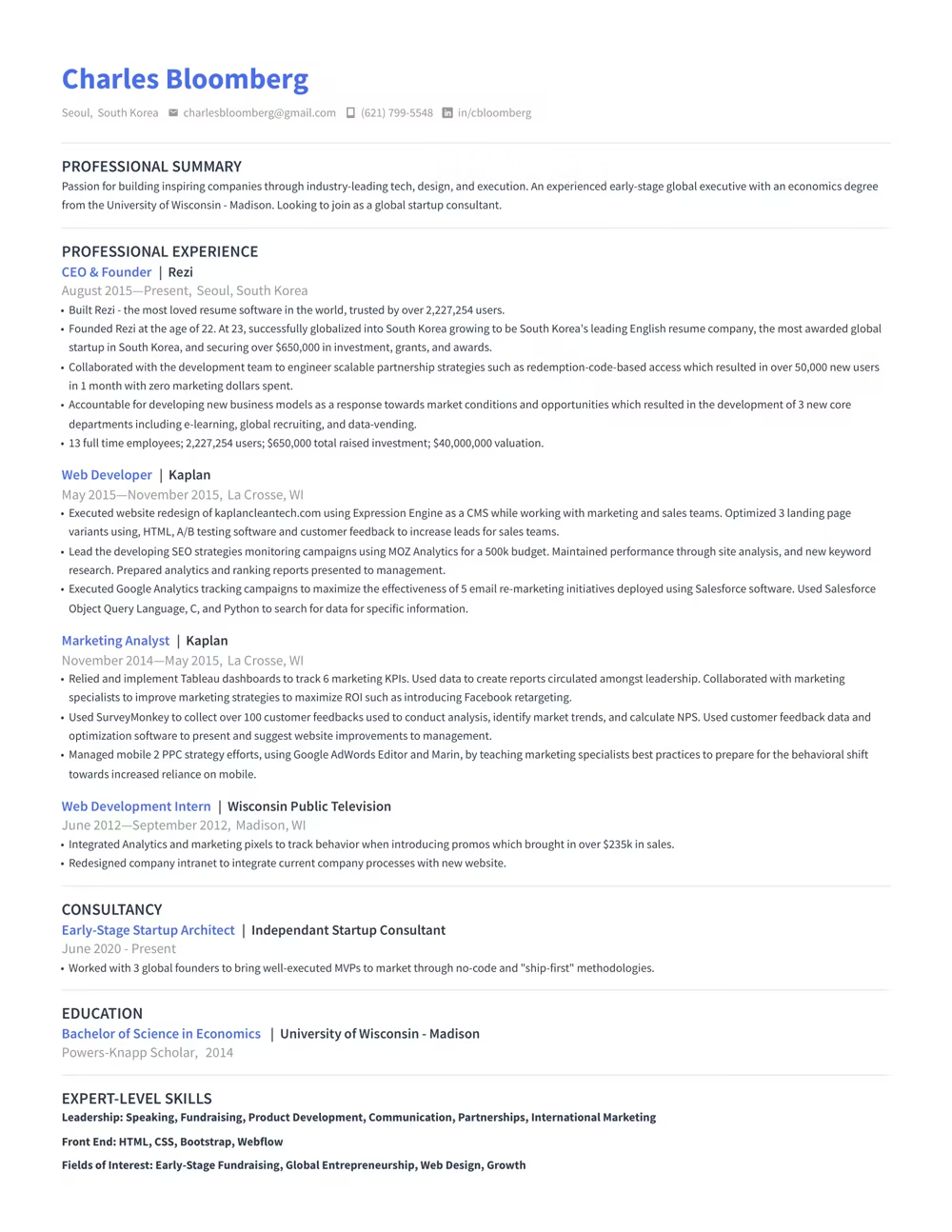
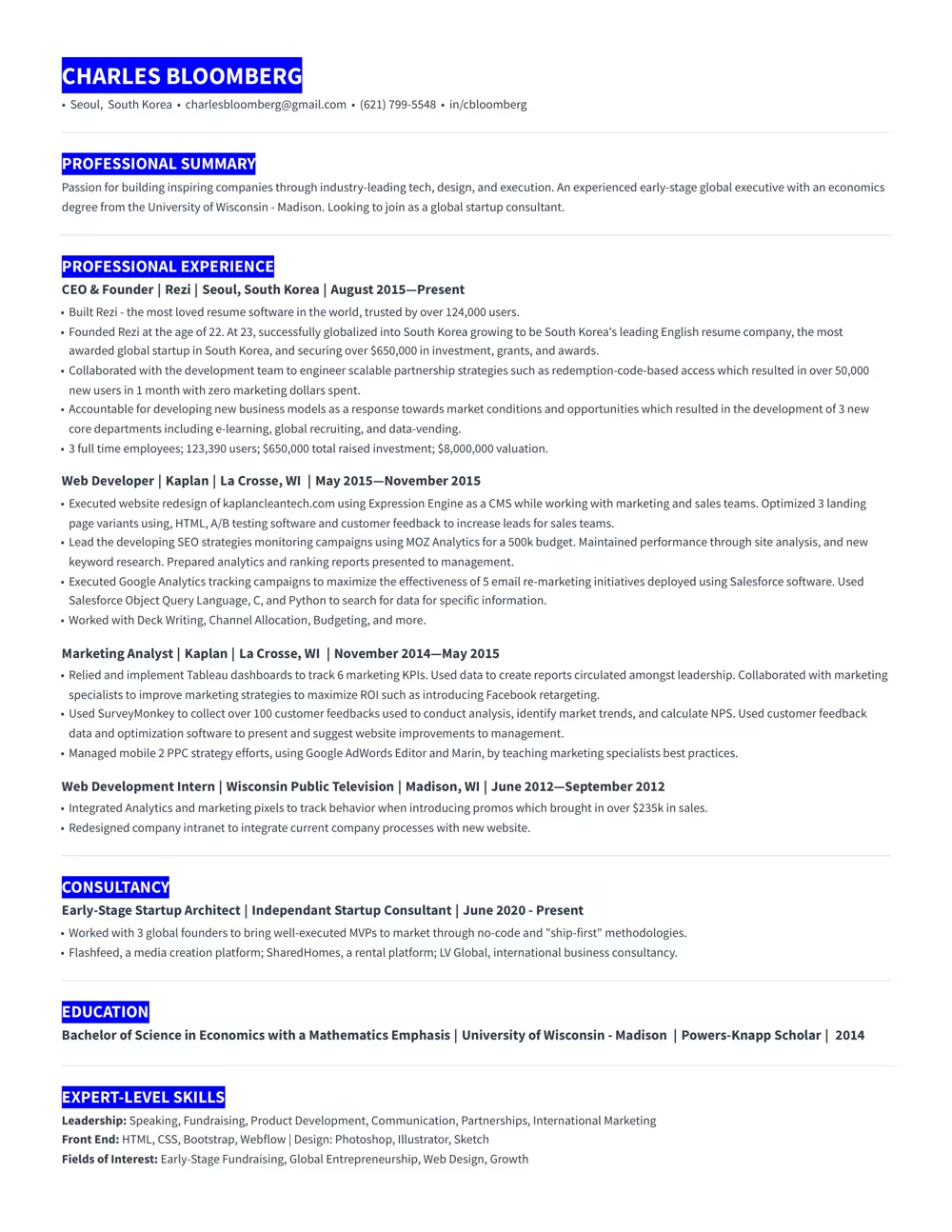
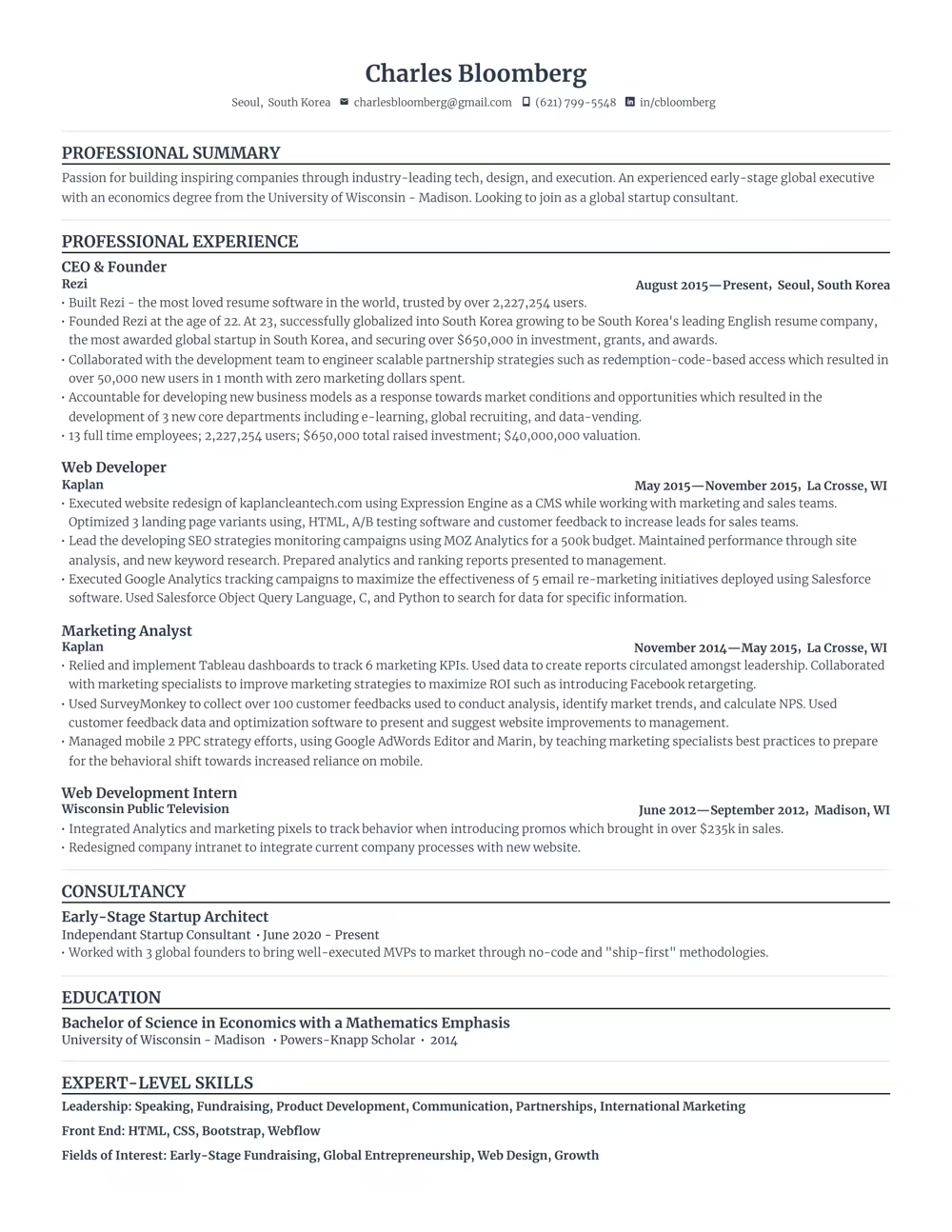
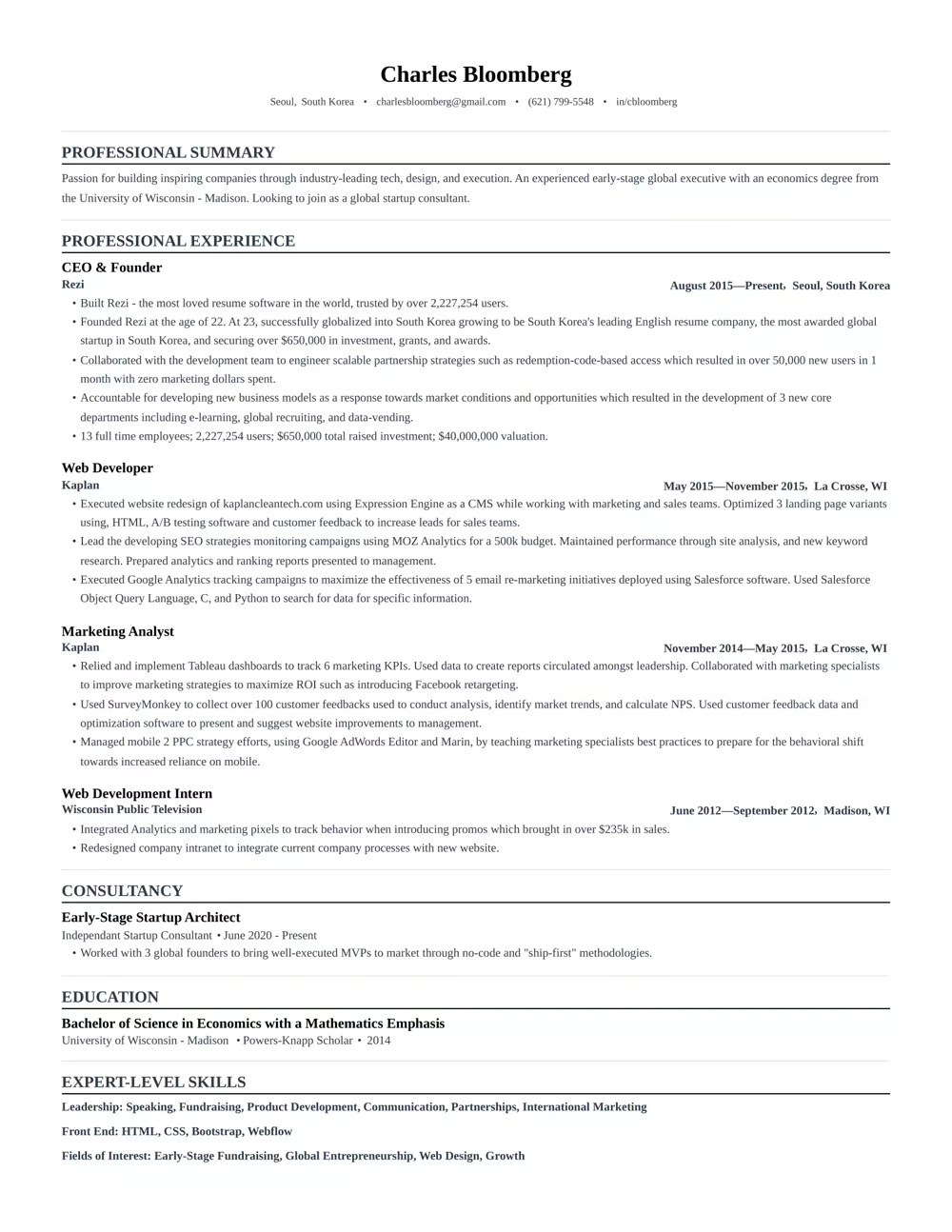
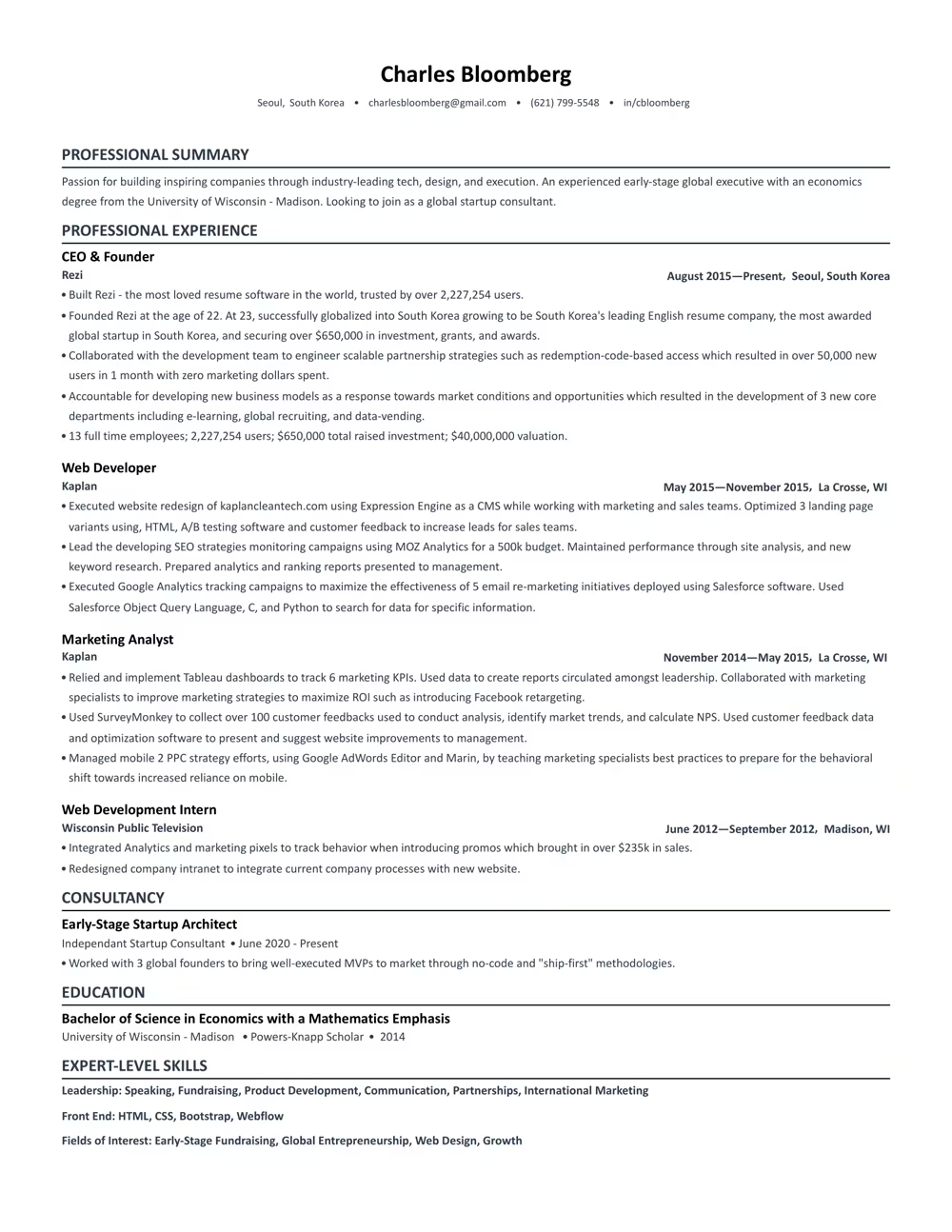
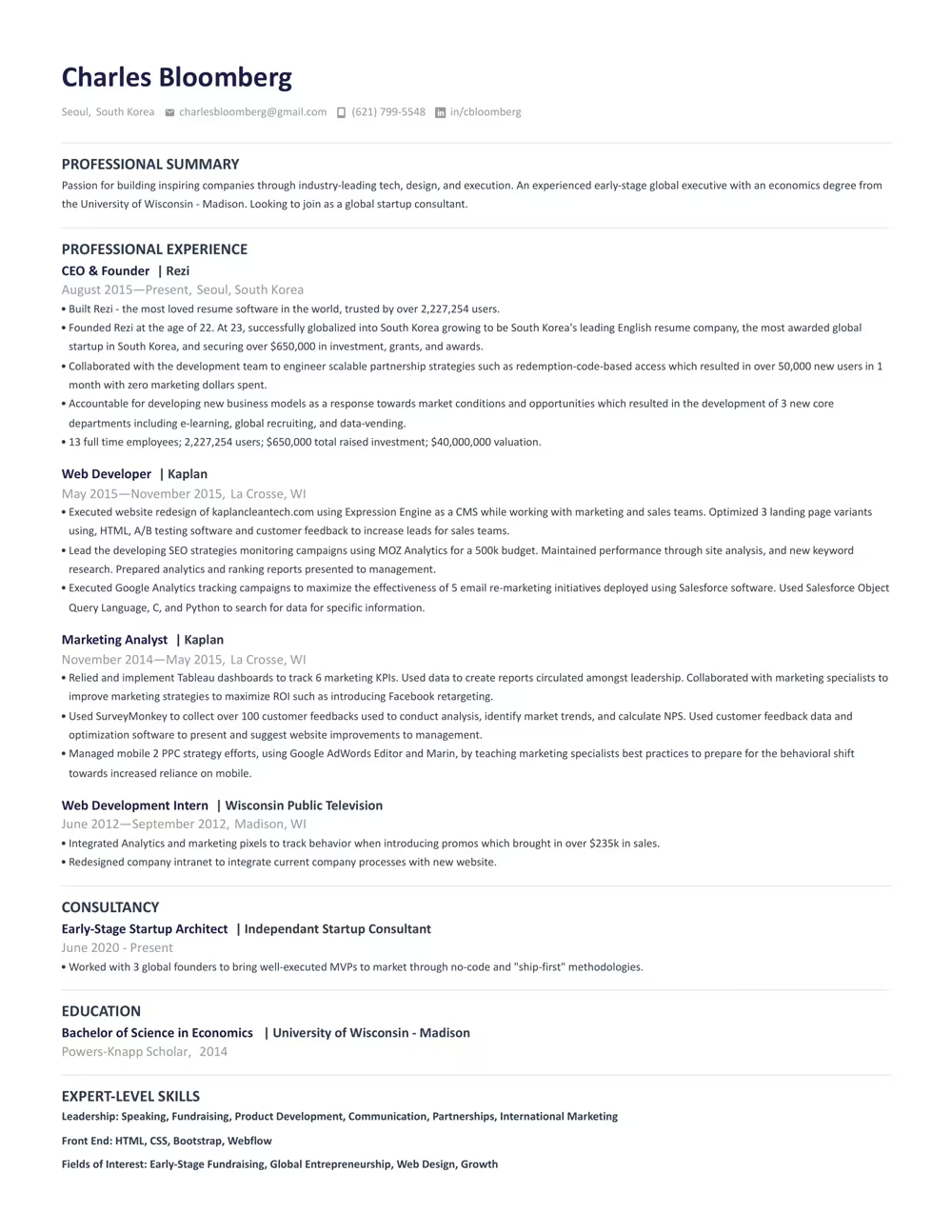
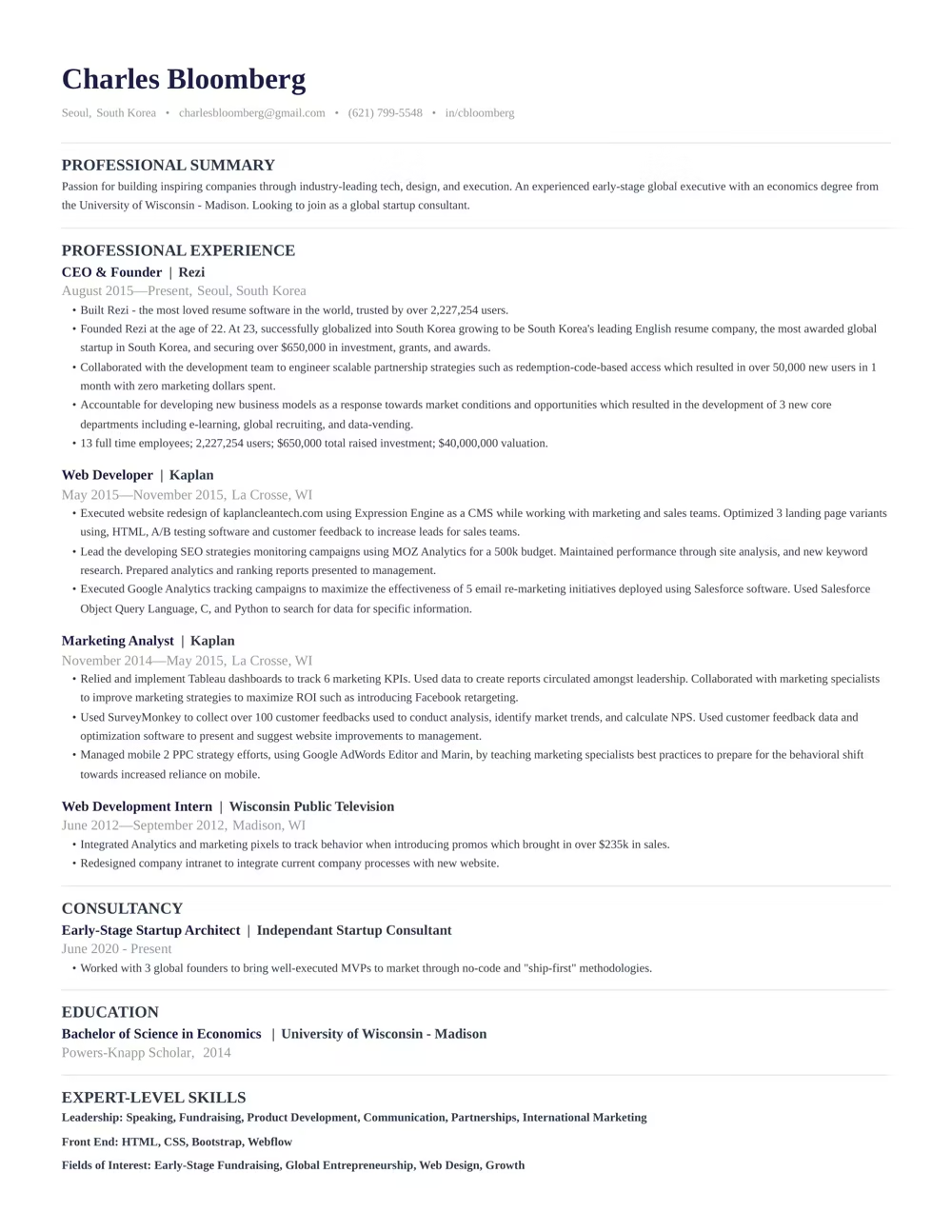
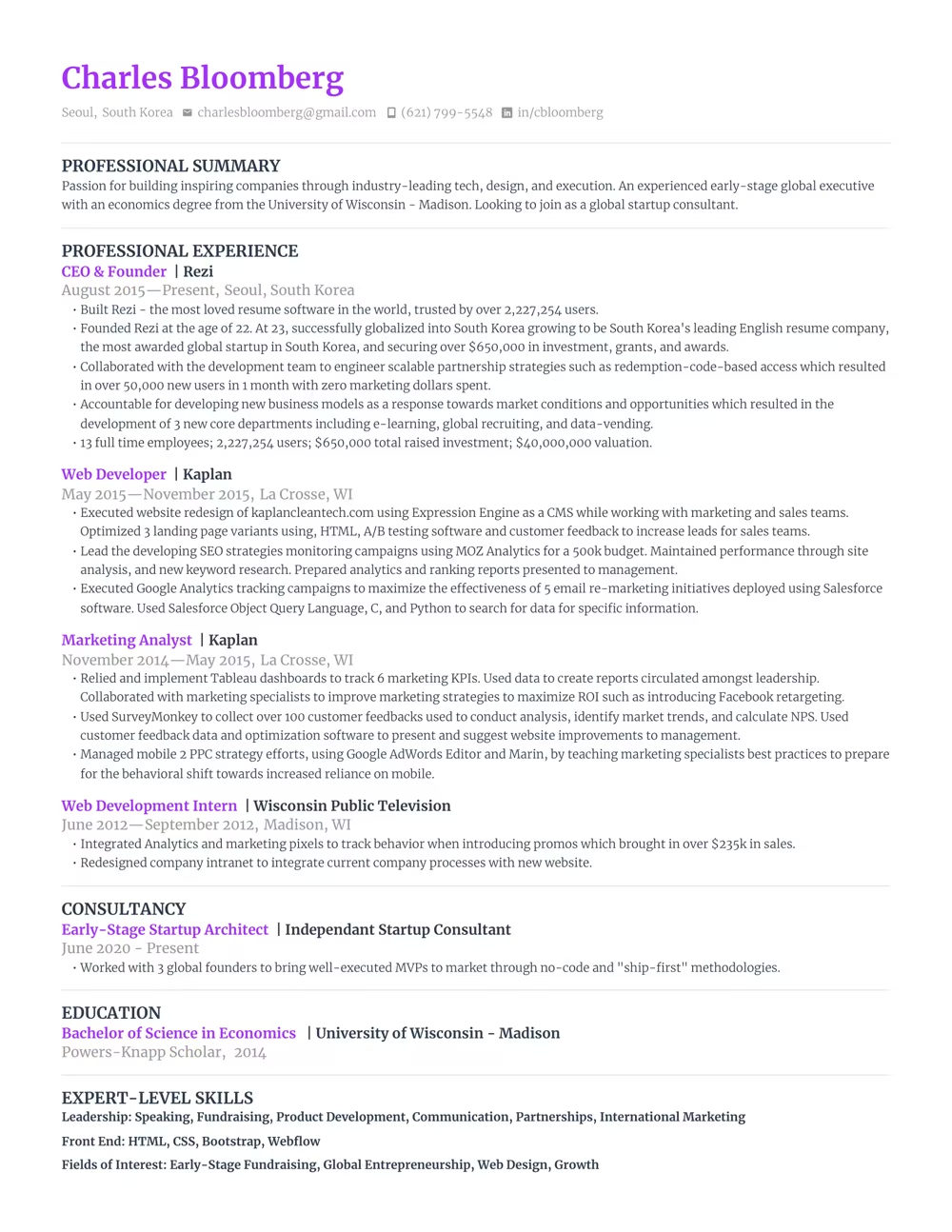
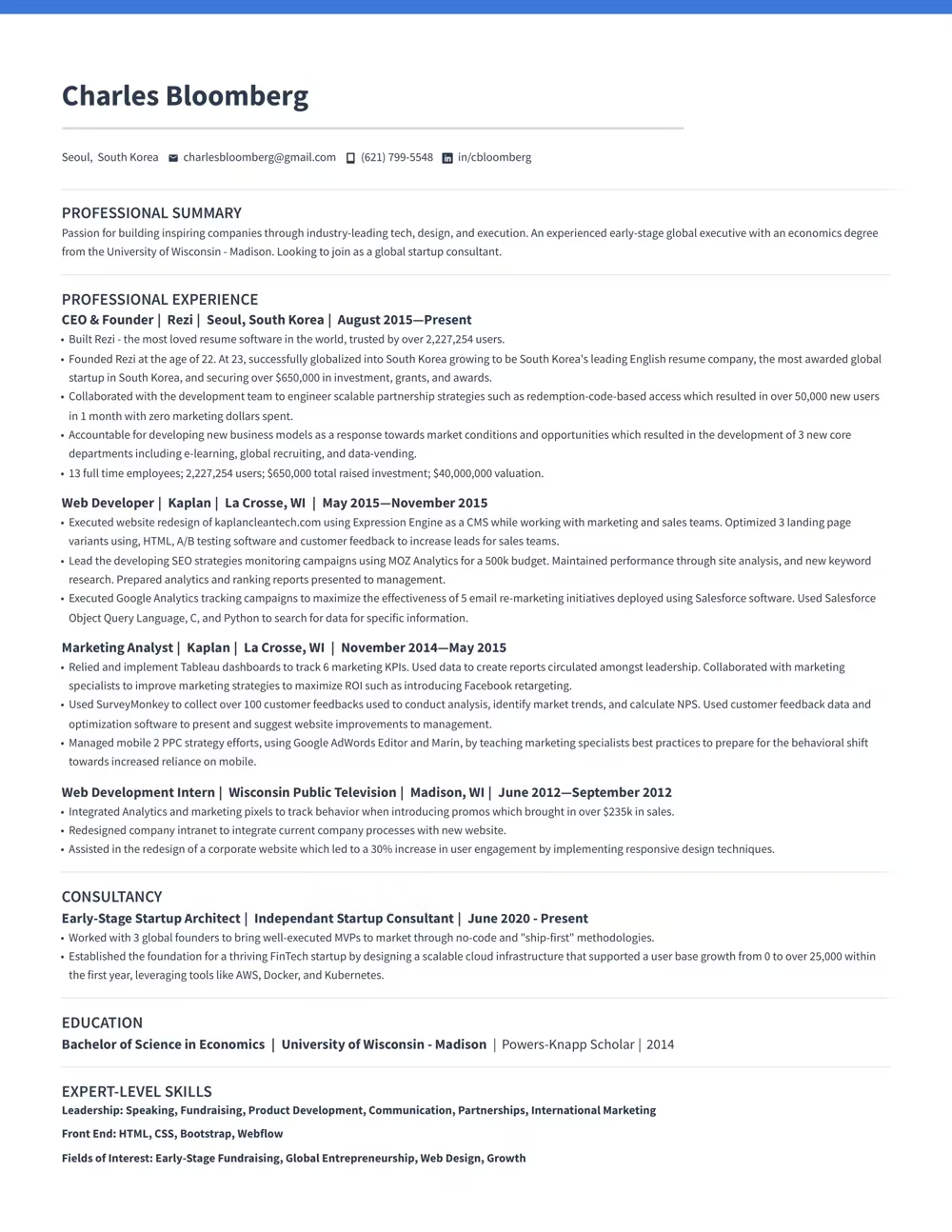
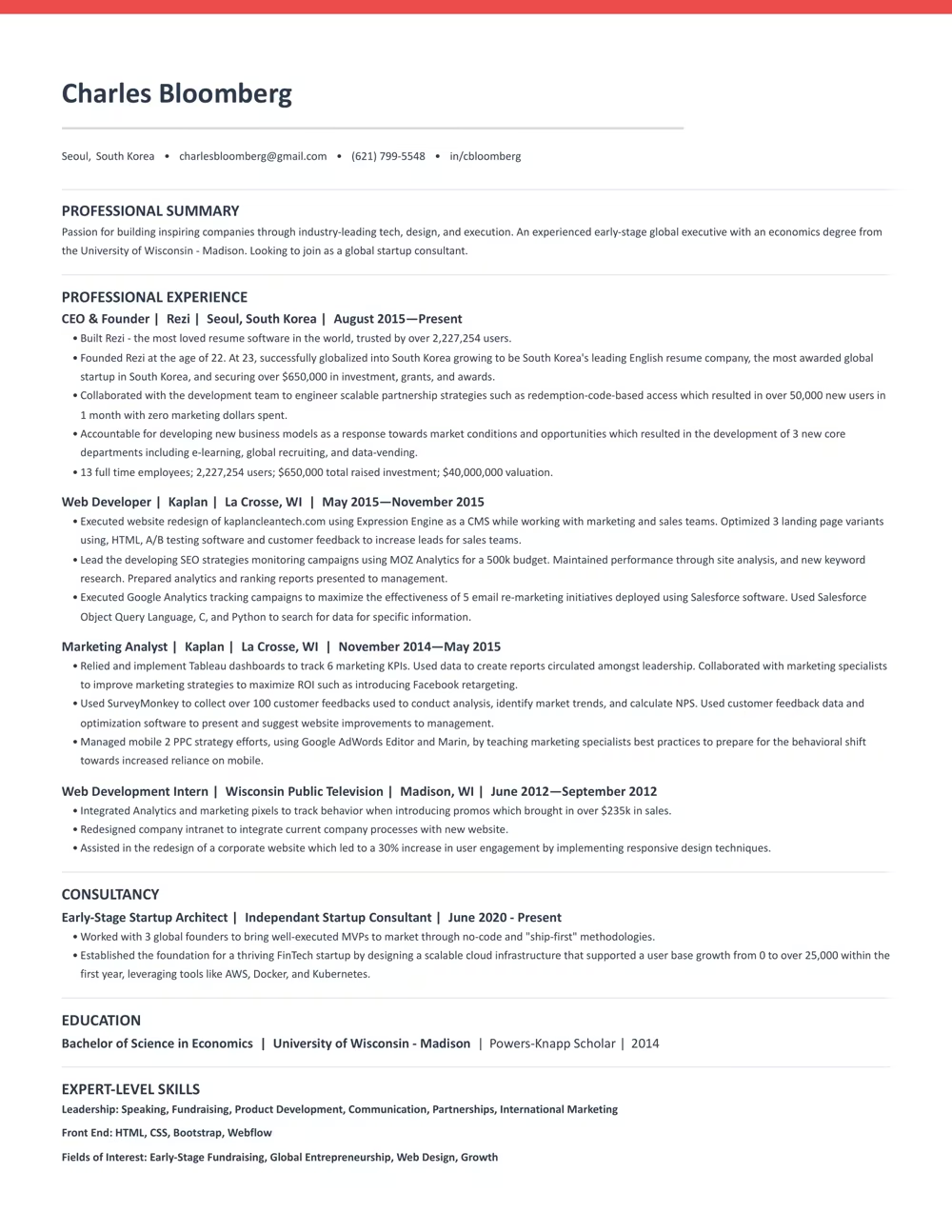
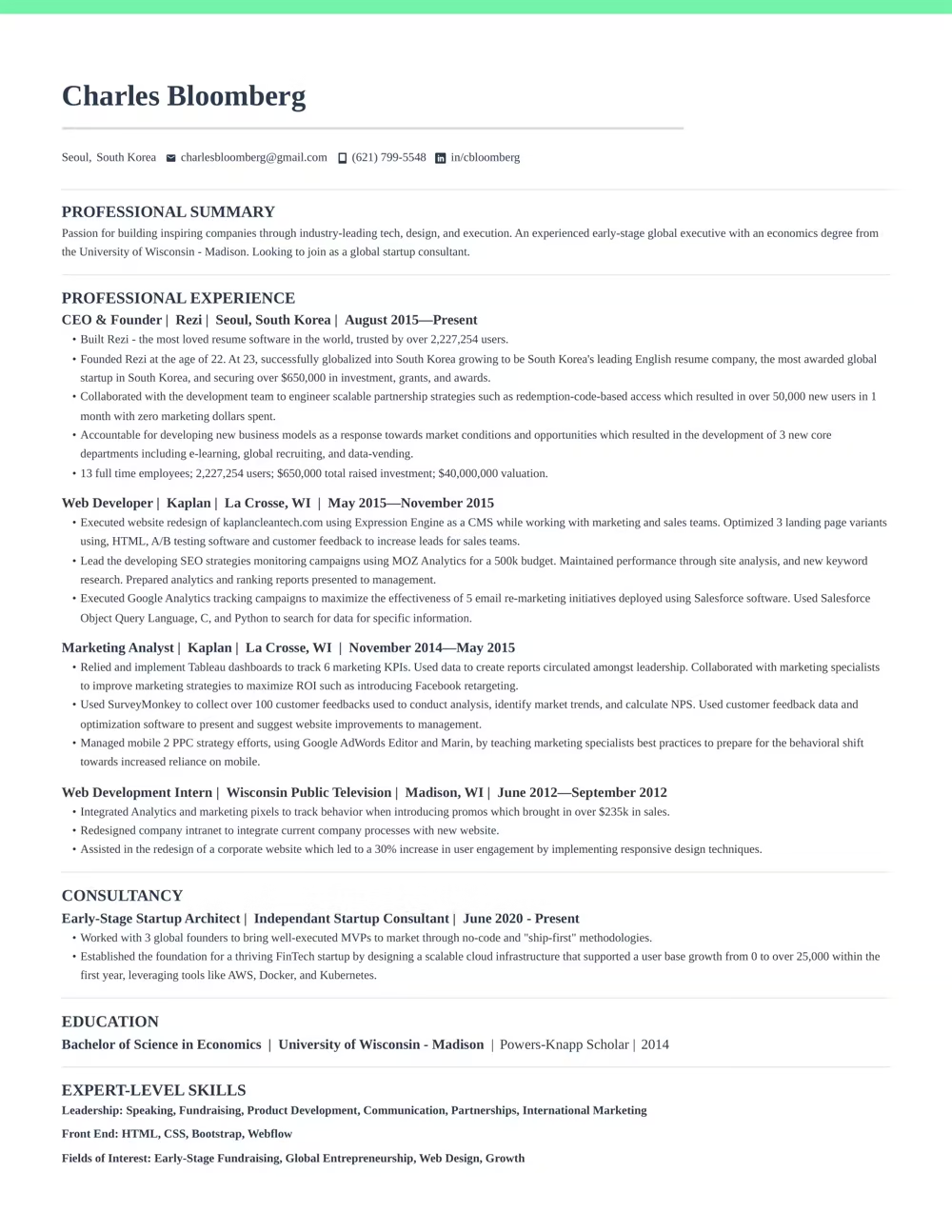
Use a template that guides you. Our ATS-compliant designs are trusted by over 4 million job seekers.




“Rezi is an awesome AI-based resume builder that includes templates to help you design a resume that is sure to check the boxes when it comes to applicant tracking systems. This is a great jumping off point to kickstart a new resume.”

Ashley Stahl
Career Contributor
62.18%
Interview Rate
4,773,704
Total Users
8.23 / 10
Avg. User Review
Wall of Love
Over 4 million users trust Rezi

Resume Building felt like pulling teeth – until I found Rezi.
Davis Allen
Software Developer

I was blown away by Rezi. It streamlined everything...
Celine Watko

I needed a resume tool as smart as my work.
Yosra Naceur
Data Scientist
“A great tool that is very helpful. I found the Rezi system easy to use and very helpful as I was working on getting my resume in shape for job applications.”

Dakota Rubin
United States
Written via

“This is actually one of the first reviews I’ve ever written for a business, and that alone says a lot. I highly recommend Rezi to anyone who’s job searching, it makes the entire process so much easier.”

Yazan Alkhatib
United States
Written via
“Reduced my time per application from 1-2 hours down to 15 minutes.”
Kixxx
Experience with Rezi
“I love how simple and convenient it is to use and been coming back to update it every time I need a fresh resume.”

Zara Wazir
U.A.E.
Written via
Frequently Asked Questions
Your questions, answered.
An AI resume maker helps you build a resume perfectly fit for the job you want. Top-notch AI resume builders are designed to speak the language hiring managers are looking for, increasing your chances of standing out in the crowd. It aligns your skills and experience with the job description effectively.
To get the most out of an AI resume builder, either start from scratch or upload your current resume. Fill in as much detail as possible about your career and skills, and upload the job description you’re targeting. This personalization allows the AI to build a unique and tailored resume that’s bound to catch potential employers' attention.
AI-generated resumes can seem similar if you're not giving personalized inputs or if you're using basic prompts. Provide specific details about your work experience and target the job you’re eyeing. Use specialized AI tools instead of general chatbots to avoid robotic-sounding resumes and to ensure individual creativity.
Employers might think you used AI, but that’s rarely an issue. What they really care about is getting a well-written resume that showcases your skills and experiences accurately. A top-notch resume tailored to their needs will speak volumes more than worrying about AI involvement.
Yes, using AI to optimize your current resume is highly effective. You just need to upload your resume, share details about your career goals and the job you want, and let the AI refine everything to elevate your resume's impact and ATS compatibility.
Rezi uses a tool called the AI Keyword Targeting. This feature scans the job description to identify crucial keywords and naturally incorporates them into your resume, giving it the right focus without keyword stuffing.
The Free plan is $0/month and allows you to create one resume, use limited AI tools (such as Keyword Targeting and Analysis), and download up to three PDFs. You can also create unlimited cover and resignation letters. No card is required to begin.
The Pro plan is $29/month and provides unlimited access to all features, including unlimited resumes, full AI capabilities, unlimited downloads, and one free monthly expert resume review (resumes are reviewed by a person).
The Lifetime plan is a $149 one-time payment. It grants permanent access to all the features of the Pro plan (unlimited resumes, full AI tools, and unlimited downloads), but it does not include the free monthly expert review (which can be purchased for an extra fee).
Rezi offers a 100% money-back guarantee on all paid plans (Pro and Lifetime). If you are unsatisfied, you can request a full refund within 30 days of your purchase.
Yes, you can easily upgrade or downgrade your plan at any time through your Rezi Account Billing dashboard. Prorated credits will apply when switching.
An AI resume maker helps you build a resume perfectly fit for the job you want. Top-notch AI resume builders are designed to speak the language hiring managers are looking for, increasing your chances of standing out in the crowd. It aligns your skills and experience with the job description effectively.
Yes, Rezi Enterprise.