Marketing Resumes
Marketing Insights Resume Examples & Tips for 2026
Customize any of these resumes in minutes using our free AI-powered resume builder.
“Rezi is super upfront and continues to improve over time. I've recommended Rezi to several of my friends and colleagues. I just love this product so much.”

Ricky M.
Software Engineer
“Rezi is super upfront and continues to improve over time. I've recommended Rezi to several of my friends and colleagues. I just love this product so much.”
Ricky M.
Software Engineer
Helping users land jobs at 1,000+ companies such as














Here's the thing most marketing insights professionals get wrong on their resumes: they make themselves sound like general marketing coordinators who happen to look at data sometimes. The resume reads like a list of marketing tasks with "analyzed" sprinkled in for flavor — but there's no real evidence of turning data into decisions that moved the business forward.
A strong marketing insights resume needs to tell a different story. It should show that you can dig into consumer behavior, market trends, and campaign performance data — and then translate those findings into strategic recommendations that stakeholders actually act on. That's the whole point of the role, and your resume needs to reflect it.
And this is exactly what you'll learn from this article. Inside, you'll find:
- Examples of 9 marketing insights resumes, covering different specializations and seniority levels.
- Insider tips about what really matters to recruiters hiring for insights and research roles.
- A step-by-step guide for putting together a marketing insights resume that gets you to the interview stage.
Sample Marketing Insights Resumes
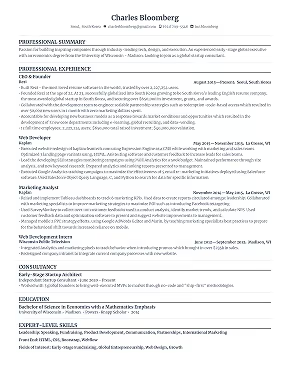
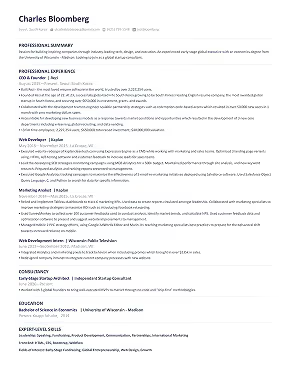
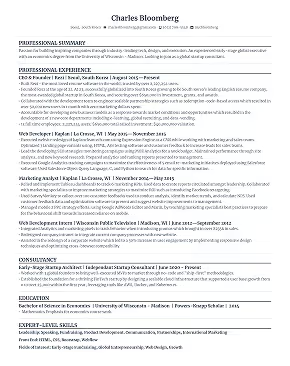
Take a look at some top-notch sample resumes for marketing insights professionals across different specializations and experience levels. Find one that matches your profile and use it as a reference point (or feel free to steal it — just make sure to adjust the wording to reflect your own career journey).
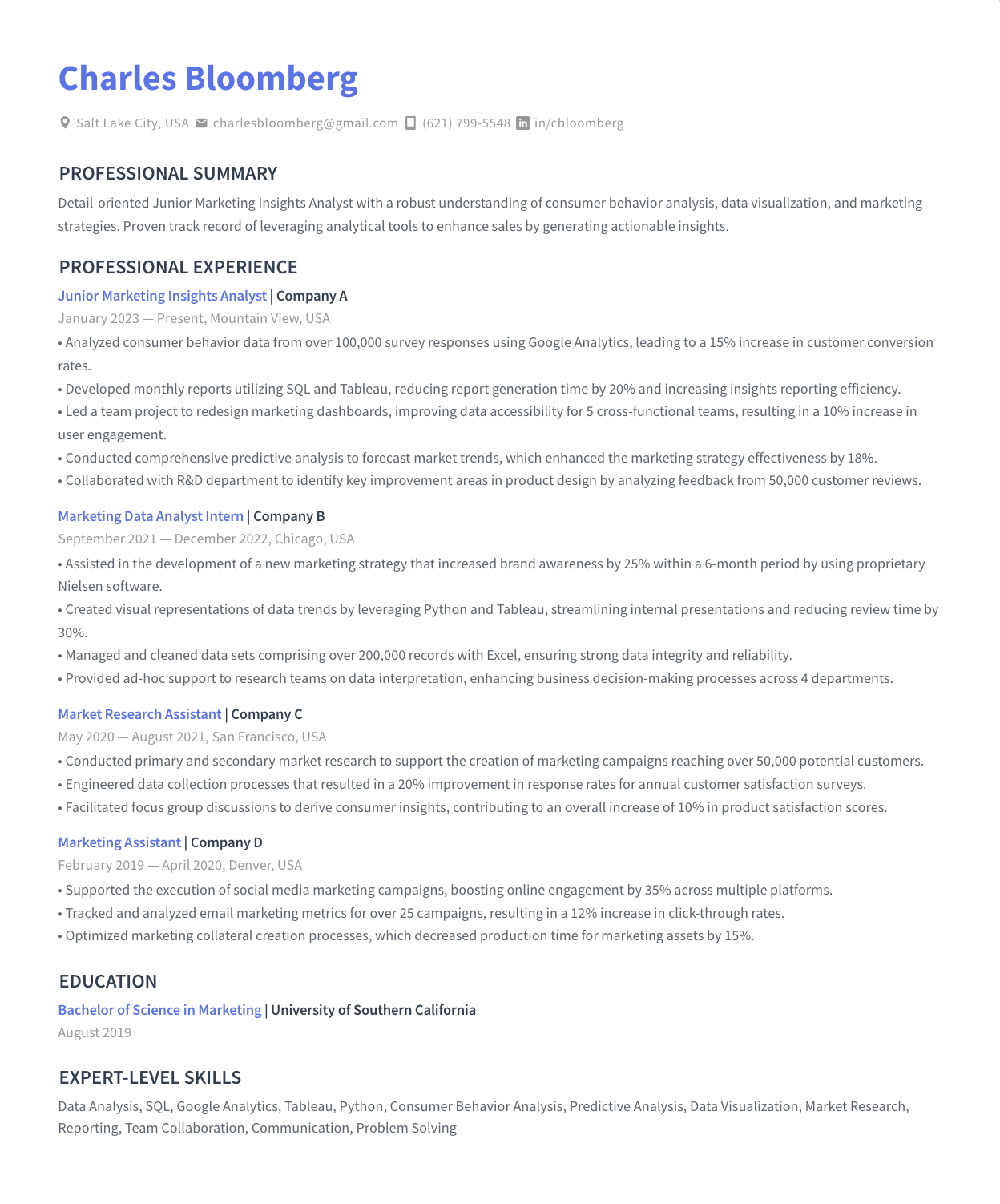
Junior Marketing Insights Analyst
A Junior Marketing Insights Analyst resume should emphasize your educational background in marketing, statistics, or a related field, along with any internship or project experience involving data analysis. Highlight your proficiency with analytics tools like Excel, SPSS, or Google Analytics. Show that you understand how to gather and interpret data, even if your experience comes from academic projects or entry-level work. Include any coursework in consumer behavior, research methods, or statistics.
Mid-Level Marketing Insights Analyst
For a Mid-Level Marketing Insights Analyst, your resume should showcase a track record of delivering actionable insights that influenced marketing strategy. Highlight specific campaigns or initiatives where your analysis led to measurable outcomes. Demonstrate proficiency in survey design, data visualization, and statistical analysis. Show your ability to present findings to cross-functional teams and translate complex data into clear recommendations that non-technical stakeholders can understand and act upon.
Senior Marketing Insights Analyst
A Senior Marketing Insights Analyst resume should demonstrate deep expertise in advanced analytics, strategic thinking, and cross-functional leadership. Emphasize your role in shaping marketing strategy through data-driven recommendations. Highlight experience mentoring junior analysts, managing large-scale research projects, and presenting to senior leadership. Showcase your mastery of tools like Tableau, SQL, and advanced statistical methods, along with examples of insights that drove significant business impact.
Marketing Insights Manager
Your Marketing Insights Manager resume should highlight your leadership in building and managing insights teams, setting research agendas, and aligning insights functions with broader business objectives. Emphasize your experience managing vendor relationships, overseeing budgets for research programs, and developing frameworks for ongoing consumer understanding. Show how you've influenced C-suite decisions with your team's work and driven measurable improvements in marketing ROI through strategic insights initiatives.
Consumer Insights Analyst
A Consumer Insights Analyst resume should focus on your expertise in understanding consumer behavior, attitudes, and motivations. Highlight experience with qualitative and quantitative research methods — focus groups, ethnographic research, surveys, and segmentation studies. Show how you've translated consumer understanding into product development recommendations, positioning strategies, or messaging frameworks. Proficiency in tools like Qualtrics, Nielsen, or social listening platforms will strengthen your resume considerably.
Market Research Insights Analyst
For a Market Research Insights Analyst, emphasize your expertise in designing and executing primary and secondary research studies. Highlight experience with survey methodology, sampling techniques, competitive analysis, and market sizing. Show how your research informed go-to-market strategies, pricing decisions, or new market entry. Detail your proficiency in research platforms and statistical software, and demonstrate your ability to synthesize multiple data sources into cohesive, strategic narratives for decision-makers.
Marketing Intelligence Analyst
A Marketing Intelligence Analyst resume should emphasize your ability to monitor competitive landscapes, track industry trends, and synthesize external data into strategic recommendations. Highlight experience with competitive intelligence tools, media monitoring platforms, and market databases like Mintel, Euromonitor, or Statista. Show how your intelligence work helped the organization anticipate market shifts, identify threats and opportunities, or inform strategic planning. Strong data visualization and reporting skills are essential to feature.
Customer Insights Analyst
Your Customer Insights Analyst resume should focus on your ability to analyze customer data across the entire lifecycle — from acquisition to retention. Highlight experience with CRM analytics, customer segmentation, churn analysis, NPS programs, and journey mapping. Show how your insights improved customer experience metrics, reduced churn, or increased lifetime value. Proficiency in SQL, Python, or customer analytics platforms like Amplitude or Mixpanel will set your resume apart from competitors.
Brand Insights Analyst
A Brand Insights Analyst resume should showcase your expertise in brand health tracking, perception studies, and brand equity measurement. Highlight experience designing and analyzing brand awareness surveys, tracking studies, and ad effectiveness research. Show how your insights informed brand positioning, creative strategy, or campaign optimization. Demonstrate familiarity with brand tracking tools and methodologies, and emphasize your ability to connect brand metrics to broader business performance outcomes.
How to Write a Marketing Insights Resume
Short answer:
Focus on your analytical capabilities, the research methodologies you've used, and — most importantly — the strategic impact of your insights work. Create a professional header with your name and contact details. Right below, write a 2–3 sentence resume summary outlining your most significant accomplishments. Describe your work history in reverse-chronological order, emphasizing how your insights drove business decisions. Then, cover your education (including relevant certifications), list key skills, and add extra sections such as research projects, publications, or conference presentations.
Include all the necessary sections in the correct order
Here's the correct order of sections for most marketing insights resumes:
- Header with contact information
- Resume summary or objective
- Work experience
- Education
- Skills
- Certifications
Depending on your current career situation, you can also throw in some additional sections. For instance:
- Research projects or portfolio (especially for freelance or consulting work)
- Publications or white papers
- Conference presentations
- Professional associations
- Volunteer experience
Include everything that shows you're capable of doing what the job requires. Make every section count. If it doesn't clearly highlight your analytical skills or strategic impact, it doesn't belong on your resume.
If you have less than five years of relevant experience, keep your resume 1-page long. For more senior insights professionals, a two-page resume is fine.
More details here: What Sections to Include on Your Resume?
Now, I'll give you a high-level overview of how to write each section, going from top to bottom. Well… almost. The only exception is the resume summary section. While it comes right after your contact info, it's actually easier to write it last. More on that in a sec.
Create a professional resume header
- Start with your name and contact information. Include the basics: your full name, phone number, professional email address, location, and LinkedIn profile. A link to your portfolio, personal website, or Tableau Public profile can also add credibility and help you make a more professional first impression.
- Right below your name, clearly state your professional title (e.g., Senior Marketing Insights Analyst). This sets expectations and positions you immediately in the hiring manager's mind.
For more information, see: How to Create a Resume Header
Describe your work history
- Use reverse-chronological order. List your positions starting with the current or the most recent one.
- In each entry, include your job title, company name, location, and dates of employment.
- Below each position, write 3–7 bullet points — the more recent the position, the more bullet points you should include. Describe your responsibilities and, more importantly, the impact of your insights work.
- Use action verbs and quantify your achievements (e.g., "Conducted segmentation analysis that identified a $4.2M untapped audience segment, leading to a targeted campaign that increased revenue by 18%").
- If specific research methodologies or analytical approaches were pivotal in your roles (e.g., conjoint analysis, A/B testing, regression modeling), weave these details into your descriptions. This will also help you pass ATS scans.
Learn more about the best practices of this section with our detailed guide on how to describe your work experience on a resume.
List your degrees and detail professional learning
- In the education section, list your highest degree first, including the degree type, major, and institution. Common backgrounds include marketing, statistics, psychology, economics, data science, or business analytics.
- If you have relevant work experience, include only the name of your school and the degree you got. If you're an entry-level candidate, you can add more detail — list relevant coursework in research methods, statistics, consumer behavior, or data analytics, along with academic achievements.
- If you have insights-related certifications (e.g., Google Analytics, Insights Association certifications, or data science credentials), either include them in an "Education and Certifications" section, or create a separate "Certifications" section and place it right below.
For an in-depth guide on how to describe your education on a resume, see: How to List Education on a Resume
List your most relevant skills in the skills section
- Include a mix of technical skills (e.g., analytics platforms, programming languages, data visualization tools) and research methodologies (e.g., survey design, segmentation, conjoint analysis) that you are proficient in.
- Add in some soft skills such as storytelling, strategic thinking, and stakeholder communication. These are harder to quantify but demonstrate your capacity to turn raw data into actionable business recommendations.
- You can use two separate subsections, one for hard skills, one for soft skills, or just list all the skills under one heading.
- Match your skills to the description of the job you're applying for. I'm not saying you should dump every skill the role requires (especially if you don't really have them), but highlight those areas of expertise where your knowledge overlaps with the job ad.
Need some inspiration to get started? Here are some good skills to feature on your marketing insights resume.
Tools & software for marketing insights resumes:
- Tableau
- Google Analytics
- SQL
- SPSS
- Python (pandas, scikit-learn)
- R
- Excel (advanced: pivot tables, VLOOKUP, Power Query)
- Qualtrics
- Power BI
- SurveyMonkey
- Salesforce / CRM platforms
- Adobe Analytics
Research & analytical methodologies:
- Survey design & methodology
- Market segmentation
- Conjoint analysis
- Regression analysis
- A/B testing
- Qualitative research (focus groups, IDIs)
- Competitive analysis
- Brand tracking
- Customer journey mapping
- Predictive modeling
Key soft skills for marketing insights professionals:
- Data storytelling
- Strategic thinking
- Stakeholder communication
- Intellectual curiosity
- Cross-functional collaboration
- Attention to detail
- Problem-solving
- Presentation skills
- Critical thinking
- Business acumen
For a full-blown guide on listing skills on a resume, visit: How to Put Skills on a Resume
Use additional sections as further proof of your fit
Additional sections add depth to your resume and back up your claimed expertise. Good examples of extra sections to add to a marketing insights resume are:
- Professional associations. Membership in organizations like the Insights Association or the American Marketing Association can showcase your commitment to the field.
- Research projects. A resume section dedicated to significant research projects you've led — specifying the business question, your methodology, and the outcomes — can provide concrete examples of your expertise in action.
- Publications & white papers. If you've contributed to industry reports, marketing journals, or company-published research, definitely list them in a separate section.
- Conference presentations. This is ideal to include when you've presented findings at industry events. If you're at the beginning of your career, listing conferences you attended can show you're serious about your professional development.
Highlight the most relevant information in a resume summary
Once you're done writing your marketing insights resume, give it a full read. Pick the most relevant information and compile it into a summary paragraph. Place it right under the resume header.
- Be brief and to-the-point. In 3–4 sentences, sum up your career highlights, core competencies, and what you bring to the table. Consider this your chance to answer, "Why should you hire me?" Tailor this section to match the employer's needs outlined in the job description.
- Use value-oriented language. Focus on how you can add value to the potential employer, mentioning specific strategic outcomes you've driven or research programs you've built.
Once you've completed the core sections of your resume, you can use Rezi AI Resume Summary Generator to automatically create a powerful summary, tailored to the job you're applying for. All you need to do is add the position and skills you want to highlight. The AI writer will do the rest.
More information here: How to Write a Job-Winning Resume Summary (with Examples)
For finishing touches, make sure your resume looks professional
- Use a clean and tidy resume format. Ensure your marketing insights resume is easily readable, with a professional font, consistent formatting, and clear section headings. Avoid overloading it with dense text or fancy design elements that could distract from the content and confuse resume screening software.
- Aim for a balance between detail and conciseness. If you're a junior or entry-level candidate, keep your resume to a single page. Experienced insights professionals can extend their resumes to two pages, but still need to make sure every word conveys value.
Learn more about proper resume formatting here: How to Format a Resume & What Standard Resume Format to Use
What Makes Marketing Insights Resumes Different
In short: the emphasis on translating data into strategic action — and proving you've done it before.
This is also where many insights professionals stumble. Hiring managers aren't impressed by resumes that read like a list of tools you've used and datasets you've touched. They need to see how your analysis changed a decision, reshaped a strategy, or uncovered something the business didn't already know. That's the evidence they're looking for.
Focus on the "so what?" — not just the analysis
Anyone can run a regression or build a dashboard. What sets great insights professionals apart is their ability to extract meaning from data and communicate it in a way that drives action. Your resume needs to demonstrate this bridge between analysis and impact.
What it means for you:
- Never describe an analysis without also describing the outcome. Instead of "Conducted customer segmentation analysis," write "Conducted customer segmentation analysis that identified three high-value personas, informing a targeted email strategy that increased conversion rates by 22%."
- Frame your bullet points using a "research → insight → action → result" structure whenever possible. This is the storytelling arc that hiring managers in insights roles are trained to look for.
Focus on methodological rigor
Unlike general marketing roles, insights positions demand a strong command of research and analytical methodologies. Hiring managers want to know you can design sound research and defend your conclusions.
What it means for you:
- Specify the research methods you've used — don't just say "conducted research." Were you running MaxDiff studies? Designing multivariate tests? Leading ethnographic interviews? The specificity signals competence.
- Mention sample sizes, confidence levels, and analytical techniques when they add credibility. For example, "Designed and fielded a brand tracking study (n=5,000) across four markets, using factor analysis to identify key perception drivers."
Focus on stakeholder influence
Insights work is only valuable if it reaches decision-makers and changes their behavior. This is a dimension that many insights resumes completely overlook — and it's a mistake.
What it means for you:
- Highlight who you presented findings to. Saying "Presented consumer segmentation findings to VP of Marketing and product leadership team" carries more weight than just "Created a presentation."
- Show examples where your insights were adopted. If your recommendation led to a product pivot, a new campaign direction, or a pricing change, make that explicit on your resume.
Focus on breadth of data sources
Marketing insights roles often require synthesizing information from wildly different sources — survey data, social listening, CRM data, sales figures, third-party reports. Your resume should reflect this versatility.
What it means for you:
- Show that you've worked with both primary and secondary research. Mention the types of data sources you've synthesized, such as syndicated research (Nielsen, IRI), first-party analytics, social data, and qualitative fieldwork.
- Demonstrate your ability to connect disparate data points into a unified narrative. This skill — sometimes called "data triangulation" — is what separates an analyst from a true insights professional.
Focus on business context, not just technical prowess
Marketing insights professionals sit at the intersection of data and strategy. Your resume should show you understand the business, not just the numbers.
What this means for you:
- Frame your accomplishments in business terms. Instead of "Built a predictive churn model in Python," try "Built a predictive churn model that enabled the retention team to proactively target at-risk customers, reducing quarterly churn by 12% and saving an estimated $1.8M annually."
- Show awareness of the industry context. If you worked in CPG, mention category dynamics. If you worked in tech, reference product-led growth or user acquisition. This signals that you're not just a data technician — you're a strategic partner.
Bonus Resources for Marketing Insights Professionals
This isn't going to be a game-changer for you if you need a resume now. But —
I want you to treat your career holistically. These resources will help you sharpen your insights craft, add some juice to your future resumes and, generally, keep you up to date with new developments in the field.
Professional associations and networks
Insights Association
The leading trade association for the market research, analytics, and insights industry. They offer professional development events, certification programs, and industry advocacy — plus a solid network of insights professionals across the U.S. and beyond.
American Marketing Association (AMA)
AMA provides resources spanning all areas of marketing, but their research and insights content — including journals, conferences, and local chapter events — is particularly valuable for insights professionals looking to stay connected to the broader marketing ecosystem.
ESOMAR
A global community for data, research, and insights professionals. ESOMAR hosts major international conferences, publishes industry reports, and provides ethical guidelines that are widely respected across the market research industry.
Online learning platforms
Coursera & edX
Both platforms offer relevant courses in market research, data analytics, consumer psychology, and statistics — often from top universities like the University of Virginia, University of Michigan, or MIT. Ideal for filling skill gaps or adding credentials to your resume.
LinkedIn Learning
With a focus on professional development, LinkedIn Learning provides courses on data visualization, survey design, SQL, Tableau, Google Analytics, and marketing analytics — all highly relevant for insights roles.
DataCamp
If you need to level up your technical skills in Python, R, or SQL for analytics work, DataCamp offers hands-on, interactive courses specifically designed for data professionals. A great way to add quantitative firepower to your skill set.
Publications and blogs
GreenBook Blog (GRIT)
GreenBook is one of the most respected voices in the market research and insights space. Their blog covers industry trends, methodology innovations, and technology developments — essential reading for staying current.
Harvard Business Review
While not exclusively focused on insights, HBR frequently publishes articles on data-driven decision-making, consumer behavior, and marketing strategy that will sharpen your business thinking and give you language to use in stakeholder presentations (and resumes).
Quirk's Marketing Research Review
A long-running publication dedicated to the marketing research industry, featuring case studies, methodology guides, and practitioner-focused articles. Also hosts a well-regarded annual conference.
Tools and software reviews
Capterra & G2
Both websites provide extensive reviews and comparisons of survey platforms, analytics tools, data visualization software, and market research solutions — helping you choose the right tools and stay aware of what's trending in the space.
Tableau Blog
Their blog offers excellent insights into data visualization best practices, storytelling with data, and analytics techniques. For insights professionals who present findings visually (which should be all of you), this is a valuable resource.
Summary
Here's what you need to know about writing a marketing insights resume:
- Structure your marketing insights resume with essential sections in this order: Header, Resume Summary or Objective, Work Experience, Education, Skills, and Certifications. If relevant, add extra sections like Research Projects, Publications, or Conference Presentations.
- Include a professional header with your name, contact information, and professional title (e.g., Marketing Insights Analyst or Consumer Insights Manager).
- Describe your work history in reverse-chronological order, emphasizing not just what you analyzed but how your insights drove strategic decisions and measurable business outcomes.
- In the education section, list your highest degree at the top. You can list relevant certifications (Google Analytics, Insights Association credentials, etc.) either in the education section or under a separate heading.
- Highlight a mix of technical skills (SQL, Tableau, SPSS), research methodologies (segmentation, survey design, A/B testing), and soft skills (data storytelling, stakeholder communication), tailoring them to the job description.
- Use additional sections to further showcase your expertise and commitment to the insights field.
- Once done writing the resume, compile the key information into a brief, value-oriented resume summary at the top.
- Make your resume professional in appearance — aim for conciseness without sacrificing detail.
- Always connect your analytical work to business impact. The "so what?" is what separates a good insights resume from a forgettable one.
Thanks for reading! Got any questions? Feel free to reach out to me on LinkedIn. (Or check out the FAQs first, maybe your question is answered there.)
FAQ
What keywords should I use on my marketing insights resume?
Use specific research and analytics terminology relevant to your experience, such as consumer segmentation, brand tracking, survey design, A/B testing, data visualization, SQL, Tableau, and predictive analytics. Highlight tools like Google Analytics, Qualtrics, or SPSS, and mention methodologies like conjoint analysis or regression modeling. If you hold certifications like Google Analytics or any Insights Association credentials, include those as well.
How do I tailor my marketing insights resume to the job description?
Identify the key research methods, tools, and business areas mentioned in the job description and reflect these in your resume by aligning your accomplishments and experiences with them. If the role emphasizes brand health tracking, make sure your brand-related work is prominent. If it focuses on digital analytics, lead with that experience. Use similar language and phrases to match the employer's expectations — and help your resume pass ATS screening.
What's the most common mistake on marketing insights resumes?
Listing analyses and tools without connecting them to business outcomes. Saying "Analyzed survey data and created reports" tells a hiring manager nothing. Instead, say "Analyzed post-campaign survey data (n=3,000) and identified a key messaging gap, leading to creative revisions that improved brand recall by 15% in the following wave." The insight and the outcome are what matter.
Should I include my technical skills even if the role seems more strategy-focused?
Yes, but calibrate the emphasis. Even strategy-focused insights roles expect a solid technical foundation. List your core tools and methods in the skills section, but in your work experience bullets, lead with the strategic impact rather than the technical execution. This shows you can do the analysis and think beyond it — which is exactly what senior insights roles demand.
Which resume format is the best for marketing insights resumes?
The reverse-chronological format is recommended for marketing insights resumes. It highlights your career progression and the growing complexity of your research and analytical work, making it easy for employers to see your development from analyst to strategic advisor. Only consider a functional or hybrid format if you're making a significant career change into the insights field.
I'm transitioning from a general marketing role into insights. How should I approach my resume?
Focus on the analytical and research aspects of your previous marketing work. Did you analyze campaign performance? Interpret customer data? Conduct competitive research? Manage A/B tests? Pull those experiences forward and frame them using insights-oriented language. Supplement with any relevant coursework or certifications in analytics, statistics, or market research to signal your commitment to the transition. Even managing a customer survey or interpreting Google Analytics data counts — just frame it with the right emphasis.
Should I list every analytics tool I've ever used?
No. List the tools that are relevant to the role you're targeting and that you can genuinely speak to in an interview. Padding your skills section with tools you barely touched in a webinar will backfire when the hiring manager asks you to walk them through your workflow. Aim for 8–12 tools and platforms where you have real, hands-on experience.
How important are soft skills on a marketing insights resume?
More important than most insights professionals realize. The ability to tell a compelling story with data, present to non-technical stakeholders, and influence decisions is often what separates candidates at the interview stage. Don't just list soft skills in your skills section — demonstrate them in your work experience bullets. Phrases like "Presented findings to executive leadership" or "Partnered with product and brand teams to translate research into a revised go-to-market strategy" carry real weight.

Upload or drop your resume to get started
Upload your resume to get started
Score my resume
Contents
Resume Formats & Examples
ATS-Friendly resume formats that land jobs
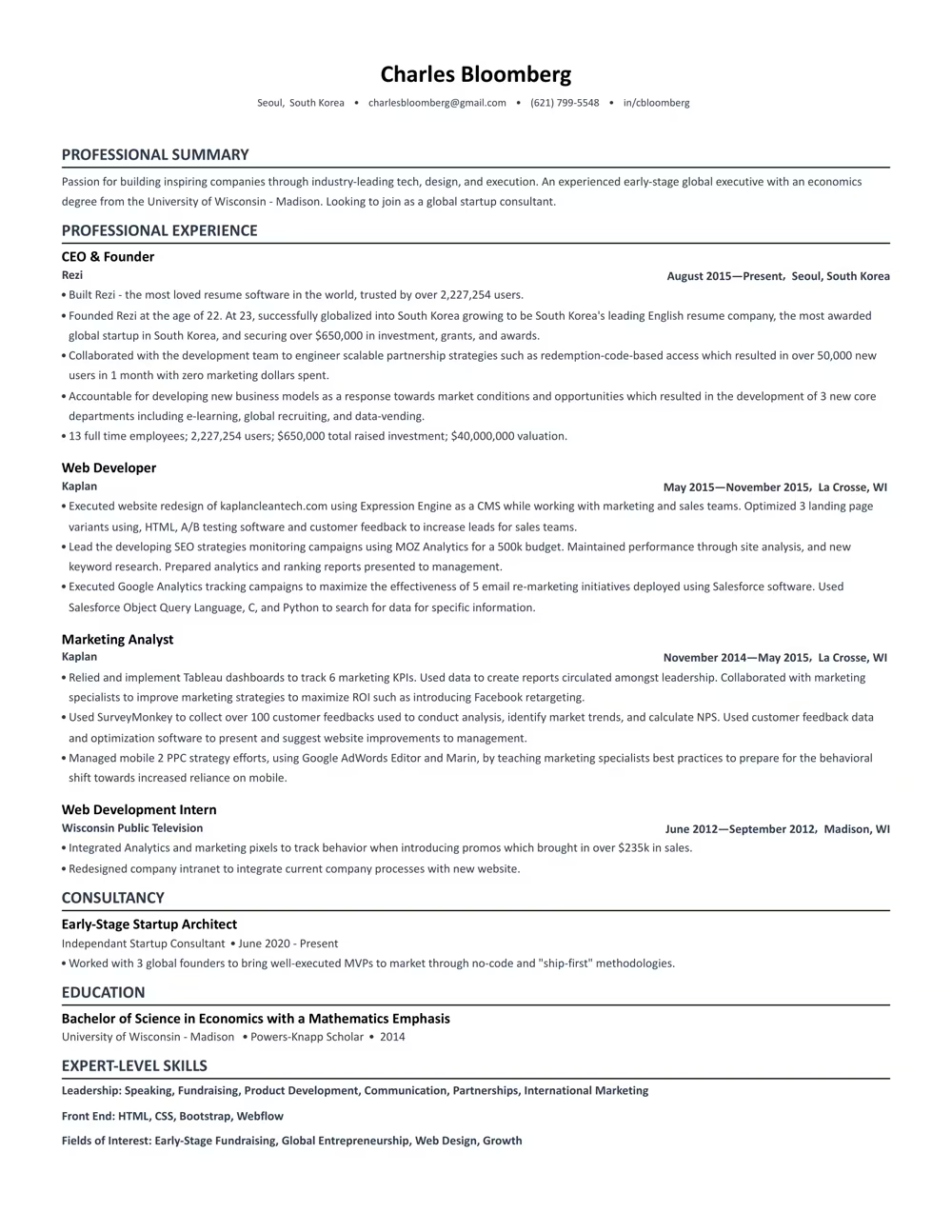
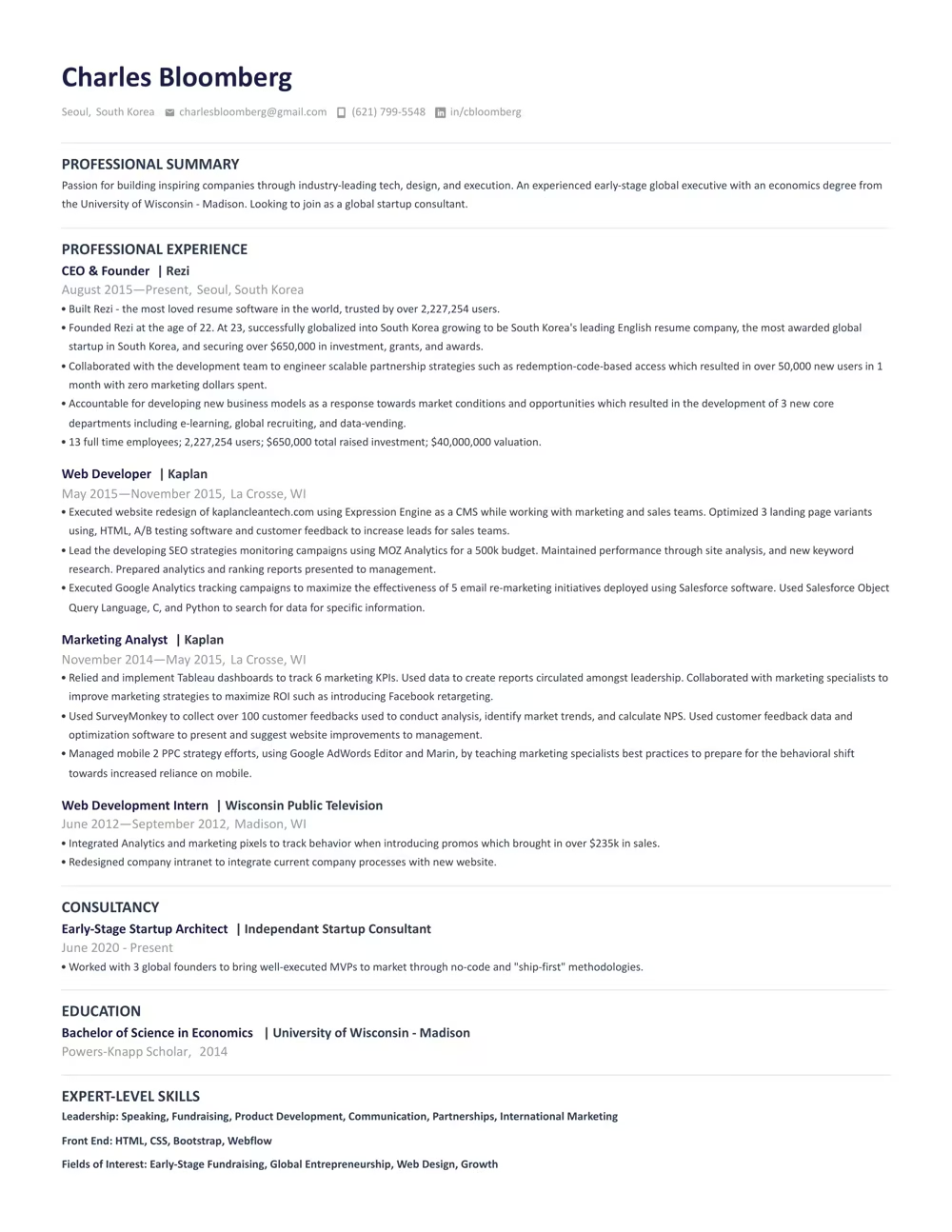
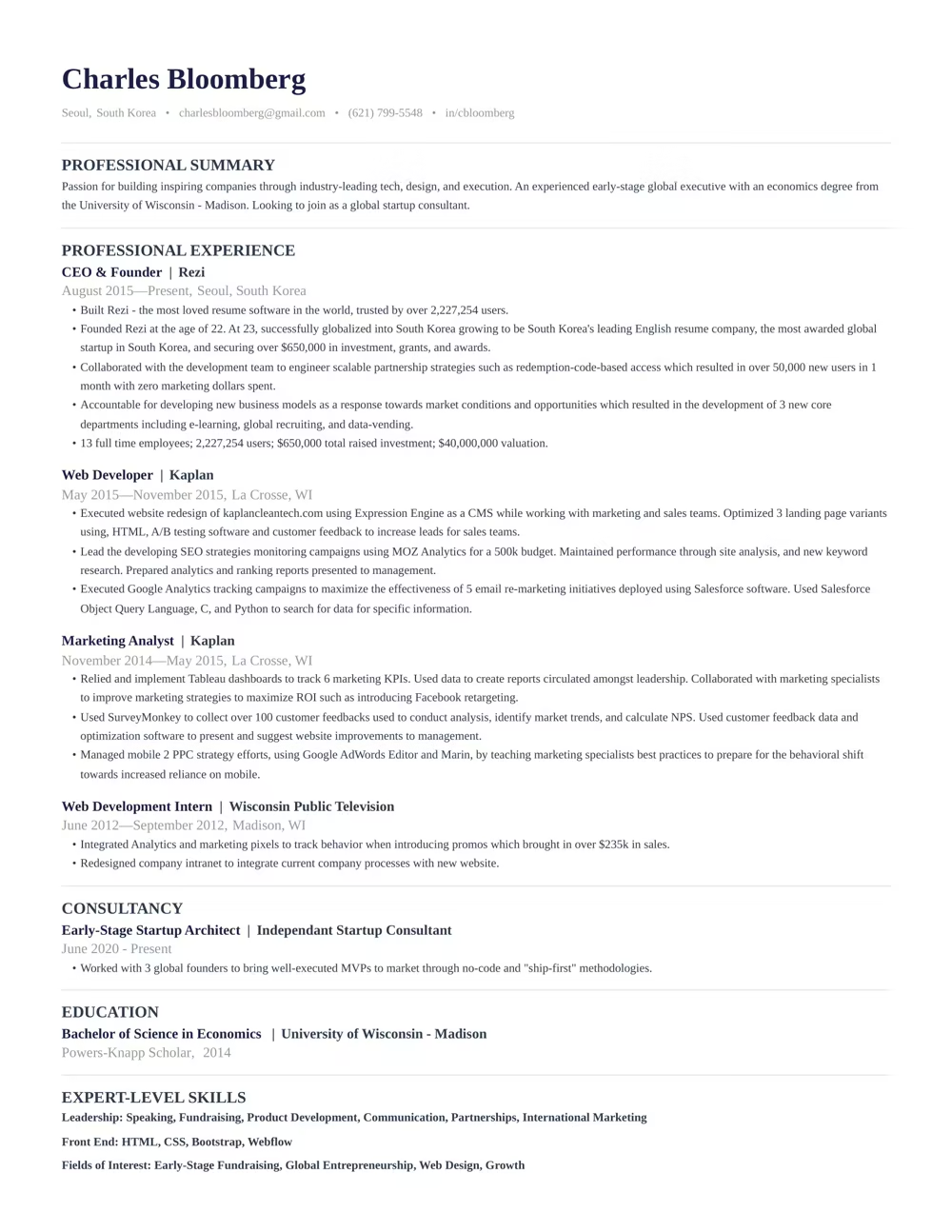
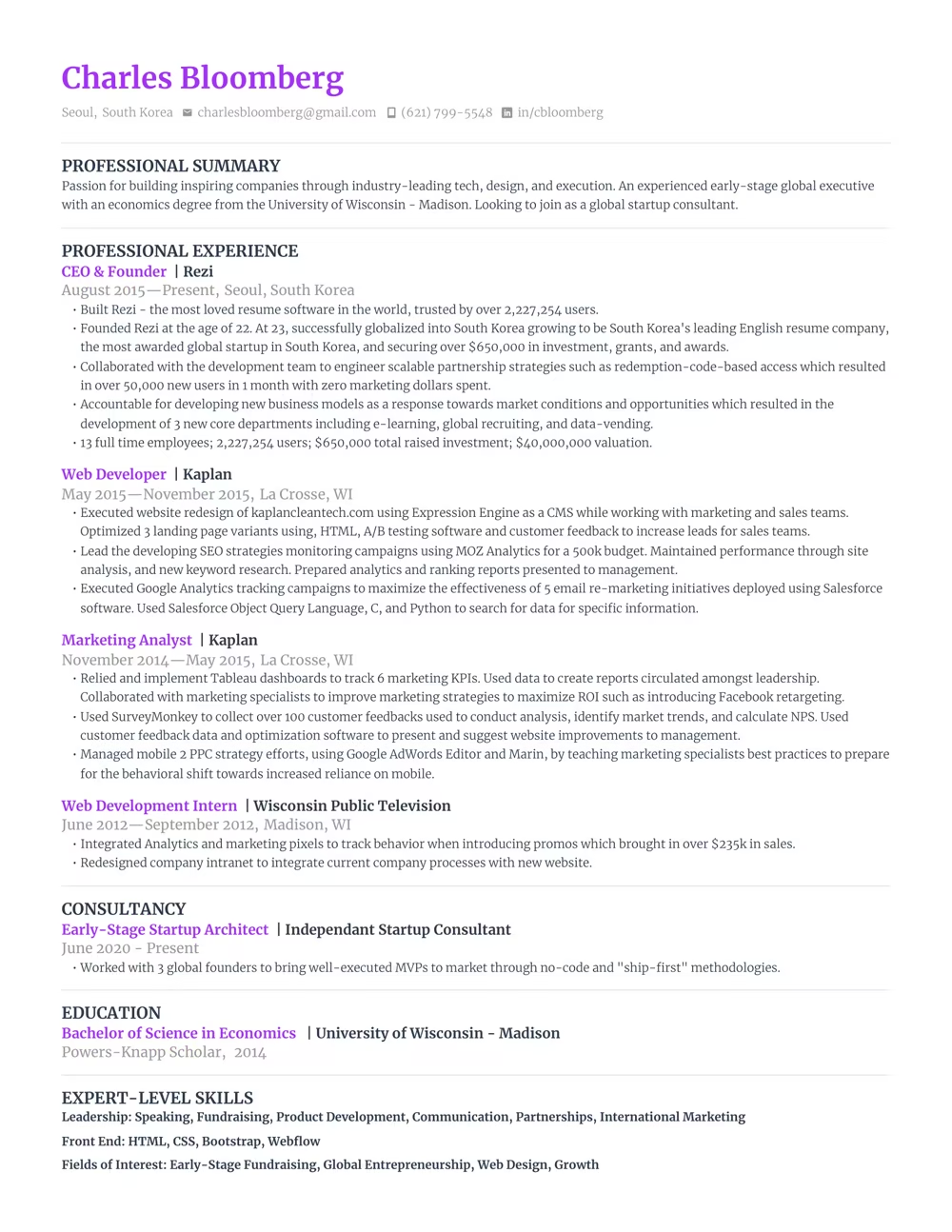
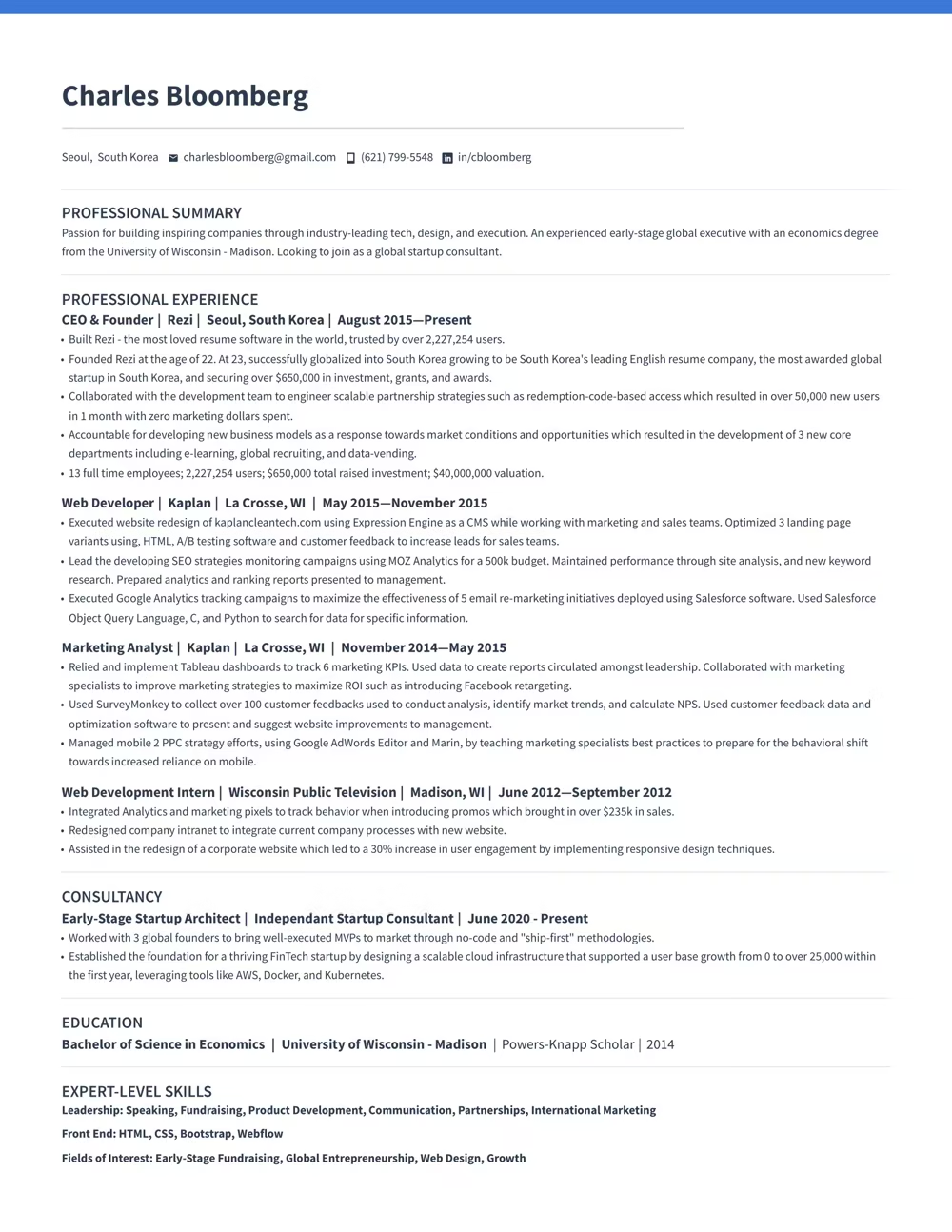
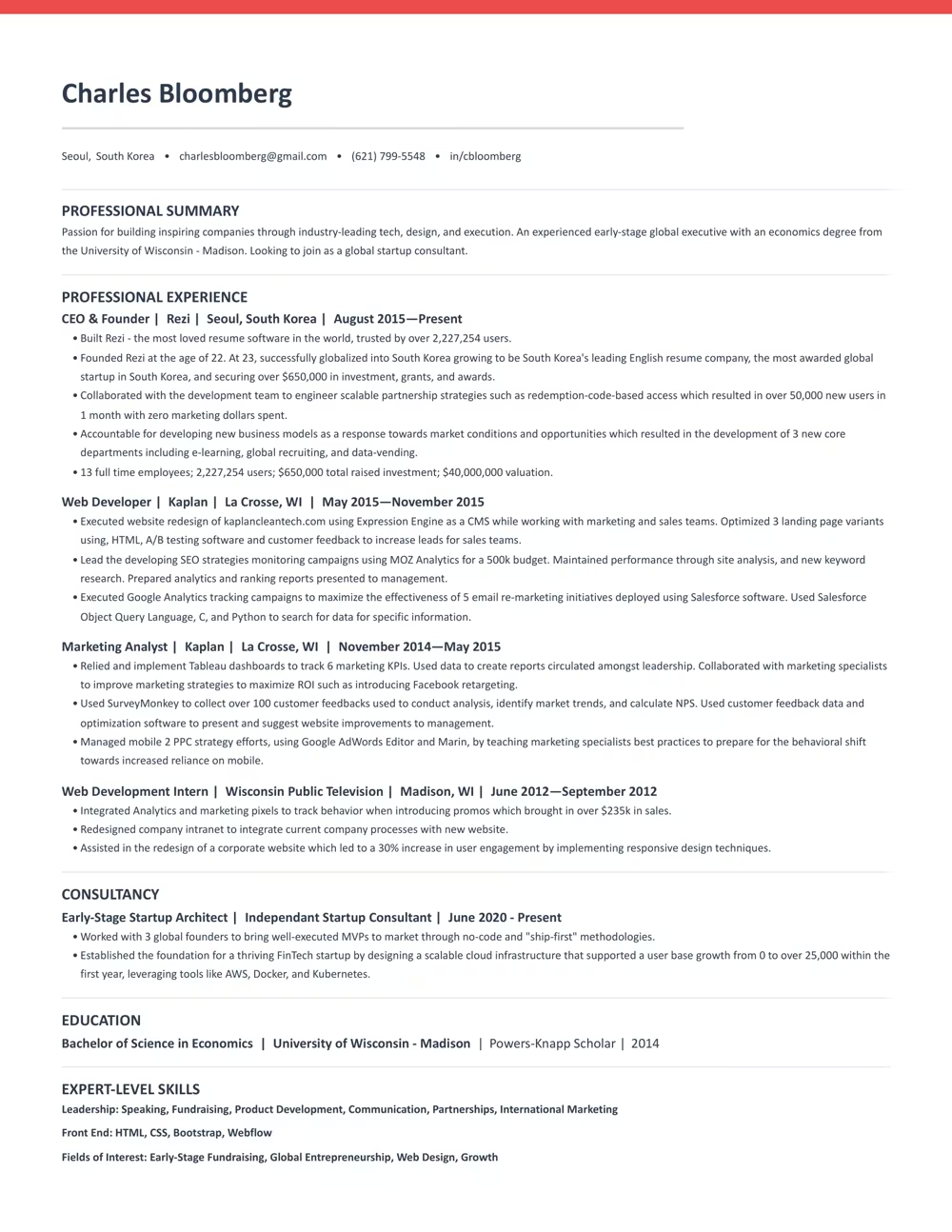
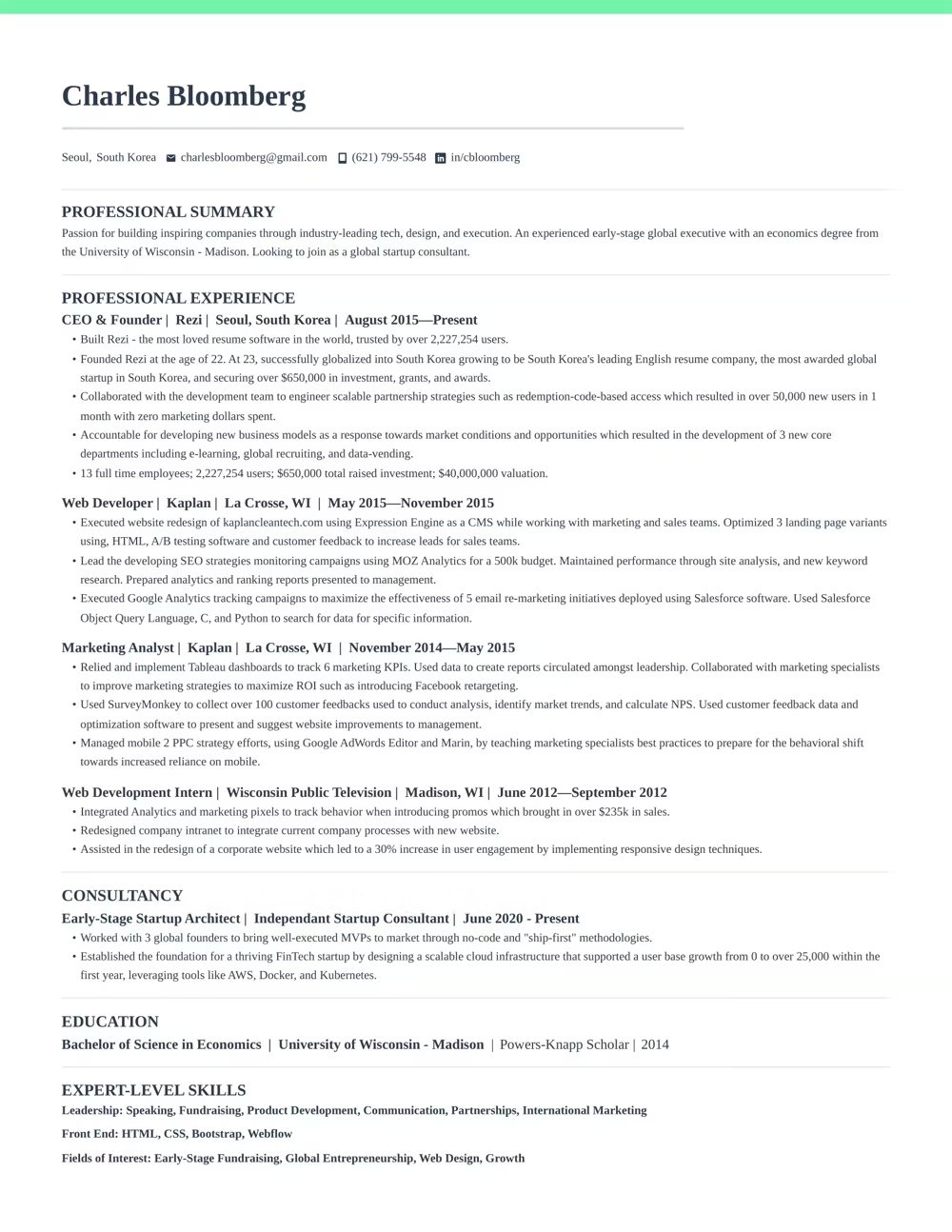
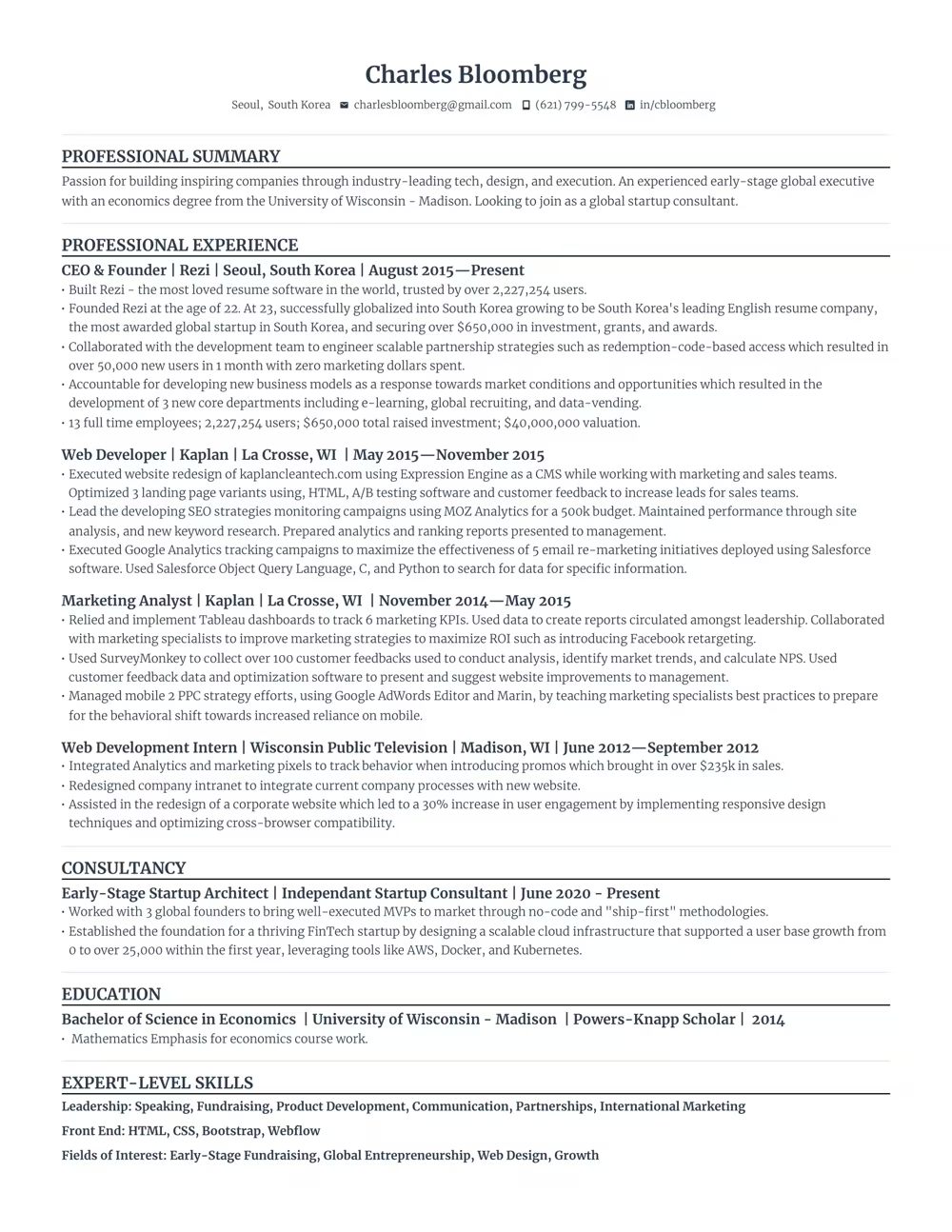
Use a template that guides you. Our ATS-compliant designs are trusted by over 4 million job seekers.
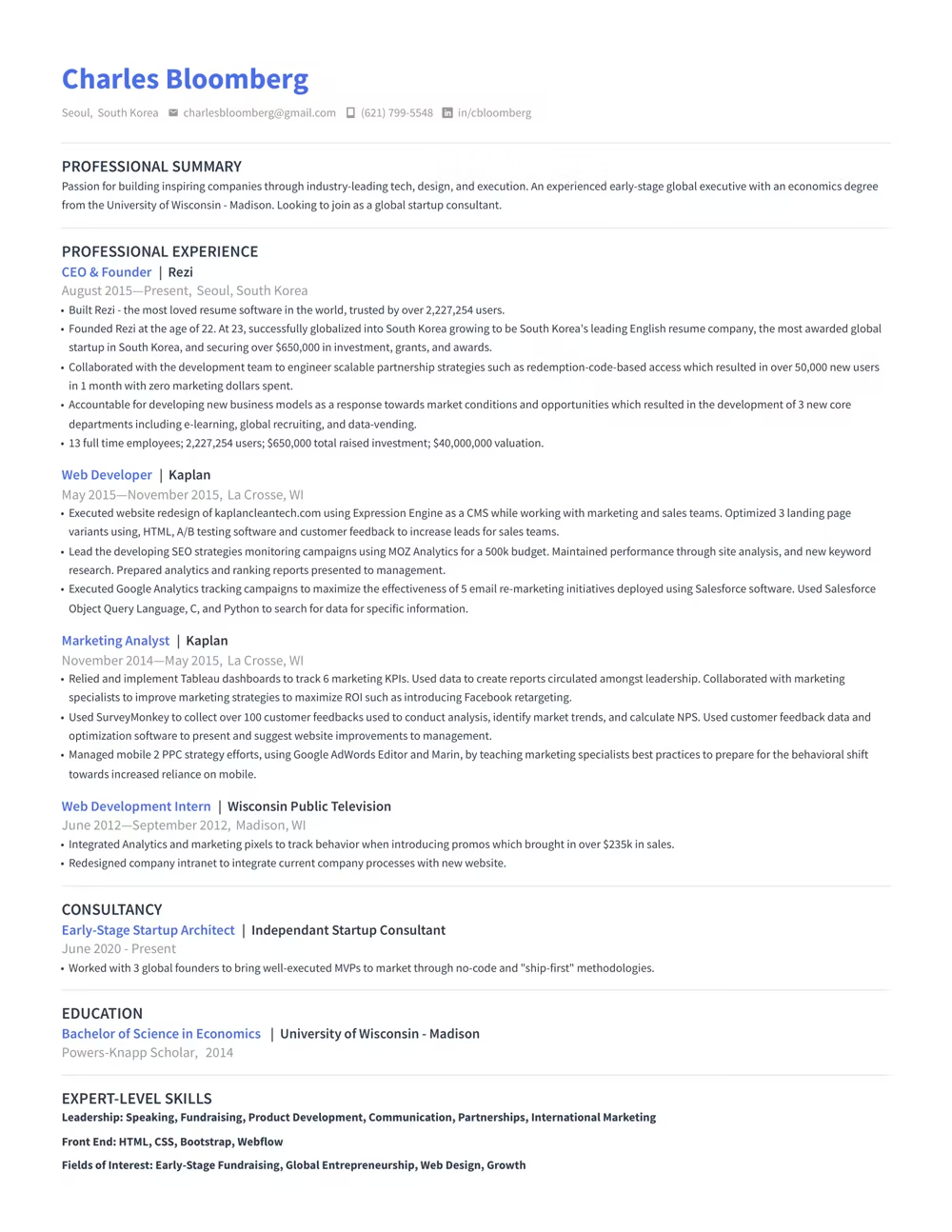


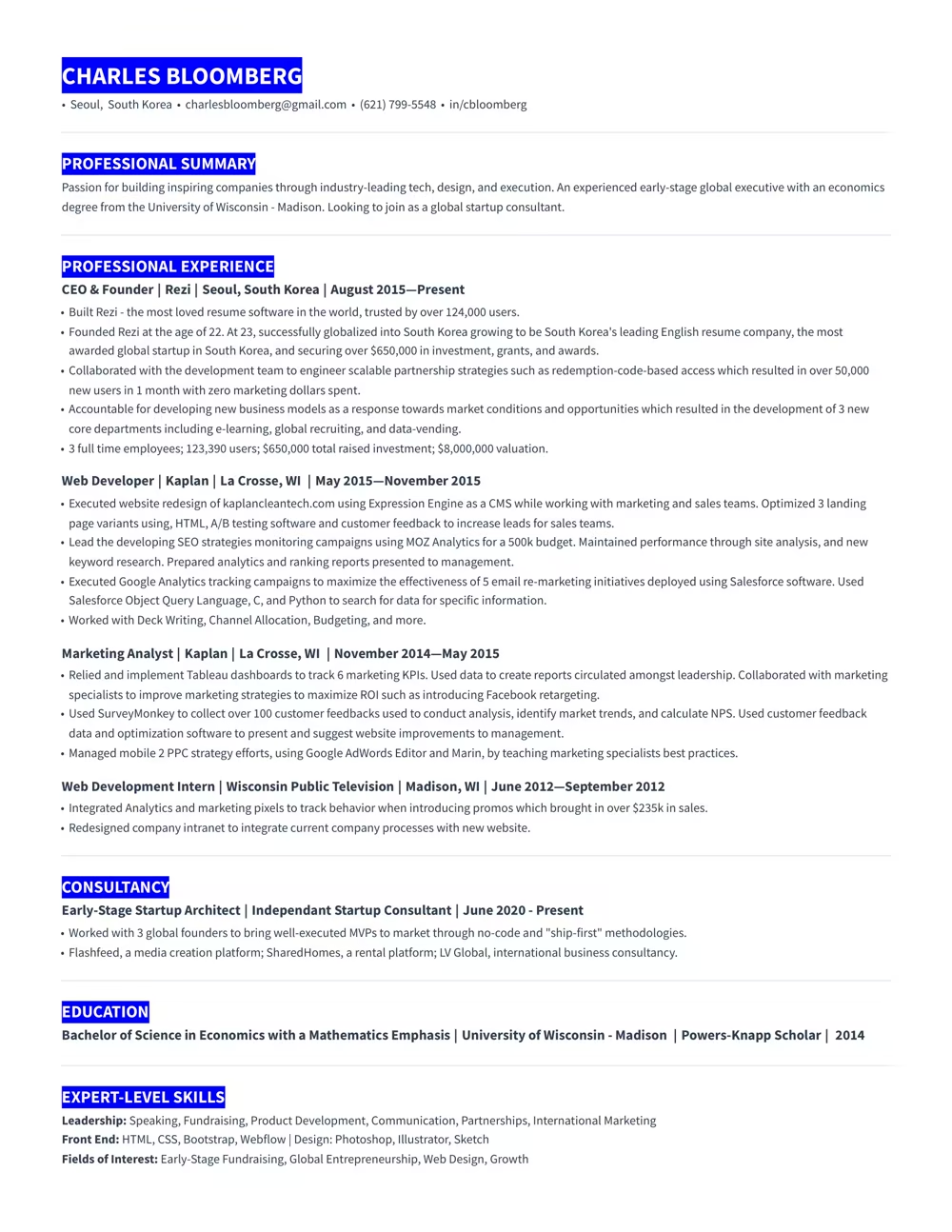
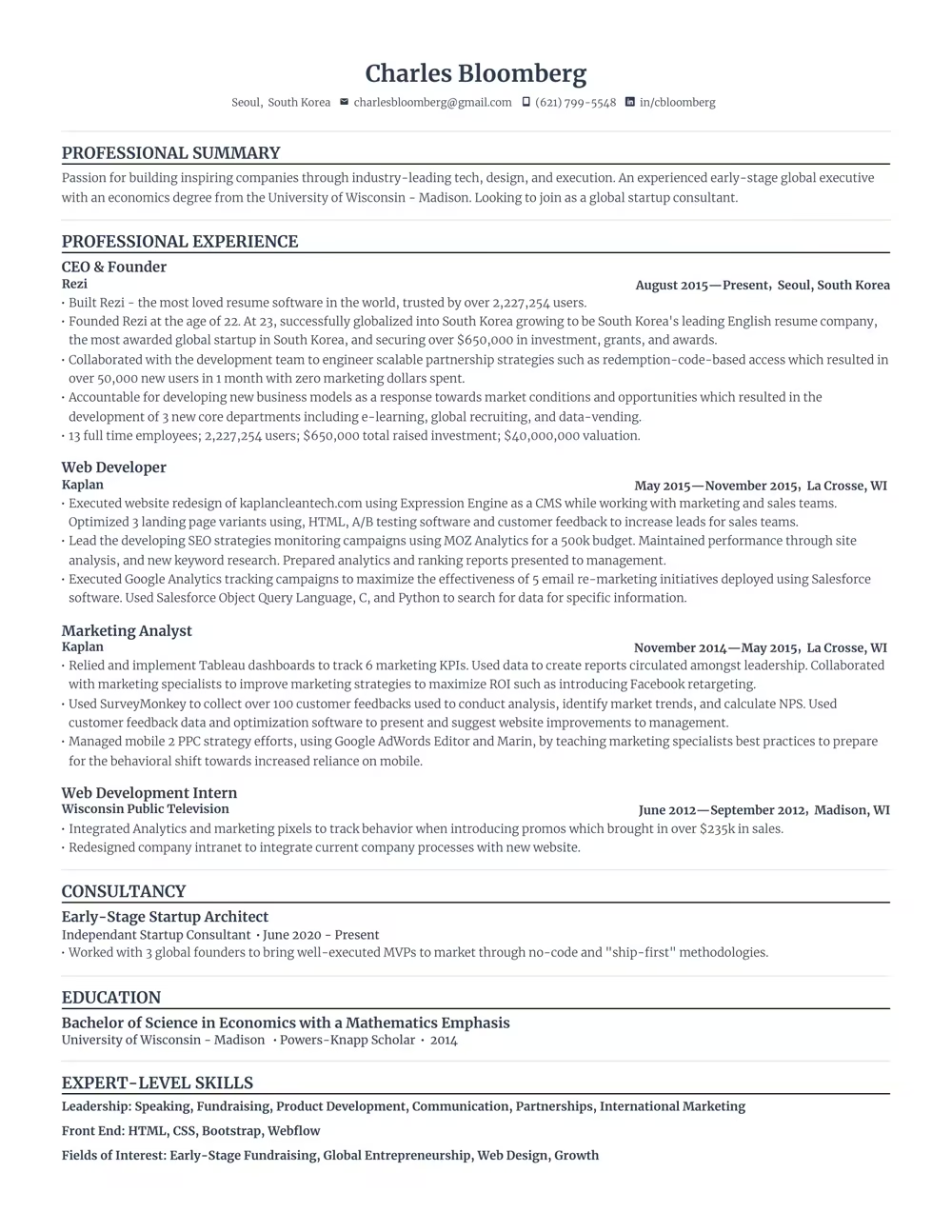

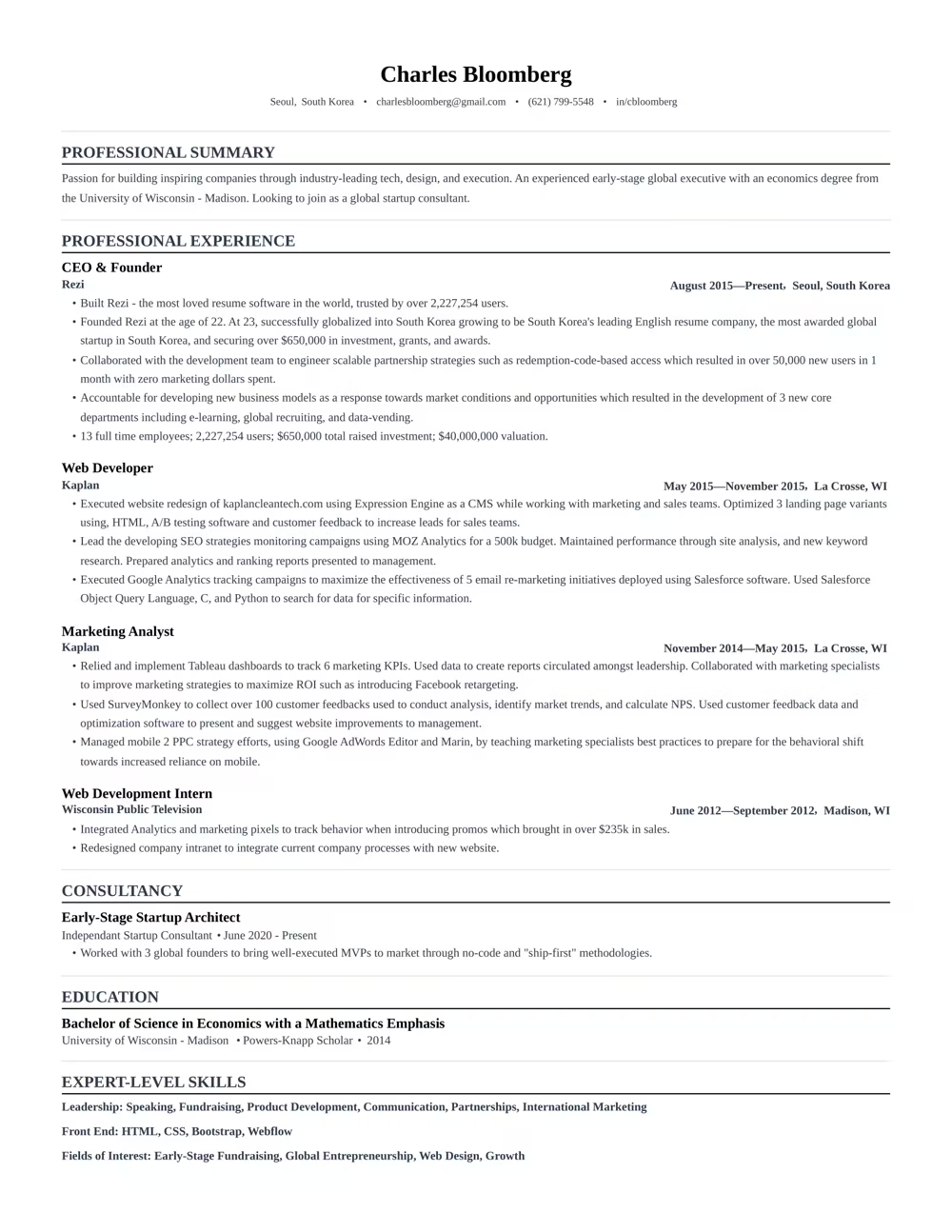

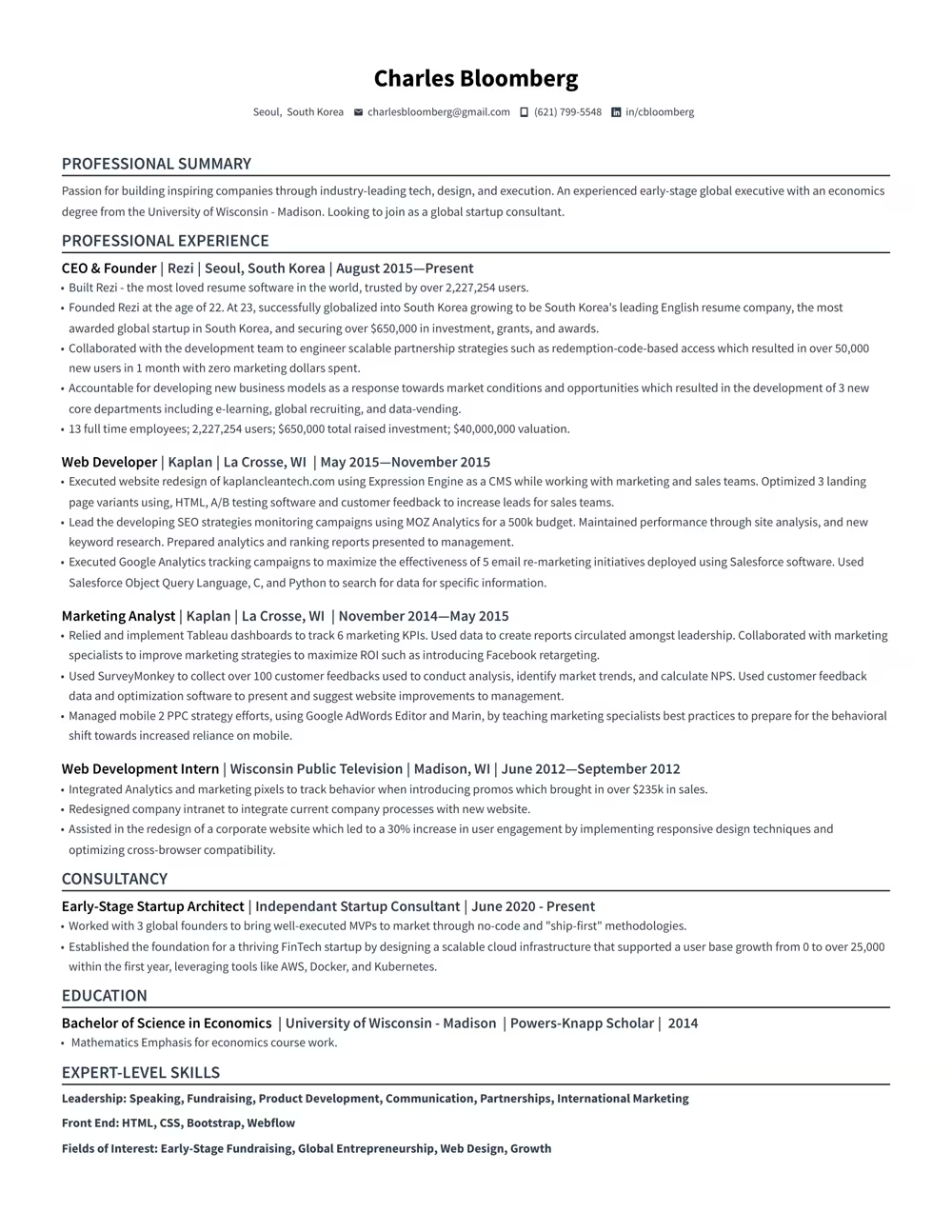
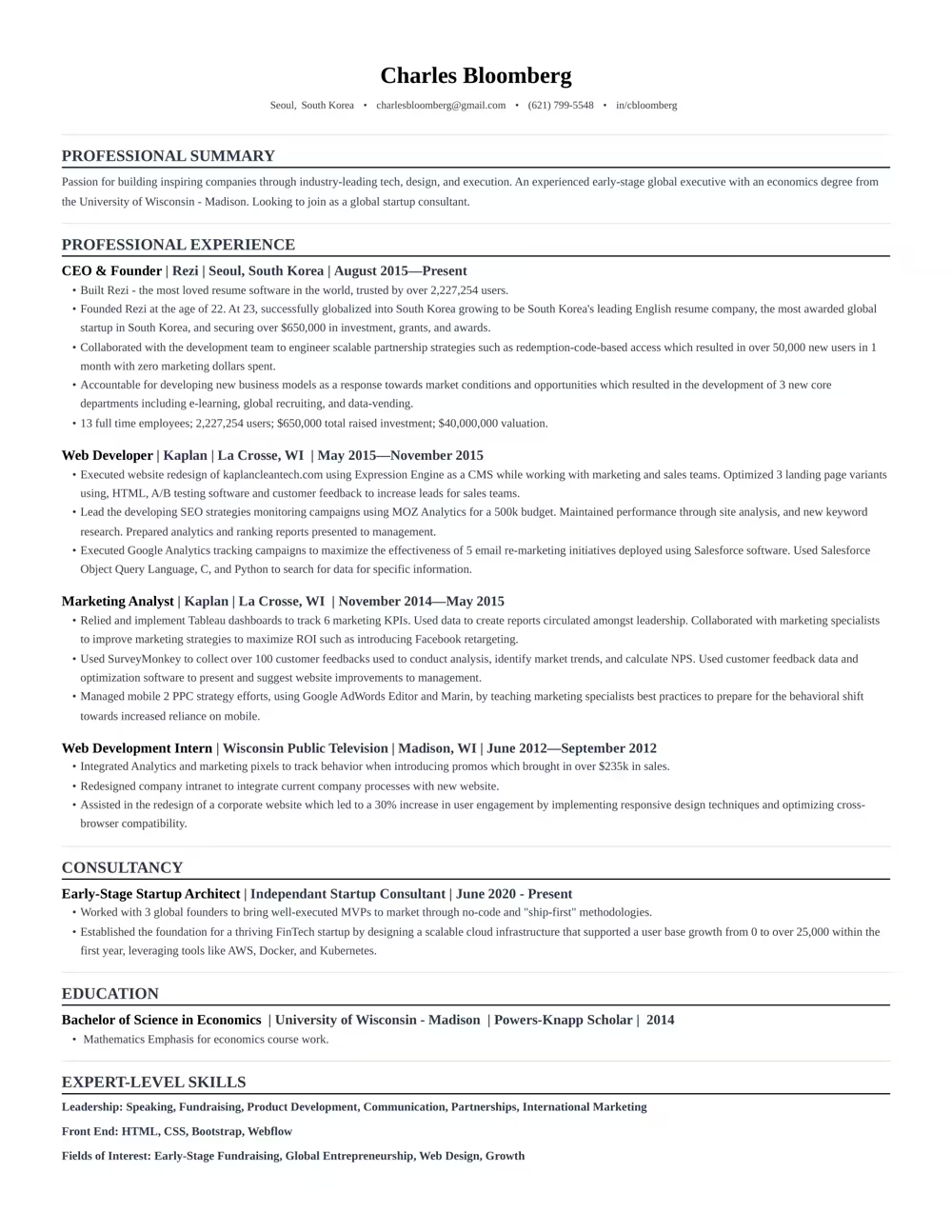
“Rezi is an awesome AI-based resume builder that includes templates to help you design a resume that is sure to check the boxes when it comes to applicant tracking systems. This is a great jumping off point to kickstart a new resume.”

Ashley Stahl
Career Contributor
62.18%
Interview Rate
4,510,834
Total Users
8.23 / 10
Avg. User Review
Wall of Love
Over 4 million users trust Rezi

Resume Building felt like pulling teeth – until I found Rezi.
Davis Allen
Software Developer

I was blown away by Rezi. It streamlined everything...
Celine Watko

I needed a resume tool as smart as my work.
Yosra Naceur
Data Scientist
“A great tool that is very helpful. I found the Rezi system easy to use and very helpful as I was working on getting my resume in shape for job applications.”

Dakota Rubin
United States
Written via

“This is actually one of the first reviews I’ve ever written for a business, and that alone says a lot. I highly recommend Rezi to anyone who’s job searching, it makes the entire process so much easier.”

Yazan Alkhatib
United States
Written via
“Reduced my time per application from 1-2 hours down to 15 minutes.”
Kixxx
Experience with Rezi
“I love how simple and convenient it is to use and been coming back to update it every time I need a fresh resume.”

Zara Wazir
U.A.E.
Written via
Frequently Asked Questions
Your questions, answered.
An AI resume maker helps you build a resume perfectly fit for the job you want. Top-notch AI resume builders are designed to speak the language hiring managers are looking for, increasing your chances of standing out in the crowd. It aligns your skills and experience with the job description effectively.
To get the most out of an AI resume builder, either start from scratch or upload your current resume. Fill in as much detail as possible about your career and skills, and upload the job description you’re targeting. This personalization allows the AI to build a unique and tailored resume that’s bound to catch potential employers' attention.
AI-generated resumes can seem similar if you're not giving personalized inputs or if you're using basic prompts. Provide specific details about your work experience and target the job you’re eyeing. Use specialized AI tools instead of general chatbots to avoid robotic-sounding resumes and to ensure individual creativity.
Employers might think you used AI, but that’s rarely an issue. What they really care about is getting a well-written resume that showcases your skills and experiences accurately. A top-notch resume tailored to their needs will speak volumes more than worrying about AI involvement.
Yes, using AI to optimize your current resume is highly effective. You just need to upload your resume, share details about your career goals and the job you want, and let the AI refine everything to elevate your resume's impact and ATS compatibility.
Rezi uses a tool called the AI Keyword Targeting. This feature scans the job description to identify crucial keywords and naturally incorporates them into your resume, giving it the right focus without keyword stuffing.
The Free plan is $0/month and allows you to create one resume, use limited AI tools (such as Keyword Targeting and Analysis), and download up to three PDFs. You can also create unlimited cover and resignation letters. No card is required to begin.
The Pro plan is $29/month and provides unlimited access to all features, including unlimited resumes, full AI capabilities, unlimited downloads, and one free monthly expert resume review (resumes are reviewed by a person).
The Lifetime plan is a $149 one-time payment. It grants permanent access to all the features of the Pro plan (unlimited resumes, full AI tools, and unlimited downloads), but it does not include the free monthly expert review (which can be purchased for an extra fee).
Rezi offers a 100% money-back guarantee on all paid plans (Pro and Lifetime). If you are unsatisfied, you can request a full refund within 30 days of your purchase.
Yes, you can easily upgrade or downgrade your plan at any time through your Rezi Account Billing dashboard. Prorated credits will apply when switching.
An AI resume maker helps you build a resume perfectly fit for the job you want. Top-notch AI resume builders are designed to speak the language hiring managers are looking for, increasing your chances of standing out in the crowd. It aligns your skills and experience with the job description effectively.
Yes, Rezi Enterprise.