Medical Resumes
Nurse Practitioner Resume Examples & Tips for 2026
Customize any of these resumes in minutes using our free AI-powered resume builder.
“Rezi is super upfront and continues to improve over time. I've recommended Rezi to several of my friends and colleagues. I just love this product so much.”

Ricky M.
Software Engineer

“Rezi is super upfront and continues to improve over time. I've recommended Rezi to several of my friends and colleagues. I just love this product so much.”
Ricky M.
Software Engineer
Helping users land jobs at 1,000+ companies such as














Here's the problem I keep seeing with nurse practitioner resumes: they read like nursing resumes with a fancier title. A list of clinical tasks — vitals, assessments, medication administration — that could belong to any RN. The whole point of being an NP is that you diagnose, prescribe, manage patients independently, and make clinical decisions. If your resume doesn't reflect that level of autonomy and advanced practice, you're underselling yourself to every hiring manager who reads it.
To create a compelling nurse practitioner resume, you need to demonstrate your clinical expertise, your ability to manage patient panels independently, and the measurable outcomes you've achieved — whether that's improved patient satisfaction scores, reduced hospital readmissions, or better chronic disease management metrics.
And this is exactly what you'll learn from this article. Inside, you'll find:
- Examples of nurse practitioner resumes across different specializations and experience levels.
- Insider tips about what really matters to recruiters and hiring managers filling NP positions.
- A step-by-step guide for building a nurse practitioner resume that actually lands interviews.
Sample Nurse Practitioner Resumes
Take a look at some top-notch sample resumes for nurse practitioners across different specializations and experience levels. Find one that matches your profile and use it as a reference point (or feel free to steal it, just make sure to adjust the wording to reflect your own clinical career).
Junior Nurse Practitioner
A Junior Nurse Practitioner resume should lean heavily on your advanced education, clinical rotations, and any RN experience that demonstrates readiness for autonomous practice. Highlight preceptorship experiences, patient volumes managed during clinicals, and any early outcomes you contributed to. Certifications like your AANP or ANCC board certification should be front and center. Emphasize eagerness to grow and specific clinical skills gained during training.
Mid-Level Nurse Practitioner
A Mid-Level Nurse Practitioner resume should showcase a solid track record of independent patient management across your specialty. Highlight your average patient panel size, clinical outcomes you've improved, and any protocols or workflows you've helped develop. Demonstrate proficiency with EHR systems and evidence-based practice. Include leadership moments like mentoring new NPs or nursing staff, and quantify your impact wherever possible.
Senior Nurse Practitioner
A Senior Nurse Practitioner resume should demonstrate extensive clinical expertise, leadership, and influence on organizational outcomes. Highlight your role in shaping clinical protocols, mentoring junior providers, and driving quality improvement initiatives. Showcase metrics like patient satisfaction scores, readmission reductions, or revenue generated. Include committee participation, advanced certifications, and any contributions to policy development or research within your practice setting.
Family Nurse Practitioner
For a Family Nurse Practitioner resume, emphasize your ability to provide comprehensive primary care across the lifespan — from pediatrics to geriatrics. Highlight experience with chronic disease management, preventive care, health screenings, and patient education. Showcase your patient panel size and diversity, and any improvements in health outcomes you've driven. FNP-BC certification and experience in outpatient or community health settings should be prominently featured.
Acute Care Nurse Practitioner
An Acute Care Nurse Practitioner resume should focus on your experience managing complex, critically ill patients in hospital settings. Highlight procedural skills like intubation, central line placement, or chest tube insertion. Emphasize your ability to collaborate with multidisciplinary teams in ICUs, emergency departments, or surgical units. Quantify patient outcomes, rapid response interventions, and any reductions in length of stay or complications you contributed to.
Pediatric Nurse Practitioner
A Pediatric Nurse Practitioner resume should highlight your expertise in child development, pediatric assessments, immunization schedules, and family-centered care. Showcase experience managing common childhood illnesses and chronic pediatric conditions. Emphasize your communication skills with both children and parents, and highlight any work in school-based clinics, pediatric urgent care, or specialty pediatric settings. CPNP certification should be clearly listed.
Psychiatric Nurse Practitioner
For a Psychiatric Nurse Practitioner resume, emphasize your expertise in psychiatric assessment, psychopharmacology, and therapeutic interventions. Highlight experience managing conditions like depression, anxiety, PTSD, bipolar disorder, and substance use disorders. Showcase your patient caseload, outcomes like symptom reduction scores, and any crisis intervention experience. PMHNP-BC certification is essential, along with proficiency in telehealth platforms increasingly used in behavioral health.
Emergency Nurse Practitioner
An Emergency Nurse Practitioner resume should highlight your ability to triage, diagnose, and treat patients in fast-paced, high-acuity environments. Emphasize procedural competencies like laceration repair, fracture management, and point-of-care ultrasound. Showcase patient volumes managed per shift, door-to-disposition times, and your comfort with undifferentiated patients. Experience in freestanding EDs, trauma centers, or urgent care settings adds significant weight.
Certified Nurse Practitioner
A Certified Nurse Practitioner resume should lead with your national board certification and state licensure, emphasizing your credentials as a validated advanced practice provider. Highlight your clinical specialty, patient population expertise, and measurable outcomes. Showcase continuing education, specialty certifications, and DEA registration. This resume works well for NPs applying across settings, so tailor your experience bullets to match each specific job posting.
How to Write a Nurse Practitioner Resume
Short answer:
Focus on your clinical autonomy, patient outcomes, and the specialized skills that set you apart as an advanced practice provider. Create a professional header with your name, credentials, and contact details. Right below, write a 2–3 sentence resume summary outlining your most significant clinical accomplishments. Describe your work history in reverse-chronological order, focusing on patient populations served, clinical outcomes, and procedures performed. Then, cover your education (including your MSN or DNP), list certifications and licenses, highlight key skills, and add extra sections such as publications, professional memberships, or volunteer work.
Include all the necessary sections in the correct order
Here's the correct order of sections for most nurse practitioner resumes:
- Header with contact information and credentials
- Resume summary or objective
- Work experience
- Education
- Certifications and licenses
- Skills
Depending on your current career situation, you can also throw in some additional sections. For instance:
- Publications and research
- Professional memberships (e.g., AANP, ANA)
- Volunteer experience or medical missions
- Conference presentations
- Continuing education and specialty training
Include everything that shows you're capable of doing what the job requires. Make every section count. If it doesn't clearly highlight your clinical skills or professional value, it doesn't belong on your resume.
If you have less than five years of NP experience, keep your resume 1-page long. For more experienced nurse practitioners, a two-page resume is fine.
More details here: What Sections to Include on Your Resume?
Now, I'll give you a high-level overview of how to write each section, going from top to bottom. Well… almost. The only exception is the resume summary section. While it comes right after your contact info, it's actually easier to write it last. More on that in a sec.
Create a professional resume header
- Start with your name, credentials, and contact information. Include your full name followed by your credentials (e.g., MSN, APRN, FNP-BC), phone number, professional email address, location, and LinkedIn profile. Listing your credentials right after your name is standard in healthcare and immediately signals your qualifications.
- Right below your name and credentials, clearly state your professional title (e.g., Family Nurse Practitioner or Board-Certified Psychiatric Nurse Practitioner). This sets expectations and establishes your specialty immediately.
For more information, see: How to Create a Resume Header
Describe your work history
- Use reverse-chronological order. List your positions starting with the current or most recent one.
- In each entry, include your job title, facility name, location, and dates of employment.
- Below each position, write 3–7 bullet points — the more recent the position, the more bullet points you should include. Describe your responsibilities and, more importantly, your clinical accomplishments.
- Use action verbs and quantify your achievements (e.g., "Managed a panel of 800+ patients with chronic conditions, achieving a 22% improvement in HbA1c control rates over 12 months").
- If specific clinical frameworks or practice models were pivotal in your roles (e.g., patient-centered medical home, collaborative practice agreements), weave these details into your descriptions. This will also help you pass ATS scans.
Learn more about the best practices of this section with our detailed guide on how to describe your work experience on a resume.
List your degrees and detail professional learning
- In the education section, list your highest degree first — typically your MSN or DNP — including the degree type, concentration (e.g., Family Nurse Practitioner), and institution.
- If you have relevant work experience, include only the name of your school and the degree you earned. If you're a new graduate NP, you can add more detail — list relevant clinical rotations, preceptorship hours, and academic honors.
- If you have NP certifications (e.g., AANP, ANCC board certification), either include them in an "Education and Certifications" section, or create a separate "Certifications & Licenses" section and place it right below.
For an in-depth guide on how to describe your education on a resume, see: How to List Education on a Resume
List your most relevant skills in the skills section
- Include a mix of clinical skills (e.g., diagnostic reasoning, prescriptive authority, procedural skills) and technology proficiencies (e.g., EHR systems, telehealth platforms) that you're experienced with.
- Add in soft skills such as patient communication, clinical leadership, and interdisciplinary collaboration. These demonstrate your capacity to provide holistic, patient-centered care.
- You can use two separate subsections — one for clinical skills, one for soft skills — or list all skills under one heading.
- Match your skills to the description of the job you're applying for. Don't just dump every skill from the posting onto your resume (especially if you don't really have them), but highlight those areas where your expertise overlaps with the job requirements.
Need some inspiration to get started? Here are some good skills to feature on your nurse practitioner resume.
Clinical and technical skills for NP resumes:
- Advanced health assessment
- Differential diagnosis
- Pharmacological management / prescriptive authority
- Chronic disease management
- Procedural skills (suturing, I&D, joint injections, etc.)
- Point-of-care testing and interpretation
- Patient triage and risk stratification
- Evidence-based practice
- Clinical documentation and coding (ICD-10, CPT)
- Ordering and interpreting diagnostics (labs, imaging)
Technology and EHR skills:
- Epic
- Cerner
- Athenahealth
- eClinicalWorks
- Allscripts
- Telehealth platforms (Doxy.me, Teladoc, Amwell)
- PDMP (Prescription Drug Monitoring Program) systems
- Microsoft Office Suite
- Clinical decision support tools
- E-prescribing systems
Key soft skills for nurse practitioners:
- Patient communication and education
- Clinical leadership
- Critical thinking
- Empathy and compassion
- Interdisciplinary collaboration
- Time management
- Adaptability
- Cultural competency
- Conflict resolution
- Attention to detail
For a full-blown guide on listing skills on a resume, visit: How to Put Skills on a Resume
Use additional sections as further proof of your fit
Additional sections add depth to your resume and back up your claimed expertise. Good examples of extra sections to add to a nurse practitioner resume are:
- Professional memberships. Membership in organizations like AANP, ANA, or specialty-specific groups demonstrates your commitment to the profession and ongoing development.
- Publications and research. If you've contributed to nursing journals, participated in clinical research, or co-authored studies, list them in a dedicated section. This is especially valuable for NPs in academic medical centers.
- Volunteer experience and medical missions. Highlighting volunteer clinical work — free clinics, disaster relief, global health missions — shows your dedication to patient care beyond paid employment.
- Conference presentations. If you've presented at nursing or medical conferences, include them. Even listing conferences you've attended signals you're engaged with current best practices and emerging research.
Highlight the most relevant information in a resume summary
Once you're done writing your nurse practitioner resume, give it a full read. Pick the most relevant information and compile it into a summary paragraph. Place it right under the resume header.
- Be brief and to-the-point. In 3–4 sentences, sum up your clinical highlights, specialty expertise, and what you bring to the practice. Consider this your chance to answer, "Why should you hire me?" Tailor this section to match the employer's needs outlined in the job description.
- Use value-oriented language. Focus on how you can add value to the potential employer, mentioning specific patient outcomes you've achieved or clinical improvements you've driven in the past.
Once you've completed the core sections of your resume, you can use Rezi AI Resume Summary Generator to automatically create a powerful summary, tailored to the job you're applying for. All you need to do is add the position and skills you want to highlight. The AI writer will do the rest.
More information here: How to Write a Job-Winning Resume Summary (with Examples)
For finishing touches, make sure your resume looks professional
- Use a clean and tidy resume format. Ensure your NP resume is easily readable, with a professional font, consistent formatting, and clear section headings. Avoid overloading it with dense text or fancy design elements that could distract from the content and confuse resume screening software.
- Aim for a balance between detail and conciseness. If you're a new graduate NP or have limited NP experience, keep your resume to a single page. Experienced nurse practitioners can extend their resumes to two pages, but still need to make sure every word conveys value.
Learn more about proper resume formatting here: How to Format a Resume & What Standard Resume Format to Use
What Makes Nurse Practitioner Resumes Different
In short: the emphasis on clinical autonomy, credentials, and patient outcomes.
This is also what many nurse practitioners get wrong on their resumes. Hiring managers at clinics, hospitals, and health systems aren't looking for another nursing resume with expanded responsibilities. They need to see that you can function as an independent provider — diagnosing, prescribing, managing complex patients — and that you've delivered real, measurable results.
Credentials matter more than in almost any other profession
In healthcare, your credentials aren't just a nice bonus — they're a legal requirement to practice. Hiring managers will scan for them immediately, and missing or improperly listed credentials can get your resume tossed before anyone reads your experience.
What it means for you:
- List your credentials after your name in the header (e.g., Jane Smith, MSN, APRN, FNP-BC). Follow the accepted credentialing order: highest degree, licensure, state designations, national certifications.
- Include a dedicated "Certifications & Licenses" section that lists your board certification, state licensure, DEA registration, NPI number (optional), and any additional certifications like BLS, ACLS, or PALS.
Focus on clinical autonomy and scope of practice
Unlike RN resumes that describe tasks performed under physician direction, your NP resume needs to reflect your role as an independent or semi-independent provider. Recruiters want to see that you can manage patients on your own.
What it means for you:
- Describe your practice in terms of autonomous decision-making: diagnosing conditions, developing treatment plans, prescribing medications, and ordering and interpreting diagnostics.
- Specify whether you practiced in a full practice authority state, collaborative practice, or supervisory model. This context helps hiring managers understand your level of independence.
Focus on patient outcomes and quality metrics
Quantifying achievements is a nice-to-have in most resumes, but it's becoming essential for NPs — especially as healthcare moves toward value-based care.
What it means for you:
- Detail clinical outcomes through tangible metrics: patient satisfaction scores, quality measure improvements (HEDIS, MIPS), readmission rate reductions, or chronic disease management benchmarks like A1C or blood pressure control rates.
- Mention patient panel sizes, daily patient volumes, and the complexity of cases you managed. A hiring manager at a busy primary care clinic needs to know you can handle 20+ patients a day.
Highlight your specialty and patient population expertise
NP roles are increasingly specialized, and hiring managers want to see that your experience directly aligns with their patient population and clinical setting.
What it means for you:
- Be specific about the populations you've served (pediatric, geriatric, psychiatric, acute care) and the settings you've worked in (outpatient clinic, hospital, ED, long-term care, telehealth).
- If you have experience with specific conditions or procedures that are central to the role you're applying for, call them out explicitly in your bullet points rather than burying them in general descriptions.
Continuing education signals more than just compliance
Every NP needs CEUs to maintain certification, but how you present your continuing education can differentiate you from other candidates.
What this means for you:
- Highlight advanced training, specialty certificates (e.g., dermatology procedures, DOT certification, suboxone waiver/X-waiver), and any post-graduate fellowship or residency programs.
- Show a pattern of intentional skill development rather than just checking the CE box. If you've pursued advanced training in an area directly relevant to the target job, make it visible.
Bonus Resources for Nurse Practitioners
This isn't going to be a game-changer for you if you need a resume now. But —
I want you to treat your career holistically. These resources will help you sharpen your clinical practice, add more weight to your future resumes, and keep you plugged into the evolving NP landscape.
Professional associations and networks
American Association of Nurse Practitioners (AANP)
The largest professional membership organization for NPs of all specialties. AANP offers advocacy, continuing education, certification, practice resources, and annual conferences that keep you connected to the NP community.
American Nurses Association (ANA)
While broader than NPs alone, ANA provides advocacy, professional development resources, and a strong network for all nurses including advanced practice providers. Their resources on policy and practice standards are particularly valuable.
National Organization of Nurse Practitioner Faculties (NONPF)
Primarily focused on NP education, NONPF is valuable for NPs interested in academic roles, precepting, or staying connected to evolving NP competency standards and curriculum developments.
Online learning platforms
Coursera & edX
Both platforms offer healthcare and clinical courses from top universities, covering topics like epidemiology, pharmacology updates, healthcare leadership, and evidence-based practice — excellent for expanding knowledge beyond your primary specialty.
Nurse.com Continuing Education
A dedicated platform for nursing CE courses, many of which are specifically designed for nurse practitioners. Courses cover clinical topics, pharmacology, and practice management with accredited CE credit.
AAFP CME Portal
While designed for family physicians, many NPs (particularly FNPs) use AAFP's CME resources for high-quality clinical education. Their point-of-care tools and clinical decision resources are excellent for sharpening diagnostic skills.
Publications
The Journal for Nurse Practitioners (JNP)
A peer-reviewed journal published by AANP, covering clinical practice, policy, and research relevant to NPs across all specialties. An essential read for staying current with evidence-based practice.
The American Journal of Nursing
One of the oldest and most respected nursing publications, covering clinical topics, research, and professional development relevant to advanced practice nurses.
Clinical Advisor
A practical resource for NPs and physician assistants, offering clinical features, case studies, drug information, and practice management tips directly applicable to daily patient care.
Tools and clinical resources
UpToDate
The gold standard for clinical decision support. UpToDate provides evidence-based clinical recommendations that NPs use daily for diagnostic and treatment decisions. Familiarity with this tool is often expected by employers.
Epocrates
A widely used drug reference and clinical tool for NPs, offering drug interaction checks, pill identification, formulary information, and clinical practice guidelines — all accessible from your phone.
Summary
Here's what you need to know about writing a nurse practitioner resume:
- Structure your NP resume with essential sections in this order: Header (with credentials), Resume Summary or Objective, Work Experience, Education, Certifications & Licenses, and Skills. Add extra sections like Publications, Professional Memberships, or Volunteer Experience when relevant.
- Include a professional header with your name, credentials listed in proper order (degree, licensure, certification), contact information, and professional title.
- Describe your work history in reverse-chronological order, emphasizing clinical autonomy, patient populations served, and measurable outcomes.
- In the education section, list your MSN or DNP first. Create a separate "Certifications & Licenses" section for board certifications, state licenses, and DEA registration.
- Highlight a mix of clinical skills, EHR/technology proficiencies, and soft skills — tailor them to each specific job description.
- Use additional sections to further showcase your commitment to the profession — research, publications, memberships, and advanced training all add weight.
- Once done writing the resume, compile the key information into a brief, value-oriented resume summary at the top.
- Ensure your resume looks clean and professional. One page for newer NPs, two pages maximum for experienced practitioners.
- Showcase clinical autonomy, patient outcomes, and your specialty expertise — these are what set NP resumes apart from all other healthcare resumes.
Thanks for reading! Got any questions? Feel free to reach out to me on LinkedIn. (Or check out the FAQs first, maybe your question is answered there.)
FAQ
Should I include my RN experience on my nurse practitioner resume?
Yes, but be strategic about it. If your RN experience is directly relevant to your NP specialty (e.g., ICU nursing before becoming an acute care NP), include it but keep the bullet points concise. Focus on skills that transferred to your advanced practice role, like assessment skills, clinical judgment, or leadership. Don't give your RN roles equal weight — your NP experience should clearly take center stage.
How should I list my credentials after my name?
Follow the accepted order: highest educational degree, licensure, state designations, then national certification. For example: Jane Smith, DNP, APRN, FNP-BC. Don't include credentials you no longer hold, and avoid listing both your BSN and MSN — only include the highest nursing degree.
What keywords should I use on my nurse practitioner resume?
Use terminology specific to your specialty and the job posting: autonomous practice, prescriptive authority, differential diagnosis, chronic disease management, patient-centered care, evidence-based practice, and specific EHR system names. Include your board certification acronyms (FNP-BC, PMHNP-BC, AGACNP-BC) and procedure names relevant to the role.
I'm a new graduate NP with no NP work experience. How do I fill my resume?
Lean on your clinical rotation hours, preceptorship experiences, and the patient volumes you managed during training. Specify the clinical settings, patient populations, and types of cases you handled. Your RN experience also becomes more important here — position it to show clinical readiness. Include your capstone or DNP project if it's relevant to the role you're targeting.
Should I include my NPI number or DEA number on my resume?
You can note that you have an active NPI and DEA registration without listing the actual numbers for security reasons. Simply writing "Active DEA Registration" and "NPI: Available upon request" is sufficient and signals to employers that you're ready to practice.
I'm an NP transitioning between specialties. How should I approach my resume?
Focus on transferable clinical skills — assessment, diagnostic reasoning, pharmacology, patient communication — that apply across specialties. Highlight any relevant continuing education, additional certifications, or training you've completed in the new specialty. If you've done any cross-coverage, shadowing, or clinical rotations in the target specialty, make sure those experiences are prominently featured. Address the transition directly in your resume summary to frame it as intentional growth.
How important is it to tailor my NP resume for each job application?
Extremely important. NP roles vary widely in patient population, clinical setting, and scope of practice. A resume targeting a hospital-based acute care position should read very differently from one targeting an outpatient family practice. Mirror the language from the job posting, align your bullet points with the stated responsibilities, and adjust your skills section to match. This also helps you get past ATS filters that screen for specific keywords.
Contents

Resume Formats & Examples
ATS-Friendly resume formats that land jobs
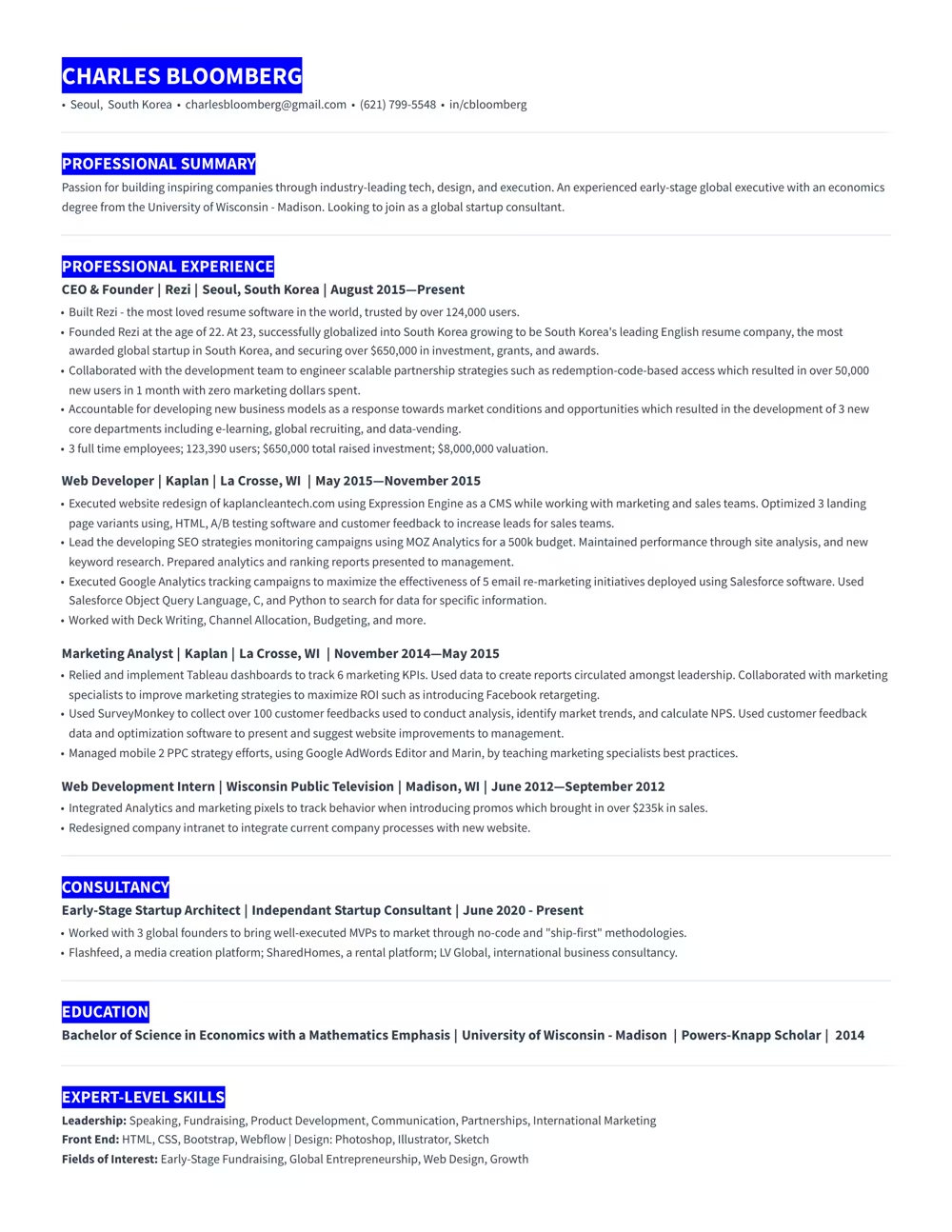
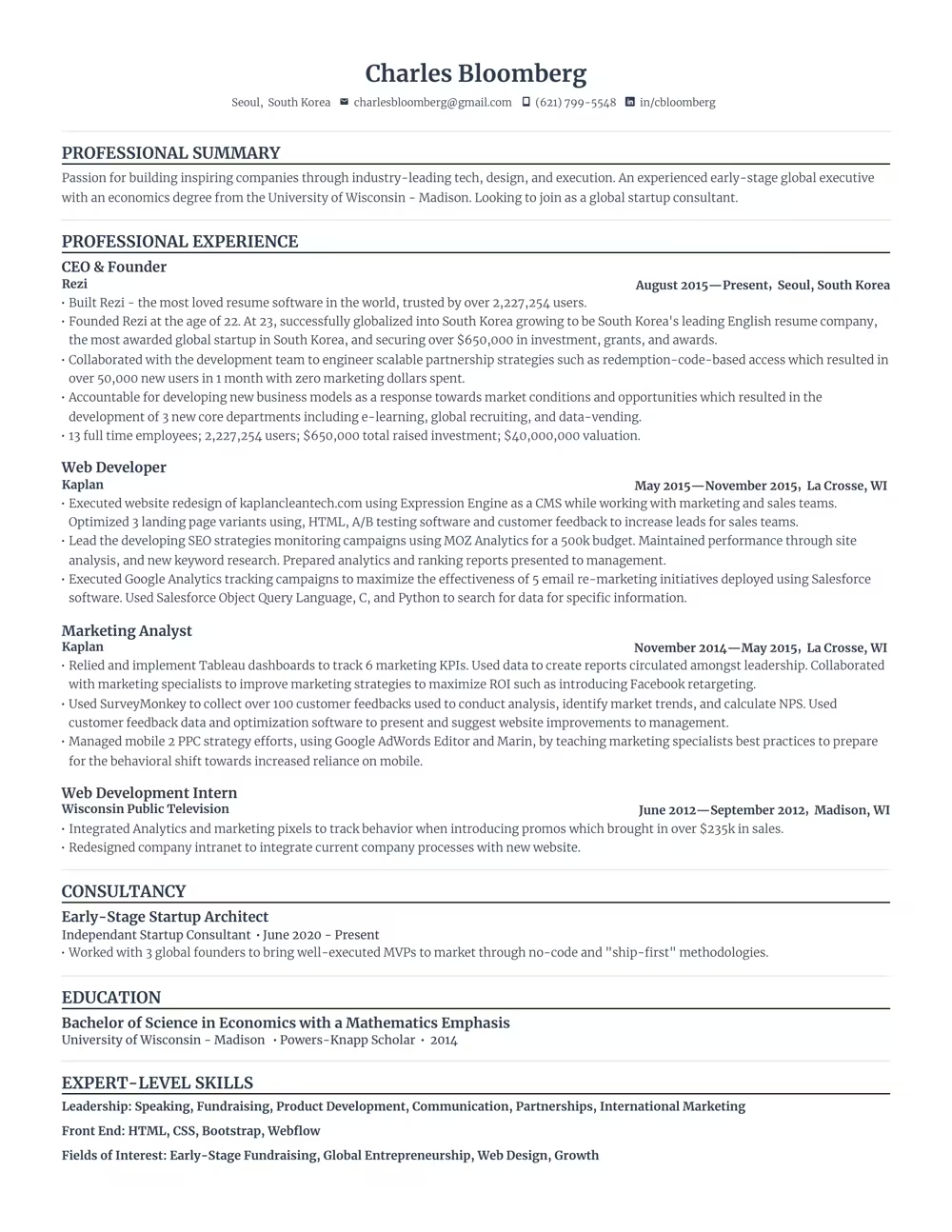
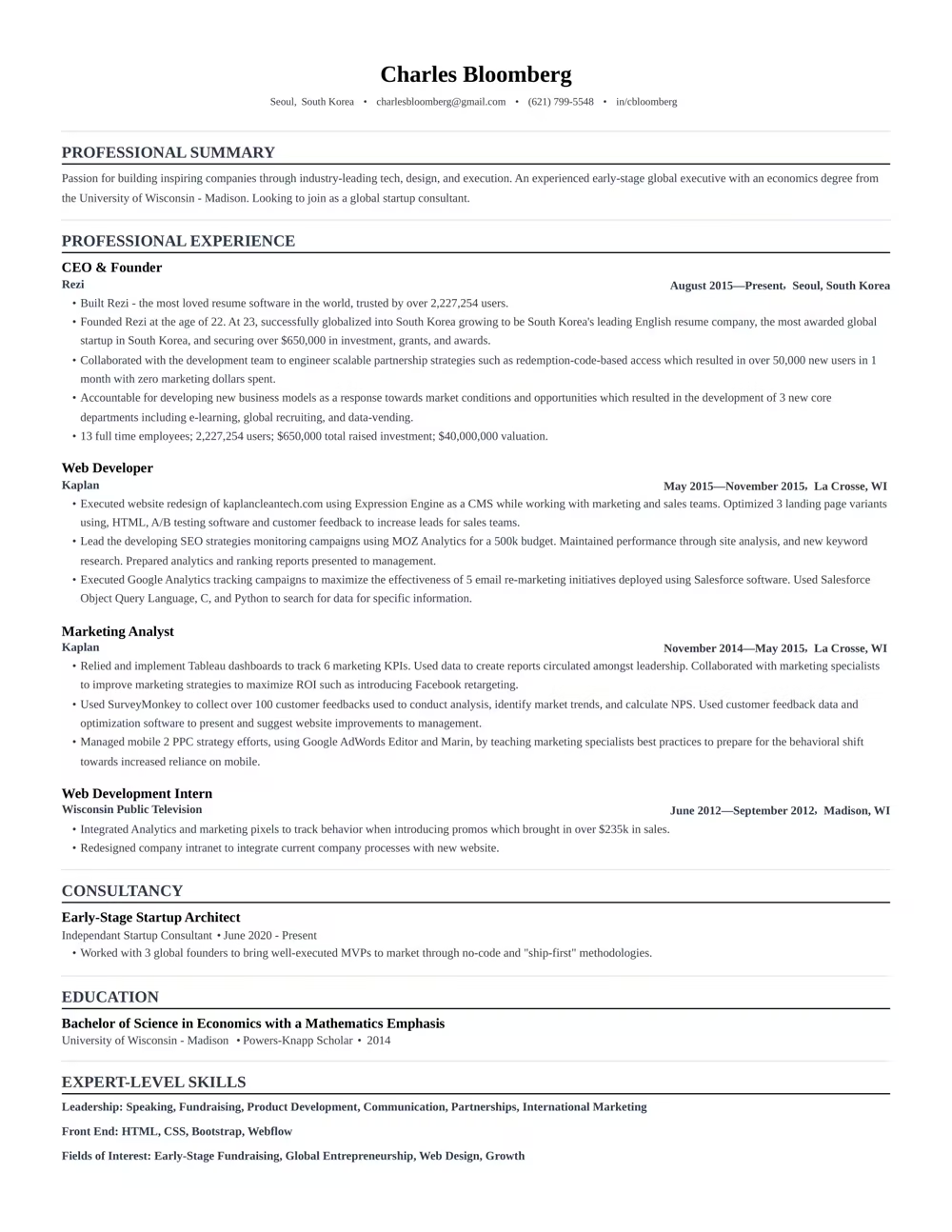
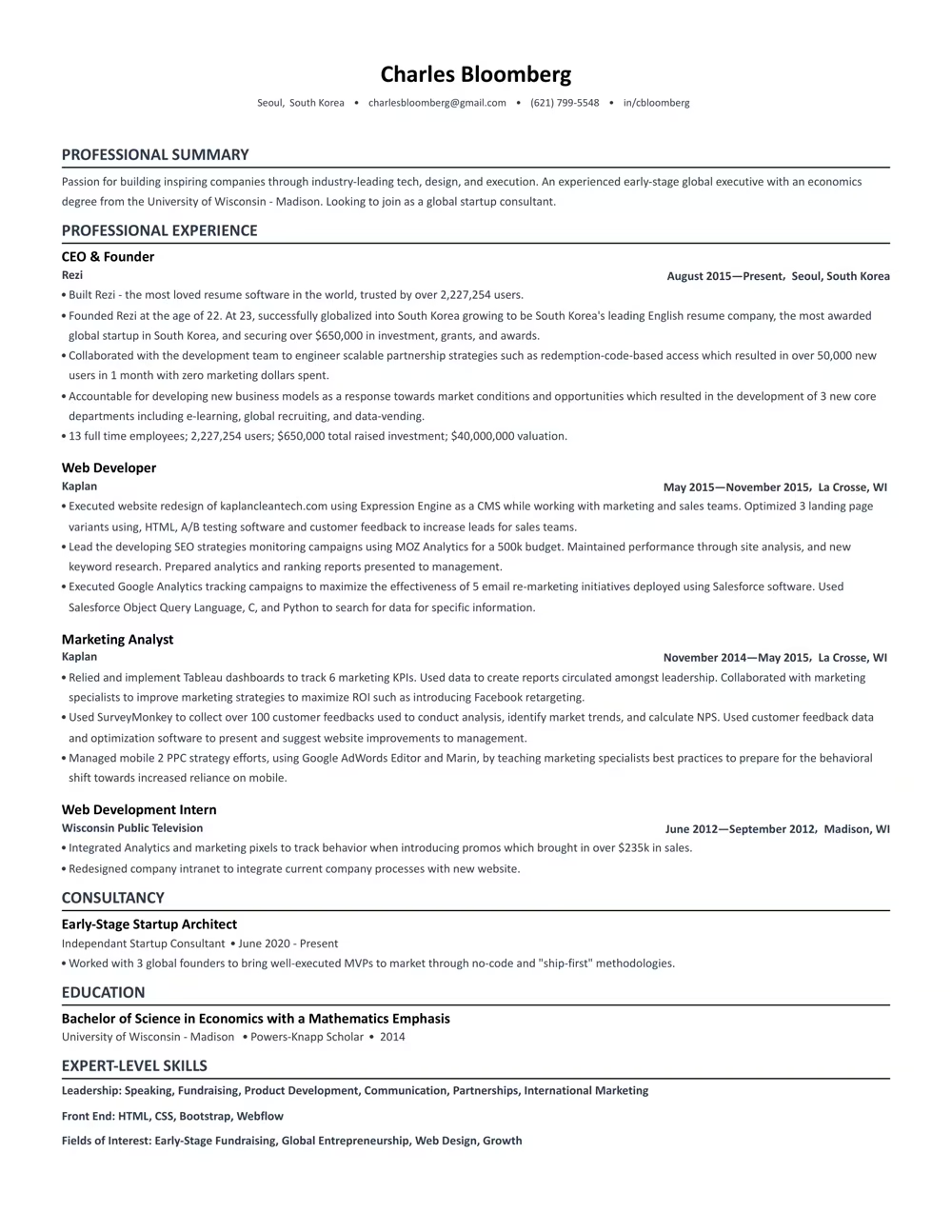
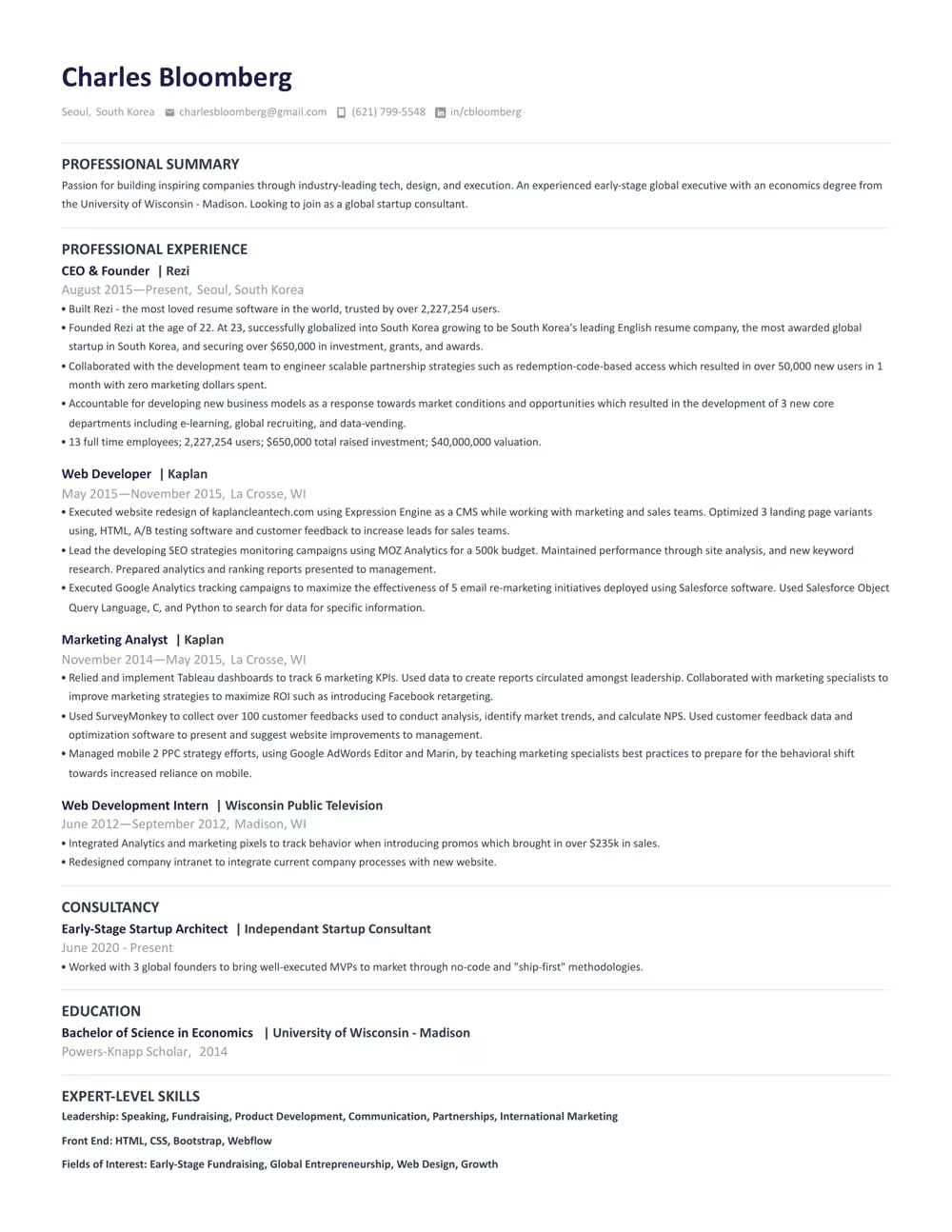
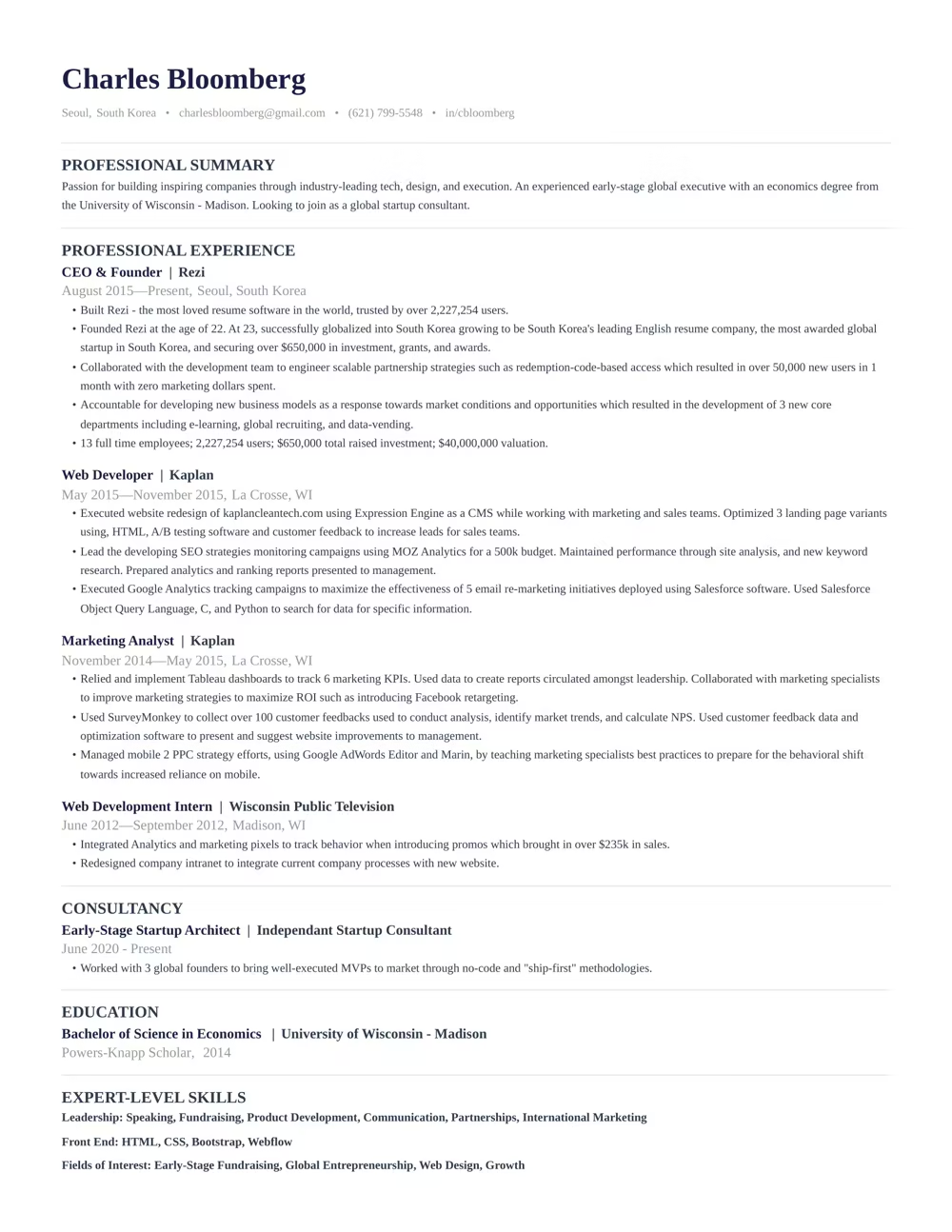
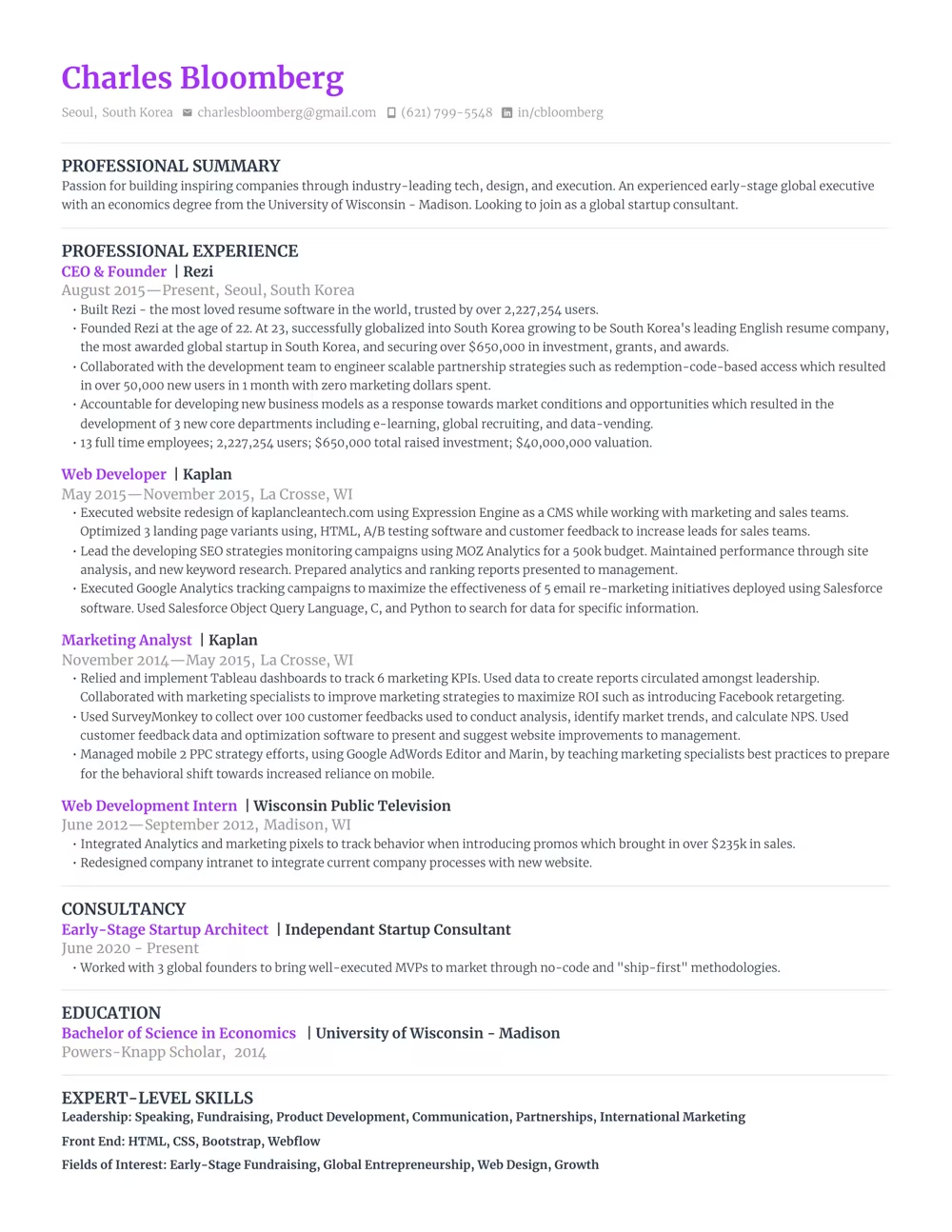
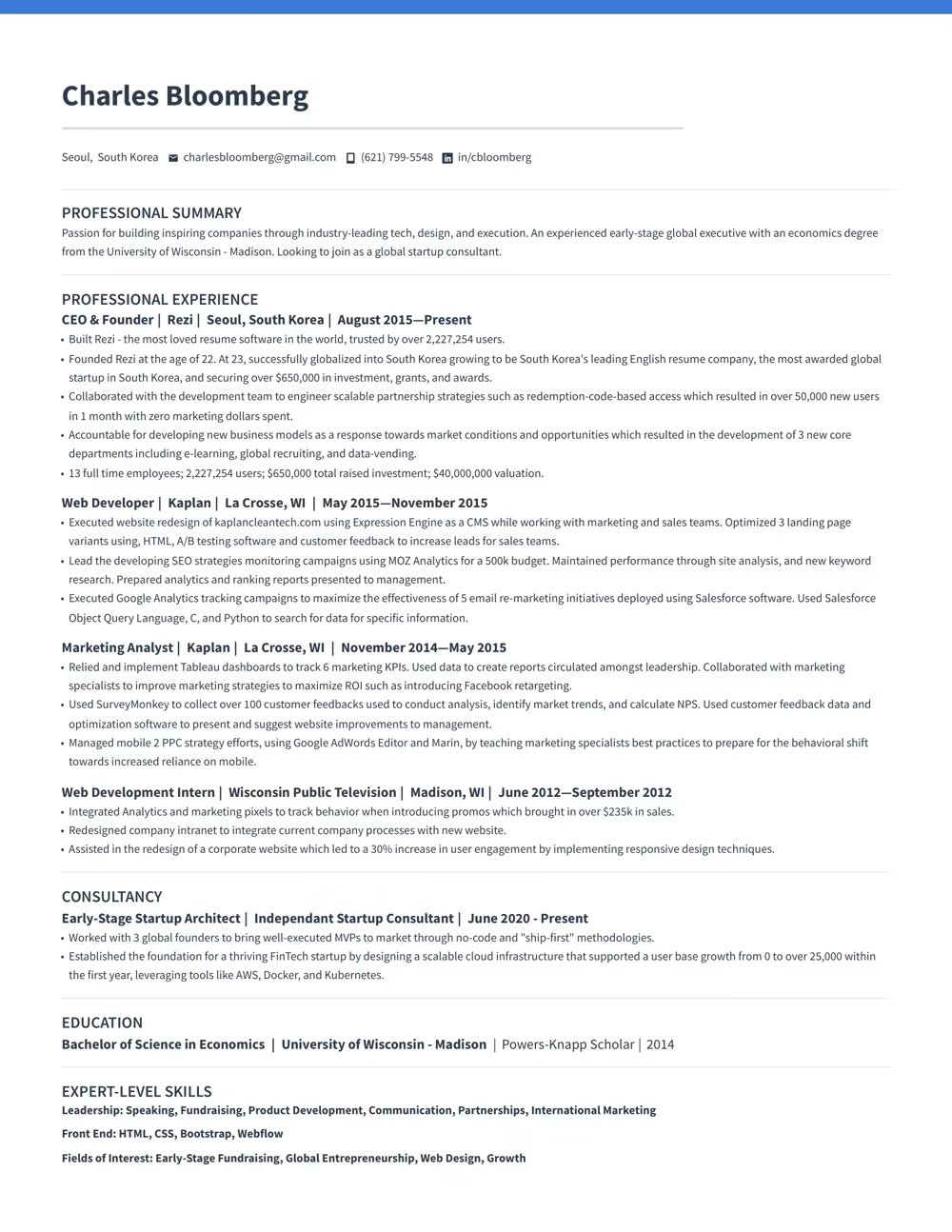
Use a template that guides you. Our ATS-compliant designs are trusted by over 4 million job seekers.



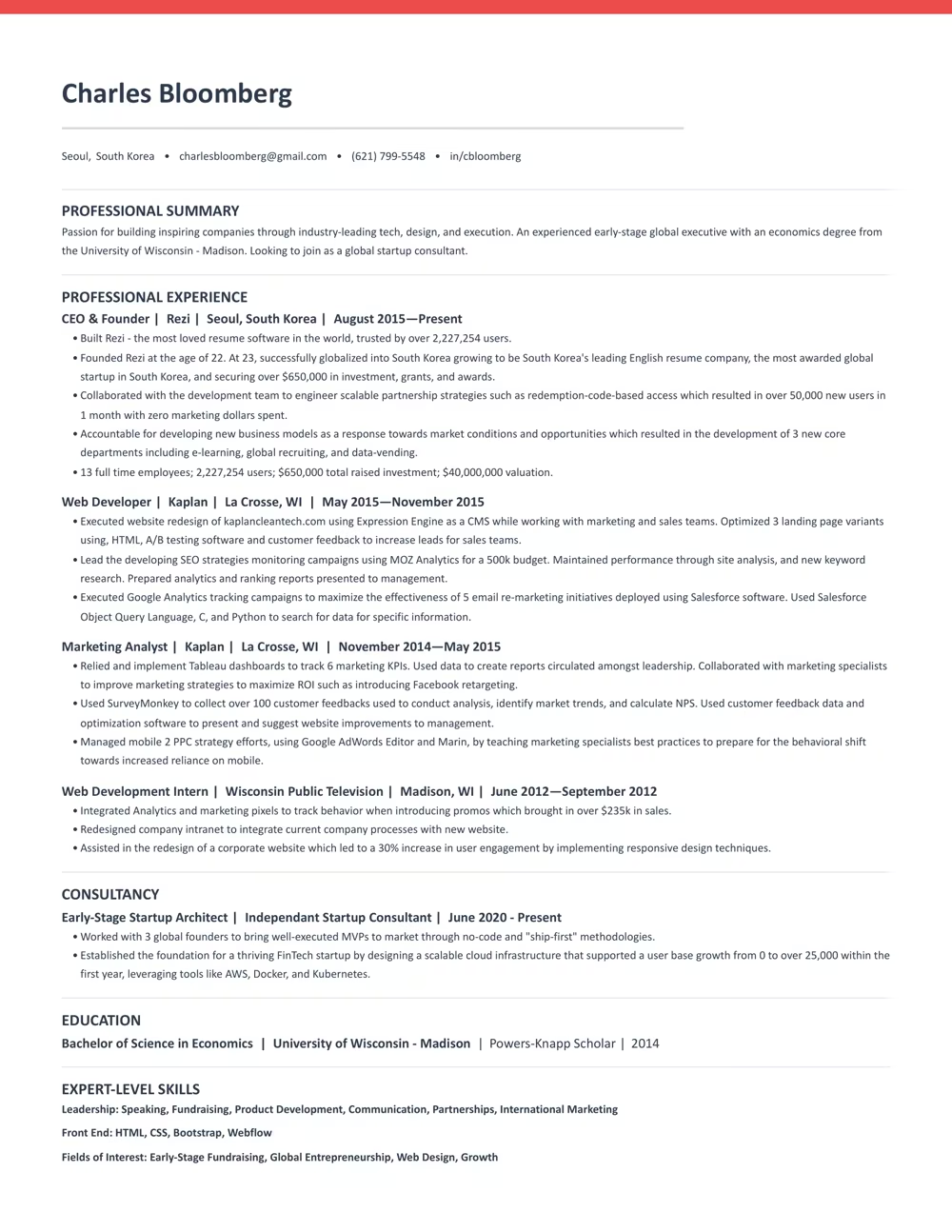

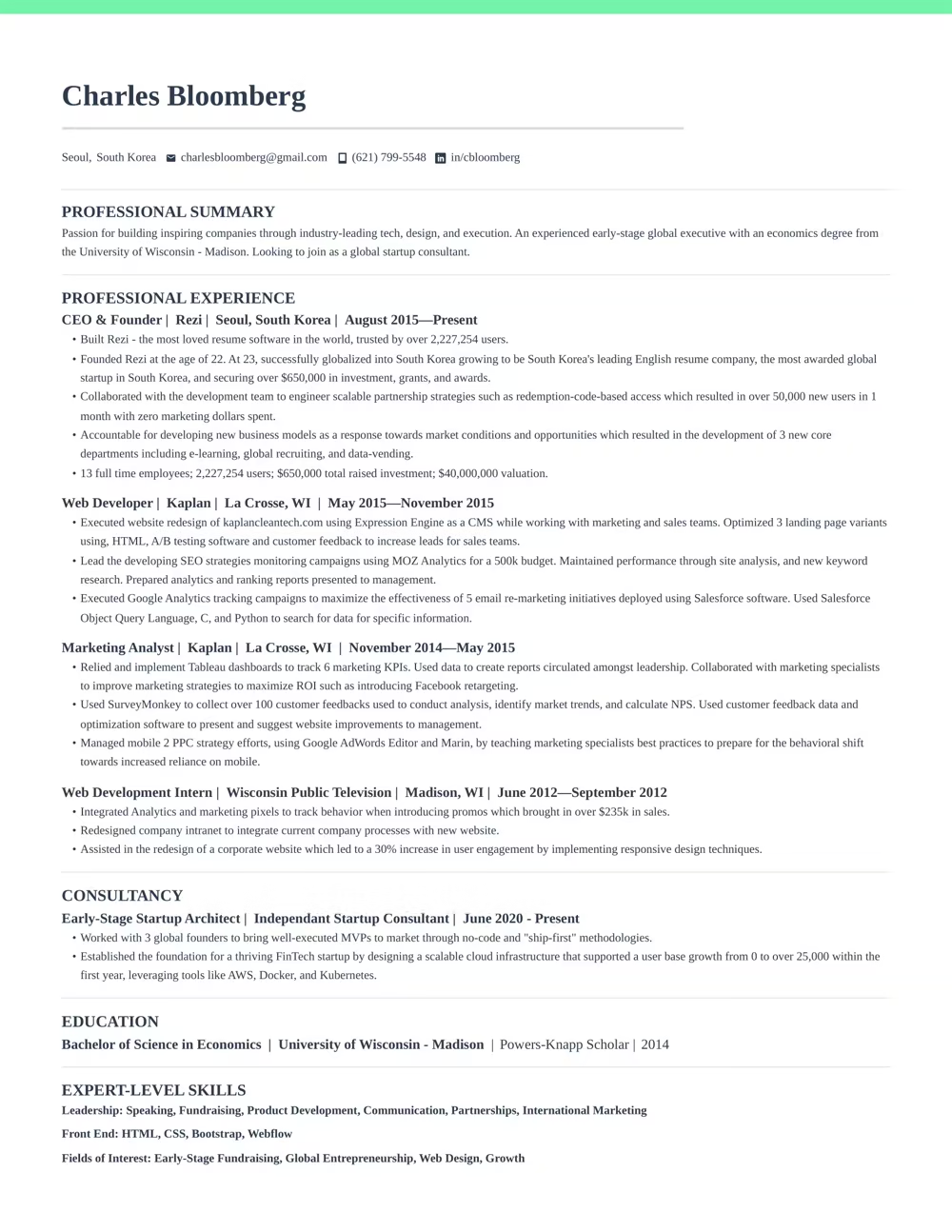
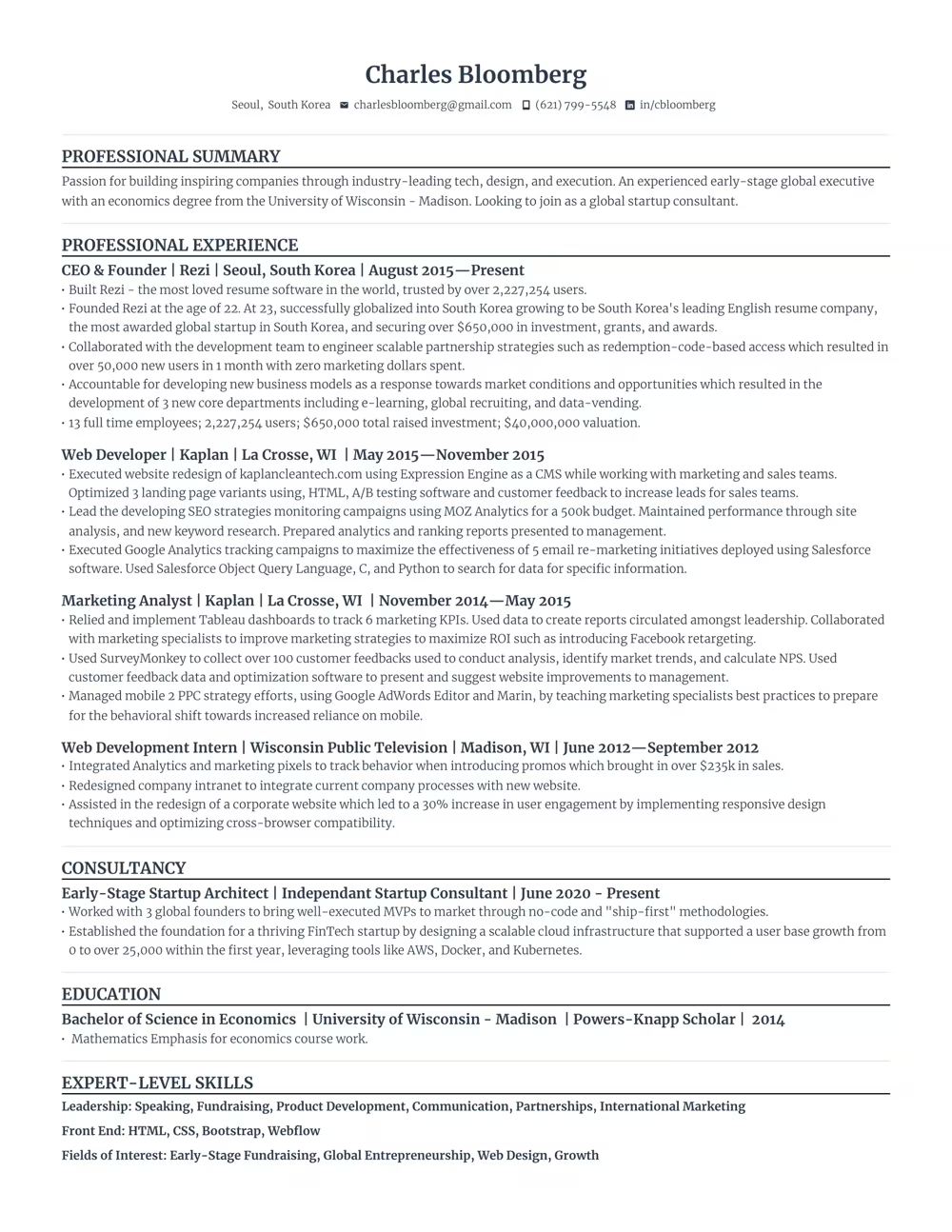
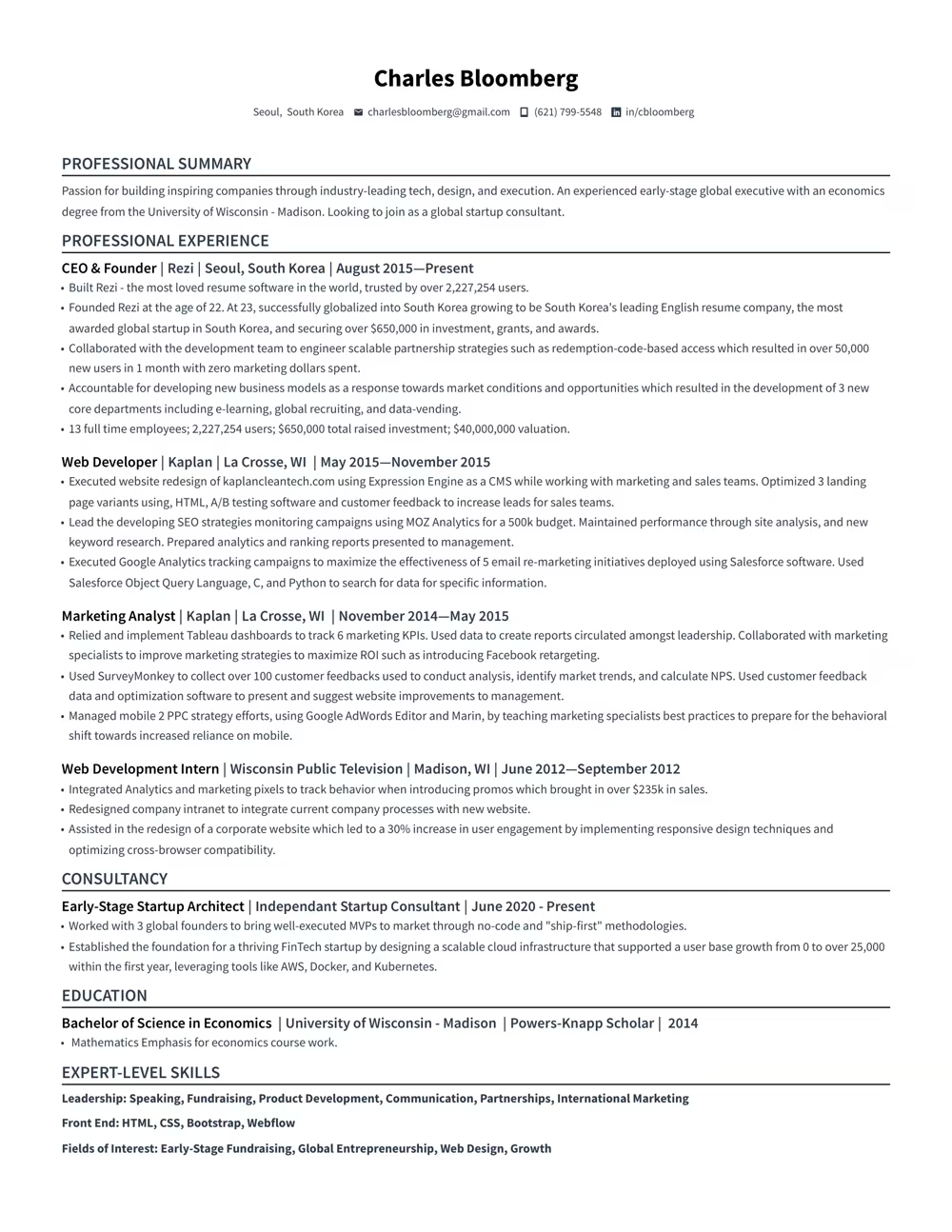
“Rezi is an awesome AI-based resume builder that includes templates to help you design a resume that is sure to check the boxes when it comes to applicant tracking systems. This is a great jumping off point to kickstart a new resume.”

Ashley Stahl
Career Contributor
62.18%
Interview Rate
4,510,834
Total Users
8.23 / 10
Avg. User Review
Wall of Love
Over 4 million users trust Rezi

“Resume Building felt like pulling teeth – until I found Rezi.”
Davis Allen
Software Developer

“I was blown away by Rezi. It streamlined everything...”
Celine Watko

“I needed a resume tool as smart as my work.”
Yosra Naceur
Data Scientist
“A great tool that is very helpful. I found the Rezi system easy to use and very helpful as I was working on getting my resume in shape for job applications.”

Dakota Rubin
United States
Written via

“This is actually one of the first reviews I’ve ever written for a business, and that alone says a lot. I highly recommend Rezi to anyone who’s job searching, it makes the entire process so much easier.”

Yazan Alkhatib
United States
Written via
“Reduced my time per application from 1-2 hours down to 15 minutes.”
Kixxx
Experience with Rezi
“I love how simple and convenient it is to use and been coming back to update it every time I need a fresh resume.”

Zara Wazir
U.A.E.
Written via
Frequently Asked Questions
Your questions, answered.
An AI resume maker helps you build a resume perfectly fit for the job you want. Top-notch AI resume builders are designed to speak the language hiring managers are looking for, increasing your chances of standing out in the crowd. It aligns your skills and experience with the job description effectively.
Rezi templates are ATS-safe. Hiring software can parse your resume with accuracy and you won't have to enter the entire resume all over again after uploading it. Our best resume template is always free. More templates and personalisation is available on Pro subscription. Regardless of what resume template you can customise sections to suit your needs. When in doubt, a clean single-column template works for every industry and every applicant tracking system.
To get the most out of an AI resume builder, either start from scratch or upload your current resume. Fill in as much detail as possible about your career and skills, and upload the job description you’re targeting. This personalization allows the AI to build a unique and tailored resume that’s bound to catch potential employers' attention.
Yes. Rezi stores your content separately from the design, so you can switch templates at any time without retyping anything. Your Rezi Score and keyword targeting stay intact across every template. Some advanced resume template formats require a Pro subscription, but our best template is always free.
AI-generated resumes can seem similar if you're not giving personalized inputs or if you're using basic prompts. Provide specific details about your work experience and target the job you’re eyeing. Use specialized AI tools instead of general chatbots to avoid robotic-sounding resumes and to ensure individual creativity.
A Word or Google Docs template is a static file: one wrong edit breaks the formatting, and nothing checks the result. Rezi keeps the layout locked and parser-safe while its AI writes your content, then scores the finished resume against the job you want.
Employers might think you used AI, but that’s rarely an issue. What they really care about is getting a well-written resume that showcases your skills and experiences accurately. A top-notch resume tailored to their needs will speak volumes more than worrying about AI involvement.
No. Recruiters expect a standard structure, and applicant tracking systems parse it more reliably than a hand-built layout. What hurts is generic content. Rezi's AI tailors your bullet points and keywords to each job description, so your resume never reads like a template.
Yes, using AI to optimize your current resume is highly effective. You just need to upload your resume, share details about your career goals and the job you want, and let the AI refine everything to elevate your resume's impact and ATS compatibility.
Rezi uses a tool called the AI Keyword Targeting. This feature scans the job description to identify crucial keywords and naturally incorporates them into your resume, giving it the right focus without keyword stuffing.
The Free plan is $0/month and allows you to create one resume, use limited AI tools (such as Keyword Targeting and Analysis), and download up to three PDFs. You can also create unlimited cover and resignation letters. No card is required to begin.
The Pro plan is $29/month and provides unlimited access to all features, including unlimited resumes, full AI capabilities, unlimited downloads, and one free monthly expert resume review (resumes are reviewed by a person).
The Lifetime plan is a $149 one-time payment. It grants permanent access to all the features of the Pro plan (unlimited resumes, full AI tools, and unlimited downloads), but it does not include the free monthly expert review (which can be purchased for an extra fee).
Yes. The standard template free and available for all users. With the free plan, you can completely create 1 resume, use AI writer, and download your resume 3 times in PDF format. No credit card is required to join the free plan. Rezi Pro at $29 per month removes the limits and unlocks all our Pro templates including Compact, Modern and Smart templates.
Rezi offers a 100% money-back guarantee on all paid plans (Pro and Lifetime). If you are unsatisfied, you can request a full refund within 30 days of your purchase.
The free template that comes with the free plan is rated as one of our best resume templates. Pro subscription offers more personalisation and more templates while keeping ATS-safe designs; Pro removes limits on resumes, downloads, and AI tools. Our best template is never paywalled and is always free for everyone.
Yes, you can easily upgrade or downgrade your plan at any time through your Rezi Account Billing dashboard. Prorated credits will apply when switching.
An AI resume maker helps you build a resume perfectly fit for the job you want. Top-notch AI resume builders are designed to speak the language hiring managers are looking for, increasing your chances of standing out in the crowd. It aligns your skills and experience with the job description effectively.
They are risky. Many parsers read multi-column layouts out of order or skip a column entirely, so skills and dates end up scrambled. You can easily check this in popular ATS like Workday and Lever. Rezi templates will seamlessly populate the fields in these ATS where two-column templates struggle. The same applies for graphical resumes. Rezi uses single-column layouts because they parse correctly in every major applicant tracking system.
Use a text-based PDF unless the job posting asks for Word. PDFs have been around for years and modern applicant tracking systems read PDFs reliably. PDF locks your layout so it looks the same everywhere. Rezi exports machine-readable PDFs that parse cleanly in every major ATS and ensure compatibility.
Yes. The same ATS rules apply to CVs: single column, standard headings, machine-readable text. CVs usually tend to be longer than resumes. You can check their differences here. Rezi templates can handle both if you require a longer CV format, you can easily add sections like publications, certifications, and research without breaking the layout. It is recommended to use a shorter resume format than CVs when applying for jobs, unless mentioned otherwise.
Yes, Rezi Enterprise.