
User Guides
AI Interview: Quick Fillers
Quick Fillers is one of five key categories that Rezi AI Interview assesses you on. It measures your use of conversational phrases like “I mean” and “kind of.”
Published on
January 21, 2026
Updated on
August 7, 2026
Quick Fillers are one of five key interview communication metrics that Rezi AI Interview assesses you on. It measures how often you rely on habitual conversational phrases like “you know,” “I mean,” or “kind of” when answering interview questions.
Although these phrases are common in everyday conversation, they can undermine your authority in an interview. Rezi AI Interview helps you minimize filler words so your delivery remains concise and intentional, building immediate trust with your listener.
Check out more interview guides:
- How to Use the STAR Method in an Interview
- Common Interview Questions & Good Answers
- Phone Interview Questions to Prepare For
- Unique Interview Questions to Ask Employers
- How to Practice With Rezi AI Interview
What Are “Quick Fillers” in Rezi AI Interview?
Quick fillers are habitual words and phrases. Common examples include:
- “You know”
- “I mean”
- “Kind of”
- “Sort of”
- “At the end of the day”
Unlike filler sounds (“um,” “uh”), quick fillers are usually inserted automatically at the start or middle of sentences. Sure, they might feel natural, but the problem is that they rarely add meaning to what you’re saying and can weaken the point you’re trying to make.
Why You Should Avoid Quick Fillers in Job Interviews
Too many quick fillers in job interviews can:
- Dilute strong points
- Make answers sound vague or non-committal
- Reduce perceived confidence and authority
- Distract from your actual experience
Removing quick fillers immediately makes your communication sound more deliberate and senior. Keep in mind that interviewers listen for clarity, confidence, and precision.
How Rezi AI Interview Assesses Your Use of Quick Fillers
Rezi AI Interview can evaluate your frequency of habitual filler phrases and where they appear in your answers. The tool will then provide guidance on how you can minimize filler words so that your speech sounds more authoritative, concise, and intentional.
How to Reduce Quick Fillers in Job Interviews
Here’s how you can reduce quick fillers in job interviews:
- Identify your top recurring quick fillers. Most people rely on just one or two phrases without realizing it.
- Edit mentally before speaking. Remove filler phrases at the start of sentences before you say them.
- Substitute with precise language. Replace vague phrasing with specific nouns or verbs.
- Slow down your sentence start. Take your time to think before answering. A brief pause before speaking can lower the chances of using quick filler words.
Examples of good and bad replies with quick fillers
Example interview question: “How did you handle disagreements on your team?”
Bad reply with quick fillers: “You know, we kind of had different opinions, and I mean, at the end of the day, we just talked it out.”
This interview answer with quick fillers falls short because:
- Conversational padding
- Vague phrasing
- Reduces authority and clarity
Good reply with minimal quick fillers: “We addressed disagreements by focusing on data and trade-offs. When opinions differed, we evaluated options against performance, complexity, and long-term maintainability.”
In contrast, this interview answer with little to no quick fillers works well because:
- Precise language
- Clear reasoning
- Professional tone
Extra Tips for Reducing Quick Fillers in Job Interviews
Here are some more tips to reduce quick fillers:
- Pause briefly before starting a sentence
- Embrace silence as a tool to show confidence, giving yourself time to think and your listener time to process
- Replace vague phrases with specific language
- Let clarity replace conversational padding
- Speak with intention, not habit
These help you clearly articulate your thoughts and ideas in job interviews and carry over into meetings, presentations, and leadership communication.
Common Quick Filler Mistakes That Can Hurt Job Interviews
Avoid these mistakes:
- Starting sentences with “I mean” or “you know”
- Relying on filler phrases to buy thinking time
- Prioritizing conversational comfort over clarity
When quick fillers accumulate, interviewers may perceive answers as less confident or less thought-through.
Improve Your Job Interview Performance Now
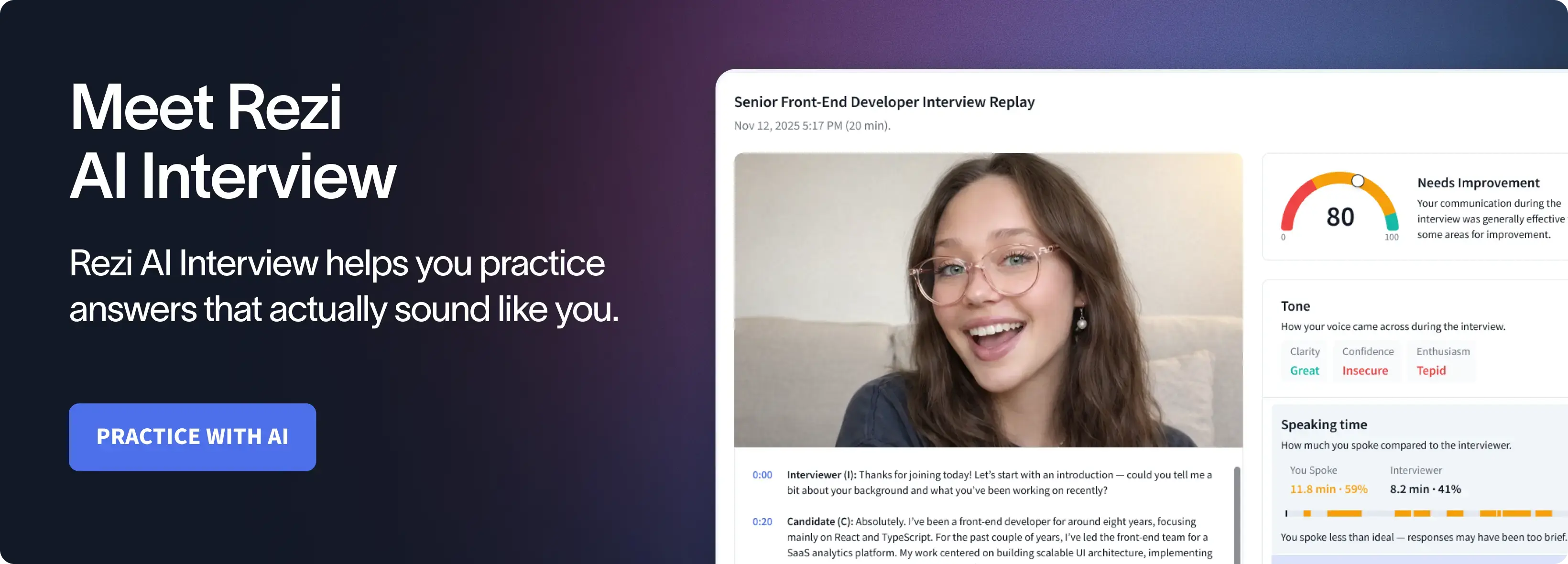
Rezi AI Interview helps you refine your interview skills so you never undersell your experience again. Turn your background into a compelling story that wins the job.

Upload or drop your resume to get started
Upload your resume to get started
Score my resume

Astley Cervania is a career writer and editor who has been sharing resume and job search insights for 5+ years. He shapes the direction of the Rezi blog, providing practical answers for important career-related questions and helping hundreds of thousands of people navigate the job market and build resumes that land interviews.