
Career Advice
Gen Z Work Ethic: Lazy or Just Setting Boundaries?
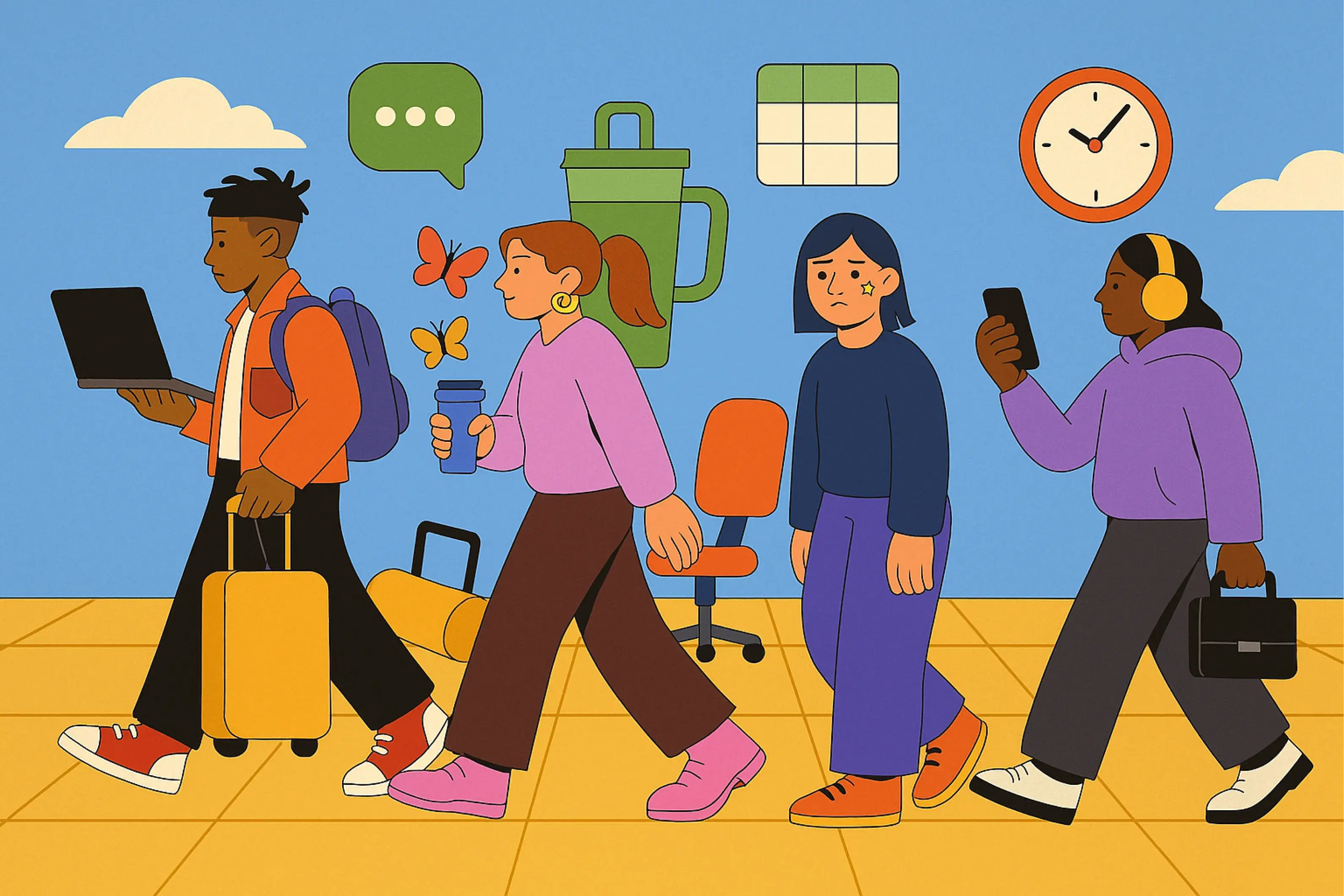
The Gen Z work ethic is often misunderstood. Let’s explore the facts, real stories, workplace trends, and what truly drives Gen Z in their careers.
Published on
April 1, 2025
Updated on
March 11, 2026
Change is a constant, but every new generation seems to get the blame for it. When workplaces evolve, it’s easy to point fingers at the youngest employees for “doing things differently.”
Gen Z has been labelled lazy, tech-dependent, and unwilling to work hard. But is that fair? Or are they simply reshaping success, productivity, and company culture? I’ve dug into the stats, listened to real Gen Z voices, and uncovered what’s really going on.
Let’s break down the facts and separate the myths from reality. This article will cover:
- The top stereotypes of Gen Z in the workplace.
- What Gen Z looks for in a job and an employer.
- Gen Z vs. Millennials’ work ethic.
Does Gen Z Have a Work Ethic Problem?
There’s a lot of debate about Gen Z and work ethic. Some say they’re lazy, entitled, and unwilling to put in the hours. Others argue that times have changed, and they’re simply redefining what work ethic looks like. So, which is it?
Older generations point to trends like “Bare Minimum Monday,” too much focus on mental health, and a refusal to work overtime as proof that Gen Z lacks dedication.
While Gen Z argues that they aren’t necessarily against hard work — they’re against pointless work. They’ve grown up watching previous generations burn out with little reward; and they’re determined to do things differently.
But before we go further, let’s clear something up. It’s impossible to generalize a whole generation of people. Generations have always thrown labels at each other (often fueled by the media). And of course, it’s not entirely grounded in reality.
Want to show future employers that you’re a hard worker? Learn more: How to Describe Good Work Ethic on a Resume
How Much of the Workforce Is Gen Z?
The younger generation is making its mark in the workforce, and their presence is only growing. As of Q2 2024, Gen Z (people born between 1997 and 2012) workers made up 18% of the U.S. labor force. That’s nearly a fifth of all workers, and their influence on workplace culture, expectations, and technology is undeniable.
As Gen Z’s share of the workforce increases, their preferences and values are reshaping traditional work structures. Companies that want to attract and keep young talent need to adapt, whether by offering better salary transparency, flexibility, or purpose-driven work.
Gen Z Work Ethic: Reputation vs. Reality
I saw a fun TikTok recently comparing how different generations head to work. Boomers were out the door at 7:30 a.m., dressed in full suits. Millennials strolled out at 8:25 a.m. in smart-casual attire. And Gen Z? They rolled out at 10:42 a.m. in sweatpants and a hoodie. It’s just one of many online jabs at Gen Z’s work ethic.
From viral clips of them zoning out in Zoom calls to screenshots of their “Out of office, get somebody else to do it” emails, Gen Z has become an easy target. But how much of this is just internet drama? Let’s break it down with real data and insights.
1. Gen Z workers are lazy and unprofessional
Gen Z is lazy and unprofessional — a sentiment you may have heard from older generations and the firm believers in the daily grind. According to an Intelligent survey, 55% of hiring managers think Gen Z lacks a strong work ethic, and 20% say they’re often late.
You’ll also come across a few bitter rants like this lurking on social media:

So, do they lack work ethic, or are they just better at setting boundaries? Gen Z has seen the effects of burnout firsthand, whether through their parents or by experiencing it themselves. Who can blame them for refusing to sacrifice their well-being for the sake of tradition?
Lewis, a 23-year-old working in sales, shared why he disagrees with the online ranters:
Our generation has people who are indeed lazy and unprofessional, but for the most part, I’d like to think the majority want to work hard and achieve their career goals. I think the disparity may come from our generation growing up in a very dynamic and modern era. We’re trying to be different, not work long hours and hard days like our parents, just for the sake of it. We want to find ways to be more efficient and achieve the same results with the tools we have now.
Gen Z values productivity over long work days and isn’t afraid to push back against outdated practices and formal dress codes. If a company demands unpaid overtime or vague “dues-paying” with little reward, Gen Z is more likely to quiet quit rather than stick it out in a toxic environment.
We spoke to Morgan Chaney, a 26-year-old Quality Specialist, about what she thinks of her generation’s workplace attitudes:
It’s not that young workers are unprofessional; there’s just a shifting landscape of how we can express ourselves and what’s acceptable. There used to be stricter dress codes in both personal and professional settings, such as opinions on tattoos and piercings. Times have changed, and it’s more acceptable to dress casually at the office — it’s not the 50s anymore.
Traditional corporate work cultures might not always resonate, but that doesn’t mean Gen Z isn’t willing to make the effort and learn. In fact, 65% of Gen Z say they’re eager to master new skills, according to the NSHSS Career Interest Survey.
2. Their work ethic is directly tied to their wages
Let’s cut to the chase. Older generations could afford a house, raise children, and have a stay-at-home parent by working a 40-hour week. Gen Z? They could work 40 hours plus another 10 with a side hustle and still barely scrape by on rent.
I spoke with David, a 23-year-old Project Engineer, who’s seen this shift first-hand:
I think the cost of living is insanely worse than previous generations. My grandparents got a great house for around 24 thousand on a yearly wage of five thousand. Nowadays, it feels like the cost of everything is extortionate compared to wages. While it’s easier to find purpose if you have a good career path, it’s still hard if you don’t have the skills to go far with the way things cost and the low wages in most fields.
And David isn’t alone. A survey by Intuit found that 61% of young Americans are financially stressed, with skyrocketing living costs (76%) and job instability (48%) as the main culprits. When you’re living paycheck to paycheck, as 49% of Gen Z workers report, it’s hard to buy into the idea that hard work alone will lead to financial stability.
So, is their work ethic tied to their wages? Absolutely. If working extra hours still doesn’t make rent affordable, why wouldn’t they push for better pay?
Ben, a 23-year-old Motion Designer, shared his struggles with low wages :
Even after a degree and plenty of experience, you’re forced to start at rock bottom and struggle with a lower wage. With prices increasing substantially, it makes living outside of work even harder. There’s also a feeling of worthlessness in a company. It makes you question if they even appreciate your skills and work, as you aren’t being paid the correct salary.
Gen Z has seen through older generations that staying late and pushing through without breaks doesn’t necessarily mean better pay — it just means more work. Many have watched their parents work to exhaustion, only to face layoffs, stagnant wages, or financial struggles.
Growing up in the aftermath of economic downturns and seeing companies lay off dedicated employees without hesitation has made them cautious. They know that hard work should be rewarded, not just with “exposure” or a pizza party, but with financial security.
Here’s what Morgan had to say about the importance of a decent wage:
In the past, your wages would help you support your family or save up to buy a house. But now, the rise in technology means we’re expected to be way more productive than we used to be, and wages don’t reflect this. If your wage isn’t covering your cost of living, why would you give 100% to something that barely supports your lifestyle?
Find out which jobs earn the big bucks to boost your wage: Highest Paying Jobs in the US
3. Gen Z cares less about work than prior generations
Been scrolling through TikTok lately? You might have seen the “task masking” trend, where employees make themselves look busy through various tactics instead of actually working. On the surface, it seems to back up the theory that Gen Z just don’t care.
But what is it really about?
The trend became popular as a subtle protest against return-to-office policies, showing that face-to-face doesn’t always equal more productivity. But the real question is: if employees feel the need to fake being busy, how much do they actually value their work?
A Work Ethic Across Generations study found that Gen Z scored the lowest when putting work at the center of their lives. And honestly, rightly so.
Work is important — but it’s not everything. Unlike older generations, who often saw work as a core part of their identity, Gen Z ranks friends and family as their top priorities, with work coming in second. Younger generations value personal time, and many believe their job doesn’t define them.
Gen Z has also grown up in a different climate from previous generations. Morgan explained how this may have impacted their attitude towards work:
What appears as having no work ethic is, in reality, a generation that’s grown up in a country with gun violence, political instability, high cost of living, and a housing and health crisis. This has radicalized people — if my job can’t provide the basics for me and the world feels like it’s going to shit, then why am I working this hard? I’m barely even providing for my basic needs. Why would we be destroying ourselves for a job that’s doing nothing for us?
It’s not that Gen Z doesn’t care about work — they just need it to feel worth it. According to Deloitte’s Gen Z and Millennial Survey, 86% of Gen Z say having a sense of purpose is important to their job satisfaction and well-being.
This explains why Gen Z is more likely to change jobs, push for better work-life balance, and question outdated work norms. They’re not rejecting work itself — they’re rejecting the idea that they should dedicate their whole lives to it without fair compensation or meaning.
Lewis shared how he thinks Gen Z works just as hard as other generations:
I definitely don’t think we care less about work. We want to work hard and be successful. Just look at the number of entrepreneurs and young people working hard to climb the ladder. We’ve had our setbacks, but for every person who’s settled for being lazy and not striving to improve, two more people of our generation want to innovate, be creative, or find a new way to make money and build a career.
Feeling down about work? Let’s change that: Motivational Quotes & Tips to Stay Energized for Work
4. They rely heavily on technology and AI
We can’t pretend that Gen Z doesn’t lean heavily on technology; that’s basically what they grew up around. According to the NSHSS 2024 Career Interest Survey, 64% of Gen Z are already using AI, mostly for brainstorming (39%) or proofreading (33%). Technology isn’t going anywhere, and Gen Z knows how to leverage it to streamline their work.
Lewis shared his thoughts on the benefits of tech in the workplace:
Technology and AI are propelling our generation into the future, and we’ll see increasing benefits in the workplace. However, I think schools and universities need to enforce stricter limitations. Students should excel in creativity, unique thinking, and showing their intelligence without relying on technology. Apart from that, we should celebrate new technologies as a tool to excel in the modern world. It’ll be a defining part of the future, supporting innovation and shaping businesses.
Gen Z’s views on technology are pushing companies to modernize. Businesses are now investing in digital tools, remote work capabilities, and data-driven decision-making to embrace the digital transformation and keep up with their competitors.
But despite their tech fluency, Gen Z isn’t blindly optimistic about AI. Only 48% believe GenAI will improve their work, while 59% worry it could eliminate jobs. So while they use AI, they’re also aware of its risks and limitations.
This is what David had to say about the rise in technology:
We can use AI for many things, but you certainly can’t be reliant on it. ChatGPT won’t fill sales orders for me or teach me the tricks veterans in my business excel at.
Learn more about using the powers of AI for good: How to Use ChatGPT to Write a Resume.
5. Gen Z focuses too much on their mental health
Gen Z isn’t just talking about mental health for fun — it’s a serious issue. Deloitte’s Gen Z and Millennial Survey found that 40% of Gen Z workers feel stressed most or all of the time, with finances, family welfare, and work being major causes.
Morgan shared her thoughts on prioritizing wellbeing in the workplace:
All we have real control over in this current climate is our mental health. If we have the power to take a day off or leave our job, it’s well within our right to do that. It’s insane to me that older generations would assume there’s some kind of loyalty that comes with a job. The relationship that past generations have with work, where they were rewarded for years of loyalty, is not what we’re seeing now. Why would you be loyal to something that isn’t serving you?
The younger generation is vocal about their limits — they won’t glorify overworking or sacrificing their mental health for a paycheck. Trends like “Bare Minimum Monday”, where employees ease into the week instead of overloading themselves with stress, aren’t about slacking off — they’re about preventing long-term stress and burnout.
Ben talked about the pros and cons of putting your mental health first:
We talk about mental health more than ever, but we still have a long way to go. I believe we prioritize mental health as much as we can, and we’re more aware of the effects it can have. We know when a workplace is toxic or mentally straining, and we’re more susceptible to leaving if we know it will do damage. But the difficulty is finding a job to replace it with, due to the drought of employment we’re facing.
But it isn’t just about personal wellbeing. Gen Z also cares more about company values, ethics, and how they’re treated. If they feel undervalued, underpaid, or unsupported, they won’t just grin and bear it — they’ll quiet quit or leave entirely.
Not getting what you want from your job? You’re not alone: I Hate My Job: What to Do, and When Is It Time to Quit?
What Does Gen Z Want in the Workplace?
Gen Z isn’t settling for the bare minimum, and they’re not just chasing a paycheck. They want careers that align with their values, offer real growth opportunities, and respect their boundaries. This generation is pushing for flexibility, purpose, and a better work-life balance.
Let’s dig deeper into the Gen Z workplace expectations.
(If you're reading this and need help with your resume to land your next job, use our AI bullet point generator. It generates sentences for you that help you highlight your skills and impact.)
Career advancement
Gen Z has grown up amongst rapid change, forced to adapt to the constant flow of new technologies. The younger generations have seen how quickly industries evolve and know that staying competitive means continuously developing new skills.
- A huge 86% of Gen Z say gaining skills to advance their careers is their top priority at work.
- Research found that 63% of undergrads believe mastering advanced skills in their field is essential for success.
They’re not interested in being stuck in dead-end jobs, and if companies don’t support their ambitions, 56% of Gen Z workers say they would quit. They want workplaces that invest in their development — if an employer isn’t offering that, they’ll find one that does.
Check out the most in-demand skills in today’s job market: Skills Section for a Resume: Top Skills for Your Application
Flexible schedule
Gen Z got a taste of remote work during the pandemic, and they don’t want to return to the old-school 9–5. While most are happy with hybrid working, they also want the power to decide when and where they work best.
- Employers may need to rethink their office hours, as 70% of undergrads say they’re more likely to apply for a job with flexible scheduling.
- Many advocate for four-day work weeks, job-sharing, and part-time options to maintain a healthy balance. A massive 78% say a sustainable work-life balance is key to career success.
For them, productivity isn’t about hours worked, it’s about results. They know that burnout benefits no one, so they’re setting boundaries to make work fit into their lives, not the other way around.
Financial security
Gen Z has witnessed economic instability, from recessions to increased cost of living, and student debt crises. Who can blame them for not putting in 100% when they can barely cover the cost of groceries? They need a purpose, and being able to save up or support their lifestyle is a pretty solid incentive.
- Rising costs have made it harder for young workers to afford housing, save money, or pay off student loans. A recent survey found that 32% of Gen Z feel behind where their parents were at the same age in meeting financial goals.
- Gen Z wants financial stability from the get-go, with 72% of undergrads saying a high starting salary makes them more likely to apply for a job.
Gen Z has seen past generations work hard without financial security, and they’re determined to break that cycle. If a company wants loyalty, it should consider the cost of living and pay fairly.
Positive work environment
Gen Z is no stranger to job-hopping; they have high standards and aren’t prepared to stick out a job where they feel miserable. The rise of trends like “Bare Minimum Monday” shows they’re rejecting hustle culture in favor of sustainable productivity.
- Bosses may need to start exploring ways to improve employer wellbeing, as 46% of Gen Z say they feel anxious or stressed most of the time.
- The younger generations take their mental health seriously, with 57% of Gen Z workers saying they’d quit a job if it negatively impacted their well-being.
Creating a positive work environment is a win-win for employers and their workers — it leads to better performance, higher creativity, and longer employee retention.
Aligned values
Gen Z wants their work to reflect their values. They’re socially conscious, diverse, and mission-driven, so they expect their employers to step up to the plate.
- Gen Z prioritizes diversity, sustainability, and ethical business practices in their career choices. That’s why 65% of undergrads won’t apply for a job if the company’s values don’t align with theirs.
- According to Deloitte, half of Gen Z workers have turned down projects because they clashed with their personal beliefs, and 46% have changed or plan to change jobs because of climate concerns.
If companies want to win over Gen Z, they must get with the times and look at the bigger picture. Having a purpose-driven mission isn’t just a nice bonus, it’s a requirement for many young workers.
Millennials vs Gen Z in the Workplace
Generational clashes are nothing new. Every new wave gets a label — Gen Z is called ‘lazy,’ Millennials were the ‘me generation,’ and Gen X? The original ‘slackers.’ But of course, no entire generation thinks or works the same way.
That said, the workplace is evolving, and research shows that Millennials and Gen Z have slight differences in how they approach work, mental health, and career concerns.
Let’s look at some of the findings from Deloitte’s 2024 Gen Z and Millennial Survey to uncover these differences:
- Cost of living is the biggest concern for both generations, though Millennials feel the pinch slightly more, with 40% citing it as a top worry compared to 34% of Gen Z.
- Climate action is a growing demand, with 54% of Gen Z and 48% of Millennials saying they and their coworkers are pushing employers to take meaningful steps.
- Both groups feel their employers are falling short with GenAI training. Only 51% of Gen Z and 45% of Millennials say they’re getting adequate training on its benefits and capabilities.
- Work-life balance is a key factor in choosing an employer, with 25% of Gen Z and 31% of Millennials prioritizing it when deciding where to work.
- Low pay and limited career growth are leading reasons for quitting, with 16% of Gen Z and 22% of Millennials walking away due to a lack of advancement opportunities.
- High stress levels remain a major issue, with 40% of Gen Z and 35% of Millennials claiming they feel stressed most of the time.
- Both generations say long hours and a lack of recognition are key causes of workplace stress. However, Gen Z feels more time pressure, with 50% saying they struggle to complete their work within their working hours, compared to 45% of Millennials.
- Among those who would recommend their workplace to others, only 29% of Gen Z see themselves staying with their company, while 42% of Millennials say the same.
Why Are Managers Hesitant About Hiring Gen Z?
Let’s make this clear: not all managers are against hiring Gen Z, not by a long stretch. Gen Z brings new energy, fresh perspectives, and handy digital skills. But hiring hesitation is often less about who’s applying and more about what’s happening around them.
The economy certainly isn’t helping. Many companies are in wait-and-see mode with the ripple effects of tariff changes and unpredictable trade policies.
Then there’s the experience paradox. Gen Z is applying to “entry-level” jobs that ask for 2–3 years of experience, which totally defeats the purpose. From a manager’s point of view, they’re often trying to avoid the cost and time to train someone from scratch. They want candidates who can plug in and get started right away, especially when teams are small and budgets are tight.
A Redditor summed up this attitude:

And of course, there are still some lingering generational differences. Some traditional hiring managers may see Gen Z as high-maintenance, too quick to question authority, or plain lazy.
That said, what’s often misunderstood as entitlement is actually just Gen Z asking for things that will likely become standard soon: a fair wage, flexibility, purpose, and mental health support. And when they don’t get these things, there’s no desire to give more than the bare minimum.
Zoë, a 25-year-old nanny, opened up about a common misunderstanding:
Many 20-year-olds are more tech savvy, but also more anxious to talk to potential employers. My boyfriend’s sister has been pressing “apply” for lots of jobs but not getting any responses. We tell her, “Try going in person and handing them your resume, and make them believe they need you!” But she doesn’t want to do that. So here’s the misunderstanding: an employer might think she’s reluctant to work or hard to deal with, but she’s actually eager to work hard at any job that will hire her. She’s just anxious, as I think many people in their early 20s are.
Final Thoughts: How Gen Z Is Changing the Workplace?
The workplace is changing, and Gen Z is leading the charge. Their demand for flexibility, mental health support, and value-driven work is pushing companies to rethink outdated practices. Unlike previous generations, they see work as a part of life, not a defining factor.
Gen Z is proving they won’t settle for workplaces that don’t align with their personal and professional goals. We can expect to see the younger generation advocating for fair wages, pushing for sustainability initiatives, and looking for ways to grow in their careers.
And with nearly one-fifth of the U.S. labor force already made up of Gen Z workers, businesses that don’t adapt will struggle to attract and retain young talent.
FAQ
What is the work attitude of Gen Z?
Gen Z approaches work with a mix of ambition and practicality. Many value meaningful jobs and tend to be more engaged when their work aligns with their values. At the same time, they’re not afraid to set boundaries. They prioritize mental health and work-life balance more than previous generations.
They also challenge traditional workplace norms, preferring flexibility, digital communication, and companies that support diversity, sustainability, and social impact.
What do Gen Z value in the workplace?
Gen Z wants purpose, flexibility, and opportunities for growth. Career development is key, with many wanting clear pathways for advancement and ongoing skill-building.
Work-life balance isn’t just a perk for them; it’s a necessity. Many are drawn to jobs that offer flexible schedules, remote work options, and fair pay. If a company doesn’t align with their values or provide room to grow, they’re likely to leave in search of something better.
Is Gen Z the hardest-working generation?
Gen Z works hard, but differently. Many don’t subscribe to the traditional idea that long hours equal productivity. Instead, they focus on efficiency and using technology and AI to streamline tasks. Gen Z also values boundaries, meaning they won’t want to sacrifice their well-being for work.
That said, it’s impossible to generalize an entire group of people. Every generation has its hard workers and those who prefer to take it easy, so we can’t categorize a whole generation as being the “hardest workers.”
How much does Gen Z value a work-life balance?
Work-life balance is a huge priority for Gen Z. They don’t believe in hustling just for the sake of it, and many reject the idea that overworking equals success. Instead, they focus on setting boundaries and ensuring their job doesn’t consume their personal life. Flexible schedules, remote work options, and mental health support are key factors in their job choices.
What are Gen Z’s workplace expectations?
Gen Z expects a workplace that values flexibility, transparency, and purpose. They want fair wages, clear career growth opportunities, and a company culture that prioritizes well-being. They also expect modern work environments, meaning digital communication tools and hybrid or remote work options. Unlike previous generations, many won’t stay at a job just for stability; if their employer isn’t meeting their expectations, they’re willing to walk away.
What are the best jobs for Gen Z?
Gen Z thrives in roles that blend purpose, creativity, and technology; therefore, jobs in software development, UX design, data analytics, and AI are especially appealing. Digital marketing, content creation, and social media management are also big draws, thanks to their native understanding of online culture.
Many are also passionate about sustainability and social impact, gravitating toward roles in environmental science, advocacy, or ESG-focused businesses. Entrepreneurship is another big trend, as this generation loves building something of their own, even if it starts as a side hustle. Flexibility and meaning are key, no matter the job title.
How to manage Gen Z employees?
Managing Gen Z is about connection and coaching. They value open communication, mental health awareness, and purpose-driven work. So if you’re leading Gen Z employees, you’ll want to be transparent, offer regular feedback, and create space for their voices to be heard.
Flexibility is often non-negotiable; they don’t want to be chained to rigid schedules or outdated office norms. What they respond to most is support: show them you care about their growth, give them access to mentorship or learning opportunities, and back it all up with a culture that respects balance and individuality.

Upload or drop your resume to get started
Upload your resume to get started
Score my resume

Lauren Bedford is a seasoned writer with a track record of helping thousands of readers find practical solutions over the past five years. She's tackled a range of topics, always striving to simplify complex jargon. At Rezi, Lauren crafts genuine and actionable content that guides readers in creating standout resumes to land their dream jobs.