
Career Advice
How to Become a Therapist: Degrees, Tips & Requirements
Discover how to become a therapist with a step-by-step guide on degrees, licensing requirements, and alternative paths.

Published on
September 30, 2025
Updated on
September 30, 2025
Are you the friend who listens without judgment, offers thoughtful advice, and somehow makes people feel heard? Maybe you’re naturally empathetic, love helping others, or perhaps it’s a smart way to avoid your own drama… whatever the reason, why not get paid for it?
Becoming a therapist might feel like staring up at a mountain of degrees, exams, and training, but that shouldn’t stop you. I’m going to break it down into clear steps so you can see exactly what it takes to go from “friend who listens” to a licensed professional.
Let’s start your journey to becoming a therapist. This guide will cover:
- All the educational requirements to become a therapist.
- The total number of years it takes to get your license.
- How much a therapist can make once you start practicing.
Already en route to becoming a therapist and keen to get more work experience? Try our free AI Resume Builder and use our expert technology to create a tailored and ATS-friendly resume in minutes.
And check out these resume examples for different types of therapists:
- Psychotherapist Resume Examples
- School Counselor Resume Examples
- Occupational Therapist Resume Examples
- Mental Health Therapist Resume Examples
What Does a Therapist Do?
A therapist is a licensed professional trained to help clients improve their mental health, navigate challenges, and build coping strategies. But the title itself is pretty broad and covers a range of specialties.
Social workers, counselors, marriage and family therapists, substance abuse specialists, and life coaches all fall under the umbrella. Each of them brings a different background and expertise, but the common thread is that they’re there to support growth and healing.
Here are the areas therapists can specialize in:
- Cognitive therapists: Focus on how thoughts shape feelings and actions.
- Marriage and family counselors: Work with couples and families to strengthen communication and resolve conflicts.
- Behavioral therapists: Look at changing specific habits or actions.
- Addiction therapists: Guide people through recovery and relapse prevention.
- Trauma therapists: Help individuals process and heal from painful experiences.
- Child and school therapists: Address emotional or developmental challenges in younger clients.
- Nutritional therapists: Explore how diet and mental health intersect.
Many therapists look at patterns, explore someone’s past, or unpack how their thoughts influence their behaviors. Some therapists stick to one method, like cognitive-behavioral therapy (CBT). While others mix different schools of thought, depending on what feels right for their client.
Not sure if this is the right direction for you? Find out more: How to Choose a Career
How to Become a Therapist
Here’s how the path to becoming a therapist usually looks:
- Earn a relevant bachelor’s degree by studying psychology, sociology, or social work.
- Choose a master’s degree specialization such as clinical mental health counseling, social work, school counseling, or marriage and family therapy.
- Pursue a doctoral degree if you want to become a counseling or clinical psychologist.
- Complete clinical experience and training by working supervised hours in real-world settings.
- Get a license from your state board by passing the required exams and meeting state-specific requirements.
- Find your specialty once you’re licensed by working in different settings and exploring areas like trauma recovery or couples counseling.
Now, let’s take a closer look at the educational requirements to become a therapist.
1. Earn a relevant bachelor’s degree
The first step is getting an undergraduate education at college. Most therapist roles eventually require at least a master’s degree, but before you get there, you’ll need that bachelor’s foundation.
Psychology is the classic route, but you’ll also see people major in sociology, human development, or social work. You spend this time learning about how people think, behave, and relate to one another.
Many programs also encourage college students to get out there through internships, volunteer opportunities, or practicums. Those early, hands-on experiences give you a taste of what it’s like to work in mental health and can be incredibly eye-opening (or off-putting).
Learn how to show your degree on your job application: How to List Education on a Resume
2. Choose a master’s degree
Once you’ve got your bachelor’s degree, the real specialization begins. Your college master’s degree is where you decide what type of therapist you want to be. So, what are your choices? Popular programs include Clinical Mental Health Counseling (CMHC), Master of Social Work (MSW), Marriage and Family Therapy (MFT), or School Counseling.
Here are a few things to keep in mind:
- Different states have different licensing requirements, so it’s important to make sure the program you choose aligns with the rules in the state you plan to practice.
- Many students look for programs that are CACREP-accredited (Council for Accreditation of Counseling and Related Educational Programs). Accreditation basically tells others that the program meets national standards and is recognized by licensing boards.
This is what a master’s student said about finding a CACREP-accredited program:

3. Pursue a doctoral degree (optional)
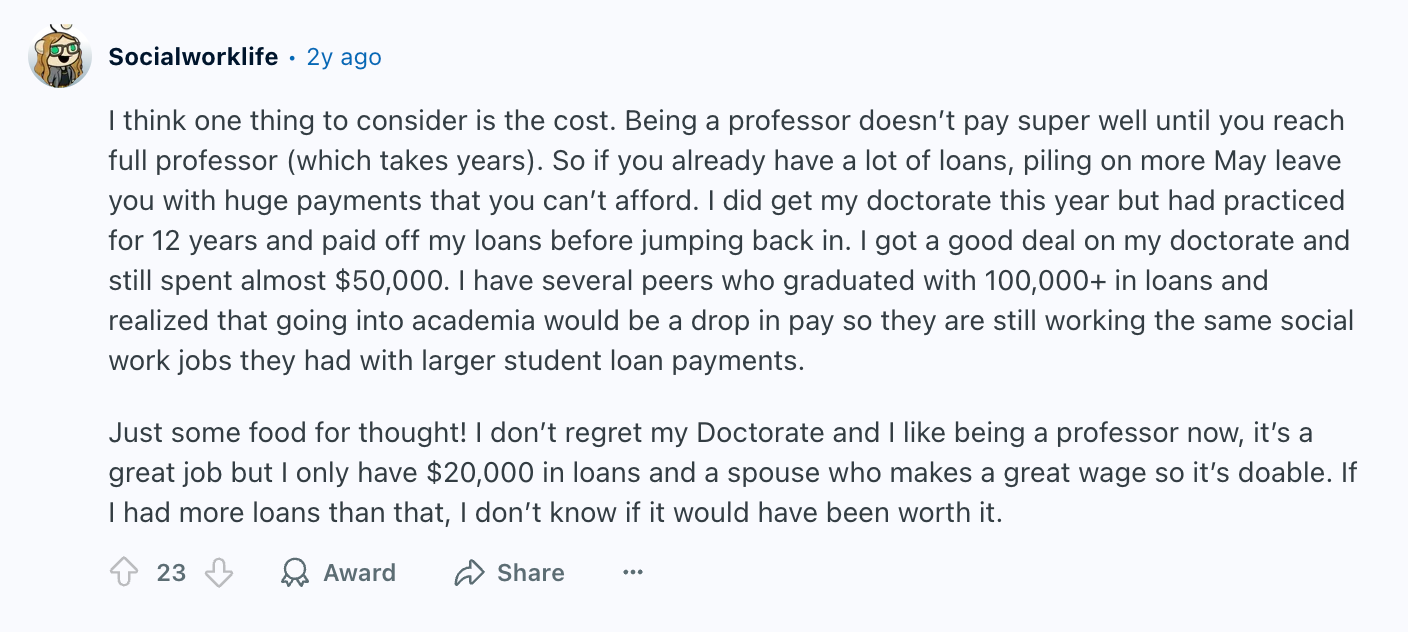
Not every therapist goes down this route, but if you’re drawn to counseling or clinical psychology, you may need a doctorate (either a PhD or PsyD). This step isn’t necessary for every type of therapy, but it’s worth considering if you want to focus on research, teaching, or advanced clinical practice.
Here’s some insight to think about before going down this path:
Aiming for a research position? Learn more: Academic CV: How to Write a Curriculum Vitae
4. Complete clinical experience and training
After your studies, you’ll need supervised experience and hands-on training, usually somewhere between 2,000 and 4,000 hours, depending on your specialty and the state’s requirements. Think of it like a residency for doctors; you’re practicing your skills, but with guidance and support from seasoned professionals.
Most employers like to see that you’ve had a couple of years of real-world experience beyond school. It reassures them (and your clients) that you’ve built the skills needed to handle the complexities of mental health care.
5. Get a license from your state board
Getting your license is the official step that allows you to practice independently as a therapist. Depending on your chosen path, you’ll likely need to pass a licensing exam, such as the NCE (National Counselor Exam) for counselors or the EPPP (Examination for Professional Practice in Psychology) for psychologists.
These exams typically include 130–200 multiple-choice questions and take several hours, testing your knowledge of counseling theories, ethics, and case application.
Licenses come in several types, depending on your specialization and the state in which you practice. Here are some common examples:
- LPC (Licensed Professional Counselor)
- LMFT (Licensed Marriage and Family Therapist)
- LCSW (Licensed Clinical Social Worker)
- LCPC or LCMHC (Licensed Clinical Professional/Mental Health Counselor)
Each state has its own additional requirements, including extra exams to test your knowledge of local laws, background checks, and documentation of supervised clinical hours.
And remember that getting your license isn’t a one-and-done deal. Most licenses require regular renewal through continuing education, ensuring that you stay current with new practices, research, and ethical standards in the field.
Ready to get your first therapist job? Take a look: Best Job Search Engines
6. Find your specialty
After all that, it’s time to carve out your path. Once you’ve earned your license, it’s common to work under supervision for a few more years (2–5, depending on the license). Many new therapists start at community mental health centers, hospitals, or schools.
As you gain experience, you might notice certain areas spark your interest, such as working with kids, supporting couples, or helping people through trauma recovery. Specializing helps you hone your skills while also making you more marketable. Eventually, you might even open your own private practice, giving you the freedom to shape your work around your passions.
How Long Does It Take to Become a Therapist?
Becoming a therapist is a journey that can take between 6 and 9 years of both education and hands-on experience. Yes, that seems like a lot, so let me break that down for you.
- Your bachelor’s degree typically takes about four years. Most people study psychology, sociology, or something similar.
- After that comes your master’s degree, which usually takes another two to three years, depending on the school, the type of program you choose, and how quickly you move through the coursework.
- Once the classroom part is done, most licensing boards require around 3,000 hours of supervised practice, which generally takes two to three years to complete.
That said, the exact timeline depends on a few factors, such as the type of therapy license you’re pursuing, whether you study full-time or part-time, and if you decide to pursue a doctorate (which can add another 4–7 years).
How much does it cost to become a therapist?
As you can imagine, being in education this long isn’t cheap. The entire process of becoming a therapist can cost between $40,000 and $250,000. That includes your bachelor’s and master’s degrees, plus up to $800 to do licensing exams and pay for the initial license.
Here’s the harsh reality from someone who’s come out the other side:

So yes, it’s certainly not cheap. But you can apply for financial aid through federal student loans, grants, and scholarships. These include scholarships from the American Psychological Association (APA) and the National Board for Certified Counselors (NBCC).
Can You Become a Therapist Without a Degree?
If you want to become a licensed therapist, a degree is non-negotiable. You’ll need at least a bachelor’s degree, a master’s in a counseling-related field, supervised clinical hours, and then a license from your state.
Don’t want to commit to the long (and pricey) academic path? There are still plenty of meaningful roles that don’t require a degree. These jobs might not give you the same scope of practice as a licensed therapist, but they still let you support people’s growth and well-being.
Here are some similar paths you can explore without a degree:
- Life or career coach. Help clients set goals, improve motivation, and work toward personal or professional success.
- Substance abuse counselor. Some entry-level roles exist that only require certification or on-the-job training, though many positions prefer a degree.
- Community health worker. Become a bridge between individuals and health services, often providing education and resources.
- Personal trainer or wellness coach. Support physical health, which ties closely to mental health.
- Social services assistant. Assist caseworkers and clients in community programs.
- Psychiatric technician. Work under the supervision of medical professionals in hospitals or treatment centers.
So, while you can’t officially call yourself a therapist without going through the full educational path, there are lots of ways to make a difference in people’s lives without a degree. That said, most of these roles require at least a GED and hands-on training.
Therapist vs. Counselor: What’s the Difference?
Both counselors and therapists hold advanced degrees and get training in behavioral sciences, human development, and communication. They often work in similar settings, like clinics, hospitals, schools, or private practices, and frequently use overlapping methods and tools (which is why the terms can be confusing).
So, what are the differences?
A therapist is an umbrella term for any clinician who treats mental health concerns. Therapists generally focus on the bigger picture of their client’s emotional, relational, and social well-being. Their work is often longer-term, exploratory, and holistic, addressing patterns in behavior and helping clients get insight into deeper parts of their mental health.
Counselors focus more on specific life challenges. They help clients work through issues such as grief, addiction, substance abuse, career decisions, or relationship difficulties. Counseling is usually short-term and goal-oriented, with steps for achieving solutions.
Here’s a summary of some of the main differences:
Summary
Here’s an overview of all you need to know about becoming a therapist:
- Plan your timeline, since becoming a licensed therapist typically takes six to nine years of education and training after high school (longer if you pursue a doctorate).
- Earn a bachelor’s degree in psychology, sociology, social work, or a related field, which usually takes about four years and often includes early hands-on experiences.
- Pursue a master’s degree in your chosen specialty, such as clinical mental health counseling, social work, or school counseling; this typically takes two to three years.
- Consider a doctoral degree if you want to become a psychologist, conduct research, teach at the university level, or take on advanced clinical roles.
- Complete supervised clinical experience with 2,000–4,000 hours of hands-on practice under a licensed professional.
- Get a state license by passing required exams, completing background checks, and meeting any additional state-specific requirements.
- Identify your specialty as you gain experience; many therapists also choose to open a private practice.
- Explore alternative career paths without a degree if you want to work in a supportive role in mental health. Options include life or career coaching, becoming a substance abuse counselor, or working as a psychiatric technician.
FAQ
How much do therapists make?
A therapist’s salary can vary depending on where you live, what kind of therapist you are, and whether you’re working in an agency, school, hospital, or private practice. But to give you an idea, Salary.com estimates the median salary for a therapist is $60,939. And while the U.S. Bureau of Statistics doesn’t provide specific data for therapists, it states that the median pay for a psychologist is $94,310.
Learn more about which jobs make the most money: Highest Paying Jobs in the US
What degree do you need to be a counselor?
At a minimum, you’ll need a master’s degree to become a licensed professional counselor or therapist. The exact degree depends on your specialty, for example:
- Clinical Mental Health Counseling (CMHC) for general counseling.
- Master of Social Work (MSW) if you’re drawn to social work and therapy combined.
- Marriage and Family Therapy (MFT) if you want to focus on couples and families.
- School Counseling if you see yourself working in education settings.
Your bachelor’s degree doesn’t always have to be in psychology, but it definitely helps. Many states also prefer (or even require) programs accredited by CACREP (for counseling) or CSWE (for social work), since those programs meet national standards.
How old do you have to be to become a therapist?
There’s no age requirement written in stone, but because of the education and training involved, most people are at least in their mid-20s by the time they’re fully licensed. This covers four years for your bachelor’s, two to three years for your master’s, then a couple of years of supervised clinical hours.
If you go straight through without breaks, you’ll likely be licensed around 26–28 years old. That said, plenty of people start later; lots of therapists are second-career professionals who bring their life experience into the work.
Thinking of switching careers? Find out more: Career Change at 40
What are the best colleges to become a therapist?
While there isn’t a single “best” school, there are schools with strong counseling, psychology, or social work programs. These are some of the best colleges to begin your journey as a therapist:
- Stanford University
- Harvard University
- Princeton University
- University of California-Berkeley
- Northwestern University
- University of Pennsylvania
The most important factor isn’t prestige; it’s making sure the program is accredited, affordable for you, and fits your career goals. Sometimes, a local state university is the smartest path because it aligns with your state’s licensing requirements and comes with lower tuition.
And if you can’t make it to in-person classes, you can also get your therapy degree online. Here are some examples of colleges offering online programs:
- Arizona State University
- Oregon State University
- University of Florida
- Lesley University
- Southern New Hampshire University
How to start your own therapy practice?
Starting your own practice is a dream for a lot of therapists, but it’s usually something you do after getting your license and some experience. Here’s an overview of how to get there:
- Get fully licensed in your state.
- Decide your niche; specializing (like in trauma, couples, or teens) helps you stand out.
- Handle the business side, such as setting up an LLC or similar structure, getting liability insurance, and deciding whether to take insurance clients or run a private-pay practice.
- Build a client base. Many therapists start part-time in private practice while still working at a clinic or agency, then transition once they have enough clients.
- Consider growing your practice by offering workshops, writing, or even supervising new therapists down the line.

Lauren Bedford is a seasoned writer with a track record of helping thousands of readers find practical solutions over the past five years. She's tackled a range of topics, always striving to simplify complex jargon. At Rezi, Lauren crafts genuine and actionable content that guides readers in creating standout resumes to land their dream jobs.