
Other Resumes
20+ Security Guard Resume Examples
Customize any of these resumes in minutes using our free AI-powered resume builder.
“Rezi is super upfront and continues to improve over time. I've recommended Rezi to several of my friends and colleagues. I just love this product so much.”

Ricky M.
Software Engineer
“Rezi is super upfront and continues to improve over time. I've recommended Rezi to several of my friends and colleagues. I just love this product so much.”
Ricky M.
Software Engineer
Helping users land jobs at 1,000+ companies such as














You’re wrapping up your Saturday shift, and what a night it’s been. You broke up a fight, spent half an hour convincing someone flip-flops aren’t club-appropriate, and consoled Emma over her ghosted date. And that’s before we get to the duties you’re actually paid for.
Beyond all the licenses and certifications — having the right communication and customer service skills is an understated part of working as a security guard. But simply adding “people skills” to your resume? Yawn. Instead, show recruiters how you’ve resolved conflicts, helped customers, and assured Emma it’s not the end of the world.
Keep reading for more security resume tips. This guide will show you:
- A range of security guard resume examples from different niches and experience levels.
- How to describe your security officer duties and responsibilities on your resume.
- The best security skills and strengths to include if you want your resume to get noticed.
Security Guard Resume Examples
Guarding the entrance to a pop concert is a world away from patrolling a quiet suburban neighborhood. Sure, both have overprotective parents and rebellious teens, but the roles demand entirely different skill sets — your resume should reflect that.
Outlining your experiences dealing with party frat boys probably won’t impress an employer looking for security at a formal charity event. But highlighting your ability to manage diverse crowds in high-pressure environments? That’s more like it.
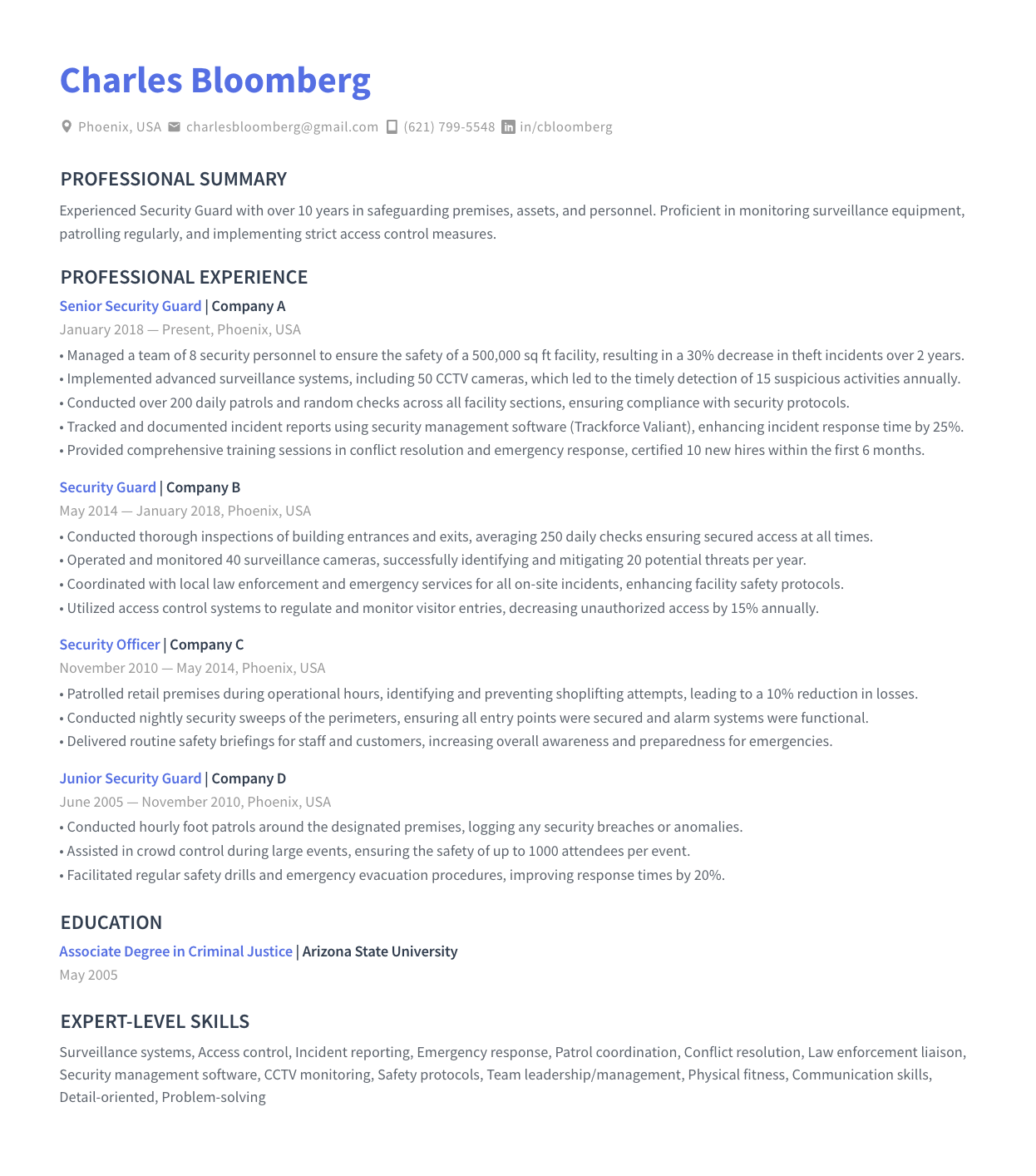
Check out our range of security guard example resumes with specific duties and strengths customized for different industries and security positions.
Unarmed Security Guard Resume
Your Unarmed Security Guard resume should highlight your skills in monitoring, patrolling, and using surveillance tools. Outline your experience reporting incidents, responding to emergencies, and assisting the public. Include certifications, such as a security guard license or CPR training, and emphasize your ability to detect and prevent suspicious activity.
Armed Security Guard Resume
With an Armed Security Guard resume, include your training and certifications for firearms and safety procedures. Detail your experience in access control, risk assessment, conflict resolution, and emergency response. Demonstrate strong situational awareness and a commitment to safety while meeting state or national firearm regulations.
Retail Security Guard Resume
For a Retail Security Guard resume, emphasize your ability to deter theft and monitor surveillance systems. Mention interpersonal skills, as duties will likely involve assisting patrons and staff. Include experience documenting incidents, protecting assets, and remaining vigilant. Employers also value attention to detail and the ability to stay alert in busy retail settings.
Event Security Guard Resume
Your Event Security Resume should focus on your expertise in crowd control, bag checks, and maintaining a safe environment during busy events. Highlight your ability to monitor access points, handle emergencies, and communicate with event staff or law enforcement. Show you’re proactive, vigilant, and skilled at spotting potential trouble in large crowds.
Residential Security Guard Resume
With a Residential Security Guard resume, include experience with surveillance equipment, visitor management, and enforcing safety protocols in residential areas. Highlight skills in emergency response and community interaction. Emphasize your commitment to creating a secure environment for residents while quickly responding to alarms or incidents.
Hospital Security Guard Resume
For a Hospital Security Guard resume, highlight your ability to control access points, perform thorough patrols, and calmly handle emergencies. Mention any experience with de-escalation techniques, assisting agitated individuals, and maintaining confidentiality with sensitive information. Strong attention to detail in monitoring security-sensitive areas is also key.
Military Security Guard Resume
Your Military Security Guard resume should emphasize your physical security, military, or law enforcement training. Include experience with patrols, enforcing regulations, and responding to emergencies. Mention your physical fitness, security clearance, and ability to handle sensitive information. Highlight knowledge of military-specific security systems, if applicable.
Commissioned Security Guard Resume
For a Commissioned Security Guard resume, include your Level III (or equivalent) licensing, firearm training, and knowledge of legal aspects. Highlight skills in conducting patrols, monitoring systems, and mitigating risks. Include examples of enforcing laws, responding to incidents, and carrying out arrests if relevant.
Whether you lack experience or have a long work history — you can still tailor your resume to keep it professional and concise. Here’s how to customize your resume based on your experience level.
Security Guard With No Experience Resume
For a Security Guard resume with no experience, show your basic security license or training and highlight transferable skills like communication, attention to detail, and problem-solving. Emphasize your eagerness to learn, reliability, and ability to stay calm under pressure. Mention any volunteer work or roles where you developed teamwork and interpersonal skills.
Mid-Level Security Guard Resume
Your Mid-Level Security Guard resume should show your experience handling security emergencies, writing detailed reports, and applying safety protocols. Include additional certifications, licenses, and any specialized training for roles such as event or residential security. Highlight your willingness to grow with leadership tasks or advanced certifications.
Senior Security Guard Resume
With a Senior Security Guard resume, focus on leadership skills, including supervising teams, managing schedules, and conducting risk assessments. Highlight your ability to oversee investigations, communicate security updates, and implement safety improvements. Experience with mentoring junior guards or developing training programs will set you apart as a seasoned professional.
How to Write a Security Guard Resume
Short answer:
Your security guard resume should start with your contact details and an eye-catching summary highlighting your experience, certifications, and key strengths. List your work experience in reverse chronological order, emphasizing duties and achievements related to patrolling, monitoring surveillance systems, or managing access points. Include relevant certifications (e.g., state security licenses, CPR) and training to prove you meet requirements. Don’t forget to tailor your resume to the job description with relevant keywords. Use headings to separate sections with professional fonts and bullet points for easy readability.
Choose a readable resume format
Just like those sandy flip-flops or neon rain boots would get a quick rejection at the club, so will your resume if it has a sloppy appearance. The wrong formatting tells the recruiter that you haven’t done your research and didn’t make the effort to deliver a solid first impression.
Your formatting is key to helping recruiters quickly identify the strengths and experiences you bring to the table. Plus, a clean layout boosts your chances of getting past Applicant Tracking Systems (ATS) which are usually the first stop before reaching a recruiter.
Take a look at these formatting tips to deliver a professional resume:
- Stick to reverse chronological order: Start with your most recent job and work backward. This is a tried-and-tested structure, so it’s easier for recruiters and Applicant Tracking Systems (ATS) to pinpoint your key details and follow your career growth.
- Use bullet points: Don’t make them hunt for details in long paragraphs. Short, punchy bullet points keep your experiences clear and easy to skim.
- Pick professional fonts: Keep it simple with resume fonts like Calibri or Arial in sizes 10–12 (14–16 for headings). Avoid artsy choices, like Brush Script — you’re applying to guard, not design.
- Leave white space: Give the eye room to breathe. Separate sections with clear headings so it doesn’t feel like one long block of text. Margins should be 1–inch on all sides.
- Skip flashy graphics: Keep the look simple and professional. Over-the-top designs, skills charts, or infographics only distract from what really matters: your skills and experience.
- Be consistent: Stick with the same formatting and font style throughout your resume. Bonus points for attention to detail if you remain consistent in your cover letter, too.
Learn more about how to frame your experiences and skills: How to Format a Resume & What Standard Resume Format to Use
Start with your contact details
Your contact details belong at the top of your resume — you want to make it as easy as possible for recruiters to reach out. Always double-check for typos before you hit send — nothing’s worse than realizing you fumbled your phone number after wondering why no one’s calling.
Start with your full name in big, bold letters at the top. Follow up with your phone number, a professional email address, and location (just your city and state are enough). Got a polished LinkedIn profile? Add that too, but only if it’s up-to-date and relevant.
Skip the photo — they aren’t hiring you based on your looks. And don’t include references — though you can save them on a separate document if the hiring manager specifically asks.
Here’s how to present your contact information on your security guard resume:
Emily Rivers
(555) 123-4567 | emily.rivers@gmail.com | Los Angeles, CA
LinkedIn: linkedin.com/in/emilyrivers
Outline your security duties and accomplishments
When I was a kid, my mom asked me to watch my little brother for a minute at the store. I technically did the job, but let’s just say a shattered vase ended my babysitting career. Moral of the story? Listing responsibilities is fine, but showing success in your resume is what proves your worth.
List each job entry with the company name, location, and employment dates. After that, use bullet points to list relevant responsibilities and achievements. What counts as relevant? The obvious security-specific tasks, but also positive outcomes that show off key skills like teamwork, communication, or crisis intervention.
When in doubt, check the job description. It usually lays out the essential skills and qualifications needed for the job. Once you identify them, find a way to link them to your own experiences and include them in your work experience section.
Want to stand out? Bring receipts. Include numbers to quantify your accomplishments. Saying you worked security at a large event may tick a box — but saying you worked at a concert with over 20,000 attendees is what gets you noticed.
If you’re new to security, don’t panic. Focus on transferable skills from other jobs. Worked in retail? Mention monitoring high-traffic areas. Bartending? Talk about staying sharp in chaotic situations. Just keep it relevant. That summer you spent as a movie extra? Probably best left off.
And avoid overloading your resume with too many jobs. Security employers like stability and loyalty, so if your work history is full of short stints, think about grouping similar roles or listing just the years you worked rather than specific months.
Here’s an example work experience section for a security guard resume:
Event Security Officer
Secure Solutions Co. | Austin, TX
June 2022–Present
• Provided security for large-scale events, including concerts, festivals, and sporting events, with attendance exceeding 20,000.
• Conducted routine surveillance and de-escalated conflicts, reducing incident rates by 15% over two years.
• Mentored and supervised a team of five junior guards.
• Collaborated with event organizers to create safety plans, ensuring compliance with all local regulations.
Bartender
High Spirits Bar | Austin, TX
January 2020–May 2022
• Maintained crowd control during peak hours, serving over 200 patrons per shift.
• Interacted with a range of patrons and assisted security with effective conflict resolution techniques when required.
• Recognized for exceptional customer service and quick decision-making.
Learn the best ways to impress with your work history: How to Describe Your Work Experience on a Resume.
Include your education and training
Education often takes the backseat on a security guard resume, with your work experiences and licenses taking center stage. That said, most employers will expect a minimum of a high school diploma.
Start with your most recent qualification and work backward. Include the institution name, the degree, diploma, or GED, and your graduation date. If you’ve got higher education, like a degree in criminology or a related field, that’s an even bigger plus.
If you’ve earned certifications or specialized training, like CPR, first aid, or security licensing, list those too or in a separate section (more on that later). These show you’re serious about the role and meet the necessary requirements.
Are you transitioning careers? You can add more weight to your resume with any extra training or coursework that aligns with security. For example, customer service training for handling conflict or technical courses for operating surveillance systems.
Here’s how you can list your education and training for a security officer resume:
Rosefield High School, San Francisco — High School Diploma, June 2023
Certified Security Guard Training Program — Axe Security Academy, Completed January 2024
Get the complete lowdown here: How to List Education on a Resume
Mention licenses, certifications, and clearances
Trying to get a security job without any licenses or mandatory training is like attempting to enter a bar without your pants. You’re not getting past the door, and you’ll have some awkward explaining to do. Most states have their own security rules, so it’s best to show you’re qualified from the start by including these details on your resume.
You can create a dedicated section for these credentials, like “Certifications & Licenses,” so recruiters can easily see you’re qualified. Include the name of the certification/license, the issuing organization, and the date earned or expiration date.
Research the position and only list relevant details, as security guard licensure and training requirements vary by state. For example, in Florida, you’ll need a Class D license after a 40-hour security guard training program. While in Connecticut, you would need a Security Guard Officer Certification Identification Card before employment.
Do you have firearms licenses or special training? Add those, too. Firearm qualifications, CPR/AED, and first aid certifications show you’ve got the skills and meet requirements for high-pressure situations. Specialized training like loss prevention, crowd control, or surveillance systems can also give you an edge over other candidates.
And don’t be shy if you’ve earned awards, certificates, ranks, or achieved additional licensing during your career. Including these accomplishments shows growth and commitment to the profession — plus, it’s the perfect spot to humbly (or not-so-humbly) toot your own horn.
Here’s how to list your certifications and licenses on your security resume:
• Class D Security License — The Department of Agriculture and Consumer Services Division of Licensing, Valid Through Dec 2025
• CPR/AED Certified — American Red Cross, Issued Jan 2023
• Armed Security Officer Certification — State of Florida, Issued June 2022
• First Aid Training — Medic Academy, Completed March 2022
Find out more: What Sections to Include on Your Resume?
List relevant security guard skills
Tony has a long list of skills, ticking almost every box on his resume. But Tony didn’t get the job. Why? He didn’t back up those skills. In fact, it looked like he just found a list of “security guard” skills online and copied them into his resume.
Don’t get me wrong — having a small section dedicated to your skills is great for skim-reading recruiters. But they also want to see those abilities reflected throughout your work experience and training, especially your soft skills.
Simply saying you’re a “team player” is vague and overused. But describing how you “worked with retail staff and other security guards to reduce theft incidents by 25%” paints a much more concrete picture.
And don’t just throw skills out like confetti. Choose the most relevant skills that match the job description and sprinkle them throughout your resume. This isn’t just for recruiters’ sake; it helps your resume get past ATS scanners that search for specific keywords.
For hard skills, highlight your proficiency with security equipment, knowledge of emergency response protocols, and any software tools you’ve used in the field. And don’t underestimate the power of soft skills. Customer service, teamwork, and problem-solving are crucial for navigating tricky situations.
Here are some in-demand skills and technologies for a security officer resume:
Learn more about tailoring your skills: How to Put Skills on a Resume
Add a security guard summary or objective
Finish with your security guard summary (or objective). As the name suggests, these lines at the top of your resume are to summarize your top strengths, skills, and selling points. My advice? Tackle this section after you’ve filled out the entirety of your resume, so you can pick out the best bits.
If you have more than two years of experience as a security professional, go for a resume summary. Use this space to highlight your top skills, achievements, and what makes you stand out. Mention certifications, years of experience, or specialties like crowd control, surveillance, or emergency response. The goal is for recruiters to see what value you can bring in just a few short sentences.
Here’s an example security guard resume summary:
Certified security guard with 5+ years of experience ensuring safety and protecting property in corporate and retail environments. Skilled in surveillance, emergency response, and conflict resolution. Seeking to apply my expertise to provide top-notch security services at Network Corporation.
What about if you’re new to the field or switching careers? It gets a little trickier to name-drop those achievements. Instead, use a resume objective to focus on your professional goals and transferable skills, like communication, problem-solving, or customer service. Show enthusiasm for the role and commitment to excelling in the industry.
Here’s what a security guard’s resume objective looks like:
Motivated and detail-oriented individual with a background in customer service and a strong interest in the security industry. Adept at communication and handling high-pressure situations. Seeking an opportunity to grow and contribute to maintaining safety and order at Vision Security Services.
Staring at a black page? Try the Rezi AI Resume Summary Generator. Simply enter your job title and skills and our AI technology will create a customized resume summary just for you.
What Makes Security Guard Resumes Different
In short: prove you meet the requirements with the right state licenses and security skills.
Let’s clear up a myth: security guards aren’t just there to look tough enough to stop you from swiping merchandise, sneaking into events, or wobbling into a club uninvited. Sure, that’s part of it — but there’s way more to the job.
Most guards undergo background checks, criminal screenings, and hours of training to earn state licenses and certifications. On top of that, they need the patience and people skills to handle the public without losing their cool.
And all this has to be clear from a glance at your resume. Here’s how to add those key extras to make your application stand out and tick every box.
Show you meet the state requirements
Every state has different rules and regulations for becoming a security guard, including mandatory training, examinations, and registration. Not to mention criminal checks, physical exams, and background searches. Including these details in your resume shows you’re qualified and saves employers the guesswork.
What this means for you:
- State your security guard license (e.g., Class D, Level 1) and add details like the issuing state and expiration date under your “Licenses” resume section. Mention specialized licenses like firearm permits if you’re going for an armed guard position.
- Include completed courses, such as de-escalation techniques, emergency response, or firearm safety. Bonus points if you can frame these courses to align with the position and company requirements.
Include resume keywords for security guards
Tailoring your resume isn’t just about name-dropping the company or throwing in a couple of relevant skills. You have to be strategic to get the green light from ATS scanners and get through to the next round. The trick is adding the keywords naturally with real examples.
What this means for you:
- Highlight key strengths and terms the employer mentions, like “access control,” “patrols," or “emergency response,” and use those exact phrases in your work experience and skills section.
- Don’t just scatter keywords and hope for the best. Recruiters want to see how you used these skills to deliver positive results. For example, if they mention “incident reporting,” describe how you’ve documented and communicated security breaches.
Weave in your interpersonal and communication skills
How many times have you asked security for directions at a big event? Or had an alcohol-fueled chat outside the bar? As much as security officers probably don’t want to hear about your nightmare week at the office — interacting with the public is often an unavoidable part of the job.
What this means for you:
- Include examples of your communication skills to prove you can interact with others to maintain safety and resolve conflicts. These skills show you’re approachable and dependable.
- Let your people skills shine through your work experience section. Want to prove your knack for problem-solving? Mention times you defused tense situations. Team player? Talk about when you’ve collaborated with law enforcement, or management to ensure safety and follow protocols.
Mention transferable skills from relevant positions
Trying to get your first job as a security guard? Don’t let your lack of experience hold you back — you likely have more relevant skills than you think. Whether you have a background in law enforcement or customer service — there’s always the opportunity to frame your skills to match the job requirements.
What this means for you:
- Highlight military or law enforcement experience, giving concrete examples of leadership, conflict resolution, or firearm safety. Include your rank, responsibilities, and certifications to build credibility.
- If you’ve worked in customer service or public-facing roles, emphasize universal skills like reliability, problem-solving, and interpersonal communication — all assets for security work.
Prove your dedication with extra sections
If you’re going for a more senior security position, you may need to prove you can do more than spot Susan the shoplifter in her questionable disguises. Adding extra sections to your resume shows you’re going above and beyond the basics with unique skills, training, and achievements that set you apart from the other candidates.
What this means for you:
- List your success stories, but show recruiters they don’t just need to take your word for it. List any commendations, “Employee of the Month” awards, or certificates for exceptional performance in security or related fields.
- Mention language proficiencies, PPE training, or specialized certifications like NRC training to demonstrate versatility and added value in any situation.
Bonus Resources for Security Guards
Let’s be honest — waiting until your resume’s ready to hit “send” isn’t exactly prime time to start online courses. But think ahead: your future self, vying for that high-paying security job, only to lose out to someone with more credentials.
Adding extra training and certifications to your security officer resume can help bridge the gap if you have a lack of experience, or show your expertise if you’re going for a senior position.
Take a look at these online platforms that offer a range of courses, training, degrees, and certifications to help you advance your career and land those security jobs.
- SANS: SANS Institute equips cybersecurity professionals with training, certifications, and degrees to reduce cyber risks, protect organizations, and advance careers.
- Defencify: Defencify offers flexible, self-paced online training for licensing, renewal, first aid, crisis management, and state-specific requirements — accessible anytime, anywhere.
- National Investigative Training Academy: NITA provides state-approved pre-licensing, continuing education, and professional development courses tailored for investigators and security professionals.
- International Foundation For Protection Officers: IFPO supports security personnel and firms with certifications, recertifications, and education programs to enhance professional growth.
- Top Gun Security Academy: Top Gun offers expert-designed online and in-person security training tailored to state requirements, preparing graduates for successful security careers.
Summary
Here’s a round-up of everything to keep in mind when writing your security guard resume:
- Customize your security officer resume to the position by matching your skills and experience with the job description, using specific examples and accomplishments.
- Include keywords and strengths from the job ad to get past ATS scanners and show you meet the requirements. Top skills include expertise in surveillance systems, access control, solid communication, and emergency response.
- Use bullet points to describe your work experience with strong verbs like “monitored,” “patrolled,” or “responded” to add more impact to your contributions and skills.
- Include measurable results, like reducing incidents or improving security procedures, to show your ability to meet expectations and deliver positive results.
- No direct experience? Focus on transferable skills like communication, conflict resolution, and teamwork, which are valuable across most security roles.
- List required licenses in their own dedicated section, like Class D or Level. You can also add any specialized training such as CPR or firearm safety.
- Show dedication with extra sections for awards, bilingual skills, or certifications to stand out from other candidates and create a clearer picture of your expertise.
- Use the reverse chronological order with clear sections, and limit your resume to one page, focusing on the most relevant experience and skills.
- Proofread thoroughly to avoid typos or grammatical errors — they can make you seem sloppy and less detail-oriented.
FAQ
What is a good security guard job description for a resume?
A great security guard job description highlights your key responsibilities and achievements. Focus on tasks like patrolling areas, monitoring surveillance systems, responding to emergencies, and ensuring the safety of people and property. Include specific outcomes, such as preventing theft or resolving conflicts, to show the impact of your work.
What is a good objective for a security guard resume?
A strong security guard objective is concise, specific, and emphasizes your skills and goals. For example: “Reliable and vigilant security professional with expertise in surveillance and conflict resolution, seeking to safeguard personnel and property in a dynamic environment.” Customize your resume objective to the job, showing how you’ll contribute to the employer’s needs.
How to describe a security job on a resume?
When describing a security job, focus on your responsibilities and the results you achieved. Use action verbs like “monitored,” “patrolled,” or “responded.” Mention skills like conflict resolution or surveillance monitoring, and include quantifiable achievements, like reducing incidents or improving security protocols. Keep it clear, concise, and tailored to the role you’re applying for.
How to write a beginner security guard resume?
If you have no security guard experience, focus on transferable skills like communication, problem-solving, or attention to detail. List any mandatory licenses or relevant training, like a basic security license or CPR certification. Emphasize roles where you ensured safety or dealt with the public, such as customer service or volunteer work.
What is the basic skill of a security guard?
One of the most important skills of a security guard is vigilance — being alert to risks and threats while staying calm under pressure. This includes effective communication, quick decision-making, and conflict resolution. Important hard skills include using surveillance systems, following emergency protocols, and administering first aid and CPR.

Upload or drop your resume to get started
Upload your resume to get started
Score my resume
Contents

Resume Formats & Examples
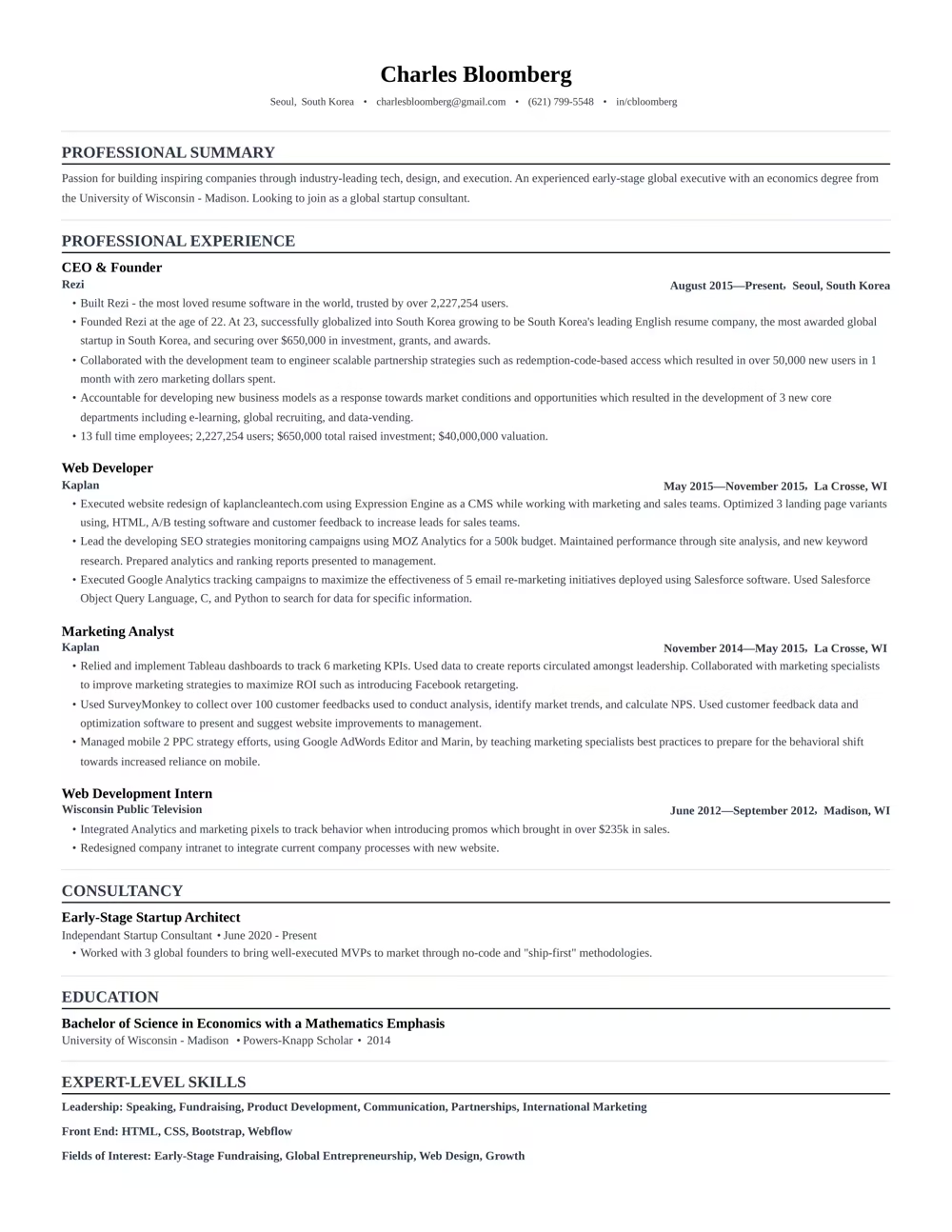
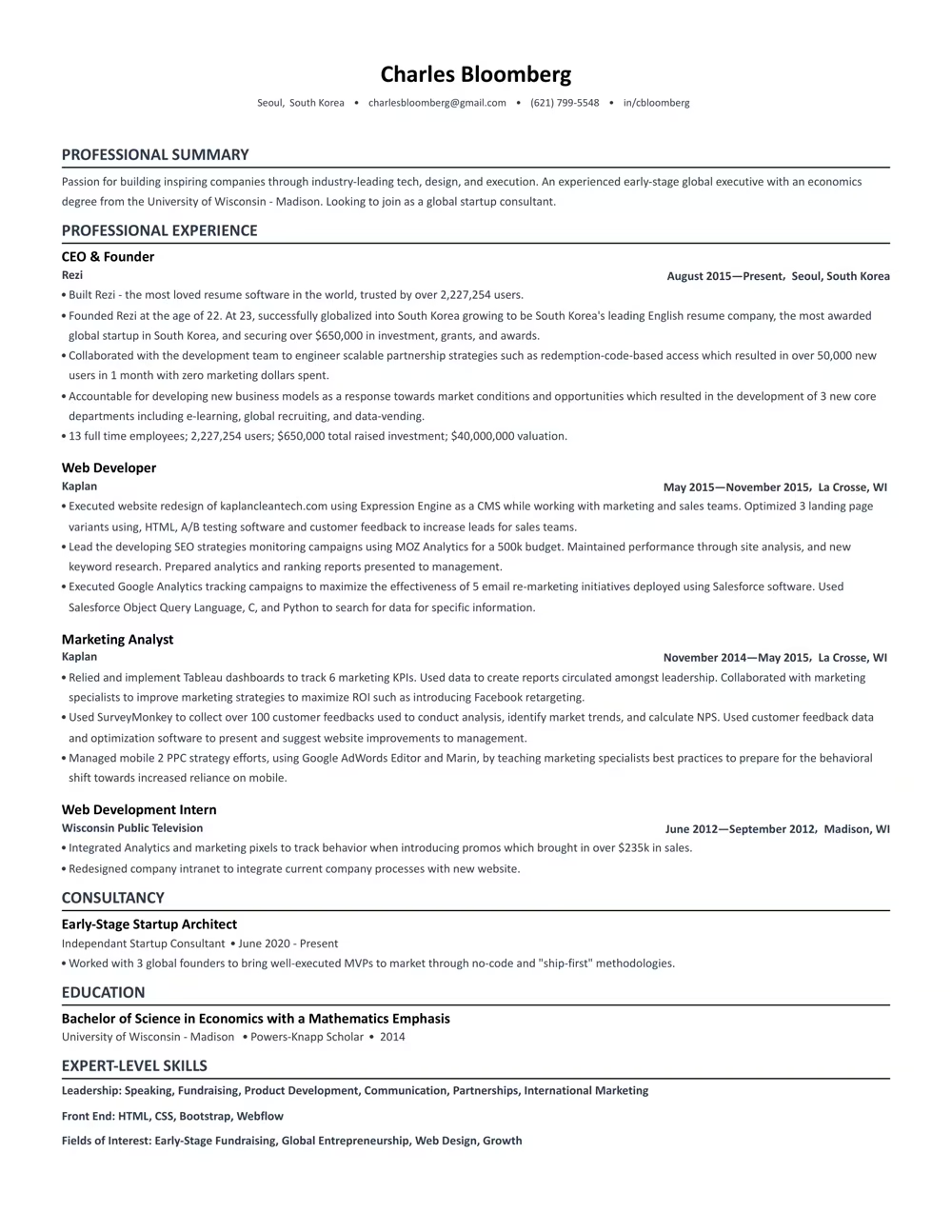
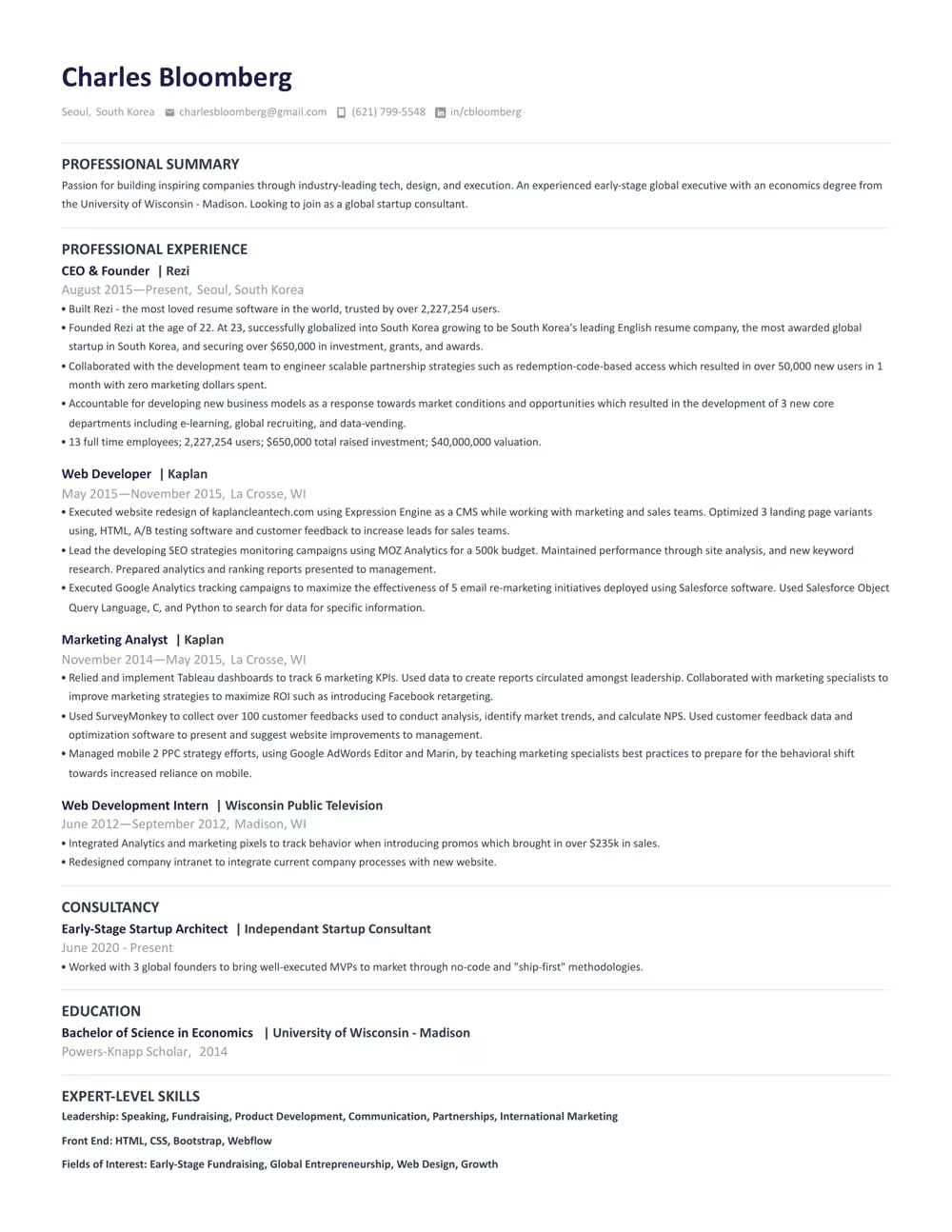
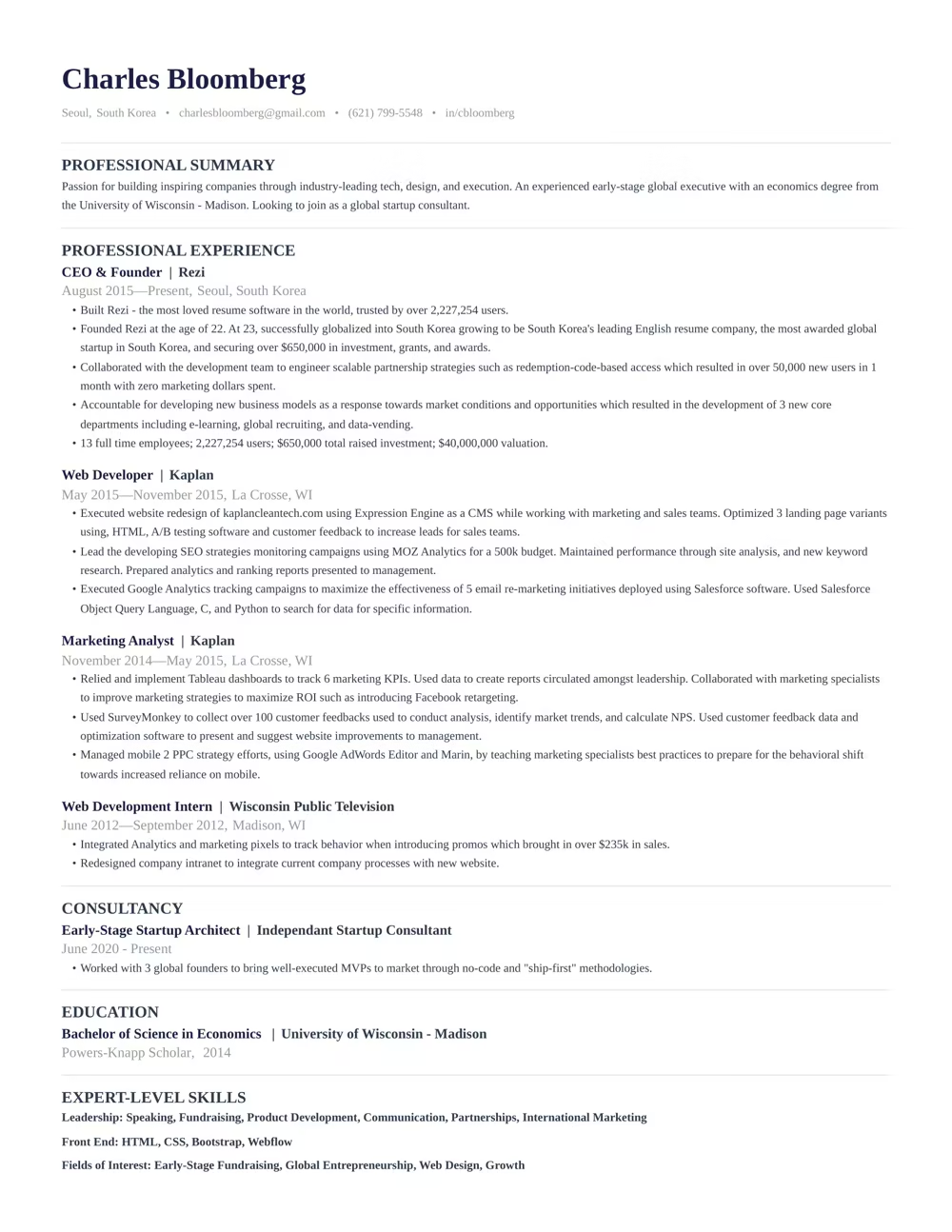
ATS-Friendly resume formats that land jobs
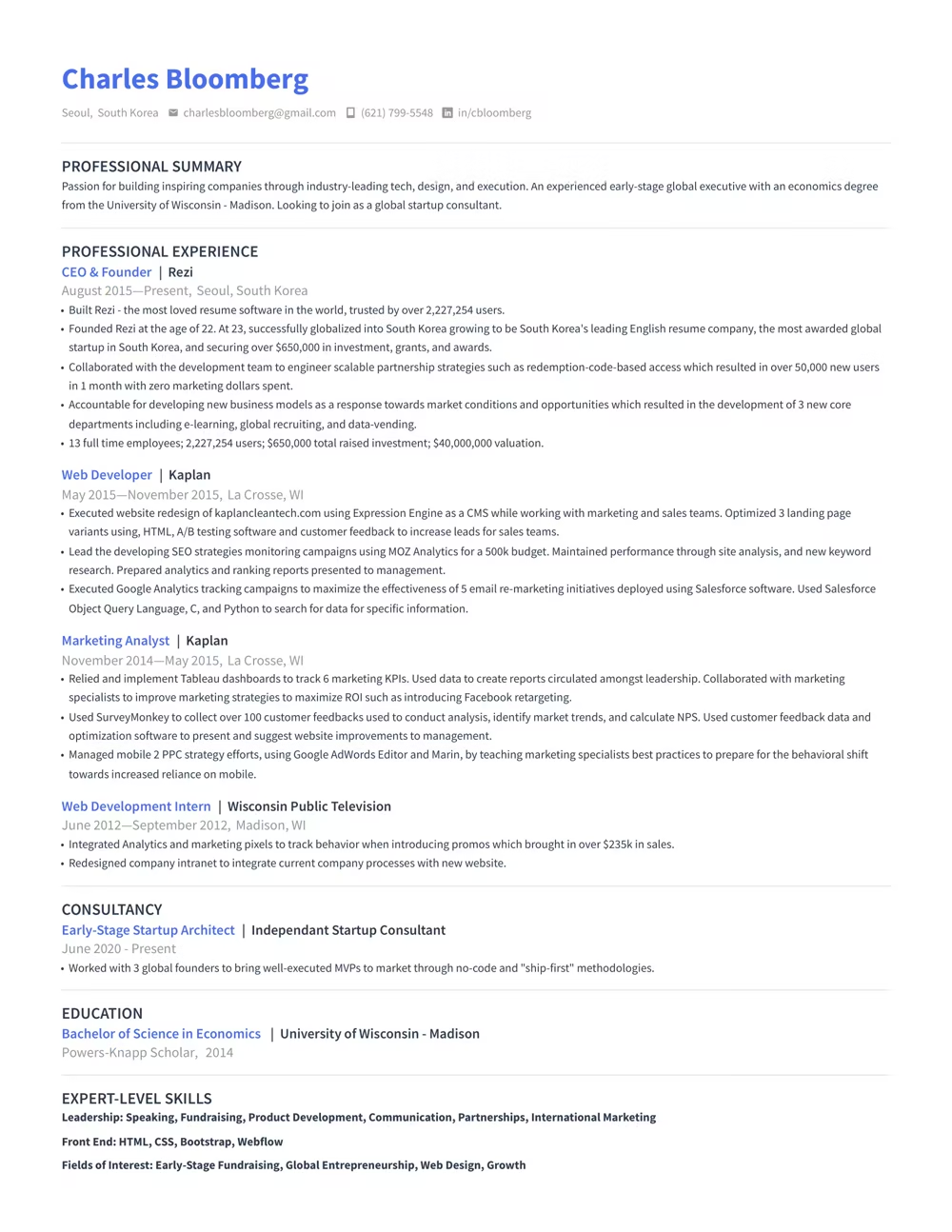
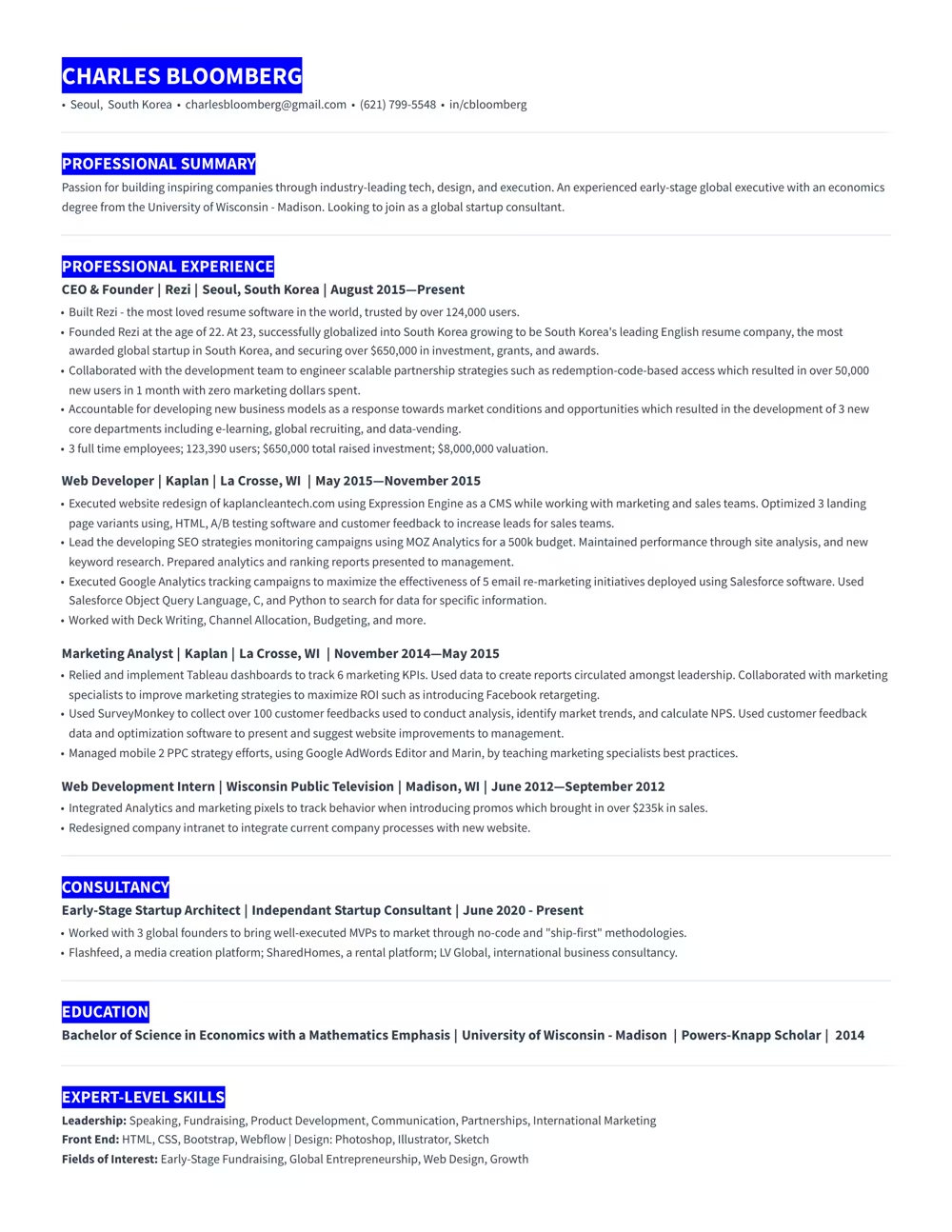
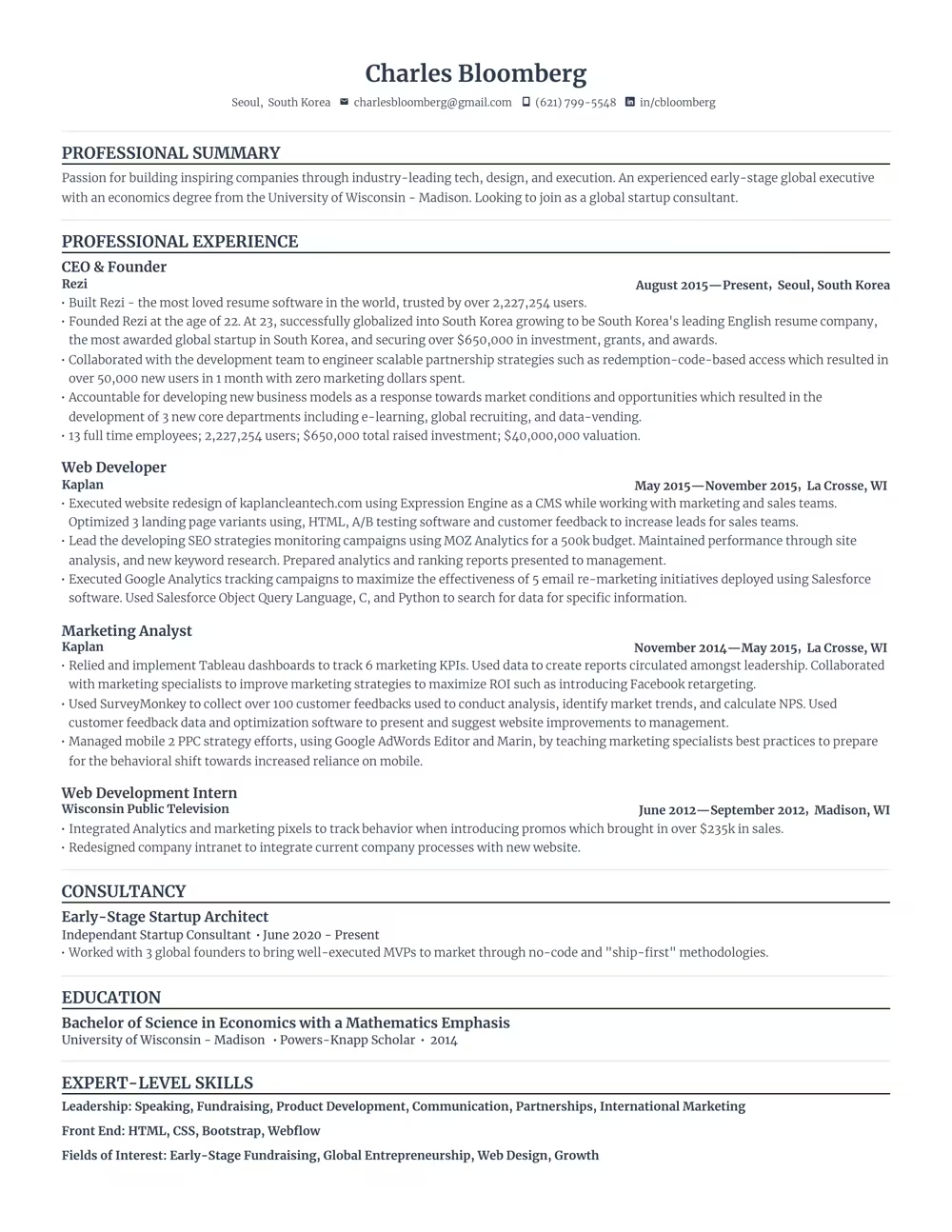
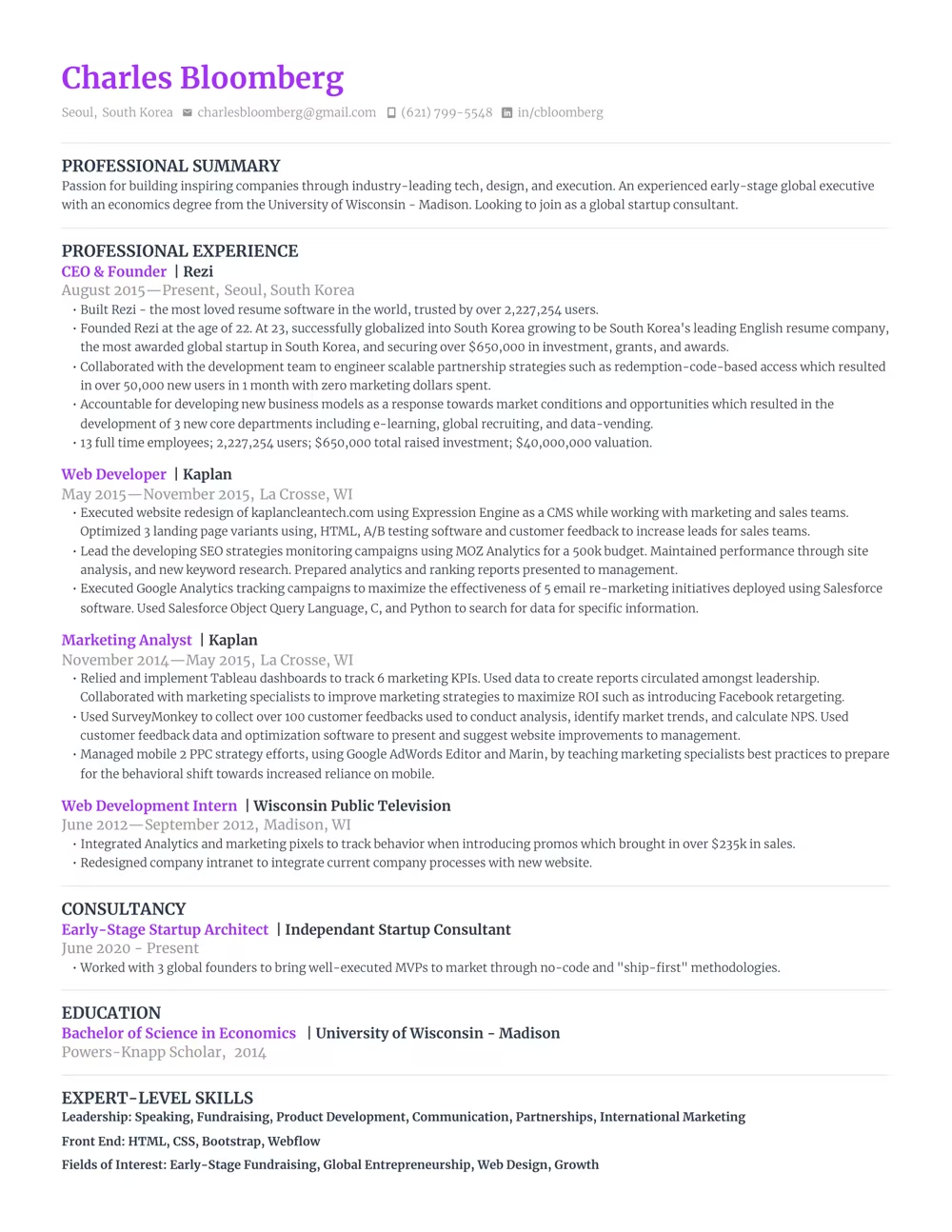
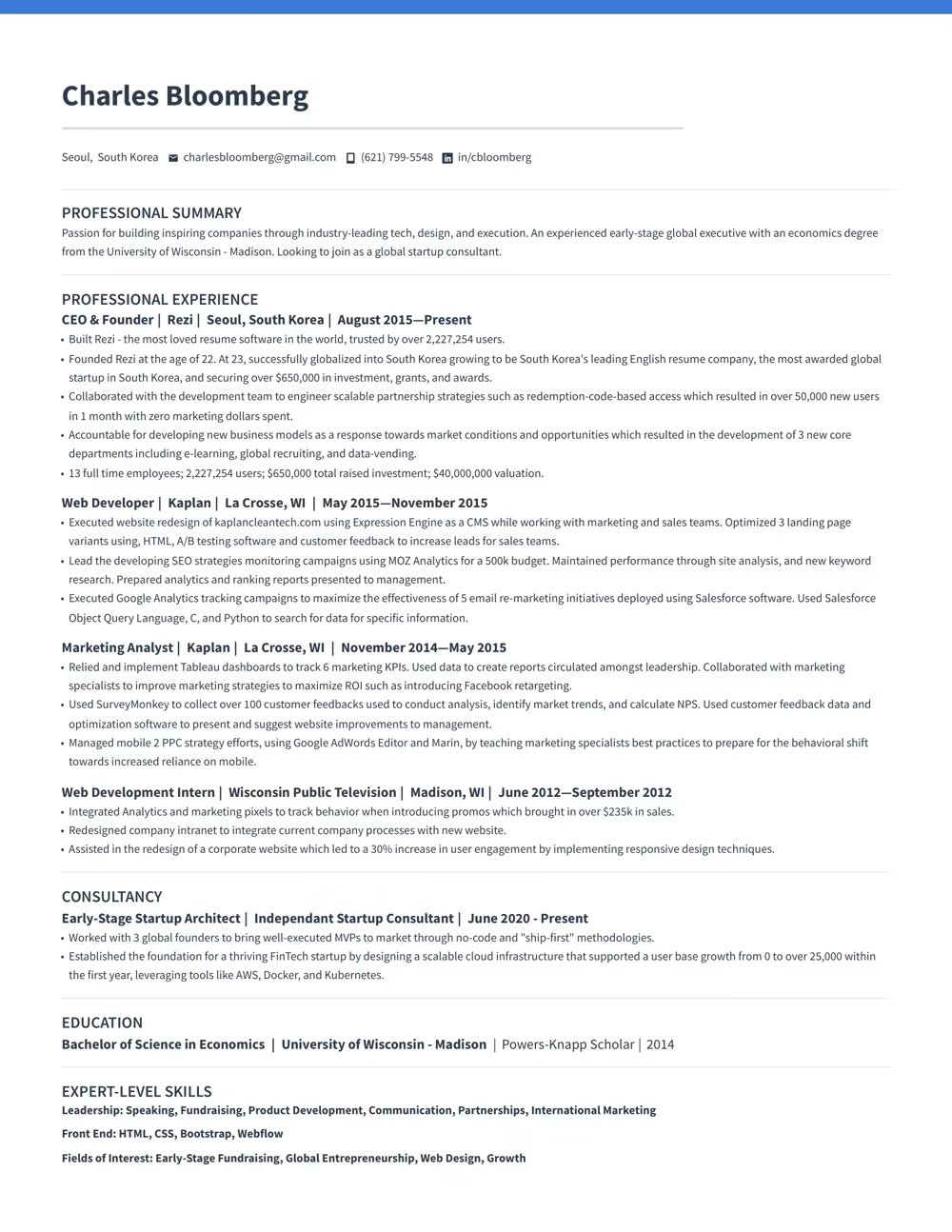
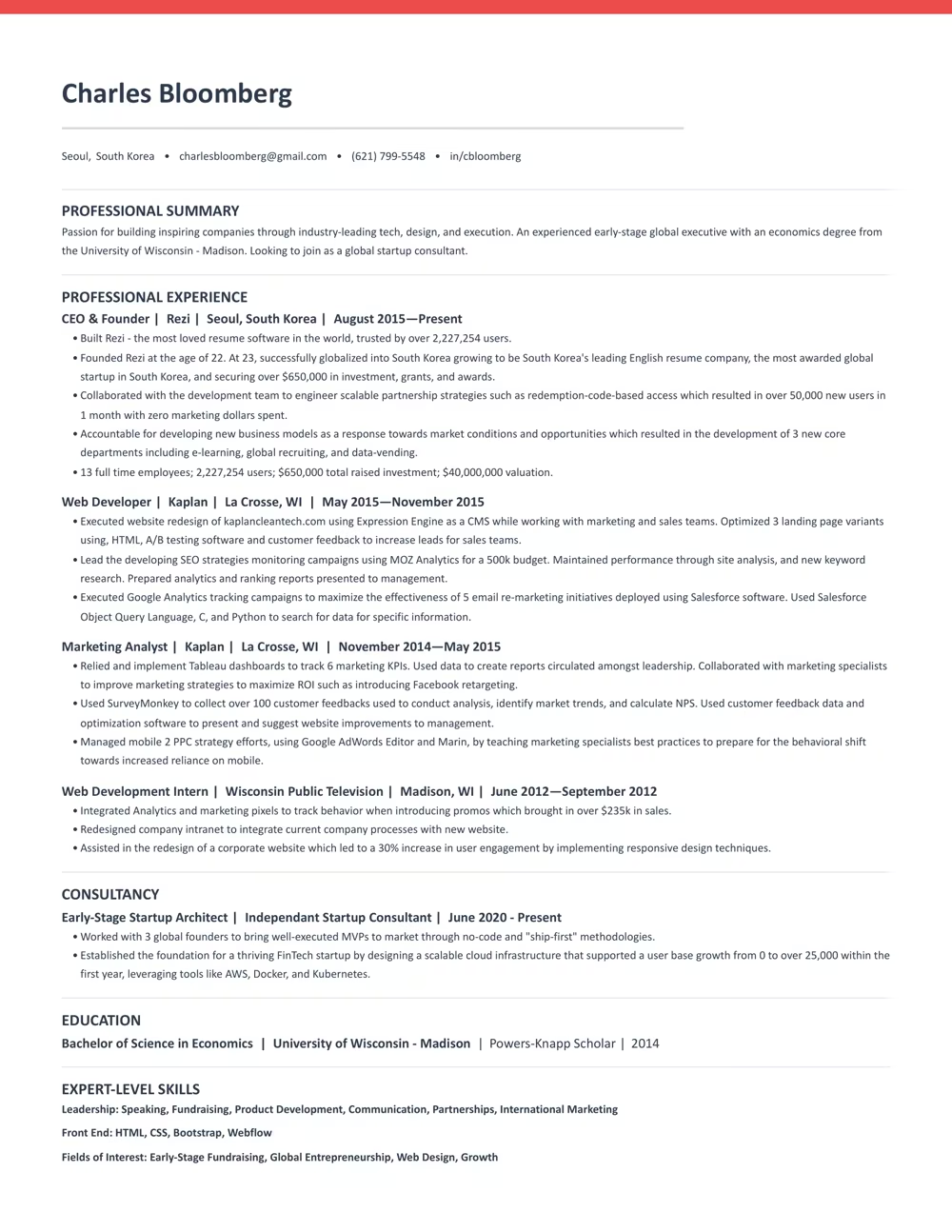
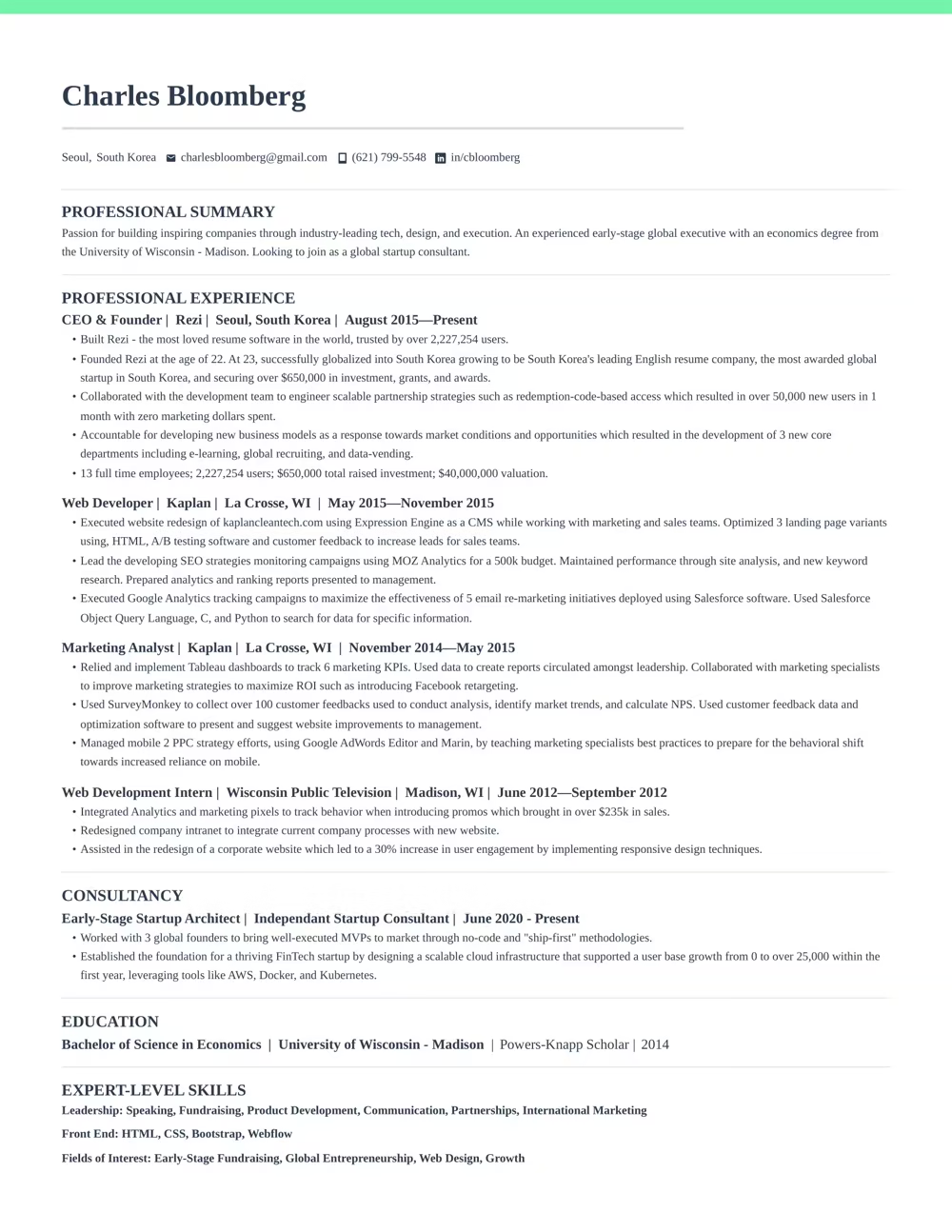
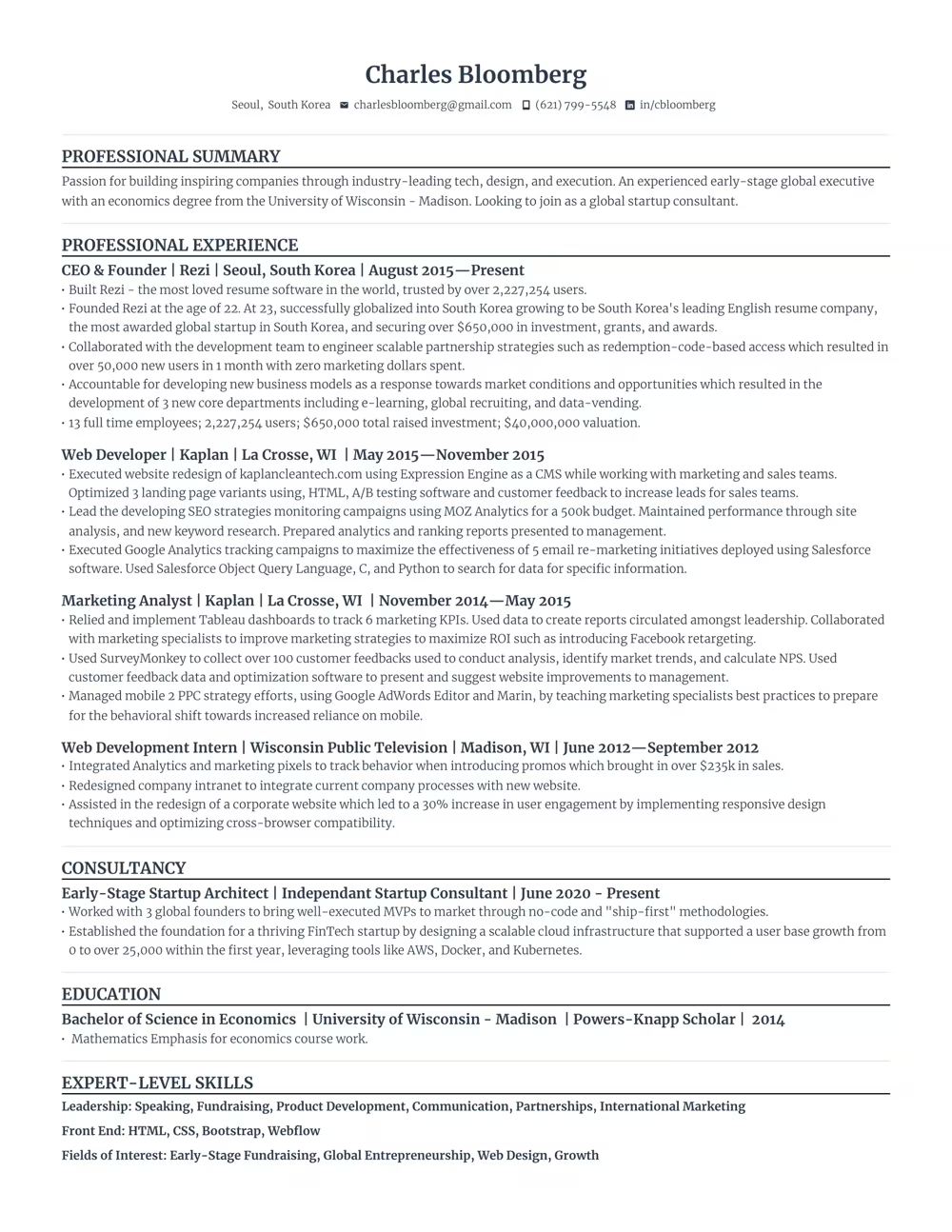
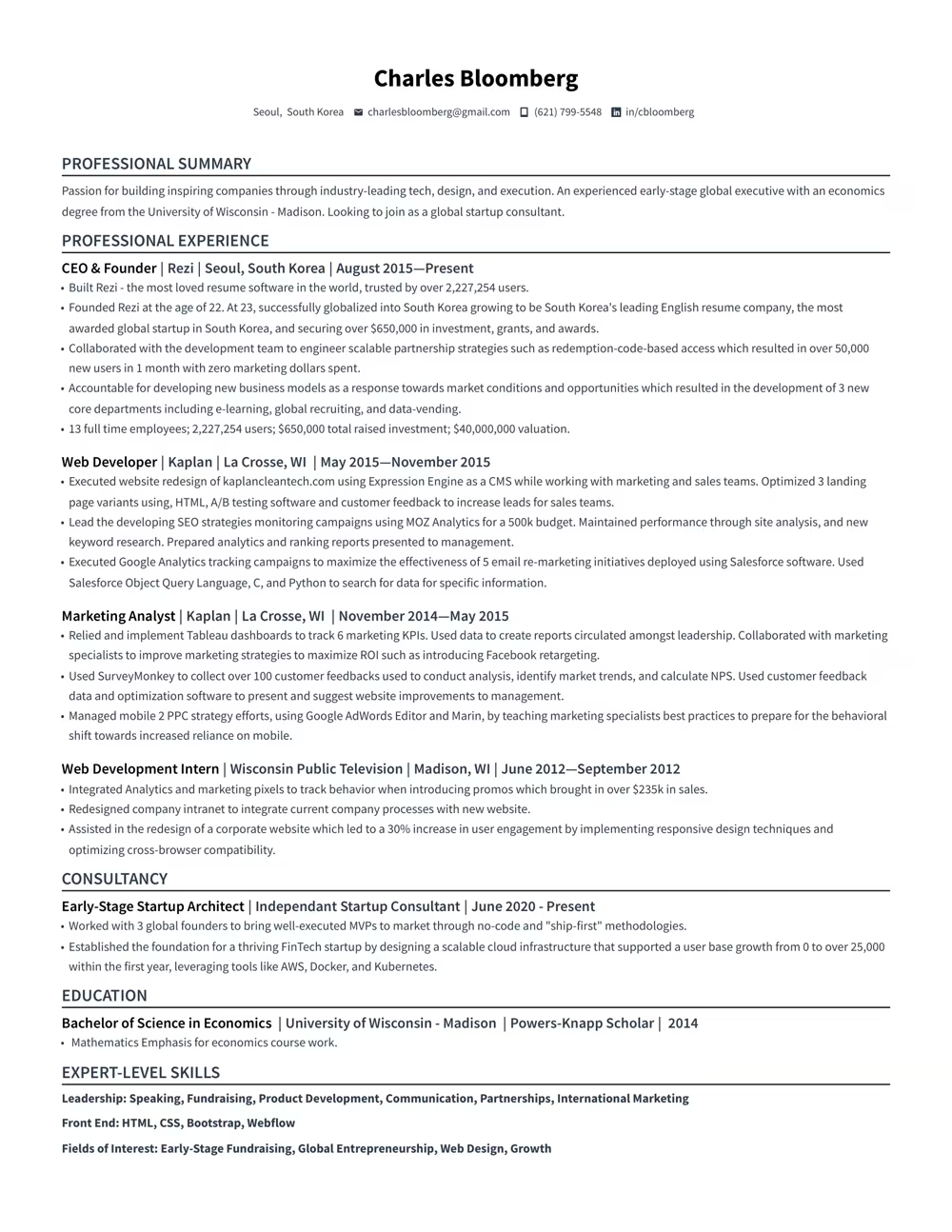
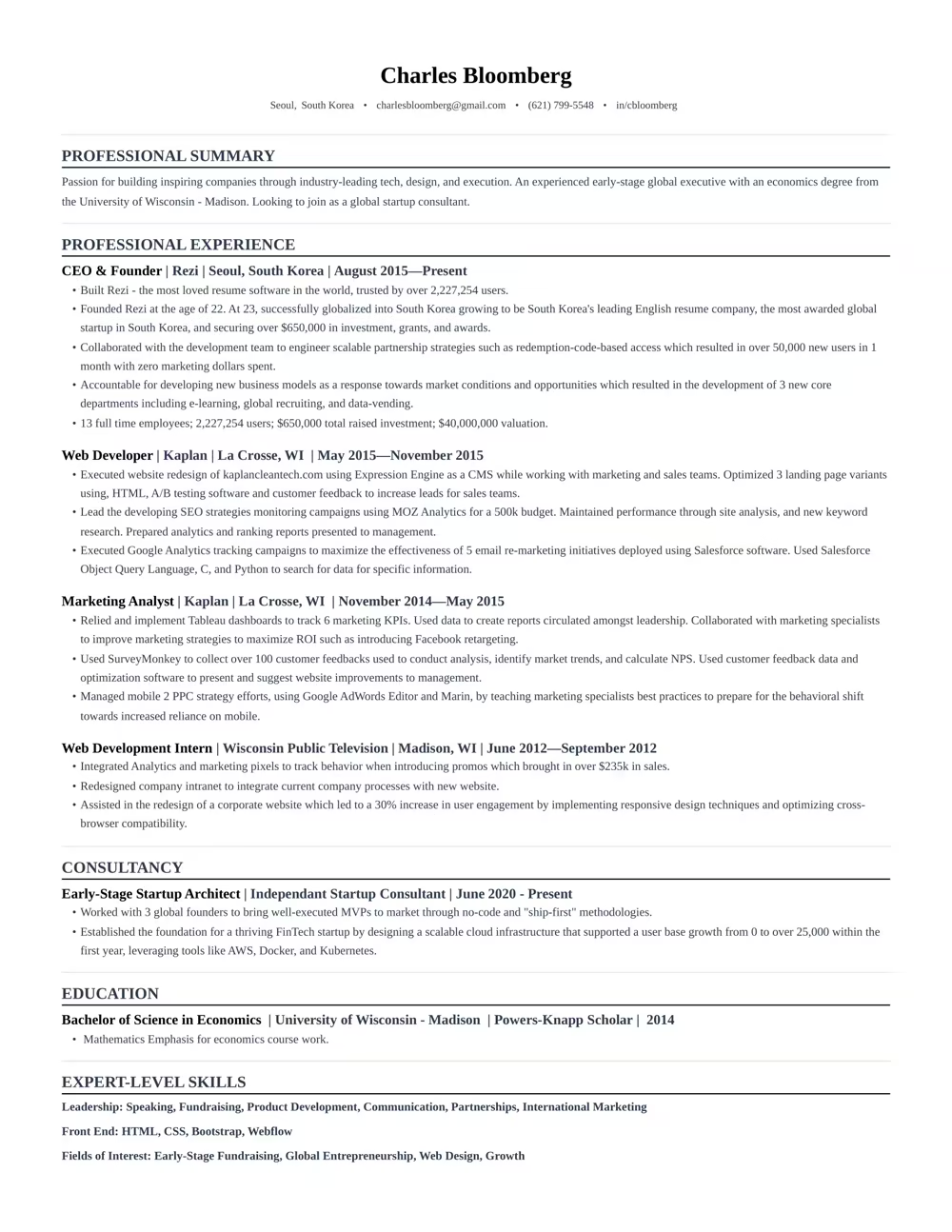
Use a template that guides you. Our ATS-compliant designs are trusted by over 4 million job seekers.




“Rezi is an awesome AI-based resume builder that includes templates to help you design a resume that is sure to check the boxes when it comes to applicant tracking systems. This is a great jumping off point to kickstart a new resume.”

Ashley Stahl
Career Contributor
62.18%
Interview Rate
4,510,834
Total Users
8.23 / 10
Avg. User Review
Wall of Love
Over 4 million users trust Rezi

“Resume Building felt like pulling teeth – until I found Rezi.”
Davis Allen
Software Developer

“I was blown away by Rezi. It streamlined everything...”
Celine Watko

“I needed a resume tool as smart as my work.”
Yosra Naceur
Data Scientist
“A great tool that is very helpful. I found the Rezi system easy to use and very helpful as I was working on getting my resume in shape for job applications.”

Dakota Rubin
United States
Written via

“This is actually one of the first reviews I’ve ever written for a business, and that alone says a lot. I highly recommend Rezi to anyone who’s job searching, it makes the entire process so much easier.”

Yazan Alkhatib
United States
Written via
“Reduced my time per application from 1-2 hours down to 15 minutes.”
Kixxx
Experience with Rezi
“I love how simple and convenient it is to use and been coming back to update it every time I need a fresh resume.”

Zara Wazir
U.A.E.
Written via
Frequently Asked Questions
Your questions, answered.
An AI resume maker helps you build a resume perfectly fit for the job you want. Top-notch AI resume builders are designed to speak the language hiring managers are looking for, increasing your chances of standing out in the crowd. It aligns your skills and experience with the job description effectively.
To get the most out of an AI resume builder, either start from scratch or upload your current resume. Fill in as much detail as possible about your career and skills, and upload the job description you’re targeting. This personalization allows the AI to build a unique and tailored resume that’s bound to catch potential employers' attention.
AI-generated resumes can seem similar if you're not giving personalized inputs or if you're using basic prompts. Provide specific details about your work experience and target the job you’re eyeing. Use specialized AI tools instead of general chatbots to avoid robotic-sounding resumes and to ensure individual creativity.
Employers might think you used AI, but that’s rarely an issue. What they really care about is getting a well-written resume that showcases your skills and experiences accurately. A top-notch resume tailored to their needs will speak volumes more than worrying about AI involvement.
Yes, using AI to optimize your current resume is highly effective. You just need to upload your resume, share details about your career goals and the job you want, and let the AI refine everything to elevate your resume's impact and ATS compatibility.
Rezi uses a tool called the AI Keyword Targeting. This feature scans the job description to identify crucial keywords and naturally incorporates them into your resume, giving it the right focus without keyword stuffing.
The Free plan is $0/month and allows you to create one resume, use limited AI tools (such as Keyword Targeting and Analysis), and download up to three PDFs. You can also create unlimited cover and resignation letters. No card is required to begin.
The Pro plan is $29/month and provides unlimited access to all features, including unlimited resumes, full AI capabilities, unlimited downloads, and one free monthly expert resume review (resumes are reviewed by a person).
The Lifetime plan is a $149 one-time payment. It grants permanent access to all the features of the Pro plan (unlimited resumes, full AI tools, and unlimited downloads), but it does not include the free monthly expert review (which can be purchased for an extra fee).
Rezi offers a 100% money-back guarantee on all paid plans (Pro and Lifetime). If you are unsatisfied, you can request a full refund within 30 days of your purchase.
Yes, you can easily upgrade or downgrade your plan at any time through your Rezi Account Billing dashboard. Prorated credits will apply when switching.
An AI resume maker helps you build a resume perfectly fit for the job you want. Top-notch AI resume builders are designed to speak the language hiring managers are looking for, increasing your chances of standing out in the crowd. It aligns your skills and experience with the job description effectively.
Yes, Rezi Enterprise.