
Career Advice
How to Tell Your Boss You're Quitting: Scripts & Examples for 2026
Nervous about telling your boss you're quitting? Get word-for-word scripts for in-person, email, and virtual conversations. Plus how to handle counteroffers and awkward reactions gracefully.
Published on
July 8, 2025
Updated on
March 11, 2026
Start by preparing what you want to say and why you’re leaving. Then schedule a quick in-person or virtual meeting — don’t break the news over text or Slack. Be direct and respectful: thank them, give at least two weeks’ notice, and offer to help with the transition. After the conversation, follow up with a short resignation letter to make it official. Staying calm, clear, and professional helps you leave on good terms and keeps your reputation strong, even if you’re excited to move on.
So, you got a new job (congrats!) or finally decided the paycheck isn’t worth the daily misery. Either way, the vibes are immaculate… Until you remember you have to tell your current boss you’re leaving. Cue the anxiety sweat.
Whether you love your boss or have them saved in your phone as “Do Not Answer,” breaking the news is never fun. Will they spit out their coffee in disbelief? Cry and beg you to stay? Casually nod and ask you to remind them what it is you do here? The possibilities are endless and none of them feel particularly comfortable.
If you’re not one for awkward moments (hi, most of us), you’re probably tempted to ghost. But you know there’s a better way — one that’s respectful, professional, and not cringe-inducing.
That’s where this guide comes in. We’ll walk you through:
- How to prepare and break the news to your boss.
- What to say when explaining why you’re leaving.
- Mistakes to avoid when quitting.
If you’re refreshing your resume for your new job search, try the Free AI Resume Builder. And for more help, check out these guides:
- Tips for Quitting a Job Professionally
- How to Quit a Job You Just Started
- Do’s & Don’ts of Writing a Resignation Email
- How to Write a Career Change Resume
- How to Update Your Resume
How to Resign Professionally (Step-by-Step Guide)
Here’s how to tell your boss you’re quitting:
- Get clear on why you’re leaving and what to say.
- Give two weeks’ notice (or more if possible).
- Schedule a quick meeting in person or on Zoom/Teams.
- Be direct, respectful, and offer to help with the transition.
- Follow up with a short resignation letter.
- Stay professional right up to your last day.
- Share constructive feedback if there’s an exit interview.
1. Figure out what you want to say
Before you resign, be clear on why you’re leaving and what you want to say. Whether it’s for a new opportunity, better balance, or a fresh start, knowing your reasons helps you speak with confidence.
Decide how much you want to share. You can keep it general or go into specifics:
- “I’ve accepted a new role that’s a great fit for my long-term goals.”
- “I’ll be joining a nonprofit that focuses on mental health advocacy.”
- “I’ve given this careful consideration and decided it’s time for a new chapter.”
- “I’m excited about what’s next, but I’d prefer to keep the details private for now.”
Prep your message:
- Jot down the main points you want to cover.
- Practice with a friend or out loud to yourself — it helps with nerves.
Think ahead:
- How might your manager react?
- What questions could they ask?
- Would you consider staying if they offered you more money or a promotion?
If not, be ready with a response like:
“I really appreciate the offer, but I’ve given this a lot of thought, and I’m confident that this is the right step for me right now.”
2. Give proper notice (at least two weeks)
Two weeks’ notice is the standard. It allows your team to prepare and shows respect for your role and colleagues. Check your contract or handbook, as some roles require longer notice.
The two weeks’ notice also lets you finish projects properly and support a smooth handoff, helping you leave with your reputation and relationships intact.
If your role is critical or hard to replace, consider giving more time than usual. For example, I once gave extra notice at a small company I worked at because I liked my bosses and wanted to help them find the right replacement.
Kate, a director of studies at an English academy, shared:
“One of my teachers told me in May that she’d be leaving, even though the academic year starts again in October. That gave me plenty of time to plan and start looking for a replacement before summer. She’s leaving on a great note, and while it’s bittersweet, at least we’re prepared.”
How to tell your boss you’re quitting on short notice
Life happens — personal emergencies, health issues, or sudden opportunities. If you can’t give a full two weeks, be honest and take responsibility.
Short notice example:
“I understand this is short notice, and I regret the inconvenience. Due to [brief reason, if comfortable], my last day will be [date]. I’ll do everything I can to support the team before I go.”
Even if timing isn’t ideal, professionalism and empathy go a long way.
3. Set up a meeting (face-to-face or virtual)
Avoid resigning over text or Slack — it’s important to have this conversation in person or via video. Schedule a brief meeting with your manager to talk privately.
When requesting the meeting, keep it simple and polite:
- “Hi! I’d like to have an important conversation about my role. When would be a good time for you?”
- “Hey, do you have a moment for a quick chat on Zoom?”
Even if you don’t usually have one-on-ones, taking the time to do this shows professionalism and respect.
4. What to say during the conversation
Before the meeting, remind yourself that resigning is a positive step for your career. Focus on your reasons for leaving to stay confident.
Be direct, but respectful
Skip the small talk and get straight to the point:
- “I’ve decided to move on and have accepted a new role. My last day will be [date].”
- “Thank you for everything you’ve taught me here, but I’ve accepted another opportunity. My last day is [date].”
- “I wanted to let you know I’ve accepted a new job and will be leaving in two weeks.”
Avoid overexplaining or apologizing too much — it’s a natural part of career growth.
Share your reason (if you want to)
You don’t have to explain why you’re leaving, but if you feel comfortable, a brief, positive reason works well:
- “I’m looking for a role with more creative responsibility.”
- “I’ve decided to take some time to focus on my health/family.”
Avoid complaining or sharing negative feedback here — save that for the exit interview.
Offer to help with the transition
Show your commitment by offering to support the handoff:
- “I’m happy to document my current projects or help train someone before I leave.”
- Bonus points if you’ve already started preparing notes, passwords, or instructions—especially anything stored in your self hosted password manager.
Show appreciation
Thank your manager sincerely for the opportunities and support you’ve received, even if your experience wasn’t perfect. Gratitude leaves a great final impression.
Example:
“Thanks for all the support you’ve given me. I’ve learned a lot here and appreciate the chance to grow.”
5. Follow up with a resignation letter
After the meeting, send a formal resignation letter to make everything official. Keep it clear, professional, and gracious. Restate your last day and your willingness to help with the transition.
Sample resignation letter:
Subject: Resignation: [Your Name]
Dear [Manager’s Name],
Following up on our conversation, I’m formally resigning from my position as [Job Title], with my last day on [date].
Thank you for the support and opportunities during my time here. I’ve learned a lot and truly appreciate the experience.
Please let me know how I can assist in making the transition as smooth as possible, whether that’s training my replacement or completing any outstanding projects before my departure.
Thank you again for everything. I look forward to staying in touch.
Best regards,
[Your Name]
6. Leave on a positive note
Stay professional, finish your projects, help with handoffs, and support your team as much as you can. Even if you’re excited to move on, don’t slack off in your last weeks. Leaving on a good note means maintaining your reputation and relationships.
If it feels right, send a short farewell message to colleagues:
Hey everyone,
I just wanted to say thank you — working with you all has been such a great experience and I’ve really enjoyed being part of this team. My last day is [date], and I’m definitely going to miss our chats and working together.
Would love to stay in touch, feel free to connect with me on [LinkedIn/personal email].
Wishing you all the best and hope our paths cross again!
7. Prepare for the exit interview
If your company does exit interviews, treat it as a chance to share helpful, professional feedback, not to vent.
Keep your tone constructive, focus on what worked well, where there’s room for improvement, and how the experience shaped you. Be honest, but kind.
Example feedback you can use or adapt:
- “I appreciated the trust and autonomy I was given, it really helped me grow.”
- “More regular check-ins would’ve helped with alignment on priorities.”
- “The team culture was a big part of what kept me here as long as I was.”
- “Clearer onboarding would make a huge difference for new hires.”
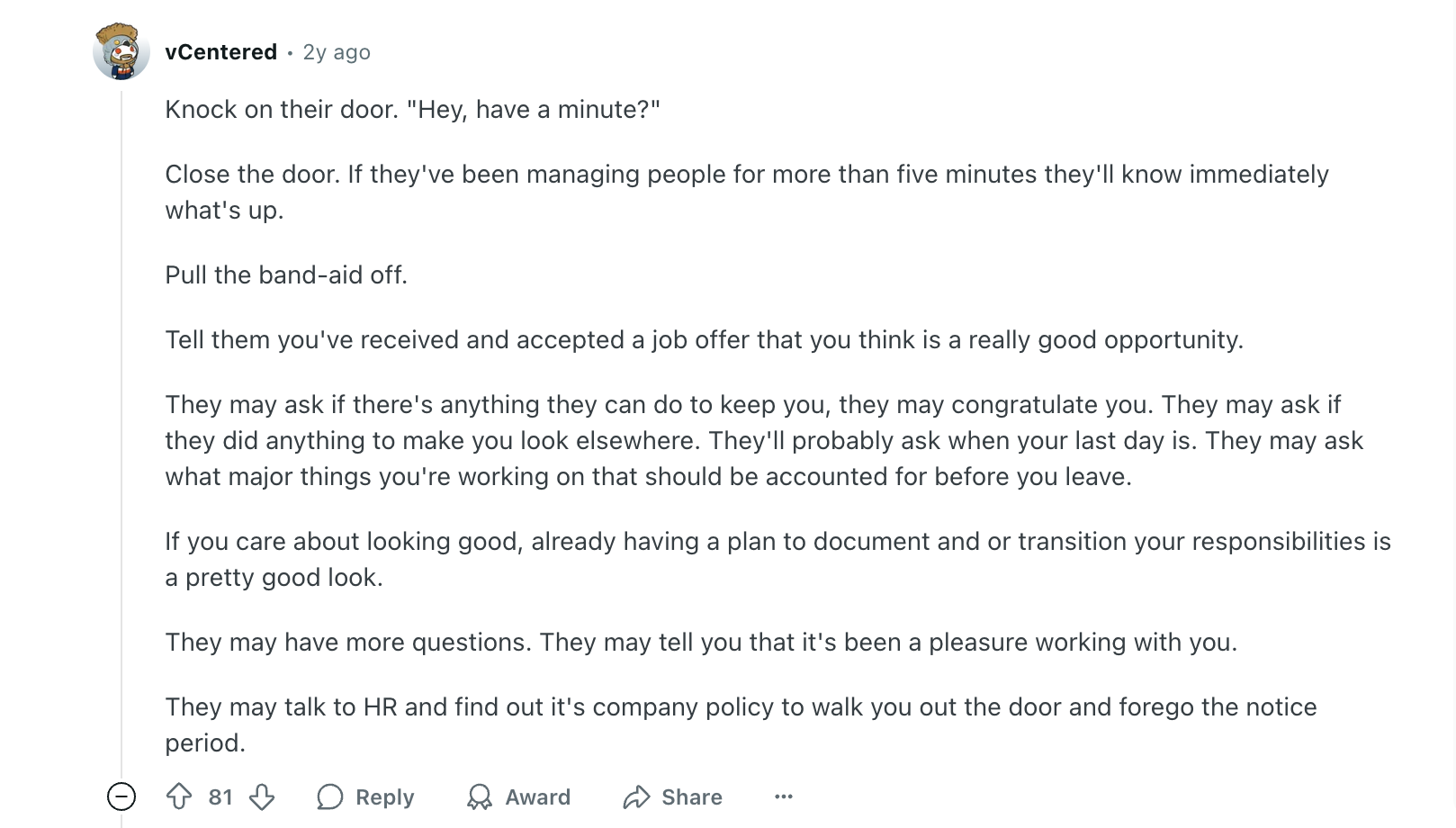
A Reddit user puts it plainly — here’s how to quit your job, no drama, no overthinking:
How to Explain Why You’re Resigning
If your manager asks why you’re leaving, whether during the meeting or in your exit interview, it helps to have a clear, respectful response ready.
Here are some examples you can use or tweak to fit your situation:
How to tell your boss you want to quit
If you’re just ready for a change, keep it simple. You don’t need a big explanation.
“I’ve decided it’s time for me to move on. I’ve given this a lot of thought, and I feel this is the right next step for my personal and professional growth.”
How to tell your boss you’re quitting for personal reasons
When life outside of work takes priority, it’s okay to say so. You can be honest without going into detail.
“I’ve decided to step away from my role due to personal reasons. This wasn’t an easy decision, but it’s what I need right now. Thank you for your support and understanding.”
How to resign because of a difficult boss
If the reason is your manager, don’t point fingers. Focus on your decision to move forward professionally.
“I’ve made the decision to move on and pursue new opportunities. I’m grateful for what I’ve learned here and am ready for a change that better fits my goals and values.”
How to quit when you have another job offer
If you’re leaving for something new, be straightforward and appreciative — no need to overexplain.
“I wanted to let you know that I’ve accepted another job offer. It’s a role that aligns closely with my long-term goals, and after a lot of thought, I’ve decided to take the opportunity.”
How to resign when you actually like your boss
Leaving a job when you have a great boss can be hard. Let them know you appreciate the relationship.
“This decision wasn’t easy because I’ve truly enjoyed working with you. I’ve accepted another opportunity, and while I’m excited for what’s next, I’m very grateful for your leadership and support.”
How to tell your boss you’re quitting because of a coworker
If a difficult coworker is part of why you’re leaving, you can be honest without venting. Frame it around your need for a better environment.
“I’ve decided to leave because the dynamic with a colleague has made it difficult for me to do my best work. I think it’s time for a fresh start in a more collaborative environment.”
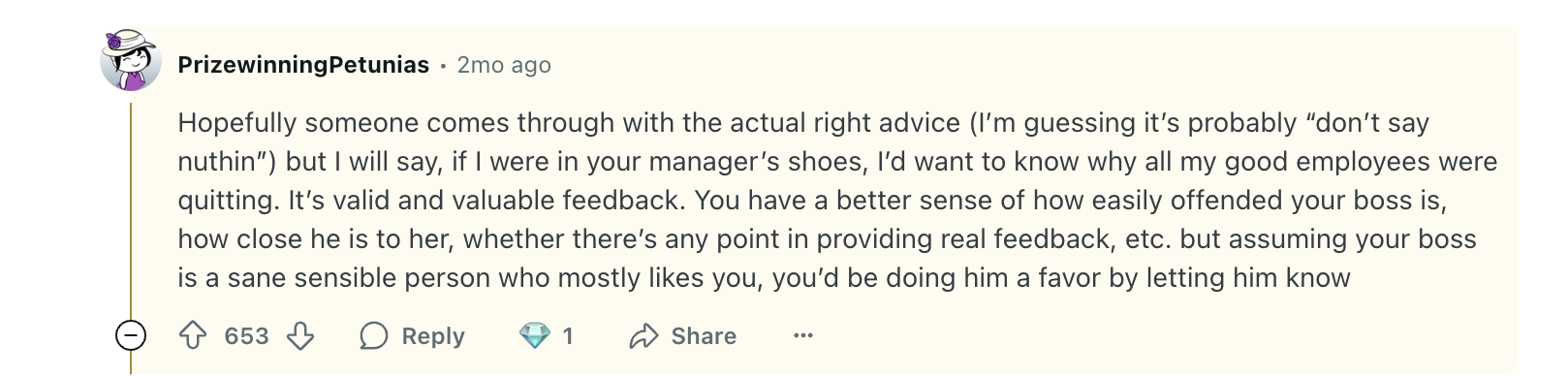
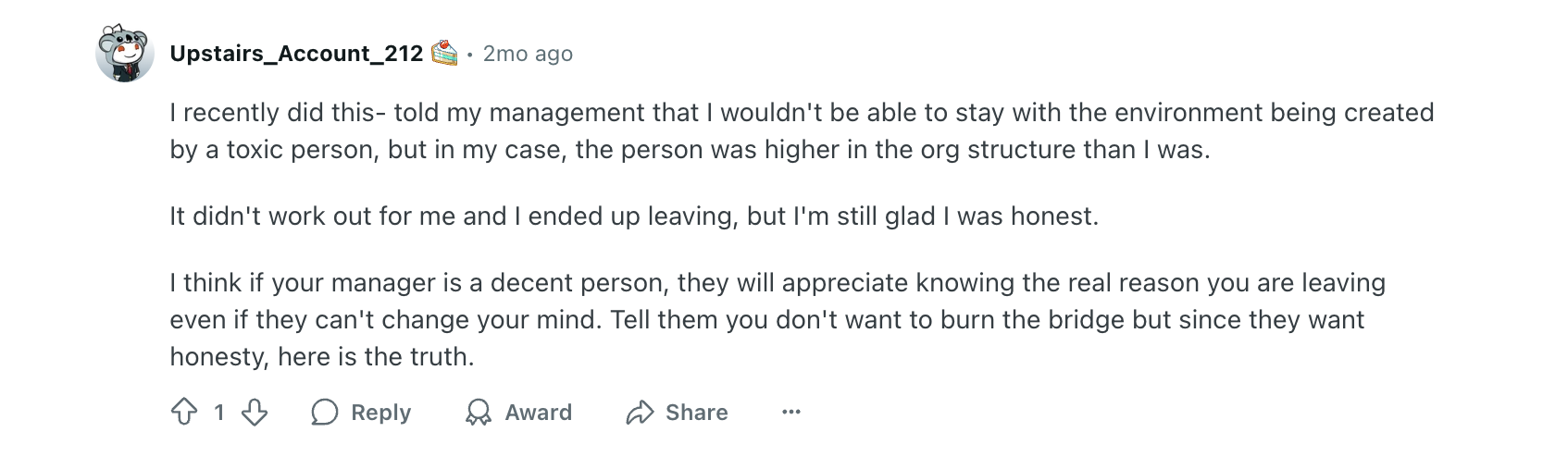
Reddit users have mixed thoughts on whether to say anything. Some felt it was worth being honest, and the manager needs to know:
It might even lead to your coworker facing consequences, like one Redditor mentioned:
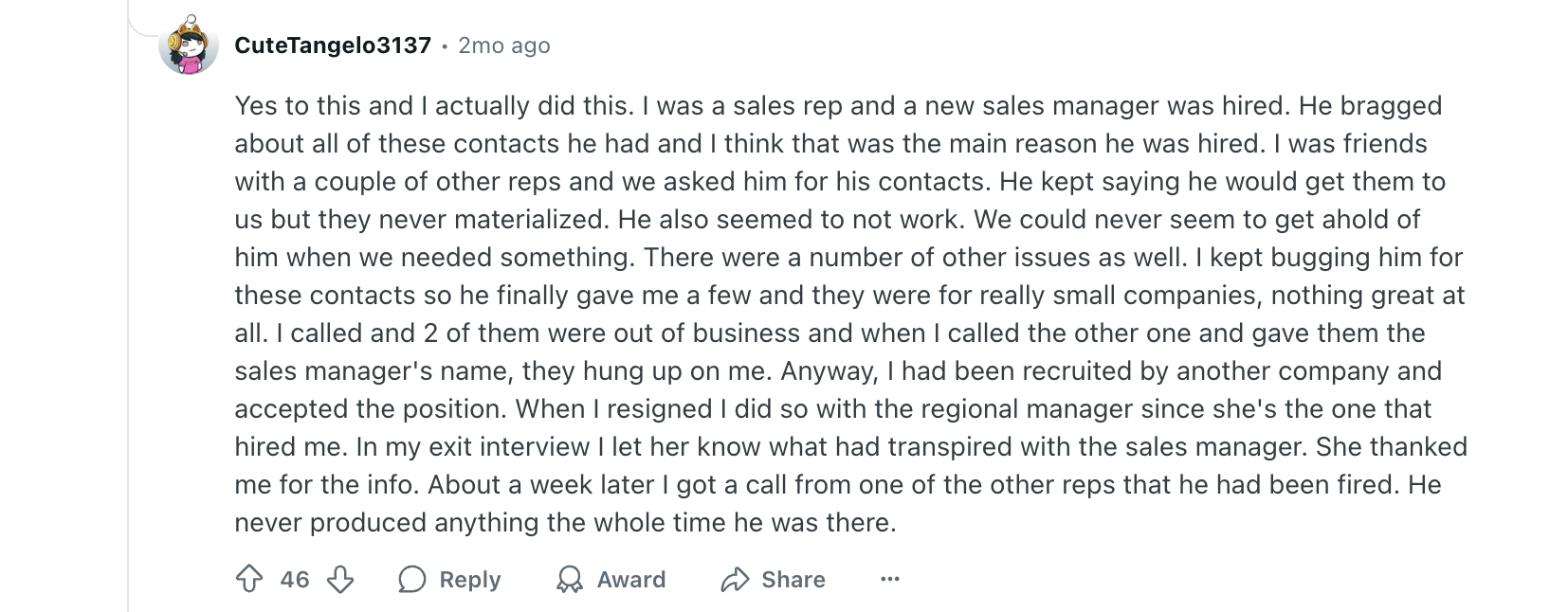
But that’s the best-case scenario. Be ready for it to go sideways — your boss might not believe you, might do nothing, or side with the coworker. Or your feedback could be the final straw that leads to action.
Remember, you don’t owe your employer an explanation. Whether you choose to tell them is up to you. Either way, you’re leaving with nothing to lose.
Common Mistakes to Avoid When Quitting Your Job
Quitting isn’t just about saying “I’m out.” How you leave can shape your reputation and relationships long after you’re gone.
Here are some common mistakes to steer clear of:
- Don’t vent on your way out. Share honest but respectful feedback; leaving bitterly only reflects poorly on you.
- Tell your manager first. Don’t let the news leak through the grapevine. Have a direct, private conversation before anyone else finds out.
- Return everything. Hand back laptops, keycards, and documents to avoid loose ends or issues later.
- Don’t overshare about your next job. Keep your plans private unless it’s necessary. It avoids awkwardness and jealousy.
- Get the offer in writing before quitting. A verbal promise isn’t a guarantee — don’t resign until it’s official.
- Don’t leave things unfinished. A smooth handoff shows reliability and professionalism. And the experience of training your replacement will look great on your resume.
- Avoid impulsive exits. If you’re quitting in frustration, sleep on it. You’ll make better decisions with a clear head.
- Don’t burn bridges. Stay polite and positive, even if your experience was tough; you never know when you might cross paths again.
- Avoid over-apologizing. Quitting is part of professional growth. Be confident in your choice.
- Don’t slack off in your final days. Keep up your professionalism and finish strong to leave a lasting good impression.
Summary
Here’s a recap of how to tell your boss you’re quitting:
- Get clear on why you’re leaving and how you’ll explain it. Practice what you want to say.
- Give at least two weeks’ notice (or more, if required). Check your contract just in case.
- Schedule a quick face-to-face or video chat — don’t resign over text or email.
- Be direct and polite: thank your manager, share your decision, and skip the long explanation.
- Offer to help with the handoff. It shows professionalism and helps you leave on good terms.
- Send a short resignation letter to confirm your last day and your offer to support the transition.
- Keep doing your job well until the end to leave a lasting impression.
- Use the exit interview to give thoughtful, constructive feedback (not to vent).
- If you have to leave quickly, explain the situation and stay respectful.
- Don’t ghost, overshare, or quit before your next job is confirmed. Leave in a way you’ll be proud of.
And if you haven't already, I would strongly suggest updating your resume. You can use our resume bullet point generator to help you describe your experience and highlight your impact.
FAQ
Why should you always leave a job in a professional manner?
Leaving professionally protects your reputation and keeps doors open. You never know when you’ll need to ask for a reference, or when a former colleague ends up at your dream company. It also shows maturity and integrity. Even if the experience wasn’t great, how you leave is part of your career story.
How to tell your supervisor you are quitting?
Set up a private meeting and be direct but respectful. You might say something like, “I’ve accepted a new opportunity and will be leaving in two weeks.” Thank them for the experience, and offer to help with the transition. It doesn’t have to be long — just sincere and professional.
What are the signs your boss wants you to quit?
Some red flags include being excluded from meetings, getting fewer responsibilities, or sudden negative feedback with no explanation. If your boss seems distant, avoids giving you new projects, or makes your day-to-day more difficult, they may be hoping you’ll leave on your own.
For more on this, read Signs You’re Getting Fired (and What to Do Next).
How to quit a job over text?
Quitting over text should only be a last resort, like in emergencies or if you don’t feel safe. If you must, keep it polite and to the point. For example: “Hi [Manager’s Name], I need to resign from my position, effective [date]. I’m happy to provide more details over a call if needed.”
How to text your boss you can’t come in?
Keep it short, honest, and respectful. For example: “Hi [Name], I’m not feeling well today and won’t be able to make it in. I’ll keep you updated and let you know when I’m able to return. Please let me know if anything is needed in the meantime.”
What to say when someone is leaving a job?
Be warm and supportive. Something like: “Congrats on your next chapter! It’s been great working with you, and I wish you all the best in your new role.” If you’re close, you might add, “Let’s definitely keep in touch — don’t be a stranger!”
What are 10 signs it’s time to quit your job?
Here are the signs it’s time to quit your job:
- You dread going to work every day.
- You feel burnt out or emotionally drained.
- Your growth has stalled.
- You’re underpaid or undervalued.
- You don’t align with the company’s values.
- Your work environment is toxic.
- You’ve lost interest in your role.
- Your mental or physical health is suffering.
- You’ve found a better opportunity.
- You feel stuck and unmotivated long term.

Upload or drop your resume to get started
Upload your resume to get started
Score my resume

Sarah Coghlan is a writer and editor passionate about making resume and career advice clear and accessible to all. Based in Barcelona, her goal is to help job seekers create standout resumes and navigate the job search process with confidence and ease.

.webp)