
Career Advice
21 Alarming Signs You’re Getting Fired (and What to Do Next)
Signs you’re getting fired due to performance, misconduct, external reasons beyond your control, or actions by someone else, e.g., you’re misrepresented.

Published on
October 22, 2024
Updated on
March 11, 2026
Key Takeaways
• Warning signs usually fall into four buckets: performance, misconduct/policy issues, company factors outside your control, or someone actively pushing you out.
• Common red flags: sudden PIP or harsh reviews, micromanagement + heavy documentation, workload dropping or impossible tasks, exclusion from meetings, and being cut off from tools or info.
• If you spot signs: ask for clear feedback, document your work, shore up finances, and quietly update your resume/LinkedIn while you still can.
• Prevention (when it’s performance-related): meet expectations, communicate with your manager, own outcomes, and show initiative — some layoffs still won’t be stoppable.
• One awkward meeting isn’t proof; patterns across several signs matter more than a single bad day.
The signs you’re getting fired fall into four key categories: performance, misconduct (or other non-performance-related issues), external reasons outside your control, and deliberate actions by someone else. The most common signs that you’ll be terminated by your company include sudden changes in responsibilities, drastic reduction in workload, employers unbothered by your mistakes, being set up to fail, and exclusion from important meetings.
I’ve had conversations with both friends and job seekers online who’ve told me the same thing:
“I didn’t even see it coming.”
When you’re in the middle of it, you start second-guessing everything. Was that awkward silence in the meeting something to worry about? Is your manager just busy… or are they avoiding you?
Getting fired often feels like a sudden shock. Strangely, it’s much easier to spot the warning signs in others but when it’s happening to you, it’s harder to see it coming.
And I understand how stressful it is, especially when your mind is bouncing between “maybe I’m overthinking” and “what if I’m not?”
This article clarifies all the top signs that you’re the one getting fired, including how to respond when you notice those signs and what to do to prevent getting fired in the first place.
Relevant career guides:
Top 21 Warning Signs That You’re Getting Fired
Here are the most common signs you’re getting fired:
- Unexpectedly harsh or frequently negative performance reviews.
- Being placed on a performance improvement plan (PIP).
- Increased micromanagement and scrutiny.
- Everything you’re doing is now being documented.
- Less work to do compared to your colleagues.
- Employers don’t seem to be as bothered with your mistakes or performance.
- You violated a company policy.
- Exclusion from meetings and projects.
- Communication has become more minimal.
- Colleagues seem more distant and awkward.
- HR (or your boss) wants to meet with you more often.
- You don’t really care about your job.
- Sudden changes in tasks and responsibilities.
- The company seeks out to hire someone for your exact job position.
- Key leadership players are “leaving.”
- Your access to certain resources has been limited.
- Company finances change.
- You’re being misrepresented or blamed for mistakes you didn’t make.
- You’re assigned with seemingly impossible tasks.
- Your contributions are either being downplayed or ignored.
- You’re being consistently gossiped about or discredited.
These are all signs that happen due to one of the following factors: performance-related issues, misconduct (or other non-performance-related issues), company-related reasons beyond your control, or because someone is intentionally trying to get you out of the company.
Here a few relevant resources that you might want to check out:
- Examples of Resignation Letters
- How to Write a Resignation Email
- How to Write a Resignation Letter for Personal Reasons
Signs You’re Getting Fired Because of Your Work Performance
Performance-related issues mean that you’re not meeting the company’s expectations. This involves falling short of specific goals, failing to show improvement, and struggling to keep up with the company’s standards.
These are the signs that your performance is leading toward termination:
1. Unexpectedly harsh or frequently negative performance reviews
Perhaps you’re receiving more negative feedback than you ever have before, and it’s beginning to become a common occurrence. Your managers might also no longer acknowledge your efforts or past achievements.
If so, it’s possible that your company is losing trust in your ability to perform. All those formal performance reviews could be a way to create a record of your shortcomings to validate your termination.
2. Being placed on a performance improvement plan (PIP)
Unfortunately, being put on a PIP is rarely a good sign. Based on a highly rated answer on Workplace Stack Exchange, it’s typically the “last step before dismissal.”
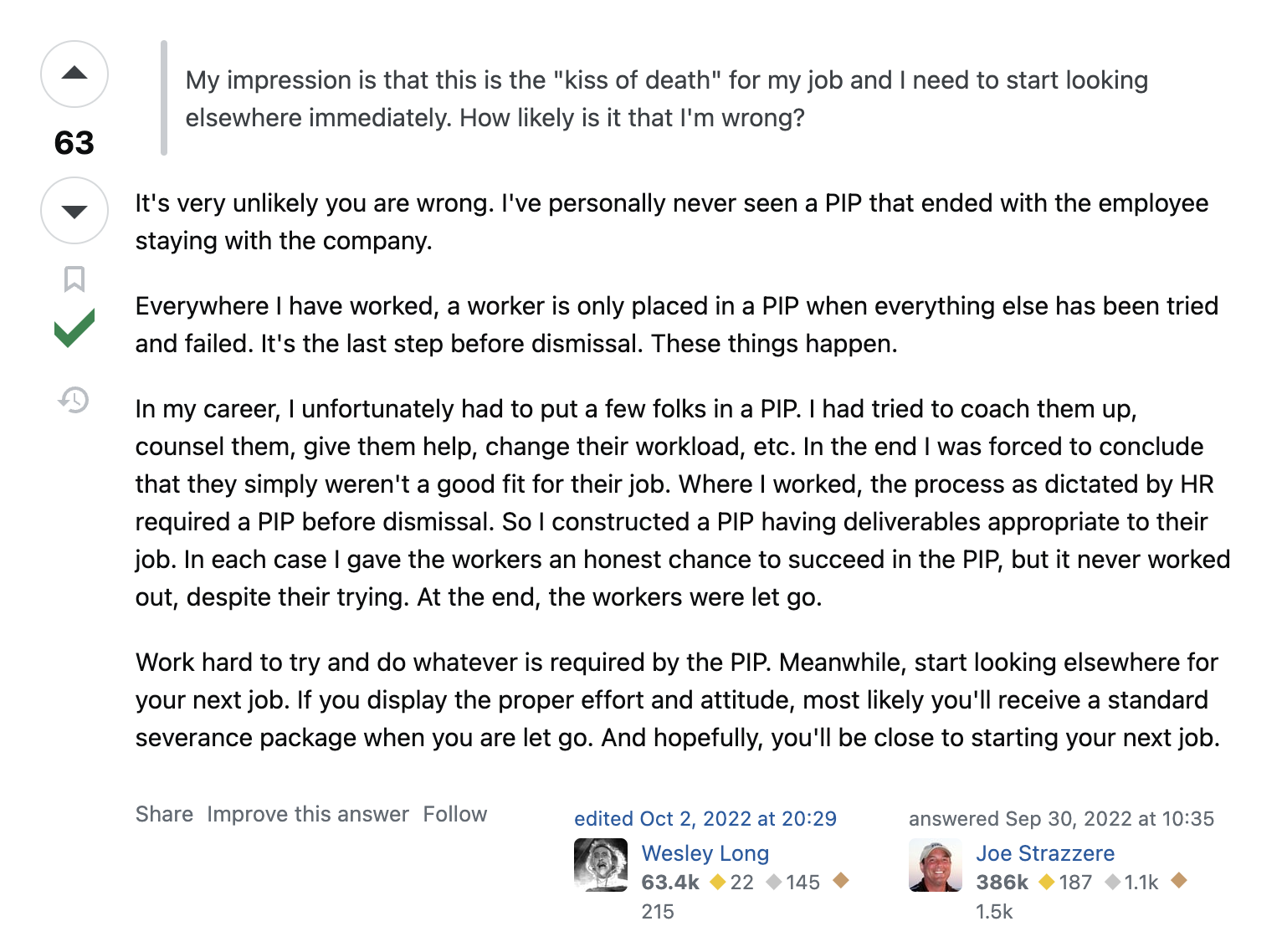
The purpose of performance improvement plans (PIPs) is to help companies address underperforming employees. If you’re placed on one, it’s a strong sign that you’re on the verge of termination, since it means you’re not meeting the goals and expectations set by your manager.
3. Increased micromanagement and scrutiny
You’re going about your tasks as usual, but then your manager starts hovering over your work, giving feedback on every minor detail and asking for constant updates.
It’s frustrating, and you’re not the only one who thinks so. According to a survey conducted by Trinity Solutions and cited by Forbes, more than 70% of employees claimed that micromanagement hurt their morale and job performance.
Having your work checked every other second makes it feel like you’ll never get anything done. If this is a scenario that’s all too common for you, then it may suggest that your manager has lost confidence in your ability to work independently and is closely monitoring your performance as a result.
4. Everything you’re doing is now being documented
Your manager might suddenly ask you to document everything you’re doing, or perhaps every task, mistake, and interaction is already being logged. This could be a sign that your company is building a paper trail in preparation for your departure.
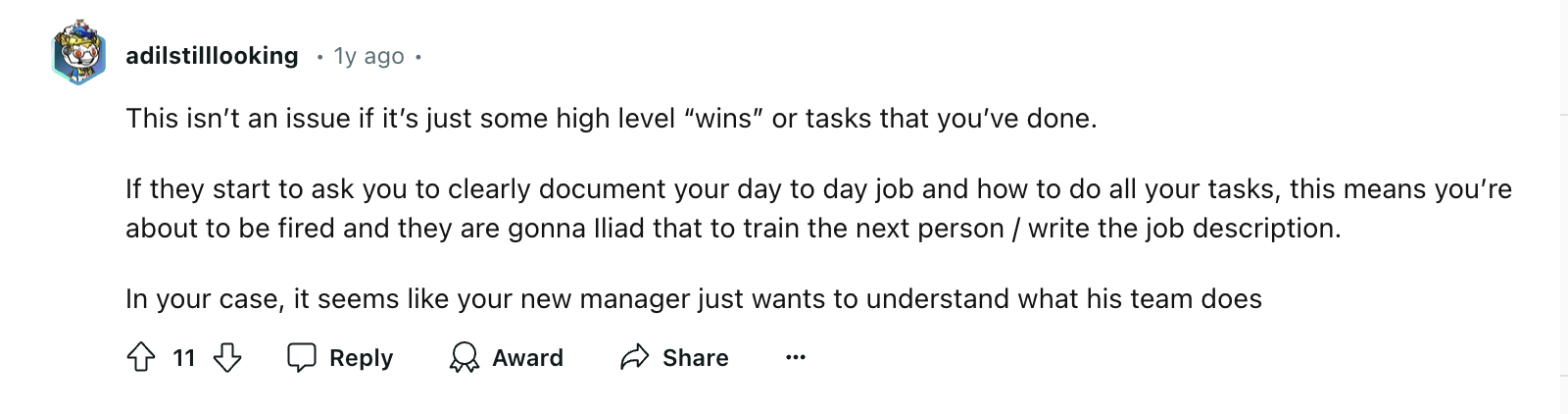
However, the situation could be different if your manager is new.
In a Reddit thread discussing new managers requesting documentation, one user pointed out that while excessive documentation can be a red flag, it could also just mean the new leadership is trying to get organized.
5. Less work to do compared to your colleagues
You might already be doing a great job, but still feel like you’re not doing enough. If your company is financially stable, stocks are solid, you’re getting good reviews, and there are no issues at work, then there’s no need to worry.
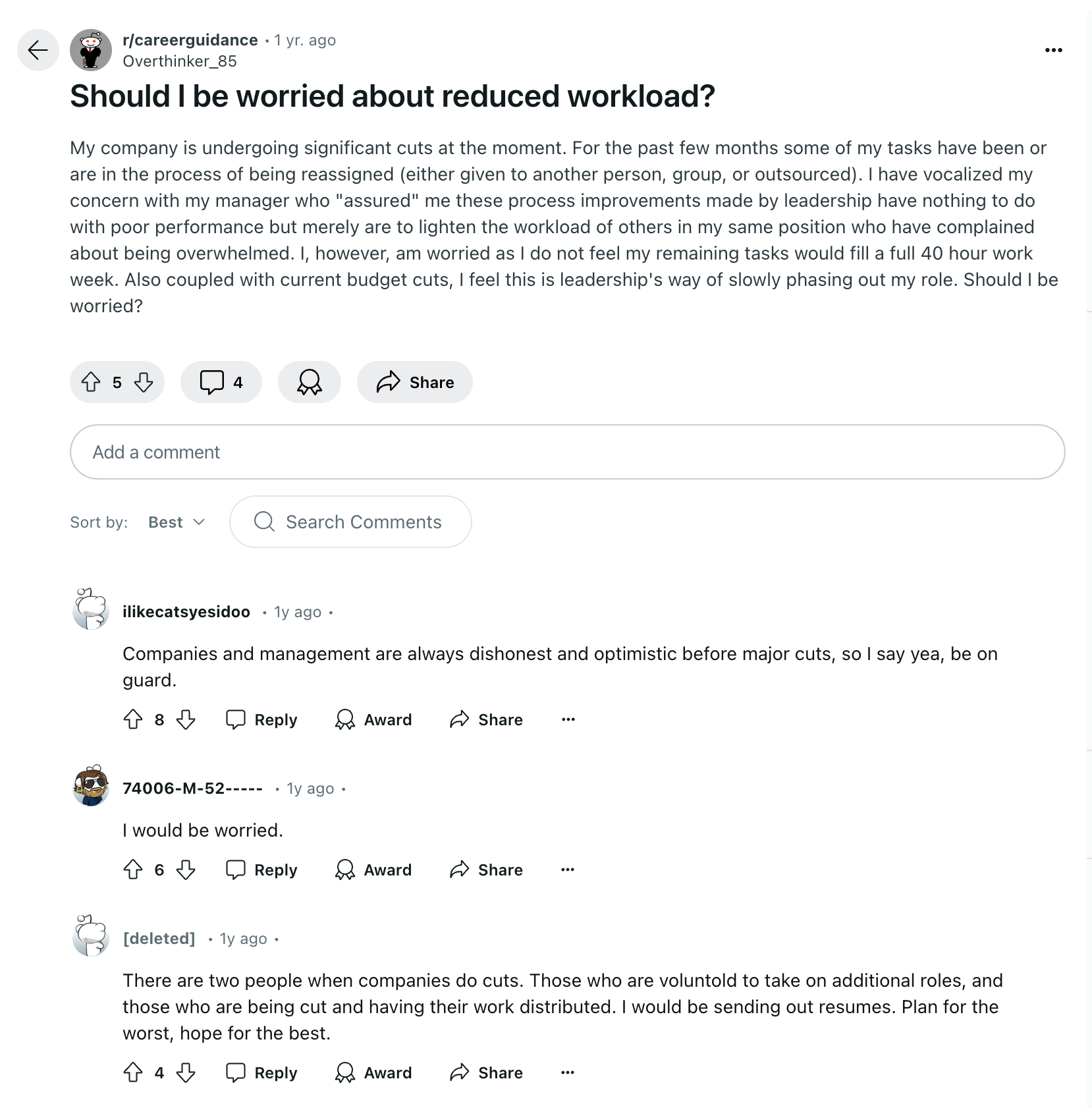
On the other hand, if you’re in the opposite situation—your company is struggling, and you have noticeably more free time and less work compared to your colleagues—I’d be a little concerned.
This could be a quiet way of phasing you out. By gradually decreasing your responsibilities, the company might be redistributing your workload to others to prepare for your transition, as mentioned in discussions about reduced workloads on Reddit:
6. Employers don’t seem to be as bothered with your mistakes or performance
Making noticeable mistakes, yet no one seems to care?
I’d love to say that it’s because your team is chill, except the reality is that management may have already decided to let you go. When this decision has been made, your employers will stop investing in your improvement and instead focus on preparing for your exit.
Signs You’re Getting Fired Because of Misconduct or Other Non-Performance-Related Issues
Harassment and discrimination are unacceptable, and these are fireable offenses. That said, more than 50% of workers have seen or gone through harassment in a corporate environment, according to HR Acuity.
Being fired for misconduct or other non-performance-related reasons stems from behavior that violates company policies or disrupts the workplace. This happens due to inappropriate actions, conflicts with colleagues, or a general breakdown in trust.
These are some common signs that you’re being let go because of misconduct or other non-performance-related issues:
1.You violated a company policy
Violating a company policy means breaking a rule clearly established by your employer. Common examples include:
- Sharing confidential information
- Continuing to show up late despite the warnings you’ve received
- Engaging in inappropriate behavior in the workplace
Regardless of your leadership style and way of doing things, if you've broken a company policy, it’s usually a valid reason for termination. But this doesn’t mean your career is over.
Use this experience as a chance to learn and grow. Acknowledge your actions, take responsibility, and show genuine effort to improve. Although consequences may be unavoidable, you can always rebuild your professional reputation.
2. Exclusion from meetings and projects
No longer receiving calendar invites for meetings you used to attend? Being left out of projects you’d normally be involved in is a clear red flag.
These situations can arise when:
- Your involvement hinders productivity or morale due to past behavior.
- Management is making tough decisions about letting go of certain employees.
Alternatively, there could be a more innocent explanation—perhaps the meeting genuinely doesn’t concern you, and your team is just respecting your time.
3. Communication has become more minimal
In many cases, minimal communication simply means your team is busy.
However, it could be a sign of quiet firing—a subtle approach companies use to encourage employees to leave on their own.
Little to no communication with leadership and colleagues may indicate that you’re being isolated. Although this can be the result of disciplinary action, it can also happen when the company is restructuring and looking to reduce overheads.
4. Colleagues seem more distant and awkward
Does something smell fishy, in the sense that coworkers are avoiding you or acting strangely around you? It could just be one of those days, but it might also be that they know something you don’t.
In other words, your colleagues could be aware that you’re on the list of employees being fired. This can create tension and a tint of awkwardness, making it harder for them to interact with you as they normally would.
5. HR (or your boss) want to meet with you more often
Your actions could be under scrutiny, but there’s also a chance that they’re working on building a case for your termination. The purpose of these meetings might be to keep a close eye on your performance or discuss concerns about your behavior.
6. You don’t really care about your job
Getting fired could be the last thing on your mind, especially when you hate your job. In this situation, you’re likely only doing the bare minimum—and, believe it or not, it usually shows.
Your managers will know who’s engaged and performing well versus who’s disengaged and underperforming. Those who fall into the latter category are the ones with a higher likelihood of getting fired.
Signs You’re Getting Fired Because of External Reasons Beyond Your Control
There are times when being laid off or fired has nothing to do with your performance and behavior. A bad economy, for instance, may lead to company restructuring and budget cuts, which can then result in employees being put in vulnerable positions.
These are the signs that you’re being fired because of company-related reasons outside your control:
1. Sudden changes in tasks and responsibilities
Abrupt changes in your tasks typically suggest that your current role might no longer fit the company’s future plans. Or, maybe you’re being assigned less impactful work and your usual daily responsibilities are being handed off to others.
It could mean that the company is reshuffling roles, or, preparing for your exit.
2. The company seeks out to hire someone for your exact job position
If you find out the company has put out a job description for your exact job position with the same responsibilities while you’re still employed, it could mean that they’re looking to replace you.
In some cases, this may be a sign of internal restructuring. The company might not be looking to replace you, and could simply be seeking new skills or fresh talent to meet changing business needs.
Either way, it’s a sign worth paying attention to and possibly having a conversation with your manager.
3. Key leadership players are “leaving”
A red flag is when key leadership in your department starts leaving one after another. If important managers, leaders, and workers in your organization are quitting, it could point to underlying issues like financial instability or internal struggles.
One common reason good employees leave is a lack of career advancement opportunities. In fact, a survey from Pew Research Center discovered that a lack of growth and development was one of the top reasons U.S. workers quit their jobs.
Find yourself in a similar position? It could indicate that the company isn’t in a position to provide those opportunities. But of course, it could also be a case of employees leaving for personal reasons that have nothing to do with the company’s stability.
4. Your access to certain resources has been limited
Limited use of tools, software, or other resources that help you do your work may signal company-wide budget cuts or resource reallocation.
Although it may not always hint that someone’s getting fired, it’s often a precursor to larger organizational changes that could lead to termination.
5. Company finances change
Big tech companies like Amazon, Meta, and Microsoft had millions in earnings (EBITDA) for each staff member they let go, according to an article on business.com.
In other words, profitability won’t necessarily prevent employees from being terminated. Even if some companies are performing well financially, they may still let employees go to reduce costs and overheads.
On the flip side, terminating employees could become urgent when a company’s finances or broader economy falters. Major budget cuts can follow, and leadership will do what they can to keep the business afloat, even if it means letting go of valuable workers.
With all that in mind, it’s always a good idea to keep an eye on your company’s stock performance and financial health to spot potential red flags.
Signs That Someone Is Trying to Get You Fired
Unfortunately, this can happen.
It’s certainly possible that you could be getting deliberately pushed out of your job by a coworker, manager, or employer.
Watch out for the following signs that you’re getting fired because of someone:
1. You're being misrepresented or blamed for mistakes you didn’t make
You may notice that all the mistakes in group projects are being pinned solely on you, even if you weren’t directly involved. People may misquote what you said in meetings or twist your intentions in ways that portray you negatively.
This kind of manipulation creates a false narrative of incompetence and could be used as justification to get you fired.
2. You’re assigned with seemingly impossible tasks
This one’s awful, but it happens.
There are nightmare stories of management setting employees up to fail as a way to quietly push them out. A few common causes for this include internal restructuring or when a company is trying to downsize without directly firing staff.
Here’s an example scenario shared by one Reddit user:
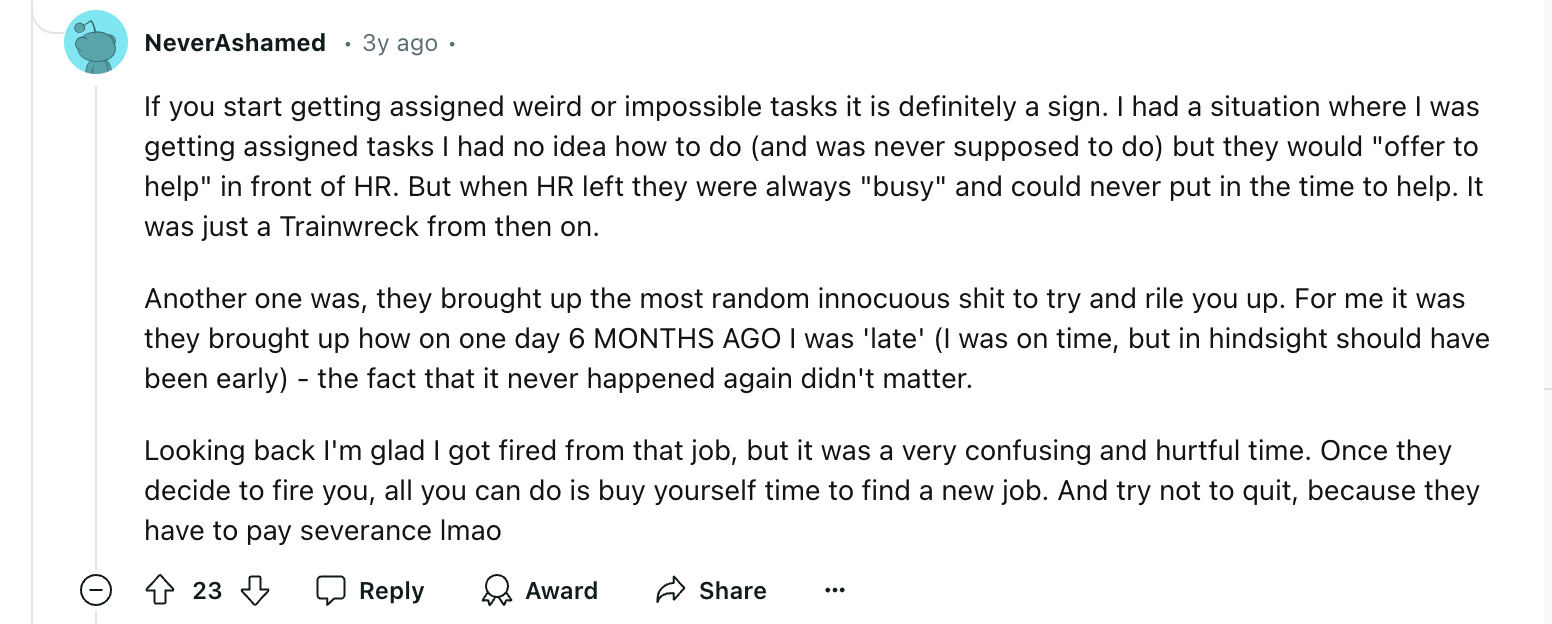
If you’ve ever been given way more tasks than usual or faced unrealistic deadlines and expectations, I’d begin preparing to find a new role. These are red flags that shouldn’t be ignored
3. Your contributions are either being downplayed or ignored
Someone trying to sabotage your standing might minimize your wins or take credit for your work.
If you’re constantly left out of positive feedback, performance summaries, or public recognition despite clear contributions, it could be a tactic to make you appear less visible and valuable to the team.
4. You're being consistently gossiped about or discredited
No one likes being the subject of gossip.
If you hear whispers, notice side glances, or find that your reputation has taken a hit based on things you never said or did, it may point to someone spreading rumors.
And, any form of malicious gossip can quietly damage how others perceive you and even influence leadership’s opinions behind closed doors.
If You’ve Noticed Any of These Signs, Here’s How to Respond
Take these steps as soon as you can when you notice any of the signs that you could be getting fired:
- Ask for feedback. Speak with your manager to discuss your performance and ask for specific feedback. Find out if you’re meeting expectations and where you’re falling short. After getting direction, commit to addressing issues directly and make it clear that you’re willing to improve.
- Document everything. Your managers aren’t the only ones who can document your work. Keep a record of your communication with managers, tasks, performance reviews, and any changes in your workload, expectations, or responsibilities. This gives you evidence to lean back on to defend yourself if things escalate.
- Seek out new opportunities. If the signs are becoming overwhelmingly clearer, prepare to seek out new opportunities. Begin by updating your resume and LinkedIn profile, then start taking note of job openings you’re interested in. (If you need help writing resume sentences, use our AI resume bullet point generator.)
- Prepare financially. It’s smart to start saving and reviewing your budget. This will greatly reduce stress in case you need to make an immediate transition.
Following these steps will help put you in control of the situation. Instead of waiting to be blindsided, be proactive to get ahead of whatever comes next.
Extra resources:
- How to Ask for a Recommendation Letter
- How to Get a Reference (Examples Included)
- How to Triple Your Number of Job Applications
- How to Write a Survival Job Resume
- How to Quit a Job You Just Started
What to Do When You Get Fired
Here’s what to do when you’re getting fired:
- Be professional. Don’t burn bridges, even if you feel blindsided. A respectful exit is key for a good reputation.
- Request clarification and documentation. Ask for the specific reason in writing.
- Ask about severance, final pay, and benefits. Clarify what you’re entitled to—including unused vacation days or health insurance continuation.
- Review your employment contract or handbook. Double-check terms around termination, notice periods, and post-employment restrictions (e.g., non-competes).
- Reflect on what happened. Be honest with yourself about what went wrong, and identify what you could improve or do differently.
- Start job hunting. Update your resume, reflect your most recent experience positively, and lean on your network for leads or referrals.
- Prepare your explanation for future interviews. Be ready to talk about the termination with honesty and professionalism.
Getting fired can feel like the end of the world, but it’s not the worst thing that could possibly happen in life. Take a breath, collect yourself, and focus on the next steps. What you do next can make all the difference in moving forward with your career.
How to talk your way out of getting fired
If you feel like you're on the verge of being let go—but haven’t yet—there may still be time to turn things around.
There’s no guarantee, but here’s how you could talk your way out of getting fired:
- Request a one-on-one conversation with your manager. Don’t wait—initiate the conversation before they do.
- Acknowledge the situation and take ownership. If performance or behavior has been flagged, own up to it instead of deflecting blame.
- Ask for clear expectations. Clarify what success looks like moving forward and how you can meet (or exceed) those standards.
- Show commitment to improvement. Outline what you’re actively doing (or willing to do) to improve, and ask for feedback along the way.
- Express your desire to stay and grow. Remind them of your long-term commitment to the company and your willingness to adapt.
- Follow through. Words mean nothing without action. Make immediate, visible changes in your performance and communication.
How to Prevent Getting Fired in the First Place
Here’s what you should do to make sure you won’t notice any of the signs of getting fired:
- Live up to the company’s standards. First and foremost, make sure you’re meeting all the company’s expectations. This can prevent most potential issues from arising. Be punctual, address skills gaps, complete projects on time and within budget, and so forth.
- Communicate with your manager. Regularly check in with your boss about your performance and goals. Open communication helps ensure you’re on the same page when it comes to performance.
- Always seek feedback when you can. Grab any opportunity you can when it comes to requesting feedback. Don’t always wait for formal reviews. This shows you’re invested in growing with the company and willing to make necessary changes to stay on track or get ahead.
- Aim to exceed expectations. Continue developing your skills and aim to do more than what’s assigned to you. Be open to learning new things, and stay flexible when new tasks or responsibilities come your way. Consistently going above and beyond makes it evident that you’re a growing asset to the company.
- Be a better team player. Collaboration and communication skills go a long way. It’s hard to go by unnoticed when you can get along well with your colleagues and build a thriving work environment.
- Show initiative and ownership. Take responsibility for everything you do. Show that you’re determined to make an impact on the company’s success. Employers favor employees who not only perform well, but genuinely care about the company’s success.
These steps will help you stay engaged, reliable, and aligned with company expectations.
However, understand that you can’t always prevent the signs discussed in this guide. After all, some can occur for external reasons that aren’t within your control.
Summary
Let’s recap all the key points discussed in this article:
- The signs of getting fired can happen due to work performance, misconduct (or other non-performance-related reasons), external company factors, or someone actively trying to push you out.
- If you spot any signs, take action by asking for feedback from your manager. Start documenting your work, prepare yourself financially, and be on the lookout for new job opportunities. Update your resume and LinkedIn profile to get ahead if things take a turn for the worse.
- To prevent any signs and help ease your fears of getting fired, focus on meeting and exceeding company expectations. Communicate regularly with your manager, take ownership, and show initiative.
- Remember that some situations are completely outside your control, like company-wide layoffs or financial downturns.
My biggest advice is to focus on the things that you can change. In this case, that’s addressing potential skill gaps, meeting expectations, and having a job search strategy so that you can land your next career opportunity sooner if the worst were to happen.
If you're already moving forward with a new job opportunity and need help writing your resignation letter, check out our free resignation letter templates.
And if you need help writing a new resume, try our AI resume builder. It's free!
FAQs
What are the signs of quiet firing?
The signs of quiet firing revolve around the slow disappearance of support and engagement. You might notice that you’re left out of important meetings and conversations, given fewer responsibilities, or passed over for promotions or raises. Additionally, you may get little to no feedback from your managers and career growth opportunities can vanish.
Am I getting fired or just paranoid?
It’s normal to worry, but not every red flag means you’re getting fired. If you've noticed a pattern, like poor feedback, being excluded, or a sudden drop in responsibilities, it could be a warning sign. But if it's just one or two isolated incidents, you might be overthinking it. When in doubt, have an honest check-in with your manager.
How can I tell if I’m being pushed out of my job?
The biggest way to tell is when there’s a sudden, significant change in your workload and responsibilities. You might also notice that you’re being excluded from important meetings, projects, and conversations. Plus, career progression and skills development opportunities could be getting passed over. If your intuition is screaming that things are odd, and communication with your managers and coworkers seem strange, it could just mean that your company is trying to push you toward the door.
How long does it take to get fired?
Anywhere from a few hours to a few weeks or months. It all depends on the company’s policies and the context of your termination. In some cases, an employer could fire an employee immediately if the employee committed a serious violation. However, most companies have a formal process for termination that involves documenting performance and providing the employee with an opportunity to explain themselves, and then making a decision.
Why do I always feel like I’m going to get fired?
Feeling like your job is always at risk usually comes down to self-doubt and anxiety, especially if you’ve been fired before. The fear of getting fired could stem from slight mistakes, feedback you received from your boss, recent changes in the company, or even just imposter syndrome. However, not every shift in tone or workload signals trouble. You’re more prone to overanalyzing situations when you’ve experienced being fired in the past or had any similar personal experiences. If that’s you, be extra careful when evaluating your current situation. Focus on what you can control, and prioritize improving where possible, while being mindful not to let your past cloud your judgment.
Does my boss want me gone?
It’s usually hard to determine if your boss wants you gone. If you’re being quietly fired, the signs will rarely be direct—it’ll feel like you’re being neglected rather than confronted. However, if negative signs are recurring and piling up, it could imply that your boss wants you gone.
If I quit before getting fired, can an employer still say I was fired?
Generally, no. Your employer can’t really say you were fired if you quit. However, if there were performance or disciplinary issues leading up to your departure, they might mention those if asked for a reference.
What are the signs you are being passed over for a promotion?
If you’re consistently overlooked for new projects, not invited to key meetings, or see less qualified colleagues getting promoted ahead of you, it could be a sign you’re being passed over. Other red flags include vague feedback during reviews, no clear career development path, or your manager avoiding conversations about growth. If you’re doing good work but getting little recognition or advancement, it may be time to speak up or explore new opportunities.

Upload or drop your resume to get started
Upload your resume to get started
Score my resume

Astley Cervania is a career writer and editor who has been sharing resume and job search insights for 5+ years. He shapes the direction of the Rezi blog, providing practical answers for important career-related questions and helping hundreds of thousands of people navigate the job market and build resumes that land interviews.
.webp)