
Career Advice
How to Use Rezi for Engineering Job Applications
Learn how to use Rezi to simplify your engineering job search, from building a tailored resume to finding real openings and prepping for interviews.

Published on
July 21, 2025
Updated on
March 13, 2026
To use Rezi for engineering job applications, start by exploring resume examples to get ideas for structure and phrasing. Then use the Rezi AI tools to tailor your resume with keywords from job descriptions, improve your bullet points, and write a strong summary. Rezi also helps you write personalized cover letters, find job listings, and get instant feedback with the Rezi Score. When you’re ready to prep for interviews, use the AI Interview tool to practice questions specific to your role. It’s everything you need to make applying easier and actually get noticed.
Looking for an engineering job right now feels like debugging a system with no documentation. Between figuring out how to present your experience, tailoring your resume for every role, writing a non-generic cover letter, and prepping for interviews you might never hear back from… it’s exhausting. Sometimes it feels like you need a PhD to decode what hiring managers want.
If you’re burned out and just want to focus on solving real problems — designing, building, optimizing — Rezi’s here to take the grunt work off your plate. It’s your job-search co-pilot: helping you find openings, write better bullet points, and even run mock interviews. Everything but showing up to the interview for you (we’re not quite there… yet).
In this guide, we’ll walk through:
- What the engineering job market looks like right now.
- Common challenges engineers face when applying.
- How Rezi can help you land a job you’re excited about.
To get started right away, try the AI Resume Builder. For more help, check out these guides:
- How to Get a Job Fast
- How to Apply to 3x More Jobs
- Tips on Showing Your Good Work Ethic on Your Resume
- How to Update Your Resume for 2025
What Does the Job Market Look Like for Engineers?
The engineering job market is in a pretty good place right now. Most fields are seeing steady growth, and companies are still hiring. According to the ACEC, 87% of firms have at least one open role, and over half expect to expand their teams over the next year.
That said, there’s still a bit of caution in the air. Economic concerns like inflation and recession talk have led some companies to slow their hiring timeline. So even if the numbers look positive overall, landing a role can still be challenging.
One of the biggest shifts is flexibility. That same ACEC report found that 88% of firms now offer remote or hybrid options, and only about a quarter expect engineers to be in the office four or five days a week. That’s a major change in a field traditionally tied to on-site work.
AI is also reshaping the industry. More firms are developing AI strategies and preparing for growth in areas like data centers, clean energy, and automation (ACEC). This is creating more demand for engineers in DevOps, environmental, fintech, and other emerging specialties, according to the World Economic Forum.
To give you a clearer picture of where things are headed, here’s a breakdown of projected job growth, openings, and median salaries for engineering roles from 2023 to 2033 (based on US Bureau of Labor Statistics data):
One field seeing especially high demand right now is civil engineering. Take a look at what engineers are sharing on Reddit:

Challenges for Engineering Job Seekers
In short: the engineering job market is doing well, but getting a role is still tough. Many entry-level jobs require years of experience or advanced degrees, and skills-based hiring hasn’t caught up to the hype. With heavy competition, limited hands-on experience, and the rise of resume-filtering systems, standing out takes more than just applying online. Networking, showcasing impact, and filling skill gaps are key to getting noticed.
The engineering job market is growing, but that doesn’t mean landing a job is always easy, especially for new grads or career changers.
Here are some of the biggest hurdles candidates face:
Entry-level engineering roles isn’t really entry-level
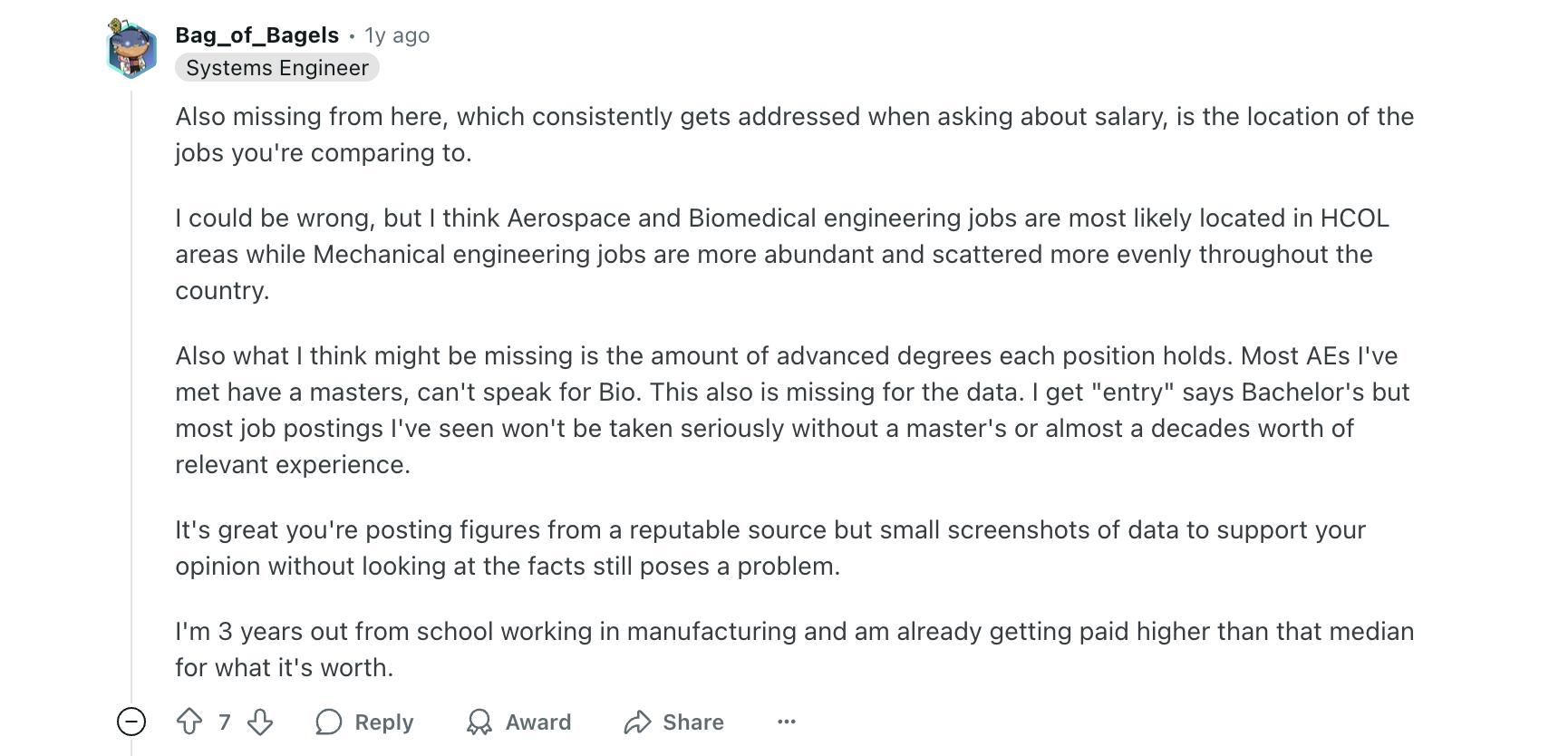
For many grads, these roles often want two to five years of experience or even a master’s degree. In fields like biomedical, aerospace, or consulting, advanced degrees are practically the norm. The pressure to go back to school just to get your foot in the door is real.
One Reddit user nailed the frustration in a reply to a post about mechanical engineering salaries:
Skills-based hiring isn’t there yet
Skills-based hiring sounds great — in theory, it means employers focus on what you can do, not just your degree or job history. But in practice, most companies still rely on traditional filters like education and experience. Until that changes, qualified engineers can still get overlooked before their skills are even considered.
It’s a competitive crowd
Even in a strong market, engineering is packed with talent. You’re often up against candidates with master’s degrees, internships, and strong portfolios. To stand out, you need more than a good GPA: you need to network, work on side projects, and build relationships.
Read more about How to Position Yourself as the Best Candidate for the Job.
Many engineering jobs come from networking
Here’s the hard truth: referrals still beat cold applications. If you’re relying only on job boards, you’re playing a numbers game with low odds. Networking through LinkedIn, alumni groups, or industry events can open doors faster. And when you do apply online, reach out to the hiring manager on LinkedIn to add a human touch to an otherwise faceless application.
Engineers miss the impact on their resume
Hiring managers, especially non-technical ones, want to know how your work made a difference. Instead of just listing skills or tools, highlight results: saved time, improved performance, increased efficiency. Saying “reduced load time by 30%” speaks louder than a wall of tech buzzwords.
Not enough hands-on engineering experience
A lot of grads leave school with strong theory but little real-world experience. Others miss out because their tools don’t match what employers are using. That’s where side projects, certifications, and open-source work come in. Real, demonstrable work helps close those gaps.
Learn how to List Your Best Projects on Your Resume.
The ATS black hole
Applying online can sometimes feel like shouting into the void. Many companies use an Applicant Tracking System (ATS) to filter resumes before a human sees them. If yours doesn’t match the job description closely, it might never be read. Tailor your resume with keywords to improve your odds.
How Rezi Can Help You Land an Engineering Job
From resume writing to interview prep, here’s how Rezi supports every part of your engineering job search:
- Browse engineering resume examples for structure and phrasing ideas.
- Find active job listings with AI Job Search.
- Tailor your resume with AI Keyword Targeting.
- Generate a strong summary that highlights key engineering skills.
- Improve bullet points to emphasize measurable impact.
- Get instant feedback with the Rezi Score.
- Write personalized cover letters in seconds.
- Practice for interviews with AI-generated questions.
Now let’s break down how each tool can help you land the job.
1. Explore ideas to improve your engineering resume with Rezi resume examples
If you’re a visual learner like me, it helps to see what a strong engineering resume actually looks like. The Rezi resume examples show you how to structure and word resumes for different roles, so you’re not starting from scratch.
How engineers find Rezi resume examples helpful:
- Browse the format tailored to your role, like Mechanical, Electrical, or Software Engineer.
- Find phrasing ideas like “optimized circuit design” or “cut thermal load by 15%.”
- See how to list certifications (FE, PE) and tools (AutoCAD, MATLAB, Python).
- Catch any experience or metrics you might be forgetting to include.
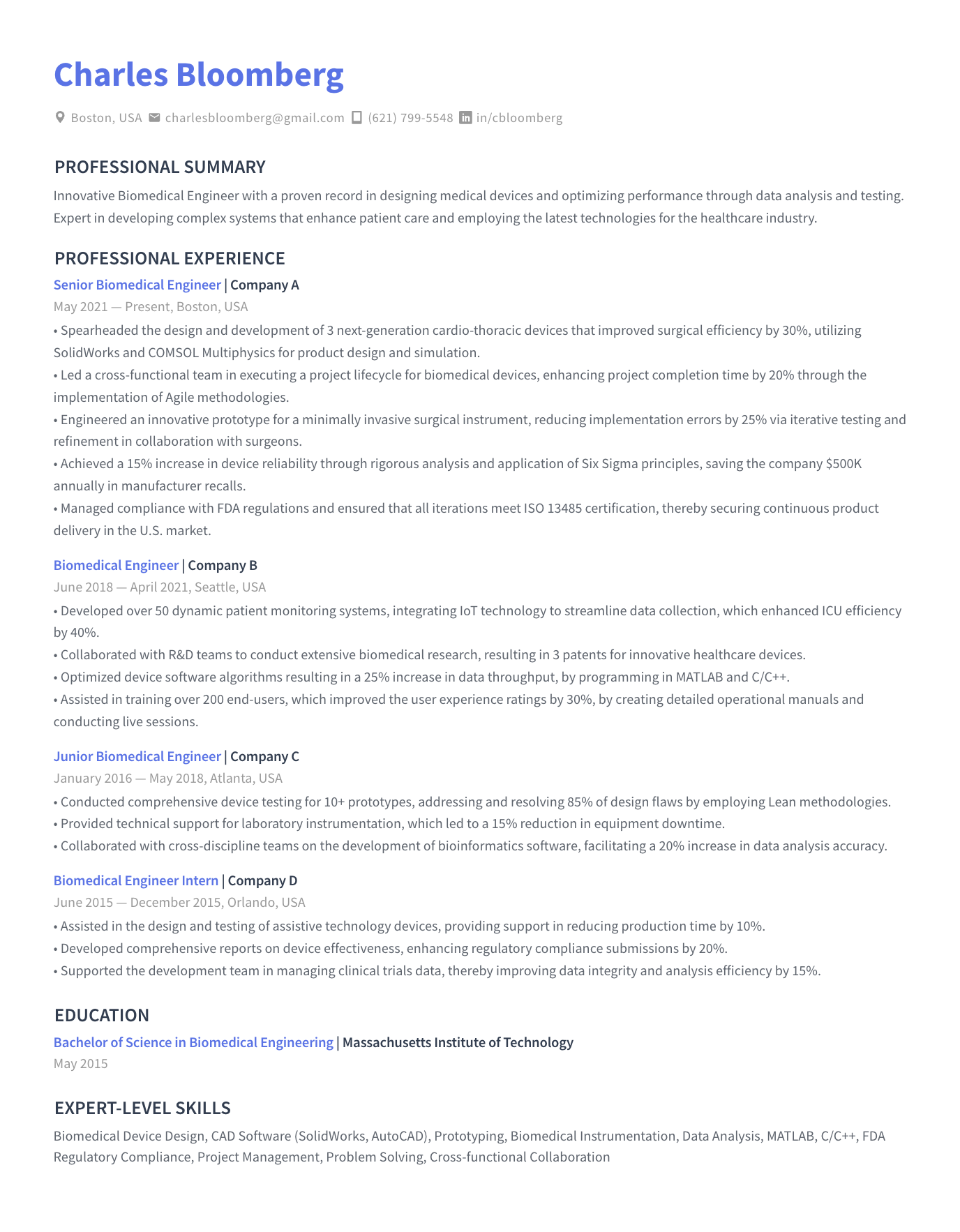
Take a look at this biomedical engineer resume:
2. Discover engineer job opportunities with AI Job Search
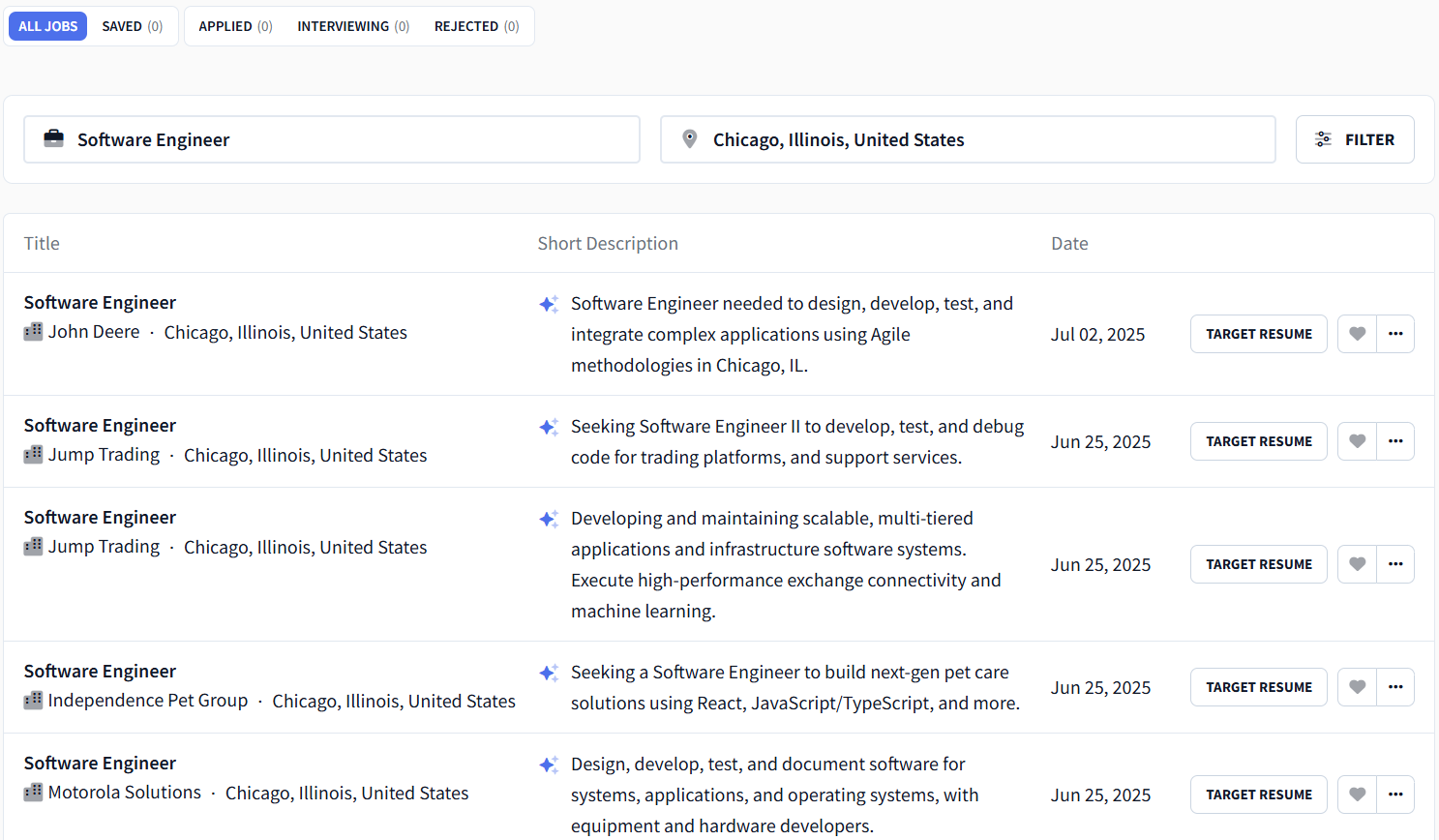
Sick of chasing jobs that don’t exist? Our AI Job Search tool pulls live engineering roles straight from company websites, so you’re only seeing real, active openings, not listings that are outdated, filled, or forgotten.
How to use AI Job Search to find engineering roles:
- Filter by city and the specific engineering job title to narrow your search.
- Check posting dates to make sure the role’s still active.
- Bookmark jobs or instantly create a tailored resume for that specific listing. Could it be any easier?
Here’s an example of what the AI Job Search pulled up for software engineering roles:
3. Match your resume to the engineering job description using AI Keyword Targeting
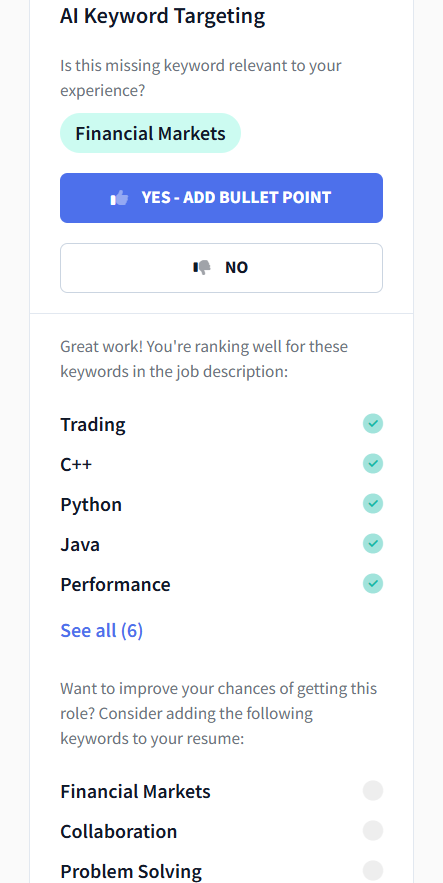
Engineering roles often come with a long list of tools, tech, and certifications. If your resume doesn’t reflect what’s in the job post, the ATS will likely rank you lower than other candidates.
How to use AI Keyword Targeting for your engineer job applications:
- Paste the job description to extract key terms like CAD, MATLAB, or Six Sigma.
- Add the right tools, certifications, and methods naturally into your resume.
- Highlight exactly what the employer is looking for to pass the filters with flying colors.
Here’s an example of how this helps you track related engineering keywords:
Michael shares how he used Rezi to tailor his data engineering resume:
4. Create a custom engineer summary with the AI Resume Summary Generator
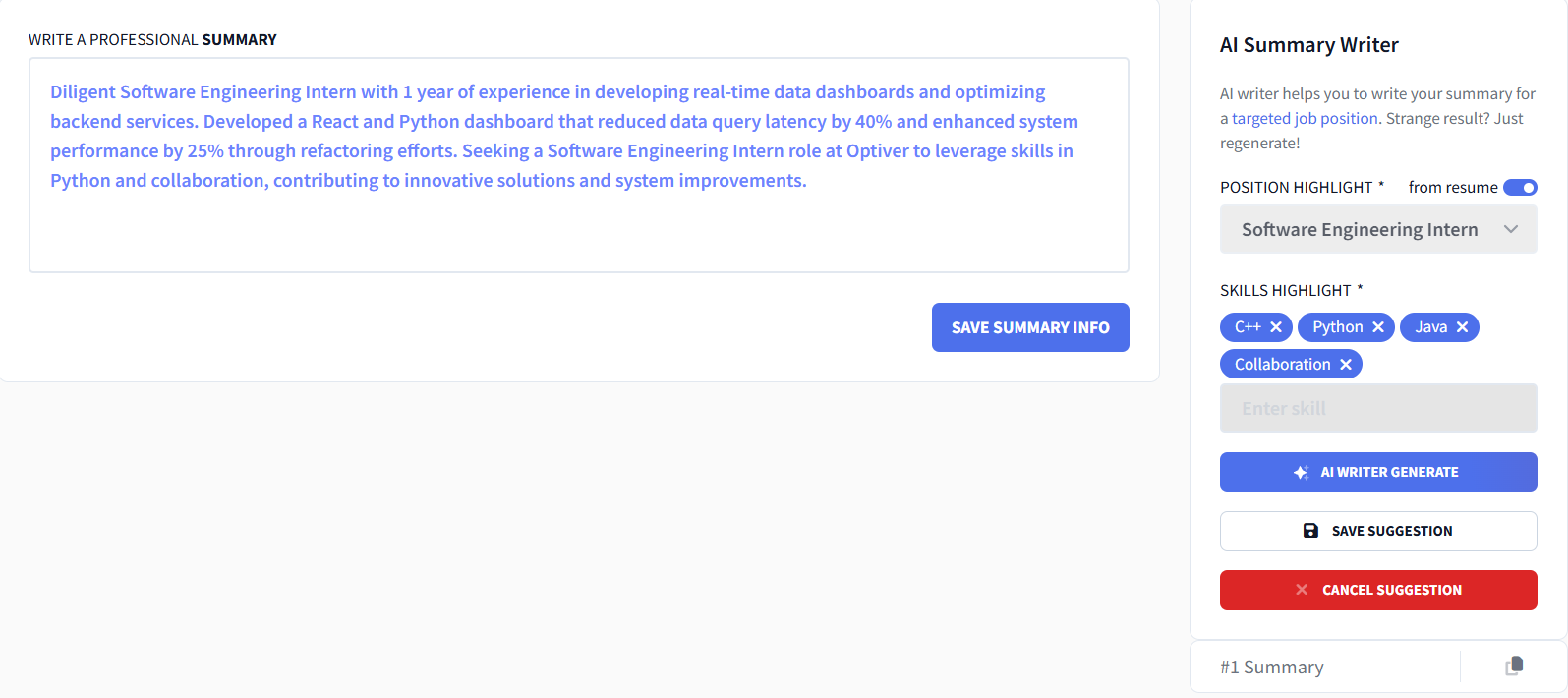
Struggling to write a resume summary that sounds like you? This tool helps you craft a polished, job-specific summary that highlights your top engineering skills, without sounding copy-pasted.
How the AI Resume Summary Generator helps:
- Enter the role and add your best and most relevant engineering skills like prototyping or process optimization.
- Instantly get a personalized summary tailored to the job and company.
- Edit it, regenerate it, and revisit saved versions anytime.
Check out this software engineer summary sample from the AI Summary Generator:
5. Craft strong engineering bullet points with the AI Bullet Point Writer & Editor
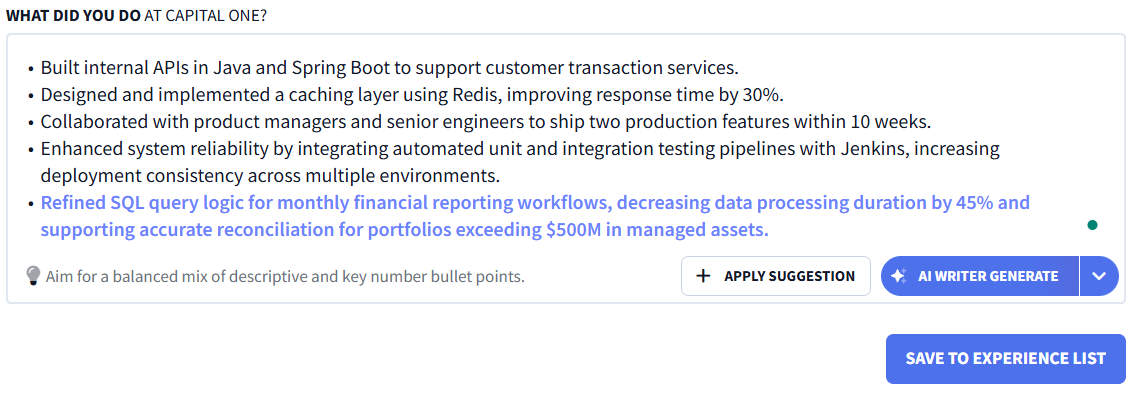
If you’ve ever stared at your work experience section thinking, “How do I make this sound better?” — this tool’s for you. It turns your experience into bullet points that actually show off your impact.
How the AI Bullet Point Writer & Editor helps you highlight your engineering experience:
- Generate bullet points with keywords like AutoCAD, FEA, or lean manufacturing.
- Highlight any line and click “rewrite” to instantly improve it.
- Use the CAR method (Challenge, Action, Result) to emphasize outcomes on your resume, like “Reduced part failure by 25% through material redesign.”
- Get tips to tighten weak phrasing, fix grammar, and hit the 3–6 bullet sweet spot.
- Find out where to add numbers, clarify your impact, or swap in stronger action verbs.
Here’s a bullet suggestion from the AI Bullet Point Writer for an engineering role:
Alek, a software engineer, said this was his favorite Rezi feature:
INSERT VIDEO
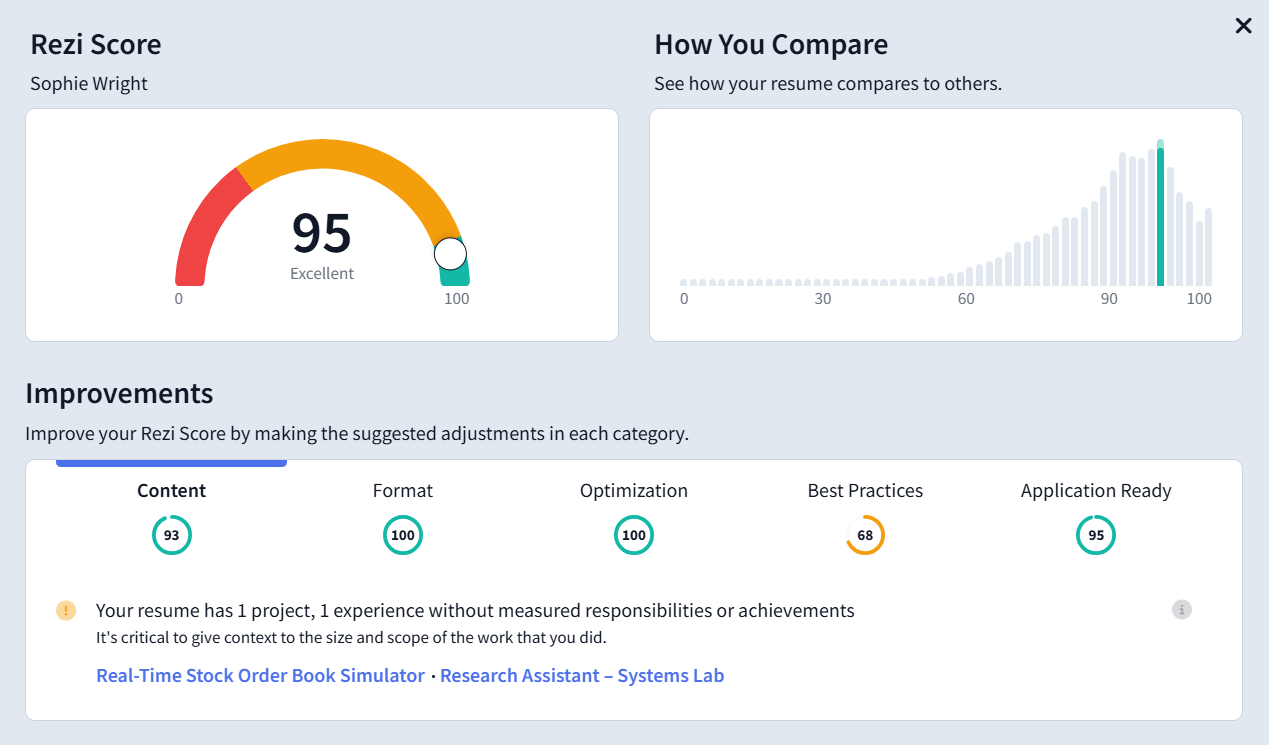
6. Get instant feedback on your engineering resume with the Rezi Score
If you’re not sure if your resume’s ready, the Rezi Score gives you a quick, clear check-up. It highlights what’s strong and what needs work to boost your chances.
How the Rezi Score helps you improve your resume for any engineering job opening:
- Review your content, format, organization, and overall fit for engineering roles.
- Spot missing keywords or vague descriptions.
- Score your resume on 23 key hiring factors, like relevant skills and measurable results.
- Get clear tips like “2 bullet points missing quantifiable impact” or “Summary is too short.”
Take a look at this Rezi Score report:
Abhi, a lead site reliability engineer, found the Rezi Score especially helpful:
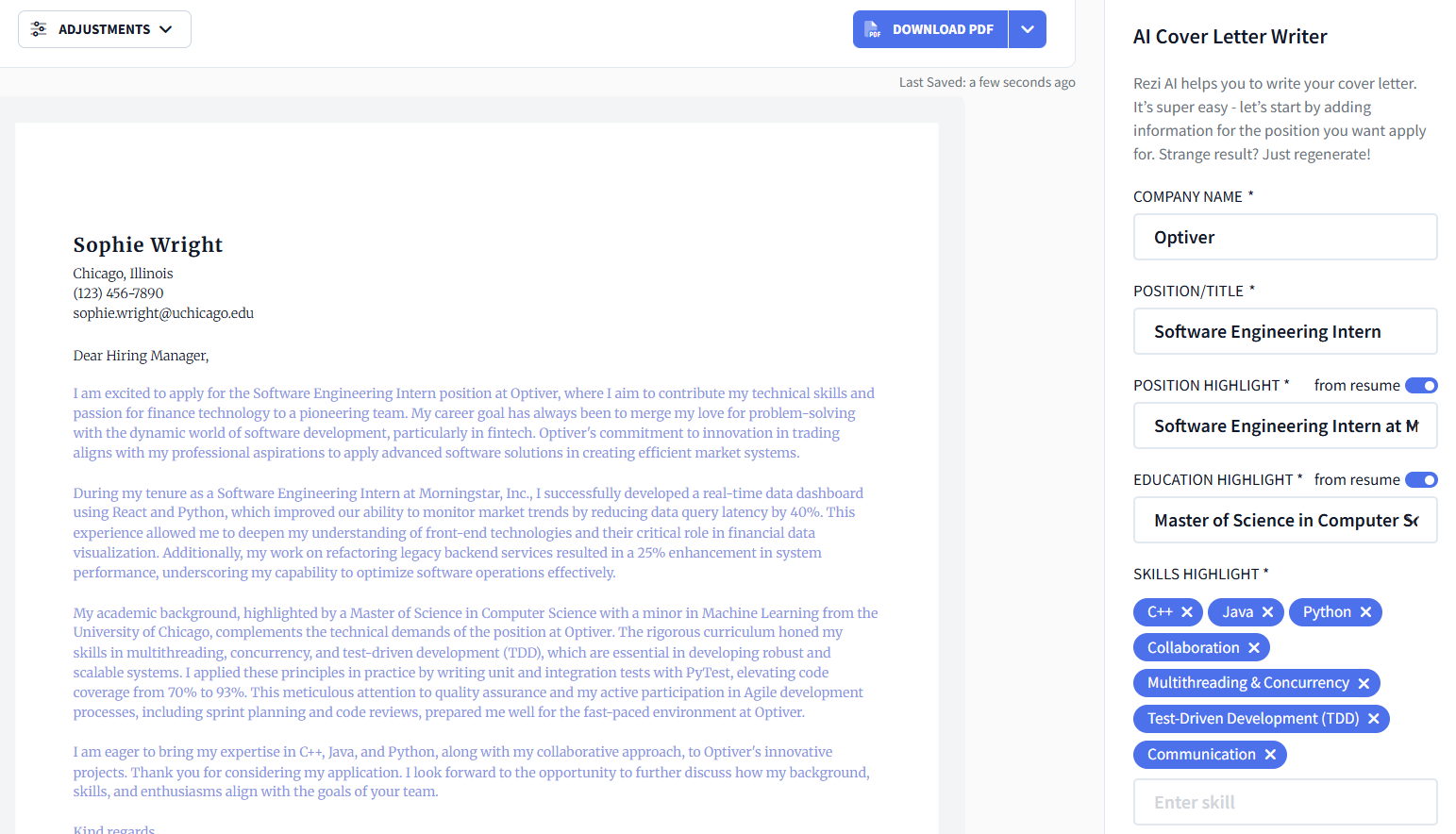
7. Go beyond by generating a tailored engineering cover letter using the AI Cover Letter Writer
Writing cover letters as an engineer can be a pain — you want to come across as confident and qualified without sounding like a generic template. The AI Cover Letter Writer helps you create one that feels authentic and fits the job.
How the AI Cover Letter Writer helps job seekers in engineering:
- Enter the specific engineering job title, company, a past engineering role you’re proud of, and a recent degree or certification (if you’re a student or recent grad).
- Add relevant skills like project management or quality assurance to connect your experience.
- Get a custom letter you can tweak or regenerate until it feels right.
- Apply faster with letters tailored to each job, without starting from scratch every time.
Here’s a sample software engineer cover letter crafted by the AI Cover Letter Writer:
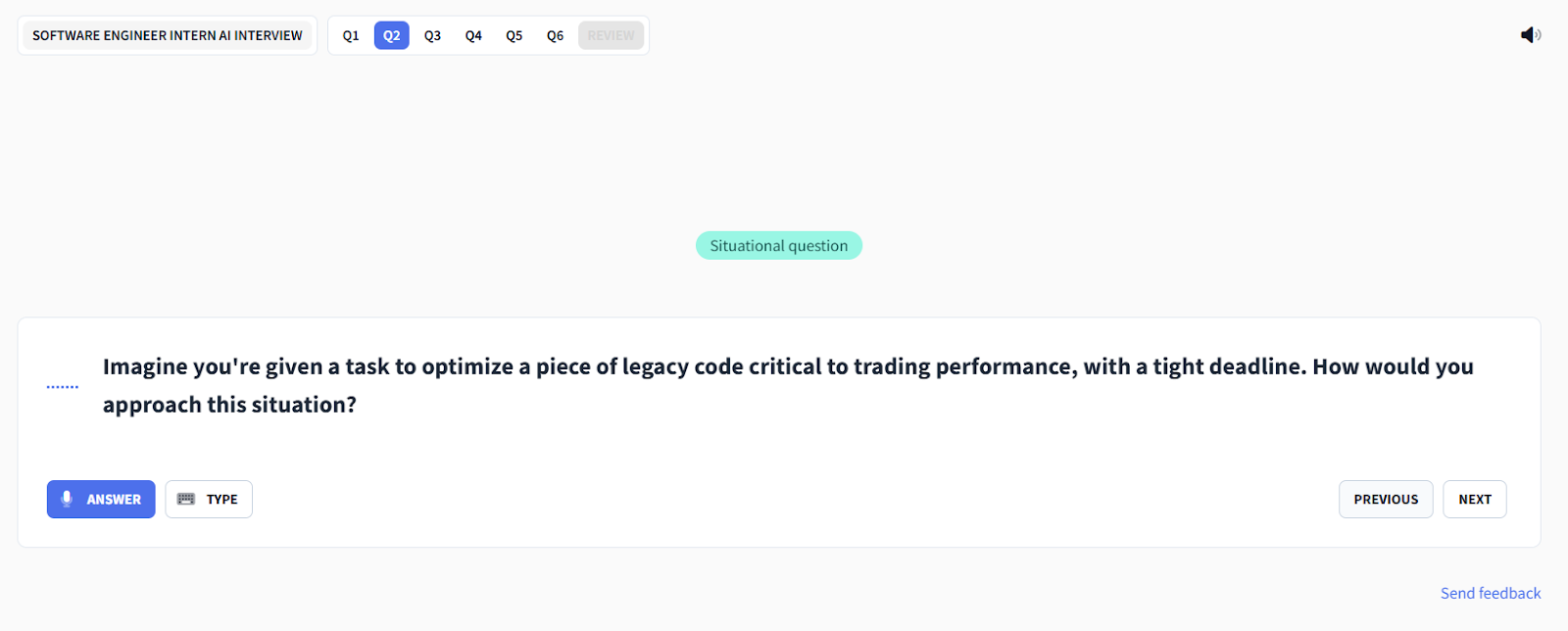
8. Practice for engineering interviews with AI Interview
Engineering interviews can throw in a mix of technical, behavioral, and problem-solving questions, but the AI Interview tool helps you prep with personalized questions so you’re ready for anything.
How job seekers in engineering can use AI Interview:
- Upload your resume, job title, and description to get role-specific questions.
- Practice answering questions like “How do you approach debugging a system failure?”
- Type or speak your answers and get instant feedback on clarity, tone, and keyword use.
- See suggested rewrites and keep practicing until your answers feel confident and polished.
Check out a sample question for a software engineer:
For more practice, read Common Interview Questions & Sample Answers.
Final Thoughts
The engineering job market’s in good shape, but getting hired still takes work. Between unclear job requirements, tough competition, and the time it takes to customize every application, even strong candidates can feel stuck. You’ll likely apply to more roles than you planned. That’s normal.
That’s why Rezi exists. It won’t magically land the job for you, but it’ll make everything easier — from writing better resumes to finding real openings and prepping for interviews.
The job hunt is a grind, but it doesn’t have to be miserable. Let Rezi help take the pressure off and get you one step closer to a job you’re excited about.
FAQ
How do I get an engineering job with no experience?
Build up your skills through personal projects, certifications, or contributing to open-source work. Emphasize the tools you’ve used and relevant coursework on your resume, and show results wherever you can, even from class or side projects. Networking also helps, so connect with engineers on LinkedIn, go to events, and let people know you’re looking.
What is the easiest engineering job to get into?
“Easiest” depends on your background, but civil, industrial, and technician roles usually have lower barriers to entry. They often value hands-on skills over niche experience. If you know CAD, Python, or data analysis, lean into jobs that match what you already do well, whether that’s in environmental, quality, or even manufacturing engineering.
What makes a great engineering resume stand out?
A strong engineering resume lists tools and shows off your impact. Use numbers to prove what you’ve done with your skills, like “reduced design time by 20%.” Keep your resume keyword-optimized, clean, and tailored to the role. A short, focused summary up top helps recruiters see your value right away.
Can Rezi help with internship applications for engineering students?
Absolutely. Rezi helps you turn school projects and part-time jobs into resume gold. The AI can write bullet points that showcase your skills, generate customized cover letters, and even practice for interviews. Whether it’s your first internship or your fifth, Rezi makes applying faster and less stressful.
Browse through 5 Internship Resume Examples That’ll Help You Land Your Next Placement.
Is Rezi actually free?
Yes, Rezi has a free plan that gives you access to the AI resume builder, keyword targeting, and downloads. You can build a job-ready resume without paying a cent. There’s also a $29 Pro plan with unlimited downloads, cover letters, and extras, but the free version covers the essentials.

Upload or drop your resume to get started
Upload your resume to get started
Score my resume

Sarah Coghlan is a writer and editor passionate about making resume and career advice clear and accessible to all. Based in Barcelona, her goal is to help job seekers create standout resumes and navigate the job search process with confidence and ease.