
Career Advice
How to Use Rezi for Tech Job Applications
Learn how to use Rezi for tech job applications to build ATS-friendly resumes that stand out in a tough market. Plus, get tips for landing your next tech role.

Published on
July 18, 2025
Updated on
March 16, 2026
Getting a tech job can feel daunting with layoffs, skills gaps, and ghost postings taking up space, but Rezi can give you that much-needed boost. Use the AI Job Search to find recent listings before they’re flooded with applicants. Take the job description to create a tailored resume with our AI Resume Builder, then let the AI Skills Explorer and Bullet Point Writer highlight your technical skills. Create an AI-generated summary, get a unique Rezi Score, and build confidence with AI interview prep.
Type “tech job market” into Google, and you’ll see news articles like “AI is coming for software engineers” or “Graduates face the toughest job market in a decade.” Not exactly the pep talk you need when trying to find a job. Sure, some of it is clickbait, but there’s also truth behind the headlines.
Getting hired takes more than just hitting “Easy Apply” and crossing your fingers. You need to show you’re adaptable, skilled, and ready to add value. The best way to prove that? Creating tailored resumes that speak directly to what employers want in a candidate.
Our AI Resume Builder uses professional templates, keyword suggestions, and personalized bullet points to give you a better chance of landing an interview.
Learn more about using Rezi’s features for your tech resume. This guide will cover:
- How the tech industry is evolving.
- What challenges job seekers face when getting a tech role.
- The best ways to use Rezi’s features to prepare for your job search.
What Is the Current State of the Tech Job Market?
With mass layoffs and AI shaking up the industry, I wouldn’t blame you for thinking the tech job market is in trouble. And you wouldn’t be completely wrong (more on that later), but statistics tell a more nuanced story. The Bureau of Labor Statistics (BLS) is projecting around 356,700 job openings per year in computer and information technology from 2023 to 2033.
And according to RED Global, there was a 33% monthly jump in tech postings in early 2025, marking a 16% bump over last year. That said, the tech unemployment rate is hovering around 2.9%, well below the national average (around 4%). Translation? The skills gap is still very much alive and kicking.
Now, let’s talk money. The median salary for tech-related jobs hit around $105,990 as of May 2024 — more than double the national average across all occupations. According to RED Global, the average salary for tech professionals was even higher at $112,521, depending on your role, experience, and location.
Want to protect your position in the tech industry? Here are some in-demand roles:
- Data Analyst
- Data Engineer
- DevOps Engineer
- IT Project Manager
- IT Business Analyst
- Cybersecurity Specialist
- Cloud Computing Specialist
- AI/Machine Learning Engineer
Beyond the jobs themselves, tech innovation is still developing. According to The Future of Jobs Report 2025, some of the biggest shifts are happening in AI and information processing (86% of companies are prioritizing it), followed by robotics and automation (58%), and changes in energy tech (41%). The industry is evolving fast, with plenty of opportunities to learn, pivot, or specialize.
Learn more about the current job market: Why Is the Job Market So Bad in the US Right Now?
The Job Search Struggle for Tech Candidates
Between AI shaking up roles, a widening skills gap, global tariffs, and waves of layoffs, job seekers don’t have it easy. It’s not that tech is dead (far from it), but the industry is changing. Companies want people who can adapt and keep up where automation and uncertainty are the new norm. Understanding what you’re up against is the first step to building a smarter strategy, even when the market feels stacked against you.
Check out the top challenges for those trying to find their place in the tech industry.
Rise of AI
The likes of ChatGPT have become the go-to for solving problems, getting questionable diagnoses, and even more questionable relationship advice. But this is just a drop in the ocean compared to the bigger picture.
AI is shaking up the tech job scene, with companies leaning into automation to boost efficiency, making some roles (especially repetitive ones like data entry or customer support) less relevant. We’re already seeing AI tools replacing humans in areas like scheduling, onboarding, and parts of software engineering.
But it’s not all doom and gloom. AI is also creating new jobs, particularly for those who can build, manage, or work alongside these tools. The smartest move? Upskill. Start brushing up on AI literacy, cloud computing, or cybersecurity.
The skills gap
You’ve probably seen a few online rants about not finding a tech job, while stats say there are more postings than ever. The explanation? Rapid technological developments mean employers are looking for those with the advanced skills to match. About 76% of tech leaders say there’s a noticeable skills gap, especially in areas like AI, data science, and IT operations.
On top of that, The Future of Jobs Report 2025 predicts that nearly 40% of our current skill sets will be outdated by 2030. So, it’s not just about showing off your coding talents anymore; you have to prove you’re an adaptable, lifelong learner to keep up with ever-evolving trends.
New tariffs
The back and forth over tariffs is unsurprisingly creating ripple effects, especially in tech. Modern devices, such as smartphones and servers, are made with components from all over the world. So, thanks to the Trump administration’s bright idea, companies like Apple and NVIDIA, which rely on parts from China, Taiwan, and Vietnam, are now facing higher costs.
That could mean delayed product launches, hiring freezes, or layoffs in some areas while firms wait to see how things turn out. The uncertainty is a huge problem, with some companies in “wait and see” mode, which doesn’t help job seekers hoping to land roles.
Tech layoffs
Let’s be honest, 2025 has been rough for tech workers. So far, there have been around 63,000 layoffs and counting, with major names like Intel (22,000 jobs), Google, Amazon, and Meta all making cuts. A big part of this is the pandemic hiring boom catching up with companies — many just overhired when digital life seemed like the forever future.
Now, as people live more offline and return to the offices, demand for some services has dropped, and companies are doing a U-turn. The result? Fierce job competition and fewer openings. The upside? Many of these layoffs are due to restructuring, not shrinking, so while some doors are closing, others are quietly opening for roles that align with new priorities.
Find out more: When Will Tech Layoffs Stop? What to Expect & Do Next
How You Can Use Rezi for Getting a Tech Job
Here’s how Rezi can help you with tech job applications:
- Pull updated company-direct listings from Rezi’s AI Job Search to help you skip ghost postings and apply early.
- Show relevant tech skills with Rezi’s AI Skills Explorer, which identifies top programming languages, tools, and frameworks.
- Use the AI Resume Summary Generator to create a personalized summary connecting your skills, goals, and tech experience.
- Turn tasks into impact with the AI Bullet Point Writer and transform basic job duties into achievement-focused, keyword-rich statements.
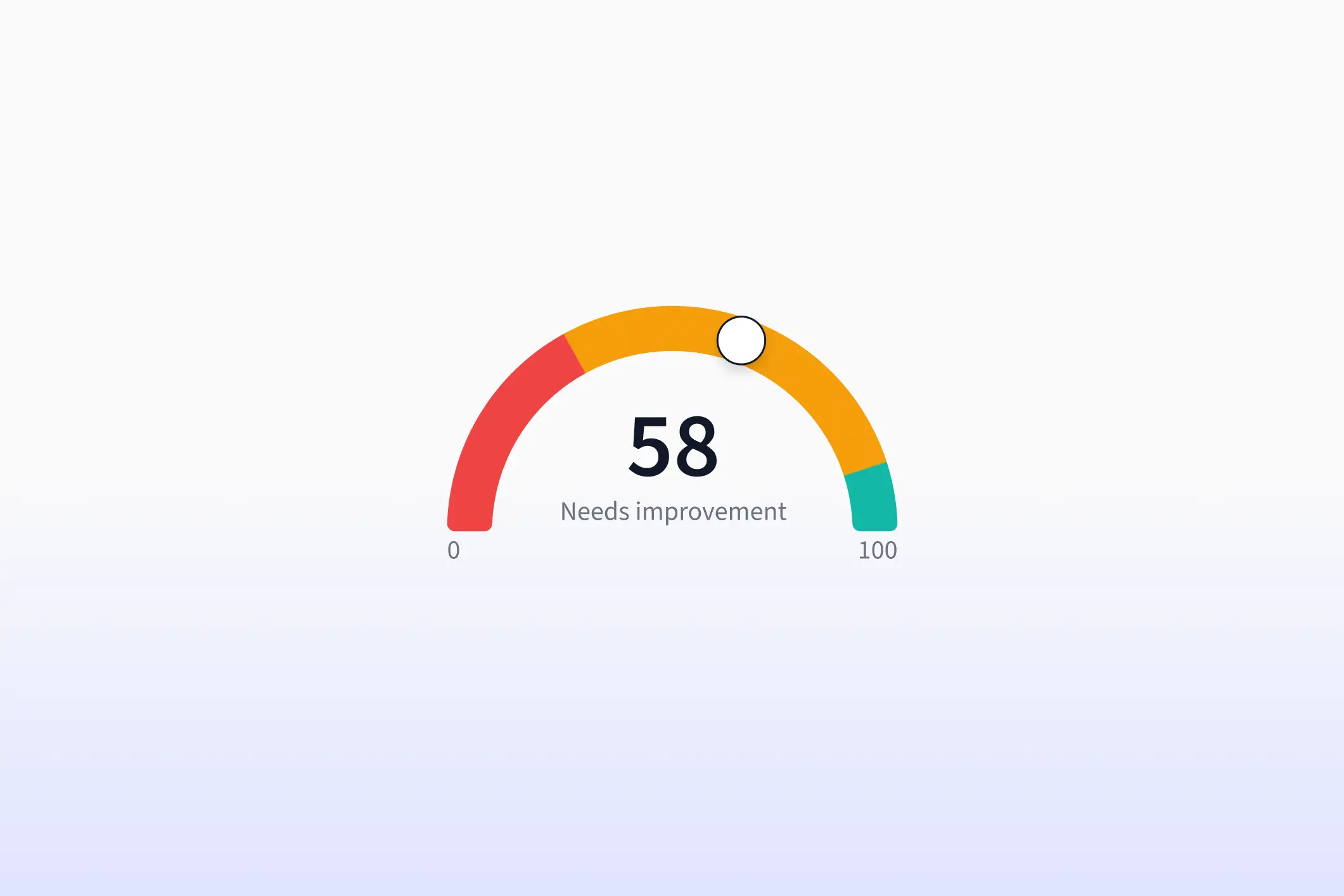
- Get resume feedback using the Rezi Score, which analyzes your tech resume’s keywords, formatting, and structure, providing actionable tips.
- Generate a targeted cover letter with Rezi’s AI Cover Letter Writer to show your adaptability, recent projects, and fit for the company’s culture.
- Practice interviews with Rezi’s AI Interview tool and get role-specific questions.
Let’s look closer at each Rezi feature and how to use them to improve your chances of getting an interview and landing a job in tech.
1. Find tech jobs near you using Rezi Job Search
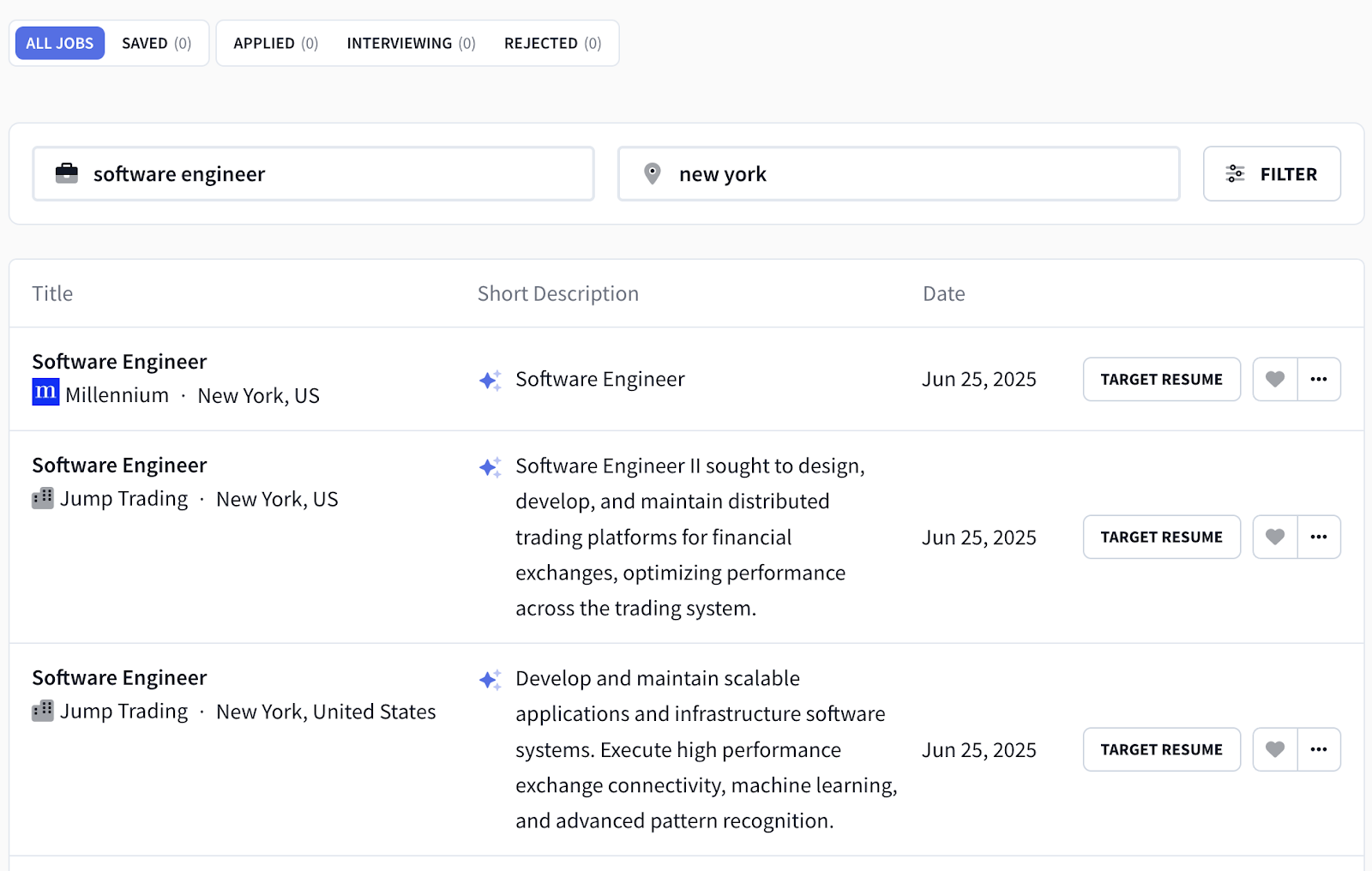
Finding the right tech job isn’t just about clicking “apply” a hundred times and hoping you get lucky. Rezi’s Job Search tool pulls from over 1.3 million listings, many directly from company websites. This means you’re not stuck chasing ghost jobs or wasting time on saturated job boards. Instead, you can access real opportunities that match your skills and interests.
This is how tech candidates can use this tool:
- Before starting your job search, keep a checklist of job criteria (tools, salary, team size, work culture) to stay focused.
- Use relevant search terms like “frontend developer,” “DevOps engineer,” or “remote IT support” with your preferred location.
- Prioritize fresh listings as jobs get snapped up fast, easily receiving hundreds of applicants in the first few days. Rezi updates hourly, so you can apply early and beat the rush.
- Don’t let a lack of skills or experience hold you back. Apply even if you’re 70% qualified; tech hiring managers understand these mythical tech wizards are rare.
Here’s a preview of the Job Search tool:
2. Include key tech skills using AI Skills Explorer
With concerns over finding highly skilled workers, you need to make sure your tech abilities are loud, clear, and tailored to the job. Rezi’s AI Skills Explorer helps you identify and prioritize the most relevant tools, languages, and platforms to include on your resume. It scans your experience and the job description to match relevant terminology.
The AI Skills Explorer tool helps you build out your tech resume by:
- Uncover overlooked strengths, but only focus on the tools relevant to the position (not every tool you’ve ever touched).
- Get specific with resume hard skills like Python, cybersecurity, SQL, or AI, based on your experience and the role you want.
- Break skills into categories (e.g., Languages, Frameworks, Tools) to make it easier to read and check off boxes for non-technical recruiters.
Here’s an example of the AI Skills Explorer suggestions on hard skills for a tech applicant:

Learn more about the most in-demand skills: Skills Section for a Resume: 50 Top Skills
3. Highlight your tech expertise with the AI Resume Summary Generator
Your resume summary needs to clarify your strengths as a tech professional. This is how you get the attention of skim-reading recruiters and show off your skills. Rezi’s AI Summary Generator helps you craft a strong introduction that connects your background, skills, and goals to specific roles.
Simply enter the tech role and skills you want to emphasize most, and it can generate something for you. To be more specific:
- Generate a custom summary that reflects your experience (e.g., “Full-stack developer with 4 years in SaaS product development”).
- Include the tech you’re most fluent in and the type of environments you’ve worked in (agile teams, startups, etc.).
- Mention notable certifications or projects that show you’re keeping up with the latest tech trends.
- Keep it brief (3 to 4 sentences) and tweak the AI summary to add a personal touch.
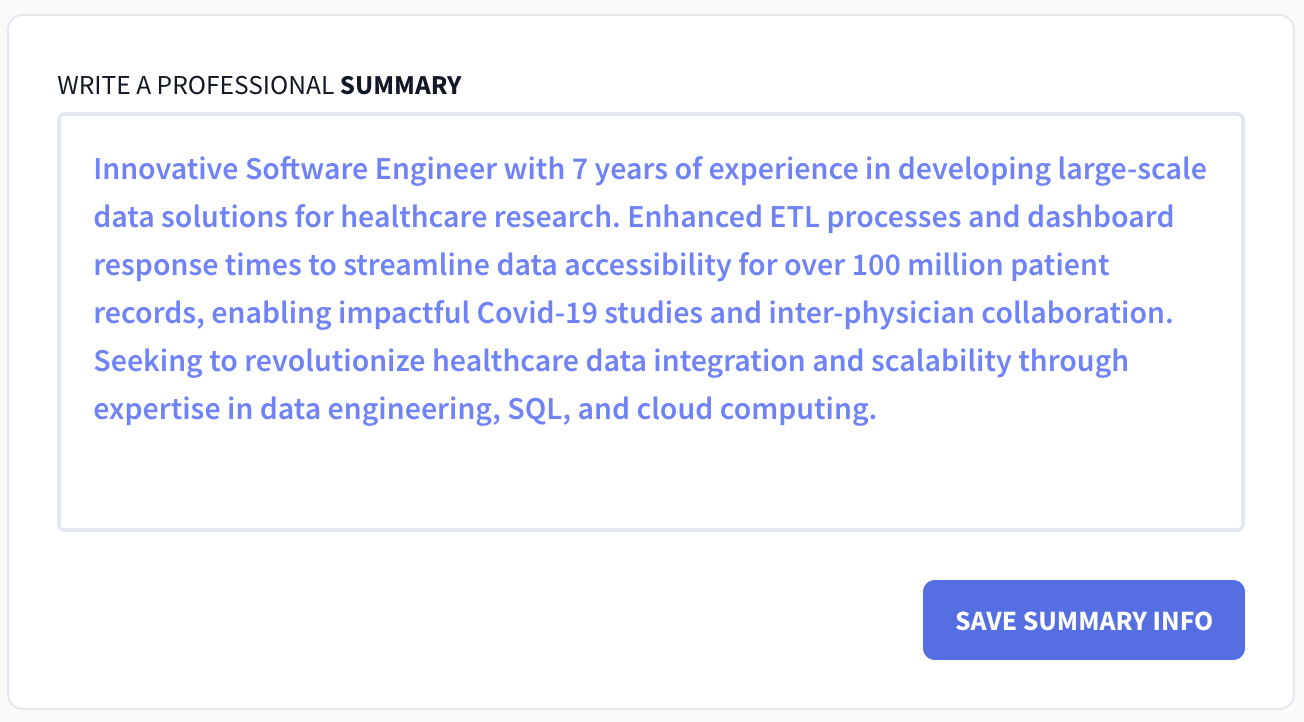
Here’s what a completely AI-generated summary for a tech resume looks like:
4. Highlight your technical abilities and achievements with the AI Bullet Point Writer
Your resume bullet points should do more than list technical tasks or projects that you worked on. You need to prove impact. Rezi’s Bullet Point Writer helps you turn generic responsibilities into results-driven statements with tech-specific keywords. It’s not enough to simply list your skills; it’s about revealing your potential by showing how your work made a difference.
For tech workers specifically, here's how you can use this tool:
- Share basic information about your role, tools used, and achievements to get tailored AI suggestions with ATS-friendly keywords.
- Consider including side projects or freelance work to stand out if you’re early in your career or switching industries.
- Blend technical abilities with examples of soft skills to show you can drive success in other ways, such as having a positive attitude or working well with others.
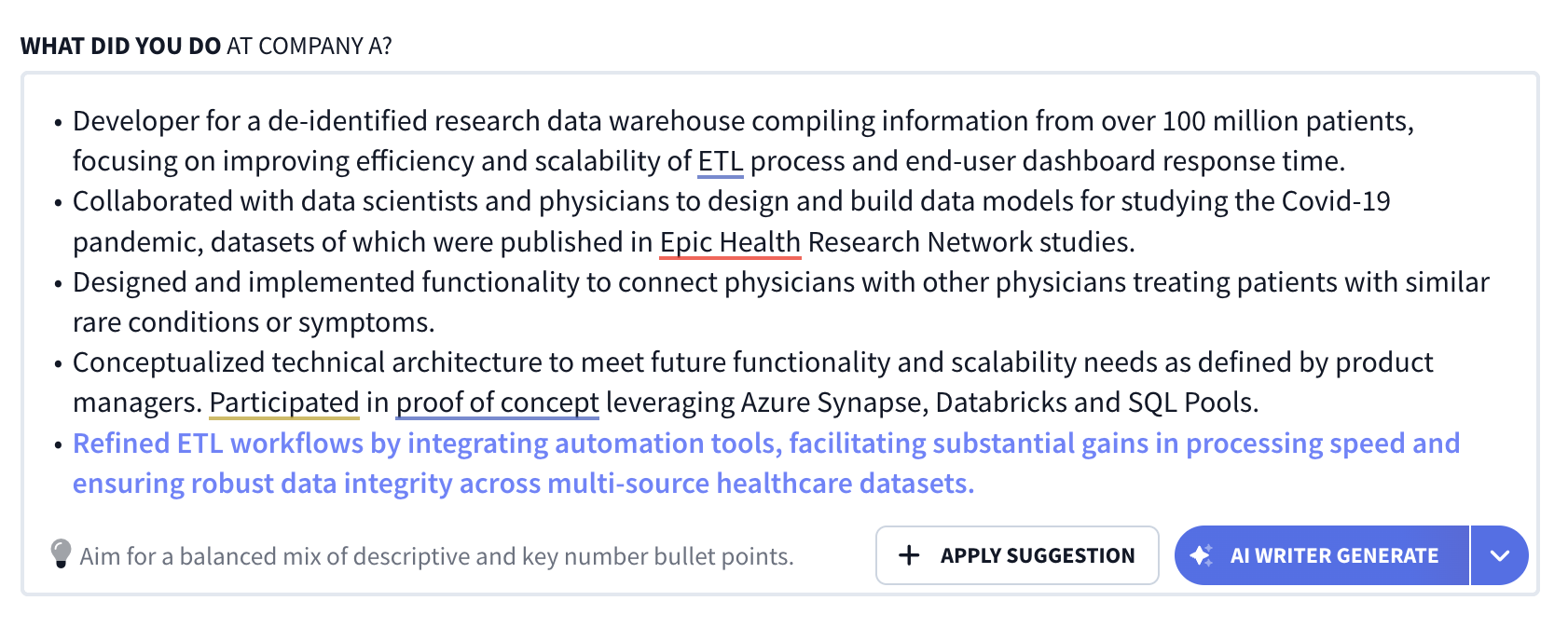
Take a look at this AI-generated bullet point in purple:
5. See what your tech resume is missing with the Rezi Score
Our Rezi Score is like having your very own recruiter review your resume. It grades your tech resume across key areas, including keywords and format, to help you meet industry standards and pass ATS filters. You’ll also get handy tips to boost your chances with tech job postings.
Our users who are in the tech industry find this tool helpful because it's simple yet effective. Here's how it works:
- Upload your resume and compare it against a specific tech job description to get tailored suggestions.
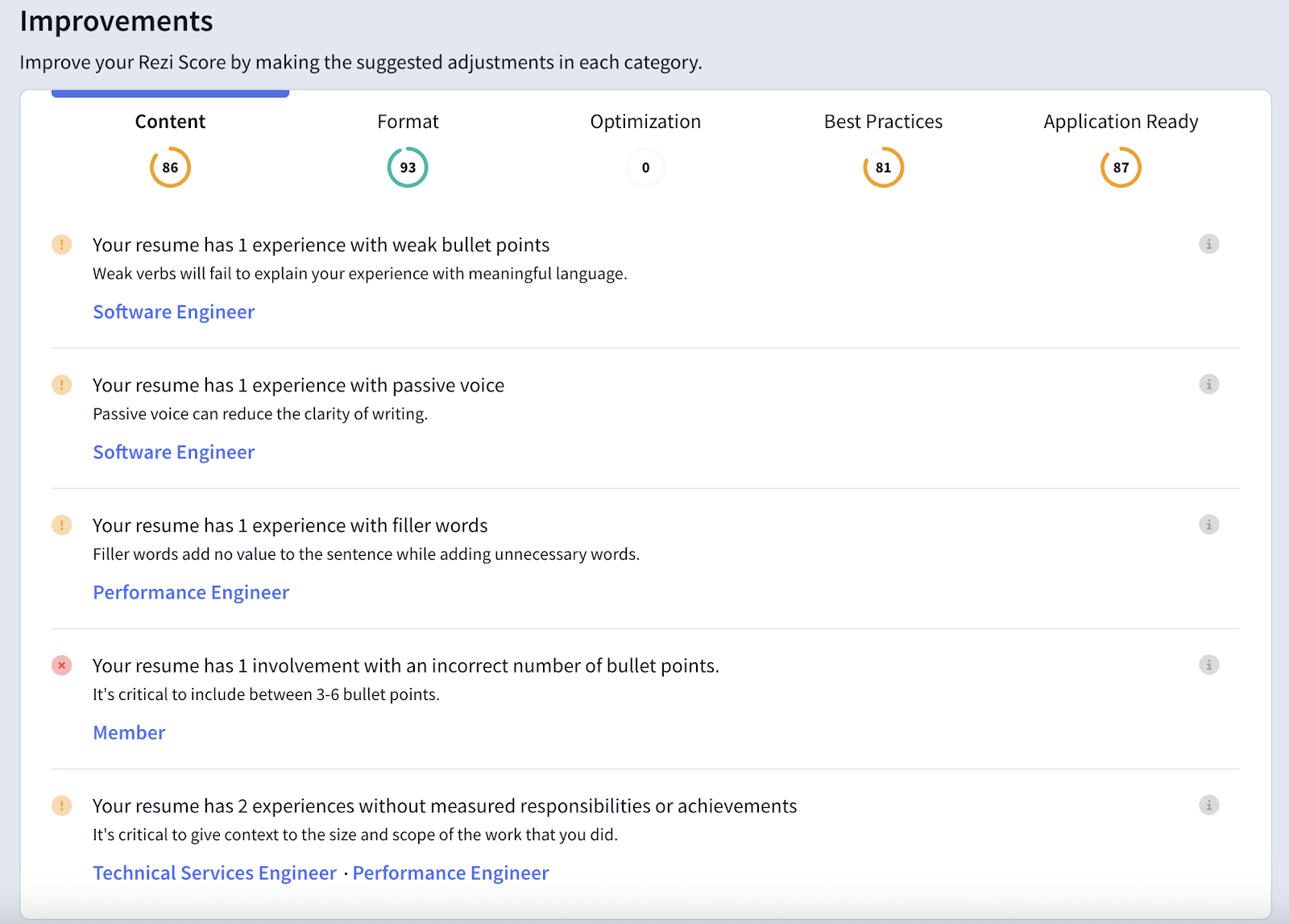
- Review your scores across five key areas: Content, Format, Optimization, Best Practices, and Application Ready.
- Adjust your resume based on feedback, such as missing technical skills, awkward formatting, or a lack of resume achievements.
Here’s an example of the suggestions you get with your resume score:
6. Prove your adaptability with the AI Cover Letter Writer
A good cover letter for a tech job isn’t just about listing every skill under the sun (you and all the other qualified candidates). You have to show you can keep up with curiosity, adaptability, and a strong work ethic. Rezi’s AI Cover Letter Writer helps you achieve this by generating a professional and unique letter tailored to the job.
This is how it works:
- Enter the company and job title to get a targeted tech cover letter draft that covers essential skills, requirements, and nice-to-haves.
- Edit in personal touches, such as impressive or highly technical projects you worked on or something specific you admire about the company.
- Highlight achievements from both your technical and soft skills, especially your ability to pivot and learn new technologies.
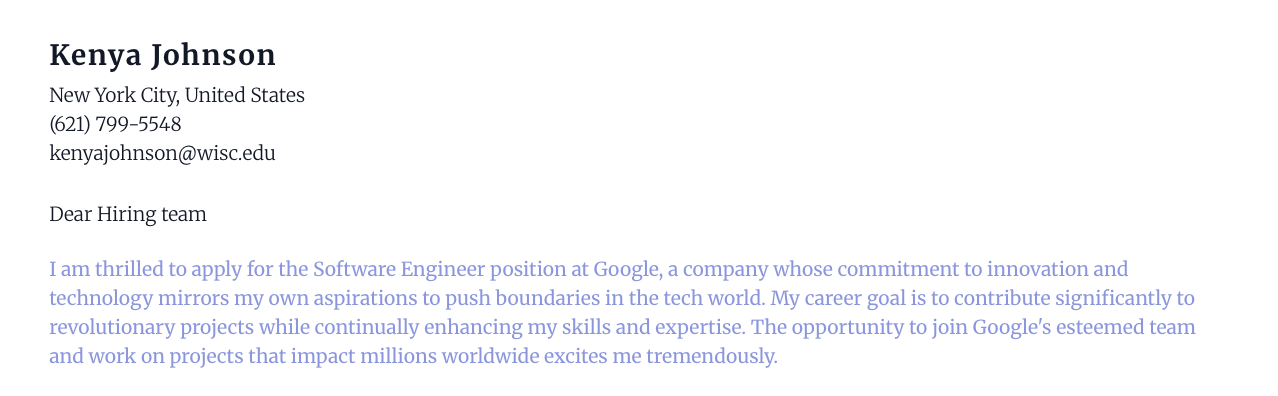
Here’s an opening paragraph example using the AI Cover Letter:
7. Improve your confidence for tech interviews with AI Interview
Tech interviews can be intimidating. You may get coding challenges, system design questions, or even just explaining your last project. Rezi’s AI Interview Tool helps you practice for real questions you're likely to get as a tech candidate while improving your communication before the big day.
This is how it works:
- Input your resume and target job to get tailored interview questions. Use it to boost your confidence and calm those pre-interview jitters.
- Practice talking through projects and outlining your resume technical skills using the STAR method (Situation, Task, Action, Result).
- Remember: this isn’t just about you. Do your research into the company and position so you can explain exactly what drew you to the role and why you’d be the best fit.
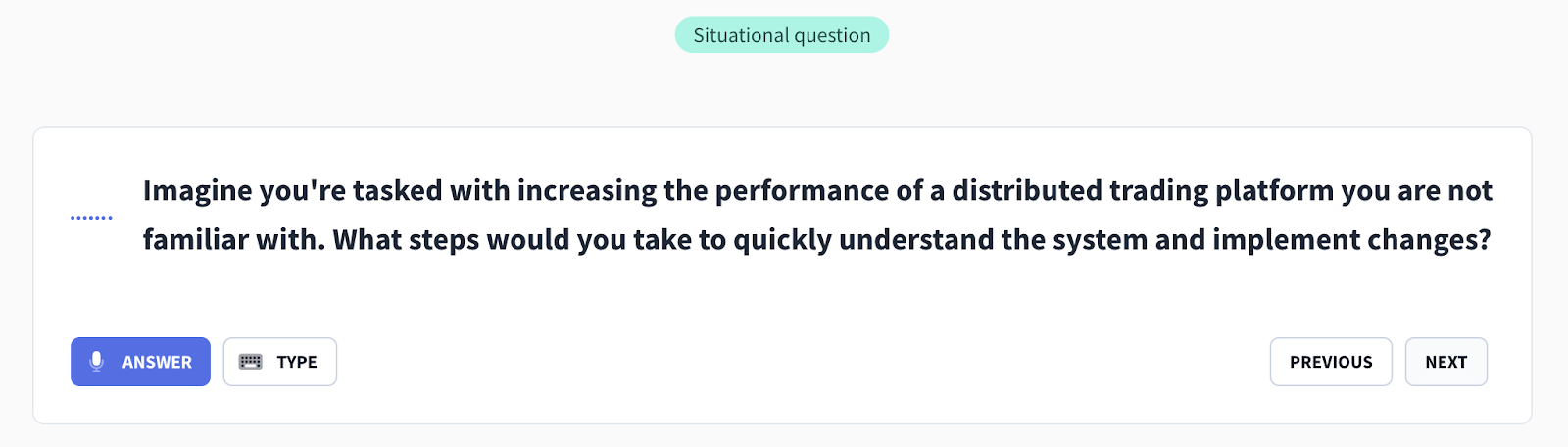
Check out this situational question from our AI Interview tool:
Check out more top interview questions: Common Interview Questions & Answers
Final Thoughts
Breaking into tech can feel brutal when you’re sending out tons of resumes yet hearing nothing back, especially with layoffs, AI shifts, and constant talk about “skills gaps.” It’s easy to feel stuck. But you’re not out of options.
Tools like Rezi take the stress out of building a professional, ATS-friendly resume that actually gets past the bots and in front of real people. Tech opportunities haven’t disappeared. You just need the right tools (and lots of grit) to grab them and finally land that role you’ve been chasing.
FAQ
Is Rezi actually free?
Rezi’s free plan lets you build one standard-format resume, with access to the AI Resume Writer, AI Resume Editor, and AI Resume Summary Writer. You also get limited access to the Rezi Score, AI Keyword Targeting, and Real Time Content Analysis.
By paying $29 a month or $149 for a Lifetime plan, you get unlimited access to all Rezi features with plenty of extras not included in the free plan. Bonus features include our range of Rezi templates, the AI Cover Letter Writer, and the AI Resignation Letter Writer.
Find out more about Rezi pricing and features.
Is Rezi safe to use?
Yes, Rezi is safe and reputable to use for resume building. It doesn’t sell your data to shady third parties, and its payment system is secure if you decide to upgrade. Just remember, like with any tool, don’t put overly personal information (like your Social Security number) on any resume platform. Keep it to your contact details, skills, and experiences, and you’re good to go.
What tech jobs pay $500,000?
Yes, $500K tech jobs exist, but they’re usually at senior or specialized levels, and can also depend on your location and company. Roles like Software Engineer, Principal Engineer, AI Research Scientist, Cybersecurity Architect, or Engineering Manager at FAANG companies (Meta, Amazon, Google, etc.) can hit this range, especially with base, bonus, and stock.
Is 40 too late to get into tech?
No, 40 is not too late, especially as companies are starting to value skills over age and education. Plenty of people successfully pivot into tech in their 40s, especially through bootcamps, online courses, and building a small portfolio. It might take more patience, but it’s very possible to land roles in QA, data analysis, project management, or even software development if you commit to learning consistently.
Learn more about making a career switch: Career Change at 40: 11 Steps to Make It Happen
How do I get a tech job with no experience?
Start by building experience. Complete projects on GitHub, contribute to open-source, or build a personal app/website. You can also do internships, join hackathons, or freelance on Upwork to create a track record. Use certifications (Google Data Analytics, AWS, CompTIA) to validate your knowledge, and leverage networking by attending local tech meetups or LinkedIn events. When you apply, tailor your resume with skills and project outcomes, showing employers what you can do, not just what you’ve done on paper.

Upload or drop your resume to get started
Upload your resume to get started
Score my resume

Lauren Bedford is a seasoned writer with a track record of helping thousands of readers find practical solutions over the past five years. She's tackled a range of topics, always striving to simplify complex jargon. At Rezi, Lauren crafts genuine and actionable content that guides readers in creating standout resumes to land their dream jobs.