
Resume
15 Best Organizational Skills to Put on a Resume
Discover the top organizational skills employers want and get tips on how to showcase them on your resume, cover letter, and interviews for a stronger application.

Published on
November 27, 2025
Updated on
November 27, 2025
The best organizational skills to put on a resume are the ones in the job description. Core examples include time management, scheduling, goal setting, prioritization, communication, attention to detail, and project management tools. These show you can meet deadlines, manage multiple tasks, and stay focused under pressure. Highlight them in your summary, experience, education, skills section, cover letter, and interview answers so employers see just how organized you are.
I’m the biggest advocate for a to-do list. Honestly, my tasks feel halfway done the moment I write them down (I’m still a sucker for a handwritten list).
Whenever an interviewer asks how I stay organized and I mention my penchant for to-do lists, I usually get a knowing smile and a nod. They get it.
But it’s not enough to just slap “organization” onto your skills section and assume hiring managers will believe you. It doesn’t mean much until you prove it through examples in the rest of your application.
Show them you can be the Marie Kondo of their workplace.
In this guide, you’ll get:
- Examples of the best organizational skills for your resume.
- Tips for how to spotlight your organizational skills on your resume, cover letter, and in interviews.
- Practical ways to build and improve your organizational skills.
Create an organized resume with our AI Resume Builder or explore these skill-related guides:
- Best Skills to Put on a Resume
- Top Skills for a CV to Get the Job
- AI Skills for Your Resume in 2025
- 40+ Interpersonal Skills for Your Resume
- Customer Service Skills to Add to a Resume
What Are Organizational Skills?
Organizational skills are what help you stay on top of your time, tasks, and even your mental space. They keep you focused, help you prioritize, and make sure you actually get things done (and done well).
Being organized isn’t just about color-coded planners or tidy desks; it’s about managing your workload efficiently, meeting deadlines, and keeping the chaos at bay.
These skills are also transferable, so once you have examples to show them off, you can add them to an application for just about any job or industry.
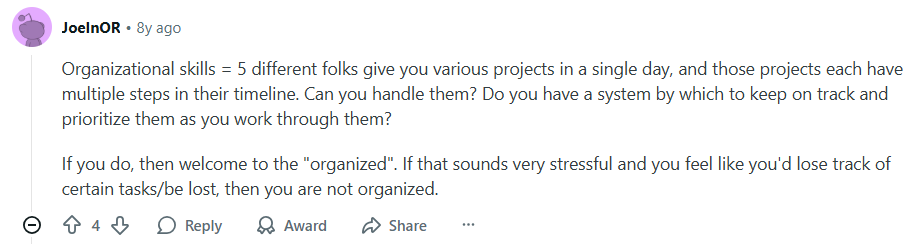
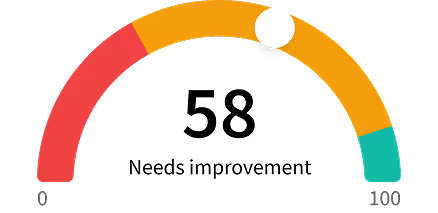
Here’s a good example to see whether you have strong organizational skills or not:
Why is organization important in a job?
Employers see the value in strong organizational skills, and it’s no wonder:
- It saves everyone time and energy. When your work is planned, noted, and communicated clearly, you cut down on confusion and free up the mental space to give one task your full attention.
- It keeps stress in check. Sharing the workload and prioritizing the most important tasks helps you put your energy where it counts, while others do the same.
- It prevents last-minute scrambling. When you’re organized, your work tends to be higher quality (unless you’re one of those people who do their best work under pressure).
Best Organizational Skills Examples for a Job Application
In short: the best organizational skills to highlight on a resume are the ones that show you can plan strategically, prioritize effectively, and make smart decisions. Top skills include time management, scheduling, goal setting, multitasking, initiative, delegation, attention to detail, project management tools, communication, collaboration, and analytical thinking.
Sure, you can list “organizational” in your skills section, but on its own, it won’t make much of an impact. Adding other organizational-related skills shows how you stay organized and gives hiring managers a clearer picture of what you’re like and what you’d bring to their team.
Organizational
Organizational skills are the backbone of staying on top of work, whether you’re managing files, resources, schedules, or an entire workspace. It shows you can keep things running smoothly and help everyone around you stay on track too.
Bullet point examples:
• Organized a shared digital filing system so teammates could find documents in seconds instead of digging through folders.
• Streamlined classroom materials and weekly plans, saving an hour of prep time each week and keeping lessons running seamlessly.
Strategic planning
Strategic planning is all about staying two steps ahead by mapping out your weeks, months, or even quarters so deadlines never sneak up on you. It keeps you aligned, avoids last-minute chaos, and helps you handle curveballs without panicking.
Bullet point examples:
• Built a quarterly project roadmap that kept the team on schedule and cut deadline surprises by half.
• Created a semester-long content calendar for social media campaigns, ensuring consistent posting and engagement growth.
Time management
Time management is knowing how long things actually take, giving yourself enough runway, and avoiding the classic “I’ll just do it later” trap. You block your time, you plan ahead, and your future self is constantly thanking you for it. (You’re basically living my dream.)
Bullet point examples:
• Scheduled focused work blocks that doubled task completion and reduced late-night cramming during busy weeks.
• Prioritized daily tasks using a simple “must-do vs. nice-to-do” system, helping the team finish a major project a week early.
Goal setting
Goal setting stops your brain from feeling like there’s a monkey banging cymbals in there all day. You know what you’re working toward, why it matters, and the steps to get there. Big or small, clear goals make it easier to prioritize and stay accountable, especially if they’re SMART goals: Specific, Measurable, Achievable, Relevant, and Time-bound.
Bullet point examples:
• Set monthly performance goals and created a clear action plan that helped the team boost sales by 15% in a single quarter.
• Created weekly learning goals for students and designed step-by-step lesson plans that kept the class on track and consistently ahead of the curriculum.
Prioritization
Prioritization is the skill of looking at a dozen competing tasks and figuring out what truly deserves attention first. It’s equal parts decision-making, problem-solving, and “let me make a list before I panic.”
Bullet point examples:
• Ranked incoming support requests by urgency and complexity, cutting response times in half during peak hours.
• Organized project tasks by importance and delegated lower-priority items, helping the team hit a tight deadline without burning out.
Project management tools
Listing project management tools shows how you stay organized, whether you’re a Trello girl or practically live in Asana. It gives hiring managers a clear picture of how you track tasks, deadlines, and progress.
Bullet point examples:
• Created a multi-step project in Trello, organizing tasks by priority and deadline so the team always knew what was happening and what came next.
• Designed ClickUp boards with weekly to-do lists and progress trackers for a school project, keeping assignments on track and everyone accountable.
Scheduling
Scheduling goes hand in hand with planning and time management. It’s about knowing what realistically fits into your day and keeping track of the things you can’t afford to forget. Whether you’re scheduling for yourself or someone else, clear plans and communication keep everything running smoothly.
Bullet point examples:
• Mapped out editorial deadlines for a content team, ensuring writers and designers knew exactly when drafts and revisions were due.
• Scheduled virtual workshops for students, factoring in time zones and workload to keep attendance high and participation consistent.
Delegation
Delegation is the art of knowing you can’t do everything, and being smart about getting the right help. It reduces stress, keeps projects on track, develops the team’s collaboration skills, and gets the work done efficiently.
Bullet point examples:
• Delegated customer service follow-ups among team members, allowing higher-priority client issues to receive immediate attention.
• Supervised lab assistants in a research project, assigning experiments based on individual expertise to ensure accurate and timely results.
Communication
Strong communication skills keep everyone on the same page, prevent tasks from slipping through the cracks, and ensure expectations are clear. It’s the glue that holds organized teams together.
Bullet point examples:
• Facilitated daily stand-ups for a marketing team, ensuring everyone knew priorities, deadlines, and responsibilities.
• Documented project requirements and shared updates with stakeholders, preventing miscommunication and project delays.
Attention to detail
Attention to detail means catching the small things so your work is polished and error-free. Being a bit of a perfectionist isn’t a bad thing; it saves time and avoids unnecessary rework.
Bullet point examples:
• Audited financial reports for discrepancies, noticing errors that saved the company thousands in potential losses.
• Proofread website content for grammar, formatting, and SEO consistency, improving readability and search rankings.
Decision-making
Decision-making is all about choosing what to focus on, setting priorities, and figuring out the best path forward. Good decisions come from trusting your knowledge, weighing options, and thinking ahead; you’re not relying on justflipacoin.com to decide for you. (And neither do I…)
Bullet point examples:
• Assessed IT security threats and decided on immediate mitigation steps to prevent data breaches.
• Selected suppliers for a construction project by analyzing cost, timelines, and reliability, ensuring the project stayed on budget.
Multitasking
Multitasking shows you can handle multiple responsibilities at once, but only if you do it well. Highlight examples where managing several projects led to successful results, so employers see you can handle the workload without dropping the ball.
Bullet point examples:
• Coordinated multiple client campaigns at once, tracking metrics and posting content on schedule.
• Juggled cashier duties while assisting customers on the floor, keeping lines short and shoppers satisfied.
Collaboration
Collaboration is about making teamwork actually work. It’s not just about sharing the load; it’s combining different skills and perspectives so the final result is faster, smarter, and sometimes even way better than anything you could do alone.
Bullet point examples:
• Partnered with designers and developers to launch a mobile app, ensuring seamless integration across teams.
• Coordinated with architects, contractors, and city officials to complete a community construction project on time and under budget.
Learn more about Writing Teamwork Skills on a Resume.
Initiative
Taking initiative means you don’t wait around for instructions; you see what needs doing and just do it. (Think Ariana Grande: “I see it, I like it, I want it, I bought it.” That’s initiative right there.) You can handle your responsibilities independently and often fix problems before anyone even notices them.
Bullet point examples:
• Launched a peer tutoring program to support struggling students, increasing participation and test scores.
• Created an internal knowledge-sharing hub for a remote team, streamlining communication and reducing repetitive questions.
Analytical
Analytical thinking helps you organize by breaking a problem into pieces, evaluating possible approaches, and finding the smartest way to tackle it, so you spend less time guessing and more time actually getting things done.
Bullet point examples:
• Examined lab results to identify patterns, improving accuracy in ongoing research projects.
• Reviewed customer feedback and usage metrics to recommend product improvements, boosting user satisfaction.
How to Show Off Organizational Skills in a Job Application
Here’s how to show off organizational skills in a job application:
- Pull organizational keywords from the job post and weave them into your resume, cover letter, and interview answers.
- Use a clean, simple resume layout that shows off how organized you are.
- Spotlight achievements in your summary that reflect your reliability and attention to detail.
- Highlight impact in your work experience bullets with action verbs and results tied to planning or prioritizing.
- Add a project, event, or leadership role in your education section that proves you can manage moving parts.
- Include a few organizational skills in your skills section when the role calls for them.
- Tie your organizational habits directly to the job’s needs in your cover letter.
- Share structured stories in interviews, mentioning the tools you used, problems you solved, and wins that came from staying organized.
Being organized means thinking ahead and planning, which is exactly what your job application should show.
Choose your organizational skills
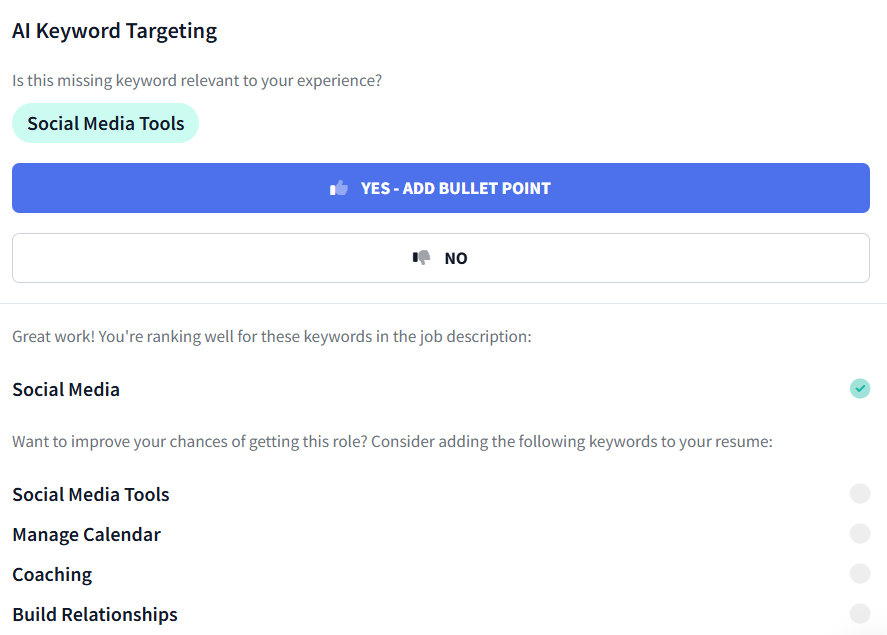
Check the job description for the organizational skills that matter most. ATS and hiring managers are looking for those keywords, so sprinkle them throughout your resume and back them up with real examples. Show that you actually practice what you preach.
If you want a shortcut, our AI Keyword Targeting tool can highlight skills you already have, suggest ones to add, and even write bullet points for you:
Pick a resume template
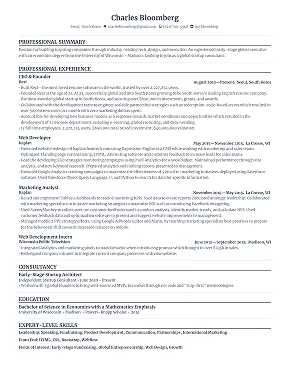
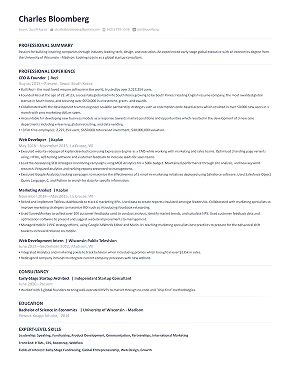
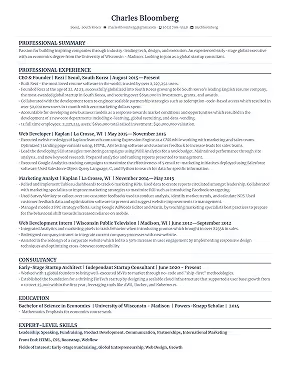
Your resume is the first proof of your organizational skills. If it’s messy, it doesn’t matter what your skills list says. Keep it simple and clean:
- One-column layout
- Basic design with plenty of white space
- Standard headings and bullet points
- One readable font
For examples of organized resumes, check out our Rezi resume templates.
Emphasize your skills in the summary
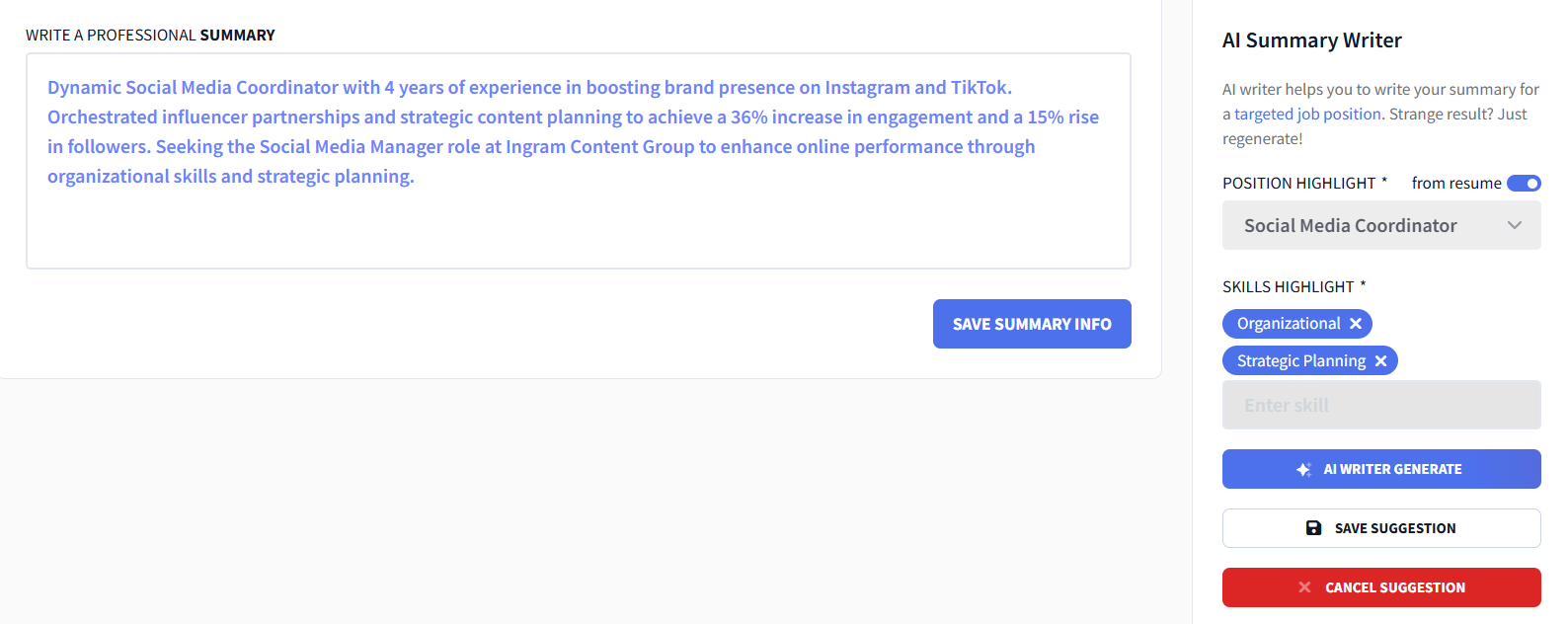
Don’t skip the resume summary; those 2–3 sentences are your quickest chance to show why you’re perfect for the job. Highlight a couple of achievements, mention that you’re reliable or detail-oriented, and add an example of how your organizational skills made an impact.
For help writing yours, try our AI Resume Summary Generator. I asked it to include organizational skills, and here’s what it came up with:
Back it up in your work experience
Use your bullet points to show how your organizational skills led to real results. Start each one with punchy action verbs like “scheduled,” “prioritized,” and “proofread.”
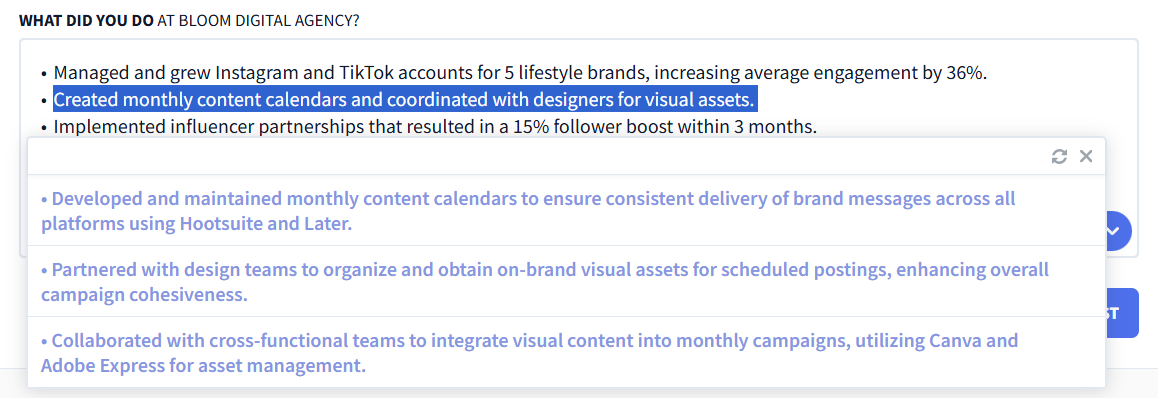
If you want to speed things up, try our AI Bullet Point Writer. Or highlight a bullet and let the AI Bullet Point Editor give you three polished rewrites:
Add examples to your education section
If you’re short on experience, your education section can still prove you’re organized. Include a bullet about something you planned or managed: a high-scoring group project, campus events, or a student leadership role.
Here’s a sample education section:
Bachelor of Business Administration | University of Michigan | Graduated June 2023
• Served as event coordinator for the Michigan Business Club, organizing workshops and networking events for 50+ students.
• Led a group marketing project for the Marketing Strategy course, developing a dating app campaign, managing timelines and tasks, and earning an A with a presentation at the Young Innovators Conference.
• Completed coursework in finance, marketing, and management with a 3.7 GPA.
List them in your skills section
Aim for six to ten skills. Lead with your technical and hard skills, but add some organizational skills to your skills section if the job description mentions them. It shows you read the post and you can match what they want.
Here’s an example of a skills section:
Soft Skills: Time Management, Prioritization, Goal Setting, Communication, Collaboration
Hard Skills: Content Planning, Scheduling, Project Management
Technical Skills: Asana, Hootsuite
Explain in the cover letter
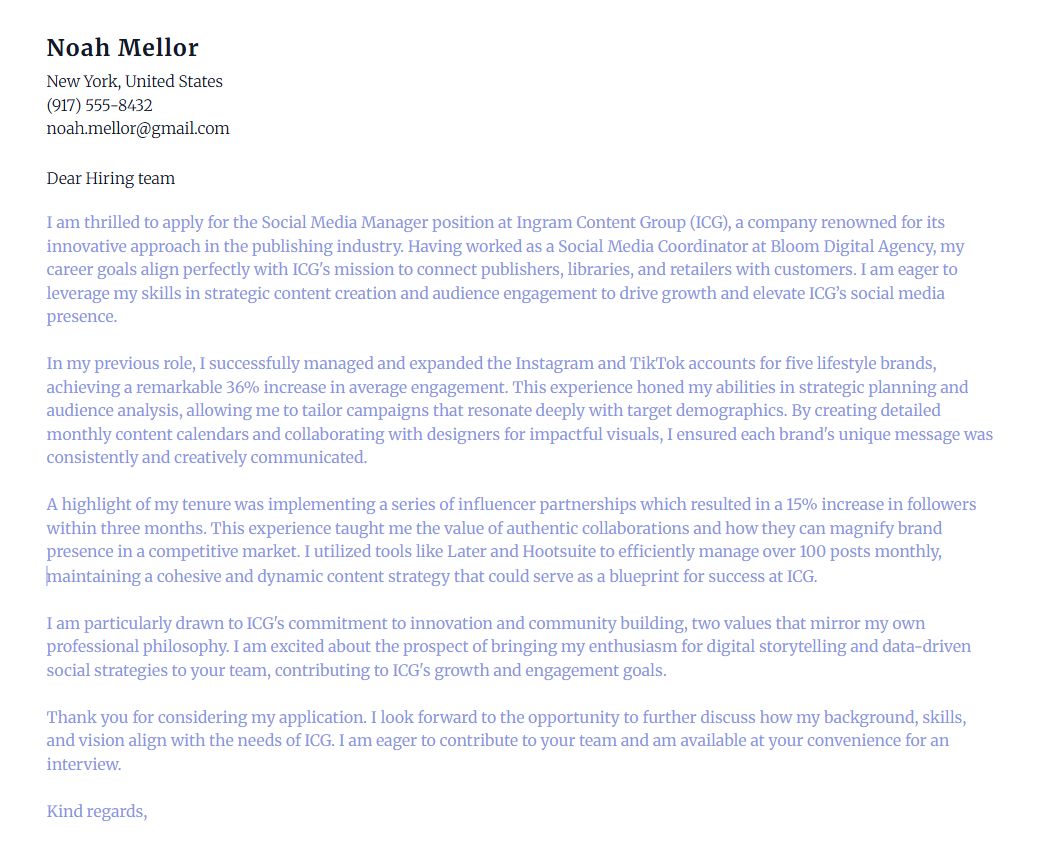
Your cover letter is your chance to spell out how you’d excel at the job. Tailor it so each paragraph connects your experience to what the job post asks for, especially examples that prove you’re organized.
Use our AI Cover Letter Writer for a head start. Here’s a sample cover letter:
Give examples in the interview
Interviewers love to ask how you stay organized or handle stress. Share what you actually do, and have stories ready from work, school, or extracurriculars:
- A situation where your organization solved a problem.
- How staying organized helped you grow in a role.
- Software or tools you use to manage tasks and time.
Use the STAR method (Situation, Task, Action, Result) to structure your answers, as rambling makes you look less organized. For extra prep, try our AI Interview Practice, which generates interview questions similar to what you might face.
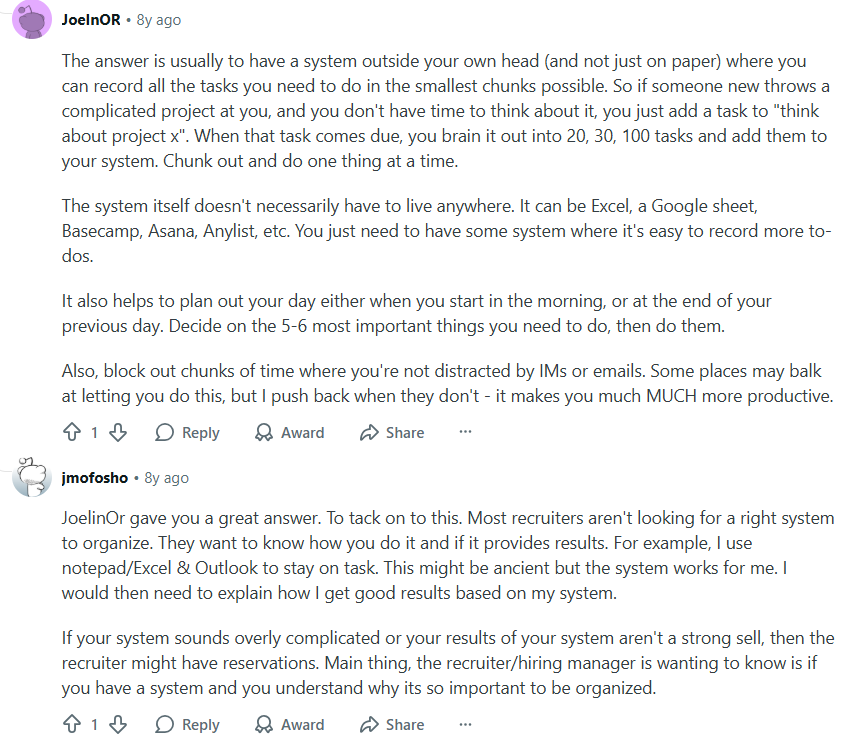
These Reddit users share their organizational systems:
How to Improve Organizational Skills
There’s always room to sharpen your organizational skills. If you feel a little scattered, try these tips:
- Use a calendar. Budget your time, block out deadlines, and stop relying on your memory alone.
- Make lists. To-do lists, checklists, or notes (physical or digital) help you track tasks and find info fast.
- Plan your day. Spend 5–10 minutes each morning (or evening) prioritizing tasks. Throw on your headphones, sip your coffee, and turn it into a fun little habit.
- Take charge of a project. Offer to organize and manage a project; it’s practice and resume gold.
- Tidy your workspace. A clean desk or work area keeps you focused and looks professional.
- Minimize distractions. Social media breaks are fine, just don’t let them hijack your work. Apps like Opal can help.
- Check in regularly. Managers: touch base with your team to keep everyone on track.
- Reflect and adjust. Notice what works, what doesn’t, and tweak your routine accordingly. Morning person? Schedule tough tasks early.
- Learn from others. Listen to a podcast, watch TED Talks, or read up on leadership and productivity skills.
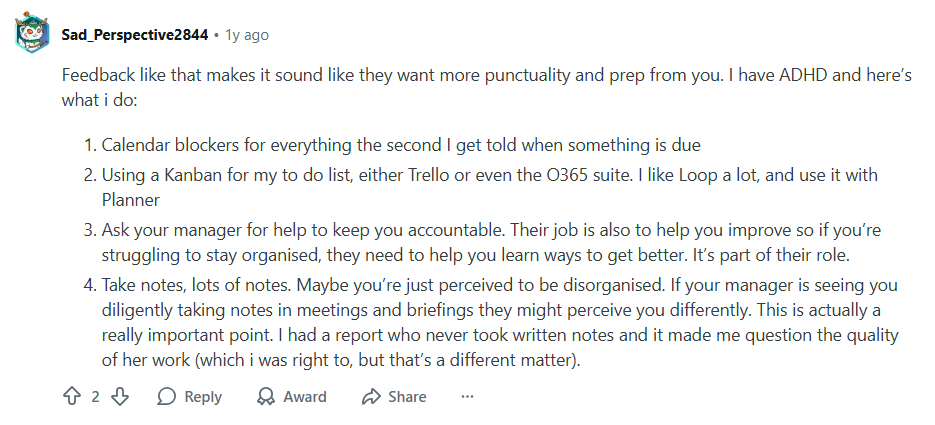
This Reddit user explains what works for them:
For a boost of motivation, check out Motivational Quotes & Tips to Stay Energized for Work.
Summary
Here’s a recap on organizational skills:
- Organizational skills help you manage time, tasks, and priorities so you can work efficiently and avoid chaos.
- Employers value organization because it saves time, reduces stress, and leads to higher-quality work.
- Key organizational skills include time management, scheduling, strategic planning, prioritization, goal setting, communication, attention to detail, decision-making, multitasking, collaboration, delegation, initiative, analytical, and using project management tools.
- Show these skills in your resume summary by highlighting achievements that reflect structure and reliability.
- Demonstrate them in your work experience with action-driven bullet points that show planning, coordinating, or managing responsibilities.
- Use your education section to highlight projects, events, or leadership roles you organized, especially if you’re early in your career.
- Add 6–10 skills to your skills section, blending technical skills with relevant organizational ones.
- Explain your organizational habits in your cover letter by tying them directly to the employer’s needs.
- In interviews, use structured stories (STAR method) to show how your organization helped you overcome challenges or deliver results.
FAQ
What are management skills for a resume?
Management skills include leadership, delegation, strategic planning, communication, decision-making, problem-solving, and coaching. These skills tell employers you can guide a team, keep work moving, and handle any challenges that come your way.
How to show multitasking skills on a resume?
Show multitasking by describing times you handled several responsibilities at once and still delivered. Mention overlapping deadlines, multiple clients, or juggling projects. Use action verbs, add numbers when possible, and highlight the results.
How to teach organizational skills?
Teach organizational skills by guiding people through clear, manageable steps and helping them plan ahead with calendars, time-blocking, and priority lists. Show how checklists and project trackers work, set SMART goals together, and let them practice with real tasks so the habits start to stick.
Is it organization skills or organizational skills?
“Organizational skills” is the correct and widely accepted term; it describes someone’s ability to manage tasks, time, and responsibilities. “Organization skills” pops up occasionally, but it can sound like you’re talking about the skills of an organization.
What jobs require organizational skills?
Organizational skills matter in nearly every job, but they’re especially important in roles with a lot to juggle, like project managers, admins, teachers, social media managers, healthcare workers, event planners, and analysts. Even creative roles (designers, writers) rely on organization to manage deadlines, revisions, and client requests.
How to describe organizational skills?
When describing organizational skills, focus on what you actually do: plan, manage your time, break big projects into smaller steps, track details, or coordinate people. Pair each skill with a result, like meeting a tight deadline or managing a project, so employers see the impact.

Upload or drop your resume to get started
Upload your resume to get started
Score my resume

Sarah Coghlan is a writer and editor passionate about making resume and career advice clear and accessible to all. Based in Barcelona, her goal is to help job seekers create standout resumes and navigate the job search process with confidence and ease.

.jpeg)