
Administrative Resumes
How to Write a Federal Resume and What to Include (Examples)
Customize any of these resumes in minutes using our free AI-powered resume builder.
“Rezi is super upfront and continues to improve over time. I've recommended Rezi to several of my friends and colleagues. I just love this product so much.”

Ricky M.
Software Engineer
“Rezi is super upfront and continues to improve over time. I've recommended Rezi to several of my friends and colleagues. I just love this product so much.”
Ricky M.
Software Engineer
Helping users land jobs at 1,000+ companies such as














Scrolling through USAJobs can feel like you’re lost in a sea of requirements, qualifications, and required documents. It’s like listening to someone ramble on about all the rules in a card game… overwhelming.
But don’t check out just yet. The trick is to break it down and tackle it section by section instead of trying to cram everything into your resume at once. Federal applications are detailed; missing things like your work hours or U.S. citizenship could cost you the job.
Let’s break down the process. This guide will tell you:
- What makes a federal resume different from a regular one.
- Federal resume examples and what to include.
- How to write your federal government resume.
You can also check out our free AI Resume Builder to go through each section step-by-step with AI tools and personalised feedback to create a tailored application.
What Is a Federal Resume?
A federal resume (also known as a USAJobs resume) is for federal or government jobs. It’s not your typical one-pager you’d use in the private sector. Federal resumes are way more detailed and can easily run up to five pages. Why? They need to cover a lot more ground.
A federal resume requires details like your citizenship, veteran status, and any security clearances. These specifics help federal recruiters quickly determine if you’re eligible and right for the position.
You need to include thorough descriptions of your work experience, including duties, accomplishments, and how they relate to the job you’re applying for. You should also highlight your skills and competencies in a way that aligns with the job listing.
Federal Resume vs. Regular Resume
New to the world of federal resumes? While it’s tempting to pull bits from your regular resume, keep in mind that federal resumes are a whole different ball game. The devil is in the details, and there’s a reason these resumes are much longer than your typical one-pager.
Here are the key differences between a federal and a regular resume:
You can get help putting your federal resume together with our AI Resume Agent. Enter any custom prompt to generate bullet points, tailor your content, or adjust the formatting.
Federal Resume Examples
Writing a federal resume is all about finding the balance between personalization and meeting the official requirements. You need to dive deep into your work experience and training while using the right keywords and details from the job announcement.
Check out these resume examples with details on what to include to meet federal requirements.
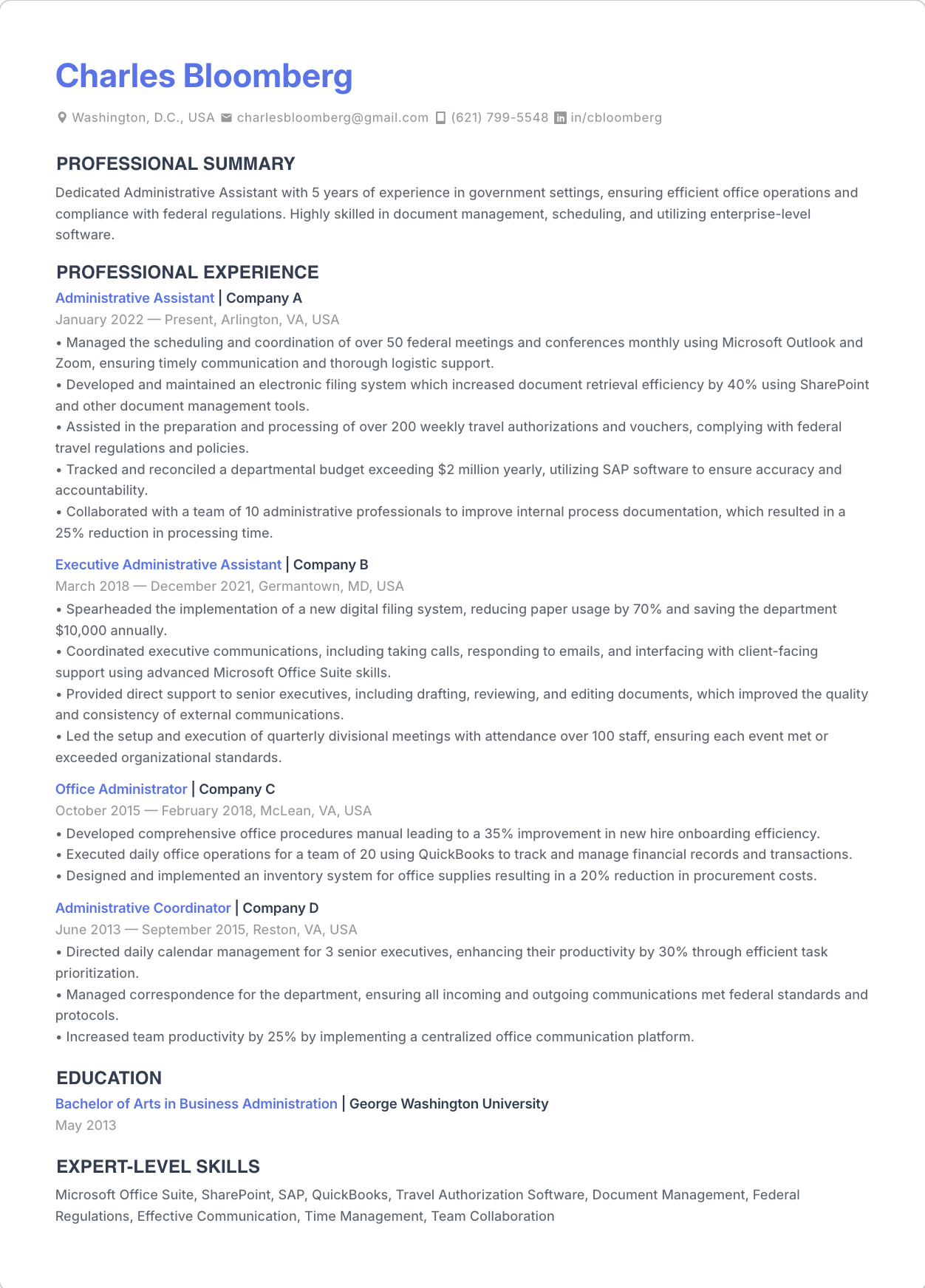
Administrative Assistant Federal Resume
Your Administrative Assistant federal resume should focus on any experience in admin support, daily program operations, and confidential record maintenance, especially within a government setting. Show how you've used Word, Excel, and other tools to enhance productivity. Emphasize your strong communication skills, typing proficiency, and ability to analyze data.
Human Resources Federal Resume
For a Human Resources federal resume, highlight your expertise in managing databases and handling sensitive documentation. Detail your ability to coordinate schedules and manage budgets. Outline familiarity with military personnel database systems and emphasize your readiness to travel, whether to normal duty stations or more isolated sites.
FBI Federal Resume
With an FBI federal resume, detail your experience, education, and training tailored to the field, such as special agents, analysts, or computer scientists. Include at least a year of professional experience in areas like investigating federal law violations, improving office operations, or analyzing data. Clarify that you’re a U.S. citizen with a clean criminal record, as these are non-negotiable. Emphasize your college education since a degree is a must for FBI positions.
Veteran Federal Resume
Your Veteran Federal Resume should highlight your veteran status to ensure you get Veterans’ Preference. Include your DD-214 or other required documents to confirm your service. Treat your military service like any other professional experience, listing your positions and dates of service in chronological order. Translate your military job titles and skills into civilian terms to make them relatable. Add any awards and relevant training you received in the military.
Entry-level Federal Resume
For an Entry-level Federal Resume, aim for about two full pages, covering internships, part-time jobs, and volunteer work. Describe each experience with the same level of detail as a paid position, listing your responsibilities and achievements. Use keywords from the job ad to help your resume stand out, and include a resume objective to highlight your career goals.
How to Write a Federal Resume
Short answer:
Writing a federal resume starts with understanding the requirements by carefully reading the job announcement. Use this information to tailor your resume, focusing on detailed work experience descriptions, including the employer’s name, job title, dates, and hours worked. Highlight “Specialized Experience” that’s relevant to the job and include quantifiable achievements. Mention your security clearance, citizenship status, and any veterans’ preference if applicable. Use the federal resume format, which is more detailed than civilian resumes, and incorporate keywords from the job listing to navigate Applicant Tracking Systems (ATS). Double-check for accuracy and completeness to meet federal application standards.
Choose the right federal resume format
Your federal resume doesn’t need flashy colors or fancy fonts. Keep it simple and use ALL CAPS for headings to separate your sections. When it comes to structure, opt for the tried-and-tested reverse chronological format.
Start with your most recent experience and work your way back. This format is what HR professionals and Applicant Tracking Systems (ATS) are most familiar with, so it’s easier for them to spot your most relevant and recent experience.
Here’s how to structure your federal resume using the reverse chronological format:
- Contact information and personal details
- Resume summary or objective
- Work experience and skills
- Education and training
- Awards or professional recognition
- Any additional sections
And no photos. Federal resumes focus on your qualifications, not your appearance. Including a photo can get your application tossed since it’s against federal employment standards.
Tailor your resume to the position
Even seasoned professionals need to prove they’re the right fit. But don’t just guess what the employer wants — it’s all in the job listing. Start by carefully reading the job description and making a list of the required skills and experience.
Pay special attention to the “Specialized Experience” section; it outlines the must-have qualifications, including paid and unpaid work. Here’s what that can look like for an admin position:

Once you have that list, compare it with your resume and match your experience to the job requirements. For example, if the job calls for project management, don’t just say you’ve managed projects; give specific examples that show your success in that area.
When hiring managers evaluate your application, they can use these ratings based on how well it aligns with the job criteria:
- Best Qualified: Your background is almost a perfect match (95%-100%).
- Well Qualified: Your experience is a strong match, but not quite perfect (85%-94%).
- Qualified: You meet the basic requirements, but there’s room for improvement (70%-84%).
To land in the “Best Qualified” category, highlight the experiences and skills that directly relate to the job. Don’t be shy about using the same language as in the job ad. If they mention “budget analysis,” use that exact phrase to improve your chances with ATS scanners and recruiters.
Learn more about aligning your resume with the job ad:
- How to Tailor Your Resume to a Job Description
- How to Target a Job Description With Your Resume
- How to Tailor Your Resume to a Job Description With AI
Add your contact information and personal details
When writing a federal resume, your contact information goes beyond your name and email. Your federal resume needs to paint a full picture of who you are and ensure your application meets all the basic requirements.
Here’s a quick rundown of what you need to include:
- Full name: Include your first and last name.
- Address: List your full address, including your town, state, and ZIP code.
- Phone number: Provide a phone number with the right area code.
- Email address: Use a professional email address with your full name. If you’re still using an old email provider like AOL or Hotmail, consider updating it to something more current (like Gmail).
- Social Security number: Add your Social Security number if requested in the job listing for identity purposes and background checks.
- Citizenship: State your country of citizenship, as many federal jobs require you to be a U.S. citizen. You may also need to provide proof with a birth certificate or passport.
- Veterans’ preference: A simple “Veterans’ Preference: Yes or No” will do.
- Security clearance (if applicable): If you have a security clearance, include the level and whether it’s still active.
- Federal employment: Add your federal background, such as military or state government.
Here’s an example of your contact information for a federal resume:
Jack Turner
1234 Maple Street
Springfield, VA 22150
(555) 123-4567
jack.turner5@gmail.com
Social Security Number: 123-45-6789
Citizenship: United States
Veterans’ Preference: Yes
Security Clearance: Active
Federal Employment: Former U.S. Army (2019–2024)
Include a detailed work experience section
Your work experience section is the heart of your federal resume. For each job, include:
- Employer’s name
- Location
- Job title
- Start and end dates
- How many hours per week you worked.
- Whether you worked full-time or part-time
Begin each job entry with a brief paragraph that describes your overall duties. Then follow up with detailed bullet points focusing on your accomplishments. And be specific. Instead of saying, “Managed a team,” you can say, “Led a team of 15 to increase department productivity by 20%.”
Numbers, percentages, and dollar amounts help to highlight your impact, so dig into your past performance reviews, job descriptions, and any awards you’ve received to find this data.
Many job listings also require at least one year of “Specialized Experience” in the field. This means you’ve done similar work before and can start strong in the new role. Tailor these details to match the job ad as closely as possible.
Here’s what a federal work experience section looks like for someone in an admin role:
Job Title: Administrative Assistant
Employer: Department of Health and Human Services (HHS)
Location: Atlanta, GA
Start Date - End Date: January 2016 – Present
Hours Per Week: 40 (Full-time)
Provided comprehensive administrative support to a team of 25 health professionals, ensuring the smooth operation of daily activities. Managed office communications, scheduling, and documentation while maintaining a high level of confidentiality and professionalism.
• Managed and coordinated the schedules of senior executives and staff, efficiently handling over 50 meetings and appointments weekly. Implemented a new digital calendar system that reduced scheduling conflicts and improved time management.
• Prepared and edited official documents, reports, and presentations for internal and external meetings. Ensured all materials were accurate, well-organized, and compliant with federal guidelines.
• Overhauled the office filing system, transitioning from a paper-based system to a digital records management solution. This initiative improved document retrieval time and enhanced data security in compliance with federal record-keeping regulations.
• Processed travel and expense reports for staff, ensuring all submissions met federal guidelines and were completed within a 24-hour turnaround time. Identified and corrected discrepancies to reduce processing errors.
• Assisted in the coordination and execution of large-scale departmental events, such as annual conferences and training sessions, hosting up to 200 participants. Managed logistics, vendor contracts, and attendee registrations, contributing to the success of events within budget and on schedule.
Specialized Experience
Over three years of administrative experience in a federal setting, specializing in office management, executive support, and document control. Proficient in federal compliance and record-keeping requirements.
And don’t just stick to paid jobs; unpaid work holds a lot of weight in a federal resume. If you have volunteer experience or held roles in relevant community organizations, include them with the same level of detail as you would for paid positions.
Keep the language straightforward. Avoid acronyms or jargon that non-technical recruiters might not understand. The goal is to make it easy for the hiring team to see exactly how your experience aligns with the job they’re looking to fill.
Need help writing strong points? Use our AI Bullet Point Generator to get impactful bullet points based on your job title, experience level, and skills.
Outline your educational background
Your education section is the place to show off your qualifications, especially if you’re light on work experience. And just a heads-up: for some positions, your education needs to be recognized by the U.S. Department of Education before including it on your resume.
Start with your highest level of education and work your way back. With a college degree, here’s what you should list:
- Name of the school
- City and state
- Your major (and minor, if applicable)
- Type of degree (like a Bachelor’s or Master’s)
- Graduation year
If high school is your highest level of education, list the school’s name, city, state, and the date you received your diploma.
You can also add any relevant coursework, certifications, or training that ties into the job you’re applying for, especially if the job requires specific knowledge or skills (just keep it relevant).
Here’s what a federal education section could look like:
Bachelor of Science in Human Resource Management
University of California, Los Angeles, CA
Graduated: June 2022
Relevant Coursework: Employment Law, Organizational Development, Talent Acquisition
Certification in HR Management
Society for Human Resource Management (SHRM)
Completed: August 2023
List relevant skills for a federal job
When building your skills section on a federal resume, it’s not just about dropping a few buzzwords. You have to show you have the right KSAs: Knowledge, Skills, and Abilities. And while you’re at it, consider how they relate to the role in the job description.
Here’s a breakdown to give you some inspiration:
- Knowledge: Show what you know about the specific field. For example, if the job calls for expertise in data analysis, highlight your familiarity with tools like SQL or Python and any methodologies you’ve mastered.
- Skills: These are the practical abilities you’ve developed over time. This might include technical skills, like proficiency in software, language skills, or a few soft skills, such as effective communication or project management.
- Abilities: This is where you show you can perform the tasks the job demands. For instance, if the role involves problem-solving, you could mention how you overcame a challenge to improve efficiency or operations.
You can use the job ad as your cheat sheet.
Use keywords from the description by weaving those specific phrases throughout your work experience descriptions. This shows you have the skills they’re looking for and helps your resume with Applicant Tracking Systems (ATS) when they scan for specific keywords.
And now isn’t the time for white lies. Overstating your abilities can backfire, especially in roles where integrity is key. If you’re caught exaggerating, it could lead to some awkward moments during interviews.
Here’s how you can weave specific skills into the work experience descriptions:
• Applied advanced Excel skills to track and evaluate budget expenditures. Using complex formulas and pivot tables, I identified cost-saving opportunities that led to a 15% reduction in annual expenses.
• Encouraged effective communication across departments to organize and execute company events. My efforts enhanced internal engagement and team cohesion, showcasing my ability to manage and relay information.
• Managed and updated a client database using SQL, which improved data accuracy and reporting capabilities. I used my technical proficiency and ability to use software tools to enhance data management.
Mention any awards or professional recognition
Want to stand out from the pack of applications? Don’t be modest. If you’ve got any awards or honors, show them off. You can add them to your work experience and education sections, or even create a new section if you have a few under your belt.
Another smart move? List some professional or personal references to back up your skills and character. Whether it’s a colleague, mentor, or even a classmate, having someone who can vouch for your achievements adds credibility to your application.
And don’t forget those job-related training courses, certificates, or licenses to show you’re committed to growing your skills. If you’ve written any publications, mention those too — every accomplishment helps tell the story of your success and dedication.
Create an eye-catching resume summary
Let’s say your resume is around four pages long — that’s a lot to condense into a summary, but you’ll have an easier time if you write it last. By then, you can quickly skim through and pick your most impressive experiences and skills.
Your resume summary is a short, 2 to 3 sentence paragraph at the top, just below your contact information. In those few sentences, you want to highlight:
- Key aspects most relevant to the job
- Your most impressive and relevant skills
- Experiences related to the job description
Here’s an example of a resume summary for a police officer:
Dedicated police officer with over 3 years of experience in law enforcement. Proven track record in maintaining public safety, investigating criminal activities, and building strong community relationships. Skilled in conflict resolution and proficient in modern policing technologies. Committed to upholding the law with integrity and ensuring the well-being of the community.
Stay true to yourself while using similar words and phrases from the job description to show you’re a good fit and to get past ATS scanners. Federal recruiters are more likely to focus and keep reading if they instantly spot the skills right for the role.
Need some help? Try our AI Resume Summary Generator to generate your summary in seconds. Just enter your position and skills, so our resume can better match your details.
Writing a resume summary can be intimidating if you don’t have much experience or relevant skills. If that’s you, opt for a resume objective to focus more on your career goals and willingness to learn and improve in your chosen field.
Here’s a resume objective for an entry-level position:
Motivated and hardworking recent graduate with a strong interest in public safety and law enforcement. Eager to apply my knowledge of criminal justice and dedication to community service in a police officer role. Committed to learning and growing within the force while upholding the law and ensuring public safety.
What Makes Federal Resumes Different
In short: describe your work experience in detail to meet federal resume requirements.
Your resume can’t cut corners. Recruiters want every relevant detail about your experience, education, and any required documentation to make sure you meet all the eligibility criteria and are the perfect fit for the job.
Here’s a rundown of what makes federal resumes more detailed compared to regular ones:
Expand your resume length
While the exact length of your resume can differ from person to person, I recommend aiming for two to five pages to cover everything. If you don’t have much experience, don’t stress about filling up the pages with unnecessary details; the golden rule is to keep everything relevant.
What this means for you:
- Go beyond basic job duties. Include specific achievements, metrics, and examples. Instead of just saying you worked within a team, describe how you helped to complete a project with quantifiable results.
- Add extra pages for relevant details like internships, publications, certifications, and volunteer work. You can also list any specialized training or languages spoken to show your full range of skills.
Be detailed with your work history
Recruiters need to see all the nitty-gritty details. You can go back as far as ten years in your work history, as long as it’s relevant. But keep in mind that hiring managers are busy people, so focus on detailing the key experiences and skills that really matter.
What this means for you:
- Tailor your resume for each application by aligning your experience with the job description. Don’t know where to start? You can use the action verb-task-result formula as a template for describing your work experiences.
- Provide detailed descriptions of your responsibilities and achievements. Numbers can speak louder than words and have more impact, so use percentages and metrics to quantify any achievements.
Include keywords for federal jobs
While not as common as in the private sector, some federal agencies use Applicant Tracking Systems (ATS) to sift through resumes before they even reach the HR desk. Want to make sure yours lands in front of a real person? It’s all about choosing the right words.
What this means for you:
- Carefully read the job listing, especially the “Competencies” section, to find keywords and phrases to weave into your resume. For example, if the job posting mentions “strategic planning,” organically add this phrase into your work experience with achievements to back yourself up.
- Integrate action verbs and skills that reflect your accomplishments and duties. Words like “achieved,” “managed,” “developed,” and “analyzed” can add more depth and impact to your experiences.
Submit additional documents
Don’t let a missed document cost you the job. Beyond your resume, some job postings require additional paperwork to verify your qualifications or employment status. Make sure you have everything covered so you don’t lose out to another candidate.
What this means for you:
- Carefully read the job ad to see which documents are required, like SF-50 forms, transcripts, or certifications. You can submit these documents through an online portal or by email.
- Double-check that everything is current and accurate. Documents for federal jobs include SF-50, ECQs, OF-306, and the DD-214 for veterans. If you’re including academic transcripts, make sure they’re official and up-to-date.
Bonus Resources for Federal Jobs
Before diving into your resume, I recommend looking at job listing websites to get a good idea of the requirements and qualifications for federal jobs. Step into the shoes of the employer so you can build a resume that shows you understand applying to federal jobs and all the requirements.
Here are the top sites to check out for federal job openings:
USAJobs
USAJobs is the Federal Government’s official job site, where you can find thousands of job opportunities across various fields, like science, business, and engineering. It’s the go-to place if you’re looking to start or advance your career in federal service.
Some jobs are open to all U.S. citizens, while others are limited to current or former federal employees. USAJobs also has a resume builder that helps you craft a federal resume tailored to these positions. Plus, each job listing is super detailed with “Specialized Experience”, the evaluation process, and additional documentation — so you’ll know exactly what’s required.
Intelligence Community Careers
The Intelligence Community is a group of 18 federal agencies that gather, analyze, and deliver intelligence to help protect the U.S.
Agencies, like the NSA and the Office of the Director of National Intelligence, look for people with specialized skills to tackle issues ranging from climate change to foreign tech threats. If you’re interested in a career in the IC, be prepared for a lengthy hiring process — it can take over a year depending on your background.
GovtJobs
GovtJobs is a career site that’s been around since 1997, focusing on jobs at the city, county, and state levels. It’s one of the largest platforms dedicated solely to state and local government positions, especially for those aiming for executive roles. For job seekers, it’s a solid alternative to USAJOBS for finding public sector opportunities.
Feds Hire Vets
Feds Hire Vets is a one-stop website for veterans, transitioning service members, military spouses, and their families looking for federal jobs. It’s about helping veterans find employment within the federal government, making it easier to navigate the hiring process and access career resources. The site serves to recruit and retain veterans by connecting them with opportunities that match their skills and experience.
Summary
Here’s an overview of all the key steps to create a solid federal resume:
- Start with your contact details and important information like your citizenship status, veteran’s preference, and security clearance (if applicable).
- Read the job listing thoroughly to understand the job requirements and expectations. Pay special attention to the “Qualifications”, “Specialized Experience,” and “Competencies” sections.
- Include a detailed work experience section with your duties, accomplishments, and positive results in reverse chronological order. Include your job title, employer, location, and dates, and specify if it was full-time or part-time.
- Highlight Knowledge, Skills, and Abilities (KSAs) throughout your resume and make sure they align with what’s required for the job.
- Outline relevant education with any degrees, certifications, and training courses. Include details like the school name, location, and graduation year.
- Be thorough but concise. Federal resumes are long, but they still need to be easy to read. Stick to what’s relevant and impactful, so your resume is detailed but not overwhelming.
- Add your summary or objective at the top of your resume to highlight your key skills, experiences, and accomplishments most relevant to the position.
- Customize your resume to match the job requirements. Use similar language and keywords from the job posting to show you’re a perfect fit — just make sure it’s authentic to your experiences.
- Errors can cost you the job, so double-check for typos, formatting issues, and any missing information before submitting.
FAQ
What does a federal resume look like?
A federal resume is a detailed document that includes all the usual resume sections, like contact information, work experience, and education, but with more depth. It typically starts with a resume summary or objective, followed by detailed work experience listed in reverse chronological order.
Each job entry should include descriptions of your responsibilities, accomplishments, and how many hours per week you worked. It also includes sections for skills, certifications, and sometimes professional references. Think of it as a comprehensive snapshot of your career that leaves no stone unturned.
How long should a federal resume be?
A federal resume typically runs between 2 and 5 pages, depending on your experience. You need to cover all the bases: work history, education, skills, and additional details. Just remember, quality over quantity; avoid fluff and focus on relevant details that show you’re the right fit for the job.
What is the difference between a federal resume and a civilian resume?
The key difference between a federal and civilian resume is the level of detail. Civilian resumes are usually a single page, focusing on your most recent and relevant experience. Federal resumes are much longer (often 2 to 5 pages) because they require you to dive deep into your work history, skills, and qualifications.
Federal resumes also include additional sections like citizenship, veterans’ preference, and security clearances. Basically, federal resumes are all about being thorough and meeting specific criteria outlined in the job announcement.
How far back should you go on a federal resume?
You can go back about 10 years on a federal resume, but only include experience relevant to the job. If you’ve been in the workforce for longer than that, focus on the most significant and applicable roles.
If you’re just entering the workforce, don’t feel the need to fill up your resume with random jobs like babysitting that aren’t relevant to the role. Instead, detail your education, volunteer experience, or training — focus on the skills you’ve picked up that can be applied to a new position.
How much does a federal resume writer cost?
The cost of hiring a federal resume writer can range from about $200 to $500 or more, depending on the complexity of your resume and the writer’s expertise. Entry-level services might be more affordable, while specialized federal resume writers who have experience with specific agencies could charge on the higher end.
You can save a ton of money by using AI Resume Builder to generate a personalized federal resume based on your skills and experiences.

Upload or drop your resume to get started
Upload your resume to get started
Score my resume
Contents

Resume Formats & Examples
ATS-Friendly resume formats that land jobs
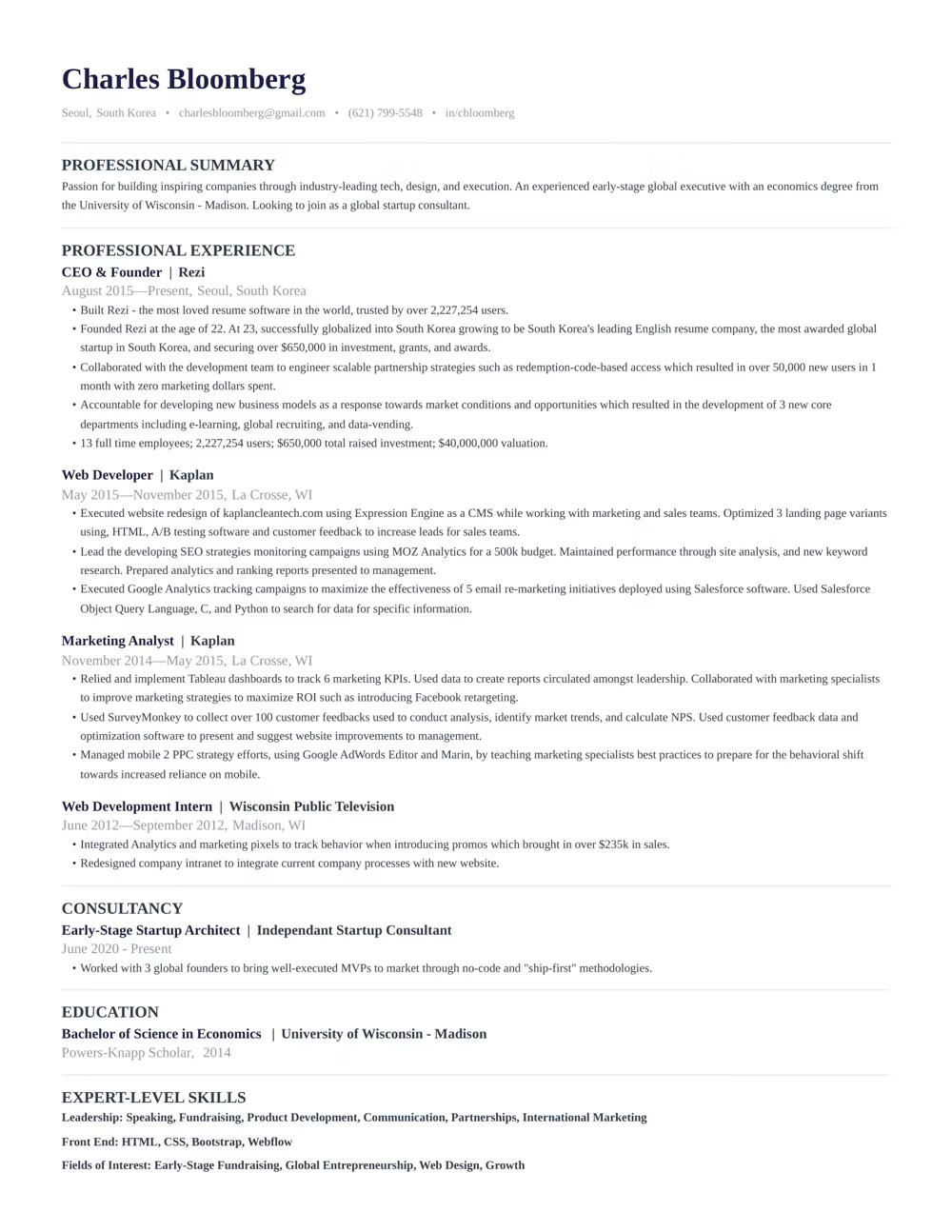
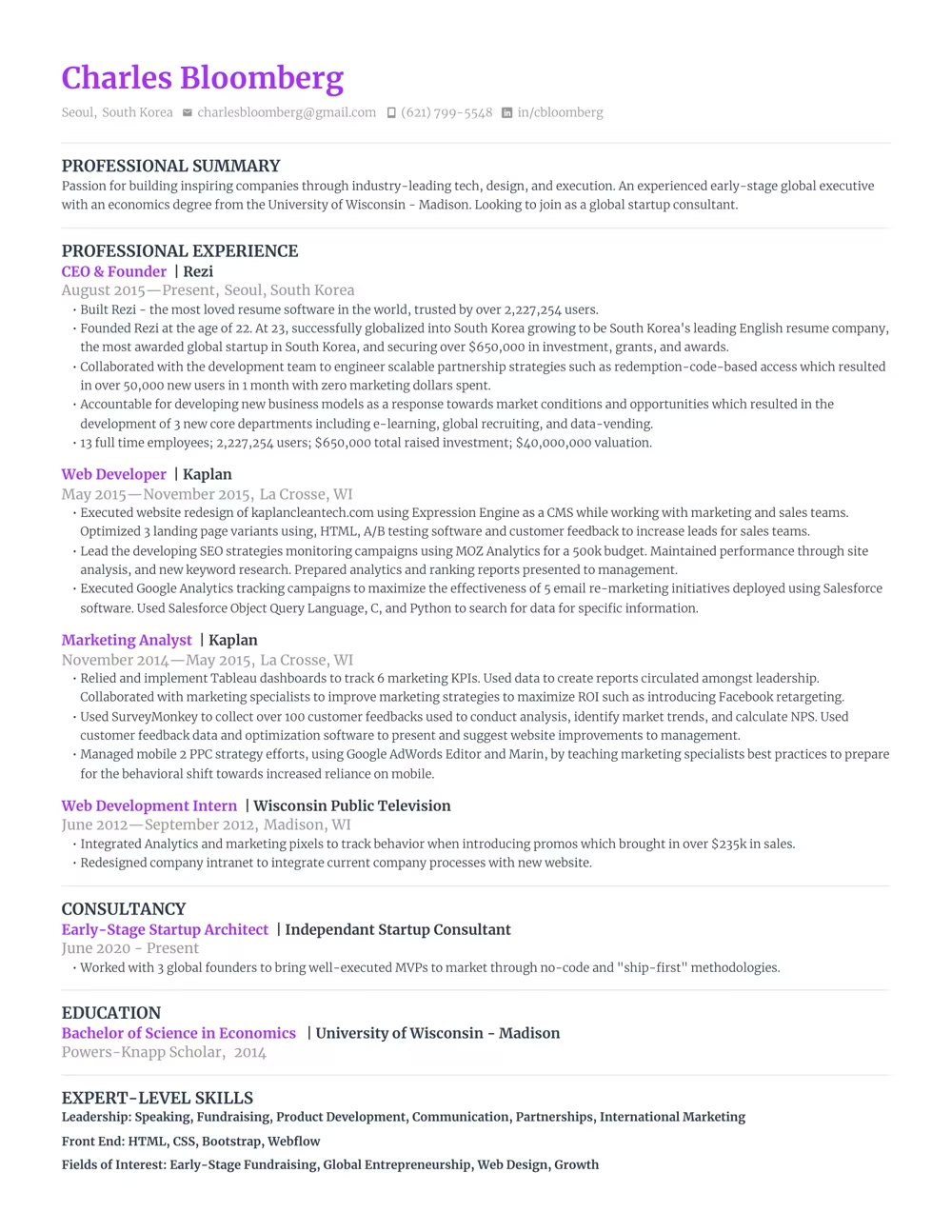
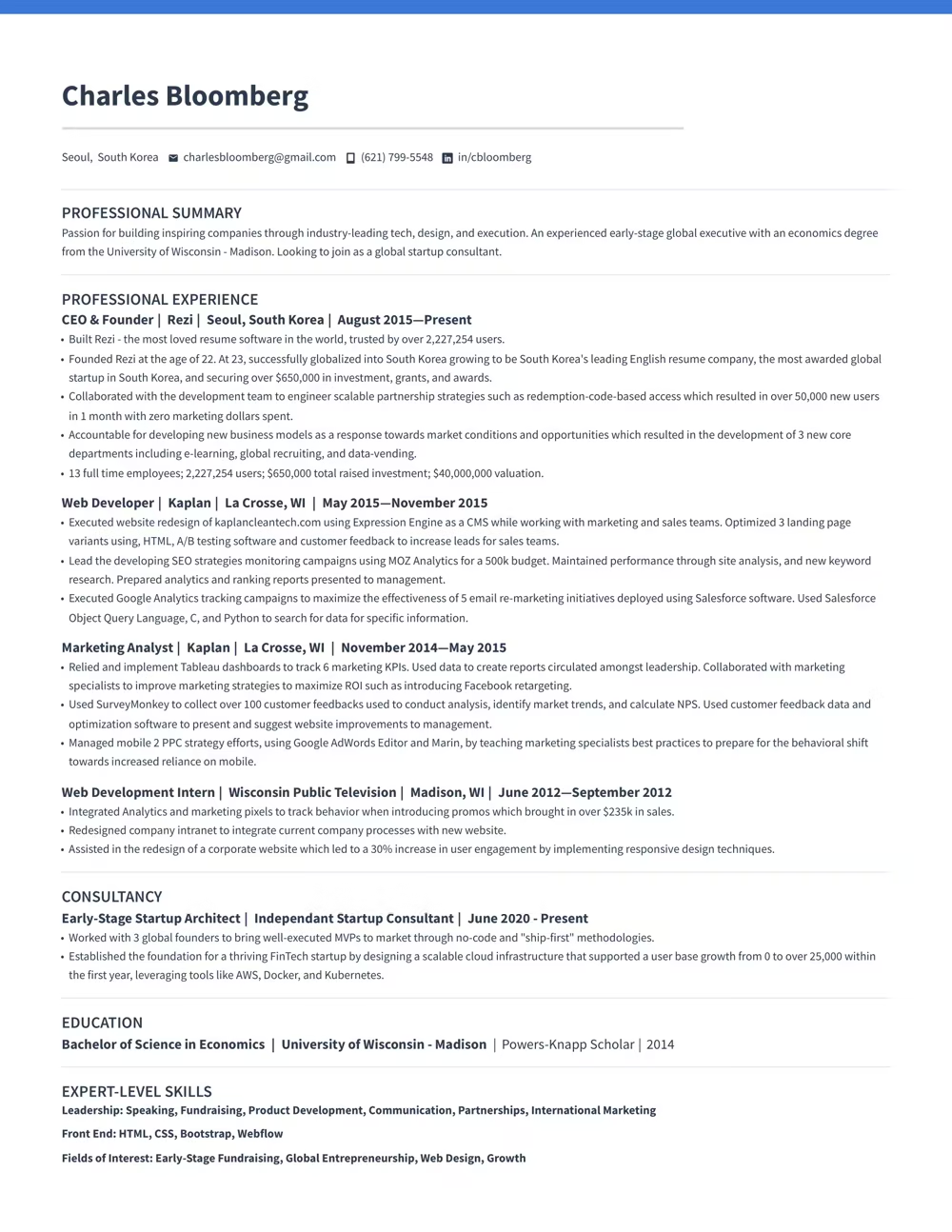
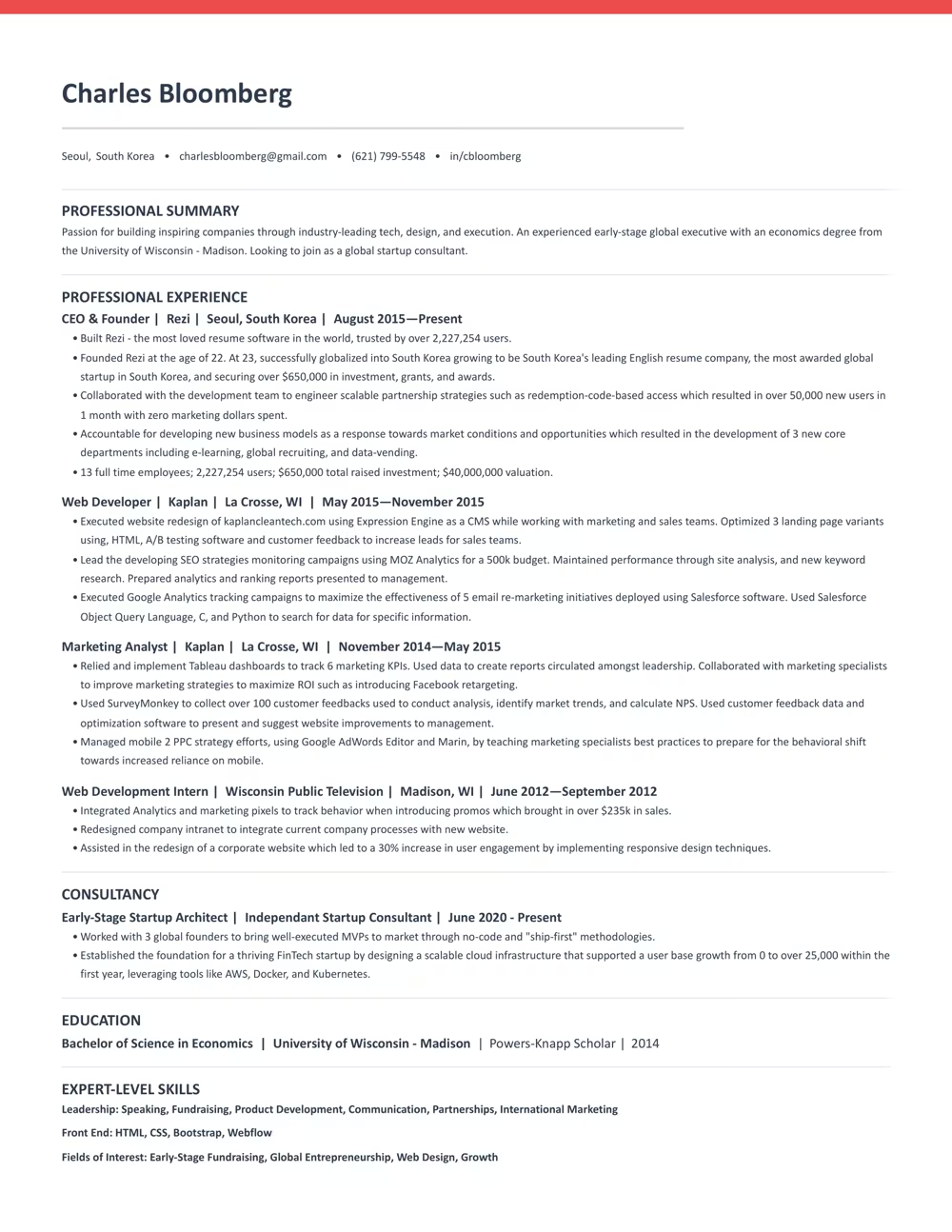
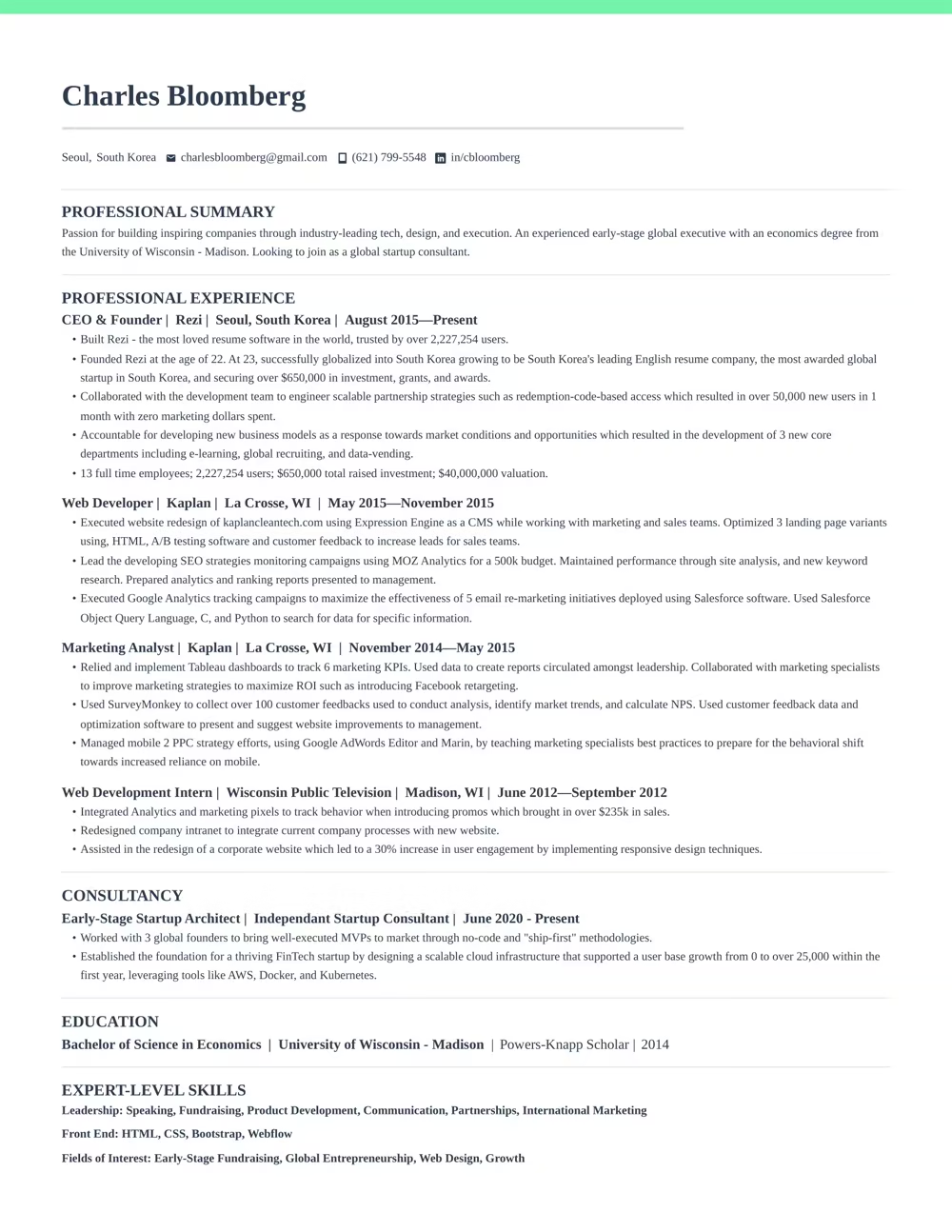
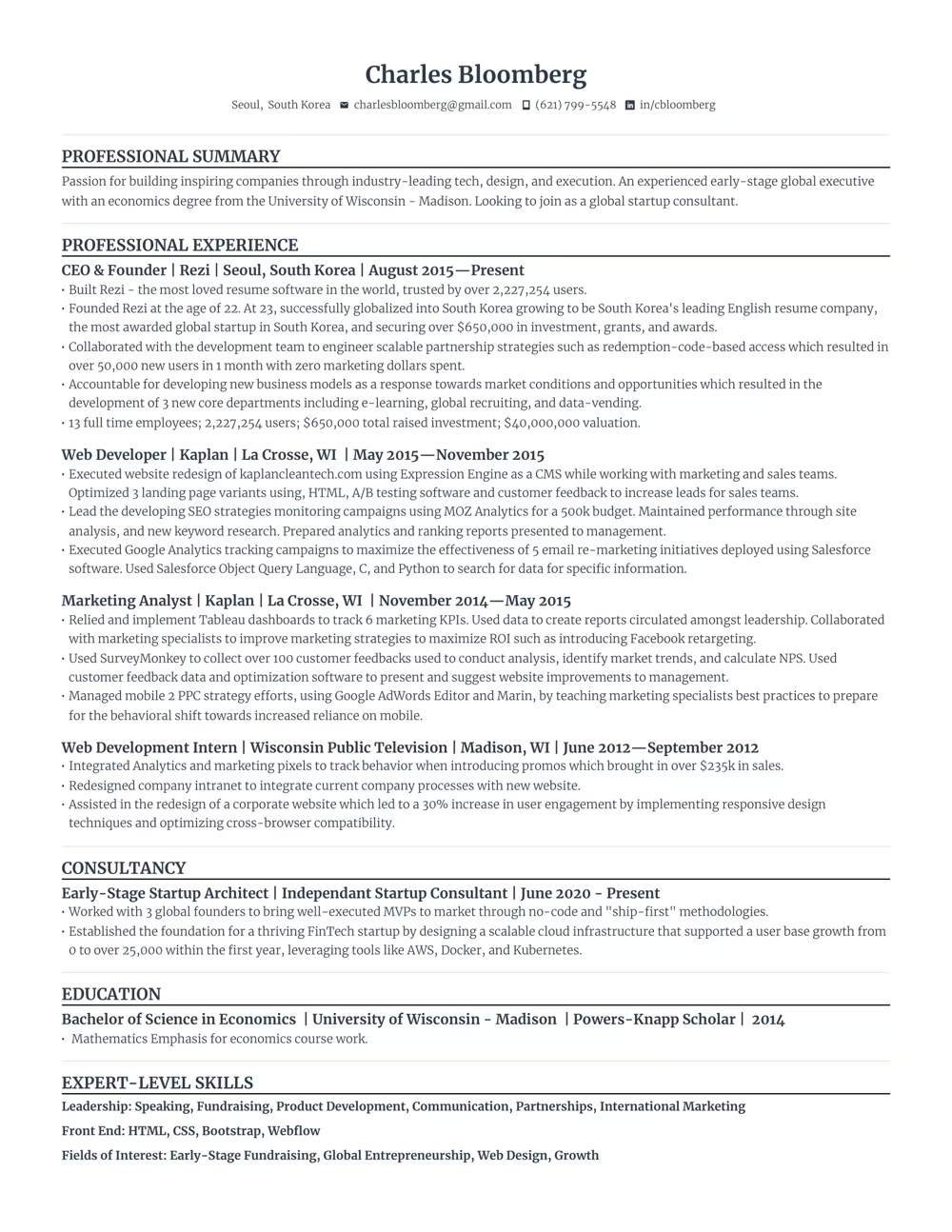
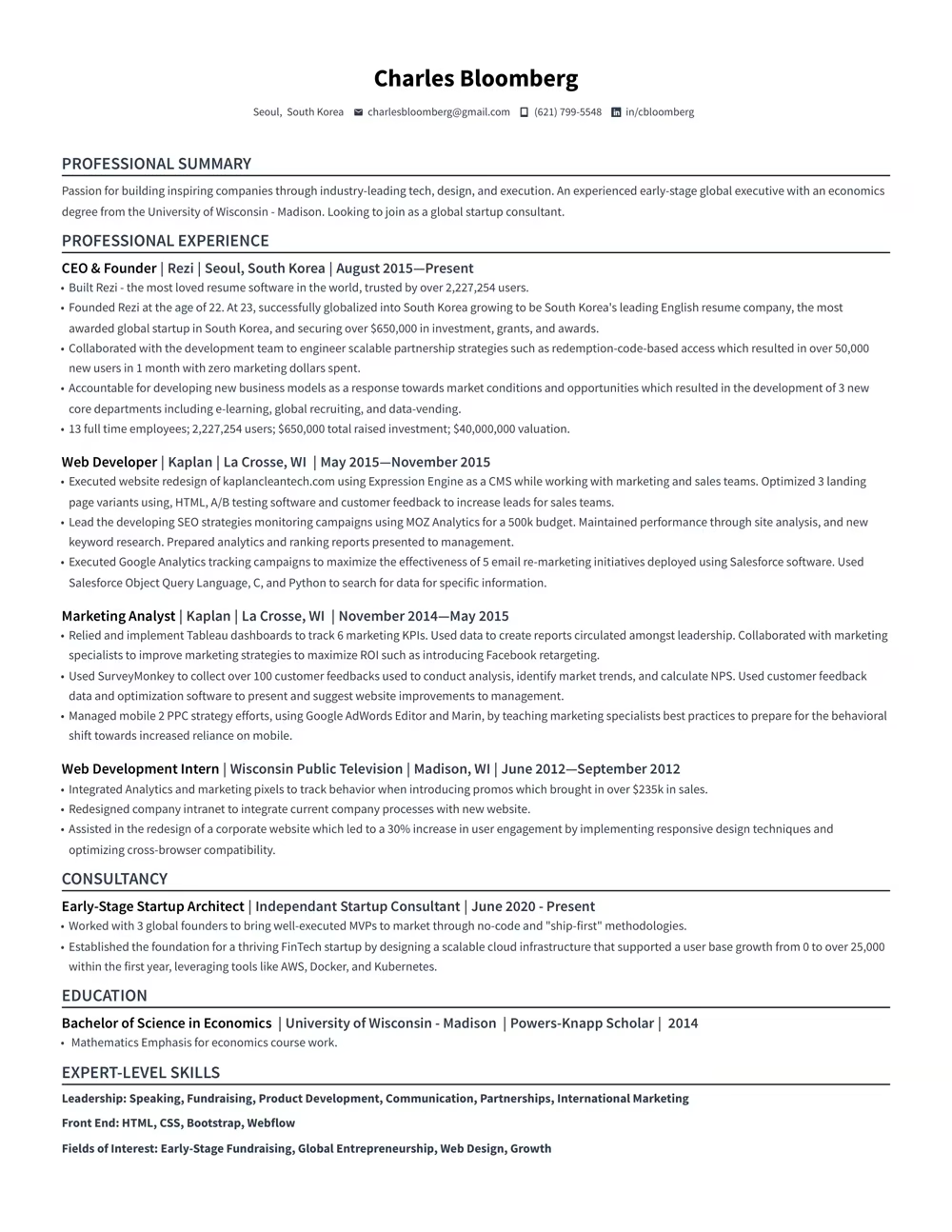
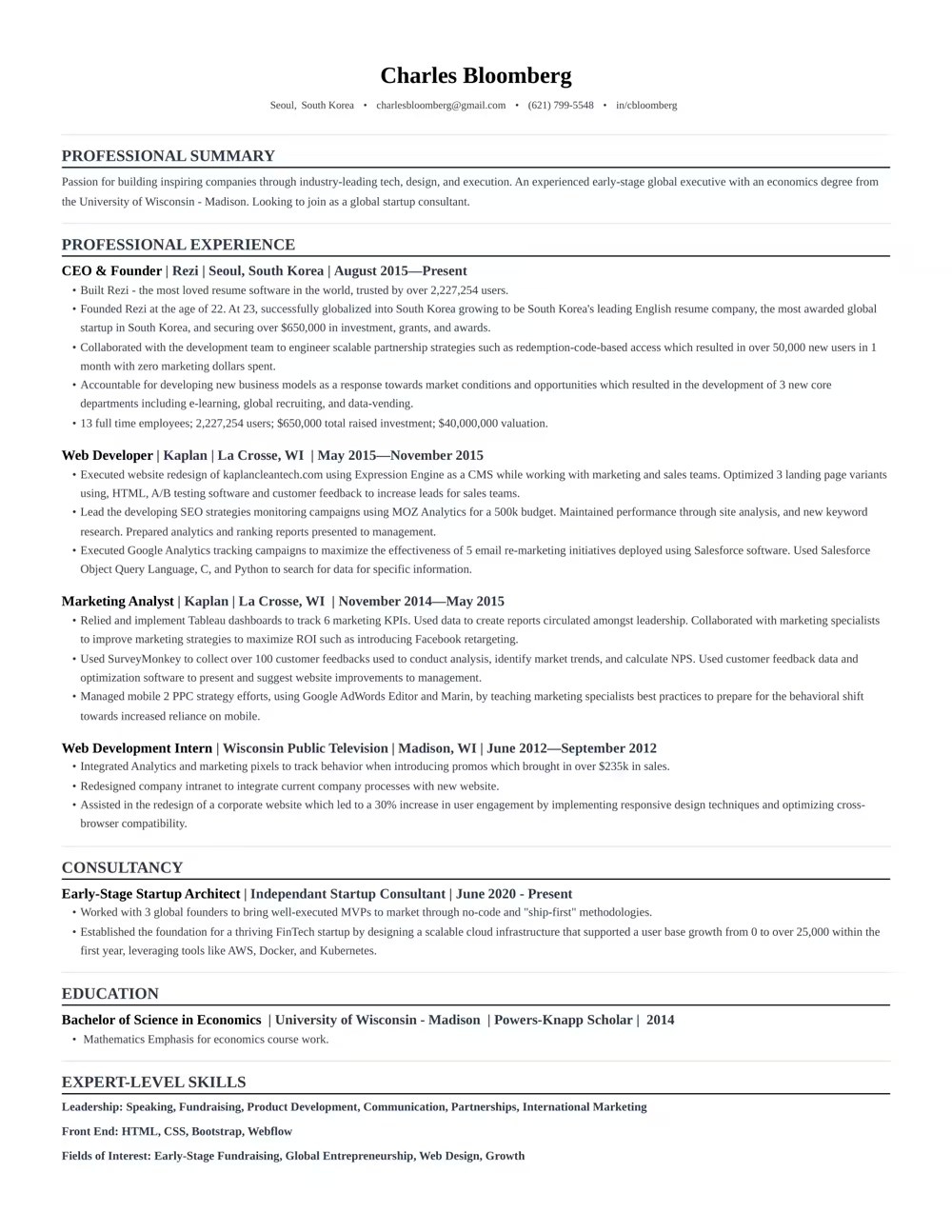
Use a template that guides you. Our ATS-compliant designs are trusted by over 4 million job seekers.




“Rezi is an awesome AI-based resume builder that includes templates to help you design a resume that is sure to check the boxes when it comes to applicant tracking systems. This is a great jumping off point to kickstart a new resume.”

Ashley Stahl
Career Contributor
62.18%
Interview Rate
4,510,834
Total Users
8.23 / 10
Avg. User Review
Wall of Love
Over 4 million users trust Rezi

Resume Building felt like pulling teeth – until I found Rezi.
Davis Allen
Software Developer

I was blown away by Rezi. It streamlined everything...
Celine Watko

I needed a resume tool as smart as my work.
Yosra Naceur
Data Scientist
“A great tool that is very helpful. I found the Rezi system easy to use and very helpful as I was working on getting my resume in shape for job applications.”

Dakota Rubin
United States
Written via

“This is actually one of the first reviews I’ve ever written for a business, and that alone says a lot. I highly recommend Rezi to anyone who’s job searching, it makes the entire process so much easier.”

Yazan Alkhatib
United States
Written via
“Reduced my time per application from 1-2 hours down to 15 minutes.”
Kixxx
Experience with Rezi
“I love how simple and convenient it is to use and been coming back to update it every time I need a fresh resume.”

Zara Wazir
U.A.E.
Written via
Frequently Asked Questions
Your questions, answered.
An AI resume maker helps you build a resume perfectly fit for the job you want. Top-notch AI resume builders are designed to speak the language hiring managers are looking for, increasing your chances of standing out in the crowd. It aligns your skills and experience with the job description effectively.
To get the most out of an AI resume builder, either start from scratch or upload your current resume. Fill in as much detail as possible about your career and skills, and upload the job description you’re targeting. This personalization allows the AI to build a unique and tailored resume that’s bound to catch potential employers' attention.
AI-generated resumes can seem similar if you're not giving personalized inputs or if you're using basic prompts. Provide specific details about your work experience and target the job you’re eyeing. Use specialized AI tools instead of general chatbots to avoid robotic-sounding resumes and to ensure individual creativity.
Employers might think you used AI, but that’s rarely an issue. What they really care about is getting a well-written resume that showcases your skills and experiences accurately. A top-notch resume tailored to their needs will speak volumes more than worrying about AI involvement.
Yes, using AI to optimize your current resume is highly effective. You just need to upload your resume, share details about your career goals and the job you want, and let the AI refine everything to elevate your resume's impact and ATS compatibility.
Rezi uses a tool called the AI Keyword Targeting. This feature scans the job description to identify crucial keywords and naturally incorporates them into your resume, giving it the right focus without keyword stuffing.
The Free plan is $0/month and allows you to create one resume, use limited AI tools (such as Keyword Targeting and Analysis), and download up to three PDFs. You can also create unlimited cover and resignation letters. No card is required to begin.
The Pro plan is $29/month and provides unlimited access to all features, including unlimited resumes, full AI capabilities, unlimited downloads, and one free monthly expert resume review (resumes are reviewed by a person).
The Lifetime plan is a $149 one-time payment. It grants permanent access to all the features of the Pro plan (unlimited resumes, full AI tools, and unlimited downloads), but it does not include the free monthly expert review (which can be purchased for an extra fee).
Rezi offers a 100% money-back guarantee on all paid plans (Pro and Lifetime). If you are unsatisfied, you can request a full refund within 30 days of your purchase.
Yes, you can easily upgrade or downgrade your plan at any time through your Rezi Account Billing dashboard. Prorated credits will apply when switching.
An AI resume maker helps you build a resume perfectly fit for the job you want. Top-notch AI resume builders are designed to speak the language hiring managers are looking for, increasing your chances of standing out in the crowd. It aligns your skills and experience with the job description effectively.
Yes, Rezi Enterprise.