
Resume
What Are Analytical Skills: Definition, Examples, & Tips
Learn what analytical skills are, why they matter, and how to show them on your resume, cover letter, and interview with clear examples and practical tips.

Published on
December 18, 2025
Updated on
January 2, 2026
Analytical skills help you break information down, spot patterns, and make evidence-based decisions, which is why they’re valuable for solving problems and making confident choices in any role. To highlight them on your resume, include relevant keywords from the job description, list the technical tools you use, and support your analytical skills with measurable examples across your experience, education, and projects. Your cover letter can add context with brief stories about how your analysis delivered results, and you can reinforce this in interviews with STAR-formatted examples. Strengthen your analytical skills by playing logic games, reading and researching widely, taking courses, journaling your thought process, and getting feedback from mentors.
We’re all capable of being analytical, and I think our analytical skills come out most when we’re really passionate about something.
My brother digs into his analytical side when he’s explaining why it’s controversial that one football club bought another player and what it means for both teams.
My friend uses hers when she’s trying to convince me to watch The Lord of the Rings, pointing out it’s more about magical elves and wholesome hobbits than men just fighting over a ring.
And I bring out mine when talking to anyone who’ll listen about Lily Allen’s West End Girl album; how it explains the breakdown of her marriage to David Harbour, the timing of it (a month before the final season of Stranger Things, which he starred in), and how she even uses the music from the show’s theme song at the start of one track.
We all have analytical skills; we just have to show them in our job applications so employers can see we’re capable thinkers who are also passionate about our work.
In this guide, you’ll learn:
- The definition and examples of analytical skills.
- How to add analytical skills to your resume, cover letter, and interview.
- How to develop your analytical skills.
Create a professional resume with our AI Resume Builder or explore these skill-focused guides:
- AI Skills for Your Resume in 2025
- Interpersonal Skills for Your Resume
- Best Skills for a CV
- High-Income Skills to Get Higher Paying Jobs
What Are Analytical Skills?
Analytical skills are the abilities you use to interpret information and see the bigger picture behind it. They help you ask the right questions, spot patterns, compare options, and find the smartest way forward.
It’s a mix of curiosity, critical thinking, problem-solving, and decision-making that gives you the confidence to navigate any situation.
What is analytical thinking?
Analytical thinking is how you use those skills. It’s the step-by-step process of exploring a situation: figuring out what happened, what could happen next, and how everything connects.
You move through it logically: identify the core issue, gather and test information, look for trends, evaluate your options, form a conclusion, and share what you’ve learned.
It’s a deliberate mental approach that helps your brain make sense of something complex.
Why are analytical skills important?
Analytical skills matter because they make work better for your employer and for you. You can:
- Finally fix long-standing issues. Maybe you notice a pattern in customer feedback or a step in a process that always slows everyone down, and you come up with a solution.
- Find better, faster ways to get things done. That might mean introducing a tool that automates a tedious task, cleaning up messy data so it’s actually usable, or creating clear guides that help everyone work better.
- Lead projects without chaos. You can detect risks early, understand who on your team is best suited for what, build a realistic plan, and keep everyone focused.
- Use your skills anywhere. Analytical skills are transferable, as every industry needs people who can understand problems and decide what comes next.
- Make decisions you actually feel good about. You’ve looked at the facts, weighed the trade-offs, and you’re not guessing. You can move forward with confidence.
Best Analytical Skills Examples
In short: key analytical skills include critical thinking, creativity, data analysis, research, problem-solving, prioritization, decision-making, communication, and forecasting.
You can’t assume employers will automatically know you’re analytical, so you have to show them. Just make sure to prioritize the skills listed in the job description first. (Read more in How to Target a Job Description.)
Critical thinking
Critical thinking on your resume demonstrates you can approach problems objectively, question assumptions, and evaluate all options before deciding. It’s thorough, thoughtful, and smart problem-solving in action.
For example, a teacher identifies gaps in lesson plans and adapts activities to help students grasp challenging concepts more effectively.
Bullet point examples:
• Evaluated multiple turnaround strategies for a failing retail chain using SWOT and Porter’s Five Forces, recommending the option with the strongest competitive upside.
• Identified recurring user frustrations by reviewing ticket patterns, leading to a new help guide that reduced repeat inquiries by 22%.
Creativity
Creativity enhances analytical skills by helping you generate new solutions and present them clearly. It’s about improving things in ways others mightn’t have thought of.
For example, a healthcare worker helps design patient education materials that simplify complex instructions and boost adherence to treatment plans.
Bullet point examples:
• Crafted a storytelling-based ad concept using user-generated testimonials, boosting test-phase engagement by 40%.
• Produced a themed photo series using long-exposure and backlighting techniques, later featured in a local arts showcase with 200+ attendees.
Data analysis
Data analysis has appeared on over 13,800 Rezi resumes this year; it’s a popular one. It shows you can interpret numbers, pick up on patterns, and turn all that info into something useful.
For example, a dental clinic receptionist tracks appointment trends and adjusts scheduling to reduce no-shows.
Bullet point examples:
• Analyzed weekly SKU-level sales data with Excel pivot tables, identifying slow movers and informing a product display reset that increased category revenue by 12%.
• Monitored intake/adoption patterns with Google Sheets trendlines to pinpoint peak drop-off periods, helping staff optimize volunteer scheduling.
Research
Research skills prove you can dig up the right information, sort out what’s credible, and use those insights to make better decisions. It’s curiosity and critical thinking in action.
For example, a customer success manager investigates client feedback and industry trends to develop strategies to improve retention.
Bullet point examples:
• Conducted water-quality sampling and cross-referenced findings with EPA case studies to assess long-term pollution impact in the area.
• Interviewed users and organized insights using affinity mapping to validate design decisions for a mobile app redesign.
Problem-solving
Problem-solving skills show employers you can get to the root of an issue, test solutions, and implement a plan that works. It’s thinking beyond the obvious and turning ideas into action.
For example, a florist reorganizes arrangements and inventory to meet client needs efficiently while minimizing waste.
Bullet point examples:
• Resolved a recurring POS freeze by documenting error patterns and testing alternative workflows, leading to a software patch that cut checkout delays during rush hours.
• Diagnosed inconsistent plant growth by testing soil pH/moisture levels across zones and redesigned the irrigation layout to improve coverage.
Prioritization
Once you’ve unpacked a problem and understand how all the pieces fit together, you see what deserves attention first. Prioritization shows your analytical side because you can sort through the noise, find out what’s time-sensitive, and focus on the work that moves things forward.
For example, a project manager organizes tasks and deadlines so the most critical milestones are completed on time without overwhelming the team.
Bullet point examples:
• Rebuilt a weekly leadership agenda by weighing tasks against deadlines and cross-team dependencies, reducing missed deliverables by 40%.
• Ranked campaign tasks based on ROI potential, helping the team shift focus to channels that boosted engagement by 18%.
Decision-making
Smart decision-making proves you can weigh the possibilities and land on a choice you genuinely trust. It’s part confidence, part logic, and part knowing when you’ve gathered enough information to make the call.
For example, an architect selects materials and structural methods based on budget constraints, safety requirements, and aesthetic goals.
Bullet point examples:
• Allocated staff across stations based on live customer volume and employee performance metrics, improving checkout speed during peak hours.
• Implemented anonymous Google Forms shared through course group chats, raising response rates by 40% for a campus project.
Communication
All that analytical work doesn’t mean much if you can’t explain it. Strong communication skills highlight your ability to take complex insights, translate them into something clear, and walk people through your reasoning, whether it’s a report, a presentation, or a quick conversation.
For example, a principal shares academic reports with teachers and parents, breaking down metrics into clear strategies and actionable goals.
Bullet point examples:
• Transformed dense financial data into a visual report that leadership could act on, resulting in a revised budget that saved $80K.
• Communicated daily sales trends in quick huddles, helping the team focus on top-performing items and boost upsells by 15%.
Forecasting
Forecasting is your ability to read data, find patterns, and make educated predictions (while leaving the crystal ball at home). It shows employers you can think ahead, anticipate problems or opportunities, and help teams plan better.
For example, an energy analyst monitors usage patterns to forecast peak electricity demand and optimize grid performance.
Bullet point examples:
• Forecasted seasonal demand spikes using sales data, helping the team stock inventory that increased Q4 revenue by 18%.
• Predicted table turnover using reservation history and average dining durations, reducing waitlist errors and improving guest satisfaction.
How to Demonstrate Analytical Skills in a Job Application
Here’s how to demonstrate analytical skills in a job application:
- Pull keywords from the job description and mirror the employer’s language so your resume reflects exactly what they want.
- Show your analytical wins in your summary and experience section, using measurable results.
- Use the education, hobbies, or projects sections on your resume to prove you’ve applied analytical skills in real situations.
- Tailor your skills section by prioritizing relevant technical skills, then adding soft skills like critical thinking or problem-solving, if you have room.
- Use your cover letter to add context; share short examples of how your analytical thinking led to results at work, school, or non-professional experience, and tie each one back to the role.
- Prep a few STAR-structured stories for your interview that show how you break down problems, uncover insights, and make smart decisions.
Technical skills are the most important to show off in your job application, with soft skills like critical thinking and data analysis second. And whatever you do, don’t just say it; back up your skills with examples and proof.
1. Check the job description
Analytical skills work best on your resume when they match what the employer actually wants. Scan the job description for keywords and make sure they appear on your resume. Using the exact language they use helps too.
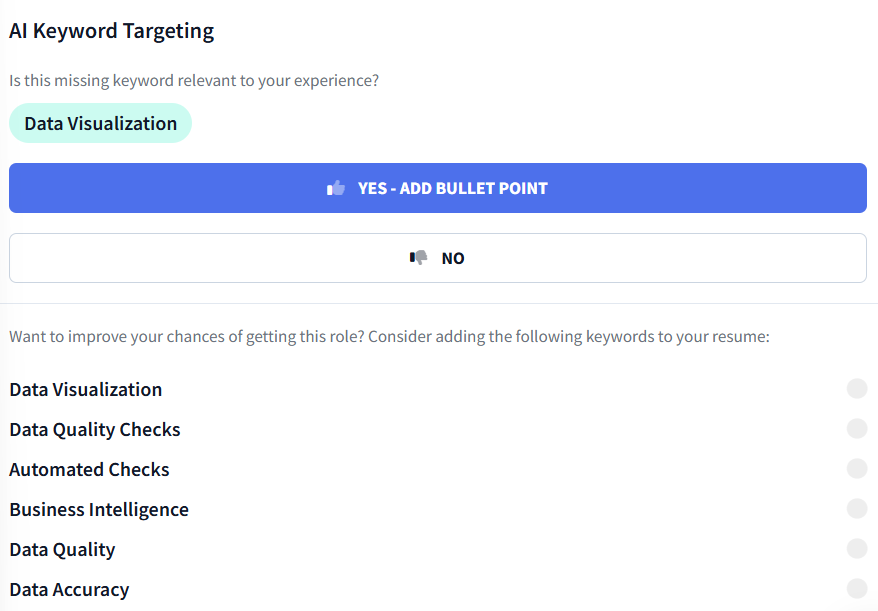
Our AI Keyword Targeting tool can help you out, as it points out the keywords you’ve covered, which ones to add, and even writes bullet points with those skills:
2. Include analytical skills on your resume
Highlight your analytical skills throughout your resume:
- Summary. In 2–3 sentences, highlight your top achievements and why you’re perfect for the role. If the job post mentions analytical skills, drop them in here.

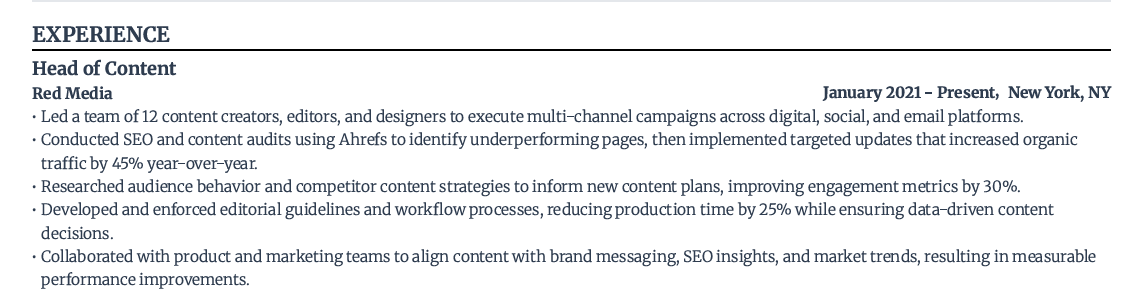
- Work experience. Share how you applied analytical skills to get results. Start bullets with strong action verbs and include measurable outcomes whenever possible.
- Education. For recent grads, highlight school projects, high grades, awards, or competitions where your analytical skills made an impact and/or impressed others.

- Extra resume sections. If experience is light, use hobbies, personal projects, or volunteer work to demonstrate analytical thinking, like dissecting book club themes, completing a thesis, or tackling a language-learning project.
- Skills section. Lead with technical and hard skills from the job post, then soft skills like analytical thinking or problem-solving if space allows.
Related reading:
- What to Put on a Resume
- How to Show Off Achievements on a Resume
- Tips for Updating Your Resume
- How to Write a Resume With No Experience
3. Give examples in your cover letter
Your cover letter is your chance to add context; how your analytical skills drove results at work, showed up in a hobby, or helped you earn recognition in school. Just make sure every example connects back to the job post.
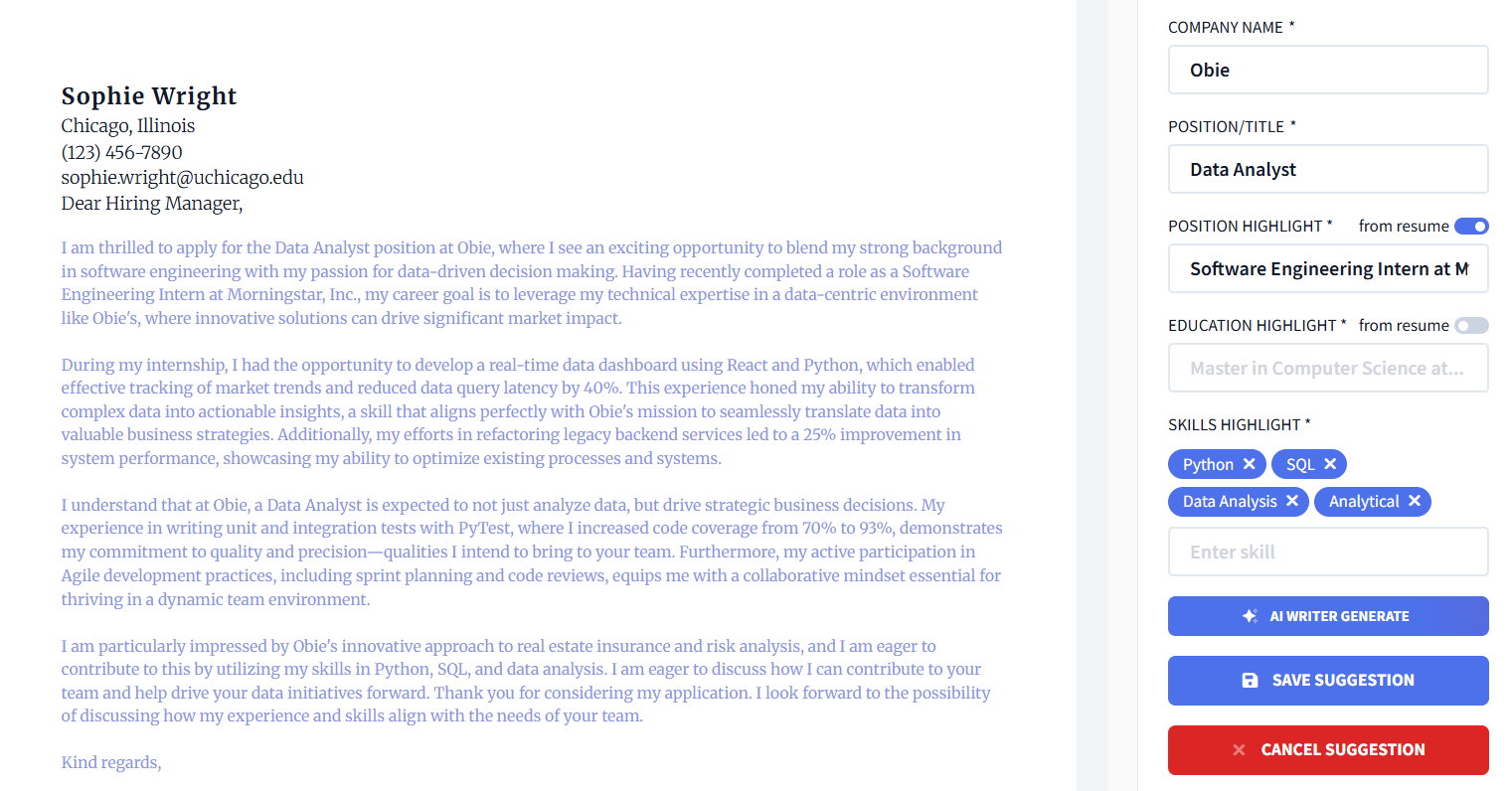
For a head start, try our AI Cover Letter Writer. It takes your resume and the job description, the skills and experience you want to emphasize, and turns it into a professional letter.
Check out this letter from our AI Cover Letter Writer:
4. Share stories in the interview
Your interview is the perfect place to talk about your analytical skills; just keep your examples relevant and structured. Use the STAR method (Situation, Task, Action, Result) so you come across clear and confident.
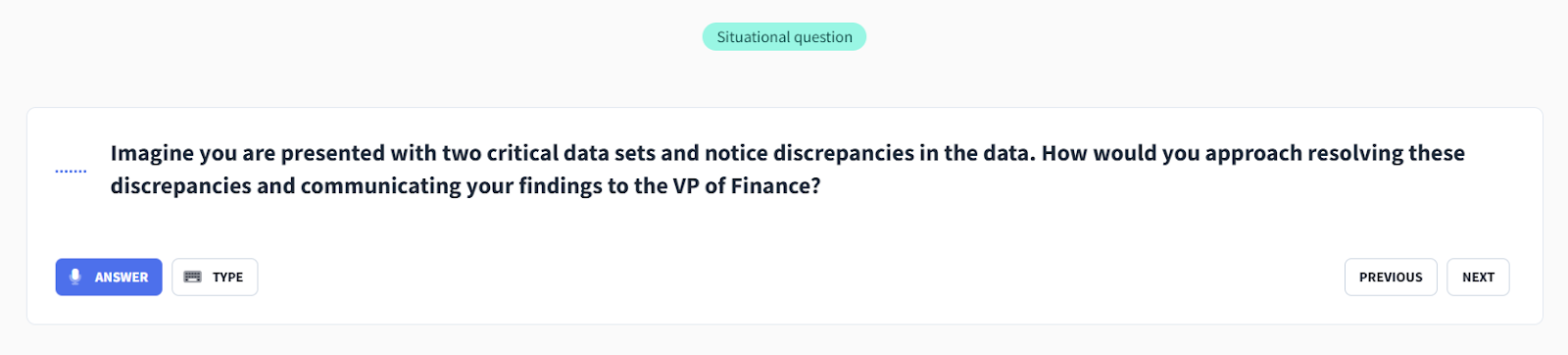
Prep a few stories from work, school, or volunteering where your analytical thinking or problem-solving made a difference. And if you want to practice, our AI Interview Practice tool generates role-specific questions to help you rehearse.
Here’s a sample question for a data analyst from our AI Interview Practice:
How to Improve Analytical Skills
Developing your analytical skills is a lifelong project. And the more you sharpen them, the more confident you’ll feel putting them on your resume.
Stay curious, stay open-minded, and keep practicing. Here’s how:
- Play brain games. Chess, Sudoku, anything that makes your brain work in patterns and strategies. I love NYT’s Wordle and Connections, and the LinkedIn games.
- Ask questions constantly. Don’t just accept things at face value. Analyze books, podcasts, movies, news; you name it. Form your own opinions. Think critically. Think sideways. Think outside the box.
- Keep a journal. Writing down thoughts, observations, and problem-solving attempts helps you reflect and recognize patterns over time.
- Sharpen your math skills. Even simple number work keeps your analytical mind active.
- Learn from mentors. Ask experienced professionals what analytical skills matter most in your field and how to improve.
- Take courses. Online courses on data, logic, emotional intelligence, or strategic thinking can stretch your analytical muscles.
- Practice, practice, practice. Pick a topic, gather data, identify problems, and find solutions backed by evidence. It’s all about discipline:

- Engage with others. Debate ideas in workshops, online forums, book clubs, or even around the Christmas dinner table. Consider opposing viewpoints, even ones you disagree with. For The Summer I Turned Pretty fans, that means reading what Team Jeremiah thinks if you’re Team Conrad.
- Read widely. Dive into professional or analytical books like Becoming a Data Head or Think in Models; they help you see problems and solutions differently.
- Seek opportunities at work. Volunteer for projects or tasks outside your comfort zone where you can flex your analytical skills in real-world scenarios.
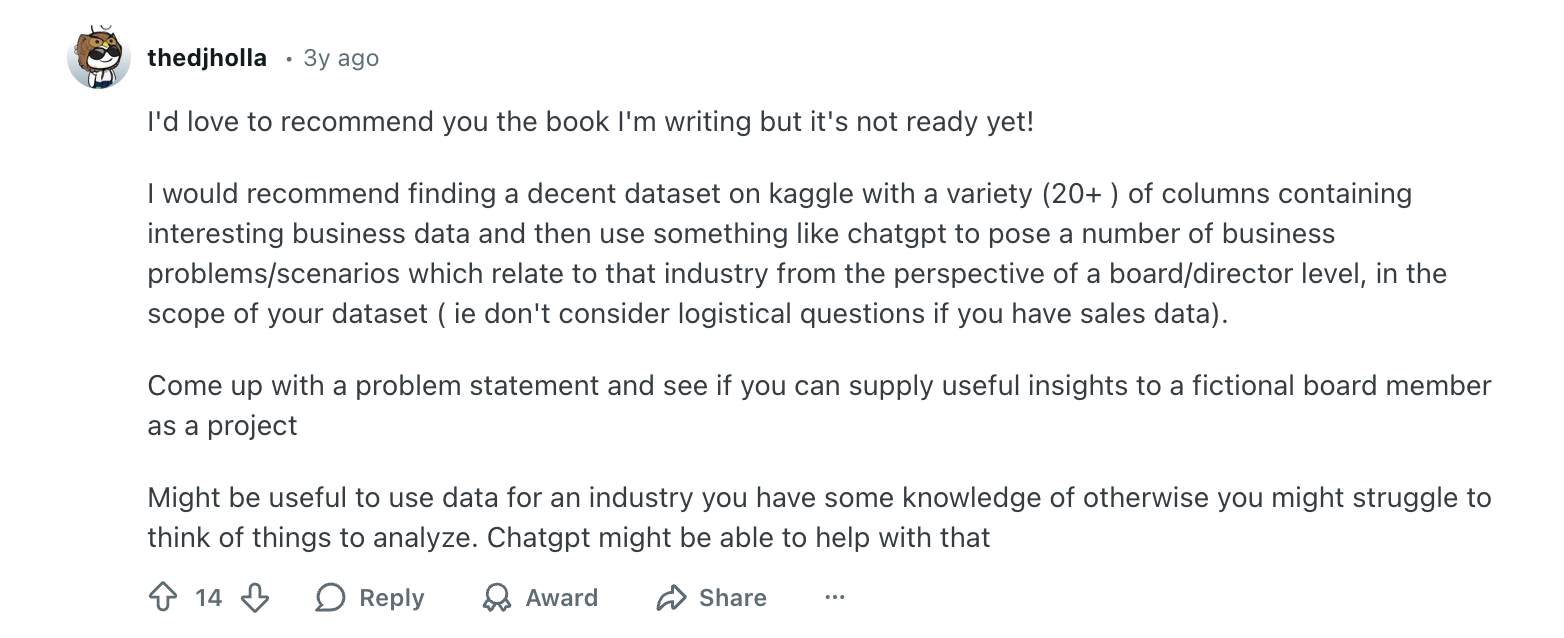
This Reddit user shares a useful method for improving analytical skills:
Summary
Here’s a recap on analytical skills:
- Analytical skills help you break down information, find patterns, compare your options, and choose the best path forward.
- Analytical thinking is the step-by-step process you use to understand a situation and connect the dots.
- Key analytical skills include critical thinking, creativity, data analysis, research, problem-solving, prioritization, decision-making, communication, and forecasting.
- Tailor your resume by mirroring keywords from the job description so it aligns with what the employer wants.
- Show analytical ability throughout your resume with measurable results, relevant projects, and sections that demonstrate real-world application.
- Use your cover letter to add context and explain how your analytical skills led to results in work, hobbies, or school.
- Prepare STAR-structured stories for interviews that show how you broke down problems and drove outcomes.
- Strengthen your analytical skills through practice, like brain games, asking questions, journaling, reading widely, learning from mentors, and taking on stretch projects.
FAQ
How to develop analytical skills in students?
Help students build analytical skills by encouraging curiosity and problem-solving. Give open-ended questions, projects, or case studies, and involve them in debates or experiments. Reflecting on decisions and outcomes helps them recognize patterns, think logically, and apply critical thinking to real-world situations.
How to teach analytical skills?
Teaching analytical skills means showing students how to deconstruct problems and examine evidence. Use real-world examples, puzzles, or data sets, and encourage discussion and questioning. Step-by-step exercises, comparing options, and evaluating pros and cons make analytical thinking practical and easy to grasp.
How to improve your analytical listening skills?
Analytical listening is about really understanding what’s being said. Focus on the main points, take notes, ask clarifying questions, and summarize ideas. Practicing in meetings, lectures, or discussions helps you find patterns, catch inconsistencies, and respond thoughtfully.
How to check my analytical skills?
You can gauge your analytical skills by tackling problem-solving exercises, interpreting data, or working through scenario-based questions. Try analyzing data sets, solving logic puzzles, or reviewing case studies. Reflect on your decisions and ask peers or mentors for feedback to see how well you find patterns and draw meaningful insights.
What careers require analytical skills?
Any role that involves solving problems, interpreting data, and making decisions benefits from analytical skills. For example, data analysis, finance, consulting, engineering, research, marketing, project management, and IT. Even creative roles like content strategy or design thrive when you can analyze trends and measure results.
What is the difference between analytical thinking vs critical thinking?
Analytical thinking focuses on dissecting information, while critical thinking steps in afterward to challenge those findings, asking whether the information is reliable, whether the conclusions hold up, and what the best next move is. Analytical thinking helps you understand the data, and critical thinking helps you decide what to do with it.

Upload or drop your resume to get started
Upload your resume to get started
Score my resume

Sarah Coghlan is a writer and editor passionate about making resume and career advice clear and accessible to all. Based in Barcelona, her goal is to help job seekers create standout resumes and navigate the job search process with confidence and ease.