Career Advice
How to Apply for a Job: 10 Simple Steps Towards Employment
Learn how to apply for a job with practical tips on resumes, job search strategies, and networking to help you stand out and land more opportunities.
Published on
March 3, 2026
Updated on
March 3, 2026
TL;DR
Before applying, clarify your motivation (salary, growth, or flexibility). Explore emerging roles and use a mix of job boards and networking to find opportunities. Tailor your resume and cover letter for every application. Apply early, track submissions, and follow up. When you land interviews, research the company and practice the STAR method.
I’ve heard the same frustrating story countless times (I’ve even been there myself). Applying to several jobs every day and hearing nothing back. Not even a rejection. It can feel like a two-steps-forward, five-steps-back sort of deal.
You shouldn’t have to run yourself into the ground just to get hired, but the market is pretty competitive right now, so being more strategic helps. You don’t need to do a million things at once. But a few smart, intentional moves can genuinely make a difference.
Let’s talk about what actually works when you’re applying for jobs. This guide will cover:
- The best strategies to apply for a job.
- My breakdown of the top job search websites.
- How to find and apply for a remote job.
Think your resume is the problem? Check out our free AI Resume Builder. Simply enter a few details to build an ATS-friendly job application that’s tailored to your desired job.
And take a look at more guides and tips for landing your next role:
How to Apply for a Job
Here’s a quick breakdown of how to apply for a job:
- Clarify your career goals and direction. Do you prioritize salary, stability, flexibility, or long-term development?
- Search for roles in your target field. Explore industries tied to your strengths, review job posts, and stay open to new job titles.
- Reach out to your network. Connect with people in roles you’re interested in and keep your LinkedIn profile active.
- Choose the best platforms for your job search and apply directly through the company’s career pages.
- Set up alerts and apply as soon as opportunities open with job notifications.
- Research employers and understand their hiring needs: review company information, recent updates, and employee feedback.
- Customize your resume for each application with relevant achievements, keywords from the job description, and measurable results.
- Create a strong cover letter or introductory email by connecting your experience to the role and showing genuine interest in the company.
- Follow up after applying with thank-you emails after interviews and check-ins without appearing impatient.
- Prepare for interviews. Review the job description and your application, research the company, and plan thoughtful questions to ask the employer.
Let’s look further into the best job application strategies with examples and advice from real job seekers and recruiters.
1. Clarify your career goals and direction
You don’t need a 10-year plan, but you do need a compass. Without direction, the job search becomes a time-consuming rabbit hole. Before you open LinkedIn or start sending resumes, spend some time figuring out what kind of work resonates with you.
Think about the tasks that energize you instead of draining you, the environments where you do your best work, and the skills you could bring to the table.
And think about the bigger picture. Some careers offer fast salary growth, others offer stability, flexibility, or strong work-life balance. None is “better”; it just depends on what matters to you right now and five years from now.
Here are some questions you can answer to get more clarity:
- What type of work excites you or keeps you curious?
- Do you care more about income growth, stability, or flexibility?
- Do you want to aim for a high earning potential?
- What skills do you already have that employers pay for?
- Where do you still need to grow?
Here’s some more useful advice from a career coach:
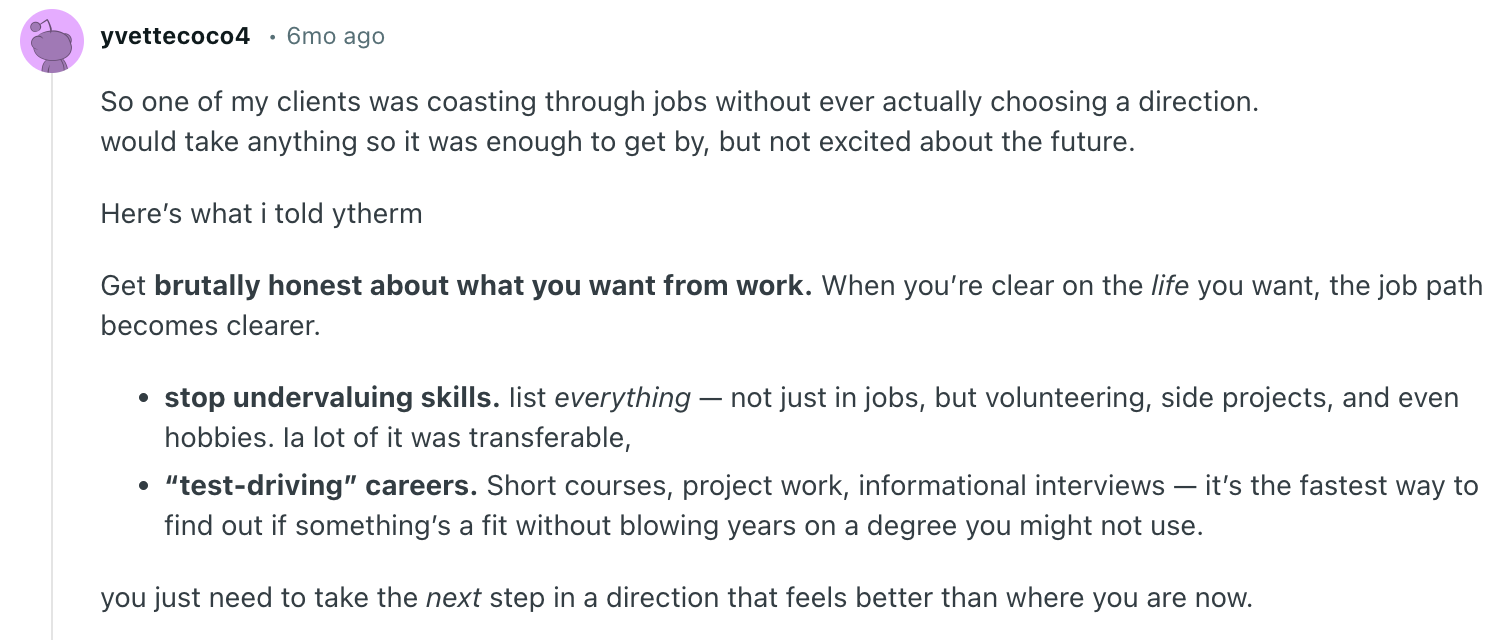
Let yourself explore, talk to people in different roles, and try small projects. Yes, it’s extra effort, but it’s better than spending hours applying for roles that leave you second-guessing after reaching the interview rounds.
Follow these steps to find a better direction: How to Choose a Career
2. Search for roles in your target field
Once you know your general direction, start looking further into specific roles. Look at industries tied to your education, interests, or natural strengths, then narrow down potential job titles.
And seriously, don’t be afraid to click on weird job titles you’ve never heard of. With the emergence of new technology and AI, some of the fastest-growing roles today didn’t exist a few years ago.
For my fellow visual learners, I’d recommend making some sort of spreadsheet to organize your thoughts. You can rate different jobs based on the following:
- Salary potential
- Flexibility
- Growth opportunities
- Work-life balance
- Interest level
All this intel will help you spot patterns, see which skills companies are hiring for, and where your skills already fit (sometimes in ways you didn’t expect). Job descriptions are basically free market research, so use them.
3. Reach out to your network
We’ve all heard about the power of the elusive “network.” As someone who’s used mine to get a few jobs, I can confirm that it really is one of the best ways to get your foot in the door. But you don’t need to attend networking events or have a ton of experience to build connections.
Confidence alone (even if it’s fake) will take you far, and there’s no harm in reaching out to someone in your desired industry or company. Here’s how to approach it without feeling awkward or pushy:
- Ask for a short 10–15-minute chat about their experience.
- Frame it as learning about the company or role.
- Connect with people who have job titles you’re curious about.
The worst that can happen is they say no, and that’s fine; at least you tried.
Even just keeping your LinkedIn updated and aligned with your resume can help improve your online presence. Use the platform to engage with posts, share relevant content, and comment thoughtfully (not with generic ChatGPT “great insight” responses).
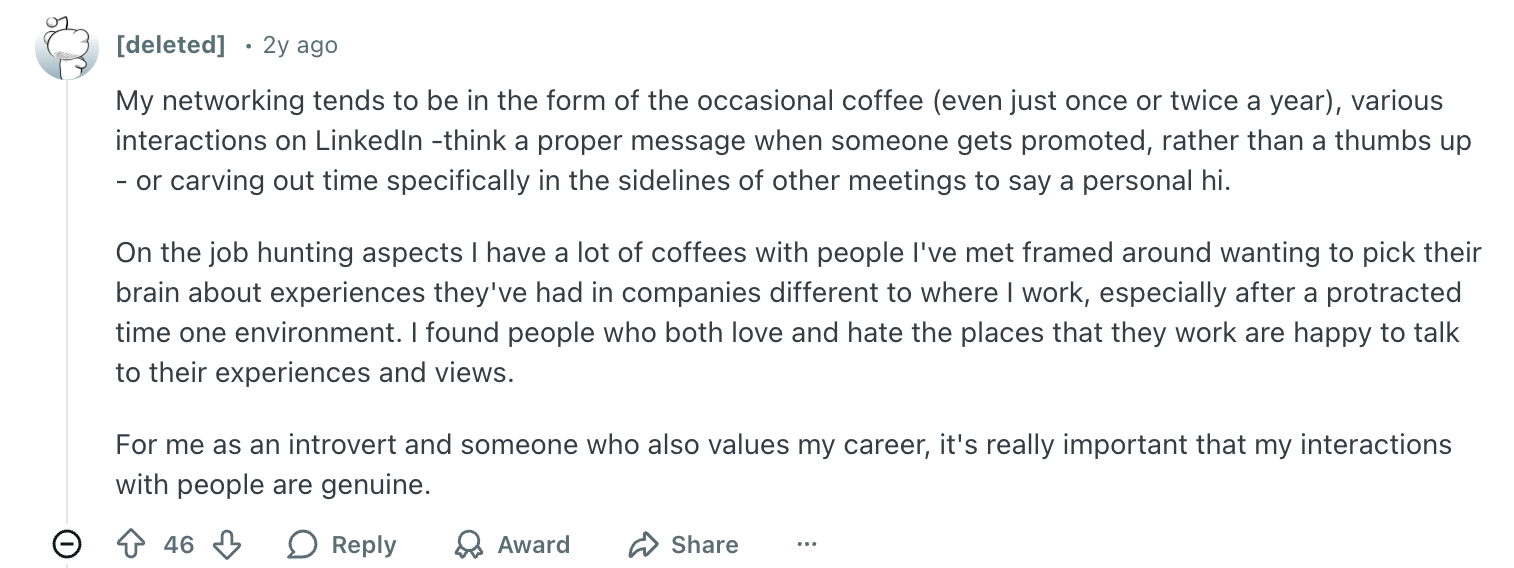
Lacking in confidence? Here are some tried-and-tested tips from a self-proclaimed introvert:
4. Choose the best platforms for your job search
Where you apply matters almost as much as how you apply. Covering the main job boards like LinkedIn, Indeed, and Glassdoor is a great place to start, but don’t stop there.
I usually recommend finding roles on big platforms, then going further and applying directly through the company’s careers page. It shows extra effort and sometimes avoids automated filtering systems that can bury your application.
A smart platform strategy looks like this:
- Use LinkedIn, Indeed, or Glassdoor to find openings.
- Go to the company website and apply through their careers page.
- Set LinkedIn job alerts so new roles come to you automatically.
- Avoid relying only on “Easy Apply” (it’s convenient but very competitive).
You can also find fresh job opportunities faster with our AI Job Search tool, which scans millions of company career pages and updates listings every hour.
5. Set up alerts and apply as soon as opportunities open
There’s nothing like the “over 100 applicants” on a job posting to discourage you. The earlier you apply, the higher the chance your resume is reviewed before hiring managers get overwhelmed with candidates.
Instead of manually refreshing job boards all day (exhausting), let technology do the tedious work. Here’s how to stay ahead:
- Set alerts on LinkedIn, Indeed, and Google Jobs.
- Sort listings by ‘Most Recent’ when searching manually.
- Prioritize roles posted within:
- Last 3 days (ideal)
- Last week (still worth applying)
And remember: you don’t need to match every requirement. Job descriptions often describe a “perfect candidate” that rarely exists. If you meet most of the core qualifications and can learn the rest, it’s worth a shot.
6. Research employers and understand their hiring needs
Before you hit apply, spend some time learning about the company. This helps you tailor your application and also protects you from ending up somewhere you regret. Companies want candidates who clearly understand what they do and why the role matters.
You don’t need to go full detective mode. Start with simple research habits:
- Read the company’s “About” page.
- Look up recent news, product launches, or company updates.
- Scan employee reviews (look for patterns, not one-off complaints).
Then shift your focus to the job posting itself. Treat it like a checklist of what they value most:
- Highlight repeated skills or tools.
- Note the personality traits they emphasize.
- Match your experience to their biggest priorities.
Do this well, and your application will feel less generic and more like a direct answer to what they need.
7. Customize resume for each application
I’ll be honest, sending the same application everywhere almost never works anymore. Tailoring your resume doesn’t mean rewriting everything from scratch, but you can tweak your focus for each role.
Here’s what you can do when customizing your resume:
- Emphasize experience and achievements that match the job description.
- Use similar keywords and language from the posting.
- Show measurable results whenever possible.
- Keep your resume updated with recent roles, skills, and wins.
And yes, you can absolutely use AI tools to help speed this up. According to a ZipRecruiter Job Seeker Confidence Survey, 22.7% of job seekers are already using AI to draft or tailor their resumes.
Just make sure you edit carefully so it still sounds like you and reflects your real experience. The goal is to highlight your most relevant strengths, not exaggerate or invent skills.
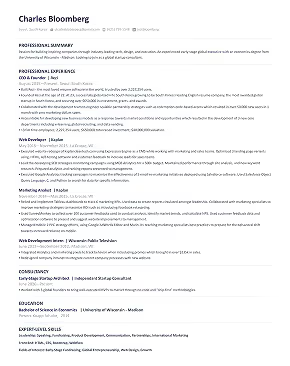
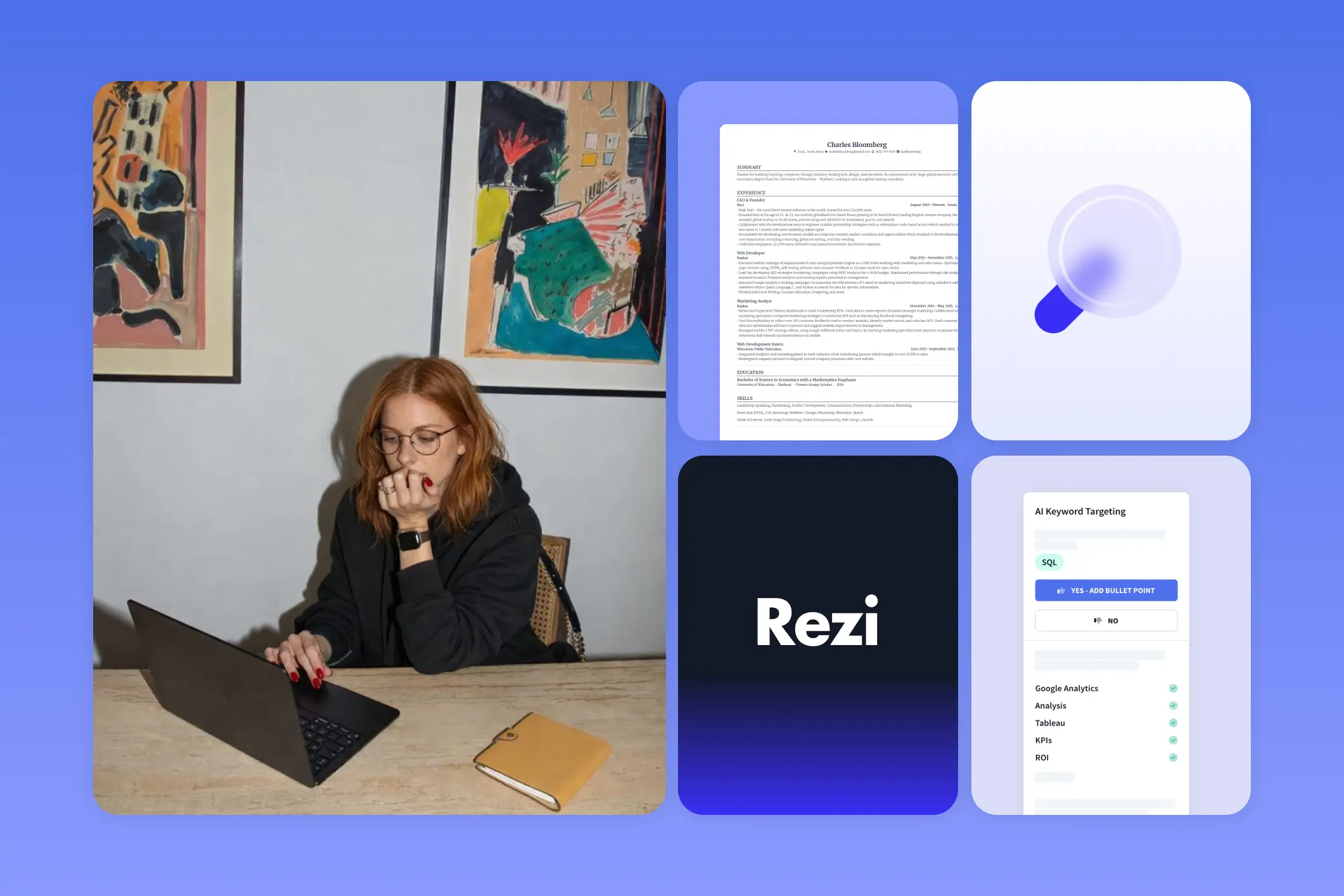
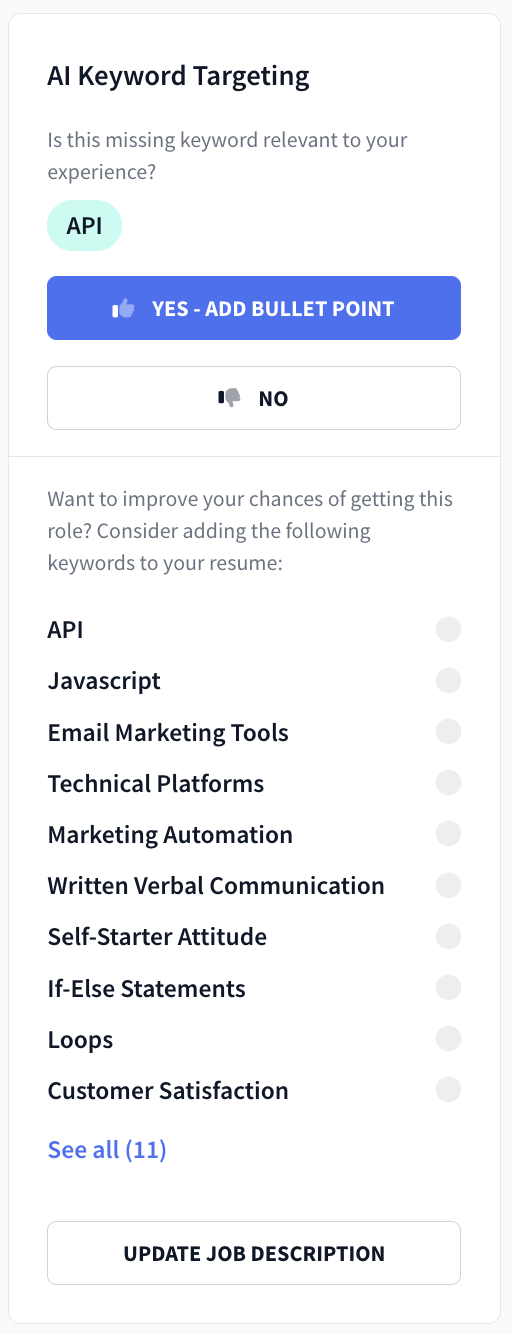
We built the AI Keyword Targeting tool for this exact purpose. Just enter the job title, company name, and job description to see missing keywords and suggestions on where to place them. Here’s a glimpse into how it works:
8. Create a strong cover letter or introductory email
Cover letters aren’t always necessary anymore, but they can still give you an advantage, especially if you’re switching industries or explaining a career gap. Unless the job ad specifically says not to send one, there’s no harm in going that extra mile.
Here are some cover letter basics if you decide to include one:
- Study the job description closely for repeated skills and requirements.
- Mirror the qualities they describe in their ideal candidate.
- Explain why you want this role at this company (not just any job).
- Keep it concise and focused on value.
Here’s some no-nonsense cover letter (and resume) advice from an ex-recruiter:
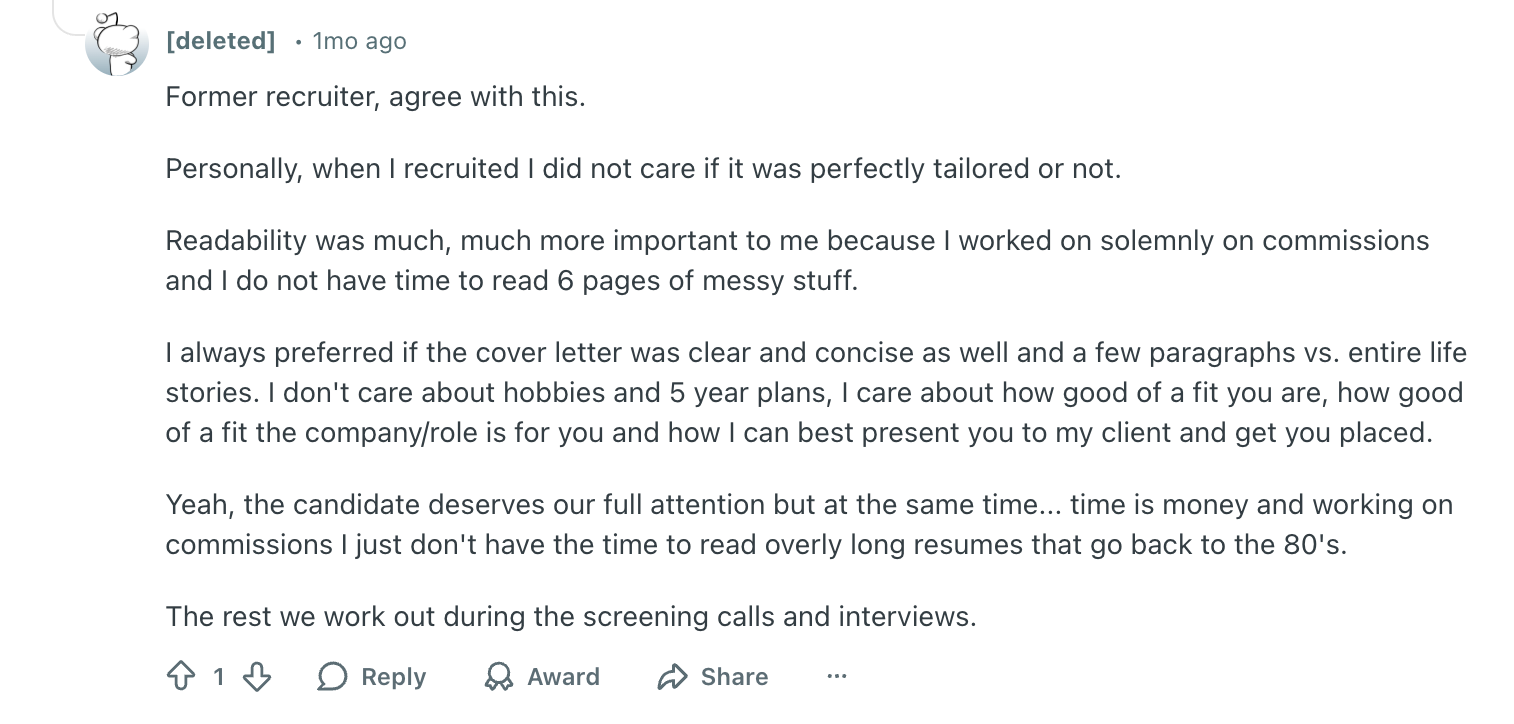
Don’t just repeat your resume; recruiters don’t have time to read a copy-and-paste document. Use it to connect your experience to their needs and show your authentic motivation to land this specific role.
Need some help? Try our AI Cover Letter Generator to get a customized letter in seconds, based on the job title and cover letter.
9. Follow up after applying
Following up is a lot like dating; you don’t want to sound impatient, but you don’t want them to forget about you and move on. If you want to stay professional, it’s all about timing.
Most hiring teams need time to review applications, so give them space before checking in. Here are some general follow-up guidelines:
- After applying: Wait about 1–2 weeks before reaching out.
- After interviews: Send a thank-you email within 24 hours.
- If you don’t hear back, follow up:
- After 1 week
- Again, around 2 weeks later
I’ll be honest, from digging around online, many hiring managers say follow-ups don’t sway their decision. But there are also some success stories, like this one:
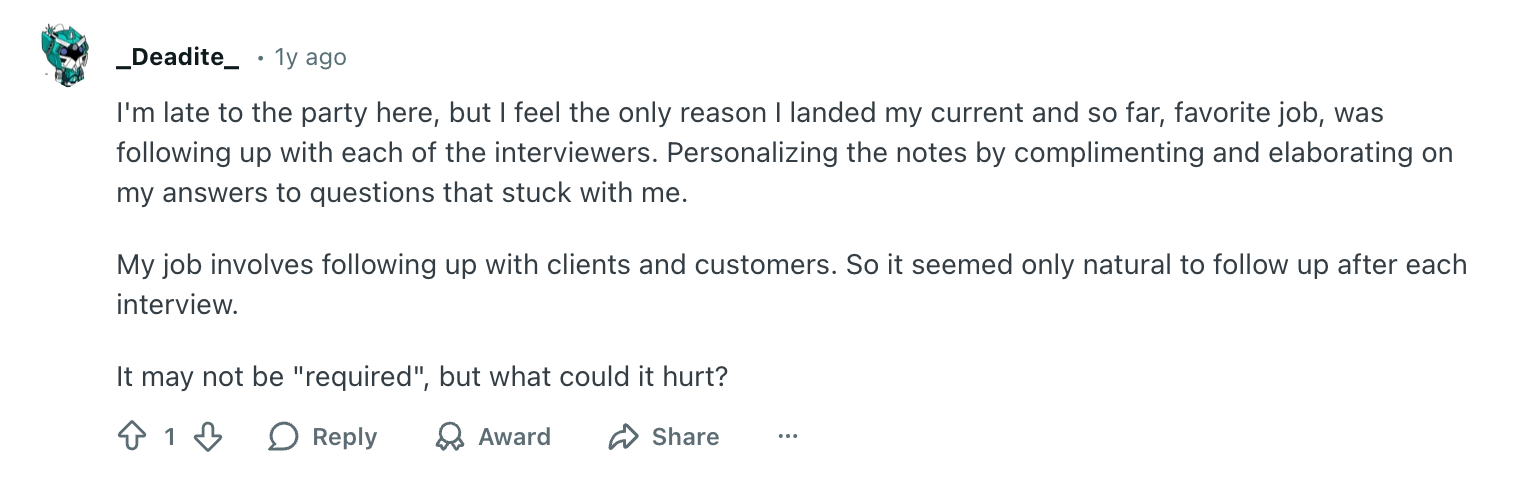
The takeaway? There’s no harm in trying.
Just don’t take it personally if you get ghosted. Companies often get so many applicants that they simply can’t respond to everyone. And yes, some are just lazy, which is very telling about their internal culture (aka, lucky escape).
Find out more:
- How to Write a Follow-up Email After an Interview
- How to Write an Email for a Job Application (and Follow Up)
10. Prepare for interviews
The interview rounds are where you turn yourself from “qualified jobseeker” into “memorable candidate.” But not without preparation. Most hiring processes start with a recruiter or hiring manager screening call. If you pass that, you move into deeper interviews or technical rounds.
Here’s what you should do as the bare minimum before an interview:
- Re-read the job description to identify key requirements.
- Review what you submitted in your application and how it connects.
- Research the company’s products, mission, and recent news.
During interviews, focus on storytelling instead of giving short, textbook answers. One of the best ways to structure your answers is the STAR method:
- Situation: What challenge were you facing?
- Task: What was your responsibility?
- Action: What steps did you take?
- Result: What happened because of your actions?
Also, prepare for practical topics like:
- Salary expectations: Research market ranges and be honest.
- Questions for them: Ask about training, growth, and how success is measured.
Interviews go both ways. While you should prove you’re the right fit for the role, you also need to decide if the position and company are right for you.
Here’s some interview advice from a recruiter:
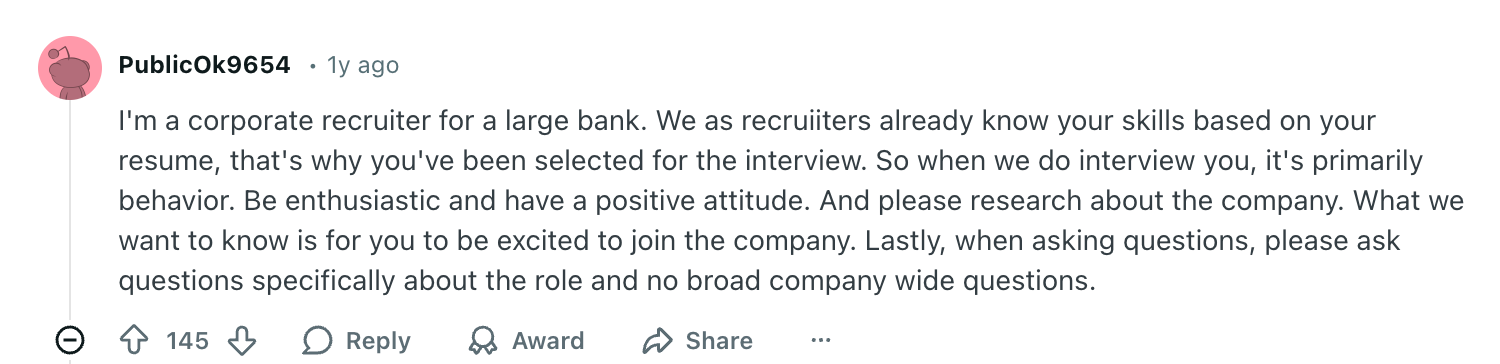
Planning what to say and actually doing the interview are very different. But you can get closer to the real thing with our AI Interview Practice tool. You get tailored questions with detailed feedback to help you improve and build confidence.
Where to Look for Jobs?
Most of us flock to the job search giants (looking at you, Indeed) when searching for a job. But it’s never smart to put all your eggs in one basket. Spreading out your search naturally improves your chances of finding new and interesting opportunities.
Here’s a list of top job boards and tools you should check out:
- Rezi AI Job Search: Our AI Job Search tool pulls millions of fresh listings straight from company websites, updated hourly. It’s spam-free, and lets you filter by skill, role, and remote work. Plus, you can track and organize all your applications on one dashboard.
- LinkedIn: More than a job board, it’s a professional ecosystem. You get access to job listings, direct connections to hiring managers, career courses, alumni networks, and industry communities. Engaging on LinkedIn increases your visibility, and marking yourself as “open to work” shows recruiters that you’re available.
- Indeed: The classic search engine for jobs. Easy to use, it lets you filter listings by pay, type, experience level, or remote options. You can upload your resume to let employers find you and save or apply to jobs quickly (perfect for high-volume searches).
- Monster Jobs: One of the original job boards, Monster highlights keywords and skills in listings so you can quickly see if it’s a match. It works well for traditional roles in sectors like admin, customer service, and logistics, and includes career advice and salary tools.
- USAJobs: The official portal for U.S. government positions. From postal jobs to federal agencies, it offers detailed search filters by agency, salary, location, and clearance. The application process is longer and includes extra steps like questionnaires, but the benefits and stability make it worth it for government careers.
- Job Search Database: This one’s more niche. Job Search Database was created by Jon Shields, a marketer and advisor to job search startups. It helps you find opportunities beyond LinkedIn and Indeed by directing you to specialized job boards. The platform is simple to use, organizing listings by job category, country, and state to uncover real openings.
Check out our complete list: Best Job Search Engines
How to Get an Online Job
Here’s an overview of how to get a remote or online job:
- Research online job opportunities to understand the type of remote work that suits you.
- Check remote working job boards to explore both general platforms and specialized sites.
- Take time with your job application to tailor your resume and cover letter, highlight measurable results, and emphasize remote-specific skills.
- Reach out to someone in the company through LinkedIn connections, remote work communities, Slack groups, virtual events, or your existing network.
- Be flexible and set expectations to consider hybrid roles, remote jobs in other regions or countries, or contract and freelance work to build experience.
Let’s get into the details.
Research online job opportunities
Not every remote role is the same, and most of them (sadly) don’t involve lounging by the pool with your laptop. Some require constant video calls and collaboration, while others are more independent.
Think about the kind of work you do well and the type of workday you actually enjoy. When researching remote roles, focus on:
- Matching jobs to your current skills, experience, and interests.
- Identifying skill gaps if you’re moving into a new remote field.
- Taking short courses or certifications if you need to specialize (even 2–4 weeks can help).
- Checking whether the job is truly remote vs. hybrid.
And remote doesn’t necessarily mean anywhere in the world.
Many “remote” jobs require you to live in a specific country, time zone, or region. Always read the job description carefully so you don’t waste time applying for something that wants you in the country at all times or secretly requires office days.
Check remote working job boards
Don’t just scroll through LinkedIn endlessly to find an online job (countless others around the globe are doing the same). Branch out to platforms built specifically to make your remote job search faster and easier.
Some job search websites focus on full-time careers, others on freelance projects, and some use AI to surface listings for you. Using a combination of general and niche boards gives you the best shot at finding remote opportunities.
Here’s a quick rundown of top remote job platforms:
- LinkedIn and Indeed: These are still the giants. They offer huge volumes of listings, including full-time, part-time, contract, and freelance roles. Use keywords like “remote,” “work from home,” “freelance,” or “contract” to filter results.
- FlexJobs: This site screens all remote listings for legitimacy, so you rarely see scams or commission-only roles. The catch? Membership fees. You can try it for $2.95 for two weeks, then it jumps to about $24 per month.
- Upwork: Perfect if you’re open to freelance or contract work. You create a free profile, list your skills and portfolio, set your rates, and start pitching to clients. Upwork takes a 0–15% service fee on new contracts, but signing up is free.
- HiringCafe: A newer platform specifically for remote job seekers. It uses AI to gather over 12,000 listings directly from thousands of company sites, then summarizes them for you. No membership fee, no spammy listings, just focused remote opportunities.
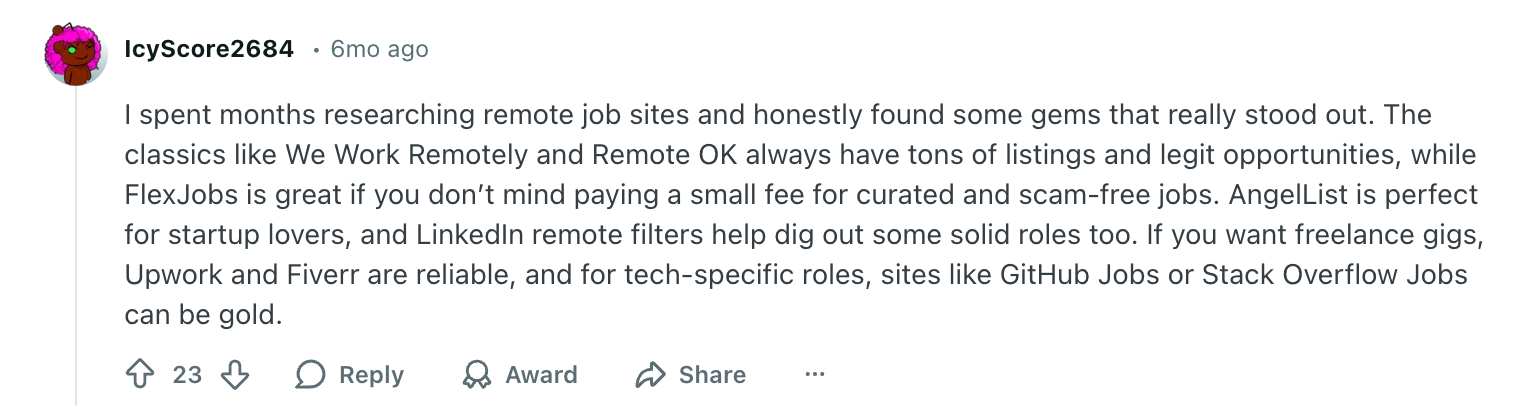
Here are some more solid recommendations from a remote job seeker:
Take time with your job application
Remote jobs are competitive. A Robert Half survey found 55% of job seekers want a hybrid job, and only 16% placed an in-office job as their top choice.
With all that competition, generic applications usually get ignored. Instead of applying to 50 jobs quickly, you’ll often get better results applying thoughtfully to fewer roles that truly match your background.
A strong remote application should:
- Use keywords from the job description (helps with ATS filters).
- Show measurable results, not just responsibilities.
- Highlight remote-specific skills and experience.
Remote skills employers love seeing:
- Self-management and time management.
- Strong and proven communication skills.
- Ability to work across time zones.
- Knowledge of remote tools (Slack, Zoom, project management software).
If you’ve worked remotely before, make it obvious. If you haven’t, highlight situations where you worked independently, managed projects, or communicated digitally.
Find out more: How to Describe Remote Work on a Resume
Reach out to someone in the company
Remote work may happen online, but relationships still push hiring decisions (I can personally testify to this). Talking to real people can help you understand company culture, uncover hidden roles, and sometimes lead to those all-important referrals.
Here are some simple ways to network for remote roles:
- Message employees on LinkedIn and ask for short informational chats.
- Join remote work communities or industry Slack groups.
- Attend virtual networking events or webinars.
- Let your existing network know you’re targeting remote work.
You don’t have to “pitch” yourself aggressively. Just be clear about what you do, what type of remote work you want, and how you add value. Most people are more open to helping than you expect.
Be flexible and set expectations
After the pandemic, many of us realized that working the odd day in your pajamas or having your cat take a permanent position on your lap isn’t the worst. But that’s the problem, you’re not alone in that mentality.
With so much competition, you may need to be more flexible if there are no remote opportunities available. That might mean:
- Considering hybrid roles as a stepping stone.
- Looking at remote jobs in other regions or countries.
- Starting with contract or freelance work to build remote experience.
You should also manage expectations around salary and timing. Many people don’t land a high-paying remote role straight away. Usually, you build experience, prove you can work independently, and then become more competitive for top remote positions.
Check out more remote working tips and strategies:
Summary
Here’s an overview of everything you need to know when applying for a job:
- Clarify your career goals and preferred work style. Decide whether you want in-person, hybrid, or fully remote work, and think about what motivates you.
- Research roles, industries, and remote opportunities that match your skills and interests. If you want to move into a new field, plan time to build the required skills.
- Pay close attention to job descriptions, especially for remote roles. Some “remote” jobs still require you to live in a specific country, region, or time zone.
- Use a mix of job search platforms to find opportunities. Search broad job boards like LinkedIn and Indeed, and apply directly on company career pages when possible.
- Tailor your resume and application for each job you apply to. Highlight achievements, use keywords from the job description, and clearly show relevant skills.
- Write a cover letter or introductory message when it adds value. Use it to explain why you want that specific role and how your experience connects to their needs.
- Network both online and offline to increase your chances of getting interviews. Connect with employees on LinkedIn, reach out to ex-colleagues, and join industry communities.
- Apply strategically and move quickly when new roles are posted. Set job alerts, focus on recent listings, and keep track of where you applied so you can follow up.
- Stay flexible and patient, especially when targeting remote work. Remote jobs are highly competitive, so you may need to start with contract work or hybrid roles while you build experience.
FAQ
How do you write an application for a job?
Start by carefully reading the job description so you understand exactly what the employer wants. Then tailor your resume and cover letter to match that role instead of sending the same version everywhere. Focus on showing results, not just responsibilities. You should also use keywords from the job posting so your application passes automated screening systems.
Keep everything professional, concise, and honest. Before submitting, proofread for spelling and formatting. A strong application should quickly show why you are a good fit and what value you bring to the company.
Check out more resume-writing tips:
How to get a federal job?
Federal jobs usually require a more detailed and structured application process than private sector roles. Start by creating a profile on the official government job portal. You often need to build a detailed profile, upload specific documents, and sometimes complete questionnaires.
Federal resumes are typically longer and include more detail about duties, hours worked, and achievements. Expect longer hiring timelines because of background checks, eligibility reviews, and security clearances.
What jobs are hiring right now?
Hiring trends change by region, but globally, there is strong demand in healthcare, technology, data, and skilled trades. Roles related to AI, cybersecurity, and software development continue to grow. Healthcare positions like nurses, technicians, and care workers remain consistently in demand due to aging populations. Skilled trades such as electricians, mechanics, and construction specialists are also hiring and are largely AI-proof.
According to the US Bureau of Labor Statistics, jobs in green energy are also expected to grow, with wind turbine service technicians and solar panel installers topping the list for the fastest-growing occupations. This is followed by nurses, data scientists, and information security analysts.
What are the most popular job qualifications?
Employers consistently look for a mix of technical abilities and soft skills. According to LinkedIn data, the fastest-growing skills in the US are AI literacy, conflict mitigation, adaptability, process optimization, and innovative thinking.
On a global scale, the Future of Jobs Report 2025 found that top soft skills include analytical thinking, resilience, flexibility, leadership, and creative thinking. In-demand hard skills include technological literacy, AI, big data, and cybersecurity.
Why is Gen Z struggling to get jobs?
Gen Z faces a tough job market for several reasons. Many entry-level roles now require experience, which creates a frustrating cycle for new workers. Competition is higher because more people are applying to jobs online, especially remote roles. At the same time, Gen Z has entered the market in times of economic and political uncertainty with hiring slowdowns. The challenges usually involve gaining practical experience, building professional networks, and learning how to tailor applications to stand out in crowded applicant pools.
Learn more about this generation: Gen Z Work Ethic: Lazy or Just Setting Boundaries?

Upload or drop your resume to get started
Upload your resume to get started
Score my resume

Lauren Bedford is a seasoned writer with a track record of helping thousands of readers find practical solutions over the past five years. She's tackled a range of topics, always striving to simplify complex jargon. At Rezi, Lauren crafts genuine and actionable content that guides readers in creating standout resumes to land their dream jobs.
.webp)