
Career Advice
Best Job Search Strategies That Actually Work & How to Use Them
Discover the best job search strategies. From resume tips to networking and using AI tools, learn practical advice from successful job seekers.


Published on
November 19, 2025
Updated on
November 20, 2025
Hundreds of job applications started, and still, only semi-automatic rejection emails. Or worse yet, just an empty inbox. Yes, the job market is rough right now. But maybe it’s not just the market’s fault. Maybe you just don’t know how to search for jobs (read on to find out if that’s the case).
And listen, I’ve been there: frustrated, second-guessing, and wondering what I’m doing wrong. So, I looked back at my own experiences and talked with others who’ve successfully landed a job to see what worked for them. No vague “network more” advice — just real strategies that work.
These are my top five tips I’ll be exploring to help you on your journey:
- Strengthen your application strategy.
- Research before reaching out.
- Don’t tackle this alone.
- Cast a wider (and smarter) net.
- Reflect, grow, and prepare.
You can also check out these career guides if you’re struggling to find your next role:
- How to Choose a Career
- What to Do When Unemployed
- Why Is It So Hard to Find a Job
- What to Do When You Can’t Get Hired
Note: the first section of this article covers the basics (resumes, interviews, job application etiquette).
Strengthen Your Application Strategy
Here’s a summary of how to put your best self on paper:
- Updating and tailoring your resume means customizing your application for each job.
- Using AI tools lets you quickly optimize with keywords and improve your content.
- Understanding the algorithm helps you design a resume that passes ATS filters.
- Building a professional portfolio lets you show concrete examples of your work.
- Working on your interview techniques helps boost your confidence.
- Following up after interviews ensures you leave a lasting impression.
Before we get into the details, let me share what happened with a recent Rezi internship.
I understand the job market is tough. But as a result, we’re seeing candidates applying without much effort, assuming success is unlikely.
This was clear when we offered a fully remote, well-paid internship at Rezi. The number of careless applications was honestly surprising. Resumes that didn’t reflect the job ad, generic applications, candidates who hadn’t checked out our offerings, and no-shows at interviews.
The first truly thoughtful, targeted application we received led to an almost immediate hire. Here’s the lesson: putting in even some effort dramatically improves your chances. Yes, you’re competing with many applicants, but most are submitting applications that are easy to beat.
With that said, let’s explore how you can build that winning job application.
1. Update and tailor your resume
Sent endless applications with no responses? Time to take a hint. Your resume and cover letter are your first impression, so they need to show why you’re the right fit. Every resume bullet point should answer the question: “How can this person help us succeed?”
Tailor your resume for each job to reflect the skills, achievements, and experience in the job description. Sprinkle relevant keywords naturally, but avoid overdoing it. You don’t want to sound like you just copied the job ad word for word.
If your past job titles don’t perfectly match the roles you’re applying for, adjust them slightly for clarity (but always truthfully). You want your background to feel relevant without shoving it in their faces.
Here’s some more expert advice from a career coach:
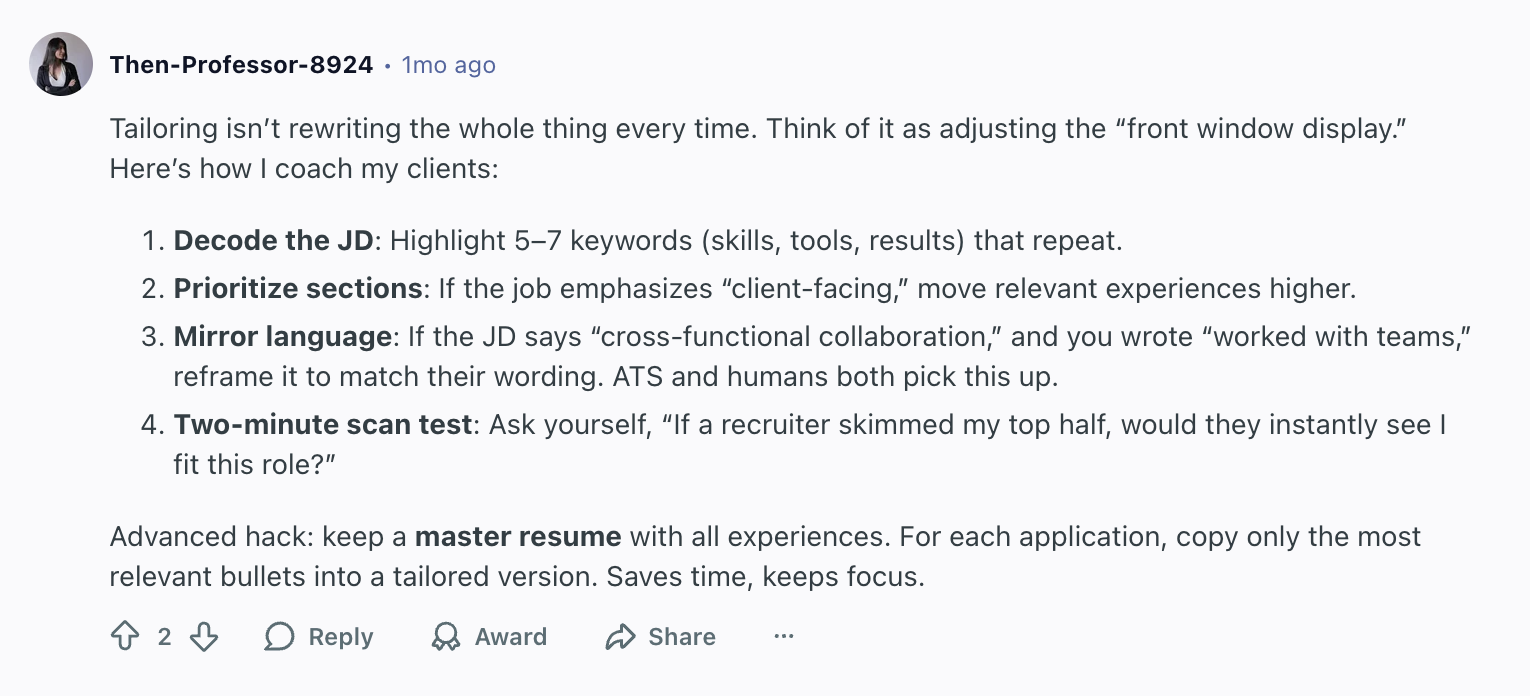
Bottom line is simple: your resume needs to convince them you’ve done similar things in the past, and you’ve done them successfully. That’s all.
Need some help? Check out our free AI Resume Builder to create a tailored and professional resume in minutes.
2. Take advantage of AI tools
I know what you’re thinking: who has time to tailor every application? And even if you have time, that’s a lot of work for a potential rejection. Luckily, there are plenty of AI tools to speed up the process (and stop you from losing your sanity).
For example, tools like our AI Keyword Targeting can scan a job description and list the most important terms to include in your resume, helping you sound like the perfect match. Or if you dread writing summaries, try our AI Summary Generator to get a tailored draft in seconds.
Then, before submitting, use Real-Time Content Analysis to check for:
- Content
- Keyword alignment
- Formatting issues
- Readability and clarity
With this feedback alongside your personal Rezi Score, you can instantly tweak and improve your resume instead of staring at a blank inbox and wondering what went wrong.
3. Understand the algorithm
Nowadays, many job applications go through an Applicant Tracking System (ATS) before reaching a hiring manager. This software scans and sorts resumes to help recruiters manage hundreds of applications.
So, love it or hate it, understanding how ATS works will help improve your odds. What makes an application ATS-friendly? First, ditch fancy designs or colorful templates; those often confuse the system. Stick to a simple format that’s clean and readable:
- Standard resume fonts, like Arial or Calibri, in sizes 10 to 12 points.
- Familiar headings and section titles (Work Experience, Education, Skills).
- Keywords that directly reflect the job description.
- Bullet points to break down your text.
- Consistent layout, spacing, and margins.
Find out more: How to Create ATS Resumes That Pass Filters
4. Build a professional portfolio
A professional portfolio alone probably won’t guarantee a job, but it can help you stand out. It’s proof of what you can do, a way to show, not just tell. Even if it doesn’t directly land you the job, it gives hiring managers something memorable to associate with you.
This is what a hiring manager said about the importance of a good tech portfolio:
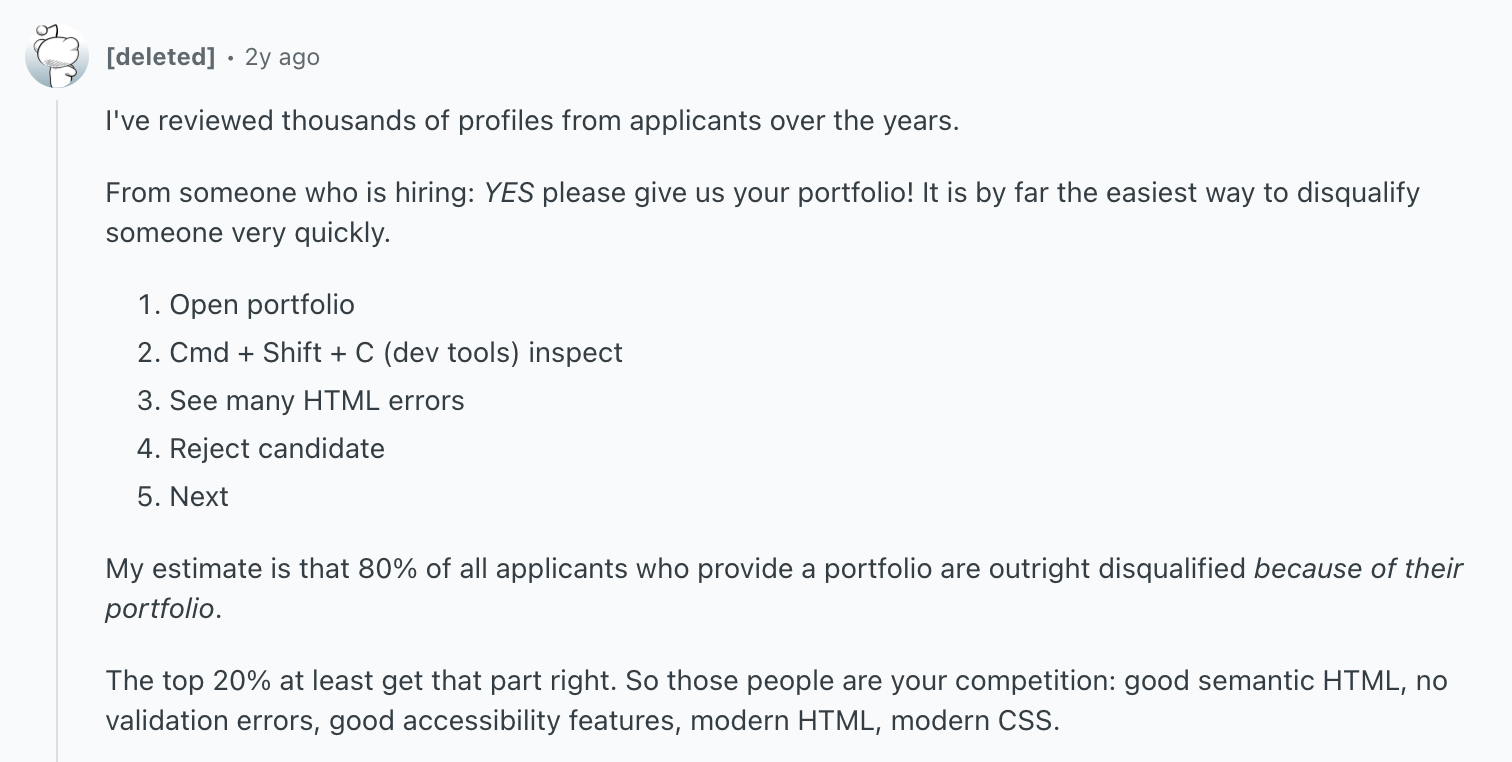
And if you’re still early in your career or switching fields, use your portfolio to bridge that gap. You can include:
- Personal or freelance projects that highlight your skills.
- Case studies explaining your process and results.
- Creative work samples or technical builds.
Quality matters more than quantity. A few strong, well-presented examples will always impress more than a dozen filler pieces.
5. Work on your interview techniques
Interviewing is a skill you can master (even for my fellow introverts). A simple way to build confidence? Ask a friend to throw random topics at you and talk about them for two minutes. It sounds silly, but it trains you to think fast and speak confidently — just like in real interviews.
Another trick that helped me was practicing common interview questions out loud. Talking to a mirror or even your own hand works, but recording yourself is even better. Questions like “Tell me about yourself” or “Why should we hire you?” might feel awkward at first, but just a few 15-minute sessions can boost your performance to levels you wouldn’t believe.
Once you have an interview lined up, don’t go in blind. Research your interviewer and the company. Find common ground, and prepare questions that show genuine interest, such as:
- How has your team adapted to recent changes in the industry?
- What’s something about the company culture that doesn’t show up online?
When it’s go-time, sit tall, stay relaxed, and keep the conversation natural. Confidence and warmth go a long way.
Here’s what a recruiter said about what stands out in an interview:
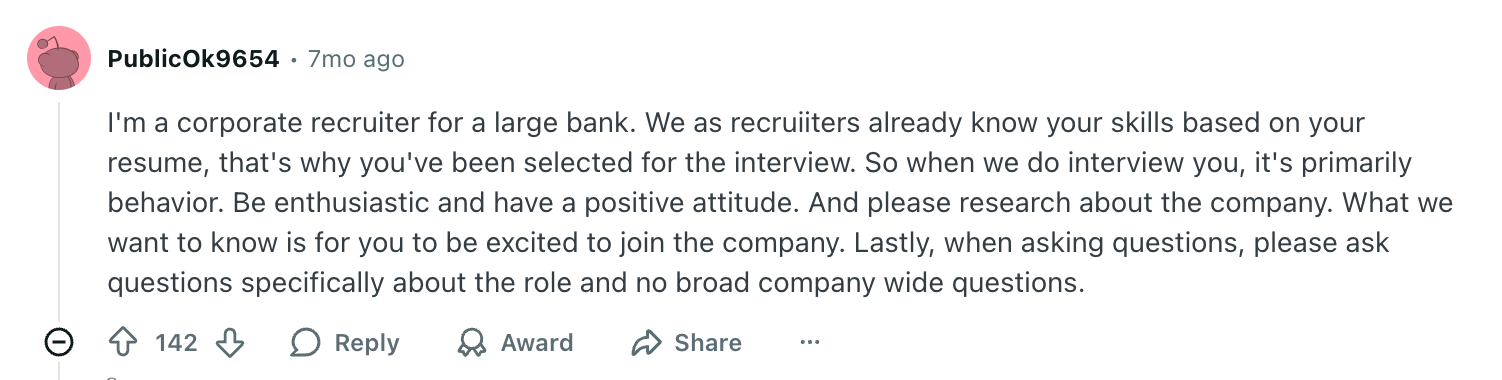
And remember, you can nail every question and still not get the offer. Don’t take it personally; it’s part of the process. The only real mistake is letting that rejection stop you from trying again.
You can also practice with AI Interview to get customized questions tailored to your resume and desired job.
6. Follow up after interviews
Following up is the finishing touch that too many people skip. Send a thank-you email within 24 hours; nothing robotic or copy-pasted, just a genuine note of appreciation. Mention something specific from your conversation, like a topic you enjoyed discussing or a detail that made you excited about the role.
You can also follow up if:
- The decision deadline has passed, and you haven’t heard back.
- You receive another offer and want to update them (don’t burn those bridges).
- You’re still genuinely interested and want to reaffirm that.
Be courteous, concise, and sincere. Even if you decide you’re not interested, showing professionalism leaves a great impression. You never know; it could open the door to future opportunities.
Check out more interview tips:
- STAR Method Interview Guide
- How to Write a Follow-up Email After an Interview
- Common Interview Questions & Sample Answers
Research Before Reaching Out
You wouldn’t take a test without studying unless you’re prepared to fail (or just incredibly confident). Proving you’ve done your homework shows you’re motivated, enthusiastic, and have a strong work ethic — all qualities that make you more employable. Plus, you get more intel on whether the company is right for you.
Here’s a quick breakdown of how to understand the landscape:
- Looking into the job market means understanding which industries are growing.
- Exploring various job titles helps you uncover opportunities beyond the obvious.
- Researching the role and company shows genuine interest and sets you apart.
7. Look into the job market
Before you fire off applications, take a step back to understand the landscape you’re walking into. Knowing which industries are growing, which ones are shrinking, and what skills are in demand helps you make smarter moves.
And keeping up with trends doesn’t have to be complicated. Subscribe to industry newsletters, follow thought leaders on LinkedIn, or check labor market reports. These quick habits could help you spot new opportunities before everyone else does.
Overwhelmed by all the job market news? Focus on these three factors:
- Watch for emerging roles that didn’t exist a few years ago.
- Track in-demand skills that show up repeatedly in postings.
- Pay attention to shifting industries that align with your background.
Learn more about the current challenges in the job market:
- Gen Z Job Market: What Needs to Change
- Why Is the Job Market So Bad in the US Right Now?
- Big Company Layoffs in 2025: Trends, Stats & Stories
8. Explore various job titles
Another trap job seekers fall into is searching for only one or two job titles. What one company calls a “Marketing Specialist,” another might get fancy with “Brand Strategist” or “Growth Coordinator.” By zooming in on one job title, you might miss out on great opportunities that match your skills perfectly.
Try expanding your search by using keywords related to your abilities, not just job titles. For example, instead of searching “Project Manager,” look up “Operations,” “Program Coordination,” or “Process Improvement.” You’ll be surprised how many doors open.
Here are a few tips:
- Be curious: Click on roles you’ve never heard of just to see what they involve.
- Stay flexible: Think about how your skills could transfer to different industries.
- Use broad keywords: Focus on what you do well, not just what you’ve done before.
The more open you are, the more flexible your job search becomes, and that curiosity could lead to unexpected but rewarding paths.
Check out the most popular job titles: Top 20 Job Titles Based on 50,567 Resumes
9. Research the role and company
This might sound obvious, but you’d be surprised how many people skip it when reaching that 20th application. Yes, it’s extra effort, but researching the company shows interest and genuinely sets you apart from the crowd.
Hiring managers can tell when someone’s done their prep work. They’ll often ask questions like, “What do you know about us?” or “What drew you to the company?”. Between two equally skilled candidates, the one who knows the company’s mission, culture, and goals almost always wins.
I’m not telling you to go full investigative mode for every job application, but at least cover the basics. It only takes 20 minutes to visit the company’s website, read its “About” section, and check its recent news.
Here are some questions to ask yourself during your research:
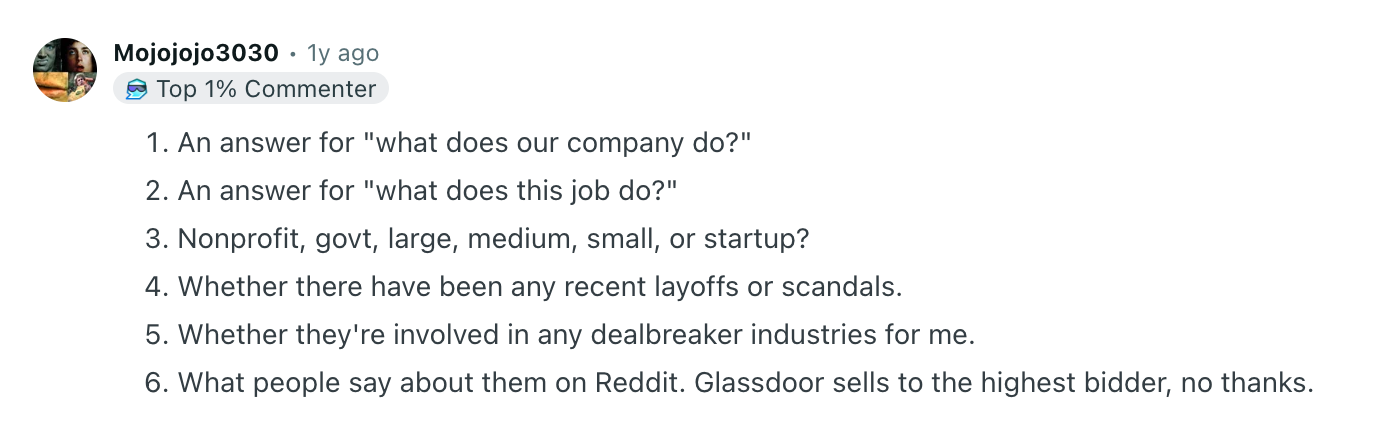
If you get further in the application process, you can dig a little deeper:
- Read employee reviews and get a sense of the workplace.
- Check salary insights to know what’s realistic for your role and location.
- Look at social media and press releases to see how the company presents itself.
Researching also helps you decide whether the company fits your values and goals. Remember, the interview goes both ways; you’re evaluating them as much as they’re evaluating you.
Don’t Tackle This Alone
Most of us know what it’s like to be in your position. Even the hiring managers who are pulling the strings were once job seekers. People can empathize with the struggle, and many are happy to help. Reaching out to others isn’t a sign of weakness; it’s being smart and playing the game.
Here’s a summary of how to tap into your connections:
- Reaching out to your network means asking for insights rather than asking for jobs.
- Establishing a presence on LinkedIn helps you get noticed by recruiters.
- Connecting directly with hiring managers allows you to show genuine interest.
- Attending career fairs gives you the chance to make strong in-person impressions.
- Scheduling informational interviews lets you learn from industry insiders.
- Speaking with industry professionals provides perspective on your career path.
- Joining staffing agencies can help you get your foot in the door and gain experience.
10. Reach out to your network and close circle
I got my last three jobs through connections with past employers and colleagues, so I know exactly how important it is to build a network. But I also know it can be awkward reaching out, especially when you haven’t spoken in a while.
It’s all about how you approach them. Don’t start with “Hey, are you hiring?” Instead, reach out for advice. Ask about their experience, their company, or what trends they’re seeing in your field. These conversations can turn into opportunities naturally, without you having to push for them.
And if you’re new to the workforce? There’s no harm in talking to someone doing the job you want. They can give you insider tips and maybe even put in a good word for you.
You could also take it offline and brave the real world. Here’s what a Redditor said:
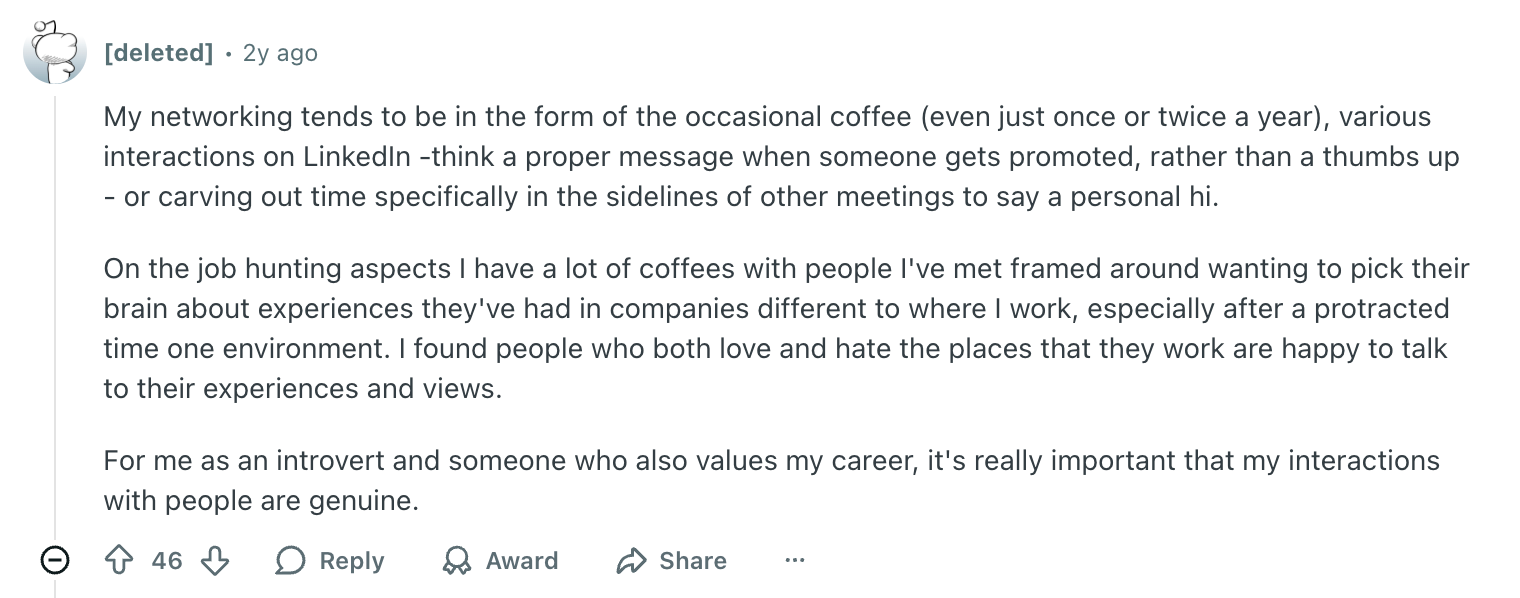
It’s a slower process than mass-applying, but speaking from experience, it’s far more effective in the long term. Relationships open doors that cold applications rarely do.
11. Establish a presence on LinkedIn
LinkedIn isn’t just reserved for humble-bragging, semi-inspirational posts, or AI-generated comments. It can also be a tool to create that all-important first impression before meeting someone.
A professional, keyword-optimized profile increases your visibility and helps recruiters find you. Use the same language you see in job postings within your field, so your profile shows up in searches. Your headline, “About” section, and experience should all echo the skills and roles you want to attract.
You can also stand out by being active, not just doom-scrolling on the homepage:
- Post insights about your industry and share relevant articles.
- Interact with company pages you’re interested in.
- Leave genuine comments that add to the conversation.
- Connect with employees or hiring managers (respectfully).
12. Connect directly with hiring managers
Reaching out to hiring managers might feel scary, but it doesn’t hurt to try. Just make sure you do it right. Before you send that message, research the company and the role. Understand what they value, any challenges, and how you can contribute. That will help you write a message that actually resonates instead of sounding generic.
Not sure how to find them? Here’s what someone with a track record of success said:
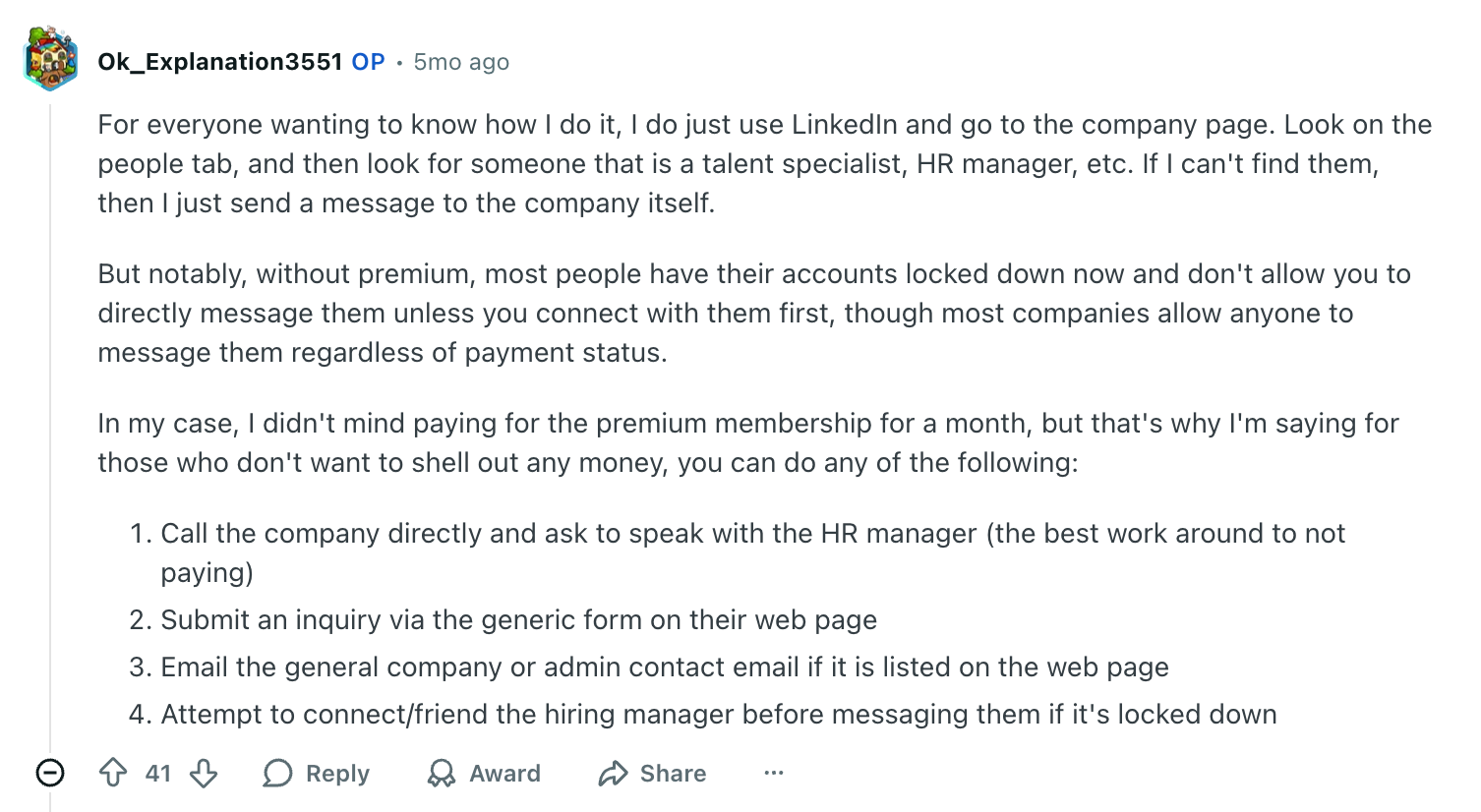
When you reach out, keep it direct and professional:
- Address them by name (avoid Dear Sir/Madam at all costs).
- Mention a recent company accomplishment or project.
- Express genuine interest in the work they do.
Show effort, but also respect their boundaries. Stick to platforms like LinkedIn or professional email, and whatever you do, don’t slide into personal DMs.
13. Attend career fairs
Career fairs are hit or miss, but again, it doesn’t hurt to put yourself out there. It’s your chance to make a strong in-person impression, so treat them like mini-interviews. Dress professionally, shake hands confidently, and release that positive energy. Recruiters talk to lots of candidates, so genuine enthusiasm can set you apart.
Before you go, do a bit of prep work.
- Research the companies attending and pick your top targets.
- Have a short pitch ready about who you are and what you bring.
- Ask questions about their current projects, company culture, or what they look for in new hires.
These interactions could help you build professional relationships. If you come prepared and curious, you could walk away with valuable contacts, insights, and maybe a direct pipeline to your next interview.
14. Schedule informational interviews
Informational interviews are low-pressure conversations where you learn directly from people in your target field. Think of them as friendly research sessions: you’re not asking for a job, just for insight (at least that’s what you should tell them).
Who should you ask? Honestly, almost anyone who works in an industry or company you admire. Even better, reach out to someone who recently started in the field; they’ll remember what it was like being in your shoes.
Here’s some more handy advice from Reddit:
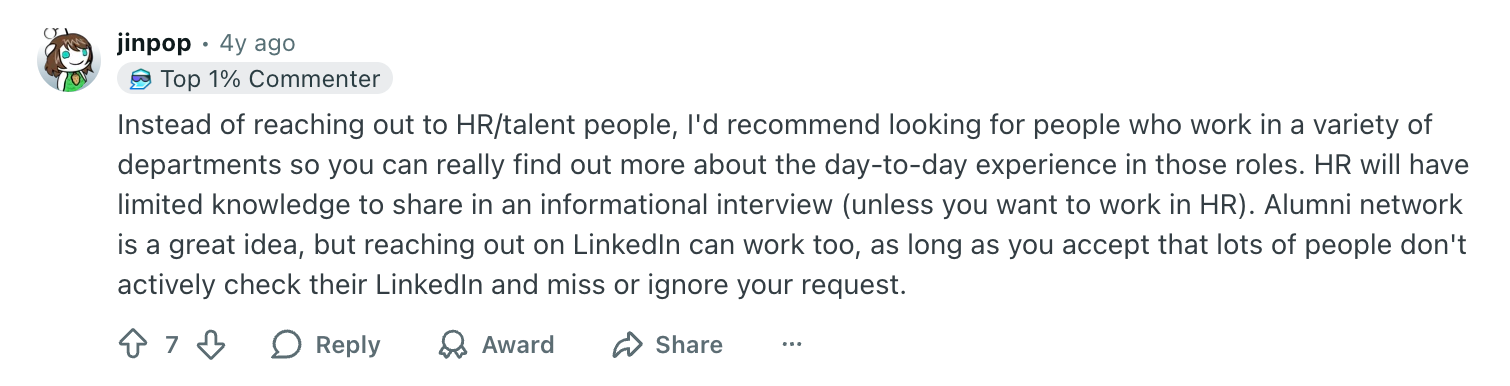
During the chat, ask questions like:
- How did you get started in this industry?
- What do you enjoy most about your role?
- What skills helped you stand out when applying?
- Do you have any advice for breaking into the field?
Of course, it would be great if they put in a good word for you, but the main goal is to build connections and knowledge. Over time, those conversations can turn into referrals, mentorships, or a clearer direction on your next steps.
15. Speak with industry professionals
Talking to people who’ve been in your position can make your path forward much clearer. People generally like to be helpful, and experienced professionals often enjoy sharing what they’ve learned, especially when you’re genuinely curious rather than just looking for a job lead.
Start with recruiters, former managers, or ex-colleagues. Tell them you’d love their perspective on the industry or your career direction. You can also expand your circle by attending conferences, workshops, or joining professional associations in your area.
When you focus on building genuine rapport instead of “networking for a job,” people notice. Those relationships can lead to introductions, recommendations, or opportunities you never would’ve found on your own.
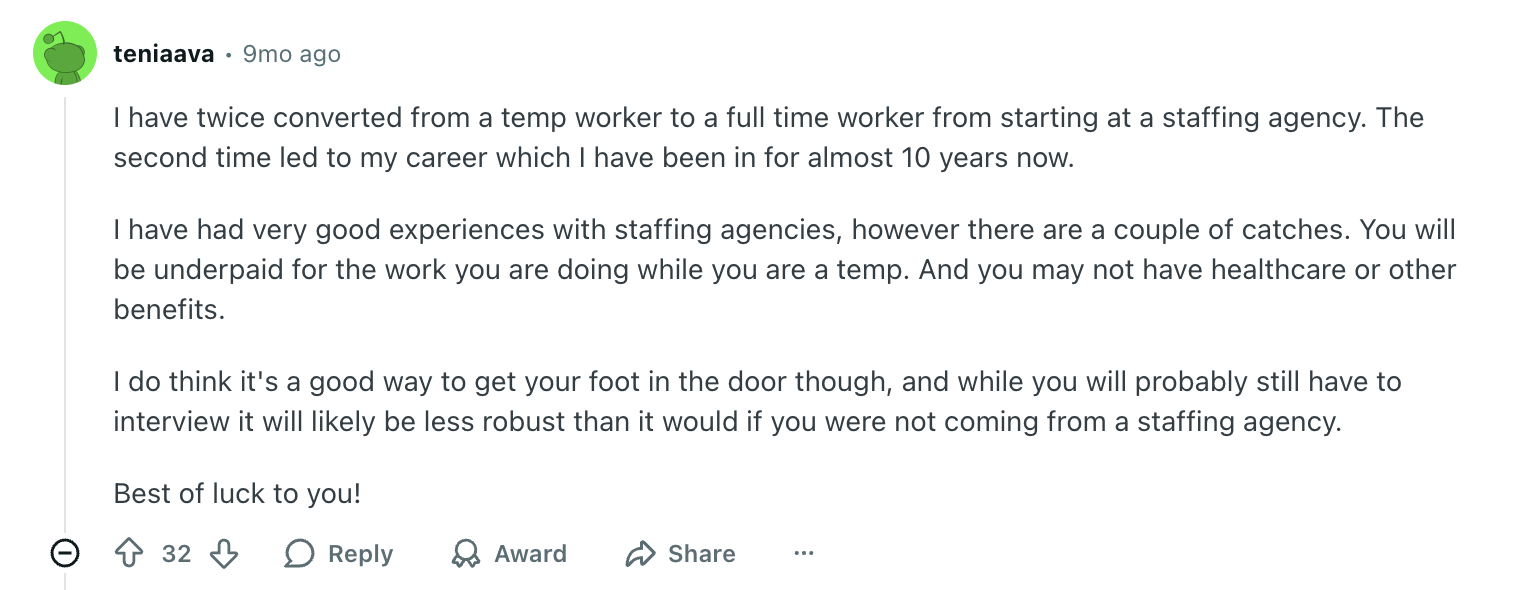
16. Join staffing agencies
If you’re feeling stuck, staffing agencies can help you get your foot in the door (just look at Dunder Mifflin’s Ryan). Look for agencies that specialize in your field; they often have inside connections with employers and can match you with openings that never hit job boards.
Once you’re in, treat every assignment like an extended interview. Show reliability, learn quickly, and go above and beyond to show them the value you could bring to their company. The exposure, experience, and connections you get might be exactly what gets you to your next opportunity.
But don’t just take my word for it. Check out this success story:
Cast a Wider (and Smarter) Net
“If it ain’t broke, don’t fix it.” Well, the same applies to the opposite. If something isn’t working, change it. Applying for dozens of jobs on the same job board and not hearing back? Something isn’t working. Only using “Easy Apply” and not getting any interviews? Also, not working. Nor is applying for the same job three times because you lost track.
These are things you can and should change. Here’s how:
- Don’t settle for “Easy Apply”; submitting targeted applications yields better results.
- Focus on quality over quantity by tailoring each application to jobs that match your skills.
- Check out different job boards to expand your reach and find more opportunities.
- Set up job alerts so you can apply early, increasing your chances of being noticed.
- Apply on company websites to show genuine interest and avoid outdated listings.
- Keep track of your applications with a spreadsheet or job management tool.
- Consider internal opportunities because transfers or promotions can open doors.
17. Don’t settle for “Easy Apply”
I’ve done my time with the “Easy Apply” button on LinkedIn, so I understand the appeal. It’s quick, painless, and feels productive. But I never even got an interview this way. And it’s easy to see why.
When something’s that easy, everyone’s doing it. Those listings often get flooded with hundreds (sometimes thousands) of applicants within hours. You end up in a digital pile where your resume barely gets a glance.
A smarter move? Put your time into a few thoughtful, targeted applications. Here’s my advice:
- Write a short, personalized message to the hiring manager or recruiter.
- Customize your resume and cover letter to show you’ve done your homework.
- Head to the company website to see if you can apply directly.
You can still use “Easy Apply” for convenience — just don’t rely on it as your main strategy. It’s a low-effort, low-reward play. The real wins usually come from those applications where you show real interest and effort.
18. Focus on quality over quantity
Don’t get me wrong, you can absolutely apply to as many roles as you’d like. But rather than rushing through a ton of generic applications, you’ll get better results by putting more time into a few that are personal and thoughtful. It’s about working smarter, not just harder.
Focus your time and energy on tailoring each application to roles that genuinely match your skills and goals. That means:
- Customize your application for each job description.
- Include language that mirrors the company’s own tone and values.
- Write a short, specific cover letter that connects your experience to what they need.
Yes, personalized applications mean it takes longer, but speaking from experience, you get more results. It’s better to be remembered by three hiring managers than ignored by fifty.
19. Check out different job boards
If you’re only using one or two job sites, you’re limiting your reach. Each platform has its own mix of listings, and surprisingly, there’s not as much overlap as you’d think. LinkedIn, Indeed, Glassdoor, and company career pages often have unique openings you won’t find elsewhere.
The more places you cast your line, the better your chances. For example:
- Rezi AI Job Search: Real listings, straight from company websites.
- LinkedIn: Great for networking and finding roles through connections.
- Indeed: Massive, easy to search, and ideal for volume.
- Specialized boards: Industry-specific sites (like Dice for tech or USAJobs for U.S. government positions).
You can check out all my top picks across different industries here: Best Job Search Engines
And don’t underestimate the power of a quick phone call to smaller companies. Sometimes the best opportunities aren’t even posted; you have to use your initiative.
20. Set up job alerts
Timing is everything in the job hunt. Many positions get hundreds of applicants in the first 24 hours, so being among the early ones can make a difference. Setting up job alerts takes the manual search out of your hands and keeps you ahead of the curve.
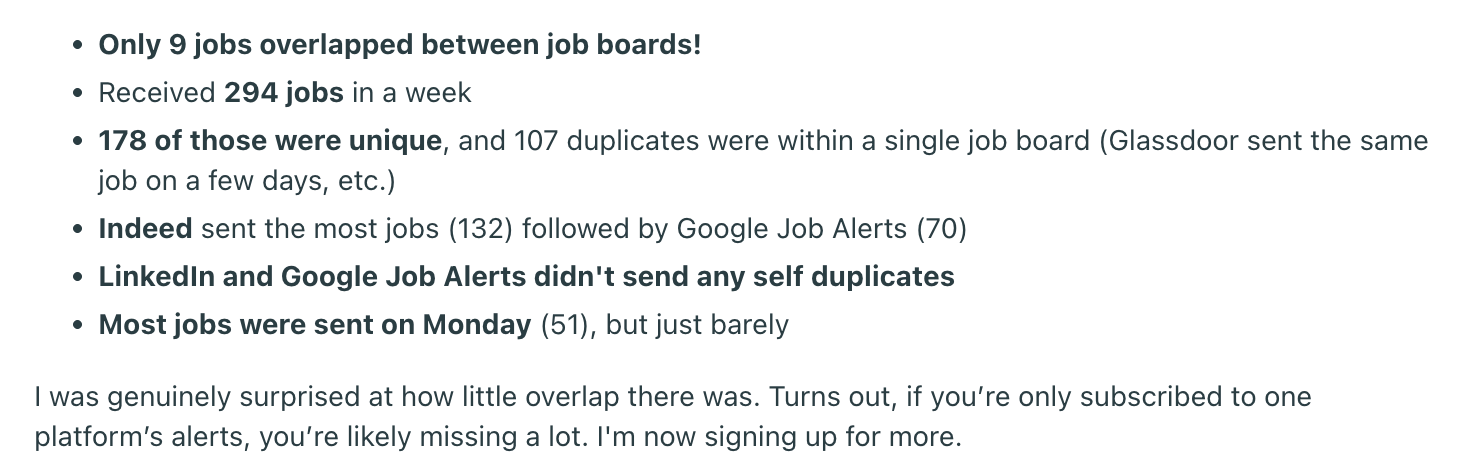
Subscribe to multiple platforms, such as LinkedIn, Indeed, Glassdoor, and Google Jobs, because they don’t all post the same listings. One person on Reddit even ran a test and found that less than half of their alerts overlapped across job boards. That means you’re missing opportunities if you stick to just one.
Here’s a summary of the results:
21. Apply on company websites
While job boards are convenient, applying directly through a company’s website can give you an edge. It helps you avoid fake or outdated listings while also showing genuine interest. Employers notice when someone takes the time to go straight to the source.
Once you’re on their site, read about their mission and culture. Use that information to personalize your application — even borrow some of their own wording to align your tone with theirs. That subtle mirroring shows you’re paying attention.
Another plus? You’re competing with a smaller pool. Many people never leave Indeed or LinkedIn to take that next step, which means applying directly could set you apart from the pack.
22. Keep track of your applications
It’s easy to lose track when you’re juggling multiple applications. I remember getting emails and panicking because I had no idea which company sent them. I wasted way too much time tracking down those job descriptions to prepare for interviews.
Make your life easier by having a simple spreadsheet (or using a job search management tool) to help you stay organized and proactive.
In your tracker, note details like:
- Company name, position title, and date applied.
- Application status and follow-up reminders.
- A screenshot of the job description (in case it goes offline).
You can even score companies based on what matters to you, such as salary, growth potential, culture fit, etc. This can help you spot patterns and be more selective in which jobs are worth pursuing (if you’re lucky enough to have options).
Find out more: How to Keep Track of Job Applications
23. Consider internal opportunities
If you’re already employed, don’t overlook what’s right under your nose. Internal transfers or promotions can open doors to new roles without the long hiring process. Plus, having a solid reputation already puts you at an advantage (just not if you’re the one who keeps microwaving fish in the break room).
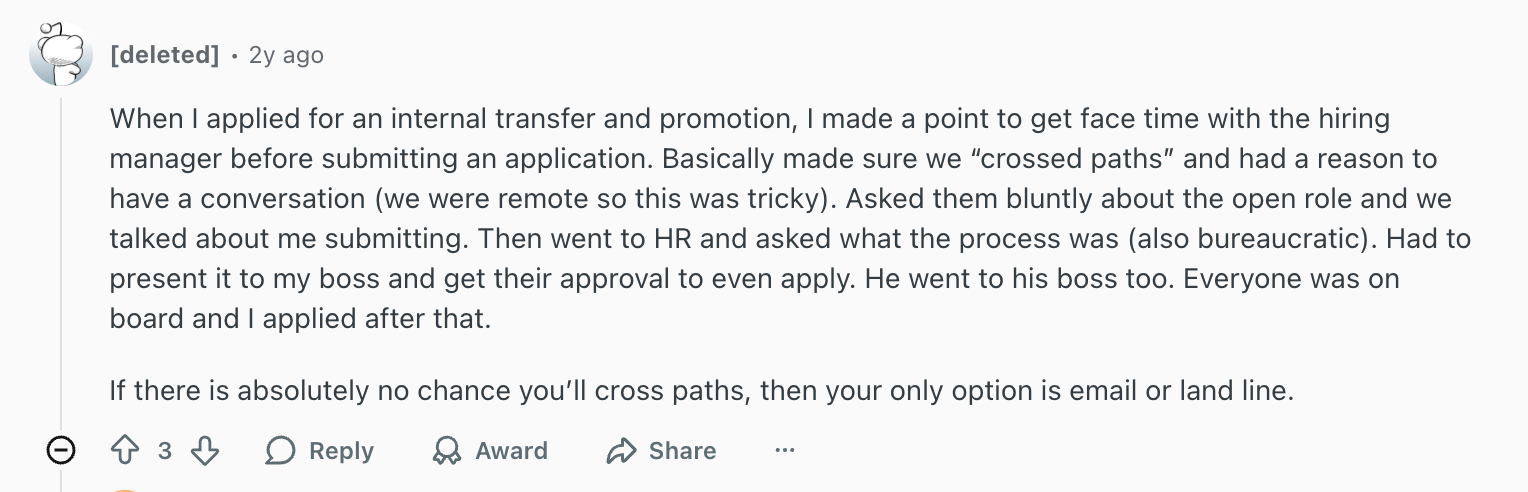
When going for an internal role, be strategic:
- Set up a casual conversation with the hiring manager before applying.
- Highlight your achievements and record your measurable wins that prove your impact.
- Emphasize that you’re excited to grow within the company, not just looking for a change.
Here’s some advice from someone who landed an internal position:
Of course, some hiring managers prefer fresh hires with the latest skills. If that’s the case, position yourself as someone who brings new ideas and perspectives, not someone stuck in the old ways.
Reflect, Grow, and Prepare
We focus so much on ticking every box for our future employers that we sometimes lose sight of what we want. We all have our own set of skills and experiences to bring to the table, so it’s about recognizing your value and seeing what’s the right fit for you.
Here’s how to look inwards and embrace self-development:
- Reflect on your intentions to understand what truly motivates you and what drains you.
- Imagine your dream scenario, such as the company and role that excites you most.
- Set SMART goals so your job search stays structured and measurable.
- Improve your skills by identifying gaps in your target roles.
- Look to the future by aligning your career with growing industries and in-demand skills.
- View your job search as a job by creating a routine and staying organized.
- Manage your expectations by remembering that rejection is part of the process.
- Have an open mind because every role can teach you something valuable.
24. Reflect on your intentions
It’s tempting to apply to every job you see when you’re desperate to secure employment. But once you get one (and you will), you could be there for a while, so take a moment to pause and reflect.
Ask yourself some questions, and really think about it.
- What motivates you?
- What activities make time fly by?
- Think back to projects, hobbies, part-time jobs, or side projects — what did you enjoy most?
Equally important is recognizing what drains you; knowing what to avoid is just as valuable as knowing what excites you.
And of course, money matters. Passion is important, but it’s not sustainable if the paycheck doesn’t cover rent. At the same time, chasing a high salary at the expense of your well-being rarely works out in the long term. The goal is to find a balance where your interests, values, and financial realities intersect.
25. Imagine your dream scenario
Job searching usually starts with scanning job listings, but let’s flip the script: begin with your dream scenario instead. Think about the company and role that would genuinely excite you. And don’t just go for big names or what looks impressive on paper. Look for places that truly align with your interests, values, and the kind of work you want to do.
Start by making a list of companies that truly resonate with you. Then, ask yourself:
- Why do you want to work here?
- What about their culture or mission inspires you?
- Who are the people running the teams you’d love to join?
Once you’ve mapped this out, dig into their career pages or reach out to employees. If there’s an opening, you know what to do: apply thoughtfully and strategically. If there isn’t one, it doesn’t hurt to send a genuine, well-researched message. Passion often translates and can help you get noticed.
This approach worked wonders for our Head of Content, Michael. Here’s how it helped him get the job at Rezi:
Rezi has always been on my radar as one of the most exciting “new players” on the career advice stage. So when it was time for me to make the next move in my career, reaching out to the Rezi team was an obvious step. We clicked immediately simply because of shared interests. And it was almost effortless. I didn’t need to suddenly research the industry, its challenges, opportunities, and best practices because I had been doing just that for years, on my own. Whatever company you admire, reach out. The worst that can happen is a cool, casual conversation about topics you’re nerding over. The best is you settling into your dream job.
— Michael Tomaszewski, Head of Content at Rezi
26. Set SMART goals
Once you’ve reflected on what you want, set goals that actually guide you forward. It’s all well and good trying to manifest a great job, but it won’t just land in your lap. The SMART method is a handy starting point to keep you on track.
Here’s a breakdown:
- Specific: Clearly defined and focused.
- Measurable: Trackable so you know when you’ve succeeded.
- Achievable: Realistic given your current skills and resources.
- Relevant: Aligned with your bigger career vision.
- Time-bound: With deadlines to keep you accountable.
For example, instead of vaguely aiming to “get a new job,” a SMART goal could be: “Apply to three data analyst positions each week for the next month, tailoring my resume for each role.” Breaking down big ambitions into smaller, actionable steps keeps you organized, motivated, and less overwhelmed.
27. Improve your skills
If you’ve dismissed way too many jobs because you don’t quite reach the qualifications, maybe it’s time to fix that. And no, you don’t have to pay an arm and a leg to go back to education — there are other ways to improve your skills and get those keywords onto your resume.
Focus on areas that genuinely interest you. Side projects or courses that excite you are more likely to stick than ones you force yourself through. That said, be kind to yourself; growth doesn’t happen overnight. Some weeks you’ll crush a course; other weeks you’ll just rest and recharge.
Wondering what to learn? Look at the skills most frequently requested in job postings for your target roles. Short courses, certifications, and practical learning tools like Coursera, edX, Udemy, or YouTube can help you get up to speed.
Here are some simple words of wisdom to stay motivated:

Take a look at these in-demand resume skills:
- AI Skills for Your Resume
- Computer Skills for a Resume
- Best Technical Skills for a Resume
- Top Customer Service Skills to Put on a Resume
28. Look to the future
It’s not just about getting your next job — it’s about building a career that lasts. Think about industries and skills that will be in demand in 5 to 10 years. Technology, healthcare, and renewable energy are growing fast. I’m not saying abandon your interests; just find ways to apply them in emerging fields.
Here are some fast-growing roles, according to the U.S. Bureau of Statistics:
- Wind-turbine service technicians (50% growth)
- Solar photovoltaic installers (42%)
- Nurse practitioners (40%)
- Data scientists (34%)
- Information security analysts (29%)
- Medical and health services managers (23%)
- Physical therapist assistants (22%)
Keeping an eye on the horizon helps you prioritize skill-building and make strategic moves that prepare you for future opportunities.
29. View your job search as a job
Nobody wants to treat job hunting like actual work. Why should we jump through hoops just to get a job? But whether we like it or not, the competition is fierce, and this is the new reality. However, there are ways to stay disciplined without burning out.
Set structured routines: block off time for research, applications, networking, and skill-building. You don’t need to work 9 to 5, but consistent focus and organization can keep you on track.
Tools like Trello, Google Calendar, or simple spreadsheets help break tasks into manageable chunks, for example:
- Researching new companies.
- Drafting tailored applications.
- Preparing for interviews.
- Following up with contacts.
Just don’t overwork yourself (save those joys for the real job). Take breaks, recharge, and stay connected with friends or hobbies. That way, your focus will be sharper, and your creativity will flourish.
30. Manage your expectations
Job hunting can take around five months on average. Variables like industry, location, and role type can also stretch or shorten that timeline. So, don’t punish yourself for not getting any replies in the first month.
It might sound pessimistic, but to avoid frustration, manage your expectations by assuming you won’t hear back from every application. Focus on the next opportunity, rather than waiting by your inbox or obsessing over responses.
This mindset keeps your energy up, helps you maintain momentum, and protects your mental health. And remember: each “no” isn’t a reflection of your worth; it’s part of the process. Staying steady and persistent can be the difference between landing a role and giving up.
31. Have an open mind
Embrace flexibility. Your first job isn’t likely to be your forever career, and that’s fine. Exploring different roles and companies exposes you to new experiences and ideas. Sometimes, you discover paths you never knew existed or refine what you truly want in a role.
Be willing to experiment. Try new opportunities, evaluate what fits, and pivot if it doesn’t. An open mind lets you grow professionally, build diverse skills, and ultimately land a position that’s both fulfilling and sustainable. Trust the process. It rarely follows a straight line, but every step teaches you something valuable.
Final Thoughts: What’s the Best Way to Job Search?
Honestly, there isn’t one “perfect” way to job search; you have to find the patterns, techniques, and habits that are right for you. That said, staying in your comfort zone isn’t always the answer, especially if your current strategies aren’t working out.
You could send a thoughtful LinkedIn message or play the long game by building a strong network. What really makes the difference is being intentional: knowing what you want, showing genuine curiosity, and putting care into each application and connection.
It’s easy to feel discouraged when things move slowly (I’ve been there), but every email, conversation, and small tweak to your resume moves you forward — even if it doesn’t feel like it right away. Stay patient, keep showing up, and remember: you don’t need luck, just a bit of clarity, consistency, and resilience.
FAQ
What are four strategies to search for jobs?
Job hunting can feel overwhelming, but with the right approach, some strategy, and a bit of patience, you can make the process more manageable.
Here are four of the top job searching strategies:
- Research the job market: Identify growing industries, in-demand skills, and shifting opportunities to make smarter moves.
- Leverage your network: Reach out to friends, colleagues, and alumni for advice, mentorship, or referrals.
- Tailor applications: Focus on quality over quantity by customizing your resume and cover letter for each role.
- Explore job boards and company websites: Use multiple platforms, set up alerts, attend career fairs, and consider informational interviews to find hidden opportunities.
What to do when looking for a job?
Start by clarifying your career goals and reflecting on your strengths and interests. Once you have a direction, update your resume and tailor it for each application, including relevant keywords. You can also build your network by reaching out to connections and industry professionals.
During the process, keep learning, upskill, or earn certifications that align with your target roles. Apply strategically, not just in volume, and track your applications to stay organized. Finally, prepare for interviews by researching companies, practicing answers, and following up after each conversation.
How to find a remote job?
Look for positions specifically labeled “remote” on major job boards like LinkedIn, Indeed, or FlexJobs. Use keywords like “work from home” or “telecommute.” Research companies known for remote work and apply directly on their career pages.
Networking is also key: connect with remote employees on LinkedIn, attend virtual industry events, and join communities for remote workers. Tailor your resume to highlight self-management, digital communication, and tech skills that prove you can excel outside a traditional office setting.
What is the hardest month to get a job?
December is often the toughest month to secure a job. Many companies slow down hiring due to holidays, budget planning, and end-of-year projects. Recruiters may be out of the office, and fewer positions are open during this time. While applying isn’t impossible, it usually takes longer to get responses.
Instead, use this time to reflect on your goals, improve your resume, expand your network, and prepare for interviews so you’re ready when hiring ramps up in January.
What is the 7-second rule in a resume?
The 7-second rule means recruiters typically spend about seven seconds scanning a resume before deciding if a candidate is worth a closer look. While it’s not an exact science, it’s true that recruiters are likely to scan before diving deeper into your application.
That’s why clarity, formatting, and relevance are important. Use clear headings, concise bullet points, and emphasize accomplishments that match the job description. Avoid clutter, jargon, or long paragraphs, and strategically include keywords that align with the role.
Your resume should instantly communicate who you are, what you can do, and why you’re a strong fit, all before the recruiter loses interest.

Upload or drop your resume to get started
Upload your resume to get started
Score my resume

Lauren Bedford is a seasoned writer with a track record of helping thousands of readers find practical solutions over the past five years. She's tackled a range of topics, always striving to simplify complex jargon. At Rezi, Lauren crafts genuine and actionable content that guides readers in creating standout resumes to land their dream jobs.